EP4520751A1 - Verfahren zur schnellen oxidation von dihydropyridazinen zu pyridazinen - Google Patents
Verfahren zur schnellen oxidation von dihydropyridazinen zu pyridazinen Download PDFInfo
- Publication number
- EP4520751A1 EP4520751A1 EP23195496.7A EP23195496A EP4520751A1 EP 4520751 A1 EP4520751 A1 EP 4520751A1 EP 23195496 A EP23195496 A EP 23195496A EP 4520751 A1 EP4520751 A1 EP 4520751A1
- Authority
- EP
- European Patent Office
- Prior art keywords
- group
- acid
- mmol
- conh
- tetrazine
- Prior art date
- Legal status (The legal status is an assumption and is not a legal conclusion. Google has not performed a legal analysis and makes no representation as to the accuracy of the status listed.)
- Withdrawn
Links
Images





Classifications
-
- C—CHEMISTRY; METALLURGY
- C07—ORGANIC CHEMISTRY
- C07D—HETEROCYCLIC COMPOUNDS
- C07D209/00—Heterocyclic compounds containing five-membered rings, condensed with other rings, with one nitrogen atom as the only ring hetero atom
- C07D209/56—Ring systems containing three or more rings
- C07D209/80—[b, c]- or [b, d]-condensed
- C07D209/94—[b, c]- or [b, d]-condensed containing carbocyclic rings other than six-membered
-
- C—CHEMISTRY; METALLURGY
- C07—ORGANIC CHEMISTRY
- C07B—GENERAL METHODS OF ORGANIC CHEMISTRY; APPARATUS THEREFOR
- C07B59/00—Introduction of isotopes of elements into organic compounds ; Labelled organic compounds per se
- C07B59/002—Heterocyclic compounds
-
- C—CHEMISTRY; METALLURGY
- C07—ORGANIC CHEMISTRY
- C07D—HETEROCYCLIC COMPOUNDS
- C07D235/00—Heterocyclic compounds containing 1,3-diazole or hydrogenated 1,3-diazole rings, condensed with other rings
- C07D235/02—Heterocyclic compounds containing 1,3-diazole or hydrogenated 1,3-diazole rings, condensed with other rings condensed with carbocyclic rings or ring systems
-
- C—CHEMISTRY; METALLURGY
- C07—ORGANIC CHEMISTRY
- C07D—HETEROCYCLIC COMPOUNDS
- C07D237/00—Heterocyclic compounds containing 1,2-diazine or hydrogenated 1,2-diazine rings
- C07D237/02—Heterocyclic compounds containing 1,2-diazine or hydrogenated 1,2-diazine rings not condensed with other rings
- C07D237/06—Heterocyclic compounds containing 1,2-diazine or hydrogenated 1,2-diazine rings not condensed with other rings having three double bonds between ring members or between ring members and non-ring members
- C07D237/08—Heterocyclic compounds containing 1,2-diazine or hydrogenated 1,2-diazine rings not condensed with other rings having three double bonds between ring members or between ring members and non-ring members with only hydrogen atoms, hydrocarbon or substituted hydrocarbon radicals, directly attached to ring carbon atoms
-
- C—CHEMISTRY; METALLURGY
- C07—ORGANIC CHEMISTRY
- C07D—HETEROCYCLIC COMPOUNDS
- C07D241/00—Heterocyclic compounds containing 1,4-diazine or hydrogenated 1,4-diazine rings
- C07D241/36—Heterocyclic compounds containing 1,4-diazine or hydrogenated 1,4-diazine rings condensed with carbocyclic rings or ring systems
-
- C—CHEMISTRY; METALLURGY
- C07—ORGANIC CHEMISTRY
- C07D—HETEROCYCLIC COMPOUNDS
- C07D257/00—Heterocyclic compounds containing rings having four nitrogen atoms as the only ring hetero atoms
- C07D257/02—Heterocyclic compounds containing rings having four nitrogen atoms as the only ring hetero atoms not condensed with other rings
- C07D257/08—Six-membered rings
-
- C—CHEMISTRY; METALLURGY
- C07—ORGANIC CHEMISTRY
- C07D—HETEROCYCLIC COMPOUNDS
- C07D401/00—Heterocyclic compounds containing two or more hetero rings, having nitrogen atoms as the only ring hetero atoms, at least one ring being a six-membered ring with only one nitrogen atom
- C07D401/02—Heterocyclic compounds containing two or more hetero rings, having nitrogen atoms as the only ring hetero atoms, at least one ring being a six-membered ring with only one nitrogen atom containing two hetero rings
- C07D401/04—Heterocyclic compounds containing two or more hetero rings, having nitrogen atoms as the only ring hetero atoms, at least one ring being a six-membered ring with only one nitrogen atom containing two hetero rings directly linked by a ring-member-to-ring-member bond
-
- C—CHEMISTRY; METALLURGY
- C07—ORGANIC CHEMISTRY
- C07D—HETEROCYCLIC COMPOUNDS
- C07D487/00—Heterocyclic compounds containing nitrogen atoms as the only ring hetero atoms in the condensed system, not provided for by groups C07D451/00 - C07D477/00
- C07D487/02—Heterocyclic compounds containing nitrogen atoms as the only ring hetero atoms in the condensed system, not provided for by groups C07D451/00 - C07D477/00 in which the condensed system contains two hetero rings
- C07D487/04—Ortho-condensed systems
-
- C—CHEMISTRY; METALLURGY
- C07—ORGANIC CHEMISTRY
- C07B—GENERAL METHODS OF ORGANIC CHEMISTRY; APPARATUS THEREFOR
- C07B2200/00—Indexing scheme relating to specific properties of organic compounds
- C07B2200/05—Isotopically modified compounds, e.g. labelled
Definitions
- the present invention relates to a method for providing pyridazines by rapid oxidation of dihydropyridazines.
- the pyridazines can be used in therapy such as radiotherapy, diagnostics, imaging, and other photochemistry methods.
- Labeled targeting vectors based on the tetrazine ligation can be used both for imaging purposes, such as diagnostics and other photochemistry imaging methods and in therapy.
- Such targeting vectors have for instance been labeled with radiolabels that can be applied in diagnostics and/or in therapy.
- the specific use depends on the identity of the radiolabeling used because different radionuclides provide for different purposes.
- the specific use moreover depends on the specific target that the vector is directed at.
- Several combinations of radiolabels and vectors are applied presently in diagnosis, therapy, theranostic and imaging. Different chemical entities connecting the radiolabeled entity with the target directed entity exists.
- the present invention is based on the tetrazine ligation wherein a tetrazine (Tz) and a trans -cylcooctene (TCO) are ligated, followed by a rapid oxidation of the corresponding click-product, i.e. dihydropyridazines, to the corresponding pyridazines, thereby reducing the complexity of the reaction products, which are bridging the radiolabel and the target directed entity.
- Tz tetrazine
- TCO trans -cylcooctene
- tetrazine ligation refers to a class of click reactions that is fast, simple to use, versatile, chemoselective, and give high product yields. These reactions have found application in a wide variety of research areas, including materials science, polymer chemistry, and pharmaceutical sciences. Radiochemistry is one of the fields that showed the true potential of click chemistries as for example disclosed in Zeng et al, Journal of Nuclear Medicine, 54, 829-832, 2013 . Essentially, the selectivity, ease, rapidity, and modularity of click ligations make them nearly ideally suited for the construction of radiotracers, a process that usually involves working with biomolecules in aqueous conditions with fast decaying radioisotopes.
- the tetrazine ligation is characterized by the formation of covalent bonds between a 1,2,4,5-tetrazines (Tz) and typically a trans -cyclooctene (TCO).
- Tz 1,2,4,5-tetrazines
- TCO trans -cyclooctene
- the reaction is initiated by an inverse electron-demand Diels-Alder reaction, followed by a retro-Diels-Alder reaction, driven by the expulsion of N 2 .
- the tetrazine ligation is among the fastest known chemical ligations, with second order rate constants up to 10 6 M -1 s -1 in acetonitrile at 25 °C.
- WO2017/059397 discloses ligations between tetrazines and TCO's, which will inevitably provide several isomeric chemical entities.
- pyridazines can be prepared via the ligation of a Tz to a strained cyclic alkyne, however this reaction suffers from slow second order rate constants.
- Radiopharmaceuticals are increasingly used in theranostic, especially within oncology, both for diagnostic imaging and for targeted radionuclide therapy.
- Positron emission tomography PET is the gold standard in nuclear imaging with better resolution and quantification than other modalities. 2,200,800 clinical PET scans were performed in 2019 in the US alone.
- Targeted radionuclide therapy is more effective at treating cancer than many state-of-the-art chemotherapies. It also has the advantage over external beam radiotherapy (e.g. "gamma knife”) in that it offers a way to confine the delivered dose to the tumor and its immediate surrounding area, which makes particular sense in the radiotherapy of micrometastatic disease.
- gamma knife external beam radiotherapy
- a theranostic pair is two radionuclides, which can be substituted with each other, without changing the pharmacokinetics of the radiopharmaceutical, but shifting their application between diagnostic imaging and radionuclide therapy.
- Radiotracers are accumulated in tumor lesions, the location of which can then be visualized by detecting the emitted radiation.
- PET is strongly favored in oncology
- SPECT is dominant in cardiology and for producing bone scans and certain other specialized organ scans.
- SPECT Single-photon emission computed tomography
- PET imaging employs radionuclides emitting gamma photons, typically in the 100-200 keV range. A series of 2D projection images of radiotracer distribution in the body are acquired by one of more gamma cameras from multiple angles. These projection images are then assembled to produce a 3D image.
- Positron emission tomography PET is currently considered the most advanced form of nuclear imaging. The key use of PET in oncology is diagnosis and treatment monitoring, especially of metastatic cancer. Compared to previous modalities, notably SPECT, PET offers improved resolution and sensitivity, and generally higher quality images. These properties are especially relevant in the detection, and subsequent treatment, of very small metastases.
- PET relies on the use of radionuclides that emit positrons upon their decay. These positrons travel a limited distance, and then undergo annihilation with an electron in the surrounding medium. This produces two annihilation photons, each of 511 keV, which are emitted in opposite directions. These photons can be detected by a PET scanner.
- the most optimal radionuclide for PET is fluorine-18 ( 18 F). With a decay half-life of 110 minutes and 97% positrons emitted per decay, 18 F is close to ideal for clinical PET applications.
- 18 F can be practically produced in enormous quantities (>300 doses per production) on standard biomedical cyclotrons, which are readily available throughout most of the world, with more than 200 present in Europe alone. Accordingly, 18 F does not share the concerns for sufficient supply associated with its closest competitor, the generator-produced radiometal gallium-68 ( 68 Ga). In addition, the lower positron energy of 18 F provides higher resolution images. Compared to the current diagnostic radionuclide of most widespread use, the SPECT radionuclide technetium-99m, 18 F offers the highest quality images through its status as a PET radionuclide.
- Radioactive iodine is widely used in SPECT imaging.
- Its gamma photon energy of 159 keV is excellently suited for clinical SPECT imaging.
- Due to the intrinsic accumulation of iodine in the thyroid, 123 I in its free form is widely used for imaging thyroid disease.
- 123 I is for example used in the imaging agents MIBG (oncology) and ioflupane (CNS). 123 I forms a theranostic pair with the clinically used beta minus emitting therapeutic radionuclide 131 I and the investigational Auger electron radiotherapeutic 125 I.
- Iodine-123 is produced in a cyclotron by proton irradiation of xenon in a capsule and is commercially available.
- lodine-124 ( 124 I) can be used for PET imaging. It is usually produced in a cyclotron by bombardment of enriched tellurium-124. However, the imaging characteristics of 124 I are not ideal.
- Astatine-211 ( 211 At) is primarily a therapeutic nuclide, which emits alpha-particles upon decay. Alpha particles are absorbed in just 100 ⁇ m of tissue and cannot be detected by external scanners. However, one of the decay branches of 211 At also generates X-rays in the range of 70-90 keV, which can be imaged with a gamma-camera or a SPECT scanner. Therefore, the distribution of 211 At-labeled radiopharmaceuticals within the patient can be clinically assessed by SPECT imaging.
- radionuclides there are, however, challenges to introduce above mentioned radionuclides into molecules which limits the practical use of radionuclide-based therapy, diagnostic, and imaging.
- Most of the PET, SPECT and therapeutic radionuclides mentioned above are radiometals.
- Conventional method of introducing radiometals into the vector molecules is the use of chelator groups that form coordinate bonds with the radiometal atom.
- the radiolabeling procedure typically involves mixing the radiolabeling precursor (vector with a chelator group attached) with radiometal ions and heating the mixture to allow the chelation reaction to proceed.
- chelation of radiometals is conceptually simple, it has a number of drawbacks, namely:
- 18 F has long established itself as the best-in-class radionuclide for diagnostic PET imaging, while 211 At is the most promising therapeutic radionuclide for alpha-therapy.
- Iodine radioisotopes 123 I, 124 I, 125 I and 131 I are useful for SPECT imaging, PET imaging, Auger therapy and beta-therapy, respectively.
- all three elements can be introduced into aryl rings forming fluoro/iodo/astatoaryl moieties with maximum structural similarity, which is essential for theranostic pairs. Nevertheless, there are no reports of combined use of 18 F with either 211 At or radioiodine 123 I, 124 I, 125 I, 131 I, for theranostic applications.
- the vector is not subjected to the harsh conditions of direct radiolabeling, although it does need to be modified by a chemical tag complementary to the radiolabeled synthon.
- the chemistry used to conjugate the synthon with the vector This chemistry must be specific, compatible with pharmaceutically relevant aqueous media and high yielding, to avoid loss of radioactivity and minimize the need for subsequent purification.
- it must also be extremely fast, as procedures for preparing radiopharmaceuticals occur in nano- to micromolar concentrations and must proceed to completion or near completion within minutes, due to radionuclide decay.
- click-chemistry has emerged as a strategic approach to radiolabel an array of targeting vectors such as mAbs, nanomedicines, peptides or small molecules.
- Targeted radionuclide therapy can be based on beta-emitters, Auger electron emitters and alpha-emitters.
- Beta-particle emitting radionuclides (such as 90 Y, 177 Lu, 131 I) decay via the emission of high-energy electrons (beta particles) which travel distances in the tissue of up to about 12 mm. The decay energy is deposited within the largest volume of tissue of the three therapy types mentioned here. Beta-emitters are thus suitable for the treatment of medium-sized tumors, where most of the dose will be absorbed by the cancer cells.
- beta-emitters are not optimal for the treatment of micrometastases or heterogeneous tumors. This is an important drawback of beta-emitters, because micrometastases are one of the major causes of cancer recurrence and cancer mortality.
- Alpha-emitters (such as 225 Ac, 211 At and 212 Pb) decay with the emission of alpha particles.
- Alpha-particles are much heavier than beta-particles, and their tracks are straight and short - on the order of 30-100 ⁇ m, in the order of the diameter of a handful of mammalian cells. Thus, all energy from a decay is delivered to just a few neighboring cells. Alpha-radiation possesses greater cytotoxicity, compared to beta-radiation and can be delivered to micro metastases in a highly focused manner.
- Lu-PSMA achieved complete remission after three cycles of the alpha-therapy agent 225 Ac-PSMA.
- Auger electron radiotherapy employs radionuclides that upon decay by electron capture (EC) or internal conversion (IC) emit a shower of extremely short ranged electrons.
- EC electron capture
- IC internal conversion
- these specialized radionuclides can be delivered to the nuclei of cancer cells.
- the emitted Auger electrons destroy the DNA and kill the cancer cells.
- the short range of the Auger electrons ensures that their energy is deposited mainly within the targeted cell, allowing for extremely localized therapy.
- Both 123 I and 125 I have high Auger electron yields and are suitable for AeRT.
- lodine-131 ( 131 I) is a beta particle emitter that is widely used in clinical radionuclide therapy.
- beta-particles have a maximum range in tissue of about 2 mm, enabling 131 I to treat small to medium sized tumor lesions. It is widely used for thyroid ablation due to its intrinsic accumulation in thyroid tissue.
- a therapeutic variant of MIBG is available, radiolabeled with 131 I, and 131 I is used in radioimmunotherapy. It forms theranostic pairs with 123 I (SPECT) and 124 I (PET). Both iodine-123 and iodine-125 have substantial emission of Auger electrons, about 10 and 20 electrons, respectively.
- Astatine-211 is an alpha-emitting radionuclide with a half-life of 7.2 hours. Unlike most other alpha-emitters used for targeted alpha-therapy, 211 At yields one ⁇ -particle per decay chain, which offers a number of translational advantages. First, there are limited toxic side-effects from radioactive daughter nuclides, which are released from the targeting vector as a result of the initial decay. Second, radiation dosimetry calculations are simplified. Moreover, due to the relatively short half-life of 211 At (for a therapeutic nuclide), enhanced control of the radiation dose delivered to patients is possible.
- any process that reduces the ligation step would be a great benefit, particularly when radioactive agents are used as labeling agents, diagnostic agents, therapeutic agents, theranostic agents or when used in combination with other agents.
- the present invention provides a rapid method for providing labeled pyradizine products wherein the ligation step is less than 180 minutes and wherein a pyradizine in one form or only a few forms are provided. This means that complexity of the inverse-electron demand Diels-Alder reaction is reduced, which ease the clinical translation and production of these compounds.
- the method advantageously enables radiolabeling, for example with 18 F, 123 I, 124 I, 125 I or 131 I, and 211 At, of any tracer in unmatched efficiency and practicality.
- the present invention provides a method for rapid oxidation of dihydropyridazines to pyridazines.
- the method applies to dihydropyridazine mixture that arises from the click reaction between a first chemical entity which is either a 1,2,4,5-tetrazine or a strained alkene having inverse electron demand Diels-Alder cycloaddition reactivity and a second chemical entity which is either a 1,2,4,5-tetrazine or a strained alkene having complementary inverse electron demand Diels-Alder cycloaddition reactivity.
- Either the first or the second chemical entity is conjugated to a label and the other is conjugated to a targeting vector.
- the ligation between the first chemical entity and the second chemical entity is followed by a rapid acid catalyzed oxidation.
- the advantage of the method is that the oxidation of dihydropyridazines to pyridazines is provided within a minimum period of time and the complexity of the reaction mixture is highly reduced, thereby easing clinical translation and production costs.
- the method for providing for rapid oxidation of dihydropyridazines to pyridazines comprises the following steps:
- This labeling agent can be any agent that is useful as a marker, an imaging agent, a therapeutic agent or a theranostic agent and includes radionuclides and fluorescent entities.
- the targeting vector can be any suitable vector directed at a specific target and includes antibodies, nanobodies, polymers, nanomedicines, cells, proteins, peptides, and small molecules.
- the present invention moreover provides for use of the labeled pyridazines conjugated targeting vectors obtained by the method in theranostic, therapy, radiotherapy, diagnostic and imaging.
- Container refers to the entity wherein a chemical reaction, such as an oxidation step, takes place.
- the container is in the present context laboratory glassware such as vials.
- the vial can be made of borosilicate, quartz or other suitable material.
- Labeling agent refers herein to an imaging agent that has been attached to a chemical entity having inverse electron demand Diels-Alder cycloaddition reactivity and being conjugated to a pharmaceutic agent, a diagnostic agent, or a therapeutic agent.
- the pharmaceutic agent, diagnostic agent, or therapeutic agent that the chemical entity is conjugated to is in some embodiments identical to the labeling agent. This may for instance be the case when the labeling agent is an agent that can be applied both as a label and as a therapeutic or diagnostic agent, such as the diagnostic imaging agent 18 F.
- Labeling agents include radionuclides.
- the "first chemical entity” is a 1,2,4,5-tetrazine and the "second chemical entity” is a dienophile being either a cyclic unsaturated hydrocarbon with at least one double bond in the trans -configuration or an unsaturated heterocycle, with at least one double bond in the trans -configuration.
- the "first chemical entity” is a dienophile being either a cyclic unsaturated hydrocarbon with at least one double bond in the trans -configuration or an unsaturated heterocycle, with at least one double bond in the trans -configuration and the "second chemical entity” is a 1,2,4,5-tetrazine.
- Solvent is in the present context a mixture of water and water miscible substances.
- the present invention provides in a first aspect a method for the rapid oxidation of dihydropyridazines to pyridazines.
- the method applies to the oxidation of the various dihydropyridazines, that arise from the ligation of 1,2,4,5-tetrazines with a cyclic unsaturated hydrocarbon, with at least one double bond in the trans- configuration or an unsaturated heterocycle, with at least one double bond in the trans -configuration.
- the rapid oxidation is achieved by applying the combination of an acid with various oxidants, including chemical oxidants, as well as UV-light catalyzed oxidations.
- Either the tetrazine or the strained alkene is conjugated to an agent of interest such as a pharmaceutic agent, a diagnostic agent, an imaging agent, or a therapeutic agent and labeled with a labeling agent.
- agent of interest such as a pharmaceutic agent, a diagnostic agent, an imaging agent, or a therapeutic agent and labeled with a labeling agent.
- the compatible diene or dienophile, respectively, is conjugated to a targeting vector of interest.
- the ligation between the tetrazine and the strained alkene is based in inverse electron demand Diels-Alder cycloaddition reactivity, and accordingly, the tertrazine and the strained alkene must have complementary inverse electron demand Diels-Alder cycloaddition reactivity.
- the ligation between the tetrazine and strained alkene as specified will have reaction kinetics with a minimum second order rate constant of 250 M -1 s -1 in PBS at 25 °C as determined by stopped-flow spectrophotometry.
- Ligating the tetrazines and strained alkenes specified here ensures that ligations with second order rate constants below 250 M -1 s -1 in phosphate-buffered saline (PBS) at 25 °C are avoided. Ligations with second order rate constants below 250 M -1 s -1 in phosphate-buffered saline (PBS) at 25 °C will take too long time to provide the labeled targeting vectors because the radioactive labeling agent often have a limited period of time for use on imaging and/or therapy after the ligation step.
- Second order rate constant can be measured by different means, but is typically measured by stopped flow spectrophotometry as for example described in ( Chance, Rev. Sci. Instrum. 1951, 22, 619- 627 ).
- the method described in Battisti et al. J. Med. Chem. 2021, 64, 20, 15297-15312 was applied.
- the resulting complex mixture of various dihydropyridazines will have to be oxidized. It is shown herein that under specific conditions, the oxidation, either via chemical or photochemical means is rapidly accelerated with the addition of an acid. It is shown herein that not all oxidants are suitable for this method either because the oxidation is not efficient enough when working within the required time frame available or give side products or because the oxidation impacts on the structure of the targeting vector, thereby potentially preventing the labeled targeting vector from binding to its target.
- the oxidation efficiency of the present method oxidation step c) is at least 90% i.e., at least 90% of the labeled and clicked targeting vector will be in the pyridazine form after the oxidation step. Oxidation conditions providing less than 90% of the product would not be of sufficient purity for use in therapy/imaging/diagnosis and it would require additional toxicological studies and/or purification procedures.
- a suitable oxidation is performed in a solvent at a temperature ranging from 15 °C to 50 °C for up to 180 minutes by addition of an acid catalyst, wherein the acid catalyst has a pKa of 5 or below in H 2 O at 25 °C, at a concentration of 0.1 M - 5M in combination with an oxidant when the oxidant is a quinone-based oxidant, Bobbits salts based oxidant, peroxide-based oxidant, peroxy acid-based oxidant or UV-light with a minimum UV irradiance of 2 mW/cm 2 .
- a photosensitizer can optionally be included in the oxidation step for further accelerating the reaction.
- Photosensitizers are dependent on the wavelength of the UV light applied and accordingly, the photosentiziser should be selected in accordance with the wavelength of the UV applied in the oxidation step. It is commonly known which photosentizisers that are suitable at a given wavelength and it is expected that the oxidation step c) in the present method can be performed at UV-light wavelengths from 200 - 400 nm and the photosentiziser can be selected accordingly.
- the oxidation in step c) is performed at 200 - 300 nm, such as 200 - 350 nm, 250 - 350 nm, 250- 300 nm or such as at 254 nm.
- Preferred photosensitizers when UV-light at a wavelength of 200 - 350 nm such as at 254 nm is applied are Fluoroscein-based or Porphyrin-based photosensitizers such as fluorescein or substituted 4,4',4"-(20-phenylporphyrin-5,10,15-triyl)tribenzenesulfonic acids or substituted 4,4',4"-(20-phenylporphyrin-5,10,15-triyl)tris(1-methylpyridin-1-ium)s.
- the term acid applied in relation to catalyze the oxidation in step c), refers to any molecule that has a proton with a pKa of at least 5 or lower, as measured in H 2 O at 25 °C.
- Suitable acids have a pKa of -10 to 5, such as -8 to 3, -8 to 1, -6 to 1, -4 to 1, -2 to 1 or acids that have a pKa such as -10 to 2, -9 to 1, -8 to 0, -10 to -2, -10 to -4, -10 to -6 or such as acids that have a pKa of -8 to -10.
- the lower the pKa the better in terms of reaction rate.
- the acids have a pKa of - 10 to 0 such as -10 to -8, -10 to -6, -10 to -4, -10 to -2 and -8 to 0.
- the concentration of acid in the solvent has to be 0.1 M - 5 M, such as 0.5-5 M, 1 - 5 M, 1.5-5 M, 2-5 M, 2.5-5 M, 3-5 M, 3.5-5 M, 4-5 M or 4.5-5 M.
- the concentration of acid in the solvent is 0.5 - 3 M, such as 0.5 - 2 M, such as 1 M.
- the method for rapid oxidation of dihydropyridazines to pyridazines comprises:
- the labeling agent is a radionuclide.
- Some radionuclides can be applied both in imaging, in diagnostics and/or in therapy and in the present examples, the same radionuclide have been applied as labeling agent as well as imaging or therapeutic agent. Labeling of a diene or dienophile with a radionuclide will normally not provide 100% labeling efficiency with the radionuclide, some of the products labeled will inevitably be labeled with a stable isotope of the corresponding radionuclide element.
- the method enables labeling such as radiolabeling, for example with 18 F, radioiodine ( 123 I, 124 I, 125 I or 131 I) and 211 At, of any targeting vector in unmatched efficiency and practicality.
- labeling such as radiolabeling, for example with 18 F, radioiodine ( 123 I, 124 I, 125 I or 131 I) and 211 At, of any targeting vector in unmatched efficiency and practicality.
- the ground-breaking nature of the method is the possibility of forming an end-product with improved homogeneity, within 180 minutes, often within 60 minutes, such as within 1-20 minutes, and thereby easing clinical translation.
- conventional tetrazine ligations result in multiple products and as a result need massive and unmanageable toxicological packages or tedious and time-consuming separation.
- the pyridazine-containing targeting vectors obtainable by the method according to the present invention can be applied for various purposes depending on the characteristics of the agent applied as a label.
- Labeling agents that are suitable for the method includes radiolabels and fluorescent labels.
- the labeling agent applied in step a) in the method for providing a labeled pyridazine-containing targeting vector is a radionuclide or a stable isotope of a corresponding element.
- the characteristics and accordingly the use of the different radionuclides normally applied are well known in the art.
- Radionuclide labeling agents and stable isotopes of a corresponding element that are suitable for use as a labeling agent in step a) in the method for providing a labeled pyridazine-containing targeting vector includes: 1 H, 2 H, 3 H, 11 C, 12 C, 13 C, 14 C 13 N, 14 N, 15 N 18 F, 19 F, 123 I, 124 I, 125 I, 127 I, 131 I, 15 O, 16 O, 17 O, 18 O, 43 Sc, 44 Sc, 45 Sc, 45 Ti, 46 Ti, 47 Ti, 48 Ti, 49 Ti, 50 Ti, 55 Co, 58 mCo, 59 Co, 60 Cu, 61 Cu, 63 Cu, 64 Cu, 65 Cu, 67 Cu, 67 Ga, 68 Ga, 69 Ga, 71 Ga, 76 Br, 77 Br, 79 Br, 80 mBr, 81 Br, 72 As, 75 As, 86 Y, 89 Y, 90 Y, 89 Zr, 90 Zr,
- the radionuclide labeling agents is selected from the group consisting of: 11 C, 13 N, 15 O, 18 F, 43 Sc, 44 Sc, 45 Ti, 55 Co, 60 Cu, 61 Cu, 64 Cu, 68 Ga, 76 Br, 72 As, 86 Y, 89 Zr, 90 Y, 149 Tb, 152 Tb; and the stable isotopes of the corresponding element is selected from the group consisting of: 12 C, 13 C, 14 N, 15 N, 16 O, 17 O, 18 O, 19 F, 45 Sc, 46 Ti, 47 Ti, 48 Ti, 49 Ti, 50 Ti, 59 Co, 63 Cu, 65 Cu, 69 Ga, 71 Ga, 75 As, 79 Br, 81 Br, 89 Y, 90 Zr, 91 Zr, 92 Zr, 94 Zr, 159 Tb.
- PET Positron Emission Tomography
- the radionuclide labeling agents is selected from the group consisting of: 64 Cu, 67 Cu, 67 Ga, 111 In, 131 I, 177 Lu, 186 Re, 201 Tl, 212 Pb, 213 Bi; and the stable isotope of the corresponding element is selected from the group consisting of: 63 Cu, 65 Cu, 69 Ga, 71 Ga, 113 In, 127 I, 175 Lu, 185 Re, 203 Tl, 205 Tl, 206 Pb, 207 Pb, 208 Pb, 209 Bi.
- SPECT Single Photon Emission Computed Tomography
- the radionuclide labeling agents is selected from the group consisting of: 32 P, 33 P, 47 Sc, 64 Cu, 67 Cu, 89 Sr, 90 Y, 166 Ho, 161 Tb, 165 Dy, 177 Lu, 186 Re, 188 Re; and the stable isotope of the corresponding element is selected from the group consisting of: 31 P, 45 Sc, 63 Cu, 65 Cu, 84 Sr, 86 Sr, 87 Sr, 88 Sr, 89 Y, 165 Ho, 159 Tb, 156 Dy, 158 Dy, 160 Dy, 161 Dy, 162 Dy, 163 Dy, 164 Dy, 175 Lu, 185 Re.
- These radionuclides are beta-particle emitters and these radionuclides along with their stable isotopes of the corresponding element are applied in therapy for instance in relation to the treatment of various tumorous diseases.
- the radionuclide labeling agents is selected from the group consisting of: 149 Tb, 212 Pb, 212 Bi, 213 Bi, 227 Th; and the stable isotope of the corresponding element is selected from the group consisting of: 159 Tb, 206 Pb, 207 Pb, 208 Pb, 209 Bi, 232 Th.
- These radionuclides are alpha-particle emitters and these radionuclides along with their stable isotopes of the corresponding element are applied in therapy for instance in relation to the treatment of various tumorous diseases.
- the radionuclide labeling agents is selected from the group consisting of: 51 Cr, 58 mCo, 64 Cu, 67 Ga, 73 Se, 75 Se, 77 Br, 80 mBr, 94 Tc, 99m Tc, 103 mRh, 111 In, 114 mIn, 115 mIn, 119 Sb, 123 I, 124 I, 125 I, 135 La, 165 Er, 193 mPt, 195 mPt; and the stable isotope of the corresponding element is selected from the group consisting of: 52 Cr, 53 Cr, 54 Cr, 59 Co, 63 Cu, 65 Cu, 69 Ga, 71 Ga, 74 Se, 76 Se, 77 Se, 78 Se, 80 Se, 82 Se, 79 Br, 81 Br, 103 Rh, 113 In, 121 Sb, 123 Sb, 127 I, 138 La, 139 La, 162 Er, 164 Er, 166 Er, 167 Er,
- the radionuclide labeling agents is selected from the group consisting of: 3 H, 14 C and 35 S and the stable isotope of the corresponding element is selected from the group consisting of: 1 H, 2 H, 12 C, 13 C, 32 S.
- These radionuclides are applied to in vitro studies such as displacement and tritiation assays.
- the radionuclide labeling agents is selected from the group consisting of: 11 C, 13 N, 18 F, 123 I, 125 I, 131 I, or 211 At; and the stable isotope of the corresponding element (when such a stable isotope of the element is obtainable) is selected from the group consisting of: 12 C, 14 N, 19 F, 127 I.
- the stable isotope of the corresponding element is selected from the group consisting of: 12 C, 14 N, 19 F, 127 I.
- the targeting vector that is conjugated to either the tetrazine or to the cyclic unsaturated hydrocarbon, with at least one double bond in the trans -configuration or an unsaturated heterocycle, with at least one double bond in the trans -configuration mentioned in step b) in the for providing a labeled pyridazine-containing targeting vector can be any kind of targeting vector that is suitable for use in therapy, imaging, or diagnostics.
- Such commonly used targeting vectors that are suitable in the present method include antibodies, nanobodies, polymers, nanomedicines, cells, proteins, peptides, and small molecules.
- Commonly applied targeting vectors that are suitable in the present method includes: peptides such as Octreotide, Octreotate, AE105; small molecules such as FAPI derivatives and PSMA derivatives.
- the targeting vector applied in the method for providing a labeled pyridazine-containing targeting vector is selected from the group comprising: Octreotide derivatives, Octreotate derivatives, AE105 derivatives, FAPI derivatives and PSMA derivatives.
- Ligation of the compounds subject to step a) and step b) in the method will, due to their structure, occur at a minimum second order rate constant of 250 M -1 s -1 in phosphate-buffered saline (PBS) at 25 °C, determined by stopped-flow spectrophotometry.
- PBS phosphate-buffered saline
- the oxidizing step c) in the method for providing a pyridazine-containing targeting vectors is carried out at a certain temperature and time, by adding a specific oxidant to the mixture of ligated compounds obtained in step b). These conditions ensure that the efficiency of the oxidation step is ⁇ 90%, thereby meeting the speed required for therapeutic, diagnostic or imaging use of the labeled pyridazine-containing targeting vector.
- the time required to obtain an oxidation efficiency of >_90% depends on the specific compound being oxidized, temperature, oxidant equivalents and on the oxidation agent. With the conditions applied in the present method, the >_90% oxidation efficiency will be obtained within 180 minutes, such as from 0 - 160 minutes, from 0 - 120, from 0 - 90 minutes, from 0 - 60 minutes, from 0 - 50 minutes, from 0 - 40 minutes, from 0 - 30 minutes, from 0 - 20 minutes, from 0-10 minutes, or from 0 - 5 minutes. In a preferred embodiment, the oxidation efficiency obtained is >_90% in 0 - 20 minutes.
- the temperature for the oxidation step is 15 °C - 50 °C, such as 15 °C - 45 °C, 15 °C - 40°C, 15 °C - 35 °C, 20 °C - 30 °C, or at approximately 20 °C - 25 °C.
- the preferred temperature is room temperature such as between 20 °C - 25 °C.
- the oxidation should be a photochemically catalyzed by UV-light (with a minimum UV irradiance of 2 mW/cm 2 ) or by UV-light (with a minimum UV irradiance of 2 mW/cm 2 ) with the addition of a photosensitizer, such as fluoroscein-based or porphyrin-based photosensitizers, in the presence of an acid.
- a photosensitizer such as fluoroscein-based or porphyrin-based photosensitizers
- the acid is added to the complex mixture of the various dihydropyridazines, resulting from the ligation of a tetrazine and a strained alkene obtained from step b) and is exposed to UV-light, such as from 200 to 400 nm, 200 to 280 nm (UVC), 280 to 315 nm (UVB), 315 to 400 (UVA). Preferably at 254 nm.
- the oxidation in step c) is photochemically catalyzed by UVC-light with UV irradiance such as 2 to 50 mW/cm 2 , 2 to 40 mW/cm 2 , 2 to 20 mW/cm 2 , 2 to 15 mW/cm 2 , 5 to 15 mW/cm 2 , 10 to 15 mW/cm 2 , Preferably 12 mW/cm 2 .
- the method for oxidation of dihydropyridazines to pyridazines comprises:
- step c) When the oxidation in step c) is photochemically catalyzed by UV-light with a minimum UV irradiance of 2 mW/cm 2 or by UV-light with a minimum UV irradiance of 2 mW/cm 2 with the addition of a photosensitizer, it was found that the solvent may influence on the oxidation rate and thus on the time required for completing the oxidation by up to at least 90%. The more water that is present in the solvent, the faster the oxidation rate.
- the solvent in step c) comprises 5 - 95% water, such as 20 - 95%, 30 - 95%, 40 - 95%, 50 - 95%, 60 - 95%, 70 - 95%, 80 - 95%, or 90 - 95% water when the oxidant in step c) is UV-light with a minimum UV irradiance of 2 mW/cm 2 , optionally with the addition of a photosentiziser.
- the material of the container, such as a vial, wherein the oxidation is performed may influence the reaction rate of the oxidation step and thus the time required for completing the oxidation by up to at least 90%.
- the reaction time for the UV-light catalysed oxidations decreases remarkedly when the oxidation step is performed in a quartz vial compared to a standard borosilicate glassware vial.
- step c) is performed in a quartz container when the oxidant in step c) is UV-light with a minimum UV irradiance of 2 mW/cm 2 , optionally with the addition of a photosentiziser.
- step c) when the oxidation in step c) is photochemically catalyzed by UV-light with a minimum UV irradiance of 2 mW/cm 2 , or by UV-light with a minimum UV irradiance of 2 mW/cm 2 with the addition of a photosensitizer, using an open container, such as vial without a lid, for the oxidation step may influence the reaction rate of the oxidation step and thus the time required for completing the oxidation by up to at least 90%. As shown in the Examples, the reaction time for the UV-light catalysed oxidations decreases when the oxidation step is performed in an open vial as compared to a closed vial. Thus, in a preferred embodiment, step c) is performed in an open container when the oxidant in step c) is UV-light optionally with the addition of a photosentiziser.
- the intensity of the UV-light source may influence the reaction rate of the oxidation step.
- the oxidation should be performed with UV-light with a minimum UV irradiance of 2 mW/cm 2 for the UV-light to oxidize the reaction rapidly, i.e. within 180 minutes.
- the oxidant is solid phase supported. Any commonly available solid support would be applicable, for instance oxidants supported by alumina, silica gel, polymer, montmorillonite, zeolite or a nanomaterial.
- oxidants supported by alumina, silica gel, polymer, montmorillonite, zeolite or a nanomaterial The advantages of using a solid supported oxidants in general include easy removal from reactions by filtration, excess reagents can be used to drive reactions to completion without introducing difficulties in purification, easy to handle, recycling of recovered reagents is economical, and efficient.
- isomers (at least 12 isomers) can be formed in this reaction, which all have very similar polarities and are accordingly very difficult to separate for instance by HPLC.
- a labeled first chemical entity such as radiolabelled tetrazine-based synthons in the radiolabelling of cyclic unsaturated hydrocarbon, with at least one double bond in the trans -configuration; an unsaturated heterocycle, with at least one double bond in the trans -configuration functionalized vectors and vice versa, which upon subsequent oxidation yields pyridazine-containing targeting vectors within short time, such as within 0 - 180 minutes.
- the method comprises three steps: a labeling step, a ligation step, andan oxidation step.
- the starting entities to be ligated is a cyclic unsaturated hydrocarbon, with at least one double bond in the trans -configuration or an unsaturated heterocycle, with at least one double bond in the trans -configuration and 1,2,4,5-tetrazine.
- the targeting vector is an antibody, a nanobody, a polymer, a nanomedicine, a cell, a protein, a peptide, or a small molecule.
- tetrazines of formula Tz1 are suitable for ligation in step b) of the method for providing a labeled pyridazine-containing targeting vector:
- the 1,2,4,5-tetrazine is a H-tetrazine, a methyl-Tz, a bisphenyl or a bispyridyl. In a preferred embodiment, the 1,2,4,5-tetrazine is a H-tetrazine.
- tetrazines are preferred tetrazines of Formula Tz1 for use in the ligation in step b) of the method for providing labeled pyridazine-containing targeting vector:
- the below structures are preferred cyclic unsaturated hydrocarbon, with at least one double bond in the trans-configuration or an unsaturated heterocycle, with at least one double bond in the trans-configuration for use in ligating in step b) of the method for providing a labeled pyridazine-containing targeting vector:
- the linker is selected from the group comprising: : -(CH 2 ) n - (CH 2 ) n NH, (CH 2 ) n CO, (CH 2 ) n O, (CH 2 CH 2 O) n , (CH 2 CH 2 O) n CH 2 CH 2 NH, (CH 2 CH 2 O) n CH 2 CH 2 CO, - CO(CH) 2 - CO(CH 2 ) n NH, CO(CH 2 ) n CO, CO(CH 2 ) n O, CO(CH 2 CH 2 O) n CO(CH 2 CH 2 O) n CH 2 CH 2 NH, CO(CH 2 CH 2 O) n CH 2 CH 2 NH, CO(CH 2 CH 2 O) n CH 2 CH 2 NH, CO(CH 2 CH 2 O) n CH 2 CH 2 n CH 2 NH, CO(CH 2 CH 2 O) n CH 2 CH 2 n CH 2 NH, CO(CH 2 CH 2 O) n CH 2 CH 2 NH,
- bicyclic unsaturated hydrocarbon with at least one double bond in the trans-configuration or bicyclic unsaturated heterocycle, with at least one double bond in the trans-configuration that are suitable for ligation in step b) of the method for providing a labeled pyridazine-containing targeting vector:
- the linker is selected from the group comprising: : -(CH 2 ) n - (CH 2 ) n NH, (CH 2 ) n CO, (CH 2 ) n O, (CH 2 CH 2 O) n , (CH 2 CH 2 O) n CH 2 CH 2 NH, (CH 2 CH 2 O) n CH 2 CH 2 CO, - CO(CH) 2 - CO(CH 2 ) n NH, CO(CH 2 ) n CO, CO(CH 2 ) n O, CO(CH 2 CH 2 O) n CO(CH 2 CH 2 O) n CH 2 CH 2 NH, CO(CH 2 CH 2 O) n CH 2 CH 2 CH
- tricyclic unsaturated hydrocarbon with at least one double bond in the trans -configuration or tricyclic unsaturated heterocycle, with at least one double bond in the trans -configuration that are suitable for ligation in step b) of the method for providing a labeled pyridazine-containing targeting vector:
- tetracyclic unsaturated hydrocarbon with at least one double bond in the trans -configuration or tetracyclic unsaturated heterocycle, with at least one double bond in the trans -configuration that are suitable for ligation in step b) of the method for providing a labeled pyridazine-containing targeting vector: wherein X is N, NO or CR 8 ; Y is N, NO or CR 8 ; R 8 is selected from the group consisting of: -H, -F, -OH, -NH 2 , -COOH, -COOCH 3 , CF 3 , -Cl, -CONH 2 , CONHCH 3 , -CON(CH 3 ) 2 , -CH 2 CH 2 OH, -CH 2 CH 2 NH 2 , -CHCH 2 N(CH 3 ) 2 and the linker is selected from the group comprising: : -(CH 2 ) n - (CH 2 ) n NH
- Step c) in the method for providing a pyridazine-containing targeting vector is an oxidation step. Even though auto-oxidation of the ligated entity targeting vector, such as a pyridazine, obtained in step b) of the method occurs spontaneously, this process is extremely slow and can last from several hours up to several days. Step c) in the method provides a fast way for oxidizing the dihydropyridazines mixture, in order to obtain the pyridazine compound, catalyst by an acid, wherein the pyridazine-containing targeting vector is obtained at least within 180 minutes, such as within 1-20 minutes.
- the dihydropyridazines are oxidized by either a standard, or solid-supported oxidant, preferably solid-supported.
- the oxidizing step can be performed at a temperature ranging from 15 to 50 °C, such as at 20-30 °C, preferably at room temperature, for approximately 10 to 180 minutes, preferably for less than 20 minutes.
- a chemical oxidant 1 to 100 equivalents, preferably 1, is added, together with an acid to the ligated compound obtained from the ligation step.
- the oxidant needs to be selective for the oxidation of the dihydropyrazine to pyridazine.
- the targeting vector must not be chemically modified by the oxidant.
- the oxidant is a quinone-based oxidant, Bobbits salt-based oxidant, peroxide-based oxidant or an peroxy acid-based oxidant or UV-light with a minimum UV irradiance of 2 mW/cm 2 , optionally with the addition of a photosensitizer.
- the acid is added to the complex mixture of the various dihydropyridazines, resulting from the ligation of a tetrazine and a strained alkene obtained from step b) and is exposed to UV-light, such as from 200 to 400 nm, 200 to 280 nm (UVC), 280 to 315 nm (UVB), 315 to 400 (UVA). Preferably 254 nm.
- the oxidation is photochemically catalyzed by UV-light with a minimum UV irradiance of 2 mW/cm 2 , or by UV-light with a minimum UV irradiance of 2 mW/cm 2 with the addition of a photosensitizer, such as fluoroscein-based or porphyrin-based photosensitizers, in the presence of an acid.
- a photosensitizer such as fluoroscein-based or porphyrin-based photosensitizers
- the acid is added to the complex mixture of the various dihydropyridazines, resulting from the ligation of a tetrazine and a strained alkene obtained from step b) and is exposed to UV-light with a minimum UV irradiance of 2 mW/cm 2 , such as UV-light with a wavelength from 200 to 400 nm, 200 to 280 nm (UVC), 280 to 315 nm (UVB), or 315 to 400 (UVA).
- UVC wavelength such as at a wavelength of 254 nm.
- the labeled pyridazine-containing targeting vector provided by the method can be used in therapy, radiotherapy, theranostics, diagnostics, or imaging, depending on the labeling agent, or the pharmaceutical agent, or imaging agent or therapeutic agent and on the targeting vector.
- the targeting vector is coupled to the linker via a nitrogen on the targeting vector.
- the targeting vector is preferable coupled to the linker via a carbonyl on the targeting vector.
- the labeled pyridazine-containing targeting vector is used in therapy.
- the labeled pyridazine-containing targeting vector is used in radiotherapy.
- the labeled pyridazine-containing targeting vector is used in theranostics.
- the labeled pyridazine-containing targeting vector is used in diagnostics.
- the labeled pyridazine-containing targeting vector is used in imaging.
- Multiplicities of 1 H NMR signals are reported as follows: s, singlet; d, doublet; dd, doublet of doublets; ddd, doublet of doublets of doublets; dt, doublet of triplets; t, triplet; q, quartet; m, multiplet; br, broad signal.
- NMR spectra of all compounds are reprocessed in MestReNova software (version 12.0.22023) from original FID's files. Mass spectra analysis was performed using MS-Acquity-A: Waters Acquity UPLC with QDa-detector.
- the compound was obtained following the procedure reported in Albu et al. 125I-Tetrazines and Inverse-Electron-Demand Diels-Alder Chemistry: A Convenient Radioiodination Strategy for Biomolecule Labeling, Screening, and Biodistribution Studies. Bioconjug Chem. 2016, ;27, 207-216 .
- the compound was obtained following the procedure reported in Battisti et al. Development of the First Aliphatic 18F-Labeled Tetrazine Suitable for Pretargeted PET Imaging-Expanding the Bioorthogonal Tool Box. J. Med. Chem. 2021, 64, 20, 15297-15312 .
- Cis,cis -1,5-cyclooctadiene (22.0 g, 203.36 mmol, 1.00 equiv.) and dry CH 2 Cl 2 (300 mL) were added to a 500 mL round-bottom flask.
- the mixture was cooled to 0 °C with an ice bath and mCPBA (45.57 g, 203.36 mmol, 1.00 equiv.) was added portion wise to give a white suspension.
- the mixture was allowed to reach room temperature and left stirring overnight.
- the mixture was filtered and washed with NaHCOs saturated solution (3 ⁇ 100 mL) and NaCl saturated solution (1 ⁇ 100 mL).
- Lithium aluminum hydride tablets (3.26 g, 85.93 mmol, 3.00 equiv.) were added to an oven-dried 500 mL three-necked round-bottom flask. The flask was sealed and flushed with argon. The flask was cooled to 0 °C using an ice-bath and dry THF (120 mL) was added slowly while vigorously stirring to give a grey suspension. 1,2-Epoxy-5-cyclooctene (3.56 g, 28.64 mmol, 1.00 equiv.) in dry THF (10 mL) was added dropwise and the mixture was allowed to reach room temperature and stirred overnight.
- a flash cartridge (220g, screw top, luer lock end fittings, Cat# FCSTLL-220-6) was packed with 8 cm silica (15-40 ⁇ m) on the bottom and silver nitrate impregnated silica until the top.
- the column was flushed with 9:1 diethyl ether/n-heptane (500 mL) and the column was protected from light with aluminium foil.
- the cooling fence and UV lamps were turned on and after 10 minutes no detection of silver leakage was observed.
- a flash cartridge (220g, screw top, luer lock end fittings, Cat# FCSTLL-220-6) was packed with 8 cm silica (15-40 ⁇ m) on the bottom and silver nitrate impregnated silica until the top.
- the column was flushed with 9:1 diethyl ether/n-heptane (500 mL) and the column was protected from light with aluminium foil.
- the cooling fence and UV lamps were turned on and after 10 minutes no detection of silver leakage was observed.
- reaction mixture was allowed to warm to room temperature and was stirred an additional hour.
- the reaction mixture is washed with water (50 mL), 2 ⁇ 0.5 M HCl (aq) (50 mL) and brine (30 mL).
- the organic phase is dried over MgSO 4 and evaporated, which yielded the desired compound as a clear liquid. (302 mg, 2.19 mmol, 62%).
- the compound was synthesized according to the literature.1 A mixture of concentrated sulfuric acid (33.1 mL) and fuming nitric acid (2.26 mL) was added dropwise to 4-chloro-phthalimide (5.00 g, 27.53 mmol). The reaction mixture was heated at 80 °C for 0.5 h. After cooling to r.t. the dark red solution was poured into ice. The resulted yellow precipitate was collected by filtration, washed with water, dried in vacuum affording a pale-yellow solid that was recrystallized from EtOH to give 3.5 g (56% yield) of the desired product.
- the compound was synthesized according to the literature.1 A mixture of 5-chloro-6-nitroisoindoline-1,3-dione (2.4 g, 10.59) and urea (6.36 g, 105.92 mmol) was stirred and heated to 150°C. under argon for 6 h. After cooled to rt, the solid was suspended in hot water (80°C.), filtered, washed with hot water (3x50 mL). The solid was recrystallized from EtOH to give 1.92 g (87%) of a yellow solid.
- the compound was synthesized according to the literature.1 To a suspension of 4-amino-5-nitro-phthalimide (1.0 g, 4.27 mmol) and Tin(II) chloride (4.57 g, 24.14 mmol) in ethanol (30 mL) was refluxed under argon for 15 h. The resulted bright red suspension was cooled to r.t., the red solid was collected by filtration, washed with ethanol and dried in vacuum to give a red orange solid.
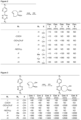
- Figures 1-4 shows the reaction between a tetrazine and a TCO, dissolved in 1:1 H 2 O/EtOH (% v/v).
- Figures 2, 3 , and 4 results obtained under various conditions during the oxidation step are shown. The cycloaddition is completed within 5 minutes to give several isomeric dihydropyridazines. The acid and oxidants are then added to give the final pyridizine product. Each oxidant (5 equivalents) was added to the mixture and the reaction was analyzed by HPLC-MS after 60 minutes. The time for the reactions to oxidize is also shown in the Figures.
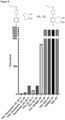
- Figures 4-7 show the results of the photocatalysed oxidations, performed in a Rayonet ® reactor equipped with 16 ⁇ 254 nm 35 W lamps (RPR-2537 A, UV irradiance of 12 mW/cm 2 ), as well as the addition of acids and/or a photosensitizer. The combination of these parameters shows a clear non-additive effect.
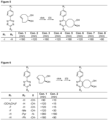
- Figures 8 and 9 show the data of various oxidants for oxidation of two different dihydropyridazine compounds.
- Figure 8 and 9 show the non-additive effect of the combination of UV-light and acid that was observed when oxidizing the resulting dihydropyridazines (from the ligation between a Tz and a cyclic unsaturated hydrocarbon, with at least one double bond in the trans-configuration, as shown above each of the Figures), to provide the corresponding pyridazine.
- Acidification solution of click product was mixed with acid solution at 19:1 or 9:1 v/v ratio. Acid solution was either neat acid or an aqueous solution of the desired acid.
- Oxidation with solid oxidants acidified solution of click product was further mixed at 9:1 v/v ratio with 10 mg/mL solution of the desired solid oxidant in the same organic co-solvent as was used for the click reaction (i.e. ethanol for ethanol-water mixtures and acetonitrile for acetonitrile-water mixtures). When the oxidant could not be dissolved to 10 mg/mL in the selected co-solvent, a saturated solution was used instead. The oxidation mixture was left standing in a closed vial at room temperature for the desired time period, then a sample was withdrawn and analyzed by HPLC. Oxidation with air oxygen: acidified solution of click product (60-100 ⁇ L) was left standing in an open vial at room temperature for the desired time period, then a sample was withdrawn and analyzed by HPLC.
- Oxidation with medical oxygen medical oxygen from a rubber balloon was bubbled through acidified solution of click product (60-100 ⁇ L) at room temperature. Where the total volume of the solution was reduced more than 2-fold by evaporation, it was reconstituted using the same water-organic mixture as used for the click reaction. Then, a sample was withdrawn and analyzed by HPLC.
- UV-assisted oxidation acidified solution of click product was mixed at 9:1 v/v ratio with concentrated solution of the desired photosensitizer in water or in the corresponding organic co-solvent (for fluorescent dyes). The resulting mixture was irradiated under a CAMAG UV Lamp equipped with 2 ⁇ 254 nm 8 W lamps UV irradiance of 2 mW/cm 2 for the desired time period, then a sample was withdrawn and analyzed by HPLC.
- the second-order rate constant of all the click reactions made during the previous examples were measured by stopped-flow spectrometry in phosphate-buffered saline (PBS) at 25 °C in accordance with the method described in Battisti et al. J. Med. Chem. 2021, 64, 20, 15297-15312 (see page 15310 for experimental details and influencing factors).
- stopped-flow measurements were performed using an SX20-LED stopped-flow spectrophotometer (Applied Photophysics) equipped with a 535 nm LED (optical pathlength 10 mm and full width half-maximum 34 nm) to monitor the characteristic tetrazine visible light absorbance (520-540 nm).
- the reagent syringes were loaded with a solution of axial-TCO-PEG 4 , and the instrument was primed. The subsequent data were collected in triplicate for each tetrazine. Reactions were conducted at 25 °C in PBS and recorded automatically at the time of acquisition. The data sets were analyzed by fitting an exponential decay using Prism 6 (GraphPad) to calculate the observed pseudo-first-order rate constants that were converted to second-order rate constants by dividing with the concentration of the excess TCO compound.
Landscapes
- Chemical & Material Sciences (AREA)
- Organic Chemistry (AREA)
- Medicines That Contain Protein Lipid Enzymes And Other Medicines (AREA)
- Medicines Containing Antibodies Or Antigens For Use As Internal Diagnostic Agents (AREA)
Priority Applications (2)
| Application Number | Priority Date | Filing Date | Title |
|---|---|---|---|
| EP23195496.7A EP4520751A1 (de) | 2023-09-05 | 2023-09-05 | Verfahren zur schnellen oxidation von dihydropyridazinen zu pyridazinen |
| PCT/EP2024/074549 WO2025051721A1 (en) | 2023-09-05 | 2024-09-03 | Method for rapid oxidation of dihydropyridazines to pyridazines |
Applications Claiming Priority (1)
| Application Number | Priority Date | Filing Date | Title |
|---|---|---|---|
| EP23195496.7A EP4520751A1 (de) | 2023-09-05 | 2023-09-05 | Verfahren zur schnellen oxidation von dihydropyridazinen zu pyridazinen |
Publications (1)
| Publication Number | Publication Date |
|---|---|
| EP4520751A1 true EP4520751A1 (de) | 2025-03-12 |
Family
ID=87933645
Family Applications (1)
| Application Number | Title | Priority Date | Filing Date |
|---|---|---|---|
| EP23195496.7A Withdrawn EP4520751A1 (de) | 2023-09-05 | 2023-09-05 | Verfahren zur schnellen oxidation von dihydropyridazinen zu pyridazinen |
Country Status (2)
| Country | Link |
|---|---|
| EP (1) | EP4520751A1 (de) |
| WO (1) | WO2025051721A1 (de) |
Citations (3)
| Publication number | Priority date | Publication date | Assignee | Title |
|---|---|---|---|---|
| WO2012121746A2 (en) | 2011-03-09 | 2012-09-13 | The General Hospital Corporation | Imaging beta cell mass |
| WO2017059397A1 (en) | 2015-10-01 | 2017-04-06 | Whitehead Institute For Biomedical Research | Labeling of antibodies |
| WO2020242948A1 (en) | 2019-05-24 | 2020-12-03 | Duke University | 18f-radiolabeled biomolecules |
-
2023
- 2023-09-05 EP EP23195496.7A patent/EP4520751A1/de not_active Withdrawn
-
2024
- 2024-09-03 WO PCT/EP2024/074549 patent/WO2025051721A1/en active Pending
Patent Citations (3)
| Publication number | Priority date | Publication date | Assignee | Title |
|---|---|---|---|---|
| WO2012121746A2 (en) | 2011-03-09 | 2012-09-13 | The General Hospital Corporation | Imaging beta cell mass |
| WO2017059397A1 (en) | 2015-10-01 | 2017-04-06 | Whitehead Institute For Biomedical Research | Labeling of antibodies |
| WO2020242948A1 (en) | 2019-05-24 | 2020-12-03 | Duke University | 18f-radiolabeled biomolecules |
Non-Patent Citations (14)
| Title |
|---|
| ALBU ET AL.: "l-Tetrazines and Inverse-Electron-Demand Diels-Alder Chemistry: A Convenient Radioiodination Strategy for Biomolecule Labeling, Screening, and Biodistribution Studies", BIOCONJUG CHEM, vol. 27, 2016, pages 207 - 216 |
| BATTISTI ET AL.: "Development of the First Aliphatic 18F-Labeled Tetrazine Suitable for Pretargeted PET Imaging-Expanding the Bioorthogonal Tool Box", J. MED. CHEM., vol. 64, no. 20, 2021, pages 15297 - 15312 |
| CHANCE: "22", REV. SCI. INSTRUM., 1951, pages 619 - 627 |
| D. ZENG ET AL: "The Growing Impact of Bioorthogonal Click Chemistry on the Development of Radiopharmaceuticals", THE JOURNAL OF NUCLEAR MEDICINE, vol. 54, no. 6, 24 April 2013 (2013-04-24), US, pages 829 - 832, XP055711324, ISSN: 0161-5505, DOI: 10.2967/jnumed.112.115550 * |
| DELPIVO, CMICHELETTI, GBOGA, C: "A Green Synthesis of Quinoxalines and 2,3-Dihydropyrazines", SYNTHESIS, vol. 45, 2013, pages 1546 - 1552, XP055700986, DOI: 10.1055/s-0033-1338441 |
| KARAKIFUMIKA ET AL., TETRAHEDRON, vol. 97, 2021, pages 132411 |
| KEINANEN ET AL., ACS MEDICINAL CHEMISTRY LETTERS, vol. 7, 2015, pages 62 - 66 |
| ROYZEN, M.; YAP, G. P. A.; FOX, J. M. A: "Photochemical Synthesis of Functionalized trans-Cyclooctenes Driven by Metal Complexation", JOURNAL OF THE AMERICAN CHEMICAL SOCIETY, vol. 130, 2008, pages 3760 - 3761, XP002629676, DOI: 10.1021/JA8001919 |
| SHI WEI ET AL: "SUPPORTING INFORMATION: Tuning the Physicochemical Properties of BODIPY for Bioimaging via meso -Amino Acylation", ORGANIC LETTERS, vol. 24, no. 18, 13 May 2022 (2022-05-13), US, pages 3368 - 3372, XP093134976, ISSN: 1523-7060, DOI: 10.1021/acs.orglett.2c01118 * |
| SHI WEI ET AL: "Tuning the Physicochemical Properties of BODIPY for Bioimaging via meso -Amino Acylation", ORGANIC LETTERS, vol. 24, no. 18, 3 May 2022 (2022-05-03), US, pages 3368 - 3372, XP093134964, ISSN: 1523-7060, Retrieved from the Internet <URL:https://pubs.acs.org/doi/pdf/10.1021/acs.orglett.2c01118> DOI: 10.1021/acs.orglett.2c01118 * |
| STOCKMANN, HNEVES, A. ADAY, H. ASTAIRS, SBRINDLE, K. MLEEPER, F. J: "E,E)-1,5-Cyclooctadiene: a small and fast click-chemistry multitalent", CHEMICAL COMMUNICATIONS, vol. 47, 2011, pages 7203 - 7205 |
| SYVANEN ET AL., ACS CHEMICAL NEUROSCIENCE, vol. 11, 2020, pages 4460 - 4468 |
| WARRENER RONALD ET AL: "[pi]-Bond Screening in Benzonorbornadienes: The Role of 7-Substituents in Governing the Facial Selectivity for the Diels-Alder Reaction of Benzonorbornadienes with 3,6-Di(2-pyridyl)-s-Tetrazine", MOLECULES, vol. 6, no. 4, 31 March 2001 (2001-03-31), CH, pages 353 - 369, XP093134852, ISSN: 1420-3049, DOI: 10.3390/60400353 * |
| ZENG ET AL., JOURNAL OF NUCLEAR MEDICINE, vol. 54, 2013, pages 829 - 832 |
Also Published As
| Publication number | Publication date |
|---|---|
| WO2025051721A1 (en) | 2025-03-13 |
Similar Documents
| Publication | Publication Date | Title |
|---|---|---|
| JP6223962B2 (ja) | トランス−シクロオクテンジエノフィル及びジエンを有するイメージング又は治療用プレターゲティングキット | |
| US20250205374A1 (en) | Method for providing a labeled single isomeric chemical entity targeting vector based on the use of an isomer-free dienophile | |
| Battisti et al. | Development of the first aliphatic 18F-labeled tetrazine suitable for pretargeted PET imaging—Expanding the bioorthogonal tool box | |
| Nolting et al. | Molecular imaging probe development: a chemistry perspective | |
| JP7421790B2 (ja) | キラルなサイクレン化合物およびその使用 | |
| Boros et al. | Evaluation of the H2 dedpa scaffold and its cRGDyK conjugates for labeling with 64Cu | |
| Ranyuk et al. | 68Ga/DOTA-and 64Cu/NOTA-phthalocyanine conjugates as fluorescent/PET bimodal imaging probes | |
| CN102438656B (zh) | 预靶向试剂盒、方法和其中使用的试剂 | |
| Boswell et al. | Synthesis of a cross-bridged cyclam derivative for peptide conjugation and 64Cu radiolabeling | |
| Navarro et al. | Prosthetic groups for radioiodination and astatination of peptides and proteins: A comparative study of five potential bioorthogonal labeling strategies | |
| JP2014506869A5 (de) | ||
| Zhu et al. | Synthesis of 3-chloro-6-((4-(di-tert-butyl [18 F] fluorosilyl)-benzyl) oxy)-1, 2, 4, 5-tetrazine ([18 F] SiFA-OTz) for rapid tetrazine-based 18 F-radiolabeling | |
| Ruivo et al. | Improved stability of a novel fluorine-18 labeled TCO analogue for pretargeted PET imaging | |
| Joaqui-Joaqui et al. | Catechol-based functionalizable ligands for gallium-68 positron emission tomography imaging | |
| Chappell et al. | Improved synthesis of the bifunctional chelating agent 1, 4, 7, 10-tetraaza-N-(1-carboxy-3-(4-nitrophenyl) propyl)-N′, N ″, N‴-tris (acetic acid) cyclododecane (PA-DOTA) | |
| Hamon et al. | Design of bifunctional pyclen-based lanthanide luminescent bioprobes for targeted two-photon imaging | |
| Boudjemeline et al. | [18 F] ODIBO: a prosthetic group for bioorthogonal radiolabeling of macromolecules via strain-promoted alkyne–azide cycloaddition | |
| Srivatsan et al. | In vitro cellular uptake and dimerization of signal transducer and activator of transcription-3 (STAT3) identify the photosensitizing and imaging-potential of isomeric photosensitizers derived from chlorophyll-a and bacteriochlorophyll-a | |
| Slikboer et al. | Imidazole fused phenanthroline (PIP) ligands for the preparation of multimodal Re (i) and 99m Tc (i) probes | |
| Auchynnikava et al. | Tetrazine Glycoconjugate for Pretargeted Positron Emission Tomography Imaging of trans-Cyclooctene-Functionalized Molecular Spherical Nucleic Acids | |
| EP4520751A1 (de) | Verfahren zur schnellen oxidation von dihydropyridazinen zu pyridazinen | |
| Er et al. | Primary evaluation of a nickel-chlorophyll derivative as a multimodality agent for tumor imaging and photodynamic therapy | |
| Diao et al. | Cysteine-specific 18F and NIR dual labeling of peptides via vinyltetrazine bioorthogonal conjugation for molecular imaging | |
| Das et al. | Boron compounds in molecular imaging | |
| JP6263716B2 (ja) | 悪性腫瘍のpet診断用トレーサー |
Legal Events
| Date | Code | Title | Description |
|---|---|---|---|
| PUAI | Public reference made under article 153(3) epc to a published international application that has entered the european phase |
Free format text: ORIGINAL CODE: 0009012 |
|
| STAA | Information on the status of an ep patent application or granted ep patent |
Free format text: STATUS: THE APPLICATION HAS BEEN PUBLISHED |
|
| AK | Designated contracting states |
Kind code of ref document: A1 Designated state(s): AL AT BE BG CH CY CZ DE DK EE ES FI FR GB GR HR HU IE IS IT LI LT LU LV MC ME MK MT NL NO PL PT RO RS SE SI SK SM TR |
|
| STAA | Information on the status of an ep patent application or granted ep patent |
Free format text: STATUS: THE APPLICATION IS DEEMED TO BE WITHDRAWN |
|
| 18D | Application deemed to be withdrawn |
Effective date: 20250913 |