EP4521411A2 - Procédé d'analyse du degré de similarité d'au moins deux échantillons à l'aide d'une amplification déterministe de génome entier (drs-wga) sur site de restriction - Google Patents
Procédé d'analyse du degré de similarité d'au moins deux échantillons à l'aide d'une amplification déterministe de génome entier (drs-wga) sur site de restriction Download PDFInfo
- Publication number
- EP4521411A2 EP4521411A2 EP25152252.0A EP25152252A EP4521411A2 EP 4521411 A2 EP4521411 A2 EP 4521411A2 EP 25152252 A EP25152252 A EP 25152252A EP 4521411 A2 EP4521411 A2 EP 4521411A2
- Authority
- EP
- European Patent Office
- Prior art keywords
- samples
- sample
- parent
- dna
- cell
- Prior art date
- Legal status (The legal status is an assumption and is not a legal conclusion. Google has not performed a legal analysis and makes no representation as to the accuracy of the status listed.)
- Pending
Links
Images





Classifications
-
- C—CHEMISTRY; METALLURGY
- C12—BIOCHEMISTRY; BEER; SPIRITS; WINE; VINEGAR; MICROBIOLOGY; ENZYMOLOGY; MUTATION OR GENETIC ENGINEERING
- C12Q—MEASURING OR TESTING PROCESSES INVOLVING ENZYMES, NUCLEIC ACIDS OR MICROORGANISMS; COMPOSITIONS OR TEST PAPERS THEREFOR; PROCESSES OF PREPARING SUCH COMPOSITIONS; CONDITION-RESPONSIVE CONTROL IN MICROBIOLOGICAL OR ENZYMOLOGICAL PROCESSES
- C12Q1/00—Measuring or testing processes involving enzymes, nucleic acids or microorganisms; Compositions therefor; Processes of preparing such compositions
- C12Q1/68—Measuring or testing processes involving enzymes, nucleic acids or microorganisms; Compositions therefor; Processes of preparing such compositions involving nucleic acids
- C12Q1/6869—Methods for sequencing
- C12Q1/6874—Methods for sequencing involving nucleic acid arrays, e.g. sequencing by hybridisation
-
- C—CHEMISTRY; METALLURGY
- C12—BIOCHEMISTRY; BEER; SPIRITS; WINE; VINEGAR; MICROBIOLOGY; ENZYMOLOGY; MUTATION OR GENETIC ENGINEERING
- C12Q—MEASURING OR TESTING PROCESSES INVOLVING ENZYMES, NUCLEIC ACIDS OR MICROORGANISMS; COMPOSITIONS OR TEST PAPERS THEREFOR; PROCESSES OF PREPARING SUCH COMPOSITIONS; CONDITION-RESPONSIVE CONTROL IN MICROBIOLOGICAL OR ENZYMOLOGICAL PROCESSES
- C12Q1/00—Measuring or testing processes involving enzymes, nucleic acids or microorganisms; Compositions therefor; Processes of preparing such compositions
- C12Q1/68—Measuring or testing processes involving enzymes, nucleic acids or microorganisms; Compositions therefor; Processes of preparing such compositions involving nucleic acids
- C12Q1/6844—Nucleic acid amplification reactions
- C12Q1/6853—Nucleic acid amplification reactions using modified primers or templates
- C12Q1/6855—Ligating adaptors
-
- C—CHEMISTRY; METALLURGY
- C12—BIOCHEMISTRY; BEER; SPIRITS; WINE; VINEGAR; MICROBIOLOGY; ENZYMOLOGY; MUTATION OR GENETIC ENGINEERING
- C12Q—MEASURING OR TESTING PROCESSES INVOLVING ENZYMES, NUCLEIC ACIDS OR MICROORGANISMS; COMPOSITIONS OR TEST PAPERS THEREFOR; PROCESSES OF PREPARING SUCH COMPOSITIONS; CONDITION-RESPONSIVE CONTROL IN MICROBIOLOGICAL OR ENZYMOLOGICAL PROCESSES
- C12Q1/00—Measuring or testing processes involving enzymes, nucleic acids or microorganisms; Compositions therefor; Processes of preparing such compositions
- C12Q1/68—Measuring or testing processes involving enzymes, nucleic acids or microorganisms; Compositions therefor; Processes of preparing such compositions involving nucleic acids
- C12Q1/6869—Methods for sequencing
-
- C—CHEMISTRY; METALLURGY
- C12—BIOCHEMISTRY; BEER; SPIRITS; WINE; VINEGAR; MICROBIOLOGY; ENZYMOLOGY; MUTATION OR GENETIC ENGINEERING
- C12Q—MEASURING OR TESTING PROCESSES INVOLVING ENZYMES, NUCLEIC ACIDS OR MICROORGANISMS; COMPOSITIONS OR TEST PAPERS THEREFOR; PROCESSES OF PREPARING SUCH COMPOSITIONS; CONDITION-RESPONSIVE CONTROL IN MICROBIOLOGICAL OR ENZYMOLOGICAL PROCESSES
- C12Q1/00—Measuring or testing processes involving enzymes, nucleic acids or microorganisms; Compositions therefor; Processes of preparing such compositions
- C12Q1/68—Measuring or testing processes involving enzymes, nucleic acids or microorganisms; Compositions therefor; Processes of preparing such compositions involving nucleic acids
- C12Q1/6876—Nucleic acid products used in the analysis of nucleic acids, e.g. primers or probes
- C12Q1/6881—Nucleic acid products used in the analysis of nucleic acids, e.g. primers or probes for tissue or cell typing, e.g. human leukocyte antigen [HLA] probes
-
- C—CHEMISTRY; METALLURGY
- C12—BIOCHEMISTRY; BEER; SPIRITS; WINE; VINEGAR; MICROBIOLOGY; ENZYMOLOGY; MUTATION OR GENETIC ENGINEERING
- C12Q—MEASURING OR TESTING PROCESSES INVOLVING ENZYMES, NUCLEIC ACIDS OR MICROORGANISMS; COMPOSITIONS OR TEST PAPERS THEREFOR; PROCESSES OF PREPARING SUCH COMPOSITIONS; CONDITION-RESPONSIVE CONTROL IN MICROBIOLOGICAL OR ENZYMOLOGICAL PROCESSES
- C12Q1/00—Measuring or testing processes involving enzymes, nucleic acids or microorganisms; Compositions therefor; Processes of preparing such compositions
- C12Q1/68—Measuring or testing processes involving enzymes, nucleic acids or microorganisms; Compositions therefor; Processes of preparing such compositions involving nucleic acids
- C12Q1/6876—Nucleic acid products used in the analysis of nucleic acids, e.g. primers or probes
- C12Q1/6883—Nucleic acid products used in the analysis of nucleic acids, e.g. primers or probes for diseases caused by alterations of genetic material
-
- C—CHEMISTRY; METALLURGY
- C12—BIOCHEMISTRY; BEER; SPIRITS; WINE; VINEGAR; MICROBIOLOGY; ENZYMOLOGY; MUTATION OR GENETIC ENGINEERING
- C12Q—MEASURING OR TESTING PROCESSES INVOLVING ENZYMES, NUCLEIC ACIDS OR MICROORGANISMS; COMPOSITIONS OR TEST PAPERS THEREFOR; PROCESSES OF PREPARING SUCH COMPOSITIONS; CONDITION-RESPONSIVE CONTROL IN MICROBIOLOGICAL OR ENZYMOLOGICAL PROCESSES
- C12Q1/00—Measuring or testing processes involving enzymes, nucleic acids or microorganisms; Compositions therefor; Processes of preparing such compositions
- C12Q1/68—Measuring or testing processes involving enzymes, nucleic acids or microorganisms; Compositions therefor; Processes of preparing such compositions involving nucleic acids
- C12Q1/6876—Nucleic acid products used in the analysis of nucleic acids, e.g. primers or probes
- C12Q1/6883—Nucleic acid products used in the analysis of nucleic acids, e.g. primers or probes for diseases caused by alterations of genetic material
- C12Q1/6886—Nucleic acid products used in the analysis of nucleic acids, e.g. primers or probes for diseases caused by alterations of genetic material for cancer
-
- G—PHYSICS
- G16—INFORMATION AND COMMUNICATION TECHNOLOGY [ICT] SPECIALLY ADAPTED FOR SPECIFIC APPLICATION FIELDS
- G16B—BIOINFORMATICS, i.e. INFORMATION AND COMMUNICATION TECHNOLOGY [ICT] SPECIALLY ADAPTED FOR GENETIC OR PROTEIN-RELATED DATA PROCESSING IN COMPUTATIONAL MOLECULAR BIOLOGY
- G16B20/00—ICT specially adapted for functional genomics or proteomics, e.g. genotype-phenotype associations
- G16B20/20—Allele or variant detection, e.g. single nucleotide polymorphism [SNP] detection
-
- G—PHYSICS
- G16—INFORMATION AND COMMUNICATION TECHNOLOGY [ICT] SPECIALLY ADAPTED FOR SPECIFIC APPLICATION FIELDS
- G16B—BIOINFORMATICS, i.e. INFORMATION AND COMMUNICATION TECHNOLOGY [ICT] SPECIALLY ADAPTED FOR GENETIC OR PROTEIN-RELATED DATA PROCESSING IN COMPUTATIONAL MOLECULAR BIOLOGY
- G16B30/00—ICT specially adapted for sequence analysis involving nucleotides or amino acids
- G16B30/10—Sequence alignment; Homology search
-
- G—PHYSICS
- G16—INFORMATION AND COMMUNICATION TECHNOLOGY [ICT] SPECIALLY ADAPTED FOR SPECIFIC APPLICATION FIELDS
- G16B—BIOINFORMATICS, i.e. INFORMATION AND COMMUNICATION TECHNOLOGY [ICT] SPECIALLY ADAPTED FOR GENETIC OR PROTEIN-RELATED DATA PROCESSING IN COMPUTATIONAL MOLECULAR BIOLOGY
- G16B40/00—ICT specially adapted for biostatistics; ICT specially adapted for bioinformatics-related machine learning or data mining, e.g. knowledge discovery or pattern finding
- G16B40/30—Unsupervised data analysis
-
- C—CHEMISTRY; METALLURGY
- C12—BIOCHEMISTRY; BEER; SPIRITS; WINE; VINEGAR; MICROBIOLOGY; ENZYMOLOGY; MUTATION OR GENETIC ENGINEERING
- C12Q—MEASURING OR TESTING PROCESSES INVOLVING ENZYMES, NUCLEIC ACIDS OR MICROORGANISMS; COMPOSITIONS OR TEST PAPERS THEREFOR; PROCESSES OF PREPARING SUCH COMPOSITIONS; CONDITION-RESPONSIVE CONTROL IN MICROBIOLOGICAL OR ENZYMOLOGICAL PROCESSES
- C12Q2521/00—Reaction characterised by the enzymatic activity
- C12Q2521/30—Phosphoric diester hydrolysing, i.e. nuclease
- C12Q2521/301—Endonuclease
-
- C—CHEMISTRY; METALLURGY
- C12—BIOCHEMISTRY; BEER; SPIRITS; WINE; VINEGAR; MICROBIOLOGY; ENZYMOLOGY; MUTATION OR GENETIC ENGINEERING
- C12Q—MEASURING OR TESTING PROCESSES INVOLVING ENZYMES, NUCLEIC ACIDS OR MICROORGANISMS; COMPOSITIONS OR TEST PAPERS THEREFOR; PROCESSES OF PREPARING SUCH COMPOSITIONS; CONDITION-RESPONSIVE CONTROL IN MICROBIOLOGICAL OR ENZYMOLOGICAL PROCESSES
- C12Q2525/00—Reactions involving modified oligonucleotides, nucleic acids, or nucleotides
- C12Q2525/10—Modifications characterised by
- C12Q2525/191—Modifications characterised by incorporating an adaptor
-
- C—CHEMISTRY; METALLURGY
- C12—BIOCHEMISTRY; BEER; SPIRITS; WINE; VINEGAR; MICROBIOLOGY; ENZYMOLOGY; MUTATION OR GENETIC ENGINEERING
- C12Q—MEASURING OR TESTING PROCESSES INVOLVING ENZYMES, NUCLEIC ACIDS OR MICROORGANISMS; COMPOSITIONS OR TEST PAPERS THEREFOR; PROCESSES OF PREPARING SUCH COMPOSITIONS; CONDITION-RESPONSIVE CONTROL IN MICROBIOLOGICAL OR ENZYMOLOGICAL PROCESSES
- C12Q2535/00—Reactions characterised by the assay type for determining the identity of a nucleotide base or a sequence of oligonucleotides
- C12Q2535/122—Massive parallel sequencing
-
- C—CHEMISTRY; METALLURGY
- C12—BIOCHEMISTRY; BEER; SPIRITS; WINE; VINEGAR; MICROBIOLOGY; ENZYMOLOGY; MUTATION OR GENETIC ENGINEERING
- C12Q—MEASURING OR TESTING PROCESSES INVOLVING ENZYMES, NUCLEIC ACIDS OR MICROORGANISMS; COMPOSITIONS OR TEST PAPERS THEREFOR; PROCESSES OF PREPARING SUCH COMPOSITIONS; CONDITION-RESPONSIVE CONTROL IN MICROBIOLOGICAL OR ENZYMOLOGICAL PROCESSES
- C12Q2600/00—Oligonucleotides characterized by their use
- C12Q2600/156—Polymorphic or mutational markers
Definitions
- the present disclosure relates to a method for sample pairing, assigning the identity of each of a plurality of samples to a class or individual, by analysing data obtained by low-pass whole genome sequencing carried out on said plurality of samples, achieving single-cell resolution, with or without the use of references.
- the method provides a unified assay enabling the simultaneous identification and characterisation of a sample under-test among the samples.
- the method according to the present disclosure can be used in several fields of application, including, but not limited to:
- STR loci also called microsatellites.
- This method involves carrying out a targeted PCR for a plurality of loci and detecting amplicons with capillary electrophoresis.
- STR loci also called microsatellites.
- human identification since for each locus each allele (from maternal and paternal origin) can have many different values, a great diversity is generated with a relative low number of genetic loci amplified, such as that the allele sizes of an individual measured over 10 or 20 loci can identify with high probability an individual in a large cohort.
- Allelic drop-out can significantly decrease the alleles detected in the electropherogram of an STR assay down to 80%, 70%, 60%, 50%, 40%, 30%, 20%, 10% or lower.
- allelic drop-in can occur, resulting in additional peaks confounding the interpretation, especially for highly degraded samples and low-input template such as with single-cells. The resulting information is then insufficient to assign the sample identity with confidence.
- DNA and cells from one or more perpetrators and the victim may be present, with a number of contributors which may be 1 victim and 1, 2, 3, 4, 5 or more perpetrators.
- the problem may be exacerbated by the fact that the target cells for analysis are sperm-cells which, being haploid, only have a single-allele per locus.
- the target cells for analysis are sperm-cells which, being haploid, only have a single-allele per locus.
- single-sperm cells may be isolated using the DEPArray ( Fontana et. al, "Isolation and genetic analysis of pure cells from forensic biological mixtures: The precision of a digital approach", Forensic Sciences International: Genetics 2007, http://dx.doi.org/10.1016/j.fsigen.2017.04.023 ), which allows to collect up to 48 single-sperms from a single DEPArray run, using the validated forensic application, or up to 96 single-cells using different application programs available from DEPArray system.
- DEPArray Fontana et. al, "Isolation and genetic analysis of pure cells from forensic biological mixtures: The precision of a digital approach", Forensic Sciences International: Genetics 2007, http://dx.doi.org/10.1016/j.fsigen.2017.04.023 ), which allows to collect up to 48 single-sperms from a single DEPArray run, using the validated forensic application, or up to 96 single-cells using different application programs available from DEP
- STR kits require capillary electrophoresis sequencers for fragment length analysis of the fluorescent amplification products.
- accessibility of capillary electrophoresis has declined, and many labs find themselves at a loss to analyze in-house STR profiles with capillary electrophoresis.
- Targeted PCR panels for the analysis of STR using massively parallel sequencers are now available. However, this implies the acquisition of additional reagents often not already present in the lab.
- fetal cells such as fetal nucleated red blood cells or trophoblasts
- fetal cells such as fetal nucleated red blood cells or trophoblasts
- genotyping with a panel of 90 highly polymorphic SNPs using PCR-based target amplification (of 40 amplicons) and massively parallel sequencing is proposed as an alternative to STR analysis in order to confirm fetal origin of the cell recovered for diagnosis.
- This approach uses a small aliquot of DNA from the single-cell WGA product, however it still has the drawback of requiring additional samples work-up and associated costs, with respect to the workflow to assess aneuploidy based on low-pass WGS.
- Non-invasive assessment of molar pregnancies and gestational trophoblastic disease has been demonstrated on circulating trophoblasts ( Sunde L et al., "Hydatidiform mole diagnostics using circulating gestational trophoblasts isolated from maternal blood" Mol Genet Genomic Med. 2020;00:e1565. https: / /doi. org/10 .1002/mgg3 .1565 ), but STR analysis is once again considered essential to determine the origin of the rare trophoblasts isolated from maternal blood.
- Hydatidiform moles can be "complete moles" which are typically diploid with both genome sets originating from the father (parental type: PP), due to a fertilization of an egg which has lost the maternal nucleus followed, in the majority of cases, by a duplication of the sperm chromosomes, or -in a minority of cases- by the fertilization by two sperms.
- Most of the HMs with the parental type PP show homozygosity in all loci (P1P1), whereas approximately 15% show heterozygosity in some loci (P1P2).
- Partial moles are HMs typically triploid with two genome sets from the father and one from the mother (parental type: PPM).
- Complete moles carry an increased risk of Choriocarcinoma (15% with respect to 0.5% in partial moles). Thus, it is of interest to understand if the HMs carry a copy of the maternal genome or if it is absent.
- LIMS Laboratory Management Information System
- Another example of need for sample pairing methods is the assessment of endothelial cell origin (host or donor) in patients of allogenic hematopoietic cell transplantation (allo-HSCT).
- Allo-HSCT allogenic hematopoietic cell transplantation
- Detecting donor-derived endothelial cells is of interest in the study of the physio-pathologic relationships between endothelium and graft-versus-host disease (GVHD), for the potential role of vascular endothelium as a target in early phase of GVHD and the potential tolerogenic role of donor-derived endothelial cells, as well as graft-versus-tumor (reviewed in Penack O.
- GVHD graft-versus-host disease
- Non-invasive prenatal screening based on circulating cfDNA for fetal chromosome imbalances can be evaluated for sufficient fetal DNA fraction (FF) since low levels may give rise to false-negative results.
- FF fetal DNA fraction
- Some laboratories may not be assessing FF or not using optimal methods for detection, and this could potentially provide false-negative results to patients.
- Current approaches developed to estimate fetal DNA fraction using next-generation sequencing include:
- NGSCheckMate software for validating sample identity in next-generation sequencing studies within and across data types
- Nucleic Acids Research, 2017, Vol. 45, No. 11 which teaches a method to ensure that NGS datasets from the same subject are properly paired.
- the NGSCheckMate method verifies sample identities from FASTQ, BAM or VCF files using a model-based method to compare allele read fractions at approximately 12k or 21k single-nucleotide polymorphisms (SNP) loci, considering depth-dependent behavior of similarity metrics for identical and unrelated samples.
- SNP single-nucleotide polymorphisms
- NGSCheckMate is effective for a variety of data types, including exome sequencing, whole-genome sequencing, RNAseq, ChIP-seq, targeted sequencing and single-cell whole-genome sequencing, but teaches a requirement for sequencing depth of >0.5X. The requirement is even higher (>3x) in case of kinship or parental relationship samples. In fact, when Sejoon Lee et al.
- WGA Whole Genome Amplification
- DRS-WGA Deterministic Restriction Site
- DRS-WGA has been shown to be the best-in-class WGA method in many perspectives, in particular in terms of lower allelic drop-out from single cells (Borgstrom et al., 2017; Normand et al., 2016; Babayan et al., 2016; Binder et al., 2014).
- WO2017/178655 and WO2019/016401A1 teach a simplified method to prepare massively parallel sequencing libraries from DRS-WGA (e.g. Ampli1 WGA) for low-pass whole genome sequencing and copy number profiling.
- DRS-WGA e.g. Ampli1 WGA
- PLoSONE 13(3) :e0193689 https://doi.org/10.1371/journal.pone.0193689
- the method performance of WO2017/178655 using the Ion Torrent Platform has been detailed with reference to copy number profiling.
- DRS-WGA has been shown to be better than DOP-PCR for the analysis of copy-number profiles from minute amounts of microdissected FFPE material ( Stoecklein et al., Am J Pathol. 2002 Jul; 161(1):43-51 ; Arneson et al., ISRN Oncol. 2012;2012:710692. doi: 10.5402/2012/710692.
- fetal genome-wide profiling e.g., genome-wide copy-number profiling
- capability to confirm the fetal origin of the sample e.g., genome-wide copy-number profiling
- pre-implantation genetic screening (PGS; also referred to as pre-implantation genetic testing or "PGT") on e.g. blastocysts, spent embryo culture medium
- PGS pre-implantation genetic testing
- genome-wide embryo genome profiling e.g., genome-wide copy-number profiling
- prenatal samples e.g.: chorionic villi, amniotic fluid, products of conception
- a method using a single assay to detect and/or quantify maternal cell or exogenous contamination in order to avoid false negative or sex discordance calls from the analysis, combining the capability to i) fetal genome-wide profiling and (ii) quantify and/or determine the absence of maternal contamination, from the same low-pass sequencing data.
- NGS or MPS massive-parallel next generation sequencing
- a method of sequencing DNA comprising the creation of a library of DNA molecules separated spatially and/or in time, clonally sequenced (with or without prior clonal amplification).
- Examples include the Illumina platform (Illumina Inc), the Ion Torrent platform (Thermo Fisher Scientific Inc), the Pacific Biosciences platform, the MinIon (Oxford Nanopore Technologies Ltd).
- low-pass whole genome sequencing there is intended a whole genome sequencing at mean sequencing depth lower than 1x with reference to the entire Reference Genome, of a massively parallel sequencing library which has not been enriched for sequence-specific fragments.
- This definition explicitly excludes the case of PCR-based target enrichment or sequence-specific capture-baits target enrichment for a set of loci, such as for example Single-Nucleotide Polymorphisms (SNPs) and/or Short-Tandem Repeats (STR) loci.
- SNPs Single-Nucleotide Polymorphisms
- STR Short-Tandem Repeats
- reference genome there is intended a reference DNA sequence for the specific species.
- locus means a fixed position on a chromosome (relative to the reference genome).
- polymorphic locus there is intended a locus having 2 or more alleles with an observed frequency larger than 1% in a population.
- heterozygous locus there is intended a locus having 2 or more alleles observed in a specific sample.
- average heterozygosity for a locus there is intended the value 1 minus the sum of square of the allelic frequencies.
- covered genome there is intended the portion of reference genome covered by at least one read.
- read there is intended the piece of DNA that is sequenced (“read") by the sequencer.
- reduction ratio there is intended the total number of bases of fragments, obtained by in-silico digestion of a reference genome according to a restriction enzyme employed in a DRS-WGA, comprised in a specified base-pair range, divided by the total number of bases in the reference genome.
- fragmentation-free, sequencing-adaptor/WGA fusion-primer and PCR reaction massively-parallel sequencing library preparation
- a massively-parallel sequencing library preparation on DRS-WGA products without DNA fragmentation steps, whereby sequencing adaptors are added to the WGA product by fusion primers, e.g. according to patent applications ( WO2017/178655 ) or ( WO2019/016401A1 ).
- the expression “pair-wise similarity score” there is intended a function of a plurality of paired inputs with a finite codomain.
- the codomain is preferably normalized to a standard value, such as [-1;1] or [0;1], independent of the number of paired inputs.
- sample clustering there is intended an algorithm for partitioning samples so that samples belonging to the same partition (said also “cluster”) share a common property selected from the group consisting of the identity of the one individual (or more individuals) substantially contributing DNA to samples of that partition, the property of containing insufficient quantities of DNA and the property of containing highly degraded DNA or DNA of uncertain origin.
- identity-cluster there is intended a group composed of samples containing with high probability DNA from only one and the same individual.
- the meaning of high probability depends on the application as the skilled in the art would understand and define in relation to the specifics of the application and its performance requirements. For example, in the case of fetal cells analysis, assume that a diagnosis is issued when only at least three single 'putative' fetal cells (i.e. belonging to the identity cluster of cells which are in kin relationship with the maternal reference) are individually analyzed and reported. The diagnosis, e.g.
- the method according to the present disclosure may be used to reconstruct an STR profile from a number Ncells of individual cells.
- the number of single-cells analyzed, the mean STR call rate for each individual sample from the casework a different requirement may arise on the exact value of high-probability (Prob[Single_ID]) to meet the objectives.
- This requirement is more difficult to model analytically and may be derived for example by Montecarlo simulations by using available databases and simulating in-silico various degree of allelic drop-outs, number of single cells actually analyzed, and algorithmic choices in the reconstruction of the profile.
- single-individual WGA-DNA sample there is intended a sample comprising a mix of DRS-WGA products obtained from samples containing DNA from a single-individual.
- non-invasive prenatal testing there is intended carrying out genetic assays in order to evaluate fetal cell-free DNA or intact fetal cells circulating in maternal blood.
- pre-implantation genetic testing/screening there is intended carrying out genetic assays in order to evaluate embryos before transfer to the uterus by genome-wide analysis of, for example, copy-number alterations for determining the presence of aneuploidy (either too many or too few chromosomes) in a developing embryo.
- pre-implantation genetic diagnosis there is intended pre-implantation genetic testing by targeted sequencing in order to assay the presence of sequence variants in a developing embryo, such as for example mutations linked to single-gene disorders (e.g., Huntington disease, cystic fibrosis, fragile X syndrome), including those that are autosomal dominant and recessive or X-linked, or hereditary cancer syndromes (e.g., hereditary breast and ovarian cancer, Lynch syndrome). Additionally, this term is intended for sequencing to identify human leukocyte antigen-compatible, unaffected embryos gestated with the goal of allowing ill family members to receive compatible bone marrow transplants or cord blood transfusions.
- single-gene disorders e.g., Huntington disease, cystic fibrosis, fragile X syndrome
- hereditary cancer syndromes e.g., hereditary breast and ovarian cancer, Lynch syndrome
- embryo sample there is intended a sample containing DNA from an embryo, such as for example a blastocyst, a spent embryo-culture medium, a polar body.
- single-individual WGA-DNA data there is intended the data obtained merging sequencing data obtained from samples containing DRS-WGA DNA from a single-individual.
- the term “maternal” may be used to extend its meaning to "belonging to the woman” or “belonging to the female parent”, and “mother” to extend to " woman” or “female-parent”, with reference to the female individual which has contributed an egg to an embryo, a fetus from an ongoing pregnancy, although that woman may have not become a mother yet as a result of delivering an offspring corresponding to said embryo or fetus etc.
- the term “paternal” may be used to extend its meaning to "belonging to the man” or “belonging to the male parent”, and “ father” to extend to "man” or “male-parent”, with reference to the male individual which has contributed a sperm to an embryo, a fetus from an ongoing pregnancy, an hydatidiform mole, although that man may have not become a father yet as a result of a woman delivering an offspring corresponding to said embryo or fetus etc.
- the method according to the present disclosure is applied to the analysis of a plurality of samples comprising genomic DNA.
- the method is for analyzing the degree of similarity of at least two samples in a plurality of samples comprising genomic DNA.
- the samples species is Homo Sapiens, and unless otherwise noted this species will be referred to in the rest of the description, without limitation to the applicability to other species, when applicable.
- the method comprises the following steps.
- step a) a plurality of samples comprising genomic DNA are provided.
- step b a deterministic restriction-site whole genome amplification (DRS-WGA) of said genomic DNA is carried out separately on each sample.
- DRS-WGA deterministic restriction-site whole genome amplification
- step c) a massively parallel sequencing library is prepared from each product of said DRS-WGA using a fragmentation-free, sequencing-adaptor/WGA fusion-primer PCR reaction.
- step d) low-pass whole genome sequencing is carried out at a mean coverage depth of ⁇ 1x on said massively parallel sequencing library.
- the mean coverage is preferably 0.01x, preferably at a coverage ⁇ 0.05x, more preferably at a coverage ⁇ 0.1x, even more preferably at a coverage ⁇ 0.5x. This enables a reduction in sequencing costs while maintaining good results in the analysis in relation to the application.
- step e) the reads obtained in step d) are aligned on a reference genome.
- step f) the allelic content at a plurality of polymorphic loci is extracted for each sample, i.e. is obtained from the aligned reads.
- Said plurality of loci comprises polymorphic loci for the species considered.
- Said plurality of polymorphic loci preferably comprises polymorphic loci with average heterozygosity > 0.499, more preferably with average heterozygosity > 0.49, even more preferably with average heterozygosity > 0.4, even more preferably with average heterozygosity > 0.3, the most preferably with average heterozygosity > 0.2.
- Said plurality of polymorphic loci preferably comprises > 200,000 loci, more preferably > 300,000 loci, even more preferably > 500,000 loci, the most preferably > 1,000,000 loci.
- step g a pair-wise similarity score for the at least two samples is calculated, as a function of the allelic content measured at said plurality of loci.
- step h the degree of similarity of the at least two samples is determined on the basis of the similarity score.
- similarity can be measured based on the concordance of allelic content in a shared polymorphic loci, with the word "shared" means the loci is covered by at least one DNA read of the samples in a pair or set of the at least two samples.
- the pair-wise similarity score is preferably calculated by computing the correlation of the B-allele frequency across loci covered by at least one read in the at least two samples.
- the pair-wise similarity score is preferably calculated by computing the mean concordance value across loci covered by at least one read in both paired samples, wherein the concordance value for each locus is assigned one the following values:
- the concordance value for each locus can be assigned:
- the methods described herein can be used to couple samples (e.g., single cell samples, cell-free DNA samples, etc) to measure the degree of "similarity" between the samples .
- samples e.g., single cell samples, cell-free DNA samples, etc.
- a control sample such as a maternal/paternal sample in the case of a NIPT assay or paternity testing, respectively, can allow for improved discrimination between samples, such as maternal/paternal and fetal cells.
- the method according to the present disclosure preferably further comprises a step of defining a group of clusters of samples sharing a common property such as the identity of the one individual (or more individuals) substantially contributing with DNA to the samples of a cluster, or the property of containing insufficient quantities of DNA and/or the property of containing highly degraded DNA or DNA of uncertain origin.
- a clustering algorithm e.g. hierarchical clustering
- This type of analysis may be best suited to distinguish groups of samples, where one of the sample is a reference sample used to identify the reference cluster.
- a reference sample used to identify the reference cluster.
- pools of maternal cells can be used as reference to distinguish other groups of cells, such as fetal cells, in pregnant women, using a similarity score as described herein.
- Clustering approaches in general, and HC specifically can be implemented including an iterative process for finding the most correct number of clusters, a quality score (e.g. silhouette score) for selecting the best cluster partition, and a way to identify mixed recoveries (e.g. samples belonging to more clusters) and, in the case of NIPT analysis, multiple fetuses.
- the at least two samples are assigned to at least one cluster by means of a classifier using as input said pair-wise similarity score.
- a classifier may be used independently of clustering analysis.
- defining the number of said clusters is carried out by performing an agglomerative clustering of pair-wise similarity score.
- agglomerative clustering is performed using Euclidean distance and ward linkage.
- clustering is performed using a range of numbers of clusters producing different alternative clustering outputs.
- such alternative clustering outputs are evaluated by calculating the silhouette score and the clustering with the highest averaged silhouette score across all sub-clusters is selected.
- said classifier uses as further input at least one value, measured on said low-pass whole-genome sequencing data, selected from the group comprising:
- the number of said clusters is preferably calculated by
- said group of clusters preferably comprises one or more identity-clusters comprising samples containing, with high confidence, DNA from only one and the same individual.
- the cardinality of said plurality of identity-clusters preferably corresponds to the number of individual DNA contributors in said plurality of samples.
- the method further comprises defining a group of mixed-identity-clusters, each of said mixed-identity clusters comprising samples containing DNA from at least two individuals.
- the method further comprises defining at least one no-call-cluster, comprising samples containing DNA from uncertain origin.
- this cluster includes samples where the number of loci evaluated for calculating the similarity score is lower than a threshold.
- said threshold is established considering one or more elements selected from the group comprising:
- the plurality of samples preferably comprises at least one reference sample and said group of identity clusters includes at least one reference-cluster, comprising said reference sample.
- a classifier may be used independently of clustering analysis to assign a sample, in a pair, to the correct class using as main input said pair-wise similarity score, and assuming that at least one of the two paired samples is the reference sample.
- a machine-learning classifier may use additional features to obtain the highest possible level of confidence.
- a classifier does not necessarily assign a sample to a cluster, but rather assigns a sample to one of several predefined classes. Thus, it is possible to classify a sample without clustering it.
- unsupervised clustering techniques can find similarities between samples, without a-priori class definitions.
- a machine-learning classifier e.g. random-forest
- a suitable training set to distinguish samples.
- Such a classifier may use, among other features, the said pair-wise similarity score.
- This approach may be best suited for pairwise comparisons, where a single test sample needs to be evaluated against a reference sample.
- An example can be a method in which the goal is to classify a single cell using a pool of cells of known origin as a control (e.g. pool of maternal cells as control).
- the expected classes may be (i) "self” for the maternal cells, (ii) "kin” for fetal cells, (iii) "mixed” for recoveries comprising a mixture of fetal and maternal cells, (iv) "unrelated” for samples not related to mother or fetus (i.e. exogenous contamination, egg donor in IVF pregnancy, etc.), and "no-call” for unreliable samples with poor metrics.
- a classifier such as a random-forest classifier, can distinguish samples using, in addition to the said pairwise similarity score, input from at least one feature measured with low-pass whole-genome sequencing data, including but not limited to:
- classifiers that are suitable for the disclosed methods may rely on, for example, a predefined fixed thresholds of said pair-wise similarity score describing the "kin", “self” or “unrelated” relationships (i.e. Example 6).
- clustering strategies e.g., hierarchical clustering
- classifier strategies e.g., a RF classifier
- said at least one reference sample is a sample from a pregnant female-parent individual.
- Said group of identity-clusters preferably further contains at least one kin-cluster composed by samples from at least one fetus from the ongoing pregnancy of said female-parent individual.
- said kin-cluster is partitioned in a plurality of fetal-clusters composed of samples which contain DNA from only one and the same fetus.
- said at least one reference cluster is preferably composed by samples containing DNA from only one and same individual corresponding to a victim in a forensic investigation, further comprising defining at least one perpetrator-cluster, comprising samples containing DNA from only one and the same individual, different from a victim.
- the method according to the present disclosure preferably comprises cluster-wise mixing of DRS-WGA aliquots from a plurality of samples belonging to each of said at least one perpetrator-clusters, producing for each cluster a corresponding single-individual WGA-DNA sample, and carrying out further DNA analysis on at least one of said single-individual WGA-DNA samples.
- the method preferably comprises cluster-wise merging of genetic analysis data of at least one type of assay, from a plurality of samples belonging to each of said at least one perpetrator-clusters, producing for each of said at least one perpetrator-clusters a corresponding single-individual WGA-DNA data.
- the type of assay is selected from the group consisting of microsatellite analysis, single-nucleotide polymorphism analysis, massively parallel targeted sequencing, and whole-genome sequencing.
- the plurality of samples comprises tumor and/or normal samples.
- the plurality of samples comprises at least a reference sample containing DNA from a female-parent individual, and at least one other embryonic sample from said plurality of samples is selected from the group consisting of:
- the method preferably further comprises carrying out a pre-implantation genetic screening on said embryo by analyzing genome-wide chromosomal aberrations from said low-pass whole genome sequencing data from said at least one other embryonic sample using a contamination factor corresponding to maternal contamination measured on said at least one other embryonic sample as a function of said pair-wise similarity of said at least one other embryonic sample from said female-parent individual sample.
- the plurality of samples comprises at least a reference sample containing DNA from a female-parent individual, and at least one other sample containing DNA from a cell-free DNA sample.
- the method preferably further comprises carrying out a non-invasive prenatal testing on said cell-free DNA sample by analyzing genome-wide chromosomal aberrations from said low-pass whole genome sequencing data from said at least one cell-free DNA sample using a correction factor corresponding to the fetal fraction measured on said at least one cell-free DNA sample as a function of said pair-wise similarity.
- the plurality of samples comprises at least a reference sample containing DNA from a female-parent individual, and at least one other prenatal sample containing DNA from chorionic villi, amniotic fluid or products of conception.
- the method preferably further comprises carrying out a prenatal testing assay on said prenatal samples by analyzing genome-wide chromosomal aberrations from said low-pass whole genome sequencing data from said at least one prenatal sample using a correction factor corresponding to the maternal or exogenous contamination measured on said at least one prenatal sample as a function of said pair-wise similarity.
- a plurality of reference clusters is generated from a plurality of samples of DNA from cell lines, and said group of identity clusters further contains at least one samples from a cell line to be authenticated.
- said at least one reference-cluster is composed by samples containing germline DNA from a transplanted patient, and said group of identity clusters further contains one donor-cluster composed by samples from an allogenic donor of said transplanted patient.
- said at least one reference sample comprises a male-parent reference sample containing DNA only from said male-parent, and said at least one reference-cluster further comprises a male-parent identity cluster including said male-parent sample, and:
- said at least one sample comprises at least one circulating trophoblastic cell sample and, if said trophoblastic cell sample similarity score with respect to the female-parent samples is consistent with unrelated samples, a complete mole is confirmed.
- said at least one sample preferably comprises a plurality of trophoblastic cell samples and:
- said at least one sample further comprises a male-parent sample and the similarity score among said trophoblastic cell samples is consistent with the expected similarity score for self samples, and:
- the inventors surprisingly found that the combination of DRS-WGA with a library preparation for massively parallel sequencing using a fragmentation-free, sequencing-adaptor/WGA fusion-primer PCR reaction for low-pass whole genome sequencing improves the possibility to discriminate DNA samples even from low-pass whole genome sequencing at very shallow depths lower than 1x for self and kin samples, and further also resolve admixed self and kin samples with relatively good accuracy. Moreover, for unrelated individuals, even extremely low coverage whole genome sequencing such as ⁇ 0.15x is sufficient.
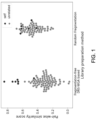
- Fig. 1 shows the effect of the whole genome library preparation method over the correlation of SNP allelic frequencies between self and unrelated samples.
- the library preparation method Fragmentation-free libraries have been prepared by performing a deterministic restriction-site whole genome amplification (DRS-WGA) of genomic DNA of 2 single cells of the 7 tumor cell lines (NCI-H1650, NCI-H23, NCI-H661, NCI-H1563, NCI-H1573, NCI-H441, OE19) followed by a fragmentation-free, sequencing-adaptor/WGA fusion-primer PCR reaction; random fragmentation libraries were prepared from genomic DNA of 6 tumor cell lines (NCI-H1650, NCI-H23, NCI-H661, NCI-H1563, NCI-H1573, NCI-H441) using Ion Xpress TM Plus gDNA Fragment Library preparation kit (Thermo Fisher Scientific).
- DRS-WGA deterministic restriction-site whole genome amplification
- NGSCheckMate On the Y axis is the pair-wise similarity score calculated as the correlation of the B-allele frequency across loci covered by at least one read in the paired samples as reported by NGSCheckMate (commit 8ea2c0438).
- NGSCheckMate was run on 500,000 reads ( ⁇ 0.025x coverage) aligned to the reference genome (hg19) with default parameters and default polymorphic loci set (21067 SNPs).
- Black dots (self) show pair-wise similarity scores of paired samples belonging to the same cell line.
- Grey dots (unrelated) show pair-wise similarity scores of paired samples belonging to different cell lines.
- the plot shows a clear advantage of DRS-WGA based fragmentation-free library preparation over Random Fragmentation method with higher separation between self and unrelated pair-wise similarity score values.
- polymorphic loci for the comparisons are preferably selected based on their average heterozygosity.
- polymorphic loci are selected based on the property of having an average heterozygosity higher than a certain minimum threshold.
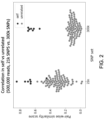
- Fig. 2 shows the effect of polymorphic loci set selection on pair-wise similarity scores of paired samples belonging to the same (self) or different cell lines (unrelated).
- Libraries have been prepared by performing a deterministic restriction-site whole genome amplification (DRS-WGA) of genomic DNA of 2 single cells of 7 tumor cell lines (NCI-H1650, NCI-H23, NCI-H661, NCI-H1563, NCI-H1573, NCI-H441, OE19) followed by a fragmentation-free, sequencing-adaptor/WGA fusion-primer PCR reaction.
- DRS-WGA deterministic restriction-site whole genome amplification
- 21k set corresponds to default SNP set provided by NGSCheckMate and selected based on allelic frequencies of polymorphic loci in dbSNP in a set of 40 germline WGS profiles from TCGA stomach cancer patients; set 300k consists of 312,458 polymorphic loci selected from dbSNP (build 150) based on a minimum average heterozygosity of 0.498.
- set 300k consists of 312,458 polymorphic loci selected from dbSNP (build 150) based on a minimum average heterozygosity of 0.498.
- the pair-wise similarity score calculated as the correlation of the B-allele frequency across loci covered by at least one read in the at least two samples, the degree of similarity of which is analysed.
- NGSCheckMate was run on 500,000 reads ( ⁇ 0.025X coverage) aligned to the reference genome (hg19) with default parameters and either the default polymorphic loci set (21k) or the 300k set.
- the plot shows that by using a polymorphic loci selection based on average heterozygosity, the difference between pair-wise similarity scores of paired samples belonging to the same cell line (self) and those of paired samples belonging to different cell lines (unrelated) increases leading to a clear separation between the two comparison types.
- step g) Different similarity scores calculation methods can be used in step g) according to the present disclosure.
- the pair-wise similarity score of step g) is calculated by computing the correlation of the B-allele frequency across loci covered by at least one read in the at least two samples, the degree of similarity of which is analysed.
- the pair-wise similarity score of step g) is calculated by computing the mean concordance value across loci covered by at least one read in both paired samples, wherein the concordance value for each locus is assigned one the following values:
- pair-wise similarity score y-axis
- the pair-wise similarity score based on concordance has the advantage of a simpler computation compared to correlation providing a better computational performance, especially in case of large sets of polymorphic loci.
- the plots show no clear differences in terms of separation of self and unrelated paired samples pair-wise similarity score distributions between the two similarity scores employed, however the absolute value of the similarity score needs to be adjusted for the specific function employed in the calculation.
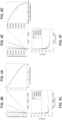
- the minimum Average Heterozygosity is preferably in the range [0.2;0.499].
- the number of polymorphic loci considered decreases monotonically with increasing minimum Average Heterozygosity.
- the number of loci covered by paired samples increases monotonically with the number of reads per sample. There is generally an optimal minimum average heterozygosity for increasing the separation between matched (same individual) and unrelated samples, for a certain number of reads. Further increasing the minimum average heterozygosity beyond that optimum will initially gradually and then suddenly reduce the number of loci covered in paired samples that are available for the comparison, thus reducing the overall separation between matched and unrelated samples in a pair-wise similarity score.
- Figs. 4D to 4F are a zoom-in of the same type of analysis for a narrower range of minimum average heterozygosity.
- sequencing data from each single-cell was used only once (either for generating a self or kin data type).
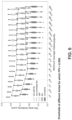
- Figs. 5A to 5D show the performance of classification of kin samples with respect to self (female-parent) and unrelated samples.
- Two variable thresholds on similarity score, calculated with respect to female-parent samples, are used as classifiers to discriminate kin samples from self and unrelated samples.
- Kin-self threshold is set at values ranging from median of kin similarity score distribution to median of self similarity score distribution.
- Kin-unrelated threshold is set at values ranging from median of kin similarity score distribution to median of unrelated similarity score distribution.
- Number of reads is kept constant at 500,000 reads.
- Fig. 5A shows TPR and 1-PPV values for classification of kin samples with respect to self female-parent as the threshold changes, at different minimum average heterozygosity (AvHet threshold).
- FIG. 5B shows TPR and 1-PPV values for classification of kin samples with respect to unrelated samples as the threshold changes, at different minimum average heterozygosity (AvHet threshold).
- FIG. 5C shows kin-self similarity score threshold (grey solid line; secondary Y axis) needed to obtain a PPV of at least 0.999 and corresponding TPR (primary Y axis) as the value of minimum average heterozygosity changes (X axis).
- Fig. 5D shows kin-self similarity score threshold (grey solid line; secondary Y axis) needed to obtain a PPV of at least 0.999 and corresponding TPR (primary Y axis) as the value of minimum average heterozygosity changes (X axis).
- the plots show that a high sensitivity (TPR ⁇ 0.99) is obtained with SNP sets selected using an average heterozygosity threshold from 0.2 up to 0.495 for kin-self classification and up to 0.48 for kin-unrelated classification with sensitivity values decreasing rapidly past these values.
- the LPWGS data is subsampled to 500k single reads
- the minimum average heterozygosity for polymorphic loci is selected in the range [0.2;0.49]
- the similarity score thresholds are selected in the range [0.73;0.79] for kin-self and [0.62;0.7] for kin-unrelated, using as similarity score "concordance" calculated as explained above.
- the plurality of polymorphic loci preferably comprises loci obtained from a database, such as dbSNP.
- said plurality of polymorphic loci comprises > 200.000, 300.000, 500.000 or 1.000.000 loci with highest average heterozygosity.
- the method according to the present disclosure further comprises a step of defining a group of clusters of samples sharing a common property such as the identity of the one individual (or more individuals) substantially contributing with DNA to the samples of a cluster, or the property of containing insufficient quantities of DNA and/or the property of containing highly degraded DNA or DNA of uncertain origin.
- the at least two samples are preferably assigned to at least one cluster by means of a classifier using said similarity score and other quality metrics.
- Example 7 Application to non-invasive prenatal diagnosis based on fetal circulating cells.
- the at least one reference-cluster is composed of samples from a pregnant female-parent individual.
- Said "reference samples” may be collected isolating maternal cells from the same enriched bodily fluid used to extract fetal cells, or alternatively by another source of maternal DNA.
- the maternal bodily fluid consists of peripheral blood, nucleated cells positive for maternal markers and negative for fetal markers can be collected as reference.
- said group of identity-clusters may further contain at least one kin-cluster composed by samples from at least one fetus from the ongoing pregnancy of said female-parent individual. Said samples are identified preferably as those having a pair-wise similarity score consistent with a kin-relationship with the reference female-parent.
- Said kin-cluster is preferably further partitioned in a plurality of fetal-clusters composed of samples which contain DNA from only one and the same fetus.
- Samples belonging to the same fetus are recognized as having a pair-wise distance score consistent with a classification as self with respect to each-other.
- Other kin cells having a pair-wise distance score consistent with a kin relationship with respect to other kin cells are put in a different partition as belonging to a different fetus.
- Fig. 7 represents a method to detect twin pregnancies. All pairwise predictions of fetal cells, described by a "kin” relation with maternal control, are used as input to a graph clustering algorithm to find "communities" of fetal cells.
- circulating fetal cells admixed to maternal cells are detected by observing a pair-wise similarity score intermediate with respect to that expected for "self" type DNA and "kin" type DNA.
- the co-isolation of a maternal cell along with a target fetal cell may accidentally occur as a result of imprecision in the sorting process (either due to the selection of cells to isolate or due to the isolation process, or both).
- Co-isolation of a maternal cell along with a target fetal cell may also occur non-accidentally, as it may be beneficial to anyway analyze an additional mixed sample instead of discarding it, if too few non-admixed and pure fetal cell samples are available.
- the admixture of two cells, one fetal and one maternal may still be acceptable, if the sensitivity of the assay is not significantly impaired. This can be for example the case when analyzing whole chromosome aneuploidies, using adequate numbers of reads.
- the contamination may be advantageously factored-in during the analysis by applying a specific contamination factor, as it is available in certain bioinformatic pipelines, such as ControlFreec ( Boeva, V. et al, Bioinformatics 2012 Feb 1;28(3):423-5 ), thus maintaining an adequate sensitivity.
- said fetal cells circulating in maternal blood are (i) trophoblasts, (ii) erythroblasts or (iii) both types.
- Example 8 Identification of circulating fetal erythroblasts from maternal blood.
- Nucleated cells were first isolated from maternal blood using a ficoll gradient (density 1.107g/ml), and fetal erythroblasts (nucleated red blood cells) were enriched by CD45/CD15/CD14 immuno-magnetic depletion of unwanted maternal cells using Magnetic Activated Cell Sorting (MACS) from Miltenyi.
- FAM Magnetic Activated Cell Sorting
- the enriched cells were fixed, with either
- the second type of fixation creates stronger crosslinking and may help fixing the target hemoglobin within the cell, however hampers the DNA amplification.
- Putative fetal cells were sorted by DEPArray TM as single-cells, or along with additional maternal contaminating cells which happened to be co-located in the same dielectrophoretic cage.
- Cell recoveries (regardless if single or contaminated) were amplified with Ampli1 WGA kit, Menarini Silicon Biosystems S.p.A., a kit implementing the DRS-WGA method according to the present disclosure.
- Fig. 8 shows the distribution of average pair-wise similarity scores, calculated with respect to female-parent samples, in erythroblast cell recoveries from 2 samples.
- the plot shows that the kin-self threshold classifier discriminates kin recoveries (grey dots) from pregnant female-parent individual cell recoveries (light grey dots). However the classifier cannot discriminate kin recoveries from mixed cell recoveries (black dots).
- the clustering of samples includes computing a silhouette-score, based on the similarity, in order to define the number of clusters.
- a cluster where the pair-wise similarity scores display two distinct level of similarity can be further fractionated by using a fixed threshold, preferably 0,205, based on the distribution of silhouette scores in a set of samples comprising maternal cells and fetal cells, to discriminate mixed fetal-maternal samples (from fetal or maternal samples).
- said fixed threshold is within the range [0.19-0.21].
- mixed maternal-fetal cells can be identified as a separate cluster from the self (maternal) and kin (fetal) subpopulation.
- FIG. 9B shows the analysis of individual silhouette score for each recovery in the two clusters shows that 2 recoveries in cluster #0, corresponding to mixed cell recoveries, have a score close to 0 indicating that they are very close to the decision boundary between two neighboring clusters; by setting a fixed minimum silhouette score threshold (0.205) it is possible to discriminate the 2 mixed fetal-maternal cell recoveries which are thus assigned to a third independent cluster.
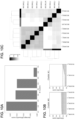
- Fig. 9C shows the heatmap showing similarity scores between all 17 cell recoveries in shades of grey with darker colors indicating higher similarity; clusters are labeled by row and column color labels.
- Example 11 Application to non-invasive prenatal paternity testing based on fetal circulating cells.
- At least one putative circulating fetal trophoblastic cell is enriched from the maternal blood.
- the trophoblastic cell sample is compared to the maternal reference sample, and a pair-wise similarity score consistent with an "unrelated" type DNA indicates a possible complete mole (or a lab contamination/sample swapping). If more than one sample of circulating trophoblastic cells is isolated, comparison of the pair-wise similarity score among those samples can be used to study the genotype of the mole.
- a pair-wise distance score of the trophoblast samples consistent with a "self" type DNA with respect to the paternal reference sample may be used to distinguish the molar pregnancy from a lab contamination or sample swap.
- Example 13 Application to single-cell forensic and human identification.
- said at least one reference cluster is composed by samples containing DNA from only one and same individual corresponding to a victim in a forensic investigation, further comprising defining at least one perpetrator-cluster, comprising samples containing DNA from only one and the same individual, different from a victim.
- Samples are assigned to a perpetrator cluster if they have a pair-wise distance score consistent with an "unrelated" relationship with the victim samples, and a "self” relationship with other samples belonging to the same perpetrator cluster. Whenever a new sample is consistent with "unrelated" to both the victim and perpetrators already belonging to other perpetrator-clusters, a new perpetrator-cluster is defined.
- a clustering algorithm based on silhouette-score as detailed for the case of non-invasive prenatal diagnosis application, can be used to assign each individual sample to an homogenous cluster.
- samples with a pair-wise distance score consistent with a "kin” relationship may be interpreted as “mixed samples”, as they likely contain DNA from two unrelated individuals (victim and perpetrator, or different perpetrators), similar to the case of "kin” samples in NIPD application, which contains DNA from one female-parent and one unrelated male-parent.
- copy-number information for sex chromosomes obtained by the same low-pass whole genome sequencing data, may be used to further refine and/or confirm the classification based on a refined pair-wise distance score.
- chromosome X and Y can help inform sample classification as victim or perpetrator.
- said at least one reference cluster is composed by samples containing DNA from only one and same individual corresponding to a suspect perpetrator in a forensic investigation, further comprising defining at least one perpetrator-cluster, comprising samples containing DNA from only one and the same individual.
- a plurality of samples obtained by a mixed forensic evidence with multiple DNA contributors are analyzed according to the method, further comprising defining at least one perpetrator-cluster, comprising samples containing DNA from only one and the same individual.
- DRS-WGA aliquots from a plurality of samples belonging each to the same of said at least one perpetrator-clusters are mixed together, thus producing for each cluster a corresponding single-individual WGA-DNA sample, thus enabling one to carry out further DNA analysis on said single-individual WGA-DNA sample.
- the advantage of this approach is that potential random allelic drop-outs occurring in a single-cell sample are complemented by the signal from other individual cells, thus producing a more complete profile.
- This approach is particularly advantageous when the DNA of each single-cell sample from an individual is strongly degraded. This may happen in particular for cold cases, especially when the evidence has been stored at room temperature, or cases where a tissue sample from the victim has been fixed in formalin and embedded in paraffin for later use.
- Another preferred embodiment comprises cluster-wise merging of genetic analysis data of at least one type of assay, from a plurality of samples belonging to each of said at least one perpetrator-clusters, producing for each of said at least one perpetrator-clusters a corresponding single-individual WGA-DNA data.
- said at least one type of assay is selected from the group consisting of:
- Figs. 11A and 11B show the performance of classification of individual samples with respect to unrelated samples with at maximum a 50% component of self samples.
- a classifier based on a variable threshold on pair-wise similarity score is used to discriminate samples from an individual from mixed samples.
- the threshold is set at values ranging from median of "self” similarity score distribution to median of "mixed” similarity score distribution. Number of reads is kept constant at 500,000 reads.
- Pair-wise similarity score threshold (grey solid line; secondary Y axis) needed to obtain a PPV of at least 0.999 and corresponding TPR (primary Y axis) as a function of the average heterozygosity (X axis) .
- the plots show that a high sensitivity (TPR ⁇ 0.99) is obtained with SNP sets selected using an average heterozygosity threshold from 0.2 up to 0.495 for kin-self classification and up to 0.48 for self-mixed classification with sensitivity values decreasing rapidly past these values.
- Example 14 Application sample identification in oncology laboratory workflow.
- the method according to the present disclosure is used to match samples belonging to the same patient and detecting both possible sample swaps, or possible cross-contaminations from samples belonging to different patients. For example, this may be particularly beneficial when working with single-cell FFPE samples. In fact, it is utterly difficult to get exhaustive genomic information from single-cell (or nuclei) extracted from FFPE due to the DNA damage caused by the fixation. STR or even targeted sequencing for SNPs may be impractical. However using the method according to the present disclosure it is still possible to distinguish the samples.
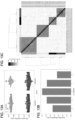
- Figs. 13A to 13C show the classification of single cell recoveries from FFPE samples according to individuals identity.
- the single-cell WGA products were obtained as detailed in Mangano C. et al., "Precise detection of genomic imbalances at single-cell resolution reveals intra-patient heterogeneity in Hodgkin's lymphoma", Blood Cancer Journal volume 9, Article number: 92 (2019 ).
- Fig. 13A shows a Swarmplot showing pair-wise similarity scores of paired samples belonging to the same individual (self) or to different individuals (unrelated).
- Data are binned according to genome-wide copy number signal DLRS (X axis), where lowDLRS corresponds to paired samples with DLRS ⁇ 0.4, indicative of low signal noise and highDLRS corresponds to paired samples where at least one of the samples in the pair shows a DLRS ⁇ 0.4, indicative of high signal noise.
- DLRS genome-wide copy number signal
- Fig. 13B shows the average silhouette scores for different numbers of clusters, used as input for KMeans clustering of pair-wise similarity scores, showing the highest score for 4 clusters.
- 13C shows the heatmap showing pair-wise similarity scores between all 17 cell recoveries in shades of grey with darker colors indicating higher similarity; clusters are labeled by row and column color labels; for visualization purposes rows and columns are ordered by euclidean-distance based hierarchical clustering.
- the method according to the present disclosure is used to analyze samples deriving from a cell-free spent embryo-culture medium.
- a cell-free spent embryo-culture medium As known in the art, it is beneficial to assess embryos to prioritize for implantation in order to increase the uptake rate and success of the procedure.
- Techniques based on cell-free spent culture medium are attractive as they simplify the workflow and may be less invasive for the developing embryo.
- contamination from maternal DNA has been reported in the culture medium and shown to impair the resolution of the PGS in detecting aneuploidies in the fetus.
- the maternal reference is used as a reference for "self" (female-parent).
- the pairwise similarity score with the cell-free spent embryo-culture medium sample is computed according to the present disclosure. Said pair-wise similarity score is used to estimate the contamination from maternal DNA with respect to the embryo DNA. Pair-wise similarity score lower or equal to the expected median value for a "kin"-type DNA with respect to the maternal reference is used to assume 100% purity of embryonic DNA. Pair-wise similarity score equal or higher to the expected median value for a "self"-type DNA with respect to the maternal reference is used to assume 0% purity of embryonic DNA (all maternal DNA) in the cell-free sample.
- An intermediate value of pair-wise similarity indicates a degree of contamination from maternal DNA.
- This contamination value can be used as input in the genome-wide copy number profiling analysis based on the same low-pass whole genome sequencing data, in order to compensate for the potential dilution -due to the admixed signal deriving from the normal diploid maternal genome- of the copy-number signal stemming from potential aneuploidy or sub-chromosomal copy-number variations of the embryo. In this way, due to the compensation, the sensitivity of the copy-number caller is less impaired by the signal dilution.
- the contamination value can be used to assess the suitability of the sample to detect reliably copy-number variations of a given size, as the degree of diploid maternal background can impair the detection of sub-chromosomal CNVs, e.g. microdeletions.
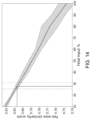
- Fig. 14 shows a simulation performed by mixing, in silico, different proportions of DNA sequences from single fetal cells with sequences from maternal cells.
- the solid line corresponds to the average pair-wise similarity score at different fetal input percentages.
- the shaded area corresponds to the 95% confidence interval.
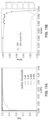
- Figs. 15A and 15B show the genome-wide copy number analysis of a mixed sample obtained by in silico mixing of different proportions of DNA sequences from single fetal cells (20%) with sequences from maternal cells (80%).
- Fig. 15A shows a genome-wide copy number profile; each dot corresponds to a 10Mbp genome bin.
- Statistically significant alterations are shown as solid black lines.
- a similar approach can be used also for cell-free DNA or invasive prenatal samples to determine the fetal fraction and contamination, respectively, using a reference comprising plasma leucocytes for cell-free DNA, maternal decidua, buccal swab, or blood.
- Example 16 Application to sample identification in cell-line authentication.
- the method according to the present disclosure is used to authenticate cell lines used in research laboratories.
- a reference database collecting - from all reference cell-line types- the base-line low-pass WGS data according to the method is first established, so that data from this reference database is used to authenticate the cell line under-test.
- the starting samples are preferably selected from the group composed of (i) a pool of cells or (ii) DNA extracted from a pool of cells.
- the number of cells in said pool is preferably in the range [50-1.500].
- the lower limit of 50 provides a minimum of diversity representative of genomic heterogeneity (if any is present).
- this lower limit is useful -in the sample under test- for the detection of a potential contamination from another cell line with higher sensitivity, as a low-level of contamination -e.g. 10%- may fail altogether to be represented in a cell pool with a lower number of cells, or anyway result in a sample where the minor contaminant is under-represented with respect to the real % in the population, thus potentially reducing the overall sensitivity in detecting said contamination.
- the higher limit of 1500 i.e. equivalent to lOng
- Example 17 Application to allogenic hematopoietic cell transplantation.
- the method according to the present disclosure is used for the assessment of endothelial cell origin in patients of allogenic hematopoietic cell transplantation (allo-HSCT).
- isolation of individual endothelial cells is carried out from either
- a first reference sample comprising germline DNA from the host.
- Single endothelial cells are isolated from the patients and their similarity score with the reference host sample is assessed. If the cell under test is classified as self it means that it is confirmed of host origin, whereas if classified as unrelated is classified as belonging to the unrelated donor.
- the method can be applied using also a kinship analysis to identify the donor cells in case the donor is linked to the host by a kinship relationship.
- a second reference sample can be generated as confirmation of the classification.
- the method according to the present disclosure exploits the fact that in DRS-WGA, such as the Ampli1 TM WGA, each locus in the genome is represented in the WGA library only in fragments having a specific length in base-pairs. This property may be designated "Locus to Fragment-Length Univocal Relationship" (L2FLUR). Considering a general normal locus, e.g.
- locus for a polymorphic SNP said locus will be represented only in a fragment of a given length, equal to the size of the corresponding fragment (measured on either of the single-strands) following digestion by the restriction enzyme, plus double the length of the universal WGA adaptors (the length of the LIB1 primer in case of Ampli1 WGA).
- WGA is sequenced following library preparation according to Ampli1 LowPass kits, a predictable additional length is introduced linked to the sequencing adaptors and barcodes lengths, which are known.
- the property of DRS-WGA combined with the random fragmentation-free library preparation is exploited to produce a reduced representation of the genome (with respect to the original size of the samples reference genome), whereby the low-pass sequencing data, for a given number of reads, increases the probability to cover the same fragments across different samples , with respect to when a random process is inherent in the WGA (e.g. as with WGA methods using Multiple Displacement Amplification or DOP-PCR) and/or in the sequencing library preparation (e.g. by random fragmentation or tagmentation).
- deterministic is essential, in that - for any given number of reads - the overlap in genomic loci covered across any two paired samples is higher, thus increasing the number of highly polymorphic loci available for measuring the similarity of the DNA of those samples.
- the approach is flexible in that different deterministic enzymes may be suitable depending on the desired resolution and/or sequencing platform and sequencing protocol used. For example, different frequent cutters may be used. In the examples of Ampli1 WGA, the TTAA motif is the Restriction Site. Other four-base cutters may be used to cut at different Restriction Site, such as GTAC, CTAG, obtaining a different distribution of fragments, allowing one to tune the number of loci in common across different samples for a given number of reads.
- the method uses a further step of selection.
- This additional step of selection can be achieved by either size-selecting certain fragments from the primary WGA and/or generating the massively parallel sequencing library by a method which restricts the sequenceable fragments.
- Ampli1 LowPass kits include an inherent size selection step which is sufficient to positively impact the process.
- a size selection on a gel is carried out.
- successive steps of purification using SPRI-beads effectively produce a first size selection, whereby the length of base-pairs is restricted to a range substantially depending on the SPRI-beads concentration.
- the sequencer may also introduce a size selection per se, as longer fragments will generate sequence data with lower and lower efficiency (e.g. due to emulsion PCR efficiency in Ion Torrent, or bridge PCR for cluster formation in Illumina platforms).
- the objective is to obtain a good resolution in the pair-wise similarity score across samples.
- the overlap in covered base pairs between any two samples is relevant, as only regions covered in both samples are compared.
- increasing the base-pairs range of fragments sequenced may help reduce the diversity of fragments, increasing the overlap between different samples.
- the low-pass whole genome sequencing data serves also a dual purpose of generating a genome-wide copy number profile of the samples itself, as it is the case for NIPD application or for the cell-free spent culture medium of embryos.
- a fragment range of the similar width but centered on shorter fragments increase diversity and can produce better results and resolution for the copy-number caller, as there are higher number of fragments contributing to the read counts in a given genomic window.
- Different size-selection techniques may also be used to achieve the desired Reduction Ratio, depending on the elected number of sequencing reads per sample and/or resolution. For a given average fragment length - smaller or larger number of total fragments can be obtained selecting a respectively smaller or larger band centered on that average fragment length.
- FMAX is the size of fragments above which fragments are represented at the same conventional relative level or less with respect to the normalized in-band peak number of fragments per bin.
- the sequencing mode is preferably paired-end sequencing, as the covered genome increases and thus the number of loci per-million read-pairs increases, augmenting the resolution.
- the paired-end sequencing will not increase the coverage as the two paired reads overlap completely.
- One advantage of pooling the samples and size-selecting the library for sequencing thereafter is that all samples will have the same distribution of fragment lengths, and in turn this will maximize the overlap of covered genome across different samples, as required to provide for a higher number of highly polymorphic loci for the comparison.
- the different LowPass libraries are at first size-selected and then pooled obtaining slightly different size-selections across different samples, thus reducing the covered genome across different samples.
- a size-selection after library pooling may be employed to increase the overlap across samples, which may be beneficial in analysis based on controls.
- the combination of DRS-WGA and LPWGS leads to a reduced representation from the input samples.
- this reduced representation libraries of the reference genome shrinks the covered genome in the selected (or any way sequenceable) base-pair range, and an effectively higher overlap of the covered genome across different samples, on a per reads basis, is obtained
- the similarity-score obtained from previous steps may be thresholded to define sample classes.
- the number of polymorphic loci available for comparison across two samples will increase at higher read depths.
- the number of mapped reads in each sample is preferably normalized to a fixed number of reads. Such normalization is performed by randomly sampling reads, mapping to the reference genome, until the desired number is reached (preferably contained in the range going from 100,000 mapped reads to 10,000,000 mapped reads).
- a "self" relationship between two samples is called if the similarity-score is higher than a first selected threshold.
- an "unrelated" relationship between two samples is called if the similarity-score is lower than a second selected threshold.
- a "kin" relationship between two samples is called if the similarity-score is comprised between a third threshold, equal or lower to said first threshold, and a fourth threshold, equal or higher than said second threshold.
- a "mixed" relationship between two samples is called if the similarity-score is comprised between a third threshold, equal or lower to said first threshold, and a fourth threshold, equal or higher than said second threshold.
Landscapes
- Chemical & Material Sciences (AREA)
- Life Sciences & Earth Sciences (AREA)
- Proteomics, Peptides & Aminoacids (AREA)
- Organic Chemistry (AREA)
- Health & Medical Sciences (AREA)
- Engineering & Computer Science (AREA)
- Zoology (AREA)
- Wood Science & Technology (AREA)
- Analytical Chemistry (AREA)
- Physics & Mathematics (AREA)
- Bioinformatics & Cheminformatics (AREA)
- Genetics & Genomics (AREA)
- Immunology (AREA)
- General Health & Medical Sciences (AREA)
- Biotechnology (AREA)
- Biophysics (AREA)
- Molecular Biology (AREA)
- Microbiology (AREA)
- Biochemistry (AREA)
- General Engineering & Computer Science (AREA)
- Pathology (AREA)
- Medical Informatics (AREA)
- Bioinformatics & Computational Biology (AREA)
- Evolutionary Biology (AREA)
- Spectroscopy & Molecular Physics (AREA)
- Theoretical Computer Science (AREA)
- Chemical Kinetics & Catalysis (AREA)
- Cell Biology (AREA)
- Hospice & Palliative Care (AREA)
- Oncology (AREA)
- Data Mining & Analysis (AREA)
- Artificial Intelligence (AREA)
- Bioethics (AREA)
- Computer Vision & Pattern Recognition (AREA)
- Databases & Information Systems (AREA)
- Epidemiology (AREA)
- Evolutionary Computation (AREA)
- Public Health (AREA)
- Software Systems (AREA)
- Measuring Or Testing Involving Enzymes Or Micro-Organisms (AREA)
Applications Claiming Priority (3)
| Application Number | Priority Date | Filing Date | Title |
|---|---|---|---|
| IT102021000024101A IT202100024101A1 (it) | 2021-09-20 | 2021-09-20 | Metodo per analizzare il grado di similarita' di almeno due campioni utilizzando amplificazione deterministica dell'intero genoma mediante siti di restrizione (drs-wga) |
| PCT/IB2022/058833 WO2023042173A1 (fr) | 2021-09-20 | 2022-09-19 | Procédé d'analyse du degré de similarité d'au moins deux échantillons à l'aide d'une amplification de génome entier à site de restriction déterministe (dr-wga) |
| EP22782770.6A EP4405500A1 (fr) | 2021-09-20 | 2022-09-19 | Procédé d'analyse du degré de similarité d'au moins deux échantillons à l'aide d'une amplification de génome entier à site de restriction déterministe (dr-wga) |
Related Parent Applications (1)
| Application Number | Title | Priority Date | Filing Date |
|---|---|---|---|
| EP22782770.6A Division EP4405500A1 (fr) | 2021-09-20 | 2022-09-19 | Procédé d'analyse du degré de similarité d'au moins deux échantillons à l'aide d'une amplification de génome entier à site de restriction déterministe (dr-wga) |
Publications (2)
| Publication Number | Publication Date |
|---|---|
| EP4521411A2 true EP4521411A2 (fr) | 2025-03-12 |
| EP4521411A3 EP4521411A3 (fr) | 2025-07-16 |
Family
ID=78771055
Family Applications (2)
| Application Number | Title | Priority Date | Filing Date |
|---|---|---|---|
| EP22782770.6A Pending EP4405500A1 (fr) | 2021-09-20 | 2022-09-19 | Procédé d'analyse du degré de similarité d'au moins deux échantillons à l'aide d'une amplification de génome entier à site de restriction déterministe (dr-wga) |
| EP25152252.0A Pending EP4521411A3 (fr) | 2021-09-20 | 2022-09-19 | Procédé d'analyse du degré de similarité d'au moins deux échantillons à l'aide d'une amplification déterministe de génome entier (drs-wga) sur site de restriction |
Family Applications Before (1)
| Application Number | Title | Priority Date | Filing Date |
|---|---|---|---|
| EP22782770.6A Pending EP4405500A1 (fr) | 2021-09-20 | 2022-09-19 | Procédé d'analyse du degré de similarité d'au moins deux échantillons à l'aide d'une amplification de génome entier à site de restriction déterministe (dr-wga) |
Country Status (13)
| Country | Link |
|---|---|
| US (1) | US20240384341A1 (fr) |
| EP (2) | EP4405500A1 (fr) |
| JP (1) | JP2024536799A (fr) |
| KR (2) | KR20240113895A (fr) |
| CN (1) | CN117980502A (fr) |
| AR (1) | AR127106A1 (fr) |
| AU (2) | AU2022346271A1 (fr) |
| CA (1) | CA3231433A1 (fr) |
| IL (2) | IL320850A (fr) |
| IT (1) | IT202100024101A1 (fr) |
| MX (2) | MX2024003426A (fr) |
| TW (1) | TW202321461A (fr) |
| WO (1) | WO2023042173A1 (fr) |
Families Citing this family (3)
| Publication number | Priority date | Publication date | Assignee | Title |
|---|---|---|---|---|
| JP7684727B2 (ja) * | 2023-08-22 | 2025-05-28 | 株式会社seeDNA | 非侵襲的出生前親子鑑定方法 |
| CN117877586B (zh) * | 2024-01-03 | 2024-09-24 | 中国水产科学研究院珠江水产研究所 | 适用于zw/xy性别决定系统的性别特异标记检测方法 |
| WO2026083244A1 (fr) | 2024-10-14 | 2026-04-23 | Menarini Silicon Biosystems S.P.A. | Procédé d'analyse du profil de nombre de copies d'un échantillon à l'aide d'une amplification de génome entier de site de restriction déterministe (drs-wga) |
Citations (5)
| Publication number | Priority date | Publication date | Assignee | Title |
|---|---|---|---|---|
| WO2000017390A1 (fr) | 1998-09-18 | 2000-03-30 | Micromet Ag | Amplification d'une unique cellule |
| EP2152859B1 (fr) | 2007-05-04 | 2012-10-24 | Silicon Biosystems S.p.A. | Procédé et dispositif pour un diagnostic prénatal non invasif |
| WO2017178655A1 (fr) | 2016-04-15 | 2017-10-19 | Menarini Silicon Biosystems S.P.A. | Procédé et kit pour la génération de banques d'adn pour un séquençage massivement parallèle |
| WO2019016401A1 (fr) | 2017-07-21 | 2019-01-24 | Menarini Silicon Biosystems S.P.A. | Méthode améliorée et kit pour la génération de bibliothèque d'adn pour le séquençage massivement parallèle |
| WO2021019459A1 (fr) | 2019-07-30 | 2021-02-04 | Menarini Silicon Biosystems S.P.A. | Procédé d'analyse de perte d'hétérozygosité (loh) à la suite d'une amplification de génome entier à site de restriction déterministe (dr-wga) |
-
2021
- 2021-09-20 IT IT102021000024101A patent/IT202100024101A1/it unknown
-
2022
- 2022-09-19 IL IL320850A patent/IL320850A/en unknown
- 2022-09-19 MX MX2024003426A patent/MX2024003426A/es unknown
- 2022-09-19 WO PCT/IB2022/058833 patent/WO2023042173A1/fr not_active Ceased
- 2022-09-19 EP EP22782770.6A patent/EP4405500A1/fr active Pending
- 2022-09-19 US US18/693,474 patent/US20240384341A1/en active Pending
- 2022-09-19 KR KR1020247011557A patent/KR20240113895A/ko active Pending
- 2022-09-19 EP EP25152252.0A patent/EP4521411A3/fr active Pending
- 2022-09-19 KR KR1020267007215A patent/KR20260048625A/ko active Pending
- 2022-09-19 AU AU2022346271A patent/AU2022346271A1/en active Pending
- 2022-09-19 IL IL311475A patent/IL311475A/en unknown
- 2022-09-19 TW TW111135366A patent/TW202321461A/zh unknown
- 2022-09-19 CN CN202280063537.5A patent/CN117980502A/zh active Pending
- 2022-09-19 JP JP2024517535A patent/JP2024536799A/ja active Pending
- 2022-09-19 CA CA3231433A patent/CA3231433A1/fr active Pending
- 2022-09-20 AR ARP220102537A patent/AR127106A1/es unknown
-
2024
- 2024-03-19 MX MX2026001975A patent/MX2026001975A/es unknown
-
2026
- 2026-02-16 AU AU2026201139A patent/AU2026201139A1/en active Pending
Patent Citations (5)
| Publication number | Priority date | Publication date | Assignee | Title |
|---|---|---|---|---|
| WO2000017390A1 (fr) | 1998-09-18 | 2000-03-30 | Micromet Ag | Amplification d'une unique cellule |
| EP2152859B1 (fr) | 2007-05-04 | 2012-10-24 | Silicon Biosystems S.p.A. | Procédé et dispositif pour un diagnostic prénatal non invasif |
| WO2017178655A1 (fr) | 2016-04-15 | 2017-10-19 | Menarini Silicon Biosystems S.P.A. | Procédé et kit pour la génération de banques d'adn pour un séquençage massivement parallèle |
| WO2019016401A1 (fr) | 2017-07-21 | 2019-01-24 | Menarini Silicon Biosystems S.P.A. | Méthode améliorée et kit pour la génération de bibliothèque d'adn pour le séquençage massivement parallèle |
| WO2021019459A1 (fr) | 2019-07-30 | 2021-02-04 | Menarini Silicon Biosystems S.P.A. | Procédé d'analyse de perte d'hétérozygosité (loh) à la suite d'une amplification de génome entier à site de restriction déterministe (dr-wga) |
Non-Patent Citations (17)
| Title |
|---|
| ARNESON ET AL., ISRN ONCOL., vol. 2012, 14 March 2012 (2012-03-14), pages 710692 |
| BOEVA, V. ET AL., BIOINFORMATICS, vol. 28, no. 3, 1 February 2012 (2012-02-01), pages 423 - 5 |
| FERRARINI ET AL., PLOSONE, vol. 13, no. 3, pages e0193689, Retrieved from the Internet <URL:https://doi.org/10.1371/journal.pone.0193689> |
| FONTANA: "Isolation and genetic analysis of pure cells from forensic biological mixtures: The precision of a digital approach", FORENSIC SCIENCES INTERNATIONAL: GENETICS, 2007, Retrieved from the Internet <URL:http://dx.doi.org/10.1016/j.fsigen.2017.04.023> |
| HODGKINSON C.L. ET AL., NATURE MEDICINE, vol. 20, 2014, pages 897 - 903 |
| K. ANSLINGERB. BAYER: "Whose blood is it? Application of DEPArrayrn technology for the identification of individual/s who contributed blood to a mixed stain", INT J LEGAL MED., vol. 133, no. 2, 18 August 2018 (2018-08-18), pages 419 - 426 |
| K. HUFFMANE. HANSONJ BALLANTYNE: "Recovery of single source DNA profiles from mixtures by direct single cell subsampling and simplified micromanipulation", SCIENCE & JUSTICE, vol. 61, January 2021 (2021-01-01), pages 13 - 25, XP086423746, DOI: 10.1016/j.scijus.2020.10.005 |
| L.D. JEPPESEN ET AL.: "Cell-based non-invasive prenatal diagnosis in a pregnancy at risk of cystic fibrosis", PRENATAL DIAGNOSIS, 2020, pages 1 - 7 |
| MANGANO C. ET AL.: "Precise detection of genomic imbalances at single-cell resolution reveals intra-patient heterogeneity in Hodgkin's lymphoma", BLOOD CANCER JOURNAL, vol. 9, no. 92, 2019 |
| MANGANO, CFERRARINI, A.FORCATO, C. ET AL.: "Precise detection of genomic imbalances at single-cell resolution reveals intra-patient heterogeneity in Hodgkin's lymphoma", BLOOD CANCER J., vol. 9, 2019, pages 92, Retrieved from the Internet <URL:https://doi.org/10.1038/s41408-019-0256-y> |
| PENACK O ET AL.: "The importance of neovascularization and its inhibition for allogeneic hematopoietic stem cell transplantation", BLOOD, VOLUME, vol. 117, 21 April 2011 (2011-04-21), pages 4181 - 4189, XP055023885, DOI: 10.1182/blood-2010-10-312934 |
| PENG XLJIANG P.: "Bioinformatics Approaches for Fetal DNA Fraction Estimation in Noninvasive Prenatal Testing", INT J MOL SCI., vol. 18, no. 2, 20 February 2017 (2017-02-20), pages 453, XP055688674, DOI: 10.3390/ijms18020453 |
| SEJOON LEE ET AL.: "NGSCheckMate: software for validating sample identity in next-generation sequencing studies within and across data types", NUCLEIC ACIDS RESEARCH, vol. 45, no. 11, 2017, XP055745624, DOI: 10.1093/nar/gkx193 |
| STOECKLEIN ET AL., AM J PATHOL., vol. 161, no. 1, July 2002 (2002-07-01), pages 43 - 51 |
| SUNDE L ET AL.: "Hydatidiform mole diagnostics using circulating gestational trophoblasts isolated from maternal blood", MOL GENET GENOMIC MED, vol. 00, 2020, pages e1565, Retrieved from the Internet <URL:https://doi.org/10.1002/mgg3.1565> |
| VOSSAERT LWANG QSALMAN R ET AL.: "Validation Studies for Single Circulating Trophoblast Genetic Testing as a Form of Noninvasive Prenatal Diagnosis", AMERICAN JOURNAL OF HUMAN GENETICS, vol. 105, no. 6, 2019, pages 1262 - 1273, XP085939814, DOI: 10.1016/j.ajhg.2019.11.004 |
| ZHUO XWANG QVOSSAERT LSALMAN RKIM AVAN DEN VEYVER I ET AL.: "Use of amplicon-based sequencing for testing fetal identity and monogenic traits with Single Circulating Trophoblast (SCT) as one form of cell-based NIPT", PLOS ONE, vol. 16, no. 4, 2021, pages e0249695, Retrieved from the Internet <URL:https://doi.org/10.1371/journal.pone.0249695> |
Also Published As
| Publication number | Publication date |
|---|---|
| US20240384341A1 (en) | 2024-11-21 |
| AR127106A1 (es) | 2023-12-20 |
| AU2022346271A1 (en) | 2024-03-21 |
| MX2024003426A (es) | 2024-07-15 |
| WO2023042173A1 (fr) | 2023-03-23 |
| EP4521411A3 (fr) | 2025-07-16 |
| EP4405500A1 (fr) | 2024-07-31 |
| MX2026001975A (es) | 2026-04-01 |
| KR20260048625A (ko) | 2026-04-10 |
| AU2026201139A1 (en) | 2026-03-05 |
| IT202100024101A1 (it) | 2023-03-20 |
| JP2024536799A (ja) | 2024-10-08 |
| TW202321461A (zh) | 2023-06-01 |
| CA3231433A1 (fr) | 2023-03-23 |
| IL320850A (en) | 2025-07-01 |
| IL311475A (en) | 2024-05-01 |
| CN117980502A (zh) | 2024-05-03 |
| KR20240113895A (ko) | 2024-07-23 |
Similar Documents
| Publication | Publication Date | Title |
|---|---|---|
| EP4521411A2 (fr) | Procédé d'analyse du degré de similarité d'au moins deux échantillons à l'aide d'une amplification déterministe de génome entier (drs-wga) sur site de restriction | |
| JP6268153B2 (ja) | 多型カウントを用いたゲノム画分の分析 | |
| US8877442B2 (en) | Non-invasive determination of fetal inheritance of parental haplotypes at the genome-wide scale | |
| EP3642747B1 (fr) | Procédés et systèmes de décomposition et de quantification de mélanges d'adn provenant de multiples contributeurs ayant des génotypes connus ou inconnus | |
| CN106462670A (zh) | 超深度测序中的罕见变体召集 | |
| CN103608466A (zh) | 非侵入性产前亲子鉴定方法 | |
| EP4004236B1 (fr) | Procédé d'analyse de perte d'hétérozygosité (loh) à la suite d'une amplification de génome entier à site de restriction déterministe (dr-wga) | |
| EP4116432B1 (fr) | Analyse parallèle multiplexée enrichie en cible pour l'évaluation d'échantillons d'adn f tal | |
| US20260078439A1 (en) | Next-Generation Sequencing Pipeline for Detection of Ultrashort Single-Stranded Cell-Free DNA | |
| EA051232B1 (ru) | Способ анализа степени сходства по меньшей мере двух образцов с использованием полногеномной амплификации с детерминистическим участком рестрикции (drs-wga) | |
| US20210087631A1 (en) | Methods for assessing risk of or diagnosing genetic defects by identifying de novo mutations or somatic mosaic variants in sperm or somatic tissues | |
| Phipps | An evaluation of massively parallel sequencing for forensic applications | |
| Rincic | Noninvasive Prenatal Testing for Copy Number Variation and Sub-Chromosomal Variations | |
| HK40013211B (en) | Methods and processes for non-invasive assessment of genetic variations | |
| HK40019712A (en) | Methods and systems for decomposition and quantification of dna mixtures from multiple contributors of known or unknown genotypes | |
| HK40019712B (en) | Methods and systems for decomposition and quantification of dna mixtures from multiple contributors of known or unknown genotypes |
Legal Events
| Date | Code | Title | Description |
|---|---|---|---|
| PUAI | Public reference made under article 153(3) epc to a published international application that has entered the european phase |
Free format text: ORIGINAL CODE: 0009012 |
|
| STAA | Information on the status of an ep patent application or granted ep patent |
Free format text: STATUS: THE APPLICATION HAS BEEN PUBLISHED |
|
| AC | Divisional application: reference to earlier application |
Ref document number: 4405500 Country of ref document: EP Kind code of ref document: P |
|
| AK | Designated contracting states |
Kind code of ref document: A2 Designated state(s): AL AT BE BG CH CY CZ DE DK EE ES FI FR GB GR HR HU IE IS IT LI LT LU LV MC MK MT NL NO PL PT RO RS SE SI SK SM TR |
|
| REG | Reference to a national code |
Ref country code: DE Ref legal event code: R079 Free format text: PREVIOUS MAIN CLASS: G16B0020200000 Ipc: C12Q0001685500 |
|
| PUAL | Search report despatched |
Free format text: ORIGINAL CODE: 0009013 |
|
| AK | Designated contracting states |
Kind code of ref document: A3 Designated state(s): AL AT BE BG CH CY CZ DE DK EE ES FI FR GB GR HR HU IE IS IT LI LT LU LV MC MK MT NL NO PL PT RO RS SE SI SK SM TR |
|
| RIC1 | Information provided on ipc code assigned before grant |
Ipc: C12Q 1/6855 20180101AFI20250612BHEP Ipc: C12Q 1/6869 20180101ALI20250612BHEP Ipc: G16B 30/10 20190101ALI20250612BHEP Ipc: G16B 20/20 20190101ALI20250612BHEP |
|
| REG | Reference to a national code |
Ref country code: HK Ref legal event code: DE Ref document number: 40125441 Country of ref document: HK |
|
| STAA | Information on the status of an ep patent application or granted ep patent |
Free format text: STATUS: REQUEST FOR EXAMINATION WAS MADE |
|
| 17P | Request for examination filed |
Effective date: 20260115 |