EP4521692A2 - Procédés et appareils de mappage de ressources de commande - Google Patents
Procédés et appareils de mappage de ressources de commande Download PDFInfo
- Publication number
- EP4521692A2 EP4521692A2 EP25153367.5A EP25153367A EP4521692A2 EP 4521692 A2 EP4521692 A2 EP 4521692A2 EP 25153367 A EP25153367 A EP 25153367A EP 4521692 A2 EP4521692 A2 EP 4521692A2
- Authority
- EP
- European Patent Office
- Prior art keywords
- reg
- indices
- control channel
- coreset
- reg bundle
- Prior art date
- Legal status (The legal status is an assumption and is not a legal conclusion. Google has not performed a legal analysis and makes no representation as to the accuracy of the status listed.)
- Pending
Links
Images



Classifications
-
- H—ELECTRICITY
- H04—ELECTRIC COMMUNICATION TECHNIQUE
- H04L—TRANSMISSION OF DIGITAL INFORMATION, e.g. TELEGRAPHIC COMMUNICATION
- H04L5/00—Arrangements affording multiple use of the transmission path
- H04L5/0001—Arrangements for dividing the transmission path
- H04L5/0003—Two-dimensional division
- H04L5/0005—Time-frequency
- H04L5/0007—Time-frequency the frequencies being orthogonal, e.g. OFDM(A) or DMT
-
- H—ELECTRICITY
- H04—ELECTRIC COMMUNICATION TECHNIQUE
- H04L—TRANSMISSION OF DIGITAL INFORMATION, e.g. TELEGRAPHIC COMMUNICATION
- H04L27/00—Modulated-carrier systems
- H04L27/26—Systems using multi-frequency codes
- H04L27/2601—Multicarrier modulation systems
- H04L27/2602—Signal structure
- H04L27/2605—Symbol extensions, e.g. Zero Tail, Unique Word [UW]
-
- H—ELECTRICITY
- H04—ELECTRIC COMMUNICATION TECHNIQUE
- H04L—TRANSMISSION OF DIGITAL INFORMATION, e.g. TELEGRAPHIC COMMUNICATION
- H04L5/00—Arrangements affording multiple use of the transmission path
- H04L5/003—Arrangements for allocating sub-channels of the transmission path
- H04L5/0037—Inter-user or inter-terminal allocation
- H04L5/0039—Frequency-contiguous, i.e. with no allocation of frequencies for one user or terminal between the frequencies allocated to another
-
- H—ELECTRICITY
- H04—ELECTRIC COMMUNICATION TECHNIQUE
- H04L—TRANSMISSION OF DIGITAL INFORMATION, e.g. TELEGRAPHIC COMMUNICATION
- H04L5/00—Arrangements affording multiple use of the transmission path
- H04L5/003—Arrangements for allocating sub-channels of the transmission path
- H04L5/0053—Allocation of signalling, i.e. of overhead other than pilot signals
-
- H—ELECTRICITY
- H04—ELECTRIC COMMUNICATION TECHNIQUE
- H04L—TRANSMISSION OF DIGITAL INFORMATION, e.g. TELEGRAPHIC COMMUNICATION
- H04L5/00—Arrangements affording multiple use of the transmission path
- H04L5/0091—Signalling for the administration of the divided path, e.g. signalling of configuration information
- H04L5/0094—Indication of how sub-channels of the path are allocated
-
- H—ELECTRICITY
- H04—ELECTRIC COMMUNICATION TECHNIQUE
- H04W—WIRELESS COMMUNICATION NETWORKS
- H04W24/00—Supervisory, monitoring or testing arrangements
- H04W24/08—Testing, supervising or monitoring using real traffic
-
- H—ELECTRICITY
- H04—ELECTRIC COMMUNICATION TECHNIQUE
- H04W—WIRELESS COMMUNICATION NETWORKS
- H04W72/00—Local resource management
- H04W72/04—Wireless resource allocation
- H04W72/044—Wireless resource allocation based on the type of the allocated resource
- H04W72/0453—Resources in frequency domain, e.g. a carrier in FDMA
-
- H—ELECTRICITY
- H04—ELECTRIC COMMUNICATION TECHNIQUE
- H04W—WIRELESS COMMUNICATION NETWORKS
- H04W72/00—Local resource management
- H04W72/20—Control channels or signalling for resource management
- H04W72/23—Control channels or signalling for resource management in the downlink direction of a wireless link, i.e. towards a terminal
-
- H—ELECTRICITY
- H04—ELECTRIC COMMUNICATION TECHNIQUE
- H04L—TRANSMISSION OF DIGITAL INFORMATION, e.g. TELEGRAPHIC COMMUNICATION
- H04L27/00—Modulated-carrier systems
- H04L27/26—Systems using multi-frequency codes
- H04L27/2601—Multicarrier modulation systems
- H04L27/2602—Signal structure
-
- H—ELECTRICITY
- H04—ELECTRIC COMMUNICATION TECHNIQUE
- H04L—TRANSMISSION OF DIGITAL INFORMATION, e.g. TELEGRAPHIC COMMUNICATION
- H04L5/00—Arrangements affording multiple use of the transmission path
- H04L5/003—Arrangements for allocating sub-channels of the transmission path
- H04L5/0058—Allocation criteria
- H04L5/0064—Rate requirement of the data, e.g. scalable bandwidth, data priority
Definitions
- a PDCCH for a mobile user occupies the first 1 or 2 or 3 Orthogonal Frequency Division Multiplexing (OFDM) symbols (except in the case of a 1.4 MHz channel, where it's the first 2 or 3 or 4 OFDM symbols) in the time domain.
- OFDM Orthogonal Frequency Division Multiplexing
- the number of OFDM symbols in any given subframe is indicated in the Physical Control Format Indicator Channel (PCFICH), which is located in the first OFDM symbol of each subframe.
- PCFICH Physical Control Format Indicator Channel
- the minimum resource unit in the LTE communication system is referred to as a Resource Element (RE), which is indicated by one OFDM symbol in the time domain and one subcarrier in the frequency domain.
- a Resource Element Group (REG) is constructed from the REs.
- Each REG contains 4 consecutive REs (or 4 REs separated by a cell-specific Reference Signal (RS)) within the same OFDM symbol and the same resource block.
- RS cell-specific Reference Signal
- the term "network device” or “base station” refers to a device which is capable of providing or hosting a cell or coverage where terminal devices can communicate.
- a network device include, but not limited to, a Node B (NodeB or NB), an Evolved NodeB (eNodeB or eNB), a next generation NodeB (gNB), a Transmission Reception Point (TRP), a Remote Radio Unit (RRU), a radio head (RH), a remote radio head (RRH), a low power node such as a femto node, a pico node, and the like.
- NodeB Node B
- eNodeB or eNB Evolved NodeB
- gNB next generation NodeB
- TRP Transmission Reception Point
- RRU Remote Radio Unit
- RH radio head
- RRH remote radio head
- a low power node such as a femto node, a pico node, and the like.
- terminal device refers to any device having wireless or wired communication capabilities.
- the terminal device include, but not limited to, user equipment (UE), personal computers, desktops, mobile phones, cellular phones, smart phones, personal digital assistants (PDAs), portable computers, image capture devices such as digital cameras, gaming devices, music storage and playback appliances, or Internet appliances enabling wireless or wired Internet access and browsing and the like.
- UE user equipment
- PDAs personal digital assistants
- portable computers image capture devices such as digital cameras, gaming devices, music storage and playback appliances, or Internet appliances enabling wireless or wired Internet access and browsing and the like.
- Fig. 1 is a schematic diagram 100 of a communication environment in which embodiments of the present disclosure can be implemented.
- the network 100 includes a network device 110 and a plurality of terminal devices 120 and 130 served by the network device 110.
- the serving area of the network device 110 is referred to as a cell. It is to be understood that the number of network devices and terminal devices is only for the purpose of illustration without introducing any limitations.
- the network 100 may include any suitable number of network devices and terminal devices adapted for implementing implementations of the present disclosure. Although not shown, it would be appreciated that more terminal devices may be located in the cell and served by the network device 110.
- the network device 110 may transmit the DCI for the two terminal devices 120 and 130.
- the network device 110 may map physical REG resources in the control channel region into the CCE resources.
- the control resource may be organized into a plurality of REGs, which may be further indexed by a plurality of REG indices.
- the mapping between the REGs to CCEs may be implemented, for example, by mapping the plurality of REG indices to a plurality of CCE indices.
- the network device 110 determines the specific CCE resources for the two DCI transmissions for terminal devices 120 and 130, respectively.
- 9 REGs are mapped to a CCE in a control channel region. It is desirable that the 9 REG may be interleaved first in order to obtain diversity gain and mitigate the interference.
- REG bundle is introduced and the REGs in one REG bundle are contiguous in the frequency and/or time domain. It is agreed that the REG bundling in a CCE is supported for NR-PDCCH. It is also agreed in RAN1#87 that NR should support dynamic reuse of at least part of resources in the control channel region for data transmission for the same or a different UE, at least in the frequency domain.
- the REG resource is directly mapped to CCE, i.e., the REGs are not mapped to the REG bundle.
- REG indices are totally interleaved in the LTE system, REG bundle structure cannot be formed. That is, it is impossible for the conventional REG to CCE mapping solutions in the LTE system to support the REG bundling requirements in the NR system.
- a solution for control resource mapping is provided in accordance with example embodiments of the present disclosure.
- the plurality of REG indices may be continuous in each of the OFDM symbols, which means that the REGs in each OFDM symbol of the control channel region are indexed separately, starting from an index of '0' in each OFDM symbol. Therefore, the REGs may be indexed per OFDM symbol in the control region. In one embodiment, the REGs may be indexed by the REG initial indices.
- the REG initial indices may be continuous in different OFDM symbols in the control channel region.
- the REG indices may be derived from the REG initial indices.
- the REG indices for a plurality of REGs in the control channel region are mapped to the REG bundle indices based on the REG indices and a pattern of REG bundle.
- the REG bundle is a control channel resource unit, which includes a plurality of REGs in the time and/or frequency domain.
- the pattern of REG bundle may indicate the number of REGs in the frequency domain and the number of OFDM symbols in the time domain.
- it may be advantageous to support the REG bundle when performing the REG to CCE mapping which may facilitate the simplicity of decoding and simplify the REG to CCE mapping complexity.
- each OFDM symbol the 12 REGs are indexed from '0' to '11', respectively.
- the REG indices in each OFDM symbol are continuous starting from an index of '0'. More details will be discussed in Figs. 4A-4G as below.
- the REG bundle indices are determined based on the REG indices and a pattern of REG bundle.
- the pattern of REG bundle which is also known as the size of REG bundle, indicates the number of REGs in frequency domain and the number of OFDM symbols of the REG bundle in time domain.
- the time duration of the REG bundle is one OFDM symbol and the number of REGs in frequency domain is at least two for the one-symbol CORESET case, which can also be up to 6, for example.
- the time duration of the REG bundle is two or three OFDM symbols for the two or three-symbol CORESET cases. It should be mentioned that the pattern or the size of REG bundle may be indicated by the higher layer signaling for example.
- the CCE indices are determined based on the determined REG bundle indices and the number of CCEs in the control channel region.
- the CCE indices are continuous with respect to the REG bundle in frequency domain. In this case, if one or more CCEs corresponding to one or more continuous CCE indices are allocated for the DCI transmission for a terminal device 120 or 130, the remaining CCE indices may be also continuous in the frequency domain, which means that the remaining physical CCE resources corresponding to the CCE indices in the control channel region are continuous in the frequency domain.
- the resource allocation for the data transmission in Physical Downlink Shared Channel may be based on a pair of PRBs for example, the remaining physical CCE resources in the control channel region can be reallocated to the PDSCH for the traffic data transmission. Therefore, as for the REG and CCE mapping methods in the present disclosure, it is advantageous for the skilled in the art to reuse at least part of the remaining unused CCE resources in the present disclosure for the traffic data transmission in PDSCH for example.
- mapping from the REG bundle indices to the CCE indices may be also performed by an interleaver, such as the existing Tail-Biting Convolutional Coding (TBCC) interleaver in LTE systems.
- TBCC Tail-Biting Convolutional Coding
- the CCE indices are not continuous in the frequency domain, which may prohibit the reuse of the control channel resource for the traffic data transmission.
- the input and output mapping matrix for the existing interleavers in LTE systems are fixed, which is not flexible for different lengths of the REG bundle indices; and therefore there may be some cache waste in some implementation. It is desirable for the skilled in the art to implement different mapping method from REG bundle indices to the CCE indices to realize that the CCE indices are continuous with respect to the REG bundle in frequency domain. More illustrating examples will be presented in the following description.
- the determination of the CCE indices may be realized by performing modulo operation on the REG bundle indices with respect to the number of CCEs in the control channel region.
- the number of CCEs in the control channel region may be determined based on the number of the plurality of REGs in the control channel region and the number of REGs in a CCE.
- the CCE indices may be further obtained based on results of the above modulo operation.
- the total number of REGs in the control channel region such as the CORESET in NR systems may be determined according to the higher layer singling.
- the number of REGs in a CCE may be 6. Therefore, the number of CCEs in the control channel region may be N 6 , wherein N represents the total number of REGs in the control channel region, and . operator represents an operation of rounding down.
- the width of the REG bundle may be determined based on the number of REGs in a REG bundle and the number of OFDM symbols in the REG bundle in time domain. In other words, the width of the REG bundle may indicate the number of REGs in the frequency domain in a REG bundle.
- a plurality of parameters related to the REG bundle and control channel region may be determined from the higher layer signaling. Examples of such parameters includes, but are not limited to, the number of the plurality of REGs in the control channel region; the number of REGs in a REG bundle; the number of REGs in a REG bundle in frequency domain; the number of OFDM symbols in a REG bundle in time domain; and/or the number of REGs in a CCE, or the like.
- At least part of the above plurality of parameters may be directly obtained from the higher layer signaling.
- Other parameters may be derived from the at least part of the parameters according to the relationship of the parameters.
- the skilled in the art may conceive the specific implementations with the teaching and suggestions in the present disclosure, which fall within the scope of the present disclosure.
- the communication device may be a network device 110.
- the above methods further comprise transmitting DCI of a plurality of terminal devices 120 and/or 130 in the control channel region based on the CCE indices and the CCE aggregation levels for the plurality of terminal devices 120 and 130.
- CCE aggregation level may be 1, 2, 4, 8, 16 or 32 in the NR communication system.
- the network device 110 may determine the CCE resource according to the CCE indices and the aggregation level of the terminal device. Then, the network device 110 may transmit the DCI for the terminal device on the determined CCE resource, which is referred to as PDCCH or NR-PDCCH.
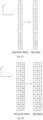
- FIGs. 3A-3C show schematic diagrams of control resource mapping from REG initial index to REG index according to embodiments of the present disclosure, respectively.
- the control channel region such as the CORESET in the NR system
- there is one OFDM symbol in the time domain represented by ⁇ t'
- there are 12 REGs in the frequency domain represented by ⁇ f'
- the REG indices are required to be continuous for each OFDM symbol
- the REG indices are the same to the REG initial indices for the REGs in this one-symbol control channel region.
- the control channel region such as the CORESET in the NR system
- the total number of the REGs in the control channel region is 24.
- the REG initial indices are continuous in different OFDM symbols in the control channel region.
- the mapping from the REG initial indices to the REG indices may be realized by employing a modulo operation.
- the modulo operation may be represented by n mod 12 , in which n represents the REG initial index, mod represents an modulo operation, and . operator represents an operation of rounding down.
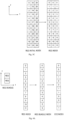
- Figs. 4A-4G show schematic diagrams of control resource mapping from REG index to CCE index according to embodiments of the present disclosure respectively.
- the skilled may appreciate that all the numeral values in the following description of Figs. 4A-4G are only for illustrating purpose, without suggesting any limitations as to the scope of the present disclosure.
- the width of the control channel region which may be represented by the number of REGs in the frequency domain of the control channel region, is 12 in this case.
- the pattern of the REG bundle there is one OFDM symbol in time domain, which is equal to the number of OFDM symbols in the control channel region.
- the width of the REG bundle is two, which is represented by the number of REGs in the frequency domain in the REG bundle.
- the REG indices may be first divided by the width of the REG bundle, and then the REG indices, which are divided by the width of the REG bundle, may be further rounded down in order to obtain integral REG indices.
- the details of these operations may be referred to the description illustrated according to Fig. 2 .
- the determination of the REG bundle indices from the REG indices may be represented as m s , in which m represents the REG index, s represents the width of the REG bundle, and . operator represents an operation of rounding down. In this case, s is equal to two.
- the every two REGs are grouped in one REG bundle; and therefore, the REGs in one REG bundle are contiguous in the frequency domain.
- the control channel region it is assumed that there are 6 REGs in one CCE; and therefore there are two CCEs in the control channel region.
- the determination of the CCE indices from the REG bundle indices can be performed via modulo operation.
- the modulo operation can be represented as k mod 2, in which k represents the REG bundle index.
- the REG bundle indices are mapped to CCE indices, so that the CCE indices are continuous with respect to the REG bundle in frequency domain. Therefore, in the case of Fig. 4A , the CCE index may be indicated by m 2 mod 2 , in which m represents the REG index and . operator represents an operation of rounding down.
- the width of the control channel region which may be represented by the number of REGs in the frequency domain of the control channel region, is 12 in this case.
- the pattern of the REG bundle there is one OFDM symbol in time domain, which is equal to the number of OFDM symbols in the control channel region.
- the width of the REG bundle is three, which is represented by the number of REGs in the frequency domain in the REG bundle. Accordingly, the determination of the REG bundle indices from the REG indices may be represented as m 3 , in which m represents the REG index and . operator represents an operation of rounding down.
- the every three consecutive REGs are grouped in one REG bundle; and therefore, the REGs in one REG bundle are contiguous in the frequency domain.
- the determination of the CCE indices from the REG bundle can be represented as k mod 2, in which k represents the REG bundle index.
- the REG bundle indices are mapped to CCE indices, so that the CCE indices are continuous with respect to the REG bundle in frequency domain. Therefore, in the case of Fig. 4B , the CCE index may be indicated by m 3 mod 2 , in which m represents the REG index and . operator represents an operation of rounding down.
- the width of the control channel region which may be represented by the number of REGs in the frequency domain of the control channel region, is 12 in this case.
- the pattern of the REG bundle there is one OFDM symbol in time domain, which is equal to the number of OFDM symbols in the control channel region.
- the width of the REG bundle is 6, which is represented by the number of REGs in the frequency domain in the REG bundle. Accordingly, the determination of the REG bundle indices from the REG indices may be represented as m 6 , in which m represents the REG index and . operator represents an operation of rounding down.
- the every 6 consecutive REGs are grouped in one REG bundle; and therefore, the REGs in one REG bundle are contiguous in the frequency domain.
- the determination of the CCE indices from the REG bundle can be represented as k mod 2, in which k represents the REG bundle index.
- the REG bundle indices are mapped to CCE indices, so that the CCE indices are continuous with respect to the REG bundle in frequency domain. Therefore, in the case of Fig. 4C , the CCE index may be indicated by m 6 mod 2 , in which m represents the REG index and . operator represents an operation of rounding down.
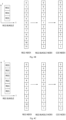
- the width of the control channel region which may be represented by the number of REGs in the frequency domain of the control channel region, is 12 in this case.
- the total number of REGs in the control channel region is 24 in this case.
- the pattern of the REG bundle there are two OFDM symbols in time domain, which is equal to the number of OFDM symbols in the control channel region.
- the width of the REG bundle is one, which is represented by the number of REGs in the frequency domain in the REG bundle. Accordingly, the determination of the REG bundle indices from the REG indices may be represented as m, in which m represents the REG index.
- the REG bundle indices are the same to the REG indices.
- the REGs in one REG bundle are contiguous in the frequency domain.
- the determination of the CCE indices from the REG bundle can be represented as k mod 4, in which k represents the REG bundle index.
- the REG bundle indices are mapped to CCE indices, so that the CCE indices are continuous with respect to the REG bundle in frequency domain. Therefore, in the case of Fig. 4D , the CCE index may be indicated by m mod 4, in which m represents the REG index.
- the width of the control channel region which may be represented by the number of REGs in the frequency domain of the control channel region, is 12 in this case.
- the total number of REGs in the control channel region is 24 in this case.
- the pattern of the REG bundle there are two OFDM symbols in time domain, which is equal to the number of OFDM symbols in the control channel region.
- the width of the REG bundle is three, which is represented by the number of REGs in the frequency domain in the REG bundle. Accordingly, the determination of the REG bundle indices from the REG indices may be represented as m 3 , in which m represents the REG index and . operator represents an operation of rounding down.
- the determination of the CCE indices from the REG bundle can be represented as k mod 4, in which k represents the REG bundle index.
- the REG bundle indices are mapped to CCE indices, so that the CCE indices are continuous with respect to the REG bundle in frequency domain. Therefore, in the case of Fig. 4E , the CCE index may be indicated by m 3 mod 4 , in which m represents the REG index and . operator represents an operation of rounding down.
- the width of the control channel region which may be represented by the number of REGs in the frequency domain of the control channel region, is 12 in this case.
- the total number of REGs in the control channel region is 36 in this case.
- the pattern of the REG bundle there are three OFDM symbols in time domain, which is equal to the number of OFDM symbols in the control channel region.
- the width of the REG bundle is one, which is represented by the number of REGs in the frequency domain in the REG bundle. Accordingly, the determination of the REG bundle indices from the REG indices may be represented as m , in which m represents the REG index.
- the REG bundle indices are the same to the REG indices respectively.
- the determination of the CCE indices from the REG bundle can be represented as k mod 6, in which k represents the REG bundle index.
- the REG bundle indices are mapped to CCE indices, so that the CCE indices are continuous with respect to the REG bundle in frequency domain. Therefore, in the case of Fig. 4F , the CCE index may be indicated by m mod 6, in which m represents the REG index.
- the width of the control channel region which may be represented by the number of REGs in the frequency domain of the control channel region, is 12 in this case.
- the total number of REGs in the control channel region is 36 in this case.
- the pattern of the REG bundle there are three OFDM symbols in time domain, which is equal to the number of OFDM symbols in the control channel region.
- the width of the REG bundle is two, which is represented by the number of REGs in the frequency domain in the REG bundle. Accordingly, the determination of the REG bundle indices from the REG indices may be represented as m 2 , in which m represents the REG index and . operator represents an operation of rounding down.
- the determination of the CCE indices from the REG bundle can be represented as k mod 6, in which k represents the REG bundle index.
- the REG bundle indices are mapped to CCE indices, so that the CCE indices are continuous with respect to the REG bundle in frequency domain. Therefore, in the case of Fig. 4G , the CCE index may be indicated by m 2 mod 6 , in which m represents the REG index and . operator represents an operation of rounding down.
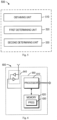
- FIG. 5 shows a block diagram of an apparatus 500 in accordance with some embodiments of the present disclosure. It would be appreciated that the apparatus 500 may be implemented at the network device 110, or the terminal devices 120 and 130.
- the apparatus 500 includes an obtaining unit 510 and a first determining unit 520 and a second determining unit 530.
- the obtaining unit 510 is configured to obtain REG indices for a plurality of REGs in a control channel region.
- the first determining unit 520 is configured to determine REG bundle indices based on the REG indices and a pattern of REG bundle, the pattern of REG bundle indicating the number of REGs in frequency domain and the number of OFDM symbols in time domain.
- the second determining unit 530 is configured to determine CCE indices based on the determined REG bundle indices and the number of CCEs in the control channel region, so that the CCE indices are continuous with respect to the REG bundle in frequency domain.
- the obtaining unit 510 may be configured to obtain REG initial indices for the plurality of REGs in the control channel region, the REG initial indices being continuous in different OFDM symbols in the control channel region; and determine the REG indices based on the REG initial indices, the REG indices being continuous for each OFDM symbol in the control channel region.
- the obtaining unit 510 may be configured to indexing, in an order of frequency of REGs, the REG indices for the plurality of REGs for each OFDM symbol in the control channel region.
- the first determining unit 520 may be configured to divide the REG indices by a width of the REG bundle, the width of the REG bundle indicating the number of REGs in a REG bundle in frequency domain; and round down the REG indices divided by the width of the REG bundle as the REG bundle indices.
- the first determining unit 530 may be configured to determine the modulo results of the REG bundle indices with respect to the number of CCEs in the control channel region, the number of CCEs being determined based on the number of the plurality of REGs in the control channel region and the number of REGs in a CCE; and obtain the CCE indices based on the modulo results.
Landscapes
- Engineering & Computer Science (AREA)
- Signal Processing (AREA)
- Computer Networks & Wireless Communication (AREA)
- Mobile Radio Communication Systems (AREA)
Priority Applications (1)
| Application Number | Priority Date | Filing Date | Title |
|---|---|---|---|
| EP25153367.5A EP4521692A3 (fr) | 2017-08-03 | 2017-08-03 | Procédés et appareils de mappage de ressources de commande |
Applications Claiming Priority (3)
| Application Number | Priority Date | Filing Date | Title |
|---|---|---|---|
| EP17919833.8A EP3662707A4 (fr) | 2017-08-03 | 2017-08-03 | Procédés et appareils de mappage de ressources de commande |
| PCT/CN2017/095853 WO2019024052A1 (fr) | 2017-08-03 | 2017-08-03 | Procédés et appareils de mappage de ressources de commande |
| EP25153367.5A EP4521692A3 (fr) | 2017-08-03 | 2017-08-03 | Procédés et appareils de mappage de ressources de commande |
Related Parent Applications (1)
| Application Number | Title | Priority Date | Filing Date |
|---|---|---|---|
| EP17919833.8A Division EP3662707A4 (fr) | 2017-08-03 | 2017-08-03 | Procédés et appareils de mappage de ressources de commande |
Publications (2)
| Publication Number | Publication Date |
|---|---|
| EP4521692A2 true EP4521692A2 (fr) | 2025-03-12 |
| EP4521692A3 EP4521692A3 (fr) | 2025-05-07 |
Family
ID=65233272
Family Applications (2)
| Application Number | Title | Priority Date | Filing Date |
|---|---|---|---|
| EP25153367.5A Pending EP4521692A3 (fr) | 2017-08-03 | 2017-08-03 | Procédés et appareils de mappage de ressources de commande |
| EP17919833.8A Withdrawn EP3662707A4 (fr) | 2017-08-03 | 2017-08-03 | Procédés et appareils de mappage de ressources de commande |
Family Applications After (1)
| Application Number | Title | Priority Date | Filing Date |
|---|---|---|---|
| EP17919833.8A Withdrawn EP3662707A4 (fr) | 2017-08-03 | 2017-08-03 | Procédés et appareils de mappage de ressources de commande |
Country Status (8)
| Country | Link |
|---|---|
| US (3) | US20200187238A1 (fr) |
| EP (2) | EP4521692A3 (fr) |
| JP (2) | JP7384517B2 (fr) |
| CN (2) | CN111034289A (fr) |
| AU (2) | AU2017426186A1 (fr) |
| CA (1) | CA3071690A1 (fr) |
| DE (1) | DE112017007803T5 (fr) |
| WO (1) | WO2019024052A1 (fr) |
Families Citing this family (10)
| Publication number | Priority date | Publication date | Assignee | Title |
|---|---|---|---|---|
| WO2019024052A1 (fr) * | 2017-08-03 | 2019-02-07 | Nec Corporation | Procédés et appareils de mappage de ressources de commande |
| WO2019031946A1 (fr) * | 2017-08-11 | 2019-02-14 | 엘지전자 주식회사 | Procédé permettant de transmettre/recevoir un signal sur la base de la technologie lte et d'une nouvelle radio dans un système de communication sans fil et dispositif s'y rapportant |
| KR102581454B1 (ko) * | 2017-11-10 | 2023-09-22 | 삼성전자주식회사 | 무선 통신 시스템에서 제어 정보를 송수신하는 방법 및 장치 |
| WO2021203356A1 (fr) * | 2020-04-09 | 2021-10-14 | Qualcomm Incorporated | Entrelacement de ressources de commande pour des communications en bande de 6 ghz |
| WO2021212286A1 (fr) * | 2020-04-20 | 2021-10-28 | 北京小米移动软件有限公司 | Procédé et appareil de transmission de canal de commande de liaison descendante physique, et support d'informations |
| WO2022008474A1 (fr) | 2020-07-08 | 2022-01-13 | Merck Patent Gmbh | Composant optique |
| CN114258136B (zh) * | 2020-09-21 | 2025-09-16 | 华为技术有限公司 | 资源确定方法及装置 |
| TW202311501A (zh) | 2021-05-12 | 2023-03-16 | 德商馬克專利公司 | 液晶介質及電子組件 |
| US12446040B2 (en) * | 2021-09-24 | 2025-10-14 | Apple Inc. | Interleaved control channel element to resource element group mapping |
| US20240422787A1 (en) * | 2023-06-13 | 2024-12-19 | Mavenir Systems, Inc. | Method to Improve 5G NR PDCCH Decoding Using CCE Interference Randomization |
Family Cites Families (17)
| Publication number | Priority date | Publication date | Assignee | Title |
|---|---|---|---|---|
| WO2012064954A2 (fr) * | 2010-11-10 | 2012-05-18 | The Trustees Of Princeton University | Extraction spécifique de séquence et analyse de protéines liées à l'adn |
| CN103733551B (zh) * | 2011-08-19 | 2016-11-16 | Lg电子株式会社 | 在无线通信系统中基站发射下行链路控制信道的方法及其设备 |
| CN103947144B (zh) * | 2011-11-23 | 2017-03-08 | Lg电子株式会社 | 在无线通信系统中发送/获得控制信息的方法和设备 |
| WO2014038904A1 (fr) * | 2012-09-07 | 2014-03-13 | Samsung Electronics Co., Ltd. | Multiplexage de groupes d'éléments de ressources servant aux éléments de canaux de commande des canaux de commande |
| KR101562694B1 (ko) * | 2012-09-18 | 2015-10-22 | 주식회사 케이티 | 송수신포인트의 제어 정보 전송 방법 및 그 송수신포인트, 단말의 제어 정보 수신 방법 및 그 단말 |
| CN104823394B (zh) * | 2012-09-28 | 2018-08-10 | 英特尔公司 | 用于增强物理下行链路控制信道(epdcch)的盲解码 |
| US20160316456A1 (en) * | 2015-04-10 | 2016-10-27 | Telefonaktiebolaget L M Ericsson (Publ) | Radio Access Node, Wireless Device and Methods Performed Therein |
| KR20250027856A (ko) * | 2017-02-03 | 2025-02-27 | 인터디지탈 패튼 홀딩스, 인크 | 물리적인 다운링크 제어 채널에서의 전달과 수신 |
| US10432441B2 (en) * | 2017-02-06 | 2019-10-01 | Samsung Electronics Co., Ltd. | Transmission structures and formats for DL control channels |
| MX2019000574A (es) * | 2017-04-24 | 2019-07-04 | Lg Electronics Inc | Metodo y aparato para transmitir o recibir la señal en el sistema de comunicacion inalambrica. |
| CN110383746B (zh) * | 2017-04-28 | 2022-03-01 | Lg 电子株式会社 | 接收下行链路控制信道的方法和装置 |
| US11799600B2 (en) * | 2017-05-03 | 2023-10-24 | Interdigital Patent Holdings, Inc. | Beam-based PDCCH transmission in NR |
| US20180324770A1 (en) * | 2017-05-04 | 2018-11-08 | Sharp Laboratories Of America, Inc. | User equipments, base stations and methods |
| CN108809572B (zh) * | 2017-05-04 | 2023-12-01 | 华为技术有限公司 | 通信方法和通信装置 |
| US11096170B2 (en) * | 2017-06-12 | 2021-08-17 | Qualcomm Incorporated | Multi-component interleaver design supporting coresets of different symbol length |
| CN109151898B (zh) * | 2017-06-16 | 2023-11-10 | 华为技术有限公司 | 信号传输方法、相关装置及系统 |
| WO2019024052A1 (fr) * | 2017-08-03 | 2019-02-07 | Nec Corporation | Procédés et appareils de mappage de ressources de commande |
-
2017
- 2017-08-03 WO PCT/CN2017/095853 patent/WO2019024052A1/fr not_active Ceased
- 2017-08-03 US US16/636,146 patent/US20200187238A1/en not_active Abandoned
- 2017-08-03 DE DE112017007803.2T patent/DE112017007803T5/de active Pending
- 2017-08-03 JP JP2020505463A patent/JP7384517B2/ja active Active
- 2017-08-03 EP EP25153367.5A patent/EP4521692A3/fr active Pending
- 2017-08-03 AU AU2017426186A patent/AU2017426186A1/en not_active Abandoned
- 2017-08-03 CA CA3071690A patent/CA3071690A1/fr active Pending
- 2017-08-03 CN CN201780093574.XA patent/CN111034289A/zh active Pending
- 2017-08-03 CN CN202510824497.7A patent/CN120639256A/zh active Pending
- 2017-08-03 EP EP17919833.8A patent/EP3662707A4/fr not_active Withdrawn
-
2020
- 2020-02-06 US US16/783,558 patent/US11190960B2/en active Active
-
2021
- 2021-09-03 US US17/466,513 patent/US20210400511A1/en not_active Abandoned
- 2021-12-22 AU AU2021290316A patent/AU2021290316B2/en active Active
-
2022
- 2022-09-20 JP JP2022148825A patent/JP2022180496A/ja active Pending
Also Published As
| Publication number | Publication date |
|---|---|
| WO2019024052A1 (fr) | 2019-02-07 |
| AU2017426186A1 (en) | 2020-02-20 |
| CN111034289A (zh) | 2020-04-17 |
| JP2022180496A (ja) | 2022-12-06 |
| US20200178099A1 (en) | 2020-06-04 |
| US20210400511A1 (en) | 2021-12-23 |
| EP3662707A4 (fr) | 2020-07-29 |
| AU2021290316A1 (en) | 2022-01-27 |
| AU2021290316B2 (en) | 2023-05-25 |
| EP4521692A3 (fr) | 2025-05-07 |
| DE112017007803T5 (de) | 2020-06-04 |
| CN120639256A (zh) | 2025-09-12 |
| JP7384517B2 (ja) | 2023-11-21 |
| US11190960B2 (en) | 2021-11-30 |
| US20200187238A1 (en) | 2020-06-11 |
| JP2020534718A (ja) | 2020-11-26 |
| CA3071690A1 (fr) | 2019-02-07 |
| EP3662707A1 (fr) | 2020-06-10 |
Similar Documents
| Publication | Publication Date | Title |
|---|---|---|
| AU2021290316B2 (en) | Methods and apparatuses for control resource mapping | |
| US12500724B2 (en) | Methods and apparatuses for transmitting control information | |
| KR102778360B1 (ko) | 통신 시스템에서 시스템 정보의 송수신 방법 | |
| CN110035523B (zh) | 一种uci传输方法及设备 | |
| EP2847903A1 (fr) | Indication de commande de liaison descendante destinée à un nouveau type de porteuse (nct) autonome | |
| CN101860896A (zh) | 一种确定用户专有搜索空间的方法和装置 | |
| EP2945445A1 (fr) | Procédé d'indication de porteuse, équipement d'utilisateur, et station de base | |
| US20170311286A1 (en) | Method and apparatus for supporting variable transport block size without associated downlink control information in wireless communication system | |
| US20230156665A1 (en) | Methods, devices and computer storage media for communication | |
| US20200059321A1 (en) | Coverage enhancement for ofdm transmissions | |
| EP3117554B1 (fr) | Enb, ue et procédé d'attribution de blocs de ressources physiques dans un ue mtc | |
| EP3100548B1 (fr) | Procédé et appareil pour améliorer une plage dynamique pour une gestion de brouillage et une adaptation de trafic améliorées | |
| CN108432326A (zh) | 用于窄带物联网的时间非连续传输 | |
| EP4346136A1 (fr) | Procédé et appareil de mappage entre cce et reg entrelacés dans une partie d'un ensemble de ressources de commande | |
| CN120712750A (zh) | 利用探测参考信号资源集合的多小区物理上行链路共享信道调度 | |
| US20240340871A1 (en) | Method, device and computer readable medium for communications | |
| EP3319388A1 (fr) | Procédé d'indication de porteuse, équipement utilisateur et station de base |
Legal Events
| Date | Code | Title | Description |
|---|---|---|---|
| PUAI | Public reference made under article 153(3) epc to a published international application that has entered the european phase |
Free format text: ORIGINAL CODE: 0009012 |
|
| STAA | Information on the status of an ep patent application or granted ep patent |
Free format text: STATUS: REQUEST FOR EXAMINATION WAS MADE |
|
| 17P | Request for examination filed |
Effective date: 20250122 |
|
| AC | Divisional application: reference to earlier application |
Ref document number: 3662707 Country of ref document: EP Kind code of ref document: P |
|
| AK | Designated contracting states |
Kind code of ref document: A2 Designated state(s): AL AT BE BG CH CY CZ DE DK EE ES FI FR GB GR HR HU IE IS IT LI LT LU LV MC MK MT NL NO PL PT RO RS SE SI SK SM TR |
|
| REG | Reference to a national code |
Ref country code: DE Ref legal event code: R079 Free format text: PREVIOUS MAIN CLASS: H04L0027260000 Ipc: H04L0005000000 |
|
| PUAL | Search report despatched |
Free format text: ORIGINAL CODE: 0009013 |
|
| AK | Designated contracting states |
Kind code of ref document: A3 Designated state(s): AL AT BE BG CH CY CZ DE DK EE ES FI FR GB GR HR HU IE IS IT LI LT LU LV MC MK MT NL NO PL PT RO RS SE SI SK SM TR |
|
| RIC1 | Information provided on ipc code assigned before grant |
Ipc: H04L 27/26 20060101ALN20250401BHEP Ipc: H04L 5/00 20060101AFI20250401BHEP |
|
| STAA | Information on the status of an ep patent application or granted ep patent |
Free format text: STATUS: EXAMINATION IS IN PROGRESS |
|
| 17Q | First examination report despatched |
Effective date: 20260112 |