EP4521785A1 - Kommunikationsverfahren, -vorrichtung und -system - Google Patents
Kommunikationsverfahren, -vorrichtung und -system Download PDFInfo
- Publication number
- EP4521785A1 EP4521785A1 EP23814899.3A EP23814899A EP4521785A1 EP 4521785 A1 EP4521785 A1 EP 4521785A1 EP 23814899 A EP23814899 A EP 23814899A EP 4521785 A1 EP4521785 A1 EP 4521785A1
- Authority
- EP
- European Patent Office
- Prior art keywords
- data
- network element
- domain
- domain data
- information
- Prior art date
- Legal status (The legal status is an assumption and is not a legal conclusion. Google has not performed a legal analysis and makes no representation as to the accuracy of the status listed.)
- Pending
Links
Images



Classifications
-
- H—ELECTRICITY
- H04—ELECTRIC COMMUNICATION TECHNIQUE
- H04L—TRANSMISSION OF DIGITAL INFORMATION, e.g. TELEGRAPHIC COMMUNICATION
- H04L67/00—Network arrangements or protocols for supporting network services or applications
- H04L67/50—Network services
- H04L67/60—Scheduling or organising the servicing of application requests, e.g. requests for application data transmissions using the analysis and optimisation of the required network resources
- H04L67/63—Routing a service request depending on the request content or context
-
- H—ELECTRICITY
- H04—ELECTRIC COMMUNICATION TECHNIQUE
- H04L—TRANSMISSION OF DIGITAL INFORMATION, e.g. TELEGRAPHIC COMMUNICATION
- H04L41/00—Arrangements for maintenance, administration or management of data switching networks, e.g. of packet switching networks
- H04L41/08—Configuration management of networks or network elements
- H04L41/0803—Configuration setting
- H04L41/0806—Configuration setting for initial configuration or provisioning, e.g. plug-and-play
-
- H—ELECTRICITY
- H04—ELECTRIC COMMUNICATION TECHNIQUE
- H04L—TRANSMISSION OF DIGITAL INFORMATION, e.g. TELEGRAPHIC COMMUNICATION
- H04L41/00—Arrangements for maintenance, administration or management of data switching networks, e.g. of packet switching networks
- H04L41/04—Network management architectures or arrangements
- H04L41/044—Network management architectures or arrangements comprising hierarchical management structures
-
- H—ELECTRICITY
- H04—ELECTRIC COMMUNICATION TECHNIQUE
- H04L—TRANSMISSION OF DIGITAL INFORMATION, e.g. TELEGRAPHIC COMMUNICATION
- H04L41/00—Arrangements for maintenance, administration or management of data switching networks, e.g. of packet switching networks
- H04L41/08—Configuration management of networks or network elements
- H04L41/085—Retrieval of network configuration; Tracking network configuration history
- H04L41/0853—Retrieval of network configuration; Tracking network configuration history by actively collecting configuration information or by backing up configuration information
-
- H—ELECTRICITY
- H04—ELECTRIC COMMUNICATION TECHNIQUE
- H04L—TRANSMISSION OF DIGITAL INFORMATION, e.g. TELEGRAPHIC COMMUNICATION
- H04L41/00—Arrangements for maintenance, administration or management of data switching networks, e.g. of packet switching networks
- H04L41/34—Signalling channels for network management communication
- H04L41/342—Signalling channels for network management communication between virtual entities, e.g. orchestrators, SDN or NFV entities
-
- H—ELECTRICITY
- H04—ELECTRIC COMMUNICATION TECHNIQUE
- H04L—TRANSMISSION OF DIGITAL INFORMATION, e.g. TELEGRAPHIC COMMUNICATION
- H04L41/00—Arrangements for maintenance, administration or management of data switching networks, e.g. of packet switching networks
- H04L41/50—Network service management, e.g. ensuring proper service fulfilment according to agreements
- H04L41/5041—Network service management, e.g. ensuring proper service fulfilment according to agreements characterised by the time relationship between creation and deployment of a service
- H04L41/5051—Service on demand, e.g. definition and deployment of services in real time
-
- H—ELECTRICITY
- H04—ELECTRIC COMMUNICATION TECHNIQUE
- H04W—WIRELESS COMMUNICATION NETWORKS
- H04W12/00—Security arrangements; Authentication; Protecting privacy or anonymity
- H04W12/06—Authentication
-
- H—ELECTRICITY
- H04—ELECTRIC COMMUNICATION TECHNIQUE
- H04W—WIRELESS COMMUNICATION NETWORKS
- H04W12/00—Security arrangements; Authentication; Protecting privacy or anonymity
- H04W12/08—Access security
-
- H—ELECTRICITY
- H04—ELECTRIC COMMUNICATION TECHNIQUE
- H04W—WIRELESS COMMUNICATION NETWORKS
- H04W4/00—Services specially adapted for wireless communication networks; Facilities therefor
- H04W4/50—Service provisioning or reconfiguring
-
- H—ELECTRICITY
- H04—ELECTRIC COMMUNICATION TECHNIQUE
- H04L—TRANSMISSION OF DIGITAL INFORMATION, e.g. TELEGRAPHIC COMMUNICATION
- H04L41/00—Arrangements for maintenance, administration or management of data switching networks, e.g. of packet switching networks
- H04L41/14—Network analysis or design
-
- H—ELECTRICITY
- H04—ELECTRIC COMMUNICATION TECHNIQUE
- H04L—TRANSMISSION OF DIGITAL INFORMATION, e.g. TELEGRAPHIC COMMUNICATION
- H04L41/00—Arrangements for maintenance, administration or management of data switching networks, e.g. of packet switching networks
- H04L41/28—Restricting access to network management systems or functions, e.g. using authorisation function to access network configuration
-
- H—ELECTRICITY
- H04—ELECTRIC COMMUNICATION TECHNIQUE
- H04L—TRANSMISSION OF DIGITAL INFORMATION, e.g. TELEGRAPHIC COMMUNICATION
- H04L67/00—Network arrangements or protocols for supporting network services or applications
- H04L67/50—Network services
- H04L67/52—Network services specially adapted for the location of the user terminal
-
- H—ELECTRICITY
- H04—ELECTRIC COMMUNICATION TECHNIQUE
- H04L—TRANSMISSION OF DIGITAL INFORMATION, e.g. TELEGRAPHIC COMMUNICATION
- H04L69/00—Network arrangements, protocols or services independent of the application payload and not provided for in the other groups of this subclass
- H04L69/04—Protocols for data compression, e.g. ROHC
Definitions
- This application relates to the communication field, and in particular, to a communication method, apparatus, and system.
- a data service data service
- acquisition, pre-processing, analytics, and other operations may be performed on data, and the obtained data is provided as a service product.
- the data in the mobile communication network may be processed based on a data service architecture, to implement the data service.
- a specific implementation remains to be studied.
- Embodiments of this application provide a communication method, apparatus, and system, to process data in a mobile communication network based on a data service architecture, to implement a data service.
- a communication method includes: A domain data orchestration network element receives first requirement information.
- the domain data orchestration network element determines, based on the first requirement information and one or more pieces of domain data service capability information, at least one domain data agent network element and operation configuration information corresponding to each of the at least one domain data agent network element.
- the domain data orchestration network element sends the operation configuration information.
- the first requirement information is a service requirement that is on first data and that corresponds to the domain data orchestration network element.
- the one or more pieces of domain data service capability information are in one-to-one correspondence with one or more domain data agent network elements, the at least one domain data agent network element is at least one of the one or more domain data agent network elements, the first requirement information corresponds to at least one of the one or more pieces of domain data service capability information, and the operation configuration information of any one of the at least one domain data agent network element indicates an operation performed by the any one domain data agent network element on the first data.
- the domain data orchestration network element may first determine the domain data agent network element participating in the data service, and then determine the corresponding operation configuration information when determining that the domain data agent network element has the permission to access the first data; or the domain data orchestration network element does not determine the corresponding operation configuration information when determining that the domain data agent network element has no permission to access the first data. This can implement a trusted data service.
- the communication method provided in the first aspect may further include:
- the domain data orchestration network element receives a first verification response message from a trust anchor.
- the first verification response message may indicate whether the any one of the at least one domain data agent network element has the permission to access the first data.
- the trusted data service can be implemented.
- the communication method provided in the first aspect may further include:
- the domain data orchestration network element sends a first verification request message to the trust anchor.
- the first verification request message is for requesting to verify whether the any one of the at least one domain data agent network element has the permission to access the first data.
- the trusted data service can be implemented.
- the communication method provided in the first aspect may further include:
- the domain data orchestration network element receives first indication information from a data orchestration network element.
- the first indication information may indicate that a domain data agent network element directly communicating with a service request network element is a data agent network element in a core network domain or a data agent network element in an access network domain.
- the domain data orchestration network element may learn of a domain to which the domain data agent network element directly communicating with the service request network element belongs.
- the communication method provided in the first aspect may further include:
- the domain data orchestration network element sends first communication information.
- the first communication information may indicate information about a domain data agent network element that is in the at least one domain data agent network element and that directly communicates with the service request network element.
- the domain data orchestration network element may select, from the determined domain data agent network element participating in the current data service, a domain data agent network element that directly communicates with the service request network element.
- the communication method provided in the first aspect may further include:
- the domain data orchestration network element receives the domain data service capability information corresponding to the one or more domain data agent network elements. In this way, the domain data orchestration network element may receive the data service capability reported by the domain data agent network element.
- the communication method provided in the first aspect may further include:
- the domain data orchestration network element sends first data service capability information to the data orchestration network element.
- the first data service capability information may be determined based on the one or more pieces of domain data service capability information.
- the domain data orchestration network element may collect statistics on the domain data service capability information of the domain data agent network elements in a local domain, to obtain the first data service capability information, and send the first data service capability information to the data orchestration network element.
- domain data service capability information of any one of the one or more domain data agent network elements may include but is not limited to one or more of the following: an identifier of the any one domain data agent network element, location information of the any one domain data agent network element, a data acquisition capability, a data pre-processing capability, a data storage capability, a data reporting capability, a data analytics capability, a capability of interacting with the service request network element, a data protection capability, and a data compression capability.
- the operation indicated by the operation configuration information includes one or more of the following: data acquisition, data pre-processing, data protection, data storage, data analytics, and the interaction with the service request network element. It needs to be noted that data service capabilities of the domain data agent network element are not limited thereto. In this way, the domain data agent network element may perform the operation indicated by the operation configuration information.
- the operation indicated by the operation configuration information in this application is different from common encoding/decoding, a modulation/demodulation operation, and rate matching.
- the first requirement information includes one or more of the following service requirements: a geographic location, the data acquisition, the data pre-processing, the data storage, data reporting, the data analytics, the interaction with the service request network element, the data protection, and data compression.
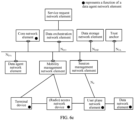
- the domain data orchestration network element is a core-network-domain data orchestration network element or an access-network-domain data orchestration network element.
- the any one of the one or more domain data agent network elements is a data agent network element in the core network domain; or the one or more domain data agent network elements are data agent network elements in the access network domain.
- the data agent network element in the core network domain may include but is not limited to one or more of the following: a core-network-domain data agent network element and a standalone data agent network element.
- the data agent network element in the access network domain may include but is not limited to one or more of the following: an access-network-domain data agent network element, a terminal-domain data agent network element, and a standalone data agent network element.
- the first data may include: data acquired from a mobile communication network or synthesized data.
- the first data may include but is not limited to one or more of the following: data on a terminal device side, data of each function node on an access network device side, data of each function node on a transfer network side, data of each function node on a core network side, data of each function node of operations, administration, and maintenance (operations, administration and maintenance, OAM), and synthesized data.
- the synthesized data may be artificially synthesized data.
- a communication method includes: A data orchestration network element receives a first service request message.
- the data orchestration network element determines first requirement information and second requirement information based on requirement information, first data service capability information, and second data service capability information.
- the data orchestration network element sends the first requirement information and the second requirement information.
- the requirement information is a service requirement that is on first data and that is determined based on a service requested by using the first service request message, the first data service capability information corresponds to a first-domain data orchestration network element, the second data service capability information corresponds to a second-domain data orchestration network element, the first requirement information is a service requirement that is on the first data and that corresponds to the first-domain data orchestration network element, and the second requirement information is a service requirement that is on the first data and that corresponds to the second-domain data orchestration network element.
- the first service request message may be for requesting an application service or a service service.
- the communication method provided in the second aspect may further include:
- the data orchestration network element receives the first data service capability information from the first-domain data orchestration network element.
- the first data service capability information may be determined based on one or more pieces of domain data service capability information.
- the communication method provided in the second aspect may further include:
- the data orchestration network element receives the second data service capability information from the second-domain data orchestration network element.
- the second data service capability information may be determined based on one or more pieces of domain data service capability information.
- the one or more pieces of domain data service capability information are in one-to-one correspondence with one or more domain data agent network elements
- domain data service capability information of any one of the one or more domain data agent network elements may include one or more of the following: an identifier of the any one domain data agent network element, location information of the any one domain data agent network element, a data acquisition capability, a data pre-processing capability, a data storage capability, a data reporting capability, a data analytics capability, a capability of interacting with a service request network element, a data protection capability, and a data compression capability.
- the first service request message is from the service request network element
- the communication method provided in the second aspect may further include:
- the data orchestration network element sends a second verification request message to a trust anchor.
- the second verification request message may be for requesting to verify whether the service request network element has permission to access the first data.
- the first service request message is from the service request network element
- the communication method provided in the second aspect may further include:
- the data orchestration network element sends first indication information to the first-domain data orchestration network element and/or the second-domain data orchestration network element.
- the first indication information may indicate that a domain data agent network element directly communicating with the service request network element is a data agent network element in a core network domain or a data agent network element in an access network domain.
- the communication method provided in the second aspect may further include:
- the data orchestration network element sends updated information about a data security and privacy protection technology repository and/or updated information about an analytics tool repository.
- the requirement information may include one or more of the following service requirements: a geographical location, data acquisition, data pre-processing, data storage, data reporting, data analytics, the interaction with the service request network element, data protection, and data compression.
- the requirement information may correspond to a data service task identifier.
- the first-domain data orchestration network element may be a core-network-domain data orchestration network element
- the second-domain data orchestration network element is an access-network-domain data orchestration network element
- the any one of the one or more domain data agent network elements is a data agent network element in a core network domain; or the one or more domain data agent network elements are data agent network elements in an access network domain.
- the first data may include: data acquired from a mobile communication network or synthesized data.
- a communication method includes: A first-domain data agent network element receives operation configuration information.
- the first-domain data agent network element processes first data based on an operation indicated by the operation configuration information, to obtain first information.
- the operation configuration information indicates that the first-domain data agent network element communicates with a second-domain data agent network element
- the first-domain data agent network element sends the first information to the second-domain data agent network element.
- the operation configuration information indicates that the first-domain data agent network element communicates with a service request network element
- the first-domain data agent network element sends the first information to the service request network element.
- the operation configuration information indicates the operation performed by the first-domain data agent network element on the first data.
- the operation indicated by the operation configuration information may include one or more of the following: data acquisition, data pre-processing, data protection, data storage, data analytics, and interaction with the service request network element.
- the first-domain data agent network element processes first data based on an operation indicated by the operation configuration information, to obtain first information includes: The first-domain data agent network element sends a data request message to a third-domain data agent network element based on the operation configuration information, and the first-domain data agent network element receives a data response message from the third-domain data agent network element.
- the data request message may be for requesting one or more of the following data: network data, user data, internet of things data, and artificial intelligence model data.
- the data response message includes the one or more of the data included in the data request message.
- the data request message may further include security information, and the security information is used to verify whether the first-domain data agent network element has permission to access the first data.
- that the first-domain data agent network element processes first data based on an operation indicated by the operation configuration information, to obtain first information includes: The first-domain data agent network element processes second information based on the operation indicated by the operation configuration information, to obtain the first information. The second information is received by the first-domain data agent network element, and the second information is obtained based on the first data.
- the communication method provided in the third aspect may further include:
- the first-domain data agent network element receives a first verification response message from a trust anchor.
- the first verification response message may indicate that the second-domain data agent network element has permission to access the first data of the first-domain data agent network element.
- the communication method provided in the third aspect may further include: The first-domain data agent network element sends a third verification request message to the trust anchor.
- the third verification request message may be for requesting to verify whether the second-domain data agent network element has the permission to access the first data of the first-domain data agent network element.
- the communication method provided in the third aspect may further include:
- the first-domain data agent network element sends domain data service capability information to a domain data orchestration network element.
- the communication method provided in the third aspect may further include:
- the first-domain data agent network element receives updated information about a data security and privacy protection technology repository and/or updated information about an analytics tool repository from a data orchestration network element.
- the first-domain data agent network element may be a core-network-domain data agent network element, an access-network-domain data agent network element, a terminal-domain data agent network element, or a standalone data agent network element.
- the first data may include: data acquired from a mobile communication network or synthesized data.
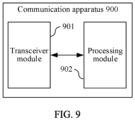
- a communication apparatus includes: a transceiver module and a processing module.
- the transceiver module is configured to receive first requirement information.
- the processing module is configured to determine, based on the first requirement information and one or more pieces of domain data service capability information, at least one domain data agent network element and operation configuration information corresponding to each of the at least one domain data agent network element.
- the transceiver module is further configured to send the operation configuration information.
- the first requirement information is a service requirement that is on first data and that corresponds to the communication apparatus.
- the one or more pieces of domain data service capability information are in one-to-one correspondence with one or more domain data agent network elements, the at least one domain data agent network element is at least one of the one or more domain data agent network elements, the first requirement information corresponds to at least one of the one or more pieces of domain data service capability information, and the operation configuration information of any one of the at least one domain data agent network element indicates an operation performed by the any one domain data agent network element on the first data.
- the processing module is configured to determine at least one domain data agent network element based on the first requirement information and the one or more pieces of domain data service capability information.
- the transceiver module is further configured to: when the any one of the at least one domain data agent network element has permission to access the first data, determine, based on the first requirement information and the one or more pieces of domain data service capability information, the operation configuration information corresponding to the any one of the at least one domain data agent network element.
- the transceiver module is further configured to receive a first verification response message from a trust anchor.
- the first verification response message may indicate whether the any one of the at least one domain data agent network element has the permission to access the first data.
- the transceiver module is further configured to send a first verification request message to the trust anchor.
- the first verification request message is for requesting to verify whether the any one of the at least one domain data agent network element has the permission to access the first data.
- the transceiver module is further configured to receive first indication information from a data orchestration network element.
- the first indication information may indicate that a domain data agent network element directly communicating with a service request network element is a data agent network element in a core network domain or a data agent network element in an access network domain.
- the transceiver module is further configured to send first communication information.
- the first communication information may indicate information about a domain data agent network element that is in the at least one domain data agent network element and that directly communicates with the service request network element.
- the transceiver module is further configured to receive the domain data service capability information corresponding to the one or more domain data agent network elements.
- the transceiver module is further configured to send first data service capability information to the data orchestration network element.
- the first data service capability information may be determined based on the one or more pieces of domain data service capability information.
- domain data service capability information of any one of the one or more domain data agent network elements may include one or more of the following: an identifier of the any one domain data agent network element, location information of the any one domain data agent network element, a data acquisition capability, a data pre-processing capability, a data storage capability, a data reporting capability, a data analytics capability, a capability of interacting with the service request network element, a data protection capability, and a data compression capability.
- the operation indicated by the operation configuration information includes one or more of the following: data acquisition, data pre-processing, data protection, data storage, data analytics, and the interaction with the service request network element.
- the first requirement information includes one or more of the following service requirements: a geographical location, the data acquisition, the data pre-processing, the data storage, data reporting, the data analytics, the interaction with the service request network element, the data protection, and data compression.
- the communication apparatus is a core-network-domain data orchestration network element or an access-network-domain data orchestration network element.
- the any one of the one or more domain data agent network elements is a data agent network element in a core network domain; or the one or more domain data agent network elements are data agent network elements in an access network domain.
- the first data may include: data acquired from a mobile communication network or synthesized data.
- the transceiver module according to the fourth aspect may include: a receiving module and a sending module.
- a specific implementation of the transceiver module is not specifically limited in this application.
- the communication apparatus according to the fourth aspect may further include a storage module.
- the storage module stores a program or instructions.
- the processing module executes the program or the instructions, the communication apparatus according to the fourth aspect is enabled to perform the method according to the first aspect.
- the communication apparatus may be the domain data orchestration network element, for example, the core-network-domain data orchestration network element or the access-network-domain data orchestration network element, or may be a chip (system) or another component or assembly that may be disposed in the domain data orchestration network element. This is not limited in this application.
- a communication apparatus includes: a transceiver module and a processing module.
- the transceiver module is configured to receive a first service request message.
- the processing module is configured to determine first requirement information and second requirement information based on requirement information, first data service capability information, and second data service capability information.
- the transceiver module is further configured to send the first requirement information and the second requirement information.
- the requirement information is a service requirement that is on first data and that is determined based on a service requested by using the first service request message, the first data service capability information corresponds to a first-domain data orchestration network element, the second data service capability information corresponds to a second-domain data orchestration network element, the first requirement information is a service requirement that is on the first data and that corresponds to the first-domain data orchestration network element, and the second requirement information is a service requirement that is on the first data and that corresponds to the second-domain data orchestration network element.
- the first service request message may be for requesting an application service or a service service.
- the transceiver module is further configured to receive the first data service capability information from the first-domain data orchestration network element.
- the first data service capability information may be determined based on one or more pieces of domain data service capability information.
- the transceiver module is further configured to receive the second data service capability information from the second-domain data orchestration network element.
- the second data service capability information may be determined based on one or more pieces of domain data service capability information.
- the one or more pieces of domain data service capability information are in one-to-one correspondence with one or more domain data agent network elements
- domain data service capability information of any one of the one or more domain data agent network elements may include one or more of the following: an identifier of the any one domain data agent network element, location information of the any one domain data agent network element, a data acquisition capability, a data pre-processing capability, a data storage capability, a data reporting capability, a data analytics capability, a capability of interacting with a service request network element, a data protection capability, and a data compression capability.
- the first service request message is from the service request network element, and the transceiver module is further configured to send a second verification request message to a trust anchor.
- the second verification request message may be for requesting to verify whether the service request network element has permission to access the first data.
- the first service request message is from the service request network element
- the transceiver module is further configured to send first indication information to the first-domain data orchestration network element and/or the second-domain data orchestration network element.
- the first indication information may indicate that a domain data agent network element directly communicating with the service request network element is a data agent network element in a core network domain or a data agent network element in an access network domain.
- the transceiver module is further configured to send updated information about a data security and privacy protection technology repository and/or updated information about an analytics tool repository.
- the requirement information may include one or more of the following service requirements: a geographical location, data acquisition, data pre-processing, data storage, data reporting, data analytics, the interaction with the service request network element, data protection, and data compression.
- the requirement information may correspond to a data service task identifier.
- the first-domain data orchestration network element may be a core-network-domain data orchestration network element
- the second-domain data orchestration network element is an access-network-domain data orchestration network element
- the any one of the one or more domain data agent network elements is a data agent network element in the core network domain; or the one or more domain data agent network elements are data agent network elements in the access network domain.
- the first data may include: data acquired from a mobile communication network or synthesized data.
- the transceiver module may include: a receiving module and a sending module.
- a specific implementation of the transceiver module is not specifically limited in this application.
- the communication apparatus may further include a storage module.
- the storage module stores a program or instructions.
- the processing module executes the program or the instructions, the communication apparatus according to the fifth aspect is enabled to perform the method according to the second aspect.
- the communication apparatus may be a data orchestration network element, or may be a chip (system) or another component or assembly that may be disposed in the data orchestration network element. This is not limited in this application.
- a communication apparatus includes: a transceiver module and a processing module.
- the transceiver module is configured to receive operation configuration information.
- the processing module is configured to process first data based on an operation indicated by the operation configuration information, to obtain first information.
- the transceiver module is further configured to: when the operation configuration information indicates that the communication apparatus communicates with a second-domain data agent network element, send the first information to the second-domain data agent network element.
- the transceiver module is further configured to: when the operation configuration information indicates that the communication apparatus communicates with a service request network element, send the first information to the service request network element.
- the operation configuration information indicates the operation performed by the communication apparatus on the first data.
- the operation indicated by the operation configuration information may include one or more of the following: data acquisition, data pre-processing, data protection, data storage, data analytics, and interaction with the service request network element.
- the transceiver module is further configured to send a data request message to a third-domain data agent network element based on the operation configuration information.
- the transceiver module is further configured to receive a data response message from the third-domain data agent network element.
- the data request message may be for requesting one or more of the following data: network data, user data, internet of things data, and artificial intelligence model data.
- the data response message includes the one or more of the data included in the data request message.
- the data request message may further include security information, and the security information is used to verify whether the communication apparatus has permission to access the first data.
- the processing module is further configured to process second information based on the operation indicated by the operation configuration information, to obtain the first information.
- the second information is received by the communication apparatus, and the second information is obtained based on the first data.
- the transceiver module is further configured to receive a first verification response message from a trust anchor.
- the first verification response message may indicate that the second-domain data agent network element has permission to access the first data of the communication apparatus.
- the transceiver module is further configured to send a third verification request message to the trust anchor.
- the third verification request message may be for requesting to verify whether the second-domain data agent network element has the permission to access the first data of the communication apparatus.
- the transceiver module is further configured to send domain data service capability information to a domain data orchestration network element.
- the domain data service capability information may include one or more of the following: an identifier of the communication apparatus, location information of the communication apparatus, a data acquisition capability, a data pre-processing capability, a data storage capability, a data reporting capability, a data analytics capability, a capability of interacting with the service request network element, a data protection capability, and a data compression capability.
- the transceiver module is further configured to receive updated information about a data security and privacy protection technology repository and/or updated information about an analytics tool repository from a data orchestration network element.
- the communication apparatus may be a core-network-domain data agent network element, an access-network-domain data agent network element, a terminal-domain data agent network element, or a standalone data agent network element.
- the first data may include: data acquired from a mobile communication network or synthesized data.
- the transceiver module may include: a receiving module and a sending module.
- a specific implementation of the transceiver module is not specifically limited in this application.
- the communication apparatus may further include a storage module.
- the storage module stores a program or instructions.
- the processing module executes the program or the instructions, the communication apparatus according to the sixth aspect is enabled to perform the method according to the third aspect.
- the communication apparatus may be a first-domain data agent network element, for example, the core-network-domain data agent network element, the access-network-domain data agent network element, the terminal-domain data agent network element, or the standalone data agent network element, or may be a chip (system) or another component or assembly that may be disposed in the first-domain data agent network element. This is not limited in this application.
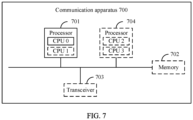
- a communication apparatus includes a processor.
- the processor is coupled to a memory, and the memory is configured to store a computer program.
- the processor is configured to execute the computer program stored in the memory, to perform the method according to any possible implementation of the first aspect to the third aspect.
- the communication apparatus may further include the memory.
- the communication apparatus may further include a transceiver.
- the transceiver may be a transceiver circuit or an input/output port.
- the transceiver may be used by the communication apparatus to communicate with another device.
- the input port may be configured to implement a receiving function in the first aspect to the third aspect
- the output port may be configured to implement a sending function in the first aspect to the third aspect
- the communication apparatus may be a domain data orchestration network element, a data orchestration network element, or a first-domain data agent network element, or a chip or a chip system disposed inside the domain data orchestration network element, the data orchestration network element, or the first-domain data agent network element.
- a communication system includes a domain data orchestration network element and a data orchestration network element, and may further include a first-domain data agent network element.
- the domain data orchestration network element is configured to implement the method according to the first aspect.
- the data orchestration network element is configured to implement the method according to the second aspect.
- the first-domain data agent network element is configured to implement the method according to the third aspect.
- the communication system may further include a service request network element.
- the communication system includes: the communication apparatus according to the fourth aspect and configured to implement the method according to the first aspect, and the communication apparatus according to the fifth aspect and configured to implement the method according to the second aspect, and may further include the communication apparatus according to the sixth aspect and configured to implement the method according to the third aspect.
- the communication system may further include a service request network element.
- a chip system includes a logic circuit and an input/output port.
- the logic circuit is configured to implement a processing function in the first aspect to the third aspect
- the input/output port is configured to implement receiving and sending functions in the first aspect to the third aspect.
- the input port may be configured to implement the receiving function in the first aspect to the third aspect
- the output port may be configured to implement the sending function in the first aspect to the third aspect.
- the chip system further includes a memory.
- the memory is configured to store program instructions and data for implementing the functions in the first aspect to the third aspect.
- the chip system may include a chip, or may include the chip and another discrete device.
- a computer-readable storage medium stores a computer program or instructions.
- the method according to any possible implementation of the first aspect to the third aspect is performed.
- a computer program product including a computer program or instructions.
- the computer program or the instructions are run on a computer, the method according to any possible implementation of the first aspect to the third aspect is performed.
- a universal mobile telecommunications system universal mobile telecommunications system
- UMTS wireless local area network
- WLAN wireless local area network
- Wi-Fi wireless fidelity
- a wired network a vehicle-to-everything (vehicle-to-everything, V2X) communication system
- V2X vehicle-to-everything
- D2D device-to-device
- an internet of vehicles communication system a 4th generation (4th generation, 4G) mobile communication system like a long term evolution (long term evolution, LTE) system or a worldwide interoperability for microwave access (worldwide interoperability for microwave access, WiMAX) communication system
- 5th generation (5th generation, 5G) mobile communication system like a new radio (new radio, NR) system
- a future communication system like a 6th generation (6th generation, 6G) mobile communication system.
- example and “for example” are used to represent giving an example, an illustration, or a description. Any embodiment or design solution described as an “example” in this application should not be explained as being more preferred or having more advantages than another embodiment or design solution. Exactly, the term “example” is used to present a concept in a specific manner.
- a network architecture and a service scenario described in embodiments of this application are intended to describe the technical solutions in embodiments of this application more clearly, and do not constitute a limitation on the technical solutions provided in embodiments of this application.
- a person of ordinary skill in the art may know that: With evolution of the network architecture and emergence of new service scenarios, the technical solutions provided in embodiments of this application are also applicable to similar technical problems.
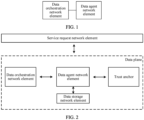
- FIG. 1 is a diagram of an architecture of a communication system to which a communication method is applicable according to an embodiment of this application.
- the communication system includes a data orchestration (data orchestration, DO) network element and a data agent (data agent, DA) network element.
- DO data orchestration
- DA data agent
- the data orchestration network element may obtain a service request, translate the service request into service requirements on data, determine data agent network elements for implementing the service requirements, and orchestrate functions of the data agent network elements, so that the data agent network elements perform corresponding operations and establish a dynamic logical network topology, to implement the corresponding service requirements.
- the data orchestration network element may be deployed in any core network element, transfer network (transfer network, TN) network element, or access network device, or another network element (for example, an operations, administration and maintenance (operations, administration and maintenance, OAM) network element), or the data orchestration network element may be independently deployed.
- the data orchestration network elements may be hierarchically deployed on a core network side or an access network device side.
- the data orchestration network element may be deployed in a network service (network service, NS) network element.
- the data orchestration network element may be independently deployed in a network as a network function (network function, NF) or a network element. In actual deployment, one or more NFs may form a network element.
- the data agent network element may implement one or more of the following functions: data acquisition, pre-processing, storage, analytics, data protection, and the like. Different data agent network elements may have a same data service capability or different data service capabilities, and may implement a same function or different functions.
- the data agent network element may interact with the data orchestration network element, to obtain a related operation that needs to be performed to meet a service requirement, and perform the operation.
- the data agent network elements may establish the logical network topology to form a dynamic data pipeline (data pipeline) (or referred to as a data flow, service logic, a function chain, an operation chain, or the like).
- the data pipeline includes the functions corresponding to the one or more data agent network elements based on the service requirements, and an output of a previous function is an input of a next function, to implement a corresponding data service.
- the data agent network element may be deployed in any core network element, transfer network (transfer network, TN) network element, terminal device, or access network device, or another network element (for example, an operations, administration and maintenance (operations, administration and maintenance, OAM) network element), or the data agent network element may be independently deployed.
- the data agent network element may be independently deployed in the network as a network function NF or a network element.
- the data agent network element may be evolved from any core network element, transfer network network element, terminal device, or access network device, or another network element.
- the data agent network element may implement a function that can be implemented by the any core network element, transfer network network element, terminal device, or access network device, or the another network element.
- the function of the data agent network element provided in this application may be implemented by the any core network element, transfer network network element, terminal device, or access network device, or the another network element.
- the data agent network element may be evolved from a network data analytics function (network data analytics function, NWDAF) network element, and can implement a function of the NWDAF network element, a scenario case implemented based on the NWDAF network element, and the like.
- NWDAF network data analytics function
- the data agent network element may be optionally deployed in the any core network element, transfer network network element, terminal device, or access network device, or the another network element based on a resource and/or a capability of the network element, to implement cross-domain data acquisition.
- the data agent network element may acquire data from a whole domain, to implement cross-domain data management and collaboration.
- the data agent network element can match cloud native SBI encryption, NF dynamic instantiation, and a K8S deployment encryption environment. In addition, impact on a performance loss and security of the NF can be minimized.
- some data agent network elements may be disposed inside a network device (which refers to the any core network element, terminal device, or access network device, or the another network element), and some data agent network elements are independently deployed; or the plurality of data agent network elements are all disposed inside a network device, or the plurality of data agent network elements are all independently deployed. This is not limited in this application.
- the data orchestration network element may be a logical entity or a physical entity
- the data agent network element may be a logical entity or a physical entity. This is not limited in this application.
- the data agent network element may be deployed in a centralized manner or in a distributed manner.
- This distributed deployment manner may include a distributed hash table (distributed hash table, DHT) manner and the like.
- DHT distributed hash table
- the data agent network element is flexibly deployed in a distributed and on-demand manner, which can meet diversified and flexible data service requirements and reduce data acquisition overheads.
- the core network element is located on a network side of the communication system, and may be configured to provide a network service for the access network device, the terminal device, and the like.
- the core network element may include but is not limited to one or more of the following: a mobility management network element, a session management network element, a user plane network element, a policy control network element, a network exposure network element, an application network element, the NWDAF network element, and/or the OAM network element.
- the mobility management network element is mainly used for mobility management, access management, and the like.
- the access management network element may be an access and mobility management function (access and mobility management function, AMF) network element, and mainly performs functions such as mobility management and access authentication/authorization.
- AMF access and mobility management function
- the mobility management network element may be further responsible for transferring a user policy between a terminal and a policy control function (policy control function, PCF) network element.
- policy control function policy control function
- the session management network element is mainly used for session management (for example, creation or deletion), maintenance of a session context and user plane forwarding tunnel information, internet protocol (internet protocol, IP) address allocation and management for the terminal device, selection of a termination that can manage a user plane function interface and a policy control and charging function interface, a downlink data notification, and the like.
- session management for example, creation or deletion
- IP internet protocol
- the session management network element may be a session management function (session management function, SMF) network element, and completes terminal IP address allocation, UPF selection, charging, QoS policy control, and the like.
- SMF session management function
- the user plane network element as an interface with a data network, completes functions such as user plane data forwarding, session/flow-level-based charging statistics collection, and bandwidth limitation, to be specific, packet routing and forwarding, quality of service (quality of service, QoS) handling for user plane data, and the like.
- the user plane network element may be a user plane function (user plane function, UPF) network element.
- the policy control network element includes a user subscription data management function, a policy control function, a charging policy control function, quality of service (quality of service, QoS) control, and the like, is a unified policy framework used to guide network behavior, and provides policy rule information and the like for a control plane function network element (for example, an AMF or an SMF network element).
- the policy control network element may be a PCF.
- the network exposure network element may be configured to: provide a framework, authentication, and an interface that are related to network capability exposure, and transfer information between a 5G system network function and another network function.
- the network exposure network element may be a network exposure function (network exposure function, NEF) network element, is mainly configured to expose a service and a capability of a 3GPP network function to an AF, and may further enable the AF to provide information for the 3GPP network function.
- NEF network exposure function
- the application network element may be configured to provide various services, can interact with a core network through a network exposure function (network exposure function, NEF) network element, and can interact with a policy management framework to perform policy management.
- NEF network exposure function
- the application network element may be an application function (application function, AF) network element or a time sensitive network application function (time sensitive network application function, TSNAF) network element, represents an application function of a third party or an operator, is an interface for obtaining external application data in a 5G network, and is mainly configured to transfer a requirement of an application side on the network side.
- the NWDAF network element may be configured to: acquire data from the core network and the OAM network element, and feed back a data analytics result to the NF, the AF network element, or the OAM network element.
- the NWDAF network element may acquire OAM data from the OAM network element, and acquire non-OAM data from the NF in the core network or the AF network element.
- the non-OAM data may include non-OAM data acquired at levels of a terminal, a terminal group, and a service.
- the OAM network element may acquire data from the access network device.
- the access network device may also be referred to as an access device or a radio access network device.
- the access network device can manage a radio resource, provide an access service for the terminal device, and complete data forwarding between the terminal device and the core network.
- the access network device may also be understood as a base station in a network.
- the access network device in embodiments of this application may be any communication device that has a wireless transceiver function and that is configured to communicate with the terminal device.
- the access network device includes but is not limited to: an evolved NodeB (evolved NodeB, eNB), a radio network controller (radio network controller, RNC), a NodeB (NodeB, NB), a base station controller (base station controller, BSC), a base transceiver station (base transceiver station, BTS), a home base station (a home evolved NodeB, HeNB, or a home NodeB, HNB), a baseband unit (baseband unit, BBU), an access point (access point, AP) in a wireless fidelity (wireless fidelity, Wi-Fi) system, a wireless relay node, a wireless backhaul node, and a transmission point (transmission point, TP) or a transmission reception point (transmission reception point, TRP); or may be a gNB or a transmission point (TRP
- a gNB may include a central unit (central unit, CU) and a DU.
- the gNB may further include an active antenna unit (active antenna unit, AAU).
- the CU implements some functions of the gNB, and the DU implements some functions of the gNB.
- the CU is responsible for processing a non-real-time protocol and service, and implements functions of a radio resource control (radio resource control, RRC) layer and a packet data convergence protocol (packet data convergence protocol, PDCP) layer.
- RRC radio resource control
- PDCP packet data convergence protocol
- the DU is responsible for processing a physical layer protocol and a real-time service, and implements functions of a radio link control (radio link control, RLC) layer, a media access control (media access control, MAC) layer, and a physical layer (physical layer, PHY).
- RLC radio link control
- MAC media access control
- PHY physical layer
- the AAU implements some physical layer processing functions, radio frequency processing, and a function related to an active antenna.
- Information at the RRC layer is generated by the CU, and is finally encapsulated at the PHY layer of the DU into information at the PHY layer, or is obtained through conversion from the information at the PHY layer. Therefore, in this architecture, higher layer signaling, for example, RRC layer signaling, may also be considered to be sent by the DU, or sent by the DU and the AAU.
- the access network device may be a device including one or more of a CU node, a DU node, or an AAU node.
- the CU may be classified as an access network device in an access network (radio access network, RAN), or the CU may be classified as an access network device in the core network (core network, CN). This is not limited in this application.
- the terminal device is a terminal accessing the communication system and having a wireless transceiver function, or a chip or a chip system that may be disposed in the terminal.
- the terminal device may also be referred to as a terminal, user equipment (user equipment, UE), an access terminal, a subscriber unit, a subscriber station, a mobile station, a remote station, a remote terminal, a mobile device, a user terminal, a wireless communication device, a user agent, or a user apparatus.
- the terminal in embodiments of this application may be a mobile phone (mobile phone), a tablet computer (pad), an uncrewed aerial vehicle, a computer having a wireless transceiver function, customer premise equipment (customer premise equipment, CPE), a virtual reality (virtual reality, VR) terminal, an augmented reality (augmented reality, AR) terminal, a wireless terminal in industrial control (industrial control), a wireless terminal in self driving (self driving), a wireless terminal in telemedicine (remote medical), a wireless terminal in a smart grid (smart grid), a wireless terminal in transportation safety (transportation safety), a wireless terminal in a smart city (smart city), a wireless terminal in a smart home (smart home), a cellular phone, a cordless phone, a session initiation protocol (session initiation protocol, SIP) phone, a wireless local loop (wireless local loop, WLL) station, a personal digital assistant (personal digital assistant, PDA), a handheld device or a computing device having a wireless communication function, another
- the terminal device in this application may be an express delivery terminal (for example, a device that can monitor a location of a cargo vehicle, or a device that can monitor a temperature and humidity of a cargo) in intelligent logistics, a wireless terminal (for example, a wearable device that can acquire related data of poultry and livestock) in intelligent agriculture, a wireless terminal (for example, a smart elevator, a fire monitoring device, or a smart meter) in intelligent architecture, a wireless terminal (for example, a wearable device that can monitor a physiological status of a person or an animal) in intelligent healthcare, a wireless terminal (for example, an intelligent bus, an intelligent vehicle, a shared bicycle, a charging pile monitoring device, intelligent traffic lights, or an intelligent monitoring and intelligent parking device) in intelligent transportation, or a wireless terminal (for example, a vending machine, a self-service checkout machine, or an unmanned convenience store) in intelligent retail.
- a wireless terminal for example, a wearable device that can acquire related data of poultry and livestock
- a wireless terminal for example, a
- the terminal device in this application may be a vehicle-mounted module, a vehicle-mounted assembly, a vehicle-mounted component, a vehicle-mounted chip, or a vehicle-mounted unit that is disposed inside a vehicle as one or more components or units.
- the vehicle may implement the methods provided in this application by using the vehicle-mounted module, the vehicle-mounted assembly, the vehicle-mounted component, the vehicle-mounted chip, or the vehicle-mounted unit that is disposed inside the vehicle.
- the terminal device in this application may be a smart internet of things (smart internet of things, SIoT) terminal device or a non-SIoT terminal device, and has specific computing, storage, and other capabilities.
- the non-SIoT terminal device may acquire data by using an internet of things gateway.
- the non-SIoT terminal device may be a terminal with a limited computing capability, for example, a sensor with a single function.
- the data agent network element may be disposed inside the SIoT terminal device, or the SIoT terminal device may implement a function of the data agent network element.
- FIG. 1 is merely a simplified diagram of an example for ease of understanding.
- the communication system may further include other devices, for example, a trust anchor (trust anchor, TA), a service request network element, and/or a data storage network element (for a specific implementation, refer to the following corresponding descriptions in FIG. 2 ), which are not shown in FIG. 1 .
- a trust anchor trust anchor, TA
- TA trust anchor
- service request network element for a specific implementation, refer to the following corresponding descriptions in FIG. 2
- data storage network element for a specific implementation, refer to the following corresponding descriptions in FIG. 2
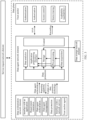
- FIG. 2 is a diagram of a data service architecture according to an embodiment of this application.
- the communication system shown in FIG. 1 is applicable to the data service architecture shown in FIG. 2 .
- this application proposes a case that the normalized data service architecture is constructed based on a data plane, to provide a data service for a service request network element.
- the data service architecture may include but is not limited to one or more of the following: a data orchestration network element, a data agent network element, a trust anchor (trust anchor, TA), the service request network element, and a data storage network element.
- the trust anchor may provide trusted services such as authentication, authorization, and access control (authentication authorization access control, AAA), which, for example, may be implemented by using a distributed ledger technology (distributed ledger technology, DLT).
- AAA authentication authorization access control
- DLT distributed ledger technology
- the trust anchor may store data that cannot be tampered with, for example, a public key, an identifier, or an index of a terminal device or a network element, transaction-related data, or important data that cannot be tampered with.
- a storage capability of the distributed ledger technology may be extended in on-chain (on-chain) and off-chain (off-chain) storage manners.
- original data is stored locally in the data agent network element or in the data storage network element (off-chain)
- a hash value for the original data or a hash value for a digest of packaged original data is stored in an extended DLT (on-chain)
- an address for pointing to the original data is also stored in the DLT (on-chain).
- the original data stored off-chain or the new hash value generated by the digest of the original data is compared with a hash value stored on-chain, to prevent the original data from being tampered with.
- the trust anchor may be deployed in a distributed or centralized manner.
- the trust anchor deployed in the distributed manner may be a node in the distributed ledger technology DLT (for example, a blockchain), and the like.
- the trust anchor deployed in the centralized manner may be implemented through reconstruction and evolution of existing security and trust mechanisms such as authentication, authorization, and access control.
- the trust anchor can implement a security and privacy protection mechanism for an entire data service procedure through data access control such as authentication, authorization, and access control, and in combination with a data security and privacy protection technology repository, can support security and privacy protection of the entire data service procedure, can support trusted data service requirements such as source tracing, auditability, and user data autonomous control, can support meeting requirements of data sharing and transaction on trusted mechanisms such as source tracing and auditability, can meet compliance requirements such as the personal information protection law (personal information protection law, PIPL) and the general data protection regulation (general data protection regulation, GDPR), and can provide a trusted data service.
- Compliance detection of user data processing can implement a decentralized verification mechanism, to avoid single-point trustworthiness and failure problems.
- the service request network element may include an application, an application server, a network service NS network element, or the like.
- the application may be an application that is of an operator (or a communication service provider (communication service provider, CSP)) and that is used for network planning and optimization, network artificial intelligence (artificial intelligence, AI), and/or the like, or may be an application outside a mobile communication network (which may also be referred to as a third-party application).
- the service request network element may be independently deployed in a network as a network function or a network element.
- the data storage network element may store various types of data, for example, streaming (streaming) data, batch (batch) data, log (log) information, AI model parameter configuration information, and intermediate data, and may extend a storage function of the data agent network element.
- the DSF network element may be a centralized database, or may be a distributed database, for example, a distributed hash table DHT or an interplanetary file system (interplanetary file system, IPFS).
- the data storage network element may be a data storage function (data storage function, DSF) network element, or may be evolved from the data storage function network element.
- the data storage network element may be deployed in the network as an NF or a network element.
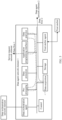
- FIG. 3 is a diagram of a function of a data service architecture according to an embodiment of this application.
- the following describes a function of a data orchestration network element with reference to FIG. 3 .
- the function that can be implemented by the data orchestration network element includes but is not limited to one or more of the following: an interface with an application, requirement translation, data agent orchestration, data agent management, data protection, an interface with a network service (network service, NS), and an interface with a trust anchor.
- the data orchestration network element may interact with a service request network element through the interface with the application.
- the data orchestration network element receives a service request from the service request network element.
- the service request may be a requirement filled in according to a standard template.
- the standard template may be a service level agreement (service level agreement, SLA).
- the data orchestration network element translates the service request into service requirements on functions of data agent network elements. For example, the data orchestration network element translates the requirement such as the service level agreement into a requirement on a corresponding resource and a network configuration.
- Data agent orchestration The data agent network elements are orchestrated based on data service capabilities of the data agent network elements, to form a dynamic logical network topology to meet the service requirement.
- the data orchestration network element translates the requirement such as the service level agreement into the requirement on the corresponding resource and the network configuration, selects, based on the data service capabilities of the data agent network elements, the data agent network elements participating in a current data service, and orchestrates the data agent network elements to form the dynamic logical network topology.
- the data orchestration network element may negotiate with another network service network element in a process of performing data agent orchestration. For example, if an algorithm and a computing power need to be used, the data orchestration network element may collaborate with another network service network element, and select a corresponding AI algorithm and computing power, and the network service network element pushes the algorithm.
- the data orchestration network element may dynamically specify a data agent network element that directly interacts with the service request network element, and send information about the data agent network element to the service request network element, so that the application can invoke an application programming interface (application programming interface, API) of the data agent network element, to obtain data, a processing result, or the like.
- API application programming interface
- Data agent management Request registration, deregistration, and the like requested from the data orchestration network element by a data agent network element are managed, and a data service capability and the like that are reported by the data agent network element are received.
- a data protection function may be implemented by using a data protection technology repository (data protection technology repository, DPTR).
- the data protection technology repository may include a data security and privacy protection algorithm repository, for example, a plurality of algorithms such as differential privacy, homomorphic encryption, multi-party computation, and zero-knowledge proof.
- the data orchestration network element may push or update information about the data protection technology repository to the data agent network element as required, which serves as a data protection technology (data protection technology, DPT) of the data agent network element.
- the data protection technology repository can be loosely coupled with the data orchestration network element.
- the data protection technology repository can be a common capability of a network element in the data service architecture, and can be independently evolved and optimized.
- the independent data protection technology repository facilitates compliance detection of end-to-end (end-to-end, E2E) data processing.
- the information about the data protection technology repository may include an identifier, an index, and configuration information that are of the data protection technology repository, and the data protection technology repository itself.
- the data orchestration network element may interact with the network service network element through the interface with the network service.
- the data orchestration network element may negotiate with the network service network element based on a service requirement. For example, if the algorithm and the computing power need to be used, the data orchestration network element may collaborate with the another network service network element.
- Trust anchor agent is an interface between the data orchestration network element and the trust anchor.
- the data orchestration network element may interact with the trust anchor by using a trust anchor agent function.
- the data orchestration network element may be divided into functional modules based on the foregoing functions or the following method embodiment.
- each functional module may be obtained through division based on each function, or two or more functions may be integrated into one module.
- the integrated module may be implemented in a form of hardware, or may be implemented in a form of a software functional module.
- the division into the functions or the modules is an example, and is merely logical function division. During actual implementation, another division manner may be used.
- the following describes a function of a data agent network element with reference to FIG. 3 .
- the function that may be implemented by the data agent network element includes but is not limited to one or more of the following: control, data acquisition, pre-processing, storage, an application programming interface, data analytics, and data protection.
- the data agent network element may implement data service collaboration and closed-loop management by performing the foregoing function, and may output data for different processing requirements as required.
- Control Functions of data agent network elements are orchestrated based on operations set by a data orchestration network element for the data agent network elements, to form a data pipeline.
- the control function may be implemented by a controller of the data orchestration network element.
- the data orchestration network element orchestrates the data agent network elements to form the dynamic logical network topology
- the data agent network elements orchestrate the functions of the data agent network elements to form the data pipeline, to implement automatic data management and dynamic on-demand configuration, promptly respond to a new service and a new requirement, support implementation of rich application scenarios, enable a new data service to quickly appear on a market, and shorten time to market (time to market, TTM).
- TTM time to market
- Data acquisition Data is obtained.
- the data may be obtained in a subscription/notification manner, or the data is obtained in a request/response manner.
- the request may indicate a data reporting trigger manner, a trigger condition, a reporting periodicity, a data amount, and the like.
- the data agent network element may support streaming data acquisition and batch data acquisition.
- the data agent network element may support real-time data acquisition and non-real-time data acquisition.
- the data agent network element may acquire various types of data.
- the data may be classified into several types.
- the types of the data may include but are not limited to: network data, user data, AI model data, and internet of things (internet of things, IoT) data.
- the classification of the data is not limited in this application, and the data may be classified into more or fewer types, or the data may be classified into types from another perspective, or the data may not be classified into types.
- Pre-processing refers to performing cleaning, filling, smoothing, combination, standardization, and consistency checking on acquired original data, field extraction of the original data, format conversion, redundant data clearing, compression, filtering, merging, and/or other operations, to improve data quality and lay a foundation for subsequent processing (for example, analytics).
- the original data is eliminated, which may result in problems such as a data loss, data noise, data redundancy, and/or dataset imbalance.
- Storage Centralized and distributed storage is supported.
- data that needs strict access protection or privacy protection for example, user subscription data, is stored locally in the data agent network element.
- Each function of the data agent network element may directly provide a service for a service requester through the application programming interface API.
- Data analytics (analytics): The data analytics is loosely coupled with the data agent network element, and can be deployed separately from the data agent network element as required.
- Various data analytics technologies can be supported, for example, AI training, AI inference, machine learning (machine learning, ML), and big data analytics.
- This data analytics function can invoke data services at levels such as data acquisition, pre-processing, and storage of the data agent network element through the API.
- an AI model needed in a data analytics process may be preset locally in the data agent network element or pushed by the network service network element.
- Data protection Data is processed by using technologies such as k-anonymity (k-anonymity), l-diversity (l-diversity), and differential privacy, so that attackers cannot directly obtain sensitive information from desensitized data, to protect data privacy.
- the information about the data protection technology repository may be pre-installed in the data agent network element, or pushed by the DO as required, and security and privacy protection is performed on data at each level of the data agent network element.
- the data agent network element may be divided into functional modules based on the foregoing functions or the following method embodiment.
- each functional module may be obtained through division based on each function, or two or more functions may be integrated into one module.
- the integrated module may be implemented in a form of hardware, or may be implemented in a form of a software functional module.
- the division into the functions or the modules is an example, and is merely logical function division. During actual implementation, another division manner may be used.
- FIG. 4 is a schematic of a logical network topology according to an embodiment of this application. The following describes, with reference to FIG. 4 , the logical network topology formed by orchestrating data agent network elements DAs by a data orchestration network element.
- the logical network topology may include but is not limited to: a star logical network topology, a mesh (mesh) logical network topology, and a hybrid logical network topology.
- a DA as an aggregation node may acquire information about common nodes DAs, and may further process the acquired information.
- the DA as the aggregation node may directly interact with a service request network element, and the common node DA may interact with the service request network element via the DA as the aggregation node.
- the DA that directly interacts with the service request network element may be any DA.
- the star logical network topology is applicable to scenarios such as data aggregation and federated learning.
- any DA may be selected to directly interact with the service request network element.
- the DA as the aggregation node may hierarchically acquire the information about the common nodes DAs, and may further process the acquired information. Similar to the star logical network topology, the DA as the aggregation node may directly interact with the service request network element, and the common node DA may interact with the service request network element via the DA as the aggregation node. This is not limited in this application.
- the DA that directly interacts with the service request network element may be any DA.
- the logical network topology shown in FIG. 4 is merely an example provided in this application.
- the data orchestration network element may orchestrate, as required, the data agent network elements DAs to form a logical network topology in any form, provided that a data service can be implemented.
- FIG. 5 is a diagram of an operation chain according to an embodiment of this application. The following describes, with reference to FIG. 5 , the operation chain formed by controlling functions of a data agent network element by the data agent network element.
- the operation chain is formed by orchestrating the functions of the data agent network element based on an operation that is set by a data orchestration network element for the data agent network element and that is obtained by the data agent network element from the data orchestration network element.
- an operation that is set for a data agent network element 1 and that is obtained by the data agent network element 1 from the data orchestration network element includes: after pre-processing like merging is performed on data obtained from another data agent network element, analyzing the data to obtain an analytics result, and sending the analytics result to a service request network element.
- the data agent network element 1 orchestrates functions to form an operation chain 1 shown in FIG. 5 : acquiring data, then pre-processing the data, analyzing a pre-processing result, and sending an analytics result to a service request network element through an application programming interface.
- an operation that is set for a data agent network element 1 and that is obtained by the data agent network element 1 from the data orchestration network element includes: If acquired data is transmitted to a data agent network element 2, the data agent network element 1 orchestrates functions to form an operation chain 2 shown in FIG. 5 : acquiring the data, and sending the data to the data agent network element 2.
- operation chain 1 and the operation chain 2 shown in FIG. 5 are merely examples provided in this application, and do not constitute a limitation on a sequence of performing the functions of the data agent network element.
- the sequence of performing the functions of the data agent network element may be dynamically adjusted based on a service requirement.
- FIG. 6a to FIG. 6e are diagrams of some network architectures according to embodiments of this application.
- the communication system shown in FIG. 1 is applicable to the network architectures shown in FIG. 6a to FIG. 6e .
- FIG. 6a is a diagram of a network architecture used when a core network device and an access network device are all service-oriented.
- FIG. 6b is a diagram of a network architecture used when an access network device is not service-oriented and a core network is service-oriented.
- FIG. 6c is a diagram of a network architecture used when an access network device is not service-oriented and a core network is service-oriented (an N4 interface is reserved).
- FIG. 6d is a diagram of a network architecture in which network elements are directly interconnected.
- the network architectures may include but are not limited to one or more of the following: a service request network element, a terminal device, an access network device, a user plane network element, a data network element, a core network element, a data orchestration network element, a data agent network element, a data storage network element, a trust anchor, and a service request network element.
- a service request network element a terminal device, an access network device, a user plane network element, a data network element, a core network element, a data orchestration network element, a data agent network element, a data storage network element, a trust anchor, and a service request network element.
- the network architectures may further include but are not limited to one or more of the following: a mobility management network element ( FIG. 6b and FIG. 6c ).
- the network architecture may further include but is not limited to one or more of the following: a session management network element ( FIG. 6c ).
- the core network element shown in FIG. 6a to FIG. 6c may include any core network element other than the user plane network element, the mobility management network element, and/or the session management network element.
- the data agent network element may be deployed in any network element other than the data orchestration network element, the data storage network element, and the trust anchor in the network architecture.
- any network element other than the data orchestration network element, the data storage network element, and the trust anchor in the network architecture may implement a function of the data agent network element.
- the data orchestration network element interacts with another network element (for example, the service request network element, the data agent network element, the core network element, and the trust anchor) through a service-oriented interface N DO
- the data agent network element interacts with another network element (for example, the service request network element, the data orchestration network element, the core network element, the terminal device, the access network device, the data storage network element, and the trust anchor) through a service-oriented interface N DA
- the data storage network element interacts with another network element (for example, the data agent network element, the core network element, the terminal device, and the access network device) through a service-oriented interface N DSF
- the trust anchor interacts with another network element (for example, the data orchestration network element, the data agent network element, the core network element, the terminal device, the access network device, the data storage network element, and the trust anchor) through a service-oriented interface N TA .
- the service-oriented interface may be used, to improve independence between network functions, implement deployment flexibility and efficient scalability, and improve development efficiency of a new function.
- the network architecture may include but is not limited to one or more of the following: a service request network element, a data orchestration network element, an access-network-domain data orchestration network element (RAN-DO), a CN-domain data orchestration network element (CN-DO), an access network device RAN, the core network element, the terminal device, the trust anchor, and the data storage network element.
- a service request network element a data orchestration network element
- RAN-DO access-network-domain data orchestration network element
- CN-DO CN-domain data orchestration network element
- the data orchestration network elements are hierarchically deployed.
- the data orchestration network element may manage the RAN-domain data orchestration network element and the CN-domain data orchestration network element.
- the RAN-domain data orchestration network element may directly interact with the CN-domain data orchestration network element.
- the RAN-domain data orchestration network element may directly interact with the access network device.
- the CN-domain data orchestration network element may directly interact with the core network element.
- the trust anchor may directly interact with any network element in the network architecture.
- the data storage network element may directly interact with the terminal device, the access network device, and the core network element.
- the network elements in the network architecture shown in FIG. 6d are directly interconnected, so that backward compatibility of the architecture can be met.
- FIG. 6e is a diagram of a network architecture in which data orchestration network elements are hierarchically deployed according to an embodiment of this application.
- the network architecture may include but is not limited to one or more of the following: a service request network element, a data orchestration network element, an access-network-domain data orchestration network element (RAN-DO), a CN-domain data orchestration network element (CN-DO), an access-network-domain data agent network element (RAN-DA), a terminal-domain data agent network element (UE-DA), a core-network-domain data agent network element (CN-DA), and a standalone data agent network element (DA).
- the network architecture may further include a trust anchor and a data storage network element.
- the data orchestration network elements are hierarchically deployed.
- the data orchestration network element may manage the RAN-domain data orchestration network element and the CN-domain data orchestration network element.
- the RAN-domain data orchestration network element may directly interact with the CN-domain data orchestration network element.
- the RAN-domain data orchestration network element may directly interact with the access-network-domain data agent network element, the terminal-domain data agent network element (UE-DA), and the standalone data agent network element (not shown in FIG. 6e ).
- the CN-domain data orchestration network element may directly interact with the core-network-domain data agent network element and the standalone data agent network element.
- FIG. 6e an example in which the CN-domain data orchestration network element directly interacts with the standalone data agent network element is used.
- the standalone data agent network element may directly interact with the RAN-domain data orchestration network element or the CN-domain data orchestration network element.
- the standalone data agent network element may directly interact with the RAN-domain data orchestration network element or the CN-domain data orchestration network element.
- some of the standalone data agent network elements directly interact with the RAN-domain data orchestration network element, and some of the standalone data agent network elements directly interact with the CN-domain data orchestration network element; or the plurality of standalone data agent network elements all directly interact with the CN-domain data orchestration network element, or the plurality of standalone data agent network elements all directly interact with the RAN-domain data orchestration network element. This is not limited in this application.
- the data orchestration network element may be referred to as a cross-domain (cross-domain) data orchestration network element, and the access-network-domain data orchestration network element (RAN-DO) and the core-network-domain data orchestration network element (CN-DO) may be collectively referred to as a domain data orchestration network element.
- the access-network-domain data agent network element, the terminal-domain data agent network element, the core-network-domain data agent network element, and the standalone data agent network element may be collectively referred to as a domain data agent network element.
- the domain data agent network element may be classified into a data agent network element in a core network domain and a data agent network element in an access network domain.
- the data agent network element in the core network domain may include but is not limited to one or more of the following: the core-network-domain data agent network element and the standalone data agent network element.
- the data agent network element in the access network domain may include but is not limited to one or more of the following: the access-network-domain data agent network element, the terminal-domain data agent network element, and the standalone data agent network element.
- domain data agent network element may implement the functions of the data agent network element described in FIG. 1 to FIG. 6d , and the data agent network element is merely referred to as the domain data agent network element herein.
- the cross-domain data orchestration network element may be combined with a network management system (network management system, NMS), or may be implemented through evolution of an NMS function.
- NMS network management system
- the domain data orchestration network element may be combined with an element management system (element management system, EMS), or may be implemented through evolution of an EMS function or the like.
- EMS element management system
- the cross-domain data orchestration network element and the domain data orchestration network element may perform automatic orchestration and configure corresponding operations for the domain data agent network elements (the network elements that can implement the functions of the data agent network elements), to implement data service automation.
- a series of function actions are stored on the data orchestration network element (the data orchestration network element and/or the domain data orchestration network element) in a manner of a "predefined" template.
- the cross-domain data orchestration network element coordinates the domain data orchestration network elements to orchestrate the domain data agent network elements, to implement end-to-end configuration of a data service and form a logical network topology (topology), thereby implementing automation of data service provisioning.
- the following describes a function of the cross-domain data orchestration network element and a function of the domain data orchestration network element.
- the function that may be implemented by the cross-domain data orchestration network element includes but is not limited to one or more of the following: an interface with an application, requirement translation, data protection, an interface with the trust anchor, and management of a life cycle of a data service task, for example, allocation or deletion of a data service task ID.
- the service request is translated into a service requirement at levels of a RAN-DO and a CN-DO, the RAN-DO and the CN-DO are selected, a needed data type and data service type are selected, and a domain to which a data agent network element that directly communicates with a service requester belongs is determined.
- the data service type may include but is not limited to one or more of the following: an output of original data, provision of pre-processed data, data storage, data analytics, data source tracing, a data dictionary, data privacy and security, and data sharing or transaction.
- Data protection Refer to descriptions of the function of the data orchestration network element in FIG. 2 . Details are not described herein again.
- the function that may be implemented by the domain data orchestration network element includes but is not limited to one or more of the following: data agent management, data service capability reporting, data agent orchestration, data protection, and selection of a cross-domain next-hop data agent network element.
- Data agent management Registration, deregistration, and the like requested by the domain data agent network elements are managed, and data service capabilities and the like reported by the domain data agent network elements are received.
- Data service capability reporting For example, the data service capabilities of the data agent network elements are sent to the data orchestration network element. For another example, after statistics collection is performed on the received data service capabilities of the domain data agent network elements, statistical information is obtained, and the statistical information is reported to the cross-domain data orchestration network element.
- Data agent orchestration A requirement from the cross-domain data orchestration network element is received, and the data agent network elements are orchestrated based on the requirement and the data service capabilities of the data agent network elements, to form a dynamic logical network topology, to meet the service requirement.
- Data protection Refer to descriptions of the function of the data orchestration network element in FIG. 2 . Details are not described herein again.
- the domain data orchestration network element may select the data agent network element that is in one or more data agent network elements in a local domain and that interacts with a data agent network element in another domain.
- the CN-DO may select a data agent network element (for example, a CN-domain data agent network element 1) that is in one or more data agent network elements in a CN-domain and that interacts with the data agent network element in the access network domain
- a data agent network element for example, a RAN-domain data agent network element 1
- a data agent network element for example, a RAN-domain data agent network element 1
- the selected CN-domain data agent network element 1 may directly interact with the RAN-domain data agent network element 1, and another data agent network element in the CN-domain may interact with another data agent network element in the RAN-domain via the CN-domain data agent network element 1 and the RAN-domain data agent network element 1.
- the service-oriented interface may be used by the cross-domain data orchestration network element to receive a service request from the service request network element, to send, to the service request network element, information about the data agent network element that directly communicates with the service request network element, and the like.
- the service-oriented interface may be used by the cross-domain data orchestration network element to send, to the domain data orchestration network element, a data service task identifier, a data service task/function in the local domain, and a notification indicating whether the data agent network element that directly interacts with the service request network element is in this domain.
- the service-oriented interface may be used by the domain data orchestration network element to send, to the cross-domain data orchestration network element, statistical information about the capabilities of the data agent network elements in the local domain, and the selected domain data agent network element that directly interacts with the service request network element.
- Service-oriented interface between the domain data orchestration network elements Information about the cross-domain next-hop data agent network element, for example, an address or an identifier of the data agent network element is exchanged between the domain data orchestration network elements.
- the service-oriented interface may be used for interaction between the domain data agent network element and the domain data orchestration network element.
- the service-oriented interface may be used by the domain data agent network element to request registration, deregistration, and the like from the domain data orchestration network element, and may be used to receive the data service capability reported by the domain data agent network element.
- the service-oriented interface may be used by the domain data agent network element to periodically report heartbeats to the domain data orchestration network element.
- the service-oriented interface may be used by the domain data orchestration network element to send a data service task identifier to the domain data agent network element, and to allocate a data service task, a to-be-executed operation (for details, refer to the following operation configuration information), an output data format requirement, a data next-hop address, and the like to the domain data agent network element.
- the service-oriented interface may be used to verify permission of the service request network element to access related needed data.
- the service-oriented interface may be used to verify permission of the domain data agent network element to access related data.
- a communication method provided in an embodiment of this application is applicable to any two nodes shown in FIG. 1 to FIG. 6e .
- a specific implementation refer to the following method embodiment. Details are not described herein again.
- FIG. 7 is a diagram of a structure of a communication apparatus 700 that may be configured to perform a communication method according to an embodiment of this application.
- the communication apparatus 700 may be a data orchestration network element, a domain data orchestration network element, a domain data agent network element, a service request network element, or a trust anchor, or may be a chip or another component or assembly used in the data orchestration network element, the domain data orchestration network element, the domain data agent network element, the service request network element, or the trust anchor.
- a communication apparatus 700 may include a processor 701.
- the communication apparatus 700 may further include one or more of a memory 702 and a transceiver 703.
- the processor 701 and the one or more of the memory 702 and the transceiver 703 may be coupled, for example, may be connected through a communication bus, or the processor 701 may be independently used.
- Each component of the communication apparatus 700 is described below in detail with reference to FIG. 7 .
- the processor 701 is a control center of the communication apparatus 700, and may be one processor, or may be a collective term of a plurality of processing elements.
- the processor 701 is one or more central processing units (central processing units, CPUs), or may be an application-specific integrated circuit (application-specific integrated circuit, ASIC), or is configured as one or more integrated circuits implementing embodiments of this application, for example, one or more microprocessors (digital signal processors, DSPs) or one or more field programmable gate arrays (field programmable gate arrays, FPGAs).
- the processor 701 may run or execute a software program stored in the memory 702, and invoke data stored in the memory 702, to perform various functions of the communication apparatus 700.
- the processor 701 may include one or more CPUs, such as a CPU 0 and a CPU 1 shown in FIG. 7 .
- the communication apparatus 700 may alternatively include a plurality of processors, such as the processor 701 and a processor 704 shown in FIG. 7 .
- Each of the processors may be a single-core processor (single-CPU) or may be a multi-core processor (multi-CPU).
- the processor herein may be one or more communication devices, circuits, and/or processing cores configured to process data (for example, computer program instructions).
- the memory 702 may be a read-only memory (read-only memory, ROM) or another type of static storage communication device that can store static information and instructions, or a random access memory (random access memory, RAM) or another type of dynamic storage communication device that can store information and instructions; or may be an electrically erasable programmable read-only memory (electrically erasable programmable read-only memory, EEPROM), a compact disc read-only memory (compact disc read-only memory, CD-ROM) or another optical disc storage, an optical disc storage (including a compact optical disc, a laser disc, an optical disc, a digital versatile disc, a Blu-ray disc, or the like), a magnetic disk storage medium or another magnetic storage communication device, or any other medium that can be configured to carry or store expected program code in a form of instructions or a data structure and that can be accessed by a computer, but is not limited thereto.
- the memory 702 may be integrated with the processor 701, or may exist independently, and is coupled to the processor 701 through an input
- the memory 702 is configured to store a software program for executing the solutions of this application, and the processor 701 controls the execution.
- the processor 701 controls the execution.
- the transceiver 703 is configured for communication with another communication apparatus.
- the transceiver 703 may be configured to communicate with the domain data orchestration network element, the service request network element, the trust anchor, and/or the like.
- the transceiver 703 may be configured to communicate with the data orchestration network element, the domain data agent network element, the service request network element, the trust anchor, and/or the like.
- the transceiver 703 may be configured to communicate with the domain data orchestration network element, the service request network element, the trust anchor, and/or the like.
- the transceiver 703 may be configured to communicate with the data orchestration network element, the domain data orchestration network element, the domain data agent network element, the trust anchor, and/or the like.
- the transceiver 703 may include a receiver and a transmitter (not separately shown in FIG. 7 ).
- the receiver is configured to implement a receiving function
- the transmitter is configured to implement a sending function.
- the transceiver 703 may be integrated with the processor 701, or may exist independently, and is coupled to the processor 701 through an input/output port (not shown in FIG. 7 ) of the communication apparatus 700. This is not specifically limited in this embodiment of this application.
- the structure of the communication apparatus 700 shown in FIG. 7 does not constitute a limitation on the communication apparatus.
- An actual communication apparatus may include more or fewer components than those shown in the figure, combine some components, or have different component arrangement.
- FIG. 8A to FIG. 8C are a schematic flowchart of a communication method according to an embodiment of this application.
- a data orchestration network element may be referred to as a cross-domain data orchestration network element.
- a first-domain data orchestration network element and a second-domain data orchestration network element may be data orchestration network elements in different domains.
- the first-domain data orchestration network element may be a core-network-domain data orchestration network element
- the second-domain data orchestration network element may be an access-network-domain data orchestration network element.
- the first-domain data orchestration network element may orchestrate and manage a data agent network element in a first domain.
- the data agent network element in the first domain may be a data agent network element in a core network domain.
- the data agent network element in the core network domain may include but is not limited to one or more of the following: a core-network-domain data agent network element and a standalone data agent network element.
- the second-domain data orchestration network element may orchestrate and manage a data agent network element in a second domain.
- the data agent network element in the second domain may be a data agent network element in an access network domain.
- the data agent network element in the access network domain may include but is not limited to one or more of the following: an access-network-domain data agent network element, a terminal-domain data agent network element, and a standalone data agent network element.
- a function of the first-domain data orchestration network element is similar to a function of the second-domain data orchestration network element.
- the following mainly uses the first-domain data orchestration network element or a domain data orchestration network element (which may represent the first-domain data orchestration network element or the second-domain data orchestration network element) as an example for description.
- the function of the second-domain data orchestration network element refer to a specific implementation of the function of the first-domain data orchestration network element.
- a function of a data agent network element in the first domain is similar to a function of a data agent network element in the second domain.
- the following mainly uses the data agent network element in the first domain or a domain data agent network element (which may represent the data agent network element in the first domain or the data agent network element in the second domain) as an example for description.
- a domain data agent network element which may represent the data agent network element in the first domain or the data agent network element in the second domain
- a first-domain data agent network element represents any one domain data agent network element, for example, any data agent network element in the first domain or any data agent network element in the second domain.
- a second-domain data agent network element represents any one domain data agent network element
- a third-domain data agent network element represents any one domain data agent network element.
- the first-domain data agent network element, the second-domain data agent network element, and the third-domain data agent network element are different from each other.
- the communication method includes the following steps.
- a service request network element sends a first service request message to the data orchestration network element.
- the data orchestration network element receives the first service request message from the service request network element.
- the first service request message may be for requesting an application service or a service service.
- the service request network element may be an application, an application server, a network service network element, or the like.
- the application service may be a service requested by the application or the application server, and the service service may be a service requested by the network service network element.
- services requested by using the first service request message may be different.
- the first service request message may be for requesting but is not limited to be for requesting one or more of the following services: a service related to network data, a service related to user data, a service related to artificial intelligence model data, and a service related to internet of things data.
- the network data may include but is not limited to one or more of the following: a log (for example, a debug log, a security log, or a call history record (call history record, CHR) log), an alarm, traffic statistics, configuration data, minimization of drive tests (minimization of drive tests, MDT) data, user session information, integrated sensing and communication (integrated sensing and communication, ISAC) data, digital twin network data, network metadata, a network status, and a network behavior.
- a log for example, a debug log, a security log, or a call history record (call history record, CHR) log
- an alarm for example, a log (for example, a debug log, a security log, or a call history record (call history record, CHR) log), an alarm, traffic statistics, configuration data, minimization of drive tests (minimization of drive tests, MDT) data, user session information, integrated sensing and communication (integrated sensing and communication, ISAC) data, digital twin network data, network metadata, a network
- the network data may include data acquired by an access network device, data acquired by a terminal device, and/or the like.
- the user data may include but is not limited to one or more of the following: user subscription information, for example, a user profile (profile).
- user subscription information for example, a user profile (profile).
- the internet of things data may include but is not limited to one or more of the following: environment data, sensor-type data, and measurement data of an internet of things terminal.
- the internet of things data may include data acquired by an SIoT terminal device and data acquired by a non-SIoT terminal device by using an internet of things gateway.
- the artificial intelligence AI model data may include but is not limited to one or more of the following: a training dataset corresponding to a task, a test dataset corresponding to the task, local/global model data, and AI metadata.
- the data may be classified from a plurality of dimensions such as a data type, a data source, a data consumer, or being orthogonal as much as possible.
- the classification of the data is not limited in this application, and the data may be classified into more or fewer types, or the data may be classified into types from another perspective, or the data may not be classified into types.
- a network function network element sends a first service request message to the data orchestration network element, where the first service request message is for requesting to access user subscription data in the data agent network element.
- an application that is of an operator and that is used for network planning and optimization (which may be briefly referred to as a network planning and optimization application) sends a first service request message to the data orchestration network element, where the first service request message is for requesting to train a federated learning model, and the federated learning model is used to predict quality of service.
- the network planning and optimization application sends the first service request message to the data orchestration network element, where the first service request message is for requesting to predict quality of service of an area A.
- the request for predicting the quality of service of the area A may be decomposed into the following requests: a request for training the federated learning model (a request 1) and a request for predicting the quality of service of the area A by using the (trained) federated learning model (a request 2).
- a process of predicting the quality of service of the area A may be decomposed into the following phases: training the federated learning model (Phase 1) and predicting the quality of service of the area A by using the (trained) federated learning model (Phase 2).
- Phase 1 the process of predicting the quality of service of the area A
- Phase 2 may be directly performed; or if the service request network element does not locally store the needed federated learning model, Phase 2 is performed after Phase 1 is performed.
- Phase 1 The request for training the federated learning model is translated into corresponding requirement information.
- the data orchestration network element coordinates the domain data orchestration network element to select, based on data service capabilities of the domain data agent network elements, domain data agent network elements participating in the current data service, and orchestrate the domain data agent network elements to form a dynamic logical network topology.
- a domain data agent network element (for example, a domain data agent network element 1) with a strong computing capability is selected as a server (server) end from the domain data agent network elements participating in the current data service, to train the federated learning model.
- Another domain data agent network element serves as a client (client) end, to provide data used for training the federated learning model.
- client client
- the federated learning model is generated, is sent by the domain data agent network element (for example, the domain data agent network element 1 as the server end DA) to the service request network element, or is stored in the domain data agent network element or a DSF as required.
- Phase 1 is applicable to a scenario in which the service request network element requests to train the federated learning model.
- Phase 2 The request for predicting the quality of service of the area A in a future time period by using the federated learning model is translated into corresponding requirement information.
- the data orchestration network element coordinates the domain data orchestration network element to select, based on data service capabilities of the domain data agent network elements, the domain data agent network elements participating in the current data service, and orchestrate the domain data agent network elements to form a dynamic logical network topology.
- a domain data agent network element for example, a domain data agent network element 1 with a strong computing capability is selected from the domain data agent network elements participating in the current data service, to predict the quality of service.
- Another domain data agent network element (for example, a domain data agent network element other than the domain data agent network element 1 in the domain data agent network elements participating in the current data service) provides, for the domain data agent network element 1, data (for example, real-time network data) for predicting the quality of service, or may perform some operations (for example, processing such as desensitization) on the data.
- the domain data agent network element 1 performs inference by using the federated learning model and data (original data or intermediate data), to obtain a quality of service prediction result, and sends the result to the service request network element.
- the domain data agent network element 1 may send the obtained intermediate data to the service request network element, and the service request network element performs inference by using the federated learning model and the intermediate data, to obtain the quality of service prediction result.
- the federated learning model in the service request network element may be obtained from the domain data agent network element, or may be preconfigured. This is not limited in this application.
- the application or the network service network element sends a first service request message to the data orchestration network element.
- the first service request message is for requesting the internet of things data, intermediate data obtained by processing (for example, pre-processing or analyzing) the internet of things data, an abnormal behavior detection result of the IoT terminal device, or the like.
- the first service request message may be a requirement filled in according to a standard template.
- the standard template may be a service level agreement.
- the data orchestration network element determines first requirement information and second requirement information based on requirement information, first data service capability information, and second data service capability information.
- the requirement information may be a service requirement that is on first data and that is determined based on the service requested by using the first service request message.
- the first data may include: data acquired from a mobile communication network and/or synthesized data.
- the first data may include but is not limited to one or more of the following: data on a terminal device side, data of each function node on an access network device side, data of each function node on a transfer network side, data of each function node on a core network side, data of each function node of OAM, and synthesized data.
- the synthesized data may be artificially synthesized data.
- a face may be generated through adversarial learning, and data of the face may be considered as synthesized data.
- synthesized data may be used.
- the synthesized data may be used to train an artificial intelligence model or the like.
- the first data may be classified, and the first data may include but is not limited to one or more of the following: network data, user data, artificial intelligence model data, and internet of things data.
- the data may be classified from a plurality of dimensions such as a data type, a data source, a data consumer, or being orthogonal as much as possible.
- the classification of the first data is not limited in this application, and the first data may be classified into more or fewer types, or the first data may be classified into types from another perspective, or the first data may not be classified into types.
- the first data service capability information corresponds to the first-domain data orchestration network element
- the second data service capability information corresponds to the second-domain data orchestration network element
- the first data service capability information may be determined based on one or more pieces of domain data service capability information.
- the second data service capability information may be determined based on one or more pieces of domain data service capability information.
- the one or more pieces of domain data service capability information may be in one-to-one correspondence with one or more domain data agent network elements.
- the one or more pieces of domain data service capability information corresponding to the first data service capability information may respectively correspond to one or more domain data agent network elements in the first domain.
- the one or more pieces of domain data service capability information corresponding to the second data service capability information may respectively correspond to one or more domain data agent network elements in the second domain.
- the first-domain data orchestration network element is the core-network-domain data orchestration network element
- the second-domain data orchestration network element is the access-network-domain data orchestration network element
- the first data service capability information may be determined based on domain data service capability information respectively corresponding to one or more domain data agent network elements in the core network
- the second data service capability information may be determined based on domain data service capability information respectively corresponding to one or more data agent network elements in the access network domain.
- the first data service capability information may be determined by the core-network-domain data orchestration network element based on the domain data service capability information respectively corresponding to the one or more data agent network elements in the core network domain.
- the first data service capability information may be obtained by the core-network-domain data orchestration network element by collecting statistics on domain data service capability information of domain data agent network elements in a local domain.
- the second data service capability information may be determined by the access-network-domain data orchestration network element based on domain data service capability information respectively corresponding to one or more data agent network elements in the access network domain.
- the second data service capability information may be obtained by the access-network-domain data orchestration network element by collecting statistics on domain data service capability information of domain data agent network elements in a local domain.
- domain data service capability information of any one of the one or more domain data agent network elements may include but is not limited to one or more of the following: an identifier of the any one domain data agent network element, location information of the any one domain data agent network element, a data acquisition capability, a data pre-processing capability, a data storage capability, a data reporting capability, a data analytics capability, a capability of interacting with the service request network element, a data protection capability, and a data compression capability.
- the domain data service capability information may be a correspondence between the domain data service capability information and the identifier of the domain data agent network element.
- a specific domain data agent network element to which the domain data service capability information belongs may be learned of based on the correspondence between the domain data service capability information and the identifier of the domain data agent network element.
- the location information may be information about a geographical location, and the location information may include longitude and latitude, or the like.
- the data acquisition capability may include a type of data that can be acquired.
- the type of the data may include but is not limited to one or more of the following: network data, user data, internet of things data, and artificial intelligence model data.
- the data pre-processing capability may include a supported pre-processing manner, for example, field extraction of the original data, format conversion, redundant data clearing, compression, and merging.
- the data storage capability may include but is not limited to one or more of the following: a data storage capacity, an encryption algorithm for storing data, and a storage manner.
- the data reporting capability may include but is not limited to one or more of the following: a minimum reporting periodicity, a data amount reported at a time, a maximum data amount reported, whether file upload is supported, and whether streaming data is supported.
- the data analytics capability may include but is not limited to one or more of the following: a supported analytics task, whether AI training is supported, and whether AI inference is supported.
- the capability of interacting with the service request network element may include but is not limited to: whether an application programming interface service can be provided.
- the data protection capability may include but is not limited to one or more of the following: supported data protection technologies, for example, k-anonymity (k-anonymity), l-diversity (l-diversity), differential privacy, homomorphic encryption, and secure multi-party computation.
- supported data protection technologies for example, k-anonymity (k-anonymity), l-diversity (l-diversity), differential privacy, homomorphic encryption, and secure multi-party computation.
- the data compression capability may include but is not limited to one or more of the following: supported data compression algorithms, for example, Huffman coding (Huffman Coding) and arithmetic coding.
- supported data compression algorithms for example, Huffman coding (Huffman Coding) and arithmetic coding.
- the first requirement information may be a service requirement that is on the first data and that corresponds to the first-domain data orchestration network element
- the second requirement information may be a service requirement that is on the first data and that corresponds to the second-domain data orchestration network element
- the data orchestration network element may decompose the requirement information into the first requirement information and the second requirement information based on the first data service capability information and the second data service capability information.
- the requirement information is decomposed into the first requirement information and the second requirement information (which is used as an example for description in FIG. 8A to FIG. 8C ) may be adjusted based on an actual situation.
- the data orchestration network element determines the second requirement information based on the requirement information, the first data service capability information, and the second data service capability information. For example, when the second data service capability information does not support implementation of some or all service requirements indicated by the requirement information, the data orchestration network element determines the first requirement information based on the requirement information, the first data service capability information, and the second data service capability information.
- the requirement information may include but is not limited to one or more of the following service requirements: a geographical location, data acquisition, data pre-processing, data storage, data reporting, data analytics, the interaction with the service request network element, data protection, and data compression.
- the first requirement information may include but is not limited to one or more of the following service requirements: the geographical location, the data acquisition, the data pre-processing, the data storage, the data reporting, the data analytics, the interaction with the service request network element, the data protection, and the data compression.
- the second requirement information may include but is not limited to one or more of the following service requirements: the geographical location, the data acquisition, the data pre-processing, the data storage, the data reporting, the data analytics, the interaction with the service request network element, the data protection, and the data compression.
- the requirement information may correspond to a data service task identifier (data service task Identify, DSID).
- the data service task identifier may identify a data service task corresponding to the first service request message.
- the data orchestration network element may perform requirement translation on the service requested by using the first service request message, where the translation (or mapping) is a service requirement on the functions of the domain data agent network element.
- obtained requirement information may include: the area A, the data acquisition, the data pre-processing, the data analytics, and the interaction with the service request network element.
- the method provided in this embodiment of this application may further include: The data orchestration network element determines first indication information.
- the first indication information may indicate that a domain data agent network element directly communicating with the service request network element is a data agent network element in the first domain or a data agent network element in the second domain.
- the first indication information may indicate that a domain data agent network element directly communicating with the service request network element is a data agent network element in the core network domain or a data agent network element in the access network domain.
- the first indication information may be determined based on the first data service capability information and the second data service capability information.
- the data orchestration network element may select, based on the capability of interacting with the service request network element in the first data service capability information and the second data service capability information, a domain to which a domain data agent network element that directly communicates with the service request network element belongs.
- the data orchestration network element determines first indication information and that the data orchestration network element determines first requirement information and second requirement information may be performed in a same step, or may be separately performed. This is not limited in this application.
- the following uses the scenario of requesting to train the federated learning model (for example, Phase 1 in S802) as an example to describe how the data orchestration network element determines the first requirement information and the second requirement information.
- obtained requirement information may include: the area A, the data acquisition, the data pre-processing, the data analytics, and the interaction with the service request network element.
- first data service capability information 1 includes: the area A, the data pre-processing supported by all data agent network elements in the first domain, the data storage supported by most data agent network elements in the first domain, the AI training and the AI inference supported by most data agent network elements in the first domain, the interaction with the service request network element and supported by most data agent network elements in the first domain, and the data acquisition supported by most data agent network elements in the first domain.
- second data service capability information 1 includes: the area A, the data pre-processing supported by all data agent network elements in the second domain, the AI training and the AI inference not supported by most data agent network elements in the second domain, the interaction with the service request network element and unsupported by most data agent network elements in the second domain, and the data acquisition supported by most data agent network elements in the second domain.
- the data orchestration network element determines, based on the requirement information, the first data service capability information 1, and the second data service capability information 1, that the first requirement information 1 includes: the area A, the data pre-processing, and the AI training, and the second requirement information 1 includes: the area A and the data acquisition.
- the requirement information, the first data service capability information 1, the second data service capability information 1, the first requirement information 1, and the second requirement information 12 in the scenario of requesting to train the federated learning model are not limited in this application, and may change based on an actual scenario requirement.
- S802 may include: When the service request network element has permission to access the first data, the data orchestration network element determines the first requirement information and the second requirement information based on the requirement information, the first data service capability information, and the second data service capability information.
- the first requirement information and the second requirement information are determined only when the service request network element has the permission to access the first data; or the first requirement information and the second requirement information are not determined when the service request network element has no permission to access the first data. This can implement the trusted service requirement on the data.
- the data orchestration network element when the service request network element has the permission to access the first data, the data orchestration network element allocates the data service task identifier to the data service task corresponding to the first service request message; or when the service request network element has no permission to access the first data, the data orchestration network element does not allocate the data service task identifier to the data service task corresponding to the first service request message. This can implement the trusted service requirement on the data.
- the method provided in this embodiment of this application may further include the following step: S810: A trust anchor sends a second verification response message to the data orchestration network element. Correspondingly, the data orchestration network element receives the second verification response message from the trust anchor.
- the second verification response message may indicate that the service request network element has the permission to access the first data, or indicate that the service request network element has no permission to access the first data.
- whether the service request network element has the permission to access the first data may be obtained by the data orchestration network element from the trust anchor.
- S810 is not limited in this embodiment of this application.
- S810 may be performed before S802.
- the method provided in this embodiment of this application may further include the following step: S811:
- the data orchestration network element sends a second verification request message to the trust anchor.
- the trust anchor receives the second verification request message from the data orchestration network element.
- the second verification request message may be for requesting to verify whether the service request network element has the permission to access the first data.
- S811 may be performed before S810.
- the method provided in this embodiment of this application may further include the following step: S812:
- the first-domain data orchestration network element sends the first data service capability information to the data orchestration network element.
- the data orchestration network element receives the first data service capability information from the first-domain data orchestration network element.
- the first-domain data orchestration network element may collect statistics on domain data service capability information of domain data agent network elements in a local domain, to obtain the first data service capability information, and send the first data service capability information to the data orchestration network element.
- the method provided in this embodiment of this application may further include the following step: S813:
- the second-domain data orchestration network element sends the second data service capability information to the data orchestration network element.
- the data orchestration network element receives the second data service capability information from the second-domain data orchestration network element.
- the second-domain data orchestration network element may collect statistics on the domain data service capability information of domain data agent network elements in a local domain, to obtain the second data service capability information, and send the second data service capability information to the data orchestration network element.
- the method provided in this embodiment of this application may further include:
- the first-domain data agent network element sends the domain data service capability information to the domain data orchestration network element.
- the domain data orchestration network element receives the domain data service capability information from the first-domain data agent network element.
- the first-domain data agent network element represents any one domain data agent network element.
- the domain data agent network element may send the domain data service capability information of the domain data agent network element to the corresponding domain data orchestration network element.
- the method provided in this embodiment of this application may further include the following step: S814:
- the data agent network element in the first domain sends the domain data service capability information to the first-domain data orchestration network element.
- the first-domain data orchestration network element receives the domain data service capability information from the data agent network element in the first domain.
- the core-network-domain data agent network element and/or the standalone data agent network element may send respective domain data service capability information to the core-network-domain data orchestration network element.
- the method provided in this embodiment of this application may further include the following step: S815:
- the second-domain data agent network element sends domain data service capability information to the second-domain data orchestration network element.
- the second-domain data orchestration network element receives the domain data service capability information from the second-domain data agent network element.
- the access-network-domain data agent network element, the terminal-domain data agent network element, and/or the standalone data agent network element may send respective domain data service capability information to the access-network-domain data orchestration network element.
- the method provided in this embodiment of this application may further include: The first-domain data agent network element registers with the domain data orchestration network element.
- the first-domain data agent network element registers with the domain data orchestration network element may be performed before or when the first-domain data agent network element sends the domain data service capability information to the first-domain data orchestration network element. This is not limited in this application.
- S803a The data orchestration network element sends the first requirement information to the first-domain data orchestration network element.
- the first-domain data orchestration network element receives the first requirement information from the data orchestration network element.
- S803b The data orchestration network element sends the second requirement information to the second-domain data orchestration network element.
- the second-domain data orchestration network element receives the second requirement information from the data orchestration network element.
- the data orchestration network element separately sends the first requirement information and the second requirement information to the data orchestration network elements in a corresponding domain.
- S803a and S803b are not limited in this application.
- the method provided in this embodiment of this application may further include:
- the data orchestration network element sends the first indication information to the domain data orchestration network element.
- the domain data orchestration network element receives the first indication information from the data orchestration network element.
- the data orchestration network element may notify the core-network-domain data orchestration network element and/or the access-network-domain data orchestration network element of a domain to which a domain data agent network element that directly communicates with the service request network element belongs.
- the method provided in this embodiment of this application may further include the following step: S816a:
- the data orchestration network element sends the first indication information to the first-domain data orchestration network element.
- the first-domain data orchestration network element receives the first indication information from the data orchestration network element.
- the first indication information may indicate that the domain data agent network element that directly communicates with the service request network element is a data agent network element in the core network domain or a data agent network element in the access network domain.
- the first indication information may indicate whether the domain data agent network element that directly communicates with the service request network element is in a domain to which the first-domain data orchestration network element belongs.
- the method provided in this embodiment of this application may further include the following step: S816b:
- the data orchestration network element sends the first indication information to the second-domain data orchestration network element.
- the second-domain data orchestration network element receives the first indication information from the data orchestration network element.
- the first indication information may indicate that the domain data agent network element that directly communicates with the service request network element is a data agent network element in the core network domain or a data agent network element in the access network domain.
- the first indication information may indicate whether the domain data agent network element that directly communicates with the service request network element is in a domain to which the second-domain data orchestration network element belongs.
- the method provided in this embodiment of this application may further include:
- the data orchestration network element sends updated information about a data security and privacy protection technology repository and/or updated information about an analytics tool repository to one or more of the at least one domain data agent network element.
- the one or more of the at least one domain data agent network element receives the updated information about the data security and privacy protection technology repository and/or the updated information about the analytics tool repository from the data orchestration network element.
- the information about the data security and privacy protection technology repository may include but is not limited to one or more of the following: an identifier of the data security and privacy protection technology repository, an index of the data security and privacy protection technology repository, and the data security and privacy protection technology repository.
- the information about the analytics tool repository may include but is not limited to one or more of the following: an identifier of the analytics tool repository, an index of the analytics tool repository, and the analytics tool repository itself.
- the data orchestration network element may push either updated information or the data security and privacy protection technology repository, the analytics tool repository, and the like to the core-network-domain data agent network element, the access-network-domain data agent network element, the terminal-domain data agent network element, and/or the standalone data agent network element. In this way, data security protection, data privacy protection, and the like can be implemented.
- sending the first requirement information by the data orchestration network element to the domain data agent network element, sending the first indication information, and sending updated information about a data security and privacy protection technology repository and/or updated information about an analytics tool repository may be performed in a same step, or may be separately performed. This is not limited in this application.
- the data orchestration network element may send the updated information about the data security and privacy protection technology repository and/or the updated information about the analytics tool repository to the domain data agent network element directly or via the domain data orchestration network element. This is not limited in this application.
- this embodiment of this application may further include the following step: Step a:
- the domain data orchestration network element determines, based on the first requirement information (or the second requirement information) and one or more pieces of domain data service capability information, at least one domain data agent network element and operation configuration information corresponding to each of the at least one domain data agent network element.
- the domain data orchestration network elements may include the first-domain data orchestration network element and the second-domain data orchestration network element. Both the first-domain data orchestration network element and the second-domain data orchestration network element may perform step a.
- S804a and S804b For details, refer to the following descriptions of S804a and S804b.
- the one or more pieces of domain data service capability information are in one-to-one correspondence with one or more domain data agent network elements.
- the domain data orchestration network element is the first-domain data orchestration network element
- the one or more pieces of domain data service capability information may respectively correspond to the one or more data agent network elements in the first domain.
- the domain data orchestration network element is the second-domain data orchestration network element
- the one or more pieces of domain data service capability information may respectively correspond to the one or more data agent network elements in the second domain.
- step a may include: step 1 and step 2.
- Step 1 The domain data orchestration network element determines the at least one domain data agent network element based on the first requirement information (or the second requirement information) and the one or more pieces of domain data service capability information.
- Step 2 When any one of the at least one domain data agent network element has permission to access the first data, the domain data orchestration network element determines, based on the first requirement information (or the second requirement information) and the one or more pieces of domain data service capability information, operation configuration information corresponding to the any one of the at least one domain data agent network element.
- the domain data agent network element participating in the data service may be first determined, and the corresponding operation configuration information is then determined when it is determined that the domain data agent network element has the permission to access the first data; or the corresponding operation configuration information is not determined when it is determined that the domain data agent network element has no permission to access the first data.
- This can implement a trusted data service.
- the first-domain data orchestration network element determines, based on the first requirement information and the one or more pieces of domain data service capability information, at least one data agent network element in the first domain and operation configuration information corresponding to each of the at least one data agent network element in the first domain.
- the one or more pieces of domain data service capability information may respectively correspond to the one or more data agent network elements in the first domain.
- domain data service capability information For example, an example in which a plurality of pieces of domain data service capability information include domain data service capability information 1, domain data service capability information 2, and domain data service capability information 3 is used.
- the domain data service capability information 1 corresponds to a domain data agent network element 1
- the domain data service capability information 2 corresponds to a domain data agent network element 2
- the domain data service capability information 3 corresponds to a domain data agent network element 3.
- the domain data agent network element 1 to the domain data agent network element 3 may be (or be deployed in) a mobility management network element, a session management network element, and a policy control network element respectively.
- the at least one data agent network element in the first domain may be at least one of the one or more data agent network elements in the first domain.
- the data orchestration network element determines, from the domain data agent network element 1, the domain data agent network element 2, and the domain data agent network element 3 based on the requirement information, the domain data service capability information 1, the domain data service capability information 2, and the domain data service capability information 3, a domain data agent network element participating in a current data service, for example, selects the domain data agent network element 1 and the domain data agent network element 2 to participate in the current data service, and determines operation configuration information respectively corresponding to the domain data agent network element 1 and the domain data agent network element 2.
- operation configuration information of any one of the at least one data agent network element in the first domain may indicate an operation performed by the any one data agent network element in the first domain on the first data.
- the operation configuration information corresponding to the domain data agent network element 1 indicates an operation performed by the domain data agent network element 1 on the first data or data generated based on the first data.
- the operation configuration information corresponding to the domain data agent network element 2 indicates an operation performed by the domain data agent network element 2 on the first data or the data generated based on the first data.
- the operation configuration information may indicate an operation performed by the domain data agent network element on the first data.
- the operation indicated by the operation configuration information in this application is different from common encoding/decoding, a modulation/demodulation operation, and rate matching.
- the data agent network element in the first domain participating in the data service may be first determined, and the corresponding operation configuration information is then determined when it is determined that the domain data agent network element has the permission to access the first data; or the corresponding operation configuration information is not determined when it is determined that the domain data agent network element has no permission to access the first data.
- This can implement the trusted data service.
- the method provided in this embodiment of this application may further include: The first-domain data orchestration network element determines first communication information.
- the first communication information may indicate information about a domain data agent network element that is in the at least one data agent network element in the first domain and that directly communicates with the service request network element.
- the first communication information may include but is not limited to one or more of the following: an address of the domain data agent network element 1, an identifier of the domain data agent network element 1, and an index of the domain data agent network element 1.
- the first communication information may be determined based on domain data service capability information of the at least one data agent network element in the first domain.
- a data agent network element in the first domain that has a capability of interacting with the service request network element is selected from the at least one data agent network element in the first domain, as a domain data agent network element that directly communicates with the service request network element.
- the first-domain data orchestration network element may select, from the determined data agent network element in the first domain participating in the current data service, a domain data agent network element that directly communicates with the service request network element.
- the first requirement information 1 includes: the area A, the data pre-processing, and the AI training.
- the data orchestration network element determines, from the domain data agent network element 1, the domain data agent network element 2, and the domain data agent network element 3 based on the first requirement information 1, the domain data service capability information 1, the domain data service capability information 2, and the domain data service capability information 3, domain data agent network elements participating in the current data service.
- the domain data service capability information 1 to the domain data service capability information 3 respectively correspond to the domain data agent network element 1 to the domain data agent network element 3.
- the domain data service capability information 1 includes: the area A, the supported data pre-processing, the supported data storage, the supported AI training and AI inference, the supported interaction with the service request network element, and the supported data acquisition.
- the domain data service capability information 2 includes: the area A, the supported data pre-processing, the supported AI training and AI inference, the unsupported interaction with the service request network element, and the supported data acquisition.
- the domain data service capability information 3 includes: the area A, the supported data pre-processing, the supported data storage, the unsupported AI training and AI inference, the supported interaction with the service request network element, and the supported data acquisition.
- the first-domain data orchestration network element may determine, based on the first requirement information 1, the domain data service capability information 1, the domain data service capability information 2, and the domain data service capability information 3, that the domain data agent network element 1 and the domain data agent network element 2 can jointly implement a service requirement in the first requirement information 1.
- a geographical location of the data agent network element 3 is an area B rather than the area A.
- the data agent network element 3 does not support the AI training and the AI inference, and the data agent network element 3 cannot participate in training of the AI model.
- the first-domain data orchestration network element determines, based on the first requirement information 1, the domain data service capability information 1, and the domain data service capability information 2, operation configuration information 1 corresponding to the domain data agent network element 1 and operation configuration information 2 corresponding to the domain data agent network element 2.
- the operation configuration information 1 includes: the AI training and the interaction with the service request network element.
- the operation configuration information 2 includes the data pre-processing, and may further include sending a pre-processing result to the domain data agent network element 1.
- S804a may include: When the any one of the at least one data agent network element in the first domain has the permission to access the first data, the first-domain data orchestration network element determines, based on the first requirement information and the one or more pieces of domain data service capability information, the at least one data agent network element in the first domain and the operation configuration information corresponding to each of the at least one data agent network element in the first domain.
- the data agent network element in the first domain participating in the data service and the corresponding operation configuration information are determined only when the any one of the at least one data agent network element in the first domain has the permission to access the first data; or the data agent network element in the first domain participating in the data service and the corresponding operation configuration information are not determined when the any one of the at least one data agent network element in the first domain has no permission to access the first data.
- This can implement the trusted service requirement on the data.
- the method provided in this embodiment of this application may further include the following step: S817:
- the trust anchor sends a first verification response message to the first-domain data orchestration network element.
- the first-domain data orchestration network element receives the first verification response message from the trust anchor.
- the first verification response message indicates whether the any one of the at least one data agent network element in the first domain has the permission to access the first data.
- the method provided in this embodiment of this application may further include the following step: S818:
- the first-domain data orchestration network element sends a first verification request message to the trust anchor.
- the trust anchor receives the first verification request message from the first-domain data orchestration network element.
- the first verification request message is for requesting to verify whether the any one of the at least one data agent network element in the first domain has the permission to access the first data.
- S818 may be performed before S817.
- the first-domain data orchestration network element determines, based on the second requirement information and the one or more pieces of domain data service capability information, at least one data agent network element in the second domain and operation configuration information corresponding to each of the at least one data agent network element in the second domain.
- the one or more pieces of domain data service capability information may respectively correspond to one or more data agent network elements in the second domain.
- the at least one data agent network element in the second domain may be at least one of the one or more data agent network elements in the second domain.
- operation configuration information of any one of the at least one data agent network element in the second domain may indicate an operation performed by the any data agent network element in the second domain on the first data.
- the second requirement information corresponds to the at least one of the one or more pieces of domain data service capability information (respectively corresponding to the one or more data agent network elements in the second domain).
- the second-domain data agent network element determines, based on the second requirement information and at least one piece of data service capability information in the second domain, a data agent network element in the second domain participating in the current data service, where a data service capability of the selected data agent network element in the second domain needs to be capable of meeting the service requirement in the second requirement information, and the selected data agent network element in the first domain and the selected data agent network element in the second domain respectively perform the operations indicated by respective operation configuration information, so that the data service can be implemented.
- the method provided in this embodiment of this application may further include: The second-domain data orchestration network element determines first communication information.
- the second-domain data orchestration network element determines the first communication information.
- S804b is similar to that of S804a.
- S804a Details are not described herein again.
- S804b may include: When the any one of the at least one data agent network element in the second domain has permission to access the first data, the second-domain data orchestration network element determines, based on the second requirement information and the one or more pieces of domain data service capability information, the at least one data agent network element in the second domain and the operation configuration information corresponding to each of the at least one data agent network element in the second domain.
- the data agent network element in the second domain participating in the data service and the corresponding operation configuration information are determined only when the any one of the at least one data agent network element in the second domain has the permission to access the first data; or the data agent network element in the second domain participating in the data service and the corresponding operation configuration information are not determined when the any one of the at least one data agent network element in the second domain has no permission to access the first data.
- This can implement the trusted service requirement on the data.
- the method provided in this embodiment of this application may further include the following step: S819:
- the trust anchor sends a first verification response message to the second-domain data orchestration network element.
- the second-domain data orchestration network element receives the first verification response message from the trust anchor.
- the first verification response message indicates whether the any one of the at least one data agent network element in the second domain has the permission to access the first data.
- the method provided in this embodiment of this application may further include the following step: S820:
- the second-domain data orchestration network element sends a first verification request message to the trust anchor.
- the trust anchor receives the first verification request message from the second-domain data orchestration network element.
- the first verification request message is for requesting to verify whether the any one of the at least one data agent network element in the second domain has the permission to access the first data.
- S819 may be performed before S820.
- the method provided in this embodiment of this application may further include:
- the first-domain data orchestration network element may send second communication information to the second-domain data orchestration network element.
- the second-domain data orchestration network element receives the second communication information from the first-domain data orchestration network element.
- the second communication information may indicate information about a data agent network element in the first domain that is in the at least one data agent network element in the first domain and that directly communicates with the data agent network element in the second domain.
- the data agent network element in the first domain processes the first data based on the operation indicated by the operation configuration information, to obtain first information.
- the data agent network element in the second domain may perform the functions similar to those of the data agent network element in the first domain, and the data agent network element in the second domain processes the first data based on the operation indicated by the operation configuration information, to obtain the first information.
- the data agent network element in the second domain obtains the operation indicated by the operation configuration information; orchestrates the functions of the data agent network element in the second domain to form an operation chain, where an output of a previous function is an input of a next function; and processes the first data based on the operation chain, to obtain the first information.
- Step 5 The first-domain data agent network element sends a data request message to the third-domain data agent network element based on the operation configuration information.
- the third-domain data agent network element receives the data request message from the first-domain data agent network element.
- the first-domain data agent network element is a mobility management network element 1
- the third-domain data agent network element may be a session management network element or an access network device.
- inter-domain data agent network elements may be connected, and a cross-domain data service architecture may be formed.
- the data request message may include security information.
- the security information may be used to verify whether the first-domain data agent network element has the permission to access the first data.
- the security information may include but is not limited to a private key signature.
- Step 6 The third-domain data agent network element sends a data response message to the first-domain data agent network element.
- the first-domain data agent network element receives the data response message from the third-domain data agent network element.
- the data response message may include one or more of data included in the data request message, for example, the network data, the user data, the internet of things data, and the artificial intelligence model data.
- the first information may include the first data, for example, the network data, the user data, the internet of things data, and the artificial intelligence model data.
- the first-domain data agent network element can obtain the first data from a data source (the third-domain data agent network element).
- step 6 may include: When the first-domain data agent network element has the permission to access the first data of the third-domain data agent network element, the third-domain data agent network element sends the data response message to the first-domain data agent network element; or when the first-domain data agent network element has no permission to access the first data of the third-domain data agent network element, the third-domain data agent network element rejects this request. This can implement an E2E trusted service requirement on data.
- whether the first-domain data agent network element has the permission to access the first data of the third-domain data agent network element may be obtained by the third-domain data agent network element from the trust anchor.
- the third-domain data agent network element sends a verification request message to the trust anchor, and receives a verification response message from the trust anchor.
- the verification request message may be for requesting to verify whether the first-domain data agent network element has the permission to access the first data of the third-domain data agent network element.
- the verification request message may include the security information corresponding to the first-domain data agent network element.
- the verification response message may indicate that the first-domain data agent network element has or does not have the permission to access the first data of the third-domain data agent network element.
- the trust anchor may check a data access policy and verify the security information, to obtain that the first-domain data agent network element has or does not have the permission to access the first data of the third-domain data agent network element.
- the trust anchor may check the data access policy and verify the security information.
- the data access policy includes: The first-domain data agent network element has the permission to access the network data of the third-domain data agent network element, and the first-domain data agent network element has no permission to access the user data of the third-domain data agent network element. If the first data is the user data, the verification response message obtained by the trust anchor may indicate that the first-domain data agent network element has no permission to access the user data of the third-domain data agent network element. If the first data includes the user data and the network data, the verification response message obtained by the trust anchor may indicate that the first-domain data agent network element has no permission to access the user data of the third-domain data agent network element, and the first-domain data agent network element has the permission to access the network data of the third-domain data agent network element.
- S806 may include: The first-domain data agent network element processes second information based on the operation indicated by the operation configuration information, to obtain the first information.
- the second information may be received by the first-domain data agent network element.
- the second information may be received by the first-domain data agent network element from another domain data agent network element.
- the second information may be obtained based on the first data.
- the second information may be obtained through processing (for example, data acquisition, data pre-processing, data protection, data storage, and/or data analytics) performed by the another domain data agent network element on the first data.
- processing for example, data acquisition, data pre-processing, data protection, data storage, and/or data analytics
- the operation configuration information may include but is not limited to one or more of the following: the data acquisition, the data pre-processing, the data protection, the data storage, and the data analytics.
- the second information is obtained through the data pre-processing performed by the another domain data agent network element on the first data
- the operation configuration information includes the data analytics and the data protection
- the first-domain data agent network element forms an operation chain (performs data analytics and then performs security protection) based on the operation configuration information, and obtains the first information by analyzing and performing security protection on the second information.
- S806 may include: The first-domain data agent network element processes the first data and application data based on the operation indicated by the operation configuration information, to obtain the first information.
- the application data may be obtained by the first-domain data agent network element from an application network element.
- a data agent network element may be deployed in the application network element.
- the application data may include but is not limited to one or more of the following: a user historical behavior record that is acquired by an application program in a compliant manner (for example, a user has been authorized) and the like.
- the first-domain data agent network element performs collaborative processing on the internet of things data and the application data, so that abnormal behavior of the internet of things terminal device can be quickly and accurately determined.
- the method provided in this embodiment of this application may further include the following step: Step c: When the operation configuration information indicates that the first-domain data agent network element communicates with the second-domain data agent network element, the first-domain data agent network element sends the first information to the second-domain data agent network element. Correspondingly, the second data agent network element receives the first information from the first data agent network element.
- the operation configuration information may indicate the first-domain data agent network element to transmit the first information to the second-domain data agent network element.
- the operation configuration information may include: interaction with the second-domain data agent network element.
- the first-domain data agent network element may send the first information to the second-domain data agent network element, and the second-domain data agent network element may process or forward the first data based on the operation configuration information corresponding to the second-domain data agent network element.
- the method provided in this embodiment of this application may further include the following step: Step d:
- the trust anchor sends a third verification response message to the first-domain data agent network element.
- the first-domain data agent network element receives the third verification response message from the trust anchor.
- the third verification response message may indicate that the second data agent network element has the permission to access the first data of the first data agent network element, or indicate that the second data agent network element has no permission to access the first data of the first data agent network element.
- step d is not limited in this embodiment of this application.
- step d may be performed before the first-domain data agent network element sends the first information to the second-domain data agent network element.
- the first-domain data agent network element when obtaining that the second-domain data agent network element has the permission to access the first data of the first-domain data agent network element, the first-domain data agent network element sends the first information to the second-domain data agent network element; or when obtaining that the second-domain data agent network element has no permission to access the first data of the first-domain data agent network element, the first-domain data agent network element does not send the first information to the second-domain data agent network element.
- This can implement an E2E trusted service requirement on data.
- the method provided in this embodiment of this application may further include the following step: Step e: The first-domain data agent network element sends a third verification request message to the trust anchor.
- the trust anchor receives the third verification request message from the first-domain data agent network element.
- the third verification request message may include security information corresponding to the second-domain data agent network element.
- the security information corresponding to the second-domain data agent network element may be obtained by the first-domain data agent network element from the second-domain data agent network element.
- the trust anchor may check a data access policy and verify the security information, to obtain that the second-domain data agent network element has or does not have the permission to access the first data of the first-domain data agent network element.
- a specific implementation is similar to the foregoing implementation in which after receiving the verification request message, the trust anchor may check a data access policy and verify the security information, to obtain that the first-domain data agent network element has or does not have the permission to access the first data of the third-domain data agent network element. Details are not described herein again.
- the method provided in this embodiment of this application may further include the following step: Step f: When the operation configuration information indicates that the first-domain data agent network element communicates with the service request network element, the first-domain data agent network element sends the first information to the service request network element. Correspondingly, the service request network element receives the first information from the first-domain data agent network element.
- the first-domain data agent network element may be a domain data agent network element that directly communicates with the service request network element.
- the operation configuration information may include: the interaction with the service request network element.
- the service request network element obtains the first information, where the first information may be original data, intermediate data, an analytics result, or the like.
- step a to step f are merely step names added for ease of understanding, and do not indicate an execution sequence of the corresponding steps.
- the processing behavior information may indicate processing behavior executed by the first-domain data agent network element on the first data.
- the processing behavior information may indicate processing behavior executed by the first-domain data agent network element on the first data, for example, acquisition, pre-processing, storage, data analytics, data protection, desensitization, and sending.
- the trust anchor may record the processing behavior on a distributed ledger.
- any domain data agent network element may send processing behavior information to the trust anchor when processing the user data in a processing process. This can meet a GDPR/PIPL compliance requirement.
- the method provided in this embodiment of this application may further include:
- the service request network element processes the first information, to obtain an application service or a service service.
- that the service request network element processes the first information, to obtain an application service or a service service may include: The service request network element obtains abnormal behavior information of the internet of things terminal device by using the first information.
- abnormal behavior of the internet of things terminal device may be obtained, for example, hijacking the IoT terminal device or an air interface signaling distributed denial of service (distributed denial of service, DDoS) attack.
- DDoS distributed denial of service
- that the service request network element processes the first information, to obtain an application service or a service service may include: The service request network element predicts quality of service by using the first information and artificial intelligence model parameter configuration information.
- the artificial intelligence model parameter configuration information may be used to predict the quality of service.
- the service request network element performs inference by using the artificial intelligence model parameter configuration information and the first information (which is the intermediate data), to obtain a quality of service prediction result.
- the service request network element locally stores the artificial intelligence model parameter configuration information.
- the service request network element may obtain the artificial intelligence model parameter configuration information via the first-domain data agent network element, and request the artificial intelligence model parameter configuration information from the first-domain data agent network element.
- the service request network element may perform hashing on a digest of the artificial intelligence model, and perform comparison with a hash value stored in the distributed ledger, to verify model consistency.
- the data agent network element in the first domain and the data agent network element in the second domain After receiving the respective operation configuration information, the data agent network element in the first domain and the data agent network element in the second domain perform the operations indicated by the operation configuration information, and may send the intermediate data or the analytics result to the service request network element.
- the following uses an example in which the data agent network element in the first domain obtains the first information and then sends the first information to the data agent network element in the second domain, and the data agent network element in the second domain processes the first information to obtain third information and sends the third information to the service request network element for description.
- step c For a specific implementation of S801, refer to step c. Details are not described herein again.
- the data agent network element in the second domain processes the first information based on the operation configuration information, to obtain the third information.
- the third information may be intermediate data, an analytics result, or the like.
- the data agent network element in the second domain processes the first information based on the operation indicated by the operation configuration information (received in S805b), to obtain the third information.
- the plurality of data agent network elements in the second domain may obtain third information by processing the first information based on respective operation configuration information. Details are not listed one by one in this application.
- S809 The data agent network element in the second domain sends the third information to the service request network element.
- the service request network element receives the third information from the data agent network element in the second domain.
- the service request network element obtains the third information, where the third information may be the intermediate data, the analytics result, or the like.
- step c A specific implementation of S809 is similar to that of step c. For details, refer to step c. Details are not described herein again.
- the method provided in this embodiment of this application may further include:
- the service request network element processes the third information, to obtain an application service or a service service.
- An implementation is similar to the foregoing implementation in which the service request network element processes the first information, to obtain an application service or a service service. Details are not described herein again.
- the domain data orchestration network element receives the first requirement information, determines, from the one or more domain data agent network elements based on the first requirement information and the one or more pieces of domain data service capability information, the domain data agent network elements participating in a current data service, and obtains the operation configuration information corresponding to each domain data agent network element participating in the current data service.
- the operation configuration information indicates the operation performed by the domain data agent network element on the first data, and the first requirement information corresponds to the at least one or more pieces of domain data service capability information.
- the domain data orchestration network element sends the operation configuration information to the corresponding domain data agent network element, and the domain data agent network element performs the operation indicated by the operation configuration information. In this way, the data service can be implemented.
- FIG. 9 is a diagram of a structure of a communication apparatus according to an embodiment of this application.
- the communication apparatus may be used in the communication system shown in FIG. 1 .
- FIG. 9 shows only main components of the communication apparatus.
- the communication apparatus 900 includes: a transceiver module 901 and a processing module 902.
- the communication apparatus 900 shown in FIG. 9 may be used in the system shown in FIG. 1 , and performs a function of a domain data orchestration network element in the communication method in FIG. 8A to FIG. 8C .
- the transceiver module 901 is configured to receive first requirement information.
- the first requirement information is a service requirement that is on first data and that corresponds to the communication apparatus 900.
- the processing module 902 is configured to determine, based on the first requirement information and one or more pieces of domain data service capability information, at least one domain data agent network element and operation configuration information corresponding to each of the at least one domain data agent network element.
- the one or more pieces of domain data service capability information are in one-to-one correspondence with one or more domain data agent network elements, the at least one domain data agent network element is at least one of the one or more domain data agent network elements, the first requirement information corresponds to at least one of the one or more pieces of domain data service capability information, and the operation configuration information of any one of the at least one domain data agent network element indicates an operation performed by the any one domain data agent network element on the first data.
- the transceiver module 901 is further configured to send the operation configuration information.
- the processing module 902 is configured to determine at least one domain data agent network element based on the first requirement information and the one or more pieces of domain data service capability information.
- the transceiver module 901 is further configured to: when the any one of the at least one domain data agent network element has permission to access the first data, determine, based on the first requirement information and the one or more pieces of domain data service capability information, the operation configuration information corresponding to the any one of the at least one domain data agent network element.
- the transceiver module 901 is further configured to receive a first verification response message from a trust anchor.
- the first verification response message may indicate whether the any one of the at least one domain data agent network element has the permission to access the first data.
- the transceiver module 901 is further configured to send a first verification request message to the trust anchor.
- the first verification request message is for requesting to verify whether the any one of the at least one domain data agent network element has the permission to access the first data.
- the transceiver module 901 is further configured to receive first indication information from a data orchestration network element.
- the first indication information may indicate that a domain data agent network element directly communicating with a service request network element is a data agent network element in a core network domain or a data agent network element in an access network domain.
- the transceiver module 901 is further configured to send first communication information.
- the first communication information may indicate information about a domain data agent network element that is in the at least one domain data agent network element and that directly communicates with the service request network element.
- the transceiver module 901 is further configured to receive the domain data service capability information corresponding to the one or more domain data agent network elements.
- the transceiver module 901 is further configured to send first data service capability information to the data orchestration network element.
- the first data service capability information may be determined based on one or more pieces of domain data service capability information.
- domain data service capability information of any one of the one or more domain data agent network elements may include one or more of the following: an identifier of the any one domain data agent network element, location information of the any one domain data agent network element, a data acquisition capability, a data pre-processing capability, a data storage capability, a data reporting capability, a data analytics capability, a capability of interacting with the service request network element, a data protection capability, and a data compression capability.
- the operation indicated by the operation configuration information includes one or more of the following: data acquisition, data pre-processing, data protection, data storage, data analytics, and the interaction with the service request network element.
- the first requirement information includes one or more of the following service requirements: a geographical location, the data acquisition, the data pre-processing, the data storage, data reporting, the data analytics, the interaction with the service request network element, the data protection, and data compression.
- the communication apparatus 900 is a core-network-domain data orchestration network element or an access-network-domain data orchestration network element.
- the any one of the one or more domain data agent network elements is a data agent network element in the core network domain; or the one or more domain data agent network elements are data agent network elements in the access network domain.
- the first data may include: data acquired from a mobile communication network or synthesized data.
- the transceiver module 901 may include: a receiving module and a sending module (not shown in FIG. 9 ). This is not specifically limited.
- the communication apparatus 900 may be the domain data orchestration network element, or may be a chip (system) or another component or assembly that may be disposed in the domain data orchestration network element. This is not limited in this application.
- the communication apparatus 900 shown in FIG. 9 may be used in the system shown in FIG. 1 , and performs the function of the data orchestration network element in the communication method shown in FIG. 8A to FIG. 8C .
- the transceiver module 901 is configured to receive a first service request message.
- the processing module 902 is configured to determine first requirement information and second requirement information based on requirement information, first data service capability information, and second data service capability information.
- the requirement information is a service requirement that is on first data and that is determined based on a service requested by using the first service request message, the first data service capability information corresponds to a first-domain data orchestration network element, and the second data service capability information corresponds to a second-domain data orchestration network element.
- the transceiver module 901 is further configured to send the first requirement information and the second requirement information.
- the first requirement information is a service requirement that is on the first data and that corresponds to the first-domain data orchestration network element
- the second requirement information is a service requirement that is on the first data and that corresponds to the second-domain data orchestration network element.
- the first service request message may be for requesting an application service or a service service.
- the transceiver module 901 is further configured to receive first data service capability information from the first-domain data orchestration network element.
- the first data service capability information may be determined based on one or more pieces of domain data service capability information.
- the transceiver module 901 is further configured to receive second data service capability information from the second-domain data orchestration network element.
- the second data service capability information may be determined based on one or more pieces of domain data service capability information.
- the one or more pieces of domain data service capability information are in one-to-one correspondence with one or more domain data agent network elements
- domain data service capability information of any one of the one or more domain data agent network elements may include one or more of the following: an identifier of the any one domain data agent network element, location information of the any one domain data agent network element, a data acquisition capability, a data pre-processing capability, a data storage capability, a data reporting capability, a data analytics capability, a capability of interacting with a service request network element, a data protection capability, and a data compression capability.
- the first service request message is from the service request network element, and the transceiver module 901 is further configured to send a second verification request message to a trust anchor.
- the second verification request message may be for requesting to verify whether the service request network element has permission to access the first data.
- the first service request message is from the service request network element
- the transceiver module 901 is further configured to send first indication information to the first-domain data orchestration network element and/or the second-domain data orchestration network element.
- the first indication information may indicate that a domain data agent network element directly communicating with the service request network element is a data agent network element in a core network domain or a data agent network element in an access network domain.
- the transceiver module 901 is further configured to send updated information about a data security and privacy protection technology repository and/or updated information about an analytics tool repository.
- the requirement information may include one or more of the following service requirements: a geographical location, data acquisition, data pre-processing, data storage, data reporting, data analytics, the interaction with the service request network element, data protection, and data compression.
- the requirement information may correspond to a data service task identifier.
- the first-domain data orchestration network element may be a core-network-domain data orchestration network element
- the second-domain data orchestration network element is an access-network-domain data orchestration network element
- the any one of the one or more domain data agent network elements is a data agent network element in a core network domain; or the one or more domain data agent network elements are data agent network elements in an access network domain.
- the first data may include: data acquired from a mobile communication network or synthesized data.
- the transceiver module 901 may include: a receiving module and a sending module (not shown in FIG. 9 ). This is not specifically limited.
- the communication apparatus 900 may further include a storage module (not shown in FIG. 9 ).
- the storage module stores a program or instructions.
- the processing module 902 executes the program or the instructions, the communication apparatus 900 may perform the functions of the domain data orchestration network element in the communication method shown in FIG. 8A to FIG. 8C .
- the communication apparatus 900 shown in FIG. 9 may be used in the system shown in FIG. 1 , and performs a function of a first-domain data agent network element in the communication method shown in FIG. 8A to FIG. 8C .
- the transceiver module 901 is configured to receive operation configuration information.
- the operation configuration information indicates an operation performed by the communication apparatus 900 on first data.
- the transceiver module 901 is further configured to: when the operation configuration information indicates that the communication apparatus 900 communicates with a second-domain data agent network element, send the first information to the second-domain data agent network element.
- the transceiver module 901 is further configured to: when the operation configuration information indicates that the communication apparatus 900 communicates with a service request network element, send the first information to the service request network element.
- the operation indicated by the operation configuration information may include one or more of the following: data acquisition, data pre-processing, data protection, data storage, data analytics, and the interaction with the service request network element.
- the transceiver module 901 is further configured to send a data request message to a third-domain data agent network element based on the operation configuration information.
- the data request message may be for requesting one or more of the following data: network data, user data, internet of things data, and artificial intelligence model data.
- the transceiver module 901 is further configured to receive a data response message from the third-domain data agent network element.
- the data response message includes the one or more of the data included in the data request message.
- the data request message may further include security information, and the security information is used to verify whether the communication apparatus 900 has permission to access the first data.
- the transceiver module 901 is further configured to receive a first verification response message from a trust anchor.
- the first verification response message may indicate that the second-domain data agent network element has permission to access the first data of the communication apparatus 900.
- the transceiver module 901 is further configured to send a third verification request message to the trust anchor.
- the third verification request message may be for requesting to verify whether the second-domain data agent network element has the permission to access the first data of the communication apparatus 900.
- the transceiver module 901 is further configured to send domain data service capability information to the domain data orchestration network element.
- the domain data service capability information may include one or more of the following: an identifier of the communication apparatus 900, location information of the communication apparatus 900, a data acquisition capability, a data pre-processing capability, a data storage capability, a data reporting capability, a data analytics capability, a capability of interacting with the service request network element, a data protection capability, and a data compression capability.
- the transceiver module 901 is further configured to receive updated information about a data security and privacy protection technology repository and/or updated information about an analytics tool repository from a data orchestration network element.
- the communication apparatus 900 may be a core-network-domain data agent network element, an access-network-domain data agent network element, a terminal-domain data agent network element, or a standalone data agent network element.
- the first data may include: data acquired from a mobile communication network or synthesized data.
- the transceiver module 901 may include: a receiving module and a sending module (not shown in FIG. 9 ). This is not specifically limited.
- the communication apparatus 900 may further include a storage module (not shown in FIG. 9 ).
- the storage module stores a program or instructions.
- the processing module 902 executes the program or the instructions, the communication apparatus 900 may perform the function of the first-domain data agent network element in the communication method shown in FIG. 8A to FIG. 8C .
- the communication apparatus 900 may be the first-domain data agent network element, for example, a core-network-domain data agent network element, an access-network-domain data agent network element, a terminal-domain data agent network element, or a standalone data agent network element, or may be a chip (system) or another component or assembly that may be disposed in the first-domain data agent network element. This is not limited in this application.
- the communication system includes a domain data orchestration network element and a data orchestration network element, and may further include a first-domain data agent network element and/or a service request network element.
- the domain data orchestration network element is configured to perform actions of the domain data orchestration network element in the foregoing method embodiment, and the data orchestration network element is configured to perform actions of the data orchestration network element in the foregoing method embodiment.
- the first-domain data agent network element is configured to perform actions of the first-domain data agent network element in the foregoing method embodiment
- the service request network element is configured to perform actions of the service request network element in the foregoing method embodiment.
- An embodiment of this application provides a chip system.
- the chip system includes a logic circuit and an input/output port.
- the logic circuit may be configured to implement a processing function in the communication method provided in the embodiment of this application, and the input/output port may be configured to implement receiving and sending functions in the communication method provided in the embodiment of this application.
- the input port may be configured to implement the receiving function in the communication method provided in the embodiment of this application
- the output port may be configured to implement the sending function in the communication method provided in the embodiment of this application.
- the chip system further includes a memory.
- the memory is configured to store program instructions and data for implementing functions in the communication method provided in the embodiment of this application.
- the chip system may include a chip, or may include the chip and another discrete device.
- An embodiment of this application provides a computer-readable storage medium.
- the computer-readable storage medium stores a computer program or instructions. When the computer program or the instructions are run on a computer, the communication method provided in the embodiment of this application is performed.
- An embodiment of this application provides a computer program product.
- the computer program product includes a computer program or instructions.
- the communication method provided in the embodiment of this application is performed.
- the processor in embodiments of this application may be a central processing unit (central processing unit, CPU).
- the processor may be further another general-purpose processor, a digital signal processor (digital signal processor, DSP), an application-specific integrated circuit (application-specific integrated circuit, ASIC), a field programmable gate array (field programmable gate array, FPGA), or another programmable logic device, discrete gate or transistor logic device, discrete hardware component, or the like.
- DSP digital signal processor
- ASIC application-specific integrated circuit
- FPGA field programmable gate array
- the general-purpose processor may be a microprocessor, or the processor may be any conventional processor or the like.
- the memory in embodiments of this application may be a volatile memory or a nonvolatile memory, or may include both the volatile memory and the nonvolatile memory.
- the nonvolatile memory may be a read-only memory (read-only memory, ROM), a programmable read-only memory (programmable ROM, PROM), an erasable programmable read-only memory (erasable PROM, EPROM), an electrically erasable programmable read-only memory (electrically EPROM, EEPROM), or a flash memory.
- the volatile memory may be a random access memory (random access memory, RAM), used as an external cache.
- random access memories random access memories
- static random access memory static random access memory
- DRAM dynamic random access memory
- SDRAM synchronous dynamic random access memory
- double data rate SDRAM double data rate SDRAM
- DDR SDRAM double data rate SDRAM
- ESDRAM enhanced synchronous dynamic random access memory
- synchlink dynamic random access memory synchlink DRAM, SLDRAM
- direct rambus RAM direct rambus RAM, DR RAM
- All or some of the foregoing embodiments may be implemented by software, hardware (for example, circuit), firmware, or any combination thereof.
- the foregoing embodiments may be implemented completely or partially in a form of a computer program product.
- the computer program product includes one or more computer instructions or computer programs. When the computer instructions or the computer programs are loaded and executed on a computer, the procedure or functions according to embodiments of this application are all or partially generated.
- the computer may be a general-purpose computer, a dedicated computer, a computer network, or other programmable apparatuses.
- the computer instructions may be stored in a computer-readable storage medium or may be transmitted from a computer-readable storage medium to another computer-readable storage medium.
- the computer instructions may be transmitted from a website, computer, server, or data center to another website, computer, server, or data center in a wired (for example, infrared, radio, and microwave, or the like) manner.
- the computer-readable storage medium may be any usable medium that can be accessed by the computer, or a data storage device, such as a server or a data center, integrating one or more usable media.
- the usable medium may be a magnetic medium (for example, a floppy disk, a hard disk, or a magnetic tape), an optical medium (for example, a DVD), or a semiconductor medium.
- the semiconductor medium may be a solid-state drive.
- At least one refers to one or more, and "a plurality of” refers to two or more.
- At least one of the following items (pieces) or a similar expression thereof refers to any combination of these items, including any combination of singular items (pieces) or plural items (pieces).
- at least one item (piece) of a, b, or c may indicate: a, b, c, a-b, a-c, b-c, or a-b-c, where a, b, and c may be singular or plural.
- sequence numbers of the foregoing processes do not mean execution sequences in various embodiments of this application.
- the execution sequences of the processes should be determined based on functions and internal logic of the processes, and should not be construed as any limitation on the implementation processes in embodiments of this application.
- the disclosed system, apparatus, and method may be implemented in other manners.
- the described apparatus embodiments are merely examples.
- unit division is merely logical function division and may be other division during actual implementation.
- a plurality of units or components may be combined or integrated into another system, or some features may be ignored or not performed.
- the displayed or discussed mutual couplings or direct couplings or communication connections may be implemented through some interfaces.
- the indirect couplings or communication connections between the apparatuses or units may be implemented in electronic, mechanical, or other forms.
- the units described as separate components may or may not be physically separate, and components displayed as units may or may not be physical units, in other words, may be located in one position, or may be distributed on a plurality of network units. Some or all of the units may be selected based on an actual requirement to achieve the objective of the solutions of embodiments.
- functional units in embodiments of this application may be integrated into one processing unit, or each of the units may exist alone physically, or two or more units are integrated into one unit.
- the functions When the functions are implemented in a form of a software functional unit and sold or used as an independent product, the functions may be stored in a computer-readable storage medium. Based on such an understanding, the technical solutions of this application essentially, or the part contributing to the conventional technology, or some of the technical solutions may be implemented in a form of a software product.
- the computer software product is stored in a storage medium, and includes several instructions for indicating a computer device (which may be a personal computer, a server, a network device, or the like) to perform all or some of the steps of the methods described in embodiments of this application.
- the foregoing storage medium includes any medium that can store program code, such as a USB flash drive, a removable hard disk, a read-only memory (read-only memory, ROM), a random access memory (random access memory, RAM), a magnetic disk, or an optical disc.
- program code such as a USB flash drive, a removable hard disk, a read-only memory (read-only memory, ROM), a random access memory (random access memory, RAM), a magnetic disk, or an optical disc.
Landscapes
- Engineering & Computer Science (AREA)
- Computer Networks & Wireless Communication (AREA)
- Signal Processing (AREA)
- Computer Security & Cryptography (AREA)
- Mobile Radio Communication Systems (AREA)
Applications Claiming Priority (2)
| Application Number | Priority Date | Filing Date | Title |
|---|---|---|---|
| CN202210612735.4A CN117202134A (zh) | 2022-05-31 | 2022-05-31 | 通信方法、装置及系统 |
| PCT/CN2023/092816 WO2023231713A1 (zh) | 2022-05-31 | 2023-05-08 | 通信方法、装置及系统 |
Publications (2)
| Publication Number | Publication Date |
|---|---|
| EP4521785A1 true EP4521785A1 (de) | 2025-03-12 |
| EP4521785A4 EP4521785A4 (de) | 2025-08-13 |
Family
ID=88985619
Family Applications (1)
| Application Number | Title | Priority Date | Filing Date |
|---|---|---|---|
| EP23814899.3A Pending EP4521785A4 (de) | 2022-05-31 | 2023-05-08 | Kommunikationsverfahren, -vorrichtung und -system |
Country Status (5)
| Country | Link |
|---|---|
| US (1) | US20250097101A1 (de) |
| EP (1) | EP4521785A4 (de) |
| JP (1) | JP7774747B2 (de) |
| CN (1) | CN117202134A (de) |
| WO (1) | WO2023231713A1 (de) |
Families Citing this family (3)
| Publication number | Priority date | Publication date | Assignee | Title |
|---|---|---|---|---|
| CN120835321A (zh) * | 2024-04-24 | 2025-10-24 | 大唐移动通信设备有限公司 | 数据处理方法、装置、设备及存储介质 |
| CN120935585A (zh) * | 2024-05-10 | 2025-11-11 | 华为技术有限公司 | 信息传输方法及通信装置 |
| CN120238574A (zh) * | 2025-05-26 | 2025-07-01 | 中国电信股份有限公司 | 跨网络数据服务方法及相关设备 |
Family Cites Families (11)
| Publication number | Priority date | Publication date | Assignee | Title |
|---|---|---|---|---|
| US9197522B1 (en) * | 2012-03-21 | 2015-11-24 | Emc Corporation | Native storage data collection using multiple data collection plug-ins installed in a component separate from data sources of one or more storage area networks |
| CN109417501B (zh) * | 2016-06-30 | 2020-11-17 | 华为技术有限公司 | 网络资源的编排方法和设备 |
| KR102741389B1 (ko) * | 2017-11-16 | 2024-12-11 | 인텔 코포레이션 | 분산형 소프트웨어 정의식 산업 시스템 |
| WO2019150566A1 (ja) * | 2018-02-02 | 2019-08-08 | 株式会社ウフル | オーケストレーションシステム、オーケストレーション方法、及びプログラム |
| US11416740B2 (en) * | 2018-04-13 | 2022-08-16 | Adtran, Inc. | Artificial intelligence optimized telecommunications systems |
| US10965558B2 (en) * | 2019-03-30 | 2021-03-30 | Wipro Limited | Method and system for effective data collection, aggregation, and analysis in distributed heterogeneous communication network |
| US11343201B2 (en) * | 2020-02-25 | 2022-05-24 | Level 3 Communications, Llc | Intent-based orchestration using network parsimony trees |
| CN113535343B (zh) * | 2020-04-15 | 2022-10-21 | 展讯半导体(南京)有限公司 | 基于网络调度的算力共享方法及相关产品 |
| US11412415B2 (en) * | 2020-08-13 | 2022-08-09 | Dish Wireless L.L.C. | Systems and methods for zero-touch interworking of network orchestration with data platform and analytics in virtualized 5G deployment |
| US11218563B1 (en) * | 2020-08-18 | 2022-01-04 | Verizon Patent And Licensing Inc. | Methods and systems for multi-access server orchestration |
| CN114090244B (zh) * | 2021-11-16 | 2024-03-19 | 中国联合网络通信集团有限公司 | 一种服务编排方法、装置、系统及存储介质 |
-
2022
- 2022-05-31 CN CN202210612735.4A patent/CN117202134A/zh active Pending
-
2023
- 2023-05-08 JP JP2024570603A patent/JP7774747B2/ja active Active
- 2023-05-08 WO PCT/CN2023/092816 patent/WO2023231713A1/zh not_active Ceased
- 2023-05-08 EP EP23814899.3A patent/EP4521785A4/de active Pending
-
2024
- 2024-11-27 US US18/962,817 patent/US20250097101A1/en active Pending
Also Published As
| Publication number | Publication date |
|---|---|
| US20250097101A1 (en) | 2025-03-20 |
| EP4521785A4 (de) | 2025-08-13 |
| JP2025519193A (ja) | 2025-06-24 |
| JP7774747B2 (ja) | 2025-11-21 |
| WO2023231713A1 (zh) | 2023-12-07 |
| CN117202134A (zh) | 2023-12-08 |
Similar Documents
| Publication | Publication Date | Title |
|---|---|---|
| EP4525490A1 (de) | Kommunikationsverfahren, -vorrichtung und -system | |
| EP4521785A1 (de) | Kommunikationsverfahren, -vorrichtung und -system | |
| US20250088426A1 (en) | Communication method and apparatus | |
| CA3117004C (en) | Method for obtaining capability information of terminal, apparatus, and system | |
| US20240056496A1 (en) | Method and Apparatus for Selecting Edge Application Server | |
| US11929938B2 (en) | Evaluating overall network resource congestion before scaling a network slice | |
| KR20220001797A (ko) | 무선 통신 네트워크에서 네트워크 분석 정보 제공 방법 및 장치 | |
| US12101838B2 (en) | Communications method, apparatus, and system | |
| US20250267512A1 (en) | Communication method, apparatus, and system | |
| WO2019055760A1 (en) | SERVICE LAYER MESSAGE MODELS IN A COMMUNICATION NETWORK | |
| US20250212105A1 (en) | Methods, devices, and systems for ue initiated network, slice management at service enablement layer | |
| CN121890236A (zh) | 一种网络设备会话管理的通信方法、设备和介质 | |
| CN117580043A (zh) | 通信方法及装置 | |
| CN117440356A (zh) | 通信方法及装置 | |
| EP4727184A1 (de) | Kommunikationsverfahren und -vorrichtung | |
| US20250374144A1 (en) | Communication method and apparatus | |
| WO2025081772A1 (en) | Method and apparatus for slice level resource management | |
| CN117580079B (zh) | 一种基于网络环境的电力态势感知方法 | |
| US20260121952A1 (en) | Wireless communication method, and device | |
| KR20260042598A (ko) | 애플리케이션 데이터 분석 인에이블먼트를 위한 인공 지능/머신 러닝 인에이블먼트 기능부를 위한 방법 및 장치 | |
| WO2025103209A1 (zh) | 通信方法及装置 | |
| CN121643990A (zh) | 数据传输方法及通信装置 | |
| WO2025213018A1 (en) | Edge-aware aiml enabler service for distributed and split learning | |
| CN117062207A (zh) | 通信方法及装置 | |
| CN121014223A (zh) | 通信方法、终端、核心网设备、网元及系统 |
Legal Events
| Date | Code | Title | Description |
|---|---|---|---|
| STAA | Information on the status of an ep patent application or granted ep patent |
Free format text: STATUS: THE INTERNATIONAL PUBLICATION HAS BEEN MADE |
|
| PUAI | Public reference made under article 153(3) epc to a published international application that has entered the european phase |
Free format text: ORIGINAL CODE: 0009012 |
|
| STAA | Information on the status of an ep patent application or granted ep patent |
Free format text: STATUS: REQUEST FOR EXAMINATION WAS MADE |
|
| 17P | Request for examination filed |
Effective date: 20241204 |
|
| AK | Designated contracting states |
Kind code of ref document: A1 Designated state(s): AL AT BE BG CH CY CZ DE DK EE ES FI FR GB GR HR HU IE IS IT LI LT LU LV MC ME MK MT NL NO PL PT RO RS SE SI SK SM TR |
|
| REG | Reference to a national code |
Ref country code: DE Ref legal event code: R079 Free format text: PREVIOUS MAIN CLASS: H04W0004500000 Ipc: H04L0041505100 |
|
| A4 | Supplementary search report drawn up and despatched |
Effective date: 20250715 |
|
| RIC1 | Information provided on ipc code assigned before grant |
Ipc: H04L 41/5051 20220101AFI20250709BHEP Ipc: H04L 41/0853 20220101ALI20250709BHEP Ipc: H04W 4/50 20180101ALI20250709BHEP Ipc: H04L 41/044 20220101ALI20250709BHEP Ipc: H04L 41/342 20220101ALI20250709BHEP Ipc: H04L 67/63 20220101ALI20250709BHEP Ipc: H04L 41/28 20220101ALN20250709BHEP Ipc: H04L 41/14 20220101ALN20250709BHEP Ipc: H04L 69/04 20220101ALN20250709BHEP |
|
| DAV | Request for validation of the european patent (deleted) | ||
| DAX | Request for extension of the european patent (deleted) |