EP4523544A1 - Fermentation de mycélium pour la génération de protéines comestibles - Google Patents
Fermentation de mycélium pour la génération de protéines comestibles Download PDFInfo
- Publication number
- EP4523544A1 EP4523544A1 EP23197419.7A EP23197419A EP4523544A1 EP 4523544 A1 EP4523544 A1 EP 4523544A1 EP 23197419 A EP23197419 A EP 23197419A EP 4523544 A1 EP4523544 A1 EP 4523544A1
- Authority
- EP
- European Patent Office
- Prior art keywords
- mycelium
- product
- fillet
- fermentable substrate
- substrate
- Prior art date
- Legal status (The legal status is an assumption and is not a legal conclusion. Google has not performed a legal analysis and makes no representation as to the accuracy of the status listed.)
- Withdrawn
Links
Images


Classifications
-
- A—HUMAN NECESSITIES
- A23—FOODS OR FOODSTUFFS; TREATMENT THEREOF, NOT COVERED BY OTHER CLASSES
- A23J—PROTEIN COMPOSITIONS FOR FOODSTUFFS; WORKING-UP PROTEINS FOR FOODSTUFFS; PHOSPHATIDE COMPOSITIONS FOR FOODSTUFFS
- A23J1/00—Obtaining protein compositions for foodstuffs; Bulk opening of eggs and separation of yolks from whites
- A23J1/008—Obtaining protein compositions for foodstuffs; Bulk opening of eggs and separation of yolks from whites from microorganisms
-
- A—HUMAN NECESSITIES
- A23—FOODS OR FOODSTUFFS; TREATMENT THEREOF, NOT COVERED BY OTHER CLASSES
- A23J—PROTEIN COMPOSITIONS FOR FOODSTUFFS; WORKING-UP PROTEINS FOR FOODSTUFFS; PHOSPHATIDE COMPOSITIONS FOR FOODSTUFFS
- A23J3/00—Working-up of proteins for foodstuffs
- A23J3/20—Proteins from microorganisms or unicellular algae
-
- A—HUMAN NECESSITIES
- A23—FOODS OR FOODSTUFFS; TREATMENT THEREOF, NOT COVERED BY OTHER CLASSES
- A23J—PROTEIN COMPOSITIONS FOR FOODSTUFFS; WORKING-UP PROTEINS FOR FOODSTUFFS; PHOSPHATIDE COMPOSITIONS FOR FOODSTUFFS
- A23J3/00—Working-up of proteins for foodstuffs
- A23J3/22—Working-up of proteins for foodstuffs by texturising
-
- A—HUMAN NECESSITIES
- A23—FOODS OR FOODSTUFFS; TREATMENT THEREOF, NOT COVERED BY OTHER CLASSES
- A23J—PROTEIN COMPOSITIONS FOR FOODSTUFFS; WORKING-UP PROTEINS FOR FOODSTUFFS; PHOSPHATIDE COMPOSITIONS FOR FOODSTUFFS
- A23J3/00—Working-up of proteins for foodstuffs
- A23J3/22—Working-up of proteins for foodstuffs by texturising
- A23J3/225—Texturised simulated foods with high protein content
- A23J3/227—Meat-like textured foods
-
- A—HUMAN NECESSITIES
- A23—FOODS OR FOODSTUFFS; TREATMENT THEREOF, NOT COVERED BY OTHER CLASSES
- A23J—PROTEIN COMPOSITIONS FOR FOODSTUFFS; WORKING-UP PROTEINS FOR FOODSTUFFS; PHOSPHATIDE COMPOSITIONS FOR FOODSTUFFS
- A23J3/00—Working-up of proteins for foodstuffs
- A23J3/22—Working-up of proteins for foodstuffs by texturising
- A23J3/26—Working-up of proteins for foodstuffs by texturising using extrusion or expansion
-
- C—CHEMISTRY; METALLURGY
- C12—BIOCHEMISTRY; BEER; SPIRITS; WINE; VINEGAR; MICROBIOLOGY; ENZYMOLOGY; MUTATION OR GENETIC ENGINEERING
- C12N—MICROORGANISMS OR ENZYMES; COMPOSITIONS THEREOF; PROPAGATING, PRESERVING, OR MAINTAINING MICROORGANISMS; MUTATION OR GENETIC ENGINEERING; CULTURE MEDIA
- C12N1/00—Microorganisms; Compositions thereof; Processes of propagating, maintaining or preserving microorganisms or compositions thereof; Processes of preparing or isolating a composition containing a microorganism; Culture media therefor
- C12N1/14—Fungi; Culture media therefor
Definitions
- the invention lies in the field of fungal mycelium-containing edible proteins.
- the goal of the present invention is to provide a fungal mycelium based edible proteins. More particularly, the present invention relates to a system for producing fungal mycelium-containing proteins, a method performed in such a system and corresponding use of the system.
- meat, fish and seafood consumption is globally increasing, mainly driven by a growing population and increasing average household incomes.
- non-animal-based diets are an accelerating trend around the globe. Main motivations to switch from meat, fish and seafood-based diets to non-animal-based diets comprise environmental awareness, health concerns, and animal welfare concerns, but also food security concerns as the population keeps on growing. At the same time, consumers adhere to traditional cooking recipes and cultural customs.
- peas, wheat or soy as a source protein for meat or fish and seafood analogues.
- Obtaining the source protein as well as creating a meat or fish and seafood analogue out of it requires extreme processing, resulting in high production costs. Further, taste, texture, nutritional value and sustainability are compromised.
- Fungi-based analogues are a recent, emerging category of analogues.
- the mycelium the vegetative part of the fungus, grows naturally from the bottom up and/or around a so-called feedstock (or substrate), which results in a desirable texture and mouthfeel.
- feedstock or substrate
- fungi-based products do not require strong masking of unpleasant off-notes known from soy, pea and wheat-based analogues.
- Current approaches to produce fungi-based meat, fish and seafood alternatives often rely on growing mycelium submerged in a large steel bioreactor.
- various post-processing steps follow such as cutting, heating, mixing with additives, extruding, and shaping into food products. This process has been introduced to the market by Quorn and is nowadays also performed in this or similar ways among others by Boulder or Prime Roots. Due to the process as such, this approach does not allow to make best use of the of the naturally grown structure.
- CN 114 929 256 A refers to method for producing synthetic meat by recombinant expression of muscle protein in an edible biological host, disclosing in particular a method for manufacturing synthetic meat, which can overcome the problem that a large amount of precious water, food and large agricultural area are consumed in the traditional meat production practice.
- US 2023 0084 699 A1 refers to a method of forming an edible meat substitute product includes growing fungal cells in a growth media such that the fungal cells produce a mycelium mass having a protein content of greater than 40 wt % of a dry mass of the mycelium mass, wherein the method includes separating the mycelium mass from the growth media, and disposing the mycelium mass on a base of a mold.
- CA 3 155 385 A1 refers to a mycelium in the form of an edible aerial mycelium that is suitable for use as a food product, including a food ingredient for making mycelium-based food, such as bacon, and a method of making an edible aerial mycelium suitable for use as a food product, including a food ingredient.
- WO 2020 074 782 A1 refers to a food product comprising non-toxic edible fungal mycelium as a binding agent for food particles, using of fungal mycelium as a binding agent for food particles, and a method for the production of a food product comprising non-toxic edible fungal mycelium.
- WO 2022 157 326 A1 refers to a food product comprising fungi biomass and at least one food additive, the fungi biomass comprising a filamentous mycelium network wherein the at least one food additive is present in an amount of 0.05% by weight or more of the total weight of the fungi biomass and food additive, wherein the at least food additive is integrated in the filamentous mycelium network.
- the invention relates to a mycelium-containing edible composite product, the product comprising a fungal mycelium-containing biomass grown on a fermentable substrate, wherein the mycelium-containing biomass may comprise a non-toxic edible fungal mycelium.
- a fermentable substrate inoculated with a at least fungal strain is particularly advantageous, as it allows a mycelium growing on the fermentable substrate by feeding itself from the fermentable substrate.
- the at least one fungal strain may comprise at least one filamentous fungus from Ascomycota and/or Zygomycota phylum, preferably from a genus selected from a group comprising Aspergillus, Rhizopus, Fusarium, Neurospora and Penicillium.
- the at least one filamentous fungus may comprise species selected from a group comprising Aspergillus oryzae, Aspergillus sojae, Rhizopus oryzae, Rhizopus oligosporus, Fusarium venetatum, Penicillium camemberti, Neurospora Intermedia, and Neurospora crassa.
- the at least one filamentous fungus may comprise a fungus selected from at least one of groups of: Acidophiles such as Aureobasidium pullans, Thermophiles such as Phycomycetaces blakesleeanus, and Halophiles such as Talaromyces leycettanus.
- Acidophiles such as Aureobasidium pullans
- Thermophiles such as Phycomycetaces blakesleeanus
- Halophiles such as Talaromyces leycettanus.
- the fungal mycelium-containing biomass may comprise at least one fungal strain from Basidiomycetes division, preferably from a genus selected from a group comprising: Agaricus, Trametes, Fomes, Pleurotus, Pholiota, Lentinula, Ganoderma, Hericium, Morchella.
- the at least one fungal strain may comprise a species of: Agaricus bisporus, Trametes versicolor, Fomes fomentarius, Ganoderma sessile, Pleurotus pulmonarius, Pleurotus ostreatus, Pholiota nameko, Lentinula edodes, Ganoderma lucidum, Ganoderma sinense, Hericium coralloides, Hericium erinaceus, Pleurotus eryngii, and Morchella esculenta.
- the fermentable substrate may comprise at least one nutrient suitable for growing fungal mycelium.
- the fermentable substrate may comprise a substrate type comprising at least one of: secondary output of food industry, organic substrates from legume family, pulses from legume family, and pulse derivatives.
- the pulses from legume family may comprise at least one of: soy (Glycine Max), white beans (Phaseolus vulgaris), chickpeas (Cicer arietinum), red beans (Phaseolus vulgaris), broad beans (Vicia faba, family Fabaceae), fava beans (Vicia faba), quinoa (Chenopodium quinoa), lupines (Lupinus), and peas (Pisum sativum).
- the secondary output of food industry may comprise at least one of: okara, beetroot pomace, apple pomace, tomato pomace, textured vegetable proteins, wheat bran, coconut press cake, rapeseed oil press cake, linseed oil press cake, and chickpea bran.
- the pulses derivatives may comprise at least one of: pulse-derived-flours, pulse-derived granulates, and texturized vegetable protein (TVP).
- pulse-derived-flours pulse-derived granulates
- TVP texturized vegetable protein
- the fermentable substrate may comprise a substrate geometry comprising a particle geometry comprising particle sizes between 0.005 mm and 50 mm, preferably between 0.05 mm and 30 mm, more preferably between 0,05 mm and 10 mm.
- the fermentable substrate may comprise at least one particle comprising the particle sizes, preferably at least two particles comprising the particle sizes.
- the fermentable substrate may comprise a mix of the at least two particles.
- the at least two particles may comprise different sizes.
- the fermentable substrate geometry may be different from an original shape of the fermentable substrate type.
- the fermentable substrate geometry may comprise a shape different than the original legume shape, including but not limited to an arrangement of particles of flake-like three-dimensional geometry, as well as rod-like / thread-like particles, that may be elongated in one dimension and thin along the other two dimensions.
- particle geometry of the fermentable substrate geometry may comprise at least one geometrical shape of: octahedral, cylindrical, spherical, pyramidal, tetrahedral, conical, rectangular prism, icosahedral, dodecahedral, cuboctahedral, helical, ellipsoid, parabolic, hyperbolic, rhombic dodecahedron, cone frustum, cuboctahedron, toroidal, triangular prism, elliptical cylinder, pentagonal prism, crescent, oblate spheroid.
- the fermentable substrate may comprise a culture supplement comprising at least one nutrient comprising at least one of: peptones sodium aspartate, malt extract, nutritional yeast, and ammonium nitrate.
- the product may comprise at least one flavoring component comprising at least one of: vegan compound, artificial compound, algae derived compound, and natural industrially available compound .
- the algae derive compound may be in a form of a algae broth.
- the fungal mycelium-containing biomass may be at least partially hydrophobic.
- the product may comprise a longitudinal direction, a transversal direction and a height, wherein the longitudinal direction may be larger than the transversal direction, the longitudinal direction comprising a longitudinal product dimension of at least 5 mm, preferably between 10 mm and 140 mm, and the height of at least 1 mm, preferably between 2 mm and 50 mm.
- the product may comprise a surface irregularity of at least 0.1 mm, preferably between 1 mm and 20 mm.
- the product may comprise a product shape comprising one of: square shape, a meat fillet shape, a meat stripe shape, a fish piece shape, a fish stripe shape, a fish burger shape, a shrimp shape, a prawn shape, a Saint Jacques / Scallop shape, a fish shape, and fish fillet shape.
- the product may comprise a product texture resembling at least one of: seafood texture, fish texture, squid texture, eel texture, prawn texture, shrimp texture, Saint Jacques scallop texture, Cod fish texture, Salmon texture, Atlantic pollock texture, Bream texture, chicken breast texture, chicken leg texture, Beef fillet texture, pork fillet texture, seafood, fish, eel, prawn, shrimp, Cod fillet, Salmon fillet, Bream fillet, chicken breast, chicken leg, pork fillet, square, meat fillet, meat strip, fish piece, fish burger, shrimp, prawn, Saint Jacques, Scallop, fish, grass carp fillet, Peruvian anchoveta fillet, Silver carp fillet, Common carp fillet, Alaska pollock fillet, Nile tilapia fillet, Bighead carp fillet, Tuna fillet, Seabass fillet.
- the product may comprise at least one functional ingredient with a concentration of at least 0.005% w/w, preferably between 0.01% w/w and 3% w/w.
- the at least one functional ingredient may comprise at least one of: starch such as modified corn starch, fiber such as bamboo fibers, and gum such as acacia gum and konjac gum, and hydrocolloids such as alginate.
- the at least one functional ingredient may comprise at least one of: Bacterial polysaccharides such as Gellan, Xanthan; Carrageenan such as Iota-carrageenan, Kappa-carrageenan; Galactomannan such as Locust bean gum, Guar gum; Fibers such as Psyllium, bamboo, Oat; and Starches such as Modified Starches. Further, the at least one functional ingredient may be incorporated into the fermentable substrate prior to a fermentation step.
- Bacterial polysaccharides such as Gellan, Xanthan
- Carrageenan such as Iota-carrageenan, Kappa-carrageenan
- Galactomannan such as Locust bean gum, Guar gum
- Fibers such as Psyllium, bamboo, Oat
- Starches such as Modified Starches.
- the at least one functional ingredient may be incorporated into the fermentable substrate prior to a fermentation step.
- the product may comprise at least one fatty oil in ranges between 0.1 % w/w and 3 % w/w.
- the at least one fatty oil comprises at least one of: deodorized coconut oil, linseed oil, rapeseed oil, pumpkin seed oil, microalgae derived oil such as oil from microalgae Schizochytrium sp., and macroalgae derived oil.
- the product may comprise at least one of: eicosapentaenoic acid (EPA), and docosahexaenoic acid (DHA) in a concentration of at least 1 microgram/g, preferably above 5 micrograms/g.
- EPA eicosapentaenoic acid
- DHA docosahexaenoic acid
- the product may comprise at least one supplementary compound comprising at least one of: vitamin, and mineral.
- the at least one vitamin may comprise at least one of: vitamin B such as B-1, B-2, B-3, B-5, B-6, B-7, B-9, and B-12; vitamin C; vitamin A; vitamin D; vitamin E; and vitamin K.
- the at least one mineral may comprise at least one of: sodium selenite, potassium iodide, calcium, potassium, sodium, chloride, phosphorus, magnesium, iron, copper, fluoride, selenium, zinc, chromium, molybdenum, iodine, and manganese.
- the at least one functional ingredient may be incorporated into the fermentable substrate after the fermentation step.
- Addition of the at least one functional ingredient is particularly advantageous, as it allows to create a specific texture and/or mouthfeel.
- addition of iota carrageenan can provide a more slithery, melting mouthfeel, as occurring in several fish, while bamboo fibers, rice flakes, can create a more fibrous feeling.
- the at least one ingredient may be added before the fermentation step.
- the at least one ingredient may be added after the fermentation step.
- the at least one ingredient may be added after: the fermentation step and a heat treatment may be performed, which is notably advantageous as it allows to create a gel-like texture and improve water retention capacity of the mycelium-comprising product.
- Addition of the at least one functional ingredient is notably advantageous, as it allows to avoid weight loss in the range of 10% to 50% w/w that occurs due to fermentation by water evaporation and thus improves water-retention capacity of the mycelium-comprising product. As a result, dehydration during the fermentation process may be avoided leading to a consistent humidity during the fermentation and therefore consistent mycelia growth as well as the formation of undesired microorganisms may be inhibited.
- the product may comprise at least one food additive may comprise at least one of: preservative, flavor enhancer, colorant, emulsifier, stabilizer, thickener, and sweetener.
- the product may be free from additives, particularly free of texturizing elements such as forms of: microcrystalline cellulose (E460), methyl cellulose (E461), ethyl cellulose (E462), hydroxypropyl cellulose (E463), hydroxylpropyl methyl cellulose (E464), ethyl methyl cellulose (E465), sodium carboxy methyl cellulose (E466), cross-linked carboxy methyl cellulose (E468), enzymatically hydrolysed arboxy methyl cellulose (E469) and hydroxyethyl cellulose (E1525).
- texturizing elements such as forms of: microcrystalline cellulose (E460), methyl cellulose (E461), ethyl cellulose (E462), hydroxypropyl cellulose (E463), hydroxylpropyl methyl cellulose (E464), ethyl methyl cellulose (E465), sodium carboxy methyl cellulose (E466), cross-linked carboxy methyl cellulose (E
- the invention in a second aspect, relates to a method for producing a mycelium-containing product, the method comprising: inoculating a fermentable substrate with at least one fungal strain, and fermenting the inoculated the fermentable substrate to generate a composite product comprising a mycelium-containing biomass.
- the mycelium-containing product may comprise a fungal mycelium and a fungal mycelium-containing biomass on the fermentable substrate, wherein the mycelium-containing biomass may comprise a non-toxic edible fungal mycelium.
- the method may comprise performing the fermenting step providing to the fermentable substrate the at least one fungal strain comprising at least one filamentous fungus from Ascomycota and/or Zygomycota phylum, preferably from a genus selected from t a group comprising Aspergillus, Rhizopus, Fusarium, Neurospora and Penicillium.
- the at least one filamentous fungus may comprise species selected from a group comprising Aspergillus oryzae, Rhizopus oryzae, Rhizopus oligosporus, Fusarium venetatum, Penicillium camemberti, Neurospora Intermedia, and Neurospora crassa.
- the at least one filamentous fungus may comprise a fungus selected from at least one of groups of: Halophiles such as Talaromyces leycettanu, Thermophiles such as Phycomycetaces blakesleeanus, and Acidophiles such as Aureobasidium pullans.
- the fungal mycelium-containing biomass may comprise at least one fungal strain from Basidiomycetes division, preferably from a genus selected from a group comprising Agaricus, Trametes, Fomes, Ganoderman, Pleurotus, Pholiota, Lentinula, Ganoderma, Hericium, Morchella.
- Basidiomycetes division preferably from a genus selected from a group comprising Agaricus, Trametes, Fomes, Ganoderman, Pleurotus, Pholiota, Lentinula, Ganoderma, Hericium, Morchella.
- the at least one fungal strain may comprise a species of: Agaricus bisporus, Trametes versicolor, Fomes fomentarius, Ganoderma sessile, Pleurotus pulmonarius, Pleurotus ostreatus, Pholiota nameko, Lentinula edodes, Ganoderma lucidum, Ganoderma sinense, Hericium coralloides, Hericium erinaceus, Pleurotus eryngii, and Morchella esculenta.
- the method may comprise growing fungal mycelium, wherein the method further may comprise providing to the fermenting step at least one at least one nutrient suitable for growing the fungal mycelium. Additionally or alternatively, the at least one nutrient may be comprised by the fermentable substrate.
- the fermentable substrate may comprise a substrate type comprising at least one of: Secondary output of food industry, Organic substrates from legume family, Pulses from legume family, and Pulse derivatives. Additionally or alternatively, the pulses may comprise at least one of: soy, white beans, chickpeas, red beans, broad beans, quinoa, and peas.
- the secondary output of food industry may comprise at least one of: okara, beetroot pomace, apple pomace, tomato pomace, textured vegetable proteins, wheat bran, coconut press cake, rapeseed oil press cake, linseed oil press cake, and chickpea bran.
- the method may comprise controlling at least one fermentation parameter comprising at least one of: temperature between 25 °C and 35 °C, and relative humidity between 35% and 95%.
- the fermentable substrate may comprise a substrate geometry comprising a particle geometry comprising particle sizes between 0.005 mm and 50 mm, preferably between 0.05 mm and 30 mm, more preferably between 0.05 mm and 10 mm.
- the fermentable substrate geometry may be different from an original shape of the fermentable substrate type.
- the method may comprise changing the original shape of the fermentable substrate type into the fermentable substrate geometry comprising an arrangement as particles comprising at least one of: flake-like three-dimensional geometry particles; rod-like particles elongated in a first dimension and thin along at least one of: a second dimension and a third dimension; thread-like particles elongated in a first dimension and thin along at least one of: a second dimension and a third dimension.
- the method may comprise providing the product with a plurality of air pockets comprising an air pocket diameter between 0.05 mm and 5 mm. Moreover, the method may comprise controlling the fermentable substrate geometry.
- the method may comprise incorporating the at least one functional ingredient into the fermentable substrate after the fermenting step. Additionally or alternatively, the method may comprise adding the at least one ingredient before the fermenting step. Further, the method may comprise adding the at least one ingredient after the fermenting step and after a treatment step.
- the method may comprise adding at least fatty oil in ranges between 0.1% w/w and 3% w/w.
- the at least one fatty oil may comprise at least one of: deodorized coconut oil, linseed oil, rapeseed oil, pumpkin seed oil, microalgae derived oil such as oil from microalgae Schizochytrium sp., and macroalgae derived oil.
- the at least one fatty oil may be added as part of a marinade.
- the method may comprise producing fish flavors by burning or heating up the at least one fatty oil. Additionally or alternatively, the heating step comprises heating between 50 °C and 220 °C for at least 1 minutes, preferably between 5 and 15 min.
- the method may comprise adding at least one of: eicosapentaenoic acid (EPA), and docosahexaenoic acid (DHA) in a concentration of at least 1 microgram/g, preferably above 5 micrograms/g.
- EPA eicosapentaenoic acid
- DHA docosahexaenoic acid
- the method may comprise adding at least one supplementary compound comprising at least one of: vitamin, and mineral.
- the at least one vitamin may comprise at least one of: vitamin B such as B-1, B-2, B-3, B-5, B-6, B-7, B-9, and B-12; vitamin C, vitamin A, vitamin D, vitamin E, and vitamin K.
- the at least one mineral may comprise at least one of: sodium selenite, potassium iodide, calcium, potassium, sodium, chloride, phosphorus, magnesium, iron, copper, fluoride, selenium, zinc, chromium, molybdenum, iodine, and manganese.
- the method may comprise producing the fermentable substrate for the fermenting step, the method comprising at least one of: grinding at least one ingredient to obtain a grinded material; milling at least one ingredient to obtain a milled material; reshaping at least one of: the grinded material and the milled material; and blending at least one of: the grinded material and the milled material.
- the method may comprise controlling the fermentable substrate geometry by reshaping at least one of: the grinded material and the milled material.
- the method may comprise controlling step may comprise the blending step preceding the reshaping step.
- the method may comprise controlling a particle size of the at least one ingredient.
- the method may comprise controlling a product porosity via controlling the plurality of air pockets.
- the method may comprise for the fermenting step providing to the fermentable substrate a culture supplement comprising at least one nutrient comprising at least one of: peptones sodium aspartate, malt extract, nutritional yeast, and ammonium nitrate
- the method may comprise adjusting a product flavor by adding at least one flavoring component comprising at least one of: vegan compound, artificial compound, algae derived compound, and natural industrially available compound.
- the fungal mycelium growing may comprise a controlled growing.
- the fermenting step may be a solid-state fermentation process.
- the fungal mycelium-containing biomass may be at least partially hydrophobic.
- the fermenting step may comprise a fermentation temperature above 25 °C, preferably 25 °C and 35 °C, more preferably between 27 °C and 31 °C.
- the method may comprise controlling a product shape comprising one of: a square shape, a fish shape, seafood, fish, eel, prawn, shrimp, Cod fillet, Salmon fillet, Bream fillet, chicken breast, chicken leg, pork fillet, square, meat fillet, meat strip, fish piece, fish burger, shrimp, prawn, Saint Jacques, Scallop, fish, grass carp fillet, Peruvian anchoveta fillet, Silver carp fillet, Common carp fillet, Alaska pollock fillet, Nile tilapia fillet, Bighead carp fillet, Tuna fillet, and seabass fillet.
- a product shape comprising one of: a square shape, a fish shape, seafood, fish, eel, prawn, shrimp, Cod fillet, Salmon fillet, Bream fillet, chicken breast, chicken leg, pork fillet, square, meat fillet, meat strip, fish piece, fish burger,
- the method may comprise providing the mycelium-containing product with a product texture resembling at least one of: seafood texture, fish texture, squid texture, eel texture, prawn texture, shrimp texture, Saint Jacques scallop texture, Cod fish texture, Salmon texture, Atlantic pollock texture, Bream texture, chicken breast texture, chicken leg texture, Beef fillet texture, pork fillet texture, seafood, fish, eel, prawn, shrimp, Cod fillet, Salmon fillet, Bream fillet, chicken breast, chicken leg, pork fillet, square, meat fillet, meat strip, fish piece, fish burger, shrimp, prawn, Saint Jacques, Scallop, fish, Grass carp fillet, Peruvian anchoveta fillet, Silver carp fillet, common carp fillet, Alaska pollock fillet, Nile tilapia fillet, Bighead carp fillet, Tuna fillet, Seabass fillet.
- the method may comprise controlling at least one process parameter of the solid-state fermentation process, the at least one process parameter comprising at least one of: water content of the fermentable substrate, airflow, humidity of the fermentable substrate, pH of the fermentable substrate, carbon dioxide content, and fermentation temperature.
- the method may comprise reducing and/or eliminating microbial contamination in the fermentable substrate by means of at least one substrate pre-treatment comprising at least one of: sterilization, pasteurization, and pH adjustment in the fermentable substrate.
- the controlled growing may comprise growing the mycelium substantially linear.
- the controlled growing may comprise a rhizomorphic growing.
- the mycelium-containing product may be according to any of the preceding product embodiments.
- the method may comprise casting the product after the fermenting step.
- the method may comprise fermenting the fermentable material on a substrate in a physical cast or mold. Additionally or alternatively, the physical cast or mold may comprise a plurality of holes. Moreover, the method the physical cast or mold comprising a surface texture mimicking a surface texture of an animal product as well as providing a mouthfeel, for instance, resembling that of when consuming an animal product. Molds may be used, e.g., for shaping vegan shrimps, while these have not been introduced into fermentation. For fermentation, the mold needs to be custom-made for a given fermented biomass and strain since fermenting in a mold may impact heat transfer, humidity, aeration and hence growth of the mycelium.
- Mycelium-containing product may be casted into after fermentation or fermented in a physical cast/mold that results in a surface texture, so that when the product is cut, breaking occurs in the determined regions/flakes, similar to the product that may be aimed to be mimicked, which therefore determines the structure of the pieces formed during consumption and therefore the texture and mouthfeel of the product.
- the product may be fermented in a mold which has been custom-made for the mycelium-containing product and where the fermentation parameters as well as the amount of fungal inoculum and/or other ingredients have been adapted.
- the method may comprise: processing the product by at least one of: grinding, slicing or extruding the composite product into pieces of a custom geometry, and binding the pieces together, wherein the binding may comprise at least one of: an ordered binding manner, or disordered binding manner. Additionally or alternatively, the method may comprise binding the pieces by incorporating a binding liquid mixture comprising at least one binding agent. Additionally or alternatively, the at least one binding agent may comprise at least one of: transglutaminases, hydrocolloids, sodium alginate, carrageenan, modified starches, methylcellulose or vegetable protein powders.
- the method may comprise: processing the composite after the fermenting step by slicing the composite into pieces of a custom geometry, and binding the pieces by allowing the fungal mycelium to regrow in between the pieces in a second fermentation step to produce the product which notably advantageous to dispense with the use of binding additives or at least to avoid or reduce the use of binding additives.
- the method may comprise processing the composite after the fermenting step by at least one of: cutting, grinding, slicing, or extruding to obtain fibrils with an axial dimension of at least 1 mm, preferably 3 mm, most preferably above 5 mm, and a diameter below 8mm, preferably 5 mm, most preferably 1 mm.
- the method may comprise joining together mycelium composite fibrils comprised by the in an aligned manner, wherein the mycelium composite fibrils may comprise a longitudinal direction, wherein the method may comprise aligning the longitudinal direction by: using at least one binder, or forming an anisotropic matrix by regrowing the fungal mycelium in a second fermentation to produce the product. Additionally or alternatively, the method may comprise distributing in between the joined fibrils at least one fat-containing ingredient.
- the method may comprise fermenting the fermentable material in a mold comprising a custom surface texture, including an overall 3D shape. Additionally or alternatively, the mold may be produced by using at least one of: silicon, thermoforming, and 3D printing.
- method may comprise fermenting the fermentable material in a mold comprising a negative of an animal origin protein product.
- the negative of the animal protein origin product may comprise enhanced surface features with respect to surface features of the animal origin protein product.
- This is notably advantageous, as it allows generation of a texture generated which allows increasing the interaction with the taste buds, giving a sensation of texture, which requires less glutamate, as the reaction surface increases.
- the incisions or the indentation which may copy for example textures present in a fish, give a perception in the mouth of irregularity that makes the product feel more realistic.
- the incision is deep enough, it is notably advantageous, as the product may break easier in that point therefore imparting preferential breaking locations upon cutting.
- it allows enhancing the indentation/roughness features with respect to the original, which is particularly beneficial, as it allows maintaining the shape during further post-processing steps, such as inactivation processes such as pasteurization.
- the method may comprise at least one of: agitating or mixing the inoculated substrate, coating the mycelium after a first fermenting step to generate coated particles, and placing the coated particles in a mold. Additionally or alternatively, the method may comprise coating the mycelium with at least one functional ingredient.
- the method may comprise providing at least one food additive.
- the at least one food additive may comprise at least one of: preservative, flavor enhancer, colorant, emulsifier, stabilizer, thickener, and sweetener.
- the method may comprise adding the at least one food additive during the fermenting step.
- method may comprise producing the mycelium-containing product free from additives, particularly free of texturizing elements such as forms of: microcrystalline cellulose (E460), methyl cellulose (E461), ethyl cellulose (E462), hydroxypropyl cellulose (E463), hydroxylpropyl methyl cellulose (E464), ethyl methyl cellulose (E465), sodium carboxy methyl cellulose (E466), cross-linked carboxy methyl cellulose (E468), enzymatically hydrolysed arboxy methyl cellulose (E469) and hydroxyethyl cellulose (E1525).
- texturizing elements such as forms of: microcrystalline cellulose (E460), methyl cellulose (E461), ethyl cellulose (E462), hydroxypropyl cellulose (E463), hydroxylpropyl methyl cellulose (E464), ethyl methyl cellulose (E465), sodium carboxy methyl cellulose (E466), cross-linked carb
- the method may comprise covering the inoculated substrate with at least one removable covering component.
- the at least one removable covering component may comprise a membrane comprising a plurality of porous to allow for oxygen, heat and humidity exchange.
- the membrane may comprise a layer of a polymeric film.
- the method may comprise mixing at least one particle comprising the particle sizes, preferably at least two particles comprising the particle sizes. Additionally or alternatively, the at least two particles may comprise different particle sizes.
- the invention in a third aspect, relates to a system for producing a mycelium-containing product, wherein may be configured to ferment a fermentable substrate to generate a composite product comprising a mycelium-containing biomass, wherein the fermentable substrate is inoculated with at least one fungal strain.
- the composite product may be according to the product as recited herein.
- the system may comprise a tray bioreactor configured to ferment a substrate inoculated with at least one fungal strain capable of producing a non-toxic edible fungal mycelium.
- system may comprise a solid-state drum bioreactor configured to provide movement to particles during mixing step.
- system may comprise a continuous or semi-continuous solid-state fermentation bioreactor.
- the system may comprise at least one fermentation tray comprising a 3D shape. Additionally or alternatively, the at least one fermentation tray may comprise at least one hole configured to allow aeration. Moreover, the at least one fermentation tray may be shaped in form of an animal-origin product, wherein the form may comprise at least one of: seafood, fish, squid, eel, prawn, shrimp, Saint Jacques scallop, Cod, Salmon texture, Atlantic pollock, Bream, chicken breast, chicken leg, Beef fillet, pork fillet, Cod fillet, Salmon fillet, Bream fillet, chicken breast, chicken leg, pork fillet, square, meat fillet, meat strip, fish piece, fish burger, shrimp, prawn, Saint Jacques, Scallop, fish, Grass carp fillet, Peruvian anchoveta fillet, Silver carp fillet, common carp fillet, Alaska pollock fillet, Nile tilapia fillet, Bighead carp fille
- the system may comprise at least one removable covering component configured to cover the inoculated substrate.
- the at least one removable covering component may comprise a membrane comprising a plurality of porous to allow for oxygen, heat and humidity exchange.
- the membrane may comprise a layer of a polymeric film.
- system may be configured to carry out the method as recited herein.
- the method comprising prompting the system as recited herein to perform the method as recited herein to produce the product as recited herein.
- the invention also relates to the use of the system according as recited herein for carrying out the method as recited herein.
- a mycelium-containing edible composite product comprising a fungal mycelium-containing biomass grown on a fermentable substrate, wherein the mycelium-containing biomass comprises a non-toxic edible fungal mycelium.
- the at least one fungal strain comprises at least one filamentous fungus from Ascomycota and/or Zygomycota phylum, preferably from a genus selected from a group comprising Aspergillus, Rhizopus, Fusarium, Neurospora and Penicillium.
- the at least one filamentous fungus comprises species selected from a group comprising Aspergillus oryzae, Aspergillus sojae, Rhizopus oryzae, Rhizopus oligosporus, Fusarium venetatum, Penicillium camemberti, Neurospora Intermedia, and Neurospora crassa.
- the at least one filamentous fungus comprises a fungus selected from at least one of groups of
- the fungal mycelium-containing biomass comprises at least one fungal strain from Basidiomycetes division, preferably from a genus selected from a group comprising Agaricus, Trametes, Fomes, Pleurotus, Pholiota, Lentinula, Ganoderma, Hericium, Morchella.
- the at least one fungal strain comprises a species of: Agaricus bisporus, Trametes versicolor, Fomes fomentarius, Ganoderma sessile, Pleurotus pulmonarius, Pleurotus ostreatus, Pholiota nameko, Lentinula edodes, Ganoderma lucidum, Ganoderma sinense, Hericium coralloides, Hericium erinaceus, Pleurotus eryngii, and Morchella esculenta.
- pulses from legume family comprise at least one of:
- pulses derivatives comprise at least one of:
- the fermentable substrate comprises a substrate geometry comprising a particle geometry comprising particle sizes between 0.005 mm and 50 mm, preferably between 0.05 mm and 30 mm, more preferably between 0,05 mm and 10 mm.
- the particle geometry of the fermentable substrate geometry comprises at least one geometrical shape of: octahedral, cylindrical, spherical, pyramidal, tetrahedral, conical, rectangular prism, icosahedral, dodecahedral, cuboctahedral, helical, ellipsoid, parabolic, hyperbolic, rhombic dodecahedron, cone frustum, cuboctahedron, toroidal, triangular prism, elliptical cylinder, pentagonal prism, crescent, oblate spheroid.
- the fermentable substrate comprises a culture supplement comprising at least one nutrient comprising at least one of:
- the product comprises at least one flavoring component comprising at least one of: vegan compound, artificial compound, algae derived compound, and natural industrially available compound.
- the product comprises a longitudinal direction, a transversal direction and a height, wherein the longitudinal direction is larger than the transversal direction, the longitudinal direction comprising a longitudinal product dimension of at least 5 mm, preferably between 10 mm and 140 mm, and the height of at least 1 mm, preferably between 2 mm and 50 mm.
- the product comprises a surface irregularity of at least 0.1 mm, preferably between 1 mm and 20 mm.
- the product comprises a product shape comprising one of: square shape, a meat fillet shape, a meat stripe shape, a fish piece shape, a fish stripe shape, a fish burger shape, a shrimp shape, a prawn shape, a Saint Jacques / Scallop shape, a fish shape, and fish fillet shape.
- the product comprises a product texture resembling at least one of: seafood texture, fish texture, squid texture, eel texture, prawn texture, shrimp texture, Saint Jacques scallop texture, Cod fish texture, Salmon texture, Atlantic pollock texture, Bream texture, chicken breast texture, chicken leg texture, Beef fillet texture, pork fillet texture, seafood, fish, eel, prawn, shrimp, Cod fillet, Salmon fillet, Bream fillet, chicken breast, chicken leg, pork fillet, square, meat fillet, meat strip, fish piece, fish burger, shrimp, prawn, Saint Jacques, Scallop, fish, grass carp fillet, Peruvian anchoveta fillet, Silver carp fillet, Common carp fillet, Alaska pollock fillet, Nile tilapia fillet, Bighead carp fillet, Tuna fillet, Seabass fillet.
- P32 The product according to any of the preceding embodiments, wherein the product comprises at least one of: eicosapentaenoic acid (EPA), and docosahexaenoic acid (DHA) in a concentration of at least 1 microgram/g, preferably above 5 micrograms/g.
- EPA eicosapentaenoic acid
- DHA docosahexaenoic acid
- the at least one mineral comprises at least one of: sodium selenite, potassium iodide, calcium, potassium, sodium, chloride, phosphorus, magnesium, iron, copper, fluoride, selenium, zinc, chromium, molybdenum, iodine, and manganese.
- a method for producing a mycelium-containing product comprising inoculating a fermentable substrate with at least one fungal strain, and fermenting the inoculated the fermentable substrate to generate a composite product comprising a mycelium-containing biomass.
- the mycelium-containing product comprises a fungal mycelium and a fungal mycelium-containing biomass on the fermentable substrate, wherein the mycelium-containing biomass comprises a non-toxic edible fungal mycelium.
- the method comprises performing the fermenting step providing to the fermentable substrate the at least one fungal strain comprising at least one filamentous fungus from Ascomycota and/or Zygomycota phylum, preferably from a genus selected from t a group comprising Aspergillus, Rhizopus, Fusarium, Neurospora and Penicillium
- the at least one filamentous fungus comprises species selected from a group comprising Aspergillus oryzae, Rhizopus oryzae, Rhizopus oligosporus, Fusarium venetatum, Penicillium camemberti, Neurospora Intermedia, and Neurospora crassa.
- the at least one filamentous fungus comprises a fungus selected from at least one of groups of
- the fungal mycelium-containing biomass comprises at least one fungal strain from Basidiomycetes division, preferably from a genus selected from a group comprising Agaricus, Trametes, Fomes, Ganoderman, Pleurotus, Pholiota, Lentinula, Ganoderma, Hericium, Morchella.
- the at least one fungal strain comprises a species of: Agaricus bisporus, Trametes versicolor, Fomes fomentarius, Ganoderma sessile, Pleurotus pulmonarius, Pleurotus ostreatus, Pholiota nameko, Lentinula edodes, Ganoderma lucidum, Ganoderma sinense, Hericium coralloides, Hericium erinaceus, Pleurotus eryngii, and Morchella esculenta.
- the fermentable substrate comprises a substrate type comprising at least one of
- pulses comprise at least one of:
- the fermentable substrate comprises a substrate geometry comprising a particle geometry comprising particle sizes between 0.0.01 mm and 50 mm, preferably between 0.05 mm and 30 mm, more preferably between 0,05 mm and 10 mm.
- heating step comprises heating between 50 °C and 220 °C for at least 1 minutes, preferably between 5 and 15 min.
- EPA eicosapentaenoic acid
- DHA docosahexaenoic acid
- the at least one mineral comprises at least one of: sodium selenite, potassium iodide, calcium, potassium, sodium, chloride, phosphorus, magnesium, iron, copper, fluoride, selenium, zinc, chromium, molybdenum, iodine, and manganese.
- controlling step comprises the blending step preceding the reshaping step.
- the fermenting step comprises a fermentation temperature above 25 °C, preferably 25 °C and 35 °C, more preferably between 27 °C and 31 °C.
- the method comprises controlling a product shape comprising one of: a square shape, a fish shape, seafood, fish, eel, prawn, shrimp, Cod fillet, Salmon fillet, Bream fillet, chicken breast, chicken leg, pork fillet, square, meat fillet, meat strip, fish piece, fish burger, shrimp, prawn, Saint Jacques, Scallop, fish, grass carp fillet, Peruvian anchoveta fillet, Silver carp fillet, Common carp fillet, Alaska pollock fillet, Nile tilapia fillet, Bighead carp fillet, Tuna fillet, and seabass fillet.
- a product shape comprising one of: a square shape, a fish shape, seafood, fish, eel, prawn, shrimp, Cod fillet, Salmon fillet, Bream fillet, chicken breast, chicken leg, pork fillet, square, meat fillet, meat strip, fish piece, fish burger, shrimp
- the method comprises providing the mycelium-containing product with a product texture resembling at least one of: seafood texture, fish texture, squid texture, eel texture, prawn texture, shrimp texture, Saint Jacques scallop texture, Cod fish texture, Salmon texture, Atlantic pollock texture, Bream texture, chicken breast texture, chicken leg texture, Beef fillet texture, pork fillet texture, seafood, fish, eel, prawn, shrimp, Cod fillet, Salmon fillet, Bream fillet, chicken breast, chicken leg, pork fillet, square, meat fillet, meat strip, fish piece, fish burger, shrimp, prawn, Saint Jacques, Scallop, fish, Grass carp fillet, Peruvian anchoveta fillet, Silver carp fillet, common carp fillet, Alaska pollock fillet, Nile tilapia fillet, Bighead carp fillet, Tuna fill, Atlantic pollock texture, Bream texture, chicken breast texture, chicken leg texture
- the at least one binding agent comprises at least one of: transglutaminases, hydrocolloids, sodium alginate, carrageenan, modified starches, methylcellulose or vegetable protein powders.
- the method comprises processing the composite after the fermenting step by at least one of: cutting, grinding, slicing, or extruding to obtain fibrils with an axial dimension of at least 1 mm, preferably 3 mm, most preferably above 5 mm, and a diameter below 8mm, preferably 5 mm, most preferably 1 mm.
- M64 The method according to the preceding embodiment, wherein the mold is produced by using at least one of: silicon, thermoforming, and 3D printing.
- M68 The method according to any of the preceding method embodiments, wherein the method comprises at least one of: agitating or mixing the inoculated substrate, coating the mycelium after a first fermenting step to generate coated particles, and placing the coated particles in a mold.
- the method comprises covering the inoculated substrate with at least one removable covering component.
- the at least one removable covering component comprises a membrane comprising a plurality of porous to allow for oxygen, heat and humidity exchange.
- a system for producing a mycelium-containing edible composite product wherein is configured to ferment a fermentable substrate to generate a composite product comprising a mycelium-containing biomass, wherein the fermentable substrate is inoculated with at least one fungal strain.
- system comprises a tray bioreactor configured to ferment a substrate inoculated with at least one fungal strain capable of producing a non-toxic edible fungal mycelium.
- the at least one removable covering component comprises a membrane comprising a plurality of porous to allow for oxygen, heat and humidity exchange.
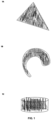
- Figs. 1A-C conceptually depicts a white fish filet, a shrimp, and a filet.
- Figs. 1A-C depict a zoom on particles comprised by the product according to embodiments, of the present invention, wherein the particles comprise a given shape, which can be obtained according to the steps of the method of the present invention.
- Figs. 1A-C depict a conceptual representation of mycelium-containing edible products, wherein the product comprises a fungal mycelium-based biomass on a substrate.
- the product may comprise a substrate in form of particulate matter such as round circles, exemplified with a rectangular shape in Fig. 1A , which may be inoculated and placed on a mold or cast.
- the mold or cast may comprise a shape that is intended to be provide to a final product.
- the fungus mycelium may then grow in and into the fermentable substrate particles binding the particles together to produce a single piece.
- Figs. 1A-C depict a plurality of different applications of the product such as a fish filet whole cut, a shrimp and a filet mignon type steak.
- Fig. 1A depicts an example of the product according to embodiments of the present invention, in which a particulate substrate with a specific particle geometry, for instance as depicted in Fig. 1A , which comprises particles in a shape according to embodiments of the present invention inoculated, wherein the fungal mycelium may grow and be shaped by using the mold/cast, which would allow to obtain a fish filet.
- the product may also be provided with a shape of shrimp such a depict in Fig. 1B , or a steak as shown in Fig.
- Fig. 1C depicts as substrate that was inoculated and then a block of substrate/mycelium composite was grown, followed by a cutting into stripes and put the stripes together, and fermented for an extra period of time to bind them together.
- the product according to embodiments of the present invention comprises a given shape mimicking an animal origin product and thus, it also comprises other similar characteristics such as flavor and texture, which are provided to the product according to embodiments of the present invention. It should also be understood that in one embodiment, the product according to embodiments for the present invention may also be a product on its own, i.e., with characterizing feature of the product itself and not necessarily those mimicking features of animal origin products.
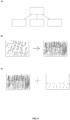
- Fig. 2 depicts a process in which a starting substrate material such as white beans is, for instance, processed by grinding, milling or otherwise, to modify the geometry of the particle to obtain smaller substrate particles and/or substrate particles comprising a specific shape, such as long elongated particles.
- the processed substrate may then be inoculated with at least one fungal strain and placed in a container where the particles are still loose.
- the filled container may then be placed in a device for fermentation such as a fermenter at a fermentation temperature such as above 25 °C, preferably 25 °C and 35 °C, more preferably between 27 °C and 31 °C and humidity between 35 and 9t5% for several hours, time during which the growth of the mycelium may take place and lead to a single piece which is a composite matrix of the fungal mycelium and the processed substrate particles.
- a device for fermentation such as a fermenter at a fermentation temperature such as above 25 °C, preferably 25 °C and 35 °C, more preferably between 27 °C and 31 °C and humidity between 35 and 9t5% for several hours, time during which the growth of the mycelium may take place and lead to a single piece which is a composite matrix of the fungal mycelium and the processed substrate particles.
- Fig. 3 conceptually depicts two different composites according to embodiments of the present invention, wherein the size of the fermentable substrate particles may be different between the two composites.
- Fig. 3 discloses different sizes or shapes that may lead to plurality of compactness levels, which is notably advantageous as it allows obtaining different amounts of void space.
- Fig. 3A depicts two configurations in which the particle size is different for each configuration.
- Fig. 3a depicts spherical particles, wherein the larger the particle, the more void space is left in between the particles with respect to a more compact configuration with smaller particles.
- Fig. 3B depicts different particle geometries according to embodiments of the present invention, such as a rhomboidal, long fibril, random particle. Rhomboidal particles are particularly advantageous, as these allows to obtain a flaky product, and long fibrils are particularly advantageous as these allows to obtain a product resembling directional muscle tissues of product of animal origin such as cow or chicken meat.
- Fig. 4A conceptually depicts a diagram, wherein addition of functional ingredients according to embodiments of the present invention.
- functional ingredients may be added to the edible mycelium composite as powders, which is notably advantageous as it may affect different properties of the composite such as mechanical; organoleptic properties such as mouthfeel, flavor and aroma; as well as food functionality attributes such as water retention, oil absorption, water release upon cooking, among others.
- the functional ingredients may include starches, modified starches, protein isolates, functional proteins, fibers, among other.
- the functional ingredients may also comprise a material that may serve as supplement for the fungal growth, which particular beneficials as may positively affect a plurality of factors such as growth speed, primary and secondary metabolites, and hyphal properties, which further allows to influence the aforementioned mechanical, organoleptic and food functional properties.
- the modification of the composite can be implemented by incorporating further additional functional ingredients prior to or after fermentation.
- Iota Carrageenan can be added prior to fermentation, which is notably advantageous as it allows to obtain a slithery mouthfeel in the end product.
- bamboo fibers may be added, which is particularly beneficial to increase water retention and fibrosity sensation.
- Culture supplements such as nutritional yeast may also be added, which is notably advantageous to increase nitrogen source, which is further particularly beneficial, as it leads to an increase protein content of the final product.
- Fig. 4B conceptually depicts an implementation of a method according to embodiments of the present invention, wherein addition of powdered functional ingredients and/or culture supplements may be performed prior to fermentation. A mix of the inoculated substrate particles together with the powdered functional ingredients may then be placed into the appropriate container and fermented.
- Fig 4C conceptually depicts a method according to embodiments of the present invention, wherein functional ingredients may be introduced after the fermentation of edible mycelium composite, where such ingredients are added into a liquid phase, which is then incorporated into the product, which may, for instance, comprise using vacuum impregnation.
- Fig. 5 schematically depicts a process of making the product comprising the edible mycelium composite according to embodiments of the present invention, wherein after a first fermentation, the edible mycelium composite may, for example, cut, broken, separated and/or extruded into pieces of a determined geometry. In one embodiment, these pieces may then be bound together by using a binding agent such as a binding liquid, or by regrowing the mycelium in a second fermentation, wherein the second fermentation is shorter than the first fermentation.
- a binding agent such as a binding liquid
- Fig. 5A conceptually depicts a serving piece of a fish filet comprises a plurality of pieces which were made by cutting or slicing the edible mycelium composite, which may be then arranged in, for example, a form of flakes bound together to conform to a fish filet.
- the flake-like pieces of the edible mycelium composite may be bound to each other by introducing in between the pieces a liquid containing a binding agent, wherein the liquid may comprise a combination of at least one binding agent comprising, for example, at least one of: hydrocolloids, methylcellulose, potato proteins, starches and oils.
- FIG. 5B conceptually depicts an example in which the edible mycelium composite is processed after fermentation into long and thin in diameter strands, similar to muscle fibers of animal tissue. Such composite particle strands may then be placed together in a mold, or any container that keeps the pieces in close contact and the binding liquid coats each particle.
- FIG. 5C schematically depicts a process in which an already fermented edible mycelium composite block may be cut, sliced and/or separated into pieces and the pieces may be bound together into a block by using a binding agent such as a binding liquid. This approach is particularly advantageous, as it results in a block that is no longer uniform but rather composed of multiple weakly bound pieces that may separate into such pieces upon applying mechanical forces.
- Fig. 5C schematically depicts a process in which an already fermented edible mycelium composite block may be cut, sliced and/or separated into pieces and the pieces may be bound together into a block by using a binding agent such as a binding liquid. This approach is particularly advantageous, as it results in a block that is
- FIG. 5D schematically depict a method for binding the pieces through a second short fermentation.
- a new mycelium may be created emanating from each individual piece and reaching the neighboring pieces, which is notably advantageous, as it allows binding the pieces together without utilizing any additives and thus provides a method to replace additives and binding agents.
- Fig. 5D depicts an example in which the edible mycelium composite is processed after the first and main fermentation into long and thin in diameter strands, similar to muscle fibers of animal tissue. Such composite particle strands may then be placed together in a mold, or any container that keeps the pieces in close contact. The mycelium growing from each side will eventually reach and grow on the opposite side binding the pieces together.
- Fig. 6 schematically depicts a process in which the inoculated substrate particles are placed into a mold or cast and fermented in the mold or cast.
- the cast may be used to impart a shape, a surface texture and geometrical features such as indentations.
- the surface texture is advantageous to produce a mouthfeel that is different to that of a rectangular block or uniform surface, and depending on that surface texture the feeling in the mouth upon consumption, for example by contact with the tongue may be reminiscent of one or other animal product.
- the cast may provide a surface feature similar to that occurring in the myosepta, which give a mouthfeel reminiscent of fish.
- FIG. 6A depicts a schematic cross section of a fish filet (left), the inverted cross section (middle) and the arrangement in which a mold, following the contour of the fish surface is placed into a container, and the fungus inoculated substrate particles are placed on top of the mold (right).
- the mold may be adapted to each strain. For example, Aspergillus oryzae needs stronger oxygenation and access to humidity than Rhizopus oryzae.
- the permeability of the mold may be adapted, as well as perforations performed to give oxygen access.
- Such container may then be placed in an incubator to ferment and form the edible mycelium composite with the desired surface texture properties.
- surface features may purposely be exaggerated in the mold, so that after pasteurization of the product, in which geometrical changes occur, the desired surface texture is still present.
- indentations that form the axial lines of the fish are increased in depth in the mold comprising a depth of at least 0.1 mm, preferably between 1 mm and 10 mm.
- Fig. 6B depicts a 3D representation of the mold for the product mimicking a fish filet comprising a plurality of holes, which is notably advantageous as this allows for oxygenation during fermentation.
- Different fungal species may require different levels of oxygenation, and thus, the approach of the present invention is particularly beneficial, as it allows to provide a different size and density of the holes.
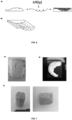
- Figs. 7A-C depicts photographs of the product comprising a plurality of different shapes such as Fig. 7A mimics a white fish fillet produced by placing the inoculated substrate in a mold as shown in Fig. 6C, Fig. 7B mimics a shrimp produced in the same way but in a shrimp mold, and Fig. 7C mimics a filet mignon produced by cutting the edible mycelium composite intro stripes, placing the stripes together in an aligned manner, and fermenting for an extra hour to allow the mycelium to rebind the piece together similar to Fig. 5D .
- the invention may also be described, but not limited to, in relation to following examples.
- Example 1 White fish fillet
- Example 1 relates to a white fish fillet as conceptually depicted in Fig. 7A .
- a white fish alternative is produced in the form of a white fish fillet, like that of a Hake fillet.
- White beans are chosen as substrate due to their white color.
- the dry white beans are ground using, for example, a malt grinding machine or a flour mill to obtain particles of sizes between 3 and 5 mm.
- the size range is obtained by sieving the ground dry bean particles through the appropriate sieves. This size is notably advantageous, as it provides to the final product a mouth feeling in which the different particles fall apart when eating, resembling the sensation of fish flakes falling apart.
- the white bean hulls particles are sorted out at this step since these provide an undesirable texture in the final product.
- the dehulled particles are soaked at 4°C for 12 hours, and then steamed for 45 min at 100°C and 100% humidity in a steaming oven.
- the particles are let cool to 37°C and then inoculated with Aspergillus Oryzae spores.
- the spore powder can be diluted in potato starch to improve growth.
- the inoculated substrate is placed on a silicon mold in the shape of a white fish fillet.
- the mold contains surface features of a filet, wherein the features have been enhanced in, for example, depth, by design. This particularly beneficial, as it allows producing both a specific mouthfeel upon contact with the tongue as well as a preferential breaking during cutting by the consumer.
- the mold contains perforations of approximately 1 mm in diameter spaced every 2.5 cm to allow for air exchange.
- the mold is 12 cm in the longitudinal dimension, 4 cm in the lateral dimension, and approximately 1.5 cm deep at the deepest point.
- the mold is placed in an incubator that has temperature and humidity control, for 28h at 80% humidity.
- the mycelium composite is removed from the mold marinated with an emulsion containing a 0.5% rapeseed or linseed oil, an optimized mix of natural vegan aromas, which allows resembling white fish flavor, and an emulsifying agent such as xanthan gum at 1%.
- the marinade is applied in a proportion of, for example, 15% w/w of the weight of the edible composite, by placing both the solution and marinade in a plastic bag and vacuum sealing at 1 bar for 30 seconds. Through vacuum the marinade distributed homogeneously throughout the edible composite.
- the marinade it notably advantageous for providing a juicy mouthfeel as well as transporting the added aromas.
- the marinated mycelium composite is then pasteurized, for example, by using High Pressure Pasteurization or by placing the bag in a water bath at 95°C for 1h. This final product might be then used in multiple applications. These include, consuming the white fish fillet by pan-frying and serving with an accompaniment, or it might be coated in a batter, or any other applications.
- the present invention also allows producing an increased gel-like slithery mouthfeel, such as that of the common Dab (Limanda limanda).
- a 1% w/w of iota carrageenan can be added.
- it also possible to control the hardness of the product for example, if fish of more hardness are desired, fermentation time can be increased to obtain a harder composite, for example by extending the fermentation time to 32h.
- the same procedure is followed, with the exception that the substrate is composed of a 1:1 mix of two different particle sizes. For this, grinding of the dry white beans is performed.
- Resulting particles are sieved using stainless steel mesh sieves in two categories: particles of a size below 0.05 mm and particles of a size between 3 and 5 mm.
- the two particle sizes are mixed in a 1:1 ratio and the above procedure is followed in the exact same manner.
- the combination of two different particle sizes allows to create a final product with a specific texture, namely, that of a uniform phase that allows the material hold together therefore providing cohesiveness, while the larger particles provide a mouth feeling of pieces falling apart and therefore of a lighter and softer texture.
- Example 2 relates to a shrimp as conceptually depicted in Fig 7B .
- a shrimp analogue can be produced.
- the fermentation time is extended to 36h to allow for the mycelium to further grow and consolidate in the substrate.
- the mycelium network becomes much tighter and therefore provides a harder bite and a chewier product, better resembling the organoleptic properties of a shrimp.
- the marinade vegan natural aromas are optimized for a shrimp-like taste.
- a coloring on the surface is applied to produce the characteristic visuals of shrimps.
- Example relates to a meat fillet.
- a fibrous meat alternative in the form of a cylinder out of white medallions can be sliced.
- the fibrous meat alternative is produced by slicing the edible mycelium composite into small fibers and re-binding those fibers to form a fibrous meat analogue cylinder.
- the rebinding can be performed in two ways, by addition a binder ( Fig 5C ) or by a second fermentation process ( Fig 5D ).
- White beans, chickpeas, soy, or a combination of them may be chosen.
- the color of the substrate in this case is not relevant since the sample may afterwards be colored.
- the substrate is ground using, for example, a malt grinding machine or a flour mill to obtain particles of sizes between 1 and 2 mm.
- the size range is obtained by sieving the ground dry bean particles through the appropriate sieves. This size range is particularly beneficial to produce a compact matrix in which the mycelium and substrate particles are tightly interleaved.
- the bean hulls particles are sorted out at this step since they provide and undesirable texture in the final product.
- the dehulled particles are soaked at 4°C for 12 hours, and then steamed for 60 min at 100°C and 100% humidity in a steaming oven. The particles are let to cool to 37°C and then inoculated with Aspergillus Oryzae spores.
- the spore powder can be diluted in potato starch to improve growth.
- the inoculated substrate is placed on a rectangular tray of approximately 50 cm wide, 30 cm in depth and 5 cm thick.
- the substrate is placed onto the tray to form a layer 3 cm in thickness, leaving 2 cm free.
- the tray contains perforations of approximately 1 mm in diameter spaced every 2.5 cm to allow for air exchange and is covered on the top.
- the tray is placed in an incubator that has temperature and humidity control, for instance, for 32h at 80% humidity. After fermentation the mycelium composite is removed from the tray and sliced into fibers of 2cm in length and 1 mm in diameter.
- the stripes are aligned in their axial dimension to produce the fibrous meat analogue cylinder of 20 cm long and 7 cm in diameter, where the fibers are aligned to each other and with the axial dimension of the larger cylinder they form.
- the fibers can be coated prior to forming the meat analogue cylinder with a marinade containing a binder configured to join the fibers together.
- the binder containing marinade is, for example, a 1% w/w solution of sodium alginate along with natural vegan beef-like flavorings up to 2.5% w/w, food grade coloring including a combination of beetroot extract and carotin, and oil such as sunflower oil at 1% w/w.
- a fat analogue may be added or distributed between the fibers, by applying it to the fibers before forming the fibrous meat analogue cylinder.
- the fibrous meat analogue cylinder is subjected to heat treatment both for pasteurization as well as for setting the binders, for example, by vacuum packing the fibrous meat analogue and placing it in a water bath at 95°C for 1h or until the core temperature reaches 90°C.
- the marinade coating and impregnating the mycelium composite fibers and containing the aromas and the binder can be applied not before, but after the fibers have been aligned to form the fibrous meat analogue cylinder. This is done by, for example, marinating the fibrous meat analogue cylinder in the marinade under vacuum and then proceeding with the heat treatment.
- the same procedure is followed with the exception that the binding additives are avoided by carrying out a second fermentation after the mycelium composite block is sliced into the fibers.
- the fermentation of the mycelium composite is first carried out for only 24 hours.
- the meat analogue cylinder is formed the same way by aligning the fibers parallel to the cylinder axial dimension. No marinade is added at this point.
- the meat analogue cylinder is placed in the incubator to ferment in, for example, the same temperature and humidity conditions for an extra 4 hours. In this manner, the regrowth of the mycelium, emanating from each fiber, binds the fibers together and thus no binding agent is necessary.
- the meat analogue cylinder therefore has two relevant binding strength parameters, the intra-fiber binding strength, that is, the binding strength of the fiber themselves, and the inter-fiber binding strength, that is, the binding strength among the fibers after being recombined together. While inter-fiber hardness and binding strength is determined by the total fermentation time, the inter-fiber binding strength is determined by the time of the second fermentation. In this way is it possible to adjust the relative binding strengths, for instance, as depicted in Fig. 7C .
- a binding-agent free marinade is applied in a proportion of, for example, 15% w/w of the weight of the edible composite.
- the marinade is notably beneficial to provide a juicy mouthfeel as well as transporting the vegan natural flavoring.
- the fibrous meat analogue cylinder is subjected to heat treatment for pasteurization, for example, by vacuum packing the fibrous meat analogue and placing it in a water bath at 95°C for 1h or until the core temperature reaches 90°C.
- Example 4 relates to the edible mycelium composite made to produce chicken-breast analogue.
- de-hulled chickpeas are used as the substrate and prepared by soaking at 4°C for 12 hours and cooked in boiling water for 1h.
- the cooked chickpeas are inoculated with R. oryzae or A. oryzae spores in the form of a powder.
- the spore powder can be mixed 1: 1 w/w with potato starch, which is particularly beneficial for improving the growth of the mycelium.
- peptones are added which promote higher density of the mycelium and also prevent sporulation.
- the inoculated substrate is then processed into a paste by means of a blending machine.
- the inoculated paste is spread in the form of a thing sheet in the corresponding solid state fermentation tray.
- the thin sheet is 50 cm wide, 30 cm deep, and between 1 mm in thickness.
- the tray is placed in an incubator machine capable of providing a controlled and stable temperature and humidity.
- the inoculated substrate is fermented at 30°C for 30h or until a uniform layer of mycelium is formed on top of the inoculated thin sheet. Addition of peptones is notably advantageous, as it allows achieving a thicker (at least 1 mm) and denser layer of mycelium forming on top of the thin sheet.
- the fermented thin sheet is cut into strips of, for example, 15 mm in length and 3 mm wide.
- the stripes are mixed with a marinade including a binder configured to join the stripes together, yet not fully bound so that upon consumption and cutting with a knife, the material resembles a chicken breast.
- This binder containing marinade may, for example, be a 1% w/w solution of sodium alginate along with natural vegan chicken-like flavorings up to 2.5% w/w, xanthan gum at 1% and oil such as sunflower oil at 1% w/w.
- the coated/marinated stripes are placed in a cast, having the shape of, for example, a chicken breast. This cast containing the marinated stripes is cooked by steaming 95°C for 1h or until the core temperature reaches 90°C.
- step (X) preceding step (Z) encompasses the situation that step (X) is performed directly before step (Z), but also the situation that (X) is performed before one or more steps (Y1), ..., followed by step (Z).
- step (Z) encompasses the situation that step (X) is performed directly before step (Z), but also the situation that (X) is performed before one or more steps (Y1), ..., followed by step (Z).
Landscapes
- Life Sciences & Earth Sciences (AREA)
- Chemical & Material Sciences (AREA)
- Engineering & Computer Science (AREA)
- Health & Medical Sciences (AREA)
- Biochemistry (AREA)
- Polymers & Plastics (AREA)
- Food Science & Technology (AREA)
- Nutrition Science (AREA)
- Microbiology (AREA)
- Biotechnology (AREA)
- Bioinformatics & Cheminformatics (AREA)
- Organic Chemistry (AREA)
- Zoology (AREA)
- Wood Science & Technology (AREA)
- Genetics & Genomics (AREA)
- Tropical Medicine & Parasitology (AREA)
- Biomedical Technology (AREA)
- Virology (AREA)
- Molecular Biology (AREA)
- Botany (AREA)
- Medicinal Chemistry (AREA)
- General Engineering & Computer Science (AREA)
- General Health & Medical Sciences (AREA)
- Mycology (AREA)
- Cell Biology (AREA)
- Micro-Organisms Or Cultivation Processes Thereof (AREA)
Priority Applications (2)
| Application Number | Priority Date | Filing Date | Title |
|---|---|---|---|
| EP23197419.7A EP4523544A1 (fr) | 2023-09-14 | 2023-09-14 | Fermentation de mycélium pour la génération de protéines comestibles |
| PCT/EP2024/075353 WO2025056598A1 (fr) | 2023-09-14 | 2024-09-11 | Fermentation de mycélium pour la génération de protéines comestibles |
Applications Claiming Priority (1)
| Application Number | Priority Date | Filing Date | Title |
|---|---|---|---|
| EP23197419.7A EP4523544A1 (fr) | 2023-09-14 | 2023-09-14 | Fermentation de mycélium pour la génération de protéines comestibles |
Publications (1)
| Publication Number | Publication Date |
|---|---|
| EP4523544A1 true EP4523544A1 (fr) | 2025-03-19 |
Family
ID=88147260
Family Applications (1)
| Application Number | Title | Priority Date | Filing Date |
|---|---|---|---|
| EP23197419.7A Withdrawn EP4523544A1 (fr) | 2023-09-14 | 2023-09-14 | Fermentation de mycélium pour la génération de protéines comestibles |
Country Status (2)
| Country | Link |
|---|---|
| EP (1) | EP4523544A1 (fr) |
| WO (1) | WO2025056598A1 (fr) |
Citations (10)
| Publication number | Priority date | Publication date | Assignee | Title |
|---|---|---|---|---|
| US20190373934A1 (en) * | 2018-06-08 | 2019-12-12 | Emergy Inc. | Edible compositions including fungal mycelium protein |
| WO2020074782A1 (fr) | 2018-10-11 | 2020-04-16 | Teknologian Tutkimuskeskus Vtt Oy | Produit alimentaire comprenant de la matière de mycélium fongique |
| CA3155385A1 (fr) | 2019-11-05 | 2021-05-14 | Jacob Michael Winiski | Myceliums comestibles et leurs procedes de preparation |
| WO2022079452A1 (fr) * | 2020-10-16 | 2022-04-21 | Better Nature Ltd | Aliment analogue à la viande à base de végétaux |
| WO2022157326A1 (fr) | 2021-01-22 | 2022-07-28 | Mycorena Ab | Produit alimentaire comprenant de la biomasse de champignons et un additif alimentaire |
| CN114929256A (zh) | 2020-01-02 | 2022-08-19 | 菲布拉沃克斯食品公司 | 一种制造合成肉的新方法 |
| WO2022245683A2 (fr) * | 2021-05-17 | 2022-11-24 | Aquacultured Foods, Inc. | Produit alimentaire comprenant une co-culture de bactéries et de champignons |
| US20230084699A1 (en) | 2020-02-14 | 2023-03-16 | Emergy Inc. | Methods for forming directional mycelium fibers |
| WO2023126389A1 (fr) * | 2021-12-27 | 2023-07-06 | Innomy Biotech, S.L | Composition comestible mycélienne |
| WO2023137192A1 (fr) * | 2022-01-15 | 2023-07-20 | The Fynder Group, Inc. | Produit alimentaire fongique répliquant la viande |
-
2023
- 2023-09-14 EP EP23197419.7A patent/EP4523544A1/fr not_active Withdrawn
-
2024
- 2024-09-11 WO PCT/EP2024/075353 patent/WO2025056598A1/fr active Pending
Patent Citations (10)
| Publication number | Priority date | Publication date | Assignee | Title |
|---|---|---|---|---|
| US20190373934A1 (en) * | 2018-06-08 | 2019-12-12 | Emergy Inc. | Edible compositions including fungal mycelium protein |
| WO2020074782A1 (fr) | 2018-10-11 | 2020-04-16 | Teknologian Tutkimuskeskus Vtt Oy | Produit alimentaire comprenant de la matière de mycélium fongique |
| CA3155385A1 (fr) | 2019-11-05 | 2021-05-14 | Jacob Michael Winiski | Myceliums comestibles et leurs procedes de preparation |
| CN114929256A (zh) | 2020-01-02 | 2022-08-19 | 菲布拉沃克斯食品公司 | 一种制造合成肉的新方法 |
| US20230084699A1 (en) | 2020-02-14 | 2023-03-16 | Emergy Inc. | Methods for forming directional mycelium fibers |
| WO2022079452A1 (fr) * | 2020-10-16 | 2022-04-21 | Better Nature Ltd | Aliment analogue à la viande à base de végétaux |
| WO2022157326A1 (fr) | 2021-01-22 | 2022-07-28 | Mycorena Ab | Produit alimentaire comprenant de la biomasse de champignons et un additif alimentaire |
| WO2022245683A2 (fr) * | 2021-05-17 | 2022-11-24 | Aquacultured Foods, Inc. | Produit alimentaire comprenant une co-culture de bactéries et de champignons |
| WO2023126389A1 (fr) * | 2021-12-27 | 2023-07-06 | Innomy Biotech, S.L | Composition comestible mycélienne |
| WO2023137192A1 (fr) * | 2022-01-15 | 2023-07-20 | The Fynder Group, Inc. | Produit alimentaire fongique répliquant la viande |
Also Published As
| Publication number | Publication date |
|---|---|
| WO2025056598A1 (fr) | 2025-03-20 |
Similar Documents
| Publication | Publication Date | Title |
|---|---|---|
| US11058137B2 (en) | Enhanced aerobic fermentation methods for producing edible fungal mycelium blended meats and meat analogue compositions | |
| WO2020232347A1 (fr) | Compositions de protéines mycéliées présentant une texture améliorée, et leurs procédés de fabrication | |
| US3885048A (en) | Method for preparing simulated meat, fish and dairy products | |
| CA2858682C (fr) | Substitut de viande hachee a base de legumes | |
| JPS6232901B2 (fr) | ||
| US20220330593A1 (en) | Enhanced Aerobic Fermentation Methods for Producing Edible Fungal Mycelium Blended Meats and Meat Analogue Compositions | |
| CN116456833A (zh) | 用于生产可食用的真菌菌丝体共混肉和肉类似物组合物的增强的好氧发酵方法 | |
| KR20230158574A (ko) | 사상 진균 물질을 포함하는 식료품 | |
| WO2023148402A1 (fr) | Produit alimentaire imprimé à base de biomasse fongique | |
| Lee et al. | An Investigation of the Status of Commercial Meat Analogs and Their Ingredients: Worldwide and South Korea | |
| EP4523544A1 (fr) | Fermentation de mycélium pour la génération de protéines comestibles | |
| WO2023227743A1 (fr) | Substitut d'aliment mycélien et son procédé de production | |
| CN120265749A (zh) | 菌丝体生物质、菌丝体生物质生产方法、菌丝体生物质在食品生产中的应用、基于菌丝体生物质的食品及其生产方法 | |
| US20260007148A1 (en) | Texturized formed plant protein product and method for manufacturing the same | |
| CN115137048A (zh) | 一种富含酵母蛋白的低脂高蛋白素肉馅料及其制法和应用 | |
| KR102869010B1 (ko) | 진균 균사체를 포함하는 대체육 및 이의 제조 방법 | |
| WO2025261944A1 (fr) | Procédé de production d'un produit alimentaire à base de plantes fermenté et produits associés | |
| JP2026506839A (ja) | 微生物の成長を使用して食品を製造する方法およびその製品 | |
| CN119791261A (zh) | 一种植物蛋白粉面条的生产方法 | |
| JP2026009853A (ja) | 菌糸体食品素材の製造方法、菌糸体食品素材及びこれを含む食品 | |
| US20240237684A1 (en) | Fermented food products | |
| Amin et al. | Fabricated foods: consumer demands for convenience. |
Legal Events
| Date | Code | Title | Description |
|---|---|---|---|
| PUAI | Public reference made under article 153(3) epc to a published international application that has entered the european phase |
Free format text: ORIGINAL CODE: 0009012 |
|
| STAA | Information on the status of an ep patent application or granted ep patent |
Free format text: STATUS: THE APPLICATION HAS BEEN PUBLISHED |
|
| AK | Designated contracting states |
Kind code of ref document: A1 Designated state(s): AL AT BE BG CH CY CZ DE DK EE ES FI FR GB GR HR HU IE IS IT LI LT LU LV MC ME MK MT NL NO PL PT RO RS SE SI SK SM TR |
|
| STAA | Information on the status of an ep patent application or granted ep patent |
Free format text: STATUS: THE APPLICATION IS DEEMED TO BE WITHDRAWN |
|
| 18D | Application deemed to be withdrawn |
Effective date: 20250920 |