EP4523711A1 - Verfahren zur automatisierten abfallentsorgungsluftevakuierung zur verbesserung der luftqualität - Google Patents
Verfahren zur automatisierten abfallentsorgungsluftevakuierung zur verbesserung der luftqualität Download PDFInfo
- Publication number
- EP4523711A1 EP4523711A1 EP24206439.2A EP24206439A EP4523711A1 EP 4523711 A1 EP4523711 A1 EP 4523711A1 EP 24206439 A EP24206439 A EP 24206439A EP 4523711 A1 EP4523711 A1 EP 4523711A1
- Authority
- EP
- European Patent Office
- Prior art keywords
- air
- fluid
- air quality
- bacteria
- filter
- Prior art date
- Legal status (The legal status is an assumption and is not a legal conclusion. Google has not performed a legal analysis and makes no representation as to the accuracy of the status listed.)
- Withdrawn
Links
Images



Classifications
-
- A—HUMAN NECESSITIES
- A61—MEDICAL OR VETERINARY SCIENCE; HYGIENE
- A61L—METHODS OR APPARATUS FOR STERILISING MATERIALS OR OBJECTS IN GENERAL; DISINFECTION, STERILISATION OR DEODORISATION OF AIR; CHEMICAL ASPECTS OF BANDAGES, DRESSINGS, ABSORBENT PADS OR SURGICAL ARTICLES; MATERIALS FOR BANDAGES, DRESSINGS, ABSORBENT PADS OR SURGICAL ARTICLES
- A61L9/00—Disinfection, sterilisation or deodorisation of air
- A61L9/16—Disinfection, sterilisation or deodorisation of air using physical phenomena
- A61L9/18—Radiation
- A61L9/20—Ultraviolet radiation
-
- B—PERFORMING OPERATIONS; TRANSPORTING
- B01—PHYSICAL OR CHEMICAL PROCESSES OR APPARATUS IN GENERAL
- B01D—SEPARATION
- B01D47/00—Separating dispersed particles from gases, air or vapours by liquid as separating agent
- B01D47/02—Separating dispersed particles from gases, air or vapours by liquid as separating agent by passing the gas or air or vapour over or through a liquid bath
-
- A—HUMAN NECESSITIES
- A61—MEDICAL OR VETERINARY SCIENCE; HYGIENE
- A61L—METHODS OR APPARATUS FOR STERILISING MATERIALS OR OBJECTS IN GENERAL; DISINFECTION, STERILISATION OR DEODORISATION OF AIR; CHEMICAL ASPECTS OF BANDAGES, DRESSINGS, ABSORBENT PADS OR SURGICAL ARTICLES; MATERIALS FOR BANDAGES, DRESSINGS, ABSORBENT PADS OR SURGICAL ARTICLES
- A61L2202/00—Aspects relating to methods or apparatus for disinfecting or sterilising materials or objects
- A61L2202/10—Apparatus features
- A61L2202/11—Apparatus for generating biocidal substances, e.g. vaporisers, UV lamps
-
- A—HUMAN NECESSITIES
- A61—MEDICAL OR VETERINARY SCIENCE; HYGIENE
- A61L—METHODS OR APPARATUS FOR STERILISING MATERIALS OR OBJECTS IN GENERAL; DISINFECTION, STERILISATION OR DEODORISATION OF AIR; CHEMICAL ASPECTS OF BANDAGES, DRESSINGS, ABSORBENT PADS OR SURGICAL ARTICLES; MATERIALS FOR BANDAGES, DRESSINGS, ABSORBENT PADS OR SURGICAL ARTICLES
- A61L2202/00—Aspects relating to methods or apparatus for disinfecting or sterilising materials or objects
- A61L2202/10—Apparatus features
- A61L2202/14—Means for controlling sterilisation processes, data processing, presentation and storage means, e.g. sensors, controllers, programs
-
- A—HUMAN NECESSITIES
- A61—MEDICAL OR VETERINARY SCIENCE; HYGIENE
- A61L—METHODS OR APPARATUS FOR STERILISING MATERIALS OR OBJECTS IN GENERAL; DISINFECTION, STERILISATION OR DEODORISATION OF AIR; CHEMICAL ASPECTS OF BANDAGES, DRESSINGS, ABSORBENT PADS OR SURGICAL ARTICLES; MATERIALS FOR BANDAGES, DRESSINGS, ABSORBENT PADS OR SURGICAL ARTICLES
- A61L2209/00—Aspects relating to disinfection, sterilisation or deodorisation of air
- A61L2209/10—Apparatus features
- A61L2209/11—Apparatus for controlling air treatment
-
- A—HUMAN NECESSITIES
- A61—MEDICAL OR VETERINARY SCIENCE; HYGIENE
- A61L—METHODS OR APPARATUS FOR STERILISING MATERIALS OR OBJECTS IN GENERAL; DISINFECTION, STERILISATION OR DEODORISATION OF AIR; CHEMICAL ASPECTS OF BANDAGES, DRESSINGS, ABSORBENT PADS OR SURGICAL ARTICLES; MATERIALS FOR BANDAGES, DRESSINGS, ABSORBENT PADS OR SURGICAL ARTICLES
- A61L2209/00—Aspects relating to disinfection, sterilisation or deodorisation of air
- A61L2209/10—Apparatus features
- A61L2209/11—Apparatus for controlling air treatment
- A61L2209/111—Sensor means, e.g. motion, brightness, scent, contaminant sensors
-
- A—HUMAN NECESSITIES
- A61—MEDICAL OR VETERINARY SCIENCE; HYGIENE
- A61L—METHODS OR APPARATUS FOR STERILISING MATERIALS OR OBJECTS IN GENERAL; DISINFECTION, STERILISATION OR DEODORISATION OF AIR; CHEMICAL ASPECTS OF BANDAGES, DRESSINGS, ABSORBENT PADS OR SURGICAL ARTICLES; MATERIALS FOR BANDAGES, DRESSINGS, ABSORBENT PADS OR SURGICAL ARTICLES
- A61L2209/00—Aspects relating to disinfection, sterilisation or deodorisation of air
- A61L2209/10—Apparatus features
- A61L2209/14—Filtering means
-
- A—HUMAN NECESSITIES
- A61—MEDICAL OR VETERINARY SCIENCE; HYGIENE
- A61L—METHODS OR APPARATUS FOR STERILISING MATERIALS OR OBJECTS IN GENERAL; DISINFECTION, STERILISATION OR DEODORISATION OF AIR; CHEMICAL ASPECTS OF BANDAGES, DRESSINGS, ABSORBENT PADS OR SURGICAL ARTICLES; MATERIALS FOR BANDAGES, DRESSINGS, ABSORBENT PADS OR SURGICAL ARTICLES
- A61L2209/00—Aspects relating to disinfection, sterilisation or deodorisation of air
- A61L2209/20—Method-related aspects
- A61L2209/21—Use of chemical compounds for treating air or the like
-
- B—PERFORMING OPERATIONS; TRANSPORTING
- B01—PHYSICAL OR CHEMICAL PROCESSES OR APPARATUS IN GENERAL
- B01D—SEPARATION
- B01D2247/00—Details relating to the separation of dispersed particles from gases, air or vapours by liquid as separating agent
- B01D2247/04—Regenerating the washing fluid
-
- B—PERFORMING OPERATIONS; TRANSPORTING
- B01—PHYSICAL OR CHEMICAL PROCESSES OR APPARATUS IN GENERAL
- B01D—SEPARATION
- B01D2247/00—Details relating to the separation of dispersed particles from gases, air or vapours by liquid as separating agent
- B01D2247/10—Means for removing the washing fluid dispersed in the gas or vapours
-
- B—PERFORMING OPERATIONS; TRANSPORTING
- B01—PHYSICAL OR CHEMICAL PROCESSES OR APPARATUS IN GENERAL
- B01D—SEPARATION
- B01D2247/00—Details relating to the separation of dispersed particles from gases, air or vapours by liquid as separating agent
- B01D2247/14—Fan arrangements for providing induced draft
Definitions
- Waste management in large buildings with garbage chutes utilizes collection rooms located at the base of the garbage chute whereby building tenants discard their waste on each floor of the high rise building. Said waste travels down the chute to the collection room and is discarded in a waste bin. Usually this waste has an unpleasant smell or odor which can cause health issues to humans due to the various proteins that become airborne.
- a human who senses the unpleasant odor will usually manually turn on an evacuation fan which draws the odor out of the collection area where it is concentrated and ejects it into the environment where it mixes with the air in the surrounding area and becomes diluted or lowers the parts per million of airborne proteins.
- Air pollution sensors are devices that detect and monitor the presence of air pollution in the surrounding area. They can be used for both indoor and outdoor environments. Although there are various types of air pollution sensors, and some are specialized in certain aspects, the majority focus on five components: ozone, particulate matter, carbon monoxide, sulfur dioxide, and nitrous oxide. The sensors were very expensive in the past, but with technological advancements these sensors are becoming more affordable and more widespread throughout the population. These sensors can help serve many purposes and help bring attention to environmental issues beyond the scope of the human eye.
- Air Quality System The EPA maintains a repository of air quality data through the Air Quality System (AQS), where it stores data from over 10,000 monitors in the United States alone.
- AQS Air Quality System
- Many products and chemicals used inside the home, for cooking and heating, and for appliances and home décor are primary sources of indoor air pollutants. Everything we use in the home contributes to the pollution, and can possibly degrade the environment. This is because the airborne pollutants settle and stagnate and begin to decay releasing harmful gases, proteins and fungi which become airborne and enter into human lungs causing respiratory illness and health problems.
- Air pollution is responsible for 7 million premature deaths around the world each year. When pollutants enter the body through our respiratory system, they can be absorbed in the blood and travel throughout the body, and can directly damage the heart and other vital organs.
- Garbage waste byproducts of airborne pollutants are made up of complex mixtures of extremely small particles and liquid droplets.
- Particle pollution is made up of a number of components, including acids (such as nitrates and sulfates), organic chemicals, metals, and soil or dust particles
- a pile of garbage contains numerous decaying substances such as diapers, rotting fish, meat and vegetables, various expired products and more. Bacteria present in the air, and in the garbage, degrade the garbage and release different gases such as ammonia, carbon dioxide and methane. Also, some of the contents in the garbage react with each other and release gases such as oxides of sulphur and nitrogen. Burning garbage releases the very poisonous carbon monoxide gas in the air so disposal utilizing trash burning is not a viable solution.
- Air Quality Index is 0 to 50. Air quality is considered satisfactory, and air pollution poses little or no risk. "Moderate” AQI is 51 to 100. Air quality is acceptable; however, for some pollutants there may be a moderate health concern for a very small number of people
- a design for Methods of Automated Garbage Chute Air Evacuation to Improve Air Quality is comprised of 7 components, namely a means to sense a first air quality threshold value, a means to convert said threshold value into an action or function, a means for action or function to draw air into a specular reflective intake port or chute, a means to kill bacteria and fungi carried as airborne particulates entering the confines of said intake port or chute, a means to pass the first stage of dead bacteria and fungus particulates into a second stage collection containment device, a means for second stage collection containment device to gather dead bacteria and fungus particulates into a third stage silver lined reservoir containment area, a means to filter the collected dead bacteria and fungus into a singular changeable containment filter for proper disposal of said dead bacteria and fungus which was collected in the third stage containment reservoir
- a means to sense a first air quality threshold value is comprised of an air particulate sensor whereby said sensor is connected to a processing unit which determines readings generated by said air particulate sensor.
- Said air particulate sensor may sense a variety of particulates as well as other harmful gases which convert said quantitative values of said particulates and harmful gases to a value corresponding to the parts per billion / million. If the air quality exceeds a threshold value, e.g., 50 AQI, a second action or function begins.
- a MQ135 Air Quality sensor is connected to a Microcontroller unit (MCU) which processes the sensed values generated by said MQ135.
- MCU Microcontroller unit
- An algorithm running in the MCU will determine the threshold and actions to be taken once said preset threshold value is exceeded.
- a method to convert said threshold value into an action or function is comprised of an algorithm that converts measurements from the air quality sensor to an integer that is stored temporarily into memory. If this measurement reaches a specific value greater than a preset threshold value, an argument calls an output to begin an action or function corresponding to the air quality sensor measurement.
- a means for action or function to draw air into a specular reflective intake port or chute is comprised of a fan which turns on after airborne particulates have been determined to surpass the preset threshold value stored in the arguments of the aforementioned MCU algorithm.
- the first air particle sensor detects airborne particulates and converts the sensed elements to an electric value between 0 - 5 Volt in 1024 increments. Once this value surpasses 50 parts per million, relays turn on a series of components used to usher in the air pollutants into a chamber.
- This chamber is made of a specular reflective material which can reflect light. This specular reflective surface acts as an even distributor of bouncing UV light rays which collide with bacteria and fungi airborne particulates killing them on contact.
- the air particulate intake port may be made of or include a shiny mirror like reflective surface coated to prevent the collection of bacteria from forming on the surface.
- a method to kill bacteria and fungi carried as airborne particulates entering the confines of the said intake port or chute is comprised of a UVC light which is part of the ultraviolet light spectrum and emits a high frequency of UV light that makes it extremely effective at killing bacteria, viruses, mold and other pathogens.
- Killing bacteria with UV light requires the use of germicidal wavelengths of 185-254 nanometers (nm).
- UVGI Ultraviolet germicidal irradiation
- UV-C short-wavelength ultraviolet
- the air duct utilizes a specular reflective trougher which reflects the concentrated UV light into the path of the oncoming airborne pathogens.
- the fan pulls the air through the internally specular reflective octagon shaped tube (tube with 45 degree angles) into a fan duct which is slowed down due to a fluid soaked air filter used to collect the dead bacteria or fungus.
- This fluid soaked air filter also acts as a barrier to create turbulence or back pressure in the intake port slowing the air particulates down and giving the high intensity UV lamps time to kill all airborne bacteria and fungi particulates.
- a means to pass the first stage of dead bacteria and fungus particulates into a second stage collection containment device is comprised of a filter which is soaked with fluid gravity fed from the top whereby a pump in a containment reservoir pumps fluid from said reservoir to the top dispersing tube which sprays fluid on the top of the air filter. This fluid then soaks said filter and the excess runs off into the fluid containment reservoir.
- the fluid mechanism is charged with ions which cause particles to attract to them. As the gravity pulls the fluid containing the particulates down to the fluid containment reservoir, it leaves fresh fluid which follows gathering more particulates and flowing to the fluid containment reservoir.
- a means for second stage collection containment device to gather dead bacteria and fungus particulates into a third stage silver lined reservoir containment area is comprised of a self-filling fluid reservoir containing a fluid level limiting device held within a fluid containment area.
- Said fluid containment area is lined in sliver coating which acts as a secondary disinfectant which may kill any germs that have begun DNA recombination which is a phenomenon known as light and dark repair. This is a photoreactivation and base excision repair, respectively, in which a cell can repair DNA that has been damaged by the first UV light in the first particulate entry tube.
- the fluid carrying the bacteria to the fluid containment area will further lyse said bacteria and fungi thus killing any remaining bacteria and reducing the bacterial exhaust to an acceptable range safe for breathing by humans and improving the environment's overall air quality index (AQI).
- AQI overall air quality index
- a means to filter the collected dead bacteria and fungus into a singular changeable containment filter for proper disposal of said dead bacteria and fungus which was collected in the third stage containment reservoir is comprised of a fluid filter whereby fluid in the fluid containment area pumps said fluid into a filter component which acts as a filter for particulates using a fluid cleaning system sufficient to ensure excessive bacteria and fungi buildup in said fluid containing area.
- the fluid containing area will contain fluid which is filled with collected dead particulates and perhaps a very small percentage of live particulates.
- Fluid filters use two different techniques to remove particulates. Physical filtration means strains water to remove larger impurities. In other words, a physical filter is a sieve otherwise known as a piece of thin gauze or a very fine textile membrane. Another method of filtering is chemical filtration which involves passing water through an active material that removes impurities chemically as they pass through. According to an embodiment, both straining and chemical filtration are utilized to clean said fluid in the fluid containment area.
- Airborne particulates are generated in high concentrations in garbage collection rooms found beneath garbage chutes where tenants in the above floors utilize a chute to drop their waste. As the waste falls inside the garbage chute, it collides with areas meant to slow the fall of the garbage. These areas are angular which are impacted by said garbage waste. In many cases, the garbage waste is within a bag that breaks such that the waste is separated from said bag allowing waste material containing rotting or decaying bacteria and fungus to spread or be exposed. In this application we propose a simple method to detect particulates and gases released by said waste bacteria and fungi and filter it from the air to ensure a more safe and healthy environment for waste collection facilities.
- an air quality improvement or cleaning system contains an air quality sensor.
- an MQ135 is exemplified as an air quality sensor.
- the MP135 is connected to a MCU which handles conversion of sensor readings to data and then acts upon preset threshold variables. Once a preset threshold has been exceeded, the MCU activates a series of actions which allow proper operation of an automated garbage chute air evacuation system according to an embodiment.
- a first element high powered UVC lamp which operates a light wave between > 150
- the MQ-135 Gas sensor is used in air quality control equipment and is suitable for detecting or measuring of NH3, NOx, Alcohol, Benzene, Smoke, CO2 and other harmful particulates.
- MQ-135 gas sensor applies SnO2 which has a higher resistance in the clear air as a gas-sensing material. When there is an increase in polluting gases, the resistance of the gas sensor decreases. This value can be determined by utilizing a MCU where the values are converted to an integer and compared to a threshold.
- the actuation of the relay can set off a series of events as per requirement of said air decontamination process.
- These events include a UVC lamp to provide the proper range of UV light to disinfect a first stage of collected airborne contaminants, a wet filter which further contains proper chemicals to further disinfect and collect contaminants and a fluid collection bin which further contains a silver lining which also acts as a disinfectant for killing germs collected in the wet filter stage of decontaminating the air to improve said air quality index (AQI).
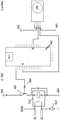
- Figure 1 shows a schematic diagram containing a first element of a MQ135 (105) connected by an analog bus (141) which provides a variable sensor reading to the MCU (125). If said variable sensor reading reaches a threshold preset value, the MCU (125) passes a high output voltage to the Relay Controller (121) which causes the fan (119) to turn on. This starts the air flow.
- a wireless (115) or wired bus (RS232) can link to a PC which monitors information of the air quality improvement application according to embodiments.
- the MQ135 operates on 5V which is connected to VCC (127) and GND (133) where all elements share like voltages.
- Said PC contains relevant Natural Event Processing (NEP) logic to monitor, control and report actions of hardware through a remote server application or network.
- NEP Natural Event Processing
- FIG 2 is a fundamental schematic diagram showing the basic essentials of the circuit to actuate an event using an Air Quality Sensor (267) connected to both digital input and analog input of the MCU (255) which is connected to a relay (272) where contactors of said relay are connected to a motor which controls a fan, a UVC lamp and necessary pumps to control proper fluid flow (Not Shown).
- the Relay, MCU (255) and air quality sensor (267) is connected to VCC (199) and GND (201).
- Figure 3 shows dirty air (303) entering the opening of an angular tubing (315) which contains a specular reflective coating (311) whereby UVC light rays (322) bounce off various angles provided by the reflective surface (311) of the angular tubing (315).
- Said angular tubing contains a UVC light source (330) which provides the interior of said angular tubing (315) with sufficient UVC light rays (322) which is refracted off the specular reflective walls (311) of the angular tubing port (315).
- the exhaust air (333) is a clean air which exits the UVC chambered (315) specular reflective (311) coated angular intake port (315).
- Figure 4 is s combined system containing a first air quality sensor (378) which resides external to the intake port (315) where incoming dirty air (303) containing airborne particulates enters internally in said specular reflective (322) angular tubing (315) whereby said air particulates containing bacteria and fungi are bombarded with a UVC light (330) where said UVC light rays bounce off specular reflective coatings (322) inside the angular tubing (315).
- a MCU (377) provides control for the external peripherals of the fan (401), first fluid pump (412) which pumps disinfectant fluid in fluid chamber (431) which is silver lined to further decontaminate said living bacteria and fungi.
- a fluid intake is controlled by a float system (430) which keeps the fluid at a proper level.
- a filter (420) in a filter chamber (415) is utilized to filter any decontaminants found in the fluid which captures said harmful particulates and can easily be discarded by opening the said filter chamber (415) and removing the fluid filter (420) and replacing it with a new one on a periodic basis. Cleaned air (333) exits the wet filter.
- system according to the first further aspect further comprising means to perpetually fill fluids lost in evaporation of a disinfecting cycle.
- the system according to the first further aspect is provided, wherein said MCU is configured to activate back pressure stagnating airflow caused by said wet filter to ensure proper stagnation or restriction of airflow and timing of UVC light exposure to airborne bacteria and fungi.
- the system according to the first further aspect is provided, wherein said wet filter is porous to allow passage of air while providing both sufficient means free path (MFP) of air flow and cellular pavementing with increased surface area.
- MFP free path
- the system according to the sixth further aspect is provided, wherein said cellular pavementing is harmful bacteria and fungi which lyse due to primary interaction of UVC light exposure and disinfectant.
Landscapes
- Health & Medical Sciences (AREA)
- Epidemiology (AREA)
- Life Sciences & Earth Sciences (AREA)
- Animal Behavior & Ethology (AREA)
- General Health & Medical Sciences (AREA)
- Public Health (AREA)
- Veterinary Medicine (AREA)
- Chemical & Material Sciences (AREA)
- Chemical Kinetics & Catalysis (AREA)
- Disinfection, Sterilisation Or Deodorisation Of Air (AREA)
- Engineering & Computer Science (AREA)
- Environmental & Geological Engineering (AREA)
Applications Claiming Priority (3)
| Application Number | Priority Date | Filing Date | Title |
|---|---|---|---|
| US201962902569P | 2019-09-19 | 2019-09-19 | |
| EP20865606.6A EP4031200A4 (de) | 2019-09-19 | 2020-09-18 | Methoden zur automatischen luftabfuhr aus müllschächten zur verbesserung der luftqualität |
| PCT/US2020/051470 WO2021055733A1 (en) | 2019-09-19 | 2020-09-18 | Methods of automated garbage chute air evacuation to improve air quality |
Related Parent Applications (1)
| Application Number | Title | Priority Date | Filing Date |
|---|---|---|---|
| EP20865606.6A Division EP4031200A4 (de) | 2019-09-19 | 2020-09-18 | Methoden zur automatischen luftabfuhr aus müllschächten zur verbesserung der luftqualität |
Publications (1)
| Publication Number | Publication Date |
|---|---|
| EP4523711A1 true EP4523711A1 (de) | 2025-03-19 |
Family
ID=74883716
Family Applications (2)
| Application Number | Title | Priority Date | Filing Date |
|---|---|---|---|
| EP20865606.6A Withdrawn EP4031200A4 (de) | 2019-09-19 | 2020-09-18 | Methoden zur automatischen luftabfuhr aus müllschächten zur verbesserung der luftqualität |
| EP24206439.2A Withdrawn EP4523711A1 (de) | 2019-09-19 | 2020-09-18 | Verfahren zur automatisierten abfallentsorgungsluftevakuierung zur verbesserung der luftqualität |
Family Applications Before (1)
| Application Number | Title | Priority Date | Filing Date |
|---|---|---|---|
| EP20865606.6A Withdrawn EP4031200A4 (de) | 2019-09-19 | 2020-09-18 | Methoden zur automatischen luftabfuhr aus müllschächten zur verbesserung der luftqualität |
Country Status (5)
| Country | Link |
|---|---|
| US (1) | US12151054B2 (de) |
| EP (2) | EP4031200A4 (de) |
| KR (1) | KR20220101608A (de) |
| CN (1) | CN114430686A (de) |
| WO (1) | WO2021055733A1 (de) |
Families Citing this family (5)
| Publication number | Priority date | Publication date | Assignee | Title |
|---|---|---|---|---|
| CA3186106A1 (en) * | 2020-07-17 | 2022-01-20 | David Allan Prystupa | Apparatus for reflecting an incident ray of electromagnetic radiation |
| KR102513672B1 (ko) * | 2022-08-29 | 2023-03-23 | 문성필 | 휘산장치 |
| WO2025170576A1 (en) * | 2024-02-07 | 2025-08-14 | Elias Yamine | Method and apparatus for maintaining cleanliness and preventing adhesion in gravity chutes using a release agent |
| WO2025170574A1 (en) * | 2024-02-07 | 2025-08-14 | Elias Yamine | Automated wash system for gravity chutes with intelligent air quality monitoring and multistage cleaning |
| WO2025170577A1 (en) * | 2024-02-07 | 2025-08-14 | Elias Yamine | Method and apparatus for rust prevention in gravity chutes using rust prevention agent in wash cycle completion stages |
Citations (5)
| Publication number | Priority date | Publication date | Assignee | Title |
|---|---|---|---|---|
| GB1349223A (en) * | 1971-10-15 | 1974-04-03 | Rappold E | Ventilating ambulances |
| WO2014162165A1 (es) * | 2013-04-05 | 2014-10-09 | Vacman Internacional, S.A. De C.V. | Aspiradora con funcionamiento hidrodinámico que no utiliza filtro ni bolsa para llevar a cabo la descontaminación |
| KR101483237B1 (ko) * | 2014-10-02 | 2015-01-19 | 주식회사 근옥 | 공기 소독청정기 |
| WO2015191478A1 (en) * | 2014-06-09 | 2015-12-17 | Dance Biopharm Inc. | Liquid drug cartridges and associated dispenser |
| KR101612920B1 (ko) * | 2015-09-07 | 2016-04-18 | 발라드동물병원(주) | 축사용 건습식 공기 소독 청정기 |
Family Cites Families (27)
| Publication number | Priority date | Publication date | Assignee | Title |
|---|---|---|---|---|
| US5277136A (en) * | 1991-09-20 | 1994-01-11 | Biosafe Inc. | Processing facility for disposing of infectious medical wastes |
| CH687128A5 (de) | 1992-10-16 | 1996-09-30 | Eduard Jutzi | Biologischer Luftfilter. |
| JP4147279B2 (ja) * | 1996-02-01 | 2008-09-10 | 大研医器株式会社 | 体液を含む廃液の処理方法およびその処理装置 |
| JP2002239326A (ja) * | 2001-02-15 | 2002-08-27 | National House Industrial Co Ltd | 空気浄化装置 |
| CN1548829A (zh) * | 2003-05-22 | 2004-11-24 | 彦 王 | 利用湿式滤网对空气进行消毒过滤的过滤装置 |
| US20050029174A1 (en) | 2003-08-08 | 2005-02-10 | Collins Carol Ann | Hybrid magnetohydrodynamo (MHD) field sanitation generator for treating wastewater, sewages & sludge and recovering potable water |
| CN100479865C (zh) * | 2003-10-27 | 2009-04-22 | 玛丽亚·赫曼纳斯·吉哈德斯·斯德赫斯 | 空气处理方法和装置 |
| JP2006340813A (ja) * | 2005-06-07 | 2006-12-21 | Toshiba Corp | ゴミ収集場脱臭システム |
| NL1030174C2 (nl) * | 2005-10-12 | 2007-04-13 | Hermannus Gerhardus Silderhuis | Hulpinrichting, bestemd om te worden toegevoegd aan een lucht-behandelingsinrichting. |
| US10596387B2 (en) * | 2007-04-08 | 2020-03-24 | Immunolight, Llc. | Tumor imaging with X-rays and other high energy sources using as contrast agents photon-emitting phosphors having therapeutic properties |
| US20090148342A1 (en) * | 2007-10-29 | 2009-06-11 | Bromberg Steven E | Hypochlorite Technology |
| EP2401067A1 (de) * | 2009-02-25 | 2012-01-04 | Markus Mäki | System und verfahren zur photochemischen behandlung von flüssigen substanzen mit ultraviolettem licht in flüssigkeitsführenden rohren |
| WO2010117736A2 (en) * | 2009-03-30 | 2010-10-14 | Prompt Care, Inc. | System and method for abatement of allergens, pathogens and volatile organic compounds |
| US9687575B2 (en) * | 2010-06-01 | 2017-06-27 | Bluemorph, Llc | UV devices, systems and methods for UV sterilization |
| US11260138B2 (en) * | 2010-06-01 | 2022-03-01 | Bluemorph, Llc | UV sterilization of container, room, space or defined environment |
| WO2014124393A1 (en) * | 2013-02-11 | 2014-08-14 | AquaMost, Inc. | Apparatus and method for treating aqueous solutions and contaminants therein |
| CN105180296A (zh) * | 2014-06-13 | 2015-12-23 | 美国创新研究公司 | 用于降低空气传播污染物的系统和方法 |
| US10422727B2 (en) | 2014-08-10 | 2019-09-24 | Harry Leon Pliskin | Contaminant monitoring and air filtration system |
| WO2017184769A1 (en) * | 2016-04-20 | 2017-10-26 | Fathhome, Inc. | Vacuum-based method and apparatus for cleaning soiled articles |
| US11338107B2 (en) * | 2016-08-24 | 2022-05-24 | Delos Living Llc | Systems, methods and articles for enhancing wellness associated with habitable environments |
| CN207028786U (zh) * | 2017-02-11 | 2018-02-23 | 张波 | 一种汽车用智能空气净化装置 |
| WO2019046648A1 (en) * | 2017-08-31 | 2019-03-07 | Prodew, Inc. | AIR TREATMENT SYSTEMS |
| CN108744846A (zh) * | 2018-06-02 | 2018-11-06 | 芜湖合愉电子科技有限公司 | 一种家用空气湿式净化器 |
| US11576310B2 (en) * | 2018-08-31 | 2023-02-14 | Agritainer, Llc | Systems and methods for efficient fogponic agriculture |
| US11536476B2 (en) * | 2020-05-12 | 2022-12-27 | Johnson Controls Tyco IP Holdings LLP | Building system with flexible facility operation |
| WO2022246335A1 (en) * | 2021-05-18 | 2022-11-24 | Luminated Glazings, Llc | Using scattering fields in a medium to redirect wave energy onto surfaces in shadow |
| US20230211030A1 (en) * | 2021-12-31 | 2023-07-06 | Ralph Birchard Lloyd | Systems and methods for disinfecting plumbing fixtures and rooms with plumbing fixtures |
-
2020
- 2020-09-18 US US17/762,168 patent/US12151054B2/en active Active
- 2020-09-18 EP EP20865606.6A patent/EP4031200A4/de not_active Withdrawn
- 2020-09-18 KR KR1020227012540A patent/KR20220101608A/ko not_active Ceased
- 2020-09-18 EP EP24206439.2A patent/EP4523711A1/de not_active Withdrawn
- 2020-09-18 WO PCT/US2020/051470 patent/WO2021055733A1/en not_active Ceased
- 2020-09-18 CN CN202080065405.7A patent/CN114430686A/zh active Pending
Patent Citations (5)
| Publication number | Priority date | Publication date | Assignee | Title |
|---|---|---|---|---|
| GB1349223A (en) * | 1971-10-15 | 1974-04-03 | Rappold E | Ventilating ambulances |
| WO2014162165A1 (es) * | 2013-04-05 | 2014-10-09 | Vacman Internacional, S.A. De C.V. | Aspiradora con funcionamiento hidrodinámico que no utiliza filtro ni bolsa para llevar a cabo la descontaminación |
| WO2015191478A1 (en) * | 2014-06-09 | 2015-12-17 | Dance Biopharm Inc. | Liquid drug cartridges and associated dispenser |
| KR101483237B1 (ko) * | 2014-10-02 | 2015-01-19 | 주식회사 근옥 | 공기 소독청정기 |
| KR101612920B1 (ko) * | 2015-09-07 | 2016-04-18 | 발라드동물병원(주) | 축사용 건습식 공기 소독 청정기 |
Also Published As
| Publication number | Publication date |
|---|---|
| KR20220101608A (ko) | 2022-07-19 |
| EP4031200A4 (de) | 2023-11-29 |
| US20220370676A1 (en) | 2022-11-24 |
| EP4031200A1 (de) | 2022-07-27 |
| WO2021055733A1 (en) | 2021-03-25 |
| CN114430686A (zh) | 2022-05-03 |
| US12151054B2 (en) | 2024-11-26 |
Similar Documents
| Publication | Publication Date | Title |
|---|---|---|
| US12151054B2 (en) | Methods of automated garbage chute air evacuation to improve air quality | |
| AU2013213528B2 (en) | A mobile disinfection unit for disinfecting a given facility or equipment and a method of using said unit | |
| KR101605820B1 (ko) | 미세먼지와 악취 제거방법 및 그 장치 | |
| KR20220052872A (ko) | 바이러스 살균과 미세먼지 제거 및 탈취 기능을 갖는 바이러스 살균 미세먼지 공기정화기 | |
| KR102548992B1 (ko) | 주방 실내공기 오염물질 분해정화 살균 시스템 | |
| KR20180078832A (ko) | 먼지 및 미생물 검출용 공기 정화 처리 시스템 | |
| CN106679005A (zh) | 一种水洗式空气净化系统及空气净化方法 | |
| JPH01266864A (ja) | 気体の清浄方法及びその装置 | |
| KR20150086921A (ko) | 악취 제거방법 및 그 장치 | |
| KR102441240B1 (ko) | 폐기물 쓰레기 처리 시스템 | |
| CN111795448A (zh) | 智能密闭空间空气消毒净化系统 | |
| CN213273074U (zh) | 一种空气消毒净化系统及空间消毒机 | |
| CN102423627B (zh) | 智能空气净化的方法及装置 | |
| Daniels | On the qualities of the air as affected by radiant energies (photocatalytic ionization processes for remediation of indoor environments) | |
| KR102265975B1 (ko) | 스마트 led 방역 시스템 | |
| Krigmont | Development of the disinfecting air filter | |
| Riffat | Experimental investigation of an indoor air purification system using an innovative photocatalytic mop | |
| CN215230559U (zh) | 用于垃圾处理站的除虫除臭杀菌一体机 | |
| Gladskikh et al. | REVIEW OF MODERN METHODS FOR REDUCING NOSOCOMIAL INFECTION IN THE OPERATING ROOM AND AIR DISINFECTION IN SURGICAL HOSPITALS IN THE HEALTHCARE ORGANIZATION OF THE RUSSIAN FEDERATION | |
| CN2516165Y (zh) | 全自动空气净化消毒灭菌器 | |
| Gopal et al. | Semiconductor Technology based Air Sterilizer (STAS) for Indoor Air in Hospital/Clinic Rooms | |
| Turner | Breathe easier: An air purifier buyers guide | |
| TR202012732A2 (tr) | Hava aritma ve steri̇li̇zasyon ci̇hazi | |
| WO2021181152A1 (en) | System and method for purifying air through natural means | |
| KR200409636Y1 (ko) | 펜던트형 복합 공기청정장치 |
Legal Events
| Date | Code | Title | Description |
|---|---|---|---|
| PUAI | Public reference made under article 153(3) epc to a published international application that has entered the european phase |
Free format text: ORIGINAL CODE: 0009012 |
|
| STAA | Information on the status of an ep patent application or granted ep patent |
Free format text: STATUS: THE APPLICATION HAS BEEN PUBLISHED |
|
| AC | Divisional application: reference to earlier application |
Ref document number: 4031200 Country of ref document: EP Kind code of ref document: P |
|
| AK | Designated contracting states |
Kind code of ref document: A1 Designated state(s): AL AT BE BG CH CY CZ DE DK EE ES FI FR GB GR HR HU IE IS IT LI LT LU LV MC MK MT NL NO PL PT RO RS SE SI SK SM TR |
|
| STAA | Information on the status of an ep patent application or granted ep patent |
Free format text: STATUS: THE APPLICATION IS DEEMED TO BE WITHDRAWN |
|
| 18D | Application deemed to be withdrawn |
Effective date: 20250920 |