EP4524249A1 - Aus rna-virus abgeleitetes chimäres hüllprotein und rna-virusvektor damit - Google Patents
Aus rna-virus abgeleitetes chimäres hüllprotein und rna-virusvektor damit Download PDFInfo
- Publication number
- EP4524249A1 EP4524249A1 EP23796356.6A EP23796356A EP4524249A1 EP 4524249 A1 EP4524249 A1 EP 4524249A1 EP 23796356 A EP23796356 A EP 23796356A EP 4524249 A1 EP4524249 A1 EP 4524249A1
- Authority
- EP
- European Patent Office
- Prior art keywords
- vector
- protein
- cells
- seq
- virus
- Prior art date
- Legal status (The legal status is an assumption and is not a legal conclusion. Google has not performed a legal analysis and makes no representation as to the accuracy of the status listed.)
- Pending
Links
Images






Classifications
-
- C—CHEMISTRY; METALLURGY
- C07—ORGANIC CHEMISTRY
- C07K—PEPTIDES
- C07K14/00—Peptides having more than 20 amino acids; Gastrins; Somatostatins; Melanotropins; Derivatives thereof
- C07K14/005—Peptides having more than 20 amino acids; Gastrins; Somatostatins; Melanotropins; Derivatives thereof from viruses
-
- C—CHEMISTRY; METALLURGY
- C12—BIOCHEMISTRY; BEER; SPIRITS; WINE; VINEGAR; MICROBIOLOGY; ENZYMOLOGY; MUTATION OR GENETIC ENGINEERING
- C12N—MICROORGANISMS OR ENZYMES; COMPOSITIONS THEREOF; PROPAGATING, PRESERVING, OR MAINTAINING MICROORGANISMS; MUTATION OR GENETIC ENGINEERING; CULTURE MEDIA
- C12N15/00—Mutation or genetic engineering; DNA or RNA concerning genetic engineering, vectors, e.g. plasmids, or their isolation, preparation or purification; Use of hosts therefor
- C12N15/09—Recombinant DNA-technology
- C12N15/63—Introduction of foreign genetic material using vectors; Vectors; Use of hosts therefor; Regulation of expression
- C12N15/79—Vectors or expression systems specially adapted for eukaryotic hosts
- C12N15/85—Vectors or expression systems specially adapted for eukaryotic hosts for animal cells
- C12N15/86—Viral vectors
-
- C—CHEMISTRY; METALLURGY
- C12—BIOCHEMISTRY; BEER; SPIRITS; WINE; VINEGAR; MICROBIOLOGY; ENZYMOLOGY; MUTATION OR GENETIC ENGINEERING
- C12N—MICROORGANISMS OR ENZYMES; COMPOSITIONS THEREOF; PROPAGATING, PRESERVING, OR MAINTAINING MICROORGANISMS; MUTATION OR GENETIC ENGINEERING; CULTURE MEDIA
- C12N2760/00—MICROORGANISMS OR ENZYMES; COMPOSITIONS THEREOF; PROPAGATING, PRESERVING, OR MAINTAINING MICROORGANISMS; MUTATION OR GENETIC ENGINEERING; CULTURE MEDIA ssRNA viruses negative-sense
- C12N2760/00011—Details
- C12N2760/18011—Paramyxoviridae
- C12N2760/18022—New viral proteins or individual genes, new structural or functional aspects of known viral proteins or genes
-
- C—CHEMISTRY; METALLURGY
- C12—BIOCHEMISTRY; BEER; SPIRITS; WINE; VINEGAR; MICROBIOLOGY; ENZYMOLOGY; MUTATION OR GENETIC ENGINEERING
- C12N—MICROORGANISMS OR ENZYMES; COMPOSITIONS THEREOF; PROPAGATING, PRESERVING, OR MAINTAINING MICROORGANISMS; MUTATION OR GENETIC ENGINEERING; CULTURE MEDIA
- C12N2760/00—MICROORGANISMS OR ENZYMES; COMPOSITIONS THEREOF; PROPAGATING, PRESERVING, OR MAINTAINING MICROORGANISMS; MUTATION OR GENETIC ENGINEERING; CULTURE MEDIA ssRNA viruses negative-sense
- C12N2760/00011—Details
- C12N2760/18011—Paramyxoviridae
- C12N2760/18411—Morbillivirus, e.g. Measles virus, canine distemper
- C12N2760/18422—New viral proteins or individual genes, new structural or functional aspects of known viral proteins or genes
-
- C—CHEMISTRY; METALLURGY
- C12—BIOCHEMISTRY; BEER; SPIRITS; WINE; VINEGAR; MICROBIOLOGY; ENZYMOLOGY; MUTATION OR GENETIC ENGINEERING
- C12N—MICROORGANISMS OR ENZYMES; COMPOSITIONS THEREOF; PROPAGATING, PRESERVING, OR MAINTAINING MICROORGANISMS; MUTATION OR GENETIC ENGINEERING; CULTURE MEDIA
- C12N2760/00—MICROORGANISMS OR ENZYMES; COMPOSITIONS THEREOF; PROPAGATING, PRESERVING, OR MAINTAINING MICROORGANISMS; MUTATION OR GENETIC ENGINEERING; CULTURE MEDIA ssRNA viruses negative-sense
- C12N2760/00011—Details
- C12N2760/18011—Paramyxoviridae
- C12N2760/18411—Morbillivirus, e.g. Measles virus, canine distemper
- C12N2760/18441—Use of virus, viral particle or viral elements as a vector
- C12N2760/18444—Chimeric viral vector comprising heterologous viral elements for production of another viral vector
-
- C—CHEMISTRY; METALLURGY
- C12—BIOCHEMISTRY; BEER; SPIRITS; WINE; VINEGAR; MICROBIOLOGY; ENZYMOLOGY; MUTATION OR GENETIC ENGINEERING
- C12N—MICROORGANISMS OR ENZYMES; COMPOSITIONS THEREOF; PROPAGATING, PRESERVING, OR MAINTAINING MICROORGANISMS; MUTATION OR GENETIC ENGINEERING; CULTURE MEDIA
- C12N2760/00—MICROORGANISMS OR ENZYMES; COMPOSITIONS THEREOF; PROPAGATING, PRESERVING, OR MAINTAINING MICROORGANISMS; MUTATION OR GENETIC ENGINEERING; CULTURE MEDIA ssRNA viruses negative-sense
- C12N2760/00011—Details
- C12N2760/18011—Paramyxoviridae
- C12N2760/18811—Sendai virus
- C12N2760/18822—New viral proteins or individual genes, new structural or functional aspects of known viral proteins or genes
-
- C—CHEMISTRY; METALLURGY
- C12—BIOCHEMISTRY; BEER; SPIRITS; WINE; VINEGAR; MICROBIOLOGY; ENZYMOLOGY; MUTATION OR GENETIC ENGINEERING
- C12N—MICROORGANISMS OR ENZYMES; COMPOSITIONS THEREOF; PROPAGATING, PRESERVING, OR MAINTAINING MICROORGANISMS; MUTATION OR GENETIC ENGINEERING; CULTURE MEDIA
- C12N2760/00—MICROORGANISMS OR ENZYMES; COMPOSITIONS THEREOF; PROPAGATING, PRESERVING, OR MAINTAINING MICROORGANISMS; MUTATION OR GENETIC ENGINEERING; CULTURE MEDIA ssRNA viruses negative-sense
- C12N2760/00011—Details
- C12N2760/18011—Paramyxoviridae
- C12N2760/18811—Sendai virus
- C12N2760/18841—Use of virus, viral particle or viral elements as a vector
- C12N2760/18843—Use of virus, viral particle or viral elements as a vector viral genome or elements thereof as genetic vector
-
- C—CHEMISTRY; METALLURGY
- C12—BIOCHEMISTRY; BEER; SPIRITS; WINE; VINEGAR; MICROBIOLOGY; ENZYMOLOGY; MUTATION OR GENETIC ENGINEERING
- C12N—MICROORGANISMS OR ENZYMES; COMPOSITIONS THEREOF; PROPAGATING, PRESERVING, OR MAINTAINING MICROORGANISMS; MUTATION OR GENETIC ENGINEERING; CULTURE MEDIA
- C12N2760/00—MICROORGANISMS OR ENZYMES; COMPOSITIONS THEREOF; PROPAGATING, PRESERVING, OR MAINTAINING MICROORGANISMS; MUTATION OR GENETIC ENGINEERING; CULTURE MEDIA ssRNA viruses negative-sense
- C12N2760/00011—Details
- C12N2760/18011—Paramyxoviridae
- C12N2760/18811—Sendai virus
- C12N2760/18841—Use of virus, viral particle or viral elements as a vector
- C12N2760/18845—Special targeting system for viral vectors
Definitions
- the present invention relates to technology for transferring and expressing exogenous genes into animal cells.
- a Sendai virus belonging to the Genus Respirovirus of Paramyxoviridae has an outer membrane (envelope) composed of a lipid bilayer membrane and a glycoprotein, and is a non-segmented, negative-sense, single-stranded RNA virus in which genomic RNA is sent into the cytoplasm of a host cell by the fusion of the envelope and the cell membrane, and gene expression is performed in a cytoplasm (Non-Patent Document 1). Since the Sendai virus does not have pathogenicity, genotoxicity, or tumorigenicity to humans, the Sendai virus is highly safe, and can be mass-produced using hatched chicken eggs. Therefore, the Sendai virus has been widely used in industrial applications such as production of interferon and research applications as a tool of cell fusion.
- Sendai virus vectors carrying exogenous gene(s), and vectors constructed by synthetic biology techniques based on hints from the Sendai virus have been used in various industrial applications.
- a defective persistent expression type Sendai virus (SeVdp) vector (Patent Document 1 and Non-Patent Document 2) prepared using a Sendai virus Clone 151 strain as a material has been used for producing induced pluripotent stem cells (iPS cells) by carrying exogenous genes encoding 4 reprogramming factors in one genome (Patent Document 2).
- a recombinant Sendai virus vector carrying a fibroblast growth factor 2 (FGF2) gene has been used in clinical trials of gene therapy for inducing vascular regeneration to treat critical limb ischemia (Patent Document 3, Non-Patent Document 3).
- SRV is expected to be applied as an industrial tool for gene transfer and expression, such as gene therapy, regenerative medicine, and biopharmaceutical production, as well as conventional retrovirus vectors, lentivirus vectors, and adeno-associated virus vectors (AAV).
- AAV adeno-associated virus vectors
- Sendai virus vector has a wide range of host and cell specificities, and can transfer and express genes into cells of various animal species. It is known that the Sendai virus can be fused with cells of many mammals such as monkeys, mice, rats, dogs, rabbits, and hamsters in addition to human cells (Non-Patent Document 4). In the human cells, it has been confirmed that genes can be transferred and expressed in fibroblasts, epithelial cells, neural cells, muscle cells, hepatic cells, multipotent stem cells, hematopoietic stem cells, cartilage cells, and peripheral blood monocytes (Non-Patent Document 5).
- Non-Patent Document 1 The infection of the Sendai virus and the gene transfer by the recombinant Sendai virus vector occur in two stages of (1) binding of virus particles (vector particles) to cell membranes and (2) fusion of virus outer membranes (envelope) and cell membranes (Non-Patent Document 1). This phenomenon is performed by the coordinated action of an HN protein and an F protein present in the envelope of the Sendai virus (Non-Patent Document 1).
- a virus in which a negative-sense single-stranded RNA genome is packaged in an envelope is referred to as a "virus particle".
- the RNA genome in the virus particle may or may not have exogenous gene(s).
- a virus particle in which an RNA genome comprising exogenous gene(s) is packaged may be referred to as a "vector particle".
- the vector particle is a recombinant virus capable of expressing exogenous gene(s), carried in the genome, in a host cell.
- the vector particle may be referred to as a "virus vector” or an "RNA virus vector” from the viewpoint of transferring and expressing exogenous gene(s) into a host cell.
- the HN protein has sialic acid hydrolase (sialidase) activity, and is involved in the binding of virus particles (vector particles) in the first stage to the cell membrane by binding to sialic acid which is a component of glycolipids and glycoproteins present on the cell membrane (Non-Patent Document 1).
- sialic acid is a molecule that is universally present in any animal cell, and this is one of the reasons why a Sendai virus or a recombinant Sendai virus vector has a wide host range.
- the F protein is synthesized as a precursor of F 0 , and then cleaved by a protein hydrolase to become an active form composed of subunit F 1 and subunit F 2 (Non-Patent Document 1).
- Non-Patent Document 6 In the N-terminal region of the subunit F 1 , there is a hydrophobic site in which hydrophobic amino acid residues are continuous, and the characteristic of this hydrophobic site induces the second-stage fusion between the virus membrane and the cell membrane (Non-Patent Document 6).
- Lymphocytes (B cells, CD4 positive T cells, CD8 positive T cells, etc.) contained in human peripheral blood are important materials in industrial applications of human cells.
- CD8-positive T cells have the ability to attack target cells in an immune response, and studies have progressed in which CD8-positive T cells express a chimeric T antigen (CAR-T) that recognizes cancer cells and are used for treatment of cancer (Non-Patent Document 7).
- CAR-T chimeric T antigen
- the B cells play a role of producing antibodies, and introduction of an immortalization gene by an EB virus is an important means for obtaining a human monoclonal antibody (Non-Patent Document 8).
- the CD4-positive T cells have a role of regulating the activity of the entire immune system, and studies on the production of regulatory T cells (RegT cells), which suppress an excessive immune reaction in the living body by ectopic expression of the transcription factor Fox3P in the CD4-positive T cells, have attracted attention as a therapeutic method for autoimmune diseases (Non-Patent Document 9).
- RegT cells regulatory T cells
- human peripheral blood lymphocytes are important target cells for which gene transfer is required in industrial applications.
- Non-Patent Document 5 the gene transfer efficiency into B cells, CD4 positive T cells, and CD8 positive T cells was also low in a Sendai virus vector such as the above-described SeVdp vector or a stealth RNA vector which performs gene transfer using the outer membrane glycoprotein of the Sendai virus.
- Non-Patent Document 10 B cells, CD4 positive T cells and CD8 positive T cells, which are less likely to be infected with the Sendai virus, the virus particle and the cell membrane normally bind to each other in the initial stage of infection in two stages, but the efficiency of subsequent fusion between the virus outer membrane and the cell membrane is low.
- Non-Patent Document 11 it is known that there is a cell in which the binding between the virus particle and the cell membrane is normal, but the efficiency of subsequent fusion between the virus outer membrane and the cell membrane is low.
- lentivirus vector using human immunodeficiency virus (HIV) as a material is one example in which host cell specificity can be manipulated by pseudo-typing.
- Lentivirus vectors having the outer membrane glycoprotein gp160 encoded by the Env gene of HIV are able to transfer genes into CD4-positive human T cells that bind to gp160, but most human cells are CD4-negative and cannot be used for gene transfer.
- VSV vesicular stomatitis virus
- MeV Measles virus
- the VSV pseudotyped lentivirus vector is capable of transferring genes into a very wide range of animal cells.
- the G protein of VSV instead of gp160, it is possible to produce a VSV pseudotyped lentivirus vector of 4 x 10 5 transduction units (tdu)/mL (Non-Patent Document 12).
- the MeV pseudotyped lentivirus vector has a higher gene transfer efficiency into blood cells including B cells, CD4 positive T cells, and CD8 positive T cells than that of the lentivirus vector having gp160.
- the MeV F protein and the H protein are expressed instead of gp160, only a vector with a low concentration of 30 tdu/mL or less can be produced (Non-Patent Document 13).
- an MeV pseudotyped vector of 10 5 tdu/mL can be produced (Non-Patent Document 13).
- the modification of the gene transfer efficiency by the pseudotyped virus largely depends on the type and structure of the envelope glycoprotein to be used.
- Sendai virus is included in the Genus Respirovirus of the Family Paramyxoviridae
- a Sendai virus vector such as a SeVdp vector, or a stealth RNA vector that uses the infection mechanism of the Sendai virus to transfer genes, using an F protein and an H protein of a virus of Genus Morbillivirus of the Family Paramyxoviridae, including MeV.
- Non-Patent Document 14 a method for producing a pseudotyped Sendai virus using an envelope protein derived from human parainfluenza virus type 1 (hPIV1) of the same Genus Respirovirus as that of the Sendai virus is shown.
- Non-Patent Document 15 it is shown that even when the cytoplasmic domain or transmembrane domain of the envelope protein of MeV is substituted with the corresponding amino acid sequence of the envelope protein of the Sendai virus, this modified envelope proteins are not incorporated into the Sendai virus particles at all. From this, it has been considered that the Sendai virus can be pseudotyped only when an envelope protein derived from the Genus Respirovirus is used, and it is impossible to pseudotype the Sendai virus with MeV contained in the Genus Morbillivirus.
- the problem to be solved by the present invention is to construct a modified envelope protein effective for pseudo-typing.
- the goal is to realize pseudo-typing by an envelope protein derived from a morbillivirus belonging to the Family Paramyxoviridae in a negative-sense single-stranded RNA virus vector comprising an RNA-dependent RNA polymerase derived from the Genus Respirovirus belonging to the Family Paramyxoviridae.
- This aims to realize efficient gene transfer and expression into lymphocytes such as B cells, CD4 positive T cells, and CD8 positive T cells contained in peripheral blood, and immortalized cells derived from these cells.
- the HN protein of the Sendai virus binds to sialic acid (Non-Patent Document 1), and the H protein of the MeV Edmonston strain binds to CD46 and SLAM on the cell surface ( Tatsuo, H., et al., Nature, 406, 893-897, 2000 ).
- the identity of their primary structures is as low as 19.8%.
- the M protein present inside the envelope is required for the formation of the Sendai virus particles ( Kondo, T., et al., J. Biol. Chem., 268, 21924-21930, 1993 ).
- Genes encoding these three types of proteins are not present in the genome of the SeVdp vector or the stealth RNA vector, and vector particles are produced by supplementing proteins with the expression of genes transferred from the outside in the form of plasmid. In this case, it has been reported that vector particles of SeVdp cannot be produced in the absence of plasmid expressing the M protein (Non-Patent Document 2).
- An M protein performs particle formation by binding both an NP protein covering virus genomic RNA and an envelope glycoprotein.
- the envelope glycoprotein interacts with the M protein via a domain on its cytoplasmic side (inner side of the virus particle).
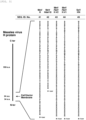
- the identity between the cytoplasmic side domain of the F protein of the Sendai virus and the cytoplasmic side domain of the MeV F protein is only 14.3% ( FIG. 2 ).
- the identity between the cytoplasmic domain of the HN protein of the Sendai virus and the cytoplasmic domain of the MeV H protein is only 18.9% ( FIG. 3 ). For this reason, the MeV envelope glycoproteins (F and H) are less likely to bind to the M protein of the Sendai virus.
- the present inventors variously combined the MeV F protein ( FIG. 2 ) in which the cytoplasmic domain and the cell transmembrane domain were modified with the MeV H protein ( FIG. 3 ) in which the cytoplasmic domain and the cell transmembrane domain were modified with each other, expressed in a cell having the genome of a stealth RNA vector together with the M protein of the Sendai virus, and examined whether a pseudotyped stealth RNA vector was produced.
- pseudotyped stealth RNA vectors capable of infecting Vero cells of 3 x 10 5 Cell Infectious Units (CIU)/mL or more, which is a practical standard, can be produced by 5 kinds of combinations ( FIG. 7 ).
- RNA virus vector a negative-sense single-stranded RNA virus vector has been expected, such as a change in properties of blood cells including initialization and immortalization, and expression of a chimeric antigen receptor (CAR) on T cells.
- CAR chimeric antigen receptor
- One embodiment of the present invention is an RNA virus vector having a gene expression system having negative-sense single-stranded RNA as a genome therein, and having a chimeric F protein (chimerized with an F protein of all Paramyxoviridae viruses except a morbillivirus, such as Genus Respirovirus ) of a morbillivirus and a chimeric H protein (chimerized with an H protein of all Paramyxoviridae viruses except a morbillivirus, such as Genus Respirovirus ) of a morbillivirus in the outer membrane, thereby enhancing the directivity to blood cells.
- the chimeric F protein include the polypeptides of (1) to (8) in the above [1].
- chimeric H protein examples include the polypeptides of (1) to (8) in the above [2]. More preferred examples of the chimeric H protein are the polypeptides of (1) to (4) in the above [2].
- a chimeric F protein which is the polypeptide of any one of (1) to (8) in the above [1] and a chimeric H protein which is the polypeptide of any one of (1) to (8) in the above [2] are used in combination.
- the nucleic acid encoding the chimeric F protein or chimeric H protein may be DNA or RNA.
- the DNA or RNA is preferably used by being incorporated into a plasmid vector or an RNA virus vector (more specifically, the negative-sense single-stranded RNA genome contained in the RNA virus vector) in a manner capable of expressing a chimeric F protein or a chimeric H protein.
- RNA virus vector more specifically, the negative-sense single-stranded RNA genome contained in the RNA virus vector
- preferred vectors include the vectors described in [3] to [8].
- the negative-sense single-stranded RNA genome or plasmid DNA capable of transcribing the negative-sense single-stranded RNA genome
- the expression vector described in any one of [3] to [8] can be used in combination in constructing the RNA virus vector (virus particle).
- the virus particle of the present invention is the pseudotyped virus particle.
- the pseudotyped virus particle of the present invention has enhanced host cell specificity to blood cells, particularly to lymphocytes and cells derived from lymphocytes, gene transfer into lymphocytes can be efficiently performed through the process of bringing lymphocytes (in particular, lymphocytes derived from human peripheral blood selected from the group consisting of B cells, CD4 positive T cells, and CD8 positive T cells, and immortalized lymphocytes) into contact with the virus particle of the present invention as described in [13] to [18].
- lymphocytes in particular, lymphocytes derived from human peripheral blood selected from the group consisting of B cells, CD4 positive T cells, and CD8 positive T cells, and immortalized lymphocytes
- iPS cells induced pluripotent stem cells
- the negative-sense single-stranded RNA may be genomic RNA of all paramyxoviridae viruses other than a morbillivirus, or a variant thereof.
- the paramyxoviridae virus other than the morbillivirus include a Sendai virus, a human parainfluenza virus, and a bovine parainfluenza virus of the Genus Respirovirus.
- Other examples of the paramyxoviridae virus other than the morbillivirus include a mumps virus, a Newcastle disease virus, an avian paramyxovirus, a hendra virus, and a Nipah virus.
- a representative example of a morbillivirus is, but is not limited to, a Measles virus.
- the variants include all variants such as a variant in which one or more endogenous genes of paramyxoviridae virus selected from genes encoding the envelope protein (F and H, HN or G) and the M protein, are deleted, and a variant in which a gene cassette for expressing one or more exogenous genes such as reprogramming genes are introduced.
- the RNA vector of the present invention may have, as a genomic RNA, a negative-sense single-stranded RNA which is a genomic RNA of all paramyxoviridae viruses except for the morbillivirus or a variant thereof.
- a vector having a negative-sense single-stranded RNA as a genome which is structurally optimized as described in Patent Document 4, or a vector having a genomic RNA of a Sendai virus is optimal.
- a chimeric protein made of an H protein of a vaccine strain of a Measles virus (Edmonston strain), which is a representative morbillivirus, and an HN protein of a Sendai virus was mainly used, but the embodiment for carrying out the invention is not limited thereto.
- a chimeric protein comprising, as materials, an H protein (GenBank #NC_001498.1) of a wild epidemic strain of a Measles virus (wild-type strain; IC-B strain, Takeuchi, K., et al., Virus Genes, 20, 253-257, 2000 ) using SLAM as a receptor and an HN protein of a Sendai virus.
- H protein GenBank #NC_001498.1
- IC-B strain Takeuchi, K., et al., Virus Genes, 20, 253-257, 2000
- a combination of a chimeric protein comprising, as materials, an H protein of a canine distemper virus (GenBank #AF014953.1) and an HN protein of a Sendai virus and a chimeric protein comprising, as materials, an F protein of a canine distemper virus (GenBank #AF014953.1) and an F protein of a Sendai virus is also very suitable for gene transfer into blood cells.
- a Measles virus is a representative morbillivirus that can infect only humans and monkeys, but the Genus Morbillivirus includes a very large number of animal species-specific viruses. Examples thereof include canine distemper virus, cowpox virus, feline morbillivirus, seal distemper virus, dolphin morbillivirus, and peste-des-petits-ruminants virus (Non-Patent Document 1). Also in these morbilliviruses, the basic structures and functions of the F protein and the H protein are the same as those of the Measles virus, and if chimeric proteins are constructed using envelope proteins derived from these other species of morbilliviruses, RNA virus vectors for gene transfer specialized for animal species can be produced.
- vector particles having a chimeric F protein and a chimeric H protein having a region derived from a morbillivirus in the outer membrane, including expression of the chimeric F protein and the chimeric H protein is possible by supplying all of the F, H, and M proteins from the outside by an expression vector using plasmid DNA, as shown in Example 5, but is not limited thereto. Even when one or two of the genes encoding these proteins are carried on a single-stranded RNA genome, pseudotyped virus vectors of the same structure can be produced (Example 15).
- RNA virus particles comprising the one or more chimeric proteins as an envelope protein, an unmodified or modified single-stranded RNA virus genome contained in the virus particles, a method for gene transfer into a lymphocyte derived from human peripheral blood by contacting the virus particles with a lymphocyte derived from human peripheral blood, and iPS cells established (initialized) by gene transfer of reprogramming genes by the method can be appropriately carried out by those skilled in the art based on examples of specific and detailed embodiments in the following Examples.
- a pGEM5-Zf (+) vector (Promega Corporation, GenBank #X65308) was cleaved with restriction enzymes ApaI and NcoI, treated with S1 Nuclease, and then the cleavage site was bound with T4 DNA ligase to produce Plasmid_#1.
- Plasmid _#2 was cleaved with restriction enzymes SalI and XhoI, and synthetic DNA (SEQ ID NO: 13) comprising an early gene enhancer of cytomegalovirus (CMV IE enhancer) was inserted to produce Plasmid_#3.
- the Plasmid _#3 was cleaved with restriction enzymes BsrGI and NsiI, and synthetic DNA (SEQ ID NO: 14) comprising a late gene transcription termination signal of SV40 was inserted to prepare Plasmid_#4.
- Plasmid _#6 was cleaved with the restriction enzyme NotI, and a synthetic DNA fragment (SEQ ID NO: 19) comprising 4 copies of a 250bp insulator sequence ( Recillas-Targa, F., et al., Proc. Natl. Acad. Sci. USA, 99, 6883-6888, 2002 ) derived from a chicken globin gene in the same direction was inserted to produce Plasmid_#7.
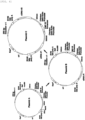
- the Plasmid _#7 was cleaved with a restriction enzyme BspHI, and synthetic DNA comprising a kanamycin resistance gene (SEQ ID NO: 20) was inserted to complete Plasmid A (SEQ ID NO: 21) ( FIG. 4 ). Using this plasmid, two cDNAs can be expressed simultaneously and potently.
- a cDNA encoding the M protein of Sendai virus Clone 151 strain (GenBank #AB275416) was codon-optimized by OptimumGen Gene Design System ( US 8326547 ), and then synthesized by adding GGTACCACC on the 5' side and CTCGAG on the 3' side (SEQ ID NO: 22).
- Plasmid_#4 prepared in Example 3 was cleaved by restriction enzymes BsrGI and XhoI, and a DNA fragment comprising M protein cDNA cleaved by restriction enzymes Acc65I and XhoI was inserted to prepare Plasmid D ( FIG. 5 ).
- a template cDNA of a stealth RNA vector (SRV-EGFP) carrying Enhanced Green Fluorescent Protein (EGFP) ( Cormack, B.P., et al., Gene, 173, 33-38, 1996 ) and a puromycin resistance gene ( Lacalle, R. A., et al., Gene, 79, 375-380, 1989 ) was prepared according to Example 5 of Patent Document 4. Specifically, a synthetic DNA fragment (SEQ ID NO: 23) comprising an EGFP gene and a puromycin resistance gene was used instead of the DNA fragment comprising 10 genes, and this DNA was cleaved with XmaI and NotI to prepare template cDNA.
- SEQ ID NO: 23 synthetic DNA fragment comprising an EGFP gene and a puromycin resistance gene was used instead of the DNA fragment comprising 10 genes, and this DNA was cleaved with XmaI and NotI to prepare template cDNA.
- SRV-EGFP was produced using this template cDNA according to Example 6 of Patent Document, and genes were transferred into BHK-21 cells derived from hamster ( Macpherson, I. and Stoker, M., Virology, 16, 147-151, 1962 ).
- BHK-21 cells with SRV-EGFP genome retained in cytoplasm were cultured in Dulbecco's modified Eagle's medium (Dulbecco's modified Eagle's medium, DMEM medium) (Merck, #D5796) containing 2 ⁇ g/mL of puromycin (Calbiochem) and 10% fetal bovine serum (Global Life Sciences Solutions USA LLC), and all cells were confirmed to be EGFP positive by a fluorescence microscope (Carl Zeiss, AxioVert A1 type).
- BHK-21/SRV-EGFP cells were seeded on a 12 well plate at 1 x 10 5 cells/well/800 ⁇ L, and cultured for 1 day. The next day, 1.6 ⁇ g of Plasmid (pMS1 to pMS17) expressing a chimeric F protein and a chimeric H protein, 0.8 ⁇ g of Plasmid D, 1.6 ⁇ L of Lipofectamine PLUS reagent (Thermo Fisher Scientific Inc.), and 4 ⁇ L of Lipofectamine LTX (Thermo Fisher Scientific Inc.) were mixed in 100 ⁇ L of an Opti-MEM medium (Thermo Fisher Scientific Inc.), and the mixture was reacted at room temperature for 10 minutes. The medium containing this DNA was added to BHK-21/SRV-EGFP cells, and a DMEM medium containing 0.7 mL of 10% fetal bovine serum was added thereto, and the cells were cultured for another 1 day ( FIG. 6 ).
- the medium was replaced with the DMEM medium containing fresh 10% fetal bovine serum to reduce the culture temperature to 32°C, and the cells were cultured for another 3 days to recover a culture supernatant containing a pseudotyped vector.
- the collected supernatant was filtered through a 0.45 ⁇ m filter and then stored at 4°C. When it was necessary to store the supernatant for 2 days or more, the supernatant was cryopreserved at -80°C.
- Vero cells Shimizu, B., et al., Proc. Soc. Exp. Biol. Med., 125, 119-123, 1967 ), as a cell strain derived from African green monkey kidney, were cultured in Eagle's minimum essential medium (Eagle's minimum essential medium, MEM medium) containing 10% fetal bovine serum (Merck, #M4655), and seeded in 48 well plates at 2.5 x 10 4 cells/well/200 ⁇ L. After 24 hours, the medium was replaced with 150 ⁇ L of a solution obtained by diluting the pseudotyped vector produced in Example 5 with MEM medium. After culturing for another 48 hours, the number of EGFP positive cells was counted under a fluorescence microscope ( FIG. 6 ). The number of vector particles capable of transferring the EGFP gene into a single Vero cell and expressing the EGFP gene was defined as 1 Cell Infectious Unit (CIU), and the concentration of the vector was quantified by CIU/mL.
- CIU Cell
- RPMI-1640 medium Merk, #R8758
- the cells were cultured for another 2 days, and then photographed with a fluorescence microscope (BZ-X800, Keyence Co.) to count the number of EGFP-positive cells.
- a fluorescence filter an OP-87763 BZX filter GFP (excitation wavelength 470/40, absorption wavelength 525/50, Keyence Corporation) was used.
- MOI Multiplicity of Infection
- the cells were cultured for another 3 days, then fixed with 10 fold diluted 37% Formaldehyde (FUJIFILM Wako Pure Chemical Corporation) at room temperature for 10 minutes, and the number of EGFP positive cells was counted by Flow Cytometer (FCM) (BD LSRFortessa Cell Analyzer, BD Biosciences, Inc.). FCM was set such that excitation was a 488 nm laser, a detection system was a 515 - 545 nm bandpass filter (GFP-A), and a fraction having a signal intensity of 5 x 10 3 or more in which a signal could not be detected in uninfected cells was determined to be EGFP-positive ( FIG. 6 ).
- FCM Flow Cytometer
- pseudotyped stealth RNA vectors were produced by the method described in Example 5, and the infectivity titer of vector particles released into the culture supernatant of BHK-21 cells was measured using Vero cells by the method described in Example 6.
- the stealth RNA vector can be concentrated by high-speed centrifugation, but considering that the stealth RNA vector can be concentrated about 30 times to a practical concentration of 1 x 10 7 CIU/mL, the production capability was evaluated on the criterion of having production capability of 3 x 10 5 CIU/mL or more.
- Example 8 the ability of the vector produced using each of the five plasmids selected in Example 8 to transfer genes into Daudi cells, which are suspension cell strains derived from blood was evaluated by the method described in the method 1 of Example 7.
- a stealth RNA vector having an outer membrane glycoprotein of the Sendai virus for comparing the activities was produced by the following method.
- BHK-21/SRV-EGFP cells were seeded on a 12 well plate at 1 x 10 5 cells/well/800 ⁇ L, and cultured for 1 day.
- the medium containing this DNA was added to BHK-21/SRV-EGFP cells, and a DMEM medium containing 0.7 mL of 10% fetal bovine serum was added, and the cells were cultured for another 1 day.
- the medium was replaced with a DMEM medium containing fresh 10% fetal bovine serum, the culture temperature was lowered to 32°C, and the cells were cultured for another 3 days to recover a culture supernatant containing a stealth RNA vector having the outer membrane glycoprotein of a Sendai virus.
- the collected supernatant was filtered through a 0.45 ⁇ m filter and then stored at 4°C. When it was necessary to store the supernatant for 2 days or more, the supernatant was cryopreserved at -80°C.
- the F protein of Edmonston strain has a structure in which 3 amino acid residues are longer on the N-terminal side due to 1-base mutation ( FIG. 9 ).
- cDNA (SEQ ID NO: 24) encoding MeV/SeV F#2 (SEQ ID NO: 34) of the IC-B strain was synthesized by the method described in Example 1, and expression plasmid pMS17 was produced by the method described in Example 3.
- pseudotyped vectors were produced by the method described in Example 5 using pMS10 and pMS17, and the gene transfer activity of the vector in the culture supernatant was evaluated using Vero cells by the method described in Example 6 (Table 2). As a result, it was found that 1.65-times more vectors could be produced when pMS17 was used than when pMS10 was used, and further analysis was carried out using the pseudotyped vector produced using pMS17.
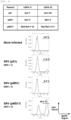
- the pseudotyped vector showing high gene transfer activity in Vero cells does not similarly have high gene transfer activity in blood cells. Therefore, the ability of the pseudotyped vector produced using pMS17 in Example 10 to infect Daudi cells was also examined. As a result of examination by the method described in the method 2 of Example 7, the vector produced using pMS17 could transfer genes into 59.2% Daudi cells, and high gene transfer activity could be reproduced ( FIG. 8 ). Meanwhile, a pseudotyped vector (SRV (pMS1)) produced using an F protein and an H protein of a Measles virus as they are showed almost no gene transfer activity for Daudi cells (0.4%) although gene transfer into Vero cells could be performed ( FIG. 8 ).
- SRV pseudotyped vector
- Example 10 in the production of the pseudotyped vector, when the case of using the chimeric F protein of the measles virus Edmonston strain (vaccine strain adapted to Vero cells) and the case of using the chimeric F protein of the IC-B strain (wild-type strain, Takeuchi, K., et al., Virus Genes, 20, 253-257, 2000 ) isolated using the B95a cells derived from the marmoset blood are compared, the production amount of the vector is improved using the chimeric F protein of the IC-B strain.
- the production of the pseudotyped vector is affected by the properties of the protein of Measles virus used as a material. Therefore, in the production of the chimeric H protein, the case of using the chimeric H protein of the Measles virus Edmonston strain and the case of using the chimeric H protein of the Measles virus IC-B strain were compared.
- pseudotyped vectors were produced by the method described in Example 5 using pMS17 and pMS18, and the gene transfer activity of the vector in the culture supernatant was evaluated by the method described in Example 6.
- Vero cells CD46 positive, SLAM negative
- Vero/SLAM cells CD46 positive, SLAM positive
- JCRB Cell Bank #JCRB189
- a pseudotyped vector having 36% of the gene transfer activity when pMS17 was used was produced.
- the gene transfer activity was only 0.17% of that when pMS17 was used (Table 3).
- H protein MeV (IC-B)/SeV H#1 of the Measles virus IC-B strain a pseudotyped vector reflecting the property of the IC-B strain that SLAM-positive cells can be infected but SLAM-negative/CD46 positive cells cannot be infected is obtained.
- the modified H protein MeV (IC-B)/SeV H#1 could be used to produce a pseudotyped vector having gene transfer activity close to that when the modified MeV/SeV H#1 was used.
- Example 17 For the pseudotyped vector produced using pMS18 in Example 17, the infectivity to cell strain Raji cells derived from human B cell ( Epstein, M. A., J. Natl. Cancer Inst., 37, 547-559 (1966 )) was examined according to the method 2 of Example 7. As a comparative object, a stealth RNA vector having the outer membrane glycoprotein of the Sendai virus produced using pS1 in Example 9 was used.
- MOI Multiplicity of Infection
- the FCM was set such that excitation was a 488 nm laser, a detection system was a 515 - 545 nm bandpass filter (GFP-A), and a fraction having a signal intensity of 5 x 10 3 or more in which a signal could not be detected in uninfected cells was determined to be EGFP-positive.
- excitation was a 488 nm laser
- detection system was a 515 - 545 nm bandpass filter (GFP-A)
- a fraction having a signal intensity of 5 x 10 3 or more in which a signal could not be detected in uninfected cells was determined to be EGFP-positive.
Landscapes
- Life Sciences & Earth Sciences (AREA)
- Health & Medical Sciences (AREA)
- Genetics & Genomics (AREA)
- Chemical & Material Sciences (AREA)
- Organic Chemistry (AREA)
- Engineering & Computer Science (AREA)
- Bioinformatics & Cheminformatics (AREA)
- Biomedical Technology (AREA)
- Biotechnology (AREA)
- General Engineering & Computer Science (AREA)
- Zoology (AREA)
- Wood Science & Technology (AREA)
- Virology (AREA)
- Molecular Biology (AREA)
- Biochemistry (AREA)
- General Health & Medical Sciences (AREA)
- Biophysics (AREA)
- Microbiology (AREA)
- Plant Pathology (AREA)
- Physics & Mathematics (AREA)
- Gastroenterology & Hepatology (AREA)
- Medicinal Chemistry (AREA)
- Proteomics, Peptides & Aminoacids (AREA)
- Micro-Organisms Or Cultivation Processes Thereof (AREA)
Applications Claiming Priority (2)
| Application Number | Priority Date | Filing Date | Title |
|---|---|---|---|
| JP2022071680 | 2022-04-25 | ||
| PCT/JP2023/016214 WO2023210616A1 (ja) | 2022-04-25 | 2023-04-25 | Rnaウイルス由来のキメラエンベロープタンパク質及び該タンパク質を持つrnaウイルスベクター |
Publications (1)
| Publication Number | Publication Date |
|---|---|
| EP4524249A1 true EP4524249A1 (de) | 2025-03-19 |
Family
ID=88518950
Family Applications (1)
| Application Number | Title | Priority Date | Filing Date |
|---|---|---|---|
| EP23796356.6A Pending EP4524249A1 (de) | 2022-04-25 | 2023-04-25 | Aus rna-virus abgeleitetes chimäres hüllprotein und rna-virusvektor damit |
Country Status (6)
| Country | Link |
|---|---|
| US (1) | US20250340899A1 (de) |
| EP (1) | EP4524249A1 (de) |
| JP (1) | JPWO2023210616A1 (de) |
| KR (1) | KR20250007525A (de) |
| TW (1) | TW202400663A (de) |
| WO (1) | WO2023210616A1 (de) |
Family Cites Families (10)
| Publication number | Priority date | Publication date | Assignee | Title |
|---|---|---|---|---|
| DK0864645T3 (da) | 1995-10-31 | 2005-10-24 | Dnavec Research Inc | Negativstrenget RNA-virusvektor med autonom replikeringsaktivitet |
| ES2288473T3 (es) | 1999-05-18 | 2008-01-16 | Dnavec Research Inc. | Vector de virus deficiente en el gen de la envoltura de paramyxoviridae. |
| DE60133767T2 (de) | 2000-11-27 | 2009-06-25 | Dnavec Research Inc., Tsukuba | Für fibroblasten-wachstumsfaktor 2 (fgf2) kodierender paramyxovirus-vektor und dessen verwendung |
| US9145564B2 (en) | 2007-04-13 | 2015-09-29 | National Institute Of Advanced Industrial Science And Technology | Persistently infective Sendai virus vector |
| WO2009005917A2 (en) * | 2007-05-29 | 2009-01-08 | Vical Incorporated | Methods of treating measles infectious disease in mammals |
| US8326547B2 (en) | 2009-10-07 | 2012-12-04 | Nanjingjinsirui Science & Technology Biology Corp. | Method of sequence optimization for improved recombinant protein expression using a particle swarm optimization algorithm |
| JP5963309B2 (ja) | 2010-11-09 | 2016-08-03 | 国立研究開発法人産業技術総合研究所 | 末梢血単球由来多能性幹細胞作製方法 |
| TWI696700B (zh) | 2015-01-16 | 2020-06-21 | 國立研究開發法人產業技術總合研究所 | 使用具有匿跡性之rna的基因表現系統及含有該rna的基因導入、表現載體 |
| EP3235908A1 (de) * | 2016-04-21 | 2017-10-25 | Ecole Normale Superieure De Lyon | Verfahren zur selektiven modulierung der aktivität von unterschiedlichen subtypen von zellen |
| CN113840911A (zh) * | 2018-09-02 | 2021-12-24 | 埃克苏马生物技术公司 | 用于在血液中或在富集pbmc中基因修饰淋巴细胞的方法和组合物 |
-
2023
- 2023-04-25 WO PCT/JP2023/016214 patent/WO2023210616A1/ja not_active Ceased
- 2023-04-25 JP JP2024517329A patent/JPWO2023210616A1/ja active Pending
- 2023-04-25 TW TW112115355A patent/TW202400663A/zh unknown
- 2023-04-25 EP EP23796356.6A patent/EP4524249A1/de active Pending
- 2023-04-25 US US18/859,876 patent/US20250340899A1/en active Pending
- 2023-04-25 KR KR1020247035690A patent/KR20250007525A/ko active Pending
Also Published As
| Publication number | Publication date |
|---|---|
| TW202400663A (zh) | 2024-01-01 |
| KR20250007525A (ko) | 2025-01-14 |
| US20250340899A1 (en) | 2025-11-06 |
| WO2023210616A1 (ja) | 2023-11-02 |
| JPWO2023210616A1 (de) | 2023-11-02 |
Similar Documents
| Publication | Publication Date | Title |
|---|---|---|
| US12264338B2 (en) | Paramyxovirus virus-like particles as protein delivery vehicles | |
| JP7105875B2 (ja) | レトロウイルスベクター | |
| EP0864645B9 (de) | Negativstrand rna virus mit selbständiger replikationsaktivität | |
| ES2717274T3 (es) | Uso de partículas lentivíricas pseudotipadas para la transducción dirigida in vitro de embriocitoblastos humanos pluripotentes indiferenciados y citoblastos pluripotentes inducidos | |
| Inoue et al. | Nontransmissible virus-like particle formation by F-deficient sendai virus is temperature sensitive and reduced by mutations in M and HN proteins | |
| CA2874268C (en) | Virus-like particle based protein-protein interaction | |
| US6497873B1 (en) | Recombinant Rhabdovirus containing a heterologous fusion protein | |
| EP3375874B1 (de) | Verbesserter paramyxovirus-vektor | |
| CN101532031B (zh) | 非整合慢病毒载体系统及其制备与应用 | |
| KR20200066748A (ko) | 바이러스 벡터, 세포 및 작제물 | |
| Mottet et al. | A Sendai virus vector leading to the efficient expression of mutant M proteins interfering with virus particle budding | |
| EP4524249A1 (de) | Aus rna-virus abgeleitetes chimäres hüllprotein und rna-virusvektor damit | |
| Duquénois et al. | Optimization of the VSV-G backbone for amino terminal fusion with nanobodies allowing its specific retargeting to HER2 receptors | |
| CN111925998A (zh) | 模拟SARS-CoV-2感染的系统及其制备方法与应用 | |
| Mühlebach et al. | Development of Entry-Targeted Oncolytic Measles Viruses | |
| Auste et al. | Concentrating all helper protein functions on a single entity allows rescue of recombinant measles virus by transfection of just two plasmids | |
| JP7762791B2 (ja) | 水疱性口内炎ウイルスのレスキュー | |
| JP2010022338A (ja) | ボルナ病ウイルスを利用するベクター及びその利用 | |
| EP4685236A1 (de) | Temperaturempfindlicher minussträngiger rna-virus oder viraler vektor und rna-genom davon | |
| CN118256558A (zh) | 制备仙台病毒病毒样颗粒的方法 | |
| CN116064622A (zh) | Claudin6-mCherry报告基因CHO-K1稳转细胞株制备及应用 | |
| WO2025231397A1 (en) | Modified hek cell lines for improved aav production | |
| CN115491388A (zh) | 一种甲型和乙型流感假病毒盘构建方法及应用 | |
| Iida et al. | Cytoplasmic RNA Vector Derived from Nontransmissible Sendai Virus: Production and Use | |
| Amanullah | An Investigation to Optimise Viral Vector Production and to Generate an in vitro Model for Genotoxicity Assessment. |
Legal Events
| Date | Code | Title | Description |
|---|---|---|---|
| STAA | Information on the status of an ep patent application or granted ep patent |
Free format text: STATUS: THE INTERNATIONAL PUBLICATION HAS BEEN MADE |
|
| PUAI | Public reference made under article 153(3) epc to a published international application that has entered the european phase |
Free format text: ORIGINAL CODE: 0009012 |
|
| STAA | Information on the status of an ep patent application or granted ep patent |
Free format text: STATUS: REQUEST FOR EXAMINATION WAS MADE |
|
| 17P | Request for examination filed |
Effective date: 20241122 |
|
| AK | Designated contracting states |
Kind code of ref document: A1 Designated state(s): AL AT BE BG CH CY CZ DE DK EE ES FI FR GB GR HR HU IE IS IT LI LT LU LV MC ME MK MT NL NO PL PT RO RS SE SI SK SM TR |
|
| DAV | Request for validation of the european patent (deleted) | ||
| DAX | Request for extension of the european patent (deleted) |