EP4524252A1 - Procédé de fabrication de chaîne de sucre à teneur en acide sialique - Google Patents
Procédé de fabrication de chaîne de sucre à teneur en acide sialique Download PDFInfo
- Publication number
- EP4524252A1 EP4524252A1 EP23803542.2A EP23803542A EP4524252A1 EP 4524252 A1 EP4524252 A1 EP 4524252A1 EP 23803542 A EP23803542 A EP 23803542A EP 4524252 A1 EP4524252 A1 EP 4524252A1
- Authority
- EP
- European Patent Office
- Prior art keywords
- sugar chains
- manufacturing
- linked sialic
- sugar chain
- sugar
- Prior art date
- Legal status (The legal status is an assumption and is not a legal conclusion. Google has not performed a legal analysis and makes no representation as to the accuracy of the status listed.)
- Pending
Links
Images



Classifications
-
- C—CHEMISTRY; METALLURGY
- C08—ORGANIC MACROMOLECULAR COMPOUNDS; THEIR PREPARATION OR CHEMICAL WORKING-UP; COMPOSITIONS BASED THEREON
- C08B—POLYSACCHARIDES; DERIVATIVES THEREOF
- C08B37/00—Preparation of polysaccharides not provided for in groups C08B1/00 - C08B35/00; Derivatives thereof
- C08B37/0003—General processes for their isolation or fractionation, e.g. purification or extraction from biomass
-
- C—CHEMISTRY; METALLURGY
- C08—ORGANIC MACROMOLECULAR COMPOUNDS; THEIR PREPARATION OR CHEMICAL WORKING-UP; COMPOSITIONS BASED THEREON
- C08B—POLYSACCHARIDES; DERIVATIVES THEREOF
- C08B37/00—Preparation of polysaccharides not provided for in groups C08B1/00 - C08B35/00; Derivatives thereof
-
- C—CHEMISTRY; METALLURGY
- C08—ORGANIC MACROMOLECULAR COMPOUNDS; THEIR PREPARATION OR CHEMICAL WORKING-UP; COMPOSITIONS BASED THEREON
- C08B—POLYSACCHARIDES; DERIVATIVES THEREOF
- C08B37/00—Preparation of polysaccharides not provided for in groups C08B1/00 - C08B35/00; Derivatives thereof
- C08B37/006—Heteroglycans, i.e. polysaccharides having more than one sugar residue in the main chain in either alternating or less regular sequence; Gellans; Succinoglycans; Arabinogalactans; Tragacanth or gum tragacanth or traganth from Astragalus; Gum Karaya from Sterculia urens; Gum Ghatti from Anogeissus latifolia; Derivatives thereof
- C08B37/0063—Glycosaminoglycans or mucopolysaccharides, e.g. keratan sulfate; Derivatives thereof, e.g. fucoidan
-
- C—CHEMISTRY; METALLURGY
- C12—BIOCHEMISTRY; BEER; SPIRITS; WINE; VINEGAR; MICROBIOLOGY; ENZYMOLOGY; MUTATION OR GENETIC ENGINEERING
- C12P—FERMENTATION OR ENZYME-USING PROCESSES TO SYNTHESISE A DESIRED CHEMICAL COMPOUND OR COMPOSITION OR TO SEPARATE OPTICAL ISOMERS FROM A RACEMIC MIXTURE
- C12P19/00—Preparation of compounds containing saccharide radicals
- C12P19/04—Polysaccharides, i.e. compounds containing more than five saccharide radicals attached to each other by glycosidic bonds
-
- C—CHEMISTRY; METALLURGY
- C12—BIOCHEMISTRY; BEER; SPIRITS; WINE; VINEGAR; MICROBIOLOGY; ENZYMOLOGY; MUTATION OR GENETIC ENGINEERING
- C12P—FERMENTATION OR ENZYME-USING PROCESSES TO SYNTHESISE A DESIRED CHEMICAL COMPOUND OR COMPOSITION OR TO SEPARATE OPTICAL ISOMERS FROM A RACEMIC MIXTURE
- C12P19/00—Preparation of compounds containing saccharide radicals
- C12P19/26—Preparation of nitrogen-containing carbohydrates
-
- C—CHEMISTRY; METALLURGY
- C12—BIOCHEMISTRY; BEER; SPIRITS; WINE; VINEGAR; MICROBIOLOGY; ENZYMOLOGY; MUTATION OR GENETIC ENGINEERING
- C12P—FERMENTATION OR ENZYME-USING PROCESSES TO SYNTHESISE A DESIRED CHEMICAL COMPOUND OR COMPOSITION OR TO SEPARATE OPTICAL ISOMERS FROM A RACEMIC MIXTURE
- C12P21/00—Preparation of peptides or proteins
- C12P21/005—Glycopeptides, glycoproteins
Definitions
- the present disclosure relates to a manufacturing method of sialic acid-containing sugar chain, and more specifically, to a method of manufacturing a composition comprising sugar chains having ⁇ 2,6-linked sialic acids at all non-reducing ends at high purity from chicken egg.
- the present disclosure also relates to a composition comprising sugar chains having ⁇ 2,6-linked sialic acids at all non-reducing ends at high purity.
- Sugar chains have been clearly shown to play various roles in the living body, and are employed for modification of pharmaceutical active ingredients, manufacturing of pharmaceuticals, as well as for assays etc. High uniformity is demanded for sugar chains employed for such use in view of quality or precision.
- Sugar chains contained in the "chicken egg-derived sugar chain extract” can be extracted in any form such as free sugar chain, glycoamino acid, and glycopeptide, and those skilled in the art can appropriately select the desired form.
- the "chicken egg-derived sugar chain extract” is obtained mainly in the form of sugar chain asparagine.
- treatment by a peptidase is performed.
- the "chicken egg-derived sugar chain extract” refers to a sugar chain-containing composition obtained by any means that can be employed for obtaining a sugar chain compound from chicken egg (preferably egg yolk).
- Means that can be employed for obtaining a sugar chain compound from chicken egg (preferably egg yolk) can include, but are not limited to, for example, means described in e.g. the above Patent Literatures 1 and 2 as well as Non-Patent Literature 1 which are incorporated herein by reference.
- the enrichment of sugar chains having ⁇ 2,6-linked sialic acids at all non-reducing ends are performed by separation from sugar chains other than said sugar chains.
- Said separation is not particularly limited as long as it is a means that can separate substances based on molecular weight, charge, and other chemical natures, but liquid column chromatography is preferably employed.
- the manufacturing method (2) of the present disclosure is characterized by purifying said sugar chains in the sugar chain mixture by the following:
- the sugar chain mixture in the aforementioned embodiment is not particularly limited as long as it is a sugar chain mixture comprising sugar chains having ⁇ 2,6-linked sialic acids at all non-reducing ends and sugar chains having ⁇ 2,3-linked sialic acid at any non-reducing end, and includes any sugar chain extract that is extracted from chicken egg or its egg yolk, as well as a mixture of sugar chains manufactured by chemical synthesis, a mixture of sugar chains cultured by gene recombination technology, and the like.
- the sugar chain purified by the manufacturing method (2) of the present disclosure is in the following form:
- Said degradation includes, for example, a treatment for preferentially and specifically degrading ⁇ 2,3-linked sialic acid by an enzyme.
- Enzymes that can be used for said enzyme treatment can include, but are not limited to, utilization of ⁇ 2,3-sialidase, non-selective sialidase, sialyltransferase having sialidase activity, and the like.
- a treatment for denaturing sugar chains having ⁇ 2,3-linked sialic acid at any non-reducing end is performed.
- Said denaturing can include, for example, lactonization, esterification, thioesterification, amidation, hydrazidation, and the like of the ⁇ 2,3-linked sialic acid.
- a treatment for derivatizing sugar chains having ⁇ 2,6-linked sialic acid at non-reducing ends is performed before subjecting to treatment for separation.
- Said derivatization can include, for example, esterification, thioesterification, amidation, hydrazidation, and the like of the sialic acid carboxy group.
- the derivatized sugar chain may be utilized as is, or a step of removing the substituent may be included.
- the manufacturing method (1) or (2) of the present disclosure further comprises introducing a lipophilic substituent into the enriched or purified sugar chain.
- Said introduction of a substituent is typically introduction into the carboxylic acid group of the sialic acid. Sugar chains can thereby be stabilized. Said introduction of a substituent into the carboxylic acid group of the sialic acid is within the technical scope of those skilled in the art.
- composition manufactured by the above manufacturing method is a composition consisting essentially of sugar chains having ⁇ 2,6-linked sialic acids at all non-reducing ends.
- "consists essentially of” may mean that among all sugar chains contained in the composition, at least 97%, at least 98%, at least 99%, at least 99.1%, at least 99.2%, at least 99.3%, at least 99.4%, at least 99.5%, at least 99.6%, at least 99.7%, at least 99.8%, or at least 99.9% are sugar chains having ⁇ 2,6-linked sialic acids at all non-reducing ends.
- "consists essentially of” may mean that among all sugar chains contained in the composition, at least 95%, at least 96%, at least 97%, at least 98%, at least 99%, at least 99.1%, at least 99.2%, at least 99.3%, at least 99.4%, at least 99.5%, at least 99.6%, at least 99.7%, at least 99.8%, or at least 99.9% are sugar chains having ⁇ 2,6-linked sialic acids at all non-reducing ends, and sugar chains having ⁇ 2,3-linked sialic acid at any non-reducing end are less than 2.5%, less than 2.4%, less than 2.3%, less than 2.2%, less than 2.1%, less than 2.0%, less than 1.9%, less than 1.8%, less than 1.7%, less than 1.6%, less than 1.5%, less than 1.4%, less than 1.3%, less than 1.2%, less than 1.1%, less than 1.0%, less than 0.9%, less than 0.8%, less than 0.7%, less than 0.6%, less than 0.5%, less than 0.
- first and second are sometimes employed to express various elements, it should be recognized that these elements are not to be limited by these terms. These terms are employed solely for the purpose of discriminating one element from another, and for example, to describe a first element as a second element, and similarly to describe that first element as the second element, is possible without departing from the scope of the present invention.
- pH 7.5 by aqueous trishydroxymethylaminomethane solution or aqueous hydrochloric acid solution.
- Celite filtration was performed. After concentrating the filtrate, this was purified by gel filtration column chromatography (Sephadex G-25, 2.5 x 100 cm, water). The fraction containing the target disialo sugar chain compound was collected and concentrated, followed by lyophilization, to obtain a disialo sugar chain asparagine mixture.
- protease inhibitor 0.5 mL, 1 tablet of cOmplete, Roche, 11836170001 dissolved in water (0.5 mL)
- 2 mM PMSF/DMSO 40 ⁇ L
- Bacterial Alkaline Phosphatase 40 ⁇ L, Roche, 03359123001, 14 Units/ ⁇ L
- BSA 50 mg, SIGMA, A3159-50G
- water 9.4 mL
- HPLC purification condition (CAPCELL PAK C18 UG120 250 x 20 mm, flow rate 7.0 mL/min, mobile phase A: 25 mM aqueous ammonium acetate solution, B: acetonitrile, gradient A 80% -> A 80% (5 min) - > A 75% (25 min) -> A 10% (30 min) -> A 80% (45 min))
- HPLC purification condition (CAPCELL PAK C18 UG120 250 x 20 mm, flow rate 7.0 mL/min, mobile phase A: 25 mM aqueous ammonium acetate solution, B: acetonitrile, gradient A 80% -> A 80% (5 min) - > A 75% (25 min) -> A 10% (30 min) -> A 80% (45 min))
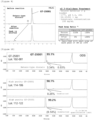
- the impurity prepared in Example 2 was degraded by sialic acid hydrolase.
- GT-25025 was degraded by sialic acid hydrolase.
- disialo sugar chain asparagine-Fmocs were prepared according to Reference Examples 1 and 2.
- the disialo sugar chain asparagine-Fmoc obtained (5 mg, 2.0 ⁇ mol) was dissolved in water, and filled up to 10.0 mL.
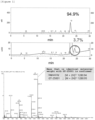
- the filled up aqueous sugar chain solution 10 ⁇ L was injected into HPLC and analyzed. As a result, it was confirmed that all lots comprise the peak that elutes at around 24 minutes corresponding to impurities GT-25034 and GT-25035 in the range of between about 3.5% and 5.0% ( Figure 8 ).
- HPLC analysis condition (Asahipak NH2P-50 4E 5 ⁇ m 250 x 4.6 mm, flow rate 0.70 mL/min, mobile phase A: 0.5% aqueous phosphoric acid solution, B: 90% aqueous acetonitrile solution containing 0.5% phosphoric acid, gradient A 25% -> A 75% (25 min) -> A 90% (26 min) -> A 90% (28 min) -> A 25% (29 min) -> A 25% (45 min))
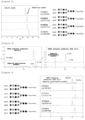
- the disialo sugar chain asparagine-Fmoc obtained in Reference Example 2 (50 mg, 20 ⁇ mol) was dissolved in 75% acetonitrile solution (2.5 mL). This was injected to an HPLC column, and purification was performed so as not to allow contamination by impurities GT-25034 and GT-25035. By desalting with the fraction comprising GT-25001, GT-25001 (36 mg, 14 ⁇ mol, yield 70%) having contamination of GT-25034 and GT-25035 at 0.2% is obtained.
- ⁇ 2,3-sialidase 2 Units, TAKARA, 4455
- reaction solution was heated at 80°C for 10 minutes.
- the enzyme treatment solution obtained was purified by an HPLC column, and by desalting the fraction comprising GT-25001 with ODS support, GT-25001 (1.4 g, yield 70%) having GT-25034/GT-25035 mixture at 0.3% or less was obtained ( Figure 10 ).
- HPLC analysis condition (Asahipak NH2P-50 4E 5 ⁇ m 250 x 4.6 mm, flow rate 0.70 mL/min, mobile phase A: 5% acetic acid, 3% triethylamine-containing aqueous solution, B: 2% acetic acid-containing acetonitrile, isocratic (A: 60%, B: 40%)
- SGP (from TCI, S0523, 2 mg, 1.6 ⁇ mol) was dissolved in 100 mM sodium acetate buffer (pH 5.5), 2 ⁇ L of ⁇ 2,3-sialidase (0.5 U/mU, TAKARA, 4455) was added, and this was reacted at 37°C for 2 hours and purified, to obtain SGP with the impurity removed (0.6 mg, yield 33%). Water was added to the SGP with the impurity removed to adjust to 2 mg/mL, to obtain an aqueous SGP solution. To the aqueous SGP solution (7.5 ⁇ L) was added water (15.3 ⁇ L) and 5% RapiGest solution (6 ⁇ L), and this was incubated at 90°C for 3 minutes.
Landscapes
- Chemical & Material Sciences (AREA)
- Life Sciences & Earth Sciences (AREA)
- Organic Chemistry (AREA)
- Health & Medical Sciences (AREA)
- Engineering & Computer Science (AREA)
- Zoology (AREA)
- Wood Science & Technology (AREA)
- General Health & Medical Sciences (AREA)
- Biochemistry (AREA)
- Chemical Kinetics & Catalysis (AREA)
- Molecular Biology (AREA)
- General Engineering & Computer Science (AREA)
- Biotechnology (AREA)
- Bioinformatics & Cheminformatics (AREA)
- Microbiology (AREA)
- General Chemical & Material Sciences (AREA)
- Genetics & Genomics (AREA)
- Materials Engineering (AREA)
- Medicinal Chemistry (AREA)
- Polymers & Plastics (AREA)
- Sustainable Development (AREA)
- Preparation Of Compounds By Using Micro-Organisms (AREA)
- Medicines Containing Material From Animals Or Micro-Organisms (AREA)
Applications Claiming Priority (2)
| Application Number | Priority Date | Filing Date | Title |
|---|---|---|---|
| JP2022079634 | 2022-05-13 | ||
| PCT/JP2023/017322 WO2023219065A1 (fr) | 2022-05-13 | 2023-05-08 | Procédé de fabrication de chaîne de sucre à teneur en acide sialique |
Publications (1)
| Publication Number | Publication Date |
|---|---|
| EP4524252A1 true EP4524252A1 (fr) | 2025-03-19 |
Family
ID=88730540
Family Applications (1)
| Application Number | Title | Priority Date | Filing Date |
|---|---|---|---|
| EP23803542.2A Pending EP4524252A1 (fr) | 2022-05-13 | 2023-05-08 | Procédé de fabrication de chaîne de sucre à teneur en acide sialique |
Country Status (6)
| Country | Link |
|---|---|
| EP (1) | EP4524252A1 (fr) |
| JP (1) | JPWO2023219065A1 (fr) |
| KR (1) | KR20250010020A (fr) |
| CN (1) | CN119343461A (fr) |
| TW (1) | TW202409294A (fr) |
| WO (1) | WO2023219065A1 (fr) |
Family Cites Families (2)
| Publication number | Priority date | Publication date | Assignee | Title |
|---|---|---|---|---|
| EP2481746A1 (fr) | 2001-06-19 | 2012-08-01 | Otsuka Chemical Co., Ltd. | Procédé de production d'un dérivé de l'asparagine à chaîne de sucre |
| EP2474560B1 (fr) | 2009-09-03 | 2014-03-19 | The Noguchi Institute | Procédé de production d'un sialyloligosaccharide à 11 sucres-peptide |
-
2023
- 2023-05-08 EP EP23803542.2A patent/EP4524252A1/fr active Pending
- 2023-05-08 CN CN202380045058.5A patent/CN119343461A/zh active Pending
- 2023-05-08 KR KR1020247040491A patent/KR20250010020A/ko active Pending
- 2023-05-08 JP JP2024520447A patent/JPWO2023219065A1/ja active Pending
- 2023-05-08 WO PCT/JP2023/017322 patent/WO2023219065A1/fr not_active Ceased
- 2023-05-10 TW TW112117329A patent/TW202409294A/zh unknown
Also Published As
| Publication number | Publication date |
|---|---|
| WO2023219065A1 (fr) | 2023-11-16 |
| CN119343461A (zh) | 2025-01-21 |
| KR20250010020A (ko) | 2025-01-20 |
| TW202409294A (zh) | 2024-03-01 |
| JPWO2023219065A1 (fr) | 2023-11-16 |
Similar Documents
| Publication | Publication Date | Title |
|---|---|---|
| Li et al. | Efficient chemoenzymatic synthesis of an N-glycan isomer library | |
| US7135566B2 (en) | Process for producing sugar chain asparagine derivative | |
| US20160130621A1 (en) | Method for preparing sialic acid derivative | |
| DK1591532T3 (en) | PROCEDURE FOR PREPARING ASPARAGIN DERIVATIVES WITH SUGAR CHAIN | |
| EP3812767A1 (fr) | Procédé de préparation d'échantillon d'analyse, procédé d'analyse et kit de préparation d'échantillon d'analyse | |
| EP3614150A1 (fr) | Procédé de préparation d'échantillon analytique, procédé d'analyse et kit de préparation d'échantillon analytique | |
| Norberg et al. | Reversible derivatization of sugars with carbobenzyloxy groups and use of the derivatives in solution-phase enzymatic oligosaccharide synthesis | |
| US5882902A (en) | Amino acid conjugate | |
| Dell et al. | Glycan structures in glycoproteins and their analysis by fast atom bombardment mass spectrometry | |
| Otsuka et al. | Saccharide primers comprising xylosyl-serine primed phosphorylated oligosaccharides act as intermediates in glycosaminoglycan biosynthesis | |
| Schoenhofen et al. | Biosynthesis of legionaminic acid and its incorporation into glycoconjugates | |
| JP5813294B2 (ja) | 糖ペプチド誘導体及びその製造方法 | |
| US20190300920A1 (en) | Fermentative production and isolation of stable isotope labeled metabolites from microbial cell walls and/or cell membranes | |
| Neumann et al. | Intramolecular acyl migration in adenosine derivatives. | |
| WO2023219065A1 (fr) | Procédé de fabrication de chaîne de sucre à teneur en acide sialique | |
| Bårström et al. | New derivatives of reducing oligosaccharides and their use in enzymatic reactions: efficient synthesis of sialyl Lewis a and sialyl dimeric Lewis x glycoconjugates | |
| KR102760103B1 (ko) | 정량질량분석법을 위한 엔도글리코시다제의 트랜스글리코실화와 동위원소 표지 아미노당 옥사졸린에 의한 당단백질의 동위원소 표지법 | |
| WO1995018232A1 (fr) | Methode enzymatique pour la synthese d'acide amine ou de peptide o-glycosyle ou de derives de ces derniers | |
| US9879097B2 (en) | Method for producing activated sugar chain derivative and activated sugar chain derivative produced therefrom | |
| JPWO2020090357A1 (ja) | O結合型糖ペプチドの製造方法 | |
| CN108251403B (zh) | 一种新型鞘糖脂内切糖苷酶及其基因工程制备方法和应用 | |
| US20240409571A1 (en) | Chemoenzymatic synthesis of n-acetylated gangliosides and glycosphingosines | |
| Irie et al. | Characterization of four monosialo and a novel disialo Asn N-glycosides from the urine of a patient with aspartylglycosaminuria | |
| KV | Synthesis of Complex Glycopeptides Toward Novel Cancer Marker Discovery | |
| IE920313A1 (en) | Process for the stereoselective preparation of¹ß-fucopyranosyl phosphates and very pure GDP-fucose |
Legal Events
| Date | Code | Title | Description |
|---|---|---|---|
| STAA | Information on the status of an ep patent application or granted ep patent |
Free format text: STATUS: THE INTERNATIONAL PUBLICATION HAS BEEN MADE |
|
| PUAI | Public reference made under article 153(3) epc to a published international application that has entered the european phase |
Free format text: ORIGINAL CODE: 0009012 |
|
| STAA | Information on the status of an ep patent application or granted ep patent |
Free format text: STATUS: REQUEST FOR EXAMINATION WAS MADE |
|
| 17P | Request for examination filed |
Effective date: 20241202 |
|
| AK | Designated contracting states |
Kind code of ref document: A1 Designated state(s): AL AT BE BG CH CY CZ DE DK EE ES FI FR GB GR HR HU IE IS IT LI LT LU LV MC ME MK MT NL NO PL PT RO RS SE SI SK SM TR |
|
| DAV | Request for validation of the european patent (deleted) | ||
| DAX | Request for extension of the european patent (deleted) |