EP4524253A1 - Verfahren zur herstellung einer lösung mit freien zuckern aus einem ausgangsmaterial der zweiten generation und dadurch erhaltene lösung - Google Patents
Verfahren zur herstellung einer lösung mit freien zuckern aus einem ausgangsmaterial der zweiten generation und dadurch erhaltene lösung Download PDFInfo
- Publication number
- EP4524253A1 EP4524253A1 EP23197336.3A EP23197336A EP4524253A1 EP 4524253 A1 EP4524253 A1 EP 4524253A1 EP 23197336 A EP23197336 A EP 23197336A EP 4524253 A1 EP4524253 A1 EP 4524253A1
- Authority
- EP
- European Patent Office
- Prior art keywords
- biomass
- steam
- concentration
- anyone
- free
- Prior art date
- Legal status (The legal status is an assumption and is not a legal conclusion. Google has not performed a legal analysis and makes no representation as to the accuracy of the status listed.)
- Pending
Links
Images




Classifications
-
- C—CHEMISTRY; METALLURGY
- C12—BIOCHEMISTRY; BEER; SPIRITS; WINE; VINEGAR; MICROBIOLOGY; ENZYMOLOGY; MUTATION OR GENETIC ENGINEERING
- C12P—FERMENTATION OR ENZYME-USING PROCESSES TO SYNTHESISE A DESIRED CHEMICAL COMPOUND OR COMPOSITION OR TO SEPARATE OPTICAL ISOMERS FROM A RACEMIC MIXTURE
- C12P19/00—Preparation of compounds containing saccharide radicals
- C12P19/14—Preparation of compounds containing saccharide radicals produced by the action of a carbohydrase (EC 3.2.x), e.g. by alpha-amylase, e.g. by cellulase, hemicellulase
-
- D—TEXTILES; PAPER
- D21—PAPER-MAKING; PRODUCTION OF CELLULOSE
- D21C—PRODUCTION OF CELLULOSE BY REMOVING NON-CELLULOSE SUBSTANCES FROM CELLULOSE-CONTAINING MATERIALS; REGENERATION OF PULPING LIQUORS; APPARATUS THEREFOR
- D21C1/00—Pretreatment of the finely-divided materials before digesting
- D21C1/02—Pretreatment of the finely-divided materials before digesting with water or steam
-
- C—CHEMISTRY; METALLURGY
- C12—BIOCHEMISTRY; BEER; SPIRITS; WINE; VINEGAR; MICROBIOLOGY; ENZYMOLOGY; MUTATION OR GENETIC ENGINEERING
- C12P—FERMENTATION OR ENZYME-USING PROCESSES TO SYNTHESISE A DESIRED CHEMICAL COMPOUND OR COMPOSITION OR TO SEPARATE OPTICAL ISOMERS FROM A RACEMIC MIXTURE
- C12P2201/00—Pretreatment of cellulosic or lignocellulosic material for subsequent enzymatic treatment or hydrolysis
-
- C—CHEMISTRY; METALLURGY
- C13—SUGAR INDUSTRY
- C13K—SACCHARIDES OBTAINED FROM NATURAL SOURCES OR BY HYDROLYSIS OF NATURALLY OCCURRING DISACCHARIDES, OLIGOSACCHARIDES OR POLYSACCHARIDES
- C13K1/00—Glucose; Glucose-containing syrups
- C13K1/02—Glucose; Glucose-containing syrups obtained by saccharification of cellulosic materials
-
- C—CHEMISTRY; METALLURGY
- C13—SUGAR INDUSTRY
- C13K—SACCHARIDES OBTAINED FROM NATURAL SOURCES OR BY HYDROLYSIS OF NATURALLY OCCURRING DISACCHARIDES, OLIGOSACCHARIDES OR POLYSACCHARIDES
- C13K13/00—Sugars not otherwise provided for in this class
- C13K13/002—Xylose
-
- Y—GENERAL TAGGING OF NEW TECHNOLOGICAL DEVELOPMENTS; GENERAL TAGGING OF CROSS-SECTIONAL TECHNOLOGIES SPANNING OVER SEVERAL SECTIONS OF THE IPC; TECHNICAL SUBJECTS COVERED BY FORMER USPC CROSS-REFERENCE ART COLLECTIONS [XRACs] AND DIGESTS
- Y02—TECHNOLOGIES OR APPLICATIONS FOR MITIGATION OR ADAPTATION AGAINST CLIMATE CHANGE
- Y02E—REDUCTION OF GREENHOUSE GAS [GHG] EMISSIONS, RELATED TO ENERGY GENERATION, TRANSMISSION OR DISTRIBUTION
- Y02E50/00—Technologies for the production of fuel of non-fossil origin
- Y02E50/10—Biofuels, e.g. bio-diesel
Definitions
- the present invention is directed at obtaining a solution containing free sugars from a second-generation feedstock for biotechnological applications based on annually renewable biomass.
- Solutions as obtained by the invention may have a particular use in biotechnological applications standing in context with bacterial growth. Their production may precede the production of biodegradable bioplastics such as Polylactid Acids (PLAs), Polyhydroxyalkanoates (PHAs) etc. Further applications may be found in the field of bio combustibles, for instance in context with the production of ethanol, biogas etc. It may also be found in context with yeast growth and in the production of lipids, fatty acids, terpenes and/or products from their respective metabolism.
- PLAs Polylactid Acids
- PHAs Polyhydroxyalkanoates
- the method comprises providing biomass and steam into a reactor, maintaining said biomass and said steam simultaneously in the reactor in a pressure of at least 10 bar and at a temperature from 180 °C to 250 °C for at least 2 minutes and decreasing the pressure in the reactor and / or conveying biomass out of the reactor such that the pressure of the environment of the biomass decreases below 5 bar, to produce steam-exploded biomass.
- the method of US 10 584 298 B2 further comprises adding some combustion additive to the biomass and / or the steam-exploded biomass.
- EP 2 177 280 B1 discloses an apparatus for discontinuous hydrolysis of organic substrates, in particular energy crops, as well as vegetable or animal waste, which comprises a pre-conditioning tank for receiving solid and/or liquid organic substances, and a charging device for filling a hydrolyzer with the substrates from the tank, and an expansion device having a flash tank for depressurizing the substrates after treatment in said hydrolyzer.
- the expansion device is provided with a steam separator preceding the flash tank and placed downstream of a pressure baffle, a device for directly subjecting the input of organic substrates to superheated steam from the steam separator being furnished.
- EP 2 177 280 B1 defines "steam explosion" as a technical process in which the starting material is heated to up to 300°C, preferably 150°C to 200°C, and then pressurized under an overpressure of approx. 3 bar to 20 bar. After a certain dwell time, the substrate is spontaneously depressurized to about atmospheric pressure. Such impact relaxation results in a complete disintegration of the cell substance. The entire organic substance is then liquefied and made available for further processing.
- lignocellulosic biomass is composed of complex structures that require pre-treatment and enzymatic hydrolysis to release the sugars contained thereon. Developing efficient and cost-effective pre-treatment methods and robust enzymatic cocktails for biomass deconstruction is therefore a key challenge in the adoption of 2G feedstocks at scale.
- the task of the present invention is to overcome the disadvantages described above, and in particular, to provide methods and systems that specifically allow tailoring a feedstock according to uniquely required technical specifications and applications.
- a method of obtaining a solution containing free sugars from a second-generation feedstock comprising the steps of: providing biomass from a second-generation feedstock, at least once pre-treating the biomass by steam explosion, the steam exploded biomass comprising a liquid portion and a solids portion, at least once adding enzymes to the steam exploded biomass to increase an amount of free sugar via enzymatic digestion over a predetermined time, at a predetermined pH value and at a predetermined temperature, and obtaining the solution by at least partially removing the solids portion from the enzymatically digested biomass.
- the provided biomass from the second-generation feedstock may comprise up to 25 wt% of dry matter and up to 75 wt% of water before the pre-treatment by steam explosion.
- the provided biomass from the second-generation feedstock may comprise up to 30 wt% of dry matter and up to 70 wt% of water before the pre-treatment by steam explosion, or the provided biomass from the second-generation feedstock may comprise up to 35 wt% of dry matter and up to 65 wt% of water before the pre-treatment by steam explosion.
- the provided biomass from the second-generation feedstock may be a biomass that optionally may have been adapted to steam explosion operating conditions.
- original biomass e.g.
- straw has a dry matter content typically between 75 and 95%, while other resources may be semi-dry from the beginning, like some silage between 20 and 40 % dry matter.
- a semi-dry feedstock may be treated without further watering/wetting, while a dry feedstock demands mixing with liquid (e.g. water) to reach a preferred dry matter content.
- the method may optionally further comprise a step of at least once adding further biomass during the enzymatic digestion, wherein preferably the further biomass is derived from the same and/or from a different biomass than the steam exploded biomass; and/or wherein preferably the further biomass is pre-treated by steam explosion.
- the provided biomass and/or the further biomass may be a lignocellulosic biomass and/or a wood-free biomass, respectively, wherein the provided biomass and/or the further biomass is derived from a renewable biomass, preferably from an annually renewable biomass, respectively, wherein the provided biomass and/or the further biomass comprises: agricultural waste and/or at least one agricultural by-product, preferably at least one of wheat straw, tobacco stems, hemp, rice straw, thistle, paludi culture, one or more different types of grasses, cocoa husk, sunflower husk, apple pomace, maize, arundo donax or a combination thereof, and/or wherein the provided biomass and/or the further biomass is derived from one single source or is a composition of various plants and/or plant parts, respectively.
- the step of pre-treating the biomass by steam explosion may optionally comprise at least one of the following steps: steam exploding the biomass under a predetermined amount of pressure, preferably between 5 bar to 10 bar, more preferably between 7 and 9 bar; steam exploding the biomass for a predetermined amount of time, preferably between 10 s to 30 min, preferably between 10 and 15 min; and steam exploding the biomass at a predetermined temperature, preferably in a range of 150 and 180°C, more preferably in a range of 165 to 175 °C.
- the step of pre-treating the biomass by steam explosion may optionally be repeated at least once, with intermediate relaxation of pressure and temperature in between the repetitions. This part of the process is called a thermo-pressure hydrolysis (TPH).
- TPH thermo-pressure hydrolysis
- the relaxation process of the biomass being pre-treated, in combination with a discharge of treated biomass from a respective vessel ("steam cooker"), is called steam explosion.
- the pressure drop is optionally at least 4 bar, preferably at least 5 bar.
- Each relaxation of pressure and temperature lasts optionally for 10 to 15 minutes.
- the predetermined temperature for the enzymatic digestion is optionally a range between 45 to 49 °C, preferably about 47 °C; and/or the predetermined pH value optionally lies between 4.0 and 5.0.
- liquid portion of the steam exploded biomass may optionally be kept or it may be at least partially replaced by any liquid, preferably water, hydrolysate or a mixture thereof before the enzymatic digestion.
- the method may optionally further comprise a step of concentrating the obtained solution based on a predefined sugar concentration, the predefined sugar concentration preferably being a predefined carbohydrate concentration, the predefined carbohydrate concentration preferably being a monosaccharaide concentration and/or a disaccharide concentration, and/or the predefined carbohydrate concentration most preferably comprising at least one of the following: glucose, xylose, galactose, mannose, arabinose and cellobiose.
- the predefined glucose concentration may optionally lie between 50 and 600 g/L.
- the steam explosion may additionally comprise a step of heating the biomass under a predefined pressure to a temperature below 180 °C, preferably to a temperature between 165 to 175 °C, and more preferably for about 10 to 15 min; and then a step of suddenly releasing pressure.
- no chemical products such as buffers, more preferably acids and/or bases, are added during the step of pre-treating.
- the step of adding enzymes comprises adding cellulases and/or hemicellulases or a blend thereof.
- such blend may additionally comprise laccase.
- the step of at least partially removing comprises separating the liquid portion from the non-digested solids portion of the solution by centrifuging and/or filtering; and, preferably, the step of filtering is a multi-stage filtering.
- the remaining non-digested solids portion is optionally less than 1 wt%; wherein preferably said 1 wt% mainly comprise purified lignin; and/or wherein preferably a total concentration of free carbohydrates lies between 50 to 100 g/L.
- the method may further comprise a step of concentrating the centrifuged and/or filtered solution based on a further predefined total content of free carbohydrates, the total concentration of free carbohydrates after the step of concentrating preferably lying between 300 and 600 g/L.
- the method may comprise a step of concentrating the obtained solution based on a predefined concentration of free carbohydrates, wherein the predefined concentration of free carbohydrates preferably lies between 300 and 600 g/L
- a solution is provided containing at least 5 wt % or at least 50 to 100 g/L, preferably up to 600 g/L free sugars and obtained by the method of obtaining a solution containing free sugars from a second-generation feedstock in accordance with the present disclosure.
- the solution comprises carbohydrates, proteins, organic acids, mineral salts and small non-inhibitory concentrations of furfural and 5-hydroxyfurfural (HMF), preferably below or equal to 0.71 g/L, most preferably in the range of 1.18 and 1.26 g/L for furfural and in the range of 0.3 -0.4 g/L for HMF.
- HMF 5-hydroxyfurfural
- the solution of the present invention may optionally further comprise lactic acid depending on at least one of the following: the biomass provided from the second-generation feedstock, the pre-treatment of the provided biomass, the further biomass added during enzymatic digestion and the pre-treatment of the further biomass.
- the solution may optionally be further defined as to fulfill at least one of the following conditions: the carbohydrates comprise at least one of the following: glucose, xylose, galactose, mannose, arabinose and cellobiose; the organic acids comprise at least one of the following: acetic, formic, levulinic and propionic; and the mineral salts comprise at least one of the following: sodium, potassium or calcium nitrate, sodium, potassium or calcium phosphates and sodium, potassium or calcium silicates.
- the carbohydrates comprise at least one of the following: glucose, xylose, galactose, mannose, arabinose and cellobiose
- the organic acids comprise at least one of the following: acetic, formic, levulinic and propionic
- the mineral salts comprise at least one of the following: sodium, potassium or calcium nitrate, sodium, potassium or calcium phosphates and sodium, potassium or calcium silicates.
- the method of the present invention may advantageously be implemented in decentralized steam explosion units coupled to biogas production plants at farm level.
- the energy necessary for the process as a whole can be fully covered by the biogas plant. It is specifically applicable not only to regional biomass, but may at the same time take into account specific timing issues that may come with natural conditions like harvest timing etc.
- the specific method of the present invention makes potential waste treatment unnecessary. Also, it is specifically directed to non-food biomass that is obtained either from agricultural by-products or from by-products of food generation processes that do not compete with land for food generation. By utilizing agricultural residues, the solutions of the present invention have the potential to reduce greenhouse gas emissions by replacing fossil-based and de-forestation-based ingredients and consumer products.
- the present invention allows for extraction of functional cellulosic fibers, lignin and sugars from multi feedstock non-wood biomass. These sugars can be even further valorized by producing high-value products via fermentation for various industrial applications.
- another advantage of using a non-wood biomass in the steam explosion process lies in the fact that, unlike wood, annual plants can close the CO 2 loop in only one year. Thus, they contribute in both a faster and more efficient manner than wood to diminishing worldwide production of greenhouse gases.
- feedstock encompasses in this context raw materials, materials made usable or enhanced materials for industrial processing.
- first generation feedstocks such as corn, wheat, sugarcane, potato, sugar beet, rice or plant oil are rich in carbohydrate and/or fatty acids and can be consumed by humans and animals.
- First generation feedstocks are known to be the most efficient way to produce for instance bioplastics as they require less land to grow, and have a higher yield and better performance than other feedstock generations.
- second generation feedstocks generally refer to crops and plants not suitable for human consumption (food) or animal consumption (feed).
- Second generation feedstocks can be either non-food crops (cellulosic and/or lignocellulosic feedstock) or waste materials from first generation feedstocks (e.g. waste vegetable oil).
- second generation feedstock include: wood, short-rotation crops such as poplar, willow or miscanthus (elephant grass), wheat straw, bagasse, corncobs, palm fruit bunches and sweet grasses.
- biomass based on second-generation feedstock is being enhanced by specific combinations of at least one pre-treatment together with a specific chemical-free processing.
- pre-treatment comprises a steam explosion treatment.
- biomass in this context relates to agricultural waste such as wheat straw, tobacco stems, hemp, rice straw, thistle, paludi culture, miscanthus, different types of grasses, cocoa husk, sunflower husk, apple pomace, maize (especially the rest of the plant after extracting the corn), arundo donax etc.
- the biomass used for the present invention is not limited to said specific plants, rather they are listed here as examples the method of the present invention can be implemented with.
- Biomass as used in the present invention may be derived from one single source or may be a composition of various plants and/or plant parts.
- derivative encompasses products or byproducts obtained by methods of the present invention based on feedstock, and particularly on second generation feedstock as explained above.
- the present invention relates to methods of obtaining a solution containing free sugars from a second-generation feedstock.
- biomass from a second-generation feedstock is at least once pre-treated by steam explosion.
- this process is crucial when it comes to the quality of the final solution to be obtained. It is preferably performed in mild conditions of temperature, i.e. about 165 to 175 °C for about 10 to 15 min.
- no chemical products such as acids or bases are added during this pretreatment of the biomass.
- the steam exploded biomass comprises a liquid portion and a solids portion.
- this step may optionally comprise at least one of steam exploding the biomass under a predetermined amount of pressure, preferably between 7 and 9 bar, steam exploding the biomass for a predetermined amount of time, preferably between 10 and 15 min, and steam exploding the biomass at a predetermined temperature, preferably in the range of 165 to 175 °C.
- Table 1 provides exemplary value combinations for the parameters temperature, pressure and residence time that may be used for the present invention, for instance in context with wheat straw (WS) but also applicable to other biomass: Table 1 Temperature (°C) +/- 2 °C Pressure (bar) Residence time (min) 165 7,74 10 168 8 10 170 8,87 10 172 9 10
- Table 1 especially takes into account that for instance cellulose should not be submitted to more than 195 °C otherwise it would disintegrate and/or burn. Furthermore, hemicellulose starts dissolving over 110 °C. Over 150 °C it starts disintegrating, burning and forming inhibitors. Finally, lignin starts melting from 150 °C on and the probability increases that it burns and starts forming inhibitors. Consequently, depending on the substrate / biomass, the temperature range for steam explosion in the context of the invention may lie between 150 °C and 180°C, preferably in the range of 165 °C to 175 °C.
- At least once enzymes are added to the steam exploded biomass to increase an amount of free sugar via enzymatic digestion over a predetermined time, at a predetermined pH value and at a predetermined temperature. It may optionally useful to also predetermine an amount or percentage of solid enzymatic substrate that will and/or may remain in the final solution.
- a practical aspect when it comes to predefining characteristics of both biomass and steam explosion relates to the original quality of the biomass used. It may be advantageous to use a liquids portion or stream coming from a steam exploded biomass comprising a blend of cellulases and hemicellulases in the presence of fibers of rather marginal quality that are not suitable for further use, for instance in the paper or packaging industry. Depending on parameters such as quality, amount etc. of the fibers present in such a blend, the solids portion may be partially filtered out of before the enzymatic digestion process is started.
- the solution is obtained by at least partially removing the solids portion from the enzymatically digested biomass.
- the solution of the present invention may be specifically tailored regarding its downstream further processing process. It is noted that the specific downstream processes are not part of the invention anymore, but may clearly be of help or even crucial when it comes to predefining the parameters for the method of the invention in order to arrive at a specifically tailored solution.
- Such tailoring comprises not only the control of proportions between liquid and solids portion, but is especially related to the amount and type of total free sugars in combination with and/or in the specific absence of further substances in the same solution.
- the final solution has to fulfill for a specific downstream process, there are various options to treat the obtained solutions. It can for instance be centrifuged for separating a resulting liquid phase from non-digested solids (mainly constituted by purified lignin). A resulting total free carbohydrate concentration lies for instance between 50 and 100 g/L.
- the obtained solution can additionally or alternatively be submitted to a concentration step for increasing its content of total free carbohydrates.
- a resulting total free carbohydrate concentration afterwards lies for instance between 300 and 600 g/L.
- a solution in accordance with the present invention contains at least 5 % or at least 50 to 100 g/L, preferably up to 600 g/L free sugars.
- the solution comprises carbohydrates, proteins, organic acids, mineral salts and small non-inhibitory concentrations of furfural and 5-hydroxymethylfurfural (HMF), preferably below or equal to 0.71 g/L, most preferably in the range of 1.18 and 1.26 g/L for furfural and in the range of 0.3 -0.4 g/L for HMF.
- HMF 5-hydroxymethylfurfural
- the carbohydrates may comprise at least one of the following: glucose, xylose, galactose, mannose, arabinose and cellobiose.
- the organic acids may comprise at least one of the following: acetic, formic, levulinic and propionic.
- the mineral salts may comprise at least one of the following: sodium, potassium or calcium nitrate, sodium, potassium or calcium phosphates and sodium, potassium or calcium silicates.
- the specific pre-treatment of the provided biomass may result in the solution optionally also comprising lactic acid.
- formic acid did not show any negative effect on fermentation at low concentrations (1-3 g/L), where a slight positive effect was even seen compared to the control, whereas obvious inhibition was observed at a concentration of 4 g/L. Ethanol production was almost completely inhibited at concentrations of 6 and 8 g/L.
- Acetic acid showed a similar trend to that of formic acid, as it did not inhibit ethanol production at low concentrations (1-4 g/L), while high levels of acetic acid (6 g/L) resulted in significant inhibition.
- Formic acid was generally observed to be a stronger inhibitor than acetic acid.
- the solution of the present invention may be tailored so as to comprise the following exemplary amounts of acetate, HMF, furfural, levulinic acid, formiate and soluble lignin:
- second-generation feedstock derivatives of the present invention have a significantly increased content of free carbohydrates allowing for a specifically high degree of microorganisms proliferation.
- Examples 1 and 2 of second generation feedstock derivatives in accordance with the present invention are being provided.
- a liquid feedstock derivative from wheat straw was produced as an aqueous media comprising a high number of nutrients extracted from annual plants such as wheat straw by means of a steam explosion process.
- the liquid substrate itself can again function as a feedstock for bio energy / biogas plants and replaces food and husbandry-based feedstock.
- valuable organic acids and a wide variety of C5 and C6 sugars serve as platform chemicals for a fermentation to bio-based products such as biopolymers PLA or PHA. Because of a relatively mild extraction process at about 165-175°C for about 10 to 15 minutes, the formation of C6 or C5 sugars degradation products, other than for example acetic and formic acid, is marginal and not negatively affecting fermentation processes.
- Example 1 Liquid second generation feedstock derivative from straw
- Example 1 The wheat straw derived sample of Example 1 was analyzed to determine the concentration of free monosaccharides and detectable disaccharides in solution. This analysis was carried out at the Fibers365 GmbH quality assurance laboratory by high performance liquid chromatography (HPLC) according to the NREL standard (NREL/TP-510-42618). Table 1.
- Monosaccharides / Disaccharides in Solution Monosaccharides/ Disaccharides Final sample (mg/mL) % of total Monosaccharides / Disaccharides Glucose 37 ⁇ 3 42.6 ⁇ 0.5 Xylose 45.5 ⁇ 0.7 51.8 ⁇ 0.3
- Example 2 Liquid second generation feedstock derivative from wheat straw
- Example 2 The wheat straw derived sample of Example 2 was analyzed to determine the concentration of free monosaccharides and detectable disaccharides in solution. This analysis was carried out at the Fibers365 GmbH quality assurance laboratory by high performance liquid chromatography (HPLC) according to the NREL standard (NREL/TP-510-42618). Table 2.
- Monosaccharides / Disaccharides in Solution Monosaccharides / Disaccharides Final sample (mg/mL) % of total Monosaccharides / Disaccharides Glucose 221 ⁇ 3 67.6 ⁇ 0.5 Xylose 89.5 ⁇ 0.7 27.4 ⁇ 0.3 Galactose ⁇ D.L 0% Arabinose 3.4 ⁇ 0.3 0.50 ⁇ 0.05 Mannose 8 ⁇ 2 2.3 ⁇ 0.9 Cellobiose 7 ⁇ 1 2.2 ⁇ 0.5 Total 326 ⁇ 2 100 ⁇ D.L.: below detection limit.
- Experiment 1 was based on three individual Samples 1 to 3 taken from the same hydrolysate. Moreover, as negative control, an additional reference sample of 1L of only the liquid hydrolysate (V47-WSSE-26012023, the same used in all the experiments) was prepared.
- Fig. 1 showing a timeline of Experiment 1, on "Day 0", at time 0 h, Samples 1 to 3 were started by adding steam exploded fibers, in particular 70g/L (6 wt%) of dried wheat straw pulp V40 in V47-WSSE-26012023 as hydrolysate to each sample.
- an enzymatic cocktail Novozymes Cellic Ctec3HS: 4 mL/flask, hydrolysate: V47-WSSE-26012023
- Novozymes Cellic Ctec3HS is a specific enzyme blend that converts lignocellulosic materials to fermentable sugars. In this context, it offers both process and substrate versatility and is specifically useful for process optimization and higher concentration yields.
- Experiment 1 After 72h of digestion ("Day 3"), Experiment 1 was terminated and samples were taken for the determination of the final free carbohydrate concentration in the final feedstock. In summary the following total amounts of dried ground fibers were added during the whole Experiment 1:
- aliquots were obtained at 0 h, 24 h, 48 h and 72 h. Free contents of mono- and disaccharides were determined in each aliquot by using high performance liquid chromatography (HPLC) according to NREL standard procedure (NREL/TP-510-42618). Further, respective dry matter contents at 105°C were also evaluated in the same aliquots obtained at all the time points described in Fig.1 (i.e. at 0, 24, 48 and 72h).
- HPLC high performance liquid chromatography
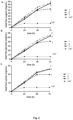
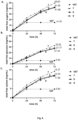
- Fig. 2 and especially charts A to C, show concentration increases of total free sugars (chart A), total free glucose (chart B) and total free xylose (chart C) over a digestion time (h) obtained in an experiment design according to Fig.1 .
- Sample 1 is designated with reference sign 1
- Sample 2 is designated with reference sign 2
- Sample 3 is designated with reference sign 3.
- reference sign V47 designates a liquid hydrolysate obtained after steam explosion without any fiber addition submitted to the same enzymatic conditions as a negative control.
- Agitation as a general parameter is used to promote the effective interaction between the enzyme and the substrate promoting maximal catalytic activity which in this case would be maximal hydrolysis of glucose and xylose from cellulose and hemicellulose present in the fibers. In case of high consistency in the suspension this process is restricted, therefore compromising the yield of the reaction.
- Fig. 1 For the first analysis, two different batches of steam exploded wheat straw fibers, particularly dried and ground wheat straw pulp V40A-2023 and WSSE-Italy 2022, were submitted to the enzymatic digestion protocol depicted in Fig. 1 .
- Fig. 3 For the second analysis, dried and ground wheat straw fibers from Italy 2022 submitted or not to steam explosion, WSSE-Italy 2022 and non-SE wheat straw (WSnonSE), respectively, were submitted to the enzymatic digestion following a protocol depicted in Fig. 3 .
- Experiment 2 consisted of three individual Samples 4 to 6. As stated above, all samples contained the same concentration of solids (3.4% wt%) suspended in V47-WSSE-26012023 liquid, in particular dried and ground solids from steam exploded wheat straw fibers (WSSE) from batch V40 (Sample 4), non-steam exploded wheat straw fibers from batch Italy (Sample 5) and steam exploded wheat straw fibers (WSSE) from batch Italy (Sample 6).
- the respective flow diagram of the digestion is depicted in Fig. 3 :
- Solids from wheat straw that were submitted to steam explosion (WSSE) present a content of fines of 85.86 % (particles with length between 0.00 and 0.08 mm). 12.76 % thereof are categorized as "fines A1" having a length up to 0.04 mm.
- This final product contains 14.14 % of fibers displaying a length-weighted average width of 19.99 ⁇ m.
- the length-weighted average (Lc(I)) and length-weighted average length (ISO. 0.2-7mm) (Lc(I)ISO) of the pulped fibers is 0.555 mm and 0.668 mm, respectively.
- the solids from WSnonSE present a content of fines of 97.76 % (particles with a length between 0.00 and 0.08 mm). 32.37 % thereof are being categorized as "fines A1" having a length up to 0.04 mm.
- This final product contains 2.24 % of fibers displaying a length-weighted average width of 40.61 ⁇ m.
- the length-weighted average (Lc(I)) and length-weighted average length (ISO. 0.2-7mm) (Lc(I)ISO) of the pulped fibers in the final product is 0.263 mm and 0.432 mm, respectively.
- WSSE particles display a two times lower and more homogenous width than nonSE fibers.
- this parameter "width" appears to have a greater influence on the results of the enzymatic digestion than the length of the respective fibers.
- the length of the WSSE fibers is about 50 % higher than the length of the WSnonSE fibers, but leads to a two fold increase in free sugars in the liquid fraction after the digestion.
- the width of the fiber is the one parameter that correlates better with the yield of the digestion than the length of the solids used as the substrate of the enzymatic reaction.
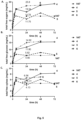
- Fig. 5 and especially charts A to C, show concentration increases of total free sugars (chart A), total free glucose (chart B) and total free xylose (chart C) over a digestion time (h) obtained in an experiment design according to Fig. 3 .
- V47 designates the liquid hydrolysate obtained after steam explosion without any fiber addition submitted to the same enzymatic conditions as a negative control.
- Sample 4 is designated with reference sign 4
- Sample 5 is designated with reference sign 5
- Sample 6 is designated with reference sign 6.
- Fig. 5 shows that, after 24h of enzymatic digestion, a concentration of the total free sugars (chart A) and of the glucose (chart B) in the WSnonSE fibers (Sample 5) is similar to the values obtained in the control sample that was only based on hydrolysate (V47).
- Fig. 5 shows that two different batches of wheat straw SE fibers (Samples 4 and 6) present a similar enzymatic digestion profile which renders the methods of the present invention reproducible.
- Fig. 6 shows a comparison of specific results from the first and the second experiment with respect to total free sugar, total free glucose and total free xylose concentrations (mg/mL) over time (h), especially comparing Samples 1 to 3 of Experiment 1 with Sample 4 of Experiment 2 over 24 h.
- Different enzymes were used for Samples 1 to 4: Sample 4: 50 mL or 5 vol% of ASA cellulase; Samples 1 to 3: 10 mL or 1 vol% of Novozymes Cellic Ctec3HS.
- Fig. 6 shows that the usage of 5 vol% of ASA cellulase leads to a comparable or even the same final free sugar concentration as the usage of 1 vol% of Novozymes Cellic Ctec3HS.
- Samples 1 to 4 There are no significant differences between Samples 1 to 4, if the value of Sample 4 is corrected by a factor of 2 (Sample 4 starts with half of the fibers content than Samples 1, 2 and 3). This circumstance further reinforces the reproducibility of the method of the present invention. It also shows that once the activity of the enzyme has been titrated, different enzymes can be used without altering significantly the final yield of the reaction.
- a pre-hydration of the fibers to be added at 0h does not seem to compromise the digestion process. While it might alleviate the initial high consistency of the suspension when the solids are added in the dried form, at the end it prolongs the process as a whole for at least one more day without any significant gain in sugar concentration.
- Experiment 3 focused on establishing the versatility of an enzymatic digestion process in terms of vegetable biomass origin. For this purpose, it was evaluated whether fibers obtained from canary grass submitted to the same steam explosion process are also able to give high amounts of free carbohydrates during/after enzymatic digestion of the biomass similar to what is observed with wheat straw fibers.
- steam exploded, i.e. SE wheat straw fibers or SE cattail grass fibers were added during enzymatic digestion for increasing the sugar content or concentration in the liquid hydrolysates that were obtained after steam explosion.
- Experiment 3 consisted of three individual samples. Sample 7 used dried wheat straw pulp V40, Samples 8 and 9 used dried and ground reed grass fibers as set out above. Samples 7 to 9 were started with 70g per flask in V47-WSSE-26012023 as hydrolysate. A timeline of Experiment 3 is shown in Fig. 7 .
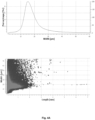
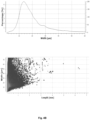
- Figs. 8A and 8B show results of a particle size analysis of both dried and ground substrates, steam exploded wheat straw (WSSE) ( Fig. 8A ) and steam exploded canary grass (RGSE) ( Fig. 8B ), used in the Experiment 3.
- the specific dimensions (length and width) of the used particles were obtained by optical analysis using a Fiber Image Analyzer (Valmet FS5, see in this context also US 10 584 298 B2 ).
- Results shown in Fig. 9 describe a concentration increase in total free sugars (chart A), total free glucose (chart B) and total free xylose (chart C) over a digestion time (h) obtained in an experiment design according to a flow chart of Fig. 8 .
- V47 designates the liquid hydrolysate obtained after steam explosion without any fiber addition submitted to the same enzymatic conditions as a negative control. Further, Sample 7 is designated with reference sign 7, Sample 8 is designated with reference sign 8 and Sample 9 is designated with reference sign 9.
- Chart A of Fig. 8 shows a more than twofold increase of the concentration of total free sugars when comparing the hydrolysate (V47) values with the respective values obtained when using the above stated two different sources of SE fibers (Samples 7, 8 or 9) after 72h of enzymatic digestion. Furthermore, there is a slight decrease of 16% in total free sugars concentration when comparing the RGSE samples (Samples 8 and 9) with the WSSE sample (Sample 7).
- Chart C of Fig. 8 shows, after 72h of digestion, a small decrease of 14% in the total free xylose concentration when using RGSE (Samples 8 and 9) instead of WSSE (Sample 7) as the respective substrate of the digestion.
- Experiment 3 indicates that the small reduction in the sugar concentration observed when using dried and ground RGSE fibers as the substrate of the enzymes could be, in part, attributed to the increase in average width of these particles when compared with the values obtained in the case of dried and ground wheat straw steam exploded fibers.
- the total free glucose concentration of Experiment 4 is comparable with the yield obtained when using Wheat straw SE fibers as substrate (see Experiment 2 after 48 h of enzymatic digestion). It is noted that the respective samples obtained in Experiment 4 would need a 6 to 8.5 fold concentration step to reach for instance 300g/L to be compatible with a good yeast growth.
- the filtered feedstock derivate(s) may also additionally be centrifuged to properly separate solids that were not digested or filtered from the liquid portion.
- centrifuging is preferred to filtering, but respective combinations may lead to better results than the usage of just one filtering or centrifuging.
- a water evaporation should be performed at temperatures lower than 50°C. In addition or alternatively, this process should be performed at reduced pressure.
- biotechnological applications for the present invention may be found in context with bacterial growth and further production of biodegradable bioplastics such as Polylactid Acids (PLAs), Polyhydroxyalkanoates (PHAs), etc.
- PLAs Polylactid Acids
- PHAs Polyhydroxyalkanoates
- yeast growth and further production of lipids, fatty acids, terpenes and/or products from microorganism metabolism Other examples may lie in the field of bio combustibles, such as ethanol, biogas etc.
- second-generation feedstock derivatives of the present invention have a significantly increased content of free carbohydrates allowing for a specifically high degree of microorganism proliferation.
- the final second-generation feedstock derivatives may comprise an increased concentration of volatile organic acids that can be further used as carbon sources by some microorganisms (i.e. bacteria and/or microalgae) contributing to either an enhanced cell proliferation or a particular enhanced yield of a specifically tailored final product, for instance obtained after cell fermentation.
- some microorganisms i.e. bacteria and/or microalgae
- This is particularly interesting for/when increasing propionic acids and/or levulinic acids in the context of specific types of PHAs.
- the possibility to achieve a specifically low content of solids in the second-generation feedstock derivatives of the present invention facilitates potential upstream processes involved in microorganism culture in fermentation reactors.
- solids can act as inhibitors of proliferation or fermentation processes or they can interfere with techniques that are used when producing a desired product via microorganisms and/or during cell growth monitoring tests.
- the specific methods of the present invention unveil uncounted possibilities of tailoring a feedstock as well as second-generation feedstock derivatives according to uniquely required technical specifications and applications.
- Parameters in this context are, for instance, depending on specific amounts of total free carbohydrates and/or specific proportions of different mono- and disaccharides in the remaining liquid to be achieved.
- Key factors may, for instance, lie already in submitting different agricultural by-products to steam explosion as such and/or in (pre-)fabricating material combinations before and/or during enzymatic digestions, and/or the usage of different enzymatic digestion strategies.
Landscapes
- Organic Chemistry (AREA)
- Chemical & Material Sciences (AREA)
- Engineering & Computer Science (AREA)
- Zoology (AREA)
- Life Sciences & Earth Sciences (AREA)
- Wood Science & Technology (AREA)
- Chemical Kinetics & Catalysis (AREA)
- Microbiology (AREA)
- General Chemical & Material Sciences (AREA)
- Biotechnology (AREA)
- Health & Medical Sciences (AREA)
- Biochemistry (AREA)
- Bioinformatics & Cheminformatics (AREA)
- General Engineering & Computer Science (AREA)
- General Health & Medical Sciences (AREA)
- Genetics & Genomics (AREA)
- Preparation Of Compounds By Using Micro-Organisms (AREA)
Priority Applications (3)
| Application Number | Priority Date | Filing Date | Title |
|---|---|---|---|
| EP23197336.3A EP4524253A1 (de) | 2023-09-14 | 2023-09-14 | Verfahren zur herstellung einer lösung mit freien zuckern aus einem ausgangsmaterial der zweiten generation und dadurch erhaltene lösung |
| AU2024340584A AU2024340584A1 (en) | 2023-09-14 | 2024-09-13 | Method of obtaining a solution containing free sugars from a second-generation feedstock and solution obtained thereby |
| PCT/IB2024/058931 WO2025057127A1 (en) | 2023-09-14 | 2024-09-13 | Method of obtaining a solution containing free sugars from a second-generation feedstock and solution obtained thereby |
Applications Claiming Priority (1)
| Application Number | Priority Date | Filing Date | Title |
|---|---|---|---|
| EP23197336.3A EP4524253A1 (de) | 2023-09-14 | 2023-09-14 | Verfahren zur herstellung einer lösung mit freien zuckern aus einem ausgangsmaterial der zweiten generation und dadurch erhaltene lösung |
Publications (1)
| Publication Number | Publication Date |
|---|---|
| EP4524253A1 true EP4524253A1 (de) | 2025-03-19 |
Family
ID=88068311
Family Applications (1)
| Application Number | Title | Priority Date | Filing Date |
|---|---|---|---|
| EP23197336.3A Pending EP4524253A1 (de) | 2023-09-14 | 2023-09-14 | Verfahren zur herstellung einer lösung mit freien zuckern aus einem ausgangsmaterial der zweiten generation und dadurch erhaltene lösung |
Country Status (3)
| Country | Link |
|---|---|
| EP (1) | EP4524253A1 (de) |
| AU (1) | AU2024340584A1 (de) |
| WO (1) | WO2025057127A1 (de) |
Citations (3)
| Publication number | Priority date | Publication date | Assignee | Title |
|---|---|---|---|---|
| EP2177280B1 (de) | 2008-10-16 | 2012-05-30 | Biogas Systems Gmbh | Verfahren und Vorrichtung zur diskontinuierlichen Hydrolyse von organischen Substraten |
| US20200002778A1 (en) * | 2018-06-28 | 2020-01-02 | Indian Oil Corporation Limited | Process for recovering higher sugar from biomass |
| US10584298B2 (en) | 2015-11-26 | 2020-03-10 | Valmet Technologies Oy | Method for manufacturing biomass based fuel configured to reduce a chemical and/or mechanical effect of flue gas on heat transfer surfaces |
-
2023
- 2023-09-14 EP EP23197336.3A patent/EP4524253A1/de active Pending
-
2024
- 2024-09-13 WO PCT/IB2024/058931 patent/WO2025057127A1/en active Pending
- 2024-09-13 AU AU2024340584A patent/AU2024340584A1/en active Pending
Patent Citations (3)
| Publication number | Priority date | Publication date | Assignee | Title |
|---|---|---|---|---|
| EP2177280B1 (de) | 2008-10-16 | 2012-05-30 | Biogas Systems Gmbh | Verfahren und Vorrichtung zur diskontinuierlichen Hydrolyse von organischen Substraten |
| US10584298B2 (en) | 2015-11-26 | 2020-03-10 | Valmet Technologies Oy | Method for manufacturing biomass based fuel configured to reduce a chemical and/or mechanical effect of flue gas on heat transfer surfaces |
| US20200002778A1 (en) * | 2018-06-28 | 2020-01-02 | Indian Oil Corporation Limited | Process for recovering higher sugar from biomass |
Non-Patent Citations (4)
| Title |
|---|
| DAVID J. WALKER ET AL: "Process Optimization of Steam Explosion Parameters on Multiple Lignocellulosic Biomass Using Taguchi Method-A Critical Appraisal", FRONTIERS IN ENERGY RESEARCH, vol. 6, 1 June 2018 (2018-06-01), pages 1 - 13, XP055633882, DOI: 10.3389/fenrg.2018.00046 * |
| HONGZHI HUANGXINYAN GUODONGMIN LIMENGMENG LIUJIAFANG WUHAIYU REN: "Identification of crucial yeast inhibitors in bio-ethanol and improvement", BIORESOURCE TECHNOLOGY, vol. 102, 2011, pages 7486 - 7493, XP028232549, DOI: 10.1016/j.biortech.2011.05.008 |
| RUIZ ET AL: "Evaluation of steam explosion pre-treatment for enzymatic hydrolysis of sunflower stalks", ENZYME AND MICROBIAL TECHNOLOGY, STONEHAM, MA, US, vol. 42, no. 2, 12 December 2007 (2007-12-12), pages 160 - 166, XP022387260, ISSN: 0141-0229 * |
| YI ZHENG ET AL: "Pretreatment of lignocellulosic biomass for enhanced biogas production", PROGRESS IN ENERGY AND COMBUSTION SCIENCE., vol. 42, 1 June 2014 (2014-06-01), NL, pages 35 - 53, XP055587938, ISSN: 0360-1285, DOI: 10.1016/j.pecs.2014.01.001 * |
Also Published As
| Publication number | Publication date |
|---|---|
| AU2024340584A1 (en) | 2026-03-26 |
| WO2025057127A1 (en) | 2025-03-20 |
Similar Documents
| Publication | Publication Date | Title |
|---|---|---|
| Al-Battashi et al. | Lignocellulosic biomass (LCB): a potential alternative biorefinery feedstock for polyhydroxyalkanoates production | |
| Lee et al. | Autohydrolysis pretreatment of Coastal Bermuda grass for increased enzyme hydrolysis | |
| JP5411846B2 (ja) | リグノセルロースバイオマスの熱化学的前処理と精砕の組合せ | |
| Vancov et al. | Potential use of feedlot cattle manure for bioethanol production | |
| Saadatinavaz et al. | Hydrothermal pretreatment: An efficient process for improvement of biobutanol, biohydrogen, and biogas production from orange waste via a biorefinery approach | |
| US9650657B2 (en) | Methods for producing extracted and digested products from pretreated lignocellulosic biomass | |
| US20130274456A1 (en) | Methods and Systems for Saccharification of Biomass | |
| AU2011332099B2 (en) | Biomass pretreatment process for a packed bed reactor | |
| US20220090156A1 (en) | Methods and Systems For Saccharification of Biomass | |
| Xu et al. | Enzymatic hydrolysis and fermentability of corn stover pretreated by lactic acid and/or acetic acid | |
| US20160312247A1 (en) | Integration of First and Second Generation Bioethanol Processes | |
| Guragain et al. | Appropriate biorefining strategies for multiple feedstocks: critical evaluation for pretreatment methods, and hydrolysis with high solids loading | |
| WO2005079190A2 (en) | Production of ethanol and high-protein feed co-products from high-solids conversion of cereal grains and legumes | |
| Buzała et al. | The utility of selected kraft hardwood and softwood pulps for fuel ethanol production | |
| AU2013245693B2 (en) | Methods and systems for saccharification of biomass | |
| Rogoski et al. | An Overview on pretreatments for the production of cassava peels-based xyloligosaccharides: State of art and challenges | |
| Shafaei et al. | Modeling and optimization of alkaline pretreatment conditions for the production of bioethanol from giant reed (Arundo donax L.) biomass using response surface methodology (RSM) | |
| KR100965851B1 (ko) | 팝핑법을 이용한 리그노셀룰로스계 바이오매스의 전처리방법, 및 이를 이용한 당화합물 및 바이오에탄올의생산방법 | |
| Prosvirnikov et al. | Protein production from cellulosic waste using candida utilis | |
| Antczak et al. | The comparison of acid and enzymatic hydrolysis of pulp obtained from poplar wood (Populus sp.) by the Kraft method | |
| Martínez‐Cartas et al. | Production of bioalcohols and antioxidant compounds by acid hydrolysis of lignocellulosic wastes and fermentation of hydrolysates with Hansenula polymorpha | |
| JP2014132052A (ja) | 燃料組成物 | |
| Balan et al. | A short review on ammonia-based lignocellulosic biomass pretreatment | |
| EP4524253A1 (de) | Verfahren zur herstellung einer lösung mit freien zuckern aus einem ausgangsmaterial der zweiten generation und dadurch erhaltene lösung | |
| Boondaeng et al. | Statistical approach for optimization of ethanol production from fast-growing trees: Acacia mangium and Acacia hybrid |
Legal Events
| Date | Code | Title | Description |
|---|---|---|---|
| PUAI | Public reference made under article 153(3) epc to a published international application that has entered the european phase |
Free format text: ORIGINAL CODE: 0009012 |
|
| STAA | Information on the status of an ep patent application or granted ep patent |
Free format text: STATUS: THE APPLICATION HAS BEEN PUBLISHED |
|
| AK | Designated contracting states |
Kind code of ref document: A1 Designated state(s): AL AT BE BG CH CY CZ DE DK EE ES FI FR GB GR HR HU IE IS IT LI LT LU LV MC ME MK MT NL NO PL PT RO RS SE SI SK SM TR |
|
| STAA | Information on the status of an ep patent application or granted ep patent |
Free format text: STATUS: REQUEST FOR EXAMINATION WAS MADE |
|
| 17P | Request for examination filed |
Effective date: 20250918 |