EP4524704A1 - Informationsanzeigeverfahren und -vorrichtung, elektronische vorrichtung und computerlesbares medium - Google Patents
Informationsanzeigeverfahren und -vorrichtung, elektronische vorrichtung und computerlesbares medium Download PDFInfo
- Publication number
- EP4524704A1 EP4524704A1 EP23915769.6A EP23915769A EP4524704A1 EP 4524704 A1 EP4524704 A1 EP 4524704A1 EP 23915769 A EP23915769 A EP 23915769A EP 4524704 A1 EP4524704 A1 EP 4524704A1
- Authority
- EP
- European Patent Office
- Prior art keywords
- service
- page
- presentation
- recommended
- region
- Prior art date
- Legal status (The legal status is an assumption and is not a legal conclusion. Google has not performed a legal analysis and makes no representation as to the accuracy of the status listed.)
- Pending
Links
Images





Classifications
-
- G—PHYSICS
- G06—COMPUTING OR CALCULATING; COUNTING
- G06Q—INFORMATION AND COMMUNICATION TECHNOLOGY [ICT] SPECIALLY ADAPTED FOR ADMINISTRATIVE, COMMERCIAL, FINANCIAL, MANAGERIAL OR SUPERVISORY PURPOSES; SYSTEMS OR METHODS SPECIALLY ADAPTED FOR ADMINISTRATIVE, COMMERCIAL, FINANCIAL, MANAGERIAL OR SUPERVISORY PURPOSES, NOT OTHERWISE PROVIDED FOR
- G06Q30/00—Commerce
- G06Q30/06—Buying, selling or leasing transactions
- G06Q30/0601—Electronic shopping [e-shopping]
- G06Q30/0641—Electronic shopping [e-shopping] utilising user interfaces specially adapted for shopping
-
- H—ELECTRICITY
- H04—ELECTRIC COMMUNICATION TECHNIQUE
- H04N—PICTORIAL COMMUNICATION, e.g. TELEVISION
- H04N21/00—Selective content distribution, e.g. interactive television or video on demand [VOD]
- H04N21/20—Servers specifically adapted for the distribution of content, e.g. VOD servers; Operations thereof
- H04N21/25—Management operations performed by the server for facilitating the content distribution or administrating data related to end-users or client devices, e.g. end-user or client device authentication, learning user preferences for recommending movies
- H04N21/254—Management at additional data server, e.g. shopping server, rights management server
- H04N21/2542—Management at additional data server, e.g. shopping server, rights management server for selling goods, e.g. TV shopping
-
- G—PHYSICS
- G06—COMPUTING OR CALCULATING; COUNTING
- G06F—ELECTRIC DIGITAL DATA PROCESSING
- G06F3/00—Input arrangements for transferring data to be processed into a form capable of being handled by the computer; Output arrangements for transferring data from processing unit to output unit, e.g. interface arrangements
- G06F3/01—Input arrangements or combined input and output arrangements for interaction between user and computer
- G06F3/048—Interaction techniques based on graphical user interfaces [GUI]
- G06F3/0481—Interaction techniques based on graphical user interfaces [GUI] based on specific properties of the displayed interaction object or a metaphor-based environment, e.g. interaction with desktop elements like windows or icons, or assisted by a cursor's changing behaviour or appearance
- G06F3/0482—Interaction with lists of selectable items, e.g. menus
-
- G—PHYSICS
- G06—COMPUTING OR CALCULATING; COUNTING
- G06F—ELECTRIC DIGITAL DATA PROCESSING
- G06F3/00—Input arrangements for transferring data to be processed into a form capable of being handled by the computer; Output arrangements for transferring data from processing unit to output unit, e.g. interface arrangements
- G06F3/01—Input arrangements or combined input and output arrangements for interaction between user and computer
- G06F3/048—Interaction techniques based on graphical user interfaces [GUI]
- G06F3/0481—Interaction techniques based on graphical user interfaces [GUI] based on specific properties of the displayed interaction object or a metaphor-based environment, e.g. interaction with desktop elements like windows or icons, or assisted by a cursor's changing behaviour or appearance
- G06F3/0483—Interaction with page-structured environments, e.g. book metaphor
-
- G—PHYSICS
- G06—COMPUTING OR CALCULATING; COUNTING
- G06F—ELECTRIC DIGITAL DATA PROCESSING
- G06F3/00—Input arrangements for transferring data to be processed into a form capable of being handled by the computer; Output arrangements for transferring data from processing unit to output unit, e.g. interface arrangements
- G06F3/01—Input arrangements or combined input and output arrangements for interaction between user and computer
- G06F3/048—Interaction techniques based on graphical user interfaces [GUI]
- G06F3/0484—Interaction techniques based on graphical user interfaces [GUI] for the control of specific functions or operations, e.g. selecting or manipulating an object, an image or a displayed text element, setting a parameter value or selecting a range
- G06F3/0486—Drag-and-drop
-
- G—PHYSICS
- G06—COMPUTING OR CALCULATING; COUNTING
- G06F—ELECTRIC DIGITAL DATA PROCESSING
- G06F3/00—Input arrangements for transferring data to be processed into a form capable of being handled by the computer; Output arrangements for transferring data from processing unit to output unit, e.g. interface arrangements
- G06F3/01—Input arrangements or combined input and output arrangements for interaction between user and computer
- G06F3/048—Interaction techniques based on graphical user interfaces [GUI]
- G06F3/0487—Interaction techniques based on graphical user interfaces [GUI] using specific features provided by the input device, e.g. functions controlled by the rotation of a mouse with dual sensing arrangements, or of the nature of the input device, e.g. tap gestures based on pressure sensed by a digitiser
- G06F3/0488—Interaction techniques based on graphical user interfaces [GUI] using specific features provided by the input device, e.g. functions controlled by the rotation of a mouse with dual sensing arrangements, or of the nature of the input device, e.g. tap gestures based on pressure sensed by a digitiser using a touch-screen or digitiser, e.g. input of commands through traced gestures
-
- G—PHYSICS
- G06—COMPUTING OR CALCULATING; COUNTING
- G06Q—INFORMATION AND COMMUNICATION TECHNOLOGY [ICT] SPECIALLY ADAPTED FOR ADMINISTRATIVE, COMMERCIAL, FINANCIAL, MANAGERIAL OR SUPERVISORY PURPOSES; SYSTEMS OR METHODS SPECIALLY ADAPTED FOR ADMINISTRATIVE, COMMERCIAL, FINANCIAL, MANAGERIAL OR SUPERVISORY PURPOSES, NOT OTHERWISE PROVIDED FOR
- G06Q30/00—Commerce
- G06Q30/02—Marketing; Price estimation or determination; Fundraising
- G06Q30/0241—Advertisements
- G06Q30/0251—Targeted advertisements
- G06Q30/0261—Targeted advertisements based on user location
-
- G—PHYSICS
- G06—COMPUTING OR CALCULATING; COUNTING
- G06Q—INFORMATION AND COMMUNICATION TECHNOLOGY [ICT] SPECIALLY ADAPTED FOR ADMINISTRATIVE, COMMERCIAL, FINANCIAL, MANAGERIAL OR SUPERVISORY PURPOSES; SYSTEMS OR METHODS SPECIALLY ADAPTED FOR ADMINISTRATIVE, COMMERCIAL, FINANCIAL, MANAGERIAL OR SUPERVISORY PURPOSES, NOT OTHERWISE PROVIDED FOR
- G06Q30/00—Commerce
- G06Q30/02—Marketing; Price estimation or determination; Fundraising
- G06Q30/0241—Advertisements
- G06Q30/0251—Targeted advertisements
- G06Q30/0269—Targeted advertisements based on user profile or attribute
- G06Q30/0271—Personalized advertisement
-
- G—PHYSICS
- G06—COMPUTING OR CALCULATING; COUNTING
- G06Q—INFORMATION AND COMMUNICATION TECHNOLOGY [ICT] SPECIALLY ADAPTED FOR ADMINISTRATIVE, COMMERCIAL, FINANCIAL, MANAGERIAL OR SUPERVISORY PURPOSES; SYSTEMS OR METHODS SPECIALLY ADAPTED FOR ADMINISTRATIVE, COMMERCIAL, FINANCIAL, MANAGERIAL OR SUPERVISORY PURPOSES, NOT OTHERWISE PROVIDED FOR
- G06Q30/00—Commerce
- G06Q30/06—Buying, selling or leasing transactions
- G06Q30/0601—Electronic shopping [e-shopping]
- G06Q30/0631—Recommending goods or services
-
- G—PHYSICS
- G06—COMPUTING OR CALCULATING; COUNTING
- G06Q—INFORMATION AND COMMUNICATION TECHNOLOGY [ICT] SPECIALLY ADAPTED FOR ADMINISTRATIVE, COMMERCIAL, FINANCIAL, MANAGERIAL OR SUPERVISORY PURPOSES; SYSTEMS OR METHODS SPECIALLY ADAPTED FOR ADMINISTRATIVE, COMMERCIAL, FINANCIAL, MANAGERIAL OR SUPERVISORY PURPOSES, NOT OTHERWISE PROVIDED FOR
- G06Q30/00—Commerce
- G06Q30/06—Buying, selling or leasing transactions
- G06Q30/0601—Electronic shopping [e-shopping]
- G06Q30/0639—Locating goods or services, e.g. based on physical position of the goods or services within a shopping facility
-
- H—ELECTRICITY
- H04—ELECTRIC COMMUNICATION TECHNIQUE
- H04N—PICTORIAL COMMUNICATION, e.g. TELEVISION
- H04N21/00—Selective content distribution, e.g. interactive television or video on demand [VOD]
- H04N21/20—Servers specifically adapted for the distribution of content, e.g. VOD servers; Operations thereof
- H04N21/21—Server components or server architectures
- H04N21/218—Source of audio or video content, e.g. local disk arrays
- H04N21/2187—Live feed
-
- H—ELECTRICITY
- H04—ELECTRIC COMMUNICATION TECHNIQUE
- H04N—PICTORIAL COMMUNICATION, e.g. TELEVISION
- H04N21/00—Selective content distribution, e.g. interactive television or video on demand [VOD]
- H04N21/40—Client devices specifically adapted for the reception of or interaction with content, e.g. set-top-box [STB]; Operations thereof
- H04N21/45—Management operations performed by the client for facilitating the reception of or the interaction with the content or administrating data related to the end-user or to the client device itself, e.g. learning user preferences for recommending movies, resolving scheduling conflicts
- H04N21/466—Learning process for intelligent management, e.g. learning user preferences for recommending movies
- H04N21/4668—Learning process for intelligent management, e.g. learning user preferences for recommending movies for recommending content, e.g. movies
Definitions
- the present application relates to the field of Internet technologies, and in particular, to an information presentation method and apparatus, an electronic device, and a computer-readable medium.
- the clients may present some goods to a user by means of a page, so that the user can view these goods by means of the page.
- the present application provides an information presentation method and apparatus, an electronic device, and a computer-readable medium.
- the method further comprises: in response to a first swipe operation triggered for the recommended-object presentation region, presenting a recommendation presentation page corresponding to a target object in the at least one recommended object.
- the method further comprises: in response to a second swipe operation triggered for the service function presentation region, increasing a presentation area of the service function presentation region, and hiding the recommended-object presentation region; or the method further comprises:
- the method further comprises:
- the service function presentation region further comprises a search service component; after the presenting an object service page, the method further comprises:
- the object service page is thereon presented with a page switching region, wherein the page switching region comprises several page tags, each page tag corresponding to a different candidate page; wherein in response to an object service trigger operation, presenting an object service page, comprises:
- the recommended-object presentation region comprises object recommendation information corresponding to at least two recommended objects
- the material type is a detail information type, a video information stream type or an object aggregation page type,
- the present application provides an information presentation apparatus, comprising:
- the present application provides an electronic device, comprising: a processor and a memory,
- the present application provides a computer-readable medium having therein stored instructions or a computer program which, when running on a device, causes the device to perform the information presentation method according to the present application.
- the present application provides a computer program product, comprising a computer program carried on a non-transitory computer-readable medium, the computer program containing program code for performing the information presentation method according to the present application.
- the present application has at least the following advantages: in the technical solution provided by the present application, for a client, after the client receives an object service trigger operation, an object service page is presented, and the object service page comprises a recommended-object presentation region and a service function presentation region, so that the recommended-object presentation region is used for presenting object recommendation information (for example, a goods card, a live video, etc.) corresponding to at least one recommended object, and the service function presentation region is used for presenting service entries to a plurality of service functions, so as to after a trigger operation for object recommendation information corresponding to any recommended object is detected, acquire a material type corresponding to the object recommendation information, and present a recommendation presentation page corresponding to the recommended object according to the material type corresponding to the object recommendation information, so that the recommendation presentation page can better introduce related information of the recommended object; or after a trigger operation for a service entry to any service function is detected, present a service page corresponding to the service function, so that the service page can better provide a corresponding service to
- the recommended-object presentation region can be used for presenting object recommendation information corresponding to some recommended objects, so that the recommended-object presentation region can, to a user, directly introduce some objects in which he may be interested, and thus, the user can directly view the information by means of the recommended-object presentation region, which facilitates improving viewing experience of the user for these objects; and the service function presentation region can be used for presenting service entries to some service functions, so that the service function presentation region can directly provide these service functions to the user, which also facilitates improving use experience of the user for these service functions.
- an information presentation method provided in the present application comprises the following steps S1-S3.
- Fig. 1 is a flow diagram of an information presentation method according to an embodiment of the present application.
- S1 in response to an object service trigger operation, presenting an object service page, wherein the object service page comprises a recommended-object presentation region and a service function presentation region, the recommended-object presentation region being used for presenting object recommendation information corresponding to at least one recommended object, and the service function presentation region being used for presenting service entries to a plurality of service functions.
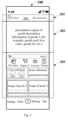
- the object service page is used for aggregating and presenting some objects and some service functions (for example, service functions such as "My Orders", “Shopping Cart", and “Favorites” shown in Fig. 2 ) related to these objects (for example, goods shown in Fig. 2 ).
- the service function refers to a service (for example, an order viewing service, ordering information viewing service, favorite service, recharge service, etc.) provided by an object platform corresponding to the object service page to the user, so that the service function can assist the user in performing an operation (for example, an order information viewing operation, ordering information viewing operation, object favorite operation, resource value pre-storage operation, etc.) on some objects on the object platform.
- the object platform is used for providing some interactive objects for the user; and the present application does not limit the object platform, for example, it may be a mall platform.
- the present application does not limit an implementation of the above "object service page", for example, it may be implemented by using a mall homepage 200 shown in Fig. 2 or Fig. 3 .
- the above "object service trigger operation” is used for triggering a presentation process of the above object service page (for example, the mall homepage 200 shown in Fig. 2 or Fig. 3 ).
- object service trigger operation does not limit an implementation of the above "object service trigger operation", for example, it can be implemented by using any existing or future operation capable of triggering the presentation process of the object service page.
- object service trigger operation for example, it can be implemented by using any existing or future operation capable of triggering the presentation process of the object service page.
- description is made below in conjunction with some examples.
- Example 1 in some application scenarios (for example, a short video presentation scenario shown in Fig. 4 ), a client may, to a user, provide pages corresponding to a plurality of page tags, so that the user may complete switching between different pages by a swipe operation.
- the above object service page refers to a page corresponding to a "Mall" page tag and a page corresponding to a "Recommended” page tag is being presented on the client
- the above "object service trigger operation” is used for swiping the page corresponding to the "Mall" page tag to a position where the page corresponding to the "Recommended” page tag is located (for example, a "Swipe Right” operation shown in Fig. 4 ).
- Example 2 in some application scenarios (for example, a mall platform), when a certain page (for example, a goods detail page, a presentation page for short video data, etc.) being presented by a client is thereon deployed with an entry identification of a mall homepage, the above "object service trigger operation" may specifically be: a click operation triggered for the entry identification.
- the entry identification is used for uniquely identifying an entry to the mall homepage.
- the above "recommended-object presentation region” is used for presenting object recommendation information corresponding to some recommended objects in a certain manner.
- Object recommendation information corresponding to an nth recommended object is used for introducing the nth recommended object; and the present application does not limit an implementation of the "object recommendation information corresponding to the nth recommended object", for example, it may be implemented by using a goods card, live video data, short video data, a goods list (for example, a goods list in a certain channel or a goods list in a certain cloud theme), or the like.
- n is a positive integer
- n ⁇ N N is a positive integer
- N represents the number of the objects in the above "at least one recommended object”.
- the present application does not limit content related to the above "object recommendation information corresponding to the nth recommended object", for example, when a material type corresponding to the "object recommendation information corresponding to the nth recommended object” is a detail information type, the "object recommendation information corresponding to the nth recommended object” may be implemented by using a goods card, and the "object recommendation information corresponding to the nth recommended object” may include an image identification corresponding to the nth recommended object, title content (for example, a main title, a subtitle, etc.) of the nth recommended object, a recommendation reason for the nth recommended object, etc.
- title content for example, a main title, a subtitle, etc.
- the "object recommendation information corresponding to the nth recommended object” may be implemented by using a live video or short video, and the "object recommendation information corresponding to the nth recommended object” includes not only video data (for example, a live video or short video) corresponding to the nth recommended object, but also a sound playing control, so that the user can adjust a playing volume of the video data corresponding to the nth recommended object by means of the sound playing control.
- the "object recommendation information corresponding to the nth recommended object” may be implemented by using a goods list. It should be noted that, for related content of the material type, please refer to related content in S2 below.
- the present application further provides another possible implementation of the presentation manner of the above "object recommendation information corresponding to the at least one recommended object", in which when the "object recommendation information corresponding to the at least one recommended object" is sequentially presented in a certain order within the above recommended-object presentation region, the presentation manner may specifically be: in response to a fourth swipe operation triggered for the recommended-object presentation region, within the recommended-object presentation region, switching presentation of object recommendation information corresponding to these recommended objects.
- the fourth swipe operation is used for swiping object recommendation information not presented to a position where object recommendation information being presented is located, for example, it may be swipe left or swipe right.
- An arrangement position corresponding to "the object recommendation information corresponding to the (n-1)th recommended object” is forward than an arrangement position corresponding to the "object recommendation information corresponding to the nth recommended object; and the arrangement position corresponding to the "object recommendation information corresponding to the nth recommended object” is forward than an arrangement position corresponding to the "object recommendation information corresponding to the (n+1)th recommended object”.
- n is a positive integer, n+1 ⁇ N.
- the recommended-object presentation region can not only be used for presenting object recommendation information corresponding to some recommended objects, but also respond to some interaction operations triggered by a user, and for ease of understanding, the description will be made below in conjunction with an example.
- the above "recommended-object presentation region” has a function shown in the following step 12.
- Step 12 in response to a first swipe operation triggered for the recommended-object presentation region, presenting a recommendation presentation page corresponding to a target object in the at least one recommended object.
- the above “first swipe operation” is used for swiping the above recommended-object presentation region to the above “service function presentation region”; and the “first swipe operation” may be preset, for example, in some application scenarios, when the "recommended-object presentation region” refers to the upper half of the above object service page, and the “service function presentation region” refers to a lower half of the object service page, the first swipe operation may refer to a swipe down operation triggered within the recommended-object presentation region.
- the target object may refer to any of the above "at least one recommended object”. For example, in some application scenarios, when these recommended objects are presented sequentially in a certain order within the above "recommended-object presentation region", the target object may refer to a recommended object being in a presentation state within the recommended-object presentation region.
- the above “recommendation presentation page corresponding to the target object” is used for presenting related information of the target object (for example, the above “object recommendation information corresponding to the target object”) in a manner of full-screen presentation. It should be noted that, related content of the “recommendation presentation page corresponding to the target object” is similar to the related content of the “recommendation presentation page corresponding to the nth recommended object” below, and for the sake of brevity, it is not repeated here.
- the user may enter an information stream corresponding to the nth recommended object by means of a swipe down operation triggered within the recommended-object presentation region, so that a certain information stream can be directly entered by means of the recommended-object presentation region, beneficially improving user experience.
- the above “service function presentation region” is used at least for presenting service entries to a plurality of service functions.
- a service entry to an mth service function is used for triggering a presentation process for a service page corresponding to the mth service function.
- the "service page corresponding to the mth service function” is used for providing the mth service function to the user.
- m is a positive integer
- m ⁇ M M is a positive integer
- M represents the number of the service functions in the above "plurality of service functions”.
- the present application does not limit an implementation of the above “service function presentation region”, for example, the "service function presentation region” may be implemented by using a service function presentation region 203 shown in Fig. 3 ; and the service entries to the plurality of service functions related to the “service function presentation region” may include service identifications such as "My orders", “Shopping Cart”, “Favorites”, and “Recharge” shown in Fig. 3 .
- the above “service function presentation region” includes not only the above “service entries to the plurality of service functions”, but also a search service component (for example, a search box and a search button shown in the service function presentation region 203 in Fig. 3 ) and/or an object aggregation section (for example, a goods aggregation section such as "live selection" shown in the service function presentation region 203 in Fig. 3 ).
- the search service component is used for providing a search service for certain search words.
- the "object aggregation section” is used for aggregating and presenting several objects according to a form of the section; and the present application does not limit the number of the object aggregation section presented in the "service function presentation region", for example, it may be set based on an actual application scenario.
- the present application does not limit a position where the above “service function presentation region” is located in the above object service page, for example, the “service function presentation region” may occupy the lower half of the object service page for presentation.
- an object service page for example, a page 200 shown in Fig. 4
- the object service page includes a recommended-object presentation region (for example, the recommended-object presentation region 202 shown in Fig. 3 ) and a service function presentation region (for example, the service function presentation region 203 shown in Fig.
- the recommended-object presentation region is used for presenting object recommendation information (for example, a goods card, a live video, etc.) corresponding to at least one recommended object
- the service function presentation region is used for presenting service entries to a plurality of service functions, so that the object service page can at least meet the recommended-object viewing requirement and the service function using requirement of the user, beneficially improving user experience.
- S2 may specifically be: in response to a trigger operation for object recommendation information corresponding to an nth recommended object within the above recommended-object presentation region, acquiring a material type corresponding to the object recommendation information, and presenting a recommendation presentation page corresponding to the nth recommended object according to the material type corresponding to the object recommendation information.
- n is a positive integer and n ⁇ N.
- the above “material type corresponding to the object recommendation information” refers to a type attribution presented by the above “object recommendation information corresponding to the nth recommended object” in terms of a material; moreover, the present application does not limit the "material type corresponding to the object recommendation information", for example, it may be a detail information type (for example, a goods card in-stream type), a video information stream type (for example, a live video stream type or a short video stream type), or an object aggregate page type (for example, a goods list in-stream type).
- a detail information type for example, a goods card in-stream type
- a video information stream type for example, a live video stream type or a short video stream type
- an object aggregate page type for example, a goods list in-stream type
- the detail information type refers to a data stream type that object introduction is performed by means of some static description information (for example, image, text, etc.);
- the video information stream type refers to a data stream type that object introduction is performed by means of some video data;
- the object aggregation page type refers to a data stream type that object introduction is performed by means of certain object aggregation (for example, a list or the like).
- the present application does not limit an acquisition manner of the above "material type corresponding to the object recommendation information", for example, it may be implemented by using any existing or future method by which a material type corresponding to one goods can be determined.
- the present application does not limit an implementation of the above "trigger operation for the object recommendation information corresponding to the nth recommended object" in the above step 11, for example, it may be specifically a click operation.
- the above "recommendation presentation page corresponding to the nth recommended object” is used for presenting the related information (for example, the "object recommendation information corresponding to the nth recommended object” and the like) of the nth recommended object in full-screen presentation.
- the present application does not limit an implementation of the above "recommendation presentation page corresponding to the nth recommended object", for example, it may be specifically implemented by using the following (1) to (3).
- the present application does not limit presentation content related to the "object detail page” in the previous paragraph, for example, the presentation content may be consistent with the content related to the above “object recommendation information corresponding to the nth recommended object".
- the presentation content of the "object detail page” includes at least the content related to the "object recommendation information corresponding to the nth recommended object”.
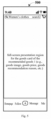
- a material type corresponding to the "object recommendation information corresponding to the nth recommended object” is a detail information type, and according to the detail information type, it may be determined that the above "recommendation presentation page corresponding to the nth recommended object” is a goods detail page corresponding to the nth recommended object.
- the above “material type corresponding to the object recommendation information” is the video information stream type (for example, a live video stream type, or a short video stream type, etc.)
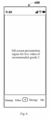
- the above “recommendation presentation page corresponding to the nth recommended object” may be a video presentation page corresponding to the nth recommended object (for example, a live video presentation page 600 shown in Fig. 6 or a short video presentation page 700 shown in Fig.
- the "video presentation page corresponding to the nth recommended object” is used for introducing the nth recommended object by means of video data (for example a live video or short video, etc.).
- the present application does not limit presentation content related to the "video presentation page" in the previous paragraph, for example, the presentation content includes at least video data (for example, a live video or short video, etc.) related to the above "object recommendation information corresponding to the nth recommended object”.
- a material type corresponding to the "object recommendation information corresponding to the nth recommended object” is a video information stream type (particularly, a live video stream type), and according to the video information stream type (particularly, the live video stream type), it may be determined that the above "recommendation presentation page corresponding to the nth recommended object” is a live room interface corresponding to the nth recommended object.
- a material type corresponding to the "object recommendation information corresponding to the nth recommended object” is a video information stream type (particularly, a short video stream type), and according to the video information stream type (in particular, the short video stream type), it may be determined that the above "recommendation presentation page corresponding to the nth recommended object” is a short video playing interface corresponding to the nth recommended object.
- the above “material type corresponding to the object recommendation information” is the object aggregation page type (for example, a channel stream type or a cloud theme stream type, etc.)
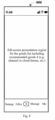
- the above “recommendation presentation page corresponding to the nth recommended object” may be an object aggregation page corresponding to the nth recommended object (for example, a goods list presentation page under a certain channel, a goods list presentation page under a certain cloud theme, or a goods list presentation page 800 shown in Fig.
- the user can better know the related information of the nth recommended object from the object aggregation page, and the user can also view a next object aggregation page corresponding to the object aggregation page by means of a swipe down operation triggered for the object aggregation page, which can directly enter an information stream (for example, for a channel stream type or cloud theme stream type, it is possible to jump to a channel page or cloud theme page, that is, the recommendation presentation page corresponding to the nth recommended object is a channel page or cloud theme page) by means of the above "object recommendation information corresponding to the nth recommended object", thereby facilitating improving user experience.
- the "object aggregation page corresponding to the nth recommended object” is used for introducing the nth recommended object by means of certain object aggregation (for example, a list, etc.).
- the present application does not limit presentation content related to the "object aggregation page" in the above paragraph, for example, the presentation content includes at least a goods list related to the above "object recommendation information corresponding to the nth recommended object”.
- a material type corresponding to the "object recommendation information corresponding to the nth recommended object” is an object aggregation page type, and according to the object aggregation page type, it may be determined that the "recommendation presentation page corresponding to the nth recommended object” is a channel page or cloud theme page corresponding to the nth recommended object.
- service function presentation region when service entries to M service functions are presented within the service function presentation region, if a trigger operation (for example, a click operation) for a service entry to an mth service function is detected, a service page corresponding to the mth service function is directly presented, so that the service page can provide the mth service function to the user.
- a trigger operation for example, a click operation
- M is a positive integer
- the present application does not limit a presentation manner of the "service page corresponding to the mth service function" in the above paragraph, for example, it may be directly presented within the above service function presentation region. For another example, it may also be presented by means of a pull-down page.
- the presentation manner of the "service page corresponding to the mth service function” may be specifically: detecting a trigger operation for a service entry to a service function, and jumping from the above object service page to a service page corresponding to the mth service function.
- the present application does not limit an implementation of the above "trigger operation for a service entry to a service function" in the above S3, for example, it may be a click operation.
- the present application does not limit an execution time for the above S3, for example, the execution time for the S3 may be later than an execution time for the above S1.
- an object service page is presented, and the object service page comprises a recommended-object presentation region and a service function presentation region, so that the recommended-object presentation region is used for presenting object recommendation information (for example, a goods card, a live video, etc.) corresponding to at least one recommended object, and the service function presentation region is used for presenting service entries to a plurality of service functions, so as to after a trigger operation for object recommendation information corresponding to any recommended object is detected, a material type corresponding to the object recommendation information is acquired, and according to the material type corresponding to the object recommendation information, a recommendation presentation page corresponding to the recommended object is presented, so that the recommendation presentation page can better introduce related information of the recommended object; or after a trigger operation for a service entry to any service function is detected, a service page corresponding to the service function is presented, so that the service page can better provide a corresponding service to
- the recommended-object presentation region can be used for presenting object recommendation information corresponding to some recommended objects, so that the recommended-object presentation region can, to a user, directly introduce some objects in which he may be interested, and thus, the user can directly view the information by means of the recommended-object presentation region, which facilitates improving viewing experience of the user for these objects; and the service function presentation region can be used for presenting service entries to some service functions, so that the service function presentation region can directly provide these service functions to the user, which facilitates improving use experience of the user for these service functions.
- the embodiment of the present application does not limit an execution subject of the information presentation method provided in the embodiment of the present application, for example, the information presentation method provided in the embodiment of the present application may be applied to a terminal device.
- the information presentation method provided in the embodiment of the present application may also be implemented by means of a data interaction process between a terminal device and a server.
- the terminal device may be a smartphone, computer, personal digital assistant (PDA), tablet, etc.
- the server may be a stand-alone server, a cluster server, or a cloud server.
- the present application further provides a possible implementation of the above “service function presentation region", in which the “service function presentation region” may respond to some swipe operations (for example, Swipe Up, Swipe Left, Swipe Right, etc.) triggered by the user.
- swipe operations for example, Swipe Up, Swipe Left, Swipe Right, etc.
- the above information presentation method may comprise at least the above S1 and the following step 21.
- An execution time for the step 21 is later than the execution time for the S1.
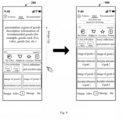
- Step 21 in response to a second swipe operation triggered for the above service function presentation region, increasing a presentation area of the service function presentation region, and hiding the recommended-object presentation region.
- the second swipe operation is used for swiping the above service function presentation region to the above "recommended-object presentation region"; moreover, the second swipe operation may be preset, for example, in some application scenarios, when the "recommended-object presentation region" refers to the upper half of the above object service page, and the "service function presentation region” refers to the lower half of the object service page, the second swipe operation may specifically be: a swipe up operation triggered within the above service function presentation region.
- the present application does not limit an implementation of "hiding the recommended-object presentation region" in the above step 21, for example, a hiding manner expressed by a character string "Pull down into immersive browsing" shown in a mall homepage 900 in Fig. 9 may be used, so that the user may subsequently resume presenting the recommended-object presentation region by performing a pull-down operation for the mall homepage 900.
- the object service page for example, the mall homepage 200 shown in Fig. 9
- a second swipe operation i.e., an operation for swiping the service function presentation region to the recommended-object presentation region
- the recommended-object presentation region is directly hidden and the presentation area of the service function presentation region is increased, so that an increase in the presentation area is in positive correlation with a swipe distance of the second swipe operation (i.e., the longer the swipe distance of the second swipe operation, the greater the increase in the presentation area), and thus, the service function presentation region can subsequently occupy most area of the object service page (for example, the mall homepage 900 shown in Fig. 9 ) for presentation, which facilitates better use of the related information presented in the service function presentation region by the user, thereby facilitating improving user experience.
- a swipe distance of the second swipe operation i.e., the longer the swipe distance of the second swipe operation, the greater the increase in the presentation area
- Example 2 in another possible implementation, the above information presentation method may comprise at least the above S1 and the following steps 31-32.
- An execution time for the step 31 is later than the execution time for the S1.
- Step 31 in response to a second swipe operation triggered for the service function presentation region, increasing a presentation area of the service function presentation region.
- step 31 is similar to the related content of step 21, and for brevity, it is not repeated here.
- Step 32 when it is determined that the presentation area of the service function presentation region is increased to a first area threshold, hiding the recommended-object presentation region.
- the first area threshold can be preset.
- the presentation area of the service function presentation region is increased, so that an increase in the presentation area is in positive correlation with a swipe distance of the second swipe operation (i.e., the longer the swipe distance of the second swipe operation, the greater the increase in the presentation area), so as to when it is determined that the presentation area of the service function presentation region is increased to a first area threshold, hide the recommended-object presentation region, so that the service function presentation region can subsequently occupy most area of the object service page (for example, the mall homepage 900 shown in Fig. 9 ) for presentation, which facilitates better use of the related information presented in the service function presentation region by the user, thereby facilitating improving user experience.
- a swipe distance of the second swipe operation i.e., the longer the swipe distance of the second swipe operation, the greater the increase in the presentation area
- the presentation area of the above recommended-object presentation region is correspondingly decreased with the increase in the presentation area of the above service function presentation region, so that a sum of the "presentation area of the service function presentation region” and the “presentation area of the recommended-object presentation region” is always a preset area sum.
- the presentation area of the "service function presentation region” may be increased, and the increase in the presentation area may continually become greater with the swipe distance of the swipe up operation, so that the purpose of full-screen presenting the service function presentation region by means of the swipe up operation can be achieved.
- the present application further provides a possible implementation of the above information presentation method, in which the information presentation method comprises at least the following steps 41 to 42.
- An execution time for the step 41 is later than the execution time for the step 21 or the execution time for the step 32.
- Step 41 when it is determined that the presentation area of the above service function presentation region is increased to a second area threshold, canceling presenting service entries to several target functions within the service function presentation region, and adding an entry management identification, wherein the several target functions are at least one of the above plurality of service functions.
- the second area threshold can be preset; for example, it may specifically be: the second area threshold exceeding a presentation area of a service function presentation region shown in a mall homepage 900 in Fig. 10 .
- the present application does not limit an association between the above “second area threshold” and the above “first area threshold”, for example, in some application scenarios, the second area threshold is greater than the first area threshold.
- target function is used for representing a service function (for example, a service function corresponding to the "My Orders" identification in Fig. 2 ) in the above “plurality of service functions” that can be hidden for presentation, so that the target function can be hidden for presentation, to save page space.
- a service function for example, a service function corresponding to the "My Orders" identification in Fig. 2
- plural of service functions that can be hidden for presentation, so that the target function can be hidden for presentation, to save page space.
- the present application does not limit an implementation of the above “several target functions", for example, in some application scenarios, when the above " plurality of service functions" include at least an object ordering service function (for example, a service function corresponding to the "Shopping Cart” identification in Fig. 2 ), the “several target functions” may include all other service functions than the object ordering service function in the " plurality of service functions".
- the "object ordering service function” is used for presenting ordering-related information of some ordered objects to the user; moreover, the present application does not limit the "object ordering service function", for example, it may refer to the service function corresponding to the "Shopping Cart” identification in Fig. 2 . Based on this, in a possible implementation, the object ordering service function does not belong to the "several target functions", so that there is no need to hide a service entry to the object ordering service function for presentation in the subsequent process.
- the above “entry management identification” is used for uniquely identifying an entry to the following entry aggregation page, so that the "entry management identification” is used for triggering a presentation process for the following entry aggregation page.
- the entry aggregation page is used for aggregating and presenting service entries to several candidate functions; and the present application does not limit an implementation of the entry aggregation page.
- the "several candidate functions” include at least the above “several target functions”.
- the candidate function refers to a service function for presenting the service entry to the entry aggregation page the by means of the entry aggregation page.
- the present application does not limit the implementation of the above "entry management identification", for example, it may be implemented by using a tool management control 903 shown in Fig. 10 .
- the present application does not limit a presentation position where the above "entry management identification" is located in the above service function presentation region, for example, when the service function presentation region comprises a search service presentation region (for example, a search service presentation region 904 shown in Fig. 11 ) and a function identification aggregation region (for example, a function identification aggregation region 905 shown in Fig. 11 ), and when the function identification aggregation region is adjacent to the search service presentation region (for example, the function identification aggregation region is horizontally adjacent to the search service presentation region), the presentation position of the entry management identification is located within the function identification aggregation region.
- the service function presentation region comprises a search service presentation region (for example, a search service presentation region 904 shown in Fig. 11 ) and a function identification aggregation region (for example, a function identification aggregation region 905 shown in Fig. 11 )
- the function identification aggregation region is adjacent to the search service presentation region (for example, the function identification aggregati
- the function identification aggregation region is used for aggregating and presenting identifications of the at least one service function (for example, a shopping cart control 902 and a tool management control 903 shown in Fig. 10 ); the search service presentation region is used for presenting a search service component; the search service component is used for providing a search service; moreover, the present application does not limit the search service component, for example, it may include a search word input box and a search trigger button.
- the function identification aggregation region may include at least the entry management identification; and the search service presentation region may include a search service component, so that a user can quickly find a service function which he wants to use by means of the two regions, and thus his usage requirement for some service functions can be better met, which can save page space on the premise that the usage requirement of the user for the service functions is met as much as possible, and thus can better improve user experience.
- the service function presentation region in the above "object service page” for example, the mall homepage 901 shown in Fig. 10
- the above “plurality of service functions” include at least the above “several target functions” and the above “object ordering service function”
- the service function presentation region comprises the search service presentation region and the function identification aggregation region
- a presentation position of a service entry for example, the shopping cart control 902 shown in Fig. 10
- the object ordering service function is located within the function identification aggregation region.
- the function identification aggregation region may include at least the above entry management identification (for example, the tool management control 903 shown in Fig. 10 ) and the service entry (for example, the shopping cart control 902 shown in Fig. 10 ) to the above object ordering service function, so that the user can use the above "plurality of service functions" by means of the function identification aggregation region, which facilitates improving the usage convenience of the user for these service functions.
- the above entry management identification for example, the tool management control 903 shown in Fig. 10
- the service entry for example, the shopping cart control 902 shown in Fig. 10
- the present application further provides a possible implementation of the above service function presentation region (for example, a service function presentation region shown in the mall homepage 901 in Fig. 10 ), in which when the service function presentation region further comprises an object aggregation section (for example, sections shown in the section presentation area 906 in Fig. 11 ), a presentation position of the object aggregation section (for example, a page position occupied by a section presentation area 906 in Fig.
- the presentation position of the object aggregation section is adjacent to that of the search service presentation region (for example, the presentation position of the object aggregation section is vertically adjacent to that of the search service presentation region).
- the service function presentation region for example, the service function presentation region shown in the mall homepage 900 in Fig. 10
- the service function presentation region includes the search service component, the service entries to the plurality of service functions, and the object aggregation section
- a presentation area of the service function presentation region is correspondingly increased with an increase in a swipe distance of the second swipe operation, until when it is determined that the presentation area of the service function presentation region is increased to a second area threshold, the search service component is, within the service function presentation region, directly moved to a first top position (for example a position shown by the search service presentation region 904 in Fig.
- presenting service entries to several target functions in these service functions is cancelled, and a service entry to an object ordering service function in these service functions is moved to a second top position (for example, a position where the shopping cart control 902 in Fig. 10 is located), so that a presentation position of the "service entry to the object ordering service function" after the position movement is horizontally adjacent to the presentation position of the search service component, and an entry management identification is added at a third top position (for example, a position where the tool management control 903 in Fig. 10 is located), so that the presentation position of the entry management identification is horizontally adjacent to that of the "service entry to the object ordering service function", which can aggregate all the service functions on the same horizontal line, thereby facilitating use of these service functions by the user.
- the first top position, the second top position and the third top position are located on the same horizontal line; and the first top position, the second top position and the third top position can all be preset.
- Step 42 in response to a trigger operation for the entry management identification, presenting an entry aggregation page, the entry aggregation page comprising the service entries to the several target functions.
- the object service page for example, the page 901 shown in Fig. 10
- the entry management identification for example, the tool management control 903 shown in Fig. 10
- a trigger operation for example, a click operation
- an entry aggregation page corresponding to the entry management identification may be presented, and the entry aggregation page is at least thereon presented with the service entries to the above several target functions, which hide service entries to some service functions for presentation by means of the entry aggregation page, thereby facilitating saving the page space as much as possible while meeting usage requirements of the user for these service functions.
- the present application does not limit an implementation of the "trigger operation for the above entry management identification" in the above step 42, for example, it may be a click operation.
- the presentation area of the service function presentation region is correspondingly increased with an increase in a swipe distance of the second swipe operation, until when it is determined that the presentation area of the service function presentation region is increased to the second area threshold, the presentation position of the above search service component is adjusted, replacing the service entries to the above several target functions with the entry management identification, and the presentation position of the above "service entry to the object ordering service function” is adjusted, so that the search service component after the position adjustment, the "service entry to the object ordering service function” after the position adjustment, and the newly added entry management identification are located on the same horizontal line (as shown in the page 901 in Fig. 10 ), which can aggregate the plurality of service functions on the same horizontal line, and thus, can better improve the usage convenience of the service functions
- Case two in some application scenarios, there is a search service component in the above "service function presentation region", so that the service function presentation region can be used for meeting the search requirement of the user.
- search service component in the above "service function presentation region”, so that the service function presentation region can be used for meeting the search requirement of the user.
- Example 1 in a possible implementation, when the above "service function presentation region" comprises a search service component, the above information presentation method may include at least the above S1 and the following 51. An execution time for the step 51 is later than the execution time for the S1.
- Step 51 after the above object service page is presented, in response to a search request triggered by using the above search service component, presenting, within the above service function presentation region, a search result corresponding to a search character string in the search request.
- the search request refers to a request triggered by means of the above search service component, so that the search request is used for performing search query processing for the search character string carried by the search request.
- the search character string refers to a character string inputted by using a search word input box in the search service component.
- the present application does not limit a triggering manner of the above "search request”, for example, when the above search service component includes a search word input box and a search triggering button, the triggering manner of the "search request” may specifically be: when there is one search character string in the search word input box, after a click operation triggered for the search triggering button is received, triggering the search request, so that the search request has the search character string carried therein.
- search result refers to information obtained by performing search query processing for the above search character string.
- the service function presentation region for example, the service function presentation region 203 shown in Fig. 3
- a search result corresponding to a search character string in the search request is acquired and directly presented within the service function presentation region, which can meet the search requirement of the user by means of the service function presentation region.
- Example 2 in a possible implementation, when the above "service function presentation region" includes a search service component, the above information presentation method may include at least the above S1 and the following 61. An execution time for the step 61 is later than the execution time for the S1.
- Step 61 after the object service page is presented, in response to a search request triggered by using the search service component, switching from the object service page to a search result presentation page corresponding to a search character string in the search request, the search result presentation page being used for presenting the search result corresponding to the search character string.
- the service function presentation region for example, the service function presentation region 203 shown in Fig. 3
- the service function presentation region when the service function presentation region is therein presented with a search service component, after a search request triggered by using the search service component is received, switching is performed directly from the above object service page (for example, the page 200 shown in Fig. 3 ) to a search result presentation page corresponding to the search character string, so that the search result presentation page is used for presenting a search result corresponding to the search character string, which can meet the search requirement of the user by means of page jumping.
- Example 3 when the above "service function presentation region" includes a search service component, the above information presentation method may include at least the above S1 and the following 71-72. An execution time for the step 71 is later than the execution time for the S1.
- Step 71 in response to a trigger operation for the search service component, switching from the object service page to a search service page.
- the search service page comprises a search service component.
- the search service page is used for providing a search service to the user by means of a full-screen page; and the search service page includes a search service component.
- the present application does not limit an implementation of the search service page, for example, it may be implemented by using any existing or future page capable of providing a search service.
- the present application does not limit an implementation of the search service component present in the search service page either.
- the present application does not limit an implementation of the "trigger operation for the above search service component" in the above step 71, for example, when the search service component includes a search word input box and a search triggering button, the "trigger operation for the above search service component" may specifically be: a click operation triggered for the search word input box.
- Step 72 in response to a search request triggered by using the search service component in the search service page, switching from the search service page to a search result presentation page corresponding to a search character string in the search request, the search result presentation page being used for presenting a search result corresponding to the search character string.
- the service function presentation region for example, the service function presentation region 203 shown in Fig. 3
- a trigger operation for example, a click operation triggered for a search word input box
- it is directly jumped from the above object service page to a search service page, so as to after a search request is triggered by using the search service component in the search service page, directly switch from the search service page to a search result presentation page corresponding to a search character string in the search request, so that the search result presentation page can present a search result corresponding to the search character string to the user, which can meet the search requirement of the user by means of page jumping many times.
- Case 3 in some application scenarios, after a swipe left or right operation is triggered within the above "service function presentation region", the current page (i.e., the above object service page) may be switched to a page corresponding to another page tag (for example, a "Recommended” page tag or "Follows” page tag shown in Fig. 12 ).
- a “Recommended” page tag or "Follows” page tag shown in Fig. 12 For ease of understanding, the description is made below in conjunction with an example.
- the above information presentation method comprises at least the following steps 81 to 82.
- Step 81 if the object service trigger operation is a selection operation for a page tag corresponding to the object service page, using the page tag corresponding to the object service page as a currently selected page tag, and presenting the object service page.
- the page switching region is at least used for presenting several page tags.
- the page switching region may be the page switching region 201 shown in Fig. 2 ; and the "several page tags" may include “Follows”, “Mall”, “Recommended”, and other page tags.
- the page tag is used for identifying a page.
- the present application does not limit a presentation position of the above "page switching region", for example, the presentation position of the page switching region is higher than the presentation position of the above "recommended-object presentation region", and the presentation position of the page switching region is adjacent to the presentation position of the recommended-object presentation region.
- page tag corresponding to the object service page refers to a page tag having a correspondence with the object service page.
- the "page tag corresponding to the object service page” may be the "Mall” page tag shown in Fig. 2 .
- the present application does not limit an implementation of the "selection operation" in the above step 81, for example, it may be implemented by using a "Swipe Right” operation shown in Fig. 4 .
- the above “currently selected page tag” refers to a page tag corresponding to a candidate page in a presentation state.
- a presentation state of the "currently selected page tag” is different from a presentation state of another page tag than the "currently selected page tag” in the above “several page tags”.
- the presentation state of the "currently selected page tag” may be a highlighting state (for example, a presentation state of the "Mall” page tag in Fig. 2 ); and the presentation state of other page tags may be a non-highlighting state (for example, a presentation state of the "Follows" page tag in Fig. 2 ).
- Step 82 in response to a third swipe operation triggered for the service function presentation region, determining a new currently selected page tag based on the third swipe operation, and switching the object service page to a candidate page corresponding to the new currently selected page tag.
- the third swipe operation refers to an operation triggered within the above service function presentation region and used for swiping a page not presented to a page being presented; and the present application does not limit the third swipe operation, for example, when the above "several page tags" are presented in a horizontal arrangement in the above "page switching region", the third swipe operation may be a swipe left operation triggered within the service function presentation region (for example, a "Swipe Left” operation shown in Fig. 12 ), or a swipe right operation triggered within the service function presentation region.
- the above “new currently selected page tag” refers to a page tag determined based on the above third swipe operation.
- the third swipe operation is the "Swipe Left” operation shown in Fig. 12
- the "new currently selected page tag” may be the "Recommended” tab as shown in Fig. 12 .
- Fig. 13 is a schematic structural diagram of an information presentation apparatus according to an embodiment of the present application. It should be noted that for the technical details of the information presentation apparatus provided in the embodiment of the present application, please refer to the related content of the above information presentation method.
- the information presentation apparatus 1300 provided in the embodiment of the present application comprises:
- the information presentation apparatus 1300 further comprises: a fourth presentation unit configured to, in response to a first swipe operation triggered for the recommended-object presentation region, present a recommendation presentation page corresponding to a target object in the at least one recommended object.
- the information presentation apparatus 1300 further comprises:
- the information presentation apparatus 1300 further comprises:
- the service function presentation region further comprises a search service component; and the information presentation apparatus 1300 further comprises:
- the object service page is thereon presented with a page switching region, wherein the page switching region comprises several page tags, each page tag corresponding to a different candidate page;
- the recommended-object presentation region comprises object recommendation information corresponding to at least two recommended objects, the object recommendation information corresponding to the at least two recommended objects in the recommended-object presentation region being presented in carousel presentation.
- the information presentation apparatus 1300 further comprises: a fifth switching unit configured to, in response to a fourth swipe operation triggered for the recommended-object presentation region, switching presentation of the object recommendation information corresponding to the recommended object within the recommended-object presentation region.
- the material type is a detail information type, a video information stream type, or an object aggregation page type,
- an object service page is presented, and the object service page comprises a recommended-object presentation region and a service function presentation region, so that the recommended-object presentation region is used for presenting object recommendation information (for example, a goods card, live video, etc.) corresponding to at least one recommended object, and the service function presentation region is used for presenting service entries to a plurality of service functions, so as to after a trigger operation for object recommendation information corresponding to any recommended object is detected, acquire a material type corresponding to the object recommendation information, and present a recommendation presentation page corresponding to the recommended object according to the material type corresponding to the object recommendation information, so that the recommendation presentation page can better introduce the related information of the recommended object; or, after a trigger operation for a service entry to any service function is detected, present a service page corresponding to the service function, so that the service page can better provide a corresponding service
- the recommended-object presentation region can be used for presenting object recommendation information corresponding to some recommended objects, so that the recommended-object presentation region can, to a user, directly introduce some objects which he may be interested in, and thus, the user can directly view the information by means of the recommended-object presentation region, which facilitates improving viewing experience of the user for these objects; and the service function presentation region can be used for presenting service entries to some service functions, so that the service function presentation region can directly provide these service functions to the user, which also facilitates improving use experience of the user for these service functions.
- an embodiment of the present application further provides an electronic device, comprising a processor and a memory, the memory being configured to store instructions or a computer program, and the processor being configured to execute the instructions or computer program in the memory, so that the electronic device performs any implementation of the information presentation method according to the embodiment of the present application.
- the terminal device in the embodiment of the present disclosure may include, but does not limit, a mobile terminal such as a mobile phone, a laptop, a digital broadcast receiver, a PDA (Personal Digital Assistant), a PAD (tablet), a PMP (Portable Multimedia Player), and a vehicle-mounted terminal (for example, a vehicle-mounted navigation terminal), and a fixed terminal such as a digital TV, and a desktop.
- a mobile terminal such as a mobile phone, a laptop, a digital broadcast receiver, a PDA (Personal Digital Assistant), a PAD (tablet), a PMP (Portable Multimedia Player), and a vehicle-mounted terminal (for example, a vehicle-mounted navigation terminal), and a fixed terminal such as a digital TV, and a desktop.
- PDA Personal Digital Assistant
- PAD tablet
- PMP Portable Multimedia Player
- vehicle-mounted terminal for example, a vehicle-mounted navigation terminal
- a fixed terminal such as a digital TV, and a desktop.
- the electronic device 1400 may comprise a processing means (for example, a central processing unit, graphics processing unit, etc.) 1401 that can perform various appropriate actions and processes according to a program stored in a read-only memory (ROM) 1402 or a program loaded from a storage means 1408 into a random access memory (RAM) 1403.
- ROM read-only memory
- RAM random access memory
- various programs and data necessary for the operation of the electronic device 1400 are also stored.
- the processing means 1401, ROM 1402, and RAM 1403 are connected to each other by a bus 1404.
- An input/output (I/O) interface 1405 is also connected to the bus 1404.
- the following means may be connected to the I/O interface 1405: an input means 1406 including, for example, a touch screen, touch pad, keyboard, mouse, camera, microphone, accelerometer, gyroscope, etc.; an output means 1407 including, for example, a liquid crystal display (LCD), a speaker, a vibrator, etc.; the storage means 1408 including, for example, a magnetic tape, hard disk, etc.; and a communication means 1409.
- the communication means 1409 may allow the electronic device 1400 to communicate wirelessly or by wire with other devices to exchange data. While Fig. 14 illustrates the electronic device 1400 having various means, it should be understood that there is no requirement that all the illustrated means are implemented or provided. More or fewer devices may be alternatively implemented or provided.
- an embodiment of the present disclosure comprises a computer program product comprising a computer program carried on a non-transitory computer-readable medium, the computer program containing program code for performing the method illustrated by the flow diagrams.
- the computer program may be downloaded and installed from a network via the communications means 1409, or installed from the storage means 1408, or installed from the ROM 1402.
- the computer program when executed by the processing means 1401, performs the above functions defined in the method according to the embodiment of the present disclosure.
- An embodiment of the present application further provides a computer-readable medium having therein stored an instruction or computer program which, when running on a device, causes the device to perform any implementation of the information presentation method according to the embodiment of the present application.
- the above computer-readable medium of the present disclosure may be a computer-readable signal medium or a computer-readable storage medium or any combination of the above two.
- the computer-readable storage medium may be, for example, but is not limited to, an electronic, magnetic, optical, electromagnetic, infrared, or semiconductor system, apparatus, or device, or any combination of the foregoing.
- the computer-readable storage medium may include, but are not limited to: an electrical connection having one or more wires, a portable computer diskette, a hard disk, a random access memory (RAM), a read-only memory (ROM), an erasable programmable read-only memory (EPROM or flash memory), an optical fiber, a portable compact disc read-only memory (CD-ROM), an optical storage device, a magnetic storage device, or any suitable combination of the foregoing.
- the computer-readable storage medium may be any tangible medium containing or storing a program, wherein the program can be used by or in conjunction with an instruction execution system, apparatus, or device.
- the computer-readable signal medium may include a data signal propagated in baseband or as part of a carrier wave, in which computer-readable program code is carried. Such a propagated data signal may take a variety of forms, including, but not limited to, an electromagnetic signal, optical signal, or any suitable combination of the forgoing.
- the computer-readable signal medium may also be any computer-readable medium other than the computer-readable storage medium, wherein the computer-readable signal medium can send, propagate, or transmit a program for use by or in conjunction with an instruction execution system, apparatus, or device.
- the program code contained on the computer-readable medium may be transmitted using any appropriate medium, including but not limited to: a wire, an optical cable, RF (Radio Frequency), etc., or any suitable combination of the foregoing.
- a client and a server may communicate using any currently known or future developed network protocol, such as HTTP (Hyper Text Transfer Protocol), and may be interconnected with any form or medium of digital data communication (e.g., a communication network).
- HTTP Hyper Text Transfer Protocol
- Examples of the communication network include a local area network ("LAN”), a wide area network ("WAN”), an internet (e.g., the Internet), and a peer-to-peer network (e.g., an ad hoc peer-to-peer network), as well as any currently known or future developed network.
- the above computer-readable medium may be contained in the above electronic device; or may exist separately without being assembled into the electronic device.
- the above computer-readable medium has thereon carried one or more programs which, when executed by the electronic device, enables the electronic device to perform the method.
- Computer program code for performing the operation of the present disclosure may be written in one or more programming languages or a combination thereof, wherein the above programming language includes but is not limited to an object-oriented programming language such as Java, Smalltalk, and C++, and also includes a conventional procedural programming language, such as a "C" language or a similar programming language.
- the program code may be executed entirely on a user's computer, partly on a user's computer, as a stand-alone software package, partly on a user's computer and partly on a remote computer, or entirely on a remote computer or server.
- the remote computer may be connected to a user's computer through any type of network, including a local area network (LAN) or a wide area network (WAN), or may be connected to an external computer (for example, through the Internet using an Internet service provider).
- LAN local area network
- WAN wide area network
- each block in the flow diagrams or block diagrams may represent a module, program segment, or part of code, which includes one or more executable instructions for implementing a specified logical function.
- functions noted in blocks may occur in a different order from those noted in the drawings. For example, two blocks shown in succession may, in fact, be executed substantially concurrently, or they may sometimes be executed in a reverse order, which depends upon the functions involved.
- each block in the block diagrams and/or flow diagrams, and a combination of the blocks in the block diagrams and/or flow diagrams can be implemented by a special-purpose hardware-based system that performs specified functions or operations, or by a combination of special-purpose hardware and computer instructions.
- the involved units described in the embodiments of the present disclosure may be implemented by software or hardware.
- the name of the unit/module does not, in some cases, constitute a limitation on the unit itself.
- a hardware logic component of an exemplary type includes: a field programmable gate array (FPGA), an application specific integrated circuit (ASIC), an application specific standard parts (ASSP), a system on chip (SOC), a complex programmable logic device (CPLD), and the like.
- FPGA field programmable gate array
- ASIC application specific integrated circuit
- ASSP application specific standard parts
- SOC system on chip
- CPLD complex programmable logic device
- a machine-readable medium may be a tangible medium, which can contain or store a program for use by or in conjunction with an instruction execution system, apparatus, or device.
- the machine-readable medium may be a machine-readable signal medium or a machine-readable storage medium.
- the machine-readable medium may include, but is not limited to, an electronic, magnetic, optical, electromagnetic, infrared, or semiconductor system, apparatus, or device, or any suitable combination of the foregoing.
- machine-readable storage medium examples include an electrical connection based on one or more wires, a portable computer diskette, a hard disk, a random access memory (RAM), a read-only memory (ROM), an erasable programmable read-only memory (EPROM or flash memory), an optical fiber, a portable compact disc read-only memory (CD-ROM), an optical storage device, a magnetic storage device, or any suitable combination of the foregoing.
- RAM random access memory
- ROM read-only memory
- EPROM or flash memory erasable programmable read-only memory
- CD-ROM portable compact disc read-only memory
- magnetic storage device a magnetic storage device
- At least one of a, b, or c may represent: a, b, c, "a and b", “a and c", “b and c", or "a and b and c", where a, b and c may be single or plural.
- relational terms such as “first” and “second”, herein, are only used for distinguishing one entity or operation from another entity or operation without necessarily requiring or implying any such actual relation or order between these entities or operations.
- the term “comprise”, “include”, or any other variation thereof is intended to encompass a non-exclusive inclusion, such that a process, method, article, or device comprising a list of elements not only includes those elements but also includes other elements not expressly listed, or also includes elements inherent to such a process, method, article, or device.
- an element defined by a statement “comprising a ... " does not exclude the presence of another identical element in a process, method, article, or device that includes the element.
- the steps of the method or algorithm described in conjunction with the embodiments disclosed herein may be directly implemented using hardware, a software module executed by a processor, or a combination of the two.
- the software module may be provided in a random access memory (RAM), memory, read-only memory (ROM), electrically programmable ROM, electrically erasable programmable ROM, register, hard disk, removable disk, CD-ROM, or any other form of storage medium known in the art.
Landscapes
- Engineering & Computer Science (AREA)
- Business, Economics & Management (AREA)
- Theoretical Computer Science (AREA)
- General Engineering & Computer Science (AREA)
- Accounting & Taxation (AREA)
- Finance (AREA)
- General Physics & Mathematics (AREA)
- Physics & Mathematics (AREA)
- Strategic Management (AREA)
- Development Economics (AREA)
- General Business, Economics & Management (AREA)
- Marketing (AREA)
- Economics (AREA)
- Human Computer Interaction (AREA)
- Databases & Information Systems (AREA)
- Signal Processing (AREA)
- Multimedia (AREA)
- Entrepreneurship & Innovation (AREA)
- Game Theory and Decision Science (AREA)
- User Interface Of Digital Computer (AREA)
- Management, Administration, Business Operations System, And Electronic Commerce (AREA)
- Two-Way Televisions, Distribution Of Moving Picture Or The Like (AREA)
Applications Claiming Priority (2)
| Application Number | Priority Date | Filing Date | Title |
|---|---|---|---|
| CN202310035860.8A CN118331466A (zh) | 2023-01-10 | 2023-01-10 | 一种信息展示方法、装置、电子设备、计算机可读介质 |
| PCT/CN2023/138671 WO2024149014A1 (zh) | 2023-01-10 | 2023-12-14 | 一种信息展示方法、装置、电子设备、计算机可读介质 |
Publications (1)
| Publication Number | Publication Date |
|---|---|
| EP4524704A1 true EP4524704A1 (de) | 2025-03-19 |
Family
ID=91774889
Family Applications (1)
| Application Number | Title | Priority Date | Filing Date |
|---|---|---|---|
| EP23915769.6A Pending EP4524704A1 (de) | 2023-01-10 | 2023-12-14 | Informationsanzeigeverfahren und -vorrichtung, elektronische vorrichtung und computerlesbares medium |
Country Status (5)
| Country | Link |
|---|---|
| US (1) | US20250287058A1 (de) |
| EP (1) | EP4524704A1 (de) |
| JP (1) | JP2025524396A (de) |
| CN (1) | CN118331466A (de) |
| WO (1) | WO2024149014A1 (de) |
Family Cites Families (7)
| Publication number | Priority date | Publication date | Assignee | Title |
|---|---|---|---|---|
| JPH10207948A (ja) * | 1997-01-17 | 1998-08-07 | Hitachi Ltd | 情報提供装置及び情報提供方法 |
| JP2006164299A (ja) * | 2006-01-04 | 2006-06-22 | Ricoh Co Ltd | オンラインショッピングシステム |
| US9704189B2 (en) * | 2012-09-05 | 2017-07-11 | Rakuten Kobo, Inc. | System and method for a graphical user interface having recommendations |
| JP5909553B2 (ja) * | 2012-09-21 | 2016-04-26 | グリー株式会社 | タイムライン領域におけるオブジェクト表示方法、オブジェクト送信方法、オブジェクト表示装置、サーバ及び当該方法を実現するためのプログラムを記録した情報記録媒体 |
| JP2020046957A (ja) * | 2018-09-19 | 2020-03-26 | 富士ゼロックス株式会社 | 表示制御装置、表示装置、及びプログラム |
| CN110221748A (zh) * | 2019-05-23 | 2019-09-10 | 厦门美柚信息科技有限公司 | 显示页面视差的方法、装置及移动终端 |
| CN114371846A (zh) * | 2021-12-15 | 2022-04-19 | 阿里巴巴(中国)有限公司 | 商品详情页面展示方法及电子设备 |
-
2023
- 2023-01-10 CN CN202310035860.8A patent/CN118331466A/zh active Pending
- 2023-12-14 EP EP23915769.6A patent/EP4524704A1/de active Pending
- 2023-12-14 WO PCT/CN2023/138671 patent/WO2024149014A1/zh not_active Ceased
- 2023-12-14 US US18/874,520 patent/US20250287058A1/en active Pending
- 2023-12-14 JP JP2024573288A patent/JP2025524396A/ja active Pending
Also Published As
| Publication number | Publication date |
|---|---|
| JP2025524396A (ja) | 2025-07-30 |
| WO2024149014A1 (zh) | 2024-07-18 |
| CN118331466A (zh) | 2024-07-12 |
| US20250287058A1 (en) | 2025-09-11 |
Similar Documents
| Publication | Publication Date | Title |
|---|---|---|
| US12526479B2 (en) | Video recommendation method and apparatus, electronic device, and computer-readable medium | |
| CN111510760B (zh) | 视频信息展示方法和装置、存储介质和电子设备 | |
| WO2023088442A1 (zh) | 一种直播预览方法、装置、设备、程序产品及介质 | |
| US20240310984A1 (en) | Landscape screen interaction method and apparatus, electronic device, and storage medium | |
| US12524478B2 (en) | Method, apparatus, device and storage medium for content display | |
| CN115567745B (zh) | 一种展示方法、装置、电子设备、计算机可读介质 | |
| US20240168605A1 (en) | Text input method and apparatus, and electronic device and storage medium | |
| US20240220089A1 (en) | View displaying method and device, and medium | |
| CN111190520A (zh) | 菜单项选择方法、装置、可读介质及电子设备 | |
| CN111177610A (zh) | 素材展示方法、装置、电子设备及存储介质 | |
| EP4614988A1 (de) | Informationsanzeigeverfahren und -vorrichtung sowie elektronische vorrichtung und computerlesbares medium | |
| US20250294193A1 (en) | Push processing method and apparatus, and device, and medium | |
| CN114760515A (zh) | 媒体内容的显示方法、装置、设备、存储介质和程序产品 | |
| CN113836415B (zh) | 信息推荐方法、装置、介质及设备 | |
| EP4343513B1 (de) | Informationspräsentationsverfahren und -vorrichtung sowie elektronische vorrichtung und speichermedium | |
| US20260037588A1 (en) | Page display method and apparatus, electronic device, storage medium, and program product | |
| WO2023035835A1 (zh) | 一种信息展示方法、装置、设备及介质 | |
| JP2025536917A (ja) | 推奨情報の表示方法、装置、機器及び記憶媒体 | |
| EP4554236A1 (de) | Informationsanzeigeverfahren und -vorrichtung, elektronische vorrichtung und computerlesbares medium | |
| WO2022095932A1 (zh) | 直播间页面跳转方法、返回方法、装置及电子设备 | |
| EP4642031A1 (de) | Videoabspielverfahren und -vorrichtung, elektronische vorrichtung und computerlesbares medium | |
| JP2026500199A (ja) | プッシュ処理方法と装置、機器、コンピュータ可読記憶媒体及びコンピュータプログラム | |
| EP4524704A1 (de) | Informationsanzeigeverfahren und -vorrichtung, elektronische vorrichtung und computerlesbares medium | |
| WO2024169881A9 (zh) | 视频处理方法、装置、设备及介质 | |
| CN114817809A (zh) | 信息显示方法、装置、设备和存储介质 |
Legal Events
| Date | Code | Title | Description |
|---|---|---|---|
| STAA | Information on the status of an ep patent application or granted ep patent |
Free format text: STATUS: THE INTERNATIONAL PUBLICATION HAS BEEN MADE |
|
| PUAI | Public reference made under article 153(3) epc to a published international application that has entered the european phase |
Free format text: ORIGINAL CODE: 0009012 |
|
| STAA | Information on the status of an ep patent application or granted ep patent |
Free format text: STATUS: REQUEST FOR EXAMINATION WAS MADE |
|
| 17P | Request for examination filed |
Effective date: 20241212 |
|
| AK | Designated contracting states |
Kind code of ref document: A1 Designated state(s): AL AT BE BG CH CY CZ DE DK EE ES FI FR GB GR HR HU IE IS IT LI LT LU LV MC ME MK MT NL NO PL PT RO RS SE SI SK SM TR |
|
| DAV | Request for validation of the european patent (deleted) | ||
| DAX | Request for extension of the european patent (deleted) |