EP4524736A1 - Verfahren und vorrichtung zur laufverarbeitung eines algorithmusmodells und intelligente edge-vorrichtung - Google Patents
Verfahren und vorrichtung zur laufverarbeitung eines algorithmusmodells und intelligente edge-vorrichtung Download PDFInfo
- Publication number
- EP4524736A1 EP4524736A1 EP23802915.1A EP23802915A EP4524736A1 EP 4524736 A1 EP4524736 A1 EP 4524736A1 EP 23802915 A EP23802915 A EP 23802915A EP 4524736 A1 EP4524736 A1 EP 4524736A1
- Authority
- EP
- European Patent Office
- Prior art keywords
- engine
- virtual
- algorithm model
- task
- engines
- Prior art date
- Legal status (The legal status is an assumption and is not a legal conclusion. Google has not performed a legal analysis and makes no representation as to the accuracy of the status listed.)
- Pending
Links
Images



Classifications
-
- G—PHYSICS
- G06—COMPUTING OR CALCULATING; COUNTING
- G06F—ELECTRIC DIGITAL DATA PROCESSING
- G06F9/00—Arrangements for program control, e.g. control units
- G06F9/06—Arrangements for program control, e.g. control units using stored programs, i.e. using an internal store of processing equipment to receive or retain programs
- G06F9/44—Arrangements for executing specific programs
- G06F9/455—Emulation; Interpretation; Software simulation, e.g. virtualisation or emulation of application or operating system execution engines
- G06F9/45533—Hypervisors; Virtual machine monitors
- G06F9/45558—Hypervisor-specific management and integration aspects
-
- G—PHYSICS
- G06—COMPUTING OR CALCULATING; COUNTING
- G06F—ELECTRIC DIGITAL DATA PROCESSING
- G06F9/00—Arrangements for program control, e.g. control units
- G06F9/06—Arrangements for program control, e.g. control units using stored programs, i.e. using an internal store of processing equipment to receive or retain programs
- G06F9/44—Arrangements for executing specific programs
- G06F9/455—Emulation; Interpretation; Software simulation, e.g. virtualisation or emulation of application or operating system execution engines
- G06F9/45533—Hypervisors; Virtual machine monitors
-
- G—PHYSICS
- G06—COMPUTING OR CALCULATING; COUNTING
- G06F—ELECTRIC DIGITAL DATA PROCESSING
- G06F8/00—Arrangements for software engineering
- G06F8/30—Creation or generation of source code
- G06F8/34—Graphical or visual programming
-
- G—PHYSICS
- G06—COMPUTING OR CALCULATING; COUNTING
- G06F—ELECTRIC DIGITAL DATA PROCESSING
- G06F9/00—Arrangements for program control, e.g. control units
- G06F9/06—Arrangements for program control, e.g. control units using stored programs, i.e. using an internal store of processing equipment to receive or retain programs
- G06F9/44—Arrangements for executing specific programs
- G06F9/445—Program loading or initiating
- G06F9/44521—Dynamic linking or loading; Link editing at or after load time, e.g. Java class loading
Definitions
- the present application relates to the field of intelligent analysis, in particular to an algorithm model running and processing method and apparatus, and an edge intelligent device.
- the AI open platform needs to support multiple algorithm models, such as an algorithm models for implementing video structured processing, an algorithm model for implementing image analysis and the like.
- algorithm models such as an algorithm models for implementing video structured processing, an algorithm model for implementing image analysis and the like.
- edge intelligent devices also known as edge intelligent boxes.
- the edge intelligent devices are devices configured for intelligent analysis of videos/pictures, and each edge intelligent device can support only one algorithm model.
- the edge intelligent device has one physical engine in which one algorithm model is run, thereby achieving functions supported by the algorithm model.
- it is necessary to increase the number of physical engines in an edge intelligent device it is necessary to increase the number of physical engines in an edge intelligent device, and each physical engine can support only one algorithm model.
- the edge intelligent device has multiple physical engines, and one algorithm model is run in one physical engine, thereby achieving the functions supported by the algorithm model.
- the edge intelligent device with one physical engine some simultaneous analysis scenarios that require support from multiple algorithm models cannot be achieved in the edge intelligent device.
- the cost thereof is high, and deploying of the edge intelligent device with multiple physical engines is not suitable.
- the embodiments of the present application provide an algorithm model running and processing method and apparatus, and an edge intelligent device, which can implement a simultaneous analysis scenario that requires support from multiple algorithm models in the edge intelligent device.
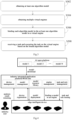
- An algorithm model running and processing method including: obtaining at least one algorithm model, wherein the algorithm model is an artificial intelligence algorithm model; obtaining multiple virtual engines, wherein the virtual engines are engines virtualized from a physical engine after software encapsulating of the physical engine, and the number of the obtained virtual engines is greater than or equal to the number of the obtained algorithm models; binding each algorithm model in the at least one algorithm model to a virtual engine and running the algorithm model in the virtual engine, wherein one virtual engine is configured to be bound with one algorithm model; receiving a task and executing the task in the virtual engine with the algorithm model.
- executing the task in the virtual engine with the algorithm model includes: obtaining a pre-configured predetermined order, wherein the predetermined order is configured for indicating a running order of multiple algorithm models in case that the multiple algorithm models run in coordination with each other to execute the task; based on the predetermined order, sequentially running the multiple algorithm models in multiple virtual engines corresponding to the multiple algorithm models to execute the task, wherein during running the multiple algorithm models to execute the task, an output of an algorithm model that runs firstly is used as an input of an algorithm model that runs later.
- the method further includes: limiting a performance of each virtual engine in the multiple virtual engines based on a performance of the physical engine in case that the task is executed in the multiple virtual engines, wherein the performance of the physical engine is configured for indicating an upper limit of a processing capability of the physical engine, and the performance of the virtual engine is configured for indicating an upper limit of a processing capability of the virtual engine, wherein a sum of performances of the multiple virtual engines during running does not exceed the performance of the physical engine.
- the task includes a video analysis task and/or a picture analysis task, wherein, for the video analysis task, the performance of the physical engine is to support up to N channels of video analysis, wherein N is a positive integer; for the picture analysis task, the performance of the physical engine is to analyze up to M pictures per unit time, wherein M is a positive integer.
- limiting the performance of each virtual engine in the multiple virtual engines based on the performance of the physical engine includes: in case that the multiple virtual engines all perform video analysis, limiting a sum of the number of video channels enabled by the multiple virtual engines to be less than or equal to N; or, in case that the multiple virtual engines all perform picture analysis, limiting a sum of the number of pictures analyzed per unit time by the multiple virtual engines to be less than or equal to M; or, limiting the maximum number of pictures analyzed per unit time by at least one virtual engine for performing picture analysis to: an equivalent picture processing number * (N-N1), wherein N1 is less than N, and is greater than or equal to 0, N1 is the number of video channels enabled by a virtual engine for performing video analysis, and the equivalent picture processing number is the number of pictures that can be analyzed when a capacity to process one channel of video analysis is used for performing picture analysis.
- limiting the maximum number of pictures analyzed per unit time by the at least one virtual engine for performing the picture analysis to: the equivalent picture processing number * (N-N1) includes: configuring a picture scheduling task, wherein the picture scheduling task is configured for sequentially sending a picture to each virtual engine in the at least one virtual engine for performing picture analysis; controlling the picture scheduling task to send one picture every predetermined time, so as to limit the maximum number of pictures analyzed per unit time by the at least one virtual engine for performing picture analysis to: the equivalent picture processing number * (N-N1), wherein the predetermined time is configured for indicating a time interval between sending two pictures, and the predetermined time is: the unit time/[the equivalent picture processing number * (N-N1)].
- the equivalent picture processing number is M/q*N; q is a configured control coefficient, and has a value in a range of 1 to M/N.
- the method further includes: obtaining an analysis result obtained after the virtual engine executes the task with the algorithm model; determining whether an alarm needs to be sent for the analysis result based on a pre-configured alarming condition, and if so, sending an alarm.
- binding each algorithm model in the at least one algorithm model to a virtual engine and running the algorithm model in the virtual engine includes: obtaining an operation signal, wherein the operation signal is configured for dragging a first object representing an algorithm model from a first display area to a second display area, the first display area displays at least one first object, each first object corresponding to one algorithm model, and the second display area displays at least one second object, each second object corresponding to one virtual engine; in response to the operation signal, in case that an overlap degree between the first object and a predetermined second object in the second display area exceeds a threshold, binding an algorithm model corresponding to the first object to an virtual engine corresponding to the predetermined second object.
- binding each algorithm model in the at least one algorithm model to a virtual engine and running the algorithm model in the virtual engine includes: each time after an algorithm model is loaded in the physical engine, creating a model handle corresponding to the loaded algorithm model; obtaining identification information of a virtual engine to be bound with the loaded algorithm model; establishing a correspondence between the model handle corresponding to the loaded algorithm model and the identification information, to bind the loaded algorithm model to the virtual engine corresponding to the identification information.
- an algorithm model running and processing apparatus including: a first obtaining module, configured for obtaining at least one algorithm model, wherein the algorithm model is an artificial intelligence algorithm model; a second obtaining module, configured for obtaining multiple virtual engines, wherein the virtual engines are engines virtualized from a physical engine after software encapsulating of the physical engine, and the number of the obtained virtual engines is greater than or equal to the number of the obtained algorithm models; a binding module, configured for binding each algorithm model in the at least one algorithm model to a virtual engine and running the algorithm model in the virtual engine, wherein one virtual engine is configured to be bound with one algorithm model; an executing module, configured for receiving a task and executing the task in the virtual engine with the algorithm model.
- the executing module is configured for obtaining a pre-configured predetermined order, wherein the predetermined order is configured for indicating a running order of multiple algorithm models in case that the multiple algorithm models run in coordination with each other to execute the task; sequentially running, based on the predetermined order, the multiple algorithm models in multiple virtual engines corresponding to the multiple algorithm models to execute the task; wherein during running the multiple algorithm models to execute the task, an output of an algorithm model that runs firstly is used as an input of an algorithm model that runs later; and/or,
- an edge intelligent device including a memory and a processor, w wherein the memory is configured for storing a program, the processor is configured for running the program, and the program is configured for executing the above algorithm model running and processing method.
- an algorithm model running and processing system including an edge intelligent device and an application platform, wherein a user logs into the application platform through a WEB page to manage the edge intelligent device; wherein the application platform is configured for obtaining at least one algorithm model from an AI open platform, and issuing the at least one algorithm model to the edge intelligent device, wherein the algorithm model is an artificial intelligence algorithm model; the application platform is configured for managing the virtual engines of the edge intelligent device and processing a binding relationship between virtual engines and algorithm models; wherein, the virtual engines are engines virtualized from a physical engine after software encapsulating of the physical engine, and the number of the obtained virtual engines is greater than or equal to the number of the obtained algorithm models; the binding relationship between virtual engines and algorithm models is to bind each algorithm model to a virtual engine and run the algorithm model in the virtual engine, wherein one virtual engine is configured to be bound with one algorithm model; the application platform is configured for issuing a task to the edge intelligent device; the edge intelligent device is configured for receiving the task issued by the
- the edge intelligent device is configured for obtaining, after executing the task, an analysis result obtained after the virtual engine executes the task with the algorithm model, and returning the analysis result to the application platform, the application platform is configured for determining whether an alarm needs to be sent for the analysis result based on a pre-configured alarming condition, and if so, sending an alarm.
- the edge intelligent device includes: an intelligent engine subsystem, configured for managing the virtual engines; a model package management module, configured for adding, updating, and deleting of an algorithm model; an engine management module, configured for binding, updating, and unbinding of an algorithm model; a task management module, configured for initiating and/or closing of a task; a rule management module, configured for configuring a rule, which is a rule used by an algorithm model, to enable, based on the rule, the algorithm model to perform a calculation matching the rule; an IPC access management module, configured for managing an accessed IPC and obtaining a video stream from the IPC; an intelligent alarming module, configured for uploading an alarm.
- an intelligent engine subsystem configured for managing the virtual engines
- a model package management module configured for adding, updating, and deleting of an algorithm model
- an engine management module configured for binding, updating, and unbinding of an algorithm model
- a task management module configured for initiating and/or closing of a task
- a rule management module configured for configuring a rule, which
- the edge intelligent device when executing the task in the virtual engine with the algorithm model, specifically is configured for: obtaining a pre-configured predetermined order, wherein the predetermined order is configured for indicating a running order of multiple algorithm models in case that the multiple algorithm models run in coordination with each other to execute the task; based on the predetermined order, sequentially running the multiple algorithm models in multiple virtual engines corresponding to the multiple algorithm models to execute the task; wherein during running the multiple algorithm models to execute the task, an output of an algorithm model that runs firstly is used as an input of an algorithm model that runs later.
- the edge intelligent device is further configured for limiting a performance of each virtual engine in the multiple virtual engines based on a performance of the physical engine in case that the task is executed in the multiple virtual engines, wherein the performance of the physical engine is configured for indicating an upper limit of a processing capability of the physical engine, and the performance of the virtual engine is configured for indicating an upper limit of a processing capability of the virtual engine, and a sum of performances of the multiple virtual engines during running does not exceed the performance of the physical engine;
- the edge intelligent device is further configured for: obtaining an operation signal, wherein the operation signal is configured for dragging a first object representing an algorithm model from a first display area to a second display area, the first display area displays at least one first object, each first object corresponding to one algorithm model, and the second display area displays at least one second object, each second object corresponding to one virtual engine; in response to the operation signals, binding, in case that an overlap degree between the first object and a predetermined second object in the second display area exceeds a threshold, an algorithm model corresponding to the first object to an virtual engine corresponding to the predetermined second object; or creating, each time after an algorithm model is loaded in the physical engine, a model handle corresponding to the loaded algorithm model; obtaining identification information of a virtual engine to be bound with the loaded algorithm model; establishing a correspondence between the model handle corresponding to the loaded algorithm model and the identification information, to bind the loaded algorithm model to the virtual engine corresponding to the identification information.
- the following operations are adopted: obtaining at least one algorithm model, wherein the algorithm model is an artificial intelligence algorithm model; obtaining the multiple virtual engines, wherein the virtual engines are engines virtualized from a physical engine after software encapsulating of the physical engine; binding each algorithm model in the at least one algorithm model to a virtual engine and running the algorithm model in the virtual engine, wherein one virtual engine is configured to be bound with an algorithm model; receiving a task, and executing the task in the virtual engine with the algorithm model.
- a simultaneous analysis scenario that requires support from multiple algorithm models can be implemented in the edge intelligent device (which can be the edge intelligent device with one physical engine), thereby the multiple algorithm models can simultaneously run in the edge intelligent device, meeting the requirements of low-cost and multi- algorithm model fusion analysis.
- Fig.1 is a schematic diagram of an architecture of a single-engine and single-algorithm according to an embodiment of the present application.
- a single physical engine if the engine is not virtualized in a function implementation layer, then there is only one physical engine in the function implementation layer, and also, one available engine is showed in an UI layer (such as an AI configuration interface).
- UI layer such as an AI configuration interface
- algorithm model i.e. AI model package 1
- the function implementation layer is the processing logic used for processing a user instruction. For example, when the user issues the instruction to the UI layer, the UI layer forwards the user instruction to the function implementation layer, which executes the user instruction to implement the relevant function.
- the physical engine is an actual processing resource, and is a physical unit with the ability to process data such as an image/video, such as a processor and other units, such as GPU (Graphics Processing Unit), which is not limited here.
- the physical unit also needs to rely on necessary programs for control when processing data.
- FIG.2 is a schematic diagram of the architecture of a single engine and multi-algorithm according to the embodiment of the present application. As shown in Fig.2 , four virtual engines 1001, 1002, 1003, and 1004 are virtualized in a single physical engine in the function implementation layer (of course, other numbers of virtual engines can also be virtualized). Therefore, these four virtual engines can also be seen in the AI configuration interface.
- different algorithm models can be configured for the four virtual engines respectively (i.e., configuring an AI model package 1 for virtual engine 1001, configuring an AI model package 2 for virtual engine 1002, and configuring an AI model package 3 for virtual engine 1003, and configuring an AI model package 4 for virtual engine 1004).
- the virtual engine is an engine virtualized from a physical engine after software encapsulating of the physical engine. At least one virtual engine can be virtualized from a physical engine, and the virtual engine is the virtualized unit of the physical engine.
- the virtual engine can be individually loaded with an algorithm model for intelligent analysis.
- An engine being virtualized from a physical engine after software encapsulating of the physical engine can be understood as: based on the data processing capability of the physical engine, it is defined through software as multiple capabilities using software interfaces, and the data processing capability of this physical engine can be used through any one or more of the software interfaces.
- the "software interface” can be equivalent to a "virtual engine”.
- the software interface can generally be understood as various software development APIs and the like, or as an interaction interface between human and software. For one example, the user can see the identifications of N engines (i.e. virtual engines) or the entrances of the engines in the interaction interface, and these displayed virtual engines are equivalent to the aforementioned "software interfaces". Through these N virtual engines, the data processing capabilities of a certain physical engine can be used.
- Fig.3 is a flowchart of an algorithm model running and processing method according to an embodiment of the present application.
- Fig.3 shows the process of configuring the algorithm model for the virtual engine. As shown in Fig.3 , the process includes the following steps: Step S302, obtaining at least one algorithm model, wherein the algorithm model is an artificial intelligence algorithm model.
- Step S304 obtaining multiple virtual engines, wherein the virtual engines are engines virtualized from a physical engine after software encapsulating of the physical engine, and the number of the obtained virtual engines is greater than or equal to the number of the obtained algorithm models.
- Step S306 binding each algorithm model in the at least one algorithm model to a virtual engine and running the each algorithm model in the one virtual engine, wherein one virtual engine is configured to be bound with one algorithm model.
- Step S308 receiving a task and executing the task in the virtual engine with the bound algorithm model.
- the simultaneous analysis scenario that requires support from multiple algorithm models can be implemented in the edge intelligent device (which can be the edge intelligent device with one physical engine), thereby the multiple algorithm models can run simultaneously in the edge intelligent device, meeting the requirements of low-cost and multi-algorithm model fusion analysis.
- the algorithm model in the above steps can be obtained from multiple channels, such as from an AI open platform.
- the above steps can be carried out in the edge intelligent device, which can obtain the algorithm model from the AI open platform.
- the management of the edge intelligent device, binding of algorithm models to the virtual engines and the like can be performed through an industry integrated application platform, a WEB page side, or other clients.
- Fig.4 is a schematic diagram of the overall architecture of the system according to the embodiment of the present application.
- the edge intelligent device can be connected to the industry integrated application platform and log into the industry integrated application platform (referred to as a platform for short) through a web page, to manage the edge intelligent device (referred to as a device for short).
- the industry integrated application platform can also obtain the algorithm model (referred to as a model for short) from the AI open platform, manage the model, and establish a model resource library.
- the industry integrated application platform can also manage the virtual engines of the edge intelligent device and handle the binding relationship between virtual engines and models.
- the industry integrated application platform can also issue a task and rule to the edge intelligent device.
- the edge intelligent device can return a analysis result to the industry integrated application platform. That is, the industry integrated application platform obtains the analysis result obtained after the virtual engine executes the task with the algorithm model; determines whether an alarm needs to be sent for the analysis result based on a pre-configured alarming condition; and if so, sending an alarm.
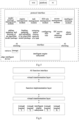
- Fig.5 is a schematic diagram of the structure of the edge intelligent device according to the embodiment of the present application.
- the edge intelligent device interacts with the platform (i.e. the industry integrated application platform) and an network camera (IPC) through an protocol interface, and the intelligent engine subsystem of the edge intelligent device is configured for managing virtual engines.
- Multiple modules for management are included between the intelligent engine subsystem and the protocol interface, including: a model package management module configured for adding, updating, and deleting of a model package (i.e.
- an algorithm model an algorithm model
- an engine management module configured for binding, updating, and unbinding of a model package
- a task management module for initiating and/or closing of a task, etc.
- a rule management module configured for configuring a rule (which is a rule used by each algorithm model to perform a corresponding calculation based on the rule)
- an IPC access management module configured for managing an accessed IPC and obtaining a video stream from the IPC, etc.
- an intelligent alarming module configured for uploading an alarm.
- the edge intelligent device can be accessed through the platform (i.e. the industry integrated application platform) and WEB, and an operation such as adding, updating, and deleting of an algorithm model, binding/unbinding of an engine to a model, issuing a task and rule and the like, is performed in the edge intelligent device.
- the platform adds an algorithm model to a model storage partition of the device, and loads the algorithm model into the virtual engine for running when the algorithm model is bound to the virtual engine.
- the platform can issue a task and rule to notify the virtual engine to perform corresponding intelligent analysis of the algorithm model.
- the IPC access management module accesses to the front-end IPC, and obtains a video stream or a picture in real-time and sends it to the intelligent engine subsystem.
- the intelligent engine subsystem intelligently analyzes a result obtained after the virtual engine analyzes the algorithm model, and reports the alarm to the platform.
- the intelligent engine subsystem is configured for managing virtual engines.
- an algorithm model in terms of usage configuration, an algorithm model is bound to a physical engine.
- multiple virtual engines are virtualized from the physical engine by internal software encapsulation of the physical engine, such a processing manner is similar to multiple logical operation cores of a CPU.
- the edge intelligent device converts the received engine information into a virtual engine unit corresponding to an actual internal physical engine, and completes the corresponding action.
- the binding of a virtual engine to an algorithm model can be implemented through multiple methods.
- the following binding method is provided in this embodiment: each time after an algorithm model is loaded in a physical engine, creating a model handle corresponding to the loaded algorithm model; obtaining identification information (referred to as ID for short) of a virtual engine to be bound with the loaded algorithm model; establishing a correspondence between the model handle corresponding to the loaded algorithm model and the identification information, to bind the loaded algorithm model to the virtual engine corresponding to the identification information.
- This binding method can be understood as supporting the simultaneous loading of multiple algorithm models.
- a model handle is created, and the model handle is associated with ID of the virtual engine.
- operations of the application layer for an algorithm model of a single virtual engine such as rule configuration, video streaming, picture sending and the like, can be sent to the corresponding algorithm model for analysis thorough the association of ID of the virtual engine with the algorithm model, so as to realize the virtualization of a single physical engine, and mixed running of multiple algorithm models.
- multiple algorithm models can be loaded by simulating the multiple virtual engines, so that the multiple algorithm model functions can all run in a single physical engine.
- Fig.6 is a schematic diagram of the architecture of a single-physical engine and multi-algorithm according to an embodiment of the present application.
- the architecture mainly includes an AI function interface (for configuring an algorithm model, binding an algorithm model to a virtual engine, etc.), an intelligent engine subsystem, a function implementation layer, and virtual transformation layers.
- the virtual transformation layers are between the AI function interface and the function implementation layer of the edge intelligent device, and between the intelligent engine subsystem and the function implementation layer of the edge intelligent device, to perform the transformation between a physical engine and a virtual engine, as well as the interaction of a protocol and data.
- the intelligent engine subsystem virtualizes four virtual engines (or other numbers of virtual engines) from a single physical engine, and can simultaneously load and run different algorithm models for intelligent analysis. After each virtual engine is loaded with an algorithm model, a unique operation handle will be created for the current algorithm model. Subsequent model rule configuration and data interaction will be performed for the single handle, so the algorithm model can be associated with the virtual engine. Before engine virtualization, the edge intelligent device has only one physical engine and can run only one algorithm model at the same time.
- Fig.6 shows changing the software architecture implementation without changing the hardware architecture, which can quickly perform analysis of single-physical engine and multi-algorithm model, expand product application scenarios, reduce product prices, and enhance product competitiveness.
- a software interface for binding can be provided, in which binding can be done by dragging.
- an operation signal can be obtained, such as receiving an operation signal from a user, wherein the operation signal is configured for dragging a first object representing the algorithm model from a first display area to a second display area, the first display area displays at least one first object, each first object corresponding to one algorithm model, and the second display area displays at least one second object, each second object corresponding to one virtual engine; in response to the operation signal, in case that an overlap degree between the first object and a predetermined second object in the second display area exceeds a threshold, an algorithm model corresponding to the first object is bound to an virtual engine corresponding to the predetermined second object.
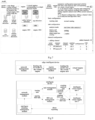
- Fig.7 is a schematic diagram of software configuration according to an embodiment of the present application.
- Fig.7 shows an AI configuration page, through which an algorithm model can be configured in a virtual engine.
- a safety helmet detection model in the model library can be dragged to the virtual engine (or referred to as a virtual engine unit) 1001, that is, the safety helmet detection model is bound to the virtual engine 1001, and a pig detection model can be dragged to the virtual engine 1002, that is, the pig detection model is bound to the virtual engine 1002.
- the engines displayed to the user in Fig.7 are all virtual engines, and a single algorithm model can be bound to a virtual engine corresponding to a physical engine by dragging.
- the safety helmet detection model can be bound to virtual engine 1001
- the pig detection model can be bound to virtual engine 1002
- the electric scooter detection model can be bound to virtual engine 1003
- the fire escape occupancy detection model can be bound to virtual engine 1004.
- a single physical engine can enable multiple algorithm models to perform intelligent analysis simultaneously.
- the task corresponding to each virtual engine can also be configured.
- real-time video analysis, polling video analysis, timing picture analysis, offline picture analysis, etc. can be selected in the analysis mode.
- the channel for analysis can also be selected, for example, selecting IPCamera01 or IPCamera02 channel.
- it can also display whether the running status of the algorithm model in each virtual engine is normal.
- Fig.8 is a schematic diagram of the internally binding of a virtual engine in an edge intelligent device according to an embodiment of the present application.
- the network management module parses protocol content and notifies the engine management module to bind an AI model (i.e. algorithm model) to a virtual engine unit (i.e. virtual engine).
- the engine management module issues an instruction for an engine to be load with a model to the intelligent engine subsystem to load the algorithm model to a designated idle virtual engine.
- a task can also be configured for the algorithm model.
- its task can be configured as real-time video analysis, and a channel for the real-time video analysis can be added.
- channels 1 and 2 are configured for real-time video analysis.
- Fig.9 is a schematic diagram of the edge intelligent device issuing a task and rule according to an embodiment of the present application.
- the platform issues a task and a parameter required for executing the task (for example, the parameter can be carried in the rule) to an engine.
- the device internally parses the protocol and issues it to the task management module and the rule management module through the network management module.
- the task management module issues different tasks to different virtual engine units (i.e. virtual engines) respectively, and the rule management module issues different rules to different virtual engine units respectively.
- Each virtual engine unit start an analysis of task and performs intelligent analysis of a video and a picture according to different rules. The analysis result are reported to the platform through the intelligent alarming management module.
- an alarming condition can be pre-configured: if it is detected that no safety helmet is worn, then an alarm will be issued; after analysis, if it is found that the safety helmet is not worn, it is determined that an alarm is needed.
- a pre-configured predetermined order can be obtained, wherein the predetermined order is configured for indicating a running order of multiple algorithm models in coordination with each other in case that the multiple algorithm models run in coordination with each other to execute the task; based on the predetermined order, the multiple algorithm models that run in coordination with each other are sequentially run in multiple virtual engines corresponding to the multiple algorithm models, to execute the task.
- an output of an algorithm model that runs firstly is used as an input of an algorithm model that runs later.
- the virtual engine 1 detects an image of a designated part, it can send the image of the designated part to the virtual engine 2 for further image comparison to confirm which user it is.
- the virtual engine 1 detects the user's behavior, it can send the image to the virtual engine 2 for further image comparison to confirm which user's behavior it is.
- the task that can be configured in Fig.7 includes a video analysis task and a picture analysis task.
- the video analysis task can include a real-time video analysis task, a polling video analysis task, etc.
- the picture analysis task can include a timing snapshot analysis task, an offline picture analysis task, etc. These tasks are described below respectively.
- Fig.10 is a flow chart of a real-time video analysis task according to the embodiment of the present application. As shown in Fig. 10 , it includes: paring a real-time video analysis task issued by the platform; if a virtual engine is analyzing a task, ending the process; if the virtual engine is not analyzing a task, saving task-related information (for example, task ID, associated channel); issuing real-time video data of multiple associated channels to the virtual engine; receiving a result of analysis by the virtual engine and sending the result to the intelligent alarming management module.
- task-related information for example, task ID, associated channel
- Fig.11 is a flowchart of a polling video analysis task according to the embodiment of the present application. As shown in Fig. 11 , it includes: paring a polling video analysis task issued by the platform; if a virtual engine already is analyzing a task, ending the process; if the virtual engine is not analyzing a task, saving task-related information (for example, task ID, polling interval, associated channel), issuing real-time video data of one associated channel to the virtual engine; receiving a result of analysis by the virtual engine and sending the result to the intelligent alarming management module; determining whether a current channel analysis time reaches the polling interval; if the polling interval is reached, switching to a next new channel associated with the task for real-time video analysis.
- task-related information for example, task ID, polling interval, associated channel
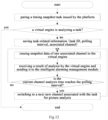
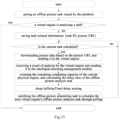
- Fig.12 is a flow chart of a timing snapshot analysis task according to the embodiment of the present application. As shown in Fig. 12 , it includes: paring a timing snapshot task issued by the platform; if a virtual engine already is analyzing a task, ending the process; if the virtual engine is not analyzing a task, saving task-related information (for example, task ID, polling interval, associated channel); issuing snapshot data of one associated channel to the virtual engine; receiving a result of analysis by the virtual engine and sending it to the intelligent alarming management module; determining whether a current channel analysis time reaches the polling interval; if the polling interval is reached, switching to a next new channel associated with the task for picture analysis.
- task-related information for example, task ID, polling interval, associated channel
- the performance of each virtual engine in multiple virtual engines can be limited based on the performance of the physical engine when the task is executed in the multiple virtual engines, wherein the performance here is configured for indicating the upper limit of a processing capacity of the engine, i.e., the performance of the physical engine is configured for indicating the upper limit of the processing capability of the physical engine, and the performance of the virtual engine is configured for indicating the upper limit of the processing capability of the virtual engine, wherein a sum of performances of the multiple virtual engines during running does not exceed the performance of the physical engine.
- the performance of the physical engine is to support up to N channels of video analysis, wherein N is a positive integer.
- the performance of the physical engine is to analyze up to M pictures per unit time, wherein M is a positive integer.
- M is a positive integer.
- the sum of the number of video channels enabled by the multiple virtual engines is limited to be less than or equal to N; or, in case that the multiple virtual engines all perform picture analysis, the sum of the number of pictures analyzed by the multiple virtual engines per unit time is limited to be less than or equal to M.
- a single physical engine supports up to 4 channels of real-time video analysis performance. Since the virtual engine is virtually obtained on the basis of the physical engine, in case that the total computing resources of a single physical engine are 4 channels of real-time video analysis, if only one virtual engine is running, then the total computing resources of this single virtual engine are also 4 channels; if four virtual engines are running, the sum of computing resources of the 4 virtual engines corresponding to the physical engine are also 4 channels. At this time, the computing resources of the four virtual engines can be dynamically adjusted. For example, if virtual engine 1 is bound to algorithm model 1 and enables one channel of real-time video analysis, then algorithm model 2 bound to virtual engine 2 can further enable 3 channels of real-time video analysis.
- virtual engine 1 If virtual engine 1 enables 4 channels of real-time video analysis, then other virtual engines cannot enable real-time video analysis anymore, because the total computing resources of all virtual engines for the single physical engine have already used 4 channels; and at this point, if a channel of real-time video analysis is enabled additionally, a "insufficient engine resources" prompt will be given.
- the real-time video analysis task associates with one channel, one channel of real-time video analysis performance is occupied. Since the polling video analysis task performs a signal channel of real-time video analysis through polling based on associated channels and only enables one channel of real-time video analysis at the same time, the polling video task only occupies one channel of real-time video analysis performance regardless of how many channels are associated with the polling video analysis task.
- the single physical engine supports offline picture analysis with a performance of 16 pictures per second, which is mutually exclusive with real-time video analysis performance. In other words, if 4 channels of real-time video analysis are enabled, the offline picture analysis cannot be performed anymore. The above performance limitations are all for a single physical engine.
- a single physical engine needs to be encapsulated and four virtual engines need to be virtualized from the single physical engine.
- the performance limitation on each task of a single virtual engine is the same as that of the physical engine, and the total analysis performance of the four virtual engines corresponding to the physical engine is the same as that of a single physical engine.
- the other three virtual engines cannot enable real-time video analysis or picture analysis anymore. If virtual engine 1 enables one channel of real-time video analysis, and virtual engine 2 enables two channels of real-time video analysis, then virtual engine 3 can further enable one channel of real-time video analysis, and the total number of channels of real-time video analysis enabled by the four virtual engines are 4 channels.
- the equivalent picture processing number refers to the number of pictures that can be analyzed when a capacity to process one channel of video analysis is used for performing picture analysis.
- the equivalent picture processing number can be calculated based on M and N, for example, the equivalent picture processing number can be M/q*N, for example, rounding up M/q*N or rounding down M/q*N; wherein, q is the configured control coefficient, and has a value in the range of 1 to M/N.
- the value of q can be configured based on experience, as long as it is between 1 and M/N. If q is 1, the equivalent picture processing number can be M/N, and if q is M/N, the equivalent picture processing number can be 1, which means that the equivalent picture processing number is a value between 1 and M/N.
- a speed of sending pictures to the other virtual engines can also be controlled based on a delay time, so as to limit the maximum number of pictures analyzed per unit time by the other virtual engines to: the equivalent picture processing number * (N-N1), wherein the delay time is configured for indicating the time interval between sending two pictures, and the delay time is: the unit time/[the equivalent picture processing number * (N-N1)].
- the speed of sending pictures to the other virtual engines can be controlled through a picture scheduling task (such as an offline picture scheduling task, which is taken as an example in the following description).
- An offline picture scheduling task can be configured, wherein the offline picture scheduling task is configured for sequentially sending a picture to each virtual engine in the at least one virtual engine for performing picture analysis; the offline picture scheduling task is controlled to send one picture every predetermined time (i.e., the delay time), so as to limit the maximum number of pictures analyzed per unit time by the at least one virtual engine for performing picture analysis to: the equivalent picture processing number * (N-N1), wherein the predetermined time is configured for indicating the time interval between sending two pictures, and the predetermined time is: the unit time/[the equivalent picture processing number * (N-N1)].
- the offline picture task for the virtual engine are allowed to be enabled.
- virtual engine 1 enables 3 channels of real-time video analysis
- the other three virtual engines can also enable the offline picture task.
- a single physical engine can support up to 4 channels of real-time video analysis or an analysis performance of 16 pictures per second, it can be derived that 1 channel of real-time video analysis performance corresponds to an offline picture analysis performance of 4 pictures/second.
- Fig.13 is a flowchart of an offline picture analysis task according to an embodiment of the present application
- Fig.14 is a flowchart of an offline picture scheduling task according to an embodiment of the present application.
- an offline picture scheduling task when multiple offline picture tasks are enabled and jointly occupy the picture analysis performance of a single physical engine, if an offline picture scheduling task needs to be added, an offline picture task of each virtual engine can be scheduled through polling to send a picture to the virtual engine.
- the offline picture task dynamically adjusts the delay time uiDelayTime to control the speed of sending pictures, in order to prevent the problem of insufficient picture analysis performance of the virtual engine caused by the multiple offline picture tasks sending too many pictures, and simultaneously prevent the situation where when the multiple offline picture tasks start to send pictures after waiting for a delay, one offline picture task keeps occupying CPU resources to start sending pictures, while other offline picture tasks remain in a waiting state.
- the scheduling task notifies offline picture task 1 to send a picture, while other offline picture tasks wait for a delay; offline picture task 1 starts waiting for a delay after complementing the picture sending; after the delay, the offline picture scheduling task is notified to schedule offline picture task 2 of the next virtual engine through polling, to notify offline picture task 2 to send the picture; offline picture task 2 preemptively sends the picture, and other offline picture tasks wait for a delay; subsequently, each task will be scheduled through polling in sequence.
- the delay time uiDelayTime of offline picture task is calculated based on the remaining real-time video analysis performance of a single physical engine, and the calculation principle is as follows:
- the software architecture implementation is changed without changing the hardware architecture.
- the physical engine is encapsulated and multiple virtual engines are virtualized from the physical engine, which can quickly perform single-physical engine and multi-algorithm analysis, expand product application scenarios, reduce product prices, and enhance product competitiveness.
- the virtual engines are loaded with different algorithm models, enabling to perform fusion intelligent analysis on the same channel of video. For example, if virtual engine 1 detects a designated part, it can send the image of the designated part to virtual engine 2 for further image comparison to confirm which user it is.
- Multiple application scenarios are expanded from simple AI detection, classification, and hybrid model analysis, to meet customer needs.
- an edge intelligent device including a memory and a processor, wherein the memory has a computer program stored therein, and the processor is configured to run the computer program to execute the methods described in the above embodiments.
- the above program can run in a processor or be stored in a memory (also known as a computer-readable medium).
- the computer-readable medium includes permanent and non-permanent, removable and non-removable media.
- Information storage can be achieved by any method or technology.
- the information can be computer readable instructions, data structures, modules of programs, or other data.
- Examples of storage media of the computer include, but are not limited to, phase change memory (PRAM), static random access memory (SRAM), dynamic random access memory (DRAM), other types of random access memory (RAM), read-only memory (ROM), electrically erasable programmable read-only memory (EEPROM), flash memory or other memory technologies, read-only optical disc read-only memory (CD-ROM), digital versatile disc (DVD) or other optical storage, magnetic tape cartridges, magnetic tape storage or other magnetic storage devices, or any other non-transmission medium that can be used for storing information that can be accessed by computing devices.
- the computer readable medium does not include temporary computer-readable media (transitory media), such as modulated data signals and carriers.
- the apparatus is referred to as an algorithm model running and processing apparatus, including: a first obtaining module, configured for obtaining at least one algorithm model, wherein the algorithm model is an artificial intelligence algorithm model; a second obtaining module, configured for obtaining multiple virtual engines, wherein the virtual engines are engines virtualized from a physical engine after software encapsulation of the physical engine, the number of the obtained virtual engines is greater than or equal to the number of the obtained algorithm models; a binging module, configured for binding each algorithm model in the at least one algorithm model to a virtual engine and running the algorithm model in the virtual engine, wherein one virtual engine is configured to be bound with one algorithm model; an executing module, configured for receiving a task, and executing the task in the virtual engine with the algorithm model.
- a first obtaining module configured for obtaining at least one algorithm model, wherein the algorithm model is an artificial intelligence algorithm model
- a second obtaining module configured for obtaining multiple virtual engines, wherein the virtual engines are engines virtualized from a physical engine after software encapsulation of the physical engine, the number
- the system or apparatus is configured for implementing the functions of the methods in the above embodiments.
- Each module in the system or apparatus corresponds to each step in the methods. Tt has been described in the methods, thus it will not be repeated here.
- the system or apparatus further includes: an alarming module, configured for obtaining a analysis result obtained after the virtual engine after executing the task with the algorithm model; determining whether an alarm needs to be sent for the analysis result based on a pre-configured alarming condition, and if so, sending an alarm.
- an alarming module configured for obtaining a analysis result obtained after the virtual engine after executing the task with the algorithm model; determining whether an alarm needs to be sent for the analysis result based on a pre-configured alarming condition, and if so, sending an alarm.
- the executing module is configured for obtaining a pre-configured predetermined order, wherein the predetermined order is configured for indicating a running order of multiple algorithm models in case that the multiple algorithm models run in coordination with each other to execute the task; based on the predetermined order, sequentially running the multiple algorithm models in multiple virtual engines corresponding to the multiple algorithm models to execute the task; wherein during running the multiple algorithm models to execute the task, an output of an algorithm model that runs firstly is used as an input of an algorithm model that runs later.
- the system or apparatus further includes: a limiting module, configured for limiting a performance of each virtual engine in the multiple virtual engines based on a performance of the physical engine in case of executing the task in the multiple virtual engines, wherein the performance of the physical engine is configured for indicating an upper limit of a processing capability of the physical engine, and the performance of the virtual engine is configured for indicating an upper limit of a processing capability of the virtual engine, wherein a sum of performances of the multiple virtual engines during running does not exceed the performance of the physical engine.
- a limiting module configured for limiting a performance of each virtual engine in the multiple virtual engines based on a performance of the physical engine in case of executing the task in the multiple virtual engines, wherein the performance of the physical engine is configured for indicating an upper limit of a processing capability of the physical engine, and the performance of the virtual engine is configured for indicating an upper limit of a processing capability of the virtual engine, wherein a sum of performances of the multiple virtual engines during running does not exceed the performance of the physical engine.
- the task includes a video analysis task and/or a picture analysis task; wherein, for the video analysis task, the performance of the physical engine is to support up to N channels of video analysis, wherein N is a positive integer; for the picture analysis task, the performance of the physical engine is to analyze up to M pictures per unit time, wherein M is a positive integer.
- the limiting module is configured for limiting a sum of the number of video channels enabled by the multiple virtual engines to be less than or equal to N in case that the multiple virtual engines all perform video analysis; or limiting a sum of the number of pictures analyzed per unit time by the multiple virtual engines to be less than or equal to M in case that the multiple virtual engines all perform picture analysis; or limiting the maximum number of pictures analyzed per unit time by the at least one virtual engine for performing picture analysis to: an equivalent picture processing number * (N-N1), wherein N1 is less than N, and is greater than or equal to 0, N1 is the number of video channels enabled by the virtual engine for performing video analysis, and the equivalent picture processing number is the number of pictures that can be analyzed when a capacity to process one channel of video analysis is used for performing picture analysis.
- N-N1 equivalent picture processing number *
- the limiting module is configured for configuring a picture scheduling task, wherein the picture scheduling task is configured for sequentially sending a picture to each virtual engine in the at least one virtual engine for performing picture analysis; controlling the picture scheduling task to send a picture every predetermined time, so as to limit the maximum number of pictures analyzed per unit time by the at least one virtual engine for performing picture analysis to: the equivalent picture processing number * (N-N1), wherein the predetermined time is configured for indicating a time interval between sending two pictures, and the predetermined time is: the unit time/[the equivalent picture processing number * (N-N1)].
- the equivalent picture processing number is: M/q*N; wherein, q is a configured control coefficient, and has a value in a range of 1 to M/N.
- the binding module is further configured for obtaining an operation signal, wherein the operation signal is configured for dragging a first object representing an algorithm model from a first display area to a second display area, the first display area displays at least one first object, each first object corresponding to one algorithm model, the second display area displays at least one second object, each second object corresponding to one virtual engine; in response to the operation signal, in case that an overlap degree between the first object and a predetermined second object in the second display area exceeds a threshold, binding an algorithm model corresponding to the first object to an virtual engine corresponding to the predetermined second object.
- the binding module is configured for creating, each time after an algorithm model is loaded in the physical engine, a model handle corresponding to the loaded algorithm model; obtaining identification information of a virtual engine to be bound to the loaded algorithm model; establishing a correspondence between the model handle corresponding to the loaded algorithm model and the identification information, to bind the loaded algorithm model to the virtual engine corresponding to the identification information.
- the simultaneous analysis scenario that requires support from multiple algorithm models can be implemented in the edge intelligent device (which can be the edge intelligent device with one physical engine), thereby the multiple algorithm models can run simultaneously in the edge intelligent device, meeting the requirements of low-cost and multi algorithm model fusion analysis.
Landscapes
- Engineering & Computer Science (AREA)
- Software Systems (AREA)
- Theoretical Computer Science (AREA)
- General Engineering & Computer Science (AREA)
- Physics & Mathematics (AREA)
- General Physics & Mathematics (AREA)
- Processing Or Creating Images (AREA)
- Image Analysis (AREA)
- Debugging And Monitoring (AREA)
Applications Claiming Priority (2)
| Application Number | Priority Date | Filing Date | Title |
|---|---|---|---|
| CN202210501689.0A CN117076037A (zh) | 2022-05-09 | 2022-05-09 | 一种算法模型运行处理方法、装置及边缘智能设备 |
| PCT/CN2023/093032 WO2023217146A1 (zh) | 2022-05-09 | 2023-05-09 | 一种算法模型运行处理方法、装置及边缘智能设备 |
Publications (2)
| Publication Number | Publication Date |
|---|---|
| EP4524736A1 true EP4524736A1 (de) | 2025-03-19 |
| EP4524736A4 EP4524736A4 (de) | 2025-12-03 |
Family
ID=88710235
Family Applications (1)
| Application Number | Title | Priority Date | Filing Date |
|---|---|---|---|
| EP23802915.1A Pending EP4524736A4 (de) | 2022-05-09 | 2023-05-09 | Verfahren und vorrichtung zur laufverarbeitung eines algorithmusmodells und intelligente edge-vorrichtung |
Country Status (3)
| Country | Link |
|---|---|
| EP (1) | EP4524736A4 (de) |
| CN (1) | CN117076037A (de) |
| WO (1) | WO2023217146A1 (de) |
Families Citing this family (1)
| Publication number | Priority date | Publication date | Assignee | Title |
|---|---|---|---|---|
| CN118506026B (zh) * | 2024-07-16 | 2024-10-01 | 杭州海康威视数字技术股份有限公司 | 一种巡检设备以及巡检方法 |
Family Cites Families (6)
| Publication number | Priority date | Publication date | Assignee | Title |
|---|---|---|---|---|
| WO2014035463A1 (en) * | 2012-08-31 | 2014-03-06 | Oregon State Board Of Higher Education On Behalf Of Portland State University | System and methods for generating and managing a virtual device |
| CN107783818B (zh) * | 2017-10-13 | 2021-12-24 | 北京百度网讯科技有限公司 | 深度学习任务处理方法、装置、设备及存储介质 |
| US11977958B2 (en) * | 2017-11-22 | 2024-05-07 | Amazon Technologies, Inc. | Network-accessible machine learning model training and hosting system |
| CN107861820A (zh) * | 2017-12-08 | 2018-03-30 | 郑州云海信息技术有限公司 | 一种虚拟机资源分配方法及系统 |
| US20200193221A1 (en) * | 2018-12-17 | 2020-06-18 | At&T Intellectual Property I, L.P. | Systems, Methods, and Computer-Readable Storage Media for Designing, Creating, and Deploying Composite Machine Learning Applications in Cloud Environments |
| EP4141663A4 (de) * | 2020-07-17 | 2023-05-31 | Huawei Technologies Co., Ltd. | Datenverarbeitungsverfahren und -vorrichtung sowie intelligentes fahrzeug |
-
2022
- 2022-05-09 CN CN202210501689.0A patent/CN117076037A/zh active Pending
-
2023
- 2023-05-09 EP EP23802915.1A patent/EP4524736A4/de active Pending
- 2023-05-09 WO PCT/CN2023/093032 patent/WO2023217146A1/zh not_active Ceased
Also Published As
| Publication number | Publication date |
|---|---|
| EP4524736A4 (de) | 2025-12-03 |
| CN117076037A (zh) | 2023-11-17 |
| WO2023217146A9 (zh) | 2024-09-12 |
| WO2023217146A1 (zh) | 2023-11-16 |
Similar Documents
| Publication | Publication Date | Title |
|---|---|---|
| US11765051B2 (en) | Instantiation of cloud-hosted functions based on call to function graph | |
| RU2645595C2 (ru) | Выгрузка потоков виртуальных машин в физические очереди | |
| US10768960B2 (en) | Method for affinity binding of interrupt of virtual network interface card, and computer device | |
| EP3270289A2 (de) | Behälterbasierte mandantenfähige datenverarbeitungsinfrastruktur | |
| US9792137B2 (en) | Real-time performance apparatus and method for controlling virtual machine scheduling in real-time | |
| CN103473136A (zh) | 一种虚拟机的资源配置方法和通信设备 | |
| CN111338769B (zh) | 一种数据处理方法、装置及计算机可读存储介质 | |
| EP4524736A1 (de) | Verfahren und vorrichtung zur laufverarbeitung eines algorithmusmodells und intelligente edge-vorrichtung | |
| CN114327846A (zh) | 集群的扩容方法、装置、电子设备及计算机可读存储介质 | |
| CN116578416A (zh) | 一种基于gpu虚拟化的信号级仿真加速方法 | |
| CN116204321A (zh) | 模型获取、模型部署方法、装置、设备和介质 | |
| CN112559176B (zh) | 一种指令处理方法和装置 | |
| CN116069447B (zh) | 一种虚拟机numa拓扑生成方法、装置、设备、介质 | |
| CN108829516B (zh) | 一种图形处理器资源虚拟化调度方法 | |
| CN111953503B (zh) | Nfv资源部署编排方法和网络功能虚拟化编排器 | |
| CN112506672B (zh) | 面向虚拟gpu的云手机在线调度与迁移的方法及装置 | |
| CN119336448B (zh) | 业务处理方法、处理装置、设备、存储介质和程序产品 | |
| CN113032098B (zh) | 一种虚拟机调度方法、装置、设备及可读存储介质 | |
| CN116149804A (zh) | 任务调度方法、装置和服务器 | |
| CN115168028A (zh) | 任务处理方法及装置 | |
| CN112261076B (zh) | 下载服务分离方法、装置、电子设备和可读存储介质 | |
| US20230195546A1 (en) | Message Management Method and Apparatus, and Serverless System | |
| CN121523917A (zh) | 数据处理方法以及相关设备 | |
| CN114510324A (zh) | 一种挂载有ceph卷的KVM虚拟机的磁盘管理方法及系统 | |
| CN120104248A (zh) | 虚拟机的资源调度方法、装置、系统、车辆及存储介质 |
Legal Events
| Date | Code | Title | Description |
|---|---|---|---|
| STAA | Information on the status of an ep patent application or granted ep patent |
Free format text: STATUS: THE INTERNATIONAL PUBLICATION HAS BEEN MADE |
|
| PUAI | Public reference made under article 153(3) epc to a published international application that has entered the european phase |
Free format text: ORIGINAL CODE: 0009012 |
|
| STAA | Information on the status of an ep patent application or granted ep patent |
Free format text: STATUS: REQUEST FOR EXAMINATION WAS MADE |
|
| 17P | Request for examination filed |
Effective date: 20241119 |
|
| AK | Designated contracting states |
Kind code of ref document: A1 Designated state(s): AL AT BE BG CH CY CZ DE DK EE ES FI FR GB GR HR HU IE IS IT LI LT LU LV MC ME MK MT NL NO PL PT RO RS SE SI SK SM TR |
|
| DAV | Request for validation of the european patent (deleted) | ||
| DAX | Request for extension of the european patent (deleted) | ||
| A4 | Supplementary search report drawn up and despatched |
Effective date: 20251030 |
|
| RIC1 | Information provided on ipc code assigned before grant |
Ipc: G06F 9/455 20180101AFI20251024BHEP Ipc: G06F 8/34 20180101ALI20251024BHEP |