EP4525326A1 - Procédé et appareil de détermination d'informations de couverture de satellite, et dispositif de communication et support d'enregistrement - Google Patents
Procédé et appareil de détermination d'informations de couverture de satellite, et dispositif de communication et support d'enregistrement Download PDFInfo
- Publication number
- EP4525326A1 EP4525326A1 EP22941211.9A EP22941211A EP4525326A1 EP 4525326 A1 EP4525326 A1 EP 4525326A1 EP 22941211 A EP22941211 A EP 22941211A EP 4525326 A1 EP4525326 A1 EP 4525326A1
- Authority
- EP
- European Patent Office
- Prior art keywords
- coverage information
- satellite coverage
- information
- satellite
- network device
- Prior art date
- Legal status (The legal status is an assumption and is not a legal conclusion. Google has not performed a legal analysis and makes no representation as to the accuracy of the status listed.)
- Pending
Links
Images

Classifications
-
- H—ELECTRICITY
- H04—ELECTRIC COMMUNICATION TECHNIQUE
- H04B—TRANSMISSION
- H04B7/00—Radio transmission systems, i.e. using radiation field
- H04B7/14—Relay systems
- H04B7/15—Active relay systems
- H04B7/185—Space-based or airborne stations; Stations for satellite systems
- H04B7/1851—Systems using a satellite or space-based relay
- H04B7/18513—Transmission in a satellite or space-based system
-
- H—ELECTRICITY
- H04—ELECTRIC COMMUNICATION TECHNIQUE
- H04L—TRANSMISSION OF DIGITAL INFORMATION, e.g. TELEGRAPHIC COMMUNICATION
- H04L63/00—Network architectures or network communication protocols for network security
- H04L63/14—Network architectures or network communication protocols for network security for detecting or protecting against malicious traffic
- H04L63/1441—Countermeasures against malicious traffic
- H04L63/1458—Denial of Service
-
- H—ELECTRICITY
- H04—ELECTRIC COMMUNICATION TECHNIQUE
- H04W—WIRELESS COMMUNICATION NETWORKS
- H04W12/00—Security arrangements; Authentication; Protecting privacy or anonymity
- H04W12/06—Authentication
-
- H—ELECTRICITY
- H04—ELECTRIC COMMUNICATION TECHNIQUE
- H04W—WIRELESS COMMUNICATION NETWORKS
- H04W60/00—Affiliation to network, e.g. registration; Terminating affiliation with the network, e.g. de-registration
- H04W60/04—Affiliation to network, e.g. registration; Terminating affiliation with the network, e.g. de-registration using triggered events
-
- H—ELECTRICITY
- H04—ELECTRIC COMMUNICATION TECHNIQUE
- H04W—WIRELESS COMMUNICATION NETWORKS
- H04W84/00—Network topologies
- H04W84/02—Hierarchically pre-organised networks, e.g. paging networks, cellular networks, WLAN [Wireless Local Area Network] or WLL [Wireless Local Loop]
- H04W84/04—Large scale networks; Deep hierarchical networks
- H04W84/06—Airborne or Satellite Networks
Definitions
- the disclosure relates to, but is not limited to, a field of wireless communication technology, in particularly, to a method and an apparatus for determining satellite coverage information, a communication device and a storage medium.
- the 3rd Generation Partnership Project (3GPP) has approved a new study on satellite access.
- One objective of the study is to investigate 5th Generation Core (5GC)/evolved packet core (EPC) enhancements to support satellite access with discontinuous satellite coverage.
- 5GC 5th Generation Core
- EPC evolved packet core
- AMF access network
- UE user equipment
- CM-IDLE connection management idle state
- embodiments of the present disclosure provide a method and an apparatus for determining satellite coverage information, a communication device and a storage medium.
- a method for determining satellite coverage information is provided.
- the method is performed by a user equipment (UE).
- the method includes:
- receiving the NAS message related to the network registration of the UE sent by the core network device includes: receiving a registration accept message carrying the second satellite coverage information sent by the core network device.
- determining the third satellite coverage information to be adopted by the UE based on the first satellite coverage information and the second satellite coverage information includes one of:
- a method for determining satellite coverage information is provided.
- the method is performed by a core network device.
- the method includes:
- an apparatus for determining satellite coverage information includes:
- the second transceiver module is further configured to: send to the UE a registration accept message carrying the second satellite coverage information.
- obtaining the second satellite coverage information includes at least one of:
- an apparatus for determining satellite coverage information includes:
- a communication device includes: a processor, a memory and an executable program stored in the memory and capable of being run by the processor.
- the executable program is executed by the processor, steps of the method for determining satellite coverage information as described the first aspect, the second aspect or the third aspect are implemented.
- a storage medium having an executable program stored thereon is provided.
- the executable program is executed by a processor, steps of the method for determining satellite coverage information as described the first aspect, the second aspect or the third aspect are implemented.
- Embodiments of the disclosure provide the method and the apparatus for determining satellite coverage information, the communication device and the storage medium.
- the UE receives the broadcast information from the NTN access network device, in which the broadcast information carries the first satellite coverage information.
- the UE sends the registration request message for requesting the network registration to the NTN access network device.
- the UE receives the NAS message related to the network registration of the UE sent by the core network device, in which the NAS message carries the second satellite coverage information.
- the UE determines the third satellite coverage information to be adopted by the UE based on the first satellite coverage information and the second satellite coverage information.
- the UE determines whether the first satellite coverage information is correct, and then communicates with the NTN access network device based on the determined real third satellite coverage information of the satellite.
- communication security is improved, and a situation where the UE is misled to stop working while it is still in the actual network coverage resulted by incorrect satellite coverage information may be reduced, and a situation where the UE continues to send signals for accessing the network when it is already out of the actual network coverage, leading to unnecessary power consumptions, may be reduced.
- first, second, and third may be used in embodiments of the disclosure to describe various types of information, the information should not be limited to these terms. These terms are only used to distinguish the same type of information from each other.
- first information may also be referred to as the second information, and similarly, the second information may also be referred to as the first information.
- second information may also be referred to as the first information.
- if as used herein may be interpreted as “when", “upon” or "in response to determining”.
- FIG. 1 is a schematic diagram illustrating a wireless communication system according to an embodiment of the disclosure.
- the wireless communication system is a communication system based on cellular mobile communication technology.
- the wireless communication system may include: a plurality of terminals 11 and a plurality of base stations 12.
- the terminal 11 may be a device that provides voice and/or data connectivity to a user.
- the terminal 11 may communicate with one or more core networks via a radio access network (RAN).
- RAN radio access network
- the terminal 11 may be an Internet of Things (IoT) terminal, such as a sensor device, a cell phone (or "cellular" phone), and a computer with the IoT terminal.
- IoT Internet of Things
- the terminal 11 may be a stationary, portable, pocket-sized, handheld, computer-built, or vehicle-mounted device, such as, a Station (STA), a subscriber unit, a subscriber station, a mobile station, a mobile, a remote station, an access point, a remote terminal, an access terminal, a user terminal, a user agent, a user device, or a user equipment (UE).
- STA Station
- UE user equipment
- the terminal 11 may also be an unmanned aerial vehicle device.
- the terminal 11 may also be a vehicle-mounted device, for example, a driving computer having wireless communication function or a wireless communication device external to the driving computer.
- the terminal 11 may also be a roadside device, for example, a street light, a signal light, or other roadside devices having the wireless communication function.
- the base station 12 may be a network side device in the wireless communication system.
- the wireless communication system may be a 4th Generation (4G) mobile communication system, also known as a Long Term Evolution (LTE) system.
- the wireless communication system may also be a 5G system, also known as a New Radio (NR) system or a 5G NR system.
- the wireless communication system may be any next generation system of the 5G system.
- the access network in the 5G system may be called a New Generation-Radio Access Network (NG-RAN) or a machine type communication (MTC) system.
- NG-RAN New Generation-Radio Access Network
- MTC machine type communication
- the base station 12 may be an evolved base station (eNB) employed in the 4G system.
- the base station 12 may be a base station (gNB) with a centralized distributed architecture employed in the 5G system.
- the base station 12 adopts a centralized-distributed architecture, it usually includes a central unit (CU) and at least two distributed units (DUs).
- the CU is equipped with protocol stacks of a Packet Data Convergence Protocol (PDCP) layer, a Radio Link Control (RLC) layer, and a Media Access Control (MAC) layer.
- the DU is equipped with a protocol stack of a physical (PHY) layer, and the specific implementation of the base station 12 is not limited in embodiments of the disclosure.
- a wireless connection may be established between the base station 12 and the terminal 11 via a radio interface.
- the radio interface is a radio interface based on the 4G standard.
- the radio interface is a radio interface based on the 5G standard, such as a NR.
- the radio interface may be a radio interface based on the standard of the next generation of 5G.
- an End to End (E2E) connection is established between the terminals 11 in scenarios, such as, Vehicle to Vehicle (V2V) communication, Vehicle to Infrastructure (V2I) communication, and Vehicle to Pedestrian (V2P) communication in Vehicle to Everything (V2X) communication.
- V2V Vehicle to Vehicle
- V2I Vehicle to Infrastructure
- V2P Vehicle to Pedestrian
- the above wireless communication system may also include a network management device 13.
- the plurality of base stations 12 are connected to the network management device 13 respectively.
- the network management device 13 may be a core network device in the wireless communication system.
- the network management device 13 may be a Mobility Management Entity (MME) in an Evolved Packet Core (EPC).
- the network management device may be another core network device, such as a Serving GateWay (SGW), a Public Data Network GateWay (PGW), a Policy and Charging Rules Function (PCRF), or a Home Subscriber Server (HSS), etc.
- SGW Serving GateWay
- PGW Public Data Network GateWay
- PCRF Policy and Charging Rules Function
- HSS Home Subscriber Server
- the access and mobility management function may detect a time when a UE is about to leave current network coverage based on satellite coverage information.
- the satellite coverage information may be sent to the AMF by a non-terrestrial network-radio access network (NTN-RAN) or an operation administration and maintenance (OAM) system.
- NTN-RAN non-terrestrial network-radio access network
- OAM operation administration and maintenance
- the satellite coverage information is also sent by the NTN access network device to the UE via system information block (SIB) information.
- SIB system information block
- the satellite coverage information carried in the SIB information broadcast could be easily tampered by attackers. If the tampered satellite coverage information distorts actual network coverage, the distorted network coverage may mislead the UE to stop working when the UE is still in the actual network coverage, which is a denial of service (DoS) attack; or the distorted network coverage may mislead the UE to keep sending signals for accessing to the network when the UE is already out of the actual network coverage, leading to unnecessary power consumption.
- DoS denial of service
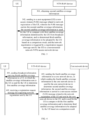
- an embodiment provides a method for determining satellite coverage information.
- the method may be performed by a UE of a cellular mobile communication system and includes following steps.
- broadcast information is received from a non-terrestrial network (NTN) access network device, in which the broadcast information carries first satellite coverage information.
- NTN non-terrestrial network
- a registration request message for requesting network registration is sent to the NTN access network device.
- NAS non-access stratum
- third satellite coverage information to be adopted by the UE is determined based on the first satellite coverage information and the second satellite coverage information.
- This embodiment can be applied to, but is not limited to, discontinuous satellite coverage scenarios, which is not limited herein.
- the NTN access network device may include a satellite or a base station, etc.in the NTN.
- the satellite in the NTN acts as relay to provide signals for the base station on the ground, that is, to provide signal coverage of cellular mobile communication network to the ground.
- the satellite acts as an airborne base station in the NTN for providing the signal coverage of cellular mobile communication network to the ground.
- the satellite coverage information which is also referred to as satellite signal coverage information, is used to determine coverage of satellite signals at different time points.
- the satellite coverage information includes, but is not limited to, at least one of: satellite ephemeris information, a center position of the coverage of satellite signals, a radius of the coverage of satellite signals, or an area of the coverage of satellite signals.
- the UE may determine a location of the UE within the coverage of satellite signals based on the satellite coverage information. For example, the UE may determine a current distance to a center point of the coverage of satellite signals or a current distance to an edge of the coverage of satellite signals based on a geographical location where the UE is, the satellite ephemeris, the center position of the coverage of satellite signals, and the radius of the coverage of satellite signals. The UE may then determine whether to access the network, whether to perform data communication, and/or whether to stop data communication, etc.
- the first satellite coverage information may be satellite coverage information acquired by the UE from broadcast information of the NTN access network device.
- the broadcast information may include, but is not limited to, system information broadcast by the NTN access network device.
- the system information includes, but is not limited to, SIB information.
- the satellite coverage information may be configured on the NTN access network device by an OAM system.
- the NTN access network device may carry real satellite coverage information of the satellite, i.e., the fourth satellite coverage information, in the broadcast information and broadcast the broadcast information. Since there may be causes such as incorrect transmission and/or tampering of the broadcast system information during transmission, the fourth satellite coverage information sent by the NTN access network device may be different from the first satellite coverage information obtained by the UE from the broadcast information. That is, the first satellite coverage information may be the same as the fourth satellite coverage information carried by the NTN access network device in the broadcast information, or the first satellite coverage information may be different from the fourth satellite coverage information carried by the NTN access network device in the broadcast information.
- the broadcast system information is not protected from tampering, the fourth satellite coverage information carried by the NTN access network device in the broadcast information may be tampered, so that the first satellite coverage information received by the UE may be different from the fourth satellite coverage information.
- the core network device may include an AMF, etc.
- the core network device may obtain the second satellite coverage information.
- the core network device may be configured to obtain the second satellite coverage information in a way of being protected, to improve reliability of the second satellite coverage information.
- obtaining the second satellite coverage information by the core network device includes at least one of:
- the NTN access network device may carry the fourth satellite coverage information via an N2 message, and the core network device obtains the second satellite coverage information carried from the N2 message. Since the N2 message is a message being protected, there is a higher probability that the fourth satellite coverage information is consistent with the second satellite coverage information received by the core network device. Generally, it is considered that the fourth satellite coverage information is subject to security protection during transmission, for example, encryption protection and/or integrity protection, and the second satellite coverage information received by the core network device is consistent with the fourth satellite coverage information.
- the second satellite coverage information may also be pre-stored in the OAM network element, so that the core network device can directly obtain the second satellite coverage information from the OAM network element.
- the second satellite coverage information may be pre-stored in the OAM network element by the NTN access network device or the like.
- An event of performing the network registration by the UE may trigger the core network device to send a message carrying the second satellite coverage information to the UE.
- the UE may send the registration request message to the NTN access network device to request the network registration.
- the NTN access network device may, based on the registration request message, request the core network device (such as an AMF, etc.) to register the UE to the core network, to perform communication activities.
- the core network may send the second satellite coverage information to the UE during the UE performing the network registration.
- the core network device may carry the second satellite coverage information in a message transmitted in a secure transmission manner.
- the secure transmission manner may include transmitting the message by means of encryption protection and/or integrity protection, etc.
- the message carrying the second satellite coverage information is a message being protected, it may be considered that the second satellite coverage information has not been tampered during the transmission process, and the second satellite coverage information may be considered as real satellite coverage information.
- the core network device may carry the second satellite coverage information in a NAS message and send the NAS message to the UE during the registration process of the UE. Errors during the transmission of the second satellite coverage information may be reduced due to the NAS message being the message subjected to encryption protection and/or integrity protection.
- the UE may compare the first satellite coverage information with the second satellite coverage information to determine whether the received first satellite coverage information is the real satellite coverage information.
- the third satellite coverage information is determined based on whether the first satellite coverage information is the real satellite coverage information. For example, if the first satellite coverage information is the real satellite coverage information, the first satellite coverage information may be determined as the third satellite coverage information. If the first satellite coverage information is not the real satellite coverage information, the second satellite coverage information may be determined as the third satellite coverage information.
- the UE may determine the location of the UE within the satellite coverage based on the third satellite coverage information, and then determine whether to perform data communication and/or whether to stop data communication, etc.
- the UE determines whether the first satellite coverage information is correct, and then communicates with the NTN access network device based on the determined real third satellite coverage information of the satellite.
- communication security is improved, and a situation where the UE is misled to stop working while it is still in the actual network coverage resulted by incorrect satellite coverage information may be reduced, and a situation where the UE continues to send signals for accessing the network when it is already out of the actual network coverage, leading to unnecessary power consumptions, may be reduced.
- receiving the NAS message related to the network registration of the UE sent by the core network device includes: receiving a registration accept message carrying the second satellite coverage information sent by the core network device.
- an accuracy of receiving the second satellite coverage information by the UE may be improved, and verification of the first satellite coverage information may be achieved.
- determining the third satellite coverage information to be adopted by the UE based on the first satellite coverage information and the second satellite coverage information includes one of:
- the UE compares the first satellite coverage information with the second satellite coverage information. If the first satellite coverage information is inconsistent with the second satellite coverage information, the UE may determine the second satellite coverage information as the third satellite coverage information. For example, the first satellite coverage information stored in the UE is cover with the second satellite coverage information. If the first satellite coverage information is consistent with the second satellite coverage information, the UE may determine the first satellite coverage information as the third satellite coverage information. For example, the first satellite coverage information may be reserved.
- step 301 second satellite coverage information is obtained.
- an NAS message related to network registration of a UE is sent to the UE, in which the NAS message carries the second satellite coverage information, the second satellite coverage information is used for the UE to compare with first satellite coverage information determined by the UE from broadcast information, and to determine third satellite coverage information to be adopted by the UE based on a comparison result, and the network registration is triggered by a registration request message sent by the UE to an NTN access network device.
- This embodiment can be applied to, but is not limited to, discontinuous satellite coverage scenarios, which is not limited herein.
- the core network device includes, but is not limited to, an AMF.
- the NTN access network device may include a satellite or a base station, etc.in the NTN.
- the satellite in the NTN acts as relay to provide signals for the base station on the ground, that is, to provide signal coverage of cellular mobile communication network to the ground.
- the satellite acts as an airborne base station in the NTN for providing the signal coverage of cellular mobile communication network to the ground.
- the satellite coverage information which is also referred to as satellite signal coverage information, is used to determine coverage of satellite signals at different time points.
- the satellite coverage information includes, but is not limited to, at least one of: satellite ephemeris information, a center position of the coverage of satellite signals, a radius of the coverage of satellite signals, or an area of the coverage of satellite signals.
- the UE may determine a location of the UE within the coverage of satellite signals based on the satellite coverage information. For example, the UE may determine a current distance to a center point of the coverage of satellite signals or a current distance to an edge of the coverage of satellite signals based on a geographical location where the UE is, the satellite ephemeris, the center position of the coverage of satellite signals, and the radius of the coverage of satellite signals. The UE may then determine whether to access the network, whether to perform data communication, and/or whether to stop data communication, etc.
- the first satellite coverage information may be satellite coverage information acquired by the UE from broadcast information of the NTN access network device.
- the broadcast information may include, but is not limited to, system information broadcast by the NTN access network device.
- the system information includes, but is not limited to, SIB information.
- the satellite coverage information may be configured on the NTN access network device by an OAM system.
- the NTN access network device may carry real satellite coverage information of the satellite, i.e., the fourth satellite coverage information, in the broadcast information and broadcast the broadcast information. Since there may be causes such as incorrect transmission and/or tampering of the broadcast system information during transmission, the fourth satellite coverage information sent by the NTN access network device may be different from the first satellite coverage information obtained by the UE from the broadcast information. That is, the first satellite coverage information may be the same as the fourth satellite coverage information carried by the NTN access network device in the broadcast information, or the first satellite coverage information may be different from the fourth satellite coverage information carried by the NTN access network device in the broadcast information.
- the broadcast system information is not protected from tampering, the fourth satellite coverage information carried by the NTN access network device in the broadcast information could be easily tampered, so that the first satellite coverage information received by the UE may be inconsistent with the fourth satellite coverage information.
- the core network device may include an AMF, etc.
- the core network device may obtain the second satellite coverage information.
- the core network device may be configured to obtain the second satellite coverage information in a way of being protected, to improve reliability of the second satellite coverage information.
- obtaining the second satellite coverage information includes at least one of:
- the NTN access network device may carry the fourth satellite coverage information via an N2 message, and the core network device obtains the second satellite coverage information carried from the N2 message. Since the N2 message is a message being protected, there is a higher probability that the fourth satellite coverage information is consistent with the second satellite coverage information received by the core network device. Generally, it is considered that the fourth satellite coverage information is subject to security protection during transmission, for example, encryption protection and/or integrity protection, and the second satellite coverage information received by the core network device is consistent with the fourth satellite coverage information.
- the second satellite coverage information may also be pre-stored in the OAM network element, so that the core network device can directly obtain the second satellite coverage information from the OAM network element.
- the second satellite coverage information may be pre-stored in the OAM network element by the NTN access network device or the like.
- An event of performing the network registration by the UE may trigger the core network device to send a message carrying the second satellite coverage information to the UE.
- the UE may send the registration request message to the NTN access network device to request the network registration.
- the NTN access network device may, based on the registration request message, request the core network device (such as an AMF, etc.) to register the UE to the core network, to perform communication activities.
- the core network may send the second satellite coverage information to the UE during the UE performing the network registration.
- the core network device may carry the second satellite coverage information in a message transmitted in a secure transmission manner.
- the secure transmission manner may include transmitting the message by means of encryption protection and/or integrity protection, etc.
- the message carrying the second satellite coverage information is a message being protected, it may be considered that the second satellite coverage information has not been tampered during the transmission process, and the second satellite coverage information may be considered as real satellite coverage information.
- the core network device may carry the second satellite coverage information in a NAS message and send the NAS message to the UE during the registration process of the UE. Errors during the transmission of the second satellite coverage information may be reduced due to the NAS message being the message subjected to encryption protection and/or integrity protection.
- the UE may compare the first satellite coverage information with the second satellite coverage information to determine whether the received first satellite coverage information is the real satellite coverage information.
- the third satellite coverage information is determined based on whether the first satellite coverage information is the real satellite coverage information. For example, if the first satellite coverage information is the real satellite coverage information, the first satellite coverage information may be determined as the third satellite coverage information. If the first satellite coverage information is not the real satellite coverage information, the second satellite coverage information may be determined as the third satellite coverage information.
- the UE may determine the location of the UE within the satellite coverage based on the third satellite coverage information, and then determine whether to perform data communication and/or whether to stop data communication, etc.
- the UE determines whether the first satellite coverage information is correct, and then communicates with the NTN access network device based on the determined real third satellite coverage information of the satellite.
- communication security is improved, and a situation where the UE is misled to stop working while it is still in the actual network coverage resulted by incorrect satellite coverage information may be reduced, and a situation where the UE continues to send signals for accessing the network when it is already out of the actual network coverage, leading to unnecessary power consumptions, may be reduced.
- sending to the UE the NAS message related to the network registration of the UE includes: sending to the UE a registration accept message carrying the second satellite coverage information.
- the UE sends the registration request message to the network.
- the registration request message may include a NTN capability of the UE.
- the NTN access network device may broadcast the fourth satellite coverage information to the UE via broadcast information (such as, system information, e.g., SIB information).
- the fourth satellite coverage information in the broadcast information is usually unprotected.
- receiving the second satellite coverage information sent by the NTN access network device includes: receiving the registration request message carrying the second satellite coverage information from the NTN access network device.
- determining, by the UE, the third satellite coverage information to be adopted by the UE based on the first satellite coverage information and the second satellite coverage information includes one of:
- an embodiment provides a method for determining satellite coverage information.
- the method may be performed by an NTN access network device of a cellular mobile communication system, and includes following steps.
- the fourth satellite coverage information is sent to a core network device, in which sending the fourth satellite coverage information to the core network device is used for the core network device to determine second satellite coverage information, the second satellite coverage information is carried in a NAS message related to the network registration of the UE and sent by the core network device to the UE, and is used for the UE to compare with the first satellite coverage information and to determine third satellite coverage information to be adopted by the UE based on a comparison result.
- the first satellite coverage information may be satellite coverage information acquired by the UE from broadcast information of the NTN access network device.
- the broadcast information may include but is not limited to system information broadcast by the NTN access network device.
- the system information includes but is not limited to SIB information.
- the satellite coverage information may be configured on the NTN access network device by an OAM system.
- the broadcast system information is not protected from tampering, the fourth satellite coverage information carried by the NTN access network device in the broadcast information could be easily tampered, so that the first satellite coverage information received by the UE may be inconsistent with the fourth satellite coverage information.
- the core network device may include an AMF, etc.
- the core network device may obtain the second satellite coverage information.
- the core network device may be configured to obtain the second satellite coverage information in a way of being protected, to improve reliability of the second satellite coverage information.
- obtaining the second satellite coverage information by the core network device includes at least one of:
- the NTN access network device may carry the fourth satellite coverage information via an N2 message, and the core network device obtains the second satellite coverage information carried from the N2 message. Since the N2 message is a message being protected, there is a higher probability that the fourth satellite coverage information is consistent with the second satellite coverage information received by the core network device. Generally, it is considered that the fourth satellite coverage information is subject to security protection during transmission, for example, encryption protection and/or integrity protection, and the second satellite coverage information received by the core network device is consistent with the fourth satellite coverage information.
- the second satellite coverage information may also be pre-stored in the OAM network element, so that the core network device can directly obtain the second satellite coverage information from the OAM network element.
- the second satellite coverage information may be pre-stored in the OAM network element by the NTN access network device or the like.
- An event of performing the network registration by the UE may trigger the core network device to send a message carrying the second satellite coverage information to the UE.
- the UE may send the registration request message to the NTN access network device to request the network registration.
- the NTN access network device may, based on the registration request message, request the core network device (such as an AMF, etc.) to register the UE to the core network, to perform communication activities.
- the core network may send the second satellite coverage information to the UE during the UE performing the network registration.
- the core network device may carry the second satellite coverage information in a message transmitted in a secure transmission manner.
- the secure transmission manner may include transmitting the message by means of encryption protection and/or integrity protection, etc.
- the message carrying the second satellite coverage information is a message being protected, it may be considered that the second satellite coverage information has not been tampered during the transmission process, and the second satellite coverage information may be considered as real satellite coverage information.
- the core network device may carry the second satellite coverage information in a NAS message and send the NAS message to the UE during the registration process of the UE. Errors during the transmission of the second satellite coverage information may be reduced due to the NAS message being the message subjected to encryption protection and/or integrity protection.
- the UE may compare the first satellite coverage information with the second satellite coverage information to determine whether the received first satellite coverage information is the real satellite coverage information.
- the third satellite coverage information is determined based on whether the first satellite coverage information is the real satellite coverage information. For example, if the first satellite coverage information is the real satellite coverage information, the first satellite coverage information may be determined as the third satellite coverage information. If the first satellite coverage information is not the real satellite coverage information, the second satellite coverage information may be determined as the third satellite coverage information.
- the UE may determine the location of the UE within the satellite coverage based on the third satellite coverage information, and then determine whether to perform data communication and/or whether to stop data communication, etc.
- the UE determines whether the first satellite coverage information is correct, and then communicates with the NTN access network device based on the determined real third satellite coverage information of the satellite.
- communication security is improved, and a situation where the UE is misled to stop working while it is still in the actual network coverage resulted by incorrect satellite coverage information may be reduced, and a situation where the UE continues to send signals for accessing the network when it is already out of the actual network coverage, leading to unnecessary power consumptions, may be reduced.
- receiving the NAS message related to the network registration of the UE sent by the core network device includes: receiving a registration accept message carrying the second satellite coverage information sent by the core network device.
- the UE sends the registration request message to the network.
- the registration request message may include a NTN capability of the UE.
- the NTN access network device may broadcast the fourth satellite coverage information to the UE via broadcast information (such as, system information, e.g., SIB information).
- the fourth satellite coverage information in the broadcast information is usually unprotected.
- the UE receives the broadcast information and obtains the first satellite coverage message carried in the broadcast information.
- the broadcast information is unprotected, thus the first satellite coverage message may be the same as or different from the fourth satellite coverage information.
- the UE may store the received first satellite coverage message.
- sending the fourth satellite coverage information to the core network device includes: sending the registration request message carrying the fourth satellite coverage information to the core network device.
- the NTN access network device After receiving the registration request message, the NTN access network device selects an AMF and sends the registration request message to the AMF via an N2 message.
- the NTN access network device may also carry the fourth satellite coverage information in the registration request message.
- the N2 message is a message being protected, it is considered that the second satellite coverage information obtained by the AMF from the registration request message is consistent with the fourth satellite coverage information.
- the AMF may also obtain the second satellite coverage information from the OAM network element and stores the obtained second satellite coverage information.
- NAS security between the UE and the AMF may be established.
- the AMF sends the registration accept message to the UE.
- the registration accept message carries the second satellite coverage information stored by the AMF. Since the NAS message is subjected to security protection, the UE may receive the second satellite coverage information correctly.
- an accuracy of receiving the second satellite coverage information by the UE may be improved, and verification of the first satellite coverage information may be achieved.
- determining the third satellite coverage information to be adopted by the UE based on the first satellite coverage information and the second satellite coverage information includes one of:
- the UE compares the first satellite coverage information with the second satellite coverage information. If the first satellite coverage information is inconsistent with the second satellite coverage information, the UE may determine the second satellite coverage information as the third satellite coverage information. For example, the first satellite coverage information stored in the UE is cover with the second satellite coverage information. If the first satellite coverage information is consistent with the second satellite coverage information, the UE may determine the first satellite coverage information as the third satellite coverage information. For example, the first satellite coverage information may be reserved.
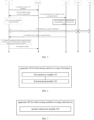
- specific steps for a UE to verify satellite coverage information obtained from broadcast information based on satellite coverage information provided by an AMF include following steps.
- the UE sends a registration request message to network, in which the registration request message includes an NTN capability of the UE.
- an NTN-RAN (NTN access network device) sends satellite coverage information (fourth satellite coverage information) to the UE when broadcasting SIB information, in which the satellite coverage information (the fourth satellite coverage information) in the SIB information is unprotected.
- the satellite coverage information (the fourth satellite coverage information) may be configured on the NTN-RAN by an OAM system.
- the UE stores received satellite coverage information (first satellite coverage information).
- the NTN-RAN selects an AMF and sends the registration request message to the AMF via an N2 message, in which the registration request message may further include the satellite coverage information (the fourth satellite coverage information).
- the AMF stores satellite coverage information (second satellite coverage information, which is usually considered to be with the same as the fourth satellite coverage information) from either the NTN-RAN or the OAM system.
- satellite coverage information second satellite coverage information, which is usually considered to be with the same as the fourth satellite coverage information
- step 505 primary authentication between the UE and the network is performed, during which NAS security between the UE and the AMF is established.
- the AMF sends a registration accept message to the UE in response to the registration request message, in which the registration accept message is an NAS message subject to security protection, and the registration accept message carries the satellite coverage information (the second satellite coverage information).
- the UE compares the satellite coverage information (the second satellite coverage information) sent in step 506 with the satellite coverage information (the first satellite coverage information) received in step 502b. If it is determined that they are inconsistent with each other, the UE replaces the unprotected satellite coverage information (the first satellite coverage information) received in step 502b with the protected satellite coverage information (the second satellite coverage information) newly received in step 506.
- the UE sends a registration complete message to the AMF.
- the embodiment of the disclosure further provides an apparatus 100 for determining satellite coverage information. As illustrated in FIG. 6 , the apparatus is applied to a UE of cellular mobile wireless communication.
- the apparatus 100 includes:
- the first transceiver module 110 is further configured to: receive a registration accept message carrying the second satellite coverage information sent by the core network device.
- the first processing module 120 is further configured to:
- An embodiment of the disclosure further provides an apparatus 200 for determining satellite coverage information. As illustrated in FIG. 7 , the apparatus is applied to a core network device of cellular mobile wireless communication.
- the apparatus 200 includes:
- the second transceiver module 210 is further configured to: send to the UE a registration accept message carrying the second satellite coverage information.
- obtaining the second satellite coverage information includes at least one of:
- the second transceiver module 210 is further configured to: receive the registration request message carrying the second satellite coverage information from the NTN access network device.
- An embodiment of the disclosure further provides an apparatus 300 for determining satellite coverage information. As illustrated in FIG. 8 , the apparatus is applied to an NTN access network device of cellular mobile wireless communication.
- the apparatus 300 includes:
- the third transceiver module 310 is further configured to: send the registration request message carrying the fourth satellite coverage information to the core network device.
- the first transceiver module 110, the first processing module 120, the second transceiver module 210 and the third transceiver module 310 can be implemented by one or more central processing units (CPUs), graphics processing units (GPUs), baseband processors (BPs), application specific integrated circuits (ASICs), digital signal processors (DSPs), programmable logic devices (PLDs), complex programmable logic devices (CPLDs), field-programmable gate arrays (FPGAs), general-purpose processors, controllers, micro controller units (MCUs), microprocessors, or other electronic components to execute the above methods.
- CPUs central processing units
- GPUs graphics processing units
- BPs baseband processors
- ASICs application specific integrated circuits
- DSPs digital signal processors
- PLDs programmable logic devices
- CPLDs complex programmable logic devices
- FPGAs field-programmable gate arrays
- general-purpose processors controllers, micro controller units (MCUs), microprocessors, or other electronic components to execute
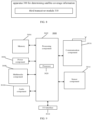
- FIG. 9 is a block diagram of a device 3000 used for determining satellite coverage information according to an embodiment.
- the device 3000 may be a mobile phone, a computer, a digital broadcast terminal, a message transceiver device, a game console, a tablet device, a medical device, a fitness device or a personal digital assistant.
- the device 3000 may include one or more of the following components: a processing component 3002, a memory 3004, a power component 3006, a multimedia component 3008, an audio component 3010, an input/output (I/O) interface 3012, a sensor component 3014, and a communication component 3016.
- a processing component 3002 a memory 3004, a power component 3006, a multimedia component 3008, an audio component 3010, an input/output (I/O) interface 3012, a sensor component 3014, and a communication component 3016.
- the processing component 3002 typically controls overall operations of the device 3000, such as the operations associated with display, telephone calls, data communications, camera operations, and recording operations.
- the processing component 3002 may include one or more processors 3020 to perform all or part of the steps in the above described methods.
- the processing component 3002 may include one or more modules which facilitate the interaction between the processing component 3002 and other components.
- the processing component 3002 may include a multimedia module to facilitate the interaction between the multimedia component 3008 and the processing component 3002.
- the memory 3004 is configured to store various types of data to support the operation of the device 3000. Examples of such data include instructions for any applications or methods operated on the device 3000, contact data, phonebook data, messages, pictures, video, etc.
- the memory 3004 may be implemented using any type of volatile or non-volatile memory devices, or a combination thereof, such as a Static Random-Access Memory (SRAM), an Electrically-Erasable Programmable Read Only Memory (EEPROM), an Erasable Programmable Read Only Memory (EPROM), a Programmable Read Only Memory (PROM), a Read Only Memory (ROM), a magnetic memory, a flash memory, a magnetic or optical disk.
- SRAM Static Random-Access Memory
- EEPROM Electrically-Erasable Programmable Read Only Memory
- EPROM Erasable Programmable Read Only Memory
- PROM Programmable Read Only Memory
- ROM Read Only Memory
- the power component 3006 provides power to various components of the device 3000.
- the power component 3006 may include a power management system, one or more power sources, and any other components associated with the generation, management, and distribution of power in the device 3000.
- the multimedia component 3008 includes a screen providing an output interface between the device 3000 and the user.
- the screen may include a Liquid Crystal Display (LCD) and a Touch Panel (TP). If the screen includes the touch panel, the screen may be implemented as a touch screen to receive input signals from the user.
- the touch panel includes one or more touch sensors to sense touches, swipes, and gestures on the touch panel. The touch sensor may not only sense a boundary of a touch or swipe action, but also sense a period of wakeup time and a pressure associated with the touch or swipe action.
- the multimedia component 3008 includes a front-facing camera and/or a rear-facing camera.
- the front-facing camera and/or the rear-facing camera can receive external multimedia data.
- Each front-facing camera and rear-facing camera may be a fixed optical lens system or has focal length and optical zoom capability.
- the audio component 3010 is configured to output and/or input audio signals.
- the audio component 3010 includes a microphone (MIC) configured to receive an external audio signal when the device 3000 is in an operation mode, such as a call mode, a recording mode, and a voice recognition mode.
- the received audio signal may be further stored in the memory 3004 or transmitted via the communication component 3016.
- the audio component 3010 further includes a speaker to output audio signals.
- the I/O interface 3012 provides an interface between the processing component 3002 and peripheral interface modules, such as a keyboard, a click wheel, buttons, and the like.
- the buttons may include, but are not limited to, a home button, a volume button, a starting button, and a locking button.
- the sensor component 3014 includes one or more sensors to provide status assessments of various aspects of the device 3000. For instance, the sensor component 3014 may detect an open/closed status of the device 3000, relative positioning of components, e.g., the display and the keypad, of the device 3000, a change in position of the device 3000 or a component of the device 3000, a presence or absence of user contact with the device 3000, an orientation or an acceleration/deceleration of the device 3000, and a change in temperature of the device 3000.
- the sensor component 3014 may include a proximity sensor configured to detect the presence of nearby objects without any physical contact.
- the sensor component 3014 may also include a light sensor, such as a Complementary Metal Oxide Semiconductor (CMOS) or Charge-Coupled Device (CCD) image sensor, for use in imaging applications.
- CMOS Complementary Metal Oxide Semiconductor
- CCD Charge-Coupled Device
- the sensor component 3014 may also include an accelerometer sensor, a gyroscope sensor, a magnetic sensor, a pressure sensor, or a temperature sensor.
- the communication component 3016 is configured to facilitate communication, wired or wirelessly, between the device 3000 and other devices.
- the device 3000 can access a wireless network based on a communication standard, such as Wi-Fi, 2G or 3G, or a combination thereof.
- the communication component 3016 receives a broadcast signal or broadcast associated information from an external broadcast management system via a broadcast channel.
- the communication component 3016 further includes a Near Field Communication (NFC) module to facilitate short-range communication.
- NFC Near Field Communication
- the NFC module may be implemented based on a RF Identification (RFID) technology, an Infrared Data Association (IrDA) technology, an Ultra-Wide Band (UWB) technology, a Blue Tooth (BT) technology, and other technologies.
- RFID RF Identification
- IrDA Infrared Data Association
- UWB Ultra-Wide Band
- BT Blue Tooth
- the device 3000 may be implemented with one or more ASICs, DSPs, Digital Signal Processing Devices (DSPDs), PLDs, FPGAs, controllers, micro-controllers, microprocessors or other electronic components, for performing the above described methods.
- ASICs ASICs, DSPs, Digital Signal Processing Devices (DSPDs), PLDs, FPGAs, controllers, micro-controllers, microprocessors or other electronic components, for performing the above described methods.
- non-transitory computer readable storage medium including instructions, such as the memory 3004, executable by the processor 3020 in the device 3000, for performing the above methods.
- the non-transitory computer-readable storage medium may be a ROM, a Random Access Memory (RAM), a CD-ROM, a magnetic tape, a floppy disc, and an optical data storage device.
Landscapes
- Engineering & Computer Science (AREA)
- Computer Security & Cryptography (AREA)
- Computer Networks & Wireless Communication (AREA)
- Signal Processing (AREA)
- Computer Hardware Design (AREA)
- Computing Systems (AREA)
- General Engineering & Computer Science (AREA)
- Physics & Mathematics (AREA)
- Astronomy & Astrophysics (AREA)
- Aviation & Aerospace Engineering (AREA)
- General Physics & Mathematics (AREA)
- Mobile Radio Communication Systems (AREA)
Applications Claiming Priority (1)
| Application Number | Priority Date | Filing Date | Title |
|---|---|---|---|
| PCT/CN2022/092843 WO2023216259A1 (fr) | 2022-05-13 | 2022-05-13 | Procédé et appareil de détermination d'informations de couverture de satellite, et dispositif de communication et support d'enregistrement |
Publications (2)
| Publication Number | Publication Date |
|---|---|
| EP4525326A1 true EP4525326A1 (fr) | 2025-03-19 |
| EP4525326A4 EP4525326A4 (fr) | 2026-03-04 |
Family
ID=88729456
Family Applications (1)
| Application Number | Title | Priority Date | Filing Date |
|---|---|---|---|
| EP22941211.9A Pending EP4525326A4 (fr) | 2022-05-13 | 2022-05-13 | Procédé et appareil de détermination d'informations de couverture de satellite, et dispositif de communication et support d'enregistrement |
Country Status (3)
| Country | Link |
|---|---|
| EP (1) | EP4525326A4 (fr) |
| CN (1) | CN117121399B (fr) |
| WO (1) | WO2023216259A1 (fr) |
Families Citing this family (1)
| Publication number | Priority date | Publication date | Assignee | Title |
|---|---|---|---|---|
| CN120691928A (zh) * | 2024-03-21 | 2025-09-23 | 上海卫星互联网研究院有限公司 | 负载均衡方法、装置、相关设备及存储介质 |
Family Cites Families (8)
| Publication number | Priority date | Publication date | Assignee | Title |
|---|---|---|---|---|
| CN110312305B (zh) * | 2018-03-27 | 2021-12-31 | 华为技术有限公司 | 终端设备的位置确定方法和设备 |
| CN111327354B (zh) * | 2018-12-14 | 2022-01-11 | 华为技术有限公司 | 卫星网络通信方法、相关装置及系统 |
| CN111836315A (zh) * | 2019-04-22 | 2020-10-27 | 华为技术有限公司 | 联合切换方法、装置、设备和存储介质 |
| CN110082790A (zh) * | 2019-06-26 | 2019-08-02 | 深圳市西博泰科电子有限公司 | 一种面向移动终端的卫星欺骗识别方法、装置及系统 |
| US11764867B2 (en) * | 2020-01-30 | 2023-09-19 | Qualcomm Incorporated | Communication of satellite information for non-terrestrial networks |
| CN111983648B (zh) * | 2020-05-21 | 2024-04-02 | 深圳市西博泰科电子有限公司 | 卫星导航欺骗检测方法、装置、设备及介质 |
| CN113973313B (zh) * | 2020-07-06 | 2024-04-09 | 中国移动通信有限公司研究院 | 移动性管理方法及设备 |
| US12081314B2 (en) * | 2020-10-02 | 2024-09-03 | Qualcomm Incorporated | Satellite and beam specific information updating in non-terrestrial networks |
-
2022
- 2022-05-13 WO PCT/CN2022/092843 patent/WO2023216259A1/fr not_active Ceased
- 2022-05-13 EP EP22941211.9A patent/EP4525326A4/fr active Pending
- 2022-05-13 CN CN202280001467.0A patent/CN117121399B/zh active Active
Also Published As
| Publication number | Publication date |
|---|---|
| CN117121399B (zh) | 2024-09-24 |
| CN117121399A (zh) | 2023-11-24 |
| WO2023216259A1 (fr) | 2023-11-16 |
| EP4525326A4 (fr) | 2026-03-04 |
Similar Documents
| Publication | Publication Date | Title |
|---|---|---|
| US12587910B2 (en) | Method for timer control, communication device, and storage medium | |
| EP4503779A1 (fr) | Procédé et appareil de traitement d'informations, dispositif de communication et support de stockage | |
| US12587996B2 (en) | Location determination method and apparatus, and communication device | |
| CN111819905B (zh) | 随机接入配置的确定方法、装置、通信设备及存储介质 | |
| US12225613B2 (en) | Method and apparatus for processing radio-link failure, and computer storage medium | |
| WO2024164337A1 (fr) | Procédé et appareil d'autorisation de service de localisation, et dispositif de communication et support de stockage | |
| US12543152B2 (en) | Paging collision processing methods and apparatuses, user equipment network device and storage medium | |
| EP4422282A1 (fr) | Procédé et appareil de resélection de cellule, dispositif de communication, et support de stockage | |
| CN116349267B (zh) | 密钥分发方法、装置、通信设备及存储介质 | |
| EP4525326A1 (fr) | Procédé et appareil de détermination d'informations de couverture de satellite, et dispositif de communication et support d'enregistrement | |
| EP4465739A1 (fr) | Procédé et appareil d'identification précoce, dispositif de communication et support de stockage | |
| US20240349147A1 (en) | Cell reselection method and apparatus, communication device, and storage medium | |
| US20250310751A1 (en) | Signal coverage information determination method and apparatus, communication device and storage medium | |
| US20250150828A1 (en) | Information transmission method and apparatus, and communication device and storage medium | |
| US20250301389A1 (en) | Mobility event processing method and apparatus, and communication device and storage medium | |
| US20250063352A1 (en) | Information processing method and apparatus, communication device, and storage medium | |
| US20240388899A1 (en) | Method and apparatus for detecting communication device, communication device, and storage medium | |
| EP4436306A1 (fr) | Appareil et procédé de récupération de connexion, dispositif de communication et support d'enregistrement | |
| EP4447495A1 (fr) | Procédé et appareil de traitement d'informations, dispositif de communication et support de stockage | |
| US20240292295A1 (en) | Cell measurement method, cell measurement configuration method and apparatus, device, and medium | |
| US20230199896A1 (en) | Method and apparatus for transferring service, communication device and storage medium | |
| CN116584119B (zh) | 信息传输方法、装置、通信设备和存储介质 | |
| US20250317725A1 (en) | Method for relay communication, and terminal | |
| EP4546729A1 (fr) | Procédé et appareil de télémétrie, et dispositif de communication et support de stockage | |
| EP4669015A1 (fr) | Procédé et appareil de transmission de données et support de stockage |
Legal Events
| Date | Code | Title | Description |
|---|---|---|---|
| STAA | Information on the status of an ep patent application or granted ep patent |
Free format text: STATUS: THE INTERNATIONAL PUBLICATION HAS BEEN MADE |
|
| PUAI | Public reference made under article 153(3) epc to a published international application that has entered the european phase |
Free format text: ORIGINAL CODE: 0009012 |
|
| STAA | Information on the status of an ep patent application or granted ep patent |
Free format text: STATUS: REQUEST FOR EXAMINATION WAS MADE |
|
| 17P | Request for examination filed |
Effective date: 20241203 |
|
| AK | Designated contracting states |
Kind code of ref document: A1 Designated state(s): AL AT BE BG CH CY CZ DE DK EE ES FI FR GB GR HR HU IE IS IT LI LT LU LV MC MK MT NL NO PL PT RO RS SE SI SK SM TR |
|
| DAV | Request for validation of the european patent (deleted) | ||
| DAX | Request for extension of the european patent (deleted) | ||
| A4 | Supplementary search report drawn up and despatched |
Effective date: 20260129 |
|
| RIC1 | Information provided on ipc code assigned before grant |
Ipc: H04B 7/185 20060101AFI20260123BHEP Ipc: H04L 9/40 20220101ALI20260123BHEP |