EP4525372A2 - Digitale identität - Google Patents
Digitale identität Download PDFInfo
- Publication number
- EP4525372A2 EP4525372A2 EP25155185.9A EP25155185A EP4525372A2 EP 4525372 A2 EP4525372 A2 EP 4525372A2 EP 25155185 A EP25155185 A EP 25155185A EP 4525372 A2 EP4525372 A2 EP 4525372A2
- Authority
- EP
- European Patent Office
- Prior art keywords
- credential
- bearer
- profile
- upass
- age
- Prior art date
- Legal status (The legal status is an assumption and is not a legal conclusion. Google has not performed a legal analysis and makes no representation as to the accuracy of the status listed.)
- Pending
Links
Images














Classifications
-
- G—PHYSICS
- G06—COMPUTING OR CALCULATING; COUNTING
- G06F—ELECTRIC DIGITAL DATA PROCESSING
- G06F21/00—Security arrangements for protecting computers, components thereof, programs or data against unauthorised activity
- G06F21/30—Authentication, i.e. establishing the identity or authorisation of security principals
- G06F21/31—User authentication
- G06F21/33—User authentication using certificates
-
- H—ELECTRICITY
- H04—ELECTRIC COMMUNICATION TECHNIQUE
- H04L—TRANSMISSION OF DIGITAL INFORMATION, e.g. TELEGRAPHIC COMMUNICATION
- H04L63/00—Network architectures or network communication protocols for network security
- H04L63/08—Network architectures or network communication protocols for network security for authentication of entities
- H04L63/0807—Network architectures or network communication protocols for network security for authentication of entities using tickets, e.g. Kerberos
-
- H—ELECTRICITY
- H04—ELECTRIC COMMUNICATION TECHNIQUE
- H04L—TRANSMISSION OF DIGITAL INFORMATION, e.g. TELEGRAPHIC COMMUNICATION
- H04L63/00—Network architectures or network communication protocols for network security
- H04L63/08—Network architectures or network communication protocols for network security for authentication of entities
- H04L63/0823—Network architectures or network communication protocols for network security for authentication of entities using certificates
-
- H—ELECTRICITY
- H04—ELECTRIC COMMUNICATION TECHNIQUE
- H04L—TRANSMISSION OF DIGITAL INFORMATION, e.g. TELEGRAPHIC COMMUNICATION
- H04L63/00—Network architectures or network communication protocols for network security
- H04L63/08—Network architectures or network communication protocols for network security for authentication of entities
- H04L63/083—Network architectures or network communication protocols for network security for authentication of entities using passwords
- H04L63/0838—Network architectures or network communication protocols for network security for authentication of entities using passwords using one-time-passwords
-
- H—ELECTRICITY
- H04—ELECTRIC COMMUNICATION TECHNIQUE
- H04L—TRANSMISSION OF DIGITAL INFORMATION, e.g. TELEGRAPHIC COMMUNICATION
- H04L63/00—Network architectures or network communication protocols for network security
- H04L63/08—Network architectures or network communication protocols for network security for authentication of entities
- H04L63/0861—Network architectures or network communication protocols for network security for authentication of entities using biometrical features, e.g. fingerprint, retina-scan
-
- H—ELECTRICITY
- H04—ELECTRIC COMMUNICATION TECHNIQUE
- H04L—TRANSMISSION OF DIGITAL INFORMATION, e.g. TELEGRAPHIC COMMUNICATION
- H04L63/00—Network architectures or network communication protocols for network security
- H04L63/10—Network architectures or network communication protocols for network security for controlling access to devices or network resources
- H04L63/102—Entity profiles
-
- H—ELECTRICITY
- H04—ELECTRIC COMMUNICATION TECHNIQUE
- H04W—WIRELESS COMMUNICATION NETWORKS
- H04W12/00—Security arrangements; Authentication; Protecting privacy or anonymity
- H04W12/06—Authentication
Definitions
- a digital identity system for creating a computer stored digital identity comprises: a network interface configured to send and receive electronic messages; persistent electronic storage; a profile management module configured to receive from an entity an electronic message comprising a data item, extract the data item from the electronic message and store the data item in a digital profile in the persistent electronic storage; a credential creation module configured to generate a credential for the profile and associate the credential with the digital profile; a publication module configured to publish the profile by storing a version of it to an addressable memory location; and a receipt generation module configured to automatically generate two non-matching receipts, each receipt comprising a transaction identifier, a first of the receipts comprising a link identifying the memory location to which the profile is published, a second of the receipts comprising the credential, wherein the first receipt is stored at the digital identity system and the second receipt is transmitted to an address associated with the entity.
- a corresponding method is also provided.
- the profile creation mechanism of the present invention provides both a receipt for internal auditing by the digital identity system, and a credential for later use by the user.
- presentation of the credential to the digital identity system by a presenting entity makes the published profile available to a presenting entity (in embodiments this may in fact trigger the publication).
- the entity can provide their credential to the presenting entity as a way to assert their identity, as embodied in the profile, to the presenting entity. That is, the digital credential can be used as a substitute for a real-world identity document.
- the data item may for instance be a visual image of the entity.
- a human entity this may be a photo of their face which captured from, or which is known to match, an identification photograph from a real-world identification document such as a passport or driving licence. This may be captured using a camera and/or wireless (NFC, Bluetooth etc.) technology if a suitable electronic chip is embedded in the document.
- the other entity can verify that the user is who they say they are by visually comparing the user's actual face with that in the published profile.
- Other data items such the user's name, data of birth, nationality etc. from the identity document may also be received and stored in the profile.
- Multiple profiles may be created fora user, which may be unique but nonetheless share some data items. For example, a basic profile may have only one data item (e.g. photo), and additional profile(s) may have the photo plus varying degrees of addition user data (name, name and date of birth, name and date of birth and nationality etc.).
- a receipt may be generated every time a transaction involving the profile takes place.
- Such receipts provide an audit trail, whereby historic activity by the entity is visible within the system.
- the receipts can be used to isolate historic fraudulent activity by a human entity (user).
- the data item is a visual image of the user's face, this makes it easy to unequivocally link such activity back to an actual human.
- the profile is republished at every transaction to provide a "snapshot" of the profile as it was at that time, which is unaffected by future modifications. This ensures an accurate audit trail, whereby activity at any previous point in time can be accurately isolated.
- the profile is published upon presentation of the credential to the digital identity system e.g. by the validator so that the profile only becomes accessible to the validator when they present the credential.
- a master receipt comprising data of each receipt may in embodiments be generated and stored in a master receipt book at the digital identity system. That is, both the first and the master receipt may be stored separately at the digital identity system.
- the master receipt may comprise only part of the first receipt, for instance the link, but not the credential.
- it may comprise a hash (e.g. HMAC) of the credential. That is, a value generated by applying a cryptographic hash (e.g. HMAC) function to the credential.
- the hash function is irreversible, in that it is impossible to recover the credential itself from the hash of the credential.
- the hash can be re-computed from the available credential, and the resulting value can be used to locate the master receipt. This can allow, for example, lawful interception of receipts without comprising their security.
- At least part of the master receipt (at least the link) and/or the published version of profile may be encrypted with the transaction identifier, in which case the master does not include the transaction identifier. That is, the transaction identifier may be used as a cryptographic key to encrypt the link and/or the published profile itself. This means that the published profile can only be accessed by the holder of the receipt comprising the transaction identifier, and cannot be accessed using the master receipt alone.
- the credential is a randomised one-time only use credential, which can only be used to effect a single transaction and becomes invalid thereafter. This links the credential to the creation of the profile specifically. Similar one-time use credentials will then be needed any time the entity subsequently accesses and/or modifies the profile, and or creates a new profile, so that every credentials are linked to one specific transaction.
- a copy of the credential can then be created as and when it is needed, for instance to determine whether a credential presented to the system matches the original (access to the published profile may only be granted if this is the case).
- the seed and metadata may be hashed a random number of times, and the stored ingredients then include this random number as well.
- the metadata comprises a device ID to the profile may only be granted if the credential is presented along with a matching device ID.
- use of the credential is restricted to that device for added security (if the user wishes to use multiple devices to assert their identify, they can request a separate credential for each device, each credential bound to the profile).
- the profile may also have a confidence value allocated to it, which is indicative of the confidence the system has that the entity does indeed have the identity which they are asserting.
- the confidence value is preferably made available with the published profile, for instance it may be included in and published with the profile itself to the same memory location. Thus, the validator is not simply told that the entity is who or what they say they are, but is told how confidentthe digital identity system that that is the case.
- the confidence value may be an easily interpretable metric such as a value between 0 and 1 (or 0% and 100%), 0(%) representing complete uncertainty and 1(00%) representing total certainty, though the latter is unlikely in practice.
- the confidence value may change over time. For instance as the user uploads more data items e.g.
- photos of their face which may in some embodiments be required to log in to the digital identity system and stored at the digital identity system each time this may assert a positive influence on the confidence value causing it to (at least in the absence of other influences) increase, provided the photos do indeed match (whereas photos for which the match is questionable may have the opposite effect).
- this may exert a similarly positive influence.
- the data item(s) in the digital profile are captures from, say, a real-world identify document, as the document ages this may assert a negative influence on the confidence value causing it to (at least in the absence of other influences) decrease.
- Many such influences may be aggregated, whereby the confidence value reflects an overall confidence.
- a second aspect provides a method of registering a digital identity comprising: capturing at a computer device a data item associated with an entity; creating an electronic message comprising the data item; transmitting the electronic message to a registration service; receiving a receipt from the registration service; extracting a credential from the receipt to render the credential available for accessing the data item for authenticating the entity; and storing the receipt in a local receipt book at a location accessible to the computer device.
- a third aspect provides a method implemented by executing digital identity software on a processor of a user device (for example a smart device such as a smartphone or tablet) to: capture with a camera of the user device an image of the face of a user of the device; capture data from a real-world identity document (such as a driving licence or passport), the data including an identification photograph, wherein the data is captured with the camera, from an electronic transmitter embedded in the anchoring document, or a combination of both; transmit the image of the user and the captured data to a digital identify system; and receive from the digital identify system a credential for the user, wherein presentation of the credential to the digital identity system renders at least part of the captured data available to a presenting entity.
- a user device for example a smart device such as a smartphone or tablet
- the captured data also comprises an attribute of the document, for example enough data to be able to ascertain with reasonable certainty a type of the document (e.g. driving licence, passport etc.) and possibly to be able to determine whether or not the document seems authentic.
- an attribute of the document for example enough data to be able to ascertain with reasonable certainty a type of the document (e.g. driving licence, passport etc.) and possibly to be able to determine whether or not the document seems authentic.
- a fourth aspect provides a computer implemented method implemented by a digital identity system, the method comprising: receiving in an electronic message from a user device: an image of the face of a user of the user device which has been captured at the user device; and data which has been captured from a real-world identity document and which comprises an identification photograph; storing at least part of the captured data at the digital identity system in persistent electronic storage; comparing the image of the face with the identity photograph using a facial verification algorithm; only if the image of the face matches the identification photograph, generating a credential for the user and transmitting the credential to the user, wherein presentation of the credential to the digital identity system renders at least part of the stored data available to a presenting entity.
- facial verification in this manner ensures users can only use their own identity documents as a basis fora digital identity within the system.
- the image of theirface and/or the photograph captured from the identity document is presented to the presenting entity, which is particularly applicable when one human is identifying themselves to another human in the real-world.
- an identity is instead asserted using a digital profile.
- a profile may for instance be created from data captured from a real-world identity document such as a passport or driving licence, which preferably comprises an identification photograph form the document. Once created, the profile can be used by the entity to assert their identity to another entity (validator).
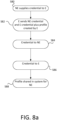
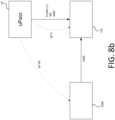
- a method of authenticating a digital credential of a bearer by a validating device comprises: capturing the bearer credential by the validating device; transmitting to a validation service the bearer credential with a validator credential bound to the validating device; at the validation service, validating the bearer credential and the validation credential, and if the validator credential is valid, using the bearer credential to access a data item of a digital profile and creating an electronic message for transmission to the validating device, the electronic message indicating the data item and comprising a fresh validator credential generated by the validation service; issuing a fresh bearer credential and creating an electronic message to transmit the fresh bearer credential to an address associated with the bearer.
- the method also comprises the step of using the validator credential to access a data item of a digital profile associated with the validating device and creating an electronic message for transmission to the bearer, the electronic message indicating a data item for verification by the bearer.
- a single transaction provides two-way authentication - not only is the validator able to authenticate the bearer using the data item from the bearer's profile, but the bearer is able to likewise validate the validator.
- a single transaction tells both entities whether or not they should believe that the other is who orwhat they assert they are. This arises from the novel combination of the validator presenting both their own and the bearer's credential together, and each entity getting back a respective data item for the other entity.
- the data item relating to the validator is sent to the bearer by out of band signalling, for instance to a device having an address associated with the bearer credential in the digital identity system.
- a method of providing access to digital profiles held in persistent electronic storage of a digital identity system comprises: receiving from a requesting entity an electronic request message identifying a target entity; in response to the request, publishing: (i) a digital profile of the target entity by storing a version of that profile in an addressable memory location, and (ii) a digital profile of the requesting entity by storing a version of that profile in another addressable memory location; generating two non-matching receipts, each comprising a transaction identifier, a first of which comprises a link identifying the memory location to which the target entity's profile is published, the second of which comprises a link identifying the other memory location to which the requesting entity's profile is published; transmitting the first receipt to an address associated with the requesting entity; and transmitting the second receipt to an address associated with the target entity.
- Each entity can validate the other based on the relevant published profile in a single transaction.
- a link such as a Uniform Resource Indicator (URI), identifying the addressable memory location may be transmitted to the presenting device.
- URI Uniform Resource Indicator
- the link may be generated from a random sequence and/or the addressable memory location may be selected based on a random sequence. Random generation of links/selection of memory addresses ensures efficient use of the memory address/link space.
- the data item may for instance be a visual image of the entity.
- a human entity this may be a photo of their face which captured from, or which is known to match, an identification photograph from a real-world identification document such as a passport or driving licence. This may be captured using a camera and/or wireless (NFC, Bluetooth etc.) technology if a suitable electronic chip is embedded in the document.
- the other entity can verify that the user is who they say they are by visually comparing the user's actual face with that in the published profile.
- Other data items such the user's name, data of birth, nationality etc. from the identity document may also be received and stored in the profile.
- Multiple profiles may be created fora user, which may be unique but nonetheless share some data items. For example, a basic profile may have only one data item (e.g. photo), and additional profile(s) may have the photo plus varying degrees of addition user data (name, name and date of birth, name and date of birth and nationality etc.).
- the metadata may be metadata of the device itself, e.g. a device identifier (ID) such as a serial number or MAC address of the device, or it may be related metadata such as (geo)location (e.g. GPS) data identifying a (geo)location of the device when the message was sent.
- ID device identifier
- the metadata can be used to generate the credential, for example as a hash of the metadata and a random sequence (seed). This may result in a credential having a large bit size, thus a significant memory saving results from storing the "ingredients" used to create the credential at the digital identity system rather than the credential itself.
- a copy of the credential can then be created as and when it is needed, for instance to determine whether a credential presented to the system matches the original (access to the published profile may only be granted if this is the case).
- the seed and metadata may be hashed a random number of times, and the stored ingredients then include this random number as well.
- the metadata comprises a device ID to the profile may only be granted if the credential is presented along with a matching device ID.
- use of the credential is restricted to that device for added security (if the user wishes to use multiple devices to assert their identity, they can request a separate credential for each device, each credential bound to the profile).
- a receipt may be generated every time a transaction involving the profile takes place.
- Such receipts provide an audit trail, whereby historic activity by the entity is visible within the system.
- the receipts can be used to isolate historic fraudulent activity by a human entity (user).
- the data item is a visual image of the user's face, this makes it easy to unequivocally link such activity back to an actual human.
- the profile is republished at every transaction to provide a "snapshot" of the profile as it was at that time, which is unaffected by future modifications. This ensures an accurate audit trail, whereby activity at any previous point in time can be accurately isolated.
- the profile is published upon presentation of the credential to the digital identity system e.g. by the validator so that the profile only becomes accessible to the validator when they present the credential.
- a master receipt comprising data of each receipt may in embodiments be generated and stored in a master receipt book at the digital identity system. That is, both the first and the master receipt may be stored separately at the digital identity system.
- the master receipt may comprise only part of the first receipt, for instance the link and the transaction identifier, but not the credential.
- each credential is a randomised one-time only use credential, which can only be used to effect a single transaction and becomes invalid thereafter. This links the credential to the creation of a profile specifically. Similar one-time use credentials will then be needed any time the entity subsequently accesses and/or modifies the profile, and or creates a new profile, so that every credentials are linked to one specific transaction.
- the profile may also have a confidence value allocated to it, which is indicative of the confidence the system has that the entity does indeed have the identity which they are asserting.
- the confidence value is preferably made available with the published profile, for instance it may be included in and published with the profile itself to the same memory location. Thus, the validator is not simply told that the entity is who or what they say they are, but is told how confidentthe digital identity system that that is the case.
- the confidence value may be an easily interpretable metric such as a value between 0 and 1 (or 0% and 100%), 0(%) representing complete uncertainty and 1(00%) representing total certainty, though the latter is unlikely in practice.
- the confidence value may change over time. For instance as the user uploads more data items e.g.
- photos of their face which may in some embodiments be required to log in to the digital identity system and stored at the digital identity system each time this may assert a positive influence on the confidence value causing it to (at least in the absence of other influences) increase, provided the photos do indeed match (whereas photos for which the match is questionable may have the opposite effect).
- this may exert a similarly positive influence.
- the data item(s) in the digital profile are captures from, say, a real-world identify document, as the document ages this may assert a negative influence on the confidence value causing it to (at least in the absence of other influences) decrease.
- Many such influences may be aggregated, whereby the confidence value reflects an overall confidence.
- An entity (which may be a user of the enrolling device or the enrolling device itself) can provide their credential a presenting entity (e.g. the presenting device or user thereof) as a way to assert their identity, as embodied in the profile, to the presenting entity. That is, the digital credential and profile can be used as a substitute for a real-world identity document.
- a presenting entity e.g. the presenting device or user thereof
- the digital credential and profile can be used as a substitute for a real-world identity document.
- an uPass bearer Whenever an uPass bearer wishes to authenticate their identity they must present a credential (e.g. a QR code) generated from a unique random identifier provided by the uPass system.
- a credential e.g. a QR code
- the recipient of this credential is an uPass Validator who authenticates themselves to the u Pass validation service each time they validate the information received from a Bearer. Following validation the Validator decides how to proceed.
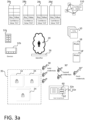
- Each account may have one or more devices 12a, 12b associated with it at any given time.
- an audited validation transaction must be performed between this device and a device which is already enrolled for the uPass user's account.
- the uPass user If the uPass user still has possession of a device which has been enrolled then account recovery is performed the same way as device re-enrolment with invalidated credentials. Otherwise, the uPass user can re-register using any registration document associated with the account.
- An uPass user may revoke authorisation for any device currently enrolled for their account. This will invalidate any credential they currently have associated with the revoked device.
- each digital identity has data items derived from identity documents in a registration process.
- NFC near field communication
- OCR optical character reader
- a second transmission vector may be utilised preferably involving a trusted agent and/or data acquisition device, and some form of standardised registrant signature which can be audited.
- the registrant submits a photograph of the registrant taken with the same device used to capture registration data, time-stamped and tagged with metadata comprising device type, operating system, geolocation and network address.
- the same metadata will be captured for each item of registration data captured using the device.
- This photograph and the associated metadata provides an audit trail which can be used to help identify fraudulent registrations.
- a percentage of registrations are manually checked at the time of submission to ensure a visual match between the photograph and the photographic element of the registered identity document (e.g. passport photo).
- a facial verification service 40 compares these photographs in all cases and where there is a low level of confidence that the photos depict the same person this will also be flagged up for manual visual inspection.
- frames taken from brief video clips can be used to capture a sense of liveness. In some embodiments, only a single frame is taken as it has been found that using multiple frames does not improve the accuracy of the face verification software.
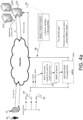
- Data captured by the device camera is subject to OCR processing 42 when it reaches the registration service 14a at the uPass server, to extract data items from the identity document.
- a digital signature is generated on the sum of unencrypted data.
- Each captured data item is encrypted by encrypt block 44.
- the digital signature is used to annotate each separate encrypted data item before it is submitted to the registration service.
- These encrypted data items are decrypted by the registration service and the digital signature checked, ensuring the integrity of the entire registration submission.
- the distinct registration data items are transmitted to separate end points identified by the registration application 22and encrypted with separate symmetric keys.
- these are one-time pads - keys used only once and therefore known to be unique.
- the registrant requires a smartphone 12 with Internet access, which is capable of communicating over HTTPS and includes a camera of reasonable (say 5MP) quality. NFC capability is a useful optional extra.
- the registration process will be described with reference to Figures 4a and 4b based on the use of mobile device 12 such as a smartphone or tablet with a native application.
- This application will acquire the necessary photos, NFC and metadata for packaging and submission to the registration service.
- the registration workflow comprises the following steps:
- a round-count is a positive integer which tells the client how many times to iteratively perform a function seeded with a data value of interest. In this case we use the round-count to specify how many iterations to perform when generating a SHA-2 hash value which is a defence against rainbow table attacks.
- This response R2 is packed in a cookie marked with the HTTP only and HSTS flags;
- u Pass credentials are provided to the registrant application for the anonymous profile (the default profile).
- a credential is a random digital sequence valid for one time use only - it can be embodied as a QR code 16 for example.
- the registration service 14a is supported by an in-memory cache 24 in the secure store which contains a working-set of data elements related to current active registration for transactions, including:
- Each service-provided key is generated by the secure store 24 which ensures that all keys issued are unique. Forging registration transactions is impossible as keys provided by the registration server are randomly generated and cannot be predicted, therefore there is no way to use the keys from one transaction to guess the keys being used by another transaction. The guarantee of uniqueness ensures that attempting to reuse a prior set of keys will trigger a security event.
- the decrypted passport scan is sent to OCR service 42 and the returned data is used as the basis for an account creation message. This is checked against any NFC data received to confirm that the two data sources present the same identity, and if this is the case then the embedded photographs are compared with the registrant's confirmation photograph in the facial recognition service 40 to ensure a visual resemblance.
- a percentage of incoming registrations can be manually checked at this stage to ensure that the OCR and facial recognition processes are working correctly, though this is not essential.
- the account creation message is passed to the secure store 24 where its uniqueness is confirmed.
- a data store is created for the account containing identity statements, each anchored to its source document, and the three or four initial profiles 28a, 28b, 28c, 28d created for this account.
- identity statements could be achieved to the digital signature of source documents
- This process is carried out by the identity management code executed by processor 114 (or by any suitable computer mechanism) at registration of a new profile, and at each occasion the profile is used.
- an uPass application either scans a generated QR code containing the credential or receives the credentials via some other means, such as NFC, iBureau, barcode, etc.
- Each generated credential is specific to both a device and an uPass profile. This prevents credentials being transferred between devices and means that any given device is only able to present one profile at a time.
- a receipt contains four pieces of information:
- the random reference key 60 acts as a transaction identifierwhich is associated with a specific pair of receipts and thus a specific pair of credentials.
- Each device contains a receipt book 300 ( Figure 1a ) which holds an arbitrary number of receipts from prior transactions.
- a user wishes to prove that a transaction has occurred they can present the receipt as a QR code, etc. which contains only the random reference key 60 for the credential used. This can then be reconciled by a merchant or other uPass user with their own receipt book.
- a copy of the receipt is maintained online in the master receipt book 31 which contains all receipts generated to date.
- a client device must be pre-registered and authenticate itself to perform an uPass validation for a given profile.
- Each registered device contains a single one-use credential for each uPass user that it is registered to. Submitting the credential performs an implicit authentication, which is deemed to fail if the credential is unknown, expired or invalidated. There is also a small probability that a valid credential will be invalidated (as a randomised additional security check) on receipt to force an authentication failure for security purposes.
- An enhanced authentication can be conducted when the standard authentication interaction fails, or where the use case requires it.
- the enhanced client authentication mode also exists to secure administrative operations and to allow an uPass user to re-authenticate after an authentication failure.
- the enhanced client authentication captures a photograph of the device user which is compared to the facial recognition database for the uPass userto whom the device is registered, and if the recognition fails then a security event is triggered and logged.
- Credentials have a lifecycle which involves: their creation which binds them to an u Pass profile; their distribution to a specific device; and their revocation or expiration. This lifecycle is managed solely within the validation service.
- a credential may be revoked at any time.
- the credential's record is flagged as revoked in the secure store but the record is not processed at that time. This allows the uPass system to monitor the use of revoked credentials and use the resulting metadata to assist in fraud analysis and prevention.
- Garbage collection of expired and revoked credentials may occur in one of two ways:
- the uPass validator device is built on the same principles as a standard uPass device. To perform a validation the validator device must present a valid credential for its associated uPass device. This ensures that only users of the uPass system can run queries against the uPass trust network.
- the validator credential is sent as part of the request.
- uPass By limiting authentication to a single authorisation query rather than an ongoing transactional relationship uPass can be used to create a simple proof of identity system. More complex use cases based on event ticketing such as guest lists or digital festival passes can be built on top of this by allowing the merchant to assign a profile to an uPass user with an appropriate expiration date.
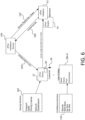
- Figure 6 illustrates a bearer only authentication process
- the uPass reader 54 When a bearer-only authentication occurs the uPass reader 54 will send the credentials 30 proffered by the customer 20 in a message 100 to the authorisation service 14b. The user's credentials are then tested for validity before being marked as used and a response 122 is returned to the uPass reader along with a link to a profile which holds a photograph to allow visual confirmation of identity by the merchant.
- Figure 6 illustrates schematically a validation in its full context where the credential 30 on a device is backed both by a series of issuing anchors 107 which indicate the quality of registration documents 10 and confidence anchors 110 which indicate the extent to which the profile has been vouched for by other uPass users.
- a credential 30 is single-use and potentially restricted it is possible that when proffered it will no longerbe valid.
- a fresh credential 30 may be automatically generated by the service 14b and pushed (104)to the bearer's device and from there to the validator, or the uPass user may be required to re-enrol the device.
- the bearer authentication process is as follows.
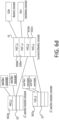
- Figure 6a shows a validation process in which both the credential of the bearer and the credential of the validator are validated, and in which receipts are issued.
- the user of the uPass device selects a profile.
- the uPass device 12 of the bearer sends the credential 30b bound to that profile to the uPass validator 52, e.g. as a QR code.
- the uPass validator reads the QR code, selects a profile to use and supplies the bearer credential 30b and its own credential 30v to the uPass validation service.
- the uPass validation confirms that the credential 30v is valid, and if so goes on to process the credential 30b.
- the credential 30b If the credential 30b is valid, it returns (message 112 in Figure 6 ) a link to the profile bound to the credential 30b to the validator 52. It also issues a new (fresh) bearer credential 30b" to the bearer device 12 and a new validator credential 30v" to the validator 52. Each fresh credential is returned with a receipt which is denoted 32v for the validator and 32b for the bearer. The generation of the fresh credential in each case is associated with the issuance of a pair of non-matching (individual) receipts.
- each pair one receipt is sent to the bearer and comprises a link to a newly-published published profile of the validator and the fresh bearer credential for later use by the bearer, and the other receipt of the pair is returned to the validator and comprises a link to a newly-published profile of the bearer and the fresh validator credential.
- a pair of receipts is issued for the creation of the fresh credential for the validator, and a pair of receipts is issued for the fresh credential for the bearer.
- the two receipts 32e, 32v comprise matching transaction identifiers identifying the transaction in which they were created and tying them together.
- a corresponding master receipt 32 comprises the same transaction identifier (which links it to the corresponding receipt pair) and both links but not the credentials.
- the receipt 32v can include the link to the photograph for the bearer in the relevant profile.
- a user can choose to acquire credentials for a different profile. However, they can only ever have one credential on their device for a given uPass user.
- Each of the bearer and validator receipts 32b, 32v also comprises a respective link 63b, 63v to a list of all of their profiles currently assigned to the other of the bearer and the validator.
- a master receipt 32 is generated for the transaction, details of which are shown in figure 6c .
- the master receipt 32 comprises a hash (e.g. HMAC) of the fresh bearer credential 300b, i.e. H(C' B ), and a hash of the fresh validator credential 300v, i.e. H(C'v), where H denotes a cryptographic hash function (e.g. HMAC) that is applied to that credential thereby generating a hash of that credential.
- the master receipt is locate by hashing the available credential to generate a search index, which will match the corresponding index of the master receipt 32.
- the master receipt book 31 can be implemented in any suitable manner that allows these indexes to be searched, for example as a distributed data store.
- the master receipt 32 also comprises both of the links 62b, 62v to the published profiles, their associated confidence values 65b, 65v, and both of the links 63b, 63v to the profile lists - all of which are encrypted with the transaction identifier 60.
- the published versions of the profiles to which the links point may be encrypted with the transaction identifier.
- the transaction identifier60 is not included in the master receipt 32, nor is it stored within the uPass system. Thus, the contents of the master receipt 32 can only be accessed by the holder of either of the receipts 32b, 32v in such embodiments.
- the master receipt 32 may also comprises data that matches at least part of the two previous master receipts for the bearer and validator respectively - 32' and 32" in figure 6d , respectively.
- This data is in the form of a hash of the now-used bearer credential 302b, i.e. H(C B ), and a hash of the now-used validator credential 302v, i.e. H(Cv).
- the hash 302b of the now-used bearer credential 30b matches the corresponding index of the earlier master receipt 32' that was generated in the transaction in which the bearer credential 30b was first issued (first earlier master receipt) and the hash 302v of the now-used validator credential 30v matches the corresponding index of the master receipt 32" that was generated in the transaction in which the validator credential 30v was first issued (second earlier master receipt).
- indexes are public, in that they are not encrypted with the transaction identifier 60.
- These two earlier master receipts 32', 32" can thus be located using the hashes of the bearer and validator credentials 302b (i.e. H(C B )), and 302v (i.e. H(Cv)) respectively,.
- one of the public indexes of the first earlier master receipt 32' will match the H(C B ) from the current master receipt 32 - that index having been generated in the earlier transaction when C B was issued to the entity who is the bearer in the current transaction (but who may have been the bearer or the validator in that earlier transaction); likewise, one of the public indexes of the second earlier master receipt 32" will match H(Cv) from the current master receipt 32 -that index having been generated in the earlier transaction when Cvwas issued to the entity who is the validator in the current transaction (but who may have been the bearer or the validator in that earlier transaction).
- those indexes of the earlier master receipts 32', 32" relate, in the same manner as the current master receipt 32, to receipts issued to the entities in question in the earlier transactions (as do their other indexes).
- These two additional hashes 320b, 302v may also be encrypted with the transaction identifier 60.
- the content of the each of the earlier master receipts 32' 32", and/or the published profiles to which it links is encrypted with its own respective transaction identifier i.e. the respective transaction identifier of the earlier transaction in which it was created (which is different from the current transaction identifier 60), and can thus only be accessed with the bearer or validator receipt created in that earlier transaction .
- the master receipt 32 also comprises first and second digital signatures 304b, 304c, generated from at least a part of the earlier master respects 32', 32" respectively and/or hashes thereof.
- the signatures and/or the hashes are generated from all of the data of the master receipts, including their public indexes. That is, as SIG(32') and SIG (32").
- the signature can be generated using a private key known only the uPass system, and can be verified using a corresponding public key to verify the receipt is authentic.
- the signatures 304b, 304v are also encrypted with the transaction identifier 60.
- the bearer and validator receipts 30b, 30v are encrypted with keys 306b, 306c previously registered with the uPass system by the bearer and validator respectively. (a user can deposit a public or symmetric key with the service if they want to, and then the system can use it for communicating with them securely). This means that only the bearer and the validator can access their content respectively.
- the uPass server validates the message and compares the image data which was sent from the bearer to the validator with the image data that was sent in an outer band communication between the bearer and the uPass server. If the selfie has not arrived when the validation is performed, the uPass server may compare the image data which has been sent to the validator to the bearer's previous entry in their facial image database.
- the image data which is sent from the bearer to the validator can be an LBP extract from the facial image.
- a selfie is a facial image captured by the bearer using the camera on their mobile device, for example.
- One useful feature of the uPass system lies in its ability to establish mutual trust between two parties, allowing a broader range of interactions than those permitted by the bearer authentication mode. In this case each party presents credentials to the other for authentication by the authorisation service and an ongoing transaction is established.
- each party captures a credential from the other party and despatches this to the authorisation service for authentication. If both sets of credentials authenticate then a transaction is established and each party is issued a unique symmetric key which is used to encrypt their ongoing communication with the server. These keys are time-limited (for example, a limit of approximately 5 minutes) and if the transaction is ongoing will be replaced when they expire.
- a transaction can remain active for an indefinite period of time, but to do so both parties must send a keep-alive message to the authentication service when their keys expire. If either party fails to provide the keep-alive message then the transaction is terminated.
- each transaction can be tied to the specific devices used to initiate it, and to a specific profile for each party.
- either party can test authorisation propositions against the active profile of the other party for the duration of the transaction.
- the uPass system ties authentication to a specific profile (28a....28d) but leaves the uPass user in control of how much information they reveal to the other uPass users via their profile selection. It is therefore practical for two uPass users to broker trust for a given purpose without revealing any personal details to each other - only to confirm their physical appearance. To facilitate this every uPass user has an associated anonymous profile 28a.
- a second possibility for credentials is the use of a characteristic avatar (an image, movie clip or audio file), which is issued by the uPass system with a credential embedded in the data.
- Profile avatars with company logos can be used to embed a credential.
- the avatar image can then be submitted to a website or via NFC to a mobile device with the recipient authenticating it against the uPass system and receiving back the source data which can be used to confirm the identity of the user.
- the avatar acts as a container for credentials which aside from the need for embedding and extraction are handled in exactly the same way as any other uPass credentials.
- uPass Connect This is referred to herein as uPass Connect and is illustrated in Figure 7 .
- uPass Connect provides a protocol whereby the user of a network system wishing to login to that system can do so using their uPass credentials on a trusted device such as a phone or tablet.
- a trusted device such as a phone or tablet.
- uPass Connect should be usable with any client/server system capable of presenting a unique token to the uPass user.
- the local device 173 e.g. a PC
- the uPass device 73 needs to acquire the trust which is being mediated between the uPass device 73 and the remote system 80.
- uPass Connect brokers trust between a server 80 and a client device 12.
- the client device 12 is already enrolled for the prospective user 20 and has a credential 30 bound to a profile.
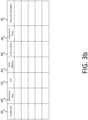
- the server for the server to interact with the uPass system it needs to be enrolled as a device. This process binds (in the database of Figure 3b ) an uPass profile 28 for the server operator to a credential 30 to allow interaction.
- the server is able to create virtual devices which can then be used to manage login and registration initiated by prospective users of the server.
- the uPass validation transaction requires that each uPass credential is uniquely bound to both a profile and an enrolled device.
- a network system establishes a session by presenting a login or registration form 177 to a visiting uPass user via a client application, it needs to uniquely identify this session to the uPass system.
- a transient virtual device is created as part of the session establishment procedure, triggered by step 71 "I want to use URI".
- This device is enrolled using a standard uPass validation and assigned a unique device identifier. This device identifier needs to be unique for the uPass user providing the uPass Connect session. The same device identifier can be reused across different uPass users.
- a credential 30 is issued to it, which is transmitted (step 72) in a webpage and forms the basis for a QR code 179. Which will be displayed in the updated webpage 177 issued after enrolment of the virtual device.
- the native app on the smartphone 12 can scan in this QR code and transmit it to the uPass validation server 14.
- a validator requests that a client (bearer) wishing to engage with them to provide an uPass credential which can then be checked against the uPass validation server.
- the uPass Connect system does not take this approach as there is no guarantee that the client application will be running on a device capable of soliciting a credential from the uPass user seeking to use the network service.
- the uPass validator presents the credential in visual form (such as the QR code 179) via the client application and the uPass user 20 seeking access scans this (step 73) into theirown uPass-enrolled device 12.
- the scan could be by NFC, Bluetooth, Wi-Fi, audio, or any other data transmission mechanism. This flexibility allows uPass Connect to support Internet of Things embedded use cases.
- step 74 a check is performed to a URI verification service to check that the FQDN of the URI is registered (step 75), a confirmation is returned to the smartphone (step 76).
- An optimal additional step for enhanced security can be conducted, wherein in step 77 the device 12 sends a receiving address with the acquired token and its old token. This receiving address is used to open a back channel, step 716. The remote service confirms validity to the smartphone 12, step 716.
- This scenario can play out in one of two ways.
- the uPass bearer 20 is using their mobile device 12 to gain access to a web site via a browser session running on a desktop or laptop device 173 scanning the QR code displayed in the client application.
- this credential (which is annotated with the URI indicating the system to which the client application is attempting to connect) is passed (step 77) to the uPass validation service, which then determines if the URI is valid and known, by looking up the credential in the database of Figure 3b .
- his credential is added to the message in step 77.
- a receipt is sent to the URI server 80 (step 78) which determines what to do (step 710) based on the validated identity presented in this receipt.
- a receipt is also sent (step 79) to the device 12 with details of the server hosting the URI, for display (step 712) to the user 20.
- a server supporting uPass Connect may wish to only ever receive profiles it has assigned. This can be reflected in the credentials used by its virtual devices.
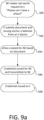
- Site operators can require an uPass age-check profile to determine the legal eligibility of a visitor to access their content and take appropriate action based upon this. Performing this validation also creates an audit trail so that the site owners can subsequently demonstrate their compliance with the law.
- uPass Connect When a site uses uPass Connect to control access to its content, it gains the ability to annotate users' uPass accounts with site-specific profiles which can be queried on subsequent visits. These can be used to store arbitrary information and therefore have a similar role to browser-based cookies, only without the inconvenience of storing them on a user's system.
- the secure store 24 is a secured, privacy-preserving data store which contains user credentials and related metadata. It is an aim of the system design that an uPass operator should have the bare minimum access to the personal information associated with any given uPass user.
- the secure store is placed on a separate internal network segment isolated from the outside world with multiple layers of hardware security to ensure this.
- the data link between the uPass service and the store is secured at a protocol level to further reduce the risk of internal threats.
- This content is stored in an encrypted form.
- An encrypted database also needs a search facility and this is implemented in one embodiment by storing characteristic cryptographic hashes for each indexable data item. These have the advantage of being irreversible making it impractical to use them as a means of recovering the source data in the event that the secure store is compromised, whilst at the same time having a very low probability of collision making them good index keys.
- the uPass system Whenever an incoming request for identity assertion is received the uPass system first checks to see if the device is authorised to make the request. If it is, then receipts will be generated for both parties which are stored in the Master Receipt Books using their provided public keys.
- a separate facial recognition database is maintained trained on that user's photos.
- the standard uPass mechanism described above are predicated on the availability of network access for both uPass bearer and uPass validator.
- An uPass credential is one-use and requires validation by the uPass validation service. Therefore credentials cannot be used reliably for offline usage.
- Receipts are statically published identifiers which always correctly resolve to a published profile and to a consumed credential.
- the local database of transaction receipts is effectively an offline identity cache with visual user validation supported by a photo for each receipt.
- the transaction identifier in the receipt will never change so this can be presented as a printed QR code, barcode or binary blob in an NFC tag.
- Receipt-based usage can be reconciled later via an online mechanism to provide a concrete audit trail.
- uPass Another possible application of uPass is a digital walletwhich allows a sum of money to be associated with a particular device and used to purchase goods or services. This is essentially an extension of the qualification use case which adds a transactional exchange, requiring confirmation to the vendor that a payment has been successfully made along with the actual transfer of money between the two parties.
- a transaction can be performed with the particular intent of increasing the confidence value assigned to a target entity's profile, in which a vouching entity vouches for the target entity.
- the vouching entity collects a credential from the target entity and presents it to the uPass system with their own credential in an electronic vouching message.
- the vouching entity's credential is bound to a profile of the vouching entity to which is allocated a relatively high confidence value (relative to the target's profile as bound to their credential).
- the transaction causes the confidence value of the target entity's profile to be increased. Being a transaction, this uses up the vouching and target entity's one-time use credentials and fresh credentials, bound to the respective profiles, are issued accordingly.
- the uPass system may in addition to revealing the (now higher) confidence value of the relevant profile, identify the vouching entity as the source of the high confidence value to the validator.
- the validator may be a business, the vouching entity a well know customer of that business, and the target entity a new customer of that business.
- the profile may be a profile created specifically for the benefit of that business, whereby the initial low confidence value of the target's profile is indicative of the fact that the target is an unknown customer.
- a validator captures a credential from a bearer.
- the user is a bearer and the validator a device, in others vice versa.
- both are humans.
- Each use case is based on a uPass transaction, in which the validator captures a bearer credential 30, and present's it to the uPass system with his/her/its own credential.
- Both credentials are one-time only use and bound to bearer and validator profiles respectively, which may be profiles specifically created for the sype of transaction in question.
- a version of the validator (resp. bearer) profile is published and a link to the published version provided in a receipt sent to the bearer (resp. validator). This uses up the credentials so fresh validator and bearer credentials are also issued in the validator and bearer's receipts respectively.
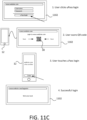
- a user 20 can verify their identity to an event owner ( fig 11B ) by showing a valid credential 30 bound to e.g. a profile specific to the event on the display as a QR code.
- a valid credential 30 bound to e.g. a profile specific to the event on the display as a QR code.
- the user is the bearer.
- the creation of the event profile may be conditional on the user having paid an appropriate admission fee or some other predetermined admission criteria.
- a validator (event owner) captures the credential and presents it to the uPass system.
- the system publishes the relevant profile so that it is accessible to the validator.
- the profile may simply be a phot of the user's face 20.
- the validator can compare the photo to the user and thereby verify that the user 20 does indeed have a profile for the event (because they match the photo) and admit them to the event.
- a credential outputted by a web page ( fig 11c ) on a separate device 1102 can be captured by the mobile device 12 can be used to simultaneously verify the website to the user 20 of the device 12 and the user to the website.
- the user is the validator and a Web server is the bearer.
- the user wishes to log in on a separate device, and captures the website's credential 30 from the separate device using their mobile device 12. That is, the credential is received at the mobile device 12 from the Web server via the separate device 1102.
- the user presents their own credential and the captured credential to the uPass system.
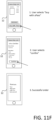
- Figure 11E shows how a user may effect a purchase form a website hosted on a Web server presented on a separate device with their mobile device 12. After capturing the website's credential, the user is required to provide additional verification by entering a PIN or scanning their fingerprint for example before the uPass app will present the captured credential and the user's own credential to the uPass system to provide additional security. Because the website has confidence the uPass system, it allows the transaction to proceed on the basis of the receipt which is issued to it.
- Figure 11F shows an equivalent scenario in which the website is provided to the mobile device 12 directly, and without the additional layer of security.
- a key aspect is the simultaneous verification of the web Server to the user (so the user knows they are safe to purchase goods or services form the website), and the user to the Web server (so the website knows it is safe to sell to the user).
- an equivalent use case is a real-word use case in which Web server is substituted for a human vendor operating the separate device 1102.
- Figures 11G (separate device) and 11F (same device 12) shows how a user may use their uPAss to donate to charity. The underlying principles are the same as the purchase scenarios only here the reward reaped by the user is intangible.
- a credential bound to a profile can be used once in a uPass transaction to do e.g. one of the following:
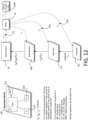
- a uPass transaction can be conducted between three entities (such as bearer 20, validator 52, and validation service (authenticator) 14b), as shown in figure 12 .
- F represents a function to be executed. This may be a simple validation. It may also be an operation specific to the secure store 24 as expressed by a public API.
- A represents an authentication wrapper for F.
- the bearer 20 e.g. customer
- the validator 52 sends their credential Cc to the validator 52 (e.g. merchant) in a first electronic message.
- the validator sends its own credential Cm with the bearer credential Cc with an indicator of the function F to be executed to the authenticator 14b in a second electronic message ("CmF(Cc)").
- the authenticator sends CmF(Cc)with an indicator of the authentication wrapper A and its own credential Ca to the secure store 24.
- a set of four receipts R1, R2, R3, R4 ( ⁇ Ri ⁇ ) is generated.
- a master receipt for the transaction is stored in the master receipt book 31, and bearer/validator receipts 32v/32b (R2/R3) are issued to the bearer and validator 20, 52.
- R1 is issued to the authenticator 14b, and R4 is logged in a secure access log 1202. All of the receipts R1, R2, R3,R4 and the master receipt share a transaction identifier which links them all together,
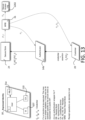
- FIG 13 shows a similar scenario, however in this case the customer communicates directly with the authenticator 14b and receives both receipts R2, R3.
- another type of biometric data may be used, such as image of a fingerprint or a biometric template (e.g. LBP) derived therefrom.
- a biometric template e.g. LBP
- a high resolution image of the fingerprint is needed.
- super resolution imaging can be used, whereby multiple images of the fingerprint are captured and combined using known super-resolution techniques to generate a composite fingerprint image having a greater image resolution than any of the individual images.
- the composite image is preferably generated at the user device, though is can be implemented by the uPass system. Accordingly, any of the above description pertaining to a selfie applies equally to a fingerprint image data (or other biometric data).
- the uPass system may, upon receiving an image of an identity document, process it to simultaneously verify th at the document is authentic and also that the hand holding it is a real, human hand (e.g. based on texture analysis). That is, document authentication and liveness detection may be performed based on the same image(s). The authenticity of the document and the liveness of the hand holding it may be prerequisites for anchoring the document within the system.
- Example Account creation message A message used in the account creation process Acquired Credential A candidate Credential acquired via mechanisms known to a specific Client Application.
- An uPass At least one (uPass) profile with at least one credential bound to it Anchor confidence or issuing Authenticator A service authorised to broker a Transaction between two Registered Devices.
- Blob a binary data element Client Application A software application running on a Registered Device and capable of storing a Current Credential. Confidence Framework?
- Contingent Trust A value indicating the trustworthyness of a particular profile or data titem based upon its confidence value and the usage of this profile or data item over time Credential
- Credential A token binding a specific Profile to a Registered Device, both associated with an Identity. This token is unique and may only be used once. Optionally it may also be time-limited or invalidated.
- HMAC keyed-hash message authentication code
- MAC message authentication code
- HTTP Strict Transport Security is a web security policy mechanism which is necessary to protect secure HTTPS websites against downgrade attacks, and which greatly simplifies protection against cookie hijacking.
- Identifying Anchor identifying document Identity Assertion Any atomic key value pair representing a statement about the identity of the uPass User Identifying document Issuing document Identity
- An identity many consist of many profiles Identity statement profile Issuing anchor the author of an issuing document like the crown for a passport Issuing document a source document from which a profile may be created profile Passport, Driving Licence, Utility Bill, ID card, Student card Master Receipt Book A central repository of Receipts of all uPass Users. Merchant registered corporate entity, sole trader, partnership, registered charity, club, society etc.
- Profile A cohesive set of one or more Identity Assertions describing some aspect of an identity, combined with a photo and linked to the contingent trust system
- Profile History A time sequence of stored versions of a Profile for a given Identity along with associated metadata.
- Published Profile An instance of a Profile at a given point in time, stored encrypted in a randomly selected and publicly-accessible location.
- Receipt A token created subsequent to a Validation which contains key metadata related to that Transaction and links to a Published Profile for the other party involved in that Transaction.
- Receipt Book A time sequence of Receipts associated with a specific Identity Receipt Pair Receipts are generated in pairs so that each party to a Transaction receives one.
- the Receipt Pair are bound together by a shared Transaction ID which is used as a shared symmetric key to encrypt both associated Published Profiles.
- Registered Device Any computing system registered as valid for a given Identity Registration data Sum of all data items submitted for registration Registration documents submitted issuing documents Registration item registration Datum Registration Event The act of submitting or resubmitting an identity Document to the Secure Store, allowing its baseline Contingent Trust to be determined Remote Connect The mechanism whereby an intermediary unassociated with the system is used to present a Credential from a Virtual Device hosted in a remote service such as a web server. This Credential is then acquired by a registered Device which acts as a Validator.
- Security Event a message sent to a separate security auditing and enforcement system
- Selfie A self-taken photo of a user, in particular of their face Social graph mapping and pinpointing a uPass user in relation to other uPass users
- System Application One or more software applications which together use a series of Transactions to perform a more complex task.
- Transaction ID A cryptographically random, unique number used to identify a given Transaction.
- Transaction Key transaction ID Trust Arbitration An automated mechanism which establishes trust in a timely manner between two users via proffered credentials uPass User An entity registered to the uPass system that has been assigned at least one profile Some of the document type and the method of submission is contingent trust Validation Transaction The process of confirming that an acquired Credential is valid and current for a given Registered Device, leading to the creation and dissemination of a Receipt Pair.
- Validator A Registered Device capable of acquiring a Credential from another registered Device and using this to request a Validation via an Authenticator.
- Virtual Device A notional Registered Device which exists purely as an embodiment in software hosted on a physical Registered Device.
- An aspect is directed to a method of authenticating content offered by a content source to a local device for displaying content, the method comprising: establishing a communication session between the content source and a browser executing at the local device; transmitting from the content source to the browser a validation page comprising a content authentication token which is a randomly generated one-time use only credential bound to the content source; capturing the content authentication token from the browser by a verification application; transmitting the authentication token to a validation service which determines whether the token is bound to a valid source of content; and causing the content to be displayed on the local device if the token is bound to a valid source of content
- causing content to be displayed may comprise transmitting a content source receipt from the validation service to a mobile device with or indicating a data item relating to the valid source of content.
- the content source receipt may comprise a link identifying a memory location from which the data item is accessible, thereby indicating the data item.
- the data item may be accessed from a digital profile of the content source identified by the credential.
- the profile may be published by storing a version of it to an addressable memory location, and a link identifying the addressable memory location is included in the contentsource receipt, thereby indicating the data item.
- the verification application may be executed on the mobile device which captures the content authentication token displayed on the validation page by one of: digital image capture; scanning, near field communications and Bluetooth.
- the content authentication token may be received by a local browser of the local device and transferred to the verification application which is executed in the local device.
- Causing the content to be displayed may comprise transmitting a receipt to the local device which indicates a data item relating the valid source of content.
- the token may identify an address of the source of content
- the method may comprise transmitting the address to an address verification service to confirm the address is a valid address.
- the data item may be displayed at the mobile device.
- the data item may be details of a server hosting the content.
- the data item may comprise details of a virtual device hosting the content and/or a physical device on which the virtual device is running.
- the method may comprise the steps of transmitting from the mobile device a device authentication token which is a randomly generated one-time use only credential bound to the mobile device to the verification service with the content authentication token.
- the validation service may use the device authentication token to access a digital identity profile using the credential.
- the validation service may generate a device identification receipt comprising or indicating a data item accessed from the digital identity profile and transmits the receipt to the content source.
- the content source may determine whether or not to release content based on the data item in the device identification receipt.
- the method may comprise transmitting in the device identification receipt afresh device authentication token.
- the method may comprise a fresh content authentication token to the content source.
- the device identification receipt and the content source receipt may share a common transaction identifier.
- the method may comprise the steps of transmitting from the local device an authentication token which is a randomly generated one-time use only credential bound to the local device to the verification service with the content authentication token.
- the source of content may comprise a server, and the token may be bound to the server.
- the content source may comprise a server, and the content authentication token may be bound to a transient virtual device created by the server in a session establishment procedure instigated by the local device.
- a confidence value may be associated with the data item and displayed with the data item.
- Another aspect is directed to a computer system comprising:
- the verification application may be executed on the local computing device.
- the computer system may comprise a mobile device, which comprises a processor and a network interface, wherein the verification application is executed on the processor of the mobile device.
- Another aspect is directed to a digital identity system for creating a computer stored digital identity comprising:
- a master receipt comprising data of each receipt may also generated and stored in a master receipt book at the digital identity system, whereby both the first and the master receipt are stored at the digital identity system.
- the master receipt may comprise only part of the first receipt.
- the master receipt may comprise the link but not the credential.
- the master receipt may comprise the link and the transaction identifier, but not the credential.
- the data of each receipt in the master receipt may be encrypted with the transaction identifier, wherein the master receipt does not include the transaction identifier.
- the credential may be a randomised one-time only use credential.
- each profile being associated with a credential unique to that profile, wherein each digital profile may be published by assigning a unique set of data items for each digital profile to a corresponding addressable memory location.
- the data item may be shared between the unique sets.
- one of the sets may consist only of the data item, and the remaining sets may each comprise the data item and at least one additional data item.
- the data item may be a visual image of the entity.
- the multiple data items may be received in the electronic message and stored in the profile.
- Metadata available from a computer device associated with the entity may be received with the data item and stored at the digital identify system.
- the credential may be generated using the metadata.
- the credential may be generated by a hash of the metadata and a random salt.
- the random salt may be stored in association with the metadata, whereby a copy of the credential can be generated from the stored random salt and stored metadata.
- the credential may be generated by hashing the device metadata and the random salt a random number of times, wherein the random number may be stored in association with the random salt and the metadata.
- the metadata may comprise an identifier of the computer device (device identifier).
- the credential may be associated with the digital profile by creating an entry in a database, the entry comprising the digital profile or an indicator which enables the digital profile to be located in the persistent electronic storage, wherein the publication module may be configured to use the credential as a key to that entry in the database to access the profile for publication.
- the profile may be published in response to the credential being presented to the digital identity system.
- the credential is presented by a validating entity other than the entity, the credential having been provided to the validating entity by the entity.
- the credential may be one-time only use, and the credential creation module may be configured to generate a fresh credential in response to the credential being presented to the digital identity system, whereby another version of the profile is published to a different addressable memory location by the publication module in response to the fresh credential being presented to the digital identity system.
- a device identifier may be received with the data item and stored at the digital identify system, wherein publication of the profile may be conditional on a matching device identifier being presented with the credential.
- the link may be generated from and/or the memory location may be selected based on a randomly generated sequence.
- the link may be is a Uniform Resource Indicator (URI).
- URI Uniform Resource Indicator
- the digital identity system may comprise a confidence value management module configured to allocate a confidence value to the profile based on at least one of a source of the electronic message and a type of the data item.
- the confidence value may be published with the profile, whereby the confidence value and the profile are available to a requesting entity.
- the confidence value may be changed over time based on a clock signal.
- Another aspect is directed to a computer-implemented method for creating a computer stored digital identity comprising:
- Another aspect is directed to a method of registering a digital identity comprising:
- the data item may be captured in the form of an identifying datum from an identity document.
- the data item may be captured the form of a photo taken by a camera of the computer device.
- the first data item may be captured by one of: scanning, near field access; and Bluetooth.
- the local receipt book may be held at a server accessible to the device.
- Another aspect is directed to a method implemented by executing digital identity software on a processor of a user device to:
- the captured data may also comprise an attribute of the document
- the identity document may be a passport or driving licence.
- the user device is may be smart device, such as a smartphone or tablet.
- Another aspect is directed to a user device comprising:
- Another aspect is directed to a computer implemented method implemented by a digital identity system, the method comprising:
- an attribute of the document may be received in the message, and the credential may be generated and transmitted only if the attribute meets a predetermined criteria.
- the photograph and/or image may be made available to the presenting entity.
- Another aspect is directed to a digital identity system comprising:
- Another aspect is directed to a method of authenticating a digital credential of a bearer by a validating device, the method comprising:
- the method may comprise the step of using the validator credential to access a data item of a digital profile associated with the validating device and creating an electronic message for transmission to the bearer, the electronic message indicating a data item for verification by the bearer.
- the electronic message may indicate the data item by providing a link to a version of the digital profile held at an addressable memory location identified in the link.
- the electronic message which indicates the data item for verification by the bearer may indicate the data item by providing a link to a version of the digital profile associated with the validator at an addressable memory location indicated by the link.
- the data item may comprise a visual image of the bearer or validator respectively.
- the fresh bearer credential may be generated for transmission to the bearer is comprised in a receipt having a transaction identifier.
- the validation service may generate a master receipt, wherein the master receipt may be stored in a master receipt book.
- the validation service may generate a master receipt having the same transaction identifier as the receipt generated for transmission to the bearer, wherein the master receipt may be stored in a master receipt book.
- part of the master receipt may be encrypted with the transaction identifier, in which case the transaction identifier is not included in the master receipt.
- the fresh validator credential may be comprised in a non-matching receipt having the same transition identifier.
- the address associated with the bearer may comprise an address of a device previously registered by the bearer and stored in association with the bearer credential.
- the step of generating a fresh credential may comprise using a randomly generated sequence to generate a fresh credential bound to the digital profile.
- the credentials may be one-time only use.
- Another aspect is directed to a method of providing access to digital profiles held in persistent electronic storage of a digital identity system, the method comprising:
- a target credential may be associated with the target entity's profile and a requestor credential may be associated with the requesting entity's profile in a database of the digital identity system, and the step of publishing may be conditional on matching target and requestor credentials being received in the electronic request message.
- the credentials may be one-time use only, and the method may comprise generating a fresh target and a fresh requestor credential and associating them with the target entity's profile and the requesting entity's profile in the database respectively, the fresh target and requestor credentials being included in the second and first receipt respectively.
- the method may comprise storing a master receipt at the digital identity system, the master receipt comprising data of both receipts and being stored in a master receipt book.
- the master receipts may comprise both links but may not include the fresh credentials.
- the data of both receipts in the master receipt (e.g. the links) may be encrypted with the transaction identifier, in which case the transaction identifier is not included in the master receipt.
- the master receipt may comprise both links and the transaction identifier but may not include the fresh credentials.
- the target entity may be a bearer and the requesting entity a validator, the bearer's profile being a pre-existing digital profile which is accessed in the persistent electronic storage in response to the request.
- the target entity may be a registrant and the requesting entity may be an enrolment module of the digital identity system which has created the digital profile in the persistent electronic storage.
- a respective confidence value may be allocated to each profile which is published with that profile and accessible via the respective link.
- Another aspect is directed to a computer system comprising a network interface configured to transmit and receive electronic messages, and a processor configured to implement the method of any preceding claim.
- Another aspect is directed to a digital identity system comprising:
- Another aspect is directed to a digital identity system comprising:
- the enrolment module may be configured to also receive metadata of the enrolling device, which is stored in the database in association with the profile.
- the credential may be generated from the random sequence and the metadata, and the credential may be associated with the profile by storing the random sequence and the metadata in the database in association with the profile, and wherein the system may comprise a validation module configured to generate a copy of the credential from the sequence and metadata stored in the database, and the publication of the profile may be conditional on the presented credential matching the copy.
- the metadata may comprise an identifier of the enrolling device, and the publication of the profile may also also conditional on a matching device identifier being presented with the credential, whereby use of the credential is restricted to the enrolling device.
- the credential may be associated with the profile by storing a copy of the credential in the database in association with the profile, wherein the system may comprise a validation module configured to validate the presented credential by comparing it with the copy and the publication of the profile may be conditional in the presented credential being valid.
- a link identifying the addressable memory location may be transmitted to the presenting device.
- the link may be generated from a random sequence.
- the addressable memory location may be selected based on a random sequence.
- Another aspect is directed to a digital identity system according to claim 1 wherein the persistent electronic storage also holds another digital profile associated with another credential and comprising a data item which has been received from the presenting device, wherein both credentials are presented by the presenting device, and in response the other profile is published to a different memory location accessible to the enrolling device.
- the digital identity system may comprise a receipt generation module configured to generated two non-matching receipts, one of which is transmitted to the presenting device and comprises a link identifying the memory location to which the profile is published, the other of which is transmitted to the enrolling device and comprises a link identifying the other memory location to which the other profile is published.
- the digital identity system may comprise a confidence value allocation module configured to allocate a confidence value to the profile based on at least one of: a type of the received data item and a source of the data item.
- Another aspect is directed to a method implemented at a digital identity system and comprising:
- Another aspect is directed to a method of providing access to a digital profile comprising:
- Another aspect is directed to a computer system comprising a network interface and a processor configured to implement the method.
- Another aspect is directed to a computer system comprising:
- the electronic may hold a plurality of digital profiles associated with the entity, each digital profile comprising a unique set of data items for that digital profile. At least some of the data items may be shared between the unique sets.
- the electronic storage may hold anchoring documents in association with the digital profiles, wherein an anchoring document may be received in the electronic message and the data item has been extracted from the anchoring document.
- the confidence value may be allocated based on the type and/or age of the anchoring document.
- the confidence value may be allocated based on the source of the anchoring document.
- the version of the profile may be rendered available by storing it to an addressable memory location, and transmitting a link identifying the memory location to the presenting entity.
- the processor may be configured to create and transmit a credential each time a data item is stored in a digital profile, wherein presentation of each credential to the computer system may cause a respective version of it to be stored to a different addressable memory location, whereby multiple versions of the profile may be published.
- the memory location may be selected based on a random sequence.
- the link may be generated from a random sequence.
- the link may be a Uniform Resource Indicator.
- One of the data items may be a visual image of the entity.
- the entity may be a person and the visual image is a facial image of the person.
- the electronic storage may comprise a device metadata storage section which holds metadata associated with computer devices which have been used to transmit electronic messages to the network interface.
- the electronic storage may hold one or more digital profiles for each of multiple entities.
- the digital profile may comprise multiple data items received from the entity.
- the identity management code may be operable to allocate a confidence value associated with a source of the electronic message, such thatwhen the source of the electronic message is unknown to the computer system, the confidence value is low.
- the identity management code may be operable to allocate a confidence value appropriate to the status of the source of the electronic message.
- the confidence value which is allocated may be high.
- the identity management code may be operable to allocate a confidence value such that when one of the multiple entities which has a digital profile held in the electronic storage is the source of the electronic message, a contingent trust value associated with that entity is used to calculate the confidence value.
- the contingent trust value may be dependent on usage of the digital profile by the multiple entities in one or more authentication process.
- the identity management code may be operable to update the digital profile on receipt of further data items, and wherein the allocated confidence value is changed when the profile is updated.
- the processor may be configured to change the allocated confidence value over time based on a clock signal.
- the confidence value may be increased in response to receiving an additional visual image of the entity.
- the entity may be required to present a new data item when subsequently logging on to the system, and the confidence value may be changed based on the new data item.
- the new data item may be a visual image of the entity.
- the identity management code may be operable to receive a data item from a third party to assign a profile to the entity, and wherein the confidence value which is allocated may depend on the status of the third party.
- the electronic message may be received from the entity.
- the electronic message may be received from another entity different than the entity.
- the data item may be one of two data items are received in the message, a first of which is an image of the entity which has been captured with a camera and the second of which is an identification photograph which has been captured from a real-world identity document, and the confidence value may be allocated by comparing the two data items and may reflect an extent to which they match, The two data items may be compared using a facial verification algorithm.
- Another aspect is directed to a computer-implemented method of managing a digital profile comprising: receive an electronic message including at least one data item to be included in a digital profile for an entity, the data item associated with the entity an uniquely identifying the entity;
- Another aspect of the present invention is directed to a digital identity system
- a digital identity system comprising a data store having at least one storage location, at which identity data of an entity is held; a computer interface configured to receive an electronic message, which identifies the storage location of the entity's identity data in the data store, wherein the message comprises a one-time use only credential of the entity; and a computer system configured to validate the credential and, if the credential is valid, retrieve the entity's identity data from the identified storage location, issue a fresh one-time use only credential to the entity, and publish the retrieved identity data by storing a version of it to an addressable memory location; wherein the computer system is configured to generate in a master receipt store a master receipt, wherein the master receipt comprises a linkto the addressable memory location and an index which comprises a hash of the fresh credential.
- the master receipt may also comprise a hash of the credential received in the electronic message.
- the computer system may be configured to provide to another entity, in response to receiving a grant of access by the entity to the other second entity, a receipt comprising a copy of the link whereby the other entity can access the entity's published identity data.
- the receipt may comprise a transaction identifier, wherein the link in the master receipt and/or the published identity data at the addressable memory location is encrypted with the transaction identifier.
- the computer system may be configured to provide the receipt to the other entity only if it has received a valid one-time only use credential of the other entity in association with the grant of access, wherein in that event a fresh one-time only use credential is issued to the other entity by the computer system, wherein the master receipt comprises another index comprising a hash of the fresh credential issued to the other entity.
- the computer system may be configured to provide to the entity another receipt which comprises the same transaction identifier.
- the grant of access may be denoted by the electronic message comprising the credential of the entity.
- the electronic message comprising the credential of the entity may be received from the entity.
- the electronic message comprising the credential of the entity may be received from the other entity.
- the computer system may be configured generate a search index comprising a hash of the credential received in the search request message, use the search index to locate the master receipt in the master receipt.
- the computer system may be configured generate a search index comprising a hash of the credential received in the electronic message, use the search index to locate in the master receipt store an earlier master receipt having an index that matches the search index, and generate a hash and/or a digital signature from at least part of the earlier master receipt, wherein the master receipt also comprises the hash of the at least part of the earlier master receipt.
- the hash and/or the digital signature may be generated from substantially all of the earlier master receipt, including its index.
- the other entity may hold a symmetric or private key
- the computer system may be configured to encrypt the other receipt using a version of the private key or a corresponding public key available at the digital identity system.
- the entity may hold a symmetric or private key
- the computer system may be configured to encrypt the other receipt using a version of the private key or a corresponding public key available at the digital identity system.
- the hash of the credential in the master receipt may be encrypted with the transaction identifier.
- Another aspect is directed to a method comprising implementing any of the above described system, device, application or other functionality.
- Another aspect is directed to a computer program product comprising code stored on a computer readable storage medium and configured to implement any method, system or device functionality disclosed herein.
- uPass system is sometimes referred to herein as a "YOTI system”.
- YOTI system The terms “uPass” and “YOTI”/"Yoti” used interchangeable in this disclosure.
- the uPass Connect mechanism can be used for the following purposes:
- the uPass system can be configured in an F2F context.
- F2F context For example is can be configured to provide mechanisms for the following:
- IOT Internet of Things
- the uPass Connect mechanism can be used for the following purposes:
- Streaming content for specific user access for example User "A” who is a BBC licence payer is able to access the contentthat they have paid for from France or any other country. Netflix and other companies are struggling with mobile users access rights without using geolocation as a filter.
- F2F P2P Friend to Friend/Peer to Peer
- the uPass system can be configured in an F2F context. This can work both in a face to face via a QR code /NFC scan and also remotely by sending a link through a messaging platform.
- VRM Vehicle relationship management
- Yoti is an enabling technology could realise the visions of Doc Searls and others. In essence, through a certified, secure and trusted identity and digital vault (see below) one could:
- IOT Internet of Things
- the site should request that the tenant completes a Guarantor details section. Credit report etc. should then be obtained for the Guarantor instead of the applicant tenant. Guarantor also required where salary is too low or bad credit rating/criteria is obtained (lettings Agent should be able to select their own thresholds for this to automate the system and require guarantor in advance to reduce back and forth.
- Yoti Reception is a digital alternative to a paper-bound visitor book. It is much more adaptive than a non-digital solution that allows office buildings to notify inhabitants when they have a visitor, while improving security via digitally ID'ing visitors.
- Yoti Reception is a solution to multiple problems that have been detailed below: Problem Solution Visitors arriving at company buildings for meetings without the person they are visiting being notified Yoti Reception will send an email notification to the appropriate person upon arrival of the visitor Venues often have no idea who enters their building Yoti Reception requires visitors to enter their basic details: name, email address, and picture Venues find it difficult to record who has visited their building over the course of the previous 'x' years Yoti Reception will provide a digital receipt of a visitor interaction, including: timestamp, name, company visiting from and who they are visiting. This will be stored on a company's web portal and is exportable. Venues have no access to aggregated data Yoti Reception will include an analytics panel Venues being unsure of an individual's identity Visitors using their Yoti ID to scan into a Yoti Reception buildings will provide buildings with the verified identity of the individual entering the building
- Yoti is an identity system that can be used on and offline.
- An individual is able to register themselves on the site using verified information. This would prevent users creating completely fake profiles, creating multiple profiles or lying about details such as age.
- Yoti connect and face to face as a mechanism to:
- Details can either be shared in person -via a face to face check, or they can be shared remotely - via company specific Webpages, containing QR codes that are communicated to applicants via email or via website integration
- British Gas may wish to issue a credential / profile to one of their employees who can show this to homeowner. The homeowner will see the photograph of the Gas operative which is issued and therefore certified by the gas company. Both parties will receive a receipt of the exchange. British Gas can view employees activity log and GPS location.
- AML level checks against verified identity documents that have been biometrically linked to an individual
- AML level checks on a againstverified identity documents that have been biometrically linked to an individual. All carried out on a mobile phone - this can include Yoti creation through our SDK MFA Authentication Authentication linked to a person's verified biometric information, device and passcode Connecting bank card to identity Connect a bank account/card to Yoti so that the individual can then use their card through Yoti QR codes Reset passcode/order new card
- the card could then be sent out like below Bank card authentication Prove that a person has received a bank card through the post by scanning a static QR code on the letter or on the card itself, this static QR code requests the name of the individual to verify that the right person has received the card
- Freelancer.co m / chat rooms yes yes yes yes Assurance that people you are talking to are a) real people b) have the aqe/qender etc they describe online gambling Jackpot Joy / Pokerstars / Lotteries yes yes yes yes yes
- Check users are over 18 (or 16) / stop people cheating by setting up multiple usernames adult sites Playboy / tube sites yes yes yes yes yes
- Check users are not pretending to be children (i.e.
Landscapes
- Engineering & Computer Science (AREA)
- Computer Security & Cryptography (AREA)
- Computer Networks & Wireless Communication (AREA)
- Signal Processing (AREA)
- Computer Hardware Design (AREA)
- General Engineering & Computer Science (AREA)
- Computing Systems (AREA)
- Theoretical Computer Science (AREA)
- General Physics & Mathematics (AREA)
- Software Systems (AREA)
- Physics & Mathematics (AREA)
- General Health & Medical Sciences (AREA)
- Biomedical Technology (AREA)
- Health & Medical Sciences (AREA)
- Storage Device Security (AREA)
- Management, Administration, Business Operations System, And Electronic Commerce (AREA)
- Financial Or Insurance-Related Operations Such As Payment And Settlement (AREA)
Applications Claiming Priority (9)
| Application Number | Priority Date | Filing Date | Title |
|---|---|---|---|
| US14/622,549 US20160241531A1 (en) | 2015-02-13 | 2015-02-13 | Confidence values |
| US14/622,709 US9858408B2 (en) | 2015-02-13 | 2015-02-13 | Digital identity system |
| US14/622,527 US9785764B2 (en) | 2015-02-13 | 2015-02-13 | Digital identity |
| US14/622,737 US9852285B2 (en) | 2015-02-13 | 2015-02-13 | Digital identity |
| US14/622,740 US9648496B2 (en) | 2015-02-13 | 2015-02-13 | Authentication of web content |
| GBGB1509808.0A GB201509808D0 (en) | 2015-06-05 | 2015-06-05 | Digital identity system |
| PCT/EP2016/053073 WO2016128567A1 (en) | 2015-02-13 | 2016-02-12 | Digital identity |
| EP16705750.4A EP3257221B1 (de) | 2015-02-13 | 2016-02-12 | Digitale identität |
| EP21203787.3A EP3968194B1 (de) | 2015-02-13 | 2016-02-12 | Digitale identität |
Related Parent Applications (3)
| Application Number | Title | Priority Date | Filing Date |
|---|---|---|---|
| EP16705750.4A Division EP3257221B1 (de) | 2015-02-13 | 2016-02-12 | Digitale identität |
| EP21203787.3A Division EP3968194B1 (de) | 2015-02-13 | 2016-02-12 | Digitale identität |
| EP21203787.3A Division-Into EP3968194B1 (de) | 2015-02-13 | 2016-02-12 | Digitale identität |
Publications (2)
| Publication Number | Publication Date |
|---|---|
| EP4525372A2 true EP4525372A2 (de) | 2025-03-19 |
| EP4525372A3 EP4525372A3 (de) | 2025-04-02 |
Family
ID=55405318
Family Applications (7)
| Application Number | Title | Priority Date | Filing Date |
|---|---|---|---|
| EP20189204.9A Active EP3754939B1 (de) | 2015-02-13 | 2016-02-12 | Digitales identitätssystem |
| EP16705752.0A Active EP3257223B1 (de) | 2015-02-13 | 2016-02-12 | Digitales identitätssystem |
| EP21203787.3A Active EP3968194B1 (de) | 2015-02-13 | 2016-02-12 | Digitale identität |
| EP25155185.9A Pending EP4525372A3 (de) | 2015-02-13 | 2016-02-12 | Digitale identität |
| EP16705750.4A Active EP3257221B1 (de) | 2015-02-13 | 2016-02-12 | Digitale identität |
| EP16705751.2A Active EP3257222B1 (de) | 2015-02-13 | 2016-02-12 | Authentifizierung von web-inhalt |
| EP19188893.2A Active EP3579524B1 (de) | 2015-02-13 | 2016-02-12 | Digitales identitätssystem |
Family Applications Before (3)
| Application Number | Title | Priority Date | Filing Date |
|---|---|---|---|
| EP20189204.9A Active EP3754939B1 (de) | 2015-02-13 | 2016-02-12 | Digitales identitätssystem |
| EP16705752.0A Active EP3257223B1 (de) | 2015-02-13 | 2016-02-12 | Digitales identitätssystem |
| EP21203787.3A Active EP3968194B1 (de) | 2015-02-13 | 2016-02-12 | Digitale identität |
Family Applications After (3)
| Application Number | Title | Priority Date | Filing Date |
|---|---|---|---|
| EP16705750.4A Active EP3257221B1 (de) | 2015-02-13 | 2016-02-12 | Digitale identität |
| EP16705751.2A Active EP3257222B1 (de) | 2015-02-13 | 2016-02-12 | Authentifizierung von web-inhalt |
| EP19188893.2A Active EP3579524B1 (de) | 2015-02-13 | 2016-02-12 | Digitales identitätssystem |
Country Status (5)
| Country | Link |
|---|---|
| EP (7) | EP3754939B1 (de) |
| CN (2) | CN107636662A (de) |
| ES (1) | ES3031963T3 (de) |
| PT (1) | PT3968194T (de) |
| WO (3) | WO2016128569A1 (de) |
Families Citing this family (121)
| Publication number | Priority date | Publication date | Assignee | Title |
|---|---|---|---|---|
| US9665754B2 (en) * | 2014-05-28 | 2017-05-30 | IDChecker, Inc. | Identification verification using a device with embedded radio-frequency identification functionality |
| US11640582B2 (en) | 2014-05-28 | 2023-05-02 | Mitek Systems, Inc. | Alignment of antennas on near field communication devices for communication |
| US11461567B2 (en) | 2014-05-28 | 2022-10-04 | Mitek Systems, Inc. | Systems and methods of identification verification using hybrid near-field communication and optical authentication |
| US12198215B2 (en) | 2014-05-28 | 2025-01-14 | Mitek Systems, Inc. | Self-sovereign identity systems and methods for identification documents |
| CN106572095B (zh) * | 2016-11-01 | 2018-04-10 | 腾讯科技(深圳)有限公司 | 帐号注册方法、装置及系统 |
| US11216119B2 (en) | 2016-06-12 | 2022-01-04 | Apple Inc. | Displaying a predetermined view of an application |
| US10230710B2 (en) | 2016-08-04 | 2019-03-12 | Visa International Service Association | Token based network service among IoT applications |
| SG11201810431PA (en) * | 2016-08-30 | 2018-12-28 | Visa Int Service Ass | Biometric identification and verification among iot devices and applications |
| WO2018045326A1 (en) * | 2016-09-01 | 2018-03-08 | Kelts A David | Bi-directional trust indicator |
| CN109791591B (zh) * | 2016-10-06 | 2023-07-07 | 万事达卡国际公司 | 经由区块链进行身份和凭证保护及核实的方法和系统 |
| DE102016220656A1 (de) * | 2016-10-21 | 2018-04-26 | Bundesdruckerei Gmbh | Bereitstellung und Prüfung der Gültigkeit eines virtuellen Dokuments |
| GB201618335D0 (en) * | 2016-10-31 | 2016-12-14 | Idscan Biometrics Ltd | System, method and computer program for secure customer account opening |
| DE102016221699A1 (de) * | 2016-11-04 | 2018-05-09 | Bundesdruckerei Gmbh | Verfahren zum Ausstellen einer virtuellen Version eines Dokuments |
| DE102016221700A1 (de) * | 2016-11-04 | 2018-05-09 | Bundesdruckerei Gmbh | Verfahren zur Offline-Echtheitsprüfung eines virtuellen Dokuments |
| US9992022B1 (en) * | 2017-02-06 | 2018-06-05 | Northern Trust Corporation | Systems and methods for digital identity management and permission controls within distributed network nodes |
| US10665047B1 (en) | 2017-04-28 | 2020-05-26 | 1 Micro, LLC | Methods and apparatus for accessing secured physical assets |
| AU2018286643A1 (en) * | 2017-06-23 | 2020-02-13 | Australian Postal Corporation | Method and system for identity proofing |
| DE102017211201A1 (de) * | 2017-06-30 | 2019-01-03 | Siemens Aktiengesellschaft | Verfahren zum asymmetrischen Schlüsselmanagement und sicherheitsrelevante Anlage |
| GB2563925B (en) | 2017-06-30 | 2022-02-09 | Cryptomathic Ltd | System and method |
| US11922363B2 (en) | 2017-07-05 | 2024-03-05 | United Parcel Service Of America, Inc. | Counterparty physical proximity verification for digital asset transfers |
| WO2019010288A1 (en) * | 2017-07-05 | 2019-01-10 | United Parcel Service Of America, Inc. | AUDITABLE PACKAGE SHIPPING AND MONITORING SYSTEM VIA A DISTRIBUTED REGISTER |
| US10790980B2 (en) | 2017-07-14 | 2020-09-29 | International Business Machines Corporation | Establishing trust in an attribute authentication system |
| FR3070079B1 (fr) | 2017-08-09 | 2019-08-16 | Philippe Dewost | Procede de signature electronique d'un document par une pluralite de signataires |
| EP3669513A1 (de) * | 2017-09-07 | 2020-06-24 | Yoti Holding Limited | Digitales identitätssystem |
| US10796423B2 (en) | 2017-09-29 | 2020-10-06 | United Parcel Service Of America, Inc. | Predictive parcel damage identification, analysis, and mitigation |
| CN107729847B (zh) | 2017-10-20 | 2020-08-04 | 阿里巴巴集团控股有限公司 | 一种证件验证、身份验证方法和装置 |
| GB2582113A (en) * | 2017-11-09 | 2020-09-09 | Yoti Holding Ltd | Secure electronic payment |
| CN109905242A (zh) * | 2017-12-07 | 2019-06-18 | 航天信息股份有限公司 | 数字证书的存储、更新、验证方法及装置 |
| US9990504B1 (en) | 2017-12-18 | 2018-06-05 | Northern Trust Corporation | Systems and methods for generating and maintaining immutable digital meeting records within distributed network nodes |
| US10715323B2 (en) | 2017-12-29 | 2020-07-14 | Ebay Inc. | Traceable key block-chain ledger |
| US11544708B2 (en) | 2017-12-29 | 2023-01-03 | Ebay Inc. | User controlled storage and sharing of personal user information on a blockchain |
| CA3089009A1 (en) * | 2018-01-19 | 2019-07-25 | Nasdaq, Inc. | Systems and methods of digital content certification and verification using cryptography and blockchain |
| US10839238B2 (en) | 2018-03-23 | 2020-11-17 | International Business Machines Corporation | Remote user identity validation with threshold-based matching |
| CN108595709B (zh) | 2018-05-10 | 2020-02-18 | 阿里巴巴集团控股有限公司 | 基于区块链的音乐原创性分析方法和装置 |
| CN108805737A (zh) * | 2018-05-23 | 2018-11-13 | 房军 | 一种基于农业耕地的区块链应用 |
| US11620623B2 (en) * | 2018-05-31 | 2023-04-04 | Nxp B.V. | Merchant transaction mirroring for personal point of sale (pPOS) for card present e-commerce and in vehicle transaction |
| EP3584757A1 (de) | 2018-06-18 | 2019-12-25 | MasterCard International Incorporated | Vorautorisierungs- und vorauthentifizierungsverfahren zur verwendung von mobilitätsdiensten |
| CN108881232B (zh) * | 2018-06-21 | 2019-07-02 | 北京海泰方圆科技股份有限公司 | 业务系统的登录访问方法、装置、存储介质和处理器 |
| GB201810639D0 (en) | 2018-06-28 | 2018-08-15 | Yoti Holding Ltd | Age verification |
| CN109147162A (zh) * | 2018-06-29 | 2019-01-04 | 赵东 | 一种基于银行卡实现的产品体验身份验证系统及方法 |
| US11251956B2 (en) * | 2018-07-02 | 2022-02-15 | Avaya Inc. | Federated blockchain identity model and secure personally identifiable information data transmission model for RCS |
| TWI687829B (zh) * | 2018-07-03 | 2020-03-11 | 中華電信股份有限公司 | 發行及應用數位識別證的系統及方法 |
| US10929557B2 (en) | 2018-07-06 | 2021-02-23 | Avaya Inc. | Exported digital relationships |
| CN110765806A (zh) * | 2018-07-25 | 2020-02-07 | 北京红马传媒文化发展有限公司 | 基于有监督数据采集的对象验证方法、装置和电子设备 |
| CN109040079A (zh) * | 2018-08-09 | 2018-12-18 | 广东省南方数字电视无线传播有限公司 | 直播链接地址的组建和验证方法及相应装置 |
| IT201900004151A1 (it) * | 2019-03-21 | 2020-09-21 | Crio Solutions S R L | Sistema e metodo per la certificazione dell’esistenza di un contenuto digitale |
| EP3837659A1 (de) * | 2018-08-14 | 2021-06-23 | Crio Solutions S.r.l. | Zertifizierungsystem und zertifizierungsverfahren zur zertifizierung der existenz eines digitalen inhalts |
| GB201813458D0 (en) | 2018-08-17 | 2018-10-03 | Yoti Holding Ltd | Blockchain autonomous agents |
| CN108965329B (zh) * | 2018-08-23 | 2021-03-23 | 泰链(厦门)科技有限公司 | 区块链系统的共识机制实现方法、介质、装置及系统 |
| US10740637B2 (en) | 2018-09-18 | 2020-08-11 | Yoti Holding Limited | Anti-spoofing |
| EP3627363B1 (de) | 2018-09-19 | 2026-03-25 | Vocalink International Limited | Informationsverarbeitungssystem, vorrichtung und verfahren |
| US11301452B2 (en) | 2018-10-09 | 2022-04-12 | Ebay, Inc. | Storing and verification of derivative work data on blockchain with original work data |
| CN109636411B (zh) * | 2018-11-16 | 2020-06-09 | 阿里巴巴集团控股有限公司 | 提供和获取安全身份信息的方法及装置 |
| GB201818948D0 (en) | 2018-11-21 | 2019-01-09 | Yoti Holding Ltd | Age estimation |
| CA3120386A1 (en) * | 2018-11-26 | 2020-06-04 | Forticode Limited | Mutual authentication of computer systems over an insecure network |
| US11113754B2 (en) | 2018-12-07 | 2021-09-07 | Nike, Inc. | Event-based distribution of cryptographically secured digital assets |
| US11295318B2 (en) | 2018-12-07 | 2022-04-05 | Nike, Inc. | Systems and methods for provisioning cryptographic digital assets for blockchain-secured retail products |
| US10505726B1 (en) | 2018-12-07 | 2019-12-10 | Nike, Inc. | System and method for providing cryptographically secured digital assets |
| US11308184B2 (en) | 2018-12-07 | 2022-04-19 | Nike, Inc. | Video game integration of cryptographically secured digital assets |
| CN109661080B (zh) * | 2018-12-17 | 2021-03-02 | 苏州欧普照明有限公司 | 一种一键组网的控制方法及控制系统 |
| CN109753530B (zh) * | 2018-12-27 | 2021-11-26 | 石更箭数据科技(上海)有限公司 | 一种数据处理方法及其装置、介质、终端 |
| US11068888B1 (en) | 2019-02-06 | 2021-07-20 | Countia, LLC. | Value-transfer payment system |
| CN109905474B (zh) * | 2019-02-26 | 2022-04-15 | 上海南潮信息科技有限公司 | 基于区块链的数据安全共享方法和装置 |
| US11468158B2 (en) | 2019-04-10 | 2022-10-11 | At&T Intellectual Property I, L.P. | Authentication for functions as a service |
| US11245524B2 (en) * | 2019-06-18 | 2022-02-08 | Microsoft Technologly Licensing, LLC | Binding of decentralized identifiers to verified claims |
| SG11202006407QA (en) | 2019-07-02 | 2020-08-28 | Alibaba Group Holding Ltd | System and method for creating decentralized identifiers |
| SG11202003757TA (en) | 2019-07-02 | 2020-05-28 | Advanced New Technologies Co Ltd | System and method for issuing verifiable claims |
| EP3688633A4 (de) | 2019-07-02 | 2020-10-07 | Alibaba Group Holding Limited | System und verfahren zur verifizierung von verifizierbaren ansprüchen |
| CA3180536A1 (en) * | 2019-08-13 | 2021-02-18 | Facetec, Inc. | Method and apparatus for creation and use of digital identification |
| CN110533416A (zh) * | 2019-08-23 | 2019-12-03 | 上海飓金嵘通网络科技有限公司 | 基于手机钱包的电子驾照申请和使用方法及系统 |
| CN110519287B (zh) * | 2019-08-30 | 2022-08-12 | 腾讯科技(深圳)有限公司 | 一种信息管理方法及相关设备 |
| JP2021044686A (ja) * | 2019-09-11 | 2021-03-18 | 富士通株式会社 | 通信プログラム、通信方法、および、通信装置 |
| CN110928534B (zh) * | 2019-10-14 | 2021-11-09 | 上海唯链信息科技有限公司 | 一种基于区块链的工作流节点认证方法及装置 |
| CN113191834B (zh) | 2020-01-14 | 2024-09-06 | 阿里巴巴集团控股有限公司 | 商品对象发布、识别方法、装置、电子设备和存储介质 |
| EP4094172A4 (de) * | 2020-01-23 | 2024-01-17 | Mehrtash, Seyed Mehdi | Identifikationsüberprüfungssystem |
| EP3983980A2 (de) | 2020-01-27 | 2022-04-20 | Apple Inc. | Registrierung und verwendung eines mobilen schlüssels |
| US11643048B2 (en) | 2020-01-27 | 2023-05-09 | Apple Inc. | Mobile key enrollment and use |
| WO2021163461A1 (en) * | 2020-02-13 | 2021-08-19 | Jpmorgan Chase Bank, N.A. | Systems and methods for distributed ledger-based identity management |
| US11626997B2 (en) * | 2020-03-06 | 2023-04-11 | Vaultie, Inc. | System and method for authenticating digitally signed documents |
| CN111368003B (zh) * | 2020-03-06 | 2020-10-16 | 安徽中科智链信息科技有限公司 | 一种多链锚定数据的管理方法 |
| CN111461742B (zh) * | 2020-03-25 | 2023-04-25 | 广东省智能制造研究所 | 一种基于区块链的制造业数据图示管理系统 |
| US11206544B2 (en) | 2020-04-13 | 2021-12-21 | Apple Inc. | Checkpoint identity verification on validation using mobile identification credential |
| JP7759343B2 (ja) | 2020-05-08 | 2025-10-23 | アールアールシー ワシントン,インコーポレイテッド | 物理的現場へのリモートアクセスを提供する統合クレデンシャルベースのスケーラブル通信システム |
| US11853535B2 (en) | 2020-05-29 | 2023-12-26 | Apple Inc. | Sharing and using passes or accounts |
| CN112995148A (zh) | 2020-06-22 | 2021-06-18 | 威盛电子股份有限公司 | 驾驶员登入装置、系统及方法 |
| TWI765424B (zh) * | 2020-06-22 | 2022-05-21 | 威盛電子股份有限公司 | 駕駛員登入裝置、系統及方法 |
| CN115461710A (zh) * | 2020-06-24 | 2022-12-09 | 维萨国际服务协会 | 基于与发起用户相关联的图像和唯一标识符的注册用户的可信标识 |
| EP3937037B1 (de) * | 2020-07-08 | 2025-01-08 | Shareid | System und verfahren zur authentisierung einer digitalen identität basierend auf biometrischen daten |
| US12499196B1 (en) | 2020-08-07 | 2025-12-16 | Unwind, Inc. | Method and system for verifying the identity of a user |
| US12311880B2 (en) | 2020-11-05 | 2025-05-27 | Apple Inc. | Mobile key user interfaces |
| CN116391378A (zh) * | 2020-11-06 | 2023-07-04 | 联想(新加坡)私人有限公司 | 使用验证数字标识的订阅入网 |
| DE102020130815B3 (de) * | 2020-11-20 | 2022-03-31 | comuny GmbH | Dezentrale Bereitstellung von Benutzerdaten |
| EP4053720A1 (de) * | 2021-03-03 | 2022-09-07 | Thales DIS France SA | Verfahren zur sicheren online-authentifizierung unter verwendung eines mobilen identifikationsdokuments |
| CN115021949B (zh) * | 2021-03-03 | 2025-01-07 | 美光科技公司 | 具有被保护用于可靠身份验证的存储器装置的端点的识别管理方法和系统 |
| US11981181B2 (en) | 2021-04-19 | 2024-05-14 | Apple Inc. | User interfaces for an electronic key |
| CN113360886B (zh) * | 2021-04-23 | 2023-02-28 | 山东英信计算机技术有限公司 | 一种加密数据共享的方法、装置、设备及可读介质 |
| CN113127825B (zh) * | 2021-04-27 | 2023-11-10 | 北京百度网讯科技有限公司 | 访问权限验证方法和装置 |
| US11663309B2 (en) | 2021-06-06 | 2023-05-30 | Apple Inc. | Digital identification credential user interfaces |
| CN113507359A (zh) * | 2021-06-18 | 2021-10-15 | 泰安北航科技园信息科技有限公司 | 基于区块链的数字版权多权限属性加密管理系统 |
| FR3125345B1 (fr) * | 2021-07-16 | 2024-04-19 | Imprimerie Nat | Procédé pour générer un document numérique d’identité d’un individu à partir d’un document physique d’identité officiel. |
| TWI769029B (zh) * | 2021-07-27 | 2022-06-21 | 品雨資訊股份有限公司 | 共享物品歸還系統與方法 |
| US12277205B2 (en) | 2021-09-20 | 2025-04-15 | Apple Inc. | User interfaces for digital identification |
| CN114398613B (zh) * | 2021-10-31 | 2024-07-05 | 上海零数众合信息科技有限公司 | 一种计算机基于区块链的可信名片生成方法 |
| CN114493508B (zh) * | 2022-01-13 | 2026-01-30 | 浪潮工业互联网股份有限公司 | 一种基于数字身份的优抚资金发放管理方法、设备及介质 |
| WO2023214887A1 (en) * | 2022-05-06 | 2023-11-09 | Kezzler As | Method and system for information exchange encoding and decoding user identities between computer systems |
| US12400503B2 (en) | 2022-06-04 | 2025-08-26 | Apple Inc. | User interfaces for sharing an electronic key |
| JP2025528066A (ja) * | 2022-06-07 | 2025-08-26 | ヨハナ・エルエルシー | タスクの実行に関連付けられたデータセキュリティのためのシステムおよび方法 |
| US12598073B2 (en) | 2022-07-27 | 2026-04-07 | Boe Technology Group Co., Ltd. | Display terminal, server and information security issuing system |
| CN115545811A (zh) * | 2022-10-25 | 2022-12-30 | 成都同新房地产开发有限公司 | 一种基于发票管理的进项税勾选方法 |
| DE102023105902A1 (de) * | 2023-03-09 | 2024-09-12 | Bundesdruckerei Gmbh | Verfahren zum erzeugen eines provisionierungstokens für eine mehrzahl von digitalen dokumenten |
| FR3151676A1 (fr) * | 2023-07-28 | 2025-01-31 | Idemia Identity & Security France | Procédé et appareil mobile de rendu de code, procédé et système d'authentification de certificat numérique |
| EP4510020A1 (de) * | 2023-08-17 | 2025-02-19 | Amadeus S.A.S. | Verfahren und systeme zur kommunikation mit sicherheitsservern |
| US12278829B2 (en) | 2023-08-21 | 2025-04-15 | TurboCheck, Inc. | Systems and methods for preventing cybersecurity attacks through digital identity verification |
| FR3153683A1 (fr) * | 2023-10-02 | 2025-04-04 | Greenbadg | système et méthode d’authentification d’utilisateurs. |
| WO2025078781A1 (en) * | 2023-10-09 | 2025-04-17 | SITA Advanced Travel Solutions Limited | Method and system for electronic travel authorisation |
| US20250193008A1 (en) * | 2023-12-06 | 2025-06-12 | Synamedia Limited | Randomized Content Access in Token-Based Delivery Platforms |
| EP4579497A1 (de) * | 2023-12-26 | 2025-07-02 | HID Global CID SAS | Zeiteffiziente grenzüberquerung |
| WO2025172625A1 (es) * | 2024-02-16 | 2025-08-21 | Buitron Pena Enrique | Metodo implementado por ordenador y sistema de autenticación de entradas de eventos |
| CN118214774B (zh) * | 2024-03-19 | 2024-10-25 | 北京壹玖捌捌电力科技发展有限公司 | 一种数字化信息共享方法及系统 |
| CN118748619B (zh) * | 2024-07-26 | 2024-11-26 | 上海凌泽信息科技有限公司 | 一种用于物联网的安全通信校验方法及系统 |
| EP4703901A1 (de) * | 2024-08-30 | 2026-03-04 | Siemens Aktiengesellschaft | Verfahren zur kontextuellen visualisierung und reinigung eines wissensgraphen |
Family Cites Families (18)
| Publication number | Priority date | Publication date | Assignee | Title |
|---|---|---|---|---|
| US7680819B1 (en) * | 1999-11-12 | 2010-03-16 | Novell, Inc. | Managing digital identity information |
| US7412462B2 (en) * | 2000-02-18 | 2008-08-12 | Burnside Acquisition, Llc | Data repository and method for promoting network storage of data |
| US7114177B2 (en) * | 2001-03-28 | 2006-09-26 | Geotrust, Inc. | Web site identity assurance |
| US7203966B2 (en) * | 2001-06-27 | 2007-04-10 | Microsoft Corporation | Enforcement architecture and method for digital rights management system for roaming a license to a plurality of user devices |
| US7496751B2 (en) * | 2001-10-29 | 2009-02-24 | Sun Microsystems, Inc. | Privacy and identification in a data communications network |
| CN1275169C (zh) * | 2002-12-30 | 2006-09-13 | 成都三零盛安信息系统有限公司 | 一种ssl中间代理用户证书的隧道传输方法 |
| US7975312B2 (en) * | 2007-01-08 | 2011-07-05 | Apple Inc. | Token passing technique for media playback devices |
| US7877784B2 (en) * | 2007-06-07 | 2011-01-25 | Alcatel Lucent | Verifying authenticity of webpages |
| CN101309143A (zh) * | 2008-06-24 | 2008-11-19 | 宇龙计算机通信科技(深圳)有限公司 | 一种移动终端间互访共享数据的方法及系统 |
| CN101335626B (zh) * | 2008-08-06 | 2011-05-18 | 中国网通集团宽带业务应用国家工程实验室有限公司 | 多级认证方法和多级认证系统 |
| CN101504732B (zh) * | 2009-03-13 | 2010-12-01 | 华中科技大学 | 基于标识密码技术的电子护照扩展访问控制系统及鉴权方法 |
| EP2465246B1 (de) * | 2009-08-12 | 2017-04-19 | Google Technology Holdings LLC | Geschichteter schutz und validierung der identitätsdaten, die online über mehrere zwischen-clients geliefert werden |
| CN102170437A (zh) * | 2011-04-19 | 2011-08-31 | 上海众人网络安全技术有限公司 | 基于挑战口令令牌实现钓鱼网站识别的系统及方法 |
| WO2013082329A1 (en) * | 2011-11-29 | 2013-06-06 | Bruce Ross | Layered security for age verification and transaction authorization |
| US20130226813A1 (en) * | 2012-02-23 | 2013-08-29 | Robert Matthew Voltz | Cyberspace Identification Trust Authority (CITA) System and Method |
| CN103312675B (zh) * | 2012-03-13 | 2016-05-18 | 中国科学院软件研究所 | 一种面向属性保护的数字身份服务方法及其系统 |
| US8892697B2 (en) * | 2012-07-24 | 2014-11-18 | Dhana Systems Corp. | System and digital token for personal identity verification |
| US20140279519A1 (en) * | 2013-03-15 | 2014-09-18 | Jumio Inc. | Method and system for obtaining and using identification information |
-
2016
- 2016-02-12 CN CN201680021093.3A patent/CN107636662A/zh active Pending
- 2016-02-12 EP EP20189204.9A patent/EP3754939B1/de active Active
- 2016-02-12 EP EP16705752.0A patent/EP3257223B1/de active Active
- 2016-02-12 EP EP21203787.3A patent/EP3968194B1/de active Active
- 2016-02-12 WO PCT/EP2016/053076 patent/WO2016128569A1/en not_active Ceased
- 2016-02-12 PT PT212037873T patent/PT3968194T/pt unknown
- 2016-02-12 ES ES21203787T patent/ES3031963T3/es active Active
- 2016-02-12 CN CN201680021146.1A patent/CN107637015A/zh active Pending
- 2016-02-12 EP EP25155185.9A patent/EP4525372A3/de active Pending
- 2016-02-12 WO PCT/EP2016/053073 patent/WO2016128567A1/en not_active Ceased
- 2016-02-12 EP EP16705750.4A patent/EP3257221B1/de active Active
- 2016-02-12 EP EP16705751.2A patent/EP3257222B1/de active Active
- 2016-02-12 WO PCT/EP2016/053075 patent/WO2016128568A1/en not_active Ceased
- 2016-02-12 EP EP19188893.2A patent/EP3579524B1/de active Active
Also Published As
| Publication number | Publication date |
|---|---|
| WO2016128567A1 (en) | 2016-08-18 |
| EP3754939A1 (de) | 2020-12-23 |
| EP3257221B1 (de) | 2022-03-09 |
| EP4525372A3 (de) | 2025-04-02 |
| WO2016128569A1 (en) | 2016-08-18 |
| CN107637015A (zh) | 2018-01-26 |
| CN107636662A (zh) | 2018-01-26 |
| EP3257222A1 (de) | 2017-12-20 |
| EP3968194B1 (de) | 2025-03-19 |
| EP3754939B1 (de) | 2023-06-07 |
| PT3968194T (pt) | 2025-06-26 |
| EP3257222B1 (de) | 2019-10-16 |
| EP3579524A1 (de) | 2019-12-11 |
| EP3579524B1 (de) | 2020-09-16 |
| EP3257223B1 (de) | 2019-12-18 |
| WO2016128568A1 (en) | 2016-08-18 |
| EP3968194A1 (de) | 2022-03-16 |
| ES3031963T3 (en) | 2025-07-14 |
| EP3257221A1 (de) | 2017-12-20 |
| EP3257223A1 (de) | 2017-12-20 |
Similar Documents
| Publication | Publication Date | Title |
|---|---|---|
| US12131214B2 (en) | Digital identity system | |
| EP3968194B1 (de) | Digitale identität | |
| US10692085B2 (en) | Secure electronic payment | |
| US10594484B2 (en) | Digital identity system | |
| US10325090B2 (en) | Digital identity system | |
| US10210321B2 (en) | Digital identity | |
| US9648496B2 (en) | Authentication of web content | |
| US9852285B2 (en) | Digital identity | |
| WO2019092046A1 (en) | Secure electronic payment | |
| US20160241531A1 (en) | Confidence values | |
| WO2016193156A1 (en) | Computer-implemented tracking mechanism and data management |
Legal Events
| Date | Code | Title | Description |
|---|---|---|---|
| PUAI | Public reference made under article 153(3) epc to a published international application that has entered the european phase |
Free format text: ORIGINAL CODE: 0009012 |
|
| STAA | Information on the status of an ep patent application or granted ep patent |
Free format text: STATUS: THE APPLICATION HAS BEEN PUBLISHED |
|
| PUAL | Search report despatched |
Free format text: ORIGINAL CODE: 0009013 |
|
| AC | Divisional application: reference to earlier application |
Ref document number: 3257221 Country of ref document: EP Kind code of ref document: P Ref document number: 3968194 Country of ref document: EP Kind code of ref document: P |
|
| AK | Designated contracting states |
Kind code of ref document: A2 Designated state(s): AL AT BE BG CH CY CZ DE DK EE ES FI FR GB GR HR HU IE IS IT LI LT LU LV MC MK MT NL NO PL PT RO RS SE SI SK SM TR |
|
| AK | Designated contracting states |
Kind code of ref document: A3 Designated state(s): AL AT BE BG CH CY CZ DE DK EE ES FI FR GB GR HR HU IE IS IT LI LT LU LV MC MK MT NL NO PL PT RO RS SE SI SK SM TR |
|
| RIC1 | Information provided on ipc code assigned before grant |
Ipc: H04W 12/06 20210101ALI20250221BHEP Ipc: G06F 21/33 20130101ALI20250221BHEP Ipc: H04L 9/40 20220101AFI20250221BHEP |
|
| P01 | Opt-out of the competence of the unified patent court (upc) registered |
Free format text: CASE NUMBER: APP_24723/2025 Effective date: 20250523 |
|
| STAA | Information on the status of an ep patent application or granted ep patent |
Free format text: STATUS: REQUEST FOR EXAMINATION WAS MADE |
|
| 17P | Request for examination filed |
Effective date: 20250924 |