EP4525499A1 - Procédé et appareil de communication - Google Patents
Procédé et appareil de communication Download PDFInfo
- Publication number
- EP4525499A1 EP4525499A1 EP23826586.2A EP23826586A EP4525499A1 EP 4525499 A1 EP4525499 A1 EP 4525499A1 EP 23826586 A EP23826586 A EP 23826586A EP 4525499 A1 EP4525499 A1 EP 4525499A1
- Authority
- EP
- European Patent Office
- Prior art keywords
- network element
- terminal
- authentication
- device authentication
- identifier
- Prior art date
- Legal status (The legal status is an assumption and is not a legal conclusion. Google has not performed a legal analysis and makes no representation as to the accuracy of the status listed.)
- Pending
Links
Images




Classifications
-
- H—ELECTRICITY
- H04—ELECTRIC COMMUNICATION TECHNIQUE
- H04L—TRANSMISSION OF DIGITAL INFORMATION, e.g. TELEGRAPHIC COMMUNICATION
- H04L63/00—Network architectures or network communication protocols for network security
- H04L63/08—Network architectures or network communication protocols for network security for authentication of entities
- H04L63/0892—Network architectures or network communication protocols for network security for authentication of entities by using authentication-authorization-accounting [AAA] servers or protocols
-
- H—ELECTRICITY
- H04—ELECTRIC COMMUNICATION TECHNIQUE
- H04W—WIRELESS COMMUNICATION NETWORKS
- H04W12/00—Security arrangements; Authentication; Protecting privacy or anonymity
- H04W12/06—Authentication
-
- H—ELECTRICITY
- H04—ELECTRIC COMMUNICATION TECHNIQUE
- H04W—WIRELESS COMMUNICATION NETWORKS
- H04W12/00—Security arrangements; Authentication; Protecting privacy or anonymity
- H04W12/06—Authentication
- H04W12/069—Authentication using certificates or pre-shared keys
-
- H—ELECTRICITY
- H04—ELECTRIC COMMUNICATION TECHNIQUE
- H04W—WIRELESS COMMUNICATION NETWORKS
- H04W12/00—Security arrangements; Authentication; Protecting privacy or anonymity
- H04W12/60—Context-dependent security
- H04W12/69—Identity-dependent
-
- H—ELECTRICITY
- H04—ELECTRIC COMMUNICATION TECHNIQUE
- H04W—WIRELESS COMMUNICATION NETWORKS
- H04W12/00—Security arrangements; Authentication; Protecting privacy or anonymity
- H04W12/60—Context-dependent security
- H04W12/69—Identity-dependent
- H04W12/71—Hardware identity
-
- H—ELECTRICITY
- H04—ELECTRIC COMMUNICATION TECHNIQUE
- H04W—WIRELESS COMMUNICATION NETWORKS
- H04W12/00—Security arrangements; Authentication; Protecting privacy or anonymity
- H04W12/60—Context-dependent security
- H04W12/69—Identity-dependent
- H04W12/72—Subscriber identity
-
- H—ELECTRICITY
- H04—ELECTRIC COMMUNICATION TECHNIQUE
- H04W—WIRELESS COMMUNICATION NETWORKS
- H04W60/00—Affiliation to network, e.g. registration; Terminating affiliation with the network, e.g. de-registration
- H04W60/04—Affiliation to network, e.g. registration; Terminating affiliation with the network, e.g. de-registration using triggered events
Definitions
- This application relates to the communication field, and in particular, to a communication method and apparatus.
- a device identifier may uniquely identify a mobile equipment (mobile equipment, ME) of a user.
- the device identifier may be specifically an identifier in a standardized format, for example, an international mobile equipment identity (international mobile equipment identity, IMEI) in a 4th generation (4th generation, 4G) mobile communication system, or a permanent equipment identifier (permanent equipment identifier, PEI) in a 5th generation (5th generation, 5G) mobile communication system.
- An existing standard technical specification (technical specification, TS) is used to verify the device identifier, to ensure communication security.
- an operator network may check whether the device identifier is in a blocklist of an operator. If the device identifier is not in the blocklist of the operator, the operator network may provide a service for a terminal. If the device identifier is in the blocklist of the operator, the operator network refuses to provide a service for a terminal.
- the device identifier may be forged. Consequently, a further security requirement cannot be met by verifying only the device identifier, and there is a security risk that a malicious terminal accesses the operator network.
- Embodiments of this application provide a communication method and apparatus, to meet a further security requirement and avoid a security risk.
- a communication method includes: A first network element triggers device authentication on a terminal, and when device authentication on the terminal succeeds, verifies, based on a preset binding relationship, whether a device identifier of the terminal matches a user identity, to trigger, based on a verification result, the network to determine whether to provide a service for the terminal.
- the user identity identifies a user who uses the terminal to request the service from a network.
- the first network element may trigger device authentication on the terminal, and further verify the binding relationship between the device identifier of the terminal and the user identity after device authentication on the terminal succeeds, to improve security, meet a further security requirement, and avoid a security risk.
- the binding relationship includes the device identifier of the terminal and the identity of the allowed user, where the identity of the allowed user indicates a user allowed to use the terminal to request the service.
- the binding relationship includes the user identity and the identifier of the terminal allowed to be used, where the identifier of the allowed terminal indicates a terminal allowed to be used by the user.
- the first network element may use the device identifier to verify whether there is an identity that is of an allowed user and that matches the device identifier, or may use the user identity to verify whether there is an identifier that is of an allowed terminal and that matches the user identity.
- a specific manner to be used may be flexibly selected based on an actual situation.
- the first network element is an access management network element
- that a first network element triggers device authentication on a terminal includes:
- the first network element obtains the user identity in a registration procedure of the terminal, and sends a subscription data request message to a data management network element, where the subscription data request message includes the user identity.
- the first network element may receive a subscription information response message from the data management network element, where the subscription information response message includes the binding relationship and device authentication indication information, where the device authentication indication information indicates that device authentication needs to be performed for the user, so that the first network element triggers device authentication on the terminal based on the device authentication indication information. It can be learned that device authentication is triggered by reusing the registration procedure, so that it can be further ensured that the terminal is allowed to register with the network only when the authentication succeeds, to avoid a waste of resources caused by invalid registration.
- the first network element is a session management network element, and that a first network element triggers device authentication on a terminal includes: The first network element obtains the user identity in a session establishment procedure of the terminal, and sends a subscription data request message to a data management network element, where the subscription data request message includes the user identity.
- the first network element may receive a subscription information response message from the data management network element, where the subscription information response message includes the binding relationship, so that the first network element triggers, based on the binding relationship, an access management network element to perform device authentication on the terminal, in other words, the binding relationship may be reused to implicitly indicate the first network element to trigger device authentication on the terminal, to reduce overheads and improve communication efficiency.
- the first network element is a session management network element, and that a first network element triggers device authentication on a terminal includes: The first network element obtains the user identity in a session establishment procedure of the terminal, and sends a subscription data request message to a data management network element, where the subscription data request message includes the user identity.
- the first network element may receive a subscription information response message from the data management network element, where the subscription information response message includes the binding relationship and device authentication indication information, where the device authentication indication information indicates that device authentication needs to be performed for the user, so that the first network element triggers, based on the device authentication indication information, an access management network element to perform device authentication on the terminal.
- the session management network element triggers the access management network element to perform device authentication on the terminal, to avoid a case in which the session management network element performs authentication, to reduce overheads of the session management network element and improve running efficiency; or the authentication may still be performed by the session management network element, or may be performed by any other possible network element.
- device authentication is triggered by reusing the session establishment procedure, so that it can be further ensured that the terminal is allowed to establish a session only when the authentication succeeds, to avoid a waste of resources caused by establishment of an invalid session.
- the first network element is an authentication, authorization, and accounting AAA server, and that a first network element triggers device authentication on a terminal includes: The first network element sends device authentication indication information to an access management network element, where the device authentication indication information is used to trigger the access management network element to perform device authentication on the terminal.
- the method according to the first aspect may further include: The first network element receives a slice authentication request message from the access management network element, where the slice authentication request message includes the user identity, so that the first network element determines, based on the user identity, that device authentication needs to be performed on the terminal.
- the method according to the first aspect may further include: The first network element receives an extensible authentication protocol EAP authentication request message from the access management network element, where the EAP authentication request message includes the user identity, so that the first network element determines, based on the user identity, that device authentication needs to be performed on the terminal.
- the first network element may trigger device authentication on the terminal by reusing a slice authentication procedure.
- additional signaling exchange can be avoided, and communication overheads can be reduced.
- it can be ensured that the terminal is allowed to obtain a service, for example, registration or session establishment, provided by a server function network element only when slice authentication succeeds, to avoid a waste of resources caused by providing an invalid service.
- the method according to the first aspect may further include: The first network element receives a device authentication response message from the access management network element, where the device authentication response message includes the device identifier of the terminal and an authentication result, so that the first network element determines, based on the authentication result, whether device authentication on the terminal succeeds. It can be learned that the first network element may reuse the device authentication response message during device authentication to obtain the device identifier of the terminal, and does not need to obtain the device identifier additionally by using other signaling, to reduce a quantity of interaction times and improve communication efficiency.
- the first network element triggers, based on a verification result, the network to determine whether to provide the service for the terminal includes: The first network element sends the verification result to the access management network element, where the verification result is used to trigger the network to determine whether to provide the service for the terminal. For example, when the verification result represents that the verification succeeds, the network determines to provide the service for the terminal, to ensure network security.
- the first network element is an AAA server
- that a first network element triggers device authentication on a terminal includes:
- the first network element sends device authentication indication information to a session management network element, where the device authentication indication information indicates that an access management network element needs to be triggered to perform device authentication on the terminal.
- the AAA server may still indicate the access management network element through the session management network element, to ensure that device authentication can be effectively triggered.
- the method according to the first aspect may further include: The first network element receives a secondary authentication request message from the session management network element, where the secondary authentication request message includes the user identity, so that the first network element determines, based on the user identity, that device authentication needs to be performed on the terminal. It can be learned that the first network element may trigger device authentication on the terminal by reusing a secondary authentication procedure. In one aspect, additional signaling exchange can be avoided, and communication overheads can be reduced. In another aspect, it can be ensured that the terminal is allowed to obtain a service, for example, registration or session establishment, provided by a server function network element only when secondary authentication succeeds, to avoid a waste of resources caused by providing an invalid service.
- a service for example, registration or session establishment, provided by a server function network element only when secondary authentication succeeds, to avoid a waste of resources caused by providing an invalid service.
- the method according to the first aspect may further include: The first network element receives a device authentication response message from the session management network element, where the device authentication response message includes the device identifier of the terminal and an authentication result, so that the first network element determines, based on the authentication result, whether device authentication on the terminal succeeds. It can be learned that the first network element may reuse the device authentication response message during device authentication to obtain the device identifier of the terminal, and does not need to obtain the device identifier additionally by using other signaling, to reduce a quantity of interaction times and improve communication efficiency.
- the first network element is an AAA server
- that a first network element triggers device authentication on a terminal includes:
- the first network element sends device authentication indication information to an authentication network element, where the device authentication indication information indicates that an access management network element needs to be triggered to perform device authentication on the terminal.
- the AAA server may still indicate the access management network element through the authentication network element, to ensure that device authentication can be effectively triggered.
- the method according to the first aspect may further include: The first network element receives an authentication request message from the authentication network element, where the authentication request message includes the user identity, so that the first network element determines, based on the user identity, that device authentication needs to be performed on the terminal.
- the first network element may perform device authentication on the terminal during cooperating with the authentication network element to complete the authentication, or by reusing an authentication procedure, for example, a primary authentication procedure, to avoid performing another additional authentication procedure, to improve authentication efficiency.
- the first network element triggers, based on a verification result, the network to determine whether to provide the service for the terminal includes: The first network element sends the verification result to the authentication network element, where the verification result is used to trigger the network to determine whether to provide the service for the terminal.
- a first network element triggers device authentication on a terminal includes: The first network element sends a first device authentication request message to the terminal, and receives a first device authentication response message from the terminal, where the first device authentication response message includes the device identifier of the terminal and signature information of the device identifier of the terminal.
- the first network element may determine, based on the device identifier of the terminal and the signature information of the device identifier of the terminal, whether device authentication on the terminal succeeds.
- the first network element determines, based on the device identifier of the terminal and the signature information of the device identifier of the terminal, whether device authentication on the terminal succeeds includes: The first network element sends a second device authentication request message to an authentication network element, and receives a second device authentication response message from the authentication network element.
- the second device authentication request includes the device identifier of the terminal and the signature information of the device identifier of the terminal, and the second device authentication response message includes an authentication result.
- the first network element may determine, based on the authentication result, whether device authentication on the terminal succeeds.
- a first network element, device authentication on a terminal includes: The first network element receives an authentication notification request message from an application function, where the authentication notification request message includes the user identity, so that the first network element triggers device authentication on the terminal based on the user identity.
- the application function may actively trigger device authentication on the terminal based on a requirement, and does not need to passively rely on a network, to improve authentication flexibility.
- the user identity is reused to implicitly indicate the first network element to trigger device authentication on the terminal, so that overheads can be further reduced, and communication efficiency can be improved.
- the method according to the first aspect may further include: The first network element sends an authentication notification response message to the application function, where the authentication notification response message indicates that authentication on the terminal succeeds, that is, indicates that the terminal is trusted, so that the application function can provide a corresponding service for the terminal.
- the first network element is a network element inside the network, and that the first network element triggers the network to determine whether to provide the service for the terminal includes: The first network element triggers, based on the message of the application function, the network to provide the service for the terminal. It can be learned that when the application function triggers device authentication on the terminal, whether the network provides the service for the terminal may still be indicated by the application function, to ensure that the network can provide the service as required.
- a communication method includes: When a terminal is in an abnormal state, an application function triggers a first network element to perform device authentication on the terminal, and obtains an authentication result corresponding to device authentication on the terminal from the first network element, so that when the authentication result indicates that authentication fails, the first network element is indicated to stop providing a service for the terminal.
- the application function may indicate a network side, for example, the first network element, to perform device authentication on the terminal, so that when authentication fails, the network side is indicated to stop providing the service for the terminal, to avoid a security risk.
- that the authentication result indicates that authentication fails means that the authentication result indicates that device authentication on the terminal fails.
- that the authentication result indicates that authentication fails means that a device identifier of the terminal does not match a user identity.
- an application function triggers a first network element to perform device authentication on the terminal includes: The application function sends an address of the terminal to the first network element, where the address of the terminal is used to trigger the first network element to perform device authentication on the terminal.
- the address of the terminal may be reused to implicitly indicate the first network element to perform device authentication on the terminal, to reduce overheads and improve communication efficiency, or the first network element may be triggered to perform device authentication on the terminal in any other possible manner, for example, by using a subscription concealed identifier SUCI of the terminal. This is not limited.
- a communication apparatus includes modules configured to perform the method according to the first aspect, for example, a transceiver module and a processing module.
- the transceiver module may be configured to implement a function of receiving and sending a message by the apparatus.
- the processing module may be configured to implement a function of the apparatus other than receiving and sending the message.
- the transceiver module may include a sending module and a receiving module.
- the sending module is configured to implement a sending function of the communication apparatus according to the third aspect
- the receiving module is configured to implement a receiving function of the communication apparatus according to the third aspect.
- the transceiver module may include a sending module and a receiving module.
- the sending module is configured to implement a sending function of the communication apparatus according to the fourth aspect
- the receiving module is configured to implement a receiving function of the communication apparatus according to the fourth aspect.
- the communication apparatus may further include a storage module.
- the storage module stores a program or instructions.
- the processing module executes the program or the instructions, the communication apparatus is enabled to perform the communication method according to the second aspect.
- the communication apparatus may further include a transceiver.
- the transceiver may be a transceiver circuit or an interface circuit.
- the transceiver may be used by the communication apparatus according to the fifth aspect to communicate with another communication apparatus.
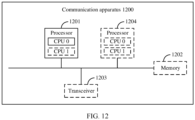
- a communication apparatus includes a processor and a memory.
- the memory is configured to store a computer program.
- the processor executes the computer program, the communication apparatus is enabled to perform the communication method according to the first aspect or the second aspect.
- the communication apparatus according to the eighth aspect may further include a transceiver.
- the transceiver may be a transceiver circuit or an interface circuit.
- the transceiver may be used by the communication apparatus according to the eighth aspect to communicate with another communication apparatus.
- the communication apparatus may be a network device, a chip (system) or another part or component that may be disposed in the network device, or an apparatus including the network device.
- a computer-readable storage medium includes a computer program or instructions.
- the computer program or the instructions are run on a computer, the computer is enabled to perform the communication method according to the first aspect or the second aspect.
- 5th generation (5th generation, 5G) mobile communication system 1. 5th generation (5th generation, 5G) mobile communication system:
- FIG. 1 is a diagram of an architecture of a 5G system.
- the 5G system includes an access network (access network, AN) and a core network (core network, CN), and may further include a terminal.
- access network access network
- core network core network
- the terminal may be a terminal having a transceiver function, or a chip or a chip system that may be disposed in the terminal.
- the terminal may also be referred to as a user equipment (user equipment, UE), an access terminal, a subscriber unit (subscriber unit), a subscriber station, a mobile station (mobile station, MS), a remote station, a remote terminal, a mobile device, a user terminal, a terminal, a wireless communication device, a user agent, or a user apparatus.
- the terminal in embodiments of this application may be a mobile phone (mobile phone), a cellular phone (cellular phone), a smartphone (smartphone), a tablet computer (Pad), a wireless data card, a personal digital assistant (personal digital assistant, PDA) computer, a wireless modem (modem), a handheld device (handset), a laptop computer (laptop computer), a machine type communication (machine type communication, MTC) terminal, a computer having a wireless transceiver function, a virtual reality (virtual reality, VR) terminal, an augmented reality (augmented reality, AR) terminal, a wireless terminal in industrial control (industrial control), a wireless terminal in self-driving (self-driving), a wireless terminal in telemedicine (remote medical), a wireless terminal in a smart grid (smart grid), a wireless terminal in transportation safety (transportation safety), a wireless terminal in a smart city (smart city), a wireless terminal in a smart home (smart home), a vehicle-mounted terminal, an uncre
- the terminal in this application may be an in-vehicle module, an in-vehicle subassembly, an in-vehicle component, an in-vehicle chip, or an in-vehicle unit that is built in a vehicle as one or more components or units.
- the AN is configured to implement an access-related function, may provide a network access function for an authorized user in a specific area, and can determine transmission links with different quality based on a user level, a service requirement, and the like, to perform transmission of user data.
- the AN forwards a control signal and the user data between the terminal and the CN.
- the AN may include an access network device, which may also be referred to as a radio access network (radio access network, RAN) device.
- radio access network radio access network
- the RAN device may be a device that provides access for the terminal.
- the RAN device may include a gNB in 5G, for example, a new radio (new radio, NR) system, or one or a group (including a plurality of antenna panels) of antenna panels of a base station in 5G, or may be a network node that forms a gNB, a transmission point (transmission reception point, TRP, or transmission point, TP), or a transmission measurement function (transmission measurement function, TMF), for example, a baseband unit (building baseband unit, BBU), a central unit (central unit, CU) or a distributed unit (distributed unit, DU), an RSU having a base station function, a wired access gateway, or a 5G core network element.
- a gNB in 5G for example, a new radio (new radio, NR) system, or one or a group (including a plurality of antenna panels) of antenna panels of a base station in 5G, or may be
- the RAN device may further include an access point (access point, AP) in a wireless fidelity (wireless fidelity, Wi-Fi) system, a wireless relay node, a wireless backhaul node, various forms of macro base stations, micro base stations (also referred to as small cells), relay stations, access points, wearable devices, vehicle-mounted devices, or the like.
- the RAN device may include an access network device in a next-generation mobile communication system such as 6G, for example, a 6G base station.
- the network device may be named in another manner, which falls within the protection scope of embodiments of this application. This is not limited in this application.
- the CN is mainly responsible for maintaining subscription data of a mobile network, and provides session management, mobility management, policy management, security authentication, and another function for the terminal.
- the CN mainly includes the following network elements: a user plane function (user plane function, UPF) network element, an authentication server function (authentication server function, AUSF) network element, an access and mobility management function (access and mobility management function, AMF) network element, a session management function (session management function, SMF) network element, a network slice selection function (network slice selection function, NSSF) network element, a network exposure function (network exposure function, NEF) network element, a network function repository function (NF repository function, NRF) network element, a policy control function (policy control function, PCF) network element, a unified data management (unified data management, UDM) network element, a unified data repository (unified data repository, UDR), an application function (application function, AF) network element, and a charging function (charging function, CHF) network element.
- the UPF network element is mainly responsible for user data processing (forwarding, receiving, charging, and the like).
- the UPF network element may receive user data from a data network (data network, DN), and forward the user data to the terminal via the access network device.
- the UPF network element may also receive user data from the terminal via the access network device, and forward the user data to the DN.
- the DN network element is an operator network that provides a data transmission service for a user, for example, an internet protocol (internet protocol, IP) multi-media service (IP multi-media service, IMS) or an internet (internet).
- IP internet protocol
- IMS internet multi-media service
- the DN may be an external network of an operator, or may be a network controlled by an operator, and is configured to provide a business service for the terminal device.
- the AUSF network element is mainly configured to perform security authentication on the terminal.
- the AMF network element is mainly used for mobility management in the mobile network, for example, user location update, registration of the user with a network, and user handover.
- the SMF network element is mainly used for session management in the mobile network, for example, session establishment, modification, and release.
- a specific function is, for example, allocating an internet protocol (internet protocol, IP) address to the user, or selecting a UPF that provides a packet forwarding function.
- IP internet protocol
- the PCF network element mainly supports providing a unified policy framework to control network behavior, and providing a policy rule for a control layer network function, and is responsible for obtaining policy decision-related subscription information of the user.
- the PCF network element may provide a policy such as a quality of service (quality of service, QoS) policy or a slice selection policy to the AMF network element and the SMF network element.
- QoS quality of service
- the NSSF network element is mainly configured to select a network slice for the terminal.
- the NEF network element is mainly used for capability supporting and event exposure.
- the UDM network element is mainly configured to store user data, for example, subscription data and authentication/authorization data.
- the UDR network element is mainly configured to store structured data.
- Stored content includes subscription data, policy data, externally exposed structured data, and application-related data.
- the AF network element mainly supports interaction with the CN to provide a service, for example, affecting a data routing decision-making and a policy control function, or providing some third-party services for a network side.
- the device identifier may be a device identifier of a mobile equipment (mobile equipment, ME), and may uniquely identify an ME of the user.
- the device identifier may be specifically an international mobile equipment identity (international mobile equipment identity, IMEI) in a 4th generation (4th generation, 4G) mobile communication system, or a permanent equipment identifier (permanent equipment identifier, PEI) in a 5G system.
- IMEI international mobile equipment identity
- PEI permanent equipment identifier
- the USIM may be inserted or embedded into the ME, to form a user equipment (user equipment, UE), and the UE corresponds to a user.
- the device identifier of the ME may alternatively be understood as a device identifier of the UE.
- the USIM identifier or the network identity may alternatively be understood as a network identity of the UE.
- the user identity may alternatively be understood as a user identity of the UE.
- the AMF network element continues to perform a subsequent registration procedure of the UE.
- the AMF network element no long performs a subsequent registration procedure of the UE.
- the existing TS further supports verification on a mapping relationship between the USIM and the ME, to ensure that only a UE (for example, a contract phone of the operator) having the mapping relationship can obtain a corresponding service.
- a UE for example, a contract phone of the operator
- it may be determined, based on subscription information of a user in a home subscriber server (home subscriber server, HSS) or a UDM network element, that the mapping relationship between the USIM and the ME needs to be verified, and whether the mapping relationship complies with a permission is further verified through a corresponding network element.
- an additional device authentication requirement is needed for a terminal that accesses the 5G dedicated network.
- the ToB customer for example, an enterprise employee
- device authentication needs to be performed on the ToB customized terminal.
- the ToB customer uses a terminal of the ToB customer to access the 5G dedicated network
- device authentication needs to be performed on the terminal of the ToB customer. In this way, a case in which a malicious terminal accesses the 5G dedicated network, and ensure security of the 5G dedicated network can be avoided.
- an additional binding relationship authentication requirement is needed for a terminal that accesses the 5G dedicated network.
- TS 33.816 supports verification on a mapping relationship between a USIM and an ME, whether the binding relationship between the user identity and the device identifier and the binding relationship between the USIM identifier and the device identifier can be further verified is not defined in the existing TS, and the security of the 5G dedicated network also cannot be ensured.
- 5G ToB scenario is merely an example scenario, and another scenario (for example, an industrial robot is controlled by a controller that accesses a mobile communication system in a factory) in a 5G or future communication system (for example, a 6th generation (6th generation, 6G) mobile communication system) is also applicable. This is not limited in this application.
- embodiments of this application provide the following technical solutions, to meet a further security requirement, for example, a security requirement in a 5G dedicated network scenario, and avoid a security risk.
- a further security requirement for example, a security requirement in a 5G dedicated network scenario, and avoid a security risk.
- a wireless fidelity (wireless fidelity, Wi-Fi) system a vehicle-to-everything (vehicle-to-everything, V2X) communication system, a device-to-device (device-to-device, D2D) communication system, an internet of vehicles communication system, 4G, such as a long term evolution (long term evolution, LTE) system, a worldwide interoperability for microwave access (worldwide interoperability for microwave access, WiMAX) communication system
- 5G such as a new radio (new radio, NR) system, and a future communication system.
- FIG. 2 is a diagram of an architecture of the communication system to which a communication method according to an embodiment of this application is applicable.
- the communication system is applicable to the foregoing 5G system, and mainly includes at least one of the following: a UE (including an ME and a USIM), an AMF network element, an SMF network element, a UDM network element, an EIR, an authentication, authorization, and accounting (authentication, authorization, and accounting, AAA) server, and an AF.
- a UE including an ME and a USIM
- AMF network element including an ME and a USIM
- SMF network element an SMF network element
- UDM network element a UDM network element
- EIR authentication, authorization, and accounting (authentication, authorization, and accounting, AAA) server
- AAA authentication, authorization, and accounting
- the UDM network element may indicate the AMF network element/the SMF network element to trigger the EIR to perform device authentication on the terminal, and trigger the AMF network element/the SMF network element to verify whether a device identifier of the terminal is associated with a user identity.
- the AAA server may indicate the AMF network element/the SMF network element to trigger the EIR/the AAA server to perform device authentication on the terminal, and trigger the AAA server to verify whether a device identifier of the terminal is associated with a user identity.
- the AF may indicate the AMF network element/the SMF network element to trigger the EIR/the AAA server to perform device authentication on the terminal, and trigger the AMF network element/the SMF network element/the AAA server to verify whether a device identifier of the terminal is associated with a user identity.
- the AF may indicate the AMF network element/the SMF network element to trigger the EIR/the AAA server to perform device authentication on the terminal, and trigger the AMF network element/the SMF network element/the AAA server to verify whether a device identifier of the terminal is associated with a user identity.
- the AAA server may be deployed by an operator, in other words, deployed inside the operator, and may be referred to as an internal AAA server.
- the AAA server may be deployed by an external operator, in other words, deployed outside an operator, and may be referred to as an external AAA server.
- the AAA server mentioned in this embodiment of this application may be considered as the internal AAA server, or may be considered as the external AAA server. This is not limited.
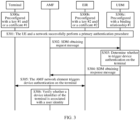
- FIG. 3 is a schematic flowchart 1 of a communication method according to an embodiment of this application.
- an AMF network element may reuse a registration procedure, so that based on an indication of a UDM network element, the AMF network element triggers authentication on a device identifier and verification on a binding relationship #1.
- a procedure of the communication method is as follows.
- the key #1 may be a private key corresponding to an ME in the terminal, and may be specifically a private key in an elliptic curve algorithm or a private key in an RSA algorithm or any other possible key. This is not limited.
- the certificate #1 may be a certificate corresponding to the ME, and may be specifically a standard digital certificate in an X.509 format or any other possible certificate. This is not limited.
- the key #1 and/or the certificate #1 may be used for subsequent device verification, to determine whether the ME is trusted (refer to S305).
- the key #1 and/or the certificate #1 may be preconfigured on the terminal in a manner of protocol predefinition.
- a user may preconfigure the key #1 and/or the certificate #1 on the terminal through a security device (for example, a USB key/e-banking).
- the terminal may obtain or configure the key #1 and/or the certificate #1 in any other possible manner. This is not limited.
- S300a is an optional step.
- the terminal may alternatively perform device verification by using a key derived in a primary authentication procedure of the terminal (refer to S305).
- S300b An EIR is preconfigured with a key #2 and/or a certificate #2.
- the key #2 may be a public key corresponding to the ME, in other words, a public key corresponding to the private key of the ME, and may be specifically a public key in the elliptic curve algorithm or a public key in the RSA algorithm or any other possible key. This is not specifically limited.
- the certificate #2 may be a certificate corresponding to the ME, and may be specifically a standard digital certificate in the X.509 format or any other possible certificate. This is not limited.
- the certificate #2 may be the same as or different from the certificate #1. For example, the certificate #2 corresponds to the certificate #1.
- the key #2 and/or the certificate #2 may also be used for subsequent device verification, to determine whether the ME is trusted (refer to S305).
- the key #2 and/or the certificate #2 may be preconfigured on the EIR in the manner of protocol predefinition.
- the key #2 and/or the certificate #2 are/is prestored in subscription information of the terminal, and the subscription information of the terminal is prestored in the UDM network element.
- the EIR may pre-obtain the key #2 and/or the certificate #2 from the UDM network element.
- the EIR may obtain or configure the key #2 and/or the certificate #2 in any other possible manner. This is not limited.
- S300b is an optional step.
- the EIR may alternatively perform device verification by using the key derived in the primary authentication procedure of the terminal (refer to S305).
- S300c The UDM network element is preconfigured with the binding relationship #1.
- the binding relationship #1 may be a binding relationship between an identifier of an allowed terminal and an identity of an allowed user.
- the identifier of the allowed terminal may indicate a terminal allowed to be used by the user.
- the identifier of the allowed terminal may be a PEI #1 of the terminal.
- the identity of the allowed user may indicate a user allowed to use the terminal to request a service.
- the identity of the allowed user may be an SUPI #1 of the terminal. Therefore, the binding relationship #1 may be a binding relationship between the PEI #1 of the terminal and the SUPI #1 of the terminal.
- the PEI #1 and the SUPI #1 refer to the related descriptions in "2. Identifier". Details are not described again.
- the device identifier of the terminal may be different from the identifier of the allowed terminal.
- the terminal is a malicious device, and the terminal may not be configured with an identifier that is of an allowed terminal and that should be originally configured.
- the terminal usually can provide only a device identifier different from the identifier of the allowed terminal.
- device authentication usually fails. Therefore, it is determined that the ME of the terminal is untrusted.
- the binding relationship #1 may be information about a terminal granularity.
- the binding relationship #1 may be associated with all slices in the subscription information of the terminal.
- the binding relationship #1 may not include a slice identifier, and it is considered by default that the binding relationship #1 is associated with all the slices in the subscription information of the terminal.
- the terminal requests a network to provide a service, regardless of whether the service is specifically a service of which slice, the UDM network element can trigger device authentication on the terminal (refer to S303).
- the subscription information of the terminal includes a slice #1 and a slice #2, and the binding relationship #1 is associated with the slice #1 and the slice #2. Regardless of whether the terminal requests a service of the slice #1 or a service of the slice #2, the UDM network element triggers device authentication on the terminal.
- the binding relationship #1 may be slice granularity information of the terminal.
- the binding relationship #1 may be associated with a specific slice in the subscription information of the terminal, for example, a slice having a high security requirement (for example, a 5G dedicated network scenario).
- the binding relationship #1 may further include an identifier of the specific slice.
- the binding relationship #1 may include the identifier of the allowed terminal, the identity of the allowed user, and an identifier of a slice allowed to be used.
- the identifier of the specific slice may be single network slice selection assistance information (single network slice selection assistance information, S-NSSAI) or any other possible slice identifier. This is not limited.
- the UDM network element triggers device authentication on the terminal (refer to S303). If the terminal does not request the network to provide a service of the slice, the UDM network element does not trigger device authentication on the terminal.
- the subscription information of the terminal includes the slice #1 and the slice #2, and the binding relationship #1 may be only associated with the slice #1. If the terminal requests the service of the slice #1, the UDM network element triggers device authentication on the terminal. If the terminal requests the service of the slice #2, the UDM network element does not trigger device authentication on the terminal.
- binding relationship #1 may alternatively be stored in the subscription information of the terminal, or may be stored in any other possible location, for example, in common information. This is not limited.
- the UDM network element may be further preconfigured with a trigger condition #1, to indicate that for a terminal that meets the trigger condition #1, the UDM network element triggers device authentication on the terminal (refer to S303).
- the trigger condition #1 may include a correspondence between the identity of the allowed user and a verification requirement, for example, a correspondence between the SUPI #1 of the terminal and the verification requirement, to indicate that for a specific terminal, the UDM network element triggers device authentication on the terminal.
- the trigger condition #1 may be stored in the subscription information of the terminal or common information of the UDM network element. This is not limited. Alternatively, the subscription information of the terminal may include only the verification requirement, and the UDM network element considers by default that the subscription information of the terminal is associated with the identity of the allowed user.
- the trigger condition #1 may include a correspondence between an identifier of a specific group and a verification requirement, to indicate that for a terminal in the specific group, the UDM network element triggers device authentication on the terminal. For example, if a group 1 ⁇ terminal 1, terminal 2, terminal 3 ⁇ corresponds to the verification requirement, it indicates that for any terminal in the group 1, the UDM network element triggers device authentication on the terminal, but for another terminal such as a terminal 4 or a terminal 5, the UDM network element does not trigger device authentication on the terminal.
- the specific group may be a group including devices having a high security requirement, for example, a 5G local area network (5G local area network, 5G LAN) group, a 5G virtual network (5G virtual network, 5G VN) group, or any other possible group type.
- the trigger condition #1 may be stored in subscription information of the group or common information of the UDM network element. This is not limited.
- the subscription information of the terminal may include only the verification requirement, and the UDM network element considers by default that the subscription information of the terminal is associated with the identifier of the specific group.
- the trigger condition #1 may include a correspondence between the identifier of the specific slice and a verification requirement, to indicate that for a terminal that requests to use the specific slice, the UDM network element triggers device authentication on the terminal.
- the specific slice may be a slice having a high security requirement, for example, a slice used for internet of vehicles communication. This is not limited.
- the trigger condition #1 may be stored in common information of the UDM network element. This is not limited.
- the subscription information of the terminal may include only the verification requirement, and the UDM network element considers by default that the subscription information of the terminal is associated with the identifier of the specific slice.
- the trigger condition #1 may include a correspondence between an identifier of a specific area (area) and a verification requirement, to indicate that for a terminal located in the specific area, the UDM network element triggers device authentication on the terminal. For example, if an identifier #1 of an area 1 corresponds to the verification requirement, it indicates that for a terminal located in the area 1, the UDM network element triggers device authentication on the terminal, but for a terminal located in another area, for example, an area 2, the UDM network element does not trigger device authentication on the terminal.
- the area may be an area having a high security requirement (for example, 5G dedicated network coverage).
- the area may represent a location of the terminal.
- the area may be a physical area, and identifies a physical location of the terminal.
- the area may include one or more cells (cells). When including one cell, the area may alternatively be understood as a cell, and the area identifier may be understood as an identifier of the cell.
- the area may be a network logical area, and the network logical area may identify which network elements in the network provide services. For example, an identifier of the AMF network element indicates an area served by the AMF, in other words, the identifier of the specific area is the identifier of the AMF network element.
- the trigger condition #1 may be stored in common information of the UDM network element. This is not limited.
- the trigger condition #1 may be separately configured, or may be configured in combination. This is not limited. For example, a correspondence between the identity of the allowed user, the identifier of the specific area, and the verification requirement is configured, to indicate that for a specific terminal in the area, the UDM network element triggers device authentication on the terminal. Certainly, alternatively, the UDM network element may not configure the trigger condition #1, and considers by default that the binding relationship #1 is used to trigger device authentication on the terminal.
- the trigger condition #1 is merely an example name, and may alternatively be replaced with any other possible name, for example, a verification condition or verification information. This is not limited.
- S301 The terminal and the network successfully perform the primary authentication procedure.
- the terminal may initiate registration with the network by using an N1 message, to cooperate with the network to perform the primary authentication procedure.
- N1 message For a specific implementation principle, refer to TS 23.502. Details are not described again.
- TS 23.501 For the primary authentication procedure performed by the terminal and the network, refer to TS 23.501. Details are not described again.
- the AMF network element sends a subscriber data management (subscriber data management, SDM) obtaining request (Nudm_SDM_Get request) message to the UDM network element.
- SDM subscriber data management
- the UDM network element receives the SDM obtaining request message from the AMF network element.
- the SDM obtaining request message may carry trigger information #1.
- the trigger information #1 may be used by the UDM network element to determine whether to trigger device authentication on the terminal.
- the trigger information #1 may be information obtained by the AMF network element by using the primary authentication procedure in S301.
- the trigger information #1 may include a user identity, for example, an SUPI #2, to identify a user who uses the terminal to request the service from the network.
- the user identity may also be referred to as a user identity provided by the terminal.
- the trigger information #1 may further include at least one of the following: a slice identifier, a group identifier, or an area identifier.
- the slice identifier may be used by the terminal to request the network to provide a service of a slice.
- the slice identifier may be S-NSSAI or any other possible slice identifier. This is not limited.
- the group identifier may indicate that the terminal belongs to a group. In this case, an SUPI of the terminal indicates that the terminal is a member in the group, and may alternatively be understood as an identifier of the member in the group. If the SDM obtaining request message does not carry the group identifier, it indicates that the terminal does not belong to a group.
- the area identifier may be an identifier of an area in which the terminal is currently located, to indicate that a current location of the terminal is in the area.
- the area identifier may be an identifier of a network element, for example, the AMF network element or any other network element, that currently provides a service for the terminal, to indicate that a current location of the terminal is in a service area of the network element.
- the UDM network element determines whether to trigger device authentication on the terminal.
- the UDM network element may determine, based on the binding relationship #1, whether to trigger device authentication on the terminal.
- the UDM network element may determine, based on the user identity, whether the subscription information of the terminal includes a corresponding binding relationship #1, or determine whether the subscription information of the terminal has an identity that is of an allowed user and that is the same as the user identity, that is, determine whether the user identity of the terminal is the same as the identity of the allowed user. If there is the corresponding binding relationship #1, to be specific, the user identity is the same as the identity of the allowed user, the UDM network element determines to trigger device authentication on the terminal, and performs S304.
- the UDM network element determines not to trigger device authentication on the terminal, and performs the registration procedure.
- the UDM network element determines not to trigger device authentication on the terminal, and performs the registration procedure.
- the UDM network element may first determine, based on the user identity, whether the subscription information of the terminal has a corresponding binding relationship #1. If there is no binding relationship #1, the UDM network element determines not to trigger device authentication on the terminal, and performs the registration procedure. If there is the binding relationship #1, the UDM network element may further determine whether the slice identifier is associated with a slice indicated by the binding relationship #1, or determine whether the slice identifier is the same as the identifier of the specific slice in the binding relationship #1.
- the UDM network element determines to trigger device authentication on the terminal, and performs S304. If the slice identifier is not associated with the slice indicated by the binding relationship #1, to be specific, the slice identifier is different from the identifier of the specific slice, the UDM network element determines not to trigger device authentication on the terminal, and performs the registration procedure.
- the UDM network element may determine, based on the trigger condition #1, whether to trigger device authentication on the terminal.
- the UDM network element may determine, based on the user identity, whether there is a corresponding trigger condition #1, or determine whether the user identity is the same as the identity that is of the allowed user and that is in the trigger condition #1. If there is the corresponding trigger condition #1, to be specific, the user identity is the same as the identity of the allowed user, the UDM network element determines, based on the verification requirement corresponding to the identity that is of the allowed user and that is in the trigger condition #1, to trigger device authentication on the terminal, and performs S304.
- the UDM network element determines not to trigger device authentication on the terminal, and performs the registration procedure.
- the UDM network element may determine, based on the user identity, whether the subscription information of the terminal has a corresponding verification requirement. If there is the corresponding verification requirement, the UDM network element determines to trigger device authentication on the terminal. If there is no corresponding verification requirement, the UDM network element performs the registration procedure.
- the UDM network element may determine, based on the group identifier, whether there is a corresponding trigger condition #1, or determine whether the group identifier is the same as the identifier of the specific group in the trigger condition #1. If there is the corresponding trigger condition #1, to be specific, the group identifier is the same as the identifier of the specific group, the UDM network element determines, based on the verification requirement corresponding to the identifier of the specific group in the trigger condition #1, to trigger device authentication on the terminal, and performs S304.
- the UDM network element determines not to trigger device authentication on the terminal, and performs the registration procedure.
- the SDM obtaining request message does not carry the group identifier, the UDM network element determines not to trigger device authentication on the terminal, and performs the registration procedure.
- the UDM network element may determine, based on the slice identifier, whether there is a corresponding trigger condition #1, or determine whether the slice identifier is the same as the identifier of the specific slice in the trigger condition #1. If there is the corresponding trigger condition #1, to be specific, the group identifier is the same as the identifier of the specific group, the UDM network element determines, based on the verification requirement corresponding to the identifier of the specific slice in the trigger condition #1, to trigger device authentication on the terminal, and performs S304.
- the UDM network element determines not to trigger device authentication on the terminal, and performs the registration procedure.
- the UDM network element may query a slice identifier corresponding to the user identity in the subscription information of the terminal based on the user identity in the SDM obtaining request message, to determine, based on the slice identifier, whether there is a corresponding trigger condition #1, and further determine whether to trigger device authentication on the terminal.
- the UDM network element may determine, based on the area identifier, whether there is a corresponding trigger condition #1, or determine whether the area identifier is the same as the identifier of the specific area in the trigger condition #1.
- the UDM network element may further subscribe to the current location of the terminal from the AMF network element, for example, subscribe to the identifier of the area in which the terminal is currently located, that is, the area identifier, so that the UDM network element determines whether the area identifier is the same as the identifier of the specific area in the trigger condition #1. On this basis, if there is the corresponding trigger condition #1, to be specific, the area identifier is the same as the identifier of the specific area, the UDM network element determines, based on the verification requirement corresponding to the identifier of the specific area in the trigger condition #1, to trigger device authentication on the terminal, and performs S304.
- the UDM network element determines not to trigger device authentication on the terminal, and performs the registration procedure. Certainly, if the SDM obtaining request message does not carry location information of the terminal, the UDM network element may directly determine not to trigger device authentication on the terminal, and perform the registration procedure.
- the UDM network element may determine, based on the binding relationship #1 and the trigger condition #1, whether to trigger device authentication on the terminal. In this case, if both the binding relationship #1 and the trigger condition #1 are met, the UDM network element determines to trigger device authentication on the terminal. If either the binding relationship #1 or the trigger condition #1 is not met, the UDM network element performs the registration procedure.
- S303 is an optional step.
- the UDM network element may alternatively not determine whether to trigger device authentication on the terminal, and considers by default to perform S304.
- the UDM triggers device authentication on the terminal is merely an example. This is not limited.
- the UDM may further trigger to verify whether the device identifier (for example, the PEI #2) of the terminal matches the user identity (for example, the SUPI #2).
- the UDM may only trigger to verify whether the device identifier of the terminal matches the user identity. This is not limited. In this case, a prerequisite for triggering to verify whether the device identifier of the terminal matches the user identity is that device authentication on the terminal succeeds. Therefore, the AMF network element may consider by default to first trigger device authentication on the terminal, to verify whether the device identifier of the terminal matches the user identity only when device authentication succeeds.
- the UDM network element sends an SDM obtaining response (Nudm_SDM_Get response) message to the AMF network element.
- the AMF network element receives the SDM obtaining response message from the UDM network element.
- the UDM network element may indicate, by using the SDM obtaining response message, the AMF network element to trigger device authentication on the terminal.
- the SDM obtaining response message may carry the binding relationship #1.
- the binding relationship #1 is reused to implicitly indicate the AMF network element to trigger device authentication on the terminal, or trigger to perform device authentication for the user corresponding to the terminal.
- the SDM obtaining response message may further carry indication information #1.
- the indication information #1 may explicitly indicate the AMF network element to trigger device authentication on the terminal, or trigger to perform device authentication for the user corresponding to the terminal.
- the AMF network element may determine, based on the SDM obtaining response message, to trigger device authentication and verify whether the binding relationship #1 is trusted. If the SDM obtaining response message only indicates the AMF network element to trigger device authentication, the AMF network element may consider by default to trigger to verify whether the binding relationship #1 is trusted. For example, when device authentication succeeds, the AMF network element considers by default to trigger to verify whether the binding relationship #1 is trusted. Alternatively, if the SDM obtaining response message only indicates the AMF network element to trigger to verify whether the binding relationship #1 is trusted, the AMF network element may consider by default to trigger device authentication. For example, a prerequisite for triggering, by the AMF network element, to verify whether the binding relationship #1 is trusted is that device authentication succeeds. Therefore, the AMF network element may first trigger device authentication, to verify whether the binding relationship #1 is trusted only when device authentication succeeds.
- the SDM obtaining response message may carry only the identifier of the allowed terminal.
- the AMF network element may determine that the identifier of the allowed terminal is an identifier corresponding to the identity that is of the allowed user and that is in the SDM obtaining request message, that is, obtain the binding relationship #1, to determine to trigger device authentication on the terminal.
- the UDM network element may send a new message to the AMF network element, so that the AMF network element determines, based on the new message, to trigger device authentication on the terminal.
- indication information #1 is merely an example name, and may alternatively be replaced with any other possible name, for example, first indication information or binding relationship #1 verification indication information. This is not limited.
- the AMF network element triggers device authentication on the terminal.
- the AMF network element may separately send indication information #2 to the terminal and the EIR, to indicate the terminal and the EIR to cooperate to perform device authentication.
- the indication information #2 sent by the AMF network element to the terminal may be carried in any type of possible non-access stratum (non-access stratum, NAS) signaling. This is not limited.
- the indication information #2 sent by the AMF network element to the EIR may be carried in any possible service-based interface message. This is not limited.
- the terminal may sign the device identifier of the terminal based on the indication information #2 by using the preconfigured key #1 and/or the preconfigured certificate #1 (refer to S300a) and a cryptographic algorithm, for example, the elliptic curve algorithm, or by using a certificate in the X.509 format, to obtain signature information.
- the terminal may send the device identifier and the signature information of the terminal to the EIR based on an address of the EIR.
- the terminal is prefigured with the address of the EIR, or the AMF network element pre-sends the address of the EIR to the terminal.
- the EIR may determine, based on the device identifier of the terminal, that the signature information of the terminal needs to be verified by using the preconfigured key #2 and/or the preconfigured certificate #2 (refer to S300b) and the cryptographic algorithm, for example, the elliptic curve algorithm, or by using the certificate in the X.509 format, that is, authenticate the device identifier of the terminal. If verification on the signature information fails, to be specific, the device identifier of the terminal is different from the identifier of the allowed terminal, the EIR may indicate, to the AMF network element, that device authentication fails and the ME is untrusted, so that the AMF network element terminates a subsequent procedure, and the procedure ends.
- the cryptographic algorithm for example, the elliptic curve algorithm
- the AMF network element may alternatively perform device authentication by using the key derived in the primary authentication procedure.
- the AMF network element may derive, by using a key KAMF derived in the primary authentication procedure and the cryptographic algorithm such as a hash algorithm or an AES algorithm, a key used for device verification, and send, to the EIR, the key used for device verification.
- the terminal may derive, in a same manner as the AMF network element, the key used for device verification. In this way, the terminal and the EIR may perform device verification by using the key used for device verification.
- the terminal and the EIR may perform device verification by using the key used for device verification.
- an AUSF network element may further derive, by using a key KAUSF derived by the AUSF network element in the primary authentication procedure, a key used for device verification, and send the key to the AMF network element.
- the terminal may derive, in a same manner as the AUSF network element, the key used for device verification. In this way, the terminal and the EIR may perform device verification by using the key used for device verification.
- indication information #2 is merely an example name, and may alternatively be replaced with any other possible name, for example, second indication information or device authentication indication information. This is not limited.
- S306 The AMF network element verifies whether the device identifier of the terminal matches the user identity.
- the AMF network element may obtain the device identifier of the terminal from the terminal, or the AMF network element may pre-obtain the device identifier of the terminal from the terminal. For example, the AMF network element obtains the device identifier of the terminal by using the N1 message in S301. This is not limited.
- the AMF network element may determine, based on the binding relationship #1, whether the device identifier of the terminal is associated with the user identity. For example, the AMF network element may obtain a corresponding binding relationship, for example, the binding relationship #1, based on the device identifier of the terminal. In this case, if the device identifier of the terminal is inconsistent with the identifier that is of the allowed terminal and that is in the binding relationship #1, the AMF network element determines that the corresponding binding relationship cannot be obtained, verification fails, and the procedure ends.
- the AMF network element may obtain the binding relationship #1, to determine whether the user identity of the terminal is consistent with the identity that is of the allowed user and that is in the binding relationship #1. For another example, the AMF network element may obtain a corresponding binding relationship, for example, the binding relationship #1, based on the user identity of the terminal. In this case, if the user identity of the terminal is inconsistent with the identity that is of the allowed user and that is in the binding relationship #1, the AMF network element determines that the corresponding binding relationship cannot be obtained, verification fails, and the procedure ends.
- the AMF network element may obtain the binding relationship #1, to determine whether the identifier of the terminal is consistent with the identifier that is of the allowed terminal and that is in the binding relationship #1. If the identifier of the terminal is consistent with the identifier that is of the allowed terminal and that is in the binding relationship #1, the AMF network element determines that the device identifier of the terminal is associated with the user identity, to determine that the terminal including a USIM and the ME is trusted, and continues to perform a subsequent registration procedure, to ensure that the terminal can finally access the network and obtain a corresponding service.
- the AMF network element determines that the device identifier of the terminal is not associated with the user identity, to indicate that the terminal including a USIM and the ME is untrusted, and the procedure ends.
- the AMF network element may determine, based on the binding relationship #1, whether the device identifier of the terminal, the user identity, and the slice identifier are associated. Specific determining logic is similar to that in the foregoing descriptions. Details are not described again.
- S305 and S306 are not limited. For example, S306 may be performed first, and then S305 is performed when the binding relationship #1 is trusted. Alternatively, S305 and S306 may be performed independently.
- interaction between the AMF network element and the UDM network element is used as an example in the scenario 1.
- the UDM network element may alternatively be replaced with any other possible network element, for example, a UDR network element or a PCF network element. If the UDM network element is replaced with the PCF network element, the foregoing information such as the binding relationship #1 may be stored in policy information of the terminal.
- a 5G system is used as an example in the scenario 1. This is not limited.
- the scenario 1 is also applicable to a 4G system or a future communication system, for example, a 6G system.
- the AMF network element may be replaced with an MME
- the UDM network element may be replaced with an HSS network element
- a PEI of the ME may be replaced with an IMEI of the ME
- the SUPI of the terminal may be replaced with an IMSI of the terminal
- the key KAMF may be replaced with a key KSEAF.
- the AMF network element may trigger device authentication on the terminal and verify whether the device identifier of the terminal is associated with the user identity, to ensure that the AMF network element provides a corresponding service only when both the ME and the USIM are trusted, and avoid a security risk.
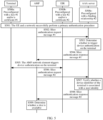
- FIG. 4 is a schematic flowchart 2 of a communication method according to an embodiment of this application.
- an SMF network element may reuse a session establishment procedure, so that based on an indication of a UDM network element, the SMF network element triggers device authentication on a terminal and verifies whether a device identifier of the terminal is associated with a user identity.
- a procedure of the communication method is as follows.
- the terminal is preconfigured with a key #1 and/or a certificate #1.
- S400b An EIR is preconfigured with a key #2 and/or a certificate #2.
- the UDM network element is preconfigured with a binding relationship #1.
- binding relationship #1 For a specific implementation principle of the binding relationship #1, refer to the related descriptions in S300c. Details are not described again.
- the UDM network element may be further preconfigured with a trigger condition #1.
- the trigger condition #1 may include a correspondence between a DN name (data network name, DNN) of a specific data network (data network, DN) and a verification requirement, to indicate that for a terminal that requests to access the specific DN, the UDM network element triggers device authentication on the terminal. For example, if a DNN 1 corresponds to the verification requirement, it indicates that for any terminal that requests to access a DN 1, the UDM network element triggers device authentication on the terminal, but for any terminal that accesses another DN, the UDM network element does not trigger device authentication on the terminal.
- the specific DN may be a data network having a high security requirement, for example, a DN of a subscriber data center, or any other possible DN. This is not limited.
- the trigger condition #1 may be stored in common information of the UDM network element. This is not limited. In addition, for another possible implementation of the trigger condition #1, refer to the related descriptions in S300c. Details are not described again.
- S401 The terminal and a network successfully perform a primary authentication procedure, and the terminal registers with the network.
- the terminal may initiate the registration with the network by using an N1 message, to cooperate with the network to perform the primary authentication procedure.
- N1 message For a specific implementation principle, refer to TS 33.501. Details are not described again.
- the terminal may register with the network by using a registration procedure.
- TS 23.502. Details are not described again.
- S402 The terminal sends a PDU session establishment request (PDU session establishment request) message to an AMF network element.
- the AMF network element receives the PDU session establishment request message from the terminal.
- the PDU session establishment request message is used to request to establish a PDU session.
- the PDU session establishment request message may include trigger information #1.
- trigger information #1 For a specific implementation, refer to the related descriptions in S302. Details are not described again.
- the AMF network element sends a PDU session create context request (Nsmf_PDUSession_Create SMContext Request) message to the SMF network element.
- the SMF network element receives the PDU session create context request message from the AMF network element.
- the PDU session create context request message is used to request to create a context of the PDU session.
- the PDU session create context request message may include the trigger information #1.
- the AMF network element may obtain the trigger information #1 from the PDU session establishment request message, encapsulate the trigger information #1 into the PDU session create context request message, and then send the PDU session create context request message to the SMF network element.
- S405 The UDM network element determines whether to trigger device authentication on the terminal.
- the UDM network element may determine, based on the binding relationship #1, whether to trigger device authentication on the terminal.
- the binding relationship #1 For a specific implementation principle, refer to the related descriptions in S303.
- the registration procedure is replaced with the session establishment procedure. Details are not described again.
- the SMF network element may trigger device authentication on the terminal and verify whether the device identifier of the terminal is associated with the user identity, to ensure that the SMF network element provides a corresponding service, for example, establishing the PDU session, only when both the ME and a USIM are trusted, and avoid a security risk.
- FIG. 5 is a schematic flowchart 3 of a communication method according to an embodiment of this application.
- an identifier of an allowed terminal may be managed by an AAA server. Therefore, the AAA server may trigger an AMF network element to perform device authentication on a terminal, and when device authentication succeeds, the AAA server further verifies whether a device identifier of the terminal is associated with a user identity.
- a procedure of the communication method is as follows.
- S500a The terminal is preconfigured with a key #1 and/or a certificate #1.
- S500b An EIR is preconfigured with a key #2 and/or a certificate #2.
- the AAA server is preconfigured with a binding relationship #2.
- the binding relationship #2 may be a binding relationship between the identifier of the allowed terminal, for example, a PEI #1 of the terminal, and an identity of an allowed user, for example, an EAP ID #1 required for slice authentication.
- an EAP ID #1 for example, an allowed user
- the binding relationship #2 may be used to trigger subsequent device authentication on the terminal, or trigger to perform device authentication on a user corresponding to the terminal. For details, refer to related descriptions in the following S505. Details are not described.
- the binding relationship #2 may be information about a terminal granularity.
- the binding relationship #2 may be associated with all slices corresponding to the terminal.
- the binding relationship #2 may not include a slice identifier, and it is considered by default that the binding relationship #2 is associated with all the slices corresponding to the terminal.
- the terminal requests the AAA server to provide a service, regardless of whether the service is specifically a service of which slice, the AAA server can trigger device authentication on the terminal (refer to S503).
- the binding relationship may be slice granularity information of the terminal.
- the binding relationship may be associated with a specific slice corresponding to the terminal, for example, a slice having a high security requirement (for example, a 5G dedicated network scenario).
- the binding relationship #2 may further include an identifier of the specific slice.
- the binding relationship #2 includes the identifier of the allowed terminal, the identity of the allowed user, and the identifier of the specific slice.
- the AAA server triggers device authentication on the terminal. If the terminal does not request the AAA server to provide a service of the specific slice, the AAA server does not trigger device authentication on the terminal.
- the AAA server may be further preconfigured with a trigger condition #2, to indicate that for a user that meets the trigger condition #2, the AAA server triggers device authentication on the terminal.
- the trigger condition #2 may include a correspondence between the identity of the allowed user and a verification requirement, for example, a correspondence between the EAP ID #1 and the verification requirement, to indicate that for a user corresponding to the EAP ID #1, the AAA server triggers device authentication on the terminal.
- the trigger condition #2 may include a correspondence between the identifier of the specific slice and a verification requirement, to indicate that for a user that requests the service of the specific slice, the AAA server triggers device authentication on the terminal.
- the trigger condition #2 may be separately configured, or may be configured in combination. This is not limited.
- a correspondence between the identity of the allowed user, the identifier of the specific slice, and the verification requirement is configured, to indicate that for the user that is allowed to use and that requests the service of the specific slice, the AAA server to trigger device authentication on the terminal.
- the AAA server may not configure the trigger condition #2, and considers by default that the binding relationship #2 is used to trigger device authentication on the terminal.
- the trigger condition #2 is merely an example name, and may alternatively be replaced with any other possible name, for example, a verification condition or verification information. This is not limited.
- S501 The terminal and a network successfully perform a primary authentication procedure.
- the terminal may initiate registration with the network by using an N1 message, to cooperate with the network to perform the primary authentication procedure.
- N1 message For a specific implementation principle, refer to TS 23.502. Details are not described again.
- the AMF network element sends a slice authentication request (Nnssaaf_Authenticate Request) message #1 to the AAA server.
- the AAA server receives the slice authentication request message #1 from the AMF network element.
- the slice authentication request message #1 may carry trigger information #2.
- the trigger information #2 may be used by the AAA server to determine whether to trigger device authentication on the terminal.
- the trigger information #2 may be information obtained by the AMF network element by using the primary authentication procedure in S501.
- the trigger information #2 may include the user identity and/or the slice identifier.
- the user identity may also be referred to as a user identity provided by the terminal, for example, an EAP ID #2 of the terminal.
- the slice authentication request message #1 may alternatively be replaced with any other possible message, for example, an EAP authentication request message. This is not limited.
- S503 The AAA server determines whether to trigger device authentication on the terminal.
- the AAA server may determine, based on the binding relationship #2, whether to trigger device authentication on the terminal.
- the AAA server may determine, based on the user identity, whether there is a corresponding binding relationship #2, or determine whether the user identity is the same as the identity that is of the allowed user and that is in the binding relationship #2. If there is the corresponding binding relationship #2, to be specific, the user identity is the same as the identity of the allowed user, the AAA server determines to trigger device authentication on the terminal, and performs S504. If there is no corresponding binding relationship #2, to be specific, the user identity is different from the identity of the allowed user, the AAA server determines not to trigger device authentication on the terminal, and performs a slice authentication procedure. For a specific implementation principle, refer to TS 33.501 and TS 23.502. Details are not described again.
- the AAA server may first determine, based on the user identity, whether there is a corresponding binding relationship #2. If there is no corresponding binding relationship #2, the AAA server determines not to trigger device authentication on the terminal, and performs a slice authentication procedure. If there is the corresponding binding relationship #2, the AAA server may further determine whether the slice identifier is associated with the binding relationship #2, or determine whether the slice identifier is the same as the identifier of the specific slice in the binding relationship #2.
- the AAA server determines to trigger device authentication on the terminal, and performs S504. If the slice identifier is not associated with the binding relationship #2, to be specific, the slice identifier is different from the identifier of the specific slice, the AAA server determines not to trigger device authentication on the terminal, and performs the slice authentication procedure. Alternatively, the AAA server may first determine, based on the slice identifier, whether there is a corresponding binding relationship #2, and then determine whether the user identity is the same as the identity of the allowed user. This is not limited.
- the AAA server may determine, based on the trigger condition #2, whether to trigger device authentication on the terminal.
- the AAA server may determine, based on the user identity, whether there is a corresponding trigger condition #2, or determine whether the user identity is the same as the identity that is of the allowed user and that is in the trigger condition #2. If there is the corresponding trigger condition #2, to be specific, the user identity is the same as the identity of the allowed user, the AAA server may determine, based on the verification requirement in the trigger condition #2, to trigger device authentication on the terminal, and perform S504. Alternatively, if there is no corresponding trigger condition #2, to be specific, the user identity is different from the identity of the allowed user, the AAA server determines not to trigger device authentication on the terminal, and performs a slice authentication procedure.
- the AAA server may determine, based on the slice identifier, whether there is a corresponding trigger condition #2, or determine whether the slice identifier is the same as the identifier of the specific slice in the trigger condition #2. If there is the corresponding trigger condition #2, to be specific, the slice identifier is the same as the identifier of the specific slice, the AAA server may determine, based on the verification requirement in the trigger condition #2, to trigger device authentication on the terminal, and perform S504. Alternatively, if there is no corresponding trigger condition #2, to be specific, the slice identifier is different from the identifier of the specific slice, the AAA server determines not to trigger device authentication on the terminal, and performs a slice authentication procedure.
- the AAA server may determine, based on the binding relationship #2 and the trigger condition #2, whether to trigger device authentication on the terminal. In this case, if both the binding relationship #2 and the trigger condition #2 are met, the AAA server determines to trigger device authentication on the terminal. If either the binding relationship #2 or the trigger condition #2 is not met, the AAA server performs the slice authentication procedure.
- the AAA server triggers device authentication on the terminal is merely an example. This is not limited.
- the AAA server may further trigger to verify whether the device identifier (for example, a PEI #2) of the terminal matches the user identity (for example, the EAP ID #2).
- the AAA server may only trigger to verify whether the device identifier of the terminal matches the user identity. This is not limited. In this case, a prerequisite for triggering to verify whether the device identifier of the terminal matches the user identity is that device authentication on the terminal succeeds. Therefore, the AAA server may consider by default to first trigger device authentication on the terminal, to verify whether the device identifier of the terminal matches the user identity only when device authentication succeeds.
- the AAA server sends a slice authentication response (Nnssaaf_Authenticate Response) message #1 to the AMF network element.
- the AMF network element receives the slice authentication response message #1 from the AAA server.
- the slice authentication response message #1 may be used to trigger device authentication on the terminal, or trigger to perform device authentication for the user corresponding to the terminal.
- the slice authentication response message #1 may carry indication information #3, to trigger device authentication on the terminal by using the indication information #3.
- the AAA server may trigger device authentication on the terminal by using the slice authentication response message #1.
- the AAA server sends the slice authentication response message #1, it indicates to trigger device authentication on the terminal.
- the AAA server times out and does not send the slice authentication response message #1, it indicates not to trigger device authentication on the terminal. In other words, if the AAA server determines not to trigger device authentication on the terminal, the AAA server determines not to send the slice authentication response message #1.
- indication information #3 is merely an example name, and may alternatively be replaced with any other possible name, for example, third indication information or device identifier authentication indication information. This is not limited.
- the AMF network element triggers device authentication on the terminal.
- the AMF network element sends a slice authentication request message #2 to the AAA server.
- the AAA server receives the slice authentication request message #2 from the AMF network element.
- the slice authentication request message #2 may indicate whether device authentication on the terminal succeeds.
- the slice authentication request message #2 may include a verification result #2.
- the AMF network element may indicate, by using the slice authentication request message #2, whether device authentication succeeds. For example, if the AAA server sends a slice authentication response message #2, it indicates that device authentication on the terminal succeeds. Alternatively, if the AAA server times out and does not send a slice authentication response message #2, it indicates that device authentication on the terminal fails.
- the AMF network element may further obtain the device identifier of the terminal from the terminal, and send the device identifier of the terminal to the AAA server, so that the AAA server uses the device identifier when verifying whether the binding relationship is trusted.
- the device identifier of the terminal may alternatively be understood as a device identifier provided by the terminal, for example, the PEI #2 of the terminal.
- the device identifier of the terminal and the verification result #2 may be carried in a same message, or may be carried in different messages. This is not limited.
- the AMF network element may send the device identifier of the terminal to the AAA server on another occasion.
- the AMF network element may pre-obtain the device identifier of the terminal from the terminal, or be preconfigured with the device identifier of the terminal, so that the AMF network element can send the device identifier of the terminal to the AAA server by using the slice authentication request message in S502. This is not limited.
- verification result #2 is an example name, and may alternatively be replaced with any possible name, for example, a second verification result or a device identifier authentication result. This is not limited.
- the AAA server verifies whether the device identifier of the terminal matches the user identity.
- the AAA server may determine, based on the binding relationship #2, whether the device identifier of the terminal is associated with the user identity; or determine, based on the binding relationship #2, whether the device identifier of the terminal, the user identity, and the slice identifier are associated. For details, refer to the related descriptions in S306. Details are not described again.
- the AAA server sends the slice authentication response message #2 to the AMF network element.
- the AMF network element receives the slice authentication response message #2 from the AAA server.
- the slice authentication response message #2 may indicate whether the device identifier of the terminal is associated with the user identity.
- the slice authentication response message #2 may include a verification result #3.
- the verification result #3 is an information element with one bit, and two values 1 and 0 of the information element indicate whether the device identifier of the terminal is associated with the user identity.
- the AAA server may indicate, by using the slice authentication response message #2, whether the device identifier of the terminal is associated with the user identity. For example, if the AAA server sends the slice authentication response message #2, it indicates that the device identifier of the terminal is associated with the user identity. Alternatively, if the AAA server times out and does not send the slice authentication response message #2, it indicates that the device identifier of the terminal is not associated with the user identity.
- verification result #3 is an example name, and may alternatively be replaced with any possible name, for example, a third verification result or a binding relationship verification result. This is not limited.
- the AMF network element determines whether a slice is available.
- Whether the slice is available is whether the terminal can use the slice, or whether the terminal can use a service corresponding to the slice.
- the AMF network element may determine, based on the verification result #3, whether a slice to be authenticated this time is available. For example, if the verification result #3 indicates that the binding relationship is trusted, the AMF network element determines that the slice to be authenticated this time is available. Alternatively, if the verification result #3 indicates that the binding relationship is untrusted, the AMF network element determines that the slice to be authenticated this time is unavailable.
- the AMF network element may initiate authentication on a plurality of slices for one terminal, in other words, S502 to S509 may be performed for a plurality of times.
- the AMF network element may store the verification result #2 (S505) obtained for the first time, so that when device authentication needs to be performed again subsequently, the AMF network element may directly provide the verification result #2 for the AAA server, and does not need to perform device authentication again, to reduce overheads.
- the AMF network element may perform a deregistration procedure on the terminal, to disconnect the terminal from the network.
- the AMF network element may perform a deregistration procedure on the terminal. This is not limited.
- a 5G system is used as an example in the scenario 3. This is not limited.
- the scenario 3 is also applicable to a 4G system or a future communication system, for example, a 6G system.
- the AMF network element may be replaced with an MME
- a PEI of an ME may be replaced with an IMEI of the ME
- a key KAMF may be replaced with a key KSEAF.
- the AAA server may trigger device authentication on the terminal, and verify whether the device identifier of the terminal is associated with the user identity, to ensure that the AAA server provides a corresponding service only when both a user and a terminal corresponding to the user are trusted, and avoid a security risk.
- FIG. 6 is a schematic flowchart 4 of a communication method according to an embodiment of this application.
- an AAA server reuses a secondary authentication procedure, to indicate an SMF network element to trigger device authentication on a terminal, and when device authentication succeeds, the AAA server further verifies whether a device identifier of the terminal is associated with a user identity.
- a procedure of the communication method is as follows.
- the terminal is preconfigured with a key #1 and/or a certificate #1.
- S600b An EIR is preconfigured with a key #2 and/or a certificate #2.
- the AAA server is preconfigured with a binding relationship #2.
- an identity that is of an allowed user and that is in the binding relationship #2 may be an identifier of secondary authentication.
- S601 The terminal and a network successfully perform a primary authentication procedure.
- the terminal may initiate registration with the network by using an N1 message, to cooperate with the network to perform the primary authentication procedure.
- N1 message For a specific implementation, refer to TS 23.502. Details are not described again.
- S602 The terminal sends a PDU session establishment request message to the SMF network element.
- the SMF network element receives the PDU session establishment request message from the terminal.
- the PDU session establishment request message is used to request to establish a PDU session.
- the PDU session establishment request message may include trigger information #2.
- trigger information #2 For a specific implementation, refer to the related descriptions in S502. Details are not described again.
- S603 The SMF network element sends a secondary authentication request (Authentication/Authorisation Request) message #1 to the AAA server.
- the AAA server receives the secondary authentication request message #1 from the SMF network element.
- the secondary authentication request message #1 may be used to request to perform secondary authentication on a specified PDU session, to determine whether the PDU session is available. Whether the PDU session is available may be whether the terminal can use a service of the PDU session. For example, if a result of secondary authentication is a success, it indicates that the terminal can use the service of the PDU session. If a result of secondary authentication is a failure, it indicates that the terminal cannot use the service of the PDU session.
- the secondary authentication request message #1 may include the trigger information #2. In other words, the SMF network element may obtain the trigger information #2 from a PDU session establishment request message #1, encapsulate the trigger information #2 into the secondary authentication request message, and then send the secondary authentication request message #1 to the AAA server.
- S604 The AAA server determines whether to trigger device authentication on the terminal.
- the AAA server sends a secondary authentication response (Authentication/Authorisation Response) message #1 to the SMF network element.
- the SMF network element receives the secondary authentication response message #1 from the AAA server.
- the secondary authentication response message #1 may be used to trigger device authentication.
- the secondary authentication response message #1 may carry indication information #4, to trigger device authentication by using the indication information #4, or the secondary authentication response message #1 may be used to trigger device authentication.
- a specific implementation is similar to that of S504. For understanding, refer to S504. Details are not described again.
- indication information #4 is merely an example name, and may alternatively be replaced with any other possible name, for example, fourth indication information or device verification indication information. This is not limited.
- the SMF network element indicates an AMF network element to trigger device authentication on the terminal.
- the AMF network element triggers device authentication on the terminal.
- the AMF network element sends a verification result #1 to the SMF network element.
- the SMF network element receives the verification result #1 from the AMF network element.
- S606 to S608 are similar to those of S407 to S409. For understanding, refer to S407 to S409. Details are not described again.
- S609 The SMF network element sends a secondary authentication request message #2 to the AAA server.
- the AAA server receives the secondary authentication request message #2 from the SMF network element.
- the secondary authentication request message #2 may indicate whether device authentication on the terminal succeeds.
- the secondary authentication request message #2 may include the verification result #1, to indicate, by using the verification result #1, whether device authentication on the terminal succeeds, or the secondary authentication request message #2 may indicate whether device authentication on the terminal succeeds.
- S609 refer to the related descriptions in S506. Details are not described again.
- S610 The AAA server verifies whether the device identifier of the terminal matches the user identity.
- the AAA server sends a secondary authentication response message #2 to the SMF network element.
- the SMF network element receives the secondary authentication response message #2 from the AAA server.
- the secondary authentication response message #2 may indicate whether the device identifier of the terminal matches the user identity.
- the secondary authentication response message #2 may include a verification result #4, to indicate, by using the verification result #4, whether the device identifier of the terminal matches the user identity; or the secondary authentication response message #2 may indicate whether the device identifier of the terminal matches the user identity.
- a verification result #4 to indicate, by using the verification result #4, whether the device identifier of the terminal matches the user identity
- the secondary authentication response message #2 may indicate whether the device identifier of the terminal matches the user identity.
- verification result #4 is an example name, and may alternatively be replaced with any possible name, for example, a fourth verification result or a binding relationship verification result. This is not limited.
- the SMF network element determines whether the PDU session is available.
- the SMF network element may determine, based on the verification result #4, whether the PDU session is available. For example, if the verification result #4 indicates that the device identifier of the terminal matches the user identity, the SMF network element determines that the PDU session is available, and establishes a corresponding PDU session. Alternatively, if the verification result #4 indicates that the device identifier of the terminal does not match the user identity, the SMF network element determines that the PDU session is unavailable, and the procedure ends.
- a 5G system is used as an example in the scenario 4. This is not limited.
- the scenario 4 is also applicable to a 4G system or a future communication system, for example, a 6G system.
- the SMF network element may be replaced with an MME
- a PEI of an ME may be replaced with an IMEI of the ME
- a key KAMF may be replaced with a key KSEAF.
- the AAA server may trigger device authentication on the terminal, and verify whether the device identifier of the terminal is associated with the user identity, to ensure that the AAA server provides a corresponding service only when both a user and a terminal corresponding to the user are trusted, and avoid a security risk.
- FIG. 7 is a schematic flowchart 5 of a communication method according to an embodiment of this application.
- an AAA server does not belong to an operator network, in other words, the AAA server is an external AAA server.
- both device authentication on a terminal and verification on whether a device identifier of the terminal is associated with a user identity may be performed by the external AAA server.
- a procedure of the communication method is as follows.
- S700a Preconfigure a key #1 and/or a certificate #1 on the terminal.
- the external AAA server is preconfigured with a key #2 and/or a certificate #2, and the external AAA server is further preconfigured with a binding relationship #1.
- the binding relationship #1 may be used to trigger subsequent device authentication on the terminal.
- S300c refers to the related descriptions in S300c. Details are not described again.
- the external AAA server may be further preconfigured with a trigger condition #3, to indicate that for a terminal that meets the trigger condition #3, the external AAA server triggers device authentication on the terminal.
- the trigger condition #3 may include a correspondence between an identity of an allowed user and a verification requirement, to indicate that for a specific user, the external AAA server triggers device authentication on the terminal, or triggers to perform device authentication on a user corresponding to the terminal.
- trigger condition #3 is merely an example name, and may alternatively be replaced with any other possible name, for example, a verification condition or verification information. This is not limited.
- S701 The terminal sends an N1 message to an AMF network element.
- the AMF network element receives the N1 message from the terminal.
- the N1 message may be used by the terminal to request to register with a network, and may include a user temporary identity of the terminal, for example, a subscription concealed identifier (user concealed identifier, SUCI).
- a subscription concealed identifier user concealed identifier, SUCI
- the AMF network element sends a terminal authentication request (Nausf_UE Authentication Request) message to an AUSF network element.
- the AUSF network element receives the terminal authentication request message from the AMF network element.
- the terminal authentication request message may be used to request the external AAA server to authenticate the terminal, or trigger a primary authentication procedure of the terminal.
- the terminal authentication request message may include the user identity of the terminal.
- the AMF network element may encapsulate the user identity of the terminal into the terminal authentication request message based on the user temporary identity of the terminal in the N1 message.
- the AMF network element may encapsulate the user temporary identity of the terminal in the N1 message into the terminal authentication request message.
- the AUSF network element sends an authentication request (Authentication Request) message #1 to the external AAA server.
- the external AAA server receives the authentication request message #1 from the AUSF network element.
- the authentication request message #1 may be used to request the external AAA server to authenticate the terminal.
- the authentication request message #1 may include the user identity of the terminal.
- the AUSF network element may encapsulate the user identity of the terminal in the terminal authentication request message into the authentication request message #1, and then send the authentication request message #1 to the external AAA server.
- the AUSF network element may request, from a UDM network element based on the user temporary identity of the terminal, to obtain the user identity of the terminal. For a specific procedure, refer to TS 33.501. Then, the AUSF network element may encapsulate the user identity of the terminal into the authentication request message #1, and then send the authentication request message #1 to the external AAA server.
- S704 The external AAA server determines whether to trigger device authentication on the terminal.
- the external AAA server may determine, based on the binding relationship #1, whether to trigger device authentication on the terminal. For example, the external AAA server may determine, based on the user identity of the terminal, whether there is a corresponding binding relationship #1, or determine whether the user identity is the same as the identity that is of the allowed user and that is in the binding relationship #1. If there is the corresponding binding relationship #1, to be specific, the user identity is the same as the identity of the allowed user, the external AAA server determines to trigger device authentication on the terminal, and performs S705. If there is no corresponding binding relationship #1, to be specific, the user identity is different from the identity of the allowed user, the external AAA server determines not to trigger device authentication on the terminal, and performs a conventional primary authentication procedure. For a specific implementation, refer to TS 33.501. Details are not described again.
- the external AAA server may determine, based on the trigger condition #3, whether to trigger device authentication on the terminal. For example, the external AAA server may determine, based on the user identity of the terminal, whether there is a corresponding trigger condition #3, or determine whether the user identity is the same as the identity that is of the allowed user and that is in the trigger condition #3. If there is the corresponding trigger condition #3, to be specific, the user identity is the same as the identity of the allowed user, the external AAA server may determine, based on the verification requirement in the trigger condition #3, to trigger device authentication on the terminal, and perform S705. Alternatively, if there is no corresponding trigger condition #3, to be specific, the user identity is different from the identity of the allowed user, the external AAA server determines not to trigger device authentication on the terminal, and performs a conventional primary authentication procedure.
- the external AAA server sends an authentication response (Authentication Response) message #1 to the AUSF network element.
- the AUSF network element receives the authentication response message #1 from the external AAA server.
- the authentication response message #1 may be used to trigger device authentication on the terminal, or trigger to perform device authentication for the user corresponding to the terminal.
- the authentication response message #1 may carry indication information #5, to trigger device authentication on the terminal by using the indication information #5.
- the external AAA server may trigger device authentication on the terminal by using the authentication response message #1. For example, if the external AAA server sends the authentication response message #1, it indicates to trigger device authentication on the terminal. Alternatively, if the external AAA server times out and does not send the authentication response message #1, it indicates not to trigger device authentication on the terminal.
- indication information #5 is merely an example name, and may alternatively be replaced with any other possible name, for example, fifth indication information or device verification indication information. This is not limited.
- the AUSF network element sends a terminal authentication response (Nausf_UE Authentication Response) message to the AMF network element.
- the AMF network element receives the terminal authentication response message from the AUSF network element.
- the terminal authentication response message may be used to trigger device authentication.
- the terminal authentication response message may carry the indication information #5.
- the AUSF network element may encapsulate the indication information #5 in the authentication response message #1 into the terminal authentication response message, and then send the terminal authentication response message to the AMF network element.
- the AUSF network element may trigger device authentication on the terminal by using the terminal authentication response message.
- the AUSF network element sends the terminal authentication response message, it indicates to trigger device authentication on the terminal.
- the AUSF network element determines, based on the indication information #5 in the authentication response message #1 or based on the received authentication response message #1, to trigger device authentication on the terminal, so as to send the terminal authentication response message to the AMF network element.
- the AUSF network element times out and still does not send the terminal authentication response message, it indicates not to trigger device authentication on the terminal.
- the AMF network element sends indication information #2 to the terminal.
- the terminal receives the indication information #2 from the AMF network element.
- the terminal may sign the device identifier based on the indication information #2 by using the preconfigured key #1 and/or the preconfigured certificate #1 and a cryptographic algorithm, for example, an elliptic curve algorithm, or by using a certificate in an X.509 format, to obtain signature information.
- a cryptographic algorithm for example, an elliptic curve algorithm
- S708 The terminal sends the signature information to the AMF network element.
- the AMF network element receives the signature information from the terminal.
- the signature information may be carried in any type of possible NAS signaling. This is not limited.
- the terminal may further provide the device identifier of the terminal, for example, send the device identifier of the terminal to the AMF network element, to subsequently verify whether a binding relationship is trusted for use.
- the device identifier of the terminal and the signature information may be carried in same NAS signaling, or may be carried in different NAS signaling. This is not limited.
- the terminal may not provide the device identifier of the terminal, and the AUSF network element determines the device identifier of the terminal in a process of authenticating the identifier of the allowed terminal.
- S711 Details are not described.
- the AMF network element sends the signature information to the AUSF network element.
- the AUSF network element receives the signature information from the AMF network element.
- the AMF network element may send the signature information to the AUSF network element by using any possible service-based interface message.
- the AMF network element may also send the device identifier of the terminal to the AUSF network element by using any possible service-based interface message.
- the device identifier of the terminal and the signature information may be carried in a same service-based interface message, or may be carried in different service-based interface messages. This is not limited.
- the AUSF network element sends an authentication request message #2 to the external AAA server.
- the external AAA server receives the authentication request message #2 from the AUSF network element.
- the authentication request message #2 may be used by the external AAA server to perform device authentication on the terminal.
- the authentication request message #2 may include the signature information.
- the authentication request message #2 may further include the device identifier of the terminal.
- the signature information and the device identifier of the terminal may be carried in different authentication request messages. This is not limited.
- S711 The external AAA server performs device authentication on the terminal.
- a principle of performing device authentication on the terminal by the external AAA server is similar to that in the related descriptions in S305. For understanding, refer to S305. Details are not described again.
- the external AAA server verifies whether the device identifier of the terminal is associated with the user identity, and performs S712.
- the AUSF network element may further determine the device identifier of the terminal. For example, if verification on the signature information succeeds, for example, the signature information is successfully decrypted, the AUSF network element may obtain the identifier of the allowed terminal. In this case, the identifier of the allowed terminal is the device identifier of the terminal.
- the external AAA server determines that authentication on the device identifier of the terminal fails, the external AAA server skips S712 and performs S713, to notify the network of a result of the authentication failure.
- S712 The external AAA server verifies whether the device identifier of the terminal is associated with the user identity.
- a principle of verifying, by the external AAA server, whether the device identifier of the terminal is associated with the user identity is similar to that in the related descriptions in S306. For understanding, refer to S306. Details are not described again.
- the external AAA server sends an authentication response message #2 to the AUSF network element.
- the AUSF network element receives the authentication response message #2 from the external AAA server.
- the authentication response message #2 may indicate that overall verification succeeds or fails.
- the authentication response message #2 may carry a verification result #5.
- the verification result #5 may be an information element with one bit, to indicate the two cases by using two values of the bit.
- the verification result #5 may indicate specific cases, for example, indicate whether device authentication on the terminal succeeds and whether the device identifier of the terminal is associated with the user identity. This is not limited.
- the verification result #5 is an example name, and may alternatively be replaced with any possible name, for example, a fifth verification result or an authentication result. This is not limited.
- the AUSF network element may determine, based on the verification result #5, whether to continue to perform a subsequent procedure. For example, if the verification result #5 indicates that verification succeeds, for example, device authentication on the terminal succeeds, and the device identifier of the terminal is associated with the user identity, the AUSF network element determines that verification succeeds, which may alternatively be understood as determining that primary authentication succeeds, so that the subsequent procedure, for example, a registration procedure and a session establishment procedure, can be triggered.
- the AUSF network element determines that verification fails, which may alternatively be understood as determining that primary authentication fails, the procedure ends, and the terminal is not allowed to register with the network.
- the external AAA server performs device authentication on the terminal, and verifies whether the device identifier of the terminal is associated with the user identity, to ensure that the external AAA server provides a corresponding service only when both an ME and a USIM are trusted, and avoid a security risk.
- FIG. 8 is a schematic flowchart 6 of a communication method according to an embodiment of this application.
- an AF may trigger a network to perform device authentication on a terminal.
- a procedure of the communication method is as follows.
- the network function is applicable to the scenario 1, and includes an EIR, an AMF network element, and a UDM network element; or is applicable to the scenario 2, and includes an EIR, an SMF network element, and a UDM network element.
- S800b refer to the related descriptions of S300b and S300c. Details are not described again.
- the network function is applicable to the scenario 3, and includes an EIR, an AMF network element, and an AAA server; or is applicable to the scenario 4, and includes an SMF network element, an AUSF network element, and an external AAA server.
- the network function is applicable to the scenario 5, and includes an external AAA server. In this case, for a specific implementation of S800b, refer to the related descriptions of S700b. Details are not described again.
- S801 The AF determines that a user is in an abnormal state.
- That a user is in an abnormal state may include at least one of the following: An account of the user is in an abnormal state, for example, an account of a same user is repeatedly logged in; or a service of the user is in an abnormal state, for example, service traffic is abnormal. This is not limited.
- the AF may trigger to perform device authentication for the user, or trigger device authentication on a terminal corresponding to the user, that is, perform S802.
- the AF may alternatively trigger, based on a local configuration in any case, to perform device authentication for the user.
- the local configuration of the AF may be triggering, at a specific time point, to perform device authentication for the user. This is not limited.
- the AF sends an AF authentication notification request (Naf_Auth_Notification Request) message #1 to an NEF network element.
- the NEF network element receives the AF authentication notification request message #1 from the AF.
- NEF authentication notification response (Nnef_Auth_Notification Response) message to the NEF network element.
- the NEF network element receives the NEF authentication notification response message from the network function.
- the NEF authentication notification response message may indicate whether device authentication on the terminal corresponding to the user succeeds, and whether the device identifier of the terminal corresponding to the user is associated with the user identity.
- the NEF authentication notification response message may include the user identity and a verification result #6, to indicate whether device authentication on the terminal corresponding to the user succeeds, and whether the device identifier of the terminal corresponding to the user is associated with the user identity.
- the AF authentication notification response message #1 may indicate that device authentication on the terminal corresponding to the user succeeds, and the device identifier of the terminal corresponding to the user is associated with the user identity.
- the AF authentication notification response message #1 may include the address of the user and the verification result #6, to indicate that device authentication on the terminal corresponding to the user succeeds, and the device identifier of the terminal corresponding to the user is associated with the user identity.
- the AF authentication notification response message #1 may include each address of the user and the verification result #6 corresponding to the address.
- the AF authentication notification response message #1 may include only a plurality of verification results #6 that are in one-to-one correspondence with the plurality of addresses, and the verification results #6 are arranged in a default sequence, so that the AF can determine, based on an order of the verification results #6, that each verification result #6 is a verification result corresponding to which address.
- S807 The AF sends an AF authentication notification request message #2 to the NEF network element.
- the NEF network element receives the AF authentication notification request message #2 from the AF.
- the AF authentication notification request message #2 may indicate that the network allows the terminal corresponding to the user to continue to be attached to the network.
- the AF authentication notification request message #2 may include the address of the user and indication information #7, to indicate that the network allows the terminal corresponding to the user to continue to be attached to the network.
- the NEF network element sends an AF authentication notification response message #2 to the AF.
- the AF receives the AF authentication notification response message #2 from the NEF network element.
- the AF authentication notification response message #2 may be used to respond to the AF authentication notification request message #2, to be specific, indicate that the terminal corresponding to the user has continued to be attached to the network, or the network has disconnected the terminal corresponding to the user from the network.
- S807 and S808 are optional steps. For example, when authentication on the device corresponding to the user succeeds, and the binding relationship is trusted, S807 and S808 may not be performed.
- the AF triggers the network to perform device authentication on the terminal, to ensure that the network continues to provide a corresponding service only when both an ME and a USIM are trusted, or both the user and the terminal corresponding to the user are trusted, and avoid a security risk.
- FIG. 9 is a schematic flowchart 7 of a communication method.
- the communication method mainly relates to a related procedure of a first network element.
- the first network element may be understood as the AMF network element in the scenario 1, the SMF network element in the scenario 2, the AAA server in the scenario 3 or the scenario 4, the external AAA server in the scenario 5, or the network function in the scenario 6.
- a procedure of the communication method is as follows.
- the first network element triggers device authentication on a terminal.
- the first network element may send a first device authentication request message to the terminal, and receive a first device authentication response message from the terminal.
- the first device authentication response message includes a device identifier of the terminal and signature information of the device identifier of the terminal.
- the first network element may determine, based on the device identifier of the terminal and the signature information of the device identifier of the terminal, whether device authentication on the terminal succeeds.
- the first network element may send a second device authentication request message to an authentication network element, and receive a second device authentication response message from the authentication network element.
- the second device authentication request includes the device identifier of the terminal and the signature information of the device identifier of the terminal, and the second device authentication response message includes an authentication result. In this way, the first network element may determine, based on the authentication result, whether device authentication on the terminal succeeds.
- the first network element is an access management network element (the AMF network element in the scenario 1).
- the first network element may obtain a user identity in a registration procedure of the terminal, to send a subscription data request message (the SDM obtaining request message in the scenario 1) to a data management network element (the UDM network element in the scenario 1).
- the subscription data request message includes the user identity.
- the first network element may receive a subscription information response message (the SDM obtaining response message in the scenario 1) from the data management network element, where the subscription information response message includes a binding relationship (the binding relationship #1 in the scenario 1), so that the first network element triggers device authentication on the terminal based on the binding relationship, in other words, the binding relationship may be reused to implicitly indicate the first network element to trigger device authentication on the terminal, to reduce overheads and improve communication efficiency.
- device authentication is triggered by reusing the registration procedure, so that it can be further ensured that the terminal is allowed to register with a network only when the authentication succeeds, to avoid a waste of resources caused by invalid registration.
- the first network element obtains a user identity in a registration procedure of the terminal, and sends a subscription data request message to a data management network element.
- the subscription data request message includes the user identity.
- the first network element may receive a subscription information response message from the data management network element, where the subscription information response message includes a binding relationship and device authentication indication information (the indication information #1 in the scenario 1), where the device authentication indication information indicates that device authentication needs to be performed on a user, so that the first network element triggers device authentication on the terminal based on the device authentication indication information. It can be learned that device authentication is triggered by reusing the registration procedure, so that it can be further ensured that the terminal is allowed to register with the network only when the authentication succeeds, to avoid a waste of resources caused by invalid registration.
- the first network element is a session management network element (the SMF network element in the scenario 2).
- the first network element may obtain a user identity in a session establishment procedure of the terminal, and send a subscription data request message (the SDM obtaining request message in the scenario 2) to a data management network element (the UDM network element in the scenario 2).
- the subscription data request message includes the user identity.
- the first network element may receive a subscription information response message from the data management network element, where the subscription information response message includes a binding relationship (the binding relationship #1 in the scenario 2), so that the first network element may trigger, based on the binding relationship, an access management network element to perform device authentication on the terminal, in other words, the binding relationship may be reused to implicitly indicate the first network element to trigger device authentication on the terminal, to reduce overheads and improve communication efficiency.
- the first network element obtains a user identity in a session establishment procedure of the terminal, and sends a subscription data request message to a data management network element.
- the subscription data request message includes the user identity.
- the first network element may receive a subscription information response message from the data management network element, where the subscription information response message includes a binding relationship and device authentication indication information (the indication information #1 in the scenario 2), where the device authentication indication information indicates that device authentication needs to be performed on a user, so that the first network element may trigger, based on the device authentication indication information, an access management network element to perform device authentication on the terminal.
- the session management network element triggers the access management network element to perform device authentication on the terminal, to avoid a case in which the session management network element performs authentication, to reduce overheads of the session management network element and improve running efficiency; or the authentication may still be performed by the session management network element, or may be performed by any other possible network element.
- device authentication is triggered by reusing the session establishment procedure, so that it can be further ensured that the terminal is allowed to establish a session only when the authentication succeeds, to avoid a waste of resources caused by establishment of an invalid session.
- the first network element is an AAA server.
- the first network element may send device authentication indication information (the indication information #3 in the scenario 3) to an access management network element (the AMF network element in the scenario 3).
- the device authentication indication information is used to trigger the access management network element to perform device authentication on the terminal.
- the first network element may further receive a slice authentication request message (the slice authentication request message #1 in the scenario 3) from the access management network element, where the slice authentication request message includes a user identity, so that the first network element determines, based on the user identity, that device authentication needs to be performed on the terminal.
- the first network element receives an EAP authentication request message from the access management network element, where the EAP authentication request message includes a user identity, so that the first network element determines, based on the user identity, that device authentication needs to be performed on the terminal.
- the first network element may trigger device authentication on the terminal by reusing a slice authentication procedure.
- additional signaling exchange can be avoided, and communication overheads can be reduced.
- it can be ensured that the terminal is allowed to obtain a service, for example, registration or session establishment, provided by a server function network element only when slice authentication succeeds, to avoid a waste of resources caused by providing an invalid service.
- the first network element may further receive a device authentication response message (for example, the slice authentication request message #2 in the scenario 3) from the access management network element, where the device authentication response message includes the device identifier of the terminal and an authentication result, so that the first network element determines, based on the authentication result, whether device authentication on the terminal succeeds. It can be learned that the first network element may reuse the device authentication response message during device authentication to obtain the device identifier of the terminal, and does not need to obtain the device identifier additionally by using other signaling, to reduce a quantity of interaction times and improve communication efficiency.
- a device authentication response message for example, the slice authentication request message #2 in the scenario 3
- the first network element is an AAA server.
- the first network element may send device authentication indication information (the indication information #4 in the scenario 4) to a session management network element (the SMF network element in the scenario 4).
- the device authentication indication information indicates that an access management network element (the AMF network element in the scenario 4) needs to be triggered to perform device authentication on the terminal.
- the AAA server may still indicate the access management network element through the session management network element, to ensure that device authentication can be effectively triggered.
- the first network element may further receive a secondary authentication request message (the secondary authentication request message #1 in the scenario 4) from the session management network element, where the secondary authentication request message includes a user identity, so that the first network element determines, based on the user identity, that device authentication needs to be performed on the terminal. It can be learned that the first network element may trigger device authentication on the terminal by reusing a secondary authentication procedure. In one aspect, additional signaling exchange can be avoided, and communication overheads can be reduced. In another aspect, it can be ensured that the terminal is allowed to obtain a service, for example, registration or session establishment, provided by a server function network element only when secondary authentication succeeds, to avoid a waste of resources caused by providing an invalid service.
- a service for example, registration or session establishment, provided by a server function network element only when secondary authentication succeeds, to avoid a waste of resources caused by providing an invalid service.
- the first network element may further receive a device authentication response message (the secondary authentication request message #2 in the scenario 4) from the session management network element, where the device authentication response message includes the device identifier of the terminal and an authentication result, so that the first network element determines, based on the authentication result, whether device authentication on the terminal succeeds. It can be learned that the first network element may reuse the device authentication response message during device authentication to obtain the device identifier of the terminal, and does not need to obtain the device identifier additionally by using other signaling, to reduce a quantity of interaction times and improve communication efficiency.
- a device authentication response message the secondary authentication request message #2 in the scenario 4
- the first network element may reuse the device authentication response message during device authentication to obtain the device identifier of the terminal, and does not need to obtain the device identifier additionally by using other signaling, to reduce a quantity of interaction times and improve communication efficiency.
- the first network element is an AAA server.
- the first network element may send device authentication indication information (the indication information #5 in the scenario 5) to the authentication network element (the AUSF network element in the scenario 5).
- the device authentication indication information indicates that an access management network element (the AMF network element in the scenario 5) needs to be triggered to perform device authentication on the terminal.
- the AAA server may still indicate the access management network element through the authentication network element, to ensure that device authentication can be effectively triggered.
- the first network element may further receive the authentication request message (the authentication request message #1 in the scenario 5) from the authentication network element, where the authentication request message includes a user identity, so that the first network element determines, based on the user identity, that device authentication needs to be performed on the terminal.
- the first network element may perform device authentication on the terminal during cooperating with the authentication network element to complete the authentication, or by reusing the authentication procedure, for example, a primary authentication procedure, to avoid performing another additional authentication procedure, to improve authentication efficiency.
- the first network element may further receive an authentication notification request message (the AF authentication notification request message #1 in the scenario 6) from an application function (the AF in the scenario 6), where the authentication notification request message includes a user identity, so that the first network element triggers, based on the user identity, device authentication on the terminal.
- the application function may actively trigger device authentication on the terminal based on a requirement, and does not need to passively rely on a network, to improve authentication flexibility.
- the user identity is reused to implicitly indicate the first network element to trigger device authentication on the terminal, so that overheads can be further reduced, and communication efficiency can be improved.
- the first network element may send an authentication notification response message to the application function.
- the authentication notification response message indicates that authentication on the terminal succeeds, that is, indicates that the terminal is trusted, so that the application function can provide a corresponding service for the terminal.
- the user identity identifies a user who uses the terminal device to request a service from the network.
- the first network element may obtain the binding relationship (the foregoing binding relationship #1 or the foregoing binding relationship #2) based on the device identifier of the terminal, to determine whether the user identity is consistent with an identity of an allowed user.
- the binding relationship includes the device identifier of the terminal and the identity of the allowed user, where the identity of the allowed user indicates a user allowed to use the terminal to request the service.
- that the first network element verifies, based on a preset binding relationship, whether the device identifier of the terminal matches the user identity includes:
- the first network element obtains the binding relationship based on the user identity, to determine whether the device identifier of the terminal is consistent with an identifier of an allowed terminal.
- the binding relationship includes the user identity and the identifier of the allowed terminal, where the identifier of the allowed terminal indicates a terminal allowed to be used by the user.
- the first network element may use the device identifier to verify whether there is an identity that is of an allowed user and that matches the device identifier, or may use the user identity to verify whether there is an identifier that is of an allowed terminal and that matches the user identity.
- a specific manner to be used may be flexibly selected based on an actual situation.
- the first network element triggers, based on a verification result, the network to determine whether to provide a service for the terminal.
Landscapes
- Engineering & Computer Science (AREA)
- Computer Security & Cryptography (AREA)
- Computer Networks & Wireless Communication (AREA)
- Signal Processing (AREA)
- Business, Economics & Management (AREA)
- Accounting & Taxation (AREA)
- Computer Hardware Design (AREA)
- Computing Systems (AREA)
- General Engineering & Computer Science (AREA)
- Mobile Radio Communication Systems (AREA)
Applications Claiming Priority (2)
| Application Number | Priority Date | Filing Date | Title |
|---|---|---|---|
| CN202210728556.7A CN117320002A (zh) | 2022-06-25 | 2022-06-25 | 通信方法及装置 |
| PCT/CN2023/102209 WO2023246942A1 (fr) | 2022-06-25 | 2023-06-25 | Procédé et appareil de communication |
Publications (2)
| Publication Number | Publication Date |
|---|---|
| EP4525499A1 true EP4525499A1 (fr) | 2025-03-19 |
| EP4525499A4 EP4525499A4 (fr) | 2025-07-16 |
Family
ID=89260977
Family Applications (1)
| Application Number | Title | Priority Date | Filing Date |
|---|---|---|---|
| EP23826586.2A Pending EP4525499A4 (fr) | 2022-06-25 | 2023-06-25 | Procédé et appareil de communication |
Country Status (4)
| Country | Link |
|---|---|
| US (1) | US20250126470A1 (fr) |
| EP (1) | EP4525499A4 (fr) |
| CN (1) | CN117320002A (fr) |
| WO (1) | WO2023246942A1 (fr) |
Families Citing this family (2)
| Publication number | Priority date | Publication date | Assignee | Title |
|---|---|---|---|---|
| CN118945656A (zh) * | 2023-05-11 | 2024-11-12 | 华为技术有限公司 | 通信方法和通信设备、存储介质、程序产品 |
| CN117715040B (zh) * | 2024-02-06 | 2024-04-30 | 国网四川省电力公司信息通信公司 | Dplc模组的配网通信方法及装置 |
Family Cites Families (7)
| Publication number | Priority date | Publication date | Assignee | Title |
|---|---|---|---|---|
| CN102075909B (zh) * | 2009-11-23 | 2014-01-01 | 中兴通讯股份有限公司 | 一种imsi与imei绑定关系的校验方法和装置 |
| CN106162635A (zh) * | 2015-04-01 | 2016-11-23 | 北京佰才邦技术有限公司 | 用户设备的认证方法和装置 |
| CN107548061A (zh) * | 2016-06-29 | 2018-01-05 | 中兴通讯股份有限公司 | 一种用户设备的网络接入认证方法和aaa服务器 |
| WO2019017835A1 (fr) * | 2017-07-20 | 2019-01-24 | 华为国际有限公司 | Procédé d'authentification de réseau, et dispositif et système associés |
| CN110798833B (zh) * | 2018-08-03 | 2023-10-24 | 华为技术有限公司 | 一种鉴权过程中验证用户设备标识的方法及装置 |
| US11689367B2 (en) * | 2020-09-24 | 2023-06-27 | Huawei Technologies Co., Ltd. | Authentication method and system |
| CN114301703A (zh) * | 2021-12-30 | 2022-04-08 | 中国电信股份有限公司 | 网络连接方法、网络设备和网络连接装置 |
-
2022
- 2022-06-25 CN CN202210728556.7A patent/CN117320002A/zh active Pending
-
2023
- 2023-06-25 WO PCT/CN2023/102209 patent/WO2023246942A1/fr not_active Ceased
- 2023-06-25 EP EP23826586.2A patent/EP4525499A4/fr active Pending
-
2024
- 2024-12-23 US US18/999,581 patent/US20250126470A1/en active Pending
Also Published As
| Publication number | Publication date |
|---|---|
| CN117320002A (zh) | 2023-12-29 |
| WO2023246942A1 (fr) | 2023-12-28 |
| US20250126470A1 (en) | 2025-04-17 |
| EP4525499A4 (fr) | 2025-07-16 |
Similar Documents
| Publication | Publication Date | Title |
|---|---|---|
| EP4642074A1 (fr) | Procédé de communication, appareil de communication et système de communication | |
| US11451950B2 (en) | Indirect registration method and apparatus | |
| US10743176B1 (en) | Secure onboarding of a device having an embedded universal integrated circuit card without a preloaded provisioning profile | |
| US11375367B2 (en) | System and method for deriving a profile for a target endpoint device | |
| US12593209B2 (en) | Secondary or splice-specific access control in a wireless communication network | |
| JP7272468B2 (ja) | Amfノード及びamfノードにおける方法 | |
| US11489825B2 (en) | Systems and methods for configuring a network function proxy for secure communication | |
| JP2022517584A (ja) | Ue、通信システム及び方法 | |
| WO2023011630A1 (fr) | Procédé et appareil de vérification d'autorisation | |
| US20250126470A1 (en) | Communication method and apparatus | |
| CN112512045A (zh) | 一种通信系统、方法及装置 | |
| US9363090B1 (en) | Authorization of communication links between end user devices using intermediary nodes | |
| CN116723507B (zh) | 针对边缘网络的终端安全方法及装置 | |
| US20240305983A1 (en) | Communication method and apparatus | |
| JP7131721B2 (ja) | Amfノード及びその方法 | |
| US20250063348A1 (en) | Key management method and communication apparatus | |
| CN116074828A (zh) | 管理安全上下文的方法和装置 | |
| CN117044249A (zh) | 基于能力的注册认证 | |
| CN115412911A (zh) | 一种鉴权方法、通信装置和系统 | |
| EP4478763A1 (fr) | Procédé et appareil de communication | |
| CN116980218A (zh) | 一种楼宇设备的生命周期管控SaaS系统及方法 | |
| EP4654641A1 (fr) | Procédé et appareil de communication | |
| EP4661339A1 (fr) | Procédé de communication et appareil de communication | |
| EP4475581A1 (fr) | Procédé de communication, dispositif terminal et appareil d´informations | |
| EP4642071A1 (fr) | Procédé d'authentification et appareil de communication |
Legal Events
| Date | Code | Title | Description |
|---|---|---|---|
| STAA | Information on the status of an ep patent application or granted ep patent |
Free format text: STATUS: THE INTERNATIONAL PUBLICATION HAS BEEN MADE |
|
| PUAI | Public reference made under article 153(3) epc to a published international application that has entered the european phase |
Free format text: ORIGINAL CODE: 0009012 |
|
| STAA | Information on the status of an ep patent application or granted ep patent |
Free format text: STATUS: REQUEST FOR EXAMINATION WAS MADE |
|
| 17P | Request for examination filed |
Effective date: 20241212 |
|
| AK | Designated contracting states |
Kind code of ref document: A1 Designated state(s): AL AT BE BG CH CY CZ DE DK EE ES FI FR GB GR HR HU IE IS IT LI LT LU LV MC ME MK MT NL NO PL PT RO RS SE SI SK SM TR |
|
| A4 | Supplementary search report drawn up and despatched |
Effective date: 20250617 |
|
| RIC1 | Information provided on ipc code assigned before grant |
Ipc: H04W 12/06 20210101AFI20250611BHEP Ipc: H04W 12/08 20210101ALI20250611BHEP Ipc: H04W 12/72 20210101ALI20250611BHEP Ipc: H04L 9/40 20220101ALI20250611BHEP Ipc: H04W 12/71 20210101ALI20250611BHEP Ipc: H04W 12/069 20210101ALI20250611BHEP |
|
| DAV | Request for validation of the european patent (deleted) | ||
| DAX | Request for extension of the european patent (deleted) |