EP4527843A1 - Stereoisomeres phosphatidyloligoglycerol - Google Patents
Stereoisomeres phosphatidyloligoglycerol Download PDFInfo
- Publication number
- EP4527843A1 EP4527843A1 EP23198190.3A EP23198190A EP4527843A1 EP 4527843 A1 EP4527843 A1 EP 4527843A1 EP 23198190 A EP23198190 A EP 23198190A EP 4527843 A1 EP4527843 A1 EP 4527843A1
- Authority
- EP
- European Patent Office
- Prior art keywords
- stereoisomeric
- dppg
- phosphatidyloligoglycerol
- formula
- dox
- Prior art date
- Legal status (The legal status is an assumption and is not a legal conclusion. Google has not performed a legal analysis and makes no representation as to the accuracy of the status listed.)
- Withdrawn
Links
Images


Classifications
-
- C—CHEMISTRY; METALLURGY
- C07—ORGANIC CHEMISTRY
- C07F—ACYCLIC, CARBOCYCLIC OR HETEROCYCLIC COMPOUNDS CONTAINING ELEMENTS OTHER THAN CARBON, HYDROGEN, HALOGEN, OXYGEN, NITROGEN, SULFUR, SELENIUM OR TELLURIUM
- C07F9/00—Compounds containing elements of Groups 5 or 15 of the Periodic Table
- C07F9/02—Phosphorus compounds
- C07F9/06—Phosphorus compounds without P—C bonds
- C07F9/08—Esters of oxyacids of phosphorus
- C07F9/09—Esters of phosphoric acids
- C07F9/091—Esters of phosphoric acids with hydroxyalkyl compounds with further substituents on alkyl
- C07F9/092—Esters of phosphoric acids with hydroxyalkyl compounds with further substituents on alkyl substituted by B, Si or a metal
-
- A—HUMAN NECESSITIES
- A61—MEDICAL OR VETERINARY SCIENCE; HYGIENE
- A61K—PREPARATIONS FOR MEDICAL, DENTAL OR TOILETRY PURPOSES
- A61K9/00—Medicinal preparations characterised by special physical form
- A61K9/10—Dispersions; Emulsions
- A61K9/127—Synthetic bilayered vehicles, e.g. liposomes or liposomes with cholesterol as the only non-phosphatidyl surfactant
- A61K9/1271—Non-conventional liposomes, e.g. PEGylated liposomes or liposomes coated or grafted with polymers
-
- A—HUMAN NECESSITIES
- A61—MEDICAL OR VETERINARY SCIENCE; HYGIENE
- A61P—SPECIFIC THERAPEUTIC ACTIVITY OF CHEMICAL COMPOUNDS OR MEDICINAL PREPARATIONS
- A61P35/00—Antineoplastic agents
-
- C—CHEMISTRY; METALLURGY
- C07—ORGANIC CHEMISTRY
- C07F—ACYCLIC, CARBOCYCLIC OR HETEROCYCLIC COMPOUNDS CONTAINING ELEMENTS OTHER THAN CARBON, HYDROGEN, HALOGEN, OXYGEN, NITROGEN, SULFUR, SELENIUM OR TELLURIUM
- C07F9/00—Compounds containing elements of Groups 5 or 15 of the Periodic Table
- C07F9/02—Phosphorus compounds
- C07F9/06—Phosphorus compounds without P—C bonds
- C07F9/08—Esters of oxyacids of phosphorus
- C07F9/09—Esters of phosphoric acids
- C07F9/10—Phosphatides, e.g. lecithin
Definitions
- the present invention relates to a stereoisomeric phosphatidyloligoglycerol having predetermined configuration at at least three stereogenic centers and, in particular, to a phosphatidyloligoglycerol being a single stereoisomer.
- the present invention further relates to a stereospecific method for providing a stereoisomeric phosphatidyloligoglycerol having predetermined configuration at at least three stereogenic centers and, in particular, for providing a phosphatidyloligoglycerol being a single stereoisomer, as well as to liposomes comprising the novel stereoisomeric phosphatidyloligoglycerol and, in particular, to liposomes comprising a novel stereoisomeric phosphatidyloligoglycerol being a single stereoisomer.
- Phosphatidyloligoglycerols being 1,2-diacyl- sn -glycero-3-phospho-oligoglycerols, such as 1,2-dipalmitoyl- sn -glycero-3-phospho-oligoglycerol (DPPG x ) are non-natural occurring glycerophospholipids.
- Phosphatidyloligoglycerols are comprised of a diacylglycerol group, a phosphate group and an oligoglycerol group including two or more glycerol moieties.
- Phosphatidyloligoglycerols were in particular developed as constituents of liposomes to increase circulation half-life of liposomes ( WO 97/30058 A1 ).
- the headgroup of natural occurring phosphatidylmonoglycerols such as 1,2-dipalmitoyl- sn -glycero-3-phosphoglycerol (DPPG) was modified by additional glycerol units connected via ether bonds in order to increase head group hydrophilicity.
- DPPG x can be used to replace PEGylated phospholipids in cholesterol-containing ( WO 97/30058 A1 ) and cholesterol-free liposomes (Hossann et al.
- phosphatidyloligoglycerols such as DPPG x over PEGylated lipids is the significantly smaller head group (74 Da for each glycerol unit versus approximately 2000 Da for PEG).
- 1,2-diacyl- sn -glycero-3-phospho-oligoglycerols such as 1,2-dipalmitoyl- sn -glycero-3-phospho-diglycerols (DPPG 2 ), such as 1,2-dipalmitoyl- sn -glycero-3-phospho-triglycerols (DPPG 3 ), such as 1,2-dipalmitoyl- sn -glycero-3-phosphotetraglycerols (DPPG 4 ), form lamellar structures (Lehnert et al. 2003) instead of micellar structures as seen with PEGylated lipids.
- DPPG 2 1,2-dipalmitoyl- sn -glycero-3-phospho-diglycerols
- DPPG 3 1,2-dipalmitoyl- sn -glycero-3-phospho-triglycerols
- DPPG 4 1,2-dipalmitoyl- s
- thermosensitive liposome (TSL) formulations up to 70 mol% (Lindner et al. 2004).
- TSL thermosensitive liposome
- Phosphatidyloligoglycerols and in particular DPPG x (x ⁇ 2), can be manufactured by organic synthesis without using enzymes or polymerization reactions (Hossann et al. 2021), thus preventing occurrence of mixed oligoglycerols in a lipid batch.
- a synthesis route to 1,2-dipalmitoyl- sn -glycero-3-phospho- rac -oligoglycerols is depicted in WO 97/30058 A1 . This route lacked control over the stereocenters in the glycerol unit.
- WO 2014/202680 A1 provides a synthesis route with control over two stereogenic centers resulting in 1,2-dipalmitoyl- sn -glycero-3-phospho- sn -1'-diglycerol.
- the third and further stereogenic centers in the oligoglycerol unit are still racemic due to the lack of stereocontrol in the synthesis of the oligoglycerol building block.
- thermosensitive liposomes TSLs
- DOX encapsulated drug doxorubicin
- STS soft tissue sarcoma
- DPPG 2 -TSL-DOX bladder cancer
- thermosensitive liposomal formulations for use in human patients is in particular to achieve a stable and long-term storable formulation, without affecting the desired instability at temperatures >39°C for heat-induced localized drug delivery to solid tumors in patients.
- An optimal formulation has to survive the process of industrial-scale manufacturing and needs to be long-term storable without change in quality-critical specifications that can affect therapeutic efficacy and safety of the patient.
- WO 2023/021024 A1 describes an administration schedule for DPPG 2 -TSL-DOX in combination with regional hyperthermia (HT) for human patients.
- HT regional hyperthermia
- An object of the present invention was to provide novel phosphatidyloligoglycerols having predetermined configuration of all stereocenters in the oligoglycerol headgroup and a method for producing such phosphatidyloligoglycerols in a stereocontrolled manner.
- Such stereoisomeric phosphatidyloligoglycerols should in particular allow for providing thermosensitive drug delivery systems addressing the requirements and needs identified above.
- the present invention relates to a stereoisomeric phosphatidyloligoglycerol of Formula (I)
- the inventors of the present application succeeded in providing a stereospecific synthesis for phosphatidyloligoglycerols which allows control over the three stereogenic centers *1, *2 and *3.
- the compound is a single stereoisomer.
- the inventive phosphatidyloligoglycerols comprise an oligoglycerol group having at least 2 glycerol moieties. These glycerol moieties include the stereogenic centers *2 and *3.
- the inventive stereospecific method provided herein allows for the synthesis of a stereoisomeric phosphatidyloligoglycerol of Formula (I) wherein the three stereogenic centers *1, *2 and *3 have a predetermined configuration.
- *p denotes further stereogenic centers in the further glycerol moieties.
- each of the further stereogenic centers *p has a predetermined configuration.
- a phosphatidyloligoglycerol being a single stereoisomer of Formula (I).
- all stereogenic centers *1, *2, *3 and *p at each occurrence have a predetermined configuration.
- n is a number from 0 to 20.
- n is a number from 0 to 10, more preferably from 0 to 5.
- n is 0, 1 or 2
- m 1, such that the stereoisomeric phosphatidyloligoglycerol of formula (I) is a diglycerol, a triglycerol or a tetraglycerol respectively.
- n is 0 or 1
- most preferably n is 0.
- residues R 1 and R 2 each independently are a hydrocarbon group having 12 to 24 C-atoms.
- R 1 and R 2 each independently are a hydrocarbon group having 13 to 19 C-atoms, in particular 14 to 18 C-atoms.
- R 1 and R 2 each independently are a linear or branched hydrocarbon group, preferably a linear hydrocarbon group. More preferably R 1 and R 2 each independently are a linear or branched alkyl group, in particular a linear alkyl group.
- R 1 and R 2 can be a saturated or a monounsaturated or a polyunsaturated alkyl group, preferably a saturated alkyl group.
- R 1 and R 2 each independently are a linear saturated alkyl group. Even more preferably, R 1 and R 2 each independently are a linear saturated C12 to C24 alkyl group, in particular a linear saturated C13 to C19 alkyl group. Most preferably, R 1 and R 2 are a linear saturated C15 alkyl group.
- the three stereogenic centers *1, *2 and *3 and preferably also the stereogenic center *p have a predetermined configuration.
- the configuration of each of the three stereogenic centers can be predetermined in either S-configuration or in R-configuration.
- Most preferred stereogenic center *1 is in R-configuration
- stereogenic center *2 is in S-configuration
- stereogenic center *3 is in R-configuration.
- the stereospecific method provided herein allows for the formation of compounds having desired, predetermined configuration at all stereogenic centers. With the inventive method, being stereospecific and not only stereoselective, starting from starting materials being single stereoisomers the product obtained is a phosphatidyloligoglycerol being a single stereoisomer of Formula (I).
- predetermined configuration in particular means that in a preparation, the respective stereogenic center, e.g. stereogenic center *1 or stereogenic center *2 or stereogenic center *3 is present in the predetermined configuration in a proportion of at least 95 %, preferably of at least 99 %, and most preferably of at least 99.9 %.
- the stereoisomeric phosphatidyloligoglycerol of Formula (I) is depicted as anion and can be paired with any cation as counterion.
- a preferred counterion is Na + .
- stereogenic center *1 is in R-configuration
- stereogenic center *2 is in S-configuration
- stereogenic center *3 is in R-configuration
- *p denotes further stereogenic centers
- R 1 and R 2 each independently are a hydrocarbon group having 12 to 24 C-atoms
- n is a number from 0 to 20, in particular is a number from 0 to 2.
- Stereoisomeric phosphatidyloligoglycerols having Formula (II) are also named 1,2-diacyl- sn -glycero-3-phospho- sn -1'-glycero- sn -3"-glycerol herein.
- the stereospecific method provided herein allows for the formation of 1,2-diacyl- sn -glycero-3-phospho- sn -1'-glycero- sn -3"-glycerol compounds having a desired, predetermined configuration at all stereogenic centers wherein stereogenic center *1 is in R-configuration, stereogenic center *2 is in S-configuration and stereogenic center *3 is in R-configuration.
- inventive method being stereospecific and not only stereoselective, starting from starting materials being single stereoisomers the product obtained is a phosphatidyloligoglycerol being a single stereoisomer of Formula (II).
- stereoisomeric phosphatidyloligoglycerol having Formula (II) a proportion of at least 95%, preferably of at least 99% and most preferably of at least 99.9% of stereogenic center *1 is in R-configuration, of stereogenic center *2 is in S-configuration and of stereogenic center *3 is in R-configuration.
- phosphatidyloligoglycerol being a single stereoisomer of Formula (III)
- This compound is also termed stereoisomeric DPPG 2 or DPPG 2 *** or 1,2-dipalmitoyl- sn- glycero-3-phospho- sn -1'-glycero- sn -3"-glycerol herein.
- the IUPAC name is (2R)-2,3-bis(palmitoyloxy)propyl (2S)-3- ⁇ [(2R)-2,3-dihydroxypropyl] oxy ⁇ -2-hydroxypropyl phosphate or (2R)-2,3-bis(hexadecanoyloxy)propyl (2S)-3- ⁇ [(2R)-2,3-dihydroxypropyl]oxy ⁇ -2-hydroxypropyl phosphate.
- the IUPAC name is sodium (2R)-2,3-bis(palmitoyloxy)propyl (2S)-3- ⁇ [(2R)-2,3-dihydroxypropyl] oxy ⁇ -2-hydroxypropyl phosphate or sodium (2R)-2,3-bis(hexadecanoyloxy)propyl (2S)-3- ⁇ [(2R)-2,3-dihydroxypropyl] oxy ⁇ -2-hydroxypropyl phosphate.
- the inventive stereoisomeric phosphatidyloligoglycerols of Formula (I), Formula (II) or Formula (III), respectively, show surprising advantages.
- the stereoisomeric phosphatidyloligoglycerols of Formula (I), (II) and (III) show advantages compared to phosphatidyl- rac -oligoglycerols.
- the stereoisomeric phosphatidyloligoglycerols show a difference in vitro regarding the temperature-dependent drug release and in vivo regarding pharmacokinetic (PK), organ distribution, and therapeutic efficacy of TSL formulations comprising of such stereoisomeric phosphatidyloligoglycerols and a cytotoxic drug. Moreover, there was a trend for a slower metabolization rate in vitro.
- Liposomes containing stereoisomeric phosphatidyloligoglycerols show an altered plasma clearance in vivo. Further, stereoisomeric phosphatidyloligoglycerols show different biological interactions with complement systems and/or plasma proteins compared to racemic molecules. Further liposomes containing stereoisomeric phosphatidyloligoglycerols show a different uptake in organs, in particular in spleen.
- inventive stereoisomeric phosphatidyloligoglycerols show differences in liposome packing and structural liposome differences.
- a sharper phase transition in the temperature dependent release profile was observed for liposomes comprising the inventive stereoisomeric phosphatidyloligoglycerols indicating an effect on packing of the lipid excipients.
- stereoisomeric phosphatidyloligoglycerols of Formula (I) and in particular of Formula (II) and (III) allows for their use in liposomal composition also for human application, even when considering strict criteria as specified by drug administration authorities, by addressing absolute stereochemistry.
- Chirality of lipid excipient plays a role in the stereoselective metabolism by enzymes (e.g., phospholipases), which is important and prevents a possible accumulation of lipid excipients in patients.
- the present invention further relates to a stereospecific method for preparing a stereoisomeric phosphatidyloligoglycerol as described herein and in particular a stereoisomeric phosphatidyloligoglycerol of Formula (I)
- a synthesis route including a central intermediate of Formula (IV) or (IV'), wherein the two stereogenic centers *2' and *3' have a predetermined configuration allows for stereospecific preparation of phosphatidyloligoglycerols, wherein the three stereogenic centers *1, *2 and *3 can be provided with a predetermined configuration.
- the central intermediate of Formula (IV) or (IV') can be prepared from glycidol and 1,2-isopropylidene-glycerol.
- the configuration of the stereo centers *2' and *3' in the central intermediate of Formula (IV) or (IV') is derived from the configuration of the employed enatiomerically pure starting materials glycidol and 1,2-isopropylidene-glycerol (as described below).
- the central intermediate of Formula (IV) or (IV') is reacted with a compound of formula (V), in particular preferably with compound 12a.
- the intermediate of Formula (IV) or (IV') is repeatedly reacted with a glycidol to form building blocks having an increased number of glycerol units.
- compound 10a as a building block is provided and for preparing a stereoisomeric phosphatidyltetraglycerol a building block 11a is provided.
- stereogenic center *1 is in R-configuration
- stereogenic center *2 is in S-configuration
- stereogenic center *3 is in R-configuration
- the synthesis route includes a central intermediate of Formula (IVa) or (IVa') wherein stereogenic center *2' is in R-configuration and stereogenic center *3' is in S-configuration in (lVa) and R-configuration in (IVa'), and wherein PG, PG' and PG" are independently a protecting group.
- the central intermediate of Formula (IVa) or (IVa') is prepared from glycidol and 1,2-isopropylidene-glycerol, in particular from (R)-(+)-glycidol and (S)-(+)-1,2-isopropylidene-glycerol ( sn -1,2-IPG) resulting in central intermediate of formula (IVa) or (IVa'), respectively.
- central intermediate 4.1a Most preferred is central intermediate 4.1a.
- the inventive method particularly comprises reacting a central intermediate of Formula (IV) or (IV'), in particular of Formula (IVa) or (IVa') with a compound of Formula (V) wherein R 1 and R 2 each independently are a hydrocarbon group having 12 to 24 C-atoms. R 1 and R 2 are preferably as defined above. R' denotes a leaving group LG. R' in particular is 2-cyanoethyl (CNE). R" is a C1-C12 hydrocarbon group, in particular R" is methyl (Me), ethyl (Et), isopropyl (iPr) or benzyl (Bn), preferably R" is isopropyl.
- the compound of Formula (V) is prepared from a 1,2-diacyl-sn-glycerol and a phosphorylation reagent of the following structures: wherein R' and R" independently are as defined above.
- R' in particular is 2-cyanoethyl (CNE).
- R" in particular is methyl (Me), ethyl (Et), isopropyl (iPr) and benzyl (Bn), preferably R" is isopropyl.
- intermediate 12a resulting from reaction of 1,2-diacyl- sn -glyerol and 2-Cyanoethyl N,N-diisopropylchloro-phosphoramidite (PAMCI).
- PAMCI 2-Cyanoethyl N,N-diisopropylchloro-phosphoramidite
- the inventive method for preparing a stereoisomeric phosphatidyloligoglycerol in particular comprises at least one or more of the process steps as outlined herein.
- the present invention relates to a synthesis for preparing stereoisomeric DPPG 2 having Formula (III)
- the central intermediate of Formula (lVa) has 2 chiral centers.
- the configuration of both originates from the enantiomerically pure starting materials, (R)-(+)-glycidol and (S)-(+)-1,2-isopropylidene-glycerol ( sn -1,2-IPG), and is transferred without isomerization in the final product 1,2-dipalmitoyl- sn -glycero-3-phospho- sn -1'-glycero- sn -3"-glycerol (also termed stereoisomeric DPPG 2 herein).
- DPPG 2 is prepared as a single stereoisomer from the central intermediate of Formula (IVa) and 1,2-dipalmitoyl-sn-glycerol ( sn -1,2-DPG) using phosphoramidite chemistry.
- Compound 13a can be generated in a 3-step one-pot synthesis. For this, preferably first, sn -1,2-DPG reacts with 2-Cyanoethyl- N , N -diisopropylchlorophosphoramidite (PAMCI) to obtain compound 12a. Central intermediate of Formula (IVa) is added to give the substituted phosphite triester, which is subsequently oxidized, e.g. with HzOz. The so generated fully protected DPPG 2 derivative 13a is treated to cleave the protecting groups. This can be done according to known procedures. The phosphate protecting group can be cleaved with e.g.
- DBU 1,8-Diazabicyclo[5.4.0]undec-7-ene
- TEA 1,8-Diazabicyclo[5.4.0]undec-7-ene
- the ketal group with acid e.g. TFA, oxalic and formic acid and the benzyl ether by catalytical hydrogenation with Pd The deprotected product is purified by chromatography and crystallized from hot ethanol to give DPPG 2 ( 22a ) as a single stereoisomer.
- Liposomes are spherical vesicles formed by a membrane bilayer composed by lipid excipients and are widely used and accepted as drug delivery nanocarriers.
- the inventive stereoisomeric phosphatidyloligoglycerols form lamellar structures and are therefore particularly suitable as a component for liposomes.
- inventive stereoisomeric phosphatidyloligoglycerols increase circulation half-life of liposomes.
- the oligoglycerol moiety being a highly hydrated group is capable to alter both electrostatic and hydrophobic interactions with blood components when located on the liposomal surface.
- Protein binding to liposomes results in a so-called protein corona, whereby the protein corona composition can be steered by the content and kind of inventive stereoisomeric phosphatidyloligoglycerols included in a liposome, such as stereoisomeric DPPG 2 .
- Further liposomes comprising at least one inventive stereoisomeric phosphatidyloligoglycerol show a strong negative surface charge which imparts a high dispersion stability.
- the inventive stereoisomeric phosphatidyloligoglycerols can in particular be included in stimuli-sensitive, preferably thermosensitive liposomes.
- thermosensitive liposomes having a prolonged blood circulation time. These liposomes are stable in the bloodstream under physiological conditions (37-38 °C), and do not release, or release only insubstantially, an active ingredient previously enclosed in the liposome. The majority of the liposomes remains in the blood circulation over a period of 2 hours or longer and is therefore available for heat-controlled release of the active ingredient.
- a previously enclosed active ingredient can be released immediately by targeted heating of the liposomes to temperatures > 39°C, preferably 40 to 42 °C.
- a liposome, in particular a thermosensitive liposome, according to the invention preferably comprises (i) at least one stereoisomeric phosphatidyloligoglycerol as described herein and (ii) at least one additional neutral or zwitterionic phospholipid, preferably a phosphatidylcholine.
- the phosphatidylcholine has a main transition temperature of from 0 °C to 80 °C, in particular from 37°C to 45°C.
- Thermosensitive liposomes which comprise (i) at least one stereoisomeric phosphatidyloligoglycerol and (ii) at least one phosphatidylcholine have a long half-life in serum.
- the contents of such nanocarrier systems, in particular liposomes are released rapidly, in particular in less than 30 seconds, under the exertion of a stimulus, for example when a particular temperature is exceeded.
- the amount of stereoisomeric phosphatidyloligoglycerol is preferably at least 1 mol%, more preferably at least 10 mol%, yet more preferably at least 15 mol%, and most preferred at least 25 mol% and up to 70 mol%, more preferably up to 50 mol% and yet more preferably up to 35 mol%, based on the lipid content of the liposomes.
- a further preferred constituent of liposomes and in particular of thermosensitive liposomes of the invention is at least one phosphatidylcholine.
- the at least one phosphatidylcholine is present preferably in an amount of at least 1 mol%, more preferably of at least 10 mol%, yet more preferably of at least 30 mol%, even more preferably of at least 50 mol%, in particular at least 60 mol % and most preferably at least 65 mol % and up to 99 mol%, more preferably up to 90 mol% and particularly preferably up to 80 mol%, and most preferably up to 75 mol % based on the lipid content of the liposomes.
- liposomes comprising 25 to 35 mol % of stereoisomeric phosphatidyloligoglycerols, in particular stereoisomeric DPPG 2 , and 65 to 75 mol % phosphatidylcholines based on the lipid content of the liposomes.
- the liposome in particular the thermosensitive liposome, according to the invention preferably comprises at least one phosphatidylcholine of formula (VII) wherein R 3 and R 4 each independently represent a hydrocarbon functional group having from 12 to 24 carbon atoms.
- R 3 and R 4 are preferably each independently of the other a saturated or mono- or polyunsaturated, preferably linear alkyl group, in particular a saturated linear alkyl group.
- R 3 and R 4 are further preferably each independently a C13 to C19, in particular a C15 to C17 hydrocarbon group.
- R 3 and R 4 are each independently a linear saturated C13-to C23-, in particular a C13- to C21-alkyl group.
- R 3 and R 4 are independently a linear saturated C15- or C17-alkyl group.
- the liposome and in particular the thermosensitive liposome according to the invention, preferably comprises a phosphatidylcholine of formula (VII) in the natural configuration.
- Suitable phosphatidylcholines are, for example, 1-palmitoyl-2-oleoyl- sn -glycero-3-phosphocholine, 1-stearoyl-2-oleoyl- sn -glycero-3-phosphocholine, 1-palmitoyl-2-lauroyl- sn -glycero-3-phosphocholine, 1-behenoyl-2-oleoyl- sn -glycero-3-phosphocholine, 1-stearoyl-2-lauroyl- sn -glycero-3-phosphocholine, 1,3-dimyristoyl- sn -glycero-2-phosphocholine, 1,2-dimyristoyl- sn -glycero-3-phosphocholine, 1-palmitoyl-2-myristoyl- sn -glycero-3-phosphocholine, 1-stearoyl-2-myristoyl- sn -glycero
- the thermosensitive liposome particularly preferably comprises at least one phosphatidylcholine having a main transition temperature in the range of from 35 °C to 43 °C, yet more preferably in the range of from 39 °C to 41 °C.
- Thermosensitive liposomes, which comprise such phosphatidylcholines have a release temperature for the contents which allows the liposomes to be stable in normal circulation (at 37 °C) in a healthy human being and to release their contents owing to the action of heat, in particular the local action of heat, at temperatures above 39 °C to 43 °C.
- Thermosensitive liposomes, having a release temperature of from 40 to 43 °C are particularly preferable.
- Thermosensitive liposomes particularly preferably comprise at least one phosphatidylcholine selected from 1,3-dipalmitoyl- sn -glycero-2-phosphocholine, and 1,2-dipalmitoyl- sn -glycero-3-phospholcholine (DPPC), 1,3-distearoyl- sn -glycero-2-phosphocholine and 1,2-distearoyl- sn -glycero-3-phosphocholine (DSPC).
- DPPC 1,3-dipalmitoyl- sn -glycero-2-phosphocholine
- DPPC 1,2-dipalmitoyl- sn -glycero-3-phospholcholine
- DSPC 1,2-distearoyl- sn -glycero-3-phosphocholine
- a phosphatidylethanolamine PE
- a phosphatidylglycerol phosphatidylglycerol
- a phosphatidylserine PS
- cholesterol Chol
- 1,2-dioleoyl-3-trimethylammonium-propane DOTAP
- 1,2-distearoyl- sn -glycero-3-phosphoethanolamine-N-[methoxy(polyethylene glycol)-2000] (DSPE-PEG2000)
- 1-acyl- sn -glycero-3-phosphocholine Lyso-PC
- HePC hexadecyl-phosphocholine
- Brij78 polyoxyethylene (20) stearyl ether
- the liposome may contain cholesterol.
- the most preferred inventive liposome does not contain cholesterol.
- the liposomes, according to the invention are preferably free of cholesterol, because cholesterol leads to a spreading-out of the solid to liquid disordered phase transition temperature and thus to a broad thermal transition range.
- the phase transition temperature is suppressed and non-thermosensitive liposomes are formed.
- the liposomes, specifically, thermosensitive liposomes, according to the invention comprise cholesterol in an amount of ⁇ 0.1 mol%, more preferably ⁇ 0.01 mol%.
- the liposomes do not contain any cholesterol but are completely free of cholesterol.
- thermosensitive liposomes having a main phase transition temperature of approximately from 40 °C to 43 °C are formed from mixtures of 1,2-dipalmitoyl- sn- glycero-3-phosphocholine, optionally 1,2-distearoyl- sn -glycero-phosphocholine and stereoisomeric DPPG 2 and/or stereoisomeric DPPG 3 .
- the 1,2-dipalmitoyl- sn -glycero-3-phosphocholine serves as the basic matrix for setting the phase transition temperature at approximately 42 °C
- the 1,2-distearoyl-sn-glycero-3-phosphocholine leads to a slight increase in the phase transition temperature
- the stereoisomeric DPPG 2 and/or the stereoisomeric DPPG 3 serves to establish dispersion stability, serum stability, stability in the bloodstream, and facilitates the release rates of the encapsulated compounds.
- liposomes comprising from 20 to 40 mol %, preferably from 25 to 35 mol % of stereoisomeric DPPG 2 or of stereoisomeric DPPG 3 , and from 65 to 75 mol % in total of phosphatidylcholines selected from 1,2-dipalmitoyl- sn -glycero-3-phosphocholine (DPPC) and/or 1,2-distearoyl- sn -glycero-3-phosphocholine (DSPC), based on the lipid content of the liposomes.
- DPPC 1,2-dipalmitoyl- sn -glycero-3-phosphocholine
- DSPC 1,2-distearoyl- sn -glycero-3-phosphocholine
- liposomes comprising from 25 to 35 mol % of stereoisomeric DPPG 2 , and from 65 to 75 mol % of 1,2-dipalmitoyl- sn -glycero-3-phosphocholine (DPPC), based on the lipid content of the liposomes.
- DPPC 1,2-dipalmitoyl- sn -glycero-3-phosphocholine
- liposomes comprising from 20 to 40 mol %, preferably from 25 to 35 mol % of stereoisomeric DPPG 2 , and from 40 to 60 mol %, preferably from 45 to 55 mol % of 1,2-dipalmitoyl- sn -glycero-3-phosphocholine (DPPC) and from 15 to 25 mol % of 1,2-distearoyl- sn -glycero-3-phosphocholine (DSPC), based on the lipid content of the liposomes.
- DPPC 1,2-dipalmitoyl- sn -glycero-3-phosphocholine
- DSPC 1,2-distearoyl- sn -glycero-3-phosphocholine
- liposomes including a stereoisomeric phosphatidyloligoglycerol according to the invention are suitable in a very specific manner for the local therapy of tumors, in particular of soft tissue sarcoma and bladder cancer.
- the release of a previously enclosed active ingredient at the desired site can be induced by targeted heating of the desired site.
- thermosensitive liposomes can be released by targeted heating of the liposomes or the target tissue respectively, i.e. the part of the body where a tumor is located.
- the site in question can be heated using a wide variety of methods. For example, in addition to simple flushing with warm water, heating can also be carried out by electromagnetic waves, ultrasound, light or by laser techniques.
- the heat treatment can be administered in the form of local hyperthermia, regional hyperthermia, or superficial hyperthermia, preferably as regional deep hyperthermia.
- the heat treatment can in particular be administered in form of ultrasound induced hyperthermia, microwave frequency induced hyperthermia or hyperthermic perfusion, wherein optionally the ultrasound or microwave frequency induced hyperthermia is administered by external administration.
- the choice of hyperthermia treatment will depend on the tumor type to be treated and the specific condition in the patient to be treated.
- Various options of administering hyperthermia are summarised by Paulides et al. (Paulides et. al, 2020)
- thermoelectric energy For hyperthermia, different types of energy may be used to apply heat, including light, laser light, microwave, radiofrequency, and ultrasound.
- regional or locoregional hyperthermia moderately large volumes of body parts, such as the thorax or pelvis, including the cancerous region as well as the surrounding healthy tissue may be heated. The remainder of the body is kept as close to normal temperature as possible.
- Regional hyperthermia may for example be administered as regional deep hyperthermia or regional perfusion hyperthermia.
- the heat treatment according to the present invention is administered in form of regional deep or locoregional deep hyperthermia.
- the heat treatment according to the invention is administered in form of electromagnetic-based hyperthermia techniques, for example as radio-wave or microwave frequency induced hyperthermia, ultrasound induced hyperthermia or hyperthermic perfusion.
- electromagnetic-based hyperthermia techniques for example as radio-wave or microwave frequency induced hyperthermia, ultrasound induced hyperthermia or hyperthermic perfusion.
- Thermosensitive liposomes loaded with active ingredient should be stable at 36 to 37 °C.
- the active ingredient is released rapidly, in particular in ⁇ 60 seconds, preferably ⁇ 20 seconds.
- the lipid constituents of the inventive liposomes pass through a phase transition temperature in the region of about 40 °C to 45°C. Below 40 °C, the phospholipids are arranged lamellar and are in a solid gel phase; above that temperature they are in the liquid disordered phase. In the transition region in a narrow temperature range (e.g., between 40 and 43 °C), the active ingredients are spontaneously and rapidly released.
- the main transition temperature for 1,2-dipalmitoyl-sn-glycero-3-phosphocholine is approximately 41 °C.
- Thermosensitive liposomes are particularly suitable for the local or regional therapy of cancer.
- Stereoisomeric phosphatidyloligoglycerols as provided herein allow for clinical use in cancer therapy, since it is ensured that the phospholipids have a well-defined structure, defined in terms of structure, fatty acid composition and configuration.
- the cancer to be treated is selected from soft tissue sarcoma, preferably undifferentiated pleomorphic sarcoma (UPS), liposarcoma (well differentiated liposarcoma, dedifferentiated liposarcoma, myxoid liposarcoma, pleomorphic liposarcoma), leiomyosarcoma, synovial sarcoma, angiosarcoma, epithelioid sarcoma, malignant peripheral nerve sheath tumor (MPNST), rhabdomyosarcoma (alveolar rhabdomyosarcoma, embryonal rhabdomyosarcoma, pleomorphic rhabdomyosarcoma), solitary fibrous tumor, myxofibrosarcoma, fibrosarcoma, uterine sarcoma (uterine leiomyosarcoma, endometrial stromal sarcoma), des
- UPS
- tumors in particular solid and/or localized tumors
- superficial tumors and metastases in particular can be treated with the liposomes according to the invention because they can be heated in a simple manner.
- other tumors for example tumors in hollow organs, can also be treated.
- the heating required to release the contents of the liposomes can be achieved for example by flushing with warm water.
- STS soft tissue sarcoma
- the liposomes according to the invention preferably further comprise an active ingredient, in particular, a cytostatic.
- a cytostatic Most preferred the inventive liposome comprises doxorubicin (DOX) which is a cytotoxic anthracycline.
- DOX doxorubicin
- suitable cytostatic anthracyclines presently employed in cancer treatment include epirubicin, idarubicin, daunorubicin and mitoxantrone.
- other cytostatics such as mitomycin C, gemcitabine, trabectedin, etc. or platinum derivatives such as cisplatin, carboplatin or oxaliplatin can be included in the liposome.
- liposomes in particular thermosensitive liposomes
- an active ingredient enclosed in the liposomes can be released by exerting a stimulus, in particular local heating of the liposomes.
- the liposomes, in particular thermosensitive liposomes are therefore particularly suitable for the local or regional therapy of tumors, in particular of soft tissue sarcoma.
- the release of the active ingredient enclosed in the liposomes can be induced in a targeted manner, so that the active ingredient, in particular a cytostatic, can be released directly at the desired site.
- Liposomes described herein are particularly suitable for the local release of active pharmaceutical ingredients by hyperthermia.
- Liposomes that are thermosensitive and comprise at least one phosphatidylcholine and at least one stereoisomeric phosphatidyloligoglycerol having a phase transition temperature of about 40 to 43 °C are preferable.
- the membrane changes phase state and becomes permeable and the liposome contents are accordingly released.
- This effect can be used according to the invention for treating soft tissue sarcoma.
- the temperature in the tumor is increased to the temperature needed for release of the liposome contents and the liposome contents are then released specifically and almost exclusively in the tumor, so that the active ingredients can be used effectively for treating the tumor.
- thermosensitive liposome as described herein in combination with hyperthermia and/or ultrasound.
- Heating can be applied in this case by a large number of methods, such as simply flushing with warm water, heating by means of electromagnetic waves, ultrasound, light or laser.
- Preferred are ultrasound induced hyperthermia, microwave frequency induced hyperthermia or hyperthermic perfusion.
- the liposomes in particular thermosensitive liposomes, according to the invention including those liposomes comprising an active pharmaceutical ingredient, may be prepared via a wide range of different techniques such as lipid film hydration, ethanol injection or an extrusion method.
- the inventive liposomes are preferably prepared by ethanol injection. Further preferred buffer exchange is performed with tangential flow filtration (TFF).
- the invention therefore also includes a liposome, in particular thermosensitive liposome, for use in the treatment of other tumors, in particular soft tissue sarcoma.
- the cancer is preferably a soft tissue sarcoma (STS).
- STS are a group of cancers that originates in the tissues that connect, support and surround other body structures, such as muscle, fat, blood vessels, nerves, tendons and the lining of joints.
- the STS may be undifferentiated pleomorphic sarcoma (UPS), liposarcoma, in particular differentiated liposarcoma, dedifferentiated liposarcoma, myxoid liposarcoma, pleomorphic liposarcoma; leiomyosarcoma, synovial sarcoma, angiosarcoma, epithelioid sarcoma, malignant peripheral nerve sheath tumor (MPNST), rhabdomyosarcoma, in particular alveolar rhabdomyosarcoma, embryonal rhabdomyosarcoma, pleomorphic rhabdomyosarcoma; solitary fibrous tumor, myxofibrosarcoma, fibrosarcoma, uterine sarcoma, in particular uterine leiomyosarcoma, endometrial stromal sarcoma; desmoplastic small round cell s
- the invention further includes a liposome, in particular thermosensitive liposome, the for use in the treatment of other tumors such as osteosarcoma, bladder carcinoma (muscle invasive bladder cancer [MIBC] and non-muscle invasive bladder cancer [NMIBC]), ovarian carcinoma, stomach carcinoma, breast carcinoma (especially triple negative breast cancer [TNBC]), hepatocellular carcinoma, uterine carcinoma, carcinoma of the thyroid gland, head-neck tumors, prostate carcinoma, chordoma, desmoid tumor, glioblastoma and other tumor diseases having preferably locoregional spread.
- other tumors such as osteosarcoma, bladder carcinoma (muscle invasive bladder cancer [MIBC] and non-muscle invasive bladder cancer [NMIBC]), ovarian carcinoma, stomach carcinoma, breast carcinoma (especially triple negative breast cancer [TNBC]), hepatocellular carcinoma, uterine carcinoma, carcinoma of the thyroid gland, head-neck tumors, prostate carcinoma, chordoma, desmoid tumor, glioblastoma and other tumor diseases having
- Such liposomes preferably comprise an active pharmaceutical ingredient suitable for treating the tumor in question, which is then released stimuli-sensitively in or in the vicinity of the tumor.
- DPPG 2 A synthesis route for manufacturing of DPPG 2 was described in patent application WO 97/30058 A1 as part of the synthesis of glycerophospholipids of the molecule class of phosphatidyloligoglycerols (PG x ). DPPG 2 was synthesized in a multi-step organic synthesis lacking control over the stereocenters in the glycerol unit.
- WO 2014/202680 A1 describes a synthesis route that allowed synthesis of 1,2-dipalmitoyl- sn -glycero-3-phospho- sn -1'-glycero-3'-rac-glycerol. Objective was to obtain DPPG 2 with a sn -1' configuration as in natural occurring PG glycerophospholipids. This configuration is relevant for phospholipase activity and would prevent a possible accumulation of the lipid after application to patients. The synthesis route allows for control over only two of the stereogenic centers in the molecule.
- Intermediate 4.1a the preferred version of central intermediate (IVa), has 2 chiral centers with a (2R),(6S)-configuration.
- the configuration of both chiral centers originates from the enantiomerically pure starting materials (R)-(+)-glycidol and (S)-(+)-1,2-isopropylidene-glycerol (sn-1,2-IPG) and is transferred without isomerization in the final product DPPG 2 .
- the single stereoisomer 4.1a is obtained in 4 steps with the following synthesis:
- the synthesis allows for control over all 3 stereogenic centers in DPPG 2 .
- Starting materials for introduction of stereogenic centers are 1,2-dipalmitoyl- sn -glycerol ( sn -1,2-DPG) and 4.1a.
- the 3 stereogenic centers in DPPG 2 are denoted by (S) and (R) to show absolute stereochemistry.
- 114 g of 4,5-dicyanoimidazole (DCI) and 274 g of 4.1a are dissolved in 1.5 L MeTHF and the solution slowly added at 20 °C to the reaction mixture.
- An additional 52 g of DCI is added as solution in 500 ml DCM after stirring for 1 h, then the whole mixture is stirred overnight at 20 °C.
- 91 ml of aqueous 35% w/w H 2 O 2 solution are added at 0 °C over 1 h and then stirred at 20 °C for another 1 h.
- the reaction mixture is diluted with 5 wt% aq. Na 2 S 2 O 5 solution and extracted with MeTHF.
- the organic phase is dried over Na 2 SO 4 and the solvents are removed under reduced pressure.
- the crude intermediate 13.1a is purified by flash silica chromatography (DCM/acetone), resulting 664 g of 13.1a as white glassy solids.
- IPC is performed by HPLC/CAD measurements in every synthesis step. Purification of intermediate 13.1a by chromatography is implemented to control and adjust the quality of this intermediate if necessary.
- Intermediate 10.1a has 3 chiral centers with a (2R),(6S),(10S)-configuration.
- the configuration of all three chiral centers originates from the enantiomerically pure starting materials (S)-(+)-1,2-isopropylidene-glycerol (sn-1,2-IPG), (S)-(-)-glycidol and (R)-(+)-glycidol and is transferred without isomerization in the final product DPPG 3 .
- the (10S) configuration in is defined by the use sn-1,2-IPG.
- the use of the enantiomer, (R)-(-)-1,2-o-isopropylideneglycerol, would lead to (10R).
- the single stereoisomer is obtained in 7 steps with the following synthesis:
- DIPEA is added to a suspension of sn-1,2-DPG in MeTHF and DCM, then then mixture is cooled to -15 °C.
- 2-Cyanoethyl- N , N -diisopropylchlorophosphoramidite (PAMCI) is dissolved in DCM and the solution cooled to -20 °C, before addition to the reaction mixture.
- the resulting mixture is stirred for 1 h at -15 °C, followed by 1.5 h at 0°C and 1 h at 20 °C.
- 4,5-dicyanoimidazole (DCI) and 10.1a are dissolved in MeTHF and the solution slowly added at 20 °C to the reaction mixture.
- Crude 17.1a is suspended in 2-propanol, then TFA is added, and the obtained reaction mixture stirred at 45 °C for 1 h.
- the TFA is removed under reduced pressure and the crude product twice co-distilled with 2-propanol, then dissolved in MeTHF and the pH adjusted to 7 with 8wt% NaHCOs solution.
- the organic phase is separated, dried over Na 2 SO 4 and concentrated under reduced pressure to obtain crude 20.1a.
- Phospholipases are enzymes that selectively cleave bonds in glycerophospholipids based on their stereochemistry. They play a role in the metabolization of glycerophospholipids in vivo. Phospholipase A2 hydrolyzes 1,2-acyl- sn -glycero-3-phospholipids to their 1-acyl-sn-glycero-3-phospholipid and the corresponding fatty acid. For the experiments, commercially available enzyme (extracted from porcine pancreas) was used.
- Lipid samples (2 ⁇ mol) were dissolved 1.5 wt% deoxycholate and subsequently incubated in Tris-buffer pH 8.5 supplemented with CaCl 2 together with 0.5 U enzyme in a thermoshaker at 37°C. At distinct time points, samples were taken and cleavage was analyzed by HPLC.
- a Waters XBridge Phenyl column (3.5 ⁇ m, 2.1*150 mm) was used and analyte detection was achieved with a charged aerosol detector (CAD). The analytes are separated using a gradient elution using 100 mM NH 4 Ac pH 6.0 in water and methanol as eluent A and eluent B, respectively. Column oven was set to 35°C.
- DPPG 2 batches differing in configurations of the stereogenic centers in their diglycerol headgroup were tested and DPPC was applied as control glycerophospholipid ( Figure 2 ).
- DPPC was cleaved notably slower than DPPG 2 .
- DPPG 2 batches showed a trend for a slower cleavage depending on the configuration of the stereogenic centers in the diglycerol headgroup. After 10 min, 14.8%, 20.4%, and 24.3% of DPPG 2 according to WO 9730058 , WO 2014/202680 A1 , and Formula III, respectively, was still detectable in the sample.
- thermosensitive liposomes and compositions thereof, also called thermosensitive (TSL) formulations, can be prepared by distinct preparation processes (e.g., lipid film hydration and extrusion method, ethanol injection, or other methods). Active pharmaceutical ingredients are either loaded passively or by an active process, respectively. Active remote loading can be achieved by using, for example, an ammonium gradient, an acid gradient, or an EDTA salt gradient. Preparation methods for TSL with encapsulated DOX (DPPG 2 -TSL-DOX) are described in WO 2022/008471 A1 .
- DPPG 2 according to WO 97/30058 was used in the batch preparations. 15 batches were prepared using 100 nm filter membranes during extrusion. 25 batches were prepared using 200 nm filter membranes during extrusion. These batches were used for comparison purposes (Hossann et al. 2021).
- Unilamellar vesicles were obtained by 10 times extrusion at 60°C with maximum 20 bar N 2 pressure through two polycarbonate filters of desired pore size (e.g., 100 nm, 200 nm, Whatman, GE Healthcare Europe GmbH, Freiburg, Germany) using a thermobarrel extruder (LIPEX TM , Northern Lipids Inc. Burnaby, BC, Canada). Subsequently, the dispersion was cooled to 2-8°C and buffer was exchanged to physiological phosphate-buffered saline (PBS) buffer pH 7.4 applying PD10 columns (GE Healthcare).
- PBS physiological phosphate-buffered saline
- the desired active DOX loading conditions were obtained by mixing the liposomal dispersion with PBS pH 7.4 and the DOX stock solution (5.7 mg/ml DOX HCl). The dispersion was heated under shaking (e.g., 37°C up to 60 min) in an Eppendorf Thermomixer comfort with a 50 ml thermoblock. Traces of unencapsulated DOX were removed by centrifugation at 75,000 xg (Beckman Coulter Avanti J-26 XP with a JA-25.50 rotor).
- Stereoisomeric DPPG 2 according to Formula III was used in 8 independent batch preparations as follows.
- DPPG 2 -TSL-DOX have been prepared and characterized as described in WO 2022/008471 A1 . All applied solutions were prepared with deionized and purified water from an ultrapure water system and subsequently filtered through 0.2 ⁇ m before usage. The pH of 300 mM ammonium phosphate buffer and physiological PBS buffer was adjusted to 7.4 with phosphoric acid if required, respectively. Phospholipid excipients in molar ratio DPPC/DSPC/stereoisomeric DPPG 2 50:20:30 were dissolved in ethanol at 60°C.
- the ethanolic lipid solution and the ammonium phosphate buffer were independently pumped through two heating coils (60°C) and the streams were combined at 60°C with a T-joint. Subsequently, the 60°C hot dispersion was pumped through a 60°C hot extrusion chamber equipped with multiple extrusion membranes of appropriate pore size to generate liposomes with a vesicle size in the range of 100 to 150 nm. After extrusion, the stream was pumped through a 5°C cold cooling coil into an ice-cooled collector vessel. The gradient for active loading of DOX was generated by an extraliposomal buffer exchange to PBS pH 7.4 with tangential flow filtration (TFF).
- TMF tangential flow filtration
- the desired molar DOX:lipid ratio of 0.08 was obtained by mixing the liposomal dispersion with PBS buffer pH 7.4 and the aqueous DOX stock solution (5.7 mg/ml DOX HCl). The dispersion was heated under stirring at 37°C for 30 min in a round bottom flask equipped with a heating mantle. After cooling of the dispersion to 2-8°C, traces of unencapsulated DOX were removed and extraliposomal buffer was exchanged to the storge buffer by TFF. Finally, the dispersion underwent aseptic filtration (0.2 ⁇ m).
- Liposomal batches by using DPPC, DSPC and DPPG 2 (according to WO 97/30058 ) in a molar ratio of 50:20:30 were prepared as control. These liposomes were loaded with DOX as described in Example 1.5.2 using 250 mM ammonium sulfate pH 5.4 (4 batches) or 300 mM ammonium phosphate pH 7.4 (4 batches) as loading buffer. No buffer exchange to storage buffer was performed because the batches were immediately characterized and no storage at -20°C was intended.
- TSL preparations produced in Examples 1.5.1, 1.5.2, and 1.5.3 have been characterized as follows.
- the hydrodynamic diameter (z average), size intensity distribution plot and zeta potential were determined by dynamic light scattering (DLS, Zetasizer Nano ZS, Malvern Instruments, Worcestershire, United Kingdom).
- Purity and concentration of DOX and the phospholipid excipients have been quantified with HPLC equipped with a fluorescence detector or a charged aerosol detector (CAD), respectively.
- In vitro temperature-dependent DOX release (TDR) was analyzed in fetal calf serum (FCS). Residual solvents were measured with gas chromatography (headspace). Additionally, pH, osmolarity, bacterial endotoxin, and sterility were measured with the corresponding European Pharmacopeia (EP) methods.
- Vesicle size (expressed as z average) was 118 ⁇ 8 nm, 119 ⁇ 2 nm, 120 ⁇ 11 nm, and 135 ⁇ 14 nm for batches prepared with ethanol injection (DPPG 2 according to formula III), ethanol injection (DPPG 2 according to WO 97/30058 ), lipid film hydration (100 nm extrusion), and lipid film hydration (200 nm extrusion) preparation method, respectively.
- the PDI was 0.10 ⁇ 0.03, 0.13 ⁇ 0.04, 0.13 ⁇ 0.07, and 0.13 ⁇ 0.05, respectively.
- the zeta potential was -28.3 ⁇ 1.2 mV, -22.7 ⁇ 7.0 mV, and -26.3 ⁇ 3.5 mV for batches prepared with ethanol injection (DPPG 2 according to formula III), lipid film hydration (100 nm extrusion), and lipid film hydration (200 nm extrusion) preparation method, respectively.
- the ethanol injection preparation method resulted in TSL formulations with smaller variation in vesicle size, size distribution, and zeta potential (low standard deviation) compared to the lipid film hydration preparation method. This indicates the superior robustness and controllability of the ethanol injection preparation process.
- batches prepared with ethanol injection and using DPPG 2 according to Formula III showed higher in vitro DOX release at 37°C, 38°C, 39°C, and 40°C during 5 min in FCS compared to batches prepared with ethanol injection and using DPPG 2 according to WO 97/30058 .
- the faster drug release under hyperthermia is a favorable effect for the in vivo application of such TSL, since the encapsulated drug is faster bioavailable in the heated body area and more DOX can be accumulated in the tumor tissue.
- a potential stereoselective effect for the binding of proteins to DPPG 2 -based TSL is investigated.
- DPPG 2 -TSL-DOX batches produced by either the ethanol injection preparation or lipid film hydration method (comparison example) were investigated in the rat BN175 sarcoma model.
- the former batches contained DPPG 2 according to Formula III whereas the latter batches contained DPPG 2 according to WO 97/30059 , respectively.
- Batches had been characterized as described in example 1.6.
- DPPG 2 -TSL-DOX (DPPG 2 according to Formula III) prepared by the ethanol injection showed a vesicle size (z average) of 118 nm, a PDI of 0.08, a zeta potential of -28.3 mV, and a DOX:lipid ratio of 0.06, respectively.
- DPPG 2 -TSL-DOX (DPPG 2 according to WO 97/30059 ) prepared by the lipid film hydration method showed a vesicle size (z average) of 178 nm, a PDI of 0.13, a zeta potential of -29.4 mV, and a DOX:lipid ratio of 0.10, respectively.
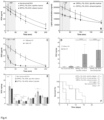
- DOX plasma clearance of both DPPG 2 -TSL-DOX batches was similar ( Figure A) and showed the expected long-circulating properties.
- Plasma half-life (t 1/2, ⁇ ) of DOX was 141 ⁇ 5 min and 180 ⁇ 14 min for DPPG 2 -TSL-DOX (DPPG 2 according to formula III) and DPPG 2 -TSL-DOX (DPPG 2 according to WO 97/30059 ), respectively.
- the plasma concentration of the percentage of the initial dose (%ID) was also similar with 6.3% and 17.2%, respectively, indicating a comparable clearance of DOX with both formulations.
- the light source was used instead of a water bath to apply a HT treatment, because it allows a more focused (local) heating of a tumor tissue (Willerding et al. 2016). Animals were sacrificed after 60 min, organs were perfused, and tumors and organs were collected. DOX content was measured in plasma by HPLC equipped with a fluorescence detector.
- the DOX concentration in the tumor strongly depended on the applied condition (HT vs. NT) and formulation (non-liposomal vs. TSL).
- HT application increased DOX tumor accumulation (compared to the content in the untreated tumors) 1.6-fold, 16.2-fold, and 12.7-fold for rats treated with non-liposomal DOX, DPPG 2 -TSL-DOX (DPPG 2 according to WO 97/30059 ), and DPPG 2 -TSL-DOX (DPPG 2 according to formula III), respectively.
- Enrichment factors were comparable with published data (Willerding et al. 2016, Hossann et al. 2021).
- DOX concentration in the heated tumors was 3.1 ⁇ 0.5 ng/mg, 32.3 ⁇ 23.0 ng/ml, and 41.7 ⁇ 19.0 ng/ml, respectively.
- DOX concentration in the untreated tumors was 1.9 ⁇ 0.3 ng/mg, 2.0 ⁇ 0.3 ng/ml, and 3.3 ⁇ 0.3 ng/ml, respectively.
- the DOX content in both tumors in rats treated with DPPG 2 -TSL-DOX (DPPG 2 according to formula III) was higher compared to the corresponding tumors in rats treated with DPPG 2 -TSL-DOX (DPPG 2 according to WO 97/30059 ). This fits nicely with the in vitro DOX release data (example 1.6) that indicated that DOX can be made bioavailable faster for DPPG 2 -TSL-DOX (DPPG 2 according to formula III).
- the DOX organ distribution was comparable for both DPPG 2 -TSL-DOX formulations, except for the spleen.
- the DOX content in the spleen was significantly lower for the DPPG 2 -TSL-DOX (DPPG 2 according to formula III) with 13.7 ⁇ 1.0 ng/mg compared to 20.6 ⁇ 2.4 ng/mg for the DPPG 2 -TSL-DOX (DPPG 2 according to WO 97/30059 ). It was previously demonstrated that the preparation method had no influence on the organ distribution (including the spleen content) ( WO 2022/008471 A1 ), indicating that usage of DPPG 2 according to Formula III might reduce the uptake rate of the liposomes into the spleen.
- DPPG 2 -TSL-DOX formulations were investigated in vivo and compared to selected clinically relevant DOX formulations (e.g., non-liposomal DOX, Caelyx).
- DPPG 2 -TSL-DOX DPPG 2 according to formula III
- Figure 4F depicts the Kaplan-Meier plot (survival, 5-fold increase in tumor volume) of all experimental groups.
- DPPG 2 -TSL-DOX DPPG 2 according to formula III
- DPPG 2 -TSL-DOX DPPG 2 according to WO 97/30059
- DPPG 2 -TSL-DOX (DPPG 2 according to formula III) showed a slightly faster DOX clearance from the blood stream compared to DPPG 2 -TSL-DOX (DPPG 2 according to WO 97/30059 ).
- the DOX accumulation into the tumor tissue was increased, the DOX content in the spleen reduced, and the formulation showed its superiority in therapeutic efficacy.
Landscapes
- Chemical & Material Sciences (AREA)
- Health & Medical Sciences (AREA)
- Organic Chemistry (AREA)
- Life Sciences & Earth Sciences (AREA)
- General Health & Medical Sciences (AREA)
- Pharmacology & Pharmacy (AREA)
- Animal Behavior & Ethology (AREA)
- Medicinal Chemistry (AREA)
- Public Health (AREA)
- Veterinary Medicine (AREA)
- Biochemistry (AREA)
- Molecular Biology (AREA)
- Epidemiology (AREA)
- Chemical Kinetics & Catalysis (AREA)
- General Chemical & Material Sciences (AREA)
- Nuclear Medicine, Radiotherapy & Molecular Imaging (AREA)
- Dispersion Chemistry (AREA)
- Medicinal Preparation (AREA)
Priority Applications (5)
| Application Number | Priority Date | Filing Date | Title |
|---|---|---|---|
| EP23198190.3A EP4527843A1 (de) | 2023-09-19 | 2023-09-19 | Stereoisomeres phosphatidyloligoglycerol |
| CN202480059956.0A CN121909202A (zh) | 2023-09-19 | 2024-09-19 | 立体异构的磷脂酰低聚甘油 |
| TW113135518A TW202527907A (zh) | 2023-09-19 | 2024-09-19 | 立體異構磷脂醯寡聚甘油 |
| AU2024347208A AU2024347208A1 (en) | 2023-09-19 | 2024-09-19 | Stereoisomeric phosphatidyloligoglycerol |
| PCT/EP2024/076239 WO2025061833A1 (en) | 2023-09-19 | 2024-09-19 | Stereoisomeric phosphatidyloligoglycerol |
Applications Claiming Priority (1)
| Application Number | Priority Date | Filing Date | Title |
|---|---|---|---|
| EP23198190.3A EP4527843A1 (de) | 2023-09-19 | 2023-09-19 | Stereoisomeres phosphatidyloligoglycerol |
Publications (1)
| Publication Number | Publication Date |
|---|---|
| EP4527843A1 true EP4527843A1 (de) | 2025-03-26 |
Family
ID=88207226
Family Applications (1)
| Application Number | Title | Priority Date | Filing Date |
|---|---|---|---|
| EP23198190.3A Withdrawn EP4527843A1 (de) | 2023-09-19 | 2023-09-19 | Stereoisomeres phosphatidyloligoglycerol |
Country Status (5)
| Country | Link |
|---|---|
| EP (1) | EP4527843A1 (de) |
| CN (1) | CN121909202A (de) |
| AU (1) | AU2024347208A1 (de) |
| TW (1) | TW202527907A (de) |
| WO (1) | WO2025061833A1 (de) |
Citations (5)
| Publication number | Priority date | Publication date | Assignee | Title |
|---|---|---|---|---|
| WO1997030058A1 (de) | 1996-02-16 | 1997-08-21 | MAX-PLANCK-Gesellschaft zur Förderung der Wissenschaften e.V. | Phosphatidyloligoglycerine |
| WO1997030059A1 (de) | 1996-02-16 | 1997-08-21 | Basf Aktiengesellschaft | Substituierte 2-phenylpyridine |
| WO2014202680A1 (de) | 2013-06-18 | 2014-12-24 | THERMOSOME GmbH | Stereospezifische lipide zur lokoregionären therapie mit langzeitzirkulierenden stimuli-sensitiven nanocarriersystemen |
| WO2022008471A1 (en) | 2020-07-07 | 2022-01-13 | THERMOSOME GmbH | Liposome formulations |
| WO2023021024A1 (en) | 2021-08-18 | 2023-02-23 | THERMOSOME GmbH | Treatment using thermosensitive liposomes |
-
2023
- 2023-09-19 EP EP23198190.3A patent/EP4527843A1/de not_active Withdrawn
-
2024
- 2024-09-19 AU AU2024347208A patent/AU2024347208A1/en active Pending
- 2024-09-19 TW TW113135518A patent/TW202527907A/zh unknown
- 2024-09-19 CN CN202480059956.0A patent/CN121909202A/zh active Pending
- 2024-09-19 WO PCT/EP2024/076239 patent/WO2025061833A1/en active Pending
Patent Citations (7)
| Publication number | Priority date | Publication date | Assignee | Title |
|---|---|---|---|---|
| WO1997030058A1 (de) | 1996-02-16 | 1997-08-21 | MAX-PLANCK-Gesellschaft zur Förderung der Wissenschaften e.V. | Phosphatidyloligoglycerine |
| WO1997030059A1 (de) | 1996-02-16 | 1997-08-21 | Basf Aktiengesellschaft | Substituierte 2-phenylpyridine |
| US20030053978A1 (en) * | 1996-02-16 | 2003-03-20 | Max-Planck-Gesselschaft Zur Forderung Der Wissenschaften E.V. | Phosphatidyl oligoglycerols |
| WO2014202680A1 (de) | 2013-06-18 | 2014-12-24 | THERMOSOME GmbH | Stereospezifische lipide zur lokoregionären therapie mit langzeitzirkulierenden stimuli-sensitiven nanocarriersystemen |
| US20160136092A1 (en) * | 2013-06-18 | 2016-05-19 | THERMOSOME GmbH | Stereospecific lipids for locoregional therapy with long-term circulating stimuli-sensitive nanocarrier systems |
| WO2022008471A1 (en) | 2020-07-07 | 2022-01-13 | THERMOSOME GmbH | Liposome formulations |
| WO2023021024A1 (en) | 2021-08-18 | 2023-02-23 | THERMOSOME GmbH | Treatment using thermosensitive liposomes |
Non-Patent Citations (14)
| Title |
|---|
| BROOKS WHGUIDA WCDANIEL KG: "The significance of chirality in drug design and development", CURR TOP MED CHEM, vol. 11, 2011, pages 760 - 70 |
| HOANG THI TTPILKINGTON EHNGUYEN DHLEE JSPARK KDTRUONG NP: "The Importance of Poly(ethylene glycol) Alternatives for Overcoming PEG Immunogenicity in Drug Delivery and Bioconjugation", POLYMERS, vol. 12, 2020, pages 298 |
| HOSSANN MHIRSCHBERGER JSCHMIDT RBAUMGARTNER CZIMMERMANN KBAER S ET AL.: "A heat-activated drug delivery platform based on phosphatidyl-(oligo)-glycerol nanocarrier for effective cancer treatment", ADV NANOBIOMED RES, vol. 1, 2021, pages 2000089 |
| HOSSANN MWANG TWIGGENHORN MSCHMIDT RZENGERLE AWINTER G ET AL.: "Size of thermosensitive liposomes influences content release", J CONTROL RELEASE, vol. 147, 2010, pages 436 - 43, XP027471483, DOI: 10.1016/j.jconrel.2010.08.013 |
| KNEIDL BPELLER MWINTER GLINDNER LHHOSSANN M: "Thermosensitive liposomal drug delivery systems: state of the art review", INT J NANOMEDICINE, vol. 9, 2014, pages 4387 - 98, XP055751175, DOI: 10.2147/IJN.S49297 |
| LEHNERT REIBL HMULLER K: "FT-IR and NMR studies on the conformational and structural properties of 1,2-dipalmitoyl-sn-glycero-3-phosphatidyloligoglycerols", J PHYS CHEM, vol. 107, 2003, pages 75 - 85 |
| LIMMER SHAHN JSCHMIDT RWACHHOLZ KZENGERLE ALECHNER K ET AL.: "Gemcitabine treatment of rat soft tissue sarcoma with phosphatidyldiglycerol-based thermosensitive liposomes", PHARM RES, vol. 31, 2014, pages 2276 - 86, XP035400603, DOI: 10.1007/s11095-014-1322-6 |
| LINDNER LHEICHHORN MEEIBL HTEICHERT NSCHMITT-SODY MISSELS RD ET AL.: "Novel temperature-sensitive liposomes with prolonged circulation time", CLIN CANCER RES, vol. 10, 2004, pages 2168 - 78, XP002504494, DOI: 10.1158/1078-0432.CCR-03-0035 |
| LOKERSE WMLAZARIAN AKLEINHEMPEL APETRINI MSCHWARZ PHOSSANN M ET AL.: "Mechanistic investigation of thermosensitive liposome immunogenicity and understanding the drivers for circulation half-life: A polyethylene glycol versus 1,2-dipalmitoyl-sn-glycero- 3-phosphodiglycerol study", J CONTROL RELEASE, vol. 333, 2021, pages 1 - 15 |
| NUTT DJFEETAM CL: "What one hand giveth the other taketh away: some unpredicted effects of enantiomers in psychopharmacology", J PSYCHOPHARMACOLOGY, vol. 24, 2010, pages 1137 - 41 |
| PAULIDES MMDOBSICEK TREFNA HCURTO SRODRIGUES DB: "Recent technological advancements in radiofrequency- and microwave-mediated hyperthermia for enhancing drug delivery", ADV DRUG DELIV REV, vol. 163-164, 2020, pages 3 - 18, XP086396521, DOI: 10.1016/j.addr.2020.03.004 |
| SCHAGON O: "Liposomen als potentielle Arzneistofftrager: Variation der biopharmazeutischen Eigenschaften durch 1,2-Dipalmitoyl-sn-glycero-oligo-glycerine", 1997, SHAKER VERLAG |
| VAN VALENBERG FJPBRUMMELHUIS ISGLINDNER LHKUHNLE FWEDMANN BSCHWEIZER P ET AL.: "DPPG2-based thermosensitive liposomes with encapsulated doxorubicin combined with hyperthermia lead to higher doxorubicin concentrations in the bladder compared to conventional application in pigs: a rationale for the treatment of muscle-invasive bladder cancer", INT J NANOMEDICINE, vol. 16, 2021, pages 75 - 88 |
| WILLERDING LLIMMER SHOSSANN MZENGERLE AWACHHOLZ KHAGEN TL TEN ET AL.: "Method of hyperthermia and tumor size influence effectiveness of doxorubicin release from thermosensitive liposomes in experimental tumors", J CONTROL RELEASE, vol. 222, 2016, pages 47 - 55, XP029382880, DOI: 10.1016/j.jconrel.2015.12.004 |
Also Published As
| Publication number | Publication date |
|---|---|
| WO2025061833A1 (en) | 2025-03-27 |
| CN121909202A (zh) | 2026-04-21 |
| AU2024347208A1 (en) | 2026-03-26 |
| TW202527907A (zh) | 2025-07-16 |
Similar Documents
| Publication | Publication Date | Title |
|---|---|---|
| JP7699128B2 (ja) | ナノマテリアル | |
| KR101495951B1 (ko) | 리포솜 조성물 | |
| IL294318A (en) | Nanomaterials | |
| AU2016324450B2 (en) | Pharmaceutical composition containing anionic drug, and preparation method therefor | |
| KR100889139B1 (ko) | 이리노테칸 제제 | |
| US5631394A (en) | Pharmaceutically active ceramide-related compounds | |
| JP3074733B2 (ja) | 脂肪乳剤 | |
| JPH0637393B2 (ja) | 抗腫瘍作用を有する薬剤 | |
| RU2294738C2 (ru) | Фармацевтическая композиция, содержащая липиды, которые несут полярный и неполярный фрагмент | |
| JP6501765B2 (ja) | 長時間循環する刺激応答性ナノキャリア系での局所領域的治療のための立体特異性脂質 | |
| EP3416623B1 (de) | Ipa-3-beladene liposomen und verfahren zur verwendung davon | |
| KR100847626B1 (ko) | 수난용성 캄프토테신 함유 리포솜 제제 | |
| EP4527843A1 (de) | Stereoisomeres phosphatidyloligoglycerol | |
| WO2024019770A1 (en) | Methods of making ionizable lipids and lipid nanoparticles for mrna delivery | |
| EP3611178B1 (de) | Lipidderivat zur einführung von nukleinsäuren | |
| SK284247B6 (sk) | Lipozómový prípravok 6,9- bis[(2-aminoetyl)amino]benzo[g]izochinolín-5,10-dión dimaleátu a jeho použitie | |
| EP4527379A1 (de) | Lipide mit einer oligoglyceringruppe | |
| WO2006086992A2 (en) | Drug delivery systems containing phqspholipase a2 degradable lipid prodrug derivatives and the therapeutic uses thereof as. e.g. wound healing agents and peroxisome proliferator activated receptor ligands | |
| WO2025061835A1 (en) | Lipids containing an oligoglycerol group | |
| WO1991010431A1 (fr) | Emulsion grasse | |
| WO2025194120A1 (en) | Zwitterionic polymer functionalized lipid nanoparticles for delivery of nucleic acids | |
| HK1025512A (en) | Pharmaceutically active compounds and liposomes, and methods of use thereof | |
| HK1217647B (zh) | 用於以长期循环的刺激-敏感性纳米载体系统进行局部治疗的立体特异性脂质 |
Legal Events
| Date | Code | Title | Description |
|---|---|---|---|
| PUAI | Public reference made under article 153(3) epc to a published international application that has entered the european phase |
Free format text: ORIGINAL CODE: 0009012 |
|
| STAA | Information on the status of an ep patent application or granted ep patent |
Free format text: STATUS: THE APPLICATION HAS BEEN PUBLISHED |
|
| AK | Designated contracting states |
Kind code of ref document: A1 Designated state(s): AL AT BE BG CH CY CZ DE DK EE ES FI FR GB GR HR HU IE IS IT LI LT LU LV MC ME MK MT NL NO PL PT RO RS SE SI SK SM TR |
|
| STAA | Information on the status of an ep patent application or granted ep patent |
Free format text: STATUS: THE APPLICATION IS DEEMED TO BE WITHDRAWN |
|
| 18D | Application deemed to be withdrawn |
Effective date: 20250927 |