EP4528085A1 - Post-traitement des gaz d'échappement pour un moteur à combustion interne - Google Patents
Post-traitement des gaz d'échappement pour un moteur à combustion interne Download PDFInfo
- Publication number
- EP4528085A1 EP4528085A1 EP24194037.8A EP24194037A EP4528085A1 EP 4528085 A1 EP4528085 A1 EP 4528085A1 EP 24194037 A EP24194037 A EP 24194037A EP 4528085 A1 EP4528085 A1 EP 4528085A1
- Authority
- EP
- European Patent Office
- Prior art keywords
- exhaust gas
- internal combustion
- combustion engine
- aftertreatment system
- gas aftertreatment
- Prior art date
- Legal status (The legal status is an assumption and is not a legal conclusion. Google has not performed a legal analysis and makes no representation as to the accuracy of the status listed.)
- Pending
Links
Images

Classifications
-
- F—MECHANICAL ENGINEERING; LIGHTING; HEATING; WEAPONS; BLASTING
- F01—MACHINES OR ENGINES IN GENERAL; ENGINE PLANTS IN GENERAL; STEAM ENGINES
- F01N—GAS-FLOW SILENCERS OR EXHAUST APPARATUS FOR MACHINES OR ENGINES IN GENERAL; GAS-FLOW SILENCERS OR EXHAUST APPARATUS FOR INTERNAL-COMBUSTION ENGINES
- F01N3/00—Exhaust or silencing apparatus having means for purifying, rendering innocuous, or otherwise treating exhaust
- F01N3/08—Exhaust or silencing apparatus having means for purifying, rendering innocuous, or otherwise treating exhaust for rendering innocuous
- F01N3/10—Exhaust or silencing apparatus having means for purifying, rendering innocuous, or otherwise treating exhaust for rendering innocuous by thermal or catalytic conversion of noxious components of exhaust
- F01N3/18—Exhaust or silencing apparatus having means for purifying, rendering innocuous, or otherwise treating exhaust for rendering innocuous by thermal or catalytic conversion of noxious components of exhaust characterised by methods of operation; Control
- F01N3/20—Exhaust or silencing apparatus having means for purifying, rendering innocuous, or otherwise treating exhaust for rendering innocuous by thermal or catalytic conversion of noxious components of exhaust characterised by methods of operation; Control specially adapted for catalytic conversion
- F01N3/206—Adding periodically or continuously substances to exhaust gases for promoting purification, e.g. catalytic material in liquid form, NOx reducing agents
- F01N3/2066—Selective catalytic reduction [SCR]
-
- F—MECHANICAL ENGINEERING; LIGHTING; HEATING; WEAPONS; BLASTING
- F01—MACHINES OR ENGINES IN GENERAL; ENGINE PLANTS IN GENERAL; STEAM ENGINES
- F01N—GAS-FLOW SILENCERS OR EXHAUST APPARATUS FOR MACHINES OR ENGINES IN GENERAL; GAS-FLOW SILENCERS OR EXHAUST APPARATUS FOR INTERNAL-COMBUSTION ENGINES
- F01N13/00—Exhaust or silencing apparatus characterised by constructional features
- F01N13/009—Exhaust or silencing apparatus characterised by constructional features having two or more separate purifying devices arranged in series
- F01N13/0093—Exhaust or silencing apparatus characterised by constructional features having two or more separate purifying devices arranged in series the purifying devices are of the same type
-
- F—MECHANICAL ENGINEERING; LIGHTING; HEATING; WEAPONS; BLASTING
- F01—MACHINES OR ENGINES IN GENERAL; ENGINE PLANTS IN GENERAL; STEAM ENGINES
- F01N—GAS-FLOW SILENCERS OR EXHAUST APPARATUS FOR MACHINES OR ENGINES IN GENERAL; GAS-FLOW SILENCERS OR EXHAUST APPARATUS FOR INTERNAL-COMBUSTION ENGINES
- F01N3/00—Exhaust or silencing apparatus having means for purifying, rendering innocuous, or otherwise treating exhaust
- F01N3/08—Exhaust or silencing apparatus having means for purifying, rendering innocuous, or otherwise treating exhaust for rendering innocuous
- F01N3/10—Exhaust or silencing apparatus having means for purifying, rendering innocuous, or otherwise treating exhaust for rendering innocuous by thermal or catalytic conversion of noxious components of exhaust
- F01N3/18—Exhaust or silencing apparatus having means for purifying, rendering innocuous, or otherwise treating exhaust for rendering innocuous by thermal or catalytic conversion of noxious components of exhaust characterised by methods of operation; Control
- F01N3/20—Exhaust or silencing apparatus having means for purifying, rendering innocuous, or otherwise treating exhaust for rendering innocuous by thermal or catalytic conversion of noxious components of exhaust characterised by methods of operation; Control specially adapted for catalytic conversion
- F01N3/206—Adding periodically or continuously substances to exhaust gases for promoting purification, e.g. catalytic material in liquid form, NOx reducing agents
- F01N3/208—Control of selective catalytic reduction [SCR], e.g. by adjusting the dosing of reducing agent
-
- F—MECHANICAL ENGINEERING; LIGHTING; HEATING; WEAPONS; BLASTING
- F01—MACHINES OR ENGINES IN GENERAL; ENGINE PLANTS IN GENERAL; STEAM ENGINES
- F01N—GAS-FLOW SILENCERS OR EXHAUST APPARATUS FOR MACHINES OR ENGINES IN GENERAL; GAS-FLOW SILENCERS OR EXHAUST APPARATUS FOR INTERNAL-COMBUSTION ENGINES
- F01N9/00—Electrical control of exhaust gas treating apparatus
-
- F—MECHANICAL ENGINEERING; LIGHTING; HEATING; WEAPONS; BLASTING
- F02—COMBUSTION ENGINES; HOT-GAS OR COMBUSTION-PRODUCT ENGINE PLANTS
- F02D—CONTROLLING COMBUSTION ENGINES
- F02D29/00—Controlling engines, such controlling being peculiar to the devices driven thereby, the devices being other than parts or accessories essential to engine operation, e.g. controlling of engines by signals external thereto
- F02D29/06—Controlling engines, such controlling being peculiar to the devices driven thereby, the devices being other than parts or accessories essential to engine operation, e.g. controlling of engines by signals external thereto peculiar to engines driving electric generators
-
- F—MECHANICAL ENGINEERING; LIGHTING; HEATING; WEAPONS; BLASTING
- F02—COMBUSTION ENGINES; HOT-GAS OR COMBUSTION-PRODUCT ENGINE PLANTS
- F02D—CONTROLLING COMBUSTION ENGINES
- F02D41/00—Electrical control of supply of combustible mixture or its constituents
- F02D41/0025—Controlling engines characterised by use of non-liquid fuels, pluralities of fuels, or non-fuel substances added to the combustible mixtures
- F02D41/0027—Controlling engines characterised by use of non-liquid fuels, pluralities of fuels, or non-fuel substances added to the combustible mixtures the fuel being gaseous
-
- F—MECHANICAL ENGINEERING; LIGHTING; HEATING; WEAPONS; BLASTING
- F02—COMBUSTION ENGINES; HOT-GAS OR COMBUSTION-PRODUCT ENGINE PLANTS
- F02D—CONTROLLING COMBUSTION ENGINES
- F02D41/00—Electrical control of supply of combustible mixture or its constituents
- F02D41/02—Circuit arrangements for generating control signals
- F02D41/04—Introducing corrections for particular operating conditions
- F02D41/06—Introducing corrections for particular operating conditions for engine starting or warming up
- F02D41/062—Introducing corrections for particular operating conditions for engine starting or warming up for starting
- F02D41/064—Introducing corrections for particular operating conditions for engine starting or warming up for starting at cold start
-
- F—MECHANICAL ENGINEERING; LIGHTING; HEATING; WEAPONS; BLASTING
- F02—COMBUSTION ENGINES; HOT-GAS OR COMBUSTION-PRODUCT ENGINE PLANTS
- F02D—CONTROLLING COMBUSTION ENGINES
- F02D41/00—Electrical control of supply of combustible mixture or its constituents
- F02D41/02—Circuit arrangements for generating control signals
- F02D41/04—Introducing corrections for particular operating conditions
- F02D41/06—Introducing corrections for particular operating conditions for engine starting or warming up
- F02D41/068—Introducing corrections for particular operating conditions for engine starting or warming up for warming-up
-
- F—MECHANICAL ENGINEERING; LIGHTING; HEATING; WEAPONS; BLASTING
- F02—COMBUSTION ENGINES; HOT-GAS OR COMBUSTION-PRODUCT ENGINE PLANTS
- F02D—CONTROLLING COMBUSTION ENGINES
- F02D41/00—Electrical control of supply of combustible mixture or its constituents
- F02D41/02—Circuit arrangements for generating control signals
- F02D41/14—Introducing closed-loop corrections
- F02D41/1438—Introducing closed-loop corrections using means for determining characteristics of the combustion gases; Sensors therefor
- F02D41/1444—Introducing closed-loop corrections using means for determining characteristics of the combustion gases; Sensors therefor characterised by the characteristics of the combustion gases
- F02D41/1446—Introducing closed-loop corrections using means for determining characteristics of the combustion gases; Sensors therefor characterised by the characteristics of the combustion gases the characteristics being exhaust temperatures
-
- F—MECHANICAL ENGINEERING; LIGHTING; HEATING; WEAPONS; BLASTING
- F02—COMBUSTION ENGINES; HOT-GAS OR COMBUSTION-PRODUCT ENGINE PLANTS
- F02D—CONTROLLING COMBUSTION ENGINES
- F02D41/00—Electrical control of supply of combustible mixture or its constituents
- F02D41/02—Circuit arrangements for generating control signals
- F02D41/14—Introducing closed-loop corrections
- F02D41/1438—Introducing closed-loop corrections using means for determining characteristics of the combustion gases; Sensors therefor
- F02D41/1444—Introducing closed-loop corrections using means for determining characteristics of the combustion gases; Sensors therefor characterised by the characteristics of the combustion gases
- F02D41/146—Introducing closed-loop corrections using means for determining characteristics of the combustion gases; Sensors therefor characterised by the characteristics of the combustion gases the characteristics being an NOx content or concentration
- F02D41/1461—Introducing closed-loop corrections using means for determining characteristics of the combustion gases; Sensors therefor characterised by the characteristics of the combustion gases the characteristics being an NOx content or concentration of the exhaust gases emitted by the engine
-
- F—MECHANICAL ENGINEERING; LIGHTING; HEATING; WEAPONS; BLASTING
- F01—MACHINES OR ENGINES IN GENERAL; ENGINE PLANTS IN GENERAL; STEAM ENGINES
- F01N—GAS-FLOW SILENCERS OR EXHAUST APPARATUS FOR MACHINES OR ENGINES IN GENERAL; GAS-FLOW SILENCERS OR EXHAUST APPARATUS FOR INTERNAL-COMBUSTION ENGINES
- F01N2370/00—Selection of materials for exhaust purification
- F01N2370/02—Selection of materials for exhaust purification used in catalytic reactors
- F01N2370/04—Zeolitic material
-
- F—MECHANICAL ENGINEERING; LIGHTING; HEATING; WEAPONS; BLASTING
- F01—MACHINES OR ENGINES IN GENERAL; ENGINE PLANTS IN GENERAL; STEAM ENGINES
- F01N—GAS-FLOW SILENCERS OR EXHAUST APPARATUS FOR MACHINES OR ENGINES IN GENERAL; GAS-FLOW SILENCERS OR EXHAUST APPARATUS FOR INTERNAL-COMBUSTION ENGINES
- F01N2430/00—Influencing exhaust purification, e.g. starting of catalytic reaction, filter regeneration, or the like, by controlling engine operating characteristics
- F01N2430/06—Influencing exhaust purification, e.g. starting of catalytic reaction, filter regeneration, or the like, by controlling engine operating characteristics by varying fuel-air ratio, e.g. by enriching fuel-air mixture
-
- F—MECHANICAL ENGINEERING; LIGHTING; HEATING; WEAPONS; BLASTING
- F01—MACHINES OR ENGINES IN GENERAL; ENGINE PLANTS IN GENERAL; STEAM ENGINES
- F01N—GAS-FLOW SILENCERS OR EXHAUST APPARATUS FOR MACHINES OR ENGINES IN GENERAL; GAS-FLOW SILENCERS OR EXHAUST APPARATUS FOR INTERNAL-COMBUSTION ENGINES
- F01N2510/00—Surface coverings
- F01N2510/06—Surface coverings for exhaust purification, e.g. catalytic reaction
- F01N2510/063—Surface coverings for exhaust purification, e.g. catalytic reaction zeolites
-
- F—MECHANICAL ENGINEERING; LIGHTING; HEATING; WEAPONS; BLASTING
- F01—MACHINES OR ENGINES IN GENERAL; ENGINE PLANTS IN GENERAL; STEAM ENGINES
- F01N—GAS-FLOW SILENCERS OR EXHAUST APPARATUS FOR MACHINES OR ENGINES IN GENERAL; GAS-FLOW SILENCERS OR EXHAUST APPARATUS FOR INTERNAL-COMBUSTION ENGINES
- F01N2560/00—Exhaust systems with means for detecting or measuring exhaust gas components or characteristics
- F01N2560/02—Exhaust systems with means for detecting or measuring exhaust gas components or characteristics the means being an exhaust gas sensor
- F01N2560/021—Exhaust systems with means for detecting or measuring exhaust gas components or characteristics the means being an exhaust gas sensor for measuring or detecting ammonia NH3
-
- F—MECHANICAL ENGINEERING; LIGHTING; HEATING; WEAPONS; BLASTING
- F01—MACHINES OR ENGINES IN GENERAL; ENGINE PLANTS IN GENERAL; STEAM ENGINES
- F01N—GAS-FLOW SILENCERS OR EXHAUST APPARATUS FOR MACHINES OR ENGINES IN GENERAL; GAS-FLOW SILENCERS OR EXHAUST APPARATUS FOR INTERNAL-COMBUSTION ENGINES
- F01N2560/00—Exhaust systems with means for detecting or measuring exhaust gas components or characteristics
- F01N2560/02—Exhaust systems with means for detecting or measuring exhaust gas components or characteristics the means being an exhaust gas sensor
- F01N2560/026—Exhaust systems with means for detecting or measuring exhaust gas components or characteristics the means being an exhaust gas sensor for measuring or detecting NOx
-
- F—MECHANICAL ENGINEERING; LIGHTING; HEATING; WEAPONS; BLASTING
- F01—MACHINES OR ENGINES IN GENERAL; ENGINE PLANTS IN GENERAL; STEAM ENGINES
- F01N—GAS-FLOW SILENCERS OR EXHAUST APPARATUS FOR MACHINES OR ENGINES IN GENERAL; GAS-FLOW SILENCERS OR EXHAUST APPARATUS FOR INTERNAL-COMBUSTION ENGINES
- F01N2590/00—Exhaust or silencing apparatus adapted to particular use, e.g. for military applications, airplanes, submarines
- F01N2590/10—Exhaust or silencing apparatus adapted to particular use, e.g. for military applications, airplanes, submarines for stationary applications
-
- F—MECHANICAL ENGINEERING; LIGHTING; HEATING; WEAPONS; BLASTING
- F01—MACHINES OR ENGINES IN GENERAL; ENGINE PLANTS IN GENERAL; STEAM ENGINES
- F01N—GAS-FLOW SILENCERS OR EXHAUST APPARATUS FOR MACHINES OR ENGINES IN GENERAL; GAS-FLOW SILENCERS OR EXHAUST APPARATUS FOR INTERNAL-COMBUSTION ENGINES
- F01N2610/00—Adding substances to exhaust gases
- F01N2610/02—Adding substances to exhaust gases the substance being ammonia or urea
-
- F—MECHANICAL ENGINEERING; LIGHTING; HEATING; WEAPONS; BLASTING
- F01—MACHINES OR ENGINES IN GENERAL; ENGINE PLANTS IN GENERAL; STEAM ENGINES
- F01N—GAS-FLOW SILENCERS OR EXHAUST APPARATUS FOR MACHINES OR ENGINES IN GENERAL; GAS-FLOW SILENCERS OR EXHAUST APPARATUS FOR INTERNAL-COMBUSTION ENGINES
- F01N2900/00—Details of electrical control or of the monitoring of the exhaust gas treating apparatus
- F01N2900/06—Parameters used for exhaust control or diagnosing
- F01N2900/14—Parameters used for exhaust control or diagnosing said parameters being related to the exhaust gas
- F01N2900/1404—Exhaust gas temperature
-
- F—MECHANICAL ENGINEERING; LIGHTING; HEATING; WEAPONS; BLASTING
- F01—MACHINES OR ENGINES IN GENERAL; ENGINE PLANTS IN GENERAL; STEAM ENGINES
- F01N—GAS-FLOW SILENCERS OR EXHAUST APPARATUS FOR MACHINES OR ENGINES IN GENERAL; GAS-FLOW SILENCERS OR EXHAUST APPARATUS FOR INTERNAL-COMBUSTION ENGINES
- F01N2900/00—Details of electrical control or of the monitoring of the exhaust gas treating apparatus
- F01N2900/06—Parameters used for exhaust control or diagnosing
- F01N2900/16—Parameters used for exhaust control or diagnosing said parameters being related to the exhaust apparatus, e.g. particulate filter or catalyst
- F01N2900/1626—Catalyst activation temperature
-
- F—MECHANICAL ENGINEERING; LIGHTING; HEATING; WEAPONS; BLASTING
- F01—MACHINES OR ENGINES IN GENERAL; ENGINE PLANTS IN GENERAL; STEAM ENGINES
- F01N—GAS-FLOW SILENCERS OR EXHAUST APPARATUS FOR MACHINES OR ENGINES IN GENERAL; GAS-FLOW SILENCERS OR EXHAUST APPARATUS FOR INTERNAL-COMBUSTION ENGINES
- F01N3/00—Exhaust or silencing apparatus having means for purifying, rendering innocuous, or otherwise treating exhaust
- F01N3/08—Exhaust or silencing apparatus having means for purifying, rendering innocuous, or otherwise treating exhaust for rendering innocuous
- F01N3/10—Exhaust or silencing apparatus having means for purifying, rendering innocuous, or otherwise treating exhaust for rendering innocuous by thermal or catalytic conversion of noxious components of exhaust
- F01N3/105—General auxiliary catalysts, e.g. upstream or downstream of the main catalyst
- F01N3/106—Auxiliary oxidation catalysts
-
- F—MECHANICAL ENGINEERING; LIGHTING; HEATING; WEAPONS; BLASTING
- F02—COMBUSTION ENGINES; HOT-GAS OR COMBUSTION-PRODUCT ENGINE PLANTS
- F02D—CONTROLLING COMBUSTION ENGINES
- F02D41/00—Electrical control of supply of combustible mixture or its constituents
- F02D41/02—Circuit arrangements for generating control signals
- F02D41/14—Introducing closed-loop corrections
- F02D41/1438—Introducing closed-loop corrections using means for determining characteristics of the combustion gases; Sensors therefor
- F02D41/1444—Introducing closed-loop corrections using means for determining characteristics of the combustion gases; Sensors therefor characterised by the characteristics of the combustion gases
- F02D2041/1468—Introducing closed-loop corrections using means for determining characteristics of the combustion gases; Sensors therefor characterised by the characteristics of the combustion gases the characteristics being an ammonia content or concentration of the exhaust gases
-
- F—MECHANICAL ENGINEERING; LIGHTING; HEATING; WEAPONS; BLASTING
- F02—COMBUSTION ENGINES; HOT-GAS OR COMBUSTION-PRODUCT ENGINE PLANTS
- F02D—CONTROLLING COMBUSTION ENGINES
- F02D2200/00—Input parameters for engine control
- F02D2200/02—Input parameters for engine control the parameters being related to the engine
- F02D2200/08—Exhaust gas treatment apparatus parameters
- F02D2200/0802—Temperature of the exhaust gas treatment apparatus
-
- F—MECHANICAL ENGINEERING; LIGHTING; HEATING; WEAPONS; BLASTING
- F02—COMBUSTION ENGINES; HOT-GAS OR COMBUSTION-PRODUCT ENGINE PLANTS
- F02D—CONTROLLING COMBUSTION ENGINES
- F02D41/00—Electrical control of supply of combustible mixture or its constituents
- F02D41/02—Circuit arrangements for generating control signals
- F02D41/021—Introducing corrections for particular conditions exterior to the engine
- F02D41/0235—Introducing corrections for particular conditions exterior to the engine in relation with the state of the exhaust gas treating apparatus
- F02D41/027—Introducing corrections for particular conditions exterior to the engine in relation with the state of the exhaust gas treating apparatus to purge or regenerate the exhaust gas treating apparatus
- F02D41/0275—Introducing corrections for particular conditions exterior to the engine in relation with the state of the exhaust gas treating apparatus to purge or regenerate the exhaust gas treating apparatus the exhaust gas treating apparatus being a NOx trap or adsorbent
-
- Y—GENERAL TAGGING OF NEW TECHNOLOGICAL DEVELOPMENTS; GENERAL TAGGING OF CROSS-SECTIONAL TECHNOLOGIES SPANNING OVER SEVERAL SECTIONS OF THE IPC; TECHNICAL SUBJECTS COVERED BY FORMER USPC CROSS-REFERENCE ART COLLECTIONS [XRACs] AND DIGESTS
- Y02—TECHNOLOGIES OR APPLICATIONS FOR MITIGATION OR ADAPTATION AGAINST CLIMATE CHANGE
- Y02T—CLIMATE CHANGE MITIGATION TECHNOLOGIES RELATED TO TRANSPORTATION
- Y02T10/00—Road transport of goods or passengers
- Y02T10/10—Internal combustion engine [ICE] based vehicles
- Y02T10/12—Improving ICE efficiencies
Definitions
- the invention relates to a stationary internal combustion engine which is operated with a fuel which contains or consists of ammonia (NH 3 ) and/or hydrogen (H 2 ), with the features of the preamble of claim 1 and a genset with such an internal combustion engine.
- a fuel which contains or consists of ammonia (NH 3 ) and/or hydrogen (H 2 )
- NH 3 ammonia
- H 2 hydrogen
- the problem is that when ammonia or hydrogen is used as fuel or ammonia- or hydrogen-based fuels, the emissions of NH 3 , NO x and N 2 O are far higher than with known internal combustion engines which are operated with natural gas, for example (e.g. for NO x by thirty times, and high levels of N 2 O and NH 3 , which are not present in the exhaust gas of natural gas-operated internal combustion engines).
- the ratio of ammonia to NOx is also called ANR.
- an ANR ratio is specified in a range from about 0.95 to about 1.05, particularly preferably about 1.
- the predetermined exhaust gas temperature after continuous operation of the internal combustion engine has been reached is approximately 400 °C, most preferably approximately 500 °C.
- An SCR catalyst is a catalyst that works according to the principle of selective catalytic reduction.
- An ASC catalyst is an ammonia slip catalyst.
- both SCR catalysts can achieve conversions of more than 98% for NH3 and NOx , and more than 80% for N2O .
- the control or regulation of the plurality of piston-cylinder units by the engine control system can be achieved through conventional measures, such as selecting the ignition timing, selecting an excess air ratio in the fuel-air mixture, or the volume percentage of the H2 admixture, or a combination of two or more such measures.
- This control or regulation can be achieved in such a way that a desired ratio of NH3 to NOx is established.
- the control or regulation of the plurality of piston-cylinder units by the engine control can be carried out by metering NH 3 by means of at least one metering device.
- NH 3 , H 2 or a mixture of NH 3 and H 2 is preferably used as fuel.
- the pollutants in the exhaust gas are then mainly composed of NH 3 , NO x and N 2 O.
- the exhaust gas also contains H 2 O, N 2 and O 2 .
- the exhaust gas aftertreatment system comprises at least one ASC catalyst connected downstream of the first SCR catalyst.
- a second SCR catalyst is arranged between the first SCR catalyst and the ASC catalyst, wherein it is preferably provided that the second SCR catalyst is designed as an iron-zeolite SCR catalyst.
- the engine control system can be configured to control or regulate the plurality of piston-cylinder units and/or the exhaust gas aftertreatment system after the predetermined exhaust gas temperature in the exhaust tract has been reached in such a way that a predetermined ratio of ammonia to NOx is also achieved in the inlet of the second SCR catalyst.
- the first SCR catalyst is designed as a copper zeolite SCR catalyst.
- the catalysts can be arranged in a common housing or in separate housings.
- a measuring device is provided which is configured to report data on engine parameters of the internal combustion engine and/or data on the operating state of the exhaust aftertreatment system and/or data on the exhaust gas of the internal combustion engine to the engine control unit.
- the engine control unit is configured to calculate this data based on stored models. The control or regulation by the engine control unit can be carried out based on the measured and/or calculated data.
- the exhaust gas aftertreatment system is designed to store ammonia during a cold start of the internal combustion engine.
- the engine control system is configured to control the exhaust gas aftertreatment system such that ammonia is stored in the exhaust tract in a first temperature range (for example, a temperature range from approximately 0°C to approximately 300°C). This is particularly relevant during a cold start of the internal combustion engine.
- the engine control is configured to control the exhaust gas aftertreatment system in such a way that in a second temperature range (for example a temperature range of approximately 400 °C to approximately 550 °C) of the exhaust gas in the exhaust tract, which is higher than the first temperature range, a conversion of NH 3 , NO x and N 2 O takes place.
- a second temperature range for example a temperature range of approximately 400 °C to approximately 550 °C
- the lower limit of the second temperature range corresponds to the specified exhaust gas temperature.
- the exhaust gas aftertreatment system includes a metering device for metering a reducing agent, in particular ammonia, into the exhaust gas. This may be necessary when the measures directed at the piston-cylinder units reach their limits or are far from optimal efficiency, yet still achieve an ideal ANR ratio.
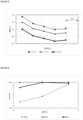
- FIGS. 2 and 3 show how by choosing the operating point of the multitude of piston-cylinder units ( Figure 2 : Change ⁇ of the ignition timing ITP in crankshaft angle before top dead center, Figure 3 : Change ⁇ of the excess air EAR - an excess air EAR of one corresponds to a stoichiometric ratio of fuel and air) a desired ratio ANR can be set.
- Figure 4 shows how high conversion efficiencies for NH 3 , NO x and N 2 O can be achieved by using a first and a second SCR catalyst 4, 8 at an ANR ratio close to one. If a lower ANR ratio is selected, lower conversions for NH 3 and N 2 O result. Selecting a higher ANR ratio results in a lower conversion for NH 3 .
- an ANR ratio greater than 0.97 can be aimed for (at an exhaust gas temperature greater than 500 °C).
- an ANR ratio of approximately one can be aimed for (at an exhaust gas temperature greater than 500 °C).
- the engine control unit 13 would adjust the parameters of the piston-cylinder units.
- the desired parameters can be selected through multivariable optimization (e.g., depending on engine efficiency, engine load, exhaust gas temperature, NH3 consumption, etc.).
- a more precise ANR ratio can be determined depending on the properties of the exhaust gas aftertreatment system 7 such as space velocities, catalyst properties, etc.
- conversion optimization can be achieved based on the ANR ratio, with a lower or higher ANR ratio in exhaust gas 2 at the inlet of the first SCR catalyst 4, depending on the start-up phase.
- Large changes in the ANR ratio can be achieved by influencing parameters of the piston-cylinder units.
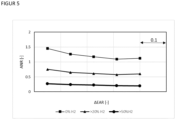
- Figure 5 One such example is shown in Figure 5 where by changing the excess air EAR and the hydrogen volume fraction in the fuel, ANR ratios of 0.3 to 1.4 are achieved.
- ammonia or ammonia-based reducing agents such as uric acid can generally be metered in, controlled or regulated by the engine control unit 13, to influence the ANR ratio.
- the reducing agent can be stored externally in liquid or gaseous form or taken from a fuel line or fuel tank.
- the reducing agent can be metered in upstream of the first SCR catalyst 4 and/or upstream of the second SCR catalyst 8.
- a control or regulation strategy can be selected in which the engine control unit 13 both influences the parameters of the piston-cylinder units and doses a reducing agent, as described in the previous paragraphs.
- the distribution can be achieved through multivariable optimization.
- the ANR ratio can be adjusted after continuous operation has been reached (e.g., from a predetermined temperature of the exhaust gas 2) with a view to optimizing the conversion of NH 3 , NO x and N 2 O.
- the optimization can be carried out with a view to the storage capacity for ammonia and the conversion of NH 3 and NO x .
Landscapes
- Engineering & Computer Science (AREA)
- Chemical & Material Sciences (AREA)
- Combustion & Propulsion (AREA)
- Mechanical Engineering (AREA)
- General Engineering & Computer Science (AREA)
- Chemical Kinetics & Catalysis (AREA)
- Health & Medical Sciences (AREA)
- Toxicology (AREA)
- Exhaust Gas After Treatment (AREA)
Applications Claiming Priority (1)
| Application Number | Priority Date | Filing Date | Title |
|---|---|---|---|
| DE102023125849.4A DE102023125849A1 (de) | 2023-09-25 | 2023-09-25 | Abgasnachbehandlung für eine Brennkraftmaschine |
Publications (1)
| Publication Number | Publication Date |
|---|---|
| EP4528085A1 true EP4528085A1 (fr) | 2025-03-26 |
Family
ID=92302508
Family Applications (1)
| Application Number | Title | Priority Date | Filing Date |
|---|---|---|---|
| EP24194037.8A Pending EP4528085A1 (fr) | 2023-09-25 | 2024-08-12 | Post-traitement des gaz d'échappement pour un moteur à combustion interne |
Country Status (2)
| Country | Link |
|---|---|
| EP (1) | EP4528085A1 (fr) |
| DE (1) | DE102023125849A1 (fr) |
Citations (12)
| Publication number | Priority date | Publication date | Assignee | Title |
|---|---|---|---|---|
| DE112006003231T5 (de) | 2005-11-30 | 2008-10-02 | Caterpillar Inc., Peoria | Mehrstufiges System zur selektiven katalytischen Reduktion |
| DE102009007021A1 (de) * | 2009-01-31 | 2010-08-12 | Daimler Ag | Kolbenmotor, insbesondere Verbrennungskraftmaschine für ein Kraftfahrzeug |
| US20120233986A1 (en) * | 2011-03-18 | 2012-09-20 | Mert Geveci | System and method to control selective catalytic reduction systems in feedback |
| DE112011101487T5 (de) * | 2010-04-28 | 2013-02-07 | Toyota Jidosha Kabushiki Kaisha | Ammoniak verbrennende Brennkraftmaschine |
| US20140311135A1 (en) * | 2013-04-19 | 2014-10-23 | Kabushiki Kaisha Toyota Chuo Kenkyusho | Internal combustion engine |
| DE102015204294A1 (de) * | 2014-03-11 | 2015-09-17 | Johnson Matthey Catalysts (Germany) Gmbh | Kompaktes selektives katalytisches Reduktionssystem für die Stickoxidreduktion in sauerstoffreichem Abgsas aus Brennkraftmaschinen von 500 bis 4500 kW |
| DE102016005262A1 (de) * | 2015-05-04 | 2016-11-10 | Scania Cv Ab | Verfahren in Bezug auf ein SCR-System, und ein SCR-System |
| US10690033B1 (en) * | 2019-11-05 | 2020-06-23 | John H. Johnson | Aftertreatment systems and methods for treatment of exhaust gas from diesel engine |
| EP3670878A1 (fr) * | 2018-12-19 | 2020-06-24 | Winterthur Gas & Diesel Ltd. | Moteur à combustion interne |
| WO2023272317A1 (fr) * | 2021-06-30 | 2023-01-05 | Innio Jenbacher Gmbh & Co Og | Moteur à combustion interne et procédé de commande de moteur à combustion interne |
| US20230101071A1 (en) * | 2021-09-27 | 2023-03-30 | Woodward, Inc. | Combustion control for ammonia fueled engine |
| WO2023244279A1 (fr) * | 2022-06-17 | 2023-12-21 | Basf Corporation | Système de traitement d'échappement pour véhicules alimentés par de l'ammoniac |
-
2023
- 2023-09-25 DE DE102023125849.4A patent/DE102023125849A1/de active Pending
-
2024
- 2024-08-12 EP EP24194037.8A patent/EP4528085A1/fr active Pending
Patent Citations (12)
| Publication number | Priority date | Publication date | Assignee | Title |
|---|---|---|---|---|
| DE112006003231T5 (de) | 2005-11-30 | 2008-10-02 | Caterpillar Inc., Peoria | Mehrstufiges System zur selektiven katalytischen Reduktion |
| DE102009007021A1 (de) * | 2009-01-31 | 2010-08-12 | Daimler Ag | Kolbenmotor, insbesondere Verbrennungskraftmaschine für ein Kraftfahrzeug |
| DE112011101487T5 (de) * | 2010-04-28 | 2013-02-07 | Toyota Jidosha Kabushiki Kaisha | Ammoniak verbrennende Brennkraftmaschine |
| US20120233986A1 (en) * | 2011-03-18 | 2012-09-20 | Mert Geveci | System and method to control selective catalytic reduction systems in feedback |
| US20140311135A1 (en) * | 2013-04-19 | 2014-10-23 | Kabushiki Kaisha Toyota Chuo Kenkyusho | Internal combustion engine |
| DE102015204294A1 (de) * | 2014-03-11 | 2015-09-17 | Johnson Matthey Catalysts (Germany) Gmbh | Kompaktes selektives katalytisches Reduktionssystem für die Stickoxidreduktion in sauerstoffreichem Abgsas aus Brennkraftmaschinen von 500 bis 4500 kW |
| DE102016005262A1 (de) * | 2015-05-04 | 2016-11-10 | Scania Cv Ab | Verfahren in Bezug auf ein SCR-System, und ein SCR-System |
| EP3670878A1 (fr) * | 2018-12-19 | 2020-06-24 | Winterthur Gas & Diesel Ltd. | Moteur à combustion interne |
| US10690033B1 (en) * | 2019-11-05 | 2020-06-23 | John H. Johnson | Aftertreatment systems and methods for treatment of exhaust gas from diesel engine |
| WO2023272317A1 (fr) * | 2021-06-30 | 2023-01-05 | Innio Jenbacher Gmbh & Co Og | Moteur à combustion interne et procédé de commande de moteur à combustion interne |
| US20230101071A1 (en) * | 2021-09-27 | 2023-03-30 | Woodward, Inc. | Combustion control for ammonia fueled engine |
| WO2023244279A1 (fr) * | 2022-06-17 | 2023-12-21 | Basf Corporation | Système de traitement d'échappement pour véhicules alimentés par de l'ammoniac |
Also Published As
| Publication number | Publication date |
|---|---|
| DE102023125849A1 (de) | 2025-03-27 |
Similar Documents
| Publication | Publication Date | Title |
|---|---|---|
| EP2310656B1 (fr) | Procédé de conduite d'une installation de traitement des gaz d'échappement à régulation lambda | |
| EP3115566B1 (fr) | Procede de post-traitement de gaz d'echappement d'un moteur a combustion interne | |
| DE69606439T2 (de) | Verfahren und vorrichtung zur reinigung von abgasen einer brennkraftmaschine | |
| EP3486444B1 (fr) | Procédé de traitement de gaz d'échappement d'un moteur à combustion interne | |
| EP3344863B1 (fr) | Procédé et appareil au traitement de gaz d'échappement d'un moteur à combustion interne | |
| EP0708230A1 (fr) | Dispositif de post-traitement de gaz d'échappement de moteur à combustion interne à auto-allumage | |
| DE10346315A1 (de) | Diesel-Abgasnachbehandlungssysteme | |
| EP3772576B1 (fr) | Procede de chauffage d'un catalyseur et systeme de post-traitement des gaz d'echappement | |
| EP3584418B1 (fr) | Système de post-traitement des gaz d'échappement et procédé de régénération d'un filtre à particules | |
| DE102022203188A1 (de) | System und Verfahren zur Steuerung der Abgastemperatur am Einlass eines selektiven katalytischen Reduktionssystems | |
| DE10346715B4 (de) | Diesel-Abgasnachbehandlungssysteme | |
| DE102006043100A1 (de) | Verfahren zur Reduktionsmittelsteuerung in einer Abgasnachbehandlungsanlage | |
| DE102017201401B4 (de) | Abgasnachbehandlung | |
| EP4528085A1 (fr) | Post-traitement des gaz d'échappement pour un moteur à combustion interne | |
| EP3770386B1 (fr) | Système de post-traitement des gaz d'échappement et procédé de post-traitement des gaz d'échappement d'un moteur à combustion interne | |
| DE102017208671B4 (de) | Verfahren zur Abgasnachbehandlung eines Verbrennungsmotors sowie Abgasnachbehandlungssystem | |
| WO2008012005A1 (fr) | Moteur à combustion interne à allumage commandé pour carburants gazeux, et procédé de fonctionnement d'un tel moteur à combustion interne | |
| EP1200723A1 (fr) | PROCEDE ET DISPOSITIF POUR LA DESULFATATION D'UN CATALYSEUR ACCUMULATEUR DE NOx | |
| DE10347134A1 (de) | Diesel-Abgasnachbehandlungssysteme | |
| DE102017101610A1 (de) | Verfahren zur Reduzierung der Kaltstart-Emissionen bei einem fremdgezündeten Verbrennungsmotor | |
| DE102020121058B4 (de) | Verfahren zum Betreiben einer Verbrennungskraftmaschine mit einem beheizbaren Katalysator | |
| DE102021111331A1 (de) | Entschwefelung eines Dreiwegekatalysators einer Brennkraftmaschine | |
| DE10148661C2 (de) | Verfahren und Vorrichtung zur Steuerung eines Abgasnachbehandlungssystems | |
| DE102017201399B4 (de) | Abgasnachbehandlungssystem | |
| DE10241499B4 (de) | Verfahren zur Ermittlung des Alterungsgrades eines Stickoxid-Speicherkatalysators einer Brennkraftmaschine insbesondere eines Kraftfahrzeuges |
Legal Events
| Date | Code | Title | Description |
|---|---|---|---|
| PUAI | Public reference made under article 153(3) epc to a published international application that has entered the european phase |
Free format text: ORIGINAL CODE: 0009012 |
|
| STAA | Information on the status of an ep patent application or granted ep patent |
Free format text: STATUS: THE APPLICATION HAS BEEN PUBLISHED |
|
| AK | Designated contracting states |
Kind code of ref document: A1 Designated state(s): AL AT BE BG CH CY CZ DE DK EE ES FI FR GB GR HR HU IE IS IT LI LT LU LV MC ME MK MT NL NO PL PT RO RS SE SI SK SM TR |
|
| STAA | Information on the status of an ep patent application or granted ep patent |
Free format text: STATUS: REQUEST FOR EXAMINATION WAS MADE |
|
| 17P | Request for examination filed |
Effective date: 20250826 |
|
| STAA | Information on the status of an ep patent application or granted ep patent |
Free format text: STATUS: EXAMINATION IS IN PROGRESS |
|
| 17Q | First examination report despatched |
Effective date: 20260203 |