EP4528275A2 - Procédés de préparation de bibliothèques d'adn à double index pour le séquençage par conversion au bisulfite - Google Patents
Procédés de préparation de bibliothèques d'adn à double index pour le séquençage par conversion au bisulfite Download PDFInfo
- Publication number
- EP4528275A2 EP4528275A2 EP25157424.0A EP25157424A EP4528275A2 EP 4528275 A2 EP4528275 A2 EP 4528275A2 EP 25157424 A EP25157424 A EP 25157424A EP 4528275 A2 EP4528275 A2 EP 4528275A2
- Authority
- EP
- European Patent Office
- Prior art keywords
- nucleic acid
- converted
- adapter
- certain embodiments
- dual
- Prior art date
- Legal status (The legal status is an assumption and is not a legal conclusion. Google has not performed a legal analysis and makes no representation as to the accuracy of the status listed.)
- Pending
Links
Images

Classifications
-
- C—CHEMISTRY; METALLURGY
- C12—BIOCHEMISTRY; BEER; SPIRITS; WINE; VINEGAR; MICROBIOLOGY; ENZYMOLOGY; MUTATION OR GENETIC ENGINEERING
- C12Q—MEASURING OR TESTING PROCESSES INVOLVING ENZYMES, NUCLEIC ACIDS OR MICROORGANISMS; COMPOSITIONS OR TEST PAPERS THEREFOR; PROCESSES OF PREPARING SUCH COMPOSITIONS; CONDITION-RESPONSIVE CONTROL IN MICROBIOLOGICAL OR ENZYMOLOGICAL PROCESSES
- C12Q1/00—Measuring or testing processes involving enzymes, nucleic acids or microorganisms; Compositions therefor; Processes of preparing such compositions
- C12Q1/68—Measuring or testing processes involving enzymes, nucleic acids or microorganisms; Compositions therefor; Processes of preparing such compositions involving nucleic acids
- C12Q1/6869—Methods for sequencing
- C12Q1/6874—Methods for sequencing involving nucleic acid arrays, e.g. sequencing by hybridisation
-
- C—CHEMISTRY; METALLURGY
- C12—BIOCHEMISTRY; BEER; SPIRITS; WINE; VINEGAR; MICROBIOLOGY; ENZYMOLOGY; MUTATION OR GENETIC ENGINEERING
- C12Q—MEASURING OR TESTING PROCESSES INVOLVING ENZYMES, NUCLEIC ACIDS OR MICROORGANISMS; COMPOSITIONS OR TEST PAPERS THEREFOR; PROCESSES OF PREPARING SUCH COMPOSITIONS; CONDITION-RESPONSIVE CONTROL IN MICROBIOLOGICAL OR ENZYMOLOGICAL PROCESSES
- C12Q1/00—Measuring or testing processes involving enzymes, nucleic acids or microorganisms; Compositions therefor; Processes of preparing such compositions
- C12Q1/68—Measuring or testing processes involving enzymes, nucleic acids or microorganisms; Compositions therefor; Processes of preparing such compositions involving nucleic acids
- C12Q1/6869—Methods for sequencing
-
- C—CHEMISTRY; METALLURGY
- C40—COMBINATORIAL TECHNOLOGY
- C40B—COMBINATORIAL CHEMISTRY; LIBRARIES, e.g. CHEMICAL LIBRARIES
- C40B40/00—Libraries per se, e.g. arrays, mixtures
- C40B40/04—Libraries containing only organic compounds
- C40B40/06—Libraries containing nucleotides or polynucleotides, or derivatives thereof
Definitions
- DNA methylation plays an important role in regulating gene expression. Aberrant DNA methylation has been implicated in many disease processes, including cancer. DNA methylation profiling using bisulfite conversion sequencing is increasingly recognized as a valuable diagnostic tool for detection and diagnosis of cancer. For example, specific patterns of differentially methylated regions and/or allele specific methylations can be used as molecular markers for non-invasive diagnostics using circulating cell-free DNA. However, amplification and/or sequencing artifacts (errors) introduced during library preparation and/or sequencing can bias the results of DNA methylation analysis. There is a need for new methods of preparing a DNA library for bisulfite conversion sequencing for methylation profiling.
- the methods use a two-step indexing process to tag bisulfite-treated or enzymatically converted DNA (in which unmethylated cytosines are converted to uracils in the converted DNA) with unique molecular identifiers (UMIs), wherein a first UMI is added to converted DNA using a single-strand DNA (ssDNA) ligation reaction and a second UMI is added in a subsequent processing step (e.g., a double-strand ligation step).
- UMIs unique molecular identifiers
- the UMIs are used to identify individual DNA molecules and reduce or substantially eliminate sequencing and/or amplification-induced artifacts (based on a consensus among reads sharing the same UMI) thereby increasing the accuracy of DNA methylation analysis.
- a method of determining a methylation profile of an individual comprising: obtaining a biological sample from the individual; converting unmethylated cytosines to uracils in nucleic acid molecules of the biological sample to produce bisulfite converted nucleic acid molecules; determining the nucleic acid sequence of the converted nucleic acid molecules; and comparing the nucleic acid sequence of the converted nucleic acid molecules to a reference nucleic acid sequence, to determine the methylation profile of the individual.
- the individual is a human.
- the biological sample comprises blood, serum, plasma, urine, cerebral spinal fluid, or lymph.
- converting unmethylated cytosines to uracils comprises incubation with bisulfite ion.
- the nucleic acid molecules are DNA.
- the DNA is cell-free DNA.
- the cell-free DNA is derived from a linear chromosome.
- the linear chromosome is an autosome.
- the method further comprises ligating a nucleic acid adapter to the converted nucleic acids.
- the nucleic acid adapter comprises a unique molecular identifier.
- the nucleic acid adapter comprises a universal priming site.
- the nucleic acid adapter is single stranded.
- the nucleic acid adapter is partially single stranded and partially double stranded. In certain embodiments, ligating the nucleic acid adapter is performed on single stranded nucleic acids. In certain embodiments, the nucleic acid adapter is attached to a solid support. In certain embodiments, the solid support is a bead. In certain embodiments, the bead is heat labile. In certain embodiments, the method further comprises performing primer extension of the converted nucleic acid molecules, unconverted nucleic acid molecules, or both. In certain embodiments, the method further comprises ligating a nucleic acid adapter to a second end of the converted nucleic acid molecules.
- the method further comprises amplifying the converted nucleic acid molecules before determining the nucleic acid sequence.
- the amplifying comprises polymerase chain reaction.
- the amplifying results in the addition of sequencing adapters to the converted nucleic acid molecules, the unconverted nucleic acid molecules, or both.
- determining the nucleic acid sequence comprises next-generation sequencing.
- determining the nucleic acid sequence comprises sequencing by synthesis, pyrosequencing, or ion semi-conductor sequencing. In certain embodiments, determining the nucleic acid sequence comprises sequencing to a depth of at least 10,000x. In certain embodiments, the methylation profile is used to screen for or diagnose an autoimmune disease. In certain embodiments, the methylation profile is used to screen for or diagnose cancer. In certain embodiments, the methylation profile is used to screen for or diagnose organ damage, organ disease, or organ failure. In certain embodiments, the methylation profile is used to screen for or diagnose transplant rejection. In certain embodiments, the method further comprises using the methylation profile in combination with any of family history, clinical data, genome sequencing data, proteomic data, or microbiome data to screen for or diagnose autoimmune disease, cancer, organ failure, or organ transplant rejection.
- the biological sample comprises blood, serum, plasma, urine, cerebral spinal fluid, or lymph.
- the method further comprises enriching the converted nucleic acid molecules, wherein the enrichment increases the amount of more target molecules compared to non targeted.
- converting unmethylated cytosines to uracils comprises incubation with bisulfite ion.
- converting unmethylated cytosines to uracils comprises incubation with a cytidine deaminase.
- the nucleic acid molecules are DNA.
- the DNA is cell-free DNA (cfDNA).
- the nucleic acid adapter comprises a universal priming site.
- the nucleic acid adapter is partially single stranded and partially double stranded. In certain embodiments, ligating the nucleic acid adapter is performed on single stranded nucleic acids. In certain embodiments, nucleic acid adapter is attached to a solid support. In certain embodiments, the solid support is a bead. In certain embodiments, the method further comprises performing primer extension of the converted nucleic acid molecules, unconverted nucleic acid molecules, or both. In certain embodiments, the method further comprises ligating a nucleic acid adapter to a second end of the converted nucleic acid molecules.
- the method further comprises amplifying the converted nucleic acid molecules before determining the nucleic acid sequence.
- amplifying comprises polymerase chain reaction.
- the amplifying results in the addition of sequencing adapters to the converted nucleic acid molecules, the unconverted nucleic acid molecules, or both.
- determining the nucleic acid sequence comprises next-generation sequencing.
- determining the nucleic acid sequence comprises sequencing to a depth of at least 10,000x.
- the methylation profile is used to screen for or diagnose cancer.
- the methylation profile is used determine a tissue or origin of a cell-free DNA.
- a method of determining a methylation profile of an individual comprising: obtaining a biological sample from the individual that is divided into at least two aliquots; converting unmethylated cytosines to uracils in nucleic acid molecules of a first aliquot to produce a first aliquot comprising bisulfite converted nucleic acid molecules; determining the nucleic acid sequence of the converted nucleic acid molecules and the nucleic acid molecules of a second aliquot comprising unconverted nucleic acid molecules wherein the unmethylated cytosines are not converted to uracils; and comparing the nucleic acid sequence of the converted nucleic acid molecules and the unconverted nucleic acid molecules, to determine the methylation profile of the individual.
- the individual is a human.
- the biological sample comprises blood, serum, plasma, urine, cerebral spinal fluid, or lymph.
- converting unmethylated cytosines to uracils comprises incubation with bisulfite ion.
- the at least two aliquots are at least about equal.
- the nucleic acid molecules are DNA.
- the DNA is cell-free DNA.
- the cell-free DNA is derived from a linear chromosome.
- the linear chromosome is an autosome.
- the method further comprises ligating a nucleic acid adapter to the converted nucleic acids, the unconverted nucleic acids, or both.
- the nucleic acid adapter comprises a unique molecular identifier. In certain embodiments, the nucleic acid adapter comprises a universal priming site. In certain embodiments, the nucleic acid adapter is single stranded. In certain embodiments, the nucleic acid adapter is partially single stranded and partially double stranded. In certain embodiments, ligating the nucleic acid adapter is performed on single stranded nucleic acids. In certain embodiments, the nucleic acid adapter is attached to a solid support. In certain embodiments, the solid support is a bead. In certain embodiments, the bead is heat labile.
- the method further comprises combining the at least two aliquots before determining the nucleic acid sequence. In certain embodiments, the method further comprises performing primer extension of the converted nucleic acid molecules, unconverted nucleic acid molecules, or both. In certain embodiments, the method further comprises ligating a nucleic acid adapter to a second end of the converted nucleic acid molecules, the unconverted nucleic acid molecules, or both.
- the method further comprises amplifying the converted nucleic acid molecules, the unconverted nucleic acid molecules, or both before determining the nucleic acid sequence.
- the amplifying comprises polymerase chain reaction.
- determining the nucleic acid sequence comprises next-generation sequencing. In certain embodiments, determining the nucleic acid sequence comprises sequencing by synthesis, pyrosequencing, or ion semi-conductor sequencing. In certain embodiments, determining the nucleic acid sequence comprises sequencing to a depth of at least 10,000x.
- the nucleic acid sequence of the converted nucleic acid molecules and the unconverted nucleic acid molecules are compared to determine cytosines from the nucleic acid molecules of the first aliquot that were converted to uracils based upon a sequence of the nucleic acid adapter.
- the methylation profile is used to screen for or diagnose an autoimmune disease.
- the methylation profile is used to screen for or diagnose cancer.
- the methylation profile is used to screen for or diagnose organ damage, organ disease, or organ failure.
- the methylation profile is used to screen for or diagnose transplant rejection.
- the method further comprises using the methylation profile in combination with any of family history, clinical data, genome sequencing data, proteomic data, or microbiome data to screen for or diagnose autoimmune disease, cancer, organ failure, or organ transplant rejection.
- nucleic acid molecules of the sample comprise DNA.
- nucleic acid molecules of the sample comprise cell-free DNA.
- the cell-free DNA is derived from a human linear chromosome.
- the human linear chromosome is an autosome.
- the cell-free DNA is derived from blood, serum, plasma, urine, cerebral spinal fluid, or lymph.
- converting unmethylated cytosines to uracils comprises incubation with bisulfite.
- converting the unmethylated cytosines to uracils in the nucleic acid molecules of the converted nucleic acid molecules yields tagged converted nucleic acid molecules that are single stranded.
- the first nucleic acid adapter is single stranded. In certain embodiments, the first nucleic acid adapter is partially single stranded and partially double stranded.
- the method further comprises performing primer extension on the tagged converted nucleic acid molecules with a primer that binds to the universal priming site to produce double stranded, single tagged converted nucleic acid molecules.
- the method further comprises ligating a second nucleic acid adapter to a second end of the double stranded, single tagged converted nucleic acid molecules, wherein the second adapter comprises a second unique molecular identifier, to produce double stranded, double tagged converted nucleic acid molecules.
- the sequence of the second unique molecular identifier is different from the sequence of the first unique molecular identifier.
- the method further comprises amplifying the double stranded, double tagged converted nucleic acid molecules.
- the amplifying comprises polymerase chain reaction.
- amplifying the double stranded, double tagged converted nucleic acid preparation results in the addition of a sequencing adapter to the first end, the second end, or both ends of the plurality of nucleic acid molecules.
- the method further comprises determining the nucleic acid sequence of the double stranded, double tagged converted nucleic acid molecules.
- determining the nucleic acid sequence comprises sequencing the double stranded, double tagged converted nucleic acid preparation using a next-generation sequencing method.
- determining the next-generation sequencing method comprises sequencing by synthesis, pyrosequencing, or ion semi-conductor sequencing.
- the double stranded, double tagged converted nucleic acid molecules are sequenced to a depth of at least 10,000x. In certain embodiments, sequences containing the same unique molecular identifier are grouped together for analysis. In certain embodiments, the sequence is compared to a reference sequence or a sequence derived from nucleic acid molecules not treated with ion.
- the first nucleic adapter is immobilized on a solid support. In certain embodiments, the solid support is a bead. In certain embodiments, the bead is heat labile. In certain embodiments, the bead is compartmentalized in a liquid droplet. In certain embodiments, the method is for use in diagnosing or screening a human individual for a disease or disorder.
- the disease or disorder is an autoimmune disease. In certain embodiments, the disease or disorder is screening cancer. In certain embodiments, the disease or disorder is organ damage, organ disease, or organ failure. In certain embodiments, the disease or disorder is transplant rej ection.
- a method of determining a methylation profile in an individual comprising: (a) converting unmethylated cytosines to uracils in nucleic acid molecules to produce single stranded converted nucleic acid molecules; (b) ligating a single-stranded first nucleic acid adapter comprising a first common barcode sequence to a first end of the converted nucleic acid molecules, to produce tagged converted nucleic acid strands; (c) performing primer extension to form a second DNA strand duplexed with the tagged converted nucleic acid strands; (d) ligating a double stranded second nucleic acid adapter comprising a second common barcode sequence and a primer region to the duplexed DNA of step (c), to produce tagged duplex DNA molecules; (e) amplifying the second strand of the tagged duplex DNA molecules to form amplified nucleic acid molecules; (f) determining the sequence of amplified nucleic acid molecules; and (
- the first, the second, or both nucleic acid adapters further comprise a unique molecular identifier.
- determining the sequence of the amplified nucleic acid molecules comprises sequencing the amplified nucleic acid molecules to produce sequence reads, and collapsing the sequence reads based on the unique molecular identifier to form a consensus sequence.
- ligating the second nucleic acid adapter creates a gap between a 5' end of the tagged converted nucleic acid strands and a 3' end of the adapter most proximal to the 5' end of the tagged converted nucleic acid strands in the tagged duplex DNA molecules.
- the second nucleic acid adapter comprises a 3'-dideoxynucleotide on one strand.
- a method of determining a methylation profile in an individual comprising: (a) converting unmethylated cytosines to uracils in nucleic acid molecules to produce single stranded converted nucleic acid molecules; (b) adapter tagging a first end of the converted nucleic acid molecules a first common barcode sequence, to produce tagged converted nucleic acid strands; (c) generating a second DNA strand duplexed with the tagged converted nucleic acid strands; (d) attaching an at least partially double stranded nucleic acid adapter comprising a second common barcode sequence and a primer region to the duplexed DNA of step (c) to produce tagged duplex DNA molecules; (e) amplifying the second strand of the tagged duplex DNA molecules to form amplified nucleic acid molecules; (f) determining the sequence of amplified nucleic acid molecules; and (g) identifying methylation sites by comparing the sequences of the amplified
- tagging a first end of the converted nucleic acid molecules comprises ligating a single stranded nucleic acid adapter comprising the first common barcode sequence.
- the second DNA strand comprises primer extension.
- the single stranded nucleic acid adapter, the double stranded nucleic acid adapter, or both nucleic acid adapters further comprise a unique molecular identifier.
- determining the sequence of the amplified nucleic acid molecules comprises sequencing the amplified nucleic acid molecules to produce sequence reads, and collapsing the sequence reads based on the unique molecular identifier to form a consensus sequence.
- ligating the second nucleic acid adapter creates a gap between a 5' end of the tagged converted nucleic acid strands and a 3' end of the adapter most proximal to the 5' end of the tagged converted nucleic acid strands in the tagged duplex DNA molecules.
- the second nucleic acid adapter comprises a 3'-dideoxynucleotide on one strand.
- converting unmethylated cytosines to uracils comprises incubation with bisulfite ion.
- converting unmethylated cytosines to uracils comprises incubation with a cytidine deaminase.
- the method further comprises enriching the converted nucleic acid molecules for one or more target molecules.
- a method of screening an individual for cancer or an increased risk of developing cancer comprising: converting unmethylated cytosines to uracils in nucleic acid molecules of a nucleic acid containing sample to produce single stranded converted nucleic acid molecules; ligating a single-stranded first nucleic acid adapter comprising a first common barcode sequence to a first end of the converted nucleic acid molecules, to produce tagged converted nucleic acid strands; performing primer extension to form a second DNA strand duplexed with the tagged converted nucleic acid strands; ligating a double stranded second nucleic acid adapter comprising a second common barcode sequence and a primer region to the duplexed DNA of step (c), to produce tagged duplex DNA molecules; amplifying the second strand of the tagged duplex DNA molecules to form amplified nucleic acid molecules determining the sequence of amplified nucleic acid molecules; identifying methylation sites by comparing the
- kits comprising a bisulfite reagent; a nucleic acid adapter comprising a sample ID sequence and a universal primer binding site; and a universal primer.
- the nucleic acid adapter further comprises a unique molecular identifier sequence.
- the kit comprises a plurality of nucleic acid adapters each comprising a different unique molecular identifier sequence.
- the kit further comprises a nucleic acid adapter comprising a second different sample ID sequence.
- the methods use a two-step indexing process to tag bisulfite-treated or enzymatically converted DNA with unique molecular identifiers (UMIs), wherein a first UMI is added to converted DNA using a single-strand DNA (ssDNA) ligation reaction and a second UMI is added in a subsequent processing step (e.g., a double-strand ligation step).
- UMIs unique molecular identifiers
- the UMIs are used to identify individual DNA molecules and reduce or substantially eliminate sequencing and/or amplification-induced artifacts (based on a consensus among reads sharing the same UMI) thereby increasing the accuracy of DNA methylation analysis.
- the UMIs of the present disclosure can serve many functions.
- the UMI can be used to identify DNA sequences originating from a common source such as a sample type, tissue, patient, or individual.
- the UMIs can be used to discriminate between a sample treated with bisulfite and a sample that has not been treated with bisulfite.
- the UMIs can include universal priming sites that allow amplification of nucleic acids that have been tagged by a UMI.
- the UMIs can comprise a unique (e.g., random or degenerate) nucleic acid sequence which can be used to distinguish between nucleic acid fragments in a sample.
- UMIs can be used to reduce amplification bias, which is the asymmetric amplification of different targets due to differences in nucleic acid composition (e.g., high GC content).
- the UMIs can be used to discriminate between nucleic acid mutations that arise during amplification, and mutations that were induced by bisulfite or enzymatic conversion of unmethylated cytosines to uracil.
- the UMIs can be present in a multi-functional nucleic acid UMI adapter, which adapter can comprise both a sample ID and a universal priming site; a sample ID, a universal priming site, and a unique nucleic acid sequence (e.g., a random nucleic acid sequence); or a sample ID and a unique nucleic acid sequence.
- the sample ID portion can be any suitable length from 4 to 18, from 5 to 18, from 6 to 18, or from 7 to 18 nucleotides.
- the sample ID tags can be of length sufficient to identify at least 64, at least 256, at least 1024, at least 4096, at least 16,384 or more samples.
- the unique nucleic acid sequence portion of a UMI adapter can be greater than 5, 6, 7, 8, 9, 10, 11, 12, 13, 14, 15, 16, 17, or 18 nucleotides.
- the UMI adapters can comprise a defined set of unique nucleic acid sequences.
- the double stranded adapter comprises a dideoxy nucleotide at the 3' end of the adapter as shown in 240 of Fig. 2 .
- the methods of the invention are used for methylation profiling of cell-free DNA (cfDNA) isolated from a biological sample for detection, diagnosis or screening for a disease or disorder.
- the biological sample can be any of blood, plasma, serum, cerebral spinal fluid, interstitial fluid from a biopsy, urine, feces, semen, mucus (e.g., oral or vaginal), sweat, or flash-frozen paraffin embedded (FFPE) tissue samples.
- the biological sample is blood, plasma, or serum.
- the cellular source of the cfDNA can be either nuclear (chromosomal), mitochondrial or both.
- the cellular source of the cfDNA can be from a tissue such as the liver, kidney, pancreas, colon, stomach, esophagus, skin, lungs, ovaries, breast, uterus, prostate, testicles, peripheral blood mononuclear cells, lymphocytes, T cell, B cells, or plasma cells.
- Figure 1 illustrates a flow diagram of an example of a method 100 of preparing a cfDNA library for bisulfite conversion sequencing using adapters containing UMIs.
- Method 100 includes, but is not limited to, the following steps.
- a blood sample is obtained and circulating cfDNA is isolated from the plasma fraction.
- a bisulfite conversion reaction is performed on the purified cfDNA.
- sodium bisulfite treatment converts unmethylated cytosine into uracil, which is replaced by thymine after PCR amplification, while the conversion of methylated cytosine (5-methylcytosine) occurs at a much slower rate, and therefore most methylated cytosines remain unchanged.
- the conversion reaction can be performed using a standard protocol, or a commercially available kit.
- An exemplar protocol involves starting with isolated DNA, and denaturing the DNA with NaOH at a final concentration of about 0.3. After the DNA is denatured it can be treated with sodium bisulfite or sodium metabisulfite at final concentration of about 2M (pH between about 5 and 6) at 55° C for 4-16 hours. This step covalently modifies unmethylated cytosines with a sulfite. After conversion the DNA is desalted followed by desulfonation by incubating the DNA at alkaline pH and room temperature, resulting in deamination-and conversion to uracil.
- EZ DNA Methylation-Gold EZ DNA Methylation-Direct
- EZ DNA Methylation-Lightning kit available from Zymo Research Corp (Irvine, CA)
- Cytidine deaminase enzyme catalyzes the irreversible hydrolytic deamination of cytidine and deoxycytidine to uridine and deoxyuridine respectively.
- the conversion of unmethylated cytosines to uracils is accomplished via an enzymatic reaction.
- nucleic acid molecules are incubated with cytidine deaminase.
- the cytidine deaminase includes activation induced cytidine deaminase (AID) and apolipoprotein B mRNA editing enzymes, catalytic polypeptide-like (APOBEC).
- the APOBEC enzyme is selected from the human APOBEC family consisting of: APOBEC-1 (Apo1), APOBEC-2 (Apo2), AID, APOBEC-3A, -3B, -3C, -3DE, -3F, -3G, -3H and APOBEC-4 (Apo4).
- the enzyme is a variant of APOBEC ( US20130244237 ).
- the conversion uses a commercially available kit. In one example, a kit such as APOBEC-Seq (NEBiolabs; US20130244237 ) is used.
- the converted nucleotides can be enriched for specific targets of interest.
- a converted target nucleic acid is enriched by at least 5-fold, 10-fold, 50-fold, or 100-fold compared to the unenriched target.
- Enrichment can be employed for 1 or more targets. In certain embodiments, at least 2, 3, 4, 5, 6, 7, 8, 9, 10 or more targets can be enriched simultaneously.
- Enrichment can be employed through an amplification reaction or by binding to specific bait nucleic acids that bind specific enrichment targets.
- Bait nucleic acids can be immobilized on a solid support such as a column or substantially flat surface. Bait nucleic acids can also be immobilized on beads or made of a magnetic material, agarose, sepharose, or some other bulky material that allows for recovery by a magnet, centrifugation, or precipitation.
- a first UMI adapter is added to the 3'-OH ends of the bisulfite-converted ssDNA.
- a first UMI adapter is added to the 3'-OH end of a bisulfite-converted ssDNA molecule using a ssDNA ligation reaction.
- a first UMI adapter includes, for example, a UMI sequence and a universal primer sequence (e.g., an SBS primer sequence).
- Swift Biosciences' Adaptase TM technology is used in a ssDNA ligation reaction, wherein a 3' end G-tail is added to the ssDNA template and an "adaptase" is then used to add a partially double-stranded adapter that includes a 3'-end overhang onto the template molecule.
- a polishing step is then used to fill in the bases and repair the nick to attach the adapter.
- the ssDNA ligation reaction uses CircLigase II (Epicentre) to ligate a first UMI adapter to the 3'-OH end of a bisulfite-converted ssDNA molecule, wherein the 5'-end of the UMI adapter is phosphorylated and the bisulfite-converted ssDNA has been dephosphorylated (i.e., the 3' end has a hydroxyl group).
- CircLigase II Epicentre
- the ssDNA ligation reaction uses Thermostable 5' AppDNA/RNA ligase (available from New England BioLabs (Ipswich, MA)) to ligate a first UMI adapter to the 3'-OH end of a bisulfite-converted ssDNA molecule.
- the first UMI adapter is adenylated at the 5'-end and blocked at the 3'-end.
- the ssDNA ligation reaction uses a T4 RNA ligase (available from New England BioLabs) to ligate a first UMI adapter to the 3'-OH end of a bisulfite-converted ssDNA molecule.
- second strand DNA is synthesized in an extension reaction.
- an extension primer that includes a primer sequence that is complementary to the universal primer sequence in the first UMI adapter is used in a primer extension reaction to form a double stranded complex.
- the extension reaction uses, for example, an enzyme that is able to read through uracil residues in the bisulfite-converted template strand.
- a second UMI adapter is added to the double-stranded bisulfite-converted DNA complex.
- a second UMI adapter is a double stranded adapter that includes a UMI sequence and universal primer sequence (e.g., an SBS primer sequence), wherein one strand includes a 5'-phosphate and the other strand includes a 3'-dideoxy nucleotide (i.e., the 3'-end is blocked).
- the second UMI adapter is ligated to the double-stranded bisulfite-converted DNA complex using, for example, T4 DNA ligase in a blunt-end ligation reaction.
- the double-stranded bisulfite-converted DNA is amplified to add sequencing adapters. For example, PCR amplification using a forward primer that includes a P5 sequence and a reverse primer that includes a P7 sequence is used to add P5 and P7 sequences to the bisulfite-converted DNA.
- the bisulfite-converted library is sequenced.
- the sequencing data is analyzed to determine methylation sites and patterns. In one example, the methylation sites are determined by comparing the sequence data to a reference genome.
- Comparison of sequence information between the reference genome and bisulfite-treated DNA can provide information about methylation patterns (e.g., cell/tissue-specific methylation, differential hypomethylation and/or hypermethylation, allele-specific methylation, etc.) that can be used, for example, to infer the tissue of origin of the cfDNA or identify DNA molecules originating from tumor cells.
- methylation patterns e.g., cell/tissue-specific methylation, differential hypomethylation and/or hypermethylation, allele-specific methylation, etc.
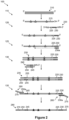
- FIG. 2 shows a graphical representation the steps of method 100 of Figure 1 .
- step 110 a blood sample is obtained and circulating cell-free DNA is isolated from the plasma fraction.
- step 115 a bisulfite conversion reaction is performed on a double-stranded DNA molecule 210 to form a bisulfite-converted single-stranded DNA molecule 215.
- Sodium bisulfite treatment converts an unmethylated cytosine in DNA molecule 210 into uracil (indicated by stars).
- an EZ DNA Methylation-Gold or an EZ DNA Methylation-Lightning kit is used for bisulfite conversion.
- step 115 the conversion of unmethylated cytosines to uracils is accomplished via an enzymatic reaction such as via incubation with cytidine deaminase.
- step 120 a first UMI adapter 220 that is adenylated at the 5'-end and blocked at the 3'-end is ligated to the 3'-OH ends of bisulfite-converted or enzymatically converted ssDNA molecule 215.
- the ssDNA ligation reaction uses Thermostable 5' DNA/RNA ligase (not shown) to ligate first UMI adapter 220 to the 3'-OH end of bisulfite-converted ssDNA molecule 215.
- second strand DNA is synthesized in an extension reaction.
- an extension primer 230a that is complementary to the SBS primer region 230 in first UMI adapter 220 is used in a primer extension reaction to form a double stranded complex 235.
- the extension reaction uses, for example, an enzyme that is able to read through uracil residues (indicated by white stars) in the bisulfite-converted template strand converting the uracil to adenine (indicated by gray stars).
- a second UMI adapter 240 is ligated to bisulfite-converted DNA complex 235.
- Second UMI adapter 240 is a double-stranded molecule that includes a second UMI region (e.g., a specific barcode sequence) and an SBS primer region 250, wherein one strand (the 3' to 5'strand, i.e., the "bottom” strand) of second UMI adapter 240 includes a 5'-phosphate and the other strand (the 5' to 3' strand, i.e., the "top” strand) includes a 3'-dideoxy nucleotide (i.e., the 3'-end is blocked). Second UMI adapter 240 is ligated to bisulfite-converted DNA complex 235 using, for example, T4 DNA ligase in a blunt-end ligation reaction.
- a second UMI region e.g., a specific barcode sequence
- step 135 bisulfite-converted DNA complex 235 is amplified to add sequencing adapters.
- an amplification reaction is performed using a forward primer 260 and a reverse primer 265.
- Forward primer 260 includes an SBS primer region 250a that is complementary to SBS primer region 250 and a P5 region 270.
- Reverse primer 265 includes an SBS region 230a that is complementary to SBS primer region 230 and a P7 region 275. Because of gap 255 in bisulfite-converted DNA complex 235, the "top" strand is not amplified during the PCR amplification step.
- a library amplicon 280 now includes P5 region 270, SBS primer region 250, second UMI 245, first UMI 225, SBS primer region 230, and P7 region 275.
- step 140 the bisulfite-converted amplicon library is sequenced.
- step 145 the sequencing data is analyzed to determine methylation sites. In one example, the methylation sites are determined by comparing the sequence data to a reference genome.
- Comparison of sequence information between the reference genome and bisulfite-treated DNA can provide information about methylation patterns (e.g., cell/tissue-specific methylation, differential hypomethylation and/or hypermethylation, allele-specific methylation, etc.) that can be used, for example, to infer the tissue of origin of the cfDNA or determine which molecules originate from tumor cells.
- methylation patterns e.g., cell/tissue-specific methylation, differential hypomethylation and/or hypermethylation, allele-specific methylation, etc.
- the second UMI adapter 240 is a Y-adapter, wherein the UMI sequence is included in the single-stranded portion of the Y-adapter.
- each strand of bisulfite-converted DNA complex 235 is labeled with a different UMI sequence and can be subsequently distinguished.
- methylation sites and patterns can be identified using a (+) bisulfite-converted library and a (-) bisulfite library prepared in parallel from aliquots of a single sample.
- the sample can be divided into one or more aliquots. In certain embodiments, the sample can be divided into 1, 2, 3, 4, 5, 6, 7, 8, 9, 10 or more aliquots. These aliquots can also be divided into replicates in certain cases duplicate, triplicate, or quadruplicate.
- a (+) bisulfite-converted library is prepared using a first aliquot of a cfDNA sample according to method 100 of Figure 1 using a plurality of first UMI adapters that include a UMI sequence, a universal (i.e., common) first barcode sequence, and a first universal primer sequence (e.g., a SBS primer sequence).
- the first universal barcode sequence is used to identify the library as a (+) bisulfite-converted library and the UMI sequences are used to identify individual DNA molecules.
- a second aliquot of the cfDNA is denatured a (-) bisulfite library is prepared according to steps 120 through 130 of method 100 of Figure 1 using a plurality of second UMI adapters that include a UMI sequence, a second universal (i.e., common) barcode sequence, and a universal primer sequence (e.g., a second SBS primer sequence).
- the second universal barcode sequence is used to identify the library as a (-) bisulfite library and the UMI sequences in the second UMI adapter are used to identify individual DNA molecules.
- the (+) bisulfite-converted and the (-) bisulfite libraries are pooled and amplified to add sequencing adapters. Comparison of sequencing data from the (+) bisulfite-converted library and the (-) bisulfite libraries prepared from a single sample in parallel are used to identify methylation sites and patterns.
- the methods solve existing problems plaguing sequencing of bisulfite treated libraries.
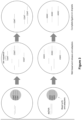
- One of the challenges with ssDNA library preparation is losing the duplex information, which means after melting the dsDNA, the top and bottom strand fragments will have different UMI sequences.
- the reaction is compartmentalized in droplets or other form, such as beads, and each droplet comprises the same UMI-adapter. Thus all fragments can receive the same UMI adapter. This is shown in Figure 3 .
- the UMI ssDNA library method is applicable to various library types such as methylation, whole-genome sequencing, and targeted deep sequencing.
- the UMI adapters are bound to beads that are contained in droplets.
- the beads can be made of a heat labile substance such that they can be melted to release the adapter ligated nucleic acids, allowing other steps to be performed in the droplets.
- the material can be labile at a temperature between 60° C and 95°C.
- the nucleic acids that have been subjected to bisulfite conversion or enzymatic conversion of unmethylated cytosines to uracils have their nucleic acid sequences determined. This sequence determination is for the purpose of determining one or more cytosines that were methylated in the nucleic acids of the biological sample.
- a methylation profile is determined.
- a methylation profile is the methylation status of a plurality of cytosines in the nucleic acids of a sample. For example, a methylation status is determined for 2, 3, 4, 5, 6, 7, 8, 9, 10, 50, 100, 500, 1000 or more distinct cytosines.
- a methylation profile can comprise the methylation status of cytosines associated with: entire genomic regions that encompass one or more genes, promoters or enhancer elements, genes that are normally maternally or paternally imprinted, CpG islands, or CpG shores.
- Sequence determination can encompass sequencing stretches of contiguous nucleic acids that are 10, 20, 30, 40, 50, 100, 150, or 300 bases in length or more. Sequence determination can also encompass the determination of distinct polymorphic markers such as single-nucleotide polymorphisms (SNPs), insertion/deletion mutations (indels), variable number tandem repeats (VNTRs), microsatellites, or minisatellites. Other disease associated genetic changes can be measured as well, such as copy number variation.
- the sequence can be determined using any sequencing method such as Sanger sequencing. Sequences can also be determined using a multiplex assay such as array or bead based hybridization, site specific or allele specific PCR. These methods allow the determination of 100; 1000; or 10,000 different markers simultaneously.
- the sequencing data can be analyzed in a number of ways.
- the addition of UMI adapters advantageously decreases the probability of error during methylation analysis.
- UMI adapters it possible to differentiate between differences in base composition that arise from natural polymorphism, amplification error, or bisulfite conversion. Sequences that have C>T could arise by many mechanisms, for example, this C to T change could be a result of a natural polymorphism that was inherited by the individual; this could be the result of a mutation introduced during amplification; or this could be an indication that the cytosine was methylated in the original starting material.
- each sequence comprises two different UMI sequences one that signifies whether the sequence arises from a nucleic acid that has been subjected to bisulfite conversion or not, and one that signifies a parent nucleic acid (prior to amplification), then it is possible to analyze the sequence for changes in base composition that arise from the amplification or from conversion reaction. If the C>T is primarily present in sequences of nucleic acids that have been treated with bisulfite, but absent from sequences of nucleic acids not treated by bisulfite, then this substitution is likely a result of the deamination of an unmethylated cytosine. Sequences can also be aligned to a reference genome or reference sample.
- tissue specific methylation patterns can be used to trace cfDNA to a tissue of origin.
- the tissue could be a tissue or specific cell-type such as the heart, liver, kidney, pancreas, colon, stomach, esophagus, skin, lungs, ovaries, breast, uterus, prostate, testicles, peripheral blood mononuclear cells, lymphocytes, T cell, B cells, or plasma cells.
- the methods of this disclosure are useful for diagnosis or screening of organ transplant or organ failure. They can be used to screen for heart, lung, kidney, liver, or pancreatic rejection after transplant from a donor. Increasing levels of DNA derived from a particular organ after transplant is indicative of organ failure or rejection. These methods can be performed on samples taken before and after receipt of an organ transplant. In certain embodiments, the methods can be used for surveillance post transplant. For example, these methods can be performed on samples taken longitudinally from a single transplant recipient at defined intervals. These methods are useful regardless of the gender, or genetic relationship of the donor to the recipient.
- the methods of the disclosure are useful for diagnosis or screening for cancer.
- the caner is liver cancer, hepatocellular carcinoma, melanoma, pancreatic cancer, lung cancer, kidney cancer, stomach cancer, esophageal cancer, colon cancer, breast cancer, ovarian cancer, cervical cancer, testicular cancer, prostate cancer, lymphoma, B cell lymphoma, diffuse large B-cell lymphoma, follicular lymphoma, mantle cell lymphoma, small lymphocytic lymphoma, splenic marginal zone B-cell lymphoma, extranodal marginal zone B-cell lymphoma of mucosa-associated lymphoid tissue, nodal marginal zone B-cell lymphoma, lymphoplasmacytic lymphoma, primary effusion lymphoma, Burkitt lymphoma/Burkitt cell leukemia, T cell lymphoma, anaplastic large cell lymphoma (primary cutaneous type), anaplastic large cell lymph lymph
- these methods are useful to gauge response to treatment. For example, these methods can be performed on samples taken at defined intervals longitudinally from a single patient receiving chemotherapy, radiation therapy, or immunotherapy. In a certain embodiment these method are useful for determining failure of a particular treatment, or relapse after successful treatment.
- the methods of this disclosure are useful in combination with other analyses. Methylation analysis can be combined with other analysis of cfDNA. For example, a methylation profile could be combined with quantitation of a particular cfDNA, such as a SNP or gene promoter to determine an increase relative to a threshold value or relative to a sample taken at a previous time. Methylation analysis can be combined with family history, genomic profiling, metabolic profiling, and other clinically useful tests such as biopsy, PET scan, or MRI.
Landscapes
- Chemical & Material Sciences (AREA)
- Life Sciences & Earth Sciences (AREA)
- Organic Chemistry (AREA)
- Proteomics, Peptides & Aminoacids (AREA)
- Health & Medical Sciences (AREA)
- Zoology (AREA)
- Wood Science & Technology (AREA)
- Engineering & Computer Science (AREA)
- Molecular Biology (AREA)
- Biochemistry (AREA)
- Biotechnology (AREA)
- Bioinformatics & Cheminformatics (AREA)
- Genetics & Genomics (AREA)
- General Health & Medical Sciences (AREA)
- Immunology (AREA)
- Microbiology (AREA)
- General Engineering & Computer Science (AREA)
- Analytical Chemistry (AREA)
- Biophysics (AREA)
- Physics & Mathematics (AREA)
- Chemical Kinetics & Catalysis (AREA)
- General Chemical & Material Sciences (AREA)
- Medicinal Chemistry (AREA)
- Measuring Or Testing Involving Enzymes Or Micro-Organisms (AREA)
Applications Claiming Priority (4)
| Application Number | Priority Date | Filing Date | Title |
|---|---|---|---|
| US201662373261P | 2016-08-10 | 2016-08-10 | |
| US201662397650P | 2016-09-21 | 2016-09-21 | |
| PCT/US2017/046280 WO2018031760A1 (fr) | 2016-08-10 | 2017-08-10 | Procédés de préparation de bibliothèques d'adn à double indexation pour le séquençage avec conversion au bisulfite |
| EP17840272.3A EP3497220A4 (fr) | 2016-08-10 | 2017-08-10 | Procédés de préparation de bibliothèques d'adn à double indexation pour le séquençage avec conversion au bisulfite |
Related Parent Applications (1)
| Application Number | Title | Priority Date | Filing Date |
|---|---|---|---|
| EP17840272.3A Division EP3497220A4 (fr) | 2016-08-10 | 2017-08-10 | Procédés de préparation de bibliothèques d'adn à double indexation pour le séquençage avec conversion au bisulfite |
Publications (2)
| Publication Number | Publication Date |
|---|---|
| EP4528275A2 true EP4528275A2 (fr) | 2025-03-26 |
| EP4528275A3 EP4528275A3 (fr) | 2025-05-14 |
Family
ID=61160180
Family Applications (2)
| Application Number | Title | Priority Date | Filing Date |
|---|---|---|---|
| EP17840272.3A Withdrawn EP3497220A4 (fr) | 2016-08-10 | 2017-08-10 | Procédés de préparation de bibliothèques d'adn à double indexation pour le séquençage avec conversion au bisulfite |
| EP25157424.0A Pending EP4528275A3 (fr) | 2016-08-10 | 2017-08-10 | Procédés de préparation de bibliothèques d'adn à double index pour le séquençage par conversion au bisulfite |
Family Applications Before (1)
| Application Number | Title | Priority Date | Filing Date |
|---|---|---|---|
| EP17840272.3A Withdrawn EP3497220A4 (fr) | 2016-08-10 | 2017-08-10 | Procédés de préparation de bibliothèques d'adn à double indexation pour le séquençage avec conversion au bisulfite |
Country Status (4)
| Country | Link |
|---|---|
| US (3) | US11566284B2 (fr) |
| EP (2) | EP3497220A4 (fr) |
| CN (2) | CN116445593A (fr) |
| WO (1) | WO2018031760A1 (fr) |
Families Citing this family (16)
| Publication number | Priority date | Publication date | Assignee | Title |
|---|---|---|---|---|
| WO2013123442A1 (fr) | 2012-02-17 | 2013-08-22 | Fred Hutchinson Cancer Research Center | Compositions et procédés permettant d'identifier de manière précise des mutations |
| EP4717780A2 (fr) * | 2016-07-22 | 2026-04-01 | Verily Life Sciences LLC | Protéomique quantitative massivement parallèle |
| US11566284B2 (en) | 2016-08-10 | 2023-01-31 | Grail, Llc | Methods of preparing dual-indexed DNA libraries for bisulfite conversion sequencing |
| WO2018183942A1 (fr) | 2017-03-31 | 2018-10-04 | Grail, Inc. | Préparation de banques améliorées et leur utilisation pour la correction d'erreurs basées sur le séquençage et/ou l'identification de variants |
| DE202019005627U1 (de) * | 2018-04-02 | 2021-05-31 | Grail, Inc. | Methylierungsmarker und gezielte Methylierungssondenpanels |
| US11039856B2 (en) | 2018-05-10 | 2021-06-22 | Verily Life Sciences Llc | Surgical laparoscopic ports for implanting medical systems |
| WO2020069350A1 (fr) | 2018-09-27 | 2020-04-02 | Grail, Inc. | Marqueurs de méthylation et panels de sondes de méthylation ciblées |
| WO2020160414A1 (fr) | 2019-01-31 | 2020-08-06 | Guardant Health, Inc. | Compositions et méthodes pour isoler de l'adn acellulaire |
| KR20220015367A (ko) * | 2019-05-31 | 2022-02-08 | 프리놈 홀딩스, 인크. | 메틸화된 핵산의 고심도 시퀀싱 방법 및 시스템 |
| AU2020345621A1 (en) * | 2019-09-09 | 2022-04-07 | University Of Utah Research Foundation | Targeted sequencing to detect and quantify low levels of methylated DNA |
| US11891653B2 (en) * | 2019-09-30 | 2024-02-06 | Guardant Health, Inc. | Compositions and methods for analyzing cell-free DNA in methylation partitioning assays |
| JP7569372B2 (ja) * | 2019-09-30 | 2024-10-17 | インテグレーティッド ディーエヌエイ テクノロジーズ インコーポレーティッド | デュアルインデックス付きメチル-seqライブラリーの調製方法 |
| CN112176419B (zh) * | 2019-10-16 | 2022-03-22 | 中国医学科学院肿瘤医院 | 一种检测ctDNA中肿瘤特异基因的变异和甲基化的方法 |
| EP4083231A1 (fr) | 2020-07-30 | 2022-11-02 | Cambridge Epigenetix Limited | Compositions et procédés d'analyse d'acides nucléiques |
| WO2022255944A2 (fr) * | 2021-06-02 | 2022-12-08 | Lucence Life Sciences Pte. Ltd. | Procédé de détection et de quantification d'adn méthylé |
| WO2026058704A1 (fr) * | 2024-09-10 | 2026-03-19 | 国立大学法人 東京大学 | Procédé de synthèse d'adn simple brin contenant des séquences de code-barres d'adn |
Citations (1)
| Publication number | Priority date | Publication date | Assignee | Title |
|---|---|---|---|---|
| US20130244237A1 (en) | 2012-03-15 | 2013-09-19 | New England Biolabs, Inc. | Methods and Compositions for Discrimination Between Cytosine and Modifications Thereof and for Methylome Analysis |
Family Cites Families (85)
| Publication number | Priority date | Publication date | Assignee | Title |
|---|---|---|---|---|
| US814001A (en) | 1905-03-06 | 1906-02-27 | Comb Utilities Company | Process of generating gas. |
| AU7486601A (en) | 2000-05-22 | 2001-12-03 | Univ Johns Hopkins | Methods for assaying gene imprinting and methylated cpg islands |
| IL154663A0 (en) | 2000-09-01 | 2003-09-17 | Epigenomics Ag | Method for determining the degree of methylation of defined cytosines in genomic dna in the sequence context 5'-cpg-3' |
| US6773897B2 (en) | 2000-09-29 | 2004-08-10 | The Johns Hopkins University School Of Medicine | Method of predicting the clinical response to chemotherapeutic treatment with alkylating agents |
| DE10112515B4 (de) | 2001-03-09 | 2004-02-12 | Epigenomics Ag | Verfahren zum Nachweis von Cytosin-Methylierungsmustern mit hoher Sensitivität |
| US20030009990A1 (en) | 2001-07-13 | 2003-01-16 | Main Timothy B. | Apparatus and method for automatic bag loading |
| DE10151069A1 (de) | 2001-10-05 | 2003-04-30 | Epigenomics Ag | Verfahren zum Nachweis von DNA-Methylierung mittels markierten S-Adenosylmethioninanaloga |
| DE10154317B4 (de) | 2001-10-26 | 2005-06-09 | Epigenomics Ag | Verfahren zum Nachweis von Cytosin-Methylierungen in immobilisierten DNA Proben |
| DK1342794T3 (da) | 2002-03-05 | 2006-04-24 | Epigenomics Ag | Fremgangsmåde og anordning til at bestemme vævsspecificitet af fritflydende DNA i legemsvæsker |
| EP1554407B1 (fr) | 2002-10-01 | 2009-07-29 | Epigenomics AG | Procede en vue du traitement de troubles de la proliferation de celllules mammaires |
| US8163488B2 (en) | 2003-06-23 | 2012-04-24 | Epigenomics Ag | Methods and nucleic acids for analysis of colon proliferative disorders |
| DE10331107B3 (de) | 2003-07-04 | 2004-12-02 | Epigenomics Ag | Verfahren zum Nachweis von Cytosin-Methylierungen in DNA mittels Cytidin-Deaminasen |
| CA2534629C (fr) | 2003-08-06 | 2016-01-19 | University Of Maryland Biotechnology Institute | Proteases du genie genetique pour purification par affinite et traitement des proteines de fusion |
| DE10338308B4 (de) | 2003-08-15 | 2006-10-19 | Epigenomics Ag | Verfahren zum Nachweis von Cytosin-Methylierungen in DNA |
| US8062849B2 (en) | 2003-10-28 | 2011-11-22 | The Johns Hopkins University | Quantitative multiplex methylation-specific PCR |
| ES2801379T3 (es) | 2003-12-01 | 2021-01-11 | Epigenomics Ag | Métodos y ácidos nucleicos para el análisis de la expresión génica asociada con el desarrollo de trastornos proliferativos de células de próstata |
| CA2549852A1 (fr) | 2003-12-11 | 2005-06-30 | Epigenomics Ag | Procede et acides nucleiques permettant un traitement ameliore des troubles proliferatifs des cellules mammaires |
| WO2005065321A2 (fr) | 2003-12-29 | 2005-07-21 | Nugen Technologies, Inc. | Methodes permettant d'analyser l'etat de methylation d'acides nucleiques et methodes permettant de fragmenter, de marquer et d'immobiliser des acides nucleiques |
| EP1568786A3 (fr) * | 2004-02-13 | 2007-08-29 | Affymetrix, Inc. (A US Entity) | Analyse de la méthylation utilisant des matrices d'acides nucléiques |
| WO2006002344A1 (fr) | 2004-06-23 | 2006-01-05 | Epigenomics Ag | Procedes et acides nucleiques permettant de detecter des metastases des troubles proliferatifs des cellules du colon |
| ES2787454T3 (es) | 2004-09-30 | 2020-10-16 | Epigenomics Ag | Método para proveer fragmentos de ADN derivados de una muestra archivada |
| WO2006040187A2 (fr) | 2004-10-11 | 2006-04-20 | Epigenomics Ag | Procede de protection differee dans des systemes d'amplification de l'adn en vue de l'analyse de methylation par un pre-traitement modifie d'acides nucleiques |
| US7932027B2 (en) | 2005-02-16 | 2011-04-26 | Epigenomics Ag | Method for determining the methylation pattern of a polynucleic acid |
| EA013634B1 (ru) | 2005-04-15 | 2010-06-30 | Эпиджиномикс Аг | Способы и нуклеиновые кислоты для анализов клеточных пролиферативных нарушений |
| JP2008545418A (ja) | 2005-05-27 | 2008-12-18 | ジョン ウェイン キャンサー インスティチュート | 癌の診断、予後診断、および治療のための遊離循環dnaの使用 |
| US10053735B2 (en) | 2005-09-21 | 2018-08-21 | Therawis Diagnostics Gmbh | Markers for the prediction of outcome of anthracycline treatment |
| WO2007039290A2 (fr) | 2005-10-03 | 2007-04-12 | Epigenomics Ag | Methodes et acides nucleiques pour l'analyse d'expression genique associee au pronostic de troubles de proliferation cellulaire |
| US8912129B2 (en) | 2005-11-17 | 2014-12-16 | Epigenomics Ag | Method for the determination of the DNA methylation level of a CPG position in identical cells within a tissue sample |
| US20070141582A1 (en) | 2005-12-15 | 2007-06-21 | Weiwei Li | Method and kit for detection of early cancer or pre-cancer using blood and body fluids |
| US9183349B2 (en) | 2005-12-16 | 2015-11-10 | Nextbio | Sequence-centric scientific information management |
| US8768629B2 (en) | 2009-02-11 | 2014-07-01 | Caris Mpi, Inc. | Molecular profiling of tumors |
| EP2049681B1 (fr) | 2006-07-21 | 2016-09-21 | Epigenomics AG | Procédés pour analyser des troubles de prolifération cellulaire |
| CA2660218A1 (fr) | 2006-08-08 | 2008-02-14 | Epigenomics Ag | Procede d'analyse par methylation d'acide nucleique |
| TWI335354B (en) | 2006-09-27 | 2011-01-01 | Univ Hong Kong Chinese | Methods for the detection of the degree of the methylation of a target dna and kits |
| EP3184649A1 (fr) | 2006-11-24 | 2017-06-28 | Epigenomics AG | Procédés et acides nucléiques pour l'analyse d'expression de gènes associés au développement des troubles de prolifération cellulaire de la prostate |
| US20090203011A1 (en) | 2007-01-19 | 2009-08-13 | Epigenomics Ag | Methods and nucleic acids for analyses of cell proliferative disorders |
| JP5378687B2 (ja) | 2007-03-02 | 2013-12-25 | エフ.ホフマン−ラ ロシュ アーゲー | Basp1遺伝子および/またはsrd5a2遺伝子中のメチル化シトシンを利用する、肝臓癌、肝臓癌発症リスク、肝臓癌再発リスク、肝臓癌悪性度および肝臓癌の経時的進展の検出方法 |
| US9290803B2 (en) | 2007-04-12 | 2016-03-22 | University Of Southern California | DNA methylation analysis by digital bisulfite genomic sequencing and digital methylight |
| WO2008135512A2 (fr) * | 2007-05-02 | 2008-11-13 | Jerzy Paszkowski | Procédé d'amplification de l'adn |
| US12180549B2 (en) | 2007-07-23 | 2024-12-31 | The Chinese University Of Hong Kong | Diagnosing fetal chromosomal aneuploidy using genomic sequencing |
| US8486634B2 (en) | 2007-11-06 | 2013-07-16 | Ambergen, Inc. | Amplifying bisulfite-treated template |
| ES2565053T3 (es) | 2007-11-23 | 2016-03-31 | Epigenomics Ag | Métodos y ácidos nucleicos para el análisis de metilación de CpG asociada con el desarrollo de trastornos proliferativos de células de próstata |
| EP2816122A1 (fr) | 2008-02-15 | 2014-12-24 | Mayo Foundation For Medical Education And Research | Détection de néoplasme d'un échantillon de selles |
| ES2606703T3 (es) | 2008-07-15 | 2017-03-27 | Epigenomics Ag | Método para predecir el pronóstico de una terapia de cáncer de mama con base en el análisis de metilación del gen |
| US8586310B2 (en) | 2008-09-05 | 2013-11-19 | Washington University | Method for multiplexed nucleic acid patch polymerase chain reaction |
| US9115386B2 (en) | 2008-09-26 | 2015-08-25 | Children's Medical Center Corporation | Selective oxidation of 5-methylcytosine by TET-family proteins |
| US20120149593A1 (en) | 2009-01-23 | 2012-06-14 | Hicks James B | Methods and arrays for profiling dna methylation |
| US20100273164A1 (en) | 2009-03-24 | 2010-10-28 | President And Fellows Of Harvard College | Targeted and Whole-Genome Technologies to Profile DNA Cytosine Methylation |
| EP2309005B1 (fr) | 2009-08-03 | 2015-03-04 | Epigenomics AG | Procédés pour la conservation de la complexité de la séquence d'ADN génomique |
| US20120208711A1 (en) | 2009-10-02 | 2012-08-16 | Centre For Addiction And Mental Health | Method for Analysis of DNA Methylation Profiles of Cell-Free Circulating DNA in Bodily Fluids |
| WO2012149171A1 (fr) | 2011-04-27 | 2012-11-01 | The Regents Of The University Of California | Conception de sondes cadenas pour effectuer un séquençage génomique ciblé |
| NO2729579T3 (fr) | 2011-07-08 | 2018-03-03 | ||
| RU2612902C2 (ru) | 2011-07-29 | 2017-03-13 | Кембридж Эпидженетикс Лимитед | Способы обнаружения модификации нуклеотидов |
| US9367663B2 (en) * | 2011-10-06 | 2016-06-14 | Sequenom, Inc. | Methods and processes for non-invasive assessment of genetic variations |
| US20140179564A1 (en) | 2012-11-01 | 2014-06-26 | Pacific Biosciences Of California, Inc. | Compositions and methods for selection of nucleic acids containing modified bases |
| US10081827B2 (en) | 2012-03-15 | 2018-09-25 | New England Biolabs, Inc. | Mapping cytosine modifications |
| US9267117B2 (en) | 2012-03-15 | 2016-02-23 | New England Biolabs, Inc. | Mapping cytosine modifications |
| PT2828218T (pt) * | 2012-03-20 | 2020-11-11 | Univ Washington Through Its Center For Commercialization | Métodos para baixar a taxa de erro da sequenciação paralela massiva de adn utilizando sequenciação duplex de consensus |
| US9920361B2 (en) * | 2012-05-21 | 2018-03-20 | Sequenom, Inc. | Methods and compositions for analyzing nucleic acid |
| US20150011396A1 (en) | 2012-07-09 | 2015-01-08 | Benjamin G. Schroeder | Methods for creating directional bisulfite-converted nucleic acid libraries for next generation sequencing |
| US9732390B2 (en) | 2012-09-20 | 2017-08-15 | The Chinese University Of Hong Kong | Non-invasive determination of methylome of fetus or tumor from plasma |
| CN104955960A (zh) | 2012-11-30 | 2015-09-30 | 剑桥表现遗传学有限公司 | 用于修饰的核苷酸的氧化剂 |
| WO2014116881A1 (fr) * | 2013-01-23 | 2014-07-31 | Reproductive Genetics And Technology Solutions, Llc | Compositions et procédés pour l'analyse génétique d'embryons |
| US20140274729A1 (en) * | 2013-03-15 | 2014-09-18 | Nugen Technologies, Inc. | Methods, compositions and kits for generation of stranded rna or dna libraries |
| CN104250663B (zh) | 2013-06-27 | 2017-09-15 | 北京大学 | 甲基化CpG岛的高通量测序检测方法 |
| US20150099670A1 (en) * | 2013-10-07 | 2015-04-09 | Weiwei Li | Method of preparing post-bisulfite conversion DNA library |
| DK3089822T3 (da) * | 2013-12-30 | 2022-05-02 | Atreca Inc | Analyse af nukleinsyrer associeret med enkelte celler under anvendelse af nukleinsyrestregkoder |
| US20160340740A1 (en) | 2014-01-30 | 2016-11-24 | The Regents Of The University Of California | Methylation haplotyping for non-invasive diagnosis (monod) |
| GB201403216D0 (en) * | 2014-02-24 | 2014-04-09 | Cambridge Epigenetix Ltd | Nucleic acid sample preparation |
| US9745614B2 (en) | 2014-02-28 | 2017-08-29 | Nugen Technologies, Inc. | Reduced representation bisulfite sequencing with diversity adaptors |
| EP2942400A1 (fr) | 2014-05-09 | 2015-11-11 | Lifecodexx AG | Détection multiplexe d'ADN qui provient d'un type cellulaire spécifique |
| TWI813141B (zh) | 2014-07-18 | 2023-08-21 | 香港中文大學 | Dna混合物中之組織甲基化模式分析 |
| GB201413318D0 (en) | 2014-07-28 | 2014-09-10 | Cambridge Epigenetix Ltd | Nucleic acid sample preparation |
| WO2016040602A1 (fr) * | 2014-09-11 | 2016-03-17 | Epicentre Technologies Corporation | Séquence au bisulfite à représentation réduite utilisant de l'uracile n-glycosylase (ung) et de l'endonucléase iv |
| RU2736728C2 (ru) * | 2014-10-17 | 2020-11-19 | Иллумина Кембридж Лимитед | Транспозиция с сохранением сцепления генов |
| GB201418621D0 (en) | 2014-10-20 | 2014-12-03 | Cambridge Epigenetix Ltd | Improved nucleic acid sample preparation using concatenation |
| GB201418718D0 (en) | 2014-10-21 | 2014-12-03 | Cambridge Epigenetix Ltd | Improved nucleic acid re-sequencing using a reduced number of identified bases |
| CA3183545C (fr) | 2014-12-12 | 2026-01-13 | Exact Sciences Corporation | Compositions et procedes pour effectuer des essais de detection de methylation |
| US20180143198A1 (en) | 2014-12-26 | 2018-05-24 | Peking University | Method for detecting differentially methylated cpg islands associated with abnormal state of human body |
| HUE058263T2 (hu) | 2015-02-10 | 2022-07-28 | Univ Hong Kong Chinese | Mutációk detektálása rákszûrési és magzatelemzési célból |
| US10023922B2 (en) * | 2015-03-23 | 2018-07-17 | Whitehead Institute For Biomedical Research | Reporter of genomic methylation and uses thereof |
| WO2016189288A1 (fr) | 2015-05-22 | 2016-12-01 | Cambridge Epigenetix Ltd | Enrichissement d'échantillons d'acide nucléique |
| EP3757229A1 (fr) | 2015-08-12 | 2020-12-30 | Circulogene Theranostics, LLC | Procédé de préparation de molécules d'acide nucléique sans cellules par amplification in situ |
| LT3368688T (lt) | 2015-10-30 | 2021-03-10 | New England Biolabs, Inc. | Kompozicijos ir būdai, skirti modifikuotų citozinų nustatymui sekvenavimu |
| US11566284B2 (en) | 2016-08-10 | 2023-01-31 | Grail, Llc | Methods of preparing dual-indexed DNA libraries for bisulfite conversion sequencing |
-
2017
- 2017-08-10 US US15/674,003 patent/US11566284B2/en active Active
- 2017-08-10 CN CN202310582280.0A patent/CN116445593A/zh active Pending
- 2017-08-10 EP EP17840272.3A patent/EP3497220A4/fr not_active Withdrawn
- 2017-08-10 EP EP25157424.0A patent/EP4528275A3/fr active Pending
- 2017-08-10 WO PCT/US2017/046280 patent/WO2018031760A1/fr not_active Ceased
- 2017-08-10 CN CN201780062340.9A patent/CN109804086B/zh active Active
-
2022
- 2022-12-20 US US18/084,955 patent/US12264364B2/en active Active
-
2025
- 2025-02-20 US US19/058,911 patent/US12509726B2/en active Active
Patent Citations (1)
| Publication number | Priority date | Publication date | Assignee | Title |
|---|---|---|---|---|
| US20130244237A1 (en) | 2012-03-15 | 2013-09-19 | New England Biolabs, Inc. | Methods and Compositions for Discrimination Between Cytosine and Modifications Thereof and for Methylome Analysis |
Also Published As
| Publication number | Publication date |
|---|---|
| US20250197935A1 (en) | 2025-06-19 |
| EP3497220A4 (fr) | 2020-04-01 |
| EP4528275A3 (fr) | 2025-05-14 |
| US11566284B2 (en) | 2023-01-31 |
| CN109804086A (zh) | 2019-05-24 |
| US12509726B2 (en) | 2025-12-30 |
| EP3497220A1 (fr) | 2019-06-19 |
| CN116445593A (zh) | 2023-07-18 |
| US12264364B2 (en) | 2025-04-01 |
| CN109804086B (zh) | 2023-06-13 |
| WO2018031760A1 (fr) | 2018-02-15 |
| US20230119938A1 (en) | 2023-04-20 |
| US20180044731A1 (en) | 2018-02-15 |
Similar Documents
| Publication | Publication Date | Title |
|---|---|---|
| US12509726B2 (en) | Methods of preparing dual-indexed DNA libraries for bisulfite conversion sequencing | |
| US10767220B2 (en) | Methods of amplifying nucleic acids and compositions for practicing the same | |
| US20230088159A1 (en) | Compositions and methods for assessing immune response | |
| EP2619327B1 (fr) | Niveau de confiance accru d'appels d'allèles par un comptage moléculaire | |
| US9394567B2 (en) | Detection and quantification of sample contamination in immune repertoire analysis | |
| US20220364169A1 (en) | Sequencing method for genomic rearrangement detection | |
| WO2022204685A1 (fr) | Procédés de séquençage de molécules d'acide nucléique à codes-barres séquentiels | |
| US20190390282A1 (en) | Target enrichment and sequencing of modified nucleic acids for human cancer detection | |
| US12195731B2 (en) | Methods and composition for targeted genomic analysis | |
| US20140295431A1 (en) | Method of allele-specific amplification | |
| WO2022140793A1 (fr) | Compositions et procédés de détection hautement sensible de séquences cibles dans des réactions multiplex | |
| CN113234838A (zh) | 高分辨率熔解曲线鉴定绵羊FecB基因型的引物对、产品和方法 | |
| EP4022092A1 (fr) | Compositions et procédés pour des dosages de précision en oncologie | |
| JP5530185B2 (ja) | 核酸検出方法及び核酸検出用キット | |
| US20210027859A1 (en) | Method, Apparatus and System to Detect Indels and Tandem Duplications Using Single Cell DNA Sequencing | |
| Lynn et al. | Molecular Diagnostic Methods | |
| KR20240150780A (ko) | 표적 핵산 포획 및 바코딩을 위한 시스템 및 방법 | |
| KR20250011954A (ko) | 종양학 검정을 위한 조성물 및 방법 |
Legal Events
| Date | Code | Title | Description |
|---|---|---|---|
| PUAI | Public reference made under article 153(3) epc to a published international application that has entered the european phase |
Free format text: ORIGINAL CODE: 0009012 |
|
| STAA | Information on the status of an ep patent application or granted ep patent |
Free format text: STATUS: THE APPLICATION HAS BEEN PUBLISHED |
|
| AC | Divisional application: reference to earlier application |
Ref document number: 3497220 Country of ref document: EP Kind code of ref document: P |
|
| AK | Designated contracting states |
Kind code of ref document: A2 Designated state(s): AL AT BE BG CH CY CZ DE DK EE ES FI FR GB GR HR HU IE IS IT LI LT LU LV MC MK MT NL NO PL PT RO RS SE SI SK SM TR |
|
| REG | Reference to a national code |
Ref country code: DE Ref legal event code: R079 Free format text: PREVIOUS MAIN CLASS: G01N0033530000 Ipc: C12N0015100000 |
|
| PUAL | Search report despatched |
Free format text: ORIGINAL CODE: 0009013 |
|
| AK | Designated contracting states |
Kind code of ref document: A3 Designated state(s): AL AT BE BG CH CY CZ DE DK EE ES FI FR GB GR HR HU IE IS IT LI LT LU LV MC MK MT NL NO PL PT RO RS SE SI SK SM TR |
|
| RIC1 | Information provided on ipc code assigned before grant |
Ipc: C40B 40/06 20060101ALI20250408BHEP Ipc: G01N 33/53 20060101ALI20250408BHEP Ipc: C12Q 1/6869 20180101ALI20250408BHEP Ipc: C12P 19/34 20060101ALI20250408BHEP Ipc: C12N 15/11 20060101ALI20250408BHEP Ipc: C12N 15/10 20060101AFI20250408BHEP |
|
| STAA | Information on the status of an ep patent application or granted ep patent |
Free format text: STATUS: REQUEST FOR EXAMINATION WAS MADE |
|
| 17P | Request for examination filed |
Effective date: 20251111 |
|
| STAA | Information on the status of an ep patent application or granted ep patent |
Free format text: STATUS: EXAMINATION IS IN PROGRESS |
|
| 17Q | First examination report despatched |
Effective date: 20260226 |