EP4528573A1 - Méthode de calcul du poids moléculaire d'un matériau biologique macromoléculaire sur la base d'un algorithme d'ia - Google Patents
Méthode de calcul du poids moléculaire d'un matériau biologique macromoléculaire sur la base d'un algorithme d'ia Download PDFInfo
- Publication number
- EP4528573A1 EP4528573A1 EP22859955.1A EP22859955A EP4528573A1 EP 4528573 A1 EP4528573 A1 EP 4528573A1 EP 22859955 A EP22859955 A EP 22859955A EP 4528573 A1 EP4528573 A1 EP 4528573A1
- Authority
- EP
- European Patent Office
- Prior art keywords
- molecular weight
- model
- biopolymer
- rouse
- algorithm
- Prior art date
- Legal status (The legal status is an assumption and is not a legal conclusion. Google has not performed a legal analysis and makes no representation as to the accuracy of the status listed.)
- Pending
Links
Images


Classifications
-
- G—PHYSICS
- G06—COMPUTING OR CALCULATING; COUNTING
- G06F—ELECTRIC DIGITAL DATA PROCESSING
- G06F30/00—Computer-aided design [CAD]
- G06F30/20—Design optimisation, verification or simulation
- G06F30/27—Design optimisation, verification or simulation using machine learning, e.g. artificial intelligence, neural networks, support vector machines [SVM] or training a model
-
- G—PHYSICS
- G16—INFORMATION AND COMMUNICATION TECHNOLOGY [ICT] SPECIALLY ADAPTED FOR SPECIFIC APPLICATION FIELDS
- G16C—COMPUTATIONAL CHEMISTRY; CHEMOINFORMATICS; COMPUTATIONAL MATERIALS SCIENCE
- G16C20/00—Chemoinformatics, i.e. ICT specially adapted for the handling of physicochemical or structural data of chemical particles, elements, compounds or mixtures
- G16C20/70—Machine learning, data mining or chemometrics
-
- G—PHYSICS
- G01—MEASURING; TESTING
- G01N—INVESTIGATING OR ANALYSING MATERIALS BY DETERMINING THEIR CHEMICAL OR PHYSICAL PROPERTIES
- G01N1/00—Sampling; Preparing specimens for investigation
- G01N1/28—Preparing specimens for investigation including physical details of (bio-)chemical methods covered elsewhere, e.g. G01N33/50, C12Q
- G01N1/40—Concentrating samples
- G01N1/4055—Concentrating samples by solubility techniques
-
- G—PHYSICS
- G01—MEASURING; TESTING
- G01N—INVESTIGATING OR ANALYSING MATERIALS BY DETERMINING THEIR CHEMICAL OR PHYSICAL PROPERTIES
- G01N11/00—Investigating flow properties of materials, e.g. viscosity, plasticity; Analysing materials by determining flow properties
-
- G—PHYSICS
- G01—MEASURING; TESTING
- G01N—INVESTIGATING OR ANALYSING MATERIALS BY DETERMINING THEIR CHEMICAL OR PHYSICAL PROPERTIES
- G01N11/00—Investigating flow properties of materials, e.g. viscosity, plasticity; Analysing materials by determining flow properties
- G01N11/10—Investigating flow properties of materials, e.g. viscosity, plasticity; Analysing materials by determining flow properties by moving a body within the material
- G01N11/14—Investigating flow properties of materials, e.g. viscosity, plasticity; Analysing materials by determining flow properties by moving a body within the material by using rotary bodies, e.g. vane
-
- G—PHYSICS
- G01—MEASURING; TESTING
- G01N—INVESTIGATING OR ANALYSING MATERIALS BY DETERMINING THEIR CHEMICAL OR PHYSICAL PROPERTIES
- G01N11/00—Investigating flow properties of materials, e.g. viscosity, plasticity; Analysing materials by determining flow properties
- G01N11/10—Investigating flow properties of materials, e.g. viscosity, plasticity; Analysing materials by determining flow properties by moving a body within the material
- G01N11/14—Investigating flow properties of materials, e.g. viscosity, plasticity; Analysing materials by determining flow properties by moving a body within the material by using rotary bodies, e.g. vane
- G01N11/142—Sample held between two members substantially perpendicular to axis of rotation, e.g. parallel plate viscometer
-
- G—PHYSICS
- G06—COMPUTING OR CALCULATING; COUNTING
- G06N—COMPUTING ARRANGEMENTS BASED ON SPECIFIC COMPUTATIONAL MODELS
- G06N3/00—Computing arrangements based on biological models
- G06N3/02—Neural networks
- G06N3/08—Learning methods
- G06N3/084—Backpropagation, e.g. using gradient descent
-
- G—PHYSICS
- G01—MEASURING; TESTING
- G01N—INVESTIGATING OR ANALYSING MATERIALS BY DETERMINING THEIR CHEMICAL OR PHYSICAL PROPERTIES
- G01N11/00—Investigating flow properties of materials, e.g. viscosity, plasticity; Analysing materials by determining flow properties
- G01N2011/0026—Investigating specific flow properties of non-Newtonian fluids
-
- G—PHYSICS
- G01—MEASURING; TESTING
- G01N—INVESTIGATING OR ANALYSING MATERIALS BY DETERMINING THEIR CHEMICAL OR PHYSICAL PROPERTIES
- G01N2203/00—Investigating strength properties of solid materials by application of mechanical stress
- G01N2203/0058—Kind of property studied
- G01N2203/0089—Biorheological properties
-
- G—PHYSICS
- G01—MEASURING; TESTING
- G01N—INVESTIGATING OR ANALYSING MATERIALS BY DETERMINING THEIR CHEMICAL OR PHYSICAL PROPERTIES
- G01N2203/00—Investigating strength properties of solid materials by application of mechanical stress
- G01N2203/02—Details not specific for a particular testing method
- G01N2203/0202—Control of the test
- G01N2203/0212—Theories, calculations
- G01N2203/0218—Calculations based on experimental data
-
- G—PHYSICS
- G16—INFORMATION AND COMMUNICATION TECHNOLOGY [ICT] SPECIALLY ADAPTED FOR SPECIFIC APPLICATION FIELDS
- G16B—BIOINFORMATICS, i.e. INFORMATION AND COMMUNICATION TECHNOLOGY [ICT] SPECIALLY ADAPTED FOR GENETIC OR PROTEIN-RELATED DATA PROCESSING IN COMPUTATIONAL MOLECULAR BIOLOGY
- G16B40/00—ICT specially adapted for biostatistics; ICT specially adapted for bioinformatics-related machine learning or data mining, e.g. knowledge discovery or pattern finding
-
- G—PHYSICS
- G16—INFORMATION AND COMMUNICATION TECHNOLOGY [ICT] SPECIALLY ADAPTED FOR SPECIFIC APPLICATION FIELDS
- G16C—COMPUTATIONAL CHEMISTRY; CHEMOINFORMATICS; COMPUTATIONAL MATERIALS SCIENCE
- G16C20/00—Chemoinformatics, i.e. ICT specially adapted for the handling of physicochemical or structural data of chemical particles, elements, compounds or mixtures
- G16C20/30—Prediction of properties of chemical compounds, compositions or mixtures
Definitions
- the present invention pertains to an artificial intelligence (AI) method for measuring the molecular weight of a biological macromolecular material, particularly to calculating the molecular weight of materials that are difficult to calculate by a rheological model.
- AI artificial intelligence
- This proposed method employs AI-based algorithm to execute a nonlinear fitting procedure for determining the molecular weight of biological materials.
- biomacromolecular materials such as silk fibroin, hyaluronic acid, collagen, recombinant collagen, and sericin. These materials are extensively utilized as crucial components in medical and cosmetic products.
- biomacromolecular substances are intimately related to their molecular weights, with biomacromolecular substances exhibiting distinct physiological functions depending on their varying molecular weights, and in certain instances, these functions can be entirely dissimilar or even contradictory.
- hyaluronic acid possessing a molecular weight exceeding 2000 kDa exhibits good moisturizing, viscoelastic, lubricating, and anti-inflammatory attributes, rendering it appropriate for use in ophthalmic surgeries and joint injections.
- hyaluronic acid which has a molecular weight spanning from 10 kDa to 80 kDa, can be ingested and absorbed through the intestines, providing benefits for beauty and improving skin health.
- the increase in molecular weight of silk protein results in a decrease in the swelling and light transmittance of the silk protein hydrogel.
- precise assessment of the molecular weight of polymer substances aids in optimizing the utilization of their characteristics.
- the present invention seeks to overcome the challenges associated with determining the molecular weight of current biopolymer materials, and to develop an AI algorithmic approach for computing the molecular weight of similar biopolymer substances.
- the present invention selects ionic liquids as good solvents for dissolving biomolecules by testing different solvent systems.
- Ionic liquids refer to ionic compounds in a liquid state, as well as those with melting points below a specific threshold.
- ionic liquid as a new type of green solvent has attracted the attention of countries all over the world. It possesses several advantageous traits, including high thermal stability, structural tunability, low vapor pressure, non-toxicity, and recyclability, which are beneficial for both environmental protection and the health of operators.
- Ionic liquids are not only widely used as solvents and reaction media for organic synthesis reactions, but also as green solvents for some natural macromolecules. In terms of dissolving biomolecular materials, ionic liquids also show excellent properties, such as filament protein molecules with unique structures can maintain a single-chain form within ionic liquids.
- the Rouse model has been identified as particularly fitting for determining the molecular weight of biological polymers.
- the correlation between the polymer's viscoelasticity data and the molecular weight function within the Rouse model is as indicated below:
- this invention employs an AI algorithm to manage the computation of extensive rheological datasets, enhancing both the timeliness and precision of the calculations. This advancement boosts the efficiency of researchers' work and fosters further innovation related to the calculation of the molecular weight of biomacromolecules.
- the invention is carried out through the following technical scheme:
- the method for calculating molecular weight of biomacromolecular materials based on AI algorithm includes the following steps:
- step S1 the specific method for sample preparation is:
- step S1 it is preferable to use 1-allyl-3-methylimidazole chloride ([AMIm]Cl) and 1-hexyl-3-methylimidazole bisulfate ([HMIm]HSO4).
- the tested biomacromolecular substances may encompass silk protein, hyaluronic acid, collagen, recombinant collagen, and sericin.
- the silk protein can be one of mulberry silk protein, spider silk protein, or tussah silk protein.
- the silk protein also referred to as silk fibroin, is derived from the cocoon with sericin removed.
- a concentration range of 0.1%-50% was tested, and an optimal concentration of 5-20% was identified for dissolution.
- freeze drying is the chosen method: the sample is subjected to freezing in liquid nitrogen to ensure the complete curing of the ionic liquid, followed by dehydration in the freeze dryer. The fully dried sample is then collected and sealed at room temperature.
- the detailed process for decompression dissolution involves: heating the silk protein ionic liquid blend crafted in step b under stirring, applying oil bath and vacuum via the oil pump to evaporate any residual moisture in the mixture and to remove bubbles, and continuing to heat the biopolymer until it is entirely dissolved.
- the blend of ionic liquids with silk fibroin, produced during step S1 (b), was warmed in an oil bath while maintaining a temperature range of 0-180 ° C with continuous stirring. Subsequently, it underwent distillation using an oil pump at a reduced pressure, varying the vacuum level between -0.01MPa and -0.5MPa, to eradicate any remaining trace water within the mixture and to remove air bubbles. This process continued until the biopolymer was fully dissolved. Once this was achieved, heating and stirring were ceased, and the solution was allowed to cool, resulting in a consistent and clear solution.
- the obtained biopolymer ionic liquid mixture is sealed and stored at room temperature in a dry environment until use.
- step S2 the specific method for testing the sample with a rheometer is as follows:
- Parallel splints are chosen and the test is protected by nitrogen purge of the temperature control hood.
- the linear dynamic elasticity examination is applied, maintaining the strain amplitude of the oscillating mode below 50% to guarantee that both the storage modulus and loss modulus remain linear across the frequency sweep span (ranging 1 ⁇ 10 2 rad/s to 30 ⁇ 10 -2 rad/s).
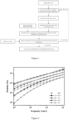
- the frequency sweep was conducted at specified temperatures, including 0 °C, 10 °C, 20 °C, and 30 °C, in order to obtain the curves of the energy storage modulus and loss modulus of the sample at different temperatures.
- the steady-state test experiment was conducted: the shear rate was systematically varied from low to high, spanning a range of 10 -5 to 10 5 s -1 .
- the viscosity values at the plateau curve were meticulously recorded.
- the AI model optimization algorithms include Gradient Descent, Conjugate Descent, Adam, AdamGrad, and RMSProp.
- step S4 the specific method for constructing the Rouse model to fit the biopolymer system is as follows:
- the error ⁇ changes with the size distribution of the polymers, and the objective function of equation (5) is optimized by using the AI algorithm described in step S3. Compare the error threshold of the actual ⁇ and the ⁇ th derived from AI algorithm calculation. For example, if it is ⁇ ⁇ ⁇ th , the normal distribution parameters M and ⁇ M 0 are optimized and updated by the AI algorithm, and the Rouse model is recalculated. If ⁇ ⁇ ⁇ th is used, the Rouse model can accurately describe the experimental results. It will complete this step and move on to the next step.
- the molecular weight is calculated using the Rouse model optimized by an AI algorithm, and the molecular weight-related data are the weight-averaged molecular weight, the number-averaged molecular weight and the molecular weight distribution.
- the optimized Rouse model obtained in step S4 is used to complete the calculation of the weight-average molecular weight M w , the number-average molecular weight M n and the molecular weight distribution ( M w / M n ), by using the molecular weight distribution of the simulated physical system N ( M opt , ⁇ M opt ).
- Parallel splints are chosen, and the test is protected by nitrogen purge of the temperature control hood.
- the linear dynamic elasticity test is adopted, that is, the strain amplitude of the oscillation mode is controlled below 50% to ensure that the storage modulus and loss modulus are linear in the frequency sweep range (1 ⁇ 10 2 rad/s ⁇ 30 ⁇ 10 -2 rad/s).
- Frequency sweeps were performed at the following temperatures (0 °C, 10 °C, 20 °C, and 30 °C) to obtain the storage modulus and loss modulus curves of the samples at different temperatures.
- Parallel splints are chosen, and the test is protected by nitrogen purge of the temperature control hood.
- the relaxation time ⁇ ip under mode p is calculated according to equation (3).
- the error ⁇ varies with the distribution of the polymer, and the objective function of equation (5) is optimized by using the AI algorithm described in step S3.
- ⁇ ⁇ ⁇ th means that the Rouse model at this time has been able to accurately describe the experimental results, complete this step and move on to the next step.
- step S5 Calculate molecular weight-related data using the Rouse model optimized by AI algorithm:
- the optimized Rouse model obtained in step S4 is used to simulate the molecular weight distribution N ( M opt , ⁇ M opt ). of the physical system to achieve a weight-average molecular weight M w of 266 kDa, a number-average molecular weight M n of 253 kDa, and a molecular weight distribution of 1.05.
- step S2 Rheological method test: Same as step S2 in example 1.
- step S3 modeling with a Rouse model: Same as step S3 in example 1.
- step S4 Establish a Rouse model to fit the biopolymer system: Same as step S4 in example 1.
- step S5 Calculate molecular weight-related data using the Rouse model optimized by AI algorithm:
- the optimized Ruse model obtained in step S4 is used to simulate the molecular weight distribution N ( M opt , ⁇ M opt ) of the physical system to achieve a weight-average molecular weight M w of 181 kDa, a number-average molecular weight M n of 97 kDa, and a molecular weight distribution of 1.87.
- step S2 Rheological method test: Same as step S2 in example 1.
- step S3 modeling with a rouse model: Same as step S3 in example 1.
- step S4 Establish a Rouse model to fit the biopolymer system: Same as step S4 in example 1.
- step S5 Calculate molecular weight-related data using the Rouse model optimized by AI algorithm:
- the optimized Rouse model obtained in step S4 is used to simulate the molecular weight distribution N ( M opt , ⁇ M opt ). of the physical system to achieve a weight-average molecular weight M w of 145 kDa, a number-average molecular weight M n of 71 kDa, and a molecular weight distribution of 2.05.
- step S2 Rheological method test: Same as step S2 in example 1.
- step S3 modeling with a rouse model: Same as step S3 in example 1.
- step S4 Establish a Rouse model to fit the biopolymer system: Same as step S4 in example 1.
- step S5 Molecular weight-related data are calculated using the Rouse model optimized by AI algorithm: The optimized Rouse model obtained in step S4 is used to simulate the molecular weight distribution N ( M opt , ⁇ M opt ). of the physical system to achieve a weight-average molecular weight M w of 115 kDa, a number-average molecular weight M n of 58 kDa, and a molecular weight distribution of 1.97.
Landscapes
- Engineering & Computer Science (AREA)
- Physics & Mathematics (AREA)
- Health & Medical Sciences (AREA)
- Life Sciences & Earth Sciences (AREA)
- Theoretical Computer Science (AREA)
- General Health & Medical Sciences (AREA)
- Evolutionary Computation (AREA)
- General Physics & Mathematics (AREA)
- Software Systems (AREA)
- Artificial Intelligence (AREA)
- Chemical & Material Sciences (AREA)
- Medical Informatics (AREA)
- Data Mining & Analysis (AREA)
- Computer Vision & Pattern Recognition (AREA)
- Analytical Chemistry (AREA)
- Biochemistry (AREA)
- Pathology (AREA)
- Immunology (AREA)
- Computing Systems (AREA)
- General Engineering & Computer Science (AREA)
- Bioinformatics & Computational Biology (AREA)
- Databases & Information Systems (AREA)
- Bioinformatics & Cheminformatics (AREA)
- Biophysics (AREA)
- Crystallography & Structural Chemistry (AREA)
- Computer Hardware Design (AREA)
- Molecular Biology (AREA)
- Computational Linguistics (AREA)
- Mathematical Physics (AREA)
- Biomedical Technology (AREA)
- Geometry (AREA)
- Epidemiology (AREA)
- Bioethics (AREA)
- Public Health (AREA)
- Biotechnology (AREA)
- Evolutionary Biology (AREA)
- Spectroscopy & Molecular Physics (AREA)
- Investigating Or Analysing Biological Materials (AREA)
- Management, Administration, Business Operations System, And Electronic Commerce (AREA)
- Peptides Or Proteins (AREA)
Applications Claiming Priority (1)
| Application Number | Priority Date | Filing Date | Title |
|---|---|---|---|
| PCT/CN2022/094288 WO2023024607A1 (fr) | 2022-05-20 | 2022-05-20 | Méthode de calcul du poids moléculaire d'un matériau biologique macromoléculaire sur la base d'un algorithme d'ia |
Publications (2)
| Publication Number | Publication Date |
|---|---|
| EP4528573A1 true EP4528573A1 (fr) | 2025-03-26 |
| EP4528573A4 EP4528573A4 (fr) | 2025-06-18 |
Family
ID=85322369
Family Applications (1)
| Application Number | Title | Priority Date | Filing Date |
|---|---|---|---|
| EP22859955.1A Pending EP4528573A4 (fr) | 2022-05-20 | 2022-05-20 | Méthode de calcul du poids moléculaire d'un matériau biologique macromoléculaire sur la base d'un algorithme d'ia |
Country Status (5)
| Country | Link |
|---|---|
| US (1) | US20250226062A1 (fr) |
| EP (1) | EP4528573A4 (fr) |
| KR (1) | KR20250023989A (fr) |
| CN (1) | CN119365865B (fr) |
| WO (1) | WO2023024607A1 (fr) |
Families Citing this family (2)
| Publication number | Priority date | Publication date | Assignee | Title |
|---|---|---|---|---|
| TW202540903A (zh) * | 2024-04-03 | 2025-10-16 | 美商陶氏全球科技公司 | 基於流變學之建模來識別線性聚合物之分子量分佈 |
| CN118924948B (zh) * | 2024-05-31 | 2025-03-14 | 复向丝泰医疗科技(苏州)有限公司 | 一种注射用丝蛋白复合羟基磷灰石微球填充剂及其制备方法 |
Family Cites Families (5)
| Publication number | Priority date | Publication date | Assignee | Title |
|---|---|---|---|---|
| EP2579036A1 (fr) * | 2011-10-06 | 2013-04-10 | Laboratorios Sanifit, S.L. | Procédé pour la détection directe et/ou la quantification d'au moins un composé avec un poids moléculaire supérieur ou égal à 200 |
| CN103234868B (zh) * | 2013-04-25 | 2015-04-22 | 常州大学 | 一种测量线性聚合物重均分子量的方法 |
| JP6575062B2 (ja) * | 2014-12-22 | 2019-09-18 | 住友ゴム工業株式会社 | 高分子材料のシミュレーション方法 |
| EP3440543A4 (fr) * | 2016-04-05 | 2019-08-28 | Deakin University | Systèmes et procédés de fabrication d'un produit |
| CN111310348A (zh) * | 2020-02-25 | 2020-06-19 | 江西理工大学 | 一种基于pso-lssvm的材料本构模型预测方法 |
-
2022
- 2022-05-20 EP EP22859955.1A patent/EP4528573A4/fr active Pending
- 2022-05-20 WO PCT/CN2022/094288 patent/WO2023024607A1/fr not_active Ceased
- 2022-05-20 US US18/875,765 patent/US20250226062A1/en active Pending
- 2022-05-20 CN CN202280097001.5A patent/CN119365865B/zh active Active
- 2022-05-20 KR KR1020247041818A patent/KR20250023989A/ko active Pending
Also Published As
| Publication number | Publication date |
|---|---|
| CN119365865A (zh) | 2025-01-24 |
| CN119365865B (zh) | 2025-07-04 |
| US20250226062A1 (en) | 2025-07-10 |
| KR20250023989A (ko) | 2025-02-18 |
| EP4528573A4 (fr) | 2025-06-18 |
| WO2023024607A1 (fr) | 2023-03-02 |
Similar Documents
| Publication | Publication Date | Title |
|---|---|---|
| Amorim et al. | Insights on shear rheology of inks for extrusion-based 3D bioprinting | |
| EP4528573A1 (fr) | Méthode de calcul du poids moléculaire d'un matériau biologique macromoléculaire sur la base d'un algorithme d'ia | |
| Bircher et al. | Tear resistance of soft collagenous tissues | |
| de Cagny et al. | Porosity governs normals stresses in polymer gels | |
| Avallone et al. | Gelation kinetics of aqueous gelatin solutions in isothermal conditions via rheological tools | |
| Ehret et al. | Inverse poroelasticity as a fundamental mechanism in biomechanics and mechanobiology | |
| De Wild et al. | Thermal memory in self-assembled collagen fibril networks | |
| Gosal et al. | Globular protein gelation | |
| Jones et al. | The spatial-temporal characteristics of type I collagen-based extracellular matrix | |
| Dahesh et al. | Spontaneous gelation of wheat gluten proteins in a food grade solvent | |
| Heris et al. | Indentation of poroviscoelastic vocal fold tissue using an atomic force microscope | |
| Kontogiorgos et al. | Influence of supramolecular forces on the linear viscoelasticity of gluten | |
| Rodríguez-López et al. | Network viscoelasticity from Brillouin spectroscopy | |
| Boyd-Moss et al. | Shining a light on the hidden structure of gelatin methacryloyl bioinks using small-angle X-ray scattering (SAXS) | |
| Palma et al. | Modeling calcium diffusion and crosslinking dynamics in a thermogelling Alginate-Gelatin-Hyaluronic acid ink: 3D bioprinting applications | |
| Mhaske et al. | Phase volume quantification of agarose-ghee gels using 3D confocal laser scanning microscopy and blending law analysis: A comparison | |
| Schuster et al. | Investigating the relationship between network mechanics and single-chain extension using biomimetic polysaccharide gels | |
| Pokusaev et al. | Study of hydrogel materials thermophysical properties | |
| Burger et al. | High-Pressure Effects on Gelatin Sol–Gel Transition | |
| Hou et al. | A non-destructive method using low-field nuclear magnetic resonance for characterizing the molecular weight of PBAT during thermo-oxidative degradation | |
| Benkherourou et al. | Quantification and macroscopic modeling of the nonlinear viscoelastic behavior of strained gels with varying fibrin concentrations | |
| Bailey et al. | Brillouin-derived viscoelastic parameters of hydrogel tissue models | |
| Sendrea et al. | Unilateral NMR and micro DSC study of artificially aged parchments | |
| Burger et al. | Dynamics and rheology of supramolecular assemblies at elevated pressures | |
| HK40115299B (zh) | 基於ai算法的生物大分子材料分子量的计算方法 |
Legal Events
| Date | Code | Title | Description |
|---|---|---|---|
| STAA | Information on the status of an ep patent application or granted ep patent |
Free format text: STATUS: THE INTERNATIONAL PUBLICATION HAS BEEN MADE |
|
| PUAI | Public reference made under article 153(3) epc to a published international application that has entered the european phase |
Free format text: ORIGINAL CODE: 0009012 |
|
| STAA | Information on the status of an ep patent application or granted ep patent |
Free format text: STATUS: REQUEST FOR EXAMINATION WAS MADE |
|
| 17P | Request for examination filed |
Effective date: 20241218 |
|
| AK | Designated contracting states |
Kind code of ref document: A1 Designated state(s): AL AT BE BG CH CY CZ DE DK EE ES FI FR GB GR HR HU IE IS IT LI LT LU LV MC MK MT NL NO PL PT RO RS SE SI SK SM TR |
|
| A4 | Supplementary search report drawn up and despatched |
Effective date: 20250519 |
|
| RIC1 | Information provided on ipc code assigned before grant |
Ipc: G06N 3/08 20230101ALI20250513BHEP Ipc: G16B 40/00 20190101ALI20250513BHEP Ipc: G01N 11/00 20060101ALI20250513BHEP Ipc: G01N 33/00 20060101ALI20250513BHEP Ipc: G01N 1/00 20060101ALI20250513BHEP Ipc: G06F 30/27 20200101AFI20250513BHEP |
|
| DAV | Request for validation of the european patent (deleted) | ||
| DAX | Request for extension of the european patent (deleted) | ||
| STAA | Information on the status of an ep patent application or granted ep patent |
Free format text: STATUS: EXAMINATION IS IN PROGRESS |
|
| 17Q | First examination report despatched |
Effective date: 20260302 |