EP4529033A1 - Verfahren zur übertragung von kanalinformationen, kommunikationsvorrichtung und kommunikationsvorrichtung - Google Patents
Verfahren zur übertragung von kanalinformationen, kommunikationsvorrichtung und kommunikationsvorrichtung Download PDFInfo
- Publication number
- EP4529033A1 EP4529033A1 EP23818968.2A EP23818968A EP4529033A1 EP 4529033 A1 EP4529033 A1 EP 4529033A1 EP 23818968 A EP23818968 A EP 23818968A EP 4529033 A1 EP4529033 A1 EP 4529033A1
- Authority
- EP
- European Patent Office
- Prior art keywords
- information
- channel
- energy
- processing
- processing parameter
- Prior art date
- Legal status (The legal status is an assumption and is not a legal conclusion. Google has not performed a legal analysis and makes no representation as to the accuracy of the status listed.)
- Pending
Links
Images

Classifications
-
- H—ELECTRICITY
- H04—ELECTRIC COMMUNICATION TECHNIQUE
- H04B—TRANSMISSION
- H04B7/00—Radio transmission systems, i.e. using radiation field
- H04B7/02—Diversity systems; Multi-antenna system, i.e. transmission or reception using multiple antennas
- H04B7/04—Diversity systems; Multi-antenna system, i.e. transmission or reception using multiple antennas using two or more spaced independent antennas
- H04B7/0413—MIMO systems
-
- H—ELECTRICITY
- H04—ELECTRIC COMMUNICATION TECHNIQUE
- H04L—TRANSMISSION OF DIGITAL INFORMATION, e.g. TELEGRAPHIC COMMUNICATION
- H04L25/00—Baseband systems
- H04L25/02—Details ; arrangements for supplying electrical power along data transmission lines
- H04L25/0202—Channel estimation
- H04L25/024—Channel estimation channel estimation algorithms
- H04L25/0254—Channel estimation channel estimation algorithms using neural network algorithms
-
- H—ELECTRICITY
- H04—ELECTRIC COMMUNICATION TECHNIQUE
- H04B—TRANSMISSION
- H04B7/00—Radio transmission systems, i.e. using radiation field
- H04B7/02—Diversity systems; Multi-antenna system, i.e. transmission or reception using multiple antennas
- H04B7/04—Diversity systems; Multi-antenna system, i.e. transmission or reception using multiple antennas using two or more spaced independent antennas
- H04B7/0413—MIMO systems
- H04B7/0417—Feedback systems
-
- H—ELECTRICITY
- H04—ELECTRIC COMMUNICATION TECHNIQUE
- H04B—TRANSMISSION
- H04B7/00—Radio transmission systems, i.e. using radiation field
- H04B7/02—Diversity systems; Multi-antenna system, i.e. transmission or reception using multiple antennas
- H04B7/04—Diversity systems; Multi-antenna system, i.e. transmission or reception using multiple antennas using two or more spaced independent antennas
- H04B7/06—Diversity systems; Multi-antenna system, i.e. transmission or reception using multiple antennas using two or more spaced independent antennas at the transmitting station
- H04B7/0613—Diversity systems; Multi-antenna system, i.e. transmission or reception using multiple antennas using two or more spaced independent antennas at the transmitting station using simultaneous transmission
- H04B7/0615—Diversity systems; Multi-antenna system, i.e. transmission or reception using multiple antennas using two or more spaced independent antennas at the transmitting station using simultaneous transmission of weighted versions of same signal
- H04B7/0619—Diversity systems; Multi-antenna system, i.e. transmission or reception using multiple antennas using two or more spaced independent antennas at the transmitting station using simultaneous transmission of weighted versions of same signal using feedback from receiving side
- H04B7/0621—Feedback content
- H04B7/0626—Channel coefficients, e.g. channel state information [CSI]
-
- H—ELECTRICITY
- H04—ELECTRIC COMMUNICATION TECHNIQUE
- H04L—TRANSMISSION OF DIGITAL INFORMATION, e.g. TELEGRAPHIC COMMUNICATION
- H04L25/00—Baseband systems
- H04L25/02—Details ; arrangements for supplying electrical power along data transmission lines
- H04L25/0202—Channel estimation
- H04L25/0224—Channel estimation using sounding signals
-
- H—ELECTRICITY
- H04—ELECTRIC COMMUNICATION TECHNIQUE
- H04W—WIRELESS COMMUNICATION NETWORKS
- H04W24/00—Supervisory, monitoring or testing arrangements
- H04W24/02—Arrangements for optimising operational condition
-
- H—ELECTRICITY
- H04—ELECTRIC COMMUNICATION TECHNIQUE
- H04W—WIRELESS COMMUNICATION NETWORKS
- H04W24/00—Supervisory, monitoring or testing arrangements
- H04W24/10—Scheduling measurement reports ; Arrangements for measurement reports
Definitions
- This application relates to the communication field, and more specifically, to a channel information transmission method, a communication apparatus, and a communication device.
- a multiple-input multiple-output (multiple-input multiple-output, MIMO) communication technology utilizes a multi-path characteristic of a channel to realize spatial multiplexing for a plurality of data streams that are transmitted in parallel.
- a network device may precode to-be-sent downlink data, so that data of different UE or data of different data streams of same UE is spatially isolated. This improves a downlink data transmission rate.
- the network device learns of a downlink channel state based on channel state information fed back by a terminal device, and determines precoding of the downlink data based on the channel state information.
- a terminal device learns of a downlink channel state based on channel state information fed back by a terminal device, and determines precoding of the downlink data based on the channel state information.
- how to feed back the channel state information in different environments with low overheads and high precision is an important research topic.
- Embodiments of this application provide a channel information transmission method, a communication apparatus, and a communication device, to improve channel information feedback efficiency.
- a channel information transmission method includes: A first apparatus sends first information to a second apparatus, where the first information indicates a sparsity characteristic of a channel between the first apparatus and the second apparatus; and the first apparatus receives second information from the second apparatus, where the second information indicates a first processing parameter, and the first processing parameter is for processing channel information.
- the first apparatus provides the second apparatus with the sparsity characteristic of the channel between two apparatuses, so that the second apparatus may determine, based on the sparsity characteristic of the channel, the corresponding processing parameter for processing the channel information by the first apparatus and notify the first apparatus of the processing parameter, so that after processing the channel information based on the first processing parameter, the first apparatus can obtain CSI bit overheads that match the sparsity characteristic of the channel, to improve feedback efficiency of the channel information.
- This implements proper allocation of a radio resource and improves resource utilization.
- the first processing parameter includes one or more of the following: a quantization parameter, an encoding/decoding parameter for compression, or a time-frequency resource parameter.
- a first apparatus sends first information to a second apparatus includes: The first apparatus receives third information from the second apparatus, where the third information indicates the first apparatus to feed back the sparsity characteristic of the channel; and the first apparatus sends the first information to the second apparatus.
- a second apparatus receives first information from a first apparatus includes: The second apparatus periodically receiving information that is from the first apparatus and that indicates the sparsity characteristic of the channel, where the first information is information received by the second apparatus in one period.
- the processing unit is further configured to obtain, through training, a plurality of encoding models corresponding to a plurality of processing parameters, where the plurality of processing parameters include the first processing parameter; and the processing unit is specifically configured to determine, based on the first processing parameter, the first encoding model corresponding to the first processing parameter from the plurality of encoding models.
- the first information includes a quantity N of paths, N is a positive integer, and a proportion of a sum of energy of at least N paths with strongest energy on the channel in total energy of the channel is greater than or equal to a target energy proportion.
- the transceiver unit is specifically configured to periodically receive information that is from the first apparatus and that indicates the sparsity characteristic of the channel, where the first information is information received by the second apparatus in one period.
- the transceiver unit is specifically configured to: send third information to the first apparatus, where the third information indicates the first apparatus to feed back the sparsity characteristic of the channel; and receive the first information from the first apparatus.
- the transceiver unit is further configured to receive channel state information from the first apparatus.
- the processing unit is further configured to process the channel state information based on the first processing parameter, to obtain the channel information.
- the processing unit is specifically configured to: determine a first decoding model based on the first processing parameter; and input the channel state information into the first decoding model, to obtain the channel information output by the first decoding model.
- the communication apparatus is a chip configured in a terminal device.
- the communication interface may be an input/output interface.
- the communication apparatus is a network device.
- the communication interface may be a transceiver or an input/output interface.
- the transceiver may be a transceiver circuit.
- the input/output interface may be an input/output circuit.
- a processor includes an input circuit, an output circuit, and a processing circuit.
- the processing circuit is configured to: receive a signal through the input circuit, and transmit a signal through the output circuit, to enable the processor to perform the method in any one of the first aspect or the second aspect and the possible implementations of the first aspect or the second aspect.
- the processor may be one or more chips
- the input circuit may be an input pin
- the output circuit may be an output pin
- the processing circuit may be a transistor, a gate circuit, a trigger, any logic circuit, or the like.
- An input signal received by the input circuit may be received and input by, for example, but not limited to, a receiver
- a signal output by the output circuit may be output to, for example, but not limited to, a transmitter and transmitted by the transmitter
- the input circuit and the output circuit may be a same circuit, where the circuit is used as the input circuit and the output circuit at different moments.
- Specific implementations of the processor and the various circuits are not limited in embodiments of this application.
- a computer program product includes a computer program (which may also be referred to as code or instructions).
- a computer program which may also be referred to as code or instructions.
- a computer-readable storage medium stores a computer program (which may also be referred to as code or instructions).
- the computer program When the computer program is run on a computer, the computer is enabled to perform the method according to any one of the first aspect or the second aspect and the possible implementations of the first aspect or the second aspect.
- a communication system includes the foregoing at least one first apparatus and at least one second apparatus.
- “at least one (item)” may be also described as “one (item) or more (items)", and "a plurality of (items)” may be two (items), three (items), four (items), or more (items).
- “/” may represent an "or” relationship between associated objects.
- A/B may represent A or B.
- "And/or” may indicate that there are three relationships between associated objects.
- a and/or B may represent the following three cases: Only A exists, both A and B exist, and only B exists, where A and B may be singular or plural.
- a word such as “first”, “second”, “A”, or “B” may be used to distinguish between technical features with a same or similar function.
- the word such as “first”, “second”, “A”, or “B” does not limit a quantity and an execution sequence.
- the word such as “first”, “second”, “A”, or “B” does not limit a definite difference.
- a word such as “example” or “for example” is used to represent an example, an evidence, or a description. Any design solution described as “example” or “for example” should not be explained as being more preferred or having more advantages than another design solution.
- a word, for example, “example” or “for example” is used to present a related concept in a specific manner for ease of understanding.
- the access network device is connected to the core network in a wireless or wired manner.
- a core network device and the access network device may be different physical devices that are independent, or may be a same physical device that integrates functions of the core network device and functions of the access network device.
- functions of the access network device and a part of functions of the core network device may be integrated into one physical device, and another physical device implements a remaining part of the functions of the core network device.
- Physical existence forms of the core network device and the access network device are not limited in this application.
- Access network devices may be connected to each other in the wired or wireless manner.
- FIG. 1 is merely a diagram.
- the access network device may be a module or unit that implements a part of functions of a base station, for example, may be a central unit (central unit, CU), a distributed unit (distributed unit, DU), a central unit-control plane (CU control plane, CU-CP) module, or a central unit-user plane (CU user plane, CU-UP) module.
- the access network device may be a macro base station (for example, 110a in FIG. 1 ), may be a micro base station or an indoor base station (for example, 110b in FIG. 1 ), or may be a relay node, a donor node, or the like.
- a specific technology and a specific device form that are used by the access network device are not limited in this application.
- a 5G system may also be referred to as a new radio (new radio, NR) system.
- An access network node in this application may be the access network device, or may be a module or unit configured in the access network device.
- the first apparatus performs singular value decomposition (singular value decomposition, SVD) on the co-correlation matrix Rt.
- singular value decomposition singular value decomposition, SVD
- the target energy proportion is 85%
- the first apparatus may determine, based on energy of paths, that a sum of energy proportions of at least three paths with strongest energy on the channel is greater than or equal to 85%.
- the first information sent by the first apparatus to the second apparatus indicates that the quantity of paths is 3.
- the second apparatus may determine that the sum of the energy proportions of at least three strongest paths on the channel is greater than or equal to 85%.
- the first apparatus may update statistical channel information in one period, determine an updated sparsity characteristic of the channel based on updated statistical channel information, and notify the second apparatus, so that the second apparatus may determine overheads of the CSI fed back by the first apparatus.
- a period in which the first apparatus notifies the second apparatus of the sparsity characteristic of the channel is greater than a period in which the first apparatus feeds back the CSI to the second apparatus.
- the first apparatus may aperiodically send, to the second apparatus, information that indicates the sparsity characteristic of the channel.
- the first apparatus receives third information from the second apparatus, where the third information indicates the first apparatus to feed back the sparsity characteristic of the channel.
- the first apparatus sends the first information to the second apparatus in response to the third information.
- the first information includes the quantity N of paths
- the target energy proportion may be notified by the second apparatus to the first apparatus.
- the second apparatus After the second apparatus indicates the updated target energy proportion to the first apparatus, for example, the second apparatus sends third information to the first apparatus, where the third information includes the updated target energy proportion.
- the first apparatus After receiving the third information, the first apparatus sends the first information to the second apparatus, where the quantity N, of paths, indicated by the first information indicates that a sum of energy proportions of at least N paths of the strongest path on the channel is greater than or equal to the updated target energy proportion.
- the CSI bit overheads of the first apparatus may be 60 bits, to determine a corresponding first processing parameter and notify the first apparatus, so that the first apparatus can feed back 60-bit CSI to the second apparatus after processing the channel information based on the first processing parameter.
- the second apparatus may obtain the CSI bit overheads and/or the processing parameter through inference by using an algorithm or an artificial intelligence model and based on the sparsity characteristic that is of the channel and that is indicated by the first information.
- the second apparatus may be a network device, and the first apparatus is a terminal device.
- the network device may further determine the CSI bit overheads of the terminal device by comprehensively considering a utilization status of a wireless network resource and a sparsity characteristic of a channel between the network device and the terminal device, to determine a first processing parameter. This comprehensively improves resource management performance of a wireless network. For example, two energy proportions fed back by the first terminal device are 0.85 and 0.1, two energy proportions fed back by the second terminal device are 0.95 and 0.01, and an energy proportion of a path with strongest energy of the second terminal device is 0.95.
- the network device may determine that a channel of the second terminal device is more sparse than a channel of the first terminal device.
- the network device may allocate less CSI bit overheads, for example, 48 bits, to the second terminal device.
- the network device may allocate 60-bit CSI bit overheads to the first terminal device, to improve channel information feedback precision of the first terminal device, so that restoration performance of the channel information is improved.
- this application is not limited thereto.
- the network device may determine the CSI bit overheads of the terminal device based on the spare characteristic, of the channel, fed back by the terminal device and a resource scheduling state of the wireless network, to determine the first processing parameter.
- the first information includes the quantity N of paths, and N is a positive integer, where the proportion of the sum of the energy of the at least N paths with strongest energy on the channel in the total energy of the channel is greater than or equal to the target energy proportion.
- the second apparatus may determine, based on a correspondence between a path quantity N and CSI bit overheads shown in Table 2, the bit overheads of the CSI fed back by the first apparatus, to determine a processing parameter of the channel information, so that the first apparatus obtains the CSI of the corresponding bit overheads after processing the channel information based on the processing parameter.
- the target energy proportion is 95%
- an energy proportion of a strongest path is greater than or equal to 95%
- the CSI bit overheads may be 48 bits.
- the CSI bit overheads may be 60 bits.
- the second apparatus may obtain the CSI bit overheads and/or the processing parameter through inference by using an algorithm or an artificial intelligence model and based on the sparsity characteristic that is of the channel and that is indicated by the first information.
- the second apparatus may be a network device, and the first apparatus is a terminal device.
- the network device may further determine the CSI bit overheads of the terminal device by comprehensively considering a utilization status of a wireless network resource and a sparsity characteristic of a channel between the network device and the terminal device, to determine a first processing parameter. This comprehensively improves resource management performance of a wireless network.
- the second apparatus sends second information to the first apparatus, where the second information indicates the first processing parameter.
- the first apparatus receives the second information from the second apparatus, and determines the first processing parameter based on the second information.
- the first apparatus processes the channel information based on the first processing parameter to obtain the channel state information, and feeds back the channel state information to the second apparatus.
- the first processing parameter includes the quantization encoding parameter
- the first apparatus performs quantization encoding on the channel information with channel encoding based on the quantization encoding parameter to obtain CSI that meets a bit overheads requirement of the second apparatus, and feeds back the CSI to the second apparatus.
- the first processing parameter includes the quantization encoding parameter and the time-frequency resource parameter.
- the first apparatus may determine, based on the time-frequency resource parameter, a time-frequency resource that carries the CSI. Then, the first apparatus performs channel encoding and quantization encoding on the channel information based on the bit overheads requirement of the second apparatus to obtain the CSI, maps the CSI to the time-frequency resource, and sends the CSI to the second apparatus.
- the first apparatus determines a first encoding model based on the first processing parameter. After inputting the channel information into the first encoding model, the first apparatus obtains the channel state information output by the first encoding model. The first apparatus sends the channel state information to the second apparatus.
- the first encoding model and the first decoding model are matching models.
- the first encoding model may be a compression encoding model, and correspondingly, the first decoding model is a decompression decoding model.
- the first encoding model may be a quantization encoding model, and correspondingly, the first decoding model is a dequantization decoding model.
- the first encoding model may be a compression and quantization encoding model, and correspondingly, the first decoding model is a decompression and dequantization decoding model.
- the first encoding model may be a channel encoding and quantization encoding model, and correspondingly, the first decoding model is a channel decoding and dequantization decoding model. This is not limited in this application, and a type of a model may be determined based on a corresponding function in specific implementation.
- the first encoding model is a compression and quantization encoding model
- the first apparatus determines, based on the first processing parameter from the second apparatus, to process the channel information by using a first compression and quantization encoding model corresponding to the first processing parameter.
- the first apparatus inputs the channel information with channel encoding into the first compression and quantization encoding model to obtain CSI output by the first compression and quantization encoding model.
- the CSI has been compressed and quantized by the first compression and quantization encoding model, and can meet the bit overheads requirement of the second apparatus.
- the second apparatus determines, based on the first processing parameter, to use a first decompression and dequantization model corresponding to the first processing parameter.
- the second apparatus inputs the received CSI into the first decompression and dequantization decoding model, to obtain dequantized and decompressed CSI, and then performs channel decoding to obtain restored channel information.
- the first encoding model is a channel encoding and quantization encoding model
- the first apparatus determines, based on the first processing parameter from the second apparatus, to process the channel information by using a first channel encoding and quantization encoding model corresponding to the first processing parameter.
- the first apparatus may input the channel information into the first channel encoding and quantization encoding model to obtain CSI output by the first apparatus.
- the CSI has been channel encoded and quantized by the first channel encoding and quantization encoding model, so that the bit overheads requirement of the second apparatus can be met.
- the second apparatus determines, based on the first processing parameter, to use a first channel decoding and dequantization decoding model corresponding to the first processing parameter, and the second apparatus inputs the received CSI into the first channel decoding and dequantization decoding model, to obtain channel information restored through dequantization and channel decoding.
- the first apparatus can obtain, based on the first encoding model determined based on the first processing parameter, the CSI that meets the bit overheads requirement of the second apparatus, and the second apparatus can perform decoding and restoring based on the corresponding first decoding model, to obtain the restored channel information.
- Specific processing functions that can be implemented by the first encoding model and the first decoding model are not limited in embodiments of this application.
- the first apparatus stores a plurality of encoding models corresponding to a plurality of processing parameters, and the plurality of processing parameters include the first processing parameter.
- the first apparatus determines, from the plurality of encoding models based on the first processing parameter, the first encoding model corresponding to the first processing parameter.
- the plurality of encoding models corresponding to the plurality of processing parameters are preconfigured in the first apparatus.
- the plurality of decoding models corresponding to the plurality of processing parameters are preconfigured in the second apparatus.
- the second apparatus obtains, through training, the plurality of decoding models corresponding to the plurality of processing parameters, where the plurality of processing parameters include the first processing parameter.
- the first apparatus and the second apparatus may perform joint model training.
- the first apparatus trains the encoding models
- the second apparatus trains the decoding models.
- the first apparatus obtains the plurality of encoding models corresponding to the plurality of processing parameters
- the second apparatus obtains the plurality of decoding models corresponding to the plurality of processing parameters.
- the plurality of decoding models may be a plurality of models with a same model structure and different model parameters, and the plurality of processing parameters specifically correspond to different model parameters of the model structure.
- the plurality of decoding models may include decoding models with different model structures. This is not limited in this application.
- the first apparatus provides the second apparatus with the sparsity characteristic of the channel between two apparatuses, so that the second apparatus may determine, based on the sparsity characteristic of the channel, the corresponding processing parameter for processing the channel information by the first apparatus and notify the first apparatus of the processing parameter, so that after processing the channel information based on the first processing parameter, the first apparatus can obtain the CSI bit overheads that match the sparsity characteristic of the channel, to improve feedback efficiency of the channel information.
- This implements proper allocation of a radio resource and improves resource utilization.
- the channel information may be the original channel data. Dimensions of the channel information are related to a quantity Ntx of transmit antennas, a quantity Nrx of receive antennas, and a quantity Nsub of frequency domain units.
- the channel information may be represented as a 3-dimensional matrix, and the 3 dimensions respectively correspond to Ntx, Nrx, and Nsub.
- different rows of the 3-dimensional matrix are channel information corresponding to different transmit antennas
- different columns are channel information corresponding to different receive antennas
- different layers are channel information corresponding to different quantities of frequency domain units.
- the first apparatus may obtain an eigenvector of each frequency domain unit through preprocessing, combine eigenvectors of all frequency domain units to obtain a 2-dimensional channel information matrix whose dimensions are [Ntx, Nsub], [Nsub, Ntx], or [Ntx ⁇ Nsub, 1], then obtain the sparsity characteristic of the channel based on the 2-dimensional channel information matrix, and notify the second apparatus of the sparsity characteristic of the channel via the first information.
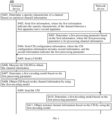
- the network device receives the first information from the terminal device, and determines the sparsity characteristic of the channel based on the first information.
- the first information may include P energy proportions, and the P energy proportions are respective proportions of energy of P paths with strongest energy on the channel in total energy of the channel.
- the first information may include a quantity N of paths, where a proportion of a sum of energy of at least N paths with strongest energy on the channel in total energy of the channel is greater than or equal to a target energy proportion.
- the network device determines a first processing parameter based on the first information, where the first processing parameter is for processing channel information.
- the first processing parameter includes one or more of a quantization encoding parameter, an encoding/decoding parameter for compression, or a time-frequency resource parameter.
- the network device sends a CSI-RS to the terminal device.
- the terminal device receives the CSI-RS from the network device.
- the terminal device may receive, based on the CSI configuration information, the CSI-RS that is for measuring the channel information and that is indicated by the CSI configuration information.
- the terminal device measures the CSI-RS to obtain the channel information.
- the channel information obtained by the terminal device through measurement based on the CSI-RS is real-time channel information, and the terminal device feeds back the channel information obtained through real-time measurement to the network device, so that the network device determines precoding of to-be-sent data based on the real-time channel information.
- the statistical channel information used by the terminal device to determine the sparsity characteristic of the channel in S401 may be a statistical result of channel information obtained by measuring the CSI-RS for a plurality of times. This improves accuracy of the obtained sparsity characteristic of the channel.
- the terminal device may also determine the sparsity characteristic of the channel based on the real-time channel information.
- the terminal device determines a first encoding model based on the first processing parameter.
- the first encoding model may be obtained by the terminal device through training based on training data.
- the terminal device may train a plurality of encoding models corresponding to a plurality of first processing parameters, and determine the corresponding first encoding model based on the first processing parameter.
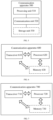
- FIG. 5 is a schematic block diagram of a communication apparatus according to an embodiment of this application.
- the communication apparatus 500 may include a transceiver unit 520.
- the communication apparatus 500 may correspond to the first apparatus in the foregoing method embodiments.
- the communication apparatus 500 may be a terminal device, or may be a chip configured in (or used in) the terminal device.
- the communication apparatus 500 may include a unit configured to perform the method performed by the first apparatus in the foregoing method embodiments.
- the units in the communication apparatus 500 and the foregoing other operations and/or functions are respectively for corresponding procedures in the foregoing method embodiments.
- the communication apparatus 500 may further include a processing unit 510.
- the processing unit 510 may be configured to process instructions or data, to implement a corresponding operation.
- the communication apparatus 500 may further include a storage unit 530.
- the storage unit 530 may be configured to store instructions or data.
- the processing unit 510 may execute the instructions or the data stored in the storage unit, so that the communication apparatus implements a corresponding operation.
- the communication apparatus 500 may correspond to the second apparatus in the foregoing method embodiments.
- the communication apparatus 500 may be a network device, or a chip configured in (or used in) the network device.
- the communication apparatus 500 may include a unit configured to perform the method performed by the second apparatus in the foregoing method embodiments.
- the units in the communication apparatus 500 and the foregoing other operations and/or functions are respectively for corresponding procedures in the foregoing method embodiments.
- the communication apparatus 500 may further include a processing unit 510.
- the processing unit 510 may be configured to process instructions or data, to implement a corresponding operation.
- the transceiver unit 520 in the communication apparatus 500 may be an input/output interface or a circuit of the chip, and the processing unit 510 in the communication apparatus 500 may be a processor in the chip.
- the communication apparatus 500 may further include a storage unit 530.
- the storage unit 530 may be configured to store instructions or data.
- the processing unit 510 may execute the instructions or the data stored in the storage unit, so that the communication apparatus implements a corresponding operation.
- the terminal device 600 may further include a power supply, configured to supply power to various components or circuits in the terminal device.
- FIG. 7 is a diagram of a structure of a network device according to an embodiment of this application.
- the network device 700 may be used in the system shown in FIG. 1 , to implement a function of the second apparatus in the foregoing method embodiments.
- the network device 700 includes a processor 720 and a transceiver 710.
- the network device 700 further includes a memory 730.
- the processor 720, the transceiver 710, and the memory 730 may communicate with each other via an internal connection path, to transfer a control signal and/or a data signal.
- the memory 730 is configured to store a computer program
- the processor 720 is configured to execute the computer program in the memory 730, to control the transceiver 710 to receive and send the signal.
- the network device 700 shown in FIG. 7 may be an eNB or a gNB.
- the network device includes a network device of a central unit (central unit, CU), a distributed unit (distributed unit, DU), an active antenna unit (active antenna unit, AAU), and the like.
- a specific architecture of the network device is not limited in this application.
- a processor and a memory in each of the terminal device 600 and the network device 700 may be combined into one processing apparatus.
- the processor is configured to execute program code stored in the memory to implement the foregoing functions.
- the memory may alternatively be integrated into the processor, or may be independent of the processor.
- the processor may correspond to the processing unit in FIG. 5 .
- the transceiver may correspond to the transceiver unit in FIG. 5 .
- the transceiver may include a receiver (or referred to as a receiver machine or a receiver circuit) and a transmitter (or referred to as a transmitter machine or a transmitter circuit). The receiver is configured to receive a signal, and the transmitter is configured to transmit a signal.
- An embodiment of this application further provides a processing apparatus, including a processor and a (communication) interface.
- the processor is configured to perform the method according to any one of the foregoing method embodiments.
- the processing apparatus may be one or more chips.
- the processing apparatus may be a field programmable gate array (field programmable gate array, FPGA), an application-specific integrated chip (application-specific integrated circuit, ASIC), a system-on-a-chip (system-on-a-chip, SoC), a central processing unit (central processing unit, CPU), a network processor (network processor, NP), a digital signal processor (digital signal processor, DSP), a micro controller unit (micro controller unit, MCU), a programmable logic device (programmable logic device, PLD), or another integrated chip.
- field programmable gate array field programmable gate array
- ASIC application-specific integrated circuit
- SoC system-on-a-chip
- CPU central processing unit
- network processor network processor
- DSP digital signal processor
- micro controller unit micro controller unit
- MCU programmable logic device
- PLD programmable logic device
- this application further provides a computer program product.
- the computer program product includes computer program code.
- an apparatus including the processor is enabled to perform the method in any one of the foregoing method embodiments.
- the technical solutions provided in embodiments of this application may be fully or partially implemented through software, hardware, firmware, or any combination thereof.
- the software is used to implement embodiments, all or some of embodiments may be implemented in a form of a computer program product.
- the computer program product includes one or more computer instructions.
- the computer may be a general-purpose computer, a dedicated computer, a computer network, a network device, a terminal device, a core network device, a machine learning device, or another programmable apparatus.
- the computer instructions may be stored in a computer-readable storage medium or may be transmitted from a computer-readable storage medium to another computer-readable storage medium.
- the computer instructions may be transmitted from a website, computer, server, or data center to another website, computer, server, or data center in a wired (for example, a coaxial cable, an optical fiber, or a digital subscriber line (digital subscriber line, DSL)) or wireless (for example, infrared, radio, or microwave) manner.
- the computer-readable storage medium may be any usable medium accessible by a computer, or a data storage device, such as a server or a data center, integrating one or more usable media.
- the usable medium may be a magnetic medium (for example, a floppy disk, a hard disk drive, or a magnetic tape), an optical medium (for example, a digital video disc (digital video disc, DVD)), a semiconductor medium, or the like.
- this application further provides a system, including at least one first apparatus and at least one second apparatus.
- the units described as separate parts may or may not be physically separate, and parts displayed as units may or may not be physical units, may be located in one position, or may be distributed on a plurality of network units. Some or all of the units may be selected based on actual requirements to achieve the objectives of the solutions of embodiments.
Landscapes
- Engineering & Computer Science (AREA)
- Computer Networks & Wireless Communication (AREA)
- Signal Processing (AREA)
- Power Engineering (AREA)
- Artificial Intelligence (AREA)
- Evolutionary Computation (AREA)
- Mobile Radio Communication Systems (AREA)
Applications Claiming Priority (2)
| Application Number | Priority Date | Filing Date | Title |
|---|---|---|---|
| CN202210655463.6A CN117254836A (zh) | 2022-06-10 | 2022-06-10 | 信道信息的传输方法、通信装置及通信设备 |
| PCT/CN2023/096920 WO2023236803A1 (zh) | 2022-06-10 | 2023-05-29 | 信道信息的传输方法、通信装置及通信设备 |
Publications (2)
| Publication Number | Publication Date |
|---|---|
| EP4529033A1 true EP4529033A1 (de) | 2025-03-26 |
| EP4529033A4 EP4529033A4 (de) | 2025-09-03 |
Family
ID=89117635
Family Applications (1)
| Application Number | Title | Priority Date | Filing Date |
|---|---|---|---|
| EP23818968.2A Pending EP4529033A4 (de) | 2022-06-10 | 2023-05-29 | Verfahren zur übertragung von kanalinformationen, kommunikationsvorrichtung und kommunikationsvorrichtung |
Country Status (4)
| Country | Link |
|---|---|
| US (1) | US20250105882A1 (de) |
| EP (1) | EP4529033A4 (de) |
| CN (1) | CN117254836A (de) |
| WO (1) | WO2023236803A1 (de) |
Families Citing this family (1)
| Publication number | Priority date | Publication date | Assignee | Title |
|---|---|---|---|---|
| CN121367510A (zh) * | 2024-07-19 | 2026-01-20 | 华为技术有限公司 | 一种通信方法、设备、程序产品及存储介质 |
Family Cites Families (7)
| Publication number | Priority date | Publication date | Assignee | Title |
|---|---|---|---|---|
| CN103997397B (zh) * | 2014-04-30 | 2019-10-01 | 北京邮电大学 | 空域非均匀导频设计方法 |
| CN105763234B (zh) * | 2016-02-25 | 2018-08-21 | 东南大学 | 毫米波mimo时域有限信道状态信息反馈方法及装置 |
| WO2020047774A1 (zh) * | 2018-09-05 | 2020-03-12 | 华为技术有限公司 | 信道信息处理方法和装置 |
| US11569961B2 (en) * | 2019-08-30 | 2023-01-31 | Huawei Technologies Co., Ltd. | Reference signaling overhead reduction apparatus and methods |
| US11258565B2 (en) * | 2019-08-30 | 2022-02-22 | Huawei Technologies Co., Ltd. | Sparse reference signal-related signaling apparatus and methods |
| WO2021046783A1 (en) * | 2019-09-11 | 2021-03-18 | Nokia Shanghai Bell Co., Ltd. | Channel state information feedback |
| WO2022099671A1 (en) * | 2020-11-16 | 2022-05-19 | Qualcomm Incorporated | Indicating channel state information reference signal pattern for sparse channel estimation |
-
2022
- 2022-06-10 CN CN202210655463.6A patent/CN117254836A/zh active Pending
-
2023
- 2023-05-29 WO PCT/CN2023/096920 patent/WO2023236803A1/zh not_active Ceased
- 2023-05-29 EP EP23818968.2A patent/EP4529033A4/de active Pending
-
2024
- 2024-12-09 US US18/973,514 patent/US20250105882A1/en active Pending
Also Published As
| Publication number | Publication date |
|---|---|
| US20250105882A1 (en) | 2025-03-27 |
| WO2023236803A1 (zh) | 2023-12-14 |
| CN117254836A (zh) | 2023-12-19 |
| EP4529033A4 (de) | 2025-09-03 |
Similar Documents
| Publication | Publication Date | Title |
|---|---|---|
| US20240137082A1 (en) | Communication method and apparatus | |
| US20240356595A1 (en) | Uplink precoding method and apparatus | |
| WO2024094177A1 (zh) | 信道状态信息确定方法、装置及可读存储介质 | |
| US20250081205A1 (en) | Communication method and apparatus | |
| US20250141525A1 (en) | Communication method and apparatus | |
| US20250211311A1 (en) | Beam management method | |
| CN116996189A (zh) | 通信方法及装置、芯片、芯片模组、存储介质 | |
| WO2023279947A1 (zh) | 一种通信方法及装置 | |
| WO2023115254A1 (zh) | 处理数据的方法及装置 | |
| US20250105882A1 (en) | Channel information transmission method, communication apparatus, and communication device | |
| EP4645728A1 (de) | Kommunikationsverfahren und zugehörige vorrichtung | |
| KR20250055594A (ko) | 통신 방법 및 장치 | |
| US20250202560A1 (en) | Communication method and apparatus | |
| US20240356615A1 (en) | Channel state information feedback method and apparatus, medium, and program product | |
| WO2025107651A1 (zh) | 信道状态信息报告的发送方法、接收方法及装置 | |
| US20250358642A1 (en) | Channel information transmission method and apparatus | |
| US20250088258A1 (en) | Model application method and apparatus | |
| WO2026085761A1 (en) | Channel prediction in wireless communication systems | |
| US20250324312A1 (en) | Communication method and apparatus, readable storage medium, and chip system | |
| CN119995652A (zh) | 信道信息获取方法、装置、系统、芯片模组及存储介质 | |
| WO2024027011A1 (zh) | 系数指示方法及其装置 | |
| WO2025113135A1 (zh) | 信道状态信息上报方法、通信装置及通信系统 | |
| KR20250124625A (ko) | 무선 통신 시스템에서 프리코딩 매트릭스를 전달하는 방법 및 장치 | |
| WO2025066754A1 (zh) | 信道状态信息反馈方法及相关产品 | |
| CN120223133A (zh) | 信道状态信息上报方法及相关产品 |
Legal Events
| Date | Code | Title | Description |
|---|---|---|---|
| STAA | Information on the status of an ep patent application or granted ep patent |
Free format text: STATUS: THE INTERNATIONAL PUBLICATION HAS BEEN MADE |
|
| PUAI | Public reference made under article 153(3) epc to a published international application that has entered the european phase |
Free format text: ORIGINAL CODE: 0009012 |
|
| STAA | Information on the status of an ep patent application or granted ep patent |
Free format text: STATUS: REQUEST FOR EXAMINATION WAS MADE |
|
| 17P | Request for examination filed |
Effective date: 20241218 |
|
| AK | Designated contracting states |
Kind code of ref document: A1 Designated state(s): AL AT BE BG CH CY CZ DE DK EE ES FI FR GB GR HR HU IE IS IT LI LT LU LV MC ME MK MT NL NO PL PT RO RS SE SI SK SM TR |
|
| A4 | Supplementary search report drawn up and despatched |
Effective date: 20250805 |
|
| RIC1 | Information provided on ipc code assigned before grant |
Ipc: H04B 7/0413 20170101AFI20250730BHEP Ipc: H04W 24/02 20090101ALI20250730BHEP Ipc: H04L 25/02 20060101ALI20250730BHEP Ipc: H04B 7/06 20060101ALN20250730BHEP |
|
| DAV | Request for validation of the european patent (deleted) | ||
| DAX | Request for extension of the european patent (deleted) |