EP4529059A1 - Datenverarbeitungsverfahren und datenverarbeitungsvorrichtung - Google Patents
Datenverarbeitungsverfahren und datenverarbeitungsvorrichtung Download PDFInfo
- Publication number
- EP4529059A1 EP4529059A1 EP23826126.7A EP23826126A EP4529059A1 EP 4529059 A1 EP4529059 A1 EP 4529059A1 EP 23826126 A EP23826126 A EP 23826126A EP 4529059 A1 EP4529059 A1 EP 4529059A1
- Authority
- EP
- European Patent Office
- Prior art keywords
- bit
- bits
- code
- sets
- symbols
- Prior art date
- Legal status (The legal status is an assumption and is not a legal conclusion. Google has not performed a legal analysis and makes no representation as to the accuracy of the status listed.)
- Pending
Links
Images











Classifications
-
- H—ELECTRICITY
- H03—ELECTRONIC CIRCUITRY
- H03M—CODING; DECODING; CODE CONVERSION IN GENERAL
- H03M13/00—Coding, decoding or code conversion, for error detection or error correction; Coding theory basic assumptions; Coding bounds; Error probability evaluation methods; Channel models; Simulation or testing of codes
- H03M13/27—Coding, decoding or code conversion, for error detection or error correction; Coding theory basic assumptions; Coding bounds; Error probability evaluation methods; Channel models; Simulation or testing of codes using interleaving techniques
- H03M13/2732—Convolutional interleaver; Interleavers using shift-registers or delay lines like, e.g. Ramsey type interleaver
-
- H—ELECTRICITY
- H04—ELECTRIC COMMUNICATION TECHNIQUE
- H04L—TRANSMISSION OF DIGITAL INFORMATION, e.g. TELEGRAPHIC COMMUNICATION
- H04L1/00—Arrangements for detecting or preventing errors in the information received
- H04L1/004—Arrangements for detecting or preventing errors in the information received by using forward error control
- H04L1/0041—Arrangements at the transmitter end
-
- H—ELECTRICITY
- H04—ELECTRIC COMMUNICATION TECHNIQUE
- H04L—TRANSMISSION OF DIGITAL INFORMATION, e.g. TELEGRAPHIC COMMUNICATION
- H04L1/00—Arrangements for detecting or preventing errors in the information received
- H04L1/004—Arrangements for detecting or preventing errors in the information received by using forward error control
- H04L1/0041—Arrangements at the transmitter end
- H04L1/0042—Encoding specially adapted to other signal generation operation, e.g. in order to reduce transmit distortions, jitter, or to improve signal shape
-
- H—ELECTRICITY
- H04—ELECTRIC COMMUNICATION TECHNIQUE
- H04L—TRANSMISSION OF DIGITAL INFORMATION, e.g. TELEGRAPHIC COMMUNICATION
- H04L1/00—Arrangements for detecting or preventing errors in the information received
- H04L1/004—Arrangements for detecting or preventing errors in the information received by using forward error control
- H04L1/0056—Systems characterized by the type of code used
- H04L1/0057—Block codes
- H04L1/0058—Block-coded modulation
-
- H—ELECTRICITY
- H04—ELECTRIC COMMUNICATION TECHNIQUE
- H04L—TRANSMISSION OF DIGITAL INFORMATION, e.g. TELEGRAPHIC COMMUNICATION
- H04L1/00—Arrangements for detecting or preventing errors in the information received
- H04L1/004—Arrangements for detecting or preventing errors in the information received by using forward error control
- H04L1/0056—Systems characterized by the type of code used
- H04L1/0064—Concatenated codes
- H04L1/0065—Serial concatenated codes
-
- H—ELECTRICITY
- H04—ELECTRIC COMMUNICATION TECHNIQUE
- H04L—TRANSMISSION OF DIGITAL INFORMATION, e.g. TELEGRAPHIC COMMUNICATION
- H04L1/00—Arrangements for detecting or preventing errors in the information received
- H04L1/004—Arrangements for detecting or preventing errors in the information received by using forward error control
- H04L1/0056—Systems characterized by the type of code used
- H04L1/0071—Use of interleaving
-
- H—ELECTRICITY
- H04—ELECTRIC COMMUNICATION TECHNIQUE
- H04L—TRANSMISSION OF DIGITAL INFORMATION, e.g. TELEGRAPHIC COMMUNICATION
- H04L1/00—Arrangements for detecting or preventing errors in the information received
- H04L1/004—Arrangements for detecting or preventing errors in the information received by using forward error control
- H04L1/0076—Distributed coding, e.g. network coding, involving channel coding
-
- H—ELECTRICITY
- H04—ELECTRIC COMMUNICATION TECHNIQUE
- H04L—TRANSMISSION OF DIGITAL INFORMATION, e.g. TELEGRAPHIC COMMUNICATION
- H04L25/00—Baseband systems
- H04L25/38—Synchronous or start-stop systems, e.g. for Baudot code
- H04L25/40—Transmitting circuits; Receiving circuits
- H04L25/49—Transmitting circuits; Receiving circuits using code conversion at the transmitter; using predistortion; using insertion of idle bits for obtaining a desired frequency spectrum; using three or more amplitude levels ; Baseband coding techniques specific to data transmission systems
- H04L25/4917—Transmitting circuits; Receiving circuits using code conversion at the transmitter; using predistortion; using insertion of idle bits for obtaining a desired frequency spectrum; using three or more amplitude levels ; Baseband coding techniques specific to data transmission systems using multilevel codes
-
- H—ELECTRICITY
- H03—ELECTRONIC CIRCUITRY
- H03M—CODING; DECODING; CODE CONVERSION IN GENERAL
- H03M13/00—Coding, decoding or code conversion, for error detection or error correction; Coding theory basic assumptions; Coding bounds; Error probability evaluation methods; Channel models; Simulation or testing of codes
- H03M13/03—Error detection or forward error correction by redundancy in data representation, i.e. code words containing more digits than the source words
- H03M13/05—Error detection or forward error correction by redundancy in data representation, i.e. code words containing more digits than the source words using block codes, i.e. a predetermined number of check bits joined to a predetermined number of information bits
- H03M13/13—Linear codes
- H03M13/15—Cyclic codes, i.e. cyclic shifts of codewords produce other codewords, e.g. codes defined by a generator polynomial, Bose-Chaudhuri-Hocquenghem [BCH] codes
- H03M13/151—Cyclic codes, i.e. cyclic shifts of codewords produce other codewords, e.g. codes defined by a generator polynomial, Bose-Chaudhuri-Hocquenghem [BCH] codes using error location or error correction polynomials
- H03M13/1515—Reed-Solomon codes
-
- H—ELECTRICITY
- H03—ELECTRONIC CIRCUITRY
- H03M—CODING; DECODING; CODE CONVERSION IN GENERAL
- H03M13/00—Coding, decoding or code conversion, for error detection or error correction; Coding theory basic assumptions; Coding bounds; Error probability evaluation methods; Channel models; Simulation or testing of codes
- H03M13/03—Error detection or forward error correction by redundancy in data representation, i.e. code words containing more digits than the source words
- H03M13/05—Error detection or forward error correction by redundancy in data representation, i.e. code words containing more digits than the source words using block codes, i.e. a predetermined number of check bits joined to a predetermined number of information bits
- H03M13/13—Linear codes
- H03M13/15—Cyclic codes, i.e. cyclic shifts of codewords produce other codewords, e.g. codes defined by a generator polynomial, Bose-Chaudhuri-Hocquenghem [BCH] codes
- H03M13/151—Cyclic codes, i.e. cyclic shifts of codewords produce other codewords, e.g. codes defined by a generator polynomial, Bose-Chaudhuri-Hocquenghem [BCH] codes using error location or error correction polynomials
- H03M13/152—Bose-Chaudhuri-Hocquenghem [BCH] codes
-
- H—ELECTRICITY
- H03—ELECTRONIC CIRCUITRY
- H03M—CODING; DECODING; CODE CONVERSION IN GENERAL
- H03M13/00—Coding, decoding or code conversion, for error detection or error correction; Coding theory basic assumptions; Coding bounds; Error probability evaluation methods; Channel models; Simulation or testing of codes
- H03M13/25—Error detection or forward error correction by signal space coding, i.e. adding redundancy in the signal constellation, e.g. Trellis Coded Modulation [TCM]
- H03M13/253—Error detection or forward error correction by signal space coding, i.e. adding redundancy in the signal constellation, e.g. Trellis Coded Modulation [TCM] with concatenated codes
-
- H—ELECTRICITY
- H03—ELECTRONIC CIRCUITRY
- H03M—CODING; DECODING; CODE CONVERSION IN GENERAL
- H03M13/00—Coding, decoding or code conversion, for error detection or error correction; Coding theory basic assumptions; Coding bounds; Error probability evaluation methods; Channel models; Simulation or testing of codes
- H03M13/29—Coding, decoding or code conversion, for error detection or error correction; Coding theory basic assumptions; Coding bounds; Error probability evaluation methods; Channel models; Simulation or testing of codes combining two or more codes or code structures, e.g. product codes, generalised product codes, concatenated codes, inner and outer codes
- H03M13/2906—Coding, decoding or code conversion, for error detection or error correction; Coding theory basic assumptions; Coding bounds; Error probability evaluation methods; Channel models; Simulation or testing of codes combining two or more codes or code structures, e.g. product codes, generalised product codes, concatenated codes, inner and outer codes using block codes
-
- H—ELECTRICITY
- H04—ELECTRIC COMMUNICATION TECHNIQUE
- H04L—TRANSMISSION OF DIGITAL INFORMATION, e.g. TELEGRAPHIC COMMUNICATION
- H04L1/00—Arrangements for detecting or preventing errors in the information received
- H04L2001/0092—Error control systems characterised by the topology of the transmission link
- H04L2001/0096—Channel splitting in point-to-point links
Definitions
- a high-speed optical transmission network is developing towards a large capacity, packetization, and intelligentization.
- Performing forward error correction (forward error correction, FEC) encoding on transmitted data for error correction can resolve the problem of transmission bit errors, to restore, from received data, original data sent by a transmitter.
- a transmitter device and a transmitter processing module are connected through an attachment unit interface (attachment unit interface, AUI).
- the transmitter device performs first FEC encoding on to-be-transmitted data, and sends first-FEC encoded data to the transmitter processing module.
- the transmitter processing module then performs second FEC encoding on the first-FEC encoded data; performs modulation and mapping on a second-FEC encoded bit sequence, to generate a corresponding modulation symbol sequence; and finally transmits the generated symbol sequence to a receiver through an optical transmission network.
- the receiver may obtain, by demodulating and decoding the received modulation symbol sequence, information sent by the transmitter.
- concatenated encoding and interleaving are performed before the second FEC encoding, and the first-FEC encoded data is disordered, to enhance error correction performance of the overall FEC solution.
- a transmission link is affected by a burst factor. Consequently, errors occur in several consecutive symbols in the modulation symbol sequence, and the receiver receives the modulation symbol sequence subject to the burst factor. Because there are a large quantity of consecutive errors, it is difficult to accurately perform error correction through FEC encoding. Consequently, a bit error rate of information transmission is high.
- Embodiments of this application provide a data processing method and a data processing apparatus, so that a concatenated FEC transmission solution has a strong burst resistance capability, and can be applied to a large quantity of transmission scenarios, particularly an actual coherent transmission scenario in which there is colored noise on a channel.
- this application provides a data processing method.
- the method includes the following steps. First, inner-code encoding is separately performed on n first data streams to obtain n second data streams, where outer-code encoding is performed on all of the n first data streams, both the inner-code encoding and the outer-code encoding are FEC encoding, the n second data streams at least include n inner-code codewords, the n inner-code codewords are from the n second data streams, the n inner-code codewords include n/m codeword sets, each codeword set includes m inner-code codewords, each of the inner-code codewords includes N bits, the N bits include K information bits and P parity bits, n is an integer greater than 1, and n is divisible by m.
- bit interleaving is separately performed on the n/m codeword sets to obtain n/m target bit sets, where each of the target bit sets includes m ⁇ N bits. Further, the m ⁇ N bits in each of the target bit sets are separately mapped to obtain m ⁇ N/L modulation symbols, to obtain a total of n ⁇ N/L modulation symbols, where every L bits are mapped to one modulation symbol, m is divisible by L, and the L bits mapped to the modulation symbol are from L inner-code codewords. If the L bits mapped to the modulation symbol are all from information bits in the inner-code codewords, any two of the L bits mapped to the modulation symbol are from two different locations in two different inner-code codewords.
- a concatenated-FEC transmission solution is used. That is, the outer-code encoding and the inner-code encoding are sequentially performed on the data streams.
- this application designs a bit interleaving and mapping method, so that both bits in an outer-code codeword and bits in an inner-code codeword are discretely and evenly mapped to modulation symbols.
- the concatenated-FEC transmission solution has a strong burst resistance capability. Particularly, a burst error with a small length may be directly corrected through inner-code decoding.
- the concatenated-FEC transmission solution is widely applicable to transmission scenarios, particularly an actual coherent transmission scenario in which there is colored noise on a channel.
- N is divisible by L
- the N bits in each inner-code codeword are mapped to N modulation symbols
- the N bits in the inner-code codeword include L first bit subsets
- bits in a same first bit subset are separately mapped to same bits in different modulation symbols
- bits in different first bit subsets are separately mapped to different bits in different modulation symbols.
- one modulation symbol includes a bit b 0 , a bit b 1 , ..., and a bit b L-1 , and quantities of bits that are in the N bits in the inner-code codeword and that are mapped to the bit b 0 , the bit b 1 , ..., and the bit b L-1 are all N/L.
- bits in one inner-code codeword are more evenly mapped to modulation symbols, so that a burst resistance capability of the concatenated-FEC solution in actual transmission can be improved.
- that the bit interleaving is performed on the codeword set to obtain the target bit set includes: First location transformation is performed on the K information bits in each inner-code codeword in the codeword set to obtain a first bit set. Second location transformation is performed on bits at a same location in the first bit set to obtain the target bit set.
- the codeword set is represented as a bit matrix.
- the first location transformation may be understood as performing location transformation on bits in each row, and the second location transformation may be understood as performing location transformation on bits in each column.
- that first location transformation is performed on the K information bits in each inner-code codeword in the codeword set includes: Left circular shift or right circular shift is performed on the K information bits in each inner-code codeword in the codeword set. This implementation provides a specific implementation of the first location transformation, and has a good practical effect.
- both the codeword set and the first bit set are represented as bit matrixes
- the target bit set is represented as a bit matrix or a one-dimensional array
- the bit matrix includes m rows and N columns of bits
- the one-dimensional array includes the m ⁇ N bits
- the bits at the same location in the first bit set are a total of m bits in one column in the bit matrix corresponding to the first bit set.
- the first location transformation satisfies a first condition
- H 1 [i][j] represents a bit in an i th row and a j th column in the bit matrix on which the first location transformation has not been performed
- H 2 [i][j] represents a bit in an i th row and a j th column in the bit matrix obtained through the first location transformation
- Y%Z represents a remainder obtained by dividing the integer Y by the integer Z
- ⁇ is a non-zero integer greater than -K and less than K
- each same location in the first bit set includes m/L second bit subsets
- each second bit subset includes L bits
- that second location transformation is performed on bits at a same location in the first bit set includes: Upward circular shift or downward circular shift is performed on the m/L second bit subsets at each same location in the first bit set.
- the second location transformation satisfies a second condition
- H 2 [i][j] represents a bit in an i th row and a j th column in the bit matrix on which the second location transformation has not been performed
- H 3 [i][j] represents a bit in an i th row and a j th column in the bit matrix obtained through the second location transformation
- ⁇ represents rounding down
- Y%Z represents a remainder obtained by dividing the integer Y by the integer Z
- ⁇ is a non-zero integer greater than -L and less than L, 0 ⁇ i ⁇ m, and 0 ⁇ j ⁇ N.
- the second location transformation satisfies a third condition
- H 2 [i][j] represents a bit in an i th row and a j th column in the bit matrix on which the second location transformation has not been performed
- H 3 [i][j] represents a bit in an i th row and a j th column in the bit matrix obtained through the second location transformation
- ⁇ represents rounding down
- Y%Z represents a remainder obtained by dividing the integer Y by the integer Z
- Y ⁇ Z represents an integer corresponding to a bit sequence obtained through an exclusive OR operation performed on a bit sequence corresponding to the integer Y and a bit sequence corresponding to the integer Z, 0 ⁇ i ⁇ m, and 0 ⁇ j ⁇ N.
- the second location transformation satisfies a fourth condition
- H 2 [i][j] represents a bit in an i th row and a j th column in the bit matrix on which the second location transformation has not been performed
- H 3 [i] [j] represents a bit in an i th row and a j th column in the bit matrix obtained through the second location transformation
- Y%Z represents a remainder obtained by dividing the integer Y by the integer Z
- Y ⁇ Z represents an integer corresponding to a bit sequence obtained through an exclusive OR operation performed on a bit sequence corresponding to the integer Y and a bit sequence corresponding to the integer Z, 0 ⁇ i ⁇ m, and 0 ⁇ j ⁇ N.
- the codeword set is represented as a bit matrix
- the target bit set is represented as a bit matrix or a one-dimensional array
- the bit matrix includes m rows and N columns of bits
- the one-dimensional array includes the m ⁇ N bits.
- the target bit set is the bit matrix
- the bit interleaving satisfies a fifth condition
- H 1 [i][j] represents a bit in an i th row and a j th column in the bit matrix on which the bit interleaving has not been performed
- H 3 [i][j] represents a bit in an i th row and a j th column in the bit matrix obtained through the bit interleaving
- Y%Z represents a remainder obtained by dividing the integer Y by
- the target bit set is the one-dimensional array
- the bit interleaving satisfies a sixth condition
- H 1 [i][j] represents a bit in an i th row and a j th column in the bit matrix on which the bit interleaving has not been performed
- A[t] represents a t th bit in the one-dimensional array obtained through the bit interleaving
- Y%Z represents a remainder obtained by
- the target bit set is the bit matrix
- the bit interleaving satisfies a seventh condition
- H 1 [i][j] represents a bit in an i th row and a j th column in the bit matrix on which the bit interleaving has not been performed
- H 3 [i][j] represents a bit in an i th row and a j th column in the bit matrix obtained through the bit interleaving
- Y%Z represents a remainder obtained by dividing the integer Y by the integer Z
- ⁇ is a non-zero integer greater than -K and less than K
- Y ⁇ Z represents an integer corresponding to a bit sequence obtained through an exclusive OR operation
- the target bit set is the one-dimensional array
- the bit interleaving satisfies an eighth condition
- H 1 [i][j] represents a bit in an i th row and a j th column in the bit matrix on which the bit interleaving has not been performed
- A[t] represents a t th bit in the one-dimensional array obtained through the bit interleaving
- Y%Z represents a remainder obtained by dividing the integer Y by the integer Z
- ⁇ is a non-zero integer greater than -K and less than K
- Y ⁇ Z represents an integer corresponding to a bit sequence obtained
- that the m ⁇ N bits in each target bit set are mapped to obtain m ⁇ N/L modulation symbols includes: every L consecutive bits at a same location in each target bit set are mapped to one modulation symbol, to obtain the m ⁇ N/L modulation symbols.
- a modulation symbol stream includes the m ⁇ N/L modulation symbols obtained through the mapping, and m/L modulation symbols obtained through mapping of m bits at the same location in each target bit set are consecutive in the modulation symbol stream, where when the target bit set is represented as the bit matrix, the m bits at the same location in the target bit set are m bits in one column in the bit matrix; or when the target bit set is represented as the one-dimensional array, the m bits at the same location in the target bit set are m consecutive bits in the one-dimensional array.
- a modulation symbol stream includes the m ⁇ N/L modulation symbols obtained through the mapping, each target bit set is represented as the bit matrix including the m rows and the N columns of bits, m bits in one column in each target bit set are mapped to obtain m/L first modulation symbols, every T consecutive first modulation symbols in the m/L first modulation symbols are consecutive in the modulation symbol stream, m bits in another column in each target bit set are mapped to obtain m/L second modulation symbols, every T consecutive second modulation symbols in the m/L second modulation symbols are consecutive in the modulation symbol stream, the column is adjacent to the another column, the T consecutive first modulation symbols in the m/L first modulation symbols and the T consecutive second modulation symbols in the m/L second modulation symbols are consecutive in the modulation symbol stream, and m/L is divisible by T.
- alignment marker lock and lane de-skew processing are performed on all of the n first data streams; and when W ⁇ L bits in W consecutive modulation symbols are all information bits in an inner-code codeword, the W ⁇ L bits are from more than two outer-code codewords obtained through the outer-code encoding, where W ⁇ 2.
- each modulation symbol is a dual-polarization quadrature amplitude modulation (DP-16QAM) modulation symbol, and each modulation symbol includes eight bits; or each modulation symbol is a pulse amplitude modulation (PAM4) modulation symbol, and each modulation symbol includes two bits.
- DP-16QAM dual-polarization quadrature amplitude modulation
- PAM4 pulse amplitude modulation
- this application provides a data processing method.
- the method includes the following steps. First, inner-code encoding is separately performed on n first data streams to obtain n second data streams, where outer-code encoding is performed on all of the n first data streams, both the inner-code encoding and the outer-code encoding are FEC encoding, the n second data streams at least include n inner-code codewords, the n inner-code codewords are from the n second data streams, the n inner-code codewords include n/m codeword sets, each codeword set includes m inner-code codewords, each of the inner-code codewords includes N bits, the N bits include K information bits and P parity bits, n is an integer greater than 1, and n is divisible by m.
- bit interleaving is separately performed on the n/m codeword sets to obtain n/m target bit sets, where each of the target bit sets includes m ⁇ N bits, and the bit interleaving includes performing location transformation on the K information bits in each inner-code codeword in the codeword set.
- that location transformation is performed on the K information bits in each inner-code codeword in the codeword set includes: Left circular shift or right circular shift is performed on the K information bits in each inner-code codeword in the codeword set.
- the codeword set is represented as a bit matrix
- the target bit set is represented as a bit matrix or a one-dimensional array
- the bit matrix includes m rows and N columns of bits
- the one-dimensional array includes the m ⁇ N bits.
- the location transformation satisfies a target condition
- H 1 [i][j] represents a bit in an i th row and a j th column in the bit matrix on which the location transformation has not been performed
- H 2 [i][j] represents a bit in an i th row and a j th column in the bit matrix obtained through the location transformation
- Y%Z represents a remainder obtained by dividing the integer Y by the integer Z
- ⁇ is a non-zero integer greater than -K and less than K
- each target bit set includes the m rows and the N columns of bits, and a total of L bits in every L r rows and L c columns in the target bit set are mapped to one modulation symbol.
- a modulation symbol stream includes the m ⁇ N/L modulation symbols obtained through the mapping, m/L r modulation symbols obtained through mapping of every L c columns of bits in the target bit set are consecutive in the modulation symbol stream, and m ⁇ N/L modulation symbols obtained through mapping of every N columns of bits in the target bit set are consecutive in the modulation symbol stream.
- a modulation symbol stream includes the m ⁇ N/L modulation symbols obtained through the mapping, bits in L c columns in each target bit set are mapped to obtain m/L r first modulation symbols, every T consecutive first modulation symbols in the m/L r first modulation symbols are consecutive in the modulation symbol stream, bits in L c other columns in each target bit set are mapped to obtain m/L r second modulation symbols, every T consecutive second modulation symbols in the m/L r second modulation symbols are consecutive in the modulation symbol stream, the L c columns are adjacent to the L c other columns, the T consecutive first modulation symbols in the m/L r first modulation symbols and the T consecutive second modulation symbols in the m/L r second modulation symbols are consecutive in the modulation symbol stream, and m/L r is divisible by T.
- the target bit set is the one-dimensional array
- the bit interleaving satisfies an eighth condition
- H 1 [i] [j] represents a bit in an i th row and a j th column in the bit matrix on which the bit interleaving has not been performed
- A[t] represents a t th bit in the one-dimensional array obtained through the bit interleaving
- Y%Z represents a remainder obtained by dividing the integer Y by the integer Z
- ⁇ is a non-zero integer greater than -K and less than K
- Y ⁇ Z represents an integer corresponding to a bit sequence obtained
- a modulation symbol stream includes the m ⁇ N/L modulation symbols obtained through the mapping, bits in L c columns in each target bit set are mapped to obtain m/L r first modulation symbols, every T consecutive first modulation symbols in the m/L r first modulation symbols are consecutive in the modulation symbol stream, bits in L c other columns in each target bit set are mapped to obtain m/L r second modulation symbols, every T consecutive second modulation symbols in the m/L r second modulation symbols are consecutive in the modulation symbol stream, the L c columns are adjacent to the L c other columns, the T consecutive first modulation symbols in the m/L r first modulation symbols and the T consecutive second modulation symbols in the m/L r second modulation symbols are consecutive in the modulation symbol stream, and m/L r is divisible by T.
- each modulation symbol is a DP-16QAM modulation symbol, and each modulation symbol includes eight bits; or each modulation symbol is a PAM4 modulation symbol, and each modulation symbol includes two bits.
- the outer-code encoding is performed on each of the first data streams at least 10 PAM4 symbols are obtained through the interleaving and encoding processing and the mapping of 20 consecutive bits in the first data stream, the 20 consecutive bits are from two outer-code symbols in one outer-code codeword, and any two of the at least 10 PAM4 symbols are separated by at least two PAM4 symbols in the PAM4 symbol data stream.
- both the m inner-code codewords and the m third bit sets are represented as bit matrixes, and the bit matrix includes m rows and N columns of bits.
- the m third bit sets and the fourth bit set satisfy a third condition
- M 3 [i][j] represents the bit in the i th row and the j th column in the bit matrix corresponding to the m third bit sets
- a j / 2 ⁇ m ⁇ 2 + i ⁇ 2 + j % 2 represents a j / 2 ⁇ m ⁇ 2 + i ⁇ 2 + j % 2 th bit in the fourth bit set, 0 ⁇ i ⁇ m, 0 ⁇ j ⁇ N
- ⁇ represents a rounding-down operation.
- an i th second bit set is obtained by performing the left circular shift on an i th first bit set by ⁇ i bits, 0 ⁇ i ⁇ 8 , a value of ⁇ i satisfies any one of first value items ⁇ 0 , ⁇ 1 , ⁇ 2 , ⁇ 3 , ⁇ 4 , ⁇ 5 , ⁇ 6 , ⁇ 7 ⁇
- the first value items ⁇ 0 , ⁇ 1 , ⁇ 2 , ⁇ 3 , ⁇ 4 , ⁇ 5 , ⁇ 6 , ⁇ 7 ⁇ include:
- an i th second bit set is obtained by performing the right circular shift on an i th first bit set by ⁇ i bits, 0 ⁇ i ⁇ 8 , a value of ⁇ i satisfies any one of second value items ⁇ 0 , ⁇ 1 , ⁇ 2 , ⁇ 3 , ⁇ 4 , ⁇ 5 , ⁇ 6 , ⁇ 7 ⁇
- the second value items ⁇ 0 , ⁇ 1 , ⁇ 2 , ⁇ 3 , ⁇ 4 , ⁇ 5 , ⁇ 6 , ⁇ 7 ⁇ include:
- this application provides a data processing method.
- the interleaving and encoding processing includes the following steps.
- Circular shift is separately performed on the m first bit sets to obtain m second bit sets, and inner-code encoding is separately performed on the m first bit sets to obtain m parity bit sets, where both the inner-code encoding and the outer-code encoding are forward error correction FEC encoding, each of the second bit sets includes K bits, each of the parity bit sets includes P bits, and P is an integer greater than or equal to 1.
- each second data stream includes a plurality of third bit sets
- each of the third bit sets includes the m ⁇ K bits in the second bit sets and the m ⁇ P bits in the parity bit sets
- a total of m ⁇ K/2 PAM4 symbols are obtained through the mapping of the m ⁇ K bits that are from the second bit sets and that are in each of the third bit sets
- a total of m ⁇ P/2 PAM4 symbols are obtained through the mapping of the m ⁇ P bits that are from the parity bit sets and that are in each of the third bit sets
- m ⁇ 2 bits mapped to m consecutive PAM4 symbols in a total of m ⁇ N/2 PAM4 symbols are from the m second bit sets and/or the m parity bit sets.
- the outer-code encoding is performed on each of the first data streams, at least 10 PAM4 symbols are obtained through the interleaving and encoding processing and the mapping of 20 consecutive bits in the first data stream, the 20 consecutive bits are from two outer-code symbols in one outer-code codeword, and any two of the at least 10 PAM4 symbols are separated by at least two PAM4 symbols in the PAM4 symbol data stream.
- quantities of bits by which the circular shift is performed on any two of the m first bit sets are different.
- both the m first bit sets and the m second bit sets are represented as bit matrixes, and the bit matrix includes m rows and K columns of bits.
- an i th second bit set is obtained by performing the left circular shift on an i th first bit set by ⁇ i bits, 0 ⁇ i ⁇ 8 , a value of ⁇ i satisfies any one of first value items ⁇ 0 , ⁇ 1 , ⁇ 2 , ⁇ 3 , ⁇ 4 , ⁇ 5 , ⁇ 6 , ⁇ 7 ⁇
- the first value items ⁇ 0 , ⁇ 1 , ⁇ 2 , ⁇ 3 , ⁇ 4 , ⁇ 5 , ⁇ 6 , ⁇ 7 ⁇ include:
- an i th second bit set is obtained by performing the right circular shift on an i th first bit set by ⁇ i bits, 0 ⁇ i ⁇ 8 , a value of ⁇ i satisfies any one of second value items ⁇ 0 , ⁇ 1 , ⁇ 2 , ⁇ 3 , ⁇ 4 , ⁇ 5 , ⁇ 6 , ⁇ 7 ⁇
- the second value items ⁇ 0 , ⁇ 1 , ⁇ 2 , ⁇ 3 , ⁇ 4 , ⁇ 5 , ⁇ 6 , ⁇ 7 ⁇ include:
- this application provides a data processing method.
- the interleaving and encoding processing includes the following steps.
- each second data stream includes a plurality of third bit sets, a total of m ⁇ N/2 PAM4 symbols are obtained through the mapping of each of the third bit sets, and m ⁇ 2 bits mapped to m consecutive PAM4 symbols in the m ⁇ N/2 PAM4 symbols are from the m inner-code codewords.
- the outer-code encoding is performed on each of the first data streams, at least 10 PAM4 symbols are obtained through the interleaving and encoding processing and the mapping of 20 consecutive bits in the first data stream, the 20 consecutive bits are from two outer-code symbols in one outer-code codeword, and any two of the at least 10 PAM4 symbols are separated by at least two PAM4 symbols in the PAM4 symbol data stream.
- quantities of bits by which the circular shift is performed on any two of the m first bit sets are different.
- both the m first bit sets and the m second bit sets are represented as bit matrixes, and the bit matrix includes m rows and K columns of bits.
- the m inner-code codewords are represented as a bit matrix including m rows and N columns
- the m inner-code codewords and the third bit set satisfy a third condition
- M c [i][j] represents a bit in an i th row and a j th column in the bit matrix corresponding to the m inner-code codewords
- a j / 2 ⁇ m ⁇ 2 + i ⁇ 2 + j % 2 represents a j / 2 ⁇ m ⁇ 2 + i ⁇ 2 + j % 2 th bit in the third bit set, 0 ⁇ i ⁇ m, 0 ⁇ j ⁇ N
- ⁇ represents a rounding-down operation.
- an i th second bit set is obtained by performing the left circular shift on an i th first bit set by ⁇ i bits, 0 ⁇ i ⁇ 8 , a value of ⁇ i satisfies any one of first value items ⁇ 0 , ⁇ 1 , ⁇ 2 , ⁇ 3 , ⁇ 4 , ⁇ 5 , ⁇ 6 , ⁇ 7 ⁇
- the first value items ⁇ 0 , ⁇ 1 , ⁇ 2 , ⁇ 3 , ⁇ 4 , ⁇ 5 , ⁇ 6 , ⁇ 7 ⁇ include:
- an i th second bit set is obtained by performing the right circular shift on an i th first bit set by ⁇ i bits, 0 ⁇ i ⁇ 8 , a value of ⁇ i satisfies any one of second value items ⁇ 0 , ⁇ 1 , ⁇ 2 , ⁇ 3 , ⁇ 4 , ⁇ 5 , ⁇ 6 , ⁇ 7 ⁇
- the second value items ⁇ 0 , ⁇ 1 , ⁇ 2 , ⁇ 3 , ⁇ 4 , ⁇ 5 , ⁇ 6 , ⁇ 7 ⁇ include:
- this application provides a data processing method.
- the interleaving and encoding processing includes the following steps.
- the m inner-code codewords are separately interleaved to obtain one second bit set, where the second bit set includes m ⁇ N bits, a j / 2 ⁇ m ⁇ 2 + i ⁇ 2 + j % 2 th bit in the second bit set satisfies a first condition or a second condition, 0 ⁇ i ⁇ m, and 0 ⁇ j ⁇ N.
- a j / 2 ⁇ m ⁇ 2 + i ⁇ 2 + j % 2 represents the j / 2 ⁇ m ⁇ 2 + i ⁇ 2 + j % 2 th bit in the second bit set
- C i [(j + ⁇ i )%K] represents a ((j + ⁇ i )%K) th bit in an i th inner-code codeword
- C i [j] represents a j th bit in the i th inner-code codeword.
- a j / 2 ⁇ m ⁇ 2 + i ⁇ 2 + j % 2 represents the j / 2 ⁇ m ⁇ 2 + i ⁇ 2 + j % 2 th bit in the second bit set
- C i [(j- ⁇ i )%K] represents a ((j- ⁇ i )%K) th bit in the i th inner-code codeword
- C i [j] represents the j th bit in the i th inner-code codeword.
- each second data stream includes a plurality of second bit sets, a total of m ⁇ N/2 PAM4 symbols are obtained through the mapping of each of the second bit sets, and m ⁇ 2 bits mapped to m consecutive PAM4 symbols in the m ⁇ N/2 PAM4 symbols are from the m inner-code codewords.
- a value of ⁇ i satisfies any one of first value items ⁇ 0 , ⁇ 1 , ⁇ 2 , ⁇ 3 , ⁇ 4 , ⁇ 5 , ⁇ 6 , ⁇ 7 ⁇
- the first value items ⁇ 0 , ⁇ 1 , ⁇ 2 , ⁇ 3 , ⁇ 4 , ⁇ 5 , ⁇ 6 , ⁇ 7 ⁇ include:
- this application provides a data processing apparatus.
- the data processing apparatus includes an interleaving and encoding module and a bit mapping module.
- the bit mapping module is configured to separately map every two bits in the n 2 second data streams to one PAM4 symbol, to obtain a total of n 2 PAM4 symbol data streams.
- each of the second data streams includes a plurality of fourth bit sets, a total of m ⁇ N/2 PAM4 symbols are obtained through the mapping of each of the fourth bit sets, and m ⁇ 2 bits mapped to m consecutive PAM4 symbols in the m ⁇ N/2 PAM4 symbols are from the m inner-code codewords.
- the outer-code encoding is performed on each of the first data streams, at least 10 PAM4 symbols are obtained through the interleaving and encoding processing and the mapping of 20 consecutive bits in the first data stream, the 20 consecutive bits are from two outer-code symbols in one outer-code codeword, and any two of the at least 10 PAM4 symbols are separated by at least two PAM4 symbols in the PAM4 symbol data stream.
- quantities of bits by which the circular shift is performed on any two of the m first bit sets are different.
- both the m inner-code codewords and the m third bit sets are represented as bit matrixes, and the bit matrix includes m rows and N columns of bits.
- the m third bit sets and the fourth bit set satisfy a third condition
- M 3 [i][j] represents the bit in the i th row and the j th column in the bit matrix corresponding to the m third bit sets
- a j / 2 ⁇ m ⁇ 2 + i ⁇ 2 + j % 2 represents a j / 2 ⁇ m ⁇ 2 + i ⁇ 2 + j % 2 th bit in the fourth bit set, 0 ⁇ i ⁇ m, 0 ⁇ j ⁇ N
- ⁇ represents a rounding-down operation.
- an i th second bit set is obtained by performing the left circular shift on an i th first bit set by ⁇ i bits, 0 ⁇ i ⁇ 8 , a value of ⁇ i satisfies any one of first value items ⁇ 0 , ⁇ 1 , ⁇ 2 , ⁇ 3 , ⁇ 4 , ⁇ 5 , ⁇ 6 , ⁇ 7 ⁇
- the first value items ⁇ 0 , ⁇ 1 , ⁇ 2 , ⁇ 3 , ⁇ 4 , ⁇ 5 , ⁇ 6 , ⁇ 7 ⁇ include:
- an i th second bit set is obtained by performing the right circular shift on an i th first bit set by ⁇ i bits, 0 ⁇ i ⁇ 8 , a value of ⁇ i satisfies any one of second value items ⁇ 0 , ⁇ 1 , ⁇ 2 , ⁇ 3 , ⁇ 4 , ⁇ 5 , ⁇ 6 , ⁇ 7 ⁇
- the second value items ⁇ 0 , ⁇ 1 , ⁇ 2 , ⁇ 3 , ⁇ 4 , ⁇ 5 , ⁇ 6 , ⁇ 7 ⁇ include:
- this application provides a data processing apparatus.
- the data processing apparatus includes an interleaving and encoding module and a bit mapping module.
- the bit mapping module is configured to separately map every two bits in the n 2 second data streams to one PAM4 symbol, to obtain a total of n 2 PAM4 symbol data streams.
- each second data stream includes a plurality of third bit sets
- each of the third bit sets includes the m ⁇ K bits in the second bit sets and the m ⁇ P bits in the parity bit sets
- a total of m ⁇ K/2 PAM4 symbols are obtained through the mapping of the m ⁇ K bits that are from the second bit sets and that are in each of the third bit sets
- a total of m ⁇ P/2 PAM4 symbols are obtained through the mapping of the m ⁇ P bits that are from the parity bit sets and that are in each of the third bit sets
- m ⁇ 2 bits mapped to m consecutive PAM4 symbols in a total of m ⁇ N/2 PAM4 symbols are from the m second bit sets and/or the m parity bit sets.
- the outer-code encoding is performed on each of the first data streams, at least 10 PAM4 symbols are obtained through the interleaving and encoding processing and the mapping of 20 consecutive bits in the first data stream, the 20 consecutive bits are from two outer-code symbols in one outer-code codeword, and any two of the at least 10 PAM4 symbols are separated by at least two PAM4 symbols in the PAM4 symbol data stream.
- quantities of bits by which the circular shift is performed on any two of the m first bit sets are different.
- both the m first bit sets and the m second bit sets are represented as bit matrixes, and the bit matrix includes m rows and K columns of bits.
- an i th second bit set is obtained by performing the left circular shift on an i th first bit set by ⁇ i bits, 0 ⁇ i ⁇ 8 , a value of ⁇ i satisfies any one of first value items ⁇ 0 , ⁇ 1 , ⁇ 2 , ⁇ 3 , ⁇ 4 , ⁇ 5 , ⁇ 6 , ⁇ 7 ⁇
- the first value items ⁇ 0 , ⁇ 1 , ⁇ 2 , ⁇ 3 , ⁇ 4 , ⁇ 5 , ⁇ 6 , ⁇ 7 ⁇ include:
- an i th second bit set is obtained by performing the right circular shift on an i th first bit set by ⁇ i bits, 0 ⁇ i ⁇ 8 , a value of ⁇ i satisfies any one of second value items ⁇ 0 , ⁇ 1 , ⁇ 2 , ⁇ 3 , ⁇ 4 , ⁇ 5 , ⁇ 6 , ⁇ 7 ⁇
- the second value items ⁇ 0 , ⁇ 1 , ⁇ 2 , ⁇ 3 , ⁇ 4 , ⁇ 5 , ⁇ 6 , ⁇ 7 ⁇ include:
- this application provides a data processing apparatus.
- the data processing apparatus includes an interleaving and encoding module and a bit mapping module.
- the bit mapping module is configured to separately map every two bits in the n 2 second data streams to one PAM4 symbol, to obtain a total of n 2 PAM4 symbol data streams.
- each second data stream includes a plurality of third bit sets, a total of m ⁇ N/2 PAM4 symbols are obtained through the mapping of each of the third bit sets, and m ⁇ 2 bits mapped to m consecutive PAM4 symbols in the m ⁇ N/2 PAM4 symbols are from the m inner-code codewords.
- the outer-code encoding is performed on each of the first data streams, at least 10 PAM4 symbols are obtained through the interleaving and encoding processing and the mapping of 20 consecutive bits in the first data stream, the 20 consecutive bits are from two outer-code symbols in one outer-code codeword, and any two of the at least 10 PAM4 symbols are separated by at least two PAM4 symbols in the PAM4 symbol data stream.
- quantities of bits by which the circular shift is performed on any two of the m first bit sets are different.
- both the m first bit sets and the m second bit sets are represented as bit matrixes, and the bit matrix includes m rows and K columns of bits.
- the m inner-code codewords are represented as a bit matrix including m rows and N columns
- the m inner-code codewords and the third bit set satisfy a third condition
- M c [i][j] represents a bit in an i th row and a j th column in the bit matrix corresponding to the m inner-code codewords
- a j / 2 ⁇ m ⁇ 2 + i ⁇ 2 + j % 2 represents a j / 2 ⁇ m ⁇ 2 + i ⁇ 2 + j % 2 th bit in the third bit set, 0 ⁇ i ⁇ m, 0 ⁇ j ⁇ N
- ⁇ represents a rounding-down operation.
- an i th second bit set is obtained by performing the left circular shift on an i th first bit set by ⁇ i bits, 0 ⁇ i ⁇ 8 , a value of ⁇ i satisfies any one of first value items ⁇ 0 , ⁇ 1 , ⁇ 2 , ⁇ 3 , ⁇ 4 , ⁇ 5 , ⁇ 6 , ⁇ 7 ⁇
- the first value items ⁇ 0 , ⁇ 1 , ⁇ 2 , ⁇ 3 , ⁇ 4 , ⁇ 5 , ⁇ 6 , ⁇ 7 ⁇ include:
- an i th second bit set is obtained by performing the right circular shift on an i th first bit set by ⁇ i bits, 0 ⁇ i ⁇ 8, a value of ⁇ i satisfies any one of second value items ⁇ 0 , ⁇ 1 , ⁇ 2 , ⁇ 3 , ⁇ 4 , ⁇ 5 , ⁇ 6 , ⁇ 7 ⁇ , and the second value items ⁇ 0 , ⁇ 1 , ⁇ 2 , ⁇ 3 , ⁇ 4 , ⁇ 5 , ⁇ 6 , ⁇ 7 ⁇ include:
- this application provides a data processing apparatus.
- the data processing apparatus includes an interleaving and encoding module and a bit mapping module.
- the bit mapping module is configured to separately map every two bits in the n 2 second data streams to one PAM4 symbol, to obtain a total of n 2 PAM4 symbol data streams.
- a j / 2 ⁇ m ⁇ 2 + i ⁇ 2 + j % 2 represents the j / 2 ⁇ m ⁇ 2 + i ⁇ 2 + j % 2 th bit in the second bit set
- C i [(j + ⁇ i )%K] represents a ((j + ⁇ i )%K) th bit in an i th inner-code codeword
- C i [j] represents a j th bit in the i th inner-code codeword.
- a j / 2 ⁇ m ⁇ 2 + i ⁇ 2 + j % 2 represents the j / 2 ⁇ m ⁇ 2 + i ⁇ 2 + j % 2 th bit in the second bit set
- C i [(j- ⁇ i )%K] represents a ((j- ⁇ i )%K) th bit in the i th inner-code codeword
- C i [j] represents the j th bit in the i th inner-code codeword.
- each second data stream includes a plurality of second bit sets, a total of m ⁇ N/2 PAM4 symbols are obtained through the mapping of each of the second bit sets, and m ⁇ 2 bits mapped to m consecutive PAM4 symbols in the m ⁇ N/2 PAM4 symbols are from the m inner-code codewords.
- a value of ⁇ i satisfies any one of first value items ⁇ 0 , ⁇ 1 , ⁇ 2 , ⁇ 3 , ⁇ 4 , ⁇ 5 , ⁇ 6 , ⁇ 7 ⁇
- the first value items ⁇ 0 , ⁇ 1 , ⁇ 2 , ⁇ 3 , ⁇ 4 , ⁇ 5 , ⁇ 6 , ⁇ 7 ⁇ include:
- the concatenated-FEC transmission solution is used. That is, the outer-code encoding and the inner-code encoding are sequentially performed on the data streams.
- this application designs the bit interleaving and mapping method, so that both the bits in the outer-code codeword and the bits in the inner-code codeword are discretely and evenly mapped to the modulation symbols.
- the concatenated-FEC transmission solution has the strong burst resistance capability. Particularly, the burst error with the small length may be directly corrected through the inner-code decoding.
- the concatenated-FEC transmission solution is widely applicable to transmission scenarios, particularly the actual coherent transmission scenario in which there is colored noise on a channel.
- Embodiments of this application provide a data processing method and a data processing apparatus, so that a concatenated-FEC transmission solution has a strong burst resistance capability, can be applied to a large quantity of transmission scenarios, particularly an actual coherent transmission scenario in which there is colored noise on a channel.
- first and second are intended to distinguish between similar objects but do not limit a specific order or sequence. It should be understood that the foregoing terms may be interchanged in proper cases, so that embodiments described in this application can be implemented in an order other than the content described in this application.
- the terms “include”, “have”, and any variant thereof are intended to cover a non-exclusive inclusion. For example, processes, methods, systems, products, or devices that include a series of steps or units are not limited to the steps or the units that are clearly listed, and may include other steps and units that are not clearly listed or that are inherent to the processes, methods, products, or devices.
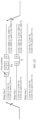
- FIG. 1 is a diagram of a communication system to which an embodiment of this application is applicable.
- the communication system includes a transmitter device 01, a transmitter processing module 02, a channel transmission medium 03, a receiver processing module 04, and a receiver device 05.
- the communication system is a data center network.
- the transmitter device 01 and the receiver device 05 may be devices such as switches or routers.
- the transmitter device 01 is also referred to as a host chip (host chip) located at a transmitter
- the receiver device 05 is also referred to as a host chip located at a receiver
- the channel transmission medium 03 may be an optical fiber.
- the host chip is sometimes also referred to as a host device (host device).
- the transmitter device 01 and the transmitter processing module 02 may be connected to each other through an attachment unit interface (attachment unit interface, AUI), and the receiver device 05 and the receiver processing module 04 may be connected to each other through an AUI.
- the transmitter processing module 02 and the receiver processing module 04 may be optical modules (optical modules), electrical modules, connectors (connectors), or other modules that process data in a data sending process.
- the processing module may be an 800LR module (800LR module, which is a coherent optical module).
- all of the transmitter device 01, the transmitter processing module 02, the channel transmission medium 03, the receiver processing module 04, and the receiver device 05 in the communication system can support bidirectional transmission, or unidirectional transmission. This is not specifically limited herein.
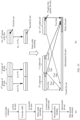
- FIG. 2 is a diagram of a data transmission process in the communication system shown in FIG. 1 .
- the transmitter device 01 in a process of transmitting data from the transmitter device 01 to the receiver device 05, the transmitter device 01 is configured to: perform outer-code encoding on the data, and then transmit outer-code encoded data to the transmitter processing module 02.
- the transmitter processing module 02 is configured to: perform inner-code encoding on the outer-code encoded data, to obtain outer-code encoded and inner-code encoded data; and transmit the outer-code encoded and inner-code encoded data to the channel transmission medium 03.
- the channel transmission medium 03 is configured to transmit the outer-code encoded and inner-code encoded data to the receiver processing module 04.
- the receiver processing module 04 is configured to: perform inner-code decoding on the outer-code encoded and inner-code encoded data, and transmit inner-code decoded data to the receiver device 05.
- the receiver device 05 is configured to perform outer-code decoding on the inner-code decoded data.
- inner in an inner code and “outer” in an outer code are distinguished based only on a distance between an execution body that performs an operation on data and the channel transmission medium 03.
- An execution body that performs an operation on the inner code is closer to the channel transmission medium, and an execution body that performs an operation on the outer code is farther away from the channel transmission medium.
- the data after being sent from the transmitter device 01, the data is transmitted to the channel transmission medium 03 via the transmitter processing module 02, and then is transmitted from the channel transmission medium 03 to the receiver device 05 via the receiver processing module 04.
- the data obtained through the encoding performed by the transmitter device 01 is farther away from the channel transmission medium 03 than the data obtained through the encoding performed by the transmitter processing module 02, and data obtained through the decoding performed by the receiver device 05 is farther away from the channel transmission medium 03 than the data obtained through the decoding performed by the receiver processing module 04. Therefore, the data obtained through the encoding performed by the transmitter device 01 is referred to as the outer-code encoded data, the data obtained through the encoding performed by the transmitter processing module 02 is referred to as the inner-code encoded data, the data obtained through the decoding performed by the receiver device 05 is referred to as outer-code decoded data, and the data obtained through the decoding performed by the receiver processing module 04 is referred to as the inner-code decoded data.
- both the inner-code encoding and the outer-code encoding use an FEC encoding manner, to form a concatenated-FEC transmission solution.
- the transmitter device 01 may perform the outer-code encoding by using an RS code, and the transmitter processing module 02 may perform the inner-code encoding by using a Hamming (Hamming) code.
- the transmitter device 01 may perform the outer-code encoding by using an RS code, and the transmitter processing module 02 may perform the inner-code encoding by using a Bose-Chaudhuri-Hocquenghem (Bose-Chaudhuri-Hocquenghem, BCH) code.
- Bose-Chaudhuri-Hocquenghem Bose-Chaudhuri-Hocquenghem
- FIG. 3 is a schematic flowchart of a data processing method according to an embodiment of this application. It should be understood that the method is for data processing performed on outer-code encoded data streams, and may be specifically implemented by the foregoing transmitter processing module 02.
- a physical medium attachment (Physical Medium Attachment, PMA) sublayer of the transmitter processing module performs first data processing on data from a plurality of synchronous client lanes (client lanes) to obtain the n first data streams, where n is an integer greater than 1.
- the first data processing may include alignment marker lock (alignment lock), lane de-skew (lane de-skew) processing, lane reorder (lane reorder) processing, concatenated interleaving (concatenated interleaving) processing, or the like.
- the foregoing n first data streams are all outer-code encoded data streams.
- an RS code may be used for the outer-code encoding, and the n outer-code encoded data streams may include a plurality of RS codewords.
- another encoding scheme may alternatively be for performing the outer-code encoding.
- the RS codeword is uniformly for representing a codeword generated through the outer-code encoding.
- a code length of an outer code is measured in outer-code symbols, where the symbol may include one or more bits.
- the outer code is a used KP4 RS(544,514) code, a code length is 544 symbols, and one outer-code symbol includes 10 bits.
- An inner-code encoder performs the inner-code encoding on every K bits in each first data stream, and then adds P parity bits to obtain an inner-code codeword including a total of N bits.
- K is a multiple of 10
- the K bits correspond to K/10 outer-code symbols.
- the K/10 outer-code symbols corresponding to the K information bits are from K/10 different outer-code codewords.
- each second data stream obtained through the inner-code encoding includes at least one inner-code codeword.
- One inner-code codeword is separately obtained from each second data stream to obtain a total of n inner-code codewords, where the n inner-code codewords include n/m codeword sets, namely, a codeword set 0, a codeword set 1, ⁇ , and a codeword set n/m-1.
- Each codeword set includes m inner-code codewords.
- a codeword set h (0 ⁇ h ⁇ n/m) includes a codeword m ⁇ h, a codeword m ⁇ h + 1, ⁇ , and a codeword m ⁇ h + m- 1.
- n is divisible by m.
- each codeword set is merely a concept introduced for ease of description.
- the second data stream is an integrate part without division.
- Each codeword set may be considered as a plurality of bits in the second data stream.
- both a quantity of bits in the codeword set and a quantity of bits in the target bit set are m ⁇ N.
- This step is performing location transformation on the bits in the codeword set to obtain the target bit set.
- the target bit set may be represented as a bit matrix with m rows and N columns.
- the target bit set may alternatively be represented as a one-dimensional array including m ⁇ N bits.
- the bit interleaving provided in this application includes but is not limited to performing location transformation (row transformation for short) on bits in each row in the codeword set, performing the location transformation (column transformation for short) on bits in each column in the codeword set, and performing the location transformation (row-column transformation for short) on bits in each row and each column in the codeword set.
- the row-column transformation includes first the row transformation and then the column transformation, first the column transformation and then the row transformation, and simultaneous row transformation and column transformation. The following describes the bit interleaving in detail with reference to several specific implementations.
- m ⁇ N codeword bits in the codeword set h (0 ⁇ h ⁇ n/m) are represented by using a first matrix H 1 with m rows and N columns, where each row in the first matrix H 1 includes N bits in one inner-code codeword.
- a bit in an i th (0 ⁇ i ⁇ m) row and a j th (0 ⁇ j ⁇ N) column in the first matrix H 1 is denoted as H 1 [i][j].
- H 1 [i][j] represents a j th bit in an i th inner-code codeword in the codeword set h, and also represents a j th bit in a codeword m ⁇ h + i from a second data stream m ⁇ h + i.
- the n/m codeword sets correspond to n/m first matrixes H 1 . That is, the codeword set h (0 ⁇ h ⁇ n/m) corresponds to an h th first matrix H 1 .
- a total of K bits in the 0 th column to a (K-1) th column in each row in the first matrix H 1 correspond to information bits whose length is K in the one inner-code codeword; and a total of m ⁇ K bits in the 0 th column to the (K-1) th column in the first matrix H 1 correspond to m ⁇ K information bits in m inner-code codewords.
- a total of P bits in a K th column to an (N-1) th column in each row in the first matrix H 1 correspond to a parity bit whose length is P in the one inner-code codeword
- a total of m ⁇ P bits in the K th column to the (N-1) th column in the first matrix H 1 correspond to m ⁇ P parity bits in the m inner-code codewords.
- the first location transformation is performed on K information bits in each inner-code codeword in the codeword set. Alternatively, this may be described as "the first location transformation is performed on K information bits in each row in the first matrix H 1 ".
- the first location transformation is specifically performing left circular shift or right circular shift on the K information bits in each row in the first matrix H 1 .
- the left circular shift is used as an example.
- the left circular shift is performed on K information bits in the i th (0 ⁇ i ⁇ m) row in the first matrix H 1 by i ⁇ ⁇ bits, where the non-zero integer ⁇ is a row offset constraint factor.
- the left circular shift is performed on the K information bits (u 0 , u 1 , u 2 , u 3 , ⁇ , u K-2 , u K-1 ) by the i ⁇ ⁇ bits to obtain K bits (u (i ⁇ )%K , u (1+i ⁇ )%K , u (2+i ⁇ )%K , ⁇ , u (K-2+i ⁇ )%K , u (K-1+i ⁇ )%K ) obtained through the shift.
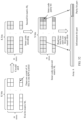
- FIG. 4 is a diagram of performing left circular shift on information bits in each row according to an embodiment of this application.
- K 8
- the left circular shift is performed by two bits.
- the left circular shift is performed on eight information bits (u i,0 ,u i,1 ,u i,2 ,u i,3 ,u i,4 ,u i,5 ,u i,6 ,u i,7 ) in an i th row by two bits to obtain (u i,2 ,u i,3 ,u i,4 ,u i,5 ,u i,6 ,u i,7 ,u i,0 ,u i,1 ).
- ⁇ 2
- the left circular shift is performed on eight information bits in an i th row by i ⁇ 2 bits.
- the left circular shift is performed on eight information bits in the 0 th row by zero bits
- the left circular shift is performed on eight information bits in the 1 st row by two bits
- the left circular shift is performed on eight information bits in the 2 nd row by four bits.
- the circular shift is performed in this manner to perform the first location transformation on the K information bits in each row in the first matrix H 1 .
- H 1 [i][j] represents a bit in an i th row and a j th column in the bit matrix on which the first location transformation has not been performed
- H 2 [i][j] represents a bit in an i th row and a j th column in a bit matrix obtained through the first location transformation
- Y%Z represents a remainder obtained by dividing the integer Y by the integer Z, and 0 ⁇ i ⁇ m
- the row offset constraint factor ⁇ is a multiple of 10, and 0 ⁇ ⁇ K.
- the left circular shift is performed on the K information bits in the i th row in the first matrix H 1 by i ⁇ ⁇ bits to obtain K bits in the 0 th column to a (K-1) th column in an i th row in a second matrix H 2 .
- the right circular shift is performed on K information bits in the 0 th column to the (K-1) th column in the i th row in the first matrix H 1 by i ⁇ (K- ⁇ ) bits to obtain the K bits in the 0 th column to the (K-1) th column in the i th row in the second matrix H 2 .
- performing the circular shift on the K information bits in the 0 th column to the (K-1) th column in each row in the first matrix H 1 is performing an operation only on the information bits in the first matrix H 1 . Therefore, it may also be described as performing the circular shift on the K information bits in the 0 th column to the (K-1) th column in each row in the first matrix H 1 to obtain a fourth matrix H 4 with m rows and K columns.
- the column transformation described in this implementation is described based on performing the row transformation on the first matrix H 1 to obtain the second matrix H 2 .
- the column transformation may alternatively be first performed on the first matrix H 1 in this implementation. Details are not described herein again.
- performing the upward circular shift on the L bits in the j th (0 ⁇ j ⁇ N) column in each first submatrix by ⁇ ⁇ (j%L) bits is alternatively equivalent to performing the upward circular shift by ⁇ ⁇ j bits.
- This can be known by a person of ordinary skill in the art. Details are not described herein again.
- ⁇ 2 ⁇ (j%8) bits.
- the upward circular shift is performed on eight bits in the 0 th column by zero bits
- the upward circular shift is performed on eight bits in the 1 st column by two bits
- the upward circular shift is performed on eight information bits in the 2 nd column by four bits.
- the circular shift is performed in this manner to perform the second location transformation on the bits at the same location in the second matrix H 2 .
- H 2 [i][j] represents a bit in an i th row and a j th column in the bit matrix on which the second location transformation has not been performed
- H 3 [i][j] represents a bit in an i th row and a j th column in the bit matrix obtained through the second location transformation
- ⁇ represents rounding down
- Y%Z represents a remainder obtained by dividing the integer Y by the integer Z, 0 ⁇ i ⁇ m, and 0 ⁇ j ⁇ N
- the non-zero integer ⁇ is the column offset constraint factor
- the column offset constraint factor satisfies 0 ⁇ ⁇ ⁇ L.
- Performing the upward circular shift on the L bits in the j th column in the first submatrix in the second matrix H 2 by ⁇ ⁇ (j%L) bits is equivalent to performing the downward circular shift by (L- ⁇ ) ⁇ (j%L) bits.
- L 8
- performing the upward circular shift by two bits is equivalent to performing the downward circular shift by six bits.
- H 2 [i][j] represents a bit in an i th row and a j th column in the bit matrix on which the second location transformation has not been performed
- H 3 [i][j] represents a bit in an i th row and a j th column in the bit matrix obtained through the second location transformation
- ⁇ represents rounding down
- Y%Z represents a remainder obtained by dividing the integer Y by the integer Z
- Y ⁇ Z represents an integer corresponding to a bit sequence obtained through an exclusive OR operation performed on a bit sequence corresponding to the integer Y and a bit sequence corresponding to the integer Z, 0 ⁇ i ⁇ m, and 0 ⁇ j ⁇ N.
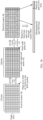
- FIG. 6 is a diagram of performing location transformation on bits in each column according to an embodiment of this application.
- U i,j represents a bit in an i th row and a j th column in the second symbol matrix H 2 . Every eight consecutive columns, namely, an (8*k) th column to an (8*k+7) th column, in the second matrix H 2 are interleaved and mapped to eight consecutive columns, namely, an (8*k) th column to an (8*k+7) th column, in the third symbol matrix in the manner shown in the figure.
- the fourth matrix H 4 with the m rows and the K columns and the K th column to the (N-1) th column in the first matrix H 1 are divided into a plurality of second submatrixes, where each second submatrix includes L rows and N columns.
- the location transformation is performed on L bits in each column in each second submatrix to obtain the third matrix H 3 with m rows and N columns.
- the integer ⁇ is the column offset constraint factor.
- the bit interleaving includes two steps of operations.
- the row transformation and the column transformation may alternatively be implemented using one step of operation. The following describes this implementation in detail.
- H 3 i j H 1 i + ⁇ ⁇ j % L % L + i / L ⁇ L j + i + ⁇ ⁇ j % L % L + i / L ⁇ L ⁇ ⁇ % K , 0 ⁇ j ⁇ K H 1 i + ⁇ ⁇ j % L % L + i / L ⁇ L j , K ⁇ j ⁇ N
- H 1 [i][j] represents a bit in an i th row and a j th column in the bit matrix on which the bit interleaving has not been performed
- H 3 [i][j] represents a bit in an i th row and a j th column in the bit matrix obtained through the bit interleaving
- Y%Z represents a remainder obtained by dividing the integer Y by the integer
- H 3 i j H 1 i + ⁇ ⁇ j % L + i / L ⁇ L j + i + ⁇ ⁇ j % L + i / L ⁇ L ⁇ ⁇ % K , 0 ⁇ j ⁇ K H 1 i + ⁇ ⁇ j % L + i / L ⁇ L j , K ⁇ j ⁇ N
- H 1 [i][j] represents a bit in an i th row and a j th column in the bit matrix on which the bit interleaving has not been performed
- H 3 [i][j] represents a bit in an i th row and a j th column in the bit matrix obtained through the bit interleaving
- Y%Z represents a remainder obtained by dividing the integer Y by the integer Z
- ⁇ is a non-zer
- the K information bits may be considered as the K/10 symbols, where each symbol corresponds to 10 information bits.
- Performing circular shift on K information bits in the i th (0 ⁇ i ⁇ m) row in the first matrix H 1 by i ⁇ ⁇ bits may be considered as performing the circular shift on K/10 symbols in the i th (0 ⁇ i ⁇ m) row in the first matrix H 1 by i ⁇ ⁇ 10 symbols.
- a specific implementation thereof is known to a person of ordinary skill in the art. Details are not described herein again.
- an interleaving correspondence for performing the bit interleaving on the first matrix H 1 to obtain the third matrix H 3 may be described by using a table.
- a specific implementation thereof is known to a person of ordinary skill in the art. Details are not described herein again.
- the foregoing formula (5) or (6) may be simply transformed into another formula.
- each codeword set, bit matrix, and submatrix is merely concepts introduced for ease of description.
- the data stream is an integrate part without division.
- Each codeword set, bit matrix, and submatrix may be considered as one or more bits in the data stream.
- the first matrix, the second matrix, the third matrix, the fourth matrix, and the like may alternatively not be presented in a form of a matrix.
- the first matrix H 1 is presented as a first bit set
- the first bit set includes m first bit subsets
- each first bit subset includes bit elements in one row and N columns in the corresponding first matrix H 1 .
- the target bit set obtained through the bit interleaving of the m codewords is represented by using the third matrix H 3 with the m rows and the N columns.
- the target bit set may alternatively be represented by using the one-dimensional array (array) that is denoted as an array A and that includes the m ⁇ N bits.
- a t th (0 ⁇ t ⁇ m ⁇ N) bit in the array A is denoted as A[t].
- Performing the bit interleaving on the first matrix H 1 to obtain the array A including the m ⁇ N bit elements may alternatively be represented in the following manner.
- bit interleaving satisfies a formula (8):
- a i + j ⁇ m H 1 i + ⁇ ⁇ j % L % L + i / L ⁇ L j + i + ⁇ ⁇ j % L % L + i / L ⁇ L ⁇ ⁇ % K , 0 ⁇ j ⁇ K H 1 i + ⁇ ⁇ j % L % L + i / L ⁇ L j , K ⁇ j ⁇ N
- H 1 [i][j] represents a bit in an i th row and a j th column in the bit matrix on which the bit interleaving has not been performed
- A[t] represents a t th bit in the one-dimensional array obtained through the bit interleaving
- Y%Z represents a remainder obtained by dividing the integer Y
- bit interleaving satisfies a formula (9):
- a i + j ⁇ m H 1 i % L ⁇ j % L + i / L ⁇ L j + i + ⁇ ⁇ j % L % L + i / L ⁇ L ⁇ ⁇ % K , 0 ⁇ j ⁇ K H 1 i % L ⁇ j % L + i / L ⁇ L j , K ⁇ j ⁇ N
- H 1 [i][j] represents a bit in an i th row and a j th column in the bit matrix on which the bit interleaving has not been performed
- A[t] represents a t th bit in the one-dimensional array obtained through the bit interleaving
- Y%Z represents a remainder obtained by dividing the integer Y by the integer Z
- ⁇ is a non-zero integer greater than -K
- bit interleaving satisfies a formula (10):
- a i + j ⁇ m H 1 i ⁇ j % L j + i ⁇ j % L ⁇ ⁇ % K , 0 ⁇ j ⁇ K H 1 i ⁇ j % L j , K ⁇ j ⁇ N
- m is divisible by L. Every L bits in the target bit set are mapped to one modulation symbol. That is, the modulation symbol includes the L bits. L bits in each modulation symbol are from L inner-code codewords. In addition, if the L bits mapped to the modulation symbol are all from information bits in the inner-code codewords, any two of the L bits mapped to the modulation symbol are from two different locations in two different inner-code codewords.
- the n ⁇ N/L modulation symbols obtained through the mapping of all target bit sets may be represented as one modulation symbol stream.
- the m ⁇ N/L modulation symbols obtained through the mapping of each target bit set may be represented as one modulation symbol stream, to obtain a total of n/m modulation symbol streams.
- the modulation symbol stream may further undergo other data processing, and then be sent to a channel transmission medium for transmission.
- the other data processing may include polarization distribution (polarization distribution), DSP framing (framing) processing, or the like.
- the N bits in each inner-code codeword are mapped to N modulation symbols
- the N bits in the inner-code codeword include L first bit subsets, bits in a same first bit subset are separately mapped to same bits in different modulation symbols, and bits in different first bit subsets are separately mapped to different bits in different modulation symbols.
- one modulation symbol includes a bit b 0 , a bit b 1 , ..., and a bit b L-1 , and quantities of bits that are in the N bits in the inner-code codeword and that are mapped to the bit b 0 , the bit b 1 , ..., and the bit b L-1 are all N/L.
- bits in one inner-code codeword are more evenly mapped to modulation symbols, so that a burst resistance capability of a concatenated-FEC solution in actual transmission can be improved.
- alignment marker lock and lane de-skew processing are performed on all of the n first data streams; and when W ⁇ L bits in W consecutive modulation symbols are all information bits in an inner-code codeword, the W ⁇ L bits are from more than two outer-code codewords obtained through the outer-code encoding, where W ⁇ 2.
- the foregoing modulation scheme is dual-polarization quadrature amplitude modulation (Dual-polarization quadrature amplitude modulation, DP-QAM), for example, DP-QPSK or DP-16QAM.
- the foregoing modulation scheme is pulse amplitude modulation (Pulse amplitude modulation, PAM), for example, PAM4.
- PAM pulse amplitude modulation
- For PAM4 modulation, one PAM4 modulation symbol corresponds to L 2 bits.
- the following describes a specific implementation of the mapping by using an example in which the target bit set is represented as the third matrix H 3 .
- m/L modulation symbols obtained through the mapping of the m bits in each column in the third matrix H 3 are consecutive in the modulation symbol stream.
- the m/L modulation symbols obtained through the mapping of each column in the third matrix H 3 are used as m/L consecutive modulation symbols in the modulation symbol stream
- the m ⁇ N/L modulation symbols obtained through the mapping of the N columns in the third matrix H 3 are used as m ⁇ N/L consecutive modulation symbols in the modulation symbol stream.
- m bits in a column B in the third matrix H 3 are mapped to obtain m/L first modulation symbols, every T consecutive first modulation symbols in the m/L first modulation symbols are consecutive in the modulation symbol stream, m bits in a column C in the third matrix H 3 are mapped to obtain m/L second modulation symbols, every T consecutive second modulation symbols in the m/L second modulation symbols are consecutive in the modulation symbol stream, the column B is adjacent to the column C, the T consecutive first modulation symbols in the m/L first modulation symbols and the T consecutive second modulation symbols in the m/L second modulation symbols are consecutive in the modulation symbol stream, and m/L is divisible by T.
- FIG. 8 is a second diagram of bit mapping according to an embodiment of this application.
- each column in the third matrix H 3 is mapped to four modulation symbols that are represented by using S(0,j), S(1,j), S(2,j), and S(3,j), where 0 ⁇ j ⁇ N.
- the first T modulation symbols in m/L modulation symbols obtained through the mapping of each column in the third matrix H 3 are used as T consecutive modulation symbols in the modulation symbol stream.
- a total of T ⁇ N modulation symbols in the N columns are used as T ⁇ N consecutive modulation symbols in the modulation symbol stream.
- T modulation symbols in the m/L modulation symbols obtained through the mapping of each column in the third matrix H 3 are used as T consecutive modulation symbols in the modulation symbol stream.
- a total of T ⁇ N modulation symbols in the N columns are used as next T ⁇ N consecutive modulation symbols in the modulation symbol stream.
- m ⁇ N/L consecutive modulation symbols in the modulation symbol stream may be obtained.
- L bits in each modulation symbol are from L r inner-code codewords.
- L c bits in each of the L r inner-code codewords namely, a total of L r ⁇ L c bits, are mapped to one modulation symbol.
- 2L bits in two consecutive modulation symbols are from 2L r inner-code codewords.
- L c bits in each of the 2L r inner-code codewords are mapped to the two consecutive modulation symbols.
- L L r ⁇ L c , and L c > 1.
- a total of L r ⁇ L c L bits in L c columns in every L r rows in the third matrix H 3 are mapped to one modulation symbol, where L c > 1.
- L inner-code bits respectively corresponding to a bit b 0 , a bit b 1 , ... , and a bitb L-1 in one modulation symbol are from L r different inner-code codewords, and each inner-code codeword provides L c bits.
- a total of m ⁇ L c bits in every L c columns are mapped to m/L r modulation symbols.
- Each third matrix H 3 is mapped to m ⁇ N/L modulation symbols, to obtain m ⁇ N/L consecutive modulation symbols in the modulation symbol data stream.
- the m/L r modulation symbols obtained through the mapping of the every L c columns in the third matrix H 3 are used as m/L r consecutive modulation symbols in the modulation symbol stream, and the m ⁇ N/L modulation symbols obtained through the mapping of the N columns are used as the m ⁇ N/L consecutive modulation symbols in the modulation symbol stream.
- FIG. 9 is a third diagram of bit mapping according to an embodiment of this application.
- bits in a column B in the third matrix H 3 are mapped to obtain m/L r first modulation symbols, every T consecutive first modulation symbols in the m/L r first modulation symbols are consecutive in the modulation symbol stream, bits in a column C in each target bit set are mapped to obtain m/L r second modulation symbols, every T consecutive second modulation symbols in the m/L r second modulation symbols are consecutive in the modulation symbol stream, the column B includes L c columns, the column C also includes L c columns, the column B is adjacent to the column C, the T consecutive first modulation symbols in the m/L r first modulation symbols and the T consecutive second modulation symbols in the m/L r second modulation symbols are consecutive in the modulation symbol stream, and m/L r is divisible by T.
- FIG. 10 is a fourth diagram of bit mapping according to an embodiment of this application.
- T ⁇ N/L c modulation symbols in the N columns are used as T ⁇ N/L c consecutive modulation symbols in the modulation symbol stream.
- T modulation symbols in the m/L r modulation symbols obtained through the mapping of the every L c columns are used as T consecutive modulation symbols in the first modulation symbol stream.
- a total of T ⁇ N/L c modulation symbols in the N columns are used as next T ⁇ N/L c consecutive modulation symbols in the modulation symbol stream.
- m ⁇ N/L consecutive modulation symbols in the modulation symbol stream may be obtained.
- a concatenated-FEC transmission solution is used. That is, the outer-code encoding and the inner-code encoding are sequentially performed on the data streams.
- this application designs a bit interleaving and mapping method, so that both bits in an outer-code codeword and bits in an inner-code codeword are discretely and evenly mapped to modulation symbols.
- the concatenated-FEC transmission solution has a strong burst resistance capability. Particularly, a burst error with a small length may be directly corrected through inner-code decoding.
- the concatenated-FEC transmission solution is widely applicable to transmission scenarios, particularly an actual coherent transmission scenario in which there is colored noise on a channel.
- the following further describes a procedure of the data processing method described in FIG. 3 .
- the 32 first data streams are separately sent to inner-code encoders for inner-code encoding to obtain 32 second data streams.
- 352 DP-16QAM symbols may be obtained through bit interleaving and mapping of the 16 BCH(176,160) codewords in each codeword set.
- a total of 2816 bits in the foregoing 16 BCH(176,160) codewords are represented by using a first matrix H 1 with 16 rows and 176 columns, where each row in the first matrix H 1 includes 176 bits in one inner-code BCH(176,160) codeword.
- the bit interleaving is performed on the first matrix H 1 to obtain a third matrix H 3 with 16 rows and 176 columns.
- H 3 i j H 1 i + ⁇ ⁇ j % 8 % 8 + i / 8 ⁇ 8 j + i + ⁇ ⁇ j % 8 % 8 + i / 8 ⁇ 8 ⁇ ⁇ % 160 , 0 ⁇ j ⁇ 160 H 1 i + ⁇ ⁇ j % 8 % 8 + i / 8 ⁇ 8 j , 160 ⁇ j ⁇ 176
- ⁇ represents a rounding down operation
- the non-zero integer ⁇ is a row offset constraint factor
- ⁇ is a multiple of 10, - 160 ⁇ ⁇ 160
- the non-zero integer ⁇ is a column offset constraint factor
- the non-zero integer ⁇ satisfies - 8 ⁇ ⁇ ⁇ 8; in this embodiment, typical values of the integer ⁇ are 10, 20, 30, 50, 60, 70,
- each column includes 16 bits. Every eight bits in the 16 bits are mapped to one DP-16QAM symbol. Each column is separately mapped to two modulation symbols. In a specific implementation, in each column, the 0 th row to the 7 th row are mapped to one DP-16QAM symbol, and the 8 th row to the 15 th row are mapped to the other DP-16QAM symbol. Each third matrix H 3 is mapped to 352 DP-16QAM symbols.
- the two DP-16QAM symbols obtained through the mapping of each column are used as two consecutive DP-16QAM symbols in a first modulation symbol stream, and 352 DP-16QAM symbols obtained through the mapping of the 176 columns are used as 352 consecutive DP-16QAM symbols in the first modulation symbol stream.
- the 32 codewords undergo the bit interleaving, and then are mapped to a total of 704 DP-16QAM symbols, and the 704 DP-16QAM symbols are used as 704 consecutive DP-16QAM symbols in the first modulation symbol stream.
- the overall concatenated-FEC solution can effectively resist the colored noise with the width of up to the four DP-16QAM symbols, and can resist the burst error with the length greater than 1500 bits.
- the overall concatenated-FEC solution can effectively resist the colored noise with the width of up to the four DP-16QAM symbols, and can resist the burst error with the length greater than 1500 bits.
- a total of 2816 bits in 16 BCH(176,160) codewords are represented by using a first matrix H 1 with 16 rows and 176 columns, and data obtained through bit interleaving of the first matrix H 1 is not represented by using the third matrix H 3 with the 16 rows and the 176 columns shown in Embodiment 1, but is represented by using an array A with a length of 2816 bits.
- the bit interleaving is performed on the first matrix H 1 to obtain the array A with the length of 2816 bits.
- ⁇ represents a rounding down operation
- the non-zero integer ⁇ is a row offset constraint factor
- ⁇ is a multiple of 10, - 160 ⁇ ⁇ 160
- the non-zero integer ⁇ is a column offset constraint factor
- the integer ⁇ satisfies - 8 ⁇ ⁇ ⁇ 8; in this embodiment, typical values of the integer ⁇ are 10, 20, 30, 50, 60, 70
- Every eight consecutive bits in the first array A that includes the 2816 bits are mapped to one DP-16QAM symbol, to obtain 352 DP-16QAM symbols, and the 352 DP-16QAM symbols are used as 352 consecutive DP-16QAM symbols in a first modulation symbol stream.
- the 32 codewords undergo the bit interleaving, and then are mapped to a total of 704 DP-16QAM symbols, and the 704 DP-16QAM symbols are used as 704 consecutive DP-16QAM symbols in the first modulation symbol stream.
- an overall concatenated-FEC solution can effectively resist colored noise with a width of up to four DP-16QAM symbols, and can resist a burst error with a length greater than 1500 bits.
- 176 DP-16QAM symbols may be obtained through bit interleaving and mapping of the eight BCH(176,160) codewords in each codeword set.
- a total of 1408 bits in the foregoing eight BCH(176,160) codewords are represented by using a first matrix H 1 with eight rows and 176 columns, where each row in the first matrix H 1 includes 176 bits in one inner-code BCH(176,160) codeword.
- the bit interleaving is performed on the first matrix H 1 to obtain a third matrix H 3 with eight rows and 176 columns.
- H 3 i j H 1 i + ⁇ ⁇ j % 8 % 8 + i 8 ⁇ 8 j + i + ⁇ ⁇ j % 8 % 8 + i 8 ⁇ 8 ⁇ ⁇ % 160 , 0 ⁇ j ⁇ 160 H 1 i + ⁇ ⁇ j % 8 % 8 + i 8 ⁇ 8 j , 160 ⁇ j ⁇ 176
- H 3 i j H 1 i + ⁇ ⁇ j % 8 % 8 j + i ⁇ ⁇ % 160 , 0 ⁇ j ⁇ 160 H 1 i + ⁇ ⁇ j % 8 % 8 j , 160 ⁇ j ⁇ 176
- ⁇ represents a rounding down operation
- the non-zero integer ⁇ is a row offset constraint factor
- ⁇ is a multiple of 10, - 160 ⁇ ⁇ 160
- the non-zero integer ⁇ is a column offset constraint factor
- the integer ⁇ satisfies - 8 ⁇ ⁇ ⁇ 8
- typical values of the integer ⁇ are 10, 20, 30, 40, 50, 60, 70, 90, 100, 110, 120, 130, 140, and 150
- each column includes eight bits.
- the eight bits in each column are mapped to one DP-16QAM symbol.
- Each third matrix H 3 is mapped to 176 DP-16QAM symbols.
- the 176 DP-16QAM symbols obtained through the mapping of the 176 columns are used as 176 consecutive DP-16QAM symbols in a first modulation symbol stream.
- the 32 codewords undergo the bit interleaving, and then are mapped to a total of 704 DP-16QAM symbols, and the 704 DP-16QAM symbols are used as 704 consecutive DP-16QAM symbols in the first modulation symbol stream.
- an overall concatenated-FEC solution can effectively resist colored noise with a width of up to two DP-16QAM symbols, and can resist a burst error with a length greater than 2000 bits.
- a total of 1408 bits in eight BCH(176,160) codewords are represented by using a first matrix H 1 with eight rows and 176 columns, and data obtained through bit interleaving of the first matrix H 1 is not represented by using the third matrix H 3 with the eight rows and the 176 columns shown in Embodiment 1, but is represented by using an array A with a length of 1408 bits.
- the bit interleaving is performed on the first matrix H 1 to obtain the array A with the length of 1408 bits.
- ⁇ represents a rounding down operation
- the non-zero integer ⁇ is a row offset constraint factor
- ⁇ is a multiple of 10, - 160 ⁇ ⁇ 160
- the non-zero integer ⁇ is a column offset constraint factor
- the integer ⁇ satisfies - 8 ⁇ ⁇ ⁇ 8
- typical values of the integer ⁇ are 10, 20, 30, 40, 50, 60, 70, 90, 100, 110, 120, 130, 140, and 150
- a typical value of the integer ⁇ is
- Every eight consecutive bits in the first array A that includes the 1408 bits are mapped to one DP-16QAM symbol, to obtain 176 DP-16QAM symbols, and the 176 DP-16QAM symbols are used as 176 consecutive DP-16QAM symbols in a first modulation symbol stream.
- the 32 codewords undergo the bit interleaving, and then are mapped to a total of 704 DP-16QAM symbols.
- an overall concatenated-FEC solution can effectively resist colored noise with a width of up to two DP-16QAM symbols, and can resist a burst error with a length greater than 2000 bits.
- 704 DP-16QAM symbols may be obtained through bit interleaving and mapping of the 32 BCH(176,160) codewords.
- a total of 5632 bits in the foregoing 32 BCH(176,160) codewords are represented by using a first matrix H 1 with 32 rows and 176 columns, where each row in the first matrix H 1 includes 176 bits in one inner-code BCH(176,160) codeword.
- the bit interleaving is performed on the first matrix H 1 to obtain a third matrix H 3 with 32 rows and 176 columns.
- ⁇ represents a rounding down operation
- the non-zero integer ⁇ is a row offset constraint factor
- ⁇ is a multiple of 10
- the non-zero integer ⁇ is a column offset constraint factor
- the integer ⁇ satisfies - 8 ⁇ ⁇ ⁇ 8; in this embodiment, typical values of the integer ⁇ are 20, 30, 50, 60, 70, 90, 100,
- each column includes 32 bits.
- the 32 bits in each column are mapped to four DP-16QAM symbols.
- the 32 codewords undergo the bit interleaving, and then are mapped to a total of 704 DP-16QAM symbols, and 704 consecutive DP-16QAM symbols in a first modulation symbol stream consist of the 704 DP-16QAM symbols.
- an overall concatenated-FEC solution can effectively resist colored noise with a width of up to two DP-16QAM symbols, and can resist a burst error with a length greater than 2000 bits.
- 32 codewords undergo bit interleaving, then are mapped to a total of 704 DP-16QAM symbols, and 704 consecutive DP-16QAM symbols in a first modulation symbol stream consist of the 704 DP-16QAM symbols.
- This embodiment provides another specific implementation: In terms of the first two DP-16QAM symbols in four DP-16QAM symbols obtained through the mapping of each column (namely, the 0 th and the 1 st DP-16QAM symbols obtained through the mapping of each column), a total of 352 DP-16QAM symbols in 176 columns are used as 352 consecutive DP-16QAM symbols in the first modulation symbol stream; in terms of the last two DP-16QAM symbols in the four DP-16QAM symbols obtained through the mapping of each column (namely, the 2 nd and the 3 rd DP-16QAM symbols obtained through the mapping of each column), a total of 352 DP-16QAM symbols in the 176 columns are used as next 352 consecutive DP-16QAM symbols in the first modulation symbol stream; and finally, the 704 consecutive DP-16QAM symbols in the first modulation symbol stream are obtained.
- an overall concatenated-FEC solution can effectively resist colored noise with a width of up to four DP-16QAM symbols, and can resist a burst error with a length greater than 1500 bits.
- the 16 first data streams are separately sent to inner-code encoders for inner-code encoding to obtain 16 second data streams.
- a total of 2816 bits in the foregoing 16 BCH(176,160) codewords are represented by using a first matrix H 1 with 16 rows and 176 columns, where each row in the first matrix H 1 includes 176 bits in one inner-code BCH(176,160) codeword.
- the bit interleaving is performed on the first matrix H 1 to obtain a third matrix H 3 with 16 rows and 176 columns.
- ⁇ represents a rounding down operation
- the non-zero integer ⁇ is a row offset constraint factor
- ⁇ is a multiple of 10, - 160 ⁇ ⁇ 160
- the integer ⁇ is a column offset constraint factor
- the non-zero integer ⁇ satisfies - 8 ⁇ ⁇ ⁇ 8
- typical values of the integer ⁇ are 20, 30, 50, 60, 70, 90, 100, 110, 130, and 140
- each column includes 16 bits.
- the 16 bits in each column are mapped to two DP-16QAM symbols.
- the 0 th row to the 7 th row are mapped to one DP-16QAM symbol, and the 8 th row to the 15 th row are mapped to the other DP-16QAM symbol.
- the 16 codewords undergo the bit interleaving, and then are mapped to a total of 352 DP-16QAM symbols, and 352 consecutive DP-16QAM symbols in a first modulation symbol stream consist of the 352 DP-16QAM symbols.
- the two DP-16QAM symbols obtained through the mapping of each column are used as two consecutive DP-16QAM symbols in the first modulation symbol stream, and 352 DP-16QAM symbols obtained through the mapping of the 176 columns are used as the 352 consecutive DP-16QAM symbols in the first modulation symbol stream.
- 2816-bit interleaved data obtained through the bit interleaving of the first matrix H 1 is represented by using the third matrix H 3 with the 16 rows and the 176 columns, or may be represented by using an array with a length of 2816 bits as shown in Embodiment 2 and Embodiment 4.
- a specific implementation thereof is known to a person of ordinary skill in the art. Details are not described herein again.
- an overall concatenated-FEC solution can effectively resist colored noise with a width of up to four DP-16QAM symbols, and can resist a burst error with a length greater than 1500 bits.
- an operation procedure of the transmitter processing module may alternatively be as shown in FIG. 12(b) .
- a lane data stream obtained through alignment marker lock is directly sent to lane reorder without lane de-skew processing.
- a host interface is 2 ⁇ 400G
- an RS symbol in any one of lane data streams 0 to 15 sent to convolutional interleaving and an RS symbol in any one of lane data streams 16 to 31 sent to the convolutional interleaving are from two different RS outer-code codewords.
- the transmitter processing module uses an operation procedure in FIG. 12(c) or FIG.
- Whether to perform the lane de-skew processing and the lane reorder in the transmitter processing module may be determined based on an actual transmission scenario.
- the eight first data streams are separately sent to inner-code encoders for inner-code encoding to obtain eight second data streams.
- a total of 1024 bits in the foregoing eight Hamming(128,120) codewords are represented by using a first matrix H 1 with eight rows and 128 columns, where each row in the first matrix H 1 includes 128 bits in one inner-code Hamming(128,120) codeword.
- the bit interleaving is performed on the first matrix H 1 to obtain a third matrix H 3 with eight rows and 128 columns.
- H 3 i j H 1 i + ⁇ ⁇ j % 2 % 2 + i 2 ⁇ 2 j + i + ⁇ ⁇ j % 2 % 2 + i 2 ⁇ 2 ⁇ ⁇ % 120 , 0 ⁇ j ⁇ 120 H 1 i + ⁇ ⁇ j % 2 % 2 + i 2 ⁇ 2 j , 120 ⁇ j ⁇ 128
- ⁇ represents a rounding down operation
- the non-zero integer ⁇ is a row offset constraint factor
- ⁇ is a multiple of 10
- the non-zero integer ⁇ is a column offset constraint factor
- the integer ⁇ 1; and in this embodiment, typical values of the integer ⁇ are 20, 30, 50, 60, 70, 90, and 100.
- each column includes eight bits.
- the eight bits in each column are mapped to four PAM4 symbols.
- two bits in the 0 th row and the 1 st row are mapped to one PAM4 symbol
- two bits in the 2 nd row and the 3 rd row are mapped to another PAM4 symbol
- two bits in the 4 th row and the 5 th row are mapped to still another PAM4 symbol
- two bits in the 6 th row and the 7 th row are mapped to yet another PAM4 symbol.
- the eight codewords undergo the bit interleaving, and then are mapped to a total of 512 PAM4 symbols, and 512 consecutive PAM4 symbols in a first modulation symbol stream consist of the 512 PAM4 symbols.
- the four PAM4 symbols obtained through the mapping of each column are used as four consecutive PAM4 symbols in the first modulation symbol stream
- 512 PAM4 symbols obtained through the mapping of the 128 columns are used as the 512 consecutive PAM4 symbols in the first modulation symbol stream.
- an overall concatenated-FEC solution can effectively resist colored noise with a width of up to four PAM4 symbols, and can resist a burst error with a length greater than 1200 bits.
- FIG. 11 is a diagram of performing inner-code encoding and interleaving, modulation, and mapping on data streams according to an embodiment of this application. As shown in FIG. 11 , the 32 first data streams are separately sent to inner-code encoders for the inner-code encoding to obtain 32 second data streams.
- 120 information bits in each inner-code codeword are from 12 symbols in 12 different outer-code RS codewords.
- the 32 second data streams are grouped into four second data stream groups. Each group includes eight second data streams.
- One modulation symbol stream is obtained through interleaving and modulation of each second data stream group.
- Four modulation and mapping streams are obtained in total.
- the four modulation and mapping data streams are to be transmitted through four different channels.
- the four different channels may be four different wavelengths, four different optical fibers, or the like.
- One Hamming(128,120) codeword is obtained from each second data stream above.
- a total of 1024 bits in a total of eight Hamming(128,120) codewords are represented by using a first matrix H 1 with eight rows and 128 columns, where each row in the first matrix H 1 includes 128 bits in one inner-code Hamming(128,120) codeword.
- Bit interleaving is performed on the first matrix H 1 to obtain a third matrix H 3 with eight rows and 128 columns.
- H 3 i j H 1 i + ⁇ ⁇ j % 2 % 2 + i 2 ⁇ 2 j + i + ⁇ ⁇ j % 2 % 2 + i 2 ⁇ 2 ⁇ ⁇ % 120 , 0 ⁇ j ⁇ 120 H 1 i + ⁇ ⁇ j % 2 % 2 + i 2 ⁇ 2 j , 120 ⁇ j ⁇ 128
- ⁇ represents a rounding down operation
- the non-zero integer ⁇ is a row offset constraint factor
- ⁇ is a multiple of 10 0 ⁇ ⁇ 120
- the non-zero integer ⁇ is a column offset constraint factor
- the integer ⁇ 1; and in this embodiment, typical values of the integer ⁇ are 10, 20, 30, 40, 50, 60, 70, 80, 90, 100, and 110.
- H 3 i j H 1 i ⁇ j % 2 j + i ⁇ j % 2 ⁇ ⁇ % 120 , 0 ⁇ j ⁇ 120 H 1 i ⁇ j % 2 j , 120 ⁇ j ⁇ 128
- each column includes eight bits.
- the eight bits in each column are mapped to four PAM4 symbols.
- two bits in the 0 th row and the 1 st row are mapped to one PAM4 symbol
- two bits in the 2 nd row and the 3 rd row are mapped to another PAM4 symbol
- two bits in the 4 th row and the 5 th row are mapped to still another PAM4 symbol
- two bits in the 6 th row and the 7 th row are mapped to yet another PAM4 symbol.
- the eight codewords undergo the bit interleaving, and then are mapped to a total of 512 PAM4 symbols, and 512 consecutive PAM4 symbols in a first modulation symbol stream consist of the 512 PAM4 symbols.
- an overall concatenated-FEC solution can effectively resist colored noise with a width of up to eight PAM4 symbols on each channel, and can resist a burst error with a length greater than 1100 bits.
- an operation procedure of the transmitter processing module may alternatively be as shown in FIG. 12(b) .
- a lane data stream obtained through alignment marker lock is directly sent to lane reorder without lane de-skew processing.
- a delay of an overall concatenated-FEC solution can be reduced, but a capability of resisting a burst error by the concatenated-FEC solution is weakened.
- Whether to perform the lane de-skew processing and the lane reorder in the transmitter processing module may be determined based on an actual transmission scenario.
- the 32 first data streams are separately sent to inner-code encoders for inner-code encoding to obtain 32 second data streams.
- 176 DP-16QAM symbols may be obtained through bit interleaving and mapping of the eight BCH(176,160) codewords in each codeword set.
- a total of 1408 bits in the foregoing eight BCH(176,160) codewords are represented by using a first matrix H 1 with eight rows and 176 columns, where each row in the first matrix H 1 includes 176 bits in one inner-code BCH(176,160) codeword.
- the bit interleaving is performed on the first matrix H 1 to obtain a third matrix H 3 with eight rows and 176 columns.
- H 3 i j H 1 i j + i ⁇ ⁇ % 160 , 0 ⁇ j ⁇ 160 H 1 i j , 160 ⁇ j ⁇ 176
- ⁇ represents a rounding down operation
- the non-zero integer ⁇ is a row offset constraint factor
- ⁇ is a multiple of 10, 0 ⁇ ⁇ 160
- the integer is a column offset constraint factor; and in this embodiment, typical values of the integer ⁇ are 10, 20, 30, 40, 50, 60, 70, 90, 100, 110, 120, 130, 140, and 150.
- each column includes eight bits.
- 2 modulation symbols obtained through the mapping of every 2 columns are used as 2 consecutive modulation symbols in a first modulation symbol stream
- 176 modulation symbols obtained through the mapping of the 176 columns are used as 176 consecutive modulation symbols in the first modulation symbol stream, and are used as 176 consecutive DP-16QAM symbols in the first modulation symbol stream.
- the 32 codewords undergo the bit interleaving, and then are mapped to a total of 704 DP-16QAM symbols, and the 704 DP-16QAM symbols are used as 704 consecutive DP-16QAM symbols in the first modulation symbol stream.
- the 32 first data streams are separately sent to inner-code encoders for inner-code encoding to obtain 32 second data streams.
- 352 DP-16QAM symbols may be obtained through bit interleaving and mapping of the 16 BCH(176,160) codewords in each codeword set.
- a total of 1408 bits in the foregoing 16 BCH(176,160) codewords are represented by using a first matrix H 1 with 16 rows and 176 columns, where each row in the first matrix H 1 includes 176 bits in one inner-code BCH(176,160) codeword.
- the bit interleaving is performed on the first matrix H 1 to obtain a third matrix H 3 with 16 rows and 176 columns.
- ⁇ represents a rounding down operation
- the non-zero integer ⁇ is a row offset constraint factor
- ⁇ is a multiple of 10, 0 ⁇ ⁇ 160
- the integer is a column offset constraint factor
- typical values of the integer ⁇ are 10, 20, 30, 40, 50, 60, 70, 90, 100, 110, 120, 130, 140, and 150.
- each column includes 16 bits.
- a total of 176 DP-16QAM symbols in the 176 columns are used as 176 consecutive DP-16QAM symbols in a first modulation symbol stream; in terms of the last two DP-16QAM symbol in the four DP-16QAM symbols obtained through the mapping of the every two columns (namely, the 2 nd and the 3 rd DP-16QAM symbols obtained through the mapping of the every two columns), a total of 176 DP-16QAM symbols in the 176 columns are used as next 176 consecutive DP-16QAM symbols in the first modulation symbol stream; and finally, 352 consecutive DP-16QAM symbols in the first modulation symbol stream are obtained.
- the 32 codewords undergo the bit interleaving, and then are mapped to a total of 704 DP-16QAM symbols, and the 704 DP-16QAM symbols are used as 704 consecutive DP-16QAM symbols in the first modulation symbol stream.
- the 32 first data streams are separately sent to inner-code encoders for inner-code encoding to obtain 32 second data streams.
- 252 DP-16QAM symbols may be obtained through bit interleaving and mapping of the 16 BCH(126,110) codewords in each codeword set.
- a total of 2016 bits in the foregoing 16 BCH(126,110) codewords are represented by using a first matrix H 1 with 16 rows and 126 columns, where each row in the first matrix H 1 includes 126 bits in one inner-code BCH(126,110) codeword.
- the bit interleaving is performed on the first matrix H 1 to obtain a third matrix H 3 with 16 rows and 126 columns.
- H 3 i j H 1 i + ⁇ ⁇ j % 8 % 8 + i / 8 ⁇ 8 j + i + ⁇ ⁇ j % 8 % 8 + i / 8 ⁇ 8 ⁇ ⁇ % 110 , 0 ⁇ j ⁇ 110 H 1 i + ⁇ ⁇ j % 8 % 8 + i / 8 ⁇ 8 j , 110 ⁇ j ⁇ 126
- ⁇ represents a rounding down operation
- the non-zero integer ⁇ is a row offset constraint factor
- ⁇ is a multiple of 10 - 110 ⁇ ⁇ 110
- the non-zero integer ⁇ is a column offset constraint factor
- the non-zero integer ⁇ satisfies - 8 ⁇ ⁇ ⁇ 8; in this embodiment, typical values of the integer ⁇ are 10, 20, 30, 50, 60, 70,
- each column includes 16 bits. Every eight bits in the 16 bits are mapped to one DP-16QAM symbol. Each column is separately mapped to two modulation symbols. In a specific implementation, in each column, the 0 th row to the 7 th row are mapped to one DP-16QAM symbol, and the 8 th row to the 15 th row are mapped to the other DP-16QAM symbol. Each third matrix H 3 is mapped to 252 DP-16QAM symbols.
- the two DP-16QAM symbols obtained through the mapping of each column are used as two consecutive DP-16QAM symbols in a first modulation symbol stream, and 252 DP-16QAM symbols obtained through the mapping of 126 columns are used as 252 consecutive DP-16QAM symbols in the first modulation symbol stream.
- the 32 codewords undergo the bit interleaving, and then are mapped to a total of 504 DP-16QAM symbols, and the 504 DP-16QAM symbols are used as 504 consecutive DP-16QAM symbols in the first modulation symbol stream.
- the overall concatenated-FEC solution can effectively resist the colored noise with the width of up to the four DP-16QAM symbols, and can resist the burst error with the length greater than 1200 bits.
- the overall concatenated-FEC solution can effectively resist the colored noise with the width of up to the four DP-16QAM symbols, and can resist the burst error with the length greater than 1200 bits.
- a total of 2016 bits in 16 BCH(126,110) codewords are represented by using a first matrix H 1 with 16 rows and 126 columns, and data obtained through bit interleaving of the first matrix H 1 is not represented by using the third matrix H 3 with the 16 rows and the 126 columns shown in Embodiment 1, but is represented by using an array A with a length of 2016 bits.
- the bit interleaving is performed on the first matrix H 1 to obtain the array A with the length of 2016 bits.
- ⁇ represents a rounding down operation
- the non-zero integer ⁇ is a row offset constraint factor
- ⁇ is a multiple of 10 - 110 ⁇ ⁇ 110
- the non-zero integer ⁇ is a column offset constraint factor
- the integer ⁇ satisfies - 8 ⁇ ⁇ ⁇ 8; in this embodiment, typical values of the integer ⁇ are 10, 20, 30, 50, 60, 70
- Every eight consecutive bits in the first array A that includes the 2016 bits are mapped to one DP-16QAM symbol, to obtain 252 DP-16QAM symbols, and the 252 DP-16QAM symbols are used as 252 consecutive DP-16QAM symbols in a first modulation symbol stream.
- the 32 codewords undergo the bit interleaving, and then are mapped to a total of 504 DP-16QAM symbols, and the 504 DP-16QAM symbols are used as 504 consecutive DP-16QAM symbols in the first modulation symbol stream.
- an overall concatenated-FEC solution can effectively resist colored noise with a width of up to four DP-16QAM symbols, and can resist a burst error with a length greater than 1200 bits.
- the 32 first data streams are separately sent to inner-code encoders for inner-code encoding to obtain 32 second data streams.
- 126 DP-16QAM symbols may be obtained through bit interleaving and mapping of the eight BCH(126,110) codewords in each codeword set.
- a total of 1008 bits in the foregoing eight BCH(126,110) codewords are represented by using a first matrix H 1 with eight rows and 126 columns, where each row in the first matrix H 1 includes 126 bits in one inner-code BCH(126,110) codeword.
- the bit interleaving is performed on the first matrix H 1 to obtain a third matrix H 3 with eight rows and 126 columns.
- H 3 i j H 1 i j + i ⁇ ⁇ % 110 , 0 ⁇ j ⁇ 110 H 1 i j , 110 ⁇ j ⁇ 126
- ⁇ represents a rounding down operation
- the non-zero integer ⁇ is a row offset constraint factor
- ⁇ is a multiple of 10, - 100 ⁇ ⁇ 100
- the non-zero integer ⁇ is a column offset constraint factor
- typical values of the integer ⁇ are 10, 20, 30, 40, 50, 60, 70, 90, and 100.
- each column includes eight bits.
- 2 modulation symbols obtained through the mapping of every 2 columns are used as 2 consecutive modulation symbols in a first modulation symbol stream, and 126 modulation symbols obtained through the mapping of the 126 columns are used as 126 consecutive modulation symbols in the first modulation symbol stream, and are used as 126 consecutive DP-16QAM symbols in the first modulation symbol stream.
- the 32 codewords undergo the bit interleaving, and then are mapped to a total of 504 DP-16QAM symbols, and the 504 DP-16QAM symbols are used as 504 consecutive DP-16QAM symbols in the first modulation symbol stream.
- the 16 first data streams are separately sent to inner-code encoders for inner-code encoding to obtain 16 second data streams.
- 272 DP-16QAM symbols may be obtained through bit interleaving and mapping of the 16 BCH(136,120) codewords in each codeword set.
- a total of 2176 bits in the foregoing 16 BCH(136,120) codewords are represented by using a first matrix H 1 with 16 rows and 136 columns, where each row in the first matrix H 1 includes 136 bits in one inner-code BCH(136,120) codeword.
- the bit interleaving is performed on the first matrix H 1 to obtain a third matrix H 3 with 16 rows and 136 columns.
- H 3 i j H 1 i + ⁇ ⁇ j % 8 % 8 + i / 8 ⁇ 8 j + i + ⁇ ⁇ j % 8 % 8 + i / 8 ⁇ 8 ⁇ ⁇ % 120 , 0 ⁇ j ⁇ 120 H 1 i + ⁇ ⁇ j % 8 % 8 + i / 8 ⁇ 8 j , 120 ⁇ j ⁇ 136
- ⁇ represents a rounding down operation
- the non-zero integer ⁇ is a row offset constraint factor
- ⁇ is a multiple of 10, - 120 ⁇ ⁇ 120
- the non-zero integer ⁇ is a column offset constraint factor
- the non-zero integer ⁇ satisfies - 8 ⁇ ⁇ ⁇ 8; in this embodiment, typical values of the integer ⁇ are 10, 20, 30, 50, 60, 70,
- each column includes 16 bits. Every eight bits in the 16 bits are mapped to one DP-16QAM symbol. Each column is separately mapped to two modulation symbols. In a specific implementation, in each column, the 0 th row to the 7 th row are mapped to one DP-16QAM symbol, and the 8 th row to the 15 th row are mapped to the other DP-16QAM symbol. Each third matrix H 3 is mapped to 272 DP-16QAM symbols.
- the two DP-16QAM symbols obtained through the mapping of each column are used as two consecutive DP-16QAM symbols in a first modulation symbol stream, and 272 DP-16QAM symbols obtained through the mapping of the 136 columns are used as 272 consecutive DP-16QAM symbols in the first modulation symbol stream.
- the overall concatenated-FEC solution can effectively resist the colored noise with the width of up to the four DP-16QAM symbols, and can resist the burst error with the length greater than 1200 bits.
- the overall concatenated-FEC solution can effectively resist the colored noise with the width of up to the four DP-16QAM symbols, and can resist the burst error with the length greater than 1200 bits.
- a total of 2176 bits in 16 BCH(136,120) codewords are represented by using a first matrix H 1 with 16 rows and 136 columns, and data obtained through bit interleaving of the first matrix H 1 is not represented by using the third matrix H 3 with the 16 rows and the 136 columns shown in Embodiment 1, but is represented by using an array A with a length of 2176 bits.
- the bit interleaving is performed on the first matrix H 1 to obtain the array A with the length of 2176 bits.
- ⁇ represents a rounding down operation
- the non-zero integer ⁇ is a row offset constraint factor
- ⁇ is a multiple of 10, - 120 ⁇ ⁇ 120
- the non-zero integer ⁇ is a column offset constraint factor
- the integer ⁇ satisfies - 8 ⁇ ⁇ ⁇ 8; in this embodiment, typical values of the integer ⁇ are 10, 20, 30, 50, 60, 70
- Every eight consecutive bits in the first array A that includes the 2176 bits are mapped to one DP-16QAM symbol, to obtain 272 DP-16QAM symbols, and the 272 DP-16QAM symbols are used as 272 consecutive DP-16QAM symbols in a first modulation symbol stream.
- an overall concatenated-FEC solution can effectively resist colored noise with a width of up to four DP-16QAM symbols, and can resist a burst error with a length greater than 1200 bits.
- the 16 first data streams are separately sent to inner-code encoders for inner-code encoding to obtain 16 second data streams.
- 136 DP-16QAM symbols may be obtained through bit interleaving and mapping of the eight BCH(136,120) codewords in each codeword set.
- a total of 1088 bits in the foregoing eight BCH(136,120) codewords are represented by using a first matrix H 1 with eight rows and 136 columns, where each row in the first matrix H 1 includes 136 bits in one inner-code BCH(136,120) codeword.
- the bit interleaving is performed on the first matrix H 1 to obtain a third matrix H 3 with eight rows and 136 columns.
- H 3 i j H 1 i j + i ⁇ ⁇ % 120 , 0 ⁇ j ⁇ 120 H 1 i j , 120 ⁇ j ⁇ 136
- ⁇ represents a rounding down operation
- the non-zero integer ⁇ is a row offset constraint factor
- ⁇ is a multiple of 10, 0 ⁇ ⁇ 120
- the integer is a column offset constraint factor; and in this embodiment, typical values of the integer ⁇ are 10, 20, 30, 40, 50, 60, 70, 90, 100, and 110.
- each column includes eight bits.
- 2 modulation symbols obtained through the mapping of every 2 columns are used as 2 consecutive modulation symbols in a first modulation symbol stream, and 136 modulation symbols obtained through the mapping of the 136 columns are used as 136 consecutive modulation symbols in the first modulation symbol stream, and are used as 136 consecutive DP-16QAM symbols in the first modulation symbol stream.
- the 16 codewords undergo the bit interleaving, and then are mapped to a total of 272 DP-16QAM symbols, and the 272 DP-16QAM symbols are used as 272 consecutive DP-16QAM symbols in the first modulation symbol stream.
- the 12 first data streams are separately sent to inner-code encoders for inner-code encoding to obtain 12 second data streams.
- 264 DP-16QAM symbols may be obtained through bit interleaving and mapping of the 12 BCH(176,160) codewords in each codeword set.
- a total of 2112 bits in the foregoing 12 BCH(176,160) codewords are represented by using a first matrix H 1 with 12 rows and 176 columns, where each row in the first matrix H 1 includes 176 bits in one inner-code BCH(176,160) codeword.
- the bit interleaving is performed on the first matrix H 1 to obtain a third matrix H 3 with 12 rows and 176 columns.
- ⁇ represents a rounding down operation
- the non-zero integer ⁇ is a row offset constraint factor
- ⁇ is a multiple of 10, 0 ⁇ ⁇ 160
- the integer is a column offset constraint factor
- typical values of the integer ⁇ are 10, 20, 30, 40, 50, 60, 70, 90, 100, 110, 120, 130, 140, and 150.
- each column includes eight bits.
- 3 modulation symbols obtained through the mapping of every 2 columns are used as 3 consecutive modulation symbols in a first modulation symbol stream
- 264 modulation symbols obtained through the mapping of the 176 columns are used as 264 consecutive DP-16QAM modulation symbols in the first modulation symbol stream.
- Implementation 1 an operation procedure in which a transmitter processing module is used in a 1 ⁇ 800G interface scenario.
- a physical medium attachment (Physical Medium Attachment, PMA) sublayer of the transmitter processing module performs first data processing on data from a plurality of synchronous client lanes (client lanes) to obtain the n first data streams, where n is an integer greater than 1.
- the first data processing may include alignment marker lock (alignment lock), lane de-skew (lane de-skew) processing, lane reorder (lane reorder) processing, concatenated interleaving (concatenated interleaving) processing, or the like. This embodiment provides specific details of the first data processing.
- FIG. 12(a) is a diagram of a first operation procedure of a transmitter processing module according to an embodiment of this application.
- the physical medium attachment (Physical Medium Attachment, PMA) sublayer of the transmitter processing module processes the data from the plurality of synchronous client lanes (client lanes) to obtain a plurality of outer-code encoded lane data streams, and use alignment markers (Alignment markers) to perform the alignment marker lock (alignment lock) and lane de-skew (lane de-skew) processing to obtain a plurality of aligned lane data streams.
- PMA Physical Medium Attachment
- the lane reorder (lane reorder) processing is performed on data on the plurality of lanes based on the alignment markers (Alignment markers), so that the data on the plurality of lanes can be arranged in a specified order.
- Lane data streams obtained through lane reorder are sent to a concatenated interleaver for data disorder processing, to obtain the n first data streams, and the n first data streams are separately sent to inner-code encoders for inner-code encoding.
- After designed bit interleaving and mapping are performed on data streams obtained through the inner-code encoding, to obtain modulation symbols, the modulation symbols undergo data processing, and then are sent to a channel transmission medium for transmission.
- the data processing may include polarization distribution (polarization distribution), DSP framing (framing) processing, or the like.
- n is a positive integer greater than 1.
- FIG. 12(b) is a diagram of a second operation procedure of a transmitter processing module according to an embodiment of this application. As shown in FIG. 12(b) , a lane data stream obtained through alignment marker lock (alignment lock) is directly sent to lane reorder without the lane de-skew processing.
- FIG. 12(c) is a diagram of a third operation procedure of a transmitter processing module according to an embodiment of this application. As shown in FIG.
- FIG. 12(d) is a diagram of a fourth operation procedure of a transmitter processing module according to an embodiment of this application. As shown in FIG. 12(d) , a lane data stream obtained through alignment marker lock is directly sent to concatenated interleaving without the lane de-skew processing and lane reorder. It should be noted that, in the procedures of the transmitter processing module shown in FIG. 12(b) and FIG. 12(d) , the lane de-skew processing is not performed on the lane data stream obtained through the alignment marker lock (alignment lock).
- each lane data stream it is required that data in each lane data stream be aligned based on an outer-code symbol. More specifically, for example, KP4 is used for the outer-code encoding.
- a quantity of skew bits of any two lane data streams is a multiple of 10. That is, data in the lane data streams is aligned based on a KP4 RS symbol.
- FIG. 13 is a diagram of a 1 ⁇ 800G interface scenario according to an embodiment of this application.
- FIG. 13 is a diagram of 32 physical coding sublayer (Physical Coding Sublayer, PCS) lane data streams corresponding to a case in which a transmitter device uses a 1 ⁇ 800G interface.
- the transmitter device performs outer-code encoding on one lane of to-be-transmitted 800-GbE service data streams by using a KP4 RS(544,514) code, to obtain 32 PCS lane (PCS lane) data streams. 68 consecutive symbols are obtained from each of PCS lane data streams 0 to 15, and there are a total of 1088 symbols.
- the PCS lane data streams 0 to 15 include two RS code codewords.
- each of PCS lane data streams 16 to 31 is separated by 68 symbols, and there are a total of 1088 symbols.
- the PCS lane data streams 16 to 31 include two RS codewords. Two adjacent symbols in each PCS lane data stream are from different RS codewords, and two symbols at a same location in two adjacent PCS lane data streams are from different RS codewords.
- the 32 PCS lane data streams undergo PMA processing, and then are sent to the transmitter processing module through an attachment unit interface 800G AUI-8.
- the lane data streams are ordered from 0 to 31 from top to bottom.
- 32 PCS lane data streams obtained through the lane reorder are sent to the concatenated interleaver for the data disorder processing, to obtain the n first data streams, and the n first data streams are separately sent to the inner-code encoders for the inner-code encoding.
- modulation symbols undergo the data processing, and then are sent to the channel transmission medium for the transmission. It should be noted that a value of n herein may be equal to 32 or 16.
- Implementation 2 an operation procedure in which a transmitter processing module is used in a 2 ⁇ 400G interface scenario.
- FIG. 14 is a diagram of a 2 ⁇ 400G interface scenario according to an embodiment of this application.
- FIG. 14 is a diagram of 32 PCS lane data streams corresponding to a case in which a transmitter device uses a 2 ⁇ 400G interface.
- the transmitter device performs outer-code encoding on two lanes of to-be-transmitted 400-GbE service data streams by using a KP4 RS(544,514) code, to obtain two lanes of 32 PCS lane data streams in total, where each lane includes 16 PCS lane data streams.
- Each of PCS lane data streams 0 to 15 or PCS lane data streams 16 to 31 is separated by 68 symbols, and there are a total of 1088 symbols.
- the transmitter processing module then performs lane de-skew (lane de-skew) processing on the 32 lane data streams to obtain 32 aligned lane data streams. Then, lane reorder (lane reorder) processing is performed on data on the 16 lanes based on the alignment markers of the PCS lanes 0 to 15 or the PCS lanes 16 to 31, so that the data on the 16 lanes can be arranged in a specified order. Finally, data on the 32 lanes can be arranged in the specified order.
- One order is the same as the order in FIG. 14 . That is, the lane data streams are ordered from 0 to 31 from top to bottom.
- FIG. 15 is another diagram of a 1 ⁇ 800G interface scenario according to an embodiment of this application.
- FIG. 15 is a diagram of eight lane data streams corresponding to a case in which a transmitter device uses a 1 ⁇ 800G interface.
- the transmitter device performs outer-code encoding on one lane of to-be-transmitted 800-GbE service data streams by using a KP4 RS(544,514) code, to obtain eight lane data streams.
- Each of lane data streams 0 to 7 is separated by 136 symbols, and there are a total of 1088 symbols.
- the lane data streams 0 to 7 include two RS code codewords.
- the transmitter processing module performs the alignment marker lock (alignment lock) on the lane data streams by using alignment markers (Alignment markers) known to the lanes. Alignment markers known to the eight lanes herein are different from each other.
- the transmitter processing module then performs lane de-skew (lane de-skew) processing on the eight lane data streams to obtain eight aligned lane data streams.
- lane reorder (lane reorder) processing is performed on data on the eight lanes based on the alignment markers, so that the data on the eight lanes can be arranged in a specified order.
- One order is the same as the order in FIG. 15 .
- the lane data streams are ordered from 0 to 7 from top to bottom.
- Eight lane data streams obtained through lane reorder are sent to a concatenated interleaver for data disorder processing, to obtain n first data streams, and the n first data streams are separately sent to inner-code encoders for inner-code encoding.
- After designed bit interleaving and mapping are performed on n second data streams obtained through the inner-code encoding, modulation symbols undergo the data processing, and then are sent to a channel transmission medium for transmission.
- n herein is 8.
- an operation procedure of the transmitter processing module may alternatively be as shown in FIG. 12(b) .
- the lane data stream obtained through the alignment marker lock is directly sent to the lane reorder without the lane de-skew processing.
- the transmitter processing module may alternatively use an operation procedure in FIG. 12(c) or FIG. 12(d) , that is, do not perform a lane reorder operation. In this case, a delay of an overall concatenated-FEC solution can be reduced, but a capability of resisting a burst error by the concatenated-FEC solution is weakened. Whether to perform the lane de-skew processing and the lane reorder in the transmitter processing module may be determined based on an actual transmission scenario.
- Implementation 4 an operation procedure in which a transmitter processing module is used in concatenated interleaving in a 1 ⁇ 800G or 2 ⁇ 400G interface scenario.
- this embodiment provides a specific implementation of a concatenated interleaver.
- the following describes a specific structure of the concatenated interleaving.
- FIG. 16 is a first diagram of concatenated interleaving according to an embodiment of this application.
- four outer-code RS symbols are obtained from each of 32 PCS lane data streams, and there are a total of 128 symbols, where each symbol includes 10 bits.
- 128 RS symbols on which lane permutation has not been performed may be represented by using a matrix of 32 rows and four columns, and four symbols in an r th row are from a PCS lane data stream r.
- 128 RS symbols obtained through the permutation may also be represented by using a matrix of 32 rows and four columns.
- a symbol in the 0 th column and an r (0 ⁇ r ⁇ 32) row is from a symbol in the 0 th column and an r th row on which the lane permutation has not been performed
- a symbol in the 1 st column and the r th row is from a symbol in the 1 st column and the r th row on which the lane permutation has not been performed
- a symbol in the 2 nd column and an r ⁇ th (0 ⁇ r ⁇ ⁇ 16) row is from a symbol in the 2 nd column and an (r ⁇ + 16) th row on which the lane permutation has not been performed
- a symbol in the 2 nd column and an (r ⁇ + 16) th (0 ⁇ r ⁇ ⁇ 16) row is from a symbol in the 2 nd column and an r ⁇ th row on which the lane permutation has not been performed
- the lane permutation is performed on a total of 128 RS symbols in the 32 rows and the four columns, to obtain the 128 permuted RS symbols in the 32 rows and the four columns, and a lane permutation relationship may be represented by using a formula.
- a symbol in an r 0 th row and a c 0 th column is from a symbol in an r 0 + 16 ⁇ c 0 2 % 32 th row and a c 0 th column in the 128 RS symbols that are in the 32 rows and the four columns and on which the permutation has not been performed.
- 32 data streams obtained through the lane permutation are sent to convolution interleavers for interleaving and data disorder.
- FIG. 17 is a diagram of a first structure of a convolution interleaver according to an embodiment of this application.
- the convolution interleaver used in this embodiment includes four delay lines (delay lines).
- the four delay lines respectively include 3Q storage units, 2Q storage units, Q storage units, and zero storage units.
- Each storage unit is configured to store four RS symbols, and each symbol is 10 bits.
- a delay value of a delay line 0 is 12Q symbols
- a delay value of a delay line 1 is 8Q symbols
- a delay value of a delay line 2 is 4Q symbols
- a delay value of a delay line 3 is zero symbols, that is, there is no delay.
- C r (16t), C r (16t+1), C r (16t+2), and C r (16t+3) represents four RS symbols that are in the lane data stream r and that are currently input to the delay line 0, and C r (16t-48Q), C r (16t-48Q+1), C r (16t-48Q+2), and C r (16t-48Q+3) are four RS symbols output by the delay line 0;
- C r (16t+4), C r (16t+5), C r (16t+6), and C r (16t+7) represents four RS symbols that are in the lane data stream and that are input to the delay line 1 next, and C r (16t-32Q+4), C r (16t-32Q+5), C r (16t-32Q+6), and C r (16t-32Q+7) are four RS symbols output by the delay line 1
- the delay value of the delay line 0 is 48 RS symbols (that is, a 480-bit delay); the delay value of the delay line 1 is 32 RS symbols (that is, a 320-bit delay); the delay value of the delay line 2 is 16 RS symbols (that is, a 160-bit delay); and the delay value of the delay line 3 is 0, that is, there is no delay.
- Implementation 5 another operation procedure in which a transmitter processing module is used in concatenated interleaving in a 1 ⁇ 800G or 2 ⁇ 400G interface scenario.
- this embodiment provides another specific implementation of a concatenated interleaver.
- the following describes a specific structure of the concatenated interleaving.
- FIG. 18 is a second diagram of concatenated interleaving according to an embodiment of this application. As shown in FIG. 18 , convolutional interleaving processing is separately performed on the 32 PCS lane data streams to obtain 32 third data streams, and then multiplexing processing is performed on every two of the 32 third data streams to obtain one first data stream, so that the 16 first data streams are obtained in total.
- FIG. 19 is a diagram of a second structure of a convolution interleaver according to an embodiment of this application.
- the convolution interleaver used in this embodiment includes four delay lines (delay lines).
- the four delay lines respectively include 3Q storage units, 2Q storage units, Q storage units, and zero storage units.
- Each storage unit is configured to store two RS symbols, and each symbol is 10 bits.
- a delay value of a delay line 0 is 6Q symbols
- a delay value of a delay line 1 is 4Q symbols
- a delay value of a delay line 2 is 2Q symbols
- a delay value of a delay line 3 is zero symbols, that is, there is no delay.
- C 19 represents an RS symbol in a lane data stream r (0 ⁇ r ⁇ 32).
- C r (8t) and C r (8t+1) represent two RS symbols that are in the lane data stream r and that are currently input to the delay line 0, and C r (8t-24Q) and C r (8t-24Q+1) are two RS symbols output by the delay line 0;
- C r (8t+2) and C r (8t+3) represent two RS symbols that are in the lane data stream and that are input to the delay line 1 next, and C r (8t-16Q+2) and C r (8t-16Q+3) are two RS symbols output by the delay line 1;
- C r (8t+4) and C r (8t+5) represent two RS symbols that are in the lane data stream and that are subsequently input to the delay line 2;
- C r (8t-8Q+4) and C r (8t-8Q+5) are two RS symbols output by the delay line 2;
- the delay value of the delay line 0 is 54 RS symbols (that is, a 540-bit delay); the delay value of the delay line 1 is 36 RS symbols (that is, a 360-bit delay); the delay value of the delay line 2 is 18 RS symbols (that is, a 180-bit delay); and the delay value of the delay line 3 is 0, that is, there is no delay.
- Multiplexing processing is performed on every two of the 32 third data streams obtained through the foregoing convolutional interleaving processing, to obtain one first data stream, so that the 16 first data streams are obtained in total.
- multiplexing p (0 ⁇ p ⁇ 16) multiplexes eight consecutive RS symbols in a third data stream p and eight consecutive RS symbols in a third data stream p+16 into 16 consecutive symbols in a first data stream p.
- the foregoing 16 consecutive symbols are from 16 RS symbols in 16 different outer-code RS codewords.
- the eight consecutive RS symbols C p (0), C p (1), C p (2), C p (3), C p (4), C p (5), C p (6), and C p (7) in the third data stream p and eight consecutive RS symbols C p+16 (0), C p+16 (1), C p+16 (2), C p+16 (3), C p+16 (4), C p+16 (5), C p+16 (6), and C p+16 (7) in a third data stream p+16 are multiplexed into 16 consecutive symbols C p (0), C p (1), C p (2), C p (3), C p (4), C p (5), C p (6), C p (7), C p+16 (0), C p+16 (1), C p+16 (2), C p+16 (3), C p+16 (4), C p+16 (5), C p+16 (6), and C p+16 (5), C p
- восем ⁇ consecutive RS symbols C p (0), C p (1), C p (2), C p (3), C p (4), C p (5), C p (6), and C p (7) in the third data stream p and eight consecutive RS symbols C p+16 (0), C p+16 (1), C p+16 (2), C p+16 (3), C p+16 (4), C p+16 (5), C p+16 (6), and C p+16 (7) in a third data stream p+16 are multiplexed into 16 consecutive symbols C p (0), C p+16 (0), C p (1), C p+16 (1), C p (2), C p+16 (2), C p (3), C p+16 (3), C p (4), C p+16 (4), C p (5), C p+16 (5), C p (6), C p+16 (6), C p (7), and C p+16 (7) in
- a specific arrangement order of the 16 output symbols C p (0), C p (1), C p (2), C p (3), C p (4), C p (5), C p (6), C p (7), C p+16 (0), C p+16 (1), C p+16 (2), C p+16 (3), C p+16 (4), C p+16 (5), C p+16 (6), and C p+16 (7) is not limited.
- Implementation 6 still another operation procedure in which a transmitter processing module is used in concatenated interleaving in a 1 ⁇ 800G interface scenario.
- this embodiment provides still another specific implementation of a concatenated interleaver.
- the following describes a specific structure of the concatenated interleaving.
- FIG. 20 is a third diagram of concatenated interleaving according to an embodiment of this application. As shown in FIG. 20 , convolutional interleaving processing is separately performed on the eight lane data streams to obtain the eight first data streams.
- FIG. 21 is a diagram of a third structure of a convolution interleaver according to an embodiment of this application.
- the convolution interleaver used in this embodiment includes six delay lines (delay lines).
- the six delay lines respectively include 5Q storage units, 4Q storage units, 3Q storage units, 2Q storage units, Q storage units, and zero storage units.
- Each storage unit is configured to store two RS symbols, and each symbol is 10 bits.
- a delay value of a delay line 0 is 10Q symbols; a delay value of a delay line 1 is 8Q symbols; a delay value of a delay line 2 is 6Q symbols; a delay value of a delay line 3 is 4Q symbols; a delay value of a delay line 4 is 2Q symbols; and a delay value of a delay line 5 is zero symbols, that is, there is no delay.
- C r () shown in FIG. 21 represents an RS symbol in a data stream r (0 ⁇ r ⁇ 8) obtained through lane permutation.
- C r (12t) and C r (12t+1) represent two RS symbols that are in the lane data stream r and that are currently input to the delay line 0, and C r (12t-60Q) and C r (12t-60Q+1) are two RS symbols output by the delay line 0;
- C r (12t+2) and C r (12t+3) represent two RS symbols that are in the lane data stream and that are input to the delay line 1 next, and
- C r (12t-48Q+2) and C r (12t-48Q+3) are two RS symbols output by the delay line 1;
- C r (12t+10) and C r (12t+11) represent two RS symbols that are in the lane data stream and that are subsequently input to the delay line 2
- C r (12t+10) and C r (12t+11) are two RS symbols output by the delay line 2.
- the delay value of the delay line 0 is 60 RS symbols (that is, a 600-bit delay); the delay value of the delay line 1 is 48 RS symbols (that is, a 480-bit delay); the delay value of the delay line 2 is 36 RS symbols (that is, a 360-bit delay); the delay value of the delay line 3 is 24 RS symbols (that is, a 240-bit delay); the delay value of the delay line 4 is 12 RS symbols (that is, a 120-bit delay); and the delay value of delay line 5 is 0, that is, there is no delay.
- Implementation 7 still another operation procedure in which a transmitter processing module is used in concatenated interleaving in a 1 ⁇ 800G or 2 ⁇ 400G interface scenario.
- FIG. 22 is a diagram of a fourth structure of a convolution interleaver according to an embodiment of this application.
- the convolution interleaver used in this embodiment includes three delay lines (delay lines).
- the three delay lines respectively include 2Q storage units, Q storage units, and zero storage units.
- Each storage unit is configured to store four RS symbols, and each symbol is 10 bits.
- a delay value of a delay line 0 is 8Q symbols
- a delay value of a delay line 1 is 4Q symbols
- a delay value of a delay line 2 is zero symbols, that is, there is no delay.
- C r (16t), C r (16t+1), C r (16t+2), and C r (16t+3) represent four RS symbols that are in the lane data stream r and that are currently input to the delay line 0, and C r (16t-24Q), C r (16t-24Q+1), C r (16t-24Q+2), and C r (16t-24Q+3) are four RS symbols output by the delay line 0;
- the delay value of the delay line 0 is 48 RS symbols (that is, a 480-bit delay); the delay value of the delay line 1 is 24 RS symbols (that is, a 240-bit delay); and the delay value of the delay line 2 is 0, that is, there is no delay.
- Implementation 8 yet another operation procedure in which a transmitter processing module is used in concatenated interleaving in a 1 ⁇ 800G or 2 ⁇ 400G interface scenario.
- FIG. 23 is a diagram of a fifth structure of a convolution interleaver according to an embodiment of this application.
- the convolution interleaver used in this embodiment includes three delay lines (delay lines).
- the three delay lines respectively include 2Q storage units, Q storage units, and zero storage units.
- Each storage unit is configured to store two RS symbols, and each symbol is 10 bits.
- a delay value of a delay line 0 is 4Q symbols
- a delay value of a delay line 1 is 2Q symbols
- a delay value of a delay line 2 is zero symbols, that is, there is no delay.
- C 23 represents an RS symbol in a lane data stream r (0 ⁇ r ⁇ 32).
- C r (6t) and C r (6t+1) represent two RS symbols that are in the lane data stream r and that are currently input to the delay line 0, and C r (6t-12Q) and C r (6t-12Q+1) are two RS symbols output by the delay line 0;
- C r (6t+2) and C r (6t+3) represent two RS symbols that are in the lane data stream and that are input to the delay line 1 next, and C r (6t-6Q+2) and C r (6t-6Q+3) are two RS symbols output by the delay line 1;
- C r (6t+4) and C r (6t+5) represent two RS symbols that are in the lane data stream and that are subsequently input to the delay line 2
- C r (6t+4) and C r (6t+5) are two RS symbols output by the delay line 2.
- a total of six RS symbols C r (6t-12Q), C r (6t-12Q+1), C r (6t-6Q+2), C r (6t-6Q+3), C r (6t+4), and C r (6t+5) that are output after convolutional interleaving are from six different RS codewords.
- the delay value of the delay line 0 is 44 RS symbols (that is, a 440-bit delay); the delay value of the delay line 1 is 22 RS symbols (that is, a 220-bit delay); and the delay value of the delay line 2 is 0, that is, there is no delay.
- Multiplexing processing is performed on every two of 32 third data streams obtained through the foregoing convolutional interleaving processing, to obtain one first data stream, so that 16 first data streams are obtained in total.
- multiplexing p (0 ⁇ p ⁇ 16) multiplexes six consecutive RS symbols in a third data stream p and six consecutive RS symbols in a third data stream p+15 into 12 consecutive symbols in a first data stream p.
- the foregoing 12 consecutive symbols are from 12 RS symbols in 12 different outer-code RS codewords.
- FIG. 24 is a schematic flowchart of data processing according to an embodiment of this application.
- V bit interleaving and mapping processing modules are provided, where V is an integer greater than 1.
- the V bit interleaving and mapping processing modules have different burst resistance capabilities.
- inner-code encoding is performed on n first data streams to obtain n second data streams, and one of the bit interleaving and mapping processing modules is selected based on an actual transmission scenario to perform bit interleaving and mapping on data in the second data streams, to obtain a plurality of modulation symbols. It should be understood that an inner-code encoding module in FIG.
- each bit interleaving and mapping processing module in FIG. 24 is configured to perform steps 302 and 303 in the embodiment shown in FIG. 3 .
- a specific implementation is not described herein again.
- the foregoing Embodiments 1 to 11 provide 11 different bit interleaving and mapping methods in total.
- 11 bit interleaving and mapping processing modules may be correspondingly provided in FIG. 24 , to select a needed bit interleaving and mapping processing module based on the actual transmission scenario to implement a bit interleaving and mapping method in a corresponding embodiment.
- FIG. 25 is a diagram of a structure of a data processing apparatus according to an embodiment of this application.
- the data processing apparatus includes an encoding module 101, a bit interleaving module 102, and a bit mapping module 103.
- the encoding module 101 is configured to perform an operation of step 301 in the data processing method shown in FIG. 3 .
- the bit interleaving module 102 is configured to perform an operation of step 302 in the data processing method shown in FIG. 3 .
- the bit mapping module 103 is configured to perform an operation of step 303 in the data processing method shown in FIG. 3 .
- the apparatus provided in this application may alternatively be implemented in another manner.
- division into the units in the foregoing apparatus is merely logical function division and may be other division during actual implementation.
- a plurality of units or components may be combined or integrated into another system.
- functional units in embodiments of this application may be integrated into one processing unit, each may be an independent physical unit, or two or more functional units may be integrated into one processing unit.
- the integrated unit may be implemented in a form of hardware, or may be implemented in a form of a software functional unit.
- the n inner-code codewords are from the n second data streams, where one inner-code codeword is obtained from each second data stream, and then the bit interleaving is performed on the n inner-code codewords.
- a plurality of inner-code codewords may alternatively be obtained from each data stream, and the bit interleaving is performed on the plurality of inner-code codewords.
- FIG. 26 is another schematic flowchart of a data processing method according to an embodiment of this application. It should be understood that the method is for data processing performed on outer-code encoded data streams, and may be specifically implemented by the foregoing transmitter processing module 02.
- n 2 n 0 /n 1
- n 1 is an integer greater than 0.
- a physical medium attachment (Physical Medium Attachment, PMA) sublayer of the transmitter processing module performs first data processing on data from a plurality of synchronous client lanes (client lanes) to obtain the n 0 first data streams, where n 0 is an integer greater than 1.
- the first data processing may include alignment marker lock (alignment lock), lane de-skew (lane de-skew) processing or lane alignment processing, lane reorder (lane reorder) processing, symbol multiplexing (symbol mux) processing, or the like.
- the foregoing n 0 first data streams are all outer-code encoded data streams.
- the inner-code encoding is performed on each first bit set that includes the K bits and that is in the m first bit sets, and P parity bits are added to obtain an inner-code codeword including N bits, so that m inner-code codewords are obtained in total.
- the P parity bits are also referred to as a parity bit set.
- One inner-code codeword includes one first bit set and one parity bit set.
- the m inner-code codewords include m first bit sets and m parity bit sets.
- K is an integer multiple of 10. It should be noted that, in materials of this application, the inner-code codeword is also referred to as a codeword for short.
- convolutional interleaving processing is usually further performed before the inner-code encoding, to enable the K information bits to correspond to a large quantity of KP4 outer-code symbols, for example, correspond to K/10 outer-code symbols, and enable the corresponding outer-code symbols to be from a large quantity of outer-code codewords, to implement good overall concatenated-FEC performance.
- K 120
- the 120 information bits correspond to the 12 KP4 outer-code symbols
- the 12 KP4 outer-code symbols are from 12 outer-code codewords.
- the third bit set including the N bits is obtained by performing the circular shift on an information bit sequence (the first bit set) that includes K bits and that is in the inner-code codeword and combining an information bit sequence obtained through the circular shift with the parity bits that include the P bits and that are in the inner-code codeword.
- the third bit set including the N bits is simply described as being obtained by performing circular shift processing on the inner-code codeword including the N bits.
- the right circular shift is used as an example.
- a first bit set (u 0 , u 1 , u 2 , u 3 , ⁇ , u K-2 , u K-1 ) including K bits
- the right circular shift is performed by ⁇ bits, to obtain a second bit set (u (- ⁇ )%K , u (1- ⁇ )%K , u (2- ⁇ )%K , ⁇ , u (K-2- ⁇ )%K , u (K-1- ⁇ )%K ) that includes the K bits and that is obtained through the shift, where Y%Z represents a remainder obtained by dividing the integer Y by the integer Z.
- an offset constraint factor ⁇ of the right circular shift is an integer multiple of 10, and 0 ⁇ ⁇ ⁇ K.
- the offset constraint factor ⁇ of the left circular shift and the offset constraint factor ⁇ of the right circular shift are not fixed, and may be time-varying.
- a periodicity of the circular shift is p c .
- the left circular shift is performed by ⁇ i bits on an i th group of first bit set that includes K bits
- the right circular shift is performed by ⁇ i bits on an i th group of first bit set that includes K bits, where m is an integer multiple of the integer p c , and 0 ⁇ i ⁇ p c .
- m p c .
- values of any two ⁇ in m offset constraint factors ⁇ i are not equal to each other, and values of any two ⁇ in m offset constraint factors ⁇ i (namely, ⁇ 0 , ⁇ 1 , ..., ⁇ m-1 ) are not equal to each other.
- round-robin reading obtaining two bits from each third bit set through round robin to obtain the fourth bit set including the m ⁇ N bits is equivalent to the following operation: First, for m second bit sets, two bits are obtained from each second bit set through round robin to obtain m ⁇ K bits in total; then, for the parity bit sets in the m inner-code codewords, two bits are obtained from each parity bit set through round robin to obtain m ⁇ P bits in total; and the m ⁇ K bits obtained from the m second bit sets and the m ⁇ P bits obtained from the m parity bit sets are combined to obtain the fourth bit set including the m ⁇ N bits.
- the circular shift and the round-robin reading operation may be combined, and bit interleaving is performed, through one step of operation, on the m inner-code codewords including the m ⁇ N bits, to obtain the fourth bit set.
- a bit in an i th (0 ⁇ i ⁇ m) row and a j th (0 ⁇ j ⁇ N) column in the third bit matrix M 3 is denoted as M 3 [i][j].
- a fourth bit set that includes m ⁇ N bits is represented by using an array (Array) A.
- a k th (0 ⁇ k ⁇ m ⁇ N) bit in the array A is denoted as A[k].
- left circular shift is used as an example.
- the left circular shift is performed on K information bits (namely, K bits in the i th row in the first bit matrix M 1 ) in the i th (0 ⁇ i ⁇ m) row in the inner-code codeword matrix M c by ⁇ i bits, to obtain K bits in the i th (0 ⁇ i ⁇ m) row in the third bit matrix M 3 , where the non-zero integer ⁇ i is an offset constraint factor of circular shift in the i th row.
- Y%Z represents a remainder obtained by dividing the integer Y by the integer Z, and 0 ⁇ i ⁇ m.
- an offset constraint factor ⁇ i of the left circular shift is an integer multiple of 10, and 0 ⁇ ⁇ i ⁇ K.
- left circular shift is performed on K information bits in an i th row in a first matrix H 1 by ⁇ i bits to obtain K bits in the 0 th column to a (K-1) th column in an i th row in a second matrix H 2 .
- right circular shift is performed on K information bits in the 0 th column to a (K-1) th column in the i th row in the first matrix H 1 by K- ⁇ i bits to obtain the K bits in the 0 th column to the (K-1) th column in the i th row in the second matrix H 2 .
- Y%Z represents a remainder obtained by dividing the integer Y by the integer Z, and 0 ⁇ i ⁇ m.
- an offset constraint factor ⁇ i of the right circular shift is an integer multiple of 10, and 0 ⁇ ⁇ i ⁇ K.
- the right circular shift is performed on K information bits in the i th row in the inner-code codeword matrix M c by ⁇ i bits to obtain K bits in the 0 th column to a (K-1) th column in the i th row in the third bit matrix M 3 .
- left circular shift is performed on the K information bits in the 0 th column to the (K-1) th column in the i th row in the third bit matrix M 3 by ⁇ i bits to obtain K bits in the 0 th column to a (K-1) th column in the i th row in the inner-code codeword matrix M c .
- Circular shift of each row of information bits is performed on the inner-code codeword matrix M c to obtain the third bit matrix M 3 .
- the "round-robin reading" means reading 2 bits from each row in the third bit matrix M 3 through round robin, 2 columns in the third bit matrix M 3 are obtained for m consecutive times, and all m ⁇ N bits are read by using m ⁇ N/2 times of operations in total, to obtain the array A that includes m ⁇ N interleaved bits.
- the bit in the i th row and the j th column in the third bit matrix M 3 is output to a ([j/2] ⁇ (m ⁇ 2) + (i ⁇ 2) + (j%2)) th bit in the array A.
- the circular shift of each row of information bits is performed on the inner-code codeword matrix M c to obtain the third bit matrix M 3 , and then two bits are read from each row through round robin. This is implemented through two steps of operations, or may be performed through one step of operation. The following directly provides a direct mapping relationship between M c and A.
- the offset constraint factor ⁇ i of the circular shift is an integer multiple of 10, and 0 ⁇ ⁇ i ⁇ K.
- values of any two ⁇ in m offset constraint factors ⁇ i are unequal.
- the offset constraint factor ⁇ i of the circular shift is an integer multiple of 10, and 0 ⁇ ⁇ i ⁇ K.
- values of any two ⁇ in m offset constraint factors ⁇ i are unequal.
- left circular shift is performed by ⁇ i bits or right circular shift is performed by ⁇ i bits on an i th first bit set in the m first bit sets to obtain an i th second bit set that includes K bits, to obtain m second bit sets in total, where 0 ⁇ i ⁇ m.
- an offset constraint factor ⁇ i of the left circular shift is an integer multiple of 10, and 0 ⁇ ⁇ i ⁇ K; and an offset constraint factor ⁇ i of the right circular shift is an integer multiple of 10, and 0 ⁇ ⁇ i ⁇ K.
- values of any two ⁇ in m offset constraint factors ⁇ i are not equal to each other, and values of any two ⁇ in m offset constraint factors ⁇ i (namely, ⁇ 0 , ⁇ 1 , ..., ⁇ m-1 ) are not equal to each other.
- the inner-code encoding is performed on each first bit set that includes K bits and that is in the m first bit sets, to obtain a parity bit set that includes P bits, so that m parity bit sets are obtained in total.
- a parity bit set that includes P bits, so that m parity bit sets are obtained in total.
- the "round-robin reading” first, for the m second bit sets, two bits are obtained from each second bit set through round robin to obtain m ⁇ K bits in total; then, for the m parity bit sets, two bits are obtained from each parity bit set through round robin to obtain m ⁇ P bits in total; and the m ⁇ K bits obtained from the m second bit sets and the m ⁇ P bits obtained from the m parity bit sets are combined to obtain a fourth bit set including m ⁇ N bits.
- FIG. 30 is a diagram of a fourth implementation of interleaving and encoding processing.
- m first bit sets may be represented by using a first bit matrix M 1 with m rows and K columns
- m second bit sets may be represented by using a second bit matrix M 2 with m rows and K columns.
- the second bit matrix M 2 is obtained by performing the circular shift on the first bit matrix M 1 .
- Y%Z represents a remainder obtained by dividing the integer Y by the integer Z, 0 ⁇ i ⁇ m, and 0 ⁇ j ⁇ K.
- an offset constraint factor ⁇ i of the left circular shift is an integer multiple of 10, and 0 ⁇ ⁇ i ⁇ K.
- the left circular shift is performed on K bits in an i th row in the first bit matrix M 1 by ⁇ i bits to obtain K bits in an i th row in the second bit matrix M 2 .
- right circular shift is performed on the K bits in the i th row in the first bit matrix M 1 by K- ⁇ i bits, to obtain the K bits in the i th row in the second bit matrix M 2 .
- location transformation is performed through right circular shift.
- the right circular shift is performed on an i th first bit set in the m first bit sets by ⁇ i bits, where the non-zero integer ⁇ i is an offset constraint factor of the circular shift corresponding to the i th bit set.
- Y%Z represents a remainder obtained by dividing the integer Y by the integer Z, 0 ⁇ i ⁇ m, and 0 ⁇ j ⁇ K.
- an offset constraint factor ⁇ i of the right circular shift is an integer multiple of 10, and 0 ⁇ ⁇ i ⁇ K.
- the right circular shift is performed on K bits in an i th row in the first bit matrix M 1 by ⁇ i bits to obtain K bits in an i th row in the second bit matrix M 2 .
- left circular shift is performed on the K bits in the i th row in the second bit matrix M 2 by ⁇ i bits, to obtain the K bits in the i th row in the first bit matrix M 1 .
- the inner-code encoding is performed on the first bit matrix M 1 to obtain a parity bit matrix M p .
- 2 bits are read from each row in the second bit matrix M 2 through round robin, and all m ⁇ K bits in the second bit matrix M 2 are read through m ⁇ K/2 operations in total, to obtain the 0 th bit to an (m ⁇ K- 1) th bit in an array A that includes m ⁇ N interleaved bits.
- the circular shift is first performed, then the inner-code encoding is performed, and then the round-robin reading is performed. The following describes this implementation.
- left circular shift is performed by ⁇ i bits or right circular shift is performed by ⁇ i bits on an i th first bit set in the m first bit sets to obtain an i th second bit set that includes K bits, to obtain m second bit sets in total, where 0 ⁇ i ⁇ m.
- an offset constraint factor ⁇ i of the left circular shift is an integer multiple of 10, and 0 ⁇ ⁇ i ⁇ K; and an offset constraint factor ⁇ i of the right circular shift is an integer multiple of 10, and 0 ⁇ ⁇ i ⁇ K.
- values of any two ⁇ in m offset constraint factors ⁇ i are not equal to each other, and values of any two ⁇ in m offset constraint factors ⁇ i (namely, ⁇ 0 , ⁇ 1 , ..., ⁇ m-1 ) are not equal to each other.
- the inner-code encoding is performed on each second bit set that includes the K bits and that is in the m second bit sets, and P parity bits are added to obtain an inner-code codeword including N bits, so that m inner-code codewords are obtained in total.
- FIG. 32 is a diagram of a sixth implementation of interleaving and encoding processing.
- m first bit sets may be represented by using a bit matrix M 1 with m rows and K columns
- m second bit sets may be represented by using a bit matrix M 2 with m rows and K columns
- m inner-code codewords may be represented by using a bit matrix M c with m rows and N columns.
- the second bit matrix M 2 is obtained by performing the circular shift on the first bit matrix M 1 .
- Y%Z represents a remainder obtained by dividing the integer Y by the integer Z, 0 ⁇ i ⁇ m, and 0 ⁇ j ⁇ K.
- an offset constraint factor ⁇ i of the left circular shift is an integer multiple of 10, and 0 ⁇ ⁇ i ⁇ K.
- the left circular shift is performed on K bits in an i th row in the first bit matrix M 1 by ⁇ i bits to obtain K bits in an i th row in the second bit matrix M 2 .
- right circular shift is performed on the K bits in the i th row in the first bit matrix M 1 by K- ⁇ i bits, to obtain the K bits in the i th row in the second bit matrix M 2 .
- location transformation is performed through right circular shift.
- the right circular shift is performed on an i th first bit set in the m first bit sets by ⁇ i bits, where the non-zero integer ⁇ i is an offset constraint factor of the circular shift corresponding to the i th bit set.
- Y%Z represents a remainder obtained by dividing the integer Y by the integer Z, 0 ⁇ i ⁇ m, and 0 ⁇ j ⁇ K.
- an offset constraint factor ⁇ i of the right circular shift is an integer multiple of 10, and 0 ⁇ ⁇ i ⁇ K.
- the right circular shift is performed on K bits in an i th row in the first bit matrix M 1 by ⁇ i bits to obtain K bits in an i th row in the second bit matrix M 2 .
- left circular shift is performed on the K bits in the i th row in the second bit matrix M 2 by ⁇ i bits, to obtain the K bits in the i th row in the first bit matrix M 1 .
- the inner-code encoding is performed on the second bit matrix M 2 to obtain the inner-code codeword matrix M c .
- round-robin reading means reading 2 bits from each row in the inner-code codeword matrix M c through round robin, and all m ⁇ N bits are read through m ⁇ N/2 operations in total, to obtain an array A that includes m ⁇ N interleaved bits.
- a bit in an i th row and a j th column in the inner-code codeword matrix M c is output to a ([j/2] ⁇ (m ⁇ 2) + (i ⁇ 2) + (j%2)) th bit in the array A.
- every two bits are mapped to one PAM4 modulation symbol.
- the fourth bit set or the array A including the m ⁇ N bits is mapped to m ⁇ N/2 PAM4 modulation symbols.
- the two bits mapped to the one PAM4 modulation symbol are from one inner-code codeword, and m ⁇ 2 bits mapped to m consecutive PAM4 modulation symbols are from m inner-code codewords.
- two outer-code symbols from a same RS outer-code codeword in one first data stream are mapped to a plurality of PAM4 symbols in a same PAM4 symbol data stream through the foregoing data processing.
- An appropriate offset constraint factor ⁇ i of the left circular shift or constraint factor ⁇ i of the right circular shift offset is selected, so that any two of the plurality of PAM4 symbols are separated by at least two PAM4 symbols in the PAM4 symbol data stream. It should be noted that two adjacent PAM4 symbols in one PAM4 symbol data stream are considered as being separated by one PAM4 symbol.
- padding (padding) bits are periodically inserted into the n 2 second data streams, where the padding bit include an alignment marker for alignment and synchronization of a receiver.
- a concatenated-FEC transmission solution is used. That is, the outer-code encoding and the inner-code encoding are sequentially performed on the data streams.
- this application designs an interleaving and encoding processing method, so that both bits in an outer-code codeword and bits in an inner-code codeword are discretely and evenly mapped to modulation symbols.
- the concatenated-FEC transmission solution has a strong burst resistance capability. Particularly, a burst error with a small length may be directly corrected through inner-code decoding.
- the concatenated-FEC transmission solution is widely applicable to transmission scenarios, particularly an actual coherent transmission scenario in which there is colored noise on a channel.
- Embodiment X-1 to Embodiment X-6 describe the data processing procedures shown in FIG. 27 and FIG. 28 .
- a data processing procedure includes convolutional interleaving. For example, a bit set is for representation, and left circular shift is used.
- inner-code encoding is first performed, then circular shift is performed, and then round-robin reading is performed.
- a fixed offset is added to a value of each of the eight offset constraint factors ⁇ 0 , ⁇ 1 , ⁇ 2 , ⁇ 3 , ⁇ 4 , ⁇ 5 , ⁇ 6 , ⁇ 7 ⁇ of the left circular shift. That is, ⁇ ( ⁇ 0 + ⁇ )%K, ( ⁇ 1 + ⁇ )%K, ( ⁇ 2 + ⁇ )%K, ( ⁇ 3 + ⁇ )%K, ( ⁇ 4 + ⁇ )%K, ( ⁇ 5 + ⁇ )%K, ( ⁇ 6 + ⁇ )%K, ( ⁇ 7 + ⁇ )%K ⁇ is still considered as a valid parameter item, where ⁇ is an integer.
- Every two bits in the fourth bit set including the 1024 bits are mapped to one PAM4 modulation symbol, to obtain 512 PAM4 symbols in total.
- the two bits mapped to the one PAM4 modulation symbol are from one inner-code codeword, and 16 bits mapped to 8 consecutive PAM4 modulation symbols are from 8 inner-code codewords.
- the 20 bits undergo the foregoing interleaving and encoding processing, and are mapped to 10 PAM4 symbols in one PAM4 symbol data stream.
- the offset constraint factor ⁇ i of the left circular shift in the value item 1 is used, so that any two of the 10 PAM4 symbols can be separated by at least two PAM4 symbols in the PAM4 symbol data stream. More specifically, when the two of the 10 PAM4 symbols are from different KP4 outer-code codewords, the two of the 10 PAM4 symbols are separated by at least 12 PAM4 symbols in the PAM4 symbol data stream.
- both bits in an outer-code codeword and bits in an inner-code codeword are discretely and evenly mapped to modulation symbols. In this way, a concatenated-FEC transmission solution has a strong burst resistance capability.
- a data processing procedure includes convolutional interleaving. For example, a matrix is for representation, and left circular shift is used.
- the left circular shift is performed on 120 information bits (namely, 120 bits in an i th row in the first bit matrix M 1 ) in an i th (0 ⁇ i ⁇ 8) row in the inner-code codeword matrix M c by ⁇ i bits, to obtain 120 bits in an i th row in a third bit matrix M 3 .
- M 3 i j M c i j + ⁇ i % 120 , 0 ⁇ j ⁇ 120 M c i j , 120 ⁇ j ⁇ 128
- Y%Z represents a remainder obtained by dividing the integer Y by the integer Z, and 0 ⁇ i ⁇ 8.
- Specific values of eight offset constraint factors ⁇ 0 , ⁇ 1 , ⁇ 2 , ⁇ 3 , ⁇ 4 , ⁇ 5 , ⁇ 6 , ⁇ 7 ⁇ of the left circular shift are one of value items 1.
- a bit in the i th row and a j th column in the third bit matrix M 3 is output to a j / 2 ⁇ 16 + i ⁇ 2 + j % 2 th bit in the array A, and the following formula is satisfied:
- a j / 2 ⁇ 16 + i ⁇ 2 + j % 2 M 3 i j where 0 ⁇ i ⁇ 8, 0 ⁇ j ⁇ 128, and ⁇ represents a rounding down operation.
- circular shift and the round-robin reading that are performed on the inner-code codeword matrix M c to obtain the array A of the 1024 bits are performed by using two operations, or may be performed by using one operation.
- a j / 2 ⁇ 16 + i ⁇ 2 + j % 2 M c i j + ⁇ i % 120 , 0 ⁇ j ⁇ 120 M c i j , 120 ⁇ j ⁇ 128 where 0 ⁇ i ⁇ 8.
- Every two bits in the array A including the 1024 bits are mapped to one PAM4 modulation symbol, to obtain 512 PAM4 symbols in total.
- the two bits mapped to the one PAM4 modulation symbol are from one inner-code codeword, and 16 bits mapped to 8 consecutive PAM4 modulation symbols are from 8 inner-code codewords.
- the 20 bits undergo the foregoing interleaving and encoding processing, and are mapped to 10 PAM4 symbols in one PAM4 symbol data stream.
- the offset constraint factor ⁇ i of the left circular shift in the value item 1 is used, so that any two of the 10 PAM4 symbols can be separated by at least two PAM4 symbols in the PAM4 symbol data stream. More specifically, when the two of the 10 PAM4 symbols are from different KP4 outer-code codewords, the two of the 10 PAM4 symbols are separated by at least 12 PAM4 symbols in the PAM4 symbol data stream.
- both bits in an outer-code codeword and bits in an inner-code codeword are discretely and evenly mapped to modulation symbols. In this way, a concatenated-FEC transmission solution has a strong burst resistance capability.
- a data processing procedure includes convolutional interleaving. For example, a matrix is for representation, and right circular shift is used.
- the right circular shift is used.
- the right circular shift is performed on 120 information bits (namely, 120 bits in an i th row in the first bit matrix M 1 ) in an i th (0 ⁇ i ⁇ 8) row in the inner-code codeword matrix M c by ⁇ i bits, to obtain 120 bits in an i th row in a third bit matrix M 3 .
- M 3 i j M c i j ⁇ ⁇ i % 120 , 0 ⁇ j ⁇ 120 M c i j , 120 ⁇ j ⁇ 128
- Y%Z represents a remainder obtained by dividing the integer Y by the integer Z, and 0 ⁇ i ⁇ m.
- Specific values of eight offset constraint factors ⁇ 0 , ⁇ 1 , ⁇ 2 , ⁇ 3 , ⁇ 4 , ⁇ 5 , ⁇ 6 , ⁇ 7 ⁇ of the right circular shift are one of the following value items 2:
- a fixed offset is added to a value of each of the eight offset constraint factors ⁇ 0 , ⁇ 1 , ⁇ 2 , ⁇ 3 , ⁇ 4 , ⁇ 5 , ⁇ 6 , ⁇ 7 ⁇ of the right circular shift. That is, ⁇ ( ⁇ 0 + ⁇ )%K, ( ⁇ 1 + ⁇ )%K, ( ⁇ 2 + ⁇ )%K, ( ⁇ 3 + ⁇ )%K, ( ⁇ 4 + ⁇ )%K, ( ⁇ 5 + ⁇ )%K, ( ⁇ 6 + ⁇ )%K, ( ⁇ 7 + ⁇ )%K ⁇ is still considered as a valid parameter item, where ⁇ is an integer.
- a bit in the i th row and a j th column in the third bit matrix M 3 is output to a j / 2 ⁇ 16 + i ⁇ 2 + j % 2 th bit in the array A, and the following formula is satisfied:
- a j / 2 ⁇ 16 + i ⁇ 2 + j % 2 M 3 i j where 0 ⁇ i ⁇ 8, 0 ⁇ j ⁇ 128, and ⁇ represents a rounding down operation.
- circular shift and the round-robin reading that are performed on the inner-code codeword matrix M c to obtain the array A of the 1024 bits are performed by using two operations, or may be performed by using one operation.
- a j / 2 ⁇ 16 + i ⁇ 2 + j % 2 M c i j ⁇ ⁇ i % 120 , 0 ⁇ j ⁇ 120 M c i j , 120 ⁇ j ⁇ 128 where 0 ⁇ i ⁇ 8.
- Every two bits in the array A including the 1024 bits are mapped to one PAM4 modulation symbol, to obtain 512 PAM4 symbols in total.
- the two bits mapped to the one PAM4 modulation symbol are from one inner-code codeword, and 16 bits mapped to 8 consecutive PAM4 modulation symbols are from 8 inner-code codewords.
- both bits in an outer-code codeword and bits in an inner-code codeword are discretely and evenly mapped to modulation symbols. In this way, a concatenated-FEC transmission solution has a strong burst resistance capability.
- a data processing procedure does not include convolutional interleaving. For example, a bit set is for representation, and left circular shift is used.
- a convolutional interleaving operation is not performed (is bypassed), which has a low-delay advantage and satisfy an application scenario with a high delay requirement.
- inner-code encoding is first performed, then circular shift is performed, and then round-robin reading is performed.
- 120 information bits in each inner-code codeword are from 12 KP4 symbols in four different outer-code KP4 RS codewords.
- a fixed offset is added to a value of each of the eight offset constraint factors ⁇ 0 , ⁇ 1 , ⁇ 2 , ⁇ 3 , ⁇ 4 , ⁇ 5 , ⁇ 6 , ⁇ 7 ⁇ of the left circular shift. That is, ⁇ ( ⁇ 0 + ⁇ )%K, ( ⁇ 1 + ⁇ )%K, ( ⁇ 2 + ⁇ )%K, ( ⁇ 3 + ⁇ )%K, ( ⁇ 4 + ⁇ )%K, ( ⁇ 5 + ⁇ )%K, ( ⁇ 6 + ⁇ )%K, ( ⁇ 7 + ⁇ )%K ⁇ is still considered as a valid parameter item, where ⁇ is an integer.
- Every two bits in the fourth bit set including the 1024 bits are mapped to one PAM4 modulation symbol, to obtain 512 PAM4 symbols in total.
- the two bits mapped to the one PAM4 modulation symbol are from one inner-code codeword, and 16 bits mapped to 8 consecutive PAM4 modulation symbols are from 8 inner-code codewords.
- bits in an outer-code codeword and bits in an inner-code codeword are discretely and evenly mapped to modulation symbols. In this way, a concatenated-FEC transmission solution has a good burst resistance capability.
- convolutional interleaving is not performed.
- a matrix is for representation, and left circular shift is used.
- Left circular shift is performed on 120 information bits (namely, 120 bits in an i th row in the first bit matrix M 1 ) in an i th (0 ⁇ i ⁇ 8) row in the inner-code codeword matrix M c by ⁇ i bits, to obtain 120 bits in an i th row in a third bit matrix M 3 .
- M 3 i j M c i j + ⁇ i % 120 , 0 ⁇ j ⁇ 120 M c i j , 120 ⁇ j ⁇ 128
- Y%Z represents a remainder obtained by dividing the integer Y by the integer Z, and 0 ⁇ i ⁇ 8.
- Specific values of eight offset constraint factors ⁇ 0 , ⁇ 1 , ⁇ 2 , ⁇ 3 , ⁇ 4 , ⁇ 5 , ⁇ 6 , ⁇ 7 ⁇ of the left circular shift are one of value items 3.
- FIG. 35 is a diagram of a ninth implementation of interleaving and encoding processing.
- Letters a, b, c, and d respectively represent one KP4 symbol, and the KP4 symbol includes 10 bits.
- KP4 symbols represented by same letters are from a same KP4 outer code
- KP4 symbols represented by different letters are from different KP4 outer codes.
- 24 KP4 symbols represented by same letters a in FIG. 35 are from a same KP4 outer code.
- Every two bits in the array A including the 1024 bits are mapped to one PAM4 modulation symbol, to obtain 512 PAM4 symbols in total.
- the two bits mapped to the one PAM4 modulation symbol are from one inner-code codeword, and 16 bits mapped to 8 consecutive PAM4 modulation symbols are from 8 inner-code codewords.
- bits in an outer-code codeword and bits in an inner-code codeword are discretely and evenly mapped to modulation symbols. In this way, a concatenated-FEC transmission solution has a good burst resistance capability.
- convolutional interleaving is not performed.
- a matrix is for representation, and right circular shift is used.
- the right circular shift is used.
- the right circular shift is performed on 120 information bits (namely, 120 bits in an i th row in the first bit matrix M 1 ) in an i th (0 ⁇ i ⁇ 8) row in the inner-code codeword matrix M c by ⁇ i bits, to obtain 120 bits in an i th row in a third bit matrix M 3 .
- M 3 i j M c i j ⁇ ⁇ i % 120 , 0 ⁇ j ⁇ 120 M c i j , 120 ⁇ j ⁇ 128
- Y%Z represents a remainder obtained by dividing the integer Y by the integer Z, and 0 ⁇ i ⁇ m.
- Specific values of eight offset constraint factors ⁇ 0 , ⁇ 1 , ⁇ 2 , ⁇ 3 , ⁇ 4 , ⁇ 5 , ⁇ 6 , ⁇ 7 ⁇ of the right circular shift are one of the following value items 4:
- a fixed offset is added to a value of each of the eight offset constraint factors ⁇ 0 , ⁇ 1 , ⁇ 2 , ⁇ 3 , 6 4 , ⁇ 5 , ⁇ 6 , ⁇ 7 ⁇ of the right circular shift. That is, ⁇ ( ⁇ 0 + ⁇ )%K, ( ⁇ 1 + ⁇ )%K, ( ⁇ 2 + ⁇ )%K, ( ⁇ 3 + ⁇ )%K, ( ⁇ 4 + ⁇ )%K, ( ⁇ 5 + ⁇ )%K, ( ⁇ 6 + ⁇ )%K, ( ⁇ 7 + ⁇ )%K ⁇ is still considered as a valid parameter item, where ⁇ is an integer.
- KP4 symbols represented by same letters are from a same KP4 outer code
- KP4 symbols represented by different letters are from different KP4 outer codes. For example, 24 KP4 symbols represented by same letters a in FIG. 36 are from a same KP4 outer code.
- Every two bits in the array A including the 1024 bits are mapped to one PAM4 modulation symbol, to obtain 512 PAM4 symbols in total.
- the two bits mapped to the one PAM4 modulation symbol are from one inner-code codeword, and 16 bits mapped to 8 consecutive PAM4 modulation symbols are from 8 inner-code codewords.
- bits in an outer-code codeword and bits in an inner-code codeword are discretely and evenly mapped to modulation symbols. In this way, a concatenated-FEC transmission solution has a good burst resistance capability.
- Embodiment X-1 to Embodiment X-6 the inner-code encoding is first performed, and then the circular shift is performed.
- the inner-code encoding and the circular shift may alternatively be performed in parallel, as shown in FIG. 29 and FIG. 30 .
- the following uses Embodiment X-7 as an example for description, and provides an equivalent execution manner of Embodiment X-3.
- a data processing procedure includes convolutional interleaving. For example, a matrix is for representation, and left circular shift is used. Inner-code encoding and the circular shift are performed in parallel.
- FIG. 37 is a diagram of an eleventh implementation of interleaving and encoding processing.
- left circular shift is performed on 120 information bits (namely, 120 bits in an i th row in the first bit matrix M 1 ) in an i th (0 ⁇ i ⁇ 8) row in the first bit matrix M 1 by ⁇ i bits, to obtain 120 bits in an i th row in a second bit matrix M 2 .
- M 2 i j M 1 i j + ⁇ i % K
- Y%Z represents a remainder obtained by dividing the integer Y by the integer Z, 0 ⁇ i ⁇ 8, and 0 ⁇ j ⁇ 120.
- a bit in the i th row and a j th column in the third bit matrix M 3 is output to an i ⁇ j / 2 ⁇ 16 + i ⁇ 2 + j % 2 th bit in the array A, and the following formula is satisfied:
- a i ⁇ j / 2 ⁇ 16 + i ⁇ 2 + j % 2 M 3 i j where 0 ⁇ i ⁇ 8, 0 ⁇ j ⁇ 128, and ⁇ represents a rounding down operation.
- circular shift and the round-robin reading that are performed on the inner-code codeword matrix M c to obtain the array A of the 1024 bits are performed by using two operations, or may be performed by using one operation.
- the following directly provides a direct correspondence between M c and A:
- a i ⁇ j / 2 ⁇ 16 + i ⁇ 2 + j % 2 M c i j + ⁇ i % 120 , 0 ⁇ j ⁇ 120 M c i j , 120 ⁇ j ⁇ 128 where 0 ⁇ i ⁇ 8.
- Every two bits in the array A including the 1024 bits are mapped to one PAM4 modulation symbol, to obtain 512 PAM4 symbols in total.
- the two bits mapped to the one PAM4 modulation symbol are from one inner-code codeword, and 16 bits mapped to 8 consecutive PAM4 modulation symbols are from 8 inner-code codewords.
- both bits in an outer-code codeword and bits in an inner-code codeword are discretely and evenly mapped to modulation symbols. In this way, a concatenated-FEC transmission solution has a strong burst resistance capability.
- Embodiment X-8 to Embodiment X-11 describe the data processing procedures shown in FIG. 31 and FIG. 32 .
- a data processing procedure includes convolutional interleaving. For example, a bit set is for representation, and left circular shift is used.
- the circular shift is first performed, then the inner-code encoding is performed, and then the round-robin reading is performed.
- the left circular shift is performed on an i th (0 ⁇ i ⁇ 8) first bit set by ⁇ i bits, to obtain an i th second bit set, where specific values of eight offset constraint factors ⁇ 0 , ⁇ 1 , ⁇ 2 , ⁇ 3 , ⁇ 4 , ⁇ 5 , ⁇ 6 , ⁇ 7 ⁇ of the left circular shift are one of value items 1:
- Every two bits in the fourth bit set including the 1024 bits are mapped to one PAM4 modulation symbol, to obtain 512 PAM4 symbols in total.
- the two bits mapped to the one PAM4 modulation symbol are from one inner-code codeword, and 16 bits mapped to 8 consecutive PAM4 modulation symbols are from 8 inner-code codewords.
- both bits in an outer-code codeword and bits in an inner-code codeword are discretely and evenly mapped to modulation symbols. In this way, a concatenated-FEC transmission solution has a strong burst resistance capability.
- a data processing procedure includes convolutional interleaving. For example, a matrix is for representation, and left circular shift is used.
- the left circular shift is performed on 120 information bits in an i th (0 ⁇ i ⁇ 8) row in the first bit matrix M 1 by ⁇ i bits, to obtain 120 bits in an i th row in a second bit matrix M 2 .
- M 2 i j M 1 i j + ⁇ i % K
- Y%Z represents a remainder obtained by dividing the integer Y by the integer Z, 0 ⁇ i ⁇ 8, and 0 ⁇ j ⁇ 120.
- Specific values of eight offset constraint factors ⁇ 0 , ⁇ 1 , ⁇ 2 , ⁇ 3 , ⁇ 4 , ⁇ 5 , ⁇ 6 , ⁇ 7 ⁇ of the left circular shift are one of value items 1.
- Every two bits in the array A including the 1024 bits are mapped to one PAM4 modulation symbol, to obtain 512 PAM4 symbols in total.
- the two bits mapped to the one PAM4 modulation symbol are from one inner-code codeword, and 16 bits mapped to 8 consecutive PAM4 modulation symbols are from 8 inner-code codewords.
- both bits in an outer-code codeword and bits in an inner-code codeword are discretely and evenly mapped to modulation symbols. In this way, a concatenated-FEC transmission solution has a strong burst resistance capability.
- a data processing procedure includes convolutional interleaving. For example, a bit set is for representation, and right circular shift is used.
- the circular shift is first performed, then the inner-code encoding is performed, and then the round-robin reading is performed.
- first bit sets in one first data stream are referred to as the 0 th first bit set, the 1 st first bit set, the 2 nd first bit set, and the 3 rd first bit set.
- Four consecutive first bit sets in another first data stream are referred to as the 4 th first bit set, the 5 th first bit set, the 6 th first bit set, and the 7 th first bit set.
- the right circular shift is performed on an i th (0 ⁇ i ⁇ 8) first bit set by ⁇ i bits, to obtain an i th second bit set, where specific values of eight offset constraint factors ⁇ 0 , ⁇ 1 , ⁇ 2 , ⁇ 3 , ⁇ 4 , ⁇ 5 , ⁇ 6 , ⁇ 7 ⁇ of the right circular shift are one of value items 2:
- the 0 th third bit set, the 1 st third bit set, the 2 nd third bit set, and the 3 rd third bit set are from a same data stream
- the 4 th third bit set, the 5 th third bit set, the 6 th third bit set, and the 7 th third bit set are from the other data stream. That is, in the round-robin read operation, eight bits are first obtained from one data stream, and then eight bits are obtained from one data stream.
- Every two bits in the fourth bit set including the 1024 bits are mapped to one PAM4 modulation symbol, to obtain 512 PAM4 symbols in total.
- the two bits mapped to the one PAM4 modulation symbol are from one inner-code codeword, and 16 bits mapped to 8 consecutive PAM4 modulation symbols are from 8 inner-code codewords.
- both bits in an outer-code codeword and bits in an inner-code codeword are discretely and evenly mapped to modulation symbols. In this way, a concatenated-FEC transmission solution has a strong burst resistance capability.
- first bit sets in one first data stream are referred to as the 0 th first bit set, the 2 nd first bit set, the 4 th first bit set, and the 6 th first bit set.
- Four consecutive first bit sets in another first data stream are referred to as the 1 st first bit set, the 3 rd first bit set, the 5 th first bit set, and the 7 th first bit set.
- first bit sets in one first data stream are referred to as the 0 th first bit set, the 1 st first bit set, the 4 th first bit set, and the 5 th first bit set.
- Four consecutive first bit sets in another first data stream are referred to as the 2 nd first bit set, the 3 rd first bit set, the 6 th first bit set, and the 7 th first bit set.
- FIG. 39 is a diagram of another structure of a data processing apparatus according to an embodiment of this application.
- the data processing apparatus includes an interleaving and encoding module 501 and a bit mapping module 502.
- the interleaving and encoding module 501 is configured to perform an operation of step 401 in the data processing method shown in FIG. 26 .
- the bit mapping module 502 is configured to perform an operation of step 402 in the data processing method shown in FIG. 26 .
- FIG. 39 is a diagram of another structure of a data processing apparatus according to an embodiment of this application.
- the data processing apparatus includes an interleaving and encoding module 501 and a bit mapping module 502.
- the interleaving and encoding module 501 is configured to perform an operation of step 401 in the data processing method shown in FIG. 26 .
- the bit mapping module 502 is configured to perform an operation of step 402 in the data processing method shown in FIG. 26 .
- the apparatus provided in this application may alternatively be implemented in another manner.
- division into the units in the foregoing apparatus is merely logical function division and may be other division during actual implementation.
- a plurality of units or components may be combined or integrated into another system.
- functional units in embodiments of this application may be integrated into one processing unit, each may be an independent physical unit, or two or more functional units may be integrated into one processing unit.
- the integrated unit may be implemented in a form of hardware, or may be implemented in a form of a software functional unit.
- FIG. 40 is a diagram of another structure of a data processing apparatus according to an embodiment of this application.
- the data processing apparatus includes a processor 201, a memory 202, and a transceiver 203.
- the processor 201, the memory 202, and the transceiver 203 are connected to each other through a line.
- the memory 202 is configured to store program instructions and data.
- the transceiver 203 is configured to receive a first data stream.
- the processor 201 is configured to perform operations of the steps shown in FIG. 3 or FIG. 26 .
- the processor 201 may include the encoding module 101, the bit interleaving module 102, and the bit mapping module 103 shown in FIG. 22 .
- the processor 201 may include the interleaving and encoding module 501 and the bit mapping module 502 shown in FIG. 39 .
- the processor shown in FIG. 40 may be a general-purpose central processing unit (Central Processing Unit, CPU), a general-purpose processor, a digital signal processor (DSP), an application-specific integrated circuit (ASIC), a field programmable gate array (FPGA) or another programmable logic device, a transistor logic device, a hardware component, or any combination thereof.
- the memory shown in FIG. 40 may store an operating system and another application program.
- program code for implementing the technical solutions provided in embodiments of this application is stored in the memory and is executed by the processor.
- the processor may include the memory inside.
- the processor and the memory are two independent structures.
- a person of ordinary skill in the art may understand that all or some of the steps in the foregoing embodiments may be implemented through hardware or a program instructing related hardware.
- the program may be stored in a computer-readable storage medium.
- the storage medium mentioned above may be a read-only memory, a random access memory, or the like. Whether the functions are performed by hardware or software depends on particular applications and design constraint conditions of the technical solutions. A person skilled in the art may use different methods to implement the functions for each particular application, but it should not be considered that this implementation goes beyond the scope of this application.
- the computer program product includes one or more computer instructions.
- the computer may be a general-purpose computer, a dedicated computer, a computer network, or another programmable apparatus.
- the computer instructions may be stored in a computer-readable storage medium or may be transmitted from one computer-readable storage medium to another computer-readable storage medium.
- the computer instructions may be transmitted from one website, computer, server, or data center to another website, computer, server, or data center in a wired (for example, a coaxial cable, an optical fiber, or a digital subscriber line (DSL)) or wireless (for example, infrared, radio, or microwave) manner.
- the computer-readable storage medium may be any usable medium accessible by the computer, or a data storage device, for example, a server or a data center, integrating one or more usable media.
- the usable medium may be a magnetic medium (for example, a floppy disk, a hard disk, or a magnetic tape), an optical medium (for example, a DVD), a semiconductor medium (for example, a solid-state drive Solid State Disk (SSD)), or the like.
- a magnetic medium for example, a floppy disk, a hard disk, or a magnetic tape
- an optical medium for example, a DVD
- a semiconductor medium for example, a solid-state drive Solid State Disk (SSD)
Landscapes
- Engineering & Computer Science (AREA)
- Computer Networks & Wireless Communication (AREA)
- Signal Processing (AREA)
- Physics & Mathematics (AREA)
- Probability & Statistics with Applications (AREA)
- Theoretical Computer Science (AREA)
- Spectroscopy & Molecular Physics (AREA)
- Error Detection And Correction (AREA)
- Digital Transmission Methods That Use Modulated Carrier Waves (AREA)
Applications Claiming Priority (4)
| Application Number | Priority Date | Filing Date | Title |
|---|---|---|---|
| CN202210727137 | 2022-06-24 | ||
| CN202210867882 | 2022-07-22 | ||
| CN202310382561.1A CN117294386A (zh) | 2022-06-24 | 2023-04-04 | 一种数据处理方法及数据处理装置 |
| PCT/CN2023/098219 WO2023246477A1 (zh) | 2022-06-24 | 2023-06-05 | 一种数据处理方法及数据处理装置 |
Publications (2)
| Publication Number | Publication Date |
|---|---|
| EP4529059A1 true EP4529059A1 (de) | 2025-03-26 |
| EP4529059A4 EP4529059A4 (de) | 2025-09-03 |
Family
ID=89252452
Family Applications (1)
| Application Number | Title | Priority Date | Filing Date |
|---|---|---|---|
| EP23826126.7A Pending EP4529059A4 (de) | 2022-06-24 | 2023-06-05 | Datenverarbeitungsverfahren und datenverarbeitungsvorrichtung |
Country Status (9)
| Country | Link |
|---|---|
| US (1) | US20250125906A1 (de) |
| EP (1) | EP4529059A4 (de) |
| JP (1) | JP2025522581A (de) |
| KR (1) | KR20250027567A (de) |
| CN (2) | CN117294386A (de) |
| AU (1) | AU2023287975A1 (de) |
| CO (1) | CO2025000549A2 (de) |
| MX (1) | MX2024016092A (de) |
| WO (1) | WO2023246477A1 (de) |
Families Citing this family (7)
| Publication number | Priority date | Publication date | Assignee | Title |
|---|---|---|---|---|
| CN117675101A (zh) * | 2022-09-08 | 2024-03-08 | 华为技术有限公司 | 数据传输方法、装置、系统及计算机可读存储介质 |
| CN118476208B (zh) * | 2024-02-05 | 2025-04-29 | 华为技术有限公司 | 数据传输方法、装置及系统 |
| CN120454925A (zh) * | 2024-02-08 | 2025-08-08 | 华为技术有限公司 | 一种数据处理方法、装置和系统 |
| CN120454924A (zh) * | 2024-02-08 | 2025-08-08 | 华为技术有限公司 | 一种数据处理方法、装置和系统 |
| CN120856265A (zh) * | 2024-04-25 | 2025-10-28 | 华为技术有限公司 | 一种数据处理方法、装置和系统 |
| CN120856266A (zh) * | 2024-04-25 | 2025-10-28 | 华为技术有限公司 | 一种数据处理方法、装置和系统 |
| CN121056287A (zh) * | 2024-05-31 | 2025-12-02 | 华为技术有限公司 | 一种数据处理方法、装置和系统 |
Family Cites Families (12)
| Publication number | Priority date | Publication date | Assignee | Title |
|---|---|---|---|---|
| JP3671906B2 (ja) * | 2001-12-19 | 2005-07-13 | 日本電気株式会社 | 繰り返し連接符号復号回路及びそれを用いた符号化復号化システム |
| US7555696B2 (en) * | 2004-12-09 | 2009-06-30 | General Instrument Corporation | Method and apparatus for forward error correction in a content distribution system |
| US7451361B2 (en) * | 2005-01-27 | 2008-11-11 | General Instrument Corporation | Method and apparatus for forward error correction in a content distribution system |
| CN100588144C (zh) * | 2006-11-27 | 2010-02-03 | 北京创毅视通科技有限公司 | 移动多媒体广播中的信道编码和交织及解码和解交织方法 |
| JPWO2010073922A1 (ja) * | 2008-12-25 | 2012-06-14 | 日本電気株式会社 | 誤り訂正符号化装置、復号装置、符号化方法、復号方法、及びそのプログラム |
| US8811509B2 (en) * | 2011-05-25 | 2014-08-19 | Broadcom Corporation | Forward error correction (FEC) m-bit symbol modulation |
| CN107733557A (zh) * | 2016-08-12 | 2018-02-23 | 中兴通讯股份有限公司 | 一种数据发送的方法及装置、通信设备 |
| CN108667553B (zh) * | 2017-03-29 | 2021-07-09 | 华为技术有限公司 | 编码方法、解码方法、装置和系统 |
| US10374752B2 (en) * | 2017-08-31 | 2019-08-06 | Inphi Corporation | Methods and systems for data transmission |
| CN111277830B (zh) * | 2018-12-05 | 2022-09-23 | 华为技术有限公司 | 一种编码方法、解码方法及装置 |
| CN111669250B (zh) * | 2019-03-06 | 2021-06-04 | 华为技术有限公司 | 数据传输方法、装置及系统 |
| CN114430278A (zh) * | 2020-10-29 | 2022-05-03 | 华为技术有限公司 | 一种以太网的编码方法及装置 |
-
2023
- 2023-04-04 CN CN202310382561.1A patent/CN117294386A/zh active Pending
- 2023-06-05 EP EP23826126.7A patent/EP4529059A4/de active Pending
- 2023-06-05 JP JP2024575812A patent/JP2025522581A/ja active Pending
- 2023-06-05 CN CN202380014617.6A patent/CN118591999B/zh active Active
- 2023-06-05 WO PCT/CN2023/098219 patent/WO2023246477A1/zh not_active Ceased
- 2023-06-05 KR KR1020257001843A patent/KR20250027567A/ko active Pending
- 2023-06-05 AU AU2023287975A patent/AU2023287975A1/en active Pending
-
2024
- 2024-12-18 MX MX2024016092A patent/MX2024016092A/es unknown
- 2024-12-23 US US18/999,679 patent/US20250125906A1/en active Pending
-
2025
- 2025-01-20 CO CONC2025/0000549A patent/CO2025000549A2/es unknown
Also Published As
| Publication number | Publication date |
|---|---|
| JP2025522581A (ja) | 2025-07-15 |
| WO2023246477A9 (zh) | 2024-06-27 |
| EP4529059A4 (de) | 2025-09-03 |
| CO2025000549A2 (es) | 2025-01-23 |
| AU2023287975A1 (en) | 2025-01-16 |
| CN117294386A (zh) | 2023-12-26 |
| US20250125906A1 (en) | 2025-04-17 |
| KR20250027567A (ko) | 2025-02-26 |
| CN118591999B (zh) | 2025-02-11 |
| WO2023246477A1 (zh) | 2023-12-28 |
| MX2024016092A (es) | 2025-04-02 |
| CN118591999A (zh) | 2024-09-03 |
Similar Documents
| Publication | Publication Date | Title |
|---|---|---|
| EP4529059A1 (de) | Datenverarbeitungsverfahren und datenverarbeitungsvorrichtung | |
| US20230268932A1 (en) | Ethernet coding method and apparatus | |
| JP5456754B2 (ja) | 先進mimoインターリービング | |
| US20110119568A1 (en) | Method and apparatus for transmitting and receiving data in a communication system | |
| US11343017B2 (en) | Transmitter and signal processing method thereof | |
| EP4459908A1 (de) | Datenverarbeitungsverfahren und datenverarbeitungsvorrichtung | |
| US12395192B2 (en) | Data interleaving method and data interleaving apparatus | |
| US20220045785A1 (en) | Method and apparatus for channel encoding/decoding in communication or broadcast system | |
| US8958496B2 (en) | Optimum interleaver design for a communication system | |
| JP2637172B2 (ja) | 誤り訂正方式 | |
| US20260031928A1 (en) | Data Processing Method and Data Processing Apparatus | |
| CN119678462B (zh) | 一种数据处理方法和数据处理装置 | |
| EP4625856A1 (de) | Datenverarbeitungsverfahren und datenverarbeitungsvorrichtung | |
| HK40108950A (zh) | 一种数据处理方法及数据处理装置 | |
| HK40108950B (zh) | 一种数据处理方法及数据处理装置 | |
| CN120856263A (zh) | 一种数据处理方法、装置和系统 | |
| CN120729471A (zh) | 一种数据处理方法和数据处理装置 |
Legal Events
| Date | Code | Title | Description |
|---|---|---|---|
| STAA | Information on the status of an ep patent application or granted ep patent |
Free format text: STATUS: THE INTERNATIONAL PUBLICATION HAS BEEN MADE |
|
| PUAI | Public reference made under article 153(3) epc to a published international application that has entered the european phase |
Free format text: ORIGINAL CODE: 0009012 |
|
| STAA | Information on the status of an ep patent application or granted ep patent |
Free format text: STATUS: REQUEST FOR EXAMINATION WAS MADE |
|
| 17P | Request for examination filed |
Effective date: 20241218 |
|
| AK | Designated contracting states |
Kind code of ref document: A1 Designated state(s): AL AT BE BG CH CY CZ DE DK EE ES FI FR GB GR HR HU IE IS IT LI LT LU LV MC ME MK MT NL NO PL PT RO RS SE SI SK SM TR |
|
| A4 | Supplementary search report drawn up and despatched |
Effective date: 20250804 |
|
| RIC1 | Information provided on ipc code assigned before grant |
Ipc: H04L 1/00 20060101AFI20250729BHEP Ipc: H03M 13/27 20060101ALI20250729BHEP Ipc: H03M 13/15 20060101ALN20250729BHEP Ipc: H03M 13/25 20060101ALN20250729BHEP Ipc: H03M 13/29 20060101ALN20250729BHEP |
|
| DAV | Request for validation of the european patent (deleted) | ||
| DAX | Request for extension of the european patent (deleted) |