EP4529330A1 - Procédé et appareil de commande de planification de liaison descendante d'une station de base, et support de stockage et appareil électronique - Google Patents
Procédé et appareil de commande de planification de liaison descendante d'une station de base, et support de stockage et appareil électronique Download PDFInfo
- Publication number
- EP4529330A1 EP4529330A1 EP23893158.8A EP23893158A EP4529330A1 EP 4529330 A1 EP4529330 A1 EP 4529330A1 EP 23893158 A EP23893158 A EP 23893158A EP 4529330 A1 EP4529330 A1 EP 4529330A1
- Authority
- EP
- European Patent Office
- Prior art keywords
- cqi
- layer
- scheduling
- threshold
- layer number
- Prior art date
- Legal status (The legal status is an assumption and is not a legal conclusion. Google has not performed a legal analysis and makes no representation as to the accuracy of the status listed.)
- Pending
Links
Images



Classifications
-
- H—ELECTRICITY
- H04—ELECTRIC COMMUNICATION TECHNIQUE
- H04B—TRANSMISSION
- H04B7/00—Radio transmission systems, i.e. using radiation field
- H04B7/02—Diversity systems; Multi-antenna system, i.e. transmission or reception using multiple antennas
- H04B7/04—Diversity systems; Multi-antenna system, i.e. transmission or reception using multiple antennas using two or more spaced independent antennas
- H04B7/06—Diversity systems; Multi-antenna system, i.e. transmission or reception using multiple antennas using two or more spaced independent antennas at the transmitting station
- H04B7/0613—Diversity systems; Multi-antenna system, i.e. transmission or reception using multiple antennas using two or more spaced independent antennas at the transmitting station using simultaneous transmission
- H04B7/0615—Diversity systems; Multi-antenna system, i.e. transmission or reception using multiple antennas using two or more spaced independent antennas at the transmitting station using simultaneous transmission of weighted versions of same signal
- H04B7/0619—Diversity systems; Multi-antenna system, i.e. transmission or reception using multiple antennas using two or more spaced independent antennas at the transmitting station using simultaneous transmission of weighted versions of same signal using feedback from receiving side
- H04B7/0621—Feedback content
- H04B7/0632—Channel quality parameters, e.g. channel quality indicator [CQI]
-
- H—ELECTRICITY
- H04—ELECTRIC COMMUNICATION TECHNIQUE
- H04W—WIRELESS COMMUNICATION NETWORKS
- H04W72/00—Local resource management
- H04W72/12—Wireless traffic scheduling
- H04W72/1263—Mapping of traffic onto schedule, e.g. scheduled allocation or multiplexing of flows
- H04W72/1273—Mapping of traffic onto schedule, e.g. scheduled allocation or multiplexing of flows of downlink data flows
-
- H—ELECTRICITY
- H04—ELECTRIC COMMUNICATION TECHNIQUE
- H04B—TRANSMISSION
- H04B7/00—Radio transmission systems, i.e. using radiation field
- H04B7/02—Diversity systems; Multi-antenna system, i.e. transmission or reception using multiple antennas
- H04B7/04—Diversity systems; Multi-antenna system, i.e. transmission or reception using multiple antennas using two or more spaced independent antennas
- H04B7/0413—MIMO systems
- H04B7/0456—Selection of precoding matrices or codebooks, e.g. using matrices antenna weighting
- H04B7/0486—Selection of precoding matrices or codebooks, e.g. using matrices antenna weighting taking channel rank into account
-
- H—ELECTRICITY
- H04—ELECTRIC COMMUNICATION TECHNIQUE
- H04B—TRANSMISSION
- H04B7/00—Radio transmission systems, i.e. using radiation field
- H04B7/02—Diversity systems; Multi-antenna system, i.e. transmission or reception using multiple antennas
- H04B7/04—Diversity systems; Multi-antenna system, i.e. transmission or reception using multiple antennas using two or more spaced independent antennas
- H04B7/06—Diversity systems; Multi-antenna system, i.e. transmission or reception using multiple antennas using two or more spaced independent antennas at the transmitting station
- H04B7/0613—Diversity systems; Multi-antenna system, i.e. transmission or reception using multiple antennas using two or more spaced independent antennas at the transmitting station using simultaneous transmission
- H04B7/0615—Diversity systems; Multi-antenna system, i.e. transmission or reception using multiple antennas using two or more spaced independent antennas at the transmitting station using simultaneous transmission of weighted versions of same signal
- H04B7/0619—Diversity systems; Multi-antenna system, i.e. transmission or reception using multiple antennas using two or more spaced independent antennas at the transmitting station using simultaneous transmission of weighted versions of same signal using feedback from receiving side
- H04B7/0621—Feedback content
- H04B7/063—Parameters other than those covered in groups H04B7/0623 - H04B7/0634, e.g. channel matrix rank or transmit mode selection
-
- H—ELECTRICITY
- H04—ELECTRIC COMMUNICATION TECHNIQUE
- H04W—WIRELESS COMMUNICATION NETWORKS
- H04W72/00—Local resource management
- H04W72/50—Allocation or scheduling criteria for wireless resources
- H04W72/54—Allocation or scheduling criteria for wireless resources based on quality criteria
- H04W72/542—Allocation or scheduling criteria for wireless resources based on quality criteria using measured or perceived quality
Definitions
- the present disclosure relates to the technical field of wireless communications, and in particular, to a method and an apparatus of controlling downlink scheduling of a base station, a storage medium, and an electronic apparatus.
- MIMO Multiple Input Multiple Output
- LTE Long Term Evolution
- NR New Radio
- the main processing flow of downlink Single-User Multiple-Input Multiple-Output is as follows: the terminal calculates the optimal channel correlation matrix rank according to channel measurement information and a wireless channel correlation algorithm, performs channel encoding on the information, and reports same to the base station through a wireless channel, and the base station schedules data for multiplexing at different layers according the information, thereby realizing an adaptive MIMO function and achieving the effect of increasing the peak data rate.
- SU-MIMO downlink Single-User Multiple-Input Multiple-Output
- the measurement information of the terminal has a certain fluctuation
- the information of the channel correlation matrix rank also has the possibility of sudden change and repeated back-and-forth hopping. If only the information of the channel correlation matrix rank is considered, the base station scheduling may have significant fluctuation and ping-pong scheduling, thereby increasing the fluctuation of the wireless channel and terminal data, and reducing the reliability of downlink scheduling of the base station.
- Embodiments of the present disclosure provide a method and an apparatus for controlling downlink scheduling of a base station, a storage medium, and an electronic apparatus, so as to solve the problem in the related art of the fluctuation of terminal data and a wireless channel being relatively significant during the downlink scheduling of the base station.
- a method for controlling downlink scheduling of a base station including: detecting Rank Information (RI) data corresponding to RI (which indicates the rank of a transmission channel in an MIMO system and may be regarded as the number of independent parallel channels on a transmission path between transceiver devices) information, and Channel Quality Indicator (CQI) data corresponding to CQI information, the RI information and the CQI information being reported by the terminal within the current period; querying, from one or more layer number adjustment conditions corresponding to a current scheduling layer number, a target layer number adjustment condition that the RI data and the CQI data meet, where a base station is configured to perform downlink scheduling on control information and data information within the current period according to the current scheduling layer number, the one or more layer number conversion conditions are in one-to-one correspondence with one or more scheduling layer numbers, and the one or more scheduling layer numbers are scheduling layer numbers to which the current scheduling layer number is allowed to be converted; and determining a target scheduling layer number
- the operation of detecting RI data corresponding to RI information, which is reported by a terminal within a current period, and detecting CQI data corresponding to CQI information includes: receiving the RI information reported by the terminal within the current period; recording times of occurrences of each RI parameter value in the RI information and RI reporting total times to obtain RI reporting total times, and each RI parameter value and reporting times with a corresponding relationship as the RI data; receiving the CQI information reported by the terminal within the current period; and recording the number of CQI parameters in the CQI information falling into each of a plurality of CQI intervals and CQI reporting total times to obtain CQI reporting total times , and the CQI intervals and the number of CQI parameters in the CQI information falling into each of a plurality of CQI intervals with a corresponding relationship as the CQI data.
- the operation of recording times of occurrences of each RI parameter value in the RI information and RI reporting total times to obtain RI reporting total times, and each RI parameter value and reporting times with a corresponding relationship as the RI data includes: calculating times of occurrences of each integer from 1 to N in the RI information reported by the terminal within the current period and the RI reporting total times to obtain the RI reporting total times, and the each RI parameter value and RI reporting times with a corresponding relationship as the RI data, wherein the N is the number of downlink radio frequency (RF) antennas of the base station.
- RF radio frequency
- the operation of recording the number of CQI parameters in the CQI information falling into each of a plurality of CQI intervals and CQI reporting total times to obtain the CQI reporting total times, and the CQI intervals and the number of CQI parameters in the CQI information falling into each of a plurality of CQI intervals with a corresponding relationship as the CQI data includes: recording the number of CQI parameters in the CQI information falling into each of the plurality of CQI intervals and the CQI reporting total times to obtain the CQI reporting total times, and the CQI intervals and the number of CQI parameters in the CQI information falling into each of a plurality of CQI intervals as the CQI data.
- the operation of querying, from one or more layer number adjustment conditions corresponding to a current scheduling layer number, a target layer number adjustment condition that the RI data and the CQI data meet includes: taking the current scheduling layer number as a current state, and acquiring, from a state conversion model, a constraint condition corresponding to each of one or more reference states corresponding to the current state to obtain one or more constraint conditions, where the state conversion model records a state conversion relationships each being between scheduling layer numbers allowed to be used by the base station and constraint conditions that each of the state conversion relationship needs to meet, each of the one or more reference states is state having one of the state conversion relationships with the current state, each of the one or more reference state corresponding to one scheduling layer number to which the current scheduling layer number is allowed to be converted, and the one or more layer number adjustment conditions comprise the one or more constraint conditions; and acquiring, from the one or more constraint conditions, a target constraint condition that the RI data and the CQI data meet as the target layer number adjustment condition.
- the operation of acquiring, from a state conversion model, a constraint condition corresponding to each of one or more reference states corresponding to the current state to obtain one or more constraint conditions includes: in a case where the current state is a layer p state wherein the minimum layer number is p, acquiring a reference state as a layer p+1 state, wherein the constraint condition corresponding to the layer p+1 state is to meet following two branches at the same time: a first branch: a ratio of RI_REPORT_NUMp to RI_REPORT_TOTAL_NUM being less than a first threshold; and a second branch: a ratio of CQI_THRESHOLD_NUMp to CQI_THRESHOLD_TOTAL_NUM being less than a second threshold, where the RI_REPORT_NUMp is RI reporting times of a RI parameter value corresponding to the minimum layer number, the RI_REPORT_TOTAL_NUM is RI reporting total times, the RI
- the operation of acquiring, from a state conversion model, a constraint condition corresponding to each of one or more reference states corresponding to the current state to obtain one or more constraint conditions includes: in a case where the current state is a layer q state wherein an intermediate layer number is q except for the minimum layer number and the maximum layer number, acquiring a reference state as a layer q+1 state and a layer t state, wherein a constraint condition corresponding to the layer q+1 state is to meet following two branches at the same time: a third branch: a ratio of RI_REPORT_NUMq to RI_REPORT_TOTAL_NUM being greater than or equal to a third threshold; and a fourth branch: a ratio of CQI_THRESHOLD_NUMq to CQI_THRESHOLD_TOTAL_NUM being greater than or equal to a fourth threshold, where the RI_REPORT_NUMq is the sum of RI reporting times of RI parameter values corresponding to all
- the operation of acquiring, from a state conversion model, a constraint condition corresponding to each of one or more reference states corresponding to the current state to obtain one or more constraint conditions includes: in a case where the current state is a layer m state wherein the maximum layer number is m, acquiring a reference state as a layer r state, wherein r is all layer numbers less than m, and a constraint condition corresponding to the layer r state is to meet one of following three branches: an eighth branch: a ratio of RI_REPORT_NUMr to RI_REPORT_TOTAL_NUM being greater than a seventh threshold; a ninth branch: a ratio of CQI_THRESHOLD_NUMr to CQI_THRESHOLD_TOTAL_NUM being greater than an eighth threshold; and a tenth branch: LAYER_SCHE_BLERm being greater than the sum of LAYER_SCHE_BLERr and B*BLER_DELTA, where the eighth branch is a ratio of RI
- the method further includes: in a case where the target layer number conversion condition is not queried, determining the current scheduling layer number to be the scheduling layer number used by the base station within the target period.
- an apparatus of controlling downlink scheduling of a base station comprising: a detection module controlling downlink scheduling of a base station is further provided, including: a detection module, configured to detect Rank Information (RI) data corresponding to RI information, and Channel Quality Indicator (CQI) data corresponding to CQI information, the RI information and the CQI information being reported by a terminal within a current period; a query module, configured to query, from one or more layer number adjustment conditions corresponding to a current scheduling layer number, a target layer number adjustment condition that the RI data and the CQI data meet, where a base station is configured to perform downlink scheduling on control information and data information within the current period according to the current scheduling layer number, the one or more layer number conversion conditions are in one-to-one correspondence with one or more scheduling layer numbers, and the one or more scheduling layer numbers are scheduling layer numbers to which the current scheduling layer number is allowed to be converted; and a first determination module, configured to determine a target scheduling layer number corresponding to the target
- a computer-readable storage medium in which a computer program is stored.
- the computer program is configured to perform the above method for controlling the downlink scheduling of the base station when running.
- an electronic apparatus including: a memory, a processor, and a computer program stored in the memory and runnable on the processor.
- the processor performs the above method for controlling the downlink scheduling of the base station through the computer program.
- the base station when the base station performs downlink scheduling on the control information and the data information according to the current scheduling layer number within the current period, the RI data reported by the terminal and the CQI data corresponding to the CQI information are detected first, so as to obtain the target layer number adjustment condition according to the query of the RI data and the CQI data in one or more layer number adjustment conditions corresponding to the current scheduling layer number; and the target scheduling layer number corresponding to the target layer number condition is acquired according to the target layer number condition, and the target scheduling layer number is determined to be the scheduling layer number used by the base station within the target period after the current period.
- the plurality of scheduling layer number adjustment conditions are set, and a target scheduling result of the base station is finally obtained comprehensively, so as to achieve the purpose of reducing the fluctuation of the terminal measurement information during the downlink scheduling of the base station, so that the fluctuation of the terminal data and the wireless channel is reduced, and then the problem in the related art of the fluctuation of the terminal data and the wireless channel being relatively significant during the downlink scheduling of the base station is solved, thereby achieving the technical effect of reducing the fluctuation of the terminal data and the wireless channel during the downlink scheduling of the base station.
- Fig. 1 is a schematic diagram of a hardware environment of a method of controlling downlink scheduling of a base station according to an embodiment of the present disclosure.
- the computer terminal may include one or more (only one is shown in Fig. 1 ) processors 102 (the processors 102 may include, but are not limited to, a Micro Processor Unit (MCU) or a Field Programmable Gate Array (FPGA), and other processing devices), and a memory 104 configured to store data.
- MCU Micro Processor Unit
- FPGA Field Programmable Gate Array
- the computer terminal may further include a transmission device 106 with a communication function and an input/output device 108.
- a transmission device 106 with a communication function may further include more or fewer components than those shown in Fig. 1 , or has a different configuration with equivalent or more functions than those shown in Fig. 1 .
- the memory 104 may be configured to store a computer program, for example, a software program of application software and modules, such as a computer program corresponding to a method for controlling downlink scheduling of a base station in the embodiments of the present disclosure.
- the processor 102 runs the computer program stored in the memory 104 to perform various functional applications and data processing, that is, to implement the above method.
- the memory 104 may include a high speed Random Access Memory (RAM) and may further include a non-volatile memory such as one or more magnetic storage apparatuses, a flash memory, or other non-volatile solid state memories.
- the memory 104 may further include memories remotely set relative to the processor 102, which may be connected to the computer terminal through a network. Examples of the above network include, but are not limited to, the Internet, the Intranet, a local area network, a mobile communication network, and combinations thereof.
- the transmission module 106 is configured to receive or transmit data through a network.
- a specific example of the network may include a wireless network provided by a communication provider of the computer terminal.
- the transmission device 106 includes a Network Interface Controller (NIC) that may be connected to other network devices through a base station to communicate with the Internet.
- the transmission device 106 may be an RF module, which is configured to communicate with the Internet in a wireless manner.
- NIC Network Interface Controller
- a method for controlling downlink scheduling of a base station is provided, which is applied to the above computer terminal.
- Fig. 2 is a flowchart of a method of controlling downlink scheduling of a base station according to an embodiment of the present disclosure, and the flow includes the following steps.
- RI data corresponding to RI and CQI data corresponding to CQI information are detected, the RI information and the CQI information being reported by the terminal within the current period.
- a target layer number adjustment condition that the RI data and the CQI data meet is queried from one or more layer number adjustment conditions corresponding to a current scheduling layer number, where a base station is configured to perform downlink scheduling on control information and data information within the current period according to the current scheduling layer number, the one or more layer number conversion conditions are in one-to-one correspondence with one or more scheduling layer numbers, and the one or more scheduling layer numbers are scheduling layer numbers to which the current scheduling layer number is allowed to be converted.
- a target scheduling layer number corresponding to the target layer number adjustment condition is determined to be a scheduling layer number used by the base station within a target period, where the target period is a period after the current period.
- the base station when the base station performs downlink scheduling on the control information and the data information according to the current scheduling layer number within the current period, the RI data reported by the terminal and the CQI data corresponding to the CQI information are detected first, so as to obtain the target layer number adjustment condition according to the query of the RI data and the CQI data in one or more layer number adjustment conditions corresponding to the current scheduling layer number; and the target scheduling layer number corresponding to the target layer number condition is acquired according to the target layer number condition, and the target scheduling layer number is determined to be the scheduling layer number used by the base station within the target period after the current period.
- the plurality of scheduling layer number adjustment conditions are set, and a target scheduling result of the base station is finally obtained comprehensively, so as to achieve the purpose of reducing the fluctuation of the terminal measurement information during the downlink scheduling of the base station, so that the fluctuation of the terminal data and the wireless channel is reduced, and then the problem in the related art of the fluctuation of the terminal data and the wireless channel being relatively significant during the downlink scheduling of the base station is solved, thereby achieving the technical effect of reducing the fluctuation of the terminal data and the wireless channel during the downlink scheduling of the base station.
- the above method for controlling the downlink scheduling of the base station may be applied to, but is not limited to, the base station.
- the function of implementing the method for controlling the downlink scheduling of the base station may be deployed on the base station or an independent control device, and then the device is connected to the base station to control the downlink scheduling of the base station.
- the adjustment period of the scheduling layer number may be, but is not limited to, adjusted and configured according to different external conditions.
- the period may be adjusted and configured to 5 s, 10 s, 15 s, 20 s, etc. according to different external conditions.
- the period being 5 s is taken as an example for description.
- the terminal may include, but is not limited to, a mobile phone, a computer, a server, a network device, etc.
- the RI may, but is not limited to, represent the rank of a transmission channel in an MIMO system, may be regarded as the number of independent parallel channels on a transmission path between transceiver devices, and may represent the correlation between a plurality of transmission channels between a transmitting end and a receiving end.
- the CQI information may be, but is not limited to, indication information indicating channel quality, represents the quality of the current channel, and corresponds to a signal-to-noise ratio of the channel.
- the value range may be 1 to 15.
- the terminal reports the RI, the CQI information, and other information to the base station.
- the above information reported by the terminal may be processed (such as performing statistics on corresponding parameters) according to, but not limited to, the configuration of subsequent layer number adjustment conditions and the basis of determination for layer number adjustment to obtain the RI data and the CQI data.
- the RI data corresponding to the RI, which is reported by the terminal within the current period, and the CQI data corresponding to the CQI information may be detected in the following manner that includes, but is not limited to: receiving the RI information reported by the terminal within the current period; recording times of occurrences of each RI parameter value in the RI information and RI reporting total times to obtain RI reporting total times, and each RI parameter value and reporting times with a corresponding relationship as the RI data; receiving the CQI information reported by the terminal within the current period; and recording the number of CQI parameters in the CQI information falling into each of a plurality of CQI intervals and CQI reporting total times to obtain CQI reporting total times, and the CQI intervals and the number of CQI parameters in the CQI information falling into each of a plurality of CQI intervals with a corresponding relationship as the CQI data.
- the terminal reports the RI to the base station according to a protocol specification, and the number of RI parameter values reported by the terminal may be counted in the current period (i.e., the set layer number adjustment period), for example, the RI reported by the terminal within the current period is 1, 1, 2, 3, 4, 4, 1, 1, 1, 2, respectively.
- the total RI reporting times may be recorded as 10, and the corresponding relationship between the RI parameter values and the reporting times is as follows: the value 1 corresponds to 5 times, the value 2 corresponds to 2 times, the value 3 corresponds to 1 time, and the value 4 corresponds to 2 times, thereby obtaining the RI data.
- the terminal reports the CQI information to the base station according to the protocol specification, and the number of CQI parameter values reported by the terminal may be counted within the current period (i.e., the set layer number adjustment period).
- the CQI values may be divided into different CQI intervals, and the number of CQI values reported by the terminal that fall into each interval and the total CQI reporting times are counted as the CQI data.
- the number of times each RI parameter takes the value in the RI may be recorded to obtain the RI parameter values and the reporting times having a calculating times of occurrences of each integer from 1 to N in the RI information reported by the terminal within the current period and the RI reporting total times to obtain the RI reporting total times, and the each RI parameter value and RI reporting times with a corresponding relationship as the RI data, wherein the N is the number of downlink radio frequency (RF) antennas of the base station.
- RF radio frequency
- the RI parameter value is related to the number of downlink RF antennas of the base station. For example, if the number of downlink RF antennas of the base station is 4, the RI value may be 1, 2, 3, or 4.
- the number of downlink RF antennas of the base station being 4 is taken as an example for description, and in the accumulation process, statistics may be performed to obtain Table 1.
- Table 1 Statistical variable RI statistical data RI1_REPORT_NUM Number of times the RI is reported as 1 during the statistical period RI2_REPORT_NUM Number of times the RI is reported as 2 during the statistical period RI3_REPORT_NUM Number of times the RI is reported as 3 during the statistical period RI4_REPORT_NUM Number of times the RI is reported as 4 during the statistical period
- RI1_REPORT_NUM is a variable for counting the number of times the RI value is 1
- RI2_REPORT_NUM is a variable for counting the number of times the RI value is 2
- RI3_REPORT_NUM is a variable for counting the number of times the RI value is 3
- RI4_REPORT_NUM is a variable for counting the number of times the RI value is 4.
- the total RI reporting times may be expressed as RI1_REPORT_NUM+RI2_REPORT_NUM+RI3_REPORT_NUM+RI4_REPORT_NUM.
- the number of CQI parameters in the CQI information falling into each of the plurality of CQI intervals and the total CQI reporting times may be recorded to obtain the total CQI reporting times, and the CQI intervals and the falling numbers with a corresponding relationship as the CQI data in the following manner that includes, but is not limited to: recording the number of CQI parameters in the CQI information falling into each of the plurality of CQI intervals and the CQI reporting total times to obtain the CQI reporting total times ,and the CQI intervals and the number of CQI parameters in the CQI information falling into each of a plurality of CQI intervals as the CQI data.
- the CQI value range may be, but is not limited to, 1 to 15, and the value range may be divided into a corresponding number of intervals according to the number of downlink RF antennas of the base station. For example, if the number of downlink RF antennas of the base station is 4, 1 to 15 may be divided into four intervals by setting three threshold values.
- the statistical variables of the three threshold values are set to CQI_THRESHOLD_ONE, CQI_THRESHOLD_TWO, and CQI_THRESHOLD_THREE, respectively, and the values of the thresholds are respectively configured to obtain Table 2.
- Table 2 Statistical variable CQI interval setting CQI_THRESHOLD_ONE CQI statistics threshold 1, adjustable, default value 3 CQI_THRESHOLD_TWO CQI statistics threshold 2, adjustable, default value 5 CQI_THRESHOLD_THREE CQI statistics threshold 3, adjustable, default value 9
- the total CQI reporting times may be expressed as CQI_THRESHOLD_NUM1+CQI_THRESHOLD_NUM2+CQI_THRESHOLD_NUM3+CQI_THRES HOLD_NUM4;
- the CQI intervals and the falling numbers having a corresponding relationship as the CQI data may be expressed as follows: CQI_THRESHOLD_NUM1 corresponds to the number of times the CQI reported is less than CQI_THRESHOLD_ONE during the statistical period;
- CQI_THRESHOLD_NUM2 corresponds to the number of times the CQI reported is in the [CQI_THRESHOLD_ONE, CQI_THRESHOLD_TWO] interval during the statistical period;
- CQI_THRESHOLD_NUM3 corresponds to the number of times the CQI reported is in the [CQI_THRESHOLD_TWO, CQI_THRESHOLD_THREE] interval during the statistical period
- the different current scheduling layer numbers correspond to the different scheduling layer numbers that are allowed to be converted, which may be all other scheduling layer numbers except the current scheduling layer number, or some other scheduling layer numbers except the current scheduling layer number.
- the scheduling layer number may be 1, 2, 3, and 4. If the current scheduling layer number is 1, the corresponding scheduling layer number that is allowed to be converted may be 2, 3, 4, or 2, 3, or 3, 4, or only 2, only 3, or only 4.
- the conversion between the different layer numbers may correspond to different layer number adjustment conditions, so that the converted scheduling layer number is more in line with the network communication conditions.
- a state machine implementation mechanism is introduced for the conversion between the scheduling layer numbers, so that the implementation of a scheduling strategy is more simply and easily implemented.
- the scheduling layer number is configured as the state machine
- the layer number adjustment condition is configured as a constraint condition for the conversion between the state machines to construct a state conversion model.
- the state conversion model may be used to automatically perform conversion scheduling on the scheduling layer number.
- the number of downlink RF antennas of the base station being 4 is taken as an example for description. It is to be noted that other numbers of antennas may mainly affect the increase in the number of state machines and the increase in threshold information, but may not affect the basic design principle and implementation.
- four scheduling layer numbers may be determined according to, but is not limited to, the number of antennas, and four pieces of state machine scheduling information may be designed to obtain an optional state machine and the scheduling layer number having a corresponding relationship as shown in Table 4.
- Table 4 State machine State value Scheduling data S1 LAYER1_SCHE_ST ATE
- the base station schedules the control information and the data information according to layer 1 information
- the base station schedules the control information and the data information according to layer 2 information S3 LAYER3_SCHE_ST ATE
- the base station schedules the control information and the data information according to layer 3 information
- S4 LAYER4_SCHE_ST ATE The base station schedules the control information and the data information according to layer 4 information
- the base station performs downlink scheduling on the control information and the data information according to the layer 1 information within the current period, and if S1 jumps to S2, it is queried, from one or more layer number adjustment conditions corresponding to S1 (current scheduling layer number), whether the RI data and the CQI data meet the layer number adjustment conditions from S1 to S2 (target layer number).
- the target layer number adjustment condition that the RI data and the CQI data meet may be queried from one or more layer number adjustment conditions corresponding to the current scheduling layer number in the following manner that includes, but is not limited to: taking the current scheduling layer number as a current state, and acquiring, from a state conversion model, a constraint condition corresponding to each of one or more reference states corresponding to the current state to obtain one or more constraint conditions, wherein the state conversion model records state conversion relationships each being between scheduling layer numbers allowed to be used by the base station and constraint conditions that each of the state conversion relationship needs to meet, each of the one or more reference states is state having one of the state conversion relationships with the current state, each of the one or more reference state corresponding to one scheduling layer number to which the current scheduling layer number is allowed to be converted, and the one or more layer number adjustment conditions comprise the one or more constraint conditions; and acquiring, from the one or more constraint conditions, a target constraint condition that the RI data and the CQI data meet as the target layer number adjustment condition
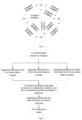
- Fig. 3 is a schematic diagram of a state conversion model for downlink scheduling of a base station according to an embodiment of the present disclosure.
- the current scheduling layer number is 1, the current scheduling layer number is the current state S1, and the constraint condition corresponding to the reference state S2 corresponding to the current state S1 is acquired from the state conversion model to obtain a constraint condition 1;
- the current scheduling layer number is 2, the current scheduling layer number is the current state S2, and the constraint conditions corresponding to the two reference states S1 and S3 corresponding to the current state S2 are acquired from the state conversion model to obtain a constraint condition 2 and a constraint condition 3 respectively;
- the current scheduling layer number is 3, the current scheduling layer number is the current state S3, and the three reference states S1, S2 and S4 corresponding to the current state S3 are acquired from the state conversion model to obtain a constraint condition 4, a constraint condition 5, and a constraint condition 9 respectively; and if the current scheduling layer number is 4,
- the strategy of "slow rise and fast fall" may be used, but is not limited thereto.
- S1 to S2 to S3 to S4 uses a progressive step-by-step increase, and vice versa, a jumpable adjustment state is used, that is, S1 can only be adjusted upward step by step, and the downward adjustment of S3 and S4 is not subject to the decreasing rule.
- the constraint condition corresponding to each of one or more reference states corresponding to the current state may be acquired from the state conversion model to obtain one or more constraint conditions in the following manner that includes, but is not limited to: in a case where the current state is a layer p state wherein the minimum layer number is p, acquiring a reference state as a layer p+1 state, wherein the constraint condition corresponding to the layer p+1 state is to meet following two branches at the same time: a first branch: a ratio of RI_REPORT_NUMp to RI_REPORT_TOTAL_NUM being less than a first threshold; and a second branch: a ratio of CQI_THRESHOLD_NUMp to CQI_THRESHOLD_TOTAL_NUM being less than a second threshold, where the RI_REPORT_NUMp is RI reporting times of a RI parameter value corresponding to the minimum layer number, the RI_REPORT_TOTAL_NUM is RI reporting total times, the
- the reference state is acquired as the layer 2 state (i.e., S2), and then the constraint condition corresponding to S2 meets the following two branches at the same time.
- the constraint condition corresponding to each of one or more reference states corresponding to the current state may be acquired from the state conversion model to obtain one or more constraint conditions in the following manner that includes, but is not limited to: in a case where the current state is a layer q state wherein an intermediate layer number is q except for the minimum layer number and the maximum layer number, acquiring a reference state as a layer q+1 state and a layer t state, wherein a constraint condition corresponding to the layer q+1 state is to meet following two branches at the same time: a third branch: a ratio of RI_REPORT_NUMq to RI_REPORT_TOTAL_NUM being greater than or equal to a third threshold; and a fourth branch: a ratio of CQI_THRESHOLD_NUMq to CQI_THRESHOLD_TOTAL_NUM being greater than or equal to a fourth threshold, where the RI_REPORT_NUMq is the sum of RI reporting times of RI parameter values corresponding
- the BLER information may be, but is not limited to, statistically used as posterior information to determine the scheduling effect of the current state, and provide a reference basis for feedback determination for the next state conversion.
- Information statistics in different states is mainly performed in percentage units, and a BLER change threshold is added.
- BLER statistical variables and BLER statistical information having a corresponding relationship are shown in Table 5.
- Table 5 Statistical variable BLER statistical data LAYER1_SCHE_BLER Downlink BLER statistical information during layer 1 scheduling within the statistical period LAYER2_SCHE_BLER Downlink BLER statistical information during layer 2 scheduling within the statistical period LAYER3_SCHE_BLER Downlink BLER statistical information during layer 3 scheduling within the statistical period LAYER4_SCHE_BLER Downlink BLER statistical information during layer 4 scheduling within the statistical period
- BLER_DELTA may represent, but is not limited to, a BLER change threshold parameter, and may use a percentage value to keep consistent with the BLER statistical information, and the default value may be 3.
- the reference state is acquired as the layer 3 state S3 (i.e., layer q+1), then the constraint condition corresponding to S2 meets the following two branches at the same time.
- the fifth branch is: (RI1_REPORT_NUM/RI_REPORT_TOTAL_NUM)*100>20 (i.e., the fifth threshold) within the statistical period;
- the sixth branch is: (CQI_THRESHOLD_NUM1/CQI_THRESHOLD_TOTAL_NUM)*100>10 (i.e., the sixth threshold) within the statistical period.
- the seventh branch is: LAYER2_SCHE_BLER>(LAYER1_SCHE_BLER+BLER_DELTA) within the statistical period.
- the reference state is acquired as the layer 4 state S4 (i.e., layer q+1), then the constraint condition corresponding to S4 meets the following two branches at the same time.
- the reference state is acquired as the layer 1 state S1 (i.e., layer t), then the constraint condition corresponding to S1 meets one of the following three branches at the same time.
- the fifth branch is: (RI1_REPORT_NUM/RI_REPORT_TOTAL_NUM)*100>20 (i.e., the fifth threshold) within the statistical period.
- the sixth branch is: (CQI_THRESHOLD_NUM1/CQI_THRESHOLD_TOTAL_NUM)*100>10 (i.e., the sixth threshold) within the statistical period.
- the seventh branch is: LAYER3_SCHE_BLER>(LAYER1_SCHE_BLER+2*BLER_DELTA) within the statistical period.
- the reference state is acquired as the layer 2 state S2 (i.e., layer t), then the constraint condition corresponding to S2 meets one of the following three branches at the same time.
- the fifth branch is: ((RI1_REPORT_NUM+RI2_REPORT_NUM)/RI_REPORT_TOTAL_NUM)*100>20 (i.e., the fifth threshold) within the statistical period.
- the sixth branch is: (CQI_THRESHOLD_NUM1+ CQI_THRESHOLD_NUM2/CQI_THRESHOLD_TOTAL_NUM)*100>10 (i.e., the sixth threshold) within the statistical period.
- the seventh branch is: LAYER3_SCHE_BLER>(LAYER2_SCHE_BLER+BLER_DELTA) within the statistical period.
- the conversion from S3 to S1 may be, but is not limited to, precede the determination processing of the conversion from the state S3 to S2, so as to achieve a scheduling effect of "slow rise and fast fall".
- the constraint condition corresponding to each of one or more reference states corresponding to the current state may be acquired from the state conversion model to obtain one or more constraint conditions in the following manner that includes, but is not limited to: in a case where the current state is a layer m state wherein the maximum layer number is m, acquiring a reference state as a layer r state, wherein r is all layer numbers less than m, and a constraint condition corresponding to the layer r state is to meet one of following three branches: an eighth branch: a ratio of RI_REPORT_NUMr to RI_REPORT_TOTAL_NUM being greater than a seventh threshold; a ninth branch: a ratio of CQI_THRESHOLD_NUMr to CQI_THRESHOLD_TOTAL_NUM being greater than an eighth threshold; and a tenth branch: LAYER_SCHE_BLERm being greater than the sum of LAYER_SCHE_BLERr and B*BLER_DELTA, where
- the reference state is acquired as the layer 1 state S1 (i.e., layer r), then the constraint condition corresponding to S1 meets one of the following three branches at the same time.
- the eighth branch is: (RI1_REPORT_NUM/RI_REPORT_TOTAL_NUM)*100>20 (i.e., the seventh threshold) within the statistical period.
- the ninth branch is: (CQI_THRESHOLD_NUM1/CQI_THRESHOLD_TOTAL_NUM)*100>10 (i.e., the eighth threshold) within the statistical period.
- the tenth branch is: LAYER4_SCHE_BLER>(LAYER1_SCHE_BLER+3*BLER_DELTA) within the statistical period.
- the reference state is acquired as the layer 2 state S2 (i.e., layer r), then the constraint condition corresponding to S2 meets one of the following three branches at the same time.
- the eighth branch is: ((RI1_REPORT_NUM+RI2_REPORT_NUM)/RI_REPORT_TOTAL_NUM)*100>20 (i.e., the seventh threshold) within the statistical period.
- the ninth branch is: (CQI_THRESHOLD_NUM1+ CQI_THRESHOLD_NUM2/CQI_THRESHOLD_TOTAL_NUM)*100>10 (i.e., the eighth threshold) within the statistical period.
- the tenth branch is: LAYER4_SCHE_BLER>(LAYER2_SCHE_BLER+2*BLER_DELTA) within the statistical period.
- the reference state is acquired as the layer 3 state S2 (i.e., layer r), then the constraint condition corresponding to S3 meets one of the following three branches at the same time.
- the eighth branch is: ((RI1_REPORT_NUM+RI2_REPORT_NUM+RI3_REPORT_NUM)/RI_REPORT_TOTAL_NUM)*10 0>20 (i.e., the seventh threshold) within the statistical period.
- the ninth branch is: ((CQI_THRESHOLD_NUM1+CQI_THRESHOLD_NUM2+CQI_THRESHOLD_NUM3)/CQI_THRE SHOLD_TOTAL_NUM)*100>10 (i.e., the eighth threshold) within the statistical period.
- the tenth branch is: LAYER4_SCHE_BLER>(LAYER3_SCHE_BLER+BLER_DELTA) within the statistical period.
- the conversion from S4 to S1 may be, but is not limited to, precede determination of the conversion from the state S4 to S2
- the conversion from S4 to S2 may be, but is not limited to, precede determination of the conversion from S4 to S1.
- the method uses the following manner that includes, but is not limited to: in a case where the target layer number conversion condition is not queried, determining the current scheduling layer number to be the scheduling layer number used by the base station within the target period.
- the initialization state being S1 as an example for description
- the state maintaining conditions of S1, S2, S3, and S4 do not meet the constraint condition (i.e., the target layer number adjustment condition) corresponding to each of one or more reference states corresponding to the aforementioned current state
- the current state is maintained (that is, the current scheduling layer number is determined to be the scheduling layer number used by the base station within the target period).
- the statistical update in the corresponding state only retains the statistical information of the most recent period.
- FIG. 4 is a schematic diagram of a process of controlling downlink scheduling of a base station according to an embodiment of the present disclosure. As shown in Fig. 4 , a scheduling state machine is first initialized, then reporting information of RI, a CQI, and a BLER in a current state is counted respectively, it is determined whether each state conversion or maintenance condition is met and a corresponding switching operation is performed, scheduling is performed, data information is sent to a terminal, and finally the scheduling is ended.
- FIG. 5 is a structural block diagram of an apparatus of controlling downlink scheduling of a base station according to an embodiment of the present disclosure. As shown in Fig. 5 , the apparatus includes: a detection module 52, a query module 54, and a first determination module 56.
- the detection module 52 is configured to detect RI data corresponding to RI information, and Channel Quality Indicator (CQI) data corresponding to CQI information, the RI information and the CQI information being reported by a terminal within a current period.
- CQI Channel Quality Indicator
- the query module 54 is configured to query, from one or more layer number adjustment conditions corresponding to a current scheduling layer number, a target layer number adjustment condition that the RI data and the CQI data meet, where a base station is configured to perform downlink scheduling on control information and data information within the current period according to the current scheduling layer number, the one or more layer number conversion conditions are in one-to-one correspondence with one or more scheduling layer numbers, and the one or more scheduling layer numbers are scheduling layer numbers to which the current scheduling layer number is allowed to be converted.
- the first determination module 56 is configured to determine a target scheduling layer number corresponding to the target layer number adjustment condition to be a scheduling layer number used by the base station within a target period, where the target period is a period after the current period.
- the base station when the base station performs downlink scheduling on the control information and the data information according to the current scheduling layer number within the current period, the RI data reported by the terminal and the CQI data corresponding to the CQI information are detected first, so as to obtain the target layer number adjustment condition according to the query of the RI data and the CQI data in one or more layer number adjustment conditions corresponding to the current scheduling layer number; and the target scheduling layer number corresponding to the target layer number condition is acquired according to the target layer number condition, and the target scheduling layer number is determined to be the scheduling layer number used by the base station within the target period after the current period.
- the detection module includes: a first receiving unit and a second receiving unit.
- the first receiving unit is configured to receive the RI information reported by the terminal within the current period; and record times each RI parameter value in the RI information and RI reporting total times to obtain RI reporting total times, and each RI parameter value and reporting times with a corresponding relationship as the RI data.
- the second receiving unit is configured to receive the CQI information reported by the terminal within the current period; and record the number of CQI parameters in the CQI information falling into each of a plurality of CQI intervals and CQI reporting total times to obtain CQI reporting total times , and the CQI intervals and the number of CQI parameters in the CQI information falling into each of a plurality of CQI intervals with a corresponding relationship as the CQI data.
- the first receiving unit is configured to: calculate times of occurrences of each integer from 1 to N in the RI information reported by the terminal within the current period and the RI reporting total times to obtain the RI reporting total times, and the each RI parameter value and RI reporting times with a corresponding relationship as the RI data, wherein the N is the number of downlink radio frequency (RF) antennas of the base station.
- RF radio frequency
- the second receiving unit is configured to: record the number of CQI parameters in the CQI information falling into each of the plurality of CQI intervals and the CQI reporting total times to obtain the CQI reporting total times ,and the CQI intervals and the number of CQI parameters in the CQI information falling into each of a plurality of CQI intervals as the CQI date.
- the query module includes: a first acquisition unit and a second acquisition unit.
- the first acquisition unit is configured to take the current scheduling layer number as a current state, and acquire, from a state conversion model, a constraint condition corresponding to each of one or more reference states corresponding to the current state to obtain one or more constraint conditions, where the state conversion model records state conversion relationships each being between scheduling layer numbers allowed to be used by the base station and constraint conditions that each of the state conversion relationship needs to meet, each of the one or more reference states is state having one of the state conversion relationships with the current state, each of the one or more reference state corresponding to one scheduling layer number to which the current scheduling layer number is allowed to be converted, and the one or more layer number adjustment conditions comprise the one or more constraint conditions.
- the second acquisition unit is configured to acquire, from the one or more constraint conditions, a target constraint condition that the RI data and the CQI data meet as the target layer number adjustment condition.
- the first acquisition unit is configured to: acquire, in a case where the current state is a layer p state wherein the minimum layer number is p, a reference state as a layer p+1 state, where the constraint condition corresponding to the layer p+1 state is to meet following two branches at the same time.
- a first branch is that: a ratio of RI_REPORT_NUMp to RI_REPORT_TOTAL_NUM is less than a first threshold; and a second branch is that: a ratio of CQI_THRESHOLD_NUMp to CQI_THRESHOLD_TOTAL_NUM is less than a second threshold.
- the RI_REPORT_NUMp is RI reporting times of a RI parameter value corresponding to the minimum layer number
- the RI_REPORT_TOTAL_NUM is RI reporting total times
- the RI data comprises the RI reporting total times within the current period , and the RI parameter values and the RI reporting times with a corresponding relationship
- the CQI_THRESHOLD_NUMp is a CQI falling number in a CQI interval corresponding to the minimum layer number
- the CQI_THRESHOLD_TOTAL_NUM is CQI reporting total times
- the CQI data comprises the CQI reporting total times within the current period ,and the CQI interval and the CQI falling number with a corresponding relationship as the CQI data.
- the first acquisition unit is configured to: acquire, in a case where the current state is a layer q state wherein an intermediate layer number is q except for the minimum layer number and the maximum layer number, a reference state as a layer q+1 state and a layer t state, wherein a constraint condition corresponding to the layer q+1 state is to meet following two branches at the same time.
- a third branch is that: a ratio of RI_REPORT_NUMq to RI_REPORT_TOTAL_NUM is greater than or equal to a third threshold; and a fourth branch is that: a ratio of CQI_THRESHOLD_NUMq to CQI_THRESHOLD_TOTAL_NUM is greater than or equal to a fourth threshold.
- the RI_REPORT_NUMq is the sum of RI reporting times of RI parameter values corresponding to all layer numbers greater than q
- the RI_REPORT_TOTAL_NUM is RI reporting total times
- the RI data comprises RI reporting total times within the current period ,and the RI parameter values and the RI reporting times with a corresponding relationship
- the CQI_THRESHOLD_NUMq is the sum of CQI falling numbers in CQI intervals corresponding to all layer numbers greater than q
- the CQI_THRESHOLD_TOTAL_NUM is reporting total times
- the CQI data comprises CQI reporting total times within the current period, and the CQI intervals and the CQI falling numbers with a corresponding relationship .
- t is all layer numbers less than q
- a constraint condition corresponding to the layer t state is to meet one of following three branches.
- a fifth branch is that: a ratio of RI_REPORT_NUMt to RI_REPORT_TOTAL_NUM is greater than a fifth threshold; a sixth branch is that: a ratio of CQI_THRESHOLD_NUMt to CQI_THRESHOLD_TOTAL_NUM is greater than a sixth threshold; and a seventh branch is that: LAYER_SCHE_BLERq is greater than the sum of LAYER_SCHE_BLERt and A*BLER_DELTA; the RI_REPORT_NUMt is the sum of RI reporting times of RI parameter values corresponding to all layer numbers less than or equal to t, the CQI_THRESHOLD_NUMt is the sum of CQI falling numbers in CQI intervals corresponding to all layer numbers less than or equal to t, the LAYER_SCHE_BLERq is downlink Block Error Rate (BLER) information during a layer q scheduling, the LAYER_SCHE_BLERt is downlink
- the first acquisition unit is configured to: acquire, in a case where the current state is a layer m state wherein the maximum layer number is m, a reference state as a layer r state, where r is all layer numbers less than m, and a constraint condition corresponding to the layer r state is to meet one of following three branches.
- the apparatus further includes a second determination module.
- the second determination module is configured to determine, after the target layer number adjustment condition that the RI data and CQI data meet is queried from one or more layer number adjustment conditions corresponding to the current scheduling layer number, the current scheduling layer number to be the scheduling layer number used by the base station within the target period in a case where the target layer number conversion condition is not queried.
- the storage medium may be configured to store a program code for executing the following steps.
- RI data corresponding to RI information RI data corresponding to RI information
- CQI Channel Quality Indicator
- a target layer number adjustment condition that the RI data and the CQI data meet is queried from one or more layer number adjustment conditions corresponding to a current scheduling layer number, where a base station is configured to perform downlink scheduling on control information and data information within the current period according to the current scheduling layer number, the one or more layer number conversion conditions are in one-to-one correspondence with one or more scheduling layer numbers, and the one or more scheduling layer numbers are scheduling layer numbers to which the current scheduling layer number is allowed to be converted.
- a target scheduling layer number corresponding to the target layer number adjustment condition is determined to be a scheduling layer number used by the base station within a target period, where the target period is a period after the current period.
- the computer-readable storage medium may include, but is not limited to, a U disk, a Read Only Memory (ROM), an RAM, a mobile hard disk, a magnetic disk, a compact disc, and other media capable of storing the computer program.
- ROM Read Only Memory
- RAM Random Access Memory
- mobile hard disk a hard disk
- magnetic disk a magnetic disk
- compact disc and other media capable of storing the computer program.
- the embodiments of the present disclosure further provide an electronic apparatus, which includes a memory and a processor.
- the memory stores a computer program.
- the processor is configured to run the computer program to execute the steps in any of the above method embodiments.
- the electronic apparatus may further include a transmission device and an input/output device.
- the transmission device is connected with the processor, and the input/output device is connected with the processor.
- the processor may be configured to execute the following steps through the computer program.
- RI data corresponding to RI information RI data corresponding to RI information
- CQI Channel Quality Indicator
- a target layer number adjustment condition that the RI data and the CQI data meet is queried from one or more layer number adjustment conditions corresponding to a current scheduling layer number, where a base station is configured to perform downlink scheduling on control information and data information within the current period according to the current scheduling layer number, the one or more layer number conversion conditions are in one-to-one correspondence with one or more scheduling layer numbers, and the one or more scheduling layer numbers are scheduling layer numbers to which the current scheduling layer number is allowed to be converted.
- a target scheduling layer number corresponding to the target layer number adjustment condition is determined to be a scheduling layer number used by the base station within a target period, where the target period is a period after the current period.
- modules and steps of the present disclosure may be implemented by a general-purpose computing apparatus, and they may be centralized in a single computing apparatus or distributed on a network composed of multiple computing apparatuses; they may be implemented by a program code which is capable of being executed by the computing apparatus, so that they may be stored in a storage apparatus and executed by the computing apparatus; and in some situations, the presented or described steps may be executed in an order different from that described here; or they are made into integrated circuit modules, respectively; or multiple modules and steps of them are made into a single integrated circuit module to realize.
- the present disclosure is not limited to any particular combination of hardware and software.
Landscapes
- Engineering & Computer Science (AREA)
- Computer Networks & Wireless Communication (AREA)
- Signal Processing (AREA)
- Quality & Reliability (AREA)
- Physics & Mathematics (AREA)
- Mathematical Physics (AREA)
- Mobile Radio Communication Systems (AREA)
Applications Claiming Priority (2)
| Application Number | Priority Date | Filing Date | Title |
|---|---|---|---|
| CN202211473900.9A CN115866779B (zh) | 2022-11-22 | 2022-11-22 | 基站下行调度的控制方法、装置、存储介质和电子装置 |
| PCT/CN2023/104204 WO2024109058A1 (fr) | 2022-11-22 | 2023-06-29 | Procédé et appareil de commande de planification de liaison descendante d'une station de base, et support de stockage et appareil électronique |
Publications (2)
| Publication Number | Publication Date |
|---|---|
| EP4529330A1 true EP4529330A1 (fr) | 2025-03-26 |
| EP4529330A4 EP4529330A4 (fr) | 2025-10-29 |
Family
ID=85665328
Family Applications (1)
| Application Number | Title | Priority Date | Filing Date |
|---|---|---|---|
| EP23893158.8A Pending EP4529330A4 (fr) | 2022-11-22 | 2023-06-29 | Procédé et appareil de commande de planification de liaison descendante d'une station de base, et support de stockage et appareil électronique |
Country Status (4)
| Country | Link |
|---|---|
| US (1) | US20250380259A1 (fr) |
| EP (1) | EP4529330A4 (fr) |
| CN (1) | CN115866779B (fr) |
| WO (1) | WO2024109058A1 (fr) |
Families Citing this family (2)
| Publication number | Priority date | Publication date | Assignee | Title |
|---|---|---|---|---|
| CN115866779B (zh) * | 2022-11-22 | 2024-05-14 | 三维通信股份有限公司 | 基站下行调度的控制方法、装置、存储介质和电子装置 |
| CN116528377B (zh) * | 2023-04-19 | 2024-03-19 | 三维通信股份有限公司 | 基站下行调度控制方法、装置、mimo系统、装置和介质 |
Family Cites Families (31)
| Publication number | Priority date | Publication date | Assignee | Title |
|---|---|---|---|---|
| CN100566295C (zh) * | 2006-04-20 | 2009-12-02 | 大唐移动通信设备有限公司 | 一种基于服务质量保障的分组业务无线资源调度方法 |
| CN102064867B (zh) * | 2009-11-18 | 2013-12-04 | 中兴通讯股份有限公司 | 多天线发射方式切换方法和装置 |
| CN102244566B (zh) * | 2010-05-11 | 2014-03-12 | 中兴通讯股份有限公司 | 用于多输入多输出系统的下行传输方法和基站 |
| CN102244564B (zh) * | 2010-05-11 | 2014-12-10 | 中兴通讯股份有限公司 | 多输入多输出mimo系统的下行传输方法和基站 |
| CN103959839A (zh) * | 2011-08-12 | 2014-07-30 | 黑莓有限公司 | 在协调多点无线通信系统中的信道状态信息反馈和发送的方法 |
| CN103178891B (zh) * | 2011-12-23 | 2015-08-19 | 华为技术有限公司 | 用户设备反馈信息的传输和处理方法及装置 |
| CN102638294B (zh) * | 2012-05-02 | 2015-07-08 | 大唐移动通信设备有限公司 | 一种下行多输入多输出模式内传输方式的切换方法和系统 |
| KR101972945B1 (ko) * | 2012-09-18 | 2019-04-29 | 삼성전자 주식회사 | 무선 통신 시스템에서 채널 상태 정보 송수신 방법 및 장치 |
| CN102946263B (zh) * | 2012-11-27 | 2015-06-10 | 北京北方烽火科技有限公司 | Lte系统下行传输模式的不同mimo方式间切换方法及装置 |
| US9712306B2 (en) * | 2013-01-21 | 2017-07-18 | Apple Inc. | Adaptive link adaptation for wireless communications |
| CN104579539B (zh) * | 2013-10-17 | 2019-01-29 | 辰芯科技有限公司 | 一种lte终端和计算秩指示符的方法 |
| CN104486042A (zh) * | 2014-12-17 | 2015-04-01 | 京信通信系统(中国)有限公司 | Lte系统多入多出模式的切换方法及系统 |
| CN106160948B (zh) * | 2015-04-20 | 2020-11-20 | 中兴通讯股份有限公司 | 信道质量指示cqi数量的确定方法及装置 |
| US10264566B2 (en) * | 2016-07-22 | 2019-04-16 | Qualcomm Incorporated | Enhanced control channel for DL sub-band scheduling |
| EP3905564B1 (fr) * | 2016-11-02 | 2023-01-18 | Apple Inc. | Émission de couches mimo (entrées et sorties multiples) pour nr (nouvelle radio) |
| KR20180075026A (ko) * | 2016-12-26 | 2018-07-04 | 주식회사 지씨티리써치 | Lte mimo 안테나 관리 방법 및 그 장치 |
| CN109474321B (zh) * | 2017-09-08 | 2021-01-22 | 电信科学技术研究院有限公司 | 信道状态信息的反馈、资源分配方法、终端、基站及装置 |
| CN109004967B (zh) * | 2017-12-08 | 2019-11-19 | 华为技术有限公司 | 秩指示方法,秩指示上报方法、设备及系统、存储介质 |
| US10700753B2 (en) * | 2018-02-07 | 2020-06-30 | Qualcomm Incorporated | Reporting variation of beam quality for beam management |
| CN110461048B (zh) * | 2018-05-08 | 2022-06-07 | 中国移动通信有限公司研究院 | 一种调整通信处理能力的方法及用户设备 |
| CN110859002B (zh) * | 2018-08-22 | 2023-04-18 | 中兴通讯股份有限公司 | 一种下行信息处理方法及装置 |
| US11929796B2 (en) * | 2019-08-15 | 2024-03-12 | Telefonaktiebolaget Lm Ericsson (Publ) | Wireless device-autonomous PDSCH RX antenna adaptation |
| US11469797B2 (en) * | 2020-04-03 | 2022-10-11 | Samsung Electronics Co., Ltd | Rank indicator (RI) and channel quality indicator (CQI) estimation using a multi-layer perceptron (MLP) |
| CN113938165B (zh) * | 2020-07-14 | 2023-04-25 | 青岛海信电子产业控股股份有限公司 | 一种天线适配方法及用户设备 |
| CN113556821B (zh) * | 2020-08-17 | 2022-05-03 | 中兴通讯股份有限公司 | 调度方法、基站及存储介质 |
| WO2022116069A1 (fr) * | 2020-12-03 | 2022-06-09 | Mavenir Networks, Inc. | Filtrage de rang et changement de rang élégant dans une station de base |
| CN114650550A (zh) * | 2020-12-21 | 2022-06-21 | 深圳市万普拉斯科技有限公司 | 一种调控终端温度的方法、装置、终端和存储介质 |
| CN112636891B (zh) * | 2021-03-09 | 2021-06-04 | 三维通信股份有限公司 | 资源调度参数的调整方法、装置、存储介质及电子装置 |
| CN113993173B (zh) * | 2021-10-25 | 2023-08-29 | 京信网络系统股份有限公司 | 动态载波切换方法、装置、基站和存储介质 |
| CN113891404B (zh) * | 2021-11-12 | 2025-03-18 | 杭州红岭通信息科技有限公司 | 一种基于无线网络的单向数据业务速率优化方法 |
| CN115866779B (zh) * | 2022-11-22 | 2024-05-14 | 三维通信股份有限公司 | 基站下行调度的控制方法、装置、存储介质和电子装置 |
-
2022
- 2022-11-22 CN CN202211473900.9A patent/CN115866779B/zh active Active
-
2023
- 2023-06-29 WO PCT/CN2023/104204 patent/WO2024109058A1/fr not_active Ceased
- 2023-06-29 EP EP23893158.8A patent/EP4529330A4/fr active Pending
- 2023-06-29 US US18/878,497 patent/US20250380259A1/en active Pending
Also Published As
| Publication number | Publication date |
|---|---|
| CN115866779B (zh) | 2024-05-14 |
| EP4529330A4 (fr) | 2025-10-29 |
| WO2024109058A1 (fr) | 2024-05-30 |
| US20250380259A1 (en) | 2025-12-11 |
| CN115866779A (zh) | 2023-03-28 |
Similar Documents
| Publication | Publication Date | Title |
|---|---|---|
| CN114451043B (zh) | 数据传输的方法和装置 | |
| EP3902355A1 (fr) | Procédé et dispositif de transmission d'informations d'état de canal | |
| KR102633678B1 (ko) | 무선 통신에서의 채널 상태 추정 및 보고 방식 | |
| EP4529330A1 (fr) | Procédé et appareil de commande de planification de liaison descendante d'une station de base, et support de stockage et appareil électronique | |
| US20160211899A1 (en) | Communication method, base station, and user equipment | |
| EP2898607B1 (fr) | Gestion des ressources d'antennes pour une structure à plusieurs antennes | |
| EP3952144A1 (fr) | Procédé et appareil de détermination d'état de panneau d'antenne | |
| CN113949421B (zh) | 确定波束信息的方法、装置及电子设备 | |
| WO2024016276A1 (fr) | Mesure et émission de rapports pour l'amélioration de la mobilité | |
| EP3711407B1 (fr) | Configuration de signaux de référence | |
| WO2024031707A1 (fr) | Renvoi d'informations d'état de canal sur de multiples ressources de mesure de canal ou sur des transmissions conjointes cohérentes | |
| WO2015152777A1 (fr) | Nœud de réseau et procédé dans celui-ci pour estimer un temps de convergence d'un traitement de brouillage dans un équipement utilisateur dans un réseau de radiocommunication | |
| CN112492640A (zh) | 信道测量信息的反馈方法、用户设备及基站 | |
| US20240314543A1 (en) | Method and apparatus for channel state information (csi) reporting | |
| CN120153688A (zh) | 在网络处管理基于机器学习的信道状态信息报告 | |
| WO2021169819A1 (fr) | Procédé et dispositif pour transmission sur liaison montante | |
| CN108886425A (zh) | 一种混合信道状态信息反馈的方法、终端设备及基站 | |
| CN111769900B (zh) | 一种信道状态信息参考信号的调度方法及装置 | |
| EP3203672B1 (fr) | Dispositif et procédé d'agrégation de porteuse basée sur tm9 | |
| WO2024098633A1 (fr) | Unité de traitement d'informations d'état de canal | |
| WO2025107651A1 (fr) | Procédé d'envoi de rapport d'informations d'état de canal, procédé de réception de rapport d'informations d'état de canal, et dispositif | |
| CN118804054A (zh) | 信道状态信息csi报告的上报方法、csi报告的接收方法 | |
| CN119817126A (zh) | 信道状态信息配置 | |
| CN115642943B (zh) | 预编码矩阵确定方法、装置、设备及存储介质 | |
| WO2024217119A1 (fr) | Amélioration de rapport d'ue pour un support amélioré d'ai/ml |
Legal Events
| Date | Code | Title | Description |
|---|---|---|---|
| STAA | Information on the status of an ep patent application or granted ep patent |
Free format text: STATUS: THE INTERNATIONAL PUBLICATION HAS BEEN MADE |
|
| PUAI | Public reference made under article 153(3) epc to a published international application that has entered the european phase |
Free format text: ORIGINAL CODE: 0009012 |
|
| STAA | Information on the status of an ep patent application or granted ep patent |
Free format text: STATUS: REQUEST FOR EXAMINATION WAS MADE |
|
| 17P | Request for examination filed |
Effective date: 20241219 |
|
| AK | Designated contracting states |
Kind code of ref document: A1 Designated state(s): AL AT BE BG CH CY CZ DE DK EE ES FI FR GB GR HR HU IE IS IT LI LT LU LV MC ME MK MT NL NO PL PT RO RS SE SI SK SM TR |
|
| REG | Reference to a national code |
Ref country code: DE Ref legal event code: R079 Free format text: PREVIOUS MAIN CLASS: H04W0072127300 Ipc: H04B0007060000 |
|
| A4 | Supplementary search report drawn up and despatched |
Effective date: 20250926 |
|
| RIC1 | Information provided on ipc code assigned before grant |
Ipc: H04B 7/06 20060101AFI20250922BHEP Ipc: H04B 7/0456 20170101ALI20250922BHEP Ipc: H04W 72/1273 20230101ALI20250922BHEP Ipc: H04W 72/542 20230101ALI20250922BHEP |
|
| DAV | Request for validation of the european patent (deleted) | ||
| DAX | Request for extension of the european patent (deleted) |