EP4529332A1 - Vorrichtung, verfahren und computerprogramm - Google Patents
Vorrichtung, verfahren und computerprogramm Download PDFInfo
- Publication number
- EP4529332A1 EP4529332A1 EP24184324.2A EP24184324A EP4529332A1 EP 4529332 A1 EP4529332 A1 EP 4529332A1 EP 24184324 A EP24184324 A EP 24184324A EP 4529332 A1 EP4529332 A1 EP 4529332A1
- Authority
- EP
- European Patent Office
- Prior art keywords
- slot
- requirement
- transport block
- over
- transmission
- Prior art date
- Legal status (The legal status is an assumption and is not a legal conclusion. Google has not performed a legal analysis and makes no representation as to the accuracy of the status listed.)
- Pending
Links
Images



Classifications
-
- H—ELECTRICITY
- H04—ELECTRIC COMMUNICATION TECHNIQUE
- H04L—TRANSMISSION OF DIGITAL INFORMATION, e.g. TELEGRAPHIC COMMUNICATION
- H04L5/00—Arrangements affording multiple use of the transmission path
- H04L5/0001—Arrangements for dividing the transmission path
- H04L5/0003—Two-dimensional division
-
- H—ELECTRICITY
- H04—ELECTRIC COMMUNICATION TECHNIQUE
- H04W—WIRELESS COMMUNICATION NETWORKS
- H04W72/00—Local resource management
- H04W72/02—Selection of wireless resources by user or terminal
-
- H—ELECTRICITY
- H04—ELECTRIC COMMUNICATION TECHNIQUE
- H04W—WIRELESS COMMUNICATION NETWORKS
- H04W72/00—Local resource management
- H04W72/04—Wireless resource allocation
- H04W72/044—Wireless resource allocation based on the type of the allocated resource
- H04W72/0446—Resources in time domain, e.g. slots or frames
-
- H—ELECTRICITY
- H04—ELECTRIC COMMUNICATION TECHNIQUE
- H04W—WIRELESS COMMUNICATION NETWORKS
- H04W72/00—Local resource management
- H04W72/12—Wireless traffic scheduling
- H04W72/1215—Wireless traffic scheduling for collaboration of different radio technologies
-
- H—ELECTRICITY
- H04—ELECTRIC COMMUNICATION TECHNIQUE
- H04W—WIRELESS COMMUNICATION NETWORKS
- H04W72/00—Local resource management
- H04W72/40—Resource management for direct mode communication, e.g. D2D or sidelink
-
- H—ELECTRICITY
- H04—ELECTRIC COMMUNICATION TECHNIQUE
- H04W—WIRELESS COMMUNICATION NETWORKS
- H04W72/00—Local resource management
- H04W72/50—Allocation or scheduling criteria for wireless resources
- H04W72/52—Allocation or scheduling criteria for wireless resources based on load
-
- H—ELECTRICITY
- H04—ELECTRIC COMMUNICATION TECHNIQUE
- H04W—WIRELESS COMMUNICATION NETWORKS
- H04W72/00—Local resource management
- H04W72/50—Allocation or scheduling criteria for wireless resources
- H04W72/56—Allocation or scheduling criteria for wireless resources based on priority criteria
- H04W72/566—Allocation or scheduling criteria for wireless resources based on priority criteria of the information or information source or recipient
Definitions
- the present disclosure relates to an apparatus, a method, and a computer program for managing coexistence between sidelink transmissions over a first radio access technology (e.g. 5G) and sidelink transmissions over a second radio access technology (e.g. LTE).
- a first radio access technology e.g. 5G
- a second radio access technology e.g. LTE
- a communication system can be seen as a facility that enables communication sessions between two or more entities such as communication devices, base stations and/or other nodes by providing carriers between the various entities involved in the communications path.
- an apparatus comprising at least one processor and at least one memory storing instructions that, when executed by the at least one processor, cause the apparatus at least to: select a first slot and a second slot for sidelink transmissions via a first radio access technology, wherein the first slot and the second slot overlap with a subframe for sidelink transmissions via a second radio access technology, wherein the first slot and the second slot are associated with at least one transmission requirement; generate a first transport block associated with at least one first transport block requirement and a second transport block associated with at least one second transport block requirement; determine to transmit at least one of the first transport block or the second transport block over at least the first slot based on the at least one transmission requirement, the at least one first transport block requirement and the at least one second transport block requirement; and transmit at least one of the first transport block or the second transport block over at least the first slot.
- Transmitting at least one of the first transport block or the second transport block over at least the first slot may comprise: transmitting the first transport block over the first slot and transmitting the second transport block over the second slot; transmitting the first transport block over the first slot and not transmitting the second transport block over the second slot; transmitting the first transport block over the first slot and the second slot (i.e. transmitting the first transport block over the first slot and retransmitting or duplicating the first transport block over the second slot); transmitting the second transport block over the first slot and transmitting the first transport block over the second slot; transmitting the second transport block over the first slot and not transmitting the first transport block over the second slot; or transmitting the second transport block over the first slot and the second slot (i.e. transmitting the second transport block over the first slot and retransmitting or duplicating the second transport block over the second slot).
- the at least one transmission requirement may comprise at least one of: transmitting over the second slot is allowed if transmitting over the first slot; or transmitting over the second slot is allowed if a transmission power over the second slot is lower than or equal to a transmission power over the first slot.
- the at least one first transport block requirement may comprise at least one of a first casting requirement, a first priority requirement, a first reliability requirement, a first transmission power requirement or a first latency requirement; and wherein the at least one second transport block requirement comprises at least one of a second casting requirement, a second priority requirement, a second reliability requirement, a second transmission power requirement or a second latency requirement.
- the at least one first transport block requirement and the at least one second transport block requirement may comprise the same transport block requirement or may comprise different transport block requirements.
- a casting requirement may comprise a unicast requirement, a groupcast requirement or a broadcast requirement.
- the first transport block and the second transport block may be generated for a same service or for different services.
- a service may refer to a connection or traffic flow between a source identifier and a destination identifier.
- the at least one memory may store instructions that, when executed by the at least one processor, cause the apparatus at least to: generate a first transport block associated with a first priority requirement and a second transport block associated with a second priority requirement, wherein the first priority requirement is greater than the second priority requirement; determine congestion over the first slot and the second slot; determine to transmit the first transport block over the first slot or over the first slot and the second slot based on the at least one transmission requirement, the first priority requirement, the second priority requirement and the congestion over the first slot and the second slot; and transmit the first transport block over the first slot or over the first slot and the second slot.
- the at least one memory stores instructions that, when executed by the at least one processor, cause the apparatus at least to: determine that the congestion over the first slot and the second slot is lower than a congestion threshold and greater than another congestion threshold.
- the congestion threshold is first threshold corresponding to the first priority requirement and the other congestion threshold is a second threshold corresponding to the second priority requirement.
- the first priority requirement may be determined based on the lowest priority of a data packet comprised in the first transport block; and the second priority requirement may be determined based on the greatest priority of a data packet comprised in the second transport block.
- the at least one memory may store instructions that, when executed by the at least one processor, cause the apparatus at least to: generate a first transport block associated with a first transmission power requirement and a second transport block associated with a second transmission power requirement, wherein the second transmission power requirement is lower than the first transmission power requirement; determine to transmit the first transport block over the first slot and the second transport block over the second slot based on the at least one transmission requirement, the first transmission power requirement and the second transmission power requirement; and transmit the first transport block over the first slot and the second transport block over the second slot.
- the at least one memory may store instructions that, when executed by the at least one processor, cause the apparatus at least to: generate a first transport block associated with a first casting requirement and a second transport block associated with a second casting requirement, wherein the first casting requirement is a groupcast requirement or a broadcast requirement and the second casting requirement is a unicast requirement; determine to transmit the first transport block over the first slot and the second transport block over the second slot based on the at least one transmission requirement, the first casting requirement and the second casting requirement; and transmit the first transport block over the first slot and the second transport block over the second slot.
- the at least one memory may store instructions that, when executed by the at least one processor, cause the apparatus at least to: generate a first transport block associated with a first transport block requirement and a second transport block associated with a second transport block requirement; determine to not transmit the second transport block over the first slot or the second slot based on the at least one transmission requirement, the first transport block requirement and the second transport block requirement; determine to transmit the first transport block over the first slot and the second slot based on the at least one transmission requirement, the first transport block requirement and the second transport block requirement; and transmit the first transport block over the first slot and the second slot.
- the at least one memory may store instructions that, when executed by the at least one processor, cause the apparatus at least to: generate a first transport block associated with a first transmission power requirement greater than a transmission power threshold; determine to transmit the first transport block over the first slot and the second slot based on the at least one transmission requirement and the first transmission power requirement; and transmit the first transport block over the first slot and the second slot.
- the at least one memory may store instructions that, when executed by the at least one processor, cause the apparatus at least to: generate a first transport block associated with a first casting requirement, wherein the first casting requirement is a unicast requirement; determine to transmit the first transport block over the first slot and the second slot based on the at least one transmission requirement and the first casting requirement; and transmit the first transport block over the first slot and the second slot.
- the at least one memory may store instructions that, when executed by the at least one processor, cause the apparatus at least to: transmit an indication that hybrid automatic repeat request with feedback is enabled for the transmission of the first transport block over the first slot, wherein the feedback is based on a reception status of the transmission of the first transport block over the first slot; transmit the first transport block over the first slot using a hybrid automatic repeat request process; transmit an indication that hybrid automatic repeat request with feedback is enabled for the transmission of the first transport block over the second slot, wherein the feedback is based on a reception status of the transmission of the first transport block over the second slot; and transmit the first transport block over the second slot using another hybrid automatic repeat request process.
- the hybrid automatic repeat request process may be stopped in response to receiving an acknowledgement for the transmission of the first transport block over the first slot or in response to the other hybrid automatic repeat request process being stopped; or the other hybrid automatic repeat request process may be stopped in response to receiving an acknowledgement for the transmission of the first transport block over the second slot or in response to the hybrid automatic repeat request process being stopped.
- the at least one memory may store instructions that, when executed by the at least one processor, cause the apparatus at least to: transmit an indication that hybrid automatic repeat request with feedback is enabled for the transmission of the first transport block over the first slot, wherein the feedback is based on a reception status of the transmission of the first transport block over the first slot; transmit the first transport block over the first slot using a hybrid automatic repeat request process; transmit an indication that hybrid automatic repeat request with feedback is disabled for the transmission of the first transport block over the second slot; and transmit the first transport block over the second slot using another hybrid automatic repeat request process.
- the hybrid automatic repeat request process may be stopped in response to receiving an acknowledgement for the transmission of the first transport block over the first slot or in response to the other hybrid automatic repeat request process being stopped; or the other hybrid automatic repeat request process may be stopped in response to the hybrid automatic repeat request process being stopped or in response to reaching a configured number of retransmissions for the other hybrid automatic repeat request process.
- the at least one memory may store instructions that, when executed by the at least one processor, cause the apparatus at least to: transmit an indication that a hybrid automatic repeat request with feedback is enabled for the transmission of the first transport block over the first slot, wherein the feedback is based on a reception status of the transmission of the first transport block over the first slot and the transmission of the first transport block over the second slot; transmit the first transport block over the first slot using a hybrid automatic repeat request process; transmit an indication that hybrid automatic repeat request with feedback is disabled for the transmission of the first transport block over the second slot; and transmit the first transport block over the second slot using the same hybrid automatic repeat request process.
- the hybrid automatic repeat request process may be stopped in response to receiving an acknowledgement for the transmission of the first transport block over the first slot or the transmission of the first transport block over the second slot.
- the apparatus may be a user equipment.
- the user equipment may operate in FR1.
- the user equipment may operate with a 30kHz subcarrier spacing.
- the first radio access technology may be 5G.
- the second radio access technology may be LTE.
- an apparatus comprising means for: selecting a first slot and a second slot for sidelink transmissions via a first radio access technology, wherein the first slot and the second slot overlap with a subframe for sidelink transmissions via a second radio access technology, wherein the first slot and the second slot are associated with at least one transmission requirement; generating a first transport block associated with at least one first transport block requirement and a second transport block associated with at least one second transport block requirement; determining to transmit at least one of the first transport block or the second transport block over at least the first slot based on the at least one transmission requirement, the at least one first transport block requirement and the at least one second transport block requirement; and transmitting at least one of the first transport block or the second transport block over at least the first slot
- an apparatus comprising circuitry configured to: select a first slot and a second slot for sidelink transmissions via a first radio access technology, wherein the first slot and the second slot overlap with a subframe for sidelink transmissions via a second radio access technology, wherein the first slot and the second slot are associated with at least one transmission requirement; generate a first transport block associated with at least one first transport block requirement and a second transport block associated with at least one second transport block requirement; determine to transmit at least one of the first transport block or the second transport block over at least the first slot based on the at least one transmission requirement, the at least one first transport block requirement and the at least one second transport block requirement; and transmit at least one of the first transport block or the second transport block over at least the first slot.
- a method comprising: selecting a first slot and a second slot for sidelink transmissions via a first radio access technology, wherein the first slot and the second slot overlap with a subframe for sidelink transmissions via a second radio access technology, wherein the first slot and the second slot are associated with at least one transmission requirement; generating a first transport block associated with at least one first transport block requirement and a second transport block associated with at least one second transport block requirement; determining to transmit at least one of the first transport block or the second transport block over at least the first slot based on the at least one transmission requirement, the at least one first transport block requirement and the at least one second transport block requirement; and transmitting at least one of the first transport block or the second transport block over at least the first slot.
- Transmitting at least one of the first transport block or the second transport block over at least the first slot may comprise: transmitting the first transport block over the first slot and transmitting the second transport block over the second slot; transmitting the first transport block over the first slot and not transmitting the second transport block over the second slot; transmitting the first transport block over the first slot and the second slot (i.e. transmitting the first transport block over the first slot and retransmitting or duplicating the first transport block over the second slot); transmitting the second transport block over the first slot and transmitting the first transport block over the second slot; transmitting the second transport block over the first slot and not transmitting the first transport block over the second slot; or transmitting the second transport block over the first slot and the second slot (i.e. transmitting the second transport block over the first slot and retransmitting or duplicating the second transport block over the second slot).
- the at least one transmission requirement may comprise at least one of: transmitting over the second slot is allowed if transmitting over the first slot; or transmitting over the second slot is allowed if a transmission power over the second slot is lower than or equal to a transmission power over the first slot.
- the at least one first transport block requirement may comprise at least one of a first casting requirement, a first priority requirement, a first reliability requirement, a first transmission power requirement or a first latency requirement; and wherein the at least one second transport block requirement comprises at least one of a second casting requirement, a second priority requirement, a second reliability requirement, a second transmission power requirement or a second latency requirement.
- the at least one first transport block requirement and the at least one second transport block requirement may comprise the same transport block requirement or may comprise different transport block requirements.
- a casting requirement may comprise a unicast requirement, a groupcast requirement or a broadcast requirement.
- the method may comprise: generating a first transport block associated with a first priority requirement and a second transport block associated with a second priority requirement, wherein the first priority requirement is greater than the second priority requirement; determining congestion over the first slot and the second slot; determining to transmit the first transport block over the first slot or over the first slot and the second slot based on the at least one transmission requirement, the first priority requirement, the second priority requirement and the congestion over the first slot and the second slot; and transmitting the first transport block over the first slot or over the first slot and the second slot.
- the method may comprise: determining that the congestion over the first slot and the second slot is lower than a congestion threshold and greater than another congestion threshold.
- the congestion threshold is first threshold corresponding to the first priority requirement and the other congestion threshold is a second threshold corresponding to the second priority requirement.
- the first priority requirement may be determined based on the lowest priority of a data packet comprised in the first transport block; and the second priority requirement may be determined based on the greatest priority of a data packet comprised in the second transport block.
- the method may comprise: generating a first transport block associated with a first transmission power requirement and a second transport block associated with a second transmission power requirement, wherein the second transmission power requirement is lower than the first transmission power requirement; determining to transmit the first transport block over the first slot and the second transport block over the second slot based on the at least one transmission requirement, the first transmission power requirement and the second transmission power requirement; and transmitting the first transport block over the first slot and the second transport block over the second slot.
- the method may comprise: generating a first transport block associated with a first casting requirement and a second transport block associated with a second casting requirement, wherein the first casting requirement is a groupcast requirement or a broadcast requirement and the second casting requirement is a unicast requirement; determining to transmit the first transport block over the first slot and the second transport block over the second slot based on the at least one transmission requirement, the first casting requirement and the second casting requirement; and transmitting the first transport block over the first slot and the second transport block over the second slot.
- the method may comprise: generating a first transport block associated with a first transport block requirement and a second transport block associated with a second transport block requirement; determining to not transmit the second transport block over the first slot or the second slot based on the at least one transmission requirement, the first transport block requirement and the second transport block requirement; determining to transmit the first transport block over the first slot and the second slot based on the at least one transmission requirement, the first transport block requirement and the second transport block requirement; and transmitting the first transport block over the first slot and the second slot.
- the method may comprise: generating a first transport block associated with a first transmission power requirement greater than a transmission power threshold; determining to transmit the first transport block over the first slot and the second slot based on the at least one transmission requirement and the first transmission power requirement; and transmitting the first transport block over the first slot and the second slot.
- the method may comprise: generating a first transport block associated with a first casting requirement, wherein the first casting requirement is a unicast requirement; determining to transmit the first transport block over the first slot and the second slot based on the at least one transmission requirement and the first casting requirement; and transmitting the first transport block over the first slot and the second slot.
- the method may comprise: transmitting an indication that hybrid automatic repeat request with feedback is enabled for the transmission of the first transport block over the first slot, wherein the feedback is based on a reception status of the transmission of the first transport block over the first slot; transmitting the first transport block over the first slot using a hybrid automatic repeat request process; transmitting an indication that hybrid automatic repeat request with feedback is enabled for the transmission of the first transport block over the second slot, wherein the feedback is based on a reception status of the transmission of the first transport block over the second slot; and transmitting the first transport block over the second slot using another hybrid automatic repeat request process.
- the hybrid automatic repeat request process may be stopped in response to receiving an acknowledgement for the transmission of the first transport block over the first slot or in response to the other hybrid automatic repeat request process being stopped; or the other hybrid automatic repeat request process may be stopped in response to receiving an acknowledgement for the transmission of the first transport block over the second slot or in response to the hybrid automatic repeat request process being stopped.
- the method may comprise: transmitting an indication that hybrid automatic repeat request with feedback is enabled for the transmission of the first transport block over the first slot, wherein the feedback is based on a reception status of the transmission of the first transport block over the first slot; transmitting the first transport block over the first slot using a hybrid automatic repeat request process; transmitting an indication that hybrid automatic repeat request with feedback is disabled for the transmission of the first transport block over the second slot; and transmitting the first transport block over the second slot using another hybrid automatic repeat request process.
- the hybrid automatic repeat request process may be stopped in response to receiving an acknowledgement for the transmission of the first transport block over the first slot or in response to the other hybrid automatic repeat request process being stopped; or the other hybrid automatic repeat request process may be stopped in response to the hybrid automatic repeat request process being stopped or in response to reaching a configured number of retransmissions for the other hybrid automatic repeat request process.
- the method may comprise: transmitting an indication that a hybrid automatic repeat request with feedback is enabled for the transmission of the first transport block over the first slot, wherein the feedback is based on a reception status of the transmission of the first transport block over the first slot and the transmission of the first transport block over the second slot; transmit the first transport block over the first slot using a hybrid automatic repeat request process; transmitting an indication that hybrid automatic repeat request with feedback is disabled for the transmission of the first transport block over the second slot; and transmitting the first transport block over the second slot using the same hybrid automatic repeat request process.
- the hybrid automatic repeat request process may be stopped in response to receiving an acknowledgement for the transmission of the first transport block over the first slot or the transmission of the first transport block over the second slot.
- the method may be performed by an apparatus.
- the apparatus may be a user equipment.
- the user equipment may operate in FR1.
- the user equipment may operate with a 30kHz subcarrier spacing.
- the first radio access technology may be 5G.
- the second radio access technology may be LTE.
- a computer program comprising computer executable code which when run on at least one processor is configured to: select a first slot and a second slot for sidelink transmissions via a first radio access technology, wherein the first slot and the second slot overlap with a subframe for sidelink transmissions via a second radio access technology, wherein the first slot and the second slot are associated with at least one transmission requirement; generate a first transport block associated with at least one first transport block requirement and a second transport block associated with at least one second transport block requirement; determine to transmit at least one of the first transport block or the second transport block over at least the first slot based on the at least one transmission requirement, the at least one first transport block requirement and the at least one second transport block requirement; and transmit at least one of the first transport block or the second transport block over at least the first slot.
- a computer readable medium comprising program instructions stored thereon for performing at least one of the above methods.
- a non-transitory computer readable medium comprising program instructions stored thereon for performing at least one of the above methods.
- non-volatile tangible memory medium comprising program instructions stored thereon for performing at least one of the above methods.
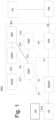
- FIG. 1 shows a schematic representation of a 5G system (5GS).
- the 5GS may comprises user equipments (UEs), a (radio) access network ((R)AN), a 5G core network (5GC), one or more application functions (AF) and one or more data networks (DN).
- UEs user equipments
- R radio access network
- GC 5G core network
- AF application functions
- DN data networks
- the 5G (R)AN may comprise one or more gNodeB (gNB) distributed unit functions connected to one or more gNodeB (gNB) centralized unit functions.
- gNB gNodeB
- gNB gNodeB
- the 5GC may comprise an access and mobility management function (AMF), a session management function (SMF), an authentication server function (AUSF), a user data management (UDM), a user plane function (UPF), a network exposure function (NEF), a unified data repository (UDR), an application function (AF) and/or a location management function (LMF).
- AMF access and mobility management function
- SMF session management function
- AUSF authentication server function
- UDM user data management
- UPF user plane function
- NEF network exposure function
- UDR unified data repository
- AF application function
- LMF location management function
- Fig. 2 illustrates an example of a control apparatus 200 for controlling a function of the (R)AN or the 5GC as illustrated on Fig. 1 .
- the control apparatus may comprise at least one random access memory (RAM) 211a, at least on read only memory (ROM) 211b, at least one processor 212, 213 and an input/output interface 214.
- the at least one processor 212, 213 may be coupled to the RAM 211a and the ROM 211b.
- the at least one processor 212, 213 may be configured to execute an appropriate software code 215.
- the software code 215 may for example allow to perform one or more steps to perform one or more of the present aspects.
- the software code 215 may be stored in the ROM 211b.
- the control apparatus 200 may be interconnected with another control apparatus 200 controlling another function of the 5G (R)AN or the 5GC.
- each function of the (R)AN or the 5GC comprises a control apparatus 200.
- two or more functions of the (R)AN or the 5GC may share a control apparatus.
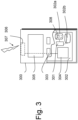
- Fig. 3 illustrates an example of a UE 300, such as the UE illustrated on Fig. 1 .
- the UE 300 may be provided by any device capable of sending and receiving radio signals.
- Non-limiting examples comprise a user equipment, a mobile station (MS) or mobile device such as a mobile phone or what is known as a 'smart phone', a computer provided with a wireless interface card or other wireless interface facility (e.g., USB dongle), a personal data assistant (PDA) or a tablet provided with wireless communication capabilities, a machine-type communications (MTC) device, a Cellular Internet of things (CloT) device or any combinations of these or the like.
- the UE 300 may provide, for example, communication of data for carrying communications.
- the communications may be one or more of voice, electronic mail (email), text message, multimedia, data, machine data and so on.
- the UE 300 may receive signals over an air or radio interface 307 via appropriate apparatus for receiving and may transmit signals via appropriate apparatus for transmitting radio signals.
- transceiver apparatus is designated schematically by block 306.
- the transceiver apparatus 306 may be provided for example by means of a radio part and associated antenna arrangement.
- the antenna arrangement may be arranged internally or externally to the mobile device.
- the UE 300 may be provided with at least one processor 301, at least one memory ROM 302a, at least one RAM 302b and other possible components 303 for use in software and hardware aided execution of tasks it is designed to perform, including control of access to and communications with access systems and other communication devices.
- the at least one processor 301 is coupled to the RAM 302b and the ROM 302a.
- the at least one processor 301 may be configured to execute an appropriate software code 308.
- the software code 308 may for example allow to perform one or more of the present aspects.
- the software code 308 may be stored in the ROM 302a.
- the processor, storage and other relevant control apparatus can be provided on an appropriate circuit board and/or in chipsets. This feature is denoted by reference 304.
- the device may optionally have a user interface such as keypad 305, touch sensitive screen or pad, combinations thereof or the like.
- a user interface such as keypad 305, touch sensitive screen or pad, combinations thereof or the like.
- one or more of a display, a speaker and a microphone may be provided depending on the type of the device.
- One or more aspects of this disclosure relate to managing coexistence between sidelink transmissions over a first radio access technology (RAT) (e.g. 5G) and sidelink transmissions over a second radio access technology (e.g. LTE).
- RAT radio access technology
- LTE second radio access technology
- 5G UEs and LTE UEs may dynamically share a pool of resources in FR1 (i.e. below 7.125 GHz) to perform sidelink transmissions.
- the 5G UEs may operate with a subcarrier spacing (SCS) equal to 15kHz or 30kHz.
- SCS subcarrier spacing
- the LTE UEs may operate with a SCS equal to 15kHz.
- consecutive slot 1 and slot 2 selected by the 5G TX UE to perform sidelink transmissions toward the 5G RX UE may fully overlap (in time but not necessarily in frequency) with a subframe selected by the LTE TX UE to perform sidelink transmissions toward the LTE RX UE.
- Fig. 4 shows a subframe selected by a LTE TX UE to perform sidelink transmissions toward a LTE RX UE and consecutive slot 1 and slot 2 selected by a 5G TX UE to perform sidelink transmissions toward a 5G RX UE.
- the consecutive slot 1 and slot 2 may fully overlap (in time but not necessarily in frequency) with the subframe.
- the LTE RX UE may receive the subframe.
- the LTE RX UE may perform automatic gain control (AGC) in the first symbol of the subframe.
- AGC may ensure that a required signal to noise ratio (SNR) is met so that the subframe may be decoded by the LTE RX UE. For example, if the received signal power is too weak, AGC may adjust a gain in order to boost the received signal power and meet the required SNR. Likewise, if the received signal power is too strong, AGC may adjust a gain in order to attenuate the received signal power and meet the required signal SNR.
- SNR signal to noise ratio
- the received signal power at the LTE RX UE may increase in the middle of the subframe. This may cause AGC saturation.
- the received signal power at the LTE RX UE may increase. This may cause AGC saturation as well.
- the slot 1 and the slot 2 may be associated with at least one transmission requirement: (i) transmitting over the slot 2 is allowed if transmitting over the slot; or (ii) transmitting over the slot 2 is allowed if the transmission power over the slot 2 is lower than or equal to the transmission power over the slot 1.
- An objective may then be to configure the 5G TX UE to efficiently transmit TBs over the slot 1 and the slot 2 based on the at least one transmission requirements.
- One or more aspects of this disclosure proposes a solution to achieve this objective.
- Fig. 5 shows a block diagram of a method for managing coexistence between sidelink transmissions from a 5G TX UE to a 5G RX UE and sidelink transmissions from an LTE TX UE to an LTE RX UE.
- the 5G TX UE may select consecutive slot 1 and slot 2 to perform sidelink transmissions toward the 5G RX UE.
- the slot 1 and the slot 2 may fully overlap (in time but not necessarily in frequency) with a subframe selected by the LTE TX UE to perform sidelink transmissions toward the LTE RX UE.
- the 5G TX UE may generate a TB1 and a TB2.
- the TB1 and the TB2 may be generated for a same service or for different services.
- a service may refer to a connection or traffic flow between a (layer 2) source identifier and a (layer 2) destination identifier.
- the TB1 may be associated with at least one first TB requirement.
- the TB2 may be associated with at least one second TB requirement.
- the at least one first TB requirement may comprise at least one of a first casting requirement, a first priority requirement, a first reliability requirement, a first transmission power requirement, a first latency requirement or a first amount of data available requirement.
- the at least one second TB requirement may comprise at least one of a second casting requirement, a second priority requirement, a second reliability requirement, a second transmission power requirement, a second latency requirement or a second amount of data available requirement.
- the at least one first TB requirement and the at least one second TB requirement may comprise a same TB requirements or different TB requirements.
- a casting requirement may comprise a groupcast requirement, a broadcast requirement or a unicast requirement.
- a priority requirement may comprise a high priority requirement, a medium priority requirement or a low priority requirement.
- a priority requirement may comprise an amount of data available requirement.
- An amount of data available requirement may comprise a high amount of data available requirement, a medium amount of data available requirement or a low amount of data available requirement.
- a reliability requirement may comprise a high reliability requirement, a medium reliability requirement or a low reliability requirement.
- a latency requirement may comprise a high latency requirement, a medium latency requirement or a low latency requirement.
- a latency requirement may comprise a remaining packet delay budget requirement.
- a remaining packet delay budget requirement may comprise a high remaining packet delay budget requirement, a medium remaining packet delay budget requirement or a low remaining packet delay budget requirement.
- a transmission power requirement may comprise a high transmission power requirement, a medium transmission power requirement or a low transmission power requirement.
- a transmission power requirement may comprise a transmission power above a transmission power threshold requirement or a transmission power below a transmission power threshold requirement.
- a transmission power requirement may comprise a (semi)-static requirement or a dynamic requirement.
- a TB may be associated with one or more than one TB requirement.
- a TB may be associated with a groupcast requirement and a (semi)-static high transmission power requirement.
- a TB may be associated with a broadcast requirement and a (semi)-static high transmission power requirement.
- a TB may be associated with a unicast requirement and a dynamic transmission power requirement.
- the 5G TX UE may determine to transmit at least one of the TB1 or the TB2 over at least the slot 1 based on the at least one transmission requirement, the at least one first TB requirement and the at least one second TB requirement.
- the 5G TX UE may transmit at least one of the TB1 or the TB2 over at least the slot 1.
- the 5G TX UE may generate the TB1 and the TB2.
- the TB1 may be associated with a first priority requirement and the TB2 may associated with a second priority requirement.
- the first priority requirement may be greater than the second priority requirement.
- the first priority requirement may be determined based on the lowest priority of a data packet comprised in the TB1.
- the second priority requirement may be determined based on the greatest priority of a data packet comprised in the second transport block.
- the 5G TX UE may determine a congestion over the slot 1 and the slot 2. For example, the 5G TX UE may determine a channel busy ratio over the slot 1 and the slot 2.
- the 5G TX UE may determine that the congestion over the slot 1 and the slot 2 is lower than a first congestion threshold corresponding to the first priority requirement (which implies that the TB1 may be transmitted) and greater than a second congestion threshold corresponding to the second priority requirement (which implies that the TB2 is to be dropped).
- the 5G TX UE may determine that the congestion over the slot 1 and the slot 2 is lower than the first congestion threshold corresponding to the first priority requirement (which implies that the TB1 may be transmitted) and greater than a congestion threshold lower than the second congestion threshold corresponding to the second priority requirement (which implies that that the TB2 is not be dropped but the probability that the TB2 is about to be dropped is significant).
- the 5G TX UE may determine to not transmit the TB2 over the slot 1 or the slot 2 based on the at least one transmission requirement, the first priority requirement, the second priority requirement and the congestion over the first slot and the second slot.
- the 5G TX UE may determine to transmit the TB1 over the slot 1 based on the at least one transmission requirement, the first priority requirement, the second priority requirement and the congestion over the first slot and the second slot.
- the 5G TX UE may determine to transmit the TB1 over the slot 1 and the slot 2 (i.e. transmit the TB1 over the slot1 and retransmit or duplicate the TB1 over the slot 2) based on the at least one transmission requirement, the first priority requirement, the second priority requirement and the congestion over the first slot and the second slot.
- the 5G TX UE may transmit the TB1 over the slot 1.
- the 5G TX UE may transmit the TB1 over the slot 1 and the slot 2 (i.e. transmit the TB1 over the slot 1 and retransmit or duplicate the TB1 over the slot 2).
- the 5G TX UE may generate the TB1 and the TB2.
- the TB1 may be associated with a first transmission power requirement and the TB2 may associated with a second transmission power requirement.
- the second transmission power requirement may be lower than the first transmission power requirement.
- the 5G TX UE may determine to transmit the TB1 over the slot 1 and to transmit the TB2 over the slot 2 based on the at least one transmission requirement, the first transmission power requirement and the second transmission power requirement.
- the 5G TX UE may transmit the TB1 over the slot 1 and may transmit the TB2 over the slot 2.
- the 5G TX UE may generate the TB1 and the TB2.
- the TB1 may be associated with a first transmission power requirement and a first remaining packet delay budget requirement and the TB2 may associated with a second transmission power requirement and a second remaining packet delay budget requirement.
- the second transmission power requirement may be lower than the first transmission power requirement.
- the second remaining packet delay budget requirement may be lower than the first remaining packet delay budget requirement.
- the 5G TX UE may determine to transmit the TB2 over the slot 1 and the slot 2 (i.e. transmit the TB2 over the slot 1 and retransmit or duplicate the TB2 over the slot 2) based on the transmission requirement, the first transmission power requirement, the second transmission power requirement, the first remaining packet delay budget requirement and the second remaining packet delay budget requirement.
- the 5G TX UE may transmit the TB2 over the slot 1 and the slot 2.
- the 5G TX UE may generate the TB1 and the TB2.
- the TB1 may be associated with a first transmission power requirement and a first amount of data available requirement and the TB2 may associated with a second transmission power requirement and a second amount of data available requirement.
- the second transmission power requirement may be lower than the first transmission power requirement.
- the second amount of data available requirement may be greater than the first amount of data available requirement.
- the 5G TX UE may determine to transmit the TB2 over the slot 1 and the slot 2 (i.e. transmit the TB2 over the slot 1 and retransmit or duplicate the TB2 over the slot 2) based on the at least one transmission requirement, the first transmission power requirement, the second transmission power requirement, the first amount of data available requirement and the second amount of data available requirement.
- the 5G TX UE may transmit the TB2 over the slot 1 and the slot 2.
- the 5G TX UE may generate the TB1 and the TB2.
- the TB1 may be associated with a first casting requirement and the TB2 may associated with a second casting requirement.
- the first casting requirement may be a groupcast requirement or a broadcast requirement, which may imply a (semi)-static high transmission power requirement because groupcast or broadcast may not allow dynamic power control.
- the second casting requirement may be a unicast requirement, which may imply a dynamic transmission power requirement because unicast may allow dynamic power control.
- the 5G TX UE may determine to transmit the TB1 over the slot 1 and to transmit the TB2 over the slot 2 based on the at least one transmission requirement, the first casting requirement and the second casting requirement.
- the 5G TX UE may transmit the TB1 over the slot 1 and may transmit the TB2 over the slot 2.
- the 5G TX UE may generate the TB1 and the TB2.
- the TB1 may be associated with a first casting requirement and a first remaining packet delay budget requirement and the TB2 may associated with a second casting requirement and a second remaining packet delay budget requirement.
- the first casting requirement may be a groupcast requirement or a broadcast requirement, which may imply a (semi)-static high transmission power requirement because groupcast or broadcast may not allow dynamic power control.
- the second casting requirement may be a unicast requirement, which may imply a dynamic transmission power requirement because unicast may allow dynamic power control.
- the second remaining packet delay budget requirement may be lower than the first remaining packet delay budget requirement.
- the 5G TX UE may determine to transmit the TB2 over the slot 1 and the slot 2 (i.e. transmit the TB2 over the slot 1 and retransmit or duplicate the TB2 over the slot 2) based on the at least one transmission requirement, the first casting requirement, the second casting requirement, the first remaining packet delay budget requirement and the second remaining packet delay budget requirement.
- the 5G TX UE may transmit the TB2 over the slot 1 and the slot 2.
- the 5G TX UE may generate the TB1 and the TB2.
- the TB1 may be associated with a first casting requirement and a first amount of data available requirement and the TB2 may associated with a second casting requirement and a second amount of data available requirement.
- the first casting requirement may be a groupcast requirement or a broadcast requirement, which may imply a (semi)-static high transmission power requirement because groupcast or broadcast may not allow dynamic power control.
- the second casting requirement may be a unicast requirement, which may imply a dynamic transmission power requirement because unicast may allow dynamic power control.
- the second amount of data available may be greater than the first amount of data available requirement.
- the 5G TX UE may determine to transmit the TB2 over the slot 1 and the slot 2 (i.e. transmit the TB2 over the slot 1 and retransmit or duplicate the TB2 over the slot 2) based on the at least one transmission requirement, the first casting requirement, the second casting requirement, the first amount of data available requirement and the second amount of data available requirement.
- the 5G TX UE may transmit the TB2 over the slot 1 and the slot 2.
- the 5G TX UE may generate the TB1 and the TB2.
- the TB1 may be associated with a first TB requirement.
- the TB2 may be associated with a second TB requirement.
- the 5G TX UE may determine to not transmit the TB2 based on the at least one transmission requirement, the first TB requirement and the second TB requirement.
- the 5G TX UE may determine to transmit the TB1 over the slot 1 and the slot 2 (i.e. transmit the TB1 over the slot 1 and retransmit or duplicate the TB1 over the slot 2) based on the at least one transmission requirement and the first transmission power requirement.
- the 5G TX UE may transmit the TB1 over the slot 1 and the slot 2 (i.e. transmit the TB1 over the slot 1 and retransmit or duplicate the TB1 over the slot 2).
- the 5G TX UE may generate the TB1 and the TB2.
- the TB1 may be associated with a first transmission power requirement.
- the first transmission power requirement may be greater than a transmission power threshold.
- the 5G TX UE may determine to transmit the TB1 over the slot 1 and the slot 2 (i.e. transmit the TB1 over the slot 1 and retransmit or duplicate the TB1 over the slot 2) based on the at least one transmission requirement and the first transmission power requirement.
- the 5G TX UE may transmit the TB1 over the slot 1 and the slot 2 (i.e. transmit the TB1 over the slot 1 and retransmit or duplicate the TB1 over the slot 2).
- the 5G TX UE may generate the TB1 and the TB2.
- the TB1 may be associated with a first transmission power requirement and a first casting requirement.
- the first transmission power requirement may be a transmission power greater than a transmission power threshold.
- the first casting requirement may be a unicast requirement.
- the 5G TX UE may determine to transmit the TB1 over the slot 1 and the slot 2 (i.e. transmit the TB1 over the slot 1 and retransmit or duplicate the TB1 over the slot 2) based on the at least one transmission requirement, the first transmission power requirement and the first casting requirement.
- the 5G TX UE may transmit the TB1 over the slot 1 and the slot 2 (i.e. transmit the TB1 over the slot 1 and retransmit or duplicate the TB1 over the slot 2).
- the 5G TX UE may generate the TB1 and the TB2.
- the TB1 may be associated with a first casting requirement.
- the first casting requirement may be a unicast requirement.
- the 5G TX UE may determine to transmit the TB1 over the slot 1 and the slot 2 (i.e. transmit the TB1 over the slot 1 and retransmit or duplicate the TB1 over the slot 2) based on the at least one transmission requirement and the first casting requirement.
- the 5G TX UE may transmit the TB1 over the slot 1 and the slot 2 (i.e. transmit the TB1 over the slot 1 and retransmit or duplicate the TB1 over the slot 2).
- the 5G TX UE may transmit the TB1 over the slot 1 and may not transmit the TB2 over the slot 2.
- the 5G TX UE may transmit the TB2 over the slot 1 and may not transmit the TB1 over the slot 2.
- the 5G TX UE may transmit a TB (e.g. TB1 or TB2) over the slot 1 and the slot 2 (i.e. transmit the TB over the slot 1 and retransmit or duplicate the TB over the slot 2).
- a TB e.g. TB1 or TB2
- Such implementation may enable enhance reliability, in particular when channel conditions over the slot 1 and the slot 2 are lower than a channel conditions threshold. In such implementation, three options may be contemplated.
- the 5G TX UE may use a same HARQ process to transmit the TB over the slot 1 and the slot 2, HARQ with feedback is enabled for the transmission of the TB over the slot 1 and HARQ with feedback is disabled for the transmission of the TB over the slot 2.
- the 5G TX UE may transmit an indication that HARQ with feedback is enabled for the transmission of the TB over the slot 1.
- the feedback may be determined by the 5G RX UE based on a reception status (e.g. successful or not successful) of the transmission of the TB over the slot 1 and the slot 2.
- the indication that HARQ with feedback is enabled for the transmission of the TB over the slot 1 may be transmitted in a second stage of sidelink control information (SCI) (as opposed to a first stage of SCI).
- the first stage of SCI may be transmitted over a physical sidelink control channel (PSCCH).
- PSSCH physical sidelink shared channel
- the feedback may be received on a resource of the PSFCH associated with the slot 1.
- the 5G TX UE may transmit the TB over the slot 1 using a HARQ process.
- the TB may be transmitted over the PSSCH.
- the 5G TX UE may transmit an indication that HARQ with feedback is disabled for the transmission of the TB over the slot 2.
- the indication that HARQ with feedback is disabled for the transmission of the TB over the slot 2 may be transmitted in the second stage of SCI.
- the second stage of SCI may be transmitted over the PSSCH.
- the 5G TX UE may transmit the TB over the slot 2 using the same HARQ process.
- the TB may be transmitted over the PSSCH.
- the 5G RX UE may determine a reception status (e.g. not successful) of the transmission of the TB over the slot 1 and the transmission of the TB over the slot 2.
- the reception status may be ⁇ successful' if the 5G RX UE can decode the TB transmitted over the slot 1 or the TB transmitted over the slot 2 (no error).
- the reception status may be 'not successful' if the 5G RX UE cannot decode the TB transmitted over the slot 1 or the TB transmitted over the slot 2 (error).
- the 5G RX UE may determine a feedback (e.g. NACK) based on the reception status.
- a feedback e.g. NACK
- the 5G TX UE may receive the feedback (e.g. NACK) for the transmission of the TB over the slot 1.
- the feedback e.g. NACK
- the 5G TX UE may determine to retransmit the TB over the slot 1 and the slot 2. It is noted that retransmission of the TB over the slot 2 may be performed as long as retransmission of the TB over the slot 1 is performed.
- the 5G TX UE may transmit an indication that HARQ with feedback is enabled for the transmission of the TB over the slot 1.
- the 5G TX UE may transmit the TB over the slot 1 using the same HARQ process.
- the TB may be transmitted over the PSSCH.
- the 5G TX UE may transmit an indication that HARQ with feedback is disabled for the transmission of the TB over the slot 2.
- the 5G TX UE may transmit the TB over the slot 2 using the same HARQ process.
- the 5G TX UE may stop the HARQ process in response to receiving an ACK for the transmission of the TB over the slot 1 and the slot 2.
- the 5G TX UE may use different HARQ processes to transmit the TB over the slot 1 and the slot 2, HARQ with feedback is enabled for the transmission of the TB over the slot 1 and HARQ with feedback is disabled for the transmission of the TB over the slot 2.
- the 5G TX UE may transmit an indication that HARQ with feedback is enabled for the transmission of the TB over the slot 1.
- the feedback may be determined by the 5G RX UE based on a reception status (e.g. successful or not successful) of the transmission of the TB over the slot 1.
- the indication that HARQ with feedback is enabled for the transmission of the TB over the slot 1 may be transmitted in a second stage of SCI (as opposed to a first stage of SCI).
- the second stage of SCI may be transmitted over the PSSCH.
- the feedback may be received on a resource of the PSFCH associated with the slot 1.
- the 5G TX UE may transmit the TB over the slot 1 using a first HARQ process.
- the TB may be transmitted over the PSSCH.
- the 5G TX UE may transmit an indication that HARQ with feedback is disabled for the transmission of the TB over the slot 2.
- the indication that HARQ with feedback is disabled for the transmission of the TB over the slot 2 may be transmitted in the second stage of SCI (as opposed to a first stage of SCI).
- the second stage of SCI may be transmitted over the PSSCH.
- the 5G TX UE may transmit the TB over the slot 2 using a second HARQ process.
- the TB may be transmitted over the PSSCH.
- the 5G RX UE may determine a reception status (e.g. not successful) of the transmission of the TB over the slot 1.
- the 5G RX UE may determine a feedback (e.g. NACK) based on the reception status.
- the 5G RX UE may determine a reception status (e.g. successful) of the transmission of the TB over the slot 2.
- the 5G RX UE may not determine a feedback (e.g. ACK) based on the reception status.
- the 5G TX UE may receive the feedback (e.g. NACK) for the transmission of the TB over the slot 1.
- the feedback e.g. NACK
- the 5G TX UE may determine to retransmit the TB over the slot 1 and the slot 2. It is noted that retransmission of the TB over the slot 2 may be performed as long as retransmission of the TB over the slot 1 is performed.
- the 5G TX UE may transmit an indication that HARQ with feedback is enabled for the transmission of the TB over the slot 1.
- the 5G TX UE may transmit the TB over the slot 1 using the first HARQ process.
- the TB may be transmitted over the PSSCH.
- the 5G TX UE may transmit an indication that HARQ with feedback is disabled for the transmission of the TB over the slot 2.
- the 5G TX UE may transmit the TB over the slot 2 using the second HARQ process.
- the 5G TX UE may stop the first HARQ process in response to receiving an ACK for the transmission of the TB over the slot 1 or in response to the second HARQ process being stopped (whichever happens the earliest).
- the 5G TX UE may stop the second HARQ process in response to the first HARQ process being stopped or in response to reaching a (pre)configured number of retransmissions for the second HARQ process (whichever happens the earliest). It is noted that the (pre)configured number of retransmissions is applied for a HARQ process with feedback disabled in general and the retransmissions therein are also referred to as blind retransmissions or blind repetitions.
- the 5G TX UE may use different HARQ processes to transmit the TB over the slot 1 and the slot 2, HARQ with feedback is enabled for the transmission of the TB over the slot 1 and HARQ with feedback is enabled for the transmission of the TB over the slot 2.
- the 5G TX UE may transmit an indication that HARQ with feedback is enabled for the transmission of the TB over the slot 1.
- the feedback may be determined by the 5G RX UE based on a reception status (e.g. successful or not successful) of the transmission of the TB over the slot 1.
- the indication that HARQ with feedback is enabled for the transmission of the TB over the slot 1 may be transmitted in a second stage of SCI (as opposed to a first stage of SCI).
- the second stage of SCI may be transmitted over the PSSCH.
- the feedback may be received on a resource of the PSFCH associated with the slot 1.
- the 5G TX UE may transmit the TB over the slot 1 using a first HARQ process.
- the TB may be transmitted over the PSSCH.
- the 5G TX UE may transmit an indication that HARQ with feedback is enabled for the transmission of the TB over the slot 2.
- the feedback may be determined by the 5G RX UE based on a reception status (e.g. successful or not successful) of the transmission of the TB over the slot 2.
- the indication that HARQ with feedback is enabled for the transmission of the TB over the slot 2 may be transmitted in the second stage of SCI (as opposed to a first stage of SCI).
- the second stage of SCI may be transmitted over the PSSCH).
- the feedback may be received on a resource of the PSFCH associated with the slot 2.
- the 5G TX UE may transmit the TB over the slot 2 using a second HARQ process.
- the TB may be transmitted over the PSSCH.
- the 5G RX UE may determine a reception status (e.g. not successful) of the transmission of the TB over the slot 1.
- the 5G RX UE may determine a feedback (e.g. NACK) based on the reception status.
- the 5G RX UE may determine a reception status (e.g. successful) of the transmission of the TB over the slot 2.
- the 5G RX UE may determine a feedback (e.g. ACK) based on the reception status.
- the 5G TX UE may receive the feedback (e.g. NACK) for the transmission of the TB over the slot 1.
- the feedback e.g. NACK
- the 5G TX UE may receive the feedback (e.g. ACK) for the transmission of the TB over the slot 2.
- the feedback e.g. ACK
- the 5G TX UE may determine to stop both the first HARQ process and the second HARQ process based on the ACK feedback received from the second HARQ process. It is noted that the 5G TX UE may determine to retransmit the TB over the slot 1 and slot 2 if the NACK feedback is received from both the first HARQ process and the second HARQ process. The 5G TX UE may determine to stop both the first HARQ process and the second HARQ process if the ACK feedback is received from either the first HARQ process or the second HARQ process.
- the 5G TX UE may stop the first HARQ process in response to receiving an ACK for the transmission of the TB over the slot 1 or in response to the second HARQ process being stopped (whichever happens the earliest).
- the 5G TX UE may stop second first HARQ process in response to receiving an ACK for the transmission of the TB over the slot 2 or in response to the first HARQ process being stopped (whichever happens the earliest).
- RLC radio link control
- PDCP packet data convergence protocol
- RLC or PDCP may be able to detect and discard duplicated packets.
- RLC packet data unit (PDU) in un-acknowledgement mode (UM) may be without sequence number (SN) and in this case detection of duplication and discarding at RLC level may be not feasible but may be feasible at PDCP level.
- Fig. 8 shows a schematic representation of non-volatile memory media 800 storing instructions which when executed by a processor allow the processor to perform one or more of the steps of the methods of any of Fig. 5 to Fig. 7 .
- some embodiments may be implemented in hardware or special purpose circuits, software, logic or any combination thereof.
- some aspects may be implemented in hardware, while other aspects may be implemented in firmware or software which may be executed by a controller, microprocessor or other computing device, although embodiments are not limited thereto.
- firmware or software which may be executed by a controller, microprocessor or other computing device, although embodiments are not limited thereto. While various embodiments may be illustrated and described as block diagrams, flow charts, or using some other pictorial representation, it is well understood that these blocks, apparatus, systems, techniques or methods described herein may be implemented in, as non-limiting examples, hardware, software, firmware, special purpose circuits or logic, general purpose hardware or controller or other computing devices, or some combination thereof.
- the embodiments may be implemented by computer software stored in a memory and executable by at least one data processor of the involved entities or by hardware, or by a combination of software and hardware.
- any procedures e.g., as in Fig. 5 to Fig. 7 , may represent program steps, or interconnected logic circuits, blocks and functions, or a combination of program steps and logic circuits, blocks and functions.
- the software may be stored on such physical media as memory chips, or memory blocks implemented within the processor, magnetic media such as hard disk or floppy disks, and optical media such as for example DVD and the data variants thereof, CD.
- the memory may be of any type suitable to the local technical environment and may be implemented using any suitable data storage technology, such as semiconductor-based memory devices, magnetic memory devices and systems, optical memory devices and systems, fixed memory and removable memory.
- the data processors may be of any type suitable to the local technical environment, and may include one or more of general purpose computers, special purpose computers, microprocessors, digital signal processors (DSPs), application specific integrated circuits (ASIC), gate level circuits and processors based on multi-core processor architecture, as non-limiting examples.
- circuitry may be configured to perform one or more of the functions and/or method steps previously described. That circuitry may be provided in the base station and/or in the communications device.
- circuitry may refer to one or more or all of the following:
- circuitry also covers an implementation of merely a hardware circuit or processor (or multiple processors) or portion of a hardware circuit or processor and its (or their) accompanying software and/or firmware.
- circuitry also covers, for example integrated device.
Landscapes
- Engineering & Computer Science (AREA)
- Signal Processing (AREA)
- Computer Networks & Wireless Communication (AREA)
- Mobile Radio Communication Systems (AREA)
Applications Claiming Priority (1)
| Application Number | Priority Date | Filing Date | Title |
|---|---|---|---|
| GB2314300.1A GB2634198A (en) | 2023-09-19 | 2023-09-19 | Apparatus, method, and computer program |
Publications (1)
| Publication Number | Publication Date |
|---|---|
| EP4529332A1 true EP4529332A1 (de) | 2025-03-26 |
Family
ID=88507342
Family Applications (1)
| Application Number | Title | Priority Date | Filing Date |
|---|---|---|---|
| EP24184324.2A Pending EP4529332A1 (de) | 2023-09-19 | 2024-06-25 | Vorrichtung, verfahren und computerprogramm |
Country Status (4)
| Country | Link |
|---|---|
| US (1) | US20250097964A1 (de) |
| EP (1) | EP4529332A1 (de) |
| CN (1) | CN119676850A (de) |
| GB (1) | GB2634198A (de) |
-
2023
- 2023-09-19 GB GB2314300.1A patent/GB2634198A/en active Pending
-
2024
- 2024-06-25 EP EP24184324.2A patent/EP4529332A1/de active Pending
- 2024-09-18 US US18/888,303 patent/US20250097964A1/en active Pending
- 2024-09-18 CN CN202411302119.4A patent/CN119676850A/zh active Pending
Non-Patent Citations (6)
| Title |
|---|
| PATRICK MERIAS ET AL: "FL Summary #4 for AI 9.4.2: Co-channel coexistence for LTE sidelink and NR sidelink", vol. RAN WG1, no. Incheon, KR; 20230522 - 20230526, 30 May 2023 (2023-05-30), XP052380632, Retrieved from the Internet <URL:https://www.3gpp.org/ftp/TSG_RAN/WG1_RL1/TSGR1_113/Docs/R1-2306100.zip R1-2306100 FL Summary 4 for AI 9.4.2 v400.docx> [retrieved on 20230530] * |
| PATRICK MERIAS ET AL: "Summary on email discussion on Sidelink enhancements", vol. RAN WG1, no. Incheon, KR; 20230522 - 20230526, 12 June 2023 (2023-06-12), XP052383866, Retrieved from the Internet <URL:https://www.3gpp.org/ftp/TSG_RAN/WG1_RL1/TSGR1_113/Docs/R1-2306339.zip R1-2306339.docx> [retrieved on 20230612] * |
| QUALCOMM INCORPORATED: "Co-Channel Coexistence between LTE SL and NR SL", vol. 3GPP RAN 1, no. Electronic Meeting; 20230417 - 20230426, 17 April 2023 (2023-04-17), XP052422648, Retrieved from the Internet <URL:https://ftp.3gpp.org/tsg_ran/WG1_RL1/TSGR1_112b-e/Inbox/R1-2303976.zip R1-2303976 QC Sidelink Cochannel Coexistence.docx> [retrieved on 20230417] * |
| QUALCOMM INCORPORATED: "Support for unicast, groupcast and broadcast", vol. RAN WG1, no. Gothenburg, Sweden; 20180820 - 20180824, 17 August 2018 (2018-08-17), XP051516811, Retrieved from the Internet <URL:http://www.3gpp.org/ftp/tsg%5Fran/WG1%5FRL1/TSGR1%5F94/Docs/R1%2D1809446%2Ezip> [retrieved on 20180817] * |
| SAMSUNG: "Sidelink HARQ Configuration", vol. RAN WG2, no. Xi'an, China; 20190408 - 20190412, 29 March 2019 (2019-03-29), XP051693992, Retrieved from the Internet <URL:http://www.3gpp.org/ftp/tsg%5Fran/WG2%5FRL2/TSGR2%5F105bis/Docs/R2%2D1904805%2Ezip> [retrieved on 20190329] * |
| TORSTEN WILDSCHEK ET AL: "On Co-channel Coexistence for LTE Sidelink and NR Sidelink", vol. RAN WG1, no. Toulouse, FR; 20230821 - 20230825, 12 August 2023 (2023-08-12), XP052435685, Retrieved from the Internet <URL:https://www.3gpp.org/ftp/TSG_RAN/WG1_RL1/TSGR1_114/Docs/R1-2306448.zip R1-2306448-Co-channelCoexistenceForLTE-sidelinkNR-sidelink.docx> [retrieved on 20230812] * |
Also Published As
| Publication number | Publication date |
|---|---|
| GB2634198A (en) | 2025-04-09 |
| CN119676850A (zh) | 2025-03-21 |
| GB202314300D0 (en) | 2023-11-01 |
| US20250097964A1 (en) | 2025-03-20 |
Similar Documents
| Publication | Publication Date | Title |
|---|---|---|
| US12261701B2 (en) | Harq process management method and apparatus, terminal, and storage medium | |
| US12047915B2 (en) | Control channel structure design to support V2X traffic | |
| US10455585B2 (en) | Method and apparatus for carrier aggregation | |
| TW201737650A (zh) | 副框及混合自動重複請求(harq)反饋排程方法、系統及裝置 | |
| CN113412595B (zh) | 无线通信方法、终端设备和网络设备 | |
| US12580691B2 (en) | NTN-based data transmission method and apparatus and storage medium | |
| KR20200031694A (ko) | 방법 및 장치 | |
| CN116114206B (zh) | 装置、方法和计算机程序 | |
| US20240073928A1 (en) | Apparatus, method, and computer program | |
| US20250113356A1 (en) | Apparatus, method and computer program | |
| EP4529332A1 (de) | Vorrichtung, verfahren und computerprogramm | |
| WO2018126410A1 (zh) | 数据传输方法及终端与网络设备 | |
| WO2022151165A1 (en) | Apparatus, method, and computer program | |
| CN112567801B (zh) | 装置、方法和计算机程序 | |
| EP4344336A1 (de) | Vorrichtung, verfahren und computerprogramm | |
| WO2023150982A1 (en) | Apparatus, method, and computer program | |
| US20250015937A1 (en) | Method, apparatus and computer program | |
| WO2022077468A1 (en) | Method, apparatus and computer program | |
| US20220256563A1 (en) | Communication System with Resource Scheduling | |
| CN119729674A (zh) | 方法、装置和计算机程序 | |
| WO2014075320A1 (en) | Method and apparatus | |
| CN111464278A (zh) | 高可靠低时延下行通信方法和设备 |
Legal Events
| Date | Code | Title | Description |
|---|---|---|---|
| PUAI | Public reference made under article 153(3) epc to a published international application that has entered the european phase |
Free format text: ORIGINAL CODE: 0009012 |
|
| STAA | Information on the status of an ep patent application or granted ep patent |
Free format text: STATUS: THE APPLICATION HAS BEEN PUBLISHED |
|
| AK | Designated contracting states |
Kind code of ref document: A1 Designated state(s): AL AT BE BG CH CY CZ DE DK EE ES FI FR GB GR HR HU IE IS IT LI LT LU LV MC ME MK MT NL NO PL PT RO RS SE SI SK SM TR |
|
| STAA | Information on the status of an ep patent application or granted ep patent |
Free format text: STATUS: REQUEST FOR EXAMINATION WAS MADE |
|
| 17P | Request for examination filed |
Effective date: 20250710 |