EP4530353A1 - Verfahren, systeme, zusammensetzungen und verwendungen zur verbesserten herstellung von viralen vektoren - Google Patents
Verfahren, systeme, zusammensetzungen und verwendungen zur verbesserten herstellung von viralen vektoren Download PDFInfo
- Publication number
- EP4530353A1 EP4530353A1 EP23200346.7A EP23200346A EP4530353A1 EP 4530353 A1 EP4530353 A1 EP 4530353A1 EP 23200346 A EP23200346 A EP 23200346A EP 4530353 A1 EP4530353 A1 EP 4530353A1
- Authority
- EP
- European Patent Office
- Prior art keywords
- viral vector
- mammalian cell
- flavonoid
- cell
- titer
- Prior art date
- Legal status (The legal status is an assumption and is not a legal conclusion. Google has not performed a legal analysis and makes no representation as to the accuracy of the status listed.)
- Withdrawn
Links
Images



Classifications
-
- C—CHEMISTRY; METALLURGY
- C12—BIOCHEMISTRY; BEER; SPIRITS; WINE; VINEGAR; MICROBIOLOGY; ENZYMOLOGY; MUTATION OR GENETIC ENGINEERING
- C12N—MICROORGANISMS OR ENZYMES; COMPOSITIONS THEREOF; PROPAGATING, PRESERVING, OR MAINTAINING MICROORGANISMS; MUTATION OR GENETIC ENGINEERING; CULTURE MEDIA
- C12N15/00—Mutation or genetic engineering; DNA or RNA concerning genetic engineering, vectors, e.g. plasmids, or their isolation, preparation or purification; Use of hosts therefor
- C12N15/09—Recombinant DNA-technology
- C12N15/63—Introduction of foreign genetic material using vectors; Vectors; Use of hosts therefor; Regulation of expression
- C12N15/79—Vectors or expression systems specially adapted for eukaryotic hosts
- C12N15/85—Vectors or expression systems specially adapted for eukaryotic hosts for animal cells
- C12N15/86—Viral vectors
-
- C—CHEMISTRY; METALLURGY
- C12—BIOCHEMISTRY; BEER; SPIRITS; WINE; VINEGAR; MICROBIOLOGY; ENZYMOLOGY; MUTATION OR GENETIC ENGINEERING
- C12N—MICROORGANISMS OR ENZYMES; COMPOSITIONS THEREOF; PROPAGATING, PRESERVING, OR MAINTAINING MICROORGANISMS; MUTATION OR GENETIC ENGINEERING; CULTURE MEDIA
- C12N2740/00—Reverse transcribing RNA viruses
- C12N2740/00011—Details
- C12N2740/00051—Methods of production or purification of viral material
-
- C—CHEMISTRY; METALLURGY
- C12—BIOCHEMISTRY; BEER; SPIRITS; WINE; VINEGAR; MICROBIOLOGY; ENZYMOLOGY; MUTATION OR GENETIC ENGINEERING
- C12N—MICROORGANISMS OR ENZYMES; COMPOSITIONS THEREOF; PROPAGATING, PRESERVING, OR MAINTAINING MICROORGANISMS; MUTATION OR GENETIC ENGINEERING; CULTURE MEDIA
- C12N2740/00—Reverse transcribing RNA viruses
- C12N2740/00011—Details
- C12N2740/10011—Retroviridae
- C12N2740/16011—Human Immunodeficiency Virus, HIV
-
- C—CHEMISTRY; METALLURGY
- C12—BIOCHEMISTRY; BEER; SPIRITS; WINE; VINEGAR; MICROBIOLOGY; ENZYMOLOGY; MUTATION OR GENETIC ENGINEERING
- C12N—MICROORGANISMS OR ENZYMES; COMPOSITIONS THEREOF; PROPAGATING, PRESERVING, OR MAINTAINING MICROORGANISMS; MUTATION OR GENETIC ENGINEERING; CULTURE MEDIA
- C12N2750/00—MICROORGANISMS OR ENZYMES; COMPOSITIONS THEREOF; PROPAGATING, PRESERVING, OR MAINTAINING MICROORGANISMS; MUTATION OR GENETIC ENGINEERING; CULTURE MEDIA ssDNA viruses
- C12N2750/00011—Details
- C12N2750/00051—Methods of production or purification of viral material
-
- C—CHEMISTRY; METALLURGY
- C12—BIOCHEMISTRY; BEER; SPIRITS; WINE; VINEGAR; MICROBIOLOGY; ENZYMOLOGY; MUTATION OR GENETIC ENGINEERING
- C12N—MICROORGANISMS OR ENZYMES; COMPOSITIONS THEREOF; PROPAGATING, PRESERVING, OR MAINTAINING MICROORGANISMS; MUTATION OR GENETIC ENGINEERING; CULTURE MEDIA
- C12N2750/00—MICROORGANISMS OR ENZYMES; COMPOSITIONS THEREOF; PROPAGATING, PRESERVING, OR MAINTAINING MICROORGANISMS; MUTATION OR GENETIC ENGINEERING; CULTURE MEDIA ssDNA viruses
- C12N2750/00011—Details
- C12N2750/14011—Parvoviridae
- C12N2750/14111—Dependovirus, e.g. adenoassociated viruses
Definitions
- the present invention provides methods for more efficient production of a viral vector which can be used for gene therapy. Specifically, the invention relates to culturing mammalian cells in the presence of compounds enhancing the viral vector production. Also provided are advantageous systems, compositions, and uses of the compounds for increased viral vector production.
- Gene therapy allows for using nucleic acids to repair malfunctioning DNA sequences or to introduce a compensatory change that will restore the normal physiological functions of the cell.
- Viral vectors provide an efficient means for modification of eukaryotic cells, and their use is commonplace in academic laboratories and industry for both research and clinical gene therapy applications.
- Gene therapy via gamma retroviruses, lentiviruses, adenoviruses, and adeno-associated viruses (AAV) is attractive because of the natural ability of viruses to enter and deliver genetic material to cells.
- Gammaretroviruses and lentiviruses are subtypes of retroviruses, which contain an RNA genome that is converted to DNA in the transduced cell by a virally encoded enzyme called reverse transcriptase.
- Recombinant AAV-based gene transfer vectors are generated by utilizing the capsid protein shell of the wildtype virus but replacing the ssDNA genome of the natural virus with a therapeutic transgene cassette, retaining only the viral inverted terminal repeats (ITRs).
- ITRs viral inverted terminal repeats
- ITR-flanked transgenes encoded by rAAV can form circular concatemers that persist as episomes in the nucleus of transduced cells. Because recombinant episomal DNA does not integrate into the host genome, rAAV is ideal for gene therapy applications and AAV-vector-mediated gene delivery and was recently approved e.g.
- AAV lentiviral
- advanced therapeutics such as AAV- and lentivirus-derived vectors are produced in mammalian cell lines.
- PTM post-translational modification
- enhancer is sodium butyrate, which is involved in the modulation of condensation of specific regions of DNA in the host cell genome, thereby influencing global gene expression.
- enhancers of recombinant protein expression encompass valproic acid and dimethyl sulfoxide (DMSO).
- the present invention addresses the above-described needs.
- the present invention provides viral vector production methods, comprising providing a mammalian cell configured to produce a viral vector, followed by contacting the mammalian cells with a compound (herein also referred to as "enhancer” or "small molecule enhancer”) to produce a viral vector.
- a flavonoid and/or M344 upon addition increased the production of viral vectors, such as AAV and lentivirus, by a mammalian cell.
- the genomic titer but also the transducing titer of the viral vectors was markedly increased, improving the yield but also quality of the resulting viral vectors.
- the inventors observed these advantageous properties of the identified enhancers for different cell types but also different cultivation methods and scales supporting the robustness of the technology.
- a viral vector production method comprising following steps:
- the method according to the first aspect advantageously allows for improved viral vector production. Specifically, contacting the mammalian cell with a flavonoid and/or M344 enhances viral vector production, which can result in an increase in genomic viral vector titer, as well as transducing viral vector titer. As a result, the yield of produced viral vector that is applicable for gene therapy is higher and of higher quality.
- a viral vector production system comprising:
- a viral vector production composition comprising:
- a flavonoid for use for increased transient or stable viral vector production is provided.
- a viral vector production method comprising following steps:
- the method according to the present invention advantageously allows for improved viral vector production.
- the mammalian cell configured to produce a viral vector with the flavonoid and/or M344 the mammalian cells are impacted such that a higher yield of viral vector and higher quality of viral vector can be produced.
- the inventors found that both the genomic but also the transducing viral vector titer can be markedly increased by contacting the mammalian cell with a flavonoid and/or M344. As a result, the yield of viral vector that can be applicable for gene therapy is higher and of higher quality.
- the viral vector is the viral vector
- the viral vector according to the present disclosure is any viral material suitable for delivering genetic material into cells (e.g. alone or in conjunction with further viruses or biochemical cues).
- virus vector refers to a virus particle that functions as a nucleic acid delivery vehicle, and which comprises a nucleic acid molecule packaged within a viral particle.
- a viral vector may be suitable for application in gene therapy, i.e. allows for using nucleic acids to repair malfunctioning DNA sequences or to introduce a compensatory change that will restore the normal physiological functions of the cell. Such gene delivery is also referred to as transduction.
- a viral vector contains one or more target genes, also referred to as "transgenes”.
- the target genes can be transduced into a cell, e.g. patient cells, autologous cells, or allogenic cells, which can happen in vivo or in vitro or ex vivo.
- the one or more target genes are then either directly available for protein expression in the cell as non-integrative vectors which degrade naturally over time or are integrated into the nuclear DNA of the cell.
- a "transgene” or “target gene” is a nucleic acid that is introduced into the genome, including but not limited to genes or nucleic acid having sequences which are not normally present in the viral vector genes, such as an AAV or LV, which are present but not normally transcribed and translated (“expressed") in the viral vector genome, such as AAV or LV genome, or any other gene or nucleic acid which one desires to position between the viral vector repeat sequences, such as AAV's ITR sequences or the LV's LTR sequences.
- a transgene may include one or more transcriptional regulatory sequences and any other nucleic acid, such as introns, that may be necessary for optimal expression of a selected nucleic acid.
- a transgene can be as few as a couple of nucleotides long, but can preferably be at least about 50, 100, 150, 200, 250, 300, 350, 400, or 500 nucleotides (nt) long.
- a transgene can comprise coding or non-coding sequences.
- a number of viruses have been suitable as viral vectors for gene therapy, which are known by the skilled person, see e.g. Roldao et al., 2017, Comprehensive Biotechnology, vol. 1, pp. 633-656 .
- a viral vector may be selected from retroviruses, such as lentivirus, adenoviruses, herpes simplex, vaccinia, and adeno-associated virus (AAV).
- the viral vector is a lentivirus (LV) or an adeno-associated virus (AAV).
- LV lentivirus
- AAV adeno-associated virus
- lentivirus is interchangeable used with the terms lentiviruses, LV, LVs, or lentiviral vector, all of which refer to a viral vector which is based on a native lentivirus but which was produced recombinantly.
- adeno-associated virus is interchangeable used with the terms recombinant AAV, rAAV, rAAVs, adeno-associated viruses, or AAV vector, all of which refer to a viral vector which is based on a native adeno-associated virus, but which was produced recombinantly.
- AAV is a small virus capable of infecting humans but not known to cause any disease.
- AAV can infect both dividing and non-dividing cells but mostly stays as episomal, performing long and stable expression. These features make AAV a very attractive candidate for creating viral vectors for gene therapy.
- LV have the ability to integrate into the genome of non-dividing cells and allow for permanent gene therapy.
- the viral genome in the form of RNA is reverse-transcribed when the virus enters the cell to produce DNA, which is then inserted into the genome by the viral integrase enzyme.
- the viral vector is suitable for gene therapy and preferably selected from the group consisting of retrovirus, such as lentivirus, or adenovirus, or adeno-associated virus (AAV), or hybrids thereof.
- AAV adeno-associated virus
- AAV type 1 e.g., AAV of serotype 1, also referred to as AAV1
- AAV type2 e.g, AAV2
- AAV type 3 e.g, AAV3, including types 3A and 3B, AAV3A and AAV3B
- AAV type 4 e.g, AAV4
- AAV type 5 e.g, AAV5
- AAV type 6 e.g, AAV6
- AAV type 7 e.g, AAV7
- AAV type 8 e.g, AAV8
- AAV type 9 e.g, AAV9
- AAV type 10 e.g, AAV10)
- AAV type 11 e.g, AAV11
- AAV type 12 e.g, AAV12
- AAV type 13 e.g, AAV13
- AAV type rh32.33 e.g, AAVrh32.33
- AAV type rh8
- the mammalian cell is modified (preferably prior to step (a)) to be configured to produce a viral vector.
- it may also be started directly with the mammalian cell without any active modification step by purchasing a mammalian cell that is capable of producing the desired viral vector, e.g. a so-called packaging cell or stable cell which contains all genetic elements required for expressing the viral vector, typically without the target gene(s).
- the applied mammalian cell may from the beginning on also be itself capable of expressing one or more genes which are required for producing the viral vector, e.g. HEK293 cells are known to express E1A and E1B which are required for producing AAV.
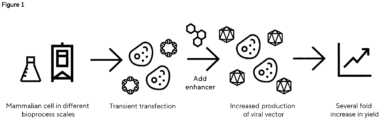
- the mammalian cell is modified by transiently transfecting the mammalian cell with one or more plasmids for viral vector production allowing for transient viral vector production (see scheme in Fig. 1 ).
- Transiently transfected mammalian cells allow essentially for a single run of viral vector manufacturing, such that for each manufacturing run a transfection has to be performed.
- the mammalian cell is modified by genome editing the mammalian cell with one or more nucleic acid molecules for viral vector production allowing for stable viral vector production (see scheme in Fig. 2 ).
- the stable integration allows for using a stock, e.g.
- the transient transfection is more flexible, as for each run a different set of genetic elements can be transfected into the cells without complicated genome editing of the mammalian cells in advance.
- Both ways of modifying the mammalian cells for producing a viral vector are applicable in frame of the method according to the present disclosure and shall not be limiting in any way. Indeed, it is also in scope of the present disclosure to combine transient transfection and stable integration, e.g. by providing some genetic elements stably integrated and other genetic elements via transient transfection. For instance, the transgene gene cassette may be provided by transient transfection, whereas the remaining genetic elements may be stably integrated.
- the one or more plasmids or the one or more nucleic acid molecules for viral vector production encode at least part of a lentivirus (LV) or at least part of an adeno-associated virus (AAV).
- LV lentivirus
- AAV adeno-associated virus
- HEK293 cells which are commonly used for producing a viral vector were originally established by transfection of primary human embryonic kidney cells with sheared adenovirus 5 DNA, and it has been shown that HEK293 cells stably express the adenoviral E1A and E1B-55k proteins due to integration of a 4 kbp adenoviral DNA fragment in chromosome 19. Hence, E1A and E1B do not need to be including in the genetic design for modifying such mammalian cell.
- the produced viral vector generally contains one or more genes to be delivered to a patient or another cell. Such one or more genes may be referred to as "target gene(s)".
- the target genes are therapeutic nucleic acids, such as therapeutic DNA or RNA.
- the target genes include a reporter gene.
- the reporter gene can be detected by antibody-based assays.
- the reporter gene is a fluorescent molecule.
- Exemplary fluorescent molecules suitable as reporter gene are GFP, eGFP, mGFP, eYFP, citrine, eCFP, mCFP, Cerulean, dtTomato, and any variants thereof.
- the reporter gene is a beta-galactosidase, luciferase or glutathione S-transferase, or any variant thereof.
- the target gene is suitable for screening assays or markers, e.g. fluorescence proteins, such as green fluorescent protein (GFP) or a derivative thereof, which are used for visualizing transduction of the viral vector.
- the one or more plasmids or the one or more nucleic acid molecules for viral vector production encode one or more of the group comprising long terminal repeats (LTRs), polypurine tract (PPT), Rev response element (RRE), psi packaging signal, HIV-1 gag-pol, rev proteins, and enveloped glycoprotein, preferably all of the aforementioned.
- the encoded genes may be provided on a single or multiple plasmids or a single or multiple nucleic acid molecules.
- more than one plasmid is provided for producing the LV. For instance, two, three, four, five, six, seven, eight, nine or ten plasmids may be provided. In such case, the plasmids encode the same or different genetic elements required for producing the LV.
- following plasmid system is used:
- the viral vector is LV and two, three orfour plasmids are transfected into the mammalian cell for producing the LV, wherein the mammalian cell is preferably HEK293.
- the one or more plasmids or the one or more nucleic acid molecules for viral vector production encode one or more of the group comprising Rep78, Rep68, Rep52, Rep40, VP1, VP2, VP3, ITR, AAP, MAAP, X Gene, VA RNA, E4orf6, and E2A, preferably all of the aforementioned, for producing an AAV.
- the one or more plasmids or the one or more nucleic acid molecules for viral vector production encode one or more of the group comprising Rep78, Rep68, Rep52, Rep40, VP1, VP2, VP3, ITR, AAP, MAAP, X Gene, VA RNA, E4orf6, E1A, E1B, and E2A, preferably all of the aforementioned, for producing an AAV.
- the mammalian cell may already encode one or more of the genetic elements for producing the AAV.
- E1A and E1B may already be produced by the mammalian cell, e.g.
- a plasmid or nucleic acid molecule can support the cellular expression by additional copies of E1A or E1B or the cellular expression may be considered sufficient.
- the encoded genes may be provided on a single or multiple plasmids or a single or multiple nucleic acid molecules. According to one embodiment, more than one plasmid is provided for producing the AAV. For instance, two, three, four, five, six, seven, eight, nine or ten plasmids may be provided. In such case, the plasmids encode the same or different genetic elements required for producing the AAV. According to a specific, non-limiting embodiment, following plasmid system is used:
- the sequences may also be split, such that only transduction with two or more rAAVs leads to assembled transgenes.
- the viral vector is AAV, and two or three plasmids are transfected into the mammalian cell for producing the AAV, wherein the mammalian cell is preferably HEK293.
- the method according to the present disclosure comprises modifying the mammalian cell, e.g. prior to step (a), by transiently transfecting one or more plasmids into the mammalian cell (see scheme in Fig. 1 ).
- These one or more plasmids comprise one or more genetic elements required for producing the viral vector.
- the one or more plasmids comprise all genetic elements required for producing the viral vector of interest, e.g. all genetic elements that are required for producing the AAV or LV.
- transiently transfecting comprises (x) combining the mammalian cell with the one or more plasmids for viral vector production and a transfection reagent; and (y) incubating the mammalian cell, the one or more plasmids for viral vector production and the transfection reagent to generate a transiently transfected cell.
- step (b) according to the method of the present disclosure is performed prior to step (y), such that the flavonoid and/or M344 is/are present during incubating the mammalian cell, the one or more plasmids for viral vector production and the transfection reagent to generate a transiently transfected cell.
- step (x) For the step of combining the mammalian cell with the one or more plasmids for viral vector production and a transfection reagent (see step (x)) different procedures may be followed, including:
- both methods are suitable for transfecting the mammalian cells with the one or more plasmids for viral vector production.
- the flavonoid and/or M344 as disclosed herein is combined with the transfection composition, such that the flavonoid and/or M344 is preferably added at the same time as the one or more plasmids for viral vector production and the transfection reagent to the mammalian cell present in a cell culture medium.
- step (b) and step (a) are performed simultaneously, such that afterwards culturing step (c) can be performed.
- contacting step (b) may be performed in addition to adding the flavonoid and/or M344 to the transfection composition, which may be advantageous to adapt the concentration or content of flavonoid and/or M344.
- the incubation step comprises incubating for at least 5 min, at least 10 min, at least 15 min, at least 30 min, at least 45 min, at least 1 hour, at least 2 hours, at least 3 hours, preferably at least 4 hours. It may be advantageous to have longer incubation times such as at least 2 hours, at least 3 hours, at least 4 hours in order to ensure that as much plasmid has been introduced into the mammalian cell as possible.
- it is incubated for a range of 1 to 48 hours, 2 to 36 hours, 3 to 24 hours, preferably 4 to 12 hours, more preferably 4 to 8 hours or 4 to 6 hours. According to a specific embodiment, it is incubated for 1 to 8 hours. Incubations times of e.g. 1 to 12 hours, preferably 2 to 8 hours or 4 to 6 hours, are advantageous for the method according to the present disclosure to make sure that the one or more plasmids have been introduced into the mammalian cell.
- the enhancer may be added before or during transiently transecting the mammalian cell.
- step (x) or during step (y) above contacting step (b) as disclosed herein may be performed, such that the mammalian cell is contacted with the one or more plasmids for viral vector production and a transfection reagent and the enhancer, e.g. flavonoid and/or M344.
- step (x) and (b) may be performed simultaneously.
- incubation would take place in presence of the enhancer.
- the mammalian cell may be further contacted with the enhancer, i.e. step (b) is performed, or the mammalian cell may be directly cultured according to step (c).
- transiently transfecting the mammalian cell comprises transfecting with at least 0.1 ⁇ g plasmid DNA per 1 million cells, preferably at least 0.5 ⁇ g or at least 1 ⁇ g plasmid DNA per 1 million cells. These amounts have been proven suitable for transient transfection, as is demonstrated in the Examples below.
- the transfection reagent is polymer-based or lipid-based, preferably being cationic, such as polyethylene imine or a derivative thereof.
- the transfection reagent may comprise polyethyleneimine.
- the skilled person is well-aware of different transfection reagents and will readily understand that different transfection reagents are applicable in frame of the method according to the present disclosure.
- the mammalian cell may be modified by genome editing the mammalian cell with one or more nucleic acid molecules for viral vector production allowing for stable viral vector production (see scheme in Fig. 2 ).
- the stable integration is advantageous in that it allows using the same stock of genome edited mammalian cells multiple times without the need to genetically modifying the mammalian cells in advance of culture.
- genome editing the mammalian cell comprises stably integrating the one or more nucleic acid molecules into the chromosome of the mammalian cell to be capable of stably producing a viral vector.
- the integration can be performed by providing at least one site-directed endonuclease, preferably being selected from a meganuclease, a ZFN, a TALEN, a CRISPR-nuclease, or a nickase or nuclease-dead variant therefrom, or a nucleic acid molecule encoding the same, and optionally in case of a CRISPR-nuclease: providing at least one suitable, functional guide RNA molecule, or a nucleic acid molecule encoding the same.
- the genetic elements required for producing the viral vector may be provided in form of a template to be integrated into the genome which may be cut by the at least one site-directed endonuclease, e.g. a CRISPR-nuclease.
- a CRISPR-nuclease e.g. Cas12a or Cas9.
- the one or more nucleic acid molecules comprise an induction system, such as in particular one or more inducible promotors.
- the expression of viral vector genes can be regulated.
- the viral vector genes are not uncontrollably expressed, which can have a negative impact on the mammalian cell viability, as is e.g. known for some Rep proteins of AAV.
- one or more inducible promotors are used which can be induced by the same or different triggers.
- the viral vector genes stably integrated into the genome of the mammalian call may be desired to induce all promotors at the same time in orderto start expression of the viral vector genes stably integrated into the genome of the mammalian call.
- the type and sequence of inducible system shall not be limiting in frame of the present disclosure and the skilled person is well-aware of different suitable induction systems.
- Step (a) of the method according to the first aspect comprises providing a mammalian cell configured to produce a viral vector.
- the mammalian cell can be provided in any manner known by the person skilled in the art.
- the mammalian cell can be provided in form of a cryopreserved cell bank which is redispersed in suitable cell culture medium.
- the mammalian cell can undergo a scale up or seed train process, wherein the mammalian cell is cultured in cell culture medium to a desired cell number followed by transfer into a larger cell culture vessel or dish or bioreactor and the dilution with further cell culture medium.
- the mammalian cell can also be provided as a mixture comprising the mammalian cells and a cell culture medium suitable for culturing such mammalian cell.
- the mammalian cell is a HEK293 cell or a derivative thereof and is provided in form of a suspension with cell culture medium suitable for culturing the HEK293 cell or derivative thereof.
- different methods are suitable for modifying the mammalian cell to be configured to produce a viral vector, such as transient transfection of one or more plasmids or genome editing with one or more nucleic acids, wherein preferably the one or more plasmids or the one or more nucleic acids comprise the genetic element required for producing the viral vector in the mammalian cell.
- a viral vector such as transient transfection of one or more plasmids or genome editing with one or more nucleic acids, wherein preferably the one or more plasmids or the one or more nucleic acids comprise the genetic element required for producing the viral vector in the mammalian cell.
- step (a) further comprises culturing the mammalian cell configured to produce a viral vector. This may be desirable in order to generate a sufficient number of mammalian cells.
- step (a) comprises culturing the mammalian cell to generate at least 1 million viable cells per mL, preferably at least 2 million viable cells per mL, more preferably at least 3 million cells per mL. The number of cells to be generated in culture depends on the specific needs, i.e. if a high number is desired, also higher cell numbers can be obtained by culture, e.g.
- At least 5 million cells per mL at least 10 million cells per mL, at least 15 million cells per mL, at least 20 million cells per mL, or at least 25 million cells per mL. If a low number of cells is desired also lower numbers are possible, e.g. at least 0.1 million cells per mL, at least 0.25 million cells per mL, or at least 0.5 million cells per mL.
- the mammalian cell may be diluted throughout the step of modifying the mammalian cell such that it is configured to produce a viral vector.
- the mammalian cell may be diluted by transiently transfecting the mammalian cell, such that it is configured to produce a viral vector, e.g. AAV or LV.
- step (a) of the method according to the first aspect comprises providing a mammalian cell configured to produce a viral vector, wherein the mammalian cell has a number of at least 0.5 million cells per mL, at least 0.75 million cells per mL, or preferably at least 1 million cells per mL.
- concentrations are desired for subsequent contacting step (b).
- concentrations have been found advantageous for producing a viral vector, such as AAV or LV, as is also shown in the examples below.
- the mammalian cell has a number of 0.5 to 10 million cells per mL, 0.75 to 7.5 million cells per mL, or preferably at least 1 to 5 million cells per mL.
- step (a) further comprises culturing the mammalian cell configured to produce a viral vector
- such culture may be performed in any mode suitable and known by the person skilled in the art.
- Typical culturing processes of a mammalian cell encompass batch, fed-batch, and perfusion culture or a combination of any of the aforementioned.
- the mammalian cell may first be cultured in batch mode, e.g. until a desired cell number is generated, followed by switch into fed-batch culture or perfusion culture.
- step (a) further comprises culturing the mammalian cell, e.g. HEK293 cell, in batch culture to generate at least 1 million viable cells per mL, preferably at least 2 million viable cells per mL, more preferably at least 3 million cells per mL.
- step (a) further comprises culturing the mammalian cell in suspension culture.
- Culturing in suspension culture has the advantage that typically higher cell numbers can be achieved than for adherent cells.
- addition of microcarrier systems can be avoided, which may be required for adherent cells.
- the mammalian cell is originally adherent and then adapted for suspension culture.
- an adherent mammalian cell is suspension adapted, optionally followed by modifying the mammalian cell such that the mammalian cells are configured to produce the viral vector (e.g.
- step (a) by transient transfection or genome editing), followed by providing the mammalian cell configured to produce the viral vector according to step (a).
- it may also be directly started with mammalian cell suitable for suspension culture to avoid the step of suspension-adaption.
- mammalian cells including suspension and adherent mammalian cell, are available to the person skilled in the art (see e.g. Roldao et al., 2017, Comprehensive Biotechnology, vol. 1, pp. 633-656 ).
- step (a) comprises culturing the mammalian cell in suspension culture to generate at least 1 million viable cells per mL, preferably at least 2 million viable cells per mL, more preferably at least 3 million cells per mL.
- the mammalian cell may be a HEK293 cell, and it is configured to produce an AAV or LV.
- a mammalian cell is a cell that is of mammalian origin. However, the cell does not need to be identical to a cell obtained in a mammalian but can be modified, engineered or naturally/artificially changed.
- the mammalian cell may be a cell with mammalian origin, however, may contain one or more genetic changes to propagate it repeatedly and possibly also infinitely.
- the term "mammalian cell” may be interchangeable used with "mammalian cells” and shall cover both the singular and plural form.
- the mammalian cell is preferably a mammalian cell line.
- the mammalian cell is a human-derived cell line, which advantageously has the ability to provide the suitable post-translational modifications for therapy in humans.
- the produced viral vector has similar post-translational modification, as if the native virus would have infected a human cell resulting in virus production.
- the mammalian cell can be selected from the group consisting of HeLa, Human embryonic kidney 293 (HEK293), BSC-1, SW480, Baby hamster kidney (BHK), BHK-21, Vero E6, U2OS, A549, HT1080, CAD, P19, NIH 3T3, L929, N2a, Chinese hamster ovary (CHO), MCF-7, Y79, SO-Rb50, Hep G2, DUKX-X11, J558L, HuH-7, MDCK, or HepG2 cells or derivatives thereof, e.g. sub-cell lines such as for HEK293 also HEK293-T, HEK293-F, HEK293-FT, etc.
- sub-cell lines such as for HEK293 also HEK293-T, HEK293-F, HEK293-FT, etc.
- the mammalian cell is selected from the group consisting of HEK293, A549, BSC-1, SW480, Baby hamster kidney (BHK), Vero E6 and MDCK cells or a derivative thereof.
- the mammalian cell is selected from a HEK293 cell or a derivative of a HEK293 cell.
- HEK293 is particularly advantageous as it is well-characterized, widely used and very susceptible to transfection.
- the HEK293 cell was established by transforming human embryonic kidney cells with sheared adenovirus type 5 DNA.
- the mammalian cell may be a HEK293 cell or a derivative of a HEK293 cell, e.g.
- a derivative of a HEK293 cell may also encompass a HEK293 cell that is adapted to suspension culture and/or adapted to a particular type of cell culture medium.
- the HEK293 cell or the derivative of a HEK293 cell has been adapted for suspension culture. This is particularly advantageous, as it allows for obtaining higher cell numbers compared to adhesive HEK293 cells. It may also be that originally adhesive HEK293 cells are used which are subsequently suspension adapted (prior to step (a)) and then modified such that it is configured to produce a viral vector (e.g. by transient transfection or genome editing).
- Step (b) of the method according to the first aspect of the present disclosure comprises contacting the mammalian cell with a flavonoid and/or M344.
- Contacting may comprise adding the flavonoid and/or M344 in solid form or in dissolved form to the mammalian cell.
- the mammalian cell e.g. HEK293 cell or derivative thereof, is provided as a suspension with cell culture medium in step (a) and then the mammalian cells are contacted with the flavonoid and/or M344 by adding the flavonoid and/or M344 to the mammalian cell or adding the mammalian cell to the flavonoid and/or M344.
- the mammalian cell may also be contacted with further compounds.
- Such compounds can be useful for the culture of the mammalian cell, e.g. cell culture medium, or may be required for contacting the mammalian cell with the flavonoid and/or M344.
- the flavonoid and/or M344 may be stabilized or dissolved with one or more other compounds with which the mammalian cells are also contacted in step (b).
- cell culture medium any composition suitable for culturing the mammalian cell is applicable.
- Such cell culture media are well-known to the skilled person and shall not limit the scope of the present disclosure. Specific examples includes the cell culture media used in the Examples below, see e.g. HEK ViP NB and HEK TF (Sartorius Xell GmbH), and DMEM (Pan-Biotech).
- the flavonoid and/or M344 is/are dissolved prior to contacting step (b).
- Such embodiment is advantageous, as it allows to precisely adjust the added amount of the flavonoid and/or M344, which can be challenging by using flavonoid and/or M344 in solid form.
- the solvent may be any solvent in which flavonoid and/or M344 can be dissolved sufficiently.
- the flavonoid and/or M344 is/are dissolved in an organic solvent, preferably dimethyl sulfoxide (DMSO), ethanol, dimethyl formamide (DMF), or chloroform, more preferably DMSO.
- DMSO dimethyl sulfoxide
- DMF dimethyl formamide
- chloroform more preferably DMSO.
- DMSO was also used in the Examples below allowing for dissolving a sufficient amount of flavonoid and/or M344 but also having neglectable side effects on the mammalian cell.
- other solvents are readily available to the skilled person.
- flavonoid and/or M344 may be directly dissolved in cell culture medium.
- the flavonoid and/or M344 containing cell culture medium may be added directly to the mammalian cells, which are provided e.g. in form of centrifuged cells or in form of a suspension with cell culture medium.
- the flavonoid and/or M344 in cell culture medium shall be added such that the desired amount of flavonoid and/or M344 is present in presence with the mammalian cell.
- step (b) preferably results in a concentration of the flavonoid and/or M344 in a composition with the mammalian cell that increases the genomic and/or transducing viral vector titer.
- the concentration of the flavonoid and/or M344 in a composition with the mammalian cell results in an increase of the genomic viral vector titer by at least 10%, preferably at least 25%, compared to a viral vector production method without contacting the mammalian cell with the flavonoid and/or the M344.
- the concentration of the flavonoid and/or M344 in a composition with the mammalian cell results in an increase of the transducing viral vector titer by at least 10%, preferably at least 25%, compared to a viral vector production method without contacting the mammalian cell with the flavonoid and/or the M344.
- the concentration of the flavonoid and/or M344 in a composition with the mammalian cell results in an increase of the genomic viral vector titer and the transducing viral vector titer by at least 10%, preferably at least 25%, compared to a viral vector production method without contacting the mammalian cell with the flavonoid and/or the M344.
- the genomic viral vector titer is measured by droplet digital PCR.
- the transducing titer which may also be referred to as the infectious titer or infection titer may be measured by a transduction assay.
- step (b) comprises contacting the mammalian cell with the flavonoid resulting in a concentration of at least 1 nM, at least 2 nM, at least 3 nM, at least 4 nM, at least 5 nM, at least 6 nM, at least 7 nM, at least 8 nM, at least 9 nM, at least 10 nM, at least 15 nM, at least 20 nM, at least 25 nM, at least 30 nM, at least 35 nM, preferably, at least 40 nM, at least 45 nM or at least 50 nM in a composition with the mammalian cell.
- step (b) comprises contacting the mammalian cell with the flavonoid resulting in a concentration of 1 nM to 1000 nM, 2 nM to 900 nM, 3 nM to 800 nM, 4 nM to 700 nM, 5 nM to 600 nM, preferably 10 nM to 500 nM, more preferably 40 nM to 500 nM in a composition with the mammalian cell.
- concentrations and concentration ranges lead to advantageously improved viral vector production. Specifically, such concentrations increase the genomic titer and/or increase the transducing titer in the disclosed viral vector production method (see Figs.
- the composition may comprise the mammalian cell, the flavonoid and a cell culture medium.
- the composition may further comprise the solvent in which the flavonoid is dissolved, e.g. an organic solvent, such as DMSO.
- the composition may comprise further compounds suitable for culturing the mammalian cell and/or producing the viral vector.
- step (b) comprises contacting the mammalian cell with the M344 resulting in a concentration of at least 0.5 ⁇ M, at least 1 ⁇ M, at least 1.5 ⁇ M, at least 2 ⁇ M, at least 2.5 ⁇ M, at least 3 ⁇ M, at least 4 ⁇ M, at least 5 ⁇ M, at least 6 ⁇ M, at least 7 ⁇ M, at least 8 ⁇ M, at least 9 ⁇ M, at least 10 ⁇ M, preferably at least 5 ⁇ M in a composition with the mammalian cell.
- concentrations lead to advantageously improved viral vector production.
- the composition may comprise the mammalian cell, the M344 and a cell culture medium.
- the composition may further comprise the solvent in which the M344 is dissolved, e.g. an organic solvent, such as DMSO.
- the composition may comprise further compounds suitable for culturing the mammalian cell and/or producing the viral vector.
- the flavonoid and/or M344 preferably remains in the composition with the mammalian cell or may be removed after incubation. Alternatively, the flavonoid and/or M344 may be washed out or continuously added throughout viral vector production. In one embodiment, the flavonoid and/or M344 are contacted with the mammalian cell, followed by culture, wherein the flavonoid and/or M344 essentially remains in the composition throughout culture, wherein preferably the culture comprises a batch culture.
- the flavonoid and/or M344 are contacted with the mammalian cell, followed by culture, wherein further flavonoid and/or M344 are added throughout the culture, wherein preferably the culture comprises a fed-batch culture or a perfusion culture.
- the flavonoid and/or M344 are contacted with the mammalian cell, followed by culture, wherein further flavonoid and/or M344 are diluted throughout the culture, wherein preferably the culture comprises a fed-batch culture or a perfusion culture.
- step (b) comprises contacting the mammalian cell with a flavonoid.
- a flavonoid such as flavopiridol or a derivative thereof.
- step (b) comprises contacting the mammalian cell with a M344.
- no flavonoid is added.
- Contacting the mammalian cell with M344, especially at elevated concentrations, e.g. at least 5 ⁇ M in a composition with the mammalian cell, is highly advantageous, as it improved the viral vector production, as is shown in the Examples below (see Figs. 6 , 7 , 8 , 9 , and 10 ).
- step (b) comprises contacting the mammalian cell with the flavonoid, preferably flavopiridol, and the M344.
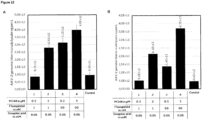
- a flavonoid such as flavopiridol or a derivative thereof, and M344, especially at elevated concentrations, e.g. at least 0.5 ⁇ M, at least 2 ⁇ M, or at least 5 ⁇ M in a composition with the mammalian cell, is highly advantageous, as it improved the viral vector production, as is shown in the Examples below (see Figs. 11 , 12A , 12B , and 13 ), wherein in some cases synergistic effects have been observed.
- the mammalian cell may be a human-derived cell line, such as a HEK293 cell or a derivative thereof.
- the viral vector may be a AAV or LV.
- the genomic viral vector titer and/or transducing viral vector titer is increased compared to a viral vector production method without contacting the mammalian cell with the flavonoid and/or the M344.
- the resulting produced viral vector can be produced more efficiently and with higher yield and/or has a higher quality.
- Such increase can be obtained by using the flavonoid, e.g. flavopiridol or a derivative thereof, alone.
- Such increase can also be obtained by using the M344, e.g. at elevate concentrations, such as at least 5 ⁇ M in the composition with the mammalian cell, alone.
- such increase which is in some cases synergistic can also be obtained by the combination the flavonoid and the M344.
- the flavonoid and/or M344 advantageously increases the genomic and/or transducing viral vector titer.
- the genomic viral vector titer is increased by at least 10%, preferably at least 25%, compared to a viral vector production method without contacting the mammalian cell with the flavonoid and/or the M344.
- the transducing viral vector titer is increased by at least 10%, preferably at least 25%, compared to a viral vector production method without contacting the mammalian cell with the flavonoid and/or M344.
- genomic viral vector titer and the transducing viral vector titer is increased by at least 10%, preferably at least 25%, compared to a viral vector production method without contacting the mammalian cell with the flavonoid and/or the M344.
- the genomic titer may be measured by digital PCR, e.g. droplet digital PCR, AUC, TEM, HCP, or ELISA. Exemplary methods for the detection of the capsid titer of an AAV and methods for the determination of the ratio of full and empty capsids of an AAV are described in WO 2023/139224 incorporated by reference in its entirety.
- the genomic viral vector titer is measured by droplet digital PCR.
- the transducing titer which may also be referred to as the infectious titer or infection titer may be measured by a transduction assay.
- Such transduction assay typically is based on infecting pre-cultured cells using the viral vector and then measuring the infection, e.g. by determining the amount of infected cells, such as by measuring the amount of produced transduced cells.
- the produced viral vector contains a gene encoding GFP, such that after transduction cells produce GFP. GFP-expressing cells can then be easily determined, such as by flow cytometry (e.g. iQue ® 3) or microscopically (e.g. by Incucyte).
- step (b) may comprise adding a flavonoid.
- Flavonoids a group of natural substances with variable phenolic structures, are well-known for their beneficial effects on health. Flavonoids are now considered as an indispensable component in a variety of nutraceutical, pharmaceutical, medicinal and cosmetic applications. This is attributed to their anti-oxidative, antiinflammatory, anti-mutagenic and anti-carcinogenic properties coupled with their capacity to modulate key cellular enzyme function (see Panche et al., 2016, Journal of Nutritional Science, Vol. 5, e47, pp. 1-15 ).
- the flavonoid is chemically synthesized, preferably a chemically synthesized flavone.
- Chemically synthesized flavonoids have the advantage that they are well defined in their composition such that they are applicable to chemically defined cell culture media.
- the flavonoid is selected from the group consisting of isoflavones, neoflavonoids, flavones, flavonols, flavanones, flavanonols, flavanols, catechins, anthocyanins and chalcones, preferably the flavonoid is a flavone.
- the flavonoid is selected from one or more of the group consisting of flavopiridol, catechin, genistein, quercetin, wogonin, kaempferol, baicalein, baicalin, fisetin, apigenin, luteolin, chrysin, rohitukine, P-276-00, and any derivative of the aforementioned.
- further flavonoids or derivatives disclosed in Jain et al., 2012, Mini-Reviews in Medicinal Chemistry, 2012, 12, pp. 1-18 may be used as flavonoid in frame of the present disclosure.
- the flavonoid is flavopiridol or a derivative thereof.
- flavonoids such as flavopiridol or derivatives thereof, improve the viral vector production, particularly by increasing the genomic and/or transducing viral vector titer.
- the flavonoid inhibits one or more cyclin-dependent kinases (CdK), preferably selected from Cdk1, Cdk2, Cdk3, Cdk4, Cdk5, Cdk6, Cdk7, Cdk8, Cdk9, Cdk10, Cdk11, or a combination thereof.
- CdK cyclin-dependent kinases
- Flavones are known for their ability to inhibit important cell signalling enzymes such as protein kinase C, cyclin-dependent kinases (CdK) and tyrosine kinases.
- Cyclin-dependent kinases have been recognized as key regulators of cell cycle progression (see Jain et al., 2012, Mini-Reviews in Medicinal Chemistry, 2012, 12, pp. 1-18 ).
- the present inventors hypothesize that using a flavonoid, such as flavopiridol or a derivative thereof, for viral vector production inhibits one or more CdKs of the mammalian cell, which has an impact on the cell cycle progression, positively affecting also viral vector production.
- the flavonoid such as flavopiridol could indirectly support viral DNA replication and lead to a higher transcription rate and higher packaging efficiency. It is believed that this could be especially rely on the inhibition of CdK9. Accordingly in a preferred embodiment, the flavonoid inhibits at least Cdk9.
- step (b) comprises contacting the mammalian cell with the flavonoid resulting in a concentration of at least 40 nM in the composition with the mammalian cell, and wherein the flavonoid inhibits at least CdK9.
- concentration and the inhibition of CdK9 was identified as advantageous, resulting in improved viral vector production, as demonstrated in the Examples below (see Figs. 3 , 4 , 5 , 6 , 7 , 8 ).
- the flavonoid may be flavopiridol or a derivative thereof.
- step (b) comprises contacting the mammalian cell with the flavonoid resulting in a concentration of at least 40 nM in the composition with the mammalian cell, and wherein the flavonoid is flavopiridol or a derivative thereof.
- concentration of flavopiridol was identified as advantageous, resulting in improved viral vector production, as demonstrated in the Examples below (see Figs. 3 , 4 , 5 , 6 , 7 , 8 ).
- Step (b) may comprise contacting the mammalian cell with a M344.
- M344 which is also referred to as 4-dimethylamino-N-(6-hydroxycarbamoylhexyl)-benzamide is an inhibitor of histone deacetylase (HDAC).
- HDACs remove acetyl moieties from lysine residues located on histones and cause changes in gene expression. This has been shown to reduce cancer growth (see Knoche et al., 2022, pLoS ONE 17(9): e0273518 ).
- HDAC inhibitors such as sodium butyrate and sodium valproate have been shown in the past to influence rAAV production, at high concentrations in the millimolar range (see WO 2020/033842 A1 ).
- HDAC inhibitor M344 is very potent in improving the viral vector production, as is demonstrated in the examples below, especially for LV and AAV. It was shown that M344 improves the genomic and transducing viral vector titer.
- step (b) comprises contacting the mammalian cell with the M344 resulting in a concentration of at least 0.5 ⁇ M, at least 1 ⁇ M, at least 1.5 ⁇ M, at least 2 ⁇ M, at least 2.5 ⁇ M, at least 3 ⁇ M, at least 4 ⁇ M, at least 5 ⁇ M, at least 6 ⁇ M, at least 7 ⁇ M, at least 8 ⁇ M, at least 9 ⁇ M, at least 10 ⁇ M, preferably at least 5 ⁇ M in a composition with the mammalian cell.
- step (b) comprises contacting the mammalian cell with the M344 resulting in a concentration of 0.5 ⁇ M to 1000 ⁇ M, 1 ⁇ M to 900 ⁇ M, 1.5 ⁇ M to 800 ⁇ M, 2 ⁇ M to 700 ⁇ M, 2.5 ⁇ M to 600 ⁇ M, 3 ⁇ M to 500 ⁇ M, 4 ⁇ M to 450 ⁇ M, 5 ⁇ M to 400 ⁇ M, 6 ⁇ M to 350 ⁇ M, 7 ⁇ M to 300 ⁇ M, 8 ⁇ M to 250 ⁇ M, 9 ⁇ M to 200 ⁇ M, 10 ⁇ M to 100 ⁇ M, preferably 5 ⁇ M to 100 ⁇ M in a composition with the mammalian cell.
- such concentrations lead to advantageously improved viral vector production. Specifically, such concentrations increase the genomic titer and/or increase the transducing titer in the disclosed viral vector production method (see Figs. 6 , 7 , 8 , 9 , 10 , 11 , 12A, 12B , and 13 ).
- step (b) comprises contacting the mammalian cell with the flavonoid, preferably flavopiridol, and the M344.
- a flavonoid such as flavopiridol or a derivative thereof, and M344, especially at elevated concentrations, e.g. at least 0.5 ⁇ M, at least 2 ⁇ M, or at least 5 ⁇ M, e.g. 5 ⁇ M to 100 ⁇ M, in a composition with the mammalian cell, is highly advantageous, as it improved the viral vector production, as is shown in the Examples below (see Figs. 11 , 12A , 12B , and 13 ), wherein in some cases synergistic effects have been observed.
- the mammalian cell may be a human-derived cell line, such as a HEK293 cell or a derivative thereof.
- the viral vector may be a AAV or LV.
- Step (c) of the method according to the present disclosure comprises culturing the mammalian cell in presence of the flavonoid and/or M344 to produce a viral vector.
- Culturing may be understood as cultivating the mammalian cell in an environment suitable for producing the viral vector, such as LV or AAV.
- Such culture can take place in any format or scale, e.g. in a bioreactor, shake flask, well plate, etc.
- the method according to the present disclosure is independent of scale and thus applicable for any type of cultivation method.
- Culturing according to step (c) may comprise performing any mode suitable for producing the viral vector.
- culturing may comprise performing a batch, fed-batch, or perfusion culture, or any combination thereof.
- combinations of culture modes are within the scope of the present disclosure, e.g. by first culturing in batch mode, followed by perfusion or fed-batch culture.
- step (c) comprises culturing the mammalian cell for at least 12 hours, at least 18 hours, at least 24 hours, at least 36 hours, preferably at least 48 hours, more preferably at least 72 hours.
- Culturing the mammalian cell for such time advantageously leads to increased viral vector production. Indeed, longer cultivation duration leads to higher numbers of viral vectors. In the examples below a cultivation duration of about 72 hours was performed showing superior viral vector yields and quality, however, the present disclosure shall not be limited to such specific cultivation duration.
- step (c) comprises culturing the mammalian cell in suspension culture.
- Suspension culture is particularly advantageous, as it allows for easy scale up and culture compared to adhesion culture.
- the mammalian cell which are cultured in step (c) are HEK293 cells or a derivative thereof, which are cultured as suspension culture.
- the viral vector may be LV or AAV.
- the method according to the present disclosure optionally further comprises step (d) harvesting the viral vector.
- the method comprises step (d), i.e. such step is not optional.
- Harvesting is typically understood as obtaining the viral vector produced by the mammalian cell after or throughout culture. Hence, harvesting can take place at the end of the production, e.g. by stopping the culture and obtaining the viral vector. Alternatively, harvesting can be performed throughout culture by intermittently or continuously obtaining the viral vector, e.g. by obtaining the cell suspension or a permeate which could be obtained in perfusion culture.
- Harvesting of the viral vector can encompass obtaining the viral vector from the mammalian cell (intracellular viral vector) and/orthe surrounding cell culture medium, also referred to as supernatant (extracellular viral vector).
- Some viruses e.g. AAV8, secrete directly into the medium, such that the viral vector can be directly obtained from the cell culture medium or supernatant (see e.g. WO 2007/127264 A2 ).
- Other viral vectors are mostly present within the mammalian cell, such that the cells need to be disrupted or lysed in order to obtain the viral vector. It may be advantageous to use both the supernatant and the cells in order to harvest the viral vector to obtain a high yield of viral vector.
- step (d) comprises harvesting the viral vector by chemically lysing the mammalian cell after step (c).
- the mammalian cell may be separated from the cell culture medium or provided together with the cell culture medium.
- the mammalian cell is contacted with a chemical lysis reagent or composition.
- a detergent-based chemical lysis reagent or composition may be used for lysing the mammalian cell.
- Such detergent-based lysis composition is advantageously used in the examples, demonstrating efficient lysis and thus harvesting of the viral vector.
- other methods of disrupting the mammalian cell may be used, e.g. sonication and high-pressure homogenization, physical methods like freeze-thaw, and chemical methods, other mechanical lysis methods. The skilled person is well-aware of different methods of disrupting a cell in order to harvest the viral vector.
- harvesting step (d) comprises lysing the transiently transfected cells. As is demonstrated in the Examples below this leads to high yields and high quality of the viral vector such as AAV and LV.
- the method according to the present disclosure may further comprises step (e) purifying the harvested viral vector.
- step (e) purifying the harvested viral vector After harvesting, it may be required to purify the viral vector for subsequent steps, e.g. analytics, formulation, etc.
- Purifying the harvested viral vector may be performed by any method applicable and known by the skilled person. Indeed, various protocols and methods are available in the art for purifying a viral vector, typically including multiple-step processes (also referred to as downstream processing). For example, the harvested viral vector may undergo filtration, centrifugation, chromatography, dialysis, etc. Chromatographic purification may encompass anionic, cationic and/or affinity chromatography.
- the method according to the present disclosure may further comprises step (f) formulating the viral vector for gene therapy.
- step (f) formulating the viral vector for gene therapy may advantageously be performed after the purification of the viral vector.
- Formulating the viral vector is particularly useful when applying the viral vector for gene therapy but also for storing the viral vector.
- step (f) is performed.
- Some steps may also be performed simultaneously, e.g. the mammalian cell may be provided and contacted with the flavonoid and/or M344 at the same time.
- step (b) may be performed during transiently transfecting the mammalian cell. It is referred to the respective sections for the sake of conciseness. Possibly, also culturing step (c) is performed at the same time.
- contacting step (b) and culturing step (c) are performed simultaneously. Steps in between the steps may also be included in the method according to the present disclosure, e.g. the method may comprise a further culturing step in advance of step (a) and the step (b).
- the method according to the present disclosure is characterized by the following features:
- the method according to the present disclosure is characterized by the following features:
- the method according to the present disclosure is characterized by the following features:
- the method according to the present disclosure is characterized by the following features:
- the method according to the present disclosure is characterized by the following features:
- the method according to the present disclosure is characterized by the following features:
- the method according to the present disclosure is characterized by the following features:
- the method according to the present disclosure is characterized by the following features:
- the method according to the present disclosure is characterized by the following features:
- a viral vector production method comprising following steps:
- the method advantageously allows for improved viral vector production.
- the mammalian cell configured to produce a viral vector with the CdK inhibitor By contacting the mammalian cell configured to produce a viral vector with the CdK inhibitor the mammalian cells are impacted such that a higher yield of viral vector and higher quality of viral vector can be produced.
- the inventors found that both the genomic but also the transducing viral vector titer can be markedly increased by contacting the mammalian cell with a flavonoid, e.g. flavopiridol, which are well-known CdK-inhibitors.
- the yield of viral vector that can be applicable for gene therapy is higher and of higher quality.
- the individual steps and preferred embodiments of the method according to the further aspect correspond to the individual steps and embodiments of the method according to the first aspect, except for contacting step (b) and culturing step (c).
- This particularly but not exclusively includes the viral vector, the mammalian cell, providing step (a), further optional steps (d), (e), and (f), as well as the improvement in genomic and/or transducing titer.
- steps (b) and (c) of the first aspect shall be applicable for the method according to the further aspect such as mode of culture, way of contacting, etc.
- the core differences between the method according to the first aspect and the method according to the further aspect relies in the CdK inhibitor in steps (b) and (c) compared to the flavonoid and/or M344. The individual steps and preferred embodiments of this particular difference will now be described in detail.
- the method according to the further aspect comprises step (b) contacting the mammalian cell with a Cyclin-dependent Kinase (CdK) inhibitor and step (c) culturing the mammalian cell in presence of the CdK inhibitorto produce a viral vector.
- CdKs belong to the family of protein kinases and regulate the cell cycle. They are also involved in regulating transcription, mRNA processing, and the differentiation of nerve cells and are known in all known eukaryotes, and their regulatory function in the cell cycle has been evolutionarily conserved.
- a CdK inhibitor interacts with a cyclin-CdK complex to block kinase activity, usually during G1 or in response to signals from the environment or from damaged DNA.
- the present inventors found that by contacting the mammalian cell in step (b) with a CdK inhibitor and culturing the mammalian cell in presence of the CdK inhibitor improves the viral vector production. Specifically, the genomic and transducing viral vector can be improved by the CdK inhibitor flavopiridol as demonstrated in the Examples below (see Figs. 3 , 4 , 5 , 11 , 12A, 12B , 13 ).
- the cell cycle progression is affected which positively affects also viral vector production.
- the CdK inhibitor could indirectly support viral DNA replication and lead to a higher transcription rate and higher packaging efficiency.
- the CdK inhibitor inhibits one or more of CdK1, CdK2, Cdk3, CdK4, CdK5, CdK6, CdK7, CdK8, CdK9, CdK10, or CdK11.
- CdK9 may have a particular impact, such that its inhibition could further improve viral vector production. Accordingly in a preferred embodiment, the CdK inhibitor inhibits at least Cdk9.
- the CdK inhibitor is selected from one or more of the group comprising or consisting of flavopiridol, NVP-2, JSH-150, BAY 1251152, SNS-032 (BMS-387032), Dinaciclib (SCH727965), AZD4573, MC180295, CDKI-73, KB-0742 Dihydrochloride, CDK-IN-2, AT7519, AT7519 HCl, LY2857785, CGP60474, Atuveciclib (BAY-1143572), Riviciclib hydrochloride (P276-00), Catechin, Genistein, Quercetin (NSC 9221), Wogonin, Kaempferol, baicalein, baicalin, fisetin, luteolin, chrysin, rohitukine, and any derivative of the aforementioned.
- step (b) preferably results in a concentration of the CdK inhibitor in a composition with the mammalian cell that increases the genomic and/or transducing viral vector titer.
- the concentration of the CdK inhibitor in a composition with the mammalian cell results in an increase of the genomic viral vector titer by at least 10%, preferably at least 25%, compared to a viral vector production method without contacting the mammalian cell with the CdK inhibitor.
- the concentration of the CdK inhibitor in a composition with the mammalian cell results in an increase of the transducing viral vector titer by at least 10%, preferably at least 25%, compared to a viral vector production method without contacting the mammalian cell with the CdK inhibitor. In one embodiment, the concentration of the CdK inhibitor in a composition with the mammalian cell results in an increase of the genomic viral vector titer and the transducing viral vector titer by at least 10%, preferably at least 25%, compared to a viral vector production method without contacting the mammalian cell with the CdK inhibitor.
- Methods of measuring the genomic and transducing viral vector titer are available in the art and known by the person skilled in the art. In a particular embodiment, the genomic viral vector titer is measured by droplet digital PCR.
- the transducing titer which may also be referred to as the infectious titer or infection titer may be measured by a transduction assay.
- step (b) comprises contacting the mammalian cell with the CdK inhibitor resulting in a concentration of at least 1 nM, at least 2 nM, at least 3 nM, at least 4 nM, at least 5 nM, at least 6 nM, at least 7 nM, at least 8 nM, at least 9 nM, at least 10 nM, at least 15 nM, at least 20 nM, at least 25 nM, at least 30 nM, at least 35 nM, preferably, at least 40 nM, at least 45 nM or at least 50 nM in a composition with the mammalian cell.
- step (b) comprises contacting the mammalian cell with the CdK inhibitor resulting in a concentration of 1 nM to 1000 nM, 2 nM to 900 nM, 3 nM to 800 nM, 4 nM to 700 nM, 5 nM to 600 nM, preferably 10 nM to 500 nM, more preferably 40 nM to 500 nM in a composition with the mammalian cell.
- concentrations and concentration ranges lead to advantageously improved viral vector production. Specifically, such concentrations increase the genomic titer and/or increase the transducing titer in the disclosed viral vector production method (see Figs.
- the composition may comprise the mammalian cell, the CdK inhibitor and a cell culture medium.
- the composition may further comprise the solvent in which the CdK inhibitor is dissolved, e.g. an organic solvent, such as DMSO.
- the composition may comprise further compounds suitable for culturing the mammalian cell and/or producing the viral vector.
- contacting step (b) may further comprise adding M344, optionally in a concentration which is disclosed above for the method according to the first aspect.
- the method according to the further aspect comprises following features:
- a viral vector production method comprising following steps:
- the method advantageously allows for improved viral vector production.
- the mammalian cell configured to produce a viral vector with the M344 By contacting the mammalian cell configured to produce a viral vector with the M344, resulting in a concentration of at least 5 ⁇ M M344 in a composition with the mammalian cell, the mammalian cells are impacted such that a higher yield of viral vector and higher quality of viral vector can be produced.
- the inventors found that both the genomic but also the transducing viral vector titer can be markedly increased by contacting the mammalian cell with M344. As a result, the yield of viral vector that can be applicable for gene therapy is higher and of higher quality.
- the individual steps and preferred embodiments of the method according to the further aspect correspond to the individual steps and embodiments of the method according to the first aspect. Therefore, it is referred to the above disclosure which shall equally be applicable for the method according to the further aspect.
- This particularly but not exclusively includes the viral vector, the mammalian cell, providing step (a), contacting step (b), and culturing step (c), further optional steps (d), (e), and (f), as well as the improvement in genomic and/or transducing titer. Further features will now be described in detail.
- M344 which is also referred to as 4-dimethylamino-N-(6-hydroxycarbamoylhexyl)-benzamide is an inhibitor of histone deacetylase (HDAC).
- HDACs remove acetyl moieties from lysine residues located on histones and cause changes in gene expression. This has been shown to reduce cancer growth (see Knoche et al., 2022, PLoS ONE 17(9): e0273518 ).
- HDAC inhibitors such as sodium butyrate and sodium valproate have been shown in the past to influence rAAV production, at high concentrations in the millimolar range (see WO 2020/033842 A1 ).
- the HDAC inhibitor M344 is very potent in improving the viral vector production, as is demonstrated in the examples below, especially for LV and AAV. It was shown that M344 improves the genomic and transducing viral vector titer. As demonstrated in the Examples below, such concentrations of at least 5 ⁇ M M344 in a composition with the mammalian cell lead to advantageously improved viral vector production. Specifically, such concentrations increase the genomic titer and/or increase the transducing titer in the disclosed viral vector production method (see Figs. 6 , 7 , 8 , 9 , 10 , 11 , 12A, 12B , and 13 ).
- step (b) comprises contacting the mammalian cell with the M344 resulting in a concentration of at least 5 ⁇ M, at least 6 ⁇ M, at least 7 ⁇ M, at least 8 ⁇ M, at least 9 ⁇ M, at least 10 ⁇ M, preferably at least 5 ⁇ M in a composition with the mammalian cell.
- step (b) comprises contacting the mammalian cell with the M344 resulting in a concentration of 5 ⁇ M to 400 ⁇ M, 6 ⁇ M to 350 ⁇ M, 7 ⁇ M to 300 ⁇ M, 8 ⁇ M to 250 ⁇ M, 9 ⁇ M to 200 ⁇ M, 10 ⁇ M to 100 ⁇ M, preferably 5 ⁇ M to 100 ⁇ M in a composition with the mammalian cell.
- the concentration of the M344 in a composition with the mammalian cell results in an increase of the genomic viral vector titer by at least 10%, preferably at least 25%, compared to a viral vector production method without contacting the mammalian cell with the M344. In one embodiment, the concentration of the M344 in a composition with the mammalian cell results in an increase of the transducing viral vector titer by at least 10%, preferably at least 25%, compared to a viral vector production method without contacting the mammalian cell with the M344.
- the concentration of the M344 in a composition with the mammalian cell results in an increase of the genomic viral vector titer and the transducing viral vector titer by at least 10%, preferably at least 25%, compared to a viral vector production method without contacting the mammalian cell with the M344.
- Methods of measuring the genomic and transducing viral vector titer are available in the art and known by the person skilled in the art.
- the genomic viral vector titer is measured by droplet digital PCR.
- the transducing titer which may also be referred to as the infectious titer or infection titer may be measured by a transduction assay.
- a viral vector production system comprising:
- the viral vector production system advantageously allows for improved viral vector production.
- the mammalian cell configured to produce a viral vector and the flavonoid and/or M344 and a cell culture medium for culturing the mammalian cell
- the mammalian cells are impacted such that a higher yield of viral vector and higher quality of viral vector can be produced.
- the inventors found that both the genomic but also the transducing viral vector titer can be markedly increased by the production system. As a result, the yield of viral vector that can be applicable for gene therapy is higher and of higher quality.
- the individual parts and preferred embodiments of the system according to the second aspect correspond to the embodiments of the method according to the first aspect. Therefore, it is referred to the above disclosure which shall equally be applicable for the system according to the second aspect.
- This particularly but not exclusively includes the viral vector, the mammalian cell, the flavonoid and/or M344, and the cell culture medium for culturing the mammalian cell, as well as the improvement in genomic and/or transducing titer. Further features will now be described in detail.
- the flavonoid is a flavone, preferably flavopiridol or a derivative thereof.
- the flavonoid inhibits one or more cyclin-dependent kinases (CdK), preferably selected from CdK1, CdK2, Cdk3, CdK4, CdK5, CdK6, CdK7, CdK8, CdK9, CdK10, or CdK11 or a combination thereof.
- the flavonoid inhibits at least CdK9.
- the flavonoid is present in a concentration of at least 1 nM, at least 2 nM, at least 3 nM, at least 4 nM, at least 5 nM, at least 6 nM, at least 7 nM, at least 8 nM, at least 9 nM, at least 10 nM, at least 15 nM, at least 20 nM, at least 25 nM, at least 30 nM, at least 35 nM, preferably, at least 40 nM, at least 45 nM or at least 50 nM.
- the M344 is present in a concentration of at least 0.5 ⁇ M, at least 1 ⁇ M, at least 1.5 ⁇ M, at least 2 ⁇ M, at least 2.5 ⁇ M, at least 3 ⁇ M, at least 4 ⁇ M, at least 5 ⁇ M, at least 6 ⁇ M, at least 7 ⁇ M, at least 8 ⁇ M, at least 9 ⁇ M, at least 10 ⁇ M, preferably at least 5 ⁇ M.
- the system comprises a flavonoid, preferably flavopiridol, and M344.
- the genomic viral vector titer and/or transducing viral vector titer is increased compared to a viral vector production system without the flavonoid and/or the M344.
- the genomic viral vector titer is increased by at least 10%, preferably at least 25%, compared to a viral vector production system without the flavonoid and/or the M344.
- the transducing viral vector titer is increased by at least 10%, preferably at least 25%, compared to a viral vector production system without the flavonoid and/or the M344.
- Methods of measuring the genomic and transducing viral vector titer are available in the art and known by the person skilled in the art.
- the genomic viral vector titer is measured by droplet digital PCR.
- the transducing titer which may also be referred to as the infectious titer or infection titer may be measured by a transduction assay.
- the viral vector is a lentivirus or an adeno-associated virus (AAV).
- AAV adeno-associated virus
- the mammalian cell is selected from a HEK293 cell or a derivative of a HEK293 cell.
- the HEK293 cell or the derivative of a HEK293 cell has been adapted for suspension culture.
- the system may also be provided in form of a kit.
- a viral vector production system comprising:
- the viral vector production system advantageously allows for improved viral vector production.
- the mammalian cell configured to produce a viral vector and the cyclin-dependent kinase (CdK) inhibitor and a cell culture medium for culturing the mammalian cell
- the mammalian cells are impacted such that a higher yield of viral vector and higher quality of viral vector can be produced.
- the inventors found that both the genomic but also the transducing viral vector titer can be markedly increased by the production system. As a result, the yield of viral vector that can be applicable for gene therapy is higher and of higher quality.
- the individual parts and preferred embodiments of the system according to the further aspect correspond to the embodiments of the system according to the second aspect (referring back to the method according to the first aspect), as well as the method according to the further aspect relating to the CdK inhibitor disclosed above. Therefore, it is referred to the above disclosure which shall equally be applicable for the system according to the second aspect.
- This particularly but not exclusively includes the viral vector, the mammalian cell, the cyclin-dependent kinase (CdK) inhibitor, and the cell culture medium for culturing the mammalian cell, as well as the improvement in genomic and/or transducing titer. Further features will now be described in detail.
- the CdK inhibitor inhibits one or more of CdK1, CdK2, Cdk3, CdK4, CdK5, CdK6, CdK7, CdK8, CdK9, CdK10, or CdK11 or a combination thereof. According to a preferred embodiment, the CdK inhibitor inhibits at least CdK9.
- the CdK inhibitor is selected from one or more of the group comprising or consisting of flavopiridol, NVP-2, JSH-150, BAY 1251152, SNS-032 (BMS-387032), Dinaciclib (SCH727965), AZD4573, MC180295, CDKI-73, KB-0742 Dihydrochloride, CDK-IN-2, AT7519, AT7519 HCl, LY2857785, CGP60474, Atuveciclib (BAY-1143572), Riviciclib hydrochloride (P276-00), Catechin, Genistein, Quercetin (NSC 9221), Wogonin, Kaempferol, baicalein, baicalin, fisetin, luteolin, chrysin, rohitukine, and any derivative of the aforementioned.
- the CdK inhibitor is present in a concentration of at least 1 nM, at least 2 nM, at least 3 nM, at least 4 nM, at least 5 nM, at least 6 nM, at least 7 nM, at least 8 nM, at least 9 nM, at least 10 nM, at least 15 nM, at least 20 nM, at least 25 nM, at least 30 nM, at least 35 nM, preferably, at least 40 nM, at least 45 nM or at least 50 nM in a composition with the mammalian cell.
- the CdK inhibitor is present in a concentration of 1 nM to 1000 nM, 2 nM to 900 nM, 3 nM to 800 nM, 4 nM to 700 nM, 5 nM to 600 nM, preferably 10 nM to 500 nM, more preferably 40 nM to 500 nM in a composition with the mammalian cell.
- the system may also be provided in form of a kit.
- a viral vector production system comprising:
- the viral vector production system advantageously allows for improved viral vector production.
- the mammalian cell configured to produce a viral vector and the M344 present in a concentration of at least 5 ⁇ M and a cell culture medium for culturing the mammalian cell
- the mammalian cells are impacted such that a higher yield of viral vector and higher quality of viral vector can be produced.
- the inventors found that both the genomic but also the transducing viral vector titer can be markedly increased by the production system. As a result, the yield of viral vector that can be applicable for gene therapy is higher and of higher quality.
- the individual parts and preferred embodiments of the system according to the further aspect correspond to the embodiments of the system according to the second aspect (referring back to the method according to the first aspect), as well as the method according to the further aspect relating to the M344 present in a concentration of at least 5 ⁇ M disclosed above. Therefore, it is referred to the above disclosure which shall equally be applicable for the system according to the second aspect.
- This particularly but not exclusively includes the viral vector, the mammalian cell, the M344, and the cell culture medium for culturing the mammalian cell, as well as the improvement in genomic and/or transducing titer.
- the system may also be provided in form of a kit.
- a viral vector production composition comprising:
- the viral vector production composition according to the present invention advantageously allows for improved viral vector production.
- a mammalian cell configured to transiently or stably produce a viral vector
- the mammalian cell is a HEK293 cell or a derivative of a HEK293 cell and a flavonoid and/or M344
- the mammalian cells are impacted such that a higheryield of viral vector and higher quality of viral vector can be produced.
- the inventors found that both the genomic but also the transducing viral vector titer can be markedly increased by the production system. As a result, the yield of viral vector that can be applicable for gene therapy is higher and of higher quality.
- composition according to the third aspect correspond to the embodiments of the method according to the first aspect. Therefore, it is referred to the above disclosure which shall equally be applicable for the composition according to the third aspect.
- This particularly but not exclusively includes the viral vector, the mammalian cell, the flavonoid and/or M344, as well as the improvement in genomic and/or transducing titer. Further features will now be described in detail.
- the flavonoid is a flavone, preferably flavopiridol or a derivative thereof.
- the flavonoid inhibits one or more cyclin-dependent kinases (CdK), preferably selected from CdK1, CdK2, Cdk3, CdK4, CdK5, CdK6, CdK7, CdK8, CdK9, CdK10, or CdK11 or a combination thereof.
- CdK cyclin-dependent kinases
- the flavonoid is present in a concentration of at least 1 nM, at least 2 nM, at least 3 nM, at least 4 nM, at least 5 nM, at least 6 nM, at least 7 nM, at least 8 nM, at least 9 nM, at least 10 nM, at least 15 nM, at least 20 nM, at least 25 nM, at least 30 nM, at least 35 nM, preferably, at least 40 nM, at least 45 nM or at least 50 nM.
- the M344 is present in a concentration of at least 0.5 ⁇ M, at least 1 ⁇ M, at least 1.5 ⁇ M, at least 2 ⁇ M, at least 2.5 ⁇ M, at least 3 ⁇ M, at least 4 ⁇ M, at least 5 ⁇ M, at least 6 ⁇ M, at least 7 ⁇ M, at least 8 ⁇ M, at least 9 ⁇ M, at least 10 ⁇ M, preferably at least 5 ⁇ M.
- the system comprises a flavonoid, preferably flavopiridol, and M344.
- the genomic viral vector titer increases by at least 10%, preferably at least 25%.
- the transducing viral vector titer increases by at least 10%, preferably at least 25%.
- Methods of measuring the genomic and transducing viral vector titer are available in the art and known by the person skilled in the art.
- the genomic viral vector titer is measured by droplet digital PCR.
- the transducing titer which may also be referred to as the infectious titer or infection titer may be measured by a transduction assay.
- the composition further comprises a cell culture medium for culturing the mammalian cells.
- composition according to a further aspect of the invention
- a viral vector production composition comprising:
- the viral vector production composition according to the present invention advantageously allows for improved viral vector production.
- a mammalian cell configured to transiently or stably produce a viral vector
- the mammalian cell is a HEK293 cell or a derivative of a HEK293 cell and a cyclin-dependent kinase (CdK) inhibitor, such as flavopiridol
- CdK cyclin-dependent kinase
- flavopiridol cyclin-dependent kinase
- the mammalian cells are impacted such that a higheryield of viral vector and higher quality of viral vector can be produced.
- the inventors found that both the genomic but also the transducing viral vector titer can be markedly increased by the production system. As a result, the yield of viral vector that can be applicable for gene therapy is higher and of higher quality.
- composition according to the further aspect correspond to the embodiments of the composition according to the third aspect (referring back to the method according to the first aspect), as well as the method according to the further aspect relating to the CdK inhibitor disclosed above. Therefore, it is referred to the above disclosure which shall equally be applicable for the composition according to the further aspect.
- This particularly but not exclusively includes the viral vector, the mammalian cell, the cyclin-dependent kinase (CdK) inhibitor, and the cell culture medium for culturing the mammalian cell, as well as the improvement in genomic and/or transducing titer. Further features will now be described in detail.
- the CdK inhibitor inhibits one or more of CdK1, CdK2, Cdk3, CdK4, CdK5, CdK6, CdK7, CdK8, CdK9, CdK10, and CdK11. According to a preferred embodiment, the CdK inhibitor inhibits at least CdK9.
- the CdK inhibitor is selected from one or more of the group comprising flavopiridol, NVP-2, JSH-150, BAY 1251152, SNS-032 (BMS-387032), Dinaciclib (SCH727965), AZD4573, MC180295, CDKI-73, KB-0742 Dihydrochloride, CDK-IN-2, AT7519, AT7519 HCl, LY2857785, CGP60474, Atuveciclib (BAY-1143572), Riviciclib hydrochloride (P276-00), Catechin, Genistein, Quercetin (NSC 9221), Wogonin, Kaempferol, baicalein, baicalin, fisetin, luteolin, chrysin, rohitukine, P-276-00, and any derivative of the aforementioned.
- the group comprising flavopiridol, NVP-2, JSH-150, BAY 1251152, SNS-032 (BMS-38
- the CdK inhibitor is present in a concentration of at least 1 nM, at least 2 nM, at least 3 nM, at least 4 nM, at least 5 nM, at least 6 nM, at least 7 nM, at least 8 nM, at least 9 nM, at least 10 nM, at least 15 nM, at least 20 nM, at least 25 nM, at least 30 nM, at least 35 nM, preferably, at least 40 nM, at least 45 nM or at least 50 nM in a composition with the mammalian cell.
- the CdK inhibitor is present in a concentration of 1 nM to 1000 nM, 2 nM to 900 nM, 3 nM to 800 nM, 4 nM to 700 nM, 5 nM to 600 nM, preferably 10 nM to 500 nM, more preferably 40 nM to 500 nM in a composition with the mammalian cell.
- composition according to a further aspect of the invention
- a viral vector production composition comprising:
- the viral vector production composition according to the present invention advantageously allows for improved viral vector production.
- a mammalian cell configured to transiently or stably produce a viral vector
- the mammalian cell is a HEK293 cell or a derivative of a HEK293 cell and M344 present in a concentration of at least 5 ⁇ M
- the mammalian cells are impacted such that a higher yield of viral vector and higher quality of viral vector can be produced.
- the inventors found that both the genomic but also the transducing viral vector titer can be markedly increased by the production system. As a result, the yield of viral vector that can be applicable for gene therapy is higher and of higher quality.
- composition according to the further aspect correspond to the embodiments of the composition according to the third aspect (referring back to the method according to the first aspect), as well as the method according to the further aspect relating to the M344 present in a concentration of at least 5 ⁇ M disclosed above. Therefore, it is referred to the above disclosure which shall equally be applicable for the composition according to the further aspect.
- This particularly but not exclusively includes the viral vector, the mammalian cell, the M344, and the cell culture medium for culturing the mammalian cell, as well as the improvement in genomic and/or transducing titer.
- flavonoid for use for increased transient or stable viral vector production is provided.
- Flavonoid for use for increased transient or stable viral vector production is provided according to the present invention which advantageously allows for improved viral vector production.
- the flavonoid results in a higher yield of viral vector and higher quality of viral vector can be produced.
- the inventors found that both the genomic but also the transducing viral vector titer can be markedly increased by the production system. As a result, the yield of viral vector that can be applicable for gene therapy is higher and of higher quality.
- the individual parts and preferred embodiments of the use according to the fourth aspect correspond to the embodiments of the method according to the first aspect. Therefore, it is referred to the above disclosure which shall equally be applicable for the use according to the fourth aspect.
- This particularly but not exclusively includes the viral vector, the mammalian cell, and the flavonoid, as well as the improvement in genomic and/or transducing titer. Further features will now be described in detail.
- the flavonoid is a flavone, preferably flavopiridol or a derivative thereof.
- the flavonoid inhibits one or more cyclin-dependent kinases (CdK), preferably selected from CdK1, CdK2, Cdk3, CdK4, CdK5, CdK6, CdK7, CdK8, CdK9, CdK10, or CdK11 or a combination thereof.
- the flavonoid inhibits at least CdK9.
- the flavonoid is used in a concentration of at least 1 nM, at least 2 nM, at least 3 nM, at least 4 nM, at least 5 nM, at least 6 nM, at least 7 nM, at least 8 nM, at least 9 nM, at least 10 nM, at least 15 nM, at least 20 nM, at least 25 nM, at least 30 nM, at least 35 nM, preferably, at least 40 nM, at least 45 nM or at least 50 nM.
- the use increases the genomic viral vector titer and/or transducing viral vector titer.
- the use increases the genomic viral vector titer is by at least 10%, preferably at least 25%.
- the use increases the transducing viral vector titer by at least 10%, preferably at least 25%.
- Methods of measuring the genomic and transducing viral vector titer are available in the art and known by the person skilled in the art.
- the genomic viral vector titer is measured by droplet digital PCR.
- the transducing titer which may also be referred to as the infectious titer or infection titer may be measured by a transduction assay.
- the transient or stable viral vector is a lentivirus or an adeno-associated virus (AAV).
- AAV adeno-associated virus
- cyclin-dependent kinase (CdK) inhibitor for use for increased transient or stable viral vector production is provided.
- CdK inhibitor for use for increased transient or stable viral vector production is provided according to the present invention which advantageously allows for improved viral vector production.
- the CdK inhibitor results in a higher yield of viral vector and higher quality of viral vector can be produced.
- the inventors found that both the genomic but also the transducing viral vector titer can be markedly increased by the production system. As a result, the yield of viral vector that can be applicable for gene therapy is higher and of higher quality.
- the individual parts and preferred embodiments of the use according to the further aspect correspond to the embodiments of the method according to the first aspect, as well as the method according to the further aspect relating to the CdK inhibitor disclosed above. Therefore, it is referred to the above disclosure which shall equally be applicable for the use according to the further aspect.
- This particularly but not exclusively includes the viral vector, the cyclin-dependent kinase (CdK) inhibitor, as well as the improvement in genomic and/or transducing titer. Further features will now be described in detail.
- the CdK inhibitor inhibits one or more of CdK1, CdK2, Cdk3, CdK4, CdK5, CdK6, CdK7, CdK8, CdK9, CdK10, and CdK11. According to a preferred embodiment, the CdK inhibitor inhibits at least CdK9.
- the CdK inhibitor is selected from one or more of the group comprising flavopiridol, NVP-2, JSH-150, BAY 1251152, SNS-032 (BMS-387032), Dinaciclib (SCH727965), AZD4573, MC180295, CDKI-73, KB-0742 Dihydrochloride, CDK-IN-2, AT7519, AT7519 HCl, LY2857785, CGP60474, Atuveciclib (BAY-1143572), Riviciclib hydrochloride (P276-00), Catechin, Genistein, Quercetin (NSC 9221), Wogonin, Kaempferol, baicalein, baicalin, fisetin, luteolin, chrysin, rohitukine, and any derivative of the aforementioned.
- the group comprising flavopiridol, NVP-2, JSH-150, BAY 1251152, SNS-032 (BMS-387032), Dinacic
- the CdK inhibitor is used in a concentration of at least 1 nM, at least 2 nM, at least 3 nM, at least 4 nM, at least 5 nM, at least 6 nM, at least 7 nM, at least 8 nM, at least 9 nM, at least 10 nM, at least 15 nM, at least 20 nM, at least 25 nM, at least 30 nM, at least 35 nM, preferably, at least 40 nM, at least 45 nM or at least 50 nM.
- the CdK inhibitor is used in a concentration of 1 nM to 1000 nM, 2 nM to 900 nM, 3 nM to 800 nM, 4 nM to 700 nM, 5 nM to 600 nM, preferably 10 nM to 500 nM, more preferably 40 nM to 500 nM.
- M344 for use for increased transient or stable viral vector production wherein M344 is used in a concentration of at least 5 ⁇ M is provided.
- M344 for use for increased transient or stable viral vector production is provided according to the present invention which advantageously allows for improved viral vector production.
- M344 results in a higher yield of viral vector and higher quality of viral vector can be produced.
- the inventors found that both the genomic but also the transducing viral vector titer can be markedly increased by the production system. As a result, the yield of viral vector that can be applicable for gene therapy is higher and of higher quality.
- the individual parts and preferred embodiments of the use according to the further aspect correspond to the embodiments of the method according to the first aspect, as well as the method according to the further aspect relating to the M344 disclosed above. Therefore, it is referred to the above disclosure which shall equally be applicable for the use according to the further aspect.
- an element or component is said to be included in and/or selected from a list of recited elements or components, it should be understood that the element or component can be any one of the recited elements or components, or the element or component can be selected from a group consisting of two or more of the recited elements or components.
- FreeStyle 293-F cells, Viral Production Cells 2.0 and LV MAX Production Cells (all Thermo Fisher Scientific) were thawed and cultivated in HEK ViP NB medium (Sartorius Xell GmbH).
- a suspension-adapted HEK293 clone (Sartorius Stedim Cellca GmbH) was thawed and cultivated in HEK TF medium (Sartorius Xell GmbH).
- Cell culture was sub cultured and seeded at VCD of 0.25 to 0.4 million cells per mL every three to four days in 30 mL of fresh culture medium in plain bottom shake flasks with a vented cap (Corning).
- Table 1 HEK293 cell lines Name Supplier (Cat.No.) FreeStyle 293-F Thermo Fisher Scientific (R79007) Viral Production Cells 2.0 Thermo Fisher Scientific (A49784) Suspension-adapted HEK293 clone Sartorius Stedim Cellca GmbH (N/A) HEK293 (adherent) ATCC (CRL-1573) LV MAX Production Cells Thermo Fisher Scientific (A35684) HEK293FT ViraPower (adherent) Thermo Fisher Scientific (10769564)
- plasmid DNA Per 1 million cells, 1 ⁇ g of plasmid DNA (pDNA) is used.
- the rAAV production plasmids from a two-plasmid system (pAAV-ssGFP and pDG, both PlasmidFactory) were used in a molar ratio as instructed by the supplier (PlasmidFactory, see Table 2).
- PEI-MAX Polysciences was used as a transfection reagent in a 4:1 ratio regarding pDNA amount.
- Pre-complexation was done in the respective culture medium, in 10 % of the final culture volume (3.5 mL) minus calculated pDNA and PEI-MAX volumes.
- the pDNA was added to the culture medium.
- VCD 1.5 million cells per mL in 22 mL of HEK ViP NB or HEK TF, respectively.
- the culture should have reached a VCD of 3 to 3.5 million cells per mL.
- 7 mL of fresh culture medium was added to the shake flask.
- pDNA Per 1 million cells, 1 ⁇ g of pDNA is used.
- the rAAV production plasmids from a two-plasmid system (pAAV-ssGFP and pDG, both PlasmidFactory) were used in a molar ratio of 1:1.3.
- PEI-MAX Polysciences
- Pre-complexation was done in the respective culture medium, in 10 % of the final culture volume (3.0 mL) minus calculated pDNA and PEI-MAX volumes.
- the pDNA was added to the culture medium.
- PEI-MAX was added, and the mixture was mixed in an overhead shaker for 20 seconds at 15 rpm. After an incubation phase of 30 minutes at room temperature, the transfection mixture was added to the culture and the shake flask placed back in the incubator.
- VCD 1.9 million cells per mL in 22 mL of HEK ViP NB.
- the culture should have reached a VCD of 3.5 to 4.0 million cells per mL.
- 8.5 mL of fresh culture medium was added to the shake flask.
- pDNA Per 1 million cells, 1 ⁇ g of pDNA is used.
- the LV particles production plasmids from a four-plasmid system were used in ratio of VSV-G, GagPol, Rev, eGFP as instructed by the supplier (Aldevron, Oxgene).
- PEI-MAX was used as a transfection reagent in a 4:1 ratio regarding pDNA amount. Pre-complexation was done in the respective culture medium, in 5 % of the final culture volume (1.5 mL) minus calculated pDNA and PEI-MAX volumes. First, the pDNA was added to the culture medium. Afterwards, PEI-MAX was added, and the transfection mixture was mixed by inverting 5x. After an incubation phase of 20 minutes at room temperature, 1.5 mL of the transfection mixture was added per shake flask and the flask was placed back in the incubator.
- the one or more enhancer was added to the cell culture in the desired concentration. Subsequently, the culture was placed back in the incubator for further cultivation for three days at 37 °C, 5 % CO2, and 130 rpm (FreeStyle 293-F) or 185 rpm (Viral Production Cells 2.0, LV MAX Production Cells and suspension-adapted HEK293 clone) at 50 mm orbit.
- Stock solutions of enhancers were pre-diluted in DMSO. Hence, the same volume of DMSO was added to all cultures, while concentrations of solubilized enhancers differed.
- the LV was harvested by centrifugation of the cell culture at 400 x g for 7 min followed by a 0.45 ⁇ m filtration step. The supernatant was stored at -20 °C until further analysis.
- transduction assay was performed. Briefly, on the day of transduction, 100,000 cells in 1 mL of DMEM (+10 % FCS, + 2 mM L-glutamine) of adherent HEK293 (ATCC) were seeded in 12-well plates. Pre-dilutions of rAAV-containing samples were performed in PBS. Subsequently, 10 ⁇ L of either the undiluted or diluted sample was added to each well and cells were incubated for 72 h at 37 °C and 5 % CO2.
- a transduction assay was performed. Briefly, on the day of transduction, 100,000 cells in 1 mL of DMEM/ F12 (+5 % FCS, + 6 mM L-glutamine, + 1.35 g/L glucose) of adherent HEK293FT containing 8 ⁇ g/mL hexadimethrine bromide were seeded in 12-well plates. Pre-dilutions of LV-containing samples were performed in PBS. Subsequently, 10 ⁇ L of either the undiluted or diluted sample was added to each well and cells were incubated for 72 h at 37 °C and 5 % CO 2 . 24 h after transduction, a media change was performed to wash out hexadimethrine bromide.
- Example 1 Contacting mammalian cells with a flavonoid improved AAV production
- Example 1 different HEK293 cell lines were transiently transfected to produce AAVs using the above-described protocols. After transfection, typically 4-6 hours after transfection, the HEK293 cells were contacted with a flavonoid, such as flavopiridol, and cultured in presence of the flavonoid to produce AAVs (see also schematic in Fig. 1 ). As demonstrated below, the flavonoid improved the AAV production. Specifically, the genomic viral vector titer but also the transducing viral vector titer was increased. Hence, it was shown that the amount of yielded AAVs was higher and that the AAVs were of higher quality in terms of transducing capacity.
- a flavonoid such as flavopiridol
- Example 1A Addition of flavopiridol increased the genomic titer of AAV in transiently transfected mammalian cells
- FreeStyle 293-F cells (hereafter referred to as 2F) were transiently transfected in a 24-well plate according to the above-described protocol (see “Transient transfection of mammalian cells (HEK293) to produce rAAV in 24-well plates”). This protocol allows for testing a broad concentration range while limiting the use of materials.
- Example 1B Addition of flavopiridol increased the genomic titer of AAV consistently for different mammalian cells
- Example 1A To test the scalability and reproducibility of the results of Example 1A, the next rAAV production process was carried out in 125 mL-shake flasks with two additional HEK 293 cell lines, the Viral Production Cell 2.0 (hereafter referred to as PC) and a suspension-adapted HEK293 clone (hereafter referred to as HN).
- PC the Viral Production Cell 2.0
- HN suspension-adapted HEK293 clone
- the latter one was cultured in HEK TF medium (Sartorius Xell GmbH), while the 2F and PC cell line were both cultivated in HEK ViP NB (Sartorius Xell GmbH). Because previous results indicated a positive correlation between AAV2 genomic titer and flavopiridol concentration, the highest concentration of 50 nM from the previous experiment was chosen for this example. It was expected that higher concentrations up to 100 nM would lead to a similar positive effect as observed previously for flavopiridol.
- Example 1C Addition of flavopiridol increased the transducing titer of AAV consistently for different mammalian cells
- rAAV preparations An important quality parameter of rAAV preparations is the transducing or functional titer. Especially in clinical contexts, the ratio of packaged capsids and functional capsids becomes critical to prevent unwanted immune responses in the patient. Non-functional capsids essentially decrease the titer of a rAAV preparation and therefore make it necessary to increase the dose that is administered. A commercially relevant enhancer therefore should not only increase the genomic but also the transducing titer, at best in a similar manner. The addition of 50 nM flavopiridol five hours after transient transfection increased the transducing titer by nearly twofold for the 2F and PC cell lines, and the relative increase for the HN cells, although slightly lower, was also observable ( Figure 5 ).
- the flavonoid-enhancerflavopiridol advantageously increased the transducing titer, such that the obtained AAVs are more infective, i.e. these are of higher quality than AAVs obtained without flavopiridol (see control in Fig. 5 ).
- Example 1 demonstrates that adding a flavonoid, such as flavopiridol, improves AAV production. Specifically, the inventors show that by contacting transiently transfected mammalian cells with flavopiridol, not only a higher genomic viral vector titer but also a higher transducing viral vector titer can be obtained. Thus, the yield of AAVs is higher and their quality for gene therapy applications.
- a flavonoid such as flavopiridol
- flavonoids such as flavopiridol
- flavonoids can inhibit the cyclin-dependent kinase (CdK) and thus influence the cell cycle.
- CdK cyclin-dependent kinase
- flavonoids such as flavopiridol
- flavopiridol the positive properties of flavonoids, such as flavopiridol
- other cell types in particular mammalian cells which share important features in cell replication, as well as other production system, such as stably viral vector producing cells (see also schematic in Fig. 2 ) can also benefit from the described properties.
- Example 2 different HEK293 cell lines were transiently transfected to produce AAVs using the above-described protocols. After transfection, typically 4-6 hours after transfection, the HEK293 cells were contacted with M344, specifically at concentrations such as 2 ⁇ M but preferably higher than 5 ⁇ M, e.g. 10 ⁇ M and 20 pM, and cultured in presence of the M344 to produce AAVs (see also schematic in Fig. 1 ). As demonstrated below, the M344 improved the AAV production. Specifically, the genomic viral vector titer but also the transducing viral vector titer was increased. Hence, it was shown that the amount of yielded AAVs was higher and that the AAVs were of higher quality in terms of transducing capacity.
- Example 2A Addition of M344 increased the genomic titer of AAV in transiently transfected mammalian cells
- Example 2B Addition of M344 increased the genomic titer of AAV consistently for different mammalian cells and at higher M344 concentrations.
- the concentration range of M344 was extended to include concentrations of 10 ⁇ M and 20 ⁇ M added to the culture five hours after transfection.
- the results indicate that the addition of 10 ⁇ M M344 led to an even higher increase of genomic AAV-2 titer ( Figure 7 ). This is true for all three cell lines, therefore making the effect independent of cell lines, scale, culture vessel and culture medium.
- a nearly eightfold increase in the PC cell lines was achieved, while the 2F and HN cells showed a fivefold increase in genomic titer.
- Further increase in M344 concentration to 20 ⁇ M led to a titer which is still significantly higherthan 2 ⁇ M but slightly lowerthan for 10 ⁇ M.
- Example 2C Addition of M344 increased the transducing titer of AAV consistently for different mammalian cells
- Example 2 demonstrates that adding M344, particularly in concentrations above 2 ⁇ M, preferably higher than 5 ⁇ M, such as 10 ⁇ M and 20 ⁇ M, improves AAV production. Specifically, the inventors show that by contacting transiently transfected mammalian cells with M344 a higher genomic viral vector titer but also a higher transducing viral vector titer can be obtained. Thus, the yield of AAVs is higher but also their quality for gene therapy applications.
- M344 is a potent histone deacetylase (HDAC) inhibitor with a high selectivity for HDAC6.
- HDAC histone deacetylase
- M344 are not only useful for the tested transiently transfected HEK293 cells but it is expected that also other cell types, in particular mammalian cells which share important features in cell replication, as well as other production system, such as stably viral vector producing cells (see also schematic in Fig. 2 ) can benefit from the described properties.
- Example 3 Contacting mammalian cells with M344 improved lentivirus production
- LV MAX production cells were transiently transfected to produce lentiviruses (LVs) using the above-described protocols. After transfection, typically 4-6 hours after transfection, the LV MAX production cells were contacted with M344, specifically at concentrations such as 2 ⁇ M but preferably higher than 5 ⁇ M, e.g. 8 ⁇ M, 10 ⁇ M and 15 pM, and cultured in presence of the M344 to produce lentiviruses (see also schematic in Fig. 1 ). As demonstrated below, the M344 improves the lentivirus production. Specifically, the genomic viral vector titer but also the transducing viral vector titer is increased. Hence, it is shown that the amount of yielded lentiviruses is higher and that the lentiviruses are of higher quality in terms of transducing capacity.
- LV Max Production cells were transfected in shake-flask scale and M344 was added four to six hours post transfection in concentrations ranging between 0.5 to 15 ⁇ M.
- concentrations of 0.5 and 2.5 ⁇ M result in only a small increase in genomic titer compared to the untreated and DMSO control, whereas a concentration of 5 ⁇ M increased the genomic titer by a factor of ⁇ 2.5.
- Example 3 demonstrates that adding M344, particularly in high contractions of 5 ⁇ M and higher improved LV production. Specifically, the inventors show that by contacting transiently transfected mammalian cells with M344 a higher genomic viral vector titer but also a higher transducing viral vector titer can be obtained. Thus, the yield of LVs is higher but also their quality for gene therapy applications.
- Example 4 Contacting mammalian cells with a flavonoid-enhancer and M344 improved AAV production
- Example 4 different HEK293 cell lines were transiently transfected to produce AAVs, using the above-described protocols. After transfection, typically 4-6 h after transfection, HEK293 cells were contacted with a combination of (i) a flavonoid, such as flavopiridol, (ii) M344 and (iii) sinapinic acid at different concentrations and cultured in the presence of these compounds to produce AAVs (see also schematic in Figure 1 ).
- M344 was added in concentrations between 0.3 and 3 ⁇ M
- flavopiridol was added in concentrations between 1 and 50 nM
- sinapinic acid was added in concentrations between 0.05 and 0.75 mM.
- Sinapinic acid was believed to further improve AAV production, however, results indicate that sinapinic acid had no or in higher concentrations even negative effects (not shown). As demonstrated below, the combinations improved AAV production. Specifically, the genomic viral vector titer but also the transducing viral vector titer were increased. Hence, it was shown that the amount of yielded AAVs was higher and that the AAVs were of higher quality in terms of transducing capacity.
- Example 4A Combinatorial addition of flavopiridol and M344 enhanced AAV production in different cell lines more than addition of single compounds
- this example revealed an additive effect of flavopiridol and M344 in their highest concentrations (50 nM and 3 ⁇ M, respectively) on rAAV genomic titer in all three cell lines.
- the 2F cells exhibited a four-fold increase in genomic titer, while an eight-fold increase was observed for the PC cell line.
- the effect in the HN cell lines mounted to a five-fold increase in genomic titer.
- Sinapinic acid was added in the same concentrations in all experiments, thereby exhibiting no obvious effect, whether it might have been positive or negative. In other experiments (not shown here), increased concentrations of sinapinic acid indeed had a negative effect on genomic titer, such that it is believed that the genomic titer is even higher without sinapinic acid.
- Example 4B Combinatorial addition of flavopiridol and M344 enhanced transducing titer of AAV preparations in different cell lines more than addition of single compounds
- Example 4 demonstrates that adding a flavonoid-enhancer such as flavopiridol in combination with M344, particularly in concentrations of 50 nM and 3 ⁇ M, respectively, improved AAV production.
- the inventors show that by contacting transiently transfected mammalian cells with a combination of flavopiridol and M344 a higher genomic viral vector titer but also a higher transducing viral vector titer can be obtained when compared to the addition of each compound separately.
- the yield of AAVs is higher but also their quality for gene therapy.
Landscapes
- Life Sciences & Earth Sciences (AREA)
- Health & Medical Sciences (AREA)
- Genetics & Genomics (AREA)
- Engineering & Computer Science (AREA)
- Zoology (AREA)
- Bioinformatics & Cheminformatics (AREA)
- Biomedical Technology (AREA)
- Organic Chemistry (AREA)
- Biotechnology (AREA)
- General Engineering & Computer Science (AREA)
- Chemical & Material Sciences (AREA)
- Wood Science & Technology (AREA)
- Microbiology (AREA)
- Physics & Mathematics (AREA)
- Plant Pathology (AREA)
- Virology (AREA)
- Molecular Biology (AREA)
- Biochemistry (AREA)
- General Health & Medical Sciences (AREA)
- Biophysics (AREA)
- Micro-Organisms Or Cultivation Processes Thereof (AREA)
Priority Applications (2)
| Application Number | Priority Date | Filing Date | Title |
|---|---|---|---|
| EP23200346.7A EP4530353A1 (de) | 2023-09-28 | 2023-09-28 | Verfahren, systeme, zusammensetzungen und verwendungen zur verbesserten herstellung von viralen vektoren |
| PCT/EP2024/077228 WO2025068468A1 (en) | 2023-09-28 | 2024-09-27 | Methods, systems, compositions and uses for improved production of viral vectors |
Applications Claiming Priority (1)
| Application Number | Priority Date | Filing Date | Title |
|---|---|---|---|
| EP23200346.7A EP4530353A1 (de) | 2023-09-28 | 2023-09-28 | Verfahren, systeme, zusammensetzungen und verwendungen zur verbesserten herstellung von viralen vektoren |
Publications (1)
| Publication Number | Publication Date |
|---|---|
| EP4530353A1 true EP4530353A1 (de) | 2025-04-02 |
Family
ID=88238047
Family Applications (1)
| Application Number | Title | Priority Date | Filing Date |
|---|---|---|---|
| EP23200346.7A Withdrawn EP4530353A1 (de) | 2023-09-28 | 2023-09-28 | Verfahren, systeme, zusammensetzungen und verwendungen zur verbesserten herstellung von viralen vektoren |
Country Status (1)
| Country | Link |
|---|---|
| EP (1) | EP4530353A1 (de) |
Citations (5)
| Publication number | Priority date | Publication date | Assignee | Title |
|---|---|---|---|---|
| WO2007127264A2 (en) | 2006-04-28 | 2007-11-08 | The Trustees Of The University Of Pennsylvania | Scalable production method for aav |
| WO2020033842A1 (en) | 2018-08-10 | 2020-02-13 | Regenxbio Inc. | Scalable method for recombinant aav production |
| CN112980884A (zh) * | 2021-03-03 | 2021-06-18 | 北京中因科技有限公司 | 一种提高腺相关病毒感染细胞感染效率的方法 |
| WO2022159702A1 (en) * | 2021-01-22 | 2022-07-28 | Biogen Ma Inc. | Microtubule destabilizer additives to increase recombinant viral vector titers |
| WO2023139224A1 (en) | 2022-01-20 | 2023-07-27 | Sartorius Xell GmbH | METHOD FOR THE DETECTION AND QUANTIFICATION OF ADENO-ASSOCIATED VIRUSES (AAVs) USING AN AFFINITY MATRIX |
-
2023
- 2023-09-28 EP EP23200346.7A patent/EP4530353A1/de not_active Withdrawn
Patent Citations (5)
| Publication number | Priority date | Publication date | Assignee | Title |
|---|---|---|---|---|
| WO2007127264A2 (en) | 2006-04-28 | 2007-11-08 | The Trustees Of The University Of Pennsylvania | Scalable production method for aav |
| WO2020033842A1 (en) | 2018-08-10 | 2020-02-13 | Regenxbio Inc. | Scalable method for recombinant aav production |
| WO2022159702A1 (en) * | 2021-01-22 | 2022-07-28 | Biogen Ma Inc. | Microtubule destabilizer additives to increase recombinant viral vector titers |
| CN112980884A (zh) * | 2021-03-03 | 2021-06-18 | 北京中因科技有限公司 | 一种提高腺相关病毒感染细胞感染效率的方法 |
| WO2023139224A1 (en) | 2022-01-20 | 2023-07-27 | Sartorius Xell GmbH | METHOD FOR THE DETECTION AND QUANTIFICATION OF ADENO-ASSOCIATED VIRUSES (AAVs) USING AN AFFINITY MATRIX |
Non-Patent Citations (8)
| Title |
|---|
| JAIN ET AL., MINI-REVIEWS IN MEDICINAL CHEMISTRY, vol. 12, 2012, pages 1 - 18 |
| KNOCHE ET AL., PLOS ONE, vol. 17, no. 9, 2022, pages e0273518 |
| PANCHE ET AL., JOURNAL OF NUTRITIONAL SCIENCE, vol. 5, 2016, pages 1 - 15 |
| PINTO NICOLE ET AL: "Flavopiridol causes cell cycle inhibition and demonstrates anti-cancer activity in anaplastic thyroid cancer models", PLOS ONE, vol. 15, no. 9, 24 September 2020 (2020-09-24), US, pages e0239315, XP093142145, ISSN: 1932-6203, DOI: 10.1371/journal.pone.0239315 * |
| ROLDAO ET AL., COMPREHENSIVE BIOTECHNOLOGY, vol. 1, 2017, pages 633 - 656 |
| SAISOMBOON SAOWALUK ET AL: "Antitumor effects of flavopiridol, a cyclin-dependent kinase inhibitor, on human cholangiocarcinoma in vitro and in an in vivo xenograft model", HELIYON, vol. 5, no. 5, 1 May 2019 (2019-05-01), GB, pages e01675, XP093142147, ISSN: 2405-8440, DOI: 10.1016/j.heliyon.2019.e01675 * |
| SCARROTT JOSEPH M. ET AL: "Increased recombinant adeno-associated virus production by HEK293 cells using small molecule chemical additives", BIOTECHNOLOGY JOURNAL, vol. 18, no. 3, 22 December 2022 (2022-12-22), DE, XP093080843, ISSN: 1860-6768, Retrieved from the Internet <URL:https://onlinelibrary.wiley.com/doi/full-xml/10.1002/biot.202200450> [retrieved on 20240314], DOI: 10.1002/biot.202200450 * |
| SEDLACEK H H ED - NIESVIZKY DR RUBEN: "MECHANISMS OF ACTION OF FLAVOPIRIDOL", CRITICAL REVIEWS IN ONCOLOGY/HEMATOLOGY, ELSEVIER, AMSTERDAM, NL, vol. 38, no. 2, 1 January 2001 (2001-01-01), pages 139 - 170, XP009034115, ISSN: 1040-8428, DOI: 10.1016/S1040-8428(00)00124-4 * |
Similar Documents
| Publication | Publication Date | Title |
|---|---|---|
| Earley et al. | Adeno-associated virus (AAV) assembly-activating protein is not an essential requirement for capsid assembly of AAV serotypes 4, 5, and 11 | |
| RU2766583C2 (ru) | Масштабируемые способы получения рекомбинантного вектора на основе аденоассоциированного вируса (aav) в системе бессывороточной суспензионной культуры клеток, подходящего для клинического применения | |
| JP7801093B2 (ja) | 細胞トランスフェクション及び/又はrAAVベクター産生の改善のための増強剤 | |
| Choi et al. | Production of recombinant adeno‐associated viral vectors for in vitro and in vivo use | |
| Liu et al. | Selective Rep-Cap gene amplification as a mechanism for high-titer recombinant AAV production from stable cell lines | |
| Merten | Development of stable packaging and producer cell lines for the production of AAV vectors | |
| Farson et al. | Development and characterization of a cell line for large‐scale, serum‐free production of recombinant adeno‐associated viral vectors | |
| Trivedi et al. | Comparison of highly pure rAAV9 vector stocks produced in suspension by PEI transfection or HSV infection reveals striking quantitative and qualitative differences | |
| Sweeney et al. | Delivery of large transgene cassettes by foamy virus vector | |
| Lu et al. | Enhancing the production of recombinant adeno‐associated virus in synthetic cell lines through systematic characterization | |
| BR112020003976A2 (pt) | vírus adeno-associado (aav) com domínio fosfolipase modificado | |
| Drittanti et al. | Optimised helper virus‐free production of high‐quality adeno‐associated virus vectors | |
| CN121950928A (zh) | 一种提高腺相关病毒感染细胞感染效率的方法 | |
| Li et al. | Dengue virus-free defective interfering particles have potent and broad anti-dengue virus activity | |
| Hao et al. | Identification of host essential factors for recombinant AAV transduction of the polarized human airway epithelium | |
| EP4530353A1 (de) | Verfahren, systeme, zusammensetzungen und verwendungen zur verbesserten herstellung von viralen vektoren | |
| Negrete et al. | Strategies for manufacturing recombinant adeno-associated virus vectors for gene therapy applications exploiting baculovirus technology | |
| Deng et al. | Establishment of a recombinant AAV2/HBoV1 vector production system in insect cells | |
| WO2025068468A1 (en) | Methods, systems, compositions and uses for improved production of viral vectors | |
| Bai et al. | Multi-step engineered adeno-associated virus enables whole-brain mRNA delivery | |
| Choi et al. | Production of recombinant adeno‐associated viral vectors and use for in vitro and in vivo administration | |
| Nie et al. | Characterization of the function of Adenovirus L4 gene products and their impact on AAV vector production | |
| KR20240093931A (ko) | 세포 첨가용 조성물 | |
| Gomes et al. | A rapid, cost-effective method to prepare recombinant adeno-associated virus for efficient gene transfer to the developing mouse inner ear | |
| Lin et al. | Expression of Viral DNA Polymerase in Synthetic Recombinant Adeno‐Associated Virus Producer Cell Line Enhances Full Particle Productivity |
Legal Events
| Date | Code | Title | Description |
|---|---|---|---|
| PUAI | Public reference made under article 153(3) epc to a published international application that has entered the european phase |
Free format text: ORIGINAL CODE: 0009012 |
|
| STAA | Information on the status of an ep patent application or granted ep patent |
Free format text: STATUS: THE APPLICATION HAS BEEN PUBLISHED |
|
| AK | Designated contracting states |
Kind code of ref document: A1 Designated state(s): AL AT BE BG CH CY CZ DE DK EE ES FI FR GB GR HR HU IE IS IT LI LT LU LV MC ME MK MT NL NO PL PT RO RS SE SI SK SM TR |
|
| STAA | Information on the status of an ep patent application or granted ep patent |
Free format text: STATUS: THE APPLICATION HAS BEEN WITHDRAWN |
|
| 18W | Application withdrawn |
Effective date: 20250709 |