EP4530862A1 - Génération automatisée de code de test pour tester un logiciel intégré - Google Patents
Génération automatisée de code de test pour tester un logiciel intégré Download PDFInfo
- Publication number
- EP4530862A1 EP4530862A1 EP23200609.8A EP23200609A EP4530862A1 EP 4530862 A1 EP4530862 A1 EP 4530862A1 EP 23200609 A EP23200609 A EP 23200609A EP 4530862 A1 EP4530862 A1 EP 4530862A1
- Authority
- EP
- European Patent Office
- Prior art keywords
- test
- code
- machine learning
- learning model
- test code
- Prior art date
- Legal status (The legal status is an assumption and is not a legal conclusion. Google has not performed a legal analysis and makes no representation as to the accuracy of the status listed.)
- Pending
Links
Images



Classifications
-
- G—PHYSICS
- G06—COMPUTING OR CALCULATING; COUNTING
- G06F—ELECTRIC DIGITAL DATA PROCESSING
- G06F11/00—Error detection; Error correction; Monitoring
- G06F11/36—Prevention of errors by analysis, debugging or testing of software
- G06F11/3668—Testing of software
- G06F11/3672—Test management
- G06F11/3684—Test management for test design, e.g. generating new test cases
-
- G—PHYSICS
- G06—COMPUTING OR CALCULATING; COUNTING
- G06F—ELECTRIC DIGITAL DATA PROCESSING
- G06F11/00—Error detection; Error correction; Monitoring
- G06F11/36—Prevention of errors by analysis, debugging or testing of software
- G06F11/3668—Testing of software
- G06F11/3672—Test management
- G06F11/3676—Test management for coverage analysis
-
- G—PHYSICS
- G06—COMPUTING OR CALCULATING; COUNTING
- G06F—ELECTRIC DIGITAL DATA PROCESSING
- G06F11/00—Error detection; Error correction; Monitoring
- G06F11/36—Prevention of errors by analysis, debugging or testing of software
- G06F11/3668—Testing of software
- G06F11/3672—Test management
- G06F11/3688—Test management for test execution, e.g. scheduling of test suites
-
- G—PHYSICS
- G06—COMPUTING OR CALCULATING; COUNTING
- G06F—ELECTRIC DIGITAL DATA PROCESSING
- G06F11/00—Error detection; Error correction; Monitoring
- G06F11/36—Prevention of errors by analysis, debugging or testing of software
- G06F11/3668—Testing of software
- G06F11/3672—Test management
- G06F11/3692—Test management for test results analysis
-
- G—PHYSICS
- G06—COMPUTING OR CALCULATING; COUNTING
- G06F—ELECTRIC DIGITAL DATA PROCESSING
- G06F11/00—Error detection; Error correction; Monitoring
- G06F11/36—Prevention of errors by analysis, debugging or testing of software
- G06F11/3668—Testing of software
- G06F11/3696—Methods or tools to render software testable
-
- G—PHYSICS
- G06—COMPUTING OR CALCULATING; COUNTING
- G06N—COMPUTING ARRANGEMENTS BASED ON SPECIFIC COMPUTATIONAL MODELS
- G06N20/00—Machine learning
Definitions
- Embedded software for controlling, regulating, and/or monitoring technical systems is typically highly complex. This makes it challenging for individual software engineers and even entire software development departments to maintain an overview of the software and its changes, particularly throughout its entire lifecycle (development, testing, production, and maintenance). Software can be error-prone and must therefore be tested thoroughly and throughout its lifecycle. Particularly problematic are errors or vulnerabilities that—apart from the functionality of the software—impair or even endanger the security of the software, and thus of the technical system it controls, regulates, and/or monitors. Software testing is therefore often integrated into a formalized validation and verification (V&V) process.
- V&V formalized validation and verification
- Test cases and/or test code can be defined to test the software.
- Test cases can, for example, define the inputs to and expected outputs from a software function.
- Test code can implement the test cases and thus make them executable.
- the tools usually aim to achieve a certain test coverage (e.g., statement coverage, path coverage, etc.), i.e., that certain parts the software code is executed.
- these tools currently work purely on the syntax of the code to be tested, without knowing the underlying requirements (i.e., the software specification).
- test code can be used to execute the code to be tested, but the correctness of the execution must usually be ensured by manually supplemented checks (asserts). Given the complexity of the software, a higher degree of automation would also be desirable.
- the disclosure therefore addresses the problem of providing better test cases and/or test code for testing the software in an automated but reliable manner.
- a first general aspect of the present disclosure relates to a computer-implemented method for the automated generation of test code for testing software.
- the method comprises generating, via a machine learning model, at least one test case and/or test code based at least on a code of the software and a prompt.
- the method further comprises evaluating the at least one test case and/or test code, resulting in an evaluation result.
- the software can be designed to control, regulate, and/or monitor a technical system, in particular a cyber-physical system, in particular at least one computing unit of a vehicle.
- the software can be embedded software.
- the method can be executed in an electronic programming environment. The method can include executing the test code, optionally depending on the evaluation result, whereby the software is tested.
- a second general aspect of the present disclosure relates to a computer-implemented method for further training a machine learning model and/or further machine learning model, wherein the machine learning model is designed to generate at least one test case and/or a test code for testing a software at least based on a code of the software and a Prompt, and the further machine learning model is designed to generate test code for testing the software at least based on at least one test case and a further prompt, wherein the method comprises adapting the machine learning model and/or further machine learning model at least based on at least one test case and/or the test code and on at least one evaluation result, wherein the at least one evaluation result results from evaluating the at least one test case and/or the test code.
- the method according to the second general aspect can, but does not have to, be carried out according to the method according to the first general aspect (or an embodiment thereof).
- a third general aspect of the present disclosure relates to a computer system configured to execute the computer-implemented method for the automated generation of test code for testing software according to the first general aspect (or an embodiment thereof) and/or the computer-implemented method for further training a machine learning model and/or further machine learning model according to the second general aspect (or an embodiment thereof).
- a fourth general aspect of the present disclosure relates to a computer program configured to execute the computer-implemented method for the automated generation of test code for testing software according to the first general aspect (or an embodiment thereof) and/or the computer-implemented method for further training a machine learning model and/or further machine learning model according to the second general aspect (or an embodiment thereof).
- a fifth general aspect of the present disclosure relates to a computer-readable medium or signal storing and/or containing the computer program according to the fourth general aspect (or an embodiment thereof).
- the method proposed in this disclosure according to the first aspect is directed to the automated generation of test code for testing the software.
- the high degree of automation enables the testing of the software based on a (large) variety of test cases and/or test code.
- the method proposed here can produce meaningful results, or at least results that are comparable to the results of conventional Tools can be used to generate more meaningful test cases and/or test code. This is achieved, on the one hand, by the machine learning model with a sufficiently high understanding of machine language and, on the other hand, by the automated evaluation of the test cases and/or test code according to established V & V methods. This allows the machine creativity of the machine learning model to be utilized, but at the same time the quality of the test cases and/or test code is ensured.
- errors in particular faulty test cases and/or faulty test code, which can occasionally arise from the machine learning model, are reliably detected or at least with a sufficiently high probability by the V & V methods before they are used to test the software.
- the high degree of automation also makes it possible to examine many more test cases when testing software. This also allows the software, and thus the technical system, to be improved.
- test case generation not only the syntax but also all other available information from the software code (such as natural language comments) can be used for test case generation, resulting in test cases that are more meaningful than systematically generated test cases. Additional meta-information (e.g., requirements from a natural language and/or formal specification) can also be advantageously incorporated into the generation of test cases and/or test code.
- the variability (e.g., through random selection) in the output of the machine learning model allows for the generation of many different test cases/codes, which can lead to higher test coverage (e.g., in the sense of scenarios) – beyond the test coverage that can be assessed using classic test coverage metrics. For example, this may lead to a controller being triggered repeatedly, e.g., to reach its limit.
- the large amount of training data underlying the (trained) machine learning model provides a great deal of experience with what test cases look like for each specific case. should be included in the generation process.
- the proposed method can also be used to supplement an existing set of test cases and/or existing test code with additional test cases that, for example, serve a different purpose and/or cover other aspects.
- existing test cases and/or test code that have not been sufficiently evaluated can be adapted, improved, and/or corrected in subsequent iterations of the method.
- the procedure can not only generate the function call with appropriate parameters, but can also generate test code to check the result (which may be corrected in the next step).
- test cases and/or test code can also be generated for automatically translated code (e.g., from C to Rust). This allows the translation of the code to be validated and/or verified.
- test cases and/or test codes can be used to train a domain-specific test code generator. This can be done, for example, as in the method 200 according to the second general aspect (or an embodiment thereof). This allows supervised fine-tuning and/or unsupervised (reinforcement) learning to be performed based on the evaluation results, thus The method according to the first general aspect (or an embodiment thereof) can be improved. This allows even better test cases and/or test code to be generated for testing the software (in the future).
- the method 100 proposed in this disclosure is directed to the automated generation of test code for testing software.
- the software can be designed to test a technical system, in particular a cyber-physical To control, regulate, and/or monitor a system, in particular at least one computing unit of a vehicle.
- the software can be embedded software designed to be executed on an embedded (e.g., task-specific) system.
- a computer-implemented method 100 is first disclosed, as schematically illustrated in Fig. 1a -d, for the automated generation of test code for testing software.
- the method 100 comprises generating 130, via a machine learning model 30, at least one test case 40 and/or test code 50 based at least on a code 10 of the software and a prompt 20.
- the method 100 further comprises evaluating 140 the at least one test case 40 and/or the test code 50, resulting in an evaluation result.
- the method 100 may, for example, comprise generating 130, 131, via the machine learning model 30, the at least one test case 40 (ie, not necessarily the test code) based at least on the code 10 of the software and the prompt 20, and evaluating 140, 141 the at least one test case 40, resulting in an evaluation result.
- the method 100 may comprise generating 130, 132, via the machine learning model 30, the test code 50 (ie, not necessarily the at least one test case) based at least on the code 10 of the software and the prompt 20, and evaluating 140, 142 the test code 50, resulting in an evaluation result.
- the method 100 may also, as schematically illustrated in Fig.
- the at least one test case 40 and the test code 50 at least based on the code 10 of the software and the prompt 20 and evaluating 140, 141, 142 the at least one test case 40 and/or the test code 50, whereby an evaluation result results.
- the code 10 of the software can be a source code of the software.
- the code 10 can be written in one or more programming languages.
- the code 10 can be written in the C programming language.
- the code 10 can be written, for example, in the Rust programming language. Thanks to the sufficiently broad language understanding of the machine learning model, no specification regarding the programming language(s). In other words, the method 100 can be applied to any code regardless of the programming language(s).
- the at least one test case 40 can, for example, comprise a natural language text or be such a natural language text.
- the at least one test case can comprise a data structure written in a predetermined syntax (e.g., in a programming language) or be such a data structure.
- the data structure can, for example, comprise the natural language text.
- the at least one test case can describe a scenario for how the code (in particular during its execution) or the software is to be tested.
- the at least one test case can define one or more input variables on which the code or software is to be executed.
- the at least one test case can also define one or more reference output variables that are expected when the code or software is executed.
- the test code 50 can be executable code. This allows the software to be tested automatically as part of the validation and verification (V&V) process.
- the test code can be designed to test the software with respect to at least one test case.
- the test code can be designed, in particular, to be executed in an execution environment 70 (test harness), so that the code 10 of the software is also at least partially executed (namely, at least as far as the test case requires) in the execution environment 70, and thus tested. This is schematically illustrated in Fig. 4 shown.
- the machine learning model 30 may comprise or be a foundation model.
- a foundation model may be a large machine learning model that has been trained on a large dataset on a large scale (often through self-supervised learning or semi-supervised learning) so that it can be adapted to a wide range of downstream tasks.
- the machine learning model may comprise or be a large language model (LLM).
- LLM large language model
- a large language model may be a language model that is characterized by its size.
- the large language model may be a chatbot and/or have chatbot functionality.
- Meta AI LLaMA for example, can be used as a large language model.
- Such a large language model can be advantageous because it and In particular, its weights and/or biases can be adjusted, for example, by method 200.
- Google BERT can be used, for example.
- OpenAl ChatGPT e.g., in the version dated May 24, 2023
- Hugging Face Bloom can be used, for example, as a large language model.
- the machine learning model can include or be a multi-domain model.
- OpenAI GPT-4 e.g., version dated March 14, 2023 can be used here.
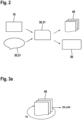
- Exemplary embodiments of the machine learning model 30 are shown in Fig. 2 schematically illustrated.
- the prompt 20 can be a natural language text.
- the prompt 20 can include or be a natural language instruction to the machine learning model 30.
- the prompt can include, for example, a linguistic instruction to the Large Language Model (LLM) directed to generating at least one test case for testing the code.
- the prompt can include, for example, a linguistic instruction to the Large Language Model (LLM) directed to generating at least one test code for testing the code.
- the prompt can include, for example, a linguistic instruction to the Large Language Model (LLM) directed to generating at least one test case and at least one test code, each for testing the code.
- the prompt may comprise a linguistic instruction to the Large Language Model (LLM) directed as to how similar and/or different the at least one test case is to be generated from the at least one predetermined test case.
- the prompt may comprise a linguistic instruction to the Large Language Model (LLM) directed as to how similar and/or different the at least one test code is to be generated from the at least one predetermined test case.
- the prompt may comprise a linguistic instruction to the Large Language Model (LLM) directed as to how similar and/or different the at least one test case and the at least one test code are to be generated from the at least one predetermined test case.
- the prompt can comprise a linguistic instruction to the Large Language Model (LLM) which is directed as to how similar and/or different the at least one test case is to be generated from at least one test case encoded in the at least one predetermined test code.
- the prompt can comprise a linguistic instruction to the Large Language Model (LLM) which is directed as to how similar and/or different the at least one test case is to be generated from at least one test case encoded in the at least one predetermined test code.
- the prompt can comprise a linguistic instruction to the Large Language Model (LLM) which is directed as to how similar and/or different the at least one test case and the at least one test code are to be generated from at least one test case encoded in the at least one predetermined test code.
- LLM Large Language Model
- the method 100 may comprise generating a plurality of test cases 40 (i.e., at least two test cases).
- One or more test cases of the plurality of test cases may, for example, be generated at least based on the code and the prompt, i.e., in a (single) execution of the method 100.
- one or more test cases of the plurality of test cases may be generated by multiple executions of the method 100.
- the prompt may be varied in multiple executions of the method 100.
- the prompt does not have to be varied in multiple executions of the method 100.
- one or more test cases may be predetermined.
- the machine learning model may be varied in multiple executions of the method 100.
- the method 100 may include generating a plurality of test codes 50 (i.e., at least two test codes). Alternatively or additionally, the method 100 may include generating a test code configured to test the software against a plurality of test codes.
- the method 100 may comprise receiving 110 the code 10. Alternatively or additionally, the method 100 may comprise receiving 120 the prompt 20 and/or the further prompt 21, wherein the order of steps 110 and 120 may be irrelevant. Alternatively or additionally, the method 100 Receiving the machine learning model 30 and/or the further machine learning model 31.
- the evaluation result may comprise a natural language text or be such a natural language text.
- the evaluation result may comprise a data structure written in a predetermined syntax (e.g., in a programming language) or be such a data structure.
- the data structure may, for example, comprise the natural language text.
- the evaluation result may comprise one or more numerical values, in particular one or more confidence values. This allows a quality of the at least one test case and/or the test code to be encoded, which can be taken into account during the validation and verification (V&V) of the software.
- the evaluation result may include information that the generation of at least one test case and/or test code failed. This can happen, for example, if the code is already inconsistent. This information is also valuable for the development of the technical system. In this case, the code can and must be adapted and, in particular, improved.
- the at least one test case 40 and/or the test code 50 can be evaluated, wherein, for example, the results OK or nOK (short for: not OK) are included in the evaluation result.
- the at least one test case 40 and/or the test code 50 can be repaired ("fixed” or "fixed"), wherein a test case and/or test code generated in an earlier iteration of the method 100 can be adapted, improved, and/or corrected, for example, in a further iteration of the method 100.
- the method 100 may be executed in an electronic programming environment 60.
- the electronic programming environment 60 may, but need not, be the execution environment 70.
- the electronic programming environment may, for example, be Fig. 4 schematically shown, be superordinate to the execution environment.
- the execution environment can be initialized and then controlled by the electronic programming environment.
- one or more execution results can be returned from the execution environment to the electronic programming environment.
- the electronic programming environment enables programming and/or interaction with a plurality of iterations of the method 100.
- the electronic programming environment proves particularly advantageous when initializing the iterations and/or debugging during the iterations.
- the execution environment for testing the software can also be generated by the (further) machine learning model 30, 31.
- the prompt 20 and/or the further prompt 21 can be adapted, for example, in the electronic programming environment.
- test cases and/or test code may depend.
- the generation 130 of the at least one test case and/or the test code can be based at least on natural language commenting in the software code. This is advantageous because critical points in the code, in particular, are often (well) commented. This allows the software to be tested particularly at these critical points.
- the generation 130, via the machine learning model, of the at least one test case and/or the test code can be based on at least one predetermined test case (or on a plurality of predetermined test cases).
- the at least one predetermined test case can, for example, be taken into account as further input of the machine learning model when generating 130 the at least one test case and/or the test code.
- the at least one predetermined test case can be included in the generation 130 of the at least one test case and/or the test code via the prompt.
- the at least one predetermined test case can, but does not have to, result from an earlier iteration of the method 100.
- predetermined test cases can be expanded, improved, and/or corrected by a further iteration of the method 100.
- the generation 130, via the machine learning model 30, of the at least one test case and/or the test code can be based on at least at least one predetermined test code (or on a plurality of predetermined test codes).
- the at least one predetermined test code can, for example, be taken into account as further input of the machine learning model when generating 130 the at least one test case and/or the test code.
- the at least one predetermined test code can be included in the generation 130 of the at least one test case and/or the test code via the prompt.
- the at least one predetermined test code can, for example, be written in the same programming language as the code.
- the at least one predetermined test code can, but does not have to, result from an earlier iteration of the method 100.
- test cases encoded in a predetermined test code can be expanded, improved, and/or corrected by a further iteration of the method 100.
- the generation 130, via the machine learning model, of the at least one test case and/or the test code can be based on meta information of the code.
- the meta information can in particular comprise or be a (natural language) description of the code.
- the meta information can comprise or be a (natural language or formal) specification of the code, thus of the software.
- the meta information can, for example, be taken into account as further input of the machine learning model when generating 130 the at least one test case and/or the test code.
- the meta information can be included in the generation 130 of the at least one test case and/or the test code via the prompt.
- Both the description of the code and the specification can include goals to be achieved by the software. This information can prove particularly useful when it comes to testing the functionality of the software in detail.
- both the description of the code and the specification can comprise validity limits of parameters, which enable the definition of particularly meaningful boundary tests.
- the method 100 can, for example, be initiated by the "OK" in Fig. 3a -b , retaining 150 the at least one test case and/or the test code according to a predetermined criterion based on the evaluation result.
- the method 100 can be as in Fig. 1a -d schematically illustrates (but need not) include discarding 151 the at least one test case and/or the test code otherwise (ie if no retention 150 occurs).
- At least one test case and/or the test code can be repaired, for example, see Fig. 3a -b.
- the at least one test case is generated 130, 131.
- this can be the case if only the at least one test case is generated 131 and (at least in this iteration of the method 100) no test code is generated 132.
- the test code can then be generated 130, 132 in a further iteration of the method 100.
- this can also be the case if, as in Fig. 1d schematically illustrated, both the at least one test case and the test code are generated 131, 132.
- the at least one test case can then (but does not have to) be evaluated 140, 141, resulting in a first evaluation result.
- the evaluation 140, 141 of the at least one test case may include checking whether the at least one test case is already known as a predetermined test case (e.g., in a plurality of predetermined test cases).
- the evaluation result may include or be the first evaluation result.
- the method 100 may include maintaining 152 the at least one test case according to a predetermined criterion based on the first evaluation result.
- the method 100 may be as in Fig. 1b and Fig. 1d schematically illustrated (but does not have to) include discarding 153 the at least one test case otherwise (i.e. if no retention 152 occurs).
- the at least one test case can be discarded 153 if it is already known as a predetermined test case.
- a large number of test cases are generated 130, 131 by the method 100 (e.g. also by multiple executions of the method). By discarding 153 the at least one test case, retained 152 test cases are given a higher weighting in the large number of test cases.
- the test of the software is thus improved by discarding 153 non-informative test cases.
- the at least one test case can, for example, be expanded, improved and/or corrected.
- test code is generated 130, 132.
- this can be the case if only the test code is generated 132 and (in this iteration of the method 100) no test cases are generated 131.
- the test code can be generated via the machine learning model at least based on the code of the software and the prompt 130.
- the test code can be generated without a previously generated at least one test case 130, 132.
- the at least one test case can be an intermediate result that is not output by the machine learning model at all.
- the method may include generating 133, via a further machine learning model 31, a test code 50 based at least on the at least one test case 40 and a further prompt 21, wherein the test code 50 is designed to test the software with respect to the at least one test case 40 (or the plurality of test cases).
- This approach may be advantageous, for example, since the at least one test case can already be evaluated before the test code is generated.
- the further machine learning model 31 may include or be a foundation model.
- the further machine learning model may include or be a large language model (LLM).
- the further machine learning model may include or be a multi-domain model.
- the further machine learning model 31 may, but does not have to, be the machine learning model 30.
- the further prompt 21 can be a natural language text.
- the further prompt 21 can include or be a natural language instruction to the machine learning model 31.
- the further prompt can include a linguistic instruction to the Large Language Model (LLM) directed to generate one or more test codes for testing the code based on the at least one test case.
- LLM Large Language Model
- the test code can then be evaluated 140, 142, resulting in a second evaluation result.
- the evaluation result can include or be the second evaluation result.
- the evaluation result can include the first and second evaluation results.
- the method 100 may include maintaining 154 the test code according to a predetermined further criterion based on the second evaluation result.
- the method 100 may be as in Fig. 1c and Fig. 1d schematically illustrated (but does not have to) include discarding 155 the test code otherwise (i.e., if no retention 154 occurs).
- the test code can be discarded 155 if it is already known as a predetermined test code.
- a plurality of test codes can be generated 130, 132 by the method 100 (e.g., also by multiple execution of the method). By discarding 155 the test code, retained 154 test codes are given a higher weighting in the plurality of test codes.
- the test of the software is improved by discarding 155 non-informative test codes.
- the test code can, for example, be expanded, improved, and/or corrected.
- the evaluation 140, 142 of the test code 50 may comprise executing the test code 50, resulting in an execution result, ie, for example, an actual result of a called function.
- an execution result ie, for example, an actual result of a called function.
- This may, for example, be Fig. 4 schematically shown, in an execution environment 70, wherein the code, at least to the extent required by the at least one test case and/or the test code, is executed in the execution environment.
- the evaluation 140, 142 of the test code 50 (and/or the method 100) may further comprise checking whether the execution result corresponds to a reference result (e.g., comprising one or more reference output variables) in the test code.
- a reference result e.g., comprising one or more reference output variables
- the evaluation 140, 142 of the test code 50 may further comprise correcting the at least one test case and/or the test code, in particular the reference result, if the execution result does not correspond to the reference result in the test code.
- the at least one test case and/or the test code may, for example, be discarded 153, 155, i.e., not be used in testing the software.
- a reapplication of the method 100 can be based on the at least one test case and/or the test code and, if necessary, the prompt can be adapted.
- the evaluation 140, 142 of the test code can comprise executing the test code 50. This can again take place in the execution environment 70, wherein the code is executed in the execution environment, at least to the extent required by the at least one test case and/or the test code.
- the evaluation 140, 142 of the test code (or the method 100) can comprise measuring code coverage when executing the code.
- the evaluation 140, 142 of the test code (or the method 100) can comprise checking whether the code coverage is sufficiently large. Code coverage is often measured not just for one test case, but for a large number of test cases. Depending on the question, however, it can also be useful to measure code coverage for at least one test case or for a few test cases.
- the test case(s) in the test code can also be implicitly evaluated. In this respect, it may be unnecessary to evaluate at least one test case 141.
- the evaluation 140, 142 of the test code can include a dynamic redundancy check of the test code (or the plurality of test codes).
- the dynamic redundancy check is often measured for the plurality of test cases. Depending on the issue, however, the dynamic redundancy check may also be useful for at least one test case or for a few test cases.
- This evaluation 140, 142 of the test code can also implicitly evaluate the test case(s) in the test code.
- the evaluation 140, 142 of the test code may comprise measuring a suitability of the test code (or the plurality of test codes). This may be based on mutation testing. During mutation testing, for example, the code may be mutated such that the (previous) execution result is changed. Mutation testing may then check whether the unchanged test code detects the changed code. This allows the test code to be tested. At the same time, the suitability of the test case(s) in the test code can be measured. The suitability may indicate whether the test code is suitable for finding errors in the code.
- the respective test results can be coded in the second assessment result.
- the method 100 may include executing 160 the test code, wherein the software is tested with respect to at least one test case.
- Executing 160 the test code may be dependent on the evaluation result, in particular on the second evaluation result.
- executing 160 the test code may be dependent on the evaluation result and/or the second evaluation result being rated as sufficiently good ("OK") 140, 142.
- OK sufficiently good
- the code thus the software, can be tested. This allows the software, and thus the technical system controlled, regulated, and/or monitored by it, to be improved.
- the method 100 can comprise outputting 170 of the evaluation result. This can be done, for example, via the electronic programming environment. Outputting 170 of the evaluation result can comprise outputting the first evaluation result.
- the first evaluation result can be outputted, for example, via the electronic programming environment.
- the first evaluation result can comprise one or more results of the evaluation 140, 141 of the at least one test case.
- outputting 170 of the evaluation result can comprise outputting the second evaluation result.
- the second evaluation result can be outputted, for example, via the electronic programming environment.
- the second evaluation result can comprise one or more results of the evaluation 140, 142 of the test code.
- the second evaluation result can comprise, for example, a measured code coverage when executing the software code and, if applicable, an assessment of whether this coverage is sufficiently large.
- the second evaluation result can comprise, for example, the measured suitability of the test code (e.g., based on mutation testing).
- both the first and the second evaluation results can be output, for example, via the electronic programming environment.
- the method 100 may include outputting 171 the at least one test case (or the plurality of test cases). This may be done via the electronic programming environment.
- the method 100 may include outputting 172 the test code. This may also be done via the electronic programming environment.
- the method 100 can be based on at least one user input from an interface of the electronic programming environment.
- the method 100 and/or its multiple executions can be controlled (interactively) via the electronic programming environment. This can be helpful, for example, when setting up the programming environment and/or the execution environment before the method 100 is run automatically. Alternatively or additionally, the interactive control can be helpful when debugging the automated run of the method 100.
- one or more reference output variables can be supplemented and/or corrected via an input.
- test case generation before continuing with test code generation.
- the method 100 can be repeated.
- the machine learning model and/or the prompt, as well as other inputs if necessary, can be varied. If necessary, for example, if the code coverage is too low and/or too few effective test cases or generally too few test cases have been generated, additional test cases can be generated in at least one further iteration, in particular to increase coverage. For example, the previous test cases can be used as additional input.
- Different test cases or test code can be generated by both single and multiple executions of the method 100. Even in a single execution of the method 100, there is a variance due to the Inherent variability of the machine learning model (temperature). If, for example, it is supposed to generate 101 different test cases based on a prompt, 101 different test cases can actually be generated thanks to the inherent variability. Furthermore, variance exists in multiple executions of the procedure 100 due to the possible variety of prompts. Alternatively or additionally, variance exists due to different combinations of various input artifacts (e.g., signature only, with implementation, with requirements of the specification, etc.). If statically detectable, multiple-occurring test cases are generated (e.g., through independent multiple executions), they can be discarded. Even if they are not discarded, they only impair the efficiency of the software test, not the quality of the software test itself.
- various input artifacts e.g., signature only, with implementation, with requirements of the specification, etc.
- the method 200 comprises adapting the machine learning model 30 and/or the further machine learning model 31 at least based on at least one test case 40 and/or the test code 50 and on at least one evaluation result, wherein the at least one evaluation result results from evaluating 140 the at least one test case 40 and/or the test code 50.
- a computer-implemented method 200 for further training a machine learning model 30 is disclosed, wherein the machine learning model 30 is designed to generate 130 at least one test case 40 and/or a test code 50, each for testing a software, at least based on a code 10 of the software and a prompt 20.
- the method 200 comprises adapting the machine learning model 30 at least based on at least one test case 40 and/or the test code 50 and on at least one evaluation result, in particular on at least one first and/or second evaluation result, wherein the at least one evaluation result, in particular, the at least one first and/or second evaluation result results from evaluating 140 the at least one test case 40 and/or the test code 50.
- a computer-implemented method 200 for further training a further machine learning model 31 is disclosed, wherein the further machine learning model 31 is designed to generate 133 a test code 50 for testing the software at least based on at least one test case 40 and a further prompt 21.
- the method 200 comprises adapting the further machine learning model 31 at least based on at least one test case 40 and/or the test code 50 and on at least one evaluation result, in particular on at least one first and/or second evaluation result, wherein the at least one evaluation result, in particular the at least one first and/or second evaluation result, results from evaluating 140 the at least one test case 40 and/or the test code 50.
- a computer-implemented method 200 for further training a machine learning model 30 and a further machine learning model 31 is disclosed, wherein the machine learning model 30 is designed to generate 130 at least one test case 40 and/or a test code 50, each for testing a software, at least based on a code 10 of the software and a prompt 20, and the further machine learning model 31 is designed to generate 133 a test code 50 for testing the software, at least based on at least one test case 40 and a further prompt 21.
- the method 200 comprises adapting the machine learning model 30 and/or further machine learning model 31 at least based on at least one test case 40 and/or the test code 50 and on at least one evaluation result, in particular on at least one first and/or second evaluation result, wherein the at least one evaluation result, in particular the at least one first and/or second evaluation result, is determined by evaluating 140 the at least a test case 40 and/or test code 50 results.
- the evaluation 140 may, but need not, be part of the method 200.
- the at least one test case 40 and/or the test code 50 may be generated according to the method 100 for the automated generation of test code for testing a software generated 130 and evaluated 140.
- the process 200 may, but need not, be a continuation of the process 100.
- the method 100 can be executed again using an adapted machine learning model and/or an adapted further machine learning model.
- the machine learning model 30 and/or the further machine learning model 31 can be adapted between multiple executions of the method 100 according to the method 200.
- the adaptation of the machine learning model 30 can be based on at least one code 10 to be tested and at least one prompt 20.
- the adaptation of the further machine learning model 31 can be based on at least one test case 40 and another prompt 21.
- the machine learning model 30 and/or the additional machine learning model 31 can be adapted through supervised learning. Such adaptation of the machine learning model 30 and/or the additional machine learning model 31 can be viewed as supervised fine-tuning. Thanks to fine-tuning, a generic machine learning model, which has been trained, for example, for general machine language understanding, can be adapted to a specific application, i.e., here with regard to generating test cases and/or test code for testing the software.
- the fine-tuning of the machine learning model 30 and/or the further machine learning model 31 may, but does not have to, precede a further adaptation of the machine learning model 30 and/or the further machine learning model 31 by unsupervised (reinforcement) learning.
- adapting the machine learning model 30 and/or further machine learning model 31 at least based on at least one test case 40 and/or the test code 50 as well as on at least one evaluation result may comprise calculating at least one reward at least based on the at least one evaluation result and adapting the machine learning model 30 and/or further machine learning model 31 at least based on the at least one test case 40 and/or the test code 50 as well as on the at least one reward.
- Such an adaptation of the machine learning model 30 and/or the further Machine learning model 31 can be viewed as unsupervised (reinforcement) learning.
- a reward can be a parameter, particularly a numerical parameter, that is comparable to other parameters that are also rewards.
- a reward can be greater than, equal to, or less than another reward.
- the at least one reward may be larger if the at least one evaluation result is better, and the at least one reward may be lower if the at least one evaluation result is worse.
- An assessment result can be worse, especially bad, if an exam on which the assessment result is based has already been negative, i.e., failed.
- an assessment result can be better, especially good, if all exams have been positive, i.e., passed.
- the machine learning model 30 and/or the further machine learning model 31 can be adapted at least based on a plurality of test cases 40 and/or test code 50 and a plurality of associated rewards.
- the method here can comprise calculating the rewards at least based on a plurality of evaluation results per test case 40 and/or test code 50 of the plurality of test cases 40 and/or test code 50.
- the reward for a test case or test code need not only depend on its evaluation result, but can also be based on one or more evaluation results for other test cases and/or other test codes.
- One or more rewards i.e., their amount
- one or more rewards can depend on a number of better evaluation results and a number of worse evaluation results, in particular on an imbalance between better and worse evaluation results.
- Rewards can first be calculated per assessment result and then adjusted and/or offset based on other assessment results.
- the adaptation of the machine learning model 30 and/or further machine learning model 31 can be based on a reinforcement learning algorithm such as Proximal Policy Optimization (PPO).
- PPO Proximal Policy Optimization
- a part of the machine learning model 30 and/or a part of the further machine learning model 31 cannot be (intentionally) adapted, i.e., fixed. In this case, only another part of the machine learning model 30 and/or a part of the further machine learning model 31 is adapted.
- certain parameters such as weights and/or biases, in particular weights and/or biases on earlier layers of the machine learning model 30 and/or the further machine learning model 31, may not be adjusted, i.e., fixed.
- the adjustments may be limited to later layers of the machine learning model 30 and/or the further machine learning model 31, in which test cases and/or test code are generated. This can ensure that the machine learning model 30 and/or the further machine learning model 31 does not unduly degrade with regard to machine language understanding.
- a deterioration in machine language understanding may be aimed for by the adjustment insofar as it plays no role in the generation of test cases and/or test code for testing the software. For example, machine language understanding of Shakespearean English is (usually) not required for the generation of test cases and/or test code.
- the method 200 can be controlled via the electronic programming environment 60.
- the machine learning model 30 and/or the additional machine learning model 31 can be further adapted via the electronic programming environment.
- a computer system which is designed to execute the computer-implemented method 100 for the automated generation of test code for testing a software.
- the computer system can be designed to Method 200 for further training a machine learning model 30 and/or another machine learning model 31.
- the computer system can be configured to execute the computer-implemented method 100 for the automated generation of test code for testing software and (e.g., subsequently) the computer-implemented method 200 for further training a machine learning model 30 and/or another machine learning model 31.
- the computer system can comprise a processor and/or a main memory.
- a computer program is disclosed that is designed to execute the computer-implemented method 100 for the automated generation of test code for testing software.
- the computer program can be designed to execute the computer-implemented method 200 for further training a machine learning model 30 and/or another machine learning model 31.
- the computer program can be designed to execute the computer-implemented method 100 for the automated generation of test code for testing software and (e.g., subsequently) the computer-implemented method 200 for further training a machine learning model 30 and/or another machine learning model 31.
- the computer program can, for example, be in interpretable or compiled form. It can be loaded (also in parts) into the RAM of a computer for execution, e.g., as a bit or byte sequence.
- the medium may, for example, comprise one of RAM, ROM, EPROM, HDD, SSD, etc., on/in which the signal is stored.
Landscapes
- Engineering & Computer Science (AREA)
- Theoretical Computer Science (AREA)
- General Engineering & Computer Science (AREA)
- General Physics & Mathematics (AREA)
- Physics & Mathematics (AREA)
- Quality & Reliability (AREA)
- Computer Hardware Design (AREA)
- Software Systems (AREA)
- Evolutionary Computation (AREA)
- Computing Systems (AREA)
- Medical Informatics (AREA)
- Mathematical Physics (AREA)
- Data Mining & Analysis (AREA)
- Computer Vision & Pattern Recognition (AREA)
- Artificial Intelligence (AREA)
- Debugging And Monitoring (AREA)
Priority Applications (3)
| Application Number | Priority Date | Filing Date | Title |
|---|---|---|---|
| EP23200609.8A EP4530862A1 (fr) | 2023-09-28 | 2023-09-28 | Génération automatisée de code de test pour tester un logiciel intégré |
| US18/885,814 US20250130928A1 (en) | 2023-09-28 | 2024-09-16 | Automated generation of test code for testing embedded software |
| KR1020240131909A KR20250047638A (ko) | 2023-09-28 | 2024-09-27 | 임베디드 소프트웨어를 검사하기 위한 테스트 코드의 자동화된 생성 |
Applications Claiming Priority (1)
| Application Number | Priority Date | Filing Date | Title |
|---|---|---|---|
| EP23200609.8A EP4530862A1 (fr) | 2023-09-28 | 2023-09-28 | Génération automatisée de code de test pour tester un logiciel intégré |
Publications (1)
| Publication Number | Publication Date |
|---|---|
| EP4530862A1 true EP4530862A1 (fr) | 2025-04-02 |
Family
ID=88236870
Family Applications (1)
| Application Number | Title | Priority Date | Filing Date |
|---|---|---|---|
| EP23200609.8A Pending EP4530862A1 (fr) | 2023-09-28 | 2023-09-28 | Génération automatisée de code de test pour tester un logiciel intégré |
Country Status (3)
| Country | Link |
|---|---|
| US (1) | US20250130928A1 (fr) |
| EP (1) | EP4530862A1 (fr) |
| KR (1) | KR20250047638A (fr) |
Families Citing this family (1)
| Publication number | Priority date | Publication date | Assignee | Title |
|---|---|---|---|---|
| US20250165379A1 (en) * | 2023-11-22 | 2025-05-22 | Microsoft Technology Licensing, Llc | Action sequence generation for intelligent software testing |
Citations (3)
| Publication number | Priority date | Publication date | Assignee | Title |
|---|---|---|---|---|
| US20190213115A1 (en) * | 2018-01-08 | 2019-07-11 | Accenture Global Solutions Limited | Utilizing artificial intelligence to test cloud applications |
| US20220350733A1 (en) * | 2021-04-30 | 2022-11-03 | Verizon Patent And Licensing Inc. | Systems and methods for generating and executing a test case plan for a software product |
| DE102022200928A1 (de) * | 2022-01-27 | 2023-07-27 | Fraunhofer-Gesellschaft zur Förderung der angewandten Forschung eingetragener Verein | Eine Testanordnung und ein Verfahren zum Testen eines Testobjekts, und ein Computerprogramm zur Durchführung des Verfahrens |
-
2023
- 2023-09-28 EP EP23200609.8A patent/EP4530862A1/fr active Pending
-
2024
- 2024-09-16 US US18/885,814 patent/US20250130928A1/en active Pending
- 2024-09-27 KR KR1020240131909A patent/KR20250047638A/ko active Pending
Patent Citations (3)
| Publication number | Priority date | Publication date | Assignee | Title |
|---|---|---|---|---|
| US20190213115A1 (en) * | 2018-01-08 | 2019-07-11 | Accenture Global Solutions Limited | Utilizing artificial intelligence to test cloud applications |
| US20220350733A1 (en) * | 2021-04-30 | 2022-11-03 | Verizon Patent And Licensing Inc. | Systems and methods for generating and executing a test case plan for a software product |
| DE102022200928A1 (de) * | 2022-01-27 | 2023-07-27 | Fraunhofer-Gesellschaft zur Förderung der angewandten Forschung eingetragener Verein | Eine Testanordnung und ein Verfahren zum Testen eines Testobjekts, und ein Computerprogramm zur Durchführung des Verfahrens |
Also Published As
| Publication number | Publication date |
|---|---|
| KR20250047638A (ko) | 2025-04-04 |
| US20250130928A1 (en) | 2025-04-24 |
Similar Documents
| Publication | Publication Date | Title |
|---|---|---|
| WO2007028676A2 (fr) | Procede et dispositif d'evaluation automatique de la qualite d'un code source de logiciel | |
| DE102019209540A1 (de) | Verfahren und Vorrichtung zur optimalen Aufteilung von Testfällen auf unterschiedliche Testplattformen | |
| DE102021210327A1 (de) | Kontinuierliche überwachung und/oder bereitstellung von software | |
| EP3770766A1 (fr) | Procédé d'essai d'un système | |
| EP3617912A1 (fr) | Procédé et dispositif de génération assiste par un ordinateur d'un composant pour un système technique | |
| EP4530862A1 (fr) | Génération automatisée de code de test pour tester un logiciel intégré | |
| DE102010033861A1 (de) | Auf einer formellen Analyse basierte Entwicklung von Anforderungsspezifikationen | |
| EP4530832A1 (fr) | Refacteur automatisé de code de logiciel intégré | |
| EP3764185A1 (fr) | Procédé d'essai d'un système | |
| DE102021109130A1 (de) | Verfahren zum Testen eines Produkts | |
| DE102020211710A1 (de) | Verfahren, Vorrichtung und Computerprogramm zum Testen eines technischen Systems anhand eines Modells | |
| DE102020206327A1 (de) | Verfahren und Vorrichtung zum Prüfen eines technischen Systems | |
| DE102020205540A1 (de) | Verfahren und Vorrichtung zum Prüfen eines technischen Systems | |
| EP4542423A1 (fr) | Procédé d'obscurcissement de code généré par llm | |
| EP4530828A1 (fr) | Génération automatisée de modèles informatiques tels que des automates à pile, des automates à états ou des réseaux de pétri | |
| DE102022134601A1 (de) | Systeme und verfahren für das training und die bereitstellung von modellen für maschinelles lernen | |
| DE102021207872A1 (de) | Kompositionelle verifikation von eingebetteten softwaresystemen | |
| EP3553679A1 (fr) | Procédé de diagnostic de panne assisté par ordinateur pour un système technique | |
| EP3173928B1 (fr) | Procédé et dispositif de contrôle d'un arbre de défaillances de composant | |
| EP4589420A1 (fr) | Génération automatisée de correctifs de logiciel intégré | |
| DE102020213809A1 (de) | Verfahren zum Betreiben eines Steuergeräts beim Testen einer Software des Steuergeräts und Verfahren zum Betreiben eines Testcomputers beim Testen einer Software eines Steuergeräts | |
| EP4664271A1 (fr) | Adaptation automatisée de logiciel intégré | |
| DE102020206321A1 (de) | Verfahren und Vorrichtung zum Prüfen eines technischen Systems | |
| EP3757698A1 (fr) | Procédé et dispositif d'évaluation et de sélection des métriques de comparaison des signaux | |
| DE102023205751A1 (de) | Rechnergestütztes Verfahren zur automatisierten Erzeugung und Verifizierung eines Computerprogramms |
Legal Events
| Date | Code | Title | Description |
|---|---|---|---|
| PUAI | Public reference made under article 153(3) epc to a published international application that has entered the european phase |
Free format text: ORIGINAL CODE: 0009012 |
|
| STAA | Information on the status of an ep patent application or granted ep patent |
Free format text: STATUS: THE APPLICATION HAS BEEN PUBLISHED |
|
| AK | Designated contracting states |
Kind code of ref document: A1 Designated state(s): AL AT BE BG CH CY CZ DE DK EE ES FI FR GB GR HR HU IE IS IT LI LT LU LV MC ME MK MT NL NO PL PT RO RS SE SI SK SM TR |
|
| STAA | Information on the status of an ep patent application or granted ep patent |
Free format text: STATUS: REQUEST FOR EXAMINATION WAS MADE |
|
| 17P | Request for examination filed |
Effective date: 20251002 |