EP4531322A1 - Energiesparen für wiederholungen - Google Patents
Energiesparen für wiederholungen Download PDFInfo
- Publication number
- EP4531322A1 EP4531322A1 EP24203194.6A EP24203194A EP4531322A1 EP 4531322 A1 EP4531322 A1 EP 4531322A1 EP 24203194 A EP24203194 A EP 24203194A EP 4531322 A1 EP4531322 A1 EP 4531322A1
- Authority
- EP
- European Patent Office
- Prior art keywords
- wireless device
- cell
- base station
- drx
- downlink
- Prior art date
- Legal status (The legal status is an assumption and is not a legal conclusion. Google has not performed a legal analysis and makes no representation as to the accuracy of the status listed.)
- Pending
Links
Images







Classifications
-
- H—ELECTRICITY
- H04—ELECTRIC COMMUNICATION TECHNIQUE
- H04L—TRANSMISSION OF DIGITAL INFORMATION, e.g. TELEGRAPHIC COMMUNICATION
- H04L5/00—Arrangements affording multiple use of the transmission path
- H04L5/0001—Arrangements for dividing the transmission path
- H04L5/0014—Three-dimensional division
- H04L5/0023—Time-frequency-space
-
- H—ELECTRICITY
- H04—ELECTRIC COMMUNICATION TECHNIQUE
- H04W—WIRELESS COMMUNICATION NETWORKS
- H04W72/00—Local resource management
- H04W72/12—Wireless traffic scheduling
- H04W72/1263—Mapping of traffic onto schedule, e.g. scheduled allocation or multiplexing of flows
- H04W72/1273—Mapping of traffic onto schedule, e.g. scheduled allocation or multiplexing of flows of downlink data flows
-
- H—ELECTRICITY
- H04—ELECTRIC COMMUNICATION TECHNIQUE
- H04L—TRANSMISSION OF DIGITAL INFORMATION, e.g. TELEGRAPHIC COMMUNICATION
- H04L5/00—Arrangements affording multiple use of the transmission path
- H04L5/003—Arrangements for allocating sub-channels of the transmission path
- H04L5/0048—Allocation of pilot signals, i.e. of signals known to the receiver
- H04L5/0051—Allocation of pilot signals, i.e. of signals known to the receiver of dedicated pilots, i.e. pilots destined for a single user or terminal
-
- H—ELECTRICITY
- H04—ELECTRIC COMMUNICATION TECHNIQUE
- H04L—TRANSMISSION OF DIGITAL INFORMATION, e.g. TELEGRAPHIC COMMUNICATION
- H04L5/00—Arrangements affording multiple use of the transmission path
- H04L5/003—Arrangements for allocating sub-channels of the transmission path
- H04L5/0053—Allocation of signalling, i.e. of overhead other than pilot signals
-
- H—ELECTRICITY
- H04—ELECTRIC COMMUNICATION TECHNIQUE
- H04L—TRANSMISSION OF DIGITAL INFORMATION, e.g. TELEGRAPHIC COMMUNICATION
- H04L5/00—Arrangements affording multiple use of the transmission path
- H04L5/0091—Signalling for the administration of the divided path, e.g. signalling of configuration information
- H04L5/0094—Indication of how sub-channels of the path are allocated
-
- H—ELECTRICITY
- H04—ELECTRIC COMMUNICATION TECHNIQUE
- H04W—WIRELESS COMMUNICATION NETWORKS
- H04W72/00—Local resource management
- H04W72/20—Control channels or signalling for resource management
- H04W72/23—Control channels or signalling for resource management in the downlink direction of a wireless link, i.e. towards a terminal
-
- H—ELECTRICITY
- H04—ELECTRIC COMMUNICATION TECHNIQUE
- H04W—WIRELESS COMMUNICATION NETWORKS
- H04W72/00—Local resource management
- H04W72/20—Control channels or signalling for resource management
- H04W72/23—Control channels or signalling for resource management in the downlink direction of a wireless link, i.e. towards a terminal
- H04W72/231—Control channels or signalling for resource management in the downlink direction of a wireless link, i.e. towards a terminal the control data signalling from the layers above the physical layer, e.g. RRC or MAC-CE signalling
-
- H—ELECTRICITY
- H04—ELECTRIC COMMUNICATION TECHNIQUE
- H04W—WIRELESS COMMUNICATION NETWORKS
- H04W76/00—Connection management
- H04W76/20—Manipulation of established connections
Definitions
- the CN 152 may comprise an Access and Mobility Management Function (AMF) device 158A and/or a User Plane Function (UPF) device 158B, which may be separate components or one component AMF/UPF device 158.
- AMF Access and Mobility Management Function
- UPF User Plane Function
- the UPF device 158B may serve as a gateway between a RAN 154 (e.g., NG-RAN) and the one or more DNs 170.
- the AMF device 158A may perform functions, such as: Non-Access Stratum (NAS) signaling termination, NAS signaling security, Access Stratum (AS) security control, inter-CN node signaling for mobility between access networks (e.g., 3GPP access networks and/or non-3GPP networks), idle mode wireless device reachability (e.g., idle mode UE reachability for control and execution of paging retransmission), registration area management, intra-system and inter-system mobility support, access authentication, access authorization including checking of roaming rights, mobility management control (e.g., subscription and policies), network slicing support, and/or session management function (SMF) selection.
- NAS may refer to the functionality operating between a CN and a wireless device
- AS may refer to the functionality operating between a wireless device and a RAN.
- the NG-C interface may provide/perform, for example, NG interface management, wireless device context management (e.g., UE context management), wireless device mobility management (e.g., UE mobility management), transport of NAS messages, paging, PDU session management, configuration transfer, and/or warning message transmission.
- wireless device context management e.g., UE context management
- wireless device mobility management e.g., UE mobility management
- transport of NAS messages paging
- PDU session management paging
- configuration transfer e.g., configuration transfer, and/or warning message transmission.
- a wireless device may access the base station, via an interface (e.g., Uu interface), for the user plane configuration and the control plane configuration.
- the base stations e.g., gNBs 160
- the base stations may provide user plane and control plane protocol terminations towards the wireless device(s) 156 via the Uu interface.
- a base station e.g., the gNB 160A
- a base station may provide Evolved UMTS Terrestrial Radio Access (E UTRA) user plane and control plane protocol terminations towards the wireless device(s) 156 via a Uu interface (e.g., where E UTRA may refer to the 3GPP 4G radio-access technology).
- E UTRA Evolved UMTS Terrestrial Radio Access
- a base station e.g., the ng-eNB 162B
- the user plane and control plane protocol terminations may comprise, for example, NR user plane and control plane protocol terminations, 4G user plane and control plane protocol terminations, etc.
- the CN 152 may be configured to handle one or more radio accesses (e.g., NR, 4G, and/or any other radio accesses). It may also be possible for an NR network/device (or any first network/device) to connect to a 4G core network/device (or any second network/device) in a non-standalone mode (e.g., non-standalone operation). In a non-standalone mode/operation, a 4G core network may be used to provide (or at least support) control-plane functionality (e.g., initial access, mobility, and/or paging). Although only one AMF/UPF 158 is shown in FIG.
- one or more base stations may be connected to multiple AMF/UPF nodes, for example, to provide redundancy and/or to load share across the multiple AMF/UPF nodes.
- the communication network 100 in FIG. 1A and/or the communication network 150 in FIG. 1B may comprise any quantity/number and/or type of devices, such as, for example, computing devices, wireless devices, mobile devices, handsets, tablets, laptops, internet of things (IoT) devices, hotspots, cellular repeaters, computing devices, and/or, more generally, user equipment (e.g., UE).
- IoT internet of things
- UE user equipment
- any device herein may comprise any one or more of the above types of devices or similar devices.
- the communication network may comprise an LTE network, a 5G network, a satellite network, and/or any other network for wireless communications (e.g., any 3GPP network and/or any non-3GPP network).
- Apparatuses, systems, and/or methods described herein may generally be described as implemented on one or more devices (e.g., wireless device, base station, eNB, gNB, computing device, etc.), in one or more networks, but it will be understood that one or more features and steps may be implemented on any device and/or in any network.
- FIG. 2A shows an example user plane configuration.
- the user plane configuration may comprise, for example, an NR user plane protocol stack.
- FIG. 2B shows an example control plane configuration.
- the control plane configuration may comprise, for example, an NR control plane protocol stack.
- One or more of the user plane configuration and/or the control plane configuration may use a Uu interface that may be between a wireless device 210 and a base station 220.
- the protocol stacks shown in FIG. 2A and FIG. 2B may be substantially the same or similar to those used for the Uu interface between, for example, the wireless device 156A and the base station 160A shown in FIG. 1B .
- a user plane configuration may comprise multiple layers (e.g., five layers or any other quantity of layers) implemented in the wireless device 210 and the base station 220 (e.g., as shown in FIG. 2A ).
- physical layers (PHYs) 211 and 221 may provide transport services to the higher layers of the protocol stack and may correspond to layer 1 of the Open Systems Interconnection (OSI) model.
- the protocol layers above PHY 211 may comprise a medium access control layer (MAC) 212, a radio link control layer (RLC) 213, a packet data convergence protocol layer (PDCP) 214, and/or a service data application protocol layer (SDAP) 215.
- MAC medium access control layer
- RLC radio link control layer
- PDCP packet data convergence protocol layer
- SDAP service data application protocol layer
- the protocol layers above PHY 221 may comprise a medium access control layer (MAC) 222, a radio link control layer (RLC) 223, a packet data convergence protocol layer (PDCP) 224, and/or a service data application protocol layer (SDAP) 225.
- MAC medium access control layer
- RLC radio link control layer
- PDCP packet data convergence protocol layer
- SDAP service data application protocol layer
- One or more of the four protocol layers above PHY 211 may correspond to layer 2, or the data link layer, of the OSI model.
- One or more of the four protocol layers above PHY 221 may correspond to layer 2, or the data link layer, of the OSI model.
- FIG. 3 shows an example of protocol layers.
- the protocol layers may comprise, for example, protocol layers of the NR user plane protocol stack.
- One or more services may be provided between protocol layers.
- SDAPs e.g., SDAPS 215 and 225 shown in FIG. 2A and FIG. 3
- QoS Quality of Service
- a wireless device e.g., the wireless devices 106, 156A, 156B, and 210) may receive services through/via a PDU session, which may be a logical connection between the wireless device and a DN.
- the PDU session may have one or more QoS flows 310.
- a UPF (e.g., the UPF 158B) of a CN may map IP packets to the one or more QoS flows of the PDU session, for example, based on one or more QoS requirements (e.g., in terms of delay, data rate, error rate, and/or any other quality/service requirement).
- the SDAPs 215 and 225 may perform mapping/de-mapping between the one or more QoS flows 310 and one or more radio bearers 320 (e.g., data radio bearers).
- the mapping/de-mapping between the one or more QoS flows 310 and the radio bearers 320 may be determined by the SDAP 225 of the base station 220.
- the SDAP 215 of the wireless device 210 may be informed of the mapping between the QoS flows 310 and the radio bearers 320 via reflective mapping and/or control signaling received from the base station 220.
- the SDAP 225 of the base station 220 may mark the downlink packets with a QoS flow indicator (QFI), which may be monitored/detected/identified/indicated/observed by the SDAP 215 of the wireless device 210 to determine the mapping/de-mapping between the one or more QoS flows 310 and the radio bearers 320.
- QFI QoS flow indicator
- PDCPs may perform header compression/decompression, for example, to reduce the amount of data that may need to be transmitted (e.g., sent) over the air interface, ciphering/deciphering to prevent unauthorized decoding of data transmitted (e.g., sent) over the air interface, and/or integrity protection (e.g., to ensure control messages originate from intended sources).
- header compression/decompression for example, to reduce the amount of data that may need to be transmitted (e.g., sent) over the air interface, ciphering/deciphering to prevent unauthorized decoding of data transmitted (e.g., sent) over the air interface, and/or integrity protection (e.g., to ensure control messages originate from intended sources).
- the PDCPs 214 and 224 may perform retransmissions of undelivered packets, in-sequence delivery and reordering of packets, and/or removal of packets received in duplicate due to, for example, a handover (e.g., an intra-gNB handover).
- the PDCPs 214 and 224 may perform packet duplication, for example, to improve the likelihood of the packet being received.
- a receiver may receive the packet in duplicate and may remove any duplicate packets. Packet duplication may be useful for certain services, such as services that require high reliability.
- the PDCP layers may perform mapping/de-mapping between a split radio bearer and RLC channels (e.g., RLC channels 330) (e.g., in a dual connectivity scenario/configuration).
- Dual connectivity may refer to a technique that allows a wireless device to communicate with multiple cells (e.g., two cells) or, more generally, multiple cell groups comprising: a master cell group (MCG) and a secondary cell group (SCG).
- MCG master cell group
- SCG secondary cell group
- a split bearer may be configured and/or used, for example, if a single radio bearer (e.g., such as one of the radio bearers provided/configured by the PDCPs 214 and 224 as a service to the SDAPs 215 and 225) is handled by cell groups in dual connectivity.
- the PDCPs 214 and 224 may map/de-map between the split radio bearer and RLC channels 330 belonging to the cell groups.
- RLC layers may perform segmentation, retransmission via Automatic Repeat Request (ARQ), and/or removal of duplicate data units received from MAC layers (e.g., MACs 212 and 222, respectively).
- the RLC layers e.g., RLCs 213 and 223) may support multiple transmission modes (e.g., three transmission modes: transparent mode (TM); unacknowledged mode (UM); and acknowledged mode (AM)).
- TM transparent mode
- UM unacknowledged mode
- AM acknowledged mode
- the RLC layers may perform one or more of the noted functions, for example, based on the transmission mode an RLC layer is operating.
- the RLC configuration may be per logical channel.
- the RLC configuration may not depend on numerologies and/or Transmission Time Interval (TTI) durations (or other durations).
- the RLC layers e.g., RLCs 213 and 223) may provide/configure RLC channels as a service to the PDCP layers (e.g., PDCPs 214
- the MAC layers may perform multiplexing/demultiplexing of logical channels and/or mapping between logical channels and transport channels.
- the multiplexing/demultiplexing may comprise multiplexing/demultiplexing of data units/data portions, belonging to the one or more logical channels, into/from Transport Blocks (TBs) delivered to/from the PHY layers (e.g., PHYs 211 and 221, respectively).
- the MAC layer of a base station e.g., MAC 222
- Scheduling may be performed by a base station (e.g., the base station 220 at the MAC 222) for downlink/or and uplink.
- the MAC layers e.g., MACs 212 and 222) may be configured to perform error correction(s) via Hybrid Automatic Repeat Request (HARQ) (e.g., one HARQ entity per carrier in case of Carrier Aggregation (CA)), priority handling between logical channels of the wireless device 210 via logical channel prioritization and/or padding.
- HARQ Hybrid Automatic Repeat Request
- the MAC layers may support one or more numerologies and/or transmission timings. Mapping restrictions in a logical channel prioritization may control which numerology and/or transmission timing a logical channel may use.
- the MAC layers e.g., the MACs 212 and 222) may provide/configure logical channels 340 as a service to the RLC layers (e.g., the RLCs 213 and 223).
- the PHY layers may perform mapping of transport channels to physical channels and/or digital and analog signal processing functions, for example, for sending and/or receiving information (e.g., via an over the air interface).
- the digital and/or analog signal processing functions may comprise, for example, coding/decoding and/or modulation/demodulation.
- the PHY layers e.g., PHYs 211 and 221) may perform multi-antenna mapping.
- the PHY layers e.g., the PHYs 211 and 221) may provide/configure one or more transport channels (e.g., transport channels 350) as a service to the MAC layers (e.g., the MACs 212 and 222, respectively).
- FIG. 4A shows an example downlink data flow for a user plane configuration.
- the user plane configuration may comprise, for example, the NR user plane protocol stack shown in FIG. 2A .
- One or more TBs may be generated, for example, based on a data flow via a user plane protocol stack.
- a downlink data flow of three IP packets (n, n+1, and m) via the NR user plane protocol stack may generate two TBs (e.g., at the base station 220).
- An uplink data flow via the NR user plane protocol stack may be similar to the downlink data flow shown in FIG. 4A .
- the three IP packets (n, n+1, and m) may be determined from the two TBs, for example, based on the uplink data flow via an NR user plane protocol stack.
- a first quantity of packets e.g., three or any other quantity
- may be determined from a second quantity of TBs e.g., two or another quantity).
- the downlink data flow may begin, for example, if the SDAP 225 receives the three IP packets (or other quantity of IP packets) from one or more QoS flows and maps the three packets (or other quantity of packets) to radio bearers (e.g., radio bearers 402 and 404).
- the SDAP 225 may map the IP packets n and n+1 to a first radio bearer 402 and map the IP packet m to a second radio bearer 404.
- An SDAP header (labeled with "H" preceding each SDAP SDU shown in FIG. 4A ) may be added to an IP packet to generate an SDAP PDU, which may be referred to as a PDCP SDU.
- the data unit transferred from/to a higher protocol layer may be referred to as a service data unit (SDU) of the lower protocol layer
- the data unit transferred to/from a lower protocol layer may be referred to as a protocol data unit (PDU) of the higher protocol layer
- the data unit from the SDAP 225 may be an SDU of lower protocol layer PDCP 224 (e.g., PDCP SDU) and may be a PDU of the SDAP 225 (e.g., SDAP PDU).
- Each protocol layer (e.g., protocol layers shown in FIG. 4A ) or at least some protocol layers may: perform its own function(s) (e.g., one or more functions of each protocol layer described with respect to FIG. 3 ), add a corresponding header, and/or forward a respective output to the next lower layer (e.g., its respective lower layer).
- the PDCP 224 may perform an IP-header compression and/or ciphering.
- the PDCP 224 may forward its output (e.g., a PDCP PDU, which is an RLC SDU) to the RLC 223.
- the RLC 223 may optionally perform segmentation (e.g., as shown for IP packet m in FIG. 4A ).
- the RLC 223 may forward its outputs (e.g., two RLC PDUs, which are two MAC SDUs, generated by adding respective subheaders to two SDU segments (SDU Segs)) to the MAC 222.
- the MAC 222 may multiplex a quantity/number of RLC PDUs (MAC SDUs).
- the MAC 222 may attach a MAC subheader to an RLC PDU (MAC SDU) to form a TB.
- the MAC subheaders may be distributed across the MAC PDU (e.g., in an NR configuration as shown in FIG. 4A ).
- the MAC subheaders may be entirely located at the beginning of a MAC PDU (e.g., in an LTE configuration).
- the NR MAC PDU structure may reduce a processing time and/or associated latency, for example, if the MAC PDU subheaders are computed before assembling the full MAC PDU.
- One or more MAC control elements may be added to, or inserted into, the MAC PDU by a MAC layer, such as MAC 223 or MAC 222. As shown in FIG. 4B , two MAC CEs may be inserted/added before two MAC PDUs. The MAC CEs may be inserted/added at the beginning of a MAC PDU for downlink transmissions (as shown in FIG. 4B ). One or more MAC CEs may be inserted/added at the end of a MAC PDU for uplink transmissions. MAC CEs may be used for in band control signaling.
- FIG. 5A shows an example mapping for downlink channels.
- the mapping for uplink channels may comprise mapping between channels (e.g., logical channels, transport channels, and physical channels) for downlink.
- FIG. 5B shows an example mapping for uplink channels.
- the mapping for uplink channels may comprise mapping between channels (e.g., logical channels, transport channels, and physical channels) for uplink.
- Information may be passed through/via channels between the RLC, the MAC, and the PHY layers of a protocol stack (e.g., the NR protocol stack).
- a logical channel may be used between the RLC and the MAC layers.
- the wireless device may not send (e.g., transmit) on/via configured grant (CG) resources or may not send (e.g., transmit) an SR during a non-active duration of the cell DRX, for example, if the cell DRX is configured and activated for the cell.
- a cell DTX/DRX may be applicable/usable (e.g., only applicable/usable) to/for wireless devices in an RRC connected (e.g., RRC_CONNECTED) state.
- the cell DTX/DRX may not impact at least the following: Random Access procedure, SSB transmission, paging, and/or system information broadcasting.
- the wireless device may send (e.g., transmit) an uplink transmission.
- the wireless device may send (e.g., transmit) the uplink transmission regardless of the uplink transmission overlapping (or being in) an active duration/time/period or a non-active duration/time/period of the cell DRX.
- the wireless device may send (e.g., transmit) the uplink transmission regardless of the uplink transmission overlapping (or being in) an active duration/time/period or a non-active duration/time/period of the cell DRX, for example, if the wireless device receives DCI scheduling the uplink transmission (e.g., PUSCH, PUCCH, aperiodic SRS), for example, during the cell DRX.
- DCI scheduling the uplink transmission e.g., PUSCH, PUCCH, aperiodic SRS
- a wireless device may receive, from a base station, one or more messages (e.g., RRC message(s)).
- the one or more messages may configure/indicate a periodic cell DTX and/or a cell DRX pattern (e.g., an active period and a non-active period) for a cell DTX and/or a cell DRX of a cell (e.g., a serving cell, a non-serving cell, a candidate cell, a target cell).
- the cell DRX (or a cell DRX functionality) may control transmission activity of scheduling request (SR) and configured uplink grant by the wireless device in an RRC connected (e.g., RRC_CONNECTED) mode.
- SR scheduling request
- RRC connected e.g., RRC_CONNECTED
- the wireless device may send (e.g., transmit) scheduling request and configured uplink grant via the cell using the cell DRX (or a cell DRX operation).
- the wireless device may send (e.g., transmit) scheduling request and configured uplink grant using the cell DRX (or a cell DRX operation), for example, for all activated cells (e.g., activated serving cells) configured with a cell DRX.
- the wireless device may send (e.g., transmit) scheduling request and configured uplink grant using the cell DRX (or a cell DRX operation), for example, for a (e.g., each) activated cell (e.g., each activated serving cell) configured and activated with cell DRX.
- the one or more parameters may comprise, for example, a cell DRX on-duration timer parameter (e.g., celldrx-onDurationTimer ) , a cell DRX start offset parameter (e.g., celldrx-StartOffset ) , a cell DRX slot offset parameter (e.g., celldrx-SlotOffset ) , and/or a cell DRX cycle parameter (e.g., celldrx-Cycle ) .
- the cell DRX on-duration timer parameter e.g., celldrx-onDurationTimer
- the cell DRX start offset parameter (e.g., celldrx-StartOffset ) may define the subframe where the cycle of the cell DRX (or the cell DRX cycle) starts.
- the cell DRX slot offset parameter (e.g., celldrx-SlotOffset) may indicate the delay before starting the on-duration timer of the cell DRX (e.g., celldrx-onDurationTimer ) .
- the cell DRX cycle parameter (e.g., celldrx-Cycle ) may indicate the period of the cycle of the cell DRX (or a cell DRX cycle period).
- An active period/time/duration (or a cell DTX active period/time/duration) of the cell DTX may comprise/include the time, for example, if/when the one or more configuration parameters comprise one or more cell DTX configuration parameters (e.g., CellDTX-Config ) indicating/configuring a cell DTX of a cell (e.g., a serving cell).
- An active period/time/duration (or a cell DTX active period/time/duration) of the cell DTX may comprise/include the time, for example, if/while a cell DTX on-duration timer parameter (e.g., celldtx-onDurationTimer ) is running for the cell.
- An active period/time/duration (or a cell DRX active period/time/duration) of the cell DRX may comprise/include the time, for example, if/while a cell DRX deactivation indication (e.g., DCI format 2_9 or RRC signaling) has been received, by the wireless device, for the cell.
- a cell DRX deactivation indication e.g., DCI format 2_9 or RRC signaling
- the wireless device may start the on-duration timer (e.g., celldtx-onDurationTimer ) for the cell.
- the wireless device may start the on-duration timer (e.g., celldtx-onDurationTimer ) for the cell, for example, after the slot offset (e.g., celldtx-SlotOffset ) from the beginning of a subframe, for example, based on receiving a cell DTX activation indication (e.g., by DCI format 2_9 or by RRC signaling) for the cell DTX of the cell.
- a cell DTX activation indication e.g., by DCI format 2_9 or by RRC signaling
- the wireless device may start the on-duration timer (e.g., celldtx-onDurationTimer ) for the cell, for example, after the slot offset (e.g., celldtx-SlotOffset ) from the beginning of a subframe, for example, based on receiving an indication (e.g., by DCI format 2_9 or by RRC signaling) indicating activation of the cell DTX of the cell.
- the on-duration timer e.g., celldtx-onDurationTimer
- the slot offset e.g., celldtx-SlotOffset
- the wireless device may start the on-duration timer (e.g., celldrx-onDurationTimer ) for the cell, for example, after the slot offset (e.g., celldrx-SlotOffset) from the beginning of a subframe, for example, based on receiving an indication (e.g., by DCI format 2_9 or by RRC signaling) indicating activation of the cell DRX of the cell.
- the on-duration timer e.g., celldrx-onDurationTimer
- the slot offset e.g., celldrx-SlotOffset
- the wireless device may stop the on-duration timer (e.g., celldrx-onDurationTimer ) .
- the wireless device may stop the on-duration timer (e.g., celldrx-onDurationTimer ) , if running, for example, based on receiving a cell DRX deactivation indication (e.g., by DCI format 2_9 or by RRC signaling) for the cell DRX of the cell.
- a cell DRX deactivation indication e.g., by DCI format 2_9 or by RRC signaling
- a MAC layer/entity of the wireless device may not instruct a physical layer/entity of the wireless device to receive a transport block on a DL-SCH.
- a MAC layer/entity of the wireless device may not instruct a physical layer/entity of the wireless device to receive a transport block on a DL-SCH, for example, according to (or for) a configured downlink assignment (e.g., SPS), for example, if/when the cell is not in an active duration/time/period of the cell DTX.
- SPS configured downlink assignment
- a MAC layer/entity of the wireless device may not instruct a physical layer/entity of the wireless device to receive a transport block on a DL-SCH, for example, according to (or for) a configured downlink assignment (e.g., SPS), for example, if the cell is not in the cell DTX active period.
- a MAC layer/entity of the wireless device may not instruct a physical layer/entity of the wireless device to receive a transport block on a DL-SCH, for example, according to (or for) a configured downlink assignment (e.g., SPS), for example, if the cell is in a non-active duration/time/period of the cell DTX.
- a MAC layer/entity of the wireless device may instruct a physical layer/entity of the wireless device to receive a transport block on a DL-SCH, for example, according to (or for) a configured downlink assignment (e.g., SPS), for example, if the cell is in the cell DTX active period.
- a MAC layer/entity of the wireless device may instruct a physical layer/entity of the wireless device to receive a transport block on a DL-SCH, for example, according to (or for) a configured downlink assignment (e.g., SPS), for example, if the cell is not in a non-active duration/time/period of the cell DTX.
- a MAC layer/entity of the wireless device may not indicate a presence of a configured downlink assignment and/or may not deliver a stored HARQ information to a HARQ entity.
- a MAC layer/entity of the wireless device may not indicate a presence of a configured downlink assignment and/or may not deliver a stored HARQ information to a HARQ entity, for example, if/when the cell is not in an active duration/time/period of the cell DTX.
- a MAC layer/entity of the wireless device may not indicate a presence of a configured downlink assignment and/or may not deliver a stored HARQ information to a HARQ entity, for example, if the cell is not in the cell DTX active period.
- a MAC layer/entity of the wireless device may indicate a presence of a configured downlink assignment and/or may deliver a stored HARQ information to a HARQ entity, for example, if the cell is not in a non-active duration/time/period of the cell DTX.
- the wireless device may not monitor PDCCH for an RNTI.
- the wireless device may not monitor PDCCH for an RNTI, for example, if/when the cell is not in an active duration/time/period of the cell DTX.
- the wireless device may not monitor PDCCH for an RNTI, for example, if the cell is not in the cell DTX active period.
- the wireless device may not monitor PDCCH for an RNTI, for example, if the cell is in a non-active duration/time/period of the cell DTX.
- the wireless device may not monitor PDCCH for DCI scrambled with the RNTI.
- the RNTI may be/comprise various RNTIs.
- the RNTI may be/comprise, for example, at least one of: C-RNTI, CI-RNTI, CS-RNTI, INT-RNTI, SFI-RNTI, SP-CSI-RNTI, TPC-PUCCH-RNTI, TPC-PUSCH-RNTI, TPC-SRS-RNTI, AI-RNTI, SL-RNTI, SLCS-RNTI and SL Semi-Persistent Scheduling V-RNTI.
- the wireless device may monitor PDCCH for the RNTI.
- the wireless device may monitor PDCCH for the RNTI, for example, if a DRX retransmission timer (e.g., drx-RetransmissionTimerDL, drx-RetransmissionTimerUL, or drx-RetransmissionTimerSL ) is running on at least one cell in the DRX group, for example, if the cell in a DRX group is not in an active duration/time/period of the cell DTX.
- the wireless device may monitor PDCCH for the RNTI.
- the wireless device may monitor PDCCH for the RNTI, for example, if a DRX retransmission timer (e.g., drx-RetransmissionTimerDL, drx-RetransmissionTimerUL, or drx-RetransmissionTimerSL ) is running on at least one cell in the DRX group, for example, if the cell is not in the cell DTX active period.
- a DRX retransmission timer e.g., drx-RetransmissionTimerDL, drx-RetransmissionTimerUL, or drx-RetransmissionTimerSL
- the wireless device may monitor PDCCH for the RNTI.
- the wireless device may monitor PDCCH for the RNTI, for example, if a DRX retransmission timer (e.g., drx-RetransmissionTimerDL, drx-RetransmissionTimerUL, or drx-RetransmissionTimerSL ) is running on at least one cell in the DRX group, for example, if the cell is in a non-active duration/time/period of the cell DTX.
- a DRX retransmission timer e.g., drx-RetransmissionTimerDL, drx-RetransmissionTimerUL, or drx-RetransmissionTimerSL
- the wireless device may not monitor PDCCH for the RNTI.
- the wireless device may not monitor PDCCH for the RNTI, for example, if a DRX retransmission timer (e.g., drx-RetransmissionTimerDL, drx-RetransmissionTimerUL, or drx-RetransmissionTimerSL ) is not running on any cell in the DRX group, for example, if the cell in a DRX group is not in an active duration/time/period of the cell DTX.
- a DRX retransmission timer e.g., drx-RetransmissionTimerDL, drx-RetransmissionTimerUL, or drx-RetransmissionTimerSL
- the wireless device may not monitor PDCCH for the RNTI, for example, if a DRX retransmission timer (e.g., drx-RetransmissionTimerDL, drx-RetransmissionTimerUL, or drx-RetransmissionTimerSL ) is not running on any cell in the DRX group, for example, if the cell is not in the cell DTX active period.
- a DRX retransmission timer e.g., drx-RetransmissionTimerDL, drx-RetransmissionTimerUL, or drx-RetransmissionTimerSL
- the wireless device may not monitor PDCCH for the RNTI, for example, if a DRX retransmission timer (e.g., drx-RetransmissionTimerDL, drx-Retr ⁇ nsmissionTimerUL, or drx-Retr ⁇ nsmissionTimerSL ) is not running on any cell in the DRX group, for example, if the cell is in a non-active duration/time/period of the cell DTX.
- a DRX retransmission timer e.g., drx-RetransmissionTimerDL, drx-Retr ⁇ nsmissionTimerUL, or drx-Retr ⁇ nsmissionTimerSL
- the wireless device may monitor PDCCH for the RNTI.
- the wireless device may monitor PDCCH for the RNTI, for example, if a random-access timer/window (e.g., ra-ContentionResolutionTimer, or ra-Response Window, or msgB-ResponseWindow ) is running, for example, if the cell is not in an active duration/time/period of the cell DTX (or if the cell is not in the cell DTX active period or if the cell is in a non-active duration/time/period of the cell DTX).
- a random-access timer/window e.g., ra-ContentionResolutionTimer, or ra-Response Window, or msgB-ResponseWindow
- the wireless device may not monitor PDCCH for the RNTI.
- the wireless device may not monitor PDCCH for the RNTI, for example, if a random-access timer/window (e.g., ra-ContentionResolutionTimer, and ra-Response Window, and msgB-ResponseWindow ) is not running, for example, if the cell is not in an active duration/time/period of the cell DTX (or if the cell is not in the cell DTX active period or if the cell is in a non-active duration/time/period of the cell DTX).
- a random-access timer/window e.g., ra-ContentionResolutionTimer, and ra-Response Window, and msgB-ResponseWindow
- the wireless device may monitor PDCCH for the RNTI, for example, based on sending (e.g., transmitting) a scheduling request (e.g., on PUCCH) and/or the scheduling request being pending, for example, if the cell is not in an active duration/time/period of the cell DTX (or if the cell is not in the cell DTX active period or if the cell is in a non-active duration/time/period of the cell DTX).
- a scheduling request e.g., on PUCCH
- the scheduling request being pending, for example, if the cell is not in an active duration/time/period of the cell DTX (or if the cell is not in the cell DTX active period or if the cell is in a non-active duration/time/period of the cell DTX).
- the wireless device may monitor PDCCH for the RNTI, for example, if a scheduling request is sent (e.g., on PUCCH) by the wireless device and/or if the scheduling request is pending, for example, if the cell is not in an active duration/time/period of the cell DTX (or if the cell is not in the cell DTX active period or if the cell is in a non-active duration/time/period of the cell DTX).
- a scheduling request is sent (e.g., on PUCCH) by the wireless device and/or if the scheduling request is pending, for example, if the cell is not in an active duration/time/period of the cell DTX (or if the cell is not in the cell DTX active period or if the cell is in a non-active duration/time/period of the cell DTX).
- the wireless device may not monitor PDCCH for the RNTI, for example, based on not sending (e.g., transmitting) a scheduling request (e.g., on PUCCH) and/or the scheduling request not being pending, for example, if the cell is not in an active duration/time/period of the cell DTX (or if the cell is not in the cell DTX active period or if the cell is in a non-active duration/time/period of the cell DTX).
- a scheduling request e.g., on PUCCH
- the wireless device may monitor PDCCH for the RNTI, for example, based on not receiving, for example, after a successful reception of a random-access response of/for a contention-free random-access procedure, DCI indicating a new transmission addressed to the C-RNTI of the wireless device (or the MAC entity of the wireless device), for example, if the cell is not in an active duration/time/period of the cell DTX (or if the cell is not in the cell DTX active period or if the cell is in a non-active duration/time/period of the cell DTX).
- the wireless device may not select, for the contention-free random-access procedure, a random-access preamble among one or more random-access preambles used/configured for a contention-based random-access procedure.
- the wireless device may not monitor PDCCH for the RNTI, for example, based on receiving, for example, after a successful reception of a random-access response of/for a contention-free random-access procedure, DCI indicating a new transmission addressed to the C-RNTI of the wireless device (or the MAC entity of the wireless device), for example, if the cell is not in an active duration/time/period of the cell DTX (or if the cell is not in the cell DTX active period or if the cell is in a non-active duration/time/period of the cell DTX).
- the wireless device may not select, for the contention-free random-access procedure, a random-access preamble among one or more random-access preambles used/configured for a contention-based random-access procedure.
- a MAC layer/entity of the wireless device may not instruct a physical layer/entity of the wireless device to send (e.g., transmit)/signal a scheduling request on a PUCCH resource.
- a MAC layer/entity of the wireless device may not instruct a physical layer/entity of the wireless device to send (e.g., transmit)/signal a scheduling request on a PUCCH resource, for example, if the cell is not in an active duration/time/period of the cell DRX (or if the cell is not in the cell DRX active period or if the cell is in a non-active duration/time/period of the cell DRX).
- a MAC layer/entity of the wireless device may instruct a physical layer/entity of the wireless device to send (e.g., transmit)/signal a scheduling request on a PUCCH resource
- a MAC layer/entity of the wireless device may instruct a physical layer/entity of the wireless device to send (e.g., transmit)/signal a scheduling request on a PUCCH resource, for example, if the cell is in an active duration/time/period of the cell DRX (or if the cell is in the cell DRX active period or if the cell is not in a non-active duration/time/period of the cell DRX).
- the wireless device may not increment an SR counter for a pending SR.
- the wireless device may not increment an SR counter for a pending SR, for example, if the cell is not in an active duration/time/period of the cell DRX (or if the cell is not in the cell DRX active period or if the cell is in a non-active duration/time/period of the cell DRX).
- the wireless device may increment an SR counter for a pending SR.
- the wireless device may increment an SR counter for a pending SR, for example, based on sending (e.g., transmitting) an SR, for example, if the cell is in an active duration/time/period of the cell DRX (or if the cell is in the cell DRX active period or if the cell is not in a non-active duration/time/period of the cell DRX).
- the wireless device may not start a scheduling request prohibit timer (e.g., sr-ProhibitTimer ) for a pending SR.
- the wireless device may not start a scheduling request prohibit timer (e.g., sr-ProhibitTimer ) for a pending SR, for example, if the cell is not in an active duration/time/period of the cell DRX (or if the cell is not in the cell DRX active period or if the cell is in a non-active duration/time/period of the cell DRX).
- the wireless device may start a scheduling request prohibit timer (e.g., sr-ProhibitTimer) for a pending SR.
- the wireless device may start a scheduling request prohibit timer (e.g., sr-ProhibitTimer) for a pending SR, for example, based on sending (e.g., transmitting) an SR, for example, if the cell is in an active duration/time/period of the cell DRX (or if the cell is in the cell DRX active period or if the cell is not in a non-active duration/time/period of the cell DRX).
- a MAC layer/entity of the wireless device may not deliver any configured uplink grant and an associated HARQ information to a HARQ entity.
- a MAC layer/entity of the wireless device may not deliver any configured uplink grant and an associated HARQ information to a HARQ entity, for example, if the cell is not in an active duration/time/period of the cell DRX (or if the cell is not in the cell DRX active period or if the cell is in a non-active duration/time/period of the cell DRX).
- a MAC layer/entity of the wireless device may deliver a configured uplink grant and an associated HARQ information to a HARQ entity.
- a MAC layer/entity of the wireless device may deliver a configured uplink grant and an associated HARQ information to a HARQ entity, for example, if the cell is in an active duration/time/period of the cell DRX (or if the cell is in the cell DRX active period or if the cell is not in a non-active duration/time/period of the cell DRX).
- a MAC layer/entity of the wireless device may not obtain, from a multiplexing and assembly entity, a MAC PDU to send (e.g., transmit) for a configured uplink grant.
- a MAC layer/entity of the wireless device may not obtain, from a multiplexing and assembly entity, a MAC PDU to send (e.g., transmit) for a configured uplink grant, for example, if the cell is not in an active duration/time/period of the cell DRX (or if the cell is not in the cell DRX active period or if the cell is in a non-active duration/time/period of the cell DRX).
- a MAC layer of the wireless device may obtain a MAC PDU to send (e.g., transmit) for a configured uplink grant.
- a MAC layer/entity of the wireless device may obtain, from a multiplexing and assembly entity, a MAC PDU to send (e.g., transmit) for a configured uplink grant, for example, if the cell is in an active duration/time/period of the cell DRX (or if the cell is in the cell DRX active period or if the cell is not in a non-active duration/time/period of the cell DRX).
- a MAC layer/entity of the wireless device may not instruct a HARQ process associated with a configured uplink grant to trigger a new transmission or a retransmission.
- a MAC layer/entity of the wireless device may not instruct a HARQ process associated with a configured uplink grant to trigger a new transmission or a retransmission, for example, if the cell is not in an active duration/time/period of the cell DRX (or if the cell is not in the cell DRX active period or if the cell is in a non-active duration/time/period of the cell DRX).
- a MAC layer/entity of the wireless device may instruct a HARQ process associated with a configured uplink grant to trigger a new transmission or a retransmission.
- a MAC layer/entity of the wireless device may instruct a HARQ process associated with a configured uplink grant to trigger a new transmission or a retransmission, for example, if the cell is in an active duration/time/period of the cell DRX (or if the cell is in the cell DRX active period or if the cell is not in a non-active duration/time/period of the cell DRX).
- the wireless device may not start or restart a configured grant timer (e.g., configuredGrantTimer ) .
- the wireless device may not start or restart a configured grant timer (e.g., configuredGrantTimer ) , if configured, for example, if the cell is not in an active duration/time/period of the cell DRX (or if the cell is not in the cell DRX active period or if the cell is in a non-active duration/time/period of the cell DRX).
- the wireless device may start or restart a configured grant timer (e.g., configuredGrantTimer ) .
- the wireless device may start or restart a configured grant timer (e.g., configuredGrantTimer ) , if configured, for example, if the cell is in an active duration/time/period of the cell DRX (or if the cell is in the cell DRX active period or if the cell is not in a non-active duration/time/period of the cell DRX).
- the wireless device may not start or restart a configured grant retransmission timer (e.g., cg-RetransmissionTimer ) .
- the wireless device may not start or restart a configured grant retransmission timer (e.g., cg-RetransmissionTimer ) , if configured, for example, if the cell is not in an active duration/time/period of the cell DRX (or if the cell is not in the cell DRX active period or if the cell is in a non-active duration/time/period of the cell DRX).
- the wireless device may start or restart a configured grant retransmission timer (e.g., cg-RetransmissionTimer ) .
- the wireless device may start or restart a configured grant retransmission timer (e.g., cg-RetransmissionTimer ) , if configured, for example, if the cell is in an active duration/time/period of the cell DRX (or if the cell is in the cell DRX active period or if the cell is not in a non-active duration/time/period of the cell DRX).
- a wireless device configured and activated with a cell DTX may not expect to receive a reference signal configured in a report configuration associated with a higher layer parameter.
- the wireless device configured (e.g., celldtx-Config ) and activated with the cell DTX may not expect to receive a periodic CSI-RS and/or a semi-persistent CSI-RS configured in a CSI report configuration (e.g., in CSI-ReportConfig ) associated with a higher layer parameter (e.g., reportQuantity ) comprising at least rank indicator (RI), for example, during/in a non-active period/time/duration of the cell DTX.
- a CSI report configuration e.g., in CSI-ReportConfig
- reportQuantity e.g., reportQuantity
- a base station may not send (e.g., transmit), to a wireless device configured and activated with a cell DTX, a reference signal configured in a report configuration associated with a higher layer parameter.
- the base station may not send (e.g., transmit), to the wireless device configured (e.g., celldtx-Config) and activated with the cell DTX, a periodic CSI-RS and/or a semi-persistent CSI-RS configured in a CSI report configuration (e.g., in CSI-ReportConfig ) associated with a higher layer parameter (e.g., reportQuantity ) comprising at least rank indicator (RI), for example, during/in a non-active period/time/duration of the cell DTX.
- RI rank indicator
- a wireless device configured and activated with a cell DTX may expect to receive a reference signal configured in a report configuration associated with a higher layer parameter.
- the wireless device configured e.g., celldtx-Config
- activated with the cell DTX may expect to receive a periodic CSI-RS and/or a semi-persistent CSI-RS configured in a CSI report configuration (e.g., in CSI-ReportConfig ) associated with a higher layer parameter reportQuantity comprising at least rank indicator (RI), for example, in an active period/time/duration of the cell DTX.
- RI rank indicator
- a base station may send (e.g., transmit), to a wireless device configured and activated with a cell DTX, a reference signal configured in a report configuration associated with a higher layer parameter.
- the base station may send (e.g., transmit), to the wireless device configured (e.g., celldtx-Config ) and activated with the cell DTX, a periodic CSI-RS and/or a semi-persistent CSI-RS configured in a CSI report configuration (e.g., in CSI-ReportConfig ) associated with a higher layer parameter reportQuantity comprising at least rank indicator (RI), for example, during/in an active period/time/duration of the cell DTX.
- RI rank indicator
- the wireless device configured (e.g., celldrx-Config ) and activated with the cell DRX may not expect to send (e.g., transmit) an SRS (e.g., a periodic SRS and/or a semi-persistent SRS) for channel acquisition.
- the wireless device configured (e.g., celldrx-Config ) and activated with the cell DRX may not expect to send (e.g., transmit) an SRS (e.g., a periodic SRS and/or a semi-persistent SRS) for channel acquisition, for example, during/in a non-active period/time/duration of the cell DRX.
- the wireless device configured (e.g., celldrx-Config ) and activated with the cell DRX may send (e.g., transmit) an SRS for positioning.
- the wireless device configured (e.g., celldrx-Config ) and activated with the cell DRX may send (e.g., transmit) an SRS for positioning, for example, during/in a non-active period/time/duration of the cell DRX. SRS transmission for positioning may not be impacted by the cell DRX (or the cell DRX operation).
- the base station may not receive, from the wireless device configured (e.g., celldrx-Config ) and activated with the cell DRX, an SRS (e.g., a periodic SRS or a semi-persistent SRS) for channel acquisition.
- an SRS e.g., a periodic SRS or a semi-persistent SRS
- the base station may not receive, from the wireless device configured (e.g., celldrx-Config) and activated with the cell DRX, an SRS (e.g., a periodic SRS or a semi-persistent SRS) for channel acquisition, for example, during/in a non-active period/time/duration of the cell DRX.
- the base station may receive, from the wireless device configured (e.g., celldrx-Config ) and activated with the cell DRX, an SRS for positioning.
- the base station may receive, from the wireless device configured (e.g., celldrx-Config ) and activated with the cell DRX, an SRS for positioning, for example, during/in a non-active period/time/duration of the cell DRX. SRS transmission for positioning may not be impacted by the cell DRX (or the cell DRX operation).
- the wireless device configured (e.g., celldrx-Config ) and activated with the cell DRX may expect to send (e.g., transmit) an SRS (e.g., a periodic SRS and/or a semi-persistent SRS) for channel acquisition.
- the wireless device configured (e.g., celldrx-Config ) and activated with the cell DRX may expect to send (e.g., transmit) an SRS (e.g., a periodic SRS and/or a semi-persistent SRS) for channel acquisition, for example, during/in an active period/time/duration of the cell DRX.
- the base station may receive, from the wireless device configured (e.g., celldrx-Config ) and activated with the cell DRX, an SRS (e.g., a periodic SRS or a semi-persistent SRS) for channel acquisition.
- an SRS e.g., a periodic SRS or a semi-persistent SRS
- the base station may receive, from the wireless device configured (e.g., celldrx-Config ) and activated with the cell DRX, an SRS (e.g., a periodic SRS or a semi-persistent SRS) for channel acquisition, for example, during/in an active period/time/duration of the cell DRX.
- a wireless device configured for operation on a cell according to one or both of a cell DTX operation (e.g., by cellDTXConfig ) and a cell DRX operation (e.g., by cellDRXConfig ) for the cell may be additionally provided (e.g., by dci-Format2-9 ) a search space set to monitor PDCCH for detection of a DCI format (e.g., DCI format 2_9) according to a common search space, and a location in the DCI format (e.g., DCI format 2_9) (e.g., by position-inDCI-NES of a cell DTX/DRX indicator field for the cell).
- a DCI format e.g., DCI format 2_9
- a location in the DCI format e.g., DCI format 2_9
- the one or more configuration parameters may comprise a parameter (e.g., dci-Format2-9 ) indicating a search space set (e.g., a common search space set) to monitor PDCCH for detection of a DCI format (e.g., a DCI format 2_9).
- the one or more configuration parameters may comprise a location parameter (e.g., position-inDCI-NES ) indicating a location of a cell DTX/DRX indicator field for/of the cell in the DCI format (e.g., the DCI format 2_9).
- the cell DTX/DRX indicator field may comprise/include two (or other quantity of) bits, for example, if the wireless device is configured with both the cell DTX operation (e.g., by cellDTXConfig ) and the cell DRX operation (e.g., by cellDRXConfig) for the cell.
- the first bit of the two bits may indicate the cell DTX operation and the second bit of the two bits may indicate the cell DRX operation.
- the cell DTX/DRX indicator field may comprise/include one (or other quantity of) bit indicating one of the cell DTX operation and the cell DRX operation for the cell.
- the cell DTX/DRX indicator field may comprise/include one bit indicating one of the cell DTX operation and the cell DRX operation, respectively, for the cell, for example, if the wireless device is configured with only one of the cell DTX operation (e.g., by cellDTXConfig ) and the cell DRX operation (e.g., by cellDRXConfig) for the cell.
- a first value (e.g., '0' or any other value) for a bit of the cell DTX/DRX indicator field may indicate deactivation of the cell DTX and/or of the cell DRX.
- a second value (e.g., '1' or any other value) for a bit of the cell DTX/DRX indicator field may indicate activation of the cell DTX and/or of the cell DRX.
- the cell DTX/DRX indicator field indication for activation or deactivation of the cell DRX may be used for both the UL carrier and the SUL carrier.
- the cell DTX/DRX indicator field indication for activation or deactivation of the cell DRX may be used for both the UL carrier and the SUL carrier, for example, if the cell is configured with an SUL carrier (in addition to an UL carrier (e.g., NUL)).
- a wireless device may not expect to monitor PDCCH for detection of a DCI format (e.g., the DCI format 2_9) on more than one cell (e.g., more than one serving cells).
- the wireless device may operate on a second cell (e.g., a second serving cell) according to an indicated cell DTX operation or an indicated cell DRX operation starting from a slot on an active downlink BWP or on an active uplink BWP of the second cell, respectively, for example, if a wireless device receives, in slot m on an active downlink BWP of a first cell (e.g., a first serving cell), a PDCCH providing/with a DCI format 2_9 that indicates a change in activation or deactivation of a current cell DTX operation or a current cell DRX operation for the second cell.
- a DCI format 2_9 that indicates a change in activation or deactivation of a current cell DTX operation or a current cell DRX operation for the second
- the slot is not, for example, before the beginning of the slot m+d on the active downlink BWP of the first cell where d is a number of slots determined, for example, based on a subcarrier spacing (SCS) of the active downlink BWP of the first cell.
- the number of slots may be equal to 3 (or any other value), for example, if the SCS of the active downlink BWP is 15kHz.
- the number of slots may be equal to 6 (or any other value), for example, if the SCS of the active downlink BWP is 30kHz.
- the wireless device may not receive, on/via the cell, PDCCH candidates for search space sets associated with detection of a DCI format, and/or CSI-RS.
- the wireless device may not receive, on/via the cell, PDCCH candidates for search space sets associated with detection of a DCI format (e.g., DCI format 2_0, DCI format 2_1, DCI format 2_2, DCI format 2_3, DCI format 2_4, and DCI format 2_5, DCI format 1_0, DCI format 1_1, DCI format 1_2, DCI format 1_3, DCI format 0_0, DCI format 0_1, DCI format 0_2, DCI format 0_3), for example, outside of an active time/period/duration (e.g., a DTX active time/period/duration) during/of the cell DTX of the cell.
- an active time/period/duration e.g., a DTX active time/period/duration
- the wireless device may not receive CSI-RS in resources provided by a CSI report configuration (e.g., CSI-ReportConfig ) with a higher layer parameter (e.g., reportQuantity ) that includes rank indication, for example, outside of an active time/period/duration (e.g., a DTX active time/period/duration) during/of the cell DTX of the cell.
- a CSI report configuration e.g., CSI-ReportConfig
- reportQuantity e.g., reportQuantity
- rank indication for example, outside of an active time/period/duration (e.g., a DTX active time/period/duration) during/of the cell DTX of the cell.
- the wireless device may not send (e.g., transmit), on/via the cell, periodic or semi-persistent PUCCH or PUSCH (e.g., CSI report, configured uplink grant), and/or periodic or semi-persistent SRS.
- the wireless device may not send (e.g., transmit), on/via the cell, periodic or semi-persistent PUCCH or PUSCH (e.g., CSI report, configured uplink grant), for example, outside of an active time/period/duration (e.g., a DRX active time/period/duration) during/of the cell DRX of the cell.
- an active time/period/duration e.g., a DRX active time/period/duration
- the wireless device may not send (e.g., transmit), on/via the cell, periodic or semi-persistent SRS except for SRS in resources provided by SRS positioning resource set (e.g., SRS-posResourceSet ), for example, outside of an active time/period/duration (e.g., a DRX active time/period/duration) during/of the cell DRX of the cell.
- SRS positioning resource set e.g., SRS-posResourceSet
- an active time/period/duration e.g., a DRX active time/period/duration
- a cell DTX may be (or may be interchangeably used with) a cell DTX operation.
- a cell DRX may be (or may be interchangeably used with) a cell DRX operation.
- a DCI format (e.g., DCI format 2_9) may be used for activating or deactivating a cell DTX/DRX (or a cell DTX/DRX configuration or a cell DTX/DRX operation) of one or multiple cells (e.g., one or multiple serving cells) for one or more wireless devices.
- One or more block numbers may be sent (e.g., transmitted) by means of the DCI format 2_9 with CRC scrambled by a network energy saving RNTI (NES-RNTI).
- the one or more block numbers may comprise, for example, block number 1, block number 2,... , block number N.
- the one or more configuration parameters may comprise the position parameter.
- One or more blocks may be configured for the wireless device.
- One or more blocks may be configured for the wireless device, for example, if the wireless device is configured with a DTX/DRX parameter (e.g., NES-RNTI, cellDTRX-DCI-config ) .
- One or more blocks may be configured for the wireless device, for example, by higher layers, with a field defined for each block. The field may comprise cell DTX/DRX indication.
- the cell DTX/DRX indication may be two (2) bits (or other quantity of bits), for example, if cell DTX operation (e.g., cellDTXConfig ) and cell DRX operation (e.g., cellDRXConfig ) are both configured for a cell, with the most-significant bit (MSB) corresponding to a cell DTX (or a cell DTX configuration) of the cell and the least significant bit (LSB) corresponding to a cell DRX (or a cell DRX configuration) of the cell.
- MSB most-significant bit
- LSB least significant bit
- the cell DTX/DRX indication may be one (1) bit (or other quantity of bits), for example, if either cell DTX operation (e.g., cellDTXConfig ) or cell DRX operation (e.g., cellDRXConfig ) is configured for a cell.
- the one or more configuration parameters may comprise the DTX/DRX parameter.
- the first DRX of the cell may be (or may be interchangeably used with) a first DRX configuration of the cell.
- the first DRX of the cell may be (or may be interchangeably used with) a first DRX operation of the cell.
- the DTX of the cell may be (or may be interchangeably used with) a DTX configuration of the cell.
- the DTX of the cell may be (or may be interchangeably used with) a DTX operation of the cell.
- a starting position of a DTX/DRX (or a DTX/DRX indicator field) of a TRP in a block of the one or more blocks may be determined, by the wireless device and/or the base station, by a position parameter (e.g., positionInDCI-TRPDTRX ) .
- the one or more configuration parameters may comprise the position parameter.
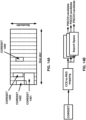
- a wireless device configured with (or served by) both the first TRP and the second TRP may be indicated by a starting position of the block (e.g., starting position of DTX 1 in Block 1 in FIG. 18A ).
- the position parameter may indicate the starting position of the block.
- a first value (e.g., '0') for a bit of the DTX/DRX indicator field in the block may indicate deactivation of the first DTX or the first DRX, where the bit corresponds to (or is associated with) the first DTX or the first DRX, respectively.
- a second value (e.g., '1') for a bit of the DTX/DRX indicator field in the block may indicate activation of the first DTX and the first DRX, where the bit corresponds to (or is associated with) the first DTX or the first DRX, respectively.
- a (e.g., each) bit of a DTX/DRX indicator field in the block may indicate the activation or deactivation of the second DTX and/or the second DRX.
- a (e.g., each) bit of a DTX/DRX indicator field (e.g., DTX/DRX indicator field) in the block may indicate activation or deactivation of one of: the second DTX and the second DRX, for example, if a value of an index/indicator field in a block of the one or more blocks is equal/set to a second value (e.g., '1').
- a first value (e.g., '0') for a bit of the DTX/DRX indicator field may indicate deactivation of the second DTX or the second DRX, where the bit corresponds to (or is associated with) the second DTX or the second DRX, respectively.
- a second value (e.g., '1') for a bit of the DTX/DRX indicator field may indicate activation of the second DTX and the second DRX, where the bit corresponds to (or is associated with) the second DTX or the second DRX, respectively.
- the index/indicator field in the block may be located/positioned, for example, after the DTX/DRX indicator field in the block.
- the index/indicator field in the block may not be located/positioned, for example, before the DTX/DRX indicator field in the block.
- the block may be at least three (e.g., 3) bits, for example, if the first DTX and the first DRX are configured/indicated, by the one or more configuration parameters, for the cell.
- the block may be at least three (e.g., 3) bits, for example, if the first DTX and the first DRX are configured/indicated, by the one or more configuration parameters, for the cell, for example, if an index/indicator field in a block (e.g., Block 1 in FIG. 18B ) of the one or more blocks is equal/set to a first value (e.g., '0').
- the most-significant bit (MSB) of the 3 bits of the block may correspond to the first DTX (e.g., DTX 1 in FIG. 18B ).
- the second MSB of the 3 bits of the block may correspond to the first DRX (e.g., DRX 1 in FIG. 18B ).
- the least-significant bit (LSB) of the 3 bits of the block may correspond to the index/indicator field (e.g., 0 in Block 1 in FIG. 18B ).
- the block may comprise the index/indicator field (e.g., 1 bit) and a DTX/DRX indicator field (e.g., 2 bits).
- a first value (e.g., '0') for the MSB of the DTX/DRX indicator field may indicate deactivation of the first DTX.
- a second value (e.g., '1') for the MSB of the DTX/DRX indicator field may indicate activation of the first DTX.
- a first value (e.g., '0') for the second MSB of the DTX/DRX indicator field may indicate deactivation of the first DRX.
- a second value (e.g., '1') for the second MSB of the DTX/DRX indicator field may indicate activation of the first DRX.
- the block may be at least three (e.g., 3) bits, for example, if the second DTX and the second DRX are configured/indicated, by the one or more configuration parameters, for the cell.
- the block may be at least three (e.g., 3) bits if the second DTX and the second DRX are configured/indicated, by the one or more configuration parameters, for the cell, for example, if an index/indicator field in a block (e.g., Block 3 in FIG. 18B ) of the one or more blocks is equal/set to a second value (e.g., '1').
- the most-significant bit (MSB) of the 3 bits of the block may correspond to the second DTX (e.g., DTX 2 in FIG. 18B ).
- the second MSB of the 3 bits of the block may correspond to the second DRX (e.g., DRX 2 in FIG. 18B ).
- the least-significant bit (LSB) of the 3 bits of the block may correspond to the index/indicator field (e.g., 1 in Block 3 in FIG. 18B ).
- the block may comprise the index/indicator field (e.g., 1 bit) and a DTX/DRX indicator field (e.g., 2 bits).
- a first value (e.g., '0') for the MSB of the DTX/DRX indicator field may indicate deactivation of the second DTX.
- a second value (e.g., '1') for the MSB of the DTX/DRX indicator field may indicate activation of the second DTX.
- a first value (e.g., '0') for the second MSB of the DTX/DRX indicator field may indicate deactivation of the second DRX.
- a second value (e.g., '1') for the second MSB of the DTX/DRX indicator field may indicate activation of the second DRX.
- the block may be 2 (or any other value) bits, for example, if either the first DTX or the first DRX (e.g., only one of the first DTX and the first DRX) is configured/indicated, by the one or more configuration parameters, for the cell.
- the block may be 2 (or any other value) bits, for example, if either the first DTX or the first DRX (e.g., only one of the first DTX and the first DRX) is configured/indicated, by the one or more configuration parameters, for the cell, for example, if an index/indicator field in a block (e.g., Block N-1 in FIG.
- the most-significant bit (MSB) of the 2 bits of the block may correspond to the first DTX (e.g., DTX 1 in FIG. 18B ) or the first DRX.
- the least-significant bit (LSB) of the 2 bits of the block may correspond to the index/indicator field (e.g., 0 in Block N-1 in FIG. 18B ).
- the block may comprise the index/indicator field (e.g., 1 bit) and a DTX/DRX indicator field (e.g., 1 bit).
- a first value (e.g., '0') for the MSB of the DTX/DRX indicator field may indicate deactivation of the first DTX or the first DRX.
- a second value (e.g., '1') for the MSB of the DTX/DRX indicator field may indicate activation of the first DTX or the first DRX.
- the block may be 2 (or any other value) bits, for example, if either the second DTX or the second DRX (e.g., only one of the second DTX and the second DRX) is configured/indicated, by the one or more configuration parameters, for the cell.
- the block may be 2 (or any other value) bits, for example, if either the second DTX or the second DRX (e.g., only one of the second DTX and the second DRX) is configured/indicated, by the one or more configuration parameters, for the cell, for example, if an index/indicator field in a block (e.g., Block N in FIG.
- the most-significant bit (MSB) of the 2 bits of the block may correspond to the second DTX or the second DRX (e.g., DRX 2 in FIG. 18B ).
- the least-significant bit (LSB) of the 2 bits of the block may correspond to the index/indicator field (e.g., 1 in Block N in FIG. 18B ).
- the block may comprise the index/indicator field (e.g., 1 bit) and a DTX/DRX indicator field (e.g., 1 bit).
- a first value (e.g., '0') for the MSB of the DTX/DRX indicator field may indicate deactivation of the second DTX or the second DRX.
- a second value (eg, '1') for the MSB of the DTX/DRX indicator field may indicate activation of the second DTX or the second DRX.
- FIG. 19 , FIG. 20 , and FIG. 21 show examples of energy saving.
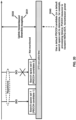
- a first PDCCH monitoring occasion of the first search space set and a second PDCCH monitoring occasion of the second search space set are in an active time/duration/period of the DTX (e.g., DTX active time).
- a first PDCCH monitoring occasion of the first search space set and a second PDCCH monitoring occasion of the second search space set are in a non-active time/duration/period of the DTX (e.g., DTX non-active time).
- the wireless device may monitor at least two (e.g. 2) PDCCH candidates in/for/of the at least two (e.g., 2) search space sets.
- the wireless device may monitor two PDCCH candidates in/for/of the two search space sets, for example, during/in an active time/duration/period of the DTX (e.g., DTX active time in FIG. 19 ).
- the wireless device may monitor the two PDCCH candidates in/for/of the two search space sets, for example, during/in the active time/duration/period of the DTX and for detection of DCI (or a DCI format) with the same information.
- the wireless device may monitor the two PDCCH candidates in/for/of the two search space sets, for example, during/in the active time/duration/period of the DTX and for detection of repetitions of DCI (or a DCI format).
- the wireless device may monitor the two PDCCH candidates in/for/of the two search space sets, for example, during/in the active time/duration/period of the DTX and in two PDCCH monitoring occasions.
- the wireless device may monitor, in a time slot, the two PDCCH candidates in/for/of the two search space sets.
- the wireless device may monitor the two PDCCH candidates in/for/of the two search space sets, for example, based on the two search space sets being linked for PDCCH repetition.
- the wireless device may monitor a first PDCCH candidate (e.g., PDCCH candidate 1 in FIG. 17 and FIG. 19 ) in/for/of the first space set.
- the wireless device may monitor a first PDCCH candidate (e.g., PDCCH candidate 1 in FIG. 17 and FIG. 19 ) in/for/of the first space set, for example, during/in the active time/duration/period of the DTX.
- the wireless device may monitor the first PDCCH candidate in/for/of the first space set associated with the first coreset.
- the wireless device may monitor the first PDCCH candidate in/for/of the first space set associated with the first coreset, for example, during/in the active time/duration/period of the DTX.
- the wireless device may monitor the first PDCCH candidate in/for/of the first search space set.
- the wireless device may monitor the first PDCCH candidate in/for/of the first search space set, for example, during/in the active time/duration/period of the DTX and for detection of the DCI (or the DCI format).
- the wireless device may monitor the first PDCCH candidate in/for/of the first search space set.
- the wireless device may monitor the first PDCCH candidate in/for/of the first search space set, for example, during/in the active time/duration/period of the DTX and for detection of a first repetition of the DCI (or the DCI format).
- the wireless device may monitor the first PDCCH candidate in/for/of the first search space set.
- the wireless device may monitor the first PDCCH candidate in/for/of the first search space set, for example, during/in the active time/duration/period of the DTX and in a first PDCCH monitoring occasion (e.g., PDCCH monitoring occasion 1 in FIG. 17 ).
- the wireless device may monitor, in the time slot, the first PDCCH candidate.
- the wireless device may monitor a second PDCCH candidate (e.g., PDCCH candidate 2 in FIG. 17 and FIG. 19 ) in/for/of the second space set.
- the wireless device may monitor a second PDCCH candidate (e.g., PDCCH candidate 2 in FIG. 17 and FIG. 19 ) in/for/of the second space set, for example, during/in the active time/duration/period of the DTX.
- the wireless device may monitor the second PDCCH candidate in/for/of the second space set associated with the second coreset.
- the wireless device may monitor the second PDCCH candidate in/for/of the second space set associated with the second coreset, for example, during/in the active time/duration/period of the DTX.
- the wireless device may monitor the second PDCCH candidate in/for/of the second search space set.
- the wireless device may monitor the second PDCCH candidate in/for/of the second search space set, for example, during/in the active time/duration/period of the DTX and for detection of the DCI (or the DCI format).
- the wireless device may monitor the second PDCCH candidate in/for/of the second search space set, for example, during/in the active time/duration/period of the DTX and for detection of a second repetition of the DCI (or the DCI format).
- the wireless device may monitor the second PDCCH candidate in/for/of the second search space set.
- the wireless device may monitor the second PDCCH candidate in/for/of the second search space set, for example, during/in the active time/duration/period of the DTX and in a second PDCCH monitoring occasion (e.g., PDCCH monitoring occasion 2 in FIG. 17 ).
- the wireless device may monitor the second PDCCH candidate, for example, in the time slot.
- the two PDCCH candidates may comprise the first PDCCH candidate and the second PDCCH candidate.
- the repetitions of the DCI may comprise the first repetition of the DCI (or the DCI format) and the second repetition of the DCI (or the DCI format).
- the first repetition of the DCI and the second repetition of the DCI may be the same (or may comprise the same information or may be with the same DCI format).
- the two or more (e.g., 2) PDCCH monitoring occasions may comprise the first PDCCH monitoring occasion and the second PDCCH monitoring occasion.
- the DTX may be the first DTX of the cell.
- the first PDCCH monitoring occasion may be in/during/within the active time/duration/period of the first DTX.
- the first PDCCH monitoring occasion may overlap in time with the active time/duration/period of the first DTX.
- At least one symbol of the first PDCCH monitoring occasion may be in/during/within the active time/duration/period of the first DTX.
- a (e.g., each) symbol of the first PDCCH monitoring occasion may be in/during/within the active time/duration/period of the first DTX.
- the one or more configuration parameters may not comprise one or more second DTX configuration parameters of a second DTX of the cell (e.g., the second DTX is not configured).
- the one or more configuration parameters may comprise the one or more second DTX configuration parameters of the second DTX of the cell.
- the second DTX may not be activated by the wireless device and/or the base station.
- the wireless device may not receive a control command (e.g., DCI format 2_9, DCI format 2_10, and the like) indicating activation of the second DTX.
- the one or more configuration parameters may comprise the one or more second DTX configuration parameters of the second DTX of the cell.
- the second DTX may be activated by the wireless device and/or the base station.
- the wireless device may receive a control command (e.g., control command 1720 in FIG. 17 , DCI format 2_9, DCI format 2_10, and the like) indicating activation of the second DTX.
- the second PDCCH monitoring occasion may be in/during/within an active time/duration/period of the second DTX.
- the second PDCCH monitoring occasion may overlap in time with the active time/duration/period of the second DTX.
- At least one symbol of the second PDCCH monitoring occasion may be in/during/within the active time/duration/period of the second DTX.
- each symbol of the second PDCCH monitoring occasion may be in/during/within the active time/duration/period of the second DTX.
- the second PDCCH monitoring occasion may be in/during/within the active time/duration/period of the first DTX and the active time/duration/period of the second DTX.
- the second PDCCH monitoring occasion may overlap in time with the active time/duration/period of the first DTX and the active time/duration/period of the second DTX.
- At least one symbol of the second PDCCH monitoring occasion may be in/during/within the active time/duration/period of the first DTX and the active time/duration/period of the second DTX.
- a (e.g., each) symbol of the second PDCCH monitoring occasion may be in/during/within the active time/duration/period of the first DTX and the active time/duration/period of the second DTX.
- the DTX may be the second DTX of the cell.
- the second PDCCH monitoring occasion may be in/during/within the active time/duration/period of the second DTX.
- the second PDCCH monitoring occasion may overlap in time with the active time/duration/period of the second DTX.
- at least one symbol of the second PDCCH monitoring occasion may be in/during/within the active time/duration/period of the second DTX.
- a (e.g., each) symbol of the second PDCCH monitoring occasion may be in/during/within the active time/duration/period of the second DTX.
- the one or more configuration parameters may not comprise one or more first DTX configuration parameters of a first DTX of the cell (e.g., the first DTX is not configured).
- the one or more configuration parameters may comprise the one or more first DTX configuration parameters of the first DTX of the cell.
- the first DTX may not be activated by the wireless device and/or the base station.
- the wireless device may not receive a control command (e.g., DCI format 2_9, DCI format 2_10, and the like) indicating activation of the first DTX.
- the one or more configuration parameters may comprise the one or more first DTX configuration parameters of the first DTX of the cell.
- the first DTX may be activated by the wireless device and/or the base station.
- the wireless device may receive a control command (e.g., control command 1720 in FIG. 17 , DCI format 2_9, DCI format 2_10, and the like) indicating activation of the first DTX.
- the first PDCCH monitoring occasion may be in/during/within an active time/duration/period of the first DTX.
- the first PDCCH monitoring occasion may overlap in time with the active time/duration/period of the first DTX.
- At least one symbol of the first PDCCH monitoring occasion may be in/during/within the active time/duration/period of the first DTX.
- a (e.g., each) symbol of the first PDCCH monitoring occasion may be in/during/within the active time/duration/period of the first DTX.
- the first PDCCH monitoring occasion may be in/during/within the active time/duration/period of the first DTX and the active time/duration/period of the second DTX.
- the first PDCCH monitoring occasion may overlap in time with the active time/duration/period of the first DTX and the active time/duration/period of the second DTX.
- At least one symbol of the first PDCCH monitoring occasion may be in/during/within the active time/duration/period of the first DTX and the active time/duration/period of the second DTX.
- EA (e.g., each) symbol of the first PDCCH monitoring occasion may be in/during/within the active time/duration/period of the first DTX and the active time/duration/period of the second DTX.
- the wireless device may receive the DCI.
- the wireless device may receive, via PDCCH, the DCI.
- the wireless device may receive a PDCCH reception with/comprising/carrying the DCI.
- the wireless device may receive the DCI, for example, in/during/within the active time/duration/period of the DTX.
- the wireless device may receive the DCI, for example, via at least one PDCCH candidate of the two PDCCH candidates.
- the wireless device may receive the DCI, for example, via at least one PDCCH monitoring occasion of the two PDCCH monitoring occasions.
- the wireless device may receive at least one repetition of the repetitions of the DCI.
- the wireless device may receive the DCI (or the first repetition of the DCI), for example, via the first PDCCH candidate and in the first PDCCH monitoring occasion.
- the wireless device may receive the DCI (or the second repetition of the DCI), for example, via the second PDCCH candidate and in the second PDCCH monitoring occasion.
- the at least one PDCCH candidate may be the first PDCCH candidate and the second PDCCH candidate.
- the at least one PDCCH monitoring occasion may be the first PDCCH monitoring occasion and the second PDCCH monitoring occasion.
- the at least one repetition may be the first repetition and the second repetition.
- the wireless device may receive the DCI (or the first repetition of the DCI), for example, via the first PDCCH candidate and in the first PDCCH monitoring occasion.
- the wireless device may not receive the DCI (or the second repetition of the DCI), for example, via the second PDCCH candidate and in the second PDCCH monitoring occasion.
- the at least one PDCCH candidate may be the first PDCCH candidate.
- the at least one PDCCH monitoring occasion may be the first PDCCH monitoring occasion.
- the at least one repetition may be the first repetition.
- the wireless device may not receive the DCI (or the first repetition of the DCI), for example, via the first PDCCH candidate and in the first PDCCH monitoring occasion.
- the wireless device may receive the DCI (or the second repetition of the DCI), for example, via the second PDCCH candidate and in the second PDCCH monitoring occasion.
- the at least one PDCCH candidate may be the second PDCCH candidate.
- the at least one PDCCH monitoring occasion may be the second PDCCH monitoring occasion.
- the at least one repetition may be the second repetition.
- the PDCCH reception with/carrying/comprising the DCI may include/comprise (or be associated with) the at least two PDCCH candidates from the at least two search space sets.
- the PDCCH reception with/carrying/comprising the DCI may include/comprise (or be associated with) the at least two PDCCH candidates from the at least two search space sets, for example, based on monitoring the at least two PDCCH candidates in/of/for/from the at least two search space sets for detection of the DCI (e.g., in FIG. 19 ).
- the PDCCH reception with/carrying/comprising the DCI may include/comprise (or be associated with) the two PDCCH candidates from the two search space sets, for example, based on monitoring both the first PDCCH candidate in/of/for/from the first search space set and the second PDCCH candidate in/of/for/from the second search space set for detection of the DCI.
- the PDCCH reception with/carrying/comprising the DCI may include/comprise (or be associated with) the at least two PDCCH candidates from the at least two search space sets.
- the PDCCH reception with/carrying/comprising the DCI may include/comprise (or be associated with) the at least two PDCCH candidates from the at least two search space sets, for example, when/if the wireless device monitors the at least two PDCCH candidates in/of/for/from the at least two search space sets for detection of the DCI (e.g., in FIG. 19 ).
- the PDCCH reception with/carrying/comprising the DCI may include/comprise (or be associated with) the two PDCCH candidates from the two search space sets, for example, when/if the wireless device monitors both the first PDCCH candidate in/of/for/from the first search space set and the second PDCCH candidate in/of/for/from the second search space set for detection of the DCI.
- the wireless device may assume as PDCCH repetition, for example, if the PDCCH reception with/carrying/comprising the DCI may include/comprise (or be associated with) the at least two PDCCH candidates from the at least two search space sets.
- a PDCCH monitoring occasion may be the union of the at least two PDCCH monitoring occasions of/for the at least two PDCCH candidates.
- a PDCCH monitoring occasion may be the union of the at least two PDCCH monitoring occasions of/for the at least two PDCCH candidates, for example, if the PDCCH reception includes/comprises (or is associated with) the at least two PDCCH candidates from the at least two search space sets.
- the PDCCH monitoring occasion is the union of the first PDCCH monitoring occasion and the second PDCCH monitoring occasion.
- the start of the PDCCH reception may be the start of a PDCCH candidate, among at least two (e.g., two) PDCCH candidates, that starts earlier (e.g., earliest) in time, for example, if the PDCCH reception includes/comprises (or is associated with) at least two (e.g., two) PDCCH candidates from at least two (e.g., two) search space sets.
- the end of the PDCCH reception may be the end of a PDCCH candidate that ends later in time.
- the end of the PDCCH reception may be the end of a PDCCH candidate, among at least two (e.g., two) PDCCH candidates, that ends later (e.g., latest) in time, for example, if the PDCCH reception includes/comprises (or is associated with) at least two (e.g., two) PDCCH candidates from at least two (e.g., two) search space sets.
- the wireless device may monitor one of at least two (e.g., two) PDCCH candidates in/for/of at least two (e.g., two) search space sets.
- the wireless device may monitor one of the at least two PDCCH candidates in/for/of the at least two search space sets, for example, during/in a non-active time/duration/period of the DTX (e.g., DTX non-active time in FIG. 20 and FIG. 21 ).
- the wireless device may monitor one of the at least two PDCCH candidates in/for/of the at least two search space sets, for example, during/in the non-active time/duration/period of the DTX and for detection of DCI (or a DCI format).
- the wireless device may monitor one of the at least two PDCCH candidates in/for/of the at least two search space sets, for example, during/in the non-active time/duration/period of the DTX and for detection of DCI (or a DCI format).
- the wireless device may monitor one of the at least two PDCCH candidates in/for/of the at least two search space sets, for example, during/in the non-active time/duration/period of the DTX and in one of the at least two PDCCH monitoring occasions.
- the wireless device may not monitor one of at least two (e.g., two) PDCCH candidates in/for/of at least two (e.g., two) search space sets.
- the wireless device may not monitor one of the at least two PDCCH candidates in/for/of the at least two search space sets, for example, during/in the non-active time/duration/period of the DTX (e.g., DTX non-active time in FIG. 20 and FIG. 21 ).
- the wireless device may not monitor one of the at least two PDCCH candidates in/for/of the at least two search space sets, for example, during/in the non-active time/duration/period of the DTX and for detection of a DCI (or a DCI format).
- the wireless device may not monitor one of the at least two PDCCH candidates in/for/of the at least two search space sets, for example, during/in the non-active time/duration/period of the DTX and for detection of a DCI (or a DCI format).
- the wireless device may not monitor one of the at least two PDCCH candidates in/for/of the at least two search space sets, for example, during/in the non-active time/duration/period of the DTX and in one of the two PDCCH monitoring occasions.
- the wireless device may monitor the one of the two PDCCH candidates in/for/of the two search space sets, for example, based on the non-active time/duration/period of the DTX.
- the wireless device may monitor the one of the two PDCCH candidates in/for/of the two search space sets, for example, based on not monitoring the other PDCCH candidate of the two PDCCH candidates, for example, during/in/within the non-active time/duration/period of the DTX.
- the wireless device may monitor the one of the two PDCCH candidates in/for/of the two search space sets, for example, based on a PDCCH monitoring occasion of the other PDCCH candidate of the two PDCCH candidates overlapping in at least one symbol with the non-active time/duration/period of the DTX.
- the wireless device may monitor the one of the two PDCCH candidates in/for/of the two search space sets, for example, based on a PDCCH monitoring occasion of the other PDCCH candidate of the two PDCCH candidates being in/within/during the non-active time/duration/period of the DTX.
- the one of the two PDCCH candidates that is monitored by the wireless device may be the first PDCCH candidate.
- the other PDCCH candidate of the two PDCCH candidates that is not monitored by the wireless device may be the second PDCCH candidate.
- the one of the two PDCCH monitoring occasions that is monitored by the wireless device may be a first PDCCH monitoring occasion of the two PDCCH monitoring occasions.
- the one of the two PDCCH monitoring occasions, of the other PDCCH candidate of the two PDCCH candidates, that is not monitored by the wireless device may be a second PDCCH monitoring occasion.
- the wireless device may monitor the first PDCCH candidate (e.g., PDCCH candidate 1 in FIG. 20 and FIG. 21 ) of the two PDCCH candidates in/for/of the first space set, for example, during/in the non-active time/duration/period of the DTX.
- the wireless device may monitor the first PDCCH candidate in/for/of the first space set associated with the first coreset, for example, during/in the non-active time/duration/period of the DTX.
- the wireless device may monitor the first PDCCH candidate in/for/of the first search space set, for example, during/in the non-active time/duration/period of the DTX and for detection of the DCI (or the DCI format).
- the wireless device may monitor the first PDCCH candidate in/for/of the first search space set, for example, during/in the non-active time/duration/period of the DTX and in a first PDCCH monitoring occasion (e.g., PDCCH monitoring occasion 1 in FIG. 17 ).
- a first PDCCH monitoring occasion e.g., PDCCH monitoring occasion 1 in FIG. 17 .
- the wireless device may not monitor a second PDCCH candidate (e.g., PDCCH candidate 2 in FIG. 20 and FIG. 21 ) of the two PDCCH candidates in/for/of the second space set, for example, during/in the non-active time/duration/period of the DTX.
- the wireless device may not monitor the second PDCCH candidate in/for/of the second space set associated with the second coreset, for example, during/in the non-active time/duration/period of the DTX.
- the wireless device may not monitor the second PDCCH candidate in/for/of the second search space set, for example, during/in the non-active time/duration/period of the DTX and for detection of the DCI (or the DCI format).
- the wireless device may not monitor the second PDCCH candidate in/for/of the second search space set, for example, during/in the non-active time/duration/period of the DTX and for detection of a second repetition of the DCI (or the DCI format).
- the wireless device may not monitor the second PDCCH candidate in/for/of the second search space set, for example, during/in the non-active time/duration/period of the DTX and in a second PDCCH monitoring occasion (e.g., PDCCH monitoring occasion 2 in FIG. 17 ).
- the wireless device may receive/detect the DCI.
- the wireless device may receive the DCI, for example, via PDCCH,.
- the wireless device may receive a PDCCH reception with/comprising/carrying the DCI.
- the PDCCH reception may be the DCI.
- the wireless device may receive the DCI, for example, in/during/within the non-active time/duration/period of the DTX.
- the wireless device may receive/detect the DCI, for example, via a PDCCH candidate of the two PDCCH candidates.
- the PDCCH reception may be the PDCCH candidate.
- the PDCCH candidate may be the one of the two PDCCH candidates monitored by the wireless device, for example, during in/during/within the non-active time/duration/period of the DTX.
- the wireless device may receive the DCI, for example, via a PDCCH monitoring occasion of the two PDCCH monitoring occasions.
- the PDCCH monitoring occasion may be the one of the two PDCCH monitoring occasions monitored by the wireless device, for example, during in/during/within the non-active time/duration/period of the DTX.
- the DTX may be the first DTX of the cell.
- the first PDCCH monitoring occasion may be, for example, in/during/within the non-active time/duration/period of the first DTX.
- the first PDCCH monitoring occasion may overlap in time (e.g., in at least one symbol) with the non-active time/duration/period of the first DTX.
- At least one symbol of the first PDCCH monitoring occasion may be, for example, in/during/within the non-active time/duration/period of the first DTX.
- EA (e.g., each) symbol of the first PDCCH monitoring occasion may be, for example, in/during/within the non-active time/duration/period of the first DTX.
- the wireless device may not monitor the first PDCCH candidate, for example, during/in the non-active time/duration/period of the first DTX, for example, based on the first PDCCH monitoring occasion being, for example, in/during/within the non-active time/duration/period of the first DTX.
- the wireless device may not monitor the first PDCCH candidate, for example, during/in the non-active time/duration/period of the first DTX, for example, based on the first PDCCH monitoring occasion overlapping in time (e.g., in at least one symbol) with the non-active time/duration/period of the first DTX.
- the wireless device may monitor the second PDCCH candidate, for example, during/in the active time/duration/period of the second DTX, for example, based on the second PDCCH candidate overlapping in time (e.g., in at least one symbol) with the active time/duration/period of the second DTX.
- the wireless device may monitor the second PDCCH candidate in/for/of the second search space set, for example, during/in the non-active time/duration/period of the first DTX and in the second PDCCH monitoring occasion (e.g., PDCCH monitoring occasion 2 in FIG. 17 ).
- the second PDCCH monitoring occasion e.g., PDCCH monitoring occasion 2 in FIG. 17 .
- the PDCCH candidate of the two PDCCH candidates received/detected in the PDCCH monitoring occasion may be the second PDCCH candidate received/detected in the second PDCCH monitoring occasion.
- the DTX may be the second DTX of the cell.
- the second PDCCH monitoring occasion may be in/during/within the non-active time/duration/period of the second DTX.
- the second PDCCH monitoring occasion may overlap in time with the non-active time/duration/period of the second DTX.
- at least one symbol of the second PDCCH monitoring occasion may be, for example, in/during/within the non-active time/duration/period of the second DTX.
- each symbol of the second PDCCH monitoring occasion may be, for example, in/during/within the non-active time/duration/period of the second DTX.
- the one or more configuration parameters may not comprise one or more first DTX configuration parameters of a first DTX of the cell (e.g., the first DTX is not configured).
- the wireless device may monitor the first PDCCH candidate (e.g., PDCCH candidate 1 in FIG. 20 and FIG. 21 ) of the two PDCCH candidates.
- the wireless device may monitor the first PDCCH candidate, for example, based on the one or more configuration parameters not comprising the one or more first DTX configuration parameters of the first DTX of the cell.
- At least one symbol of the first PDCCH monitoring occasion may be, for example, in/during/within the active time/duration/period of the first DTX.
- EA (e.g., each) symbol of the first PDCCH monitoring occasion may be, for example, in/during/within the active time/duration/period of the first DTX.
- the first PDCCH monitoring occasion may be, for example, in/during/within the active time/duration/period of the first DTX and the non-active time/duration/period of the second DTX.
- the wireless device may monitor the first PDCCH candidate in/for/of the first search space set, for example, during/in the active time/duration/period of the first DTX and for detection of the DCI (or the DCI format).
- the wireless device may monitor the first PDCCH candidate in/for/of the first search space set, for example, during/in the active time/duration/period of the first DTX and in the first PDCCH monitoring occasion (e.g., PDCCH monitoring occasion 1 in FIG. 17 ).
- the wireless device may monitor the first PDCCH candidate of the two PDCCH candidates, for example, during/in the non-active time/duration/period of the second DTX.
- the wireless device may monitor the first PDCCH candidate in/for/of the first space set associated with the first coreset, for example, during/in the non-active time/duration/period of the second DTX.
- the wireless device may monitor the first PDCCH candidate in/for/of the first search space set, for example, during/in the non-active time/duration/period of the second DTX and for detection of the DCI (or the DCI format).
- the wireless device may receive/detect the DCI, for example, via the first PDCCH candidate of the two PDCCH candidates and in the first PDCCH monitoring occasion.
- the first PDCCH candidate may be the one of the two PDCCH candidates monitored by the wireless device.
- the first PDCCH candidate may be the one of the two PDCCH candidates monitored by the wireless device, for example, in/during/within the non-active time/duration/period of the second DTX.
- the first PDCCH candidate may be the one of the two PDCCH candidates monitored by the wireless device, for example, in/during/within the active time/duration/period of the first DTX.
- the second PDCCH candidate may be the one of the two PDCCH candidates that is not monitored by the wireless device.
- the second PDCCH candidate may be the one of the two PDCCH candidates that is not monitored by the wireless device, for example, in/during/within the non-active time/duration/period of the second DT
- the PDCCH reception with/carrying/comprising the DCI may include/comprise (or be associated with) the two PDCCH candidates from the two search space sets.
- the PDCCH reception with/carrying/comprising the DCI may include/comprise (or be associated with) the two PDCCH candidates from the two search space sets, for example, based on monitoring the one of the two PDCCH candidates in/of/for/from the two search space sets for detection of the DCI (e.g., in FIG. 20 ), for example, during/in the non-active time/duration/period of the DTX.
- the PDCCH reception with/carrying/comprising the DCI may include/comprise (or be associated with) the two PDCCH candidates from the two search space sets, for example, when/if the wireless device monitors either the first PDCCH candidate in/of/for/from the first search space set or the second PDCCH candidate in/of/for/from the second search space set for detection of the DCI, for example, during/in the non-active time/duration/period of the DTX.
- the PDCCH reception with/carrying/comprising the DCI may include/comprise (or be associated with) the two PDCCH candidates from the two search space sets, for example, when/if the wireless device is not required to monitor the one of the two PDCCH candidates in/of/for/from the two search space sets, for example, during/in the non-active time/duration/period of the DTX.
- the wireless device may assume as PDCCH repetition, for example, if the PDCCH reception with/carrying/comprising the DCI includes/comprises (or is associated with) the two PDCCH candidates from the two search space sets.
- the behavior of the wireless device may be the same as that of monitoring both of the two PDCCH candidates (e.g., in FIG. 19 ), for example, even though the wireless device does not monitor (or is not required to monitor) one of the two PDCCH candidates, for example, during/in the non-active time/duration/period of the DTX.
- the behavior of the wireless device may be the same as that of monitoring both of the two PDCCH candidates (e.g., in FIG. 19 ), for example, based on (e.g., upon) reception of DCI via a monitored PDCCH candidate of the two PDCCH candidates.
- a PDCCH monitoring occasion may be the union of at least two PDCCH monitoring occasions of/for at least two PDCCH candidates.
- a PDCCH monitoring occasion may be the union of at least two PDCCH monitoring occasions of/for at least two PDCCH candidates, for example, if the PDCCH reception includes/comprises (or is associated with) the at least two PDCCH candidates from the at least two search space sets.
- the PDCCH monitoring occasion may be the union of the first PDCCH monitoring occasion and the second PDCCH monitoring occasion.
- the end of the PDCCH reception may be the end of a PDCCH candidate, among the at least two PDCCH candidates, that ends later (e.g., latest) in time, for example, if the PDCCH reception includes/comprises (or is associated with) the at least two PDCCH candidates from the two search space sets.
- the wireless device may complete a beam failure recovery.
- the wireless device may complete a beam failure recovery, for example, based on receiving the DCI.
- the wireless device may complete a beam failure recovery, for example, based on receiving the PDCCH reception with the DCI.
- the wireless device may send (e.g., transmit) uplink signals (e.g., PUCCH, PUSCH, SRS, Uplink transmission in FIG. 19 and FIG. 20 ) with/using a transmission power.
- the wireless device may send (e.g., transmit) uplink signals (e.g., PUCCH, PUSCH, SRS, Uplink transmission 2030/2031 in FIG. 19 and FIG. 20 ) with/using a transmission power determined, for example, based on a candidate reference signal of (or identified for/during) the beam failure recovery.
- the wireless device may send (e.g., transmit) the uplink signals with/using the transmission power.
- the wireless device may send (e.g., transmit) the uplink signals with/using the transmission power, for example, a number (or quantity) of symbols (e.g., 28 symbols) starting from a last/ending symbol of the PDCCH reception with the DCI.
- the last/ending symbol of the PDCCH reception with the DCI may be a last/ending symbol of a PDCCH candidate that ends later in time (e.g., PDCCH candidate 2 in FIG. 19 and FIG. 20 ).
- the last/ending symbol of the PDCCH reception with the DCI may be a last/ending symbol of a PDCCH candidate, among the two PDCCH candidates, that ends later in time (e.g., PDCCH candidate 2 in FIG. 19 and FIG.
- the wireless device may or may not receive the PDCCH candidate.
- the PDCCH candidate may be a default PDCCH candidate.
- the wireless device may send (e.g., transmit) uplink signals (e.g., PUCCH, PUSCH, SRS, Uplink transmission in FIG. 19 and FIG. 20 ) with/using a transmission power.
- the wireless device may send (e.g., transmit) uplink signals (e.g., PUCCH, PUSCH, SRS, Uplink transmission in FIG. 19 and FIG. 20 ) with/using a transmission power determined, for example, based on default power control parameters (e.g., target-received power, pathloss compensation factor, closed-loop index) indicated/associated with an uplink power control with a lowest/smallest uplink power control index/identity.
- default power control parameters e.g., target-received power, pathloss compensation factor, closed-loop index
- the wireless device may send (e.g., transmit) the uplink signals with/using the transmission power.
- the wireless device may send (e.g., transmit) the uplink signals with/using the transmission power, for example, a number (or quantity) of symbols (e.g., 28 symbols) starting from a last/ending symbol of the PDCCH reception with the DCI.
- the last/ending symbol of the PDCCH reception with the DCI may be a last/ending symbol of a PDCCH candidate that ends later in time (e.g., PDCCH candidate 2 in FIG. 19 and FIG. 20 ).
- the last/ending symbol of the PDCCH reception with the DCI may be a last/ending symbol of a PDCCH candidate, among the two PDCCH candidates, that ends later in time (e.g., PDCCH candidate 2 in FIG. 19 and FIG. 20 ), for example, if the PDCCH reception includes/comprises (or is associated with) the two PDCCH candidates from the two search space sets.
- the wireless device may or may not receive the PDCCH candidate.
- the PDCCH candidate may be a default PDCCH candidate.
- the wireless device may monitor downlink control channels (e.g., PDCCH, Downlink reception in FIG. 19 and FIG. 20 ).
- the wireless device may monitor, via one or more coresets, downlink control channels (e.g., PDCCH, Downlink reception in FIG. 19 and FIG. 20 ), for example, based on a candidate reference signal of (or identified for/during) the beam failure recovery.
- the wireless device may monitor the downlink control channels.
- the wireless device may monitor, via the one or more coresets, the downlink control channels, for example, based on the candidate reference signal, for example, a number of symbols (e.g., 28 symbols) starting from a last/ending symbol of the PDCCH reception with the DCI.
- the last/ending symbol of the PDCCH reception with the DCI may be a last/ending symbol of a PDCCH candidate that ends later in time (e.g., PDCCH candidate 2 in FIG. 19 and FIG. 20 ).
- the last/ending symbol of the PDCCH reception with the DCI may be a last/ending symbol of a PDCCH candidate, among the two PDCCH candidates, that ends later in time (e.g., PDCCH candidate 2 in FIG. 19 and FIG. 20 ), for example, if the PDCCH reception includes/comprises (or is associated with) the two PDCCH candidates from the two search space sets.
- the wireless device may or may not receive the PDCCH candidate.
- the PDCCH candidate may be a default PDCCH candidate.
- At least one DM-RS antenna port of a downlink reception (e.g., DCI) via a coreset of the one or more coresets may be quasi co-located with the candidate reference signal.
- the wireless device may receive downlink receptions (e.g., PDSCH, aperiodic CSI-RS, Downlink reception in FIG. 19 and FIG. 20 ).
- the wireless device may receive downlink receptions (e.g., PDSCH, aperiodic CSI-RS, Downlink reception in FIG. 19 and FIG. 20 ), for example, based on a candidate reference signal of (or identified for/during) the beam failure recovery.
- the wireless device may receive the downlink receptions, for example, based on the candidate reference signal, for example, a number of symbols (e.g., 28 symbols) starting from a last/ending symbol of the PDCCH reception with the DCI.
- the last/ending symbol of the PDCCH reception with the DCI may be a last/ending symbol of a PDCCH candidate that ends later in time (e.g., PDCCH candidate 2 in FIG. 19 and FIG. 20 ).
- the last/ending symbol of the PDCCH reception with the DCI may be a last/ending symbol of a PDCCH candidate, among the two PDCCH candidates, that ends later in time (e.g., PDCCH candidate 2 in FIG. 19 and FIG. 20 ), for example, if the PDCCH reception includes/comprises (or is associated with) the two PDCCH candidates from the two search space sets.
- the wireless device may or may not receive the PDCCH candidate.
- the PDCCH candidate may be a default PDCCH candidate. At least one DM-RS antenna port of a downlink reception of the downlink receptions may be quasi co-located with the candidate reference signal.
- a wireless device may use a default PDCCH candidate (or a default search space set) to determine parameters (e.g., processing time(s), PUCCH resource to transmit HARQ-ACK, transmission power), for example, for uplink transmission and/or downlink reception.
- a wireless device may use a first PDCCH candidate (e.g., PDCCH candidate 1, or a search space set 1) to determine parameters (e.g., processing time(s), PUCCH resource to transmit HARQ-ACK, transmission power), for example, for uplink transmission and/or downlink reception.
- the DCI may schedule/trigger an uplink transmission (e.g., PUSCH transmission, PUCCH transmission, aperiodic SRS transmission, PRACH transmission, Uplink transmission in FIG. 19 and FIG. 20 ).
- the wireless device may determine, for the uplink transmission, a transmission power.
- the wireless device may send (e.g., transmit) the uplink transmission with/using the transmission power.
- the wireless device may determine the transmission power, for example, based on a number (or quantity) of symbols, for example, after a last/ending symbol of the PDCCH reception with the DCI and before a starting/first symbol of the uplink transmission.
- the last/ending symbol of the PDCCH reception with the DCI may be a last/ending symbol of a PDCCH candidate that ends later in time (e.g., PDCCH candidate 2 in FIG. 19 and FIG. 20 ).
- the last/ending symbol of the PDCCH reception with the DCI may be a last/ending symbol of a PDCCH candidate, among the two PDCCH candidates, that ends later in time (e.g., PDCCH candidate 2 in FIG. 19 and FIG. 20 ), for example, if the PDCCH reception includes/comprises (or is associated with) the two PDCCH candidates from the two search space sets.
- the wireless device may or may not receive the PDCCH candidate.
- the PDCCH candidate may be a default PDCCH candidate.
- the wireless device may determine the transmission power, for example, based on transmit power control (TPC) values received the number of symbols, for example, before an uplink transmission occasion of the uplink transmission.
- TPC transmit power control
- the DCI may be, for example, a PDCCH order initiating/triggering a random-access procedure.
- the wireless device may determine, for the uplink transmission (e.g., PRACH transmission, preamble), a PRACH occasion.
- the wireless device may send (e.g., transmit) the uplink transmission (e.g., PRACH transmission, preamble) in/via the PRACH occasion.
- the wireless device may determine the PRACH occasion, for example, based on a last/ending symbol of the PDCCH reception with the DCI (e.g., an uplink slot that overlaps with the last/ending symbol of the PDCCH reception with the DCI).
- the last/ending symbol of the PDCCH reception with the DCI may be a last/ending symbol of a PDCCH candidate that ends later in time (e.g., PDCCH candidate 2 in FIG. 19 and FIG. 20 ).
- the last/ending symbol of the PDCCH reception with the DCI may be a last/ending symbol of a PDCCH candidate, among the two PDCCH candidates, that ends later in time (e.g., PDCCH candidate 2 in FIG. 19 and FIG. 20 ), for example, if the PDCCH reception includes/comprises (or is associated with) the two PDCCH candidates from the two search space sets.
- the wireless device may or may not receive the PDCCH candidate.
- the PDCCH candidate may be a default PDCCH candidate.
- the DCI may schedule/trigger a downlink reception (e.g., PDSCH reception, aperiodic CSI-RS reception).
- the wireless device may determine, for transmission of HARQ-ACK information/feedback of the downlink reception, a PUCCH resource.
- the wireless device may send (e.g., transmit), via the PUCCH resource, the HARQ-ACK information/feedback (e.g., uplink transmission 1930 in FIG. 19 and uplink transmission 2030 in FIG. 20 ) of the downlink reception.
- the wireless device may determine the PUCCH resource, for example, based on a coreset of the PDCCH reception with the DCI.
- the coreset of the PDCCH reception with the DCI may be a coreset associated with a search space set with a smaller search space set index.
- the coreset of the PDCCH reception with the DCI may be a coreset associated with a search space set, among the two search space sets, with a smaller search space set index, for example, if the PDCCH reception includes/comprises (or is associated with) the two PDCCH candidates from the two search space sets.
- the wireless device may determine the PUCCH resource, for example, based on a number (or quantity) of control channel elements (CCEs) of the coreset associated with the search space set.
- the first coreset associated with the first search space set and the second coreset associated with the second search space set may comprise the coreset.
- the wireless device may or may not receive the DCI via the coreset.
- the coreset (or the search space set) may be a default coreset (or a default search space set).
- the DCI may comprise a PDCCH monitoring adaptation field.
- the PDCCH monitoring adaptation field in the DCI may indicate to the wireless device to start PDCCH monitoring according to search space sets with a first group index and to stop PDCCH monitoring according to search space sets with a second group index.
- the wireless device may use the indication in/by the PDCCH monitoring adaptation field at the beginning of a first/starting/earliest time slot that is at least a number (or quantity) of symbols.
- the wireless device may use the indication in/by the PDCCH monitoring adaptation field at the beginning of a first/starting/earliest time slot that is at least a number (or quantity) of symbols, for example, after the last/ending symbol of the PDCCH reception with the DCI.
- the last/ending symbol of the PDCCH reception with the DCI may be a last/ending symbol of a PDCCH candidate that ends later in time (e.g., PDCCH candidate 2 in FIG. 19 and FIG. 20 ).
- the last/ending symbol of the PDCCH reception with the DCI may be a last/ending symbol of a PDCCH candidate, among the two PDCCH candidates, that ends later in time (e.g., PDCCH candidate 2 in FIG. 19 and FIG. 20 ), for example, if the PDCCH reception includes/comprises (or is associated with) the two PDCCH candidates from the two search space sets.
- the wireless device may or may not receive the PDCCH candidate.
- the PDCCH candidate may be a default PDCCH candidate.
- the DCI may be a DCI format 2_1 indicating downlink pre-emption.
- the wireless device may ignore/discard (or may assume no transmission in) one or more symbols among a set of symbols.
- the DCI format 2_1 may indicate the one or more symbols among the set of symbols.
- the set of symbols may be a number of symbols prior to a starting/first/earliest symbol of the PDCCH reception with the DCI (or with the DCI format 2_1).
- the starting/first/earliest symbol of the PDCCH reception with the DCI may be a starting/first/earliest symbol of a PDCCH candidate that starts earlier in time (e.g., PDCCH candidate 1 in FIG. 19 and FIG. 20 ).
- the starting/first/earliest symbol of the PDCCH reception with the DCI may be a starting/first/earliest symbol of a PDCCH candidate, among the two PDCCH candidates, that starts earlier in time (e.g., PDCCH candidate 1 in FIG. 19 and FIG. 20 ), for example, if the PDCCH reception includes/comprises (or is associated with) the two PDCCH candidates from the two search space sets.
- the wireless device may or may not receive the PDCCH candidate.
- the PDCCH candidate may be a default PDCCH candidate.
- the DCI may be a DCI format 2_4 indicating uplink cancellation.
- the wireless device may cancel/ignore/discard (or may assume no transmission in) one or more symbols among a set of symbols of the uplink transmission.
- the DCI format 2_4 may indicate a number of the one or more symbols.
- the wireless device may determine a starting/first/earliest symbol of the one or more symbols.
- the wireless device may determine a starting/first/earliest symbol of the one or more symbols, for example, based on a last/ending symbol of the PDCCH reception with the DCI.
- the last/ending symbol of the PDCCH reception with the DCI may be a last/ending symbol of a PDCCH candidate that ends later in time (e.g., PDCCH candidate 2 in FIG. 19 and FIG.
- the last/ending symbol of the PDCCH reception with the DCI may be a last/ending symbol of a PDCCH candidate, among the two PDCCH candidates, that ends later in time (e.g., PDCCH candidate 2 in FIG. 19 and FIG. 20 ), for example, if the PDCCH reception includes/comprises (or is associated with) the two PDCCH candidates from the two search space sets.
- the wireless device may or may not receive the PDCCH candidate.
- the PDCCH candidate may be a default PDCCH candidate.
- the wireless device may determine whether to receive or not receive (or ignore) the downlink reception (e.g., downlink reception 1931 in FIG. 19 and downlink reception 2031 in FIG. 20 ).
- the wireless device may determine whether to receive or not receive (or ignore) the downlink reception (e.g., downlink reception 1931 in FIG. 19 and downlink reception 2031 in FIG. 20 ), for example, based on a processing time (e.g., PDSCH processing time) that starts, for example, after a last/ending symbol of the PDCCH reception with the DCI.
- the wireless device may determine whether to send (e.g., transmit) or not send (e.g., transmit) (or ignore) the uplink reception.
- the wireless device may determine whether to send (e.g., transmit) or not send (e.g., transmit) (or ignore) the uplink reception, for example, based on a processing time (e.g., PUSCH processing time) that starts, for example, after a last/ending symbol of the PDCCH reception with the DCI.
- the last/ending symbol of the PDCCH reception with the DCI may be a last/ending symbol of a PDCCH candidate that ends later in time (e.g., PDCCH candidate 2 in FIG. 19 and FIG. 20 ).
- the last/ending symbol of the PDCCH reception with the DCI may be a last/ending symbol of a PDCCH candidate, among the two PDCCH candidates, that ends later in time (e.g., PDCCH candidate 2 in FIG. 19 and FIG. 20 ), for example, if the PDCCH reception includes/comprises (or is associated with) the two PDCCH candidates from the two search space sets.
- the wireless device may or may not receive the PDCCH candidate.
- the PDCCH candidate may be a default PDCCH candidate.
- the wireless device may determine a starting symbol of the downlink reception and/or the uplink transmission (e.g., uplink transmission 1930/downlink reception 1931 in FIG. 19 and uplink transmission 2030/downlink reception 2031 in FIG. 20 ).
- the wireless device may determine a starting symbol of the downlink reception and/or the uplink transmission (e.g., uplink transmission 1930/downlink reception 1931 in FIG. 19 and uplink transmission 2030/downlink reception 2031 in FIG. 20 ), for example, based on a last/ending symbol of the PDCCH reception with the DCI.
- the wireless device may receive/send (e.g., transmit) the downlink reception/uplink transmission, for example, based on the starting symbol.
- the last/ending symbol of the PDCCH reception with the DCI may be a last/ending symbol of a PDCCH candidate that ends later in time (e.g., PDCCH candidate 2 in FIG. 19 and FIG. 20 ).
- the last/ending symbol of the PDCCH reception with the DCI may be a last/ending symbol of a PDCCH candidate, among the two PDCCH candidates, that ends later in time (e.g., PDCCH candidate 2 in FIG. 19 and FIG. 20 ), for example, if the PDCCH reception includes/comprises (or is associated with) the two PDCCH candidates from the two search space sets.
- the wireless device may or may not receive the PDCCH candidate.
- the PDCCH candidate may be a default PDCCH candidate.
- the DCI may schedule/trigger a downlink reception (e.g., PDSCH reception, Downlink reception in FIG. 19 and FIG. 20 ).
- the wireless device may determine a starting resource block (RB) of the downlink reception.
- the wireless device may receive the downlink reception, for example, based on the starting RB.
- the wireless device may determine the starting RB, for example, based on a lowest RB of a coreset of the PDCCH reception with the DCI.
- the coreset of the PDCCH reception with the DCI may be a coreset with a smaller/lower coreset index/identity.
- the coreset of the PDCCH reception with the DCI may be a coreset, among the first coreset and the second coreset, with a smaller/lower coreset index/identity, for example, if the PDCCH reception includes/comprises (or is associated with) the two PDCCH candidates from the two search space sets.
- the wireless device may or may not receive the DCI via the coreset.
- the coreset may be a default coreset.
- the PDCCH candidate among the two PDCCH candidates, that ends later in time is PDCCH candidate 2.
- the wireless device may not receive the DCI via the PDCCH candidate 2.
- the wireless device may receive the DCI via the PDCCH candidate 2.
- the PDCCH candidate among the two PDCCH candidates, that starts earlier in time is PDCCH candidate 1.
- the wireless device may not receive the DCI via the PDCCH candidate 1.
- the wireless device may receive the DCI via the PDCCH candidate 1.
- a wireless device may receive, from a base station, one or more messages (e.g., RRC messages, RRC reconfiguration messages) comprising one or more configuration parameters.
- the base station may send (e.g., transmit) the one or more messages.
- the one or more configuration parameters may indicate/provide/comprise, by a first DTX higher layer parameter (e.g., TRP-DTX-Config ) of the one or more configuration parameters, a first DTX configuration of a cell (e.g., a serving cell, a non-serving cell, a candidate/target/neighbor cell).
- a first DTX higher layer parameter e.g., TRP-DTX-Config
- the one or more configuration parameters may indicate/provide/comprise, by a second DTX higher layer parameter (e.g., TRP-DTX Config2 ) of the one or more configuration parameters, a second DTX configuration of the cell, for example, if the wireless device sends (e.g., transmits)/provides/reports a capability of two DTX per/for cell (e.g., twoDTXcapability ) .
- a second DTX higher layer parameter e.g., TRP-DTX Config2
- the wireless device may receive a PDCCH reception.
- the wireless device may receive the PDCCH reception, for example, during/in a non-active time/duration/period of a DTX configuration among the first DTX configuration and the second DTX configuration.
- the wireless device may not monitor (or may not be required to monitor) one of the two PDCCH candidates from/in the two search space sets linked for PDCCH repetition.
- the wireless device may not monitor (or may not be required to monitor), for example, during/in the non-active time/duration/period of the DTX configuration, one of the two PDCCH candidates from/in the two search space sets linked for PDCCH repetition.
- the wireless device may not monitor (or may not be required to monitor) the first PDCCH candidate of the two PDCCH candidates from/in the first search space set of the two search space sets linked for PDCCH repetition.
- the wireless device may not monitor (or may not be required to monitor) the first PDCCH candidate of the two PDCCH candidates from/in the first search space set of the two search space sets linked for PDCCH repetition, for example, during/in the non-active time/duration/period of the DTX configuration.
- the wireless device may monitor the second PDCCH candidate of the two PDCCH candidates.
- the wireless device may monitor the second PDCCH candidate of the two PDCCH candidates from/in the second search space set of the two search space sets linked for PDCCH repetition.
- the wireless device may monitor the second PDCCH candidate of the two PDCCH candidates from/in the second search space set of the two search space sets linked for PDCCH repetition, for example, during/in the non-active time/duration/period of the DTX configuration.
- the wireless device may receive the PDCCH reception, for example, in/via the second PDCCH candidate.
- the PDCCH reception may be the second PDCCH candidate.
- the wireless device may not monitor (or may not be required to monitor) the second PDCCH candidate of the two PDCCH candidates from/in the second search space set of the two search space sets linked for PDCCH repetition.
- the wireless device may not monitor (or may not be required to monitor) the second PDCCH candidate of the two PDCCH candidates from/in the second search space set of the two search space sets linked for PDCCH repetition, for example, during/in the non-active time/duration/period of the DTX configuration.
- the wireless device may monitor the first PDCCH candidate of the two PDCCH candidates from/in the first search space set of the two search space sets linked for PDCCH repetition.
- the wireless device may monitor the first PDCCH candidate of the two PDCCH candidates from/in the first search space set of the two search space sets linked for PDCCH repetition, for example, during/in the non-active time/duration/period of the DTX configuration.
- the wireless device may receive the PDCCH reception, for example, in/via the first PDCCH candidate.
- the PDCCH reception may be the first PDCCH candidate.
- the PDCCH reception may be, for example, DCI.
- the PDCCH reception may be, for example, a PDCCH candidate.
- the PDCCH reception may, for example, carry/comprise (or may be with) DCI.
- the PDCCH reception may include/comprise the two PDCCH candidates, for example, if the wireless device does not (or is not required to) monitor the one of the two PDCCH candidates, for example, during/in the non-active time/duration/period of the DTX configuration.
- the wireless device may send (e.g., transmit)/receive to/from the base station with/using a transmission parameter (e.g., transmission power, PUCCH resource, default TCI state).
- the wireless device may send (e.g., transmit)/receive to/from the base station with/using a transmission parameter (e.g., transmission power, PUCCH resource, default TCI state), for example, based on a PDCCH candidate, among the two PDCCH candidates, that is not monitored, for example, if the PDCCH reception includes/comprises the two PDCCH candidates.
- the wireless device may send (e.g., transmit)/receive to/from the base station with/using a transmission parameter (e.g., transmission power, PUCCH resource, default TCI state), for example, based on a PDCCH candidate, among the two PDCCH candidates, that is not monitored, for example, during/in the non-active time/duration/period of the DTX configuration.
- a transmission parameter e.g., transmission power, PUCCH resource, default TCI state
- the wireless device may determine whether to send (e.g., transmit)/receive to/from the base station (e.g., processing time).
- the wireless device may determine whether to send (e.g., transmit)/receive to/from the base station (e.g., processing time), for example, based on a PDCCH candidate, among the two PDCCH candidates, that is not monitored, for example, if the PDCCH reception includes/comprises the two PDCCH candidates.
- the wireless device may determine whether to send (e.g., transmit)/receive to/from the base station (e.g., processing time), for example, based on a PDCCH candidate, among the two PDCCH candidates, that is not monitored, for example, during/in the non-active time/duration/period of the DTX configuration.
- the PDCCH reception with/carrying/comprising the DCI may not include/comprise (or be associated with) the two PDCCH candidates from the two search space sets.
- the PDCCH reception with/carrying/comprising the DCI may not include/comprise (or be associated with) the two PDCCH candidates from the two search space sets, for example, based on monitoring the one of the two PDCCH candidates in/of/for/from the two search space sets for detection of the DCI (e.g., in FIG. 21 ), for example, during/in the non-active time/duration/period of the DTX.
- the PDCCH reception with/carrying/comprising the DCI may not include/comprise (or be associated with) the two PDCCH candidates from the two search space sets.
- the PDCCH reception with/carrying/comprising the DCI may not include/comprise (or be associated with) the two PDCCH candidates from the two search space sets, for example, when/if the wireless device monitors the one of the two PDCCH candidates in/of/for/from the two search space sets, for example, during/in the non-active time/duration/period of the DTX.
- the PDCCH reception with/carrying/comprising the DCI may not include/comprise (or be associated with) the two PDCCH candidates from the two search space sets.
- the PDCCH reception with/carrying/comprising the DCI may not include/comprise (or be associated with) the two PDCCH candidates from the two search space sets, for example, based on monitoring either the first PDCCH candidate in/of/for/from the first search space set or the second PDCCH candidate in/of/for/from the second search space set for detection of the DCI, for example, during/in the non-active time/duration/period of the DTX.
- the PDCCH reception with/carrying/comprising the DCI may not include/comprise (or be associated with) the two PDCCH candidates from the two search space sets.
- the PDCCH reception with/carrying/comprising the DCI may not include/comprise (or be associated with) the two PDCCH candidates from the two search space sets, for example, when/if the wireless device monitors either the first PDCCH candidate in/of/for/from the first search space set or the second PDCCH candidate in/of/for/from the second search space set for detection of the DCI, for example, during/in the non-active time/duration/period of the DTX.
- the PDCCH reception with/carrying/comprising the DCI may not include/comprise (or be associated with) the two PDCCH candidates from the two search space sets.
- the PDCCH reception with/carrying/comprising the DCI may not include/comprise (or be associated with) the two PDCCH candidates from the two search space sets, for example, when/if the wireless device is not required to monitor the one of the two PDCCH candidates in/of/for/from the two search space sets, for example, during/in the non-active time/duration/period of the DTX.
- the PDCCH reception with/carrying/comprising the DCI may not include/comprise (or be associated with) the two PDCCH candidates from the two search space sets.
- the PDCCH reception with/carrying/comprising the DCI may not include/comprise (or be associated with) the two PDCCH candidates from the two search space sets, for example, when/if the wireless device is not required to monitor either the first PDCCH candidate in/of/for/from the first search space set or the second PDCCH candidate in/of/for/from the second search space set for detection of the DCI, for example, during/in the non-active time/duration/period of the DTX.
- the wireless device may assume no PDCCH repetition.
- the wireless device may assume no PDCCH repetition, for example, if the PDCCH reception with/carrying/comprising the DCI does not include/comprise (or is not associated with) the two PDCCH candidates from the two search space sets.
- the behavior of the wireless device may be based on the monitored PDCCH candidate, for example, based on (e.g., upon) reception of DCI via a monitored PDCCH candidate of the two PDCCH candidates.
- the behavior of the wireless device may not be based on a PDCCH candidate, among the two PDCCH candidates, that is not monitored.
- a PDCCH monitoring occasion may be one of the two PDCCH monitoring occasions monitored by the wireless device.
- a PDCCH monitoring occasion may be one of the two PDCCH monitoring occasions monitored by the wireless device, for example, during/in the non-active time/duration/period of the DTX, for example, if the PDCCH reception does not include/comprise (or is not associated with) the two PDCCH candidates from the two search space sets.
- the PDCCH monitoring occasion may be the first PDCCH monitoring occasion.
- the PDCCH monitoring occasion may be the first PDCCH monitoring occasion, for example, if the wireless device monitors the first PDCCH candidate and does not monitor the second PDCCH candidate, for example, during/in the non-active time/duration/period of the DTX.
- the PDCCH monitoring occasion may be the second PDCCH monitoring occasion.
- the PDCCH monitoring occasion may be the second PDCCH monitoring occasion, for example, if the wireless device monitors the second PDCCH candidate and does not monitor the first PDCCH candidate, for example, during/in the non-active time/duration/period of the DTX.
- the start of the PDCCH reception may be the start of the one of the two PDCCH candidates that the wireless device monitors/receives/detects.
- the start of the PDCCH reception may be the start of the one of the two PDCCH candidates that the wireless device monitors/receives/detects, for example, if the PDCCH reception does not include/comprise (or is not associated with) the two PDCCH candidates from the two search space sets.
- the start of the PDCCH reception may be the start of a PDCCH candidate that the wireless device receives/detects.
- the start of the PDCCH reception may be the start of a PDCCH candidate that the wireless device receives/detects, for example, if the PDCCH reception does not include/comprise (or is not associated with) the two PDCCH candidates from the two search space sets.
- the wireless device may receive/detect the first PDCCH candidate.
- the wireless device may receive/detect the first PDCCH candidate, for example, if the wireless device monitors the first PDCCH candidate and does not monitor the second PDCCH candidate, for example, during/in the non-active time/duration/period of the DTX.
- the one of the two PDCCH candidates that the wireless device monitors/receives/detects may be the first PDCCH candidate.
- the start of the PDCCH reception may be the start of the first PDCCH candidate that the wireless device receives/detects.
- the start of the PDCCH reception may not be the start of the second PDCCH candidate that is not monitored by the wireless device.
- the wireless device may receive/detect the second PDCCH candidate.
- the wireless device may receive/detect the second PDCCH candidate, for example, if the wireless device monitors the second PDCCH candidate and does not monitor the first PDCCH candidate, for example, during/in the non-active time/duration/period of the DTX.
- the one of the two PDCCH candidates that the wireless device monitors/receives/detects may be the second PDCCH candidate.
- the start of the PDCCH reception may be the start of the second PDCCH candidate that the wireless device receives/detects.
- the start of the PDCCH reception may not be the start of the first PDCCH candidate that is not monitored by the wireless device.
- the end of the PDCCH reception may be the end of the one of the two PDCCH candidates that the wireless device monitors/receives/detects.
- the end of the PDCCH reception may be the end of the one of the two PDCCH candidates that the wireless device monitors/receives/detects, for example, if the PDCCH reception does not include/comprise (or is not associated with) the two PDCCH candidates from the two search space sets.
- the end of the PDCCH reception may be the end of a PDCCH candidate that the wireless device receives/detects.
- the end of the PDCCH reception may be the end of a PDCCH candidate that the wireless device receives/detects, for example, if the PDCCH reception does not include/comprise (or is not associated with) the two PDCCH candidates from the two search space sets.
- the wireless device may receive/detect the first PDCCH candidate.
- the wireless device may receive/detect the first PDCCH candidate, for example, if the wireless device monitors the first PDCCH candidate and does not monitor the second PDCCH candidate, for example, during/in the non-active time/duration/period of the DTX.
- the one of the two PDCCH candidates that the wireless device monitors/receives/detects may be the first PDCCH candidate.
- the end of the PDCCH reception may be the end of the first PDCCH candidate that the wireless device receives/detects.
- the end of the PDCCH reception may not be the start of the second PDCCH candidate that is not monitored by the wireless device.
- the wireless device may receive/detect the second PDCCH candidate, for example, if the wireless device monitors the second PDCCH candidate and does not monitor the first PDCCH candidate, for example, during/in the non-active time/duration/period of the DTX.
- the one of the two PDCCH candidates that the wireless device monitors/receives/detects may be the second PDCCH candidate.
- the end of the PDCCH reception may be the end of the second PDCCH candidate that the wireless device receives/detects.
- the end of the PDCCH reception may not be the start of the first PDCCH candidate that is not monitored by the wireless device.
- the wireless device may complete a beam failure recovery, for example, based on receiving the DCI.
- the wireless device may complete a beam failure recovery, for example, based on receiving the PDCCH reception with the DCI.
- the wireless device may send (e.g., transmit) uplink signals (e.g., PUCCH, PUSCH, SRS, Uplink transmission 2130 in FIG. 21 ) with/using a transmission power.
- the wireless device may send (e.g., transmit) uplink signals (e.g., PUCCH, PUSCH, SRS, Uplink transmission 2130 in FIG. 21 ) with/using a transmission power determined, for example, based on a candidate reference signal of (or identified for/during) the beam failure recovery.
- the wireless device may send (e.g., transmit) the uplink signals with/using the transmission power, for example, a number (or quantity) of symbols (e.g., 28 symbols) starting from a last/ending symbol of the PDCCH reception with the DCI.
- the last/ending symbol of the PDCCH reception with the DCI may be a last/ending symbol of the PDCCH candidate that the wireless device receives/detects.
- the last/ending symbol of the PDCCH reception with the DCI may be a last/ending symbol of the PDCCH candidate, among the two PDCCH candidates, that the wireless device receives/detects (e.g., PDCCH candidate 1 in FIG. 21 ), for example, if the PDCCH reception does not include/comprise (or is not associated with) the two PDCCH candidates from the two search space sets.
- the wireless device may send (e.g., transmit) uplink signals (e.g., PUCCH, PUSCH, SRS, Uplink transmission 2130 in FIG. 21 ) with/using a transmission power.
- the wireless device may send (e.g., transmit) uplink signals (e.g., PUCCH, PUSCH, SRS, Uplink transmission 2130 in FIG. 21 ) with/using a transmission power determined, for example, based on default power control parameters (e.g., target-received power, pathloss compensation factor, closed-loop index) indicated/associated with an uplink power control with a lowest/smallest uplink power control index/identity.
- default power control parameters e.g., target-received power, pathloss compensation factor, closed-loop index
- the wireless device may send (e.g., transmit) the uplink signals with/using the transmission power, for example, a number (or quantity) of symbols (e.g., 28 symbols) starting from a last/ending symbol of the PDCCH reception with the DCI.
- the last/ending symbol of the PDCCH reception with the DCI may be a last/ending symbol of the PDCCH candidate that the wireless device receives/detects.
- the last/ending symbol of the PDCCH reception with the DCI may be a last/ending symbol of the PDCCH candidate, among the two PDCCH candidates, that the wireless device receives/detects (e.g., PDCCH candidate 1 in FIG. 21 ), for example, if the PDCCH reception does not include/comprise (or is not associated with) the two PDCCH candidates from the two search space sets.
- the wireless device may monitor, via one or more coresets, downlink control channels (e.g., PDCCH, Downlink reception 2131 in FIG. 21 ).
- the wireless device may monitor, via one or more coresets, downlink control channels (e.g., PDCCH, Downlink reception 2131 in FIG. 21 ), for example, based on a candidate reference signal of (or identified for/during) the beam failure recovery.
- the wireless device may monitor, via the one or more coresets, the downlink control channels, for example, based on the candidate reference signal, for example, a number (or quantity) of symbols (e.g., 28 symbols) starting from a last/ending symbol of the PDCCH reception with the DCI.
- the last/ending symbol of the PDCCH reception with the DCI may be a last/ending symbol of the PDCCH candidate that the wireless device receives/detects (e.g., PDCCH candidate 1 in FIG. 21 ).
- the last/ending symbol of the PDCCH reception with the DCI may be a last/ending symbol of the PDCCH candidate, among the two PDCCH candidates, that the wireless device receives/detects (e.g., PDCCH candidate 1 in FIG. 21 ), for example, if the PDCCH reception does not include/comprise (or is not associated with) the two PDCCH candidates from the two search space sets.
- At least one DM-RS antenna port of a downlink reception (e.g., DCI) via a coreset of the one or more coresets may be quasi co-located with the candidate reference signal.
- the wireless device may receive downlink receptions (e.g., PDSCH, aperiodic CSI-RS, downlink reception 2131 in FIG. 21 ).
- the wireless device may receive downlink receptions (e.g., PDSCH, aperiodic CSI-RS, downlink reception 2131 in FIG. 21 ), for example, based on a candidate reference signal of (or identified for/during) the beam failure recovery.
- the wireless device may receive the downlink receptions, for example, based on the candidate reference signal, for example, a number (or quantity) of symbols (e.g., 28 symbols) starting from a last/ending symbol of the PDCCH reception with the DCI.
- the last/ending symbol of the PDCCH reception with the DCI may be a last/ending symbol of the PDCCH candidate that the wireless device receives/detects (e.g., PDCCH candidate 1 in FIG. 21 ).
- the last/ending symbol of the PDCCH reception with the DCI may be a last/ending symbol of the PDCCH candidate, among the two PDCCH candidates, that the wireless device receives/detects (e.g., PDCCH candidate 1 in FIG. 21 ), for example, if the PDCCH reception does not include/comprise (or is not associated with) the two PDCCH candidates from the two search space sets.
- At least one DM-RS antenna port of a downlink reception of the downlink receptions may be quasi co-located with the candidate reference signal.
- the DCI may schedule/trigger an uplink transmission (e.g., PUSCH transmission, PUCCH transmission, aperiodic SRS transmission, PRACH transmission, uplink transmission 2130 in FIG. 21 ).
- the wireless device may determine, for the uplink transmission, a transmission power.
- the wireless device may send (e.g., transmit) the uplink transmission with/using the transmission power.
- the wireless device may determine the transmission power, for example, based on a number (or quantity) of symbols, for example, after a last/ending symbol of the PDCCH reception with the DCI and before a starting/first symbol of the uplink transmission.
- the last/ending symbol of the PDCCH reception with the DCI may be a last/ending symbol of the PDCCH candidate, among the two PDCCH candidates, that the wireless device receives/detects (e.g., PDCCH candidate 1 in FIG. 21 ), for example, if the PDCCH reception does not include/comprise (or is not associated with) the two PDCCH candidates from the two search space sets.
- the wireless device may determine the transmission power, for example, based on transmit power control (TPC) values received the number of symbols, for example, before an uplink transmission occasion of the uplink transmission.
- TPC transmit power control
- the DCI may be, for example, a PDCCH order initiating/triggering a random-access procedure.
- the wireless device may determine a PRACH occasion, for example, for the uplink transmission (e.g., PRACH transmission, preamble).
- the wireless device may send (e.g., transmit) the uplink transmission (e.g., PRACH transmission, preamble), for example, in/via the PRACH occasion.
- the wireless device may determine the PRACH occasion, for example, based on a last/ending symbol of the PDCCH reception with the DCI (e.g., an uplink slot that overlaps with the last/ending symbol of the PDCCH reception with the DCI).
- the DCI may schedule/trigger a downlink reception (e.g., PDSCH reception, aperiodic CSI-RS reception).
- the wireless device may determine a PUCCH resource, for example, for transmission of HARQ-ACK information/feedback of the downlink reception.
- the wireless device may send (e.g., transmit) the HARQ-ACK information/feedback (e.g., uplink transmission 2130 in FIG. 21 ) of the downlink reception, for example, via the PUCCH resource.
- the wireless device may determine the PUCCH resource, for example, based on a coreset of the PDCCH reception with the DCI.
- the DCI may comprise a PDCCH monitoring adaptation field.
- the PDCCH monitoring adaptation field in the DCI may indicate to the wireless device to start PDCCH monitoring according to search space sets with a first group index and to stop PDCCH monitoring according to search space sets with a second group index.
- the wireless device may use the indication in/by the PDCCH monitoring adaptation field at the beginning of a first/starting/earliest time slot that is at least a number (or quantity) of symbols.
- the wireless device may use the indication in/by the PDCCH monitoring adaptation field at the beginning of a first/starting/earliest time slot that is at least a number of symbols, for example, after the last/ending symbol of the PDCCH reception with the DCI.
- the last/ending symbol of the PDCCH reception with the DCI may be a last/ending symbol of the PDCCH candidate, among the two PDCCH candidates, that the wireless device receives/detects (e.g., PDCCH candidate 1 in FIG. 21 ), for example, if the PDCCH reception does not include/comprise (or is not associated with) the two PDCCH candidates from the two search space sets.
- the wireless device may send (e.g., transmit)/receive the uplink transmission/downlink reception, for example, based on (or using) the PDCCH candidate, among at least two (e.g., two) PDCCH candidates, that ends later or that starts earlier, for example, if the wireless device does not monitor, for detection of the DCI format, the one of the two PDCCH candidates, for example, during/in the non-active time/period/duration of the DTX ( FIG. 22 ).
- the PDCCH candidate among at least two (e.g., two) PDCCH candidates, that ends later or that starts earlier, for example, if the wireless device does not monitor, for detection of the DCI format, the one of the two PDCCH candidates, for example, during/in the non-active time/period/duration of the DTX ( FIG. 22 ).
- a wireless device may receive a single PDSCH transmission occasion of the transport block with each TCI state associated to a non-overlapping frequency domain resource allocation, for example, if/when two TCI states or two joint/downlink TCI states are indicated in DCI and a higher layer parameter repetitionScheme is set to 'fdmSchemeA', for example, if the wireless device is not configured with a higher layer parameter dl-OrJointTCI-StateList and is indicated with two TCI states in a codepoint of 'Transmission Configuration Indication' field in the DCI.
- the wireless device may receive the single PDSCH transmission occasion of the transport block with each TCI state associated to a non-overlapping frequency domain resource allocation, for example, if/when two TCI states or two joint/downlink TCI states are indicated in DCI and a higher layer parameter repetitionScheme is set to 'fdmSchemeA', for example, if/when a wireless device is configured by a higher layer parameter repetitionScheme set to one of 'fdmSchemeA', 'fdmSchemeB', 'tdmSchemeA' (e.g., by receiving one or more messages comprising a repetition scheme parameter indicating a time domain scheme or a frequency domain scheme, as shown at step 2410 in FIG.
- a wireless device is indicated with DM-RS port(s) within one CDM group by 'Antenna Port(s) ' field in a DCI scheduling/activating a transport block (e.g., or a PDSCH reception or a downlink reception).
- a transport block e.g., or a PDSCH reception or a downlink reception.
- the wireless device may receive the single PDSCH transmission occasion of the transport block with each TCI state associated to a non-overlapping frequency domain resource allocation, for example, if/when two TCI states or two joint/downlink TCI states are indicated in DCI and a higher layer parameter repetitionScheme is set to 'fdmSchemeA', for example, if/when a wireless device is configured by a higher layer parameter repetitionScheme set to one of 'fdmSchemeA', 'fdmSchemeB', 'tdmSchemeA', and if the wireless device is indicated with DM-RS port(s) within one CDM group by ' Antenna Port(s)' field in a DCI scheduling/activating a transport block (e.g., or a PDSCH reception or a downlink reception).
- a transport block e.g., or a PDSCH reception or a downlink reception.
- the wireless device may receive the single PDSCH transmission occasion of the transport block with each TCI state associated to a non-overlapping frequency domain resource allocation, for example, if/when two TCI states or two joint/downlink TCI states are indicated in DCI and a higher layer parameter repetitionScheme is set to 'fdmSchemeA', for example, if/when a wireless device is configured by a higher layer parameter repetitionScheme set to one of 'fdmSchemeA', 'fdmSchemeB', 'tdmSchemeA', and if the wireless device is indicated with DM-RS port(s) within one CDM group by 'Antenna Port(s)' field in a DCI scheduling/activating a transport block (e.g., or a PDSCH reception or a downlink reception).
- a transport block e.g., or a PDSCH reception or a downlink reception.
- a wireless device may receive two PDSCH transmission occasions of the (same) transport block with each TCI state associated to a PDSCH transmission occasion which has non-overlapping frequency domain resource allocation with respect to the other PDSCH transmission occasion, for example, if/when the two TCI states or the two joint/downlink TCI states are indicated in the DCI and the higher layer parameter repetitionScheme is set to 'fdmSchemeB', for example, if the wireless device is not configured with a higher layer parameter dl-OrJointTCI-StateList and is indicated with two TCI states in a codepoint of 'Transmission Configuration Indication' field in the DCI.
- the wireless device may receive two PDSCH transmission occasions of the (same) transport block with each TCI state associated to the PDSCH transmission occasion which has non-overlapping frequency domain resource allocation with respect to the other PDSCH transmission occasion, for example, if/when the two TCI states or the two joint/downlink TCI states are indicated in the DCI and the higher layer parameter repetitionScheme is set to 'fdmSchemeB', for example, if/when a wireless device is configured by a higher layer parameter repetitionScheme set to one of 'fdmSchemeA', 'fdmSchemeB', 'tdmSchemeA', and if the wireless device is indicated with DM-RS port(s) within one CDM group by 'Antenna Port(s)' field in a DCI scheduling/activating a transport block (e.g., or a PDSCH reception or a downlink reception).
- a transport block e.g., or a PDSCH reception or
- the wireless device may receive two PDSCH transmission occasions of the (same) transport block with each TCI state associated to the PDSCH transmission occasion which has non-overlapping frequency domain resource allocation with respect to the other PDSCH transmission occasion, for example, if/when the two TCI states or the two joint/downlink TCI states are indicated in the DCI and the higher layer parameter repetitionScheme is set to 'fdmSchemeB', for example, if/when a wireless device is configured by a higher layer parameter repetitionScheme set to one of 'fdmSchemeA', 'fdmSchemeB', 'tdmSchemeA', and if the wireless device is indicated with DM-RS port(s) within one CDM group by 'Antenna Port(s)' field in a DCI scheduling/activating a transport block (e.g., or a PDSCH reception or a downlink reception).
- a transport block e.g., or a PDSCH reception or
- a wireless device may receive two PDSCH transmission occasions of the (same) transport block with each TCI state associated to a PDSCH transmission occasion which has non-overlapping frequency domain resource allocation with respect to the other PDSCH transmission occasion, for example, if/when the two TCI states or the two joint/downlink TCI states are indicated in the DCI and the higher layer parameter repetitionScheme is set to 'fdmSchemeB', for example, if the wireless device is configured with a higher layer parameter dl-OrJointTCI-StateList and the wireless device is not configured with a higher layer parameter tciSelection-PresentInDCI.
- the wireless device may receive two PDSCH transmission occasions of the (same) transport block with each TCI state associated to the PDSCH transmission occasion which has non-overlapping frequency domain resource allocation with respect to the other PDSCH transmission occasion, for example, if/when the two TCI states or the two joint/downlink TCI states are indicated in the DCI and the higher layer parameter repetitionScheme is set to 'fdmSchemeB', for example, if/when a wireless device is configured by a higher layer parameter repetitionScheme set to one of 'fdmSchemeA', 'fdmSchemeB', 'tdmSchemeA', and if the wireless device is indicated with DM-RS port(s) within one CDM group by 'Antenna Port(s)' field in a DCI scheduling/activating a transport block (e.g., or a PDSCH reception or a downlink reception).
- a transport block e.g., or a PDSCH reception or
- a wireless device may receive two PDSCH transmission occasions of the (same) transport block with each TCI state associated to a PDSCH transmission occasion which has non-overlapping time domain resource allocation with respect to the other PDSCH transmission occasion and both PDSCH transmission occasions may be received, by the wireless device, within a slot, for example, if/when the two TCI states or the two joint/downlink TCI states are indicated in the DCI and the higher layer parameter repetitionScheme is set to 'tdmSchemeA', for example, if/when a wireless device is configured by a higher layer parameter repetitionScheme set to one of 'fdmSchemeA', 'fdmSchemeB', 'tdmSchemeA', and if the wireless device is indicated with DM-RS port(s) within one CDM group by 'Antenna Port(s)' field in a DCI scheduling/activating a transport block (e.g., or a PDSCH reception or a downlink reception).
- a wireless device may receive two PDSCH transmission occasions of the (same) transport block with each TCI state associated to a PDSCH transmission occasion which has non-overlapping time domain resource allocation with respect to the other PDSCH transmission occasion and both PDSCH transmission occasions may be received, by the wireless device, within a slot, for example, if/when the two TCI states or the two joint/downlink TCI states are indicated in the DCI and the higher layer parameter repetitionScheme is set to 'tdmSchemeA', for example, if the wireless device is configured with a higher layer parameter dl-OrJointTCI-StateList and is indicated with two joint/downlink TCI states in a codepoint of 'TCI selection' field in the DCI.
- a wireless device may receive two PDSCH transmission occasions of the (same) transport block with each TCI state associated to a PDSCH transmission occasion which has non-overlapping time domain resource allocation with respect to the other PDSCH transmission occasion and both PDSCH transmission occasions may be received, by the wireless device, within a slot, for example, if/when the two TCI states or the two joint/downlink TCI states are indicated in the DCI and the higher layer parameter repetitionScheme is set to 'tdmSchemeA', for example, if the wireless device is configured with a higher layer parameter dl-OrJointTCI-StateList and the wireless device is not configured with a higher layer parameter tciSelection-PresentInDCI.
- a wireless device may receive two PDSCH transmission occasions of the (same) transport block with each TCI state associated to a PDSCH transmission occasion which has non-overlapping time domain resource allocation with respect to the other PDSCH transmission occasion and both PDSCH transmission occasions may be received, by the wireless device, within a slot, for example, if/when the two TCI states or the two joint/downlink TCI states are indicated in the DCI and the higher layer parameter repetitionScheme is set to 'tdmSchemeA', for example, if/when a wireless device is configured by a higher layer parameter repetitionScheme set to one of 'fdmSchemeA', 'fdmSchemeB', 'tdmSchemeA', and if the wireless device is indicated with DM-RS port(s) within one CDM group by 'Antenna Port(s)' field in a DCI scheduling/activating a transport block (e.g., or a PDSCH reception or a downlink reception).
- a wireless device may perform one or more operations based on one or more conditions. For example, the wireless device may perform the one or more operations based on a first condition of the wireless device being configured/provided/indicated, by a base station, with/by a higher layer parameter repetitionScheme set to 'fdmSchemeB' (e.g., by receiving one or more messages comprising a repetition scheme parameter indicating a time domain scheme or a frequency domain scheme, as shown at step 2410 in FIG. 24 and/or step 2510 in FIG.
- the wireless device may perform the one or more operations based on one or more third conditions such as:
- the wireless device may perform the one or more operations.
- the one or more operations may comprise determining a transport block size (TBS) in/of a first PDSCH transmission occasion of two PDSCH transmission occasions of a PDSCH reception (e.g., corresponding to step 2440 of FIG. 24 ), for example, based on a total number (or quantity) of resource elements (REs) allocated for the PDSCH reception.
- the one or more operations may comprise determining the total number of REs, for example, based on a total number (or quantity) of allocated PRBs corresponding to the first TCI state of the two TCI states or to the first joint/downlink TCI state of the two joint/downlink TCI states.
- the determined TBS of the first PDSCH transmission occasion may be applied to the second PDSCH transmission occasion associated with the second TCI state of the two TCI states.
- the one or more operations may comprise applying/using the determined TBS of the first PDSCH transmission occasion associated with the first TCI state or the first joint/downlink TCI state to/for a second PDSCH transmission occasion, of the two PDSCH transmission occasions of the PDSCH reception, associated with the second TCI state of the two TCI states or the second joint/downlink TCI state of the two joint/downlink TCI states.
- the one or more operations may comprise receiving the PDSCH reception using the determined TBS, for example, in the first PDSCH transmission occasion.
- the one or more operations may comprise receiving the PDSCH reception using the determined TBS, for example, in the second PDSCH transmission occasion.
- the one or more operations may comprise receiving the PDSCH reception using the determined TBS, for example, in/via both the first PDSCH transmission occasion and the second PDSCH transmission occasion (e.g., corresponding to step 2450 of FIG. 24 ).
- a base station may send (e.g., transmit), to a wireless device, one or more RRC messages comprising one or more configuration parameters.
- a base station may perform one or more operations based on one or more conditions. For example, the base station may perform the one or more operations based on a first condition of the one or more configuration parameters comprising a higher layer parameter repetitionScheme set to 'fdmSchemeB' (e.g., by sending one or more messages comprising a repetition scheme parameter indicating a time domain scheme or a frequency domain scheme, as shown at step 2410 in FIG. 24 and/or step 2511 in FIG.
- the base station may perform the one or more operations based on one or more fourth conditions such as:
- the base station may perform the one or more operations.
- the one or more operations may comprise determining a transport block size (TBS) in/of a first PDSCH transmission occasion of two PDSCH transmission occasions of the PDSCH reception (e.g., corresponding to step 2440 of FIG. 24 ), for example, based on a total number (or quantity) of resource elements (REs) allocated for the PDSCH reception.
- TBS transport block size
- the one or more operations may comprise determining the total number of REs, for example, based on a total number (or quantity) of allocated PRBs corresponding to the first TCI state of the two TCI states or to the first joint/downlink TCI state of the two joint/downlink TCI states.
- the determined TBS of the first PDSCH transmission occasion may be applied to the second PDSCH transmission occasion associated with the second TCI state of the two TCI states.
- the one or more operations may comprise applying/using the determined TBS of the first PDSCH transmission occasion associated with the first TCI state or the first joint/downlink TCI state to/for a second PDSCH transmission occasion, of the two PDSCH transmission occasions of the PDSCH reception, associated with the second TCI state of the two TCI states or the second joint/downlink TCI state of the two joint/downlink TCI states.
- the one or more operations may comprise sending (e.g., transmitting), to the wireless device and in the first PDSCH transmission occasion, the PDSCH reception using the determined TBS.
- the one or more operations may comprise sending (e.g., transmitting), to the wireless device and in the second PDSCH transmission occasion, the PDSCH reception using the determined TBS.
- the one or more operations may comprise sending (e.g., transmitting), to the wireless device and in/via both the first PDSCH transmission occasion and the second PDSCH transmission occasion, the PDSCH reception using the determined TBS (e.g., corresponding to step 2450 of FIG. 24 ).
- a wireless device may perform one or more operations based on one or more conditions. For example, the wireless device may perform the one or more operations based on a first condition of the wireless device being configured/provided/indicated, by a base station, with/by a higher layer parameter repetitionScheme set to 'tdmSchemeA' (e.g., by receiving one or more messages comprising a repetition scheme parameter indicating a time domain scheme or a frequency domain scheme, as shown at step 2410 in FIG. 24 and/or step 2510 in FIG.
- the wireless device may perform the one or more operations based on one or more third conditions such as:
- the wireless device may perform the one or more operations.
- the one or more operations may comprise determining a transport block size (TBS) in/of a first PDSCH transmission occasion of two PDSCH transmission occasions of the PDSCH reception (e.g., corresponding to step 2440 of FIG. 24 ), for example, based on a number (or quantity) of resource elements (REs) allocated for the PDSCH reception within a PRB.
- TBS transport block size
- the one or more operations may comprise determining the number of REs, for example, based on a number (or quantity) of symbols of a PDSCH allocation in the first PDSCH transmission, within a slot, corresponding to the first TCI state of the two TCI states or to the first joint/downlink TCI state of the two joint/downlink TCI states.
- the determined TBS of the first PDSCH transmission occasion may be applied to the second PDSCH transmission occasion associated with the second TCI state of the two TCI states.
- the one or more operations may comprise applying/using the determined TBS of the first PDSCH transmission occasion associated with the first TCI state or the first joint/downlink TCI state to/for a second PDSCH transmission occasion, of the two PDSCH transmission occasions of the PDSCH reception, associated with the second TCI state of the two TCI states or the second joint/downlink TCI state of the two joint/downlink TCI states.
- the one or more operations may comprise receiving the PDSCH reception using the determined TBS, for example, in the first PDSCH transmission occasion.
- the one or more operations may comprise receiving the PDSCH reception using the determined TBS, for example, in the second PDSCH transmission occasion.
- the one or more operations may comprise receiving the PDSCH reception using the determined TBS, for example, in/via both the first PDSCH transmission occasion and the second PDSCH transmission occasion (e.g., corresponding to step 2450 of FIG. 24 ).
- a base station may send (e.g., transmit), to a wireless device, one or more RRC messages comprising one or more configuration parameters.
- a base station may perform one or more operations based on one or more conditions. For example, the base station may perform the one or more operations based on a first condition of the one or more configuration parameters comprising a higher layer parameter repetitionScheme set to 'tdmSchemeA' (e.g., by sending one or more messages comprising a repetition scheme parameter indicating a time domain scheme or a frequency domain scheme, as shown at step 2410 in FIG. 24 and/or step 2511 in FIG.
- the base station may perform the one or more operations based on one or more fourth conditions such as:
- the base station may perform the one or more operations.
- the one or more operations may comprise determining a transport block size (TBS) in/of a first PDSCH transmission occasion of two PDSCH transmission occasions of the PDSCH reception (e.g., corresponding to step 2440 of FIG. 24 ), for example, based on a number (or quantity) of resource elements (REs) allocated for the PDSCH reception within a PRB.
- TBS transport block size
- the one or more operations may comprise determining the number of REs, for example, based on a number (or quantity) of symbols of a PDSCH allocation in the first PDSCH transmission occasion, within a slot, corresponding to the first TCI state of the two TCI states or to the first joint/downlink TCI state of the two joint/downlink TCI states.
- the determined TBS of the first PDSCH transmission occasion may be applied to the second PDSCH transmission occasion associated with the second TCI state of the two TCI states.
- the one or more operations may comprise applying/using the determined TBS of the first PDSCH transmission occasion associated with the first TCI state or the first joint/downlink TCI state to/for a second PDSCH transmission occasion, of the two PDSCH transmission occasions of the PDSCH reception, associated with the second TCI state of the two TCI states or the second joint/downlink TCI state of the two joint/downlink TCI states.
- the one or more operations may comprise sending (e.g., transmitting), to the wireless device and in the first PDSCH transmission occasion, the PDSCH reception using the determined TBS.
- the one or more operations may comprise sending (e.g., transmitting), to the wireless device and in the second PDSCH transmission occasion, the PDSCH reception using the determined TBS.
- the one or more operations may comprise sending (e.g., transmitting), to the wireless device and in/via both the first PDSCH transmission occasion and the second PDSCH transmission occasion, the PDSCH reception using the determined TBS (e.g., corresponding to step 2450 of FIG. 24 ).
- a wireless device may perform one or more operations based on one or more conditions. For example, the wireless device may perform the one or more operations based on a first condition of the wireless device being configured/provided/indicated, by a base station, with/by a higher layer parameter repetitionScheme set to 'fdmSchemeA' or 'fdmSchemeB', and based on a second condition of the wireless device being indicated, by the base station, with DM-RS antenna port(s) within one CDM group in/by 'Antenna Port(s)' field in DCI scheduling/activating a PDSCH reception. Additionally, the wireless device may perform the one or more operations based on one or more third conditions such as:
- the wireless device may perform the one or more operations.
- the one or more operations may comprise receiving a (single) PT-RS associated with a lowest indexed DM-RS antenna port among the DM-RS antenna port(s) assigned for the PDSCH reception (e.g., corresponding to step 2540 of FIG. 25A ).
- the one or more operations may comprise determining a first PT-RS frequency density, for example, based on a number (or quantity) of PRBs associated/allocated to the first TCI state of the two TCI states or the first joint/downlink TCI state of the two joint/downlink TCI states.
- the one or more operations may comprise determining a first PT-RS resource element mapping, for example, based on the allocated PRBs for the first TCI state or the first joint/downlink TCI state.
- the one or more operations may comprise receiving the PDSCH reception, for example, based on (or using) the first PT-RS frequency density.
- the one or more operations may comprise receiving the PDSCH reception, for example, based on (or using) the first PT-RS resource element mapping.
- the one or more operations may comprise determining a second PT-RS frequency density, for example, based on a number (or quantity) of PRBs associated/allocated to the second TCI state of the two TCI states or the second joint/downlink TCI state of the two joint/downlink TCI states.
- the one or more operations may comprise determining a second PT-RS resource element mapping, for example, based on the allocated PRBs for the second TCI state or the second joint/downlink TCI state.
- the one or more operations may comprise receiving the PDSCH reception, for example, based on (or using) the second PT-RS frequency density.
- the one or more operations may comprise receiving the PDSCH reception, for example, based on (or using) the second PT-RS resource element mapping.
- a base station may send (e.g., transmit), to a wireless device, one or more RRC messages comprising one or more configuration parameters.
- a base station may perform one or more operations based on one or more conditions. For example, the base station may perform the one or more operations based on a first condition of the one or more configuration parameters comprising a higher layer parameter repetitionScheme set to 'fdmSchemeA' or 'fdmSchemeB', based on a second condition of the base station sending (e.g., transmitting), to the wireless device, DCI scheduling/activating a PDSCH reception, and based on a third condition of 'Antenna Port(s)' field in the DCI indicating DM-RS port(s) within one CDM group. Additionally, the base station may perform the one or more operations based on one or more fourth conditions such as:
- the base station may perform the one or more operations.
- the one or more operations may comprise sending (e.g., transmitting), to the wireless device, a (single) PT-RS associated with a lowest indexed DM-RS antenna port among the DM-RS antenna port(s) assigned for the PDSCH reception (e.g., corresponding to step 2541 of FIG. 25B ).
- the one or more operations may comprise determining a first PT-RS frequency density, for example, based on a number (or quantity) of PRBs associated/allocated to the first TCI state of the two TCI states or the first joint/downlink TCI state of the two joint/downlink TCI states.
- the one or more operations may comprise determining a first PT-RS resource element mapping, for example, based on the allocated PRBs for the first TCI state or the first joint/downlink TCI state.
- the one or more operations may comprise sending (e.g., transmitting), to the wireless device, the PDSCH reception, for example, based on (or using) the first PT-RS frequency density.
- the one or more operations may comprise sending (e.g., transmitting), to the wireless device, the PDSCH reception, for example, based on (or using) the first PT-RS resource element mapping.
- the one or more operations may comprise determining a second PT-RS frequency density, for example, based on a number (or quantity) of PRBs associated/allocated to the second TCI state of the two TCI states or the second joint/downlink TCI state of the two joint/downlink TCI states.
- the one or more operations may comprise determining a second PT-RS resource element mapping, for example, based on the allocated PRBs for the second TCI state or the second joint/downlink TCI state.
- the one or more operations may comprise sending (e.g., transmitting), to the wireless device, the PDSCH reception, for example, based on (or using) the second PT-RS frequency density.
- the one or more operations may comprise sending (e.g., transmitting), to the wireless device, the PDSCH reception, for example, based on (or using) the second PT-RS resource element mapping.
- a method comprising: receiving, by a wireless device, one or more messages comprising: a repetition scheme parameter indicating a time domain scheme or a frequency domain scheme; and a downlink-or-joint transmission configuration indication (TCI) state list parameter.
- a repetition scheme parameter indicating a time domain scheme or a frequency domain scheme
- TCI transmission configuration indication
- Clause 3 The method of clause 1 or clause 2, further comprising: determining to apply two TCI states to a physical downlink shared channel (PDSCH) based on: an absence of a TCI selection field in the DCI; or a value, of the TCI selection field in the DCI, indicating to apply two TCI states.
- PDSCH physical downlink shared channel
- Clause 4 The method of any one of clauses 1 to 3, further comprising: determining, based on the determining to apply two TCI states to the PDSCH, a transport block size (TBS) of a first PDSCH transmission occasion associated with a first TCI state of the two TCI states.
- TBS transport block size
- Clause 5 The method of any one of clauses 1 to 4, further comprising: performing PDSCH reception using the determined TBS via both: the first PDSCH transmission occasion associated with the first TCI state of the two TCI states; and a second PDSCH transmission occasion associated with a second TCI state of the two TCI states.
- Clause 6 The method of any one of clauses 1 to 5, wherein the DCI comprises an antenna port field indicating one or more demodulation reference signal (DM-RS) ports within one code division multiplexing (CDM) group, and wherein the performing the PDSCH reception comprises receiving a phase-tracking reference signal (PT-RS) associated with a lowest indexed DM-RS port among the one or more DM-RS ports assigned for the PDSCH.
- DM-RS demodulation reference signal
- CDM code division multiplexing
- Clause 7 The method of any one of clauses 1 to 6, wherein the determining the TBS is based on one or more of: the one or more messages comprising the downlink-or-joint TCI state list parameter; the DCI indicating one or more demodulation reference signal (DM-RS) ports within one code division multiplexing (CDM) group; a total quantity of allocated physical resource blocks corresponding to the first TCI state; or a quantity of allocated symbols corresponding to the first TCI state.
- DM-RS demodulation reference signal
- Clause 8 The method of any one of clauses 1 to 7, wherein the performing the PDSCH reception using the determined TBS comprises: receiving, via the first PDSCH transmission occasion, at least one first transport block having a size corresponding to the TBS; and receiving, via the second PDSCH transmission occasion, at least one second transport block having a size corresponding to the TBS.
- Clause 10 The method of any one of clauses 1 to 9, wherein the repetition scheme parameter indicates a time domain scheme that is a time domain multiplexing (TDM) scheme.
- TDM time domain multiplexing
- Clause 11 The method of any one of clauses 1 to 10, further comprising: receiving one or more second messages comprising a second repetition scheme parameter indicating the time domain scheme or the frequency domain scheme; receiving second DCI configured to schedule a second PDSCH reception, wherein the second DCI comprises a TCI field indicating second two TCI states for the second PDSCH reception; based on the second DCI indicating the second two TCI states for the second PDSCH reception, determining a second TBS for a third PDSCH transmission occasion associated with a first TCI state of the second two TCI states; and performing the second PDSCH reception using the determined second TBS via both: the third PDSCH transmission occasion associated with the first TCI state of the second two TCI states; and a fourth PDSCH transmission occasion associated with a second TCI state of the second two TCI states.
- a method comprising: receiving, by a wireless device, one or more messages comprising: a repetition scheme parameter indicating a time domain scheme or a frequency domain scheme; and a downlink-or-joint transmission configuration indication (TCI) state list parameter.
- a repetition scheme parameter indicating a time domain scheme or a frequency domain scheme
- TCI transmission configuration indication
- Clause 13 The method of clause 12, further comprising: receiving downlink control information (DCI).
- DCI downlink control information
- Clause 14 The method of clause 12 or clause 13, further comprising: determining to apply two TCI states to a physical downlink shared channel (PDSCH) based on: an absence of a TCI selection field in the DCI; or a value, of the TCI selection field in the DCI, indicating to apply two TCI states.
- PDSCH physical downlink shared channel
- Clause 15 The method of any one of clauses 12 to 14, further comprising: determining, based on the determining to apply two TCI states to the PDSCH, a transport block size (TBS) of a first PDSCH transmission occasion associated with a first TCI state of the two TCI states.
- TBS transport block size
- Clause 16 The method of any one of clauses 12 to 15, further comprising: applying the determined TBS of the first PDSCH transmission occasion to a second PDSCH transmission occasion associated with a second TCI state of the two TCI states.
- Clause 17 The method of any one of clauses 12 to 16, wherein the DCI comprises an antenna port field indicating one or more demodulation reference signal (DM-RS) ports within one code division multiplexing (CDM) group, and the method further comprises receiving a phase-tracking reference signal (PT-RS) associated with a lowest indexed DM-RS port among the one or more DM-RS ports assigned for the PDSCH.
- DM-RS demodulation reference signal
- CDM code division multiplexing
- Clause 18 The method of any one of clauses 12 to 17, wherein the determining the TBS is based on one or more of: the one or more messages comprising the downlink-or-joint TCI state list parameter; the DCI indicating one or more demodulation reference signal (DM-RS) ports within one code division multiplexing (CDM) group; a total quantity of allocated physical resource blocks corresponding to the first TCI state; or a quantity of allocated symbols corresponding to the first TCI state.
- DM-RS demodulation reference signal
- Clause 19 The method of any one of clauses 12 to 18, further comprises: receiving, via the first PDSCH transmission occasion, at least one first transport block having a size corresponding to the TBS; and receiving, via the second PDSCH transmission occasion, at least one second transport block having a size corresponding to the TBS.
- Clause 20 The method of any one of clauses 12 to 19, wherein the repetition scheme parameter indicates a frequency domain scheme that is a frequency domain multiplexing (FDM) scheme.
- FDM frequency domain multiplexing
- Clause 21 The method of any one of clauses 12 to 20, wherein the repetition scheme parameter indicates a time domain scheme that is a time domain multiplexing (TDM) scheme.
- TDM time domain multiplexing
- Clause 22 The method of any one of clauses 12 to 21, further comprising: receiving one or more second messages comprising a second repetition scheme parameter indicating the time domain scheme or the frequency domain scheme; receiving second DCI configured to schedule a second PDSCH reception, wherein the second DCI comprises a TCI field indicating second two TCI states for the second PDSCH reception; based on the second DCI indicating the second two TCI states for the second PDSCH reception, determining a second TBS for a third PDSCH transmission occasion associated with a first TCI state of the second two TCI states; and applying the determined second TBS of the third PDSCH transmission occasion to a fourth PDSCH transmission occasion associated with a second TCI state of the second two TCI states.
- a method comprising: receiving, by a wireless device, one or more messages comprising: a repetition scheme parameter indicating a frequency domain scheme; and a downlink-or-joint transmission configuration indication (TCI) state list parameter.
- a repetition scheme parameter indicating a frequency domain scheme
- TCI transmission configuration indication
- Clause 24 The method of clause 23, further comprising: receiving downlink control information (DCI), wherein the DCI comprises an antenna port field indicating one or more demodulation reference signal (DM-RS) ports within one code division multiplexing (CDM) group.
- DCI downlink control information
- DM-RS demodulation reference signal
- Clause 25 The method of clause 23 or clause 24, further comprising: determining to apply two TCI states to a physical downlink shared channel (PDSCH) based on: an absence of a TCI selection field in the DCI; or a value, of the TCI selection field in the DCI, indicating to apply two TCI states.
- PDSCH physical downlink shared channel
- Clause 26 The method of any one of clauses 23 to 25, further comprising: receiving, based on the determining to apply two TCI states to the PDSCH, a phase-tracking reference signal (PT-RS) associated with a lowest indexed DM-RS port among the one or more DM-RS ports assigned for the PDSCH.
- PT-RS phase-tracking reference signal
- Clause 27 The method of any one of clauses 23 to 26, further comprising: determining, based on the determining to apply two TCI states to the PDSCH, a transport block size (TBS) of a first PDSCH transmission occasion associated with a first TCI state of the two TCI states; and performing PDSCH reception using the determined TBS via both: the first PDSCH transmission occasion associated with the first TCI state of the two TCI states; and a second PDSCH transmission occasion associated with a second TCI state of the two TCI states.
- TBS transport block size
- Clause 28 The method of any one of clauses 23 to 27, further comprising: determining, based on the determining to apply two TCI states to the PDSCH, a transport block size (TBS) of a first PDSCH transmission occasion associated with a first TCI state of the two TCI states; and applying the determined TBS of the first PDSCH transmission occasion to a second PDSCH transmission occasion associated with a second TCI state of the two TCI states.
- TBS transport block size
- Clause 29 The method of any one of clauses 23 to 28, wherein the frequency domain scheme is one of: a first frequency domain multiplexing (FDM) scheme; or a second FDM scheme different from the first FDM scheme.
- FDM frequency domain multiplexing
- Clause 30 The method of any one of clauses 23 to 29, wherein the receiving the PT-RS is further based on one or more of: the one or more messages comprising the downlink-or-joint TCI state list parameter; a codepoint of the TCI selection field in the DCI indicating to apply the two TCI states to the PDSCH reception; the one or more messages not comprising a TCI selection parameter; or the DCI indicating the one or more DM-RS ports within one CDM group.
- Clause 31 The method of any one of clauses 23 to 30, further comprising: receiving one or more second messages comprising a second repetition scheme parameter indicating the frequency domain scheme; receiving second DCI configured to schedule a second PDSCH reception, wherein the second DCI comprises: a second antenna port field indicating one or more second DM-RS ports within one CDM group; and a TCI field indicating second two TCI states for the second PDSCH reception; and based on the second DCI indicating the second two TCI states for the second PDSCH reception, receiving a second PT-RS associated with a lowest indexed DM-RS port among the one or more second DM-RS ports assigned for the second PDSCH reception.
- a computing device comprising: one or more processors; and memory storing instructions that, when executed by the one or more processors, cause the computing device to perform the method of any one of clauses 1 to 31.
- Clause 33 A system comprising: a wireless device configured to perform the method of any one of clauses 1 to 31; and a base station configured to send the one or more messages.
- Clause 34 A computer-readable medium storing instructions that, when executed, cause performance of the method of any one of clauses 1 to 31.
- a method comprising: receiving, by a wireless device, one or more messages comprising: a repetition scheme parameter indicating a time domain scheme or a frequency domain scheme; a downlink-or-joint transmission configuration indication (TCI) state list parameter.
- a repetition scheme parameter indicating a time domain scheme or a frequency domain scheme
- TCI transmission configuration indication
- Clause 36 The method of clause 35, further comprising: receiving a downlink control information (DCI) scheduling or activating a physical downlink shared channel (PDSCH) reception, wherein: a TCI selection field in the DCI indicates to apply two TCI states to the PDSCH reception; or an absence of a TCI selection field in the DCI indicates to apply two TCI states to the PDSCH reception.
- DCI downlink control information
- PDSCH physical downlink shared channel
- Clause 37 The method of clause 35 or clause 36, further comprising: based on the TCI selection field or the absence of the TCI selection field indicating to apply the two TCI states to the PDSCH reception, determining a transport block size (TBS) for a first PDSCH transmission occasion associated with a first TCI state of the two TCI states.
- TBS transport block size
- Clause 38 The method of any one of clauses 35 to 37, further comprising: receiving the PDSCH reception using the TBS in both: the first PDSCH transmission occasion; and a second PDSCH transmission occasion associated with a second TCI state of the two TCI states.
- Clause 39 The method of any one of clauses 35 to 38, wherein the determining the TBS is based on the one or more messages comprising the downlink-or-joint TCI state list parameter.
- Clause 40 The method of any one of clauses 35 to 39, wherein the TCI selection field is different from a TCI field.
- Clause 42 The method of any one of clauses 35 to 41, wherein the determining the TBS is further based on the DCI indicating the one or more DM-RS ports within one CDM group.
- Clause 43 The method of any one of clauses 35 to 42, wherein the one or more messages do not comprise a TCI selection parameter that indicates the presence of a TCI selection field in a DCI format, wherein the DCI is with the DCI format.
- Clause 44 The method of any one of clauses 35 to 43, wherein the one or more messages not comprising the TCI selection parameter indicates to apply the two TCI states to the PDSCH reception.
- Clause 45 The method of any one of clauses 35 to 44, wherein the receiving the PDSCH reception using the TBS comprises applying the TBS to both: the first PDSCH transmission occasion; and the second PDSCH transmission occasion.
- Clause 46 The method of any one of clauses 35 to 45, wherein the frequency domain scheme is a frequency domain multiplexing (FDM) scheme (e.g., fdmSchemeB).
- FDM frequency domain multiplexing
- Clause 47 The method of any one of clauses 35 to 46, wherein in the FDM scheme, the receiving the PDSCH reception is in two PDSCH transmission occasions with the non-overlapping frequency domain resources, wherein: each TCI state of the two TCI states is associated with a respective PDSCH transmission occasion of the two PDSCH transmission occasions; and the two PDSCH transmission occasions comprise the first PDSCH transmission and the second PDSCH transmission occasion.
- Clause 48 The method of any one of clauses 35 to 47, wherein the determining the TBS is based on a total number of allocated physical resource blocks corresponding to the first TCI state.
- Clause 50 The method of any one of clauses 35 to 49, wherein in the TDM scheme, the receiving the PDSCH reception is in two PDSCH transmission occasions with the non-overlapping time domain resources, wherein: each TCI state of the two TCI states is associated with a respective PDSCH transmission occasion of the two PDSCH transmission occasions; and the two PDSCH transmission occasions comprise the first PDSCH transmission and the second PDSCH transmission occasion.
- Clause 51 The method of any one of clauses 35 to 50, wherein the determining the TBS is based on a number of allocated symbols corresponding to the first TCI state.
- Clause 52 The method of any one of clauses 35 to 51, further comprising receiving one or more second messages comprising a second repetition scheme parameter indicating the time domain scheme or the frequency domain scheme; receiving a second DCI scheduling or activating a second PDSCH reception, wherein the second DCI comprises a TCI field indicating second two TCI states for the second PDSCH reception; based on the second DCI indicating the second two TCI states for the second PDSCH reception, determining a second TBS for a third PDSCH transmission occasion associated with a first TCI state of the second two TCI states receiving: receiving the third PDSCH reception using the second TBS in both: the third PDSCH transmission occasion; and a fourth PDSCH transmission occasion associated with a second TCI state of the second two TCI states.
- Clause 53 The method of any one of clauses 35 to 52, wherein the one or more second messages do not comprise a downlink-or-joint TCI state list parameter (e.g., dl-OrJointTCI-StateList).
- a downlink-or-joint TCI state list parameter e.g., dl-OrJointTCI-StateList.
- a method comprising: receiving, by a wireless device, one or more messages comprising: a repetition scheme parameter indicating a frequency domain scheme; and a downlink-or-joint transmission configuration indication (TCI) state list parameter.
- a repetition scheme parameter indicating a frequency domain scheme
- TCI transmission configuration indication
- Clause 55 The method of clause 54, further comprising: receiving a downlink control information (DCI) scheduling or activating a physical downlink shared channel (PDSCH) reception, wherein the DCI comprises an antenna port field indicating one or more demodulation reference signal (DM-RS) ports within one code division multiplexing (CDM) group.
- DCI downlink control information
- PDSCH physical downlink shared channel
- DM-RS demodulation reference signal
- Clause 56 The method of clause 54 or clause 55, further comprising: based on a TCI selection field in the DCI indicating to apply two TCI states to the PDSCH reception or the DCI not comprising a TCI selection field, receiving a phase-tracking reference signal (PT-RS) port associated with a lowest indexed DM-RS port among the one or more DM-RS ports assigned for the PDSCH reception.
- PT-RS phase-tracking reference signal
- Clause 57 The method of any one of clauses 54 to 56, further comprising determining a PT-RS frequency density based on a number of physical resource blocks (PRBs) for each TCI state of the two TCI states.
- PRBs physical resource blocks
- Clause 58 The method of any one of clauses 54 to 57, wherein a PT-RS resource element mapping is associated to allocated PRBs for each TCI state of the two TCI states.
- Clause 59 The method of any one of clauses 54 to 58, wherein the frequency domain scheme is: a first frequency domain multiplexing (FDM) scheme (e.g., fdmSchemeA); or a second FDM scheme (e.g., fdmSchemeB).
- FDM frequency domain multiplexing
- Clause 60 The method of any one of clauses 54 to 59, wherein in the first FDM scheme, the receiving the PDSCH reception is in a single PDSCH transmission occasion with the non-overlapping frequency domain resources, wherein each TCI state of the two TCI states is associated with a respective frequency domain resource of the non-overlapping frequency domain resources.
- Clause 61 The method of any one of clauses 54 to 60, wherein in the second FDM scheme, the receiving the PDSCH reception is in two PDSCH transmission occasions with the non-overlapping frequency domain resources, wherein each TCI state of the two TCI states is associated with a respective PDSCH transmission occasion of the two PDSCH transmission occasions.
- Clause 62 The method of any one of clauses 54 to 61, wherein the receiving the PT-RS port is further based on the one or more messages comprising the downlink-or-joint TCI state list parameter.
- Clause 73 The method of clause 71 or clause 72, further comprising: monitoring, for detection of a DCI format (or of repetitions of a DCI format) with same information and during/in an active time/period/duration of the first DTX configuration, two PDCCH candidates in/for/of the two search space sets.
- Clause 74 The method of any one of clauses 71 to 73, further comprising: receiving, via at least one PDCCH candidate of the two PDCCH candidates, a first DCI with the DCI format, wherein the first DCI schedules/triggers a first uplink transmission or a first downlink reception.
- Clause 75 The method of any one of clauses 71 to 74, further comprising: performing the first uplink transmission or the first downlink reception based on a PDCCH candidate, among the two PDCCH candidates, that ends later.
- Clause 76 The method of any one of clauses 71 to 75, further comprising: monitoring, for detection of the DCI format and during/in a non-active time/period/duration of the first DTX configuration, a second PDCCH candidate, of the two PDCCH candidates, in/for/of a first search space set of the two search space sets.
- Clause 77 The method of any one of clauses 71 to 76, further comprising: not monitoring, during/in the non-active time/period/duration of the first DTX configuration, a first PDCCH candidate, of the two PDCCH candidates, in/for/of a second search space set of the two search space sets.
- Clause 78 The method of any one of clauses 71 to 77, further comprising: receiving, via the second PDCCH candidate, a second DCI with the DCI format, wherein the second DCI schedules/triggers a second uplink transmission or a second downlink reception.
- Clause 79 The method of any one of clauses 71 to 78, further comprising: based on not monitoring the first PDCCH candidate during the non-active time/period/duration of the first DTX configuration, performing the second uplink transmission or the second downlink reception based on the first second candidate that the second DCI is received.
- a wireless device may perform a method comprising multiple operations.
- the wireless device may receive one or more messages comprising a repetition scheme parameter indicating a time domain scheme or a frequency domain scheme and a downlink-or-joint transmission configuration indication (TCI) state list parameter.
- the wireless device may receive downlink control information (DCI).
- DCI downlink control information
- the wireless device may determine to apply two TCI states to a physical downlink shared channel (PDSCH) based on: an absence of a TCI selection field in the DCI; or a value, of the TCI selection field in the DCI, indicating to apply two TCI states.
- PDSCH physical downlink shared channel
- the wireless device may determine a transport block size (TBS) of a first PDSCH transmission occasion associated with a first TCI state of two TCI states, for example, based on the determining to apply two TCI states to the PDSCH.
- TBS transport block size
- the wireless device may perform PDSCH reception using the determined TBS in/via both: the first PDSCH transmission occasion associated with the first TCI state of the two TCI states; and a second PDSCH transmission occasion associated with a second TCI state of the two TCI states.
- the DCI may comprise an antenna port field indicating one or more demodulation reference signal (DM-RS) ports within one code division multiplexing (CDM) group, and the performing the PDSCH reception may comprise receiving a phase-tracking reference signal (PT-RS) associated with a lowest indexed DM-RS port among the one or more DM-RS ports assigned for the PDSCH reception.
- DM-RS demodulation reference signal
- CDM code division multiplexing
- the determining the TBS may be based on one or more of: the one or more messages comprising the downlink-or-joint TCI state list parameter; the DCI indicating one or more demodulation reference signal (DM-RS) ports within one code division multiplexing (CDM) group; a total quantity of allocated physical resource blocks corresponding to the first TCI state; or a quantity of allocated symbols corresponding to the first TCI state.
- the performing the PDSCH reception using the determined TBS may comprise receiving, for example, via the first PDSCH transmission occasion, at least one first transport block having a size corresponding to the TBS.
- the performing the PDSCH reception using the determined TBS may comprise receiving, for example, via the second PDSCH transmission occasion, at least one second transport block having a size corresponding to the TBS.
- the repetition scheme parameter may indicate a frequency domain scheme that may be a frequency domain multiplexing (FDM) scheme.
- the repetition scheme parameter may indicate a time domain scheme that may be a time domain multiplexing (TDM) scheme.
- the wireless device may receive one or more second messages comprising a second repetition scheme parameter indicating the time domain scheme or the frequency domain scheme.
- the wireless device may receive second DCI configured to schedule a second PDSCH reception.
- the second DCI may comprise a TCI field indicating second two TCI states for the second PDSCH reception.
- the wireless device may determine a second TBS for a third PDSCH transmission occasion associated with a first TCI state of the second two TCI states, for example, based on the second DCI indicating the second two TCI states for the second PDSCH reception.
- the wireless device may perform the second PDSCH reception using the determined second TBS in/via both: the third PDSCH transmission occasion associated with the first TCI state of the second two TCI states; and a fourth PDSCH transmission occasion associated with a second TCI state of the second two TCI states.
- the wireless device may comprise one or more processors; and memory storing instructions that, when executed by the one or more processors, cause the wireless device to perform the described method, additional operations and/or include the additional elements.
- a system may comprise a wireless device configured to perform the described method, additional operations and/or include the additional elements; and a base station configured to send the one or more messages.
- a computer-readable medium may store instructions that, when executed, cause performance of the described method, additional operations, and/or include the additional elements.
- a wireless device may perform a method comprising multiple operations.
- the wireless device may receive one or more messages comprising a repetition scheme parameter indicating a time domain scheme or a frequency domain scheme and a downlink-or-joint transmission configuration indication (TCI) state list parameter.
- the wireless device may receive downlink control information (DCI).
- DCI downlink control information
- the wireless device may determine to apply two TCI states to a physical downlink shared channel (PDSCH) based on: an absence of a TCI selection field in the DCI; or a value, of the TCI selection field in the DCI, indicating to apply two TCI states.
- PDSCH physical downlink shared channel
- the wireless device may determine a transport block size (TBS) of a first PDSCH transmission occasion associated with a first TCI state of two TCI states, for example, based on the determining to apply two TCI states to the PDSCH.
- the wireless device may apply the determined TBS of the first PDSCH transmission occasion to a second PDSCH transmission occasion associated with a second TCI state of the two TCI states.
- the DCI may comprise an antenna port field indicating one or more demodulation reference signal (DM-RS) ports within one code division multiplexing (CDM) group.
- the wireless device may receive a phase-tracking reference signal (PT-RS) associated with a lowest indexed DM-RS port among the one or more DM-RS ports assigned for the PDSCH.
- DM-RS demodulation reference signal
- PT-RS phase-tracking reference signal
- the determining the TBS may be based on one or more of: the one or more messages comprising the downlink-or-joint TCI state list parameter; the DCI indicating one or more demodulation reference signal (DM-RS) ports within one code division multiplexing (CDM) group; a total quantity of allocated physical resource blocks corresponding to the first TCI state; or a quantity of allocated symbols corresponding to the first TCI state.
- the wireless device may receive at least one first transport block having a size corresponding to the TBS, for example, via the first PDSCH transmission occasion.
- the wireless device may receive at least one second transport block having a size corresponding to the TBS, for example, via the second PDSCH transmission occasion.
- the repetition scheme parameter may indicate a frequency domain scheme that may be a frequency domain multiplexing (FDM) scheme.
- the repetition scheme parameter may indicate a time domain scheme that may be a time domain multiplexing (TDM) scheme.
- the wireless device may receive one or more second messages comprising a second repetition scheme parameter indicating the time domain scheme or the frequency domain scheme.
- the wireless device may receive second DCI configured to schedule a second PDSCH reception.
- the second DCI may comprise a TCI field indicating second two TCI states for the second PDSCH reception.
- the wireless device may determine a second TBS for a third PDSCH transmission occasion associated with a first TCI state of the second two TCI states, for example, based on the second DCI indicating the second two TCI states for the second PDSCH reception.
- the wireless device may apply the determined second TBS of the third PDSCH transmission occasion to a fourth PDSCH transmission occasion associated with a second TCI state of the second two TCI states.
- the wireless device may comprise one or more processors; and memory storing instructions that, when executed by the one or more processors, cause the wireless device to perform the described method, additional operations and/or include the additional elements.
- a system may comprise a wireless device configured to perform the described method, additional operations and/or include the additional elements; and a base station configured to send the one or more messages.
- a computer-readable medium may store instructions that, when executed, cause performance of the described method, additional operations, and/or include the additional elements.
- a wireless device may perform a method comprising multiple operations.
- the wireless device may receive one or more messages comprising a repetition scheme parameter indicating a frequency domain scheme and a downlink-or-joint transmission configuration indication (TCI) state list parameter.
- the wireless device may receive downlink control information (DCI).
- the DCI may comprise an antenna port field indicating one or more demodulation reference signal (DM-RS) ports within one code division multiplexing (CDM) group.
- DM-RS demodulation reference signal
- CDM code division multiplexing
- the wireless device may determine to apply two TCI states to a physical downlink shared channel (PDSCH) based on: an absence of a TCI selection field in the DCI; or a value, of the TCI selection field in the DCI, indicating to apply two TCI states.
- PDSCH physical downlink shared channel
- the wireless device may receive a phase-tracking reference signal (PT-RS) associated with a lowest indexed DM-RS port among the one or more DM-RS ports assigned for the PDSCH reception, for example, based on the determining to apply two TCI states to the PDSCH.
- the wireless device may determine a transport block size (TBS) for a first PDSCH transmission occasion associated with a first TCI state of the two TCI states, for example, based on the determining to apply two TCI states to the PDSCH.
- TBS transport block size
- the wireless device may perform the PDSCH reception using the determined TBS via both: the first PDSCH transmission occasion associated with the first TCI state of the two TCI states; and a second PDSCH transmission occasion associated with a second TCI state of the two TCI states.
- the wireless device may determine a transport block size (TBS) of a first PDSCH transmission occasion associated with a first TCI state of the two TCI states, for example, based on the determining to apply two TCI states to the PDSCH.
- TBS transport block size
- the wireless device may apply the determined TBS of the first PDSCH transmission occasion to a second PDSCH transmission occasion associated with a second TCI state of the two TCI states.
- the frequency domain scheme may be one of: a first frequency domain multiplexing (FDM) scheme; or a second FDM scheme different from the first FDM scheme.
- the receiving the PT-RS may be further based on one or more of: the one or more messages may comprise the downlink-or-joint TCI state list parameter; a codepoint of the TCI selection field in the DCI may indicate to apply the two TCI states to the PDSCH reception; the one or more messages may not comprise a TCI selection parameter; or the DCI may indicate the one or more DM-RS ports within one CDM group.
- the wireless device may receive one or more second messages comprising a second repetition scheme parameter indicating the frequency domain scheme.
- the wireless device may receive second DCI configured to schedule a second PDSCH reception.
- the second DCI may comprise a second antenna port field indicating one or more second DM-RS ports within one CDM group and a TCI field indicating second two TCI states for the second PDSCH reception.
- the wireless device may receive a second PT-RS associated with a lowest indexed DM-RS port among the one or more second DM-RS ports assigned for the second PDSCH reception, for example, based on the second DCI indicating the second two TCI states for the second PDSCH reception.
- the wireless device may comprise one or more processors; and memory storing instructions that, when executed by the one or more processors, cause the wireless device to perform the described method, additional operations and/or include the additional elements.
- a system may comprise a wireless device configured to perform the described method, additional operations and/or include the additional elements; and a base station configured to send the one or more messages.
- a computer-readable medium may store instructions that, when executed, cause performance of the described method, additional operations, and/or include the additional elements.
- a wireless device may perform a method comprising multiple operations.
- the wireless device may receive one or more messages comprising a repetition scheme parameter indicating a time domain scheme or a frequency domain scheme and a downlink-or-joint transmission configuration indication (TCI) state list parameter.
- the wireless device may receive downlink control information (DCI) configured to schedule a physical downlink shared channel (PDSCH) reception.
- DCI downlink control information
- a TCI selection field in the DCI may indicate to apply two TCI states to the PDSCH reception.
- an absence of a TCI selection field in the DCI may indicate to apply two TCI states to the PDSCH reception.
- the wireless device may determine a transport block size (TBS) for a first PDSCH transmission occasion associated with a first TCI state of two TCI states, for example, based on the TCI selection field or the absence of the TCI selection field indicating to apply the two TCI states to the PDSCH reception.
- TBS transport block size
- the wireless device may receive the PDSCH reception using the TBS in/via both: the first PDSCH transmission occasion associated with the first TCI state of the two TCI states; and a second PDSCH transmission occasion associated with a second TCI state of the two TCI states.
- the DCI may comprise an antenna port field indicating one or more demodulation reference signal (DM-RS) ports within one code division multiplexing (CDM) group, and the receiving the PDSCH reception may comprise receiving a phase-tracking reference signal (PT-RS) associated with a lowest indexed DM-RS port among the one or more DM-RS ports assigned for the PDSCH reception.
- DM-RS demodulation reference signal
- CDM code division multiplexing
- the determining the TBS may be based on one or more of: the one or more messages comprising the downlink-or-joint TCI state list parameter; the DCI indicating one or more demodulation reference signal (DM-RS) ports within one code division multiplexing (CDM) group; a total quantity of allocated physical resource blocks corresponding to the first TCI state; or a quantity of allocated symbols corresponding to the first TCI state.
- the receiving the PDSCH reception using the TBS may comprise receiving, for example, via the first PDSCH transmission occasion, at least one first transport block having a size corresponding to the TBS.
- the receiving the PDSCH reception using the TBS may comprise receiving, for example, via the second PDSCH transmission occasion, at least one second transport block having a size corresponding to the TBS.
- the repetition scheme parameter may be a frequency domain scheme that may be a frequency domain multiplexing (FDM) scheme.
- the repetition scheme parameter may indicate a time domain scheme that may be a time domain multiplexing (TDM) scheme.
- the wireless device may receive one or more second messages comprising a second repetition scheme parameter indicating the time domain scheme or the frequency domain scheme.
- the wireless device may receive second DCI configured to schedule a second PDSCH reception.
- the second DCI may comprise a TCI field indicating second two TCI states for the second PDSCH reception.
- the wireless device may determine a second TBS for a third PDSCH transmission occasion associated with a first TCI state of the second two TCI states, for example, based on the second DCI indicating the second two TCI states for the second PDSCH reception.
- the wireless device may receive the second PDSCH reception using the second TBS in/via both: the third PDSCH transmission occasion associated with the first TCI state of the second two TCI states; and a fourth PDSCH transmission occasion associated with a second TCI state of the second two TCI states.
- the wireless device may comprise one or more processors; and memory storing instructions that, when executed by the one or more processors, cause the wireless device to perform the described method, additional operations and/or include the additional elements.
- a system may comprise a wireless device configured to perform the described method, additional operations and/or include the additional elements; and a base station configured to send the one or more messages.
- a computer-readable medium may store instructions that, when executed, cause performance of the described method, additional operations, and/or include the additional elements.
- a wireless device may perform a method comprising multiple operations.
- the wireless device may receive one or more messages comprising a repetition scheme parameter indicating a frequency domain scheme and a downlink-or-joint transmission configuration indication (TCI) state list parameter.
- the wireless device may receive downlink control information (DCI) configured to schedule a physical downlink shared channel (PDSCH) reception.
- the DCI may comprise an antenna port field indicating one or more demodulation reference signal (DM-RS) ports within one code division multiplexing (CDM) group.
- DM-RS demodulation reference signal
- CDM code division multiplexing
- the wireless device may receive a phase-tracking reference signal (PT-RS) associated with a lowest indexed DM-RS port among the one or more DM-RS ports assigned for the PDSCH reception.
- PT-RS phase-tracking reference signal
- the receiving may be based on a TCI selection field in the DCI indicating to apply two TCI states to the PDSCH reception. Alternatively, the receiving may be based on an absence of a TCI selection field in the DCI.
- the wireless device may determine a transport block size (TBS) for a first PDSCH transmission occasion associated with a first TCI state of the two TCI states, for example, based on the TCI selection field or the absence of the TCI selection field indicating to apply the two TCI states to the PDSCH reception.
- TBS transport block size
- the wireless device may receive the PDSCH reception using the TBS via both: the first PDSCH transmission occasion associated with the first TCI state of the two TCI states; and a second PDSCH transmission occasion associated with a second TCI state of the two TCI states.
- a wireless device may determine a PT-RS frequency density, for example, based on a quantity of physical resource blocks (PRBs) for each TCI state of the two TCI states.
- the frequency domain scheme may be one of: a first frequency domain multiplexing (FDM) scheme; or a second FDM scheme different from the first FDM scheme.
- the receiving the PT-RS may be further based on one or more of: the one or more messages may comprise the downlink-or-joint TCI state list parameter; a codepoint of the TCI selection field in the DCI may indicate to apply the two TCI states to the PDSCH reception; the one or more messages may not comprise a TCI selection parameter; or the DCI may indicate the one or more DM-RS ports within one CDM group.
- the receiving the PT-RS may comprise receiving the PT-RS via a single PT-RS port.
- the wireless device may receive one or more second messages comprising a second repetition scheme parameter indicating the frequency domain scheme.
- the wireless device may receive second DCI configured to schedule a second PDSCH reception.
- the second DCI may comprise a second antenna port field indicating one or more second DM-RS ports within one CDM group and a TCI field indicating second two TCI states for the second PDSCH reception.
- the wireless device may receive a second PT-RS associated with a lowest indexed DM-RS port among the one or more second DM-RS ports assigned for the second PDSCH reception, for example, based on the second DCI indicating the second two TCI states for the second PDSCH reception.
- the wireless device may comprise one or more processors; and memory storing instructions that, when executed by the one or more processors, cause the wireless device to perform the described method, additional operations and/or include the additional elements.
- a system may comprise a wireless device configured to perform the described method, additional operations and/or include the additional elements; and a base station configured to send the one or more messages.
- a computer-readable medium may store instructions that, when executed, cause performance of the described method, additional operations, and/or include the additional elements.
- a base station may perform a method comprising multiple operations.
- the base station may send one or more messages comprising a repetition scheme parameter indicating a time domain scheme or a frequency domain scheme and a downlink-or-joint transmission configuration indication (TCI) state list parameter.
- the base station may send downlink control information (DCI) configured to schedule a physical downlink shared channel (PDSCH) transmission.
- DCI downlink control information
- a TCI selection field in the DCI may indicate to apply two TCI states to the PDSCH transmission.
- an absence of a TCI selection field in the DCI may indicate to apply two TCI states to the PDSCH transmission.
- the base station may determine a transport block size (TBS) for a first PDSCH transmission occasion associated with a first TCI state of the two TCI states, for example, based on the TCI selection field, or the absence of the TCI selection field, indicating to apply the two TCI states to the PDSCH transmission.
- the base station may send the PDSCH transmission using the TBS in/via both: the first PDSCH transmission occasion associated with the first TCI state of the two TCI states; and a second PDSCH transmission occasion associated with a second TCI state of the two TCI states.
- the DCI may comprise an antenna port field indicating one or more demodulation reference signal (DM-RS) ports within one code division multiplexing (CDM) group.
- DM-RS demodulation reference signal
- the sending the PDSCH transmission may comprise sending a phase-tracking reference signal (PT-RS) associated with a lowest indexed DM-RS port among the one or more DM-RS ports assigned for the PDSCH transmission.
- the base station may determine the TBS, for example, based on the one or more of: the one or more messages comprising the downlink-or-joint TCI state list parameter; the DCI indicating one or more DM-RS ports within one CDM group; a total quantity of allocated physical resource blocks corresponding to the first TCI state; or a quantity of allocated symbols corresponding to the first TCI state.
- the repetition scheme parameter may indicate a frequency domain scheme that is a frequency domain multiplexing (FDM) scheme.
- FDM frequency domain multiplexing
- the repetition scheme parameter may indicate a time domain scheme that is a time domain multiplexing (TDM) scheme.
- the base station may send one or more second messages comprising a second repetition scheme parameter indicating the time domain scheme or the frequency domain scheme.
- the base station may send second DCI configured to schedule a second PDSCH transmission.
- the second DCI may comprise a TCI field indicating second two TCI states for the second PDSCH transmission.
- the base station may determine a second TBS for a third PDSCH transmission occasion associated with a first TCI state of the second two TCI states, for example, based on the second DCI indicating the second two TCI states for the second PDSCH transmission.
- the base station may send the second PDSCH transmission using the second TBS in/via both: the third PDSCH transmission occasion associated with the first TCI state of the second two TCI states; and a fourth PDSCH transmission occasion associated with a second TCI state of the second two TCI states.
- the base station may comprise one or more processors; and memory storing instructions that, when executed by the one or more processors, cause the base station to perform the described method, additional operations and/or include the additional elements.
- a system may comprise a base station configured to perform the described method, additional operations and/or include the additional elements; and a wireless device configured to receive the one or more messages.
- a computer-readable medium may store instructions that, when executed, cause performance of the described method, additional operations, and/or include the additional elements.
- a wireless device may perform a method comprising multiple operations.
- the wireless device may receive one or more messages comprising a repetition scheme parameter indicating a time domain scheme or a frequency domain scheme.
- the wireless device may receive one or more messages comprising a downlink-or-joint transmission configuration indication (TCI) state list parameter.
- TCI transmission configuration indication
- the wireless device may receive a downlink control information (DCI) scheduling or activating a physical downlink shared channel (PDSCH) reception.
- DCI downlink control information
- PDSCH physical downlink shared channel
- a TCI selection field in the DCI may indicate to apply two TCI states to the PDSCH reception.
- an absence of a TCI selection field in the DCI may indicate to apply two TCI states to the PDSCH reception.
- the wireless device may determine a transport block size (TBS) for a first PDSCH transmission occasion associated with a first TCI state of the two TCI states, for example, based on the TCI selection field or the absence of the TCI selection field indicating to apply the two TCI states to the PDSCH reception.
- the wireless device may receive the PDSCH reception using the TBS in/via both: the first PDSCH transmission occasion and a second PDSCH transmission occasion associated with a second TCI state of the two TCI states.
- the determining the TBS may be based on the one or more messages comprising the downlink-or-joint TCI state list parameter.
- the TCI selection field may be different from a TCI field.
- the DCI may comprise an antenna port field indicating one or more demodulation reference signal (DM-RS) ports within one code division multiplexing (CDM) group.
- the determining the TBS may be further based on the DCI indicating the one or more DM-RS ports within one CDM group.
- the one or more messages may not comprise a TCI selection parameter that indicates the presence of a TCI selection field in a DCI format.
- the DCI may be with the DCI format.
- the one or more messages may not comprise the TCI selection parameter indicates to apply the two TCI states to the PDSCH reception.
- the receiving the PDSCH reception using the TBS may comprise applying the TBS to both the first PDSCH transmission occasion and the second PDSCH transmission occasion.
- the frequency domain scheme may be a frequency domain multiplexing (FDM) scheme (e.g., fdmSchemeB).
- the receiving the PDSCH reception may be in two PDSCH transmission occasions with the non-overlapping frequency domain resources, for example, in the FDM scheme.
- Each TCI state of the two TCI states may be associated with a respective PDSCH transmission occasion of the two PDSCH transmission occasions.
- the two PDSCH transmission occasions may comprise the first PDSCH transmission and the second PDSCH transmission occasion.
- the determining the TBS may be based on a total number of allocated physical resource blocks corresponding to the first TCI state.
- the time domain scheme may be a time domain multiplexing (TDM) scheme (e.g., tdmSchemeA).
- the receiving the PDSCH reception may be in two PDSCH transmission occasions with the non-overlapping time domain resources, for example, in the TDM scheme.
- Each TCI state of the two TCI states may be associated with a respective PDSCH transmission occasion of the two PDSCH transmission occasions.
- the two PDSCH transmission occasions may comprise the first PDSCH transmission and the second PDSCH transmission occasion.
- the determining the TBS may be based on a number of allocated symbols corresponding to the first TCI state.
- the wireless device may receive one or more second messages comprising a second repetition scheme parameter indicating the time domain scheme or the frequency domain scheme.
- the wireless device may receive a second DCI scheduling or activating a second PDSCH reception.
- the second DCI may comprise a TCI field indicating second two TCI states for the second PDSCH reception.
- the wireless device may determine a second TBS for a third PDSCH transmission occasion associated with a first TCI state of the second two TCI states receiving, for example, based on the second DCI indicating the second two TCI states for the second PDSCH reception.
- the wireless device may receive the third PDSCH reception using the second TBS in/via both the third PDSCH transmission occasion and a fourth PDSCH transmission occasion associated with a second TCI state of the second two TCI states.
- the one or more second messages may not comprise a downlink-or-joint TCI state list parameter (e.g., dl-OrJointTCI-StateList ).
- the wireless device may comprise one or more processors; and memory storing instructions that, when executed by the one or more processors, cause the wireless device to perform the described method, additional operations and/or include the additional elements.
- a system may comprise a wireless device configured to perform the described method, additional operations and/or include the additional elements; and a base station configured to send the one or more messages.
- a computer-readable medium may store instructions that, when executed, cause performance of the described method, additional operations, and/or include the additional elements.
- a wireless device may perform a method comprising multiple operations.
- the wireless device may receive one or more messages comprising a repetition scheme parameter indicating a frequency domain scheme and a downlink-or-joint transmission configuration indication (TCI) state list parameter.
- the wireless device may receive a downlink control information (DCI) scheduling or activating a physical downlink shared channel (PDSCH) reception.
- DCI may comprise an antenna port field indicating one or more demodulation reference signal (DM-RS) ports within one code division multiplexing (CDM) group.
- DM-RS demodulation reference signal
- the wireless device may receive a phase-tracking reference signal (PT-RS) port associated with a lowest indexed DM-RS port among the one or more DM-RS ports assigned for the PDSCH reception, for example, based on a TCI selection field in the DCI indicating to apply two TCI states to the PDSCH reception or the DCI not comprising a TCI selection field.
- the wireless device may determine a PT-RS frequency density based on a number of physical resource blocks (PRBs) for each TCI state of the two TCI states.
- PRBs physical resource blocks
- a PT-RS resource element mapping may be associated to allocated PRBs for each TCI state of the two TCI states.
- the frequency domain scheme may be a first frequency domain multiplexing (FDM) scheme (e.g., fdmSchemeA).
- the frequency domain scheme may be a second FDM scheme (e.g., fdmSchemeB).
- the receiving the PDSCH reception may be in a single PDSCH transmission occasion with the non-overlapping frequency domain resources, for example, in the first FDM scheme.
- Each TCI state of the two TCI states may be associated with a respective frequency domain resource of the non-overlapping frequency domain resources.
- the receiving the PDSCH reception may be in two PDSCH transmission occasions with the non-overlapping frequency domain resources, for example, in the second FDM scheme.
- Each TCI state of the two TCI states may be associated with a respective PDSCH transmission occasion of the two PDSCH transmission occasions.
- the receiving the PT-RS port may be further based on the one or more messages comprising the downlink-or-joint TCI state list parameter.
- the receiving the PT-RS port may be further based on a codepoint of the TCI selection field in the DCI indicating to apply the two TCI states to the PDSCH reception.
- the one or more messages may not comprise a TCI selection parameter that indicates the presence of a TCI selection field in a DCI format.
- the DCI may be with the DCI format.
- the receiving the PT-RS port may be further based on the one or more messages not comprising the TCI selection parameter.
- the receiving the PT-RS port may be further based on the DCI indicating the one or more DM-RS ports within one CDM group.
- the TCI selection field may be different from a TCI field.
- the PT-RS port may be a single PT-RS port.
- the wireless device may receive one or more second messages comprising a second repetition scheme parameter indicating the frequency domain scheme.
- the wireless device may receive a second DCI scheduling or activating a second PDSCH reception with a second number of RBs.
- the second DCI may comprise: a second antenna port field indicating one or more second DM-RS ports within one CDM group; and a TCI field indicating second two TCI states for the second PDSCH reception.
- the wireless device may receive a second PT-RS port associated with a lowest indexed DM-RS port among the one or more second DM-RS ports assigned for the second PDSCH reception, for example, based on the second DCI indicating the second two TCI states for the second PDSCH reception.
- the one or more second messages may not comprise a downlink-or-joint TCI state list parameter.
- the wireless device may comprise one or more processors; and memory storing instructions that, when executed by the one or more processors, cause the wireless device to perform the described method, additional operations and/or include the additional elements.
- a system may comprise a wireless device configured to perform the described method, additional operations and/or include the additional elements; and a base station configured to send the one or more messages.
- a computer-readable medium may store instructions that, when executed, cause performance of the described method, additional operations, and/or include the additional elements.
- a wireless device may perform a method comprising multiple operations.
- a wireless device may receive one or more messages comprising one or more configuration parameters of a cell.
- the one or more configuration parameters may indicate two discontinuous transmission (DTX) configurations and two search space sets linked for physical downlink control channel (PDCCH) repetition.
- the wireless device may receive a control command indicating activation of a first DTX configuration of the two DTX configurations.
- the wireless device may monitor, for example, for detection of a DCI format (or of repetitions of a DCI format) with same information and during/in an active time/period/duration of the first DTX configuration, two PDCCH candidates in/for/of the two search space sets.
- the wireless device may receive, for example, via at least one PDCCH candidate of the two PDCCH candidates, a first DCI with the DCI format.
- the first DCI may schedule/trigger a first uplink transmission or a first downlink reception.
- the wireless device may perform the first uplink transmission or the first downlink reception based on a PDCCH candidate, among the two PDCCH candidates, that ends later.
- the wireless device may monitor, for example, for detection of the DCI format and during/in a non-active time/period/duration of the first DTX configuration, a second PDCCH candidate, of the two PDCCH candidates, in/for/of a first search space set of the two search space sets.
- the wireless device may not monitor, for example, during/in the non-active time/period/duration of the first DTX configuration, a first PDCCH candidate, of the two PDCCH candidates, in/for/of a second search space set of the two search space sets.
- the wireless device may receive, for example, via the second PDCCH candidate, a second DCI with the DCI format.
- the second DCI may schedule/trigger a second uplink transmission or a second downlink reception.
- the wireless device may perform the second uplink transmission or the second downlink reception based on the first second candidate that the second DCI is received, for example, based on not monitoring the first PDCCH candidate during the non-active time/period/duration of the first DTX configuration.
- the wireless device may comprise one or more processors; and memory storing instructions that, when executed by the one or more processors, cause the wireless device to perform the described method, additional operations and/or include the additional elements.
- a system may comprise a wireless device configured to perform the described method, additional operations and/or include the additional elements; and a base station configured to send the one or more messages.
- a computer-readable medium may store instructions that, when executed, cause performance of the described method, additional operations, and/or include the additional elements.
- One or more of the operations described herein may be conditional. For example, one or more operations may be performed if certain criteria are met, such as in a wireless device, a base station, a radio environment, a network, a combination of the above, and/or the like.
- Example criteria may be based on one or more conditions such as wireless device and/or network node configurations, traffic load, initial system set up, packet sizes, traffic characteristics, a combination of the above, and/or the like. If the one or more criteria are met, various examples may be used. It may be possible to implement any portion of the examples described herein in any order and based on any condition.
- a base station may communicate with one or more of wireless devices.
- Wireless devices and/or base stations may support multiple technologies, and/or multiple releases of the same technology.
- Wireless devices may have some specific capability(ies) depending on wireless device category and/or capability(ies).
- a base station may comprise multiple sectors, cells, and/or portions of transmission entities.
- a base station communicating with a plurality of wireless devices may refer to a base station communicating with a subset of the total wireless devices in a coverage area.
- Wireless devices referred to herein may correspond to a plurality of wireless devices compatible with a given LTE, 5G, 6G, or other 3GPP or non-3GPP release with a given capability and in a given sector of a base station.
- a plurality of wireless devices may refer to a selected plurality of wireless devices, a subset of total wireless devices in a coverage area, and/or any group of wireless devices. Such devices may operate, function, and/or perform based on or according to drawings and/or descriptions herein, and/or the like. There may be a plurality of base stations and/or a plurality of wireless devices in a coverage area that may not comply with the disclosed methods, for example, because those wireless devices and/or base stations may perform based on older releases of LTE, 5G, 6G, or other 3GPP or non-3GPP technology.
- One or more parameters, fields, and/or Information elements may comprise one or more information objects, values, and/or any other information.
- An information object may comprise one or more other objects.
- At least some (or all) parameters, fields, IEs, and/or the like may be used and can be interchangeable depending on the context. If a meaning or definition is given, such meaning or definition controls.
- modules may be implemented as modules.
- a module may be an element that performs a defined function and/or that has a defined interface to other elements.
- the modules may be implemented in hardware, software in combination with hardware, firmware, wetware (e.g., hardware with a biological element) or a combination thereof, all of which may be behaviorally equivalent.
- modules may be implemented as a software routine written in a computer language configured to be executed by a hardware machine (such as C, C++, Fortran, Java, Basic, Matlab or the like) or a modeling/simulation program such as Simulink, Stateflow, GNU Script, or LabVIEWMathScript.
- modules may comprise physical hardware that incorporates discrete or programmable analog, digital and/or quantum hardware.
- programmable hardware may comprise: computers, microcontrollers, microprocessors, application-specific integrated circuits (ASICs); field programmable gate arrays (FPGAs); and/or complex programmable logic devices (CPLDs).
- Computers, microcontrollers and/or microprocessors may be programmed using languages such as assembly, C, C++ or the like.
- FPGAs, ASICs and CPLDs are often programmed using hardware description languages (HDL), such as VHSIC hardware description language (VHDL) or Verilog, which may configure connections between internal hardware modules with lesser functionality on a programmable device.
- HDL hardware description languages
- VHDL VHSIC hardware description language
- Verilog Verilog
- One or more features described herein may be implemented in a computer-usable data and/or computer-executable instructions, such as in one or more program modules, executed by one or more computers or other devices.
- program modules include routines, programs, objects, components, data structures, etc. that perform particular tasks or implement particular abstract data types when executed by a processor in a computer or other data processing device.
- the computer executable instructions may be stored on one or more computer readable media such as a hard disk, optical disk, removable storage media, solid state memory, RAM, etc.
- the functionality of the program modules may be combined or distributed as desired.
- the functionality may be implemented in whole or in part in firmware or hardware equivalents such as integrated circuits, field programmable gate arrays (FPGA), and the like.
- Particular data structures may be used to more effectively implement one or more features described herein, and such data structures are contemplated within the scope of computer executable instructions and computer-usable data described herein.
- a non-transitory tangible computer readable media may comprise instructions executable by one or more processors configured to cause operations of multi-carrier communications described herein.
- An article of manufacture may comprise a non-transitory tangible computer readable machine-accessible medium having instructions encoded thereon for enabling programmable hardware to cause a device (e.g., a wireless device, wireless communicator, a wireless device, a base station, and the like) to allow operation of multi-carrier communications described herein.
- the device, or one or more devices such as in a system may include one or more processors, memory, interfaces, and/or the like.
- Other examples may comprise communication networks comprising devices such as base stations, wireless devices or user equipment (wireless device), servers, switches, antennas, and/or the like.
- a network may comprise any wireless technology, including but not limited to, cellular, wireless, WiFi, 4G, 5G, 6G, any generation of 3GPP or other cellular standard or recommendation, any non-3GPP network, wireless local area networks, wireless personal area networks, wireless ad hoc networks, wireless metropolitan area networks, wireless wide area networks, global area networks, satellite networks, space networks, and any other network using wireless communications.
- Any device e.g., a wireless device, a base station, or any other device
- combination of devices may be used to perform any combination of one or more of steps described herein, including, for example, any complementary step or steps of one or more of the above steps.
Landscapes
- Engineering & Computer Science (AREA)
- Signal Processing (AREA)
- Computer Networks & Wireless Communication (AREA)
- Mobile Radio Communication Systems (AREA)
Applications Claiming Priority (1)
| Application Number | Priority Date | Filing Date | Title |
|---|---|---|---|
| US202363540978P | 2023-09-28 | 2023-09-28 |
Publications (1)
| Publication Number | Publication Date |
|---|---|
| EP4531322A1 true EP4531322A1 (de) | 2025-04-02 |
Family
ID=92925299
Family Applications (1)
| Application Number | Title | Priority Date | Filing Date |
|---|---|---|---|
| EP24203194.6A Pending EP4531322A1 (de) | 2023-09-28 | 2024-09-27 | Energiesparen für wiederholungen |
Country Status (3)
| Country | Link |
|---|---|
| US (1) | US20250113355A1 (de) |
| EP (1) | EP4531322A1 (de) |
| CA (1) | CA3255756A1 (de) |
Citations (1)
| Publication number | Priority date | Publication date | Assignee | Title |
|---|---|---|---|---|
| US20200313796A1 (en) * | 2019-03-29 | 2020-10-01 | Samsung Electronics Co., Ltd. | Method and apparatus for repetition-based data transmission for network cooperative communication |
-
2024
- 2024-09-27 CA CA3255756A patent/CA3255756A1/en active Pending
- 2024-09-27 EP EP24203194.6A patent/EP4531322A1/de active Pending
- 2024-09-27 US US18/898,818 patent/US20250113355A1/en active Pending
Patent Citations (1)
| Publication number | Priority date | Publication date | Assignee | Title |
|---|---|---|---|---|
| US20200313796A1 (en) * | 2019-03-29 | 2020-10-01 | Samsung Electronics Co., Ltd. | Method and apparatus for repetition-based data transmission for network cooperative communication |
Non-Patent Citations (1)
| Title |
|---|
| NOKIA: "Rel-17 editorial corrections for TS 38.214", vol. RAN WG1, no. e-Meeting; 20221010 - 20221019, 27 October 2022 (2022-10-27), XP052260253, Retrieved from the Internet <URL:https://ftp.3gpp.org/tsg_ran/WG1_RL1/TSGR1_110b-e/Docs/R1-2210790.zip R1-2210790.docx> [retrieved on 20221027] * |
Also Published As
| Publication number | Publication date |
|---|---|
| CA3255756A1 (en) | 2025-05-23 |
| US20250113355A1 (en) | 2025-04-03 |
Similar Documents
| Publication | Publication Date | Title |
|---|---|---|
| US12568409B2 (en) | Resource management and control for wireless communications | |
| US11728870B2 (en) | Beam activation and determination in wireless networks | |
| US20230217434A1 (en) | Resource Grouping For Transmission Repetition | |
| US20250097838A1 (en) | Energy Saving in Spatial Domain | |
| US20240323973A1 (en) | Dynamic Beam Management in Cell Scheduling | |
| EP4020863A1 (de) | Übertragungswiederholungsanzeige in drahtloser kommunikation | |
| EP4529072A1 (de) | Energieeinsparung für steuerkanäle | |
| US20240154765A1 (en) | Beam Management in Multiple Transmission and Reception Points | |
| EP4270850A2 (de) | Strahlverwaltung zur übertragungswiederholung | |
| CA3209026A1 (en) | Default unified beam selection | |
| EP4529071A1 (de) | Standardstrahl in energiesparfunktion | |
| US20250113366A1 (en) | Energy Saving for Periodic Transmissions | |
| US20240205717A1 (en) | Reference Signal Reception Using Reference Cells | |
| EP4531322A1 (de) | Energiesparen für wiederholungen | |
| EP4531321A1 (de) | Energieeinsparung für referenzsignale | |
| EP4387152A1 (de) | Zellaktivierung unter verwendung von referenzzellen | |
| EP4351065A1 (de) | Strahlverwaltung für aktivierte zellen | |
| EP4531297A1 (de) | Strahlverwaltung für kleine datenübertragung | |
| EP4648344A1 (de) | Dynamische strahlmeldungsanzeige | |
| EP4546660A1 (de) | Strahlverwaltung in der mehrzellenplanung | |
| EP4507240A1 (de) | Strahlverwaltung in relais | |
| EP4629709A1 (de) | Leistungsregelung bei random-access | |
| US20240314881A1 (en) | Beam Management in Scheduling of Multiple Cells |
Legal Events
| Date | Code | Title | Description |
|---|---|---|---|
| PUAI | Public reference made under article 153(3) epc to a published international application that has entered the european phase |
Free format text: ORIGINAL CODE: 0009012 |
|
| STAA | Information on the status of an ep patent application or granted ep patent |
Free format text: STATUS: THE APPLICATION HAS BEEN PUBLISHED |
|
| AK | Designated contracting states |
Kind code of ref document: A1 Designated state(s): AL AT BE BG CH CY CZ DE DK EE ES FI FR GB GR HR HU IE IS IT LI LT LU LV MC ME MK MT NL NO PL PT RO RS SE SI SK SM TR |
|
| P01 | Opt-out of the competence of the unified patent court (upc) registered |
Free format text: CASE NUMBER: APP_16224/2025 Effective date: 20250403 |
|
| STAA | Information on the status of an ep patent application or granted ep patent |
Free format text: STATUS: REQUEST FOR EXAMINATION WAS MADE |
|
| 17P | Request for examination filed |
Effective date: 20251002 |