EP4531368A1 - Procédés de commande de trafic de réseau avec un dispositif de désagrégation sensible à l'abonné et procédés associés - Google Patents
Procédés de commande de trafic de réseau avec un dispositif de désagrégation sensible à l'abonné et procédés associés Download PDFInfo
- Publication number
- EP4531368A1 EP4531368A1 EP24202409.9A EP24202409A EP4531368A1 EP 4531368 A1 EP4531368 A1 EP 4531368A1 EP 24202409 A EP24202409 A EP 24202409A EP 4531368 A1 EP4531368 A1 EP 4531368A1
- Authority
- EP
- European Patent Office
- Prior art keywords
- network
- network traffic
- subscribers
- traffic management
- subscriber
- Prior art date
- Legal status (The legal status is an assumption and is not a legal conclusion. Google has not performed a legal analysis and makes no representation as to the accuracy of the status listed.)
- Pending
Links
Images


Classifications
-
- H—ELECTRICITY
- H04—ELECTRIC COMMUNICATION TECHNIQUE
- H04L—TRANSMISSION OF DIGITAL INFORMATION, e.g. TELEGRAPHIC COMMUNICATION
- H04L45/00—Routing or path finding of packets in data switching networks
- H04L45/74—Address processing for routing
- H04L45/741—Routing in networks with a plurality of addressing schemes, e.g. with both IPv4 and IPv6
-
- H—ELECTRICITY
- H04—ELECTRIC COMMUNICATION TECHNIQUE
- H04L—TRANSMISSION OF DIGITAL INFORMATION, e.g. TELEGRAPHIC COMMUNICATION
- H04L45/00—Routing or path finding of packets in data switching networks
- H04L45/74—Address processing for routing
- H04L45/745—Address table lookup; Address filtering
- H04L45/7453—Address table lookup; Address filtering using hashing
-
- H—ELECTRICITY
- H04—ELECTRIC COMMUNICATION TECHNIQUE
- H04L—TRANSMISSION OF DIGITAL INFORMATION, e.g. TELEGRAPHIC COMMUNICATION
- H04L45/00—Routing or path finding of packets in data switching networks
- H04L45/74—Address processing for routing
Definitions
- This technology generally relates to methods and systems for controlling network traffic with a subscriber-aware disaggregator and methods thereof.
- Network traffic management computing systems are typically added to perform security, processing, and/or routing functions between client devices seeking access to and interacting with server computing devices. These network traffic management computing systems can be configured to provide threads in Cloud Native Network Functions (CNFs) that scale horizontally as the network load being served increases. In these prior traffic management computing system traffic can be directed to a particular one of the threads by a disaggregator to enable enforcement of executable network traffic policy actions on this traffic from a subscriber, such as bandwidth control or traffic management.
- CNFs Cloud Native Network Functions
- disaggregators are only capable of directing network traffic based on a single source or destination IP address to a single thread in one of the CNFs and a subscriber can generate traffic from multiple IP addresses. For example, a single mobile phone can get allocated multiple IPv4/IPv6 addresses which can cause issues with managing network traffic and enforcing necessary policies for this subscriber.
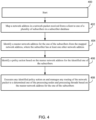
- a method implemented by a network traffic management system including one or more server devices, host devices or client devices that map a network address in a network packet received from a client to one of a plurality of subscribers in a subscriber database.
- a master network address for the one of the subscribers is identified from the mapped network address, where the subscriber has at least one other network address associated with the one of the subscribers.
- the network packet is routed to a determined one of a plurality of processing nodes and processing threads based on the master network address for the one of the subscribers.
- a network traffic management apparatus includes a memory including programmed instructions stored thereon and one or more processors configured to be capable of executing the stored programmed instructions to map a network address in a network packet received from a client to one of a plurality of subscribers in a subscriber database.
- a master network address for the one of the subscribers is identified from the mapped network address, where the subscriber has at least one other network address associated with the one of the subscribers.
- the network packet is routed to a determined one of a plurality of processing nodes and processing threads based on the master network address for the one of the subscribers.
- a non-transitory computer readable medium having stored thereon instructions for including executable code that, when executed by one or more processors, causes the processors to map a network address in a network packet received from a client to one of a plurality of subscribers in a subscriber database.
- a master network address for the one of the subscribers is identified from the mapped network address, where the subscriber has at least one other network address associated with the one of the subscribers.
- the network packet is routed to a determined one of a plurality of processing nodes and processing threads based on the master network address for the one of the subscribers.
- a network traffic management system comprising one or more server devices, network traffic management apparatuses or client devices with memory comprising programmed instructions stored thereon, and one or more processors configured to be capable of executing the stored programmed instructions to map a network address in a network packet received from a client to one of a plurality of subscribers in a subscriber database.
- a master network address for the one of the subscribers is identified from the mapped network address, where the subscriber has at least one other network address associated with the one of the subscribers.
- the network packet is routed to a determined one of a plurality of processing nodes and processing threads based on the master network address for the one of the subscribers.
- This technology provides a number of advantages including providing methods, non-transitory computer readable media, network traffic management apparatuses, and network traffic management systems that effectively control network traffic with a subscriber-aware disaggregator.
- Examples of this technology are, in real time, configured to aggregate all of the network traffic of a subscriber having multiple IP address into a single thread of one of a plurality of network processing nodes. With traffic of a subscriber aggregated to a single thread, examples of this technology can more effectively enforce any applicable policies to manage the network traffic for the subscriber.
- the network traffic management system 100 configured to control network traffic with a subscriber-aware disaggregator is illustrated.
- the network traffic management system 100 in this example includes a network traffic management apparatus 102 that is coupled to server devices 104(1)-104(n), and client devices 106(1)-106(n) via communication network(s) 110, although network traffic management apparatus 102, server devices 104(1)-104(n), and client devices 106(1)-106(n) may be coupled together via other topologies.
- the network traffic management system 100 also may include other network devices which are known in the art and thus will not be described herein. This technology provides a number of advantages including methods, network traffic management apparatuses, non-transitory computer readable media, and network traffic management systems that are configured to control network traffic with a subscriber-aware disaggregator.
- a service provider can provide a network for use by subscribers using one or more client devices 106(1)-106(n) to interact with one or more server devices 104(1)-104(n). As the number of subscribers using one or more client devices 106(1)-106(n) and the amount of information passed increases, the hardware and software resources of the network will be increased to accommodate the additional network traffic.
- the service provider can control the usage of the network by setting policies for use. For example, the policies can include bandwidth quotas or other types of network traffic management rules for different subscribers at the client devices 106(1)-106(n). However, to implement these policies, the network traffic of the subscribers at the client devices 106(1)-106(n) needs to be aggregated, monitored and/or processed on one thread.
- the network traffic of the different subscribers at the client devices 106(1)-106(n) can be aggregated, processed, and then forwarded to intended destinations (e.g., server devices 104(1)-104(n)) by a network traffic management apparatus 102.
- intended destinations e.g., server devices 104(1)-104(n)
- network traffic can include one or more network packets that are sent from or addressed to one or more subscribers at one or more of the client devices 106(1)-106(n).
- the network traffic of a given subscriber at one of the client devices 106(1)-106(n) includes one or more network packets comprising network traffic that are sent from or addressed to the given subscriber at the one of the client devices 106(1)-106(n).
- Processing the network traffic can further include applying policies to identified subscribers to determine whether and how the network traffic is forwarded through the network.
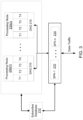
- the aggregated network traffic can be distributed to a number of network processing nodes 230(1)-230(n) of the network traffic management system 100 which in this example are shown as part of the network traffic management apparatus 102, but in other examples may be implemented in other configurations at other locations.
- the network traffic management apparatus 102 of the network traffic management system 100 can include programmed instructions and/or control logic to manage network traffic with a subscriber-aware disaggregator which utilizes a subscriber database 212.
- a source network address can be used as a key into the subscriber database 214 and the subscriber policies database 214 that includes network addresses and a designated master network address and also policies associated with each of the subscribers, such as policies for managing network traffic of the subscribers at one or more of the client devices 106(1)-106(n) which can be utilized by the network processing nodes 230(1)-230(n) to process network traffic.
- Examples of this technology are, in real time, configured to aggregate the network traffic of a subscriber at one of the client devices 106(1)-106(n) having multiple network addresses into a single one of the threads T1-T4 of one of a plurality of network processing nodes 230(1)-230(n), although other numbers of processing nodes and/or threads can be used.
- examples of this technology can more effectively manage the network traffic and enforce any applicable policies from subscriber policies database 214 for the subscriber at one of the client devices 106(1)-106(n) as illustrated and described by way of the examples herein.
- the term “or” may be inclusive or exclusive unless expressly stated otherwise; the term “set” may comprise zero, one, or two or more elements; the terms “first”, “second”, “certain”, and “particular” are used as naming conventions to distinguish elements from each other and does not imply an ordering, timing, or any characteristic of the referenced items unless otherwise specified; the terms “such as”, “e.g.,” “for example”, and the like describe one or more examples but are not limited to the described examples(s); the term “comprises” and/or “comprising” specify the presence of stated features, but do not preclude the presence or addition of one or more other features.
- a “computer system” or “computing apparatus” refers to one or more computers, such as one or more physical computers, virtual computers, and/or other computing systems or devices.
- a computer system or computing apparatus may be, or may include, one or more server computers, cloud-based computers, cloud-based cluster of computers, virtual machine instances or virtual machine computer elements such as virtual processors, storage and memory, data centers, storage devices, desktop computers, laptop computers, mobile devices, or any other special-purpose computing devices.
- Any reference to a "computer system” or “computing apparatus” herein may mean one or more computers, unless expressly stated otherwise. When a computer system or computing apparatus performs an action, the action is performed by one or more computers of the computer system or computing apparatus.
- the network traffic management system 100 includes the network traffic management apparatus 102, server devices 104(1)-104(n), and client devices 106(1)-106(n), although the system could have other types and/or numbers of other systems, devices, components and/or other elements which may be in other configurations.
- one or more of the network traffic management apparatus 102, the server devices 104(1)-104(n), and the client devices 106(1)-106(n) or portions thereof can also be implemented in hardware and/or software within one or more other devices in the network traffic management system 100.
- the description herein is generally directed to a system that is distributed across multiple devices, it should be understood that it is contemplated that the techniques disclosed herein could alternatively be adapted for use in other manners.
- the network traffic management apparatus 102 of the network traffic management apparatus system 100 may perform any number of functions and other operations, such as for example, controlling network traffic with a subscriber-aware disaggregator.
- the network traffic management apparatus 102 in this example includes processor 202, a memory 204, a communication interface 206, and the network processing nodes 230(1)-230(n) which are coupled together by a bus, although the network traffic management apparatus 102 can include other types or numbers of elements in other configurations.
- the network processing nodes 230(1)-230(n) are shown as part of the network traffic management apparatus 102, but in other examples may be implemented in other configurations at other locations.
- the processor 202 of the network traffic management apparatus 102 may execute programmed instructions stored in the memory 204 of the network traffic management apparatus 102 for any number of functions as described and illustrated by way of the examples herein.
- the processor 202 of the network traffic management apparatus 102 may include one or more central processing units (CPUs) or general-purpose processors with one or more processing cores, for example, although other types of processor(s) can also be used.
- the memory 204 of the network traffic management apparatus 102 can store one or more modules and/or other databases that can include computer executable instructions and/or other data that, when executed or utilized by the network traffic management apparatus 102, cause the network traffic management apparatus 102 to perform actions, such as those described and illustrated below with reference to FIGS. 3-4 .
- the modules can be implemented as components of other modules. Further, the modules can be implemented as applications, operating system extensions, plugins, or the like.
- the subscriber database 212 may include subscriber identification information mapped in some examples to two or more associated network addresses, such as an Internet Protocol version four (IPv4) address and an Internet Protocol version six (IPv6) address, although other types of programmed instructions, data, and other information may be stored here. Further in this example, the subscriber database 212 may identify one of the network addresses associated with a particular subscriber as the master network address. Even further in this example, the source IP address in the header of the network packet from the requesting one of the subscriber at one of the client devices 106(1)-106(n) may be used as the network address used for this mapping, although other network addresses, such as the destination IP address by way of example, can be used in place of or with the source IP address in other examples.
- IPv4 Internet Protocol version four
- IPv6 Internet Protocol version six
- any number of network traffic management apparatuses 102, server devices 104(1)-104(n), and client devices 106(1)-106(n) may be used.
- the number of network traffic management apparatuses 102, server devices 104(1)-104(n), and client devices 106(1)-106(n) are shown in FIG. 1 merely for purposes of providing an illustrative example.
- the network traffic management apparatus 102 can also identify a master network address for the particular subscriber associated with the matching source network address.
- a subscriber at one of the client devices 106(1)-106(n) may have multiple associated source network addresses, such as network addresses 1A and 1B associated with a "subscriber 1" and network addresses nA and nB associated with a "subscriber n" as shown by way of example only in FIG. 1 .
- the subscriber database 212 has a stored designation of one of one or more network addresses associated with each of the subscribers as the master network address for that subscriber, although other manners for determining a master network address can be used.
- the network traffic management apparatus 102 may cache the master network address for that subscriber to use for future routing decisions during a session.
- the network traffic management apparatus 102 may also identify one or more executable network policy actions from the subscriber policies database 214 for each packet in the network traffic based on the identified master network address for the one of the subscribers at one of the client devices 106(1)-106(n).
- an executable network policy action can regulate an amount of bandwidth and/or quota, load balance, execute rate monitoring and metering, caching, denial of service protection, encryption/decryption, session management, address translation, and/or access control by way of example only, although other types of executable network policy actions can be used.
Landscapes
- Engineering & Computer Science (AREA)
- Computer Networks & Wireless Communication (AREA)
- Signal Processing (AREA)
- Data Exchanges In Wide-Area Networks (AREA)
Applications Claiming Priority (1)
| Application Number | Priority Date | Filing Date | Title |
|---|---|---|---|
| US18/374,466 US20250112860A1 (en) | 2023-09-28 | 2023-09-28 | Methods for controlling network traffic with a subscriber-aware disaggregator and methods thereof |
Publications (1)
| Publication Number | Publication Date |
|---|---|
| EP4531368A1 true EP4531368A1 (fr) | 2025-04-02 |
Family
ID=92909406
Family Applications (1)
| Application Number | Title | Priority Date | Filing Date |
|---|---|---|---|
| EP24202409.9A Pending EP4531368A1 (fr) | 2023-09-28 | 2024-09-25 | Procédés de commande de trafic de réseau avec un dispositif de désagrégation sensible à l'abonné et procédés associés |
Country Status (3)
| Country | Link |
|---|---|
| US (1) | US20250112860A1 (fr) |
| EP (1) | EP4531368A1 (fr) |
| CN (1) | CN119728559A (fr) |
Citations (2)
| Publication number | Priority date | Publication date | Assignee | Title |
|---|---|---|---|---|
| US9148389B2 (en) * | 2010-08-04 | 2015-09-29 | Alcatel Lucent | System and method for a virtual chassis system |
| EP2351333B1 (fr) * | 2008-11-25 | 2019-09-18 | Citrix Systems, Inc. | Systèmes et procédés pour appliquer des transformations à des adresses ip obtenues par service de nom de domaine dns |
Family Cites Families (3)
| Publication number | Priority date | Publication date | Assignee | Title |
|---|---|---|---|---|
| US9537792B2 (en) * | 2013-08-30 | 2017-01-03 | Qualcomm Incorporated | Channel loading for one-to-many communications in a network |
| US9755960B2 (en) * | 2013-09-30 | 2017-09-05 | Juniper Networks, Inc. | Session-aware service chaining within computer networks |
| US9509606B2 (en) * | 2014-07-30 | 2016-11-29 | Aruba Networks, Inc. | Distributed virtual private network |
-
2023
- 2023-09-28 US US18/374,466 patent/US20250112860A1/en active Pending
-
2024
- 2024-09-25 EP EP24202409.9A patent/EP4531368A1/fr active Pending
- 2024-09-27 CN CN202411362518.XA patent/CN119728559A/zh active Pending
Patent Citations (2)
| Publication number | Priority date | Publication date | Assignee | Title |
|---|---|---|---|---|
| EP2351333B1 (fr) * | 2008-11-25 | 2019-09-18 | Citrix Systems, Inc. | Systèmes et procédés pour appliquer des transformations à des adresses ip obtenues par service de nom de domaine dns |
| US9148389B2 (en) * | 2010-08-04 | 2015-09-29 | Alcatel Lucent | System and method for a virtual chassis system |
Also Published As
| Publication number | Publication date |
|---|---|
| US20250112860A1 (en) | 2025-04-03 |
| CN119728559A (zh) | 2025-03-28 |
Similar Documents
| Publication | Publication Date | Title |
|---|---|---|
| US12316477B2 (en) | Virtual traffic hub management | |
| US20250254118A1 (en) | Automated route propagation among networks attached to scalable virtual traffic hubs | |
| EP4449251B1 (fr) | Acheminement de paquets de données chiffrés | |
| US11088944B2 (en) | Serverless packet processing service with isolated virtual network integration | |
| US10742446B2 (en) | Interconnecting isolated networks with overlapping address ranges via scalable virtual traffic hubs | |
| EP3682604B1 (fr) | Accès direct à la mémoire à distance dans des systèmes informatiques | |
| US10700979B2 (en) | Load balancing for a virtual networking system | |
| KR101969194B1 (ko) | 네트워킹 장치 가상화를 위한 패킷 처리 오프로딩 기법 | |
| US20200092201A1 (en) | Scalable cell-based packet processing service using client-provided decision metadata | |
| US9548890B2 (en) | Flexible remote direct memory access resource configuration in a network environment | |
| US11689631B2 (en) | Transparent network service migration across service devices | |
| US10666612B2 (en) | Service chains for inter-cloud traffic | |
| JP2016129043A (ja) | 仮想クラウドインフラストラクチャへの仮想セキュリティ装置アーキテクチャの提供 | |
| JP2015534320A (ja) | ポリシーベースのデータセンタネットワーク自動化を提供するシステムおよび方法 | |
| US20160261505A1 (en) | Localized service chaining in nfv clouds | |
| US20210092191A1 (en) | Session management in a forwarding plane | |
| US11296981B2 (en) | Serverless packet processing service with configurable exception paths | |
| US20140279885A1 (en) | Data replication for a virtual networking system | |
| US9973574B2 (en) | Packet forwarding optimization without an intervening load balancing node | |
| CN119301928A (zh) | 针对时延敏感rdma流量的网络设备级优化 | |
| EP4531368A1 (fr) | Procédés de commande de trafic de réseau avec un dispositif de désagrégation sensible à l'abonné et procédés associés | |
| Ivanisenko | Methods and Algorithms of load balancing | |
| US10791088B1 (en) | Methods for disaggregating subscribers via DHCP address translation and devices thereof | |
| US10848418B1 (en) | Packet processing service extensions at remote premises | |
| US20250071096A1 (en) | System and method for testing a virtual private network server |
Legal Events
| Date | Code | Title | Description |
|---|---|---|---|
| PUAI | Public reference made under article 153(3) epc to a published international application that has entered the european phase |
Free format text: ORIGINAL CODE: 0009012 |
|
| STAA | Information on the status of an ep patent application or granted ep patent |
Free format text: STATUS: THE APPLICATION HAS BEEN PUBLISHED |
|
| AK | Designated contracting states |
Kind code of ref document: A1 Designated state(s): AL AT BE BG CH CY CZ DE DK EE ES FI FR GB GR HR HU IE IS IT LI LT LU LV MC ME MK MT NL NO PL PT RO RS SE SI SK SM TR |
|
| P01 | Opt-out of the competence of the unified patent court (upc) registered |
Free format text: CASE NUMBER: UPC_APP_2638_4531368/2025 Effective date: 20250806 |
|
| STAA | Information on the status of an ep patent application or granted ep patent |
Free format text: STATUS: REQUEST FOR EXAMINATION WAS MADE |
|
| 17P | Request for examination filed |
Effective date: 20250930 |
|
| REG | Reference to a national code |
Ref country code: HK Ref legal event code: DE Ref document number: 40124382 Country of ref document: HK |