EP4531482A1 - Procédé et appareil d'accès aléatoire, et terminal et dispositif côté réseau - Google Patents
Procédé et appareil d'accès aléatoire, et terminal et dispositif côté réseau Download PDFInfo
- Publication number
- EP4531482A1 EP4531482A1 EP23839059.5A EP23839059A EP4531482A1 EP 4531482 A1 EP4531482 A1 EP 4531482A1 EP 23839059 A EP23839059 A EP 23839059A EP 4531482 A1 EP4531482 A1 EP 4531482A1
- Authority
- EP
- European Patent Office
- Prior art keywords
- cell
- random
- information
- access
- index
- Prior art date
- Legal status (The legal status is an assumption and is not a legal conclusion. Google has not performed a legal analysis and makes no representation as to the accuracy of the status listed.)
- Pending
Links
Images
Classifications
-
- H—ELECTRICITY
- H04—ELECTRIC COMMUNICATION TECHNIQUE
- H04W—WIRELESS COMMUNICATION NETWORKS
- H04W74/00—Wireless channel access
- H04W74/002—Transmission of channel access control information
-
- H—ELECTRICITY
- H04—ELECTRIC COMMUNICATION TECHNIQUE
- H04W—WIRELESS COMMUNICATION NETWORKS
- H04W56/00—Synchronisation arrangements
-
- H—ELECTRICITY
- H04—ELECTRIC COMMUNICATION TECHNIQUE
- H04W—WIRELESS COMMUNICATION NETWORKS
- H04W56/00—Synchronisation arrangements
- H04W56/001—Synchronization between nodes
-
- H—ELECTRICITY
- H04—ELECTRIC COMMUNICATION TECHNIQUE
- H04W—WIRELESS COMMUNICATION NETWORKS
- H04W56/00—Synchronisation arrangements
- H04W56/004—Synchronisation arrangements compensating for timing error of reception due to propagation delay
- H04W56/0045—Synchronisation arrangements compensating for timing error of reception due to propagation delay compensating for timing error by altering transmission time
-
- H—ELECTRICITY
- H04—ELECTRIC COMMUNICATION TECHNIQUE
- H04W—WIRELESS COMMUNICATION NETWORKS
- H04W74/00—Wireless channel access
- H04W74/002—Transmission of channel access control information
- H04W74/006—Transmission of channel access control information in the downlink, i.e. towards the terminal
-
- H—ELECTRICITY
- H04—ELECTRIC COMMUNICATION TECHNIQUE
- H04W—WIRELESS COMMUNICATION NETWORKS
- H04W74/00—Wireless channel access
- H04W74/08—Non-scheduled access, e.g. ALOHA
- H04W74/0833—Random access procedures, e.g. with 4-step access
Definitions
- the present disclosure relates to the field of wireless technologies, and in particular to a random-access method and device, UE and network equipment.
- inter-cell beam management supports configuring synchronization signal and physical broadcast channel (PBCH) block (SSB) of a non-serving cell as a beam measurement reference signal.
- PBCH physical broadcast channel
- SSB synchronization signal and physical broadcast channel
- a UE can report layer 1 reference signal receiving power (L1-RSRP) measurement result of SSB for the non-serving cell, and a serving cell can select a beam of the non-serving cell for serving the UE.
- L1-RSRP layer 1 reference signal receiving power
- L1/L2 control signaling can be used to complete handover to reduce latency.
- a source base station serving cell
- RRC radio resource control
- timing advance (TA) information of the target cell For asynchronous scenarios, it is necessary to obtain timing advance (TA) information of the target cell.
- TA timing advance
- the UE In traditional handover procedure, the UE needs to initiate a random-access with the target cell in the layer 3 process to obtain TA and other information to complete synchronization with the target cell. This method will cause the problem of high delay in the synchronization process with the target cell (non-serving cell), and cannot meet the demand for reducing delay.
- An object of the present disclosure is to provide a random-access method and device, UE and network equipment, which can solve the problem of high delay in the synchronization process between UE and the target cell (non-serving cell) in the related art.
- the present disclosure provides a random-access method, performed by a user equipment (UE), including:
- the method further includes: receiving a random-access response message sent by the second cell; where the random-access response message includes timing advance (TA) information of the second cell.
- TA timing advance
- the second information includes one or more of the following:
- the method further includes:
- the configuration information includes one or more of the following information:
- the resource information includes a preamble index of a random-access preambles and/or time frequency domain resources for sending the random-access preambles.
- the first information further includes a reference signal index
- the method further includes: calculating a transmission power of the random-access message according to the reference signal and/or power information corresponding to the second cell.
- the method further includes: determining the reference signal corresponding to the second cell according to the reference signal index in the second information.
- One embodiment of the present disclosure further provides a random-access method, performed by a first cell, including: sending first information for instructing a UE to perform random-access, to the UE; wherein the first information includes second information for indicating a second cell, the first cell is one of the serving cells of the UE, and the second cell is a cell with an index different from that of the first cell.
- the second information includes one or more of the following:
- the method further includes:
- One embodiment of the present disclosure further provides a UE, including: a transceiver; wherein the transceiver is configured to:
- One embodiment of the present disclosure further provides a network equipment, applied to a first cell, including a transceiver; wherein the transceiver is configured to: send first information for instructing a UE to perform random-access, to the UE; wherein the first information includes second information for indicating a second cell, the first cell is one of the serving cells of the UE, and the second cell is a cell with an index different from that of the first cell.
- One embodiment of the present disclosure further provides a random-access device, applied to a UE, including:
- One embodiment of the present disclosure further provides a random-access device, performed by a first cell, including: a second sending module configured to send first information for instructing a UE to perform random-access, to the UE; wherein the first information includes second information for indicating a second cell, the first cell is one of the serving cells of the UE, and the second cell is a cell with an index different from that of the first cell.
- a random-access device performed by a first cell, including: a second sending module configured to send first information for instructing a UE to perform random-access, to the UE; wherein the first information includes second information for indicating a second cell, the first cell is one of the serving cells of the UE, and the second cell is a cell with an index different from that of the first cell.
- One embodiment of the present disclosure further provides a network equipment, including: a processor, a memory, and a program stored on the memory and executable on the processor; wherein the program, when executed by the processor, causes the processor to perform any one of the above random-access method.
- One embodiment of the present disclosure further provides a readable storage medium, including a program stored thereon; wherein the program, when executed by a processor, causes the processor to perform any one of the above random-access method.
- the random-access method in this embodiment when sending, to the UE, first information indicating random-access, the first information indicating random-access with second information indicating a second cell, triggers transmission of a random-access message to the second cell; in this way, the first information indicating random-access can trigger the UE to random access the target cell (second cell), that is, performing random-access to the target cell before cell switch, which can avoid random-access to the target cell through the L3 handover procedure, and obtain TA and other information to complete synchronization with the target cell. Therefore, the problem of high delay in the synchronization process with the target cell (non-serving cell) can be avoided.
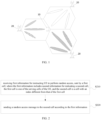
- FIG. 1 An application system architecture of a random-access method according to an embodiment of the present disclosure is shown in FIG. 1 , and includes at least one UE 10 and at least one cell 20.
- Each cell 20 may correspond to a network equipment, such as a base station.
- each UE 10 corresponds to at least one serving cell and at least one non-serving cell.
- Different cells 20 can send measurement reference signals, respectively.
- the UE can report an L1-RSRP measurement result of SSB of the non-serving cell, and the serving cell can select the beam of the non-serving cell for serving UE.
- one embodiment of the present disclosure provides a random-access method, including: when sending, to a UE, first information indicating random-access, triggering, by the first information indicating random-access with second information indicating a second cell, transmission of a random-access message to the second cell; where the second cell is a cell having an index different from that of the first cell, the first cell is one of serving cells of the UE, and the second cell can be a target cell different from the serving cell or a non-serving cell.
- the first information indicating random-access can trigger the UE to random access the non-serving cell, that is, performing random-access to the target cell before cell switch, which can avoid random-access to the target cell through the L3 handover procedure, and obtain TA and other information to complete synchronization with the target cell. Therefore, the problem of high delay in the synchronization process with the target cell (non-serving cell) can be avoided.
- one embodiment of the present disclosure provides a random-access method, performed by a UE.
- the method includes:
- the first cell is one of the serving cells of the UE; and the second cell is a cell with an index different from the first cell, that is, a target cell different from the first cell.
- the second cell can be a non-serving cell.
- the method further includes: receiving a random-access response message sent by the second cell; where the random-access response message includes timing advance (TA) information of the second cell.
- TA timing advance
- the second cell can send the TA information to the UE to enable the UE to complete synchronization with the second cell, so that the UE can obtain the TA information of the target cell during the L1/L2-based cell switch procedure, thereby reducing the delay caused by random-access during handover.
- the first information is downlink control information (DCI), which is indicated or transmitted through a physical downlink control channel (PDCCH).
- DCI is used to indicate the UE to initiate random-access.
- the DCI is scrambled by a cyclic redundancy check (CRC) and the DCI format is 1_0, and all frequency domain resource allocation (FDRA) fields are 1, which is not limited to this and can be configured by the network side or agreed upon through protocols.
- CRC cyclic redundancy check
- FDRA frequency domain resource allocation
- the DCI that triggers the random-access procedure indicates the UE to send a random-access message to the serving cell.
- the UE can initiate a random-access message to the target cell.
- the second information includes one or more of the following:
- the random-access resource index includes a random-access channel (RACH) mask index.
- RACH random-access channel
- the method further includes:
- the configuration information includes one or more of the following information:
- the RACH resources include a dedicated RACH resource and/or common RACH resource.
- the method further includes: receiving the configuration information of at least one third cell sent by the first cell.
- the configuration information is RRC configuration information
- the third cell includes the first cell and/or the second cell.
- the first cell sends the RRC configuration of at least one third cell to the UE.
- the UE can receive a beam measurement reference signal sent by at least one third cell, that is, receiving a beam measurement reference signal sent by the first cell and/or the second cell; and perform beam measurement based on the beam measurement reference signal and report measurement result information, so that the first cell (serving cell) can determine, based on the measurement result information reported by the UE, whether to switch the UE to the second cell.
- the UE determines the second cell that the UE needs to initiate random-access to, according to at least one of the index of the second cell, the configuration information index of the second cell, the reference signal index of the second cell, random-access resource index of the second cell and random preamble index of the second cell, in the first information for indicating to perform random-access; and then, based on pre-obtained configuration information of at least one third cell sent by the first cell, the UE determines the resource information for sending the random-access message by using RACH resource (or RACH occlusion), association between RACH resource and SSB, association between RACH resource and CSI-RS, indicated by the configuration information.
- RACH resource or RACH occlusion
- the determined resource information for sending the random-access message includes random-access preamble index or ra-PreambleIndex information and frequency domain resource information.
- the first information further includes a reference signal index.
- the sending a random-access message to the second cell includes: sending the random-access message to the second cell by using the same spatial parameter as a reference signal indicated by the reference signal index.
- the reference signal index includes an SSB index and/or a CSI index.
- the UE uses the same spatial parameter as indicated by the reference signal index to send the random-access message to the second cell.
- the spatial parameter includes a spatial filter and/or beam.
- the reference signal indicated by the first information may be determined.
- the reference signal index is a reference signal index of a channel measurement resource (CMR) in a channel state information (CSI) report.
- the method further includes: calculating a transmission power of the random-access message according to the reference signal and/or power information corresponding to the second cell.
- the method further includes: determining the reference signal corresponding to the second cell according to the reference signal index in the second information.
- b is an index of bandwidth part (BWP)
- f is a carrier index
- c is a cell index
- P P RACH b , f,c is a transmission power of the random-access in a case where the BWP index is b, the carrier index is f, and the cell index is c
- P C max , f, c is P C max in a case where the carrier index is f, and the cell index is c
- PL b,f ,c is a corresponding path loss in a case where the BWP index is b, the carrier index is f, and the cell index is c
- P PRACHt arg et,f ,c is a target received power in a case where the carrier index is f, and the cell index is c
- the path loss (PL) corresponding to the second cell may be calculated according to the index of the second cell and/or the reference signal index indicated by the second information. That is, the cell index in the above calculation method of transmission power is the index of the second cell.
- the path loss PL can be calculated based on the SSB or CSI-RS of the second cell.
- a reference signal of the path loss PL can be determined according to a physical cell identifier (PCI) index or configuration information index of the second cell, thereby further determining the path loss.
- the configuration information of the second cell includes a path loss reference signal, and the path loss PL can be determined based on the path loss reference signal.
- Pcmax may be determined according to the PCI index or configuration information index and configuration information of the second cell in the second information.
- the transmission power of the random-access message can be calculated according to the determined path loss PL and Pcmax corresponding to the second cell.
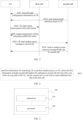
- FIG. 3 is a schematic flowchart of a random-access method according to an embodiment of the present disclosure.
- the random-access method includes the following steps.
- S301 sending, by a first cell (serving cell), configuration information to a UE; where the configuration information is RRC configuration information, and includes RRC configuration of at least one third cell.
- S302 sending, by the first cell and/or a second cell, a measurement reference signal to the UE.
- S305 according to the first information, sending, by the UE, a random-access message to the second cell.
- S306 receiving, by the UE, a random-access response message RAR sent by the second cell, where the random-access response message RAR includes timing advance (TA) information of the second cell.
- TA timing advance
- the second cell can send the TA information to the UE to enable the UE to complete synchronization with the second cell, so that the UE can obtain the TA information of the target cell during the L1/L2-based cell switch procedure, thereby reducing the delay caused by random-access during handover.
- Another aspect of the embodiment of the present disclosure further provides a random-access method, performed by a first cell.
- the method includes: S401: sending first information for instructing a UE to perform random-access, to the UE; where the first information includes second information for indicating a second cell, the first cell is one of the serving cells of the UE, and the second cell is a cell with an index different from that of the first cell.
- the first cell indicates, to the UE, the second formation of the second cell, through the first information which triggers the UE to perform random-access, and triggers the UE to random access the second cell (target cell); the second cell can send the TA information to the UE to enable the UE to complete synchronization with the second cell, so that the UE can obtain the TA information of the target cell during the L1/L2-based cell switch procedure, thereby reducing the delay caused by random-access during handover.
- the second information includes one or more of the following:
- the random-access method further includes:
- the UE 500 includes a transceiver 510 and a processor 520.
- the transceiver 510 is used for:
- the transceiver 510 is further used for: receiving a random-access response message sent by the second cell; where the random-access response message includes timing advance (TA) information of the second cell.
- TA timing advance
- the second information includes one or more of the following:
- the processor 520 is configured to:
- the configuration information includes one or more of the following information:
- the resource information includes a preamble index of a random-access preambles and/or time frequency domain resources for sending the random-access preambles.
- the first information further includes a reference signal index.
- the transceiver 510 When sending a random-access message to the second cell, the transceiver 510 is used for: sending the random-access message to the second cell by using the same spatial parameter as a reference signal indicated by the reference signal index.
- the processor 520 is used for: calculating a transmission power of the random-access message according to the reference signal and/or power information corresponding to the second cell.
- the processor 520 is further used for: determining the reference signal corresponding to the second cell according to the reference signal index in the second information.
- the network equipment 600 includes a transceiver 610.
- the transceiver 610 is used for: sending first information for instructing a UE to perform random-access, to the UE; where the first information includes second information for indicating a second cell, the first cell is one of the serving cells of the UE, and the second cell is a cell with an index different from that of the first cell.
- the second information includes one or more of the following:
- the transceiver 610 is further used for:
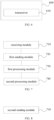
- Another embodiment of the present disclosure further provides a random-access device, applied to a UE.
- the device includes:
- the receiving module 710 is further used for: receiving a random-access response message sent by the second cell; where the random-access response message includes timing advance (TA) information of the second cell.
- TA timing advance
- the second information includes one or more of the following:
- the random-access device further includes:
- the configuration information includes one or more of the following information:
- the resource information includes a preamble index of a random-access preambles and/or time frequency domain resources for sending the random-access preambles.
- the first information further includes a reference signal index.
- the first sending module 720 is used for: sending the random-access message to the second cell by using the same spatial parameter as a reference signal indicated by the reference signal index.
- the random-access device further includes: a second processing module 740 used for calculating a transmission power of the random-access message according to the reference signal and/or power information corresponding to the second cell.
- a second processing module 740 used for calculating a transmission power of the random-access message according to the reference signal and/or power information corresponding to the second cell.
- the second processing module 740 is further used for: determining the reference signal corresponding to the second cell according to the reference signal index in the second information.
- the device includes: a second sending module 810 used for sending first information for instructing a UE to perform random-access, to the UE; where the first information includes second information for indicating a second cell, the first cell is one of the serving cells of the UE, and the second cell is a cell with an index different from that of the first cell.
- a second sending module 810 used for sending first information for instructing a UE to perform random-access, to the UE; where the first information includes second information for indicating a second cell, the first cell is one of the serving cells of the UE, and the second cell is a cell with an index different from that of the first cell.
- the second information includes one or more of the following:
- the second sending module 810 is further used for:
- Another embodiment of the present disclosure further provides a network equipment, including: a processor, a memory, and a program stored on the memory and executable on the processor.
- a network equipment including: a processor, a memory, and a program stored on the memory and executable on the processor.
- the program is executed by the processor, the random-access method described in any one of the previous embodiment is implemented.
- the network equipment may be the above UE or a network equipment applied in the first cell.
- a specific implementation in which the processor of the above UE or the network equipment of the first cell performs the random-access method, can refer to the detailed description of the specific implementation in the above corresponding random-access method, which will not be described again here.
- one embodiment of the present disclosure further provides a readable storage medium on which a computer program is stored.
- the program when executed by a processor, causes the processor to perform the steps in the random-access method of any one of the above embodiments.
- the computer-readable storage medium is applied to the above UE or to the network equipment of the first cell.
- the corresponding execution steps in the random-access method are as described in detail above, which will not be described again here.
- the disclosed methods and devices can be implemented in other ways.
- the device embodiments described above are only illustrative.
- division of units is only a logical function division, and there may be other division modes in actual implementation.
- multiple units or components may be combined or can be integrated into another system, or some features can be ignored, or not implemented.
- the coupling or direct coupling or communication connection between each other shown or discussed may be through some interfaces, and the indirect coupling or communication connection of the devices or units may be in electrical, mechanical or other forms.
- various function units in various embodiments of the present disclosure may be integrated into one processing unit, each unit may be physically included separately, or two or more units may be integrated into one unit.
- the above integrated unit can be implemented in the form of hardware or in the form of hardware plus software function units.
- the above integrated unit implemented in the form of software function units can be stored in a computer-readable storage medium.
- the above software function units are stored in a storage medium and includes several instructions to cause a computer device (which may be a personal computer, a server, or a network device, etc.) to execute some steps of the methods described in various embodiments of the present disclosure.
- the aforementioned storage media include various media that can store program code, such as U disk, mobile hard disk, read-only memory (ROM), random-access memory (RAM), magnetic disk or optical disk.
Landscapes
- Engineering & Computer Science (AREA)
- Computer Networks & Wireless Communication (AREA)
- Signal Processing (AREA)
- Mobile Radio Communication Systems (AREA)
Applications Claiming Priority (2)
| Application Number | Priority Date | Filing Date | Title |
|---|---|---|---|
| CN202210836008.6A CN117460081A (zh) | 2022-07-15 | 2022-07-15 | 随机接入方法、装置、终端及网络侧设备 |
| PCT/CN2023/107469 WO2024012571A1 (fr) | 2022-07-15 | 2023-07-14 | Procédé et appareil d'accès aléatoire, et terminal et dispositif côté réseau |
Publications (2)
| Publication Number | Publication Date |
|---|---|
| EP4531482A1 true EP4531482A1 (fr) | 2025-04-02 |
| EP4531482A4 EP4531482A4 (fr) | 2025-10-29 |
Family
ID=89535666
Family Applications (1)
| Application Number | Title | Priority Date | Filing Date |
|---|---|---|---|
| EP23839059.5A Pending EP4531482A4 (fr) | 2022-07-15 | 2023-07-14 | Procédé et appareil d'accès aléatoire, et terminal et dispositif côté réseau |
Country Status (6)
| Country | Link |
|---|---|
| EP (1) | EP4531482A4 (fr) |
| JP (1) | JP2025522124A (fr) |
| CN (1) | CN117460081A (fr) |
| AU (1) | AU2023306441A1 (fr) |
| MX (1) | MX2025000579A (fr) |
| WO (1) | WO2024012571A1 (fr) |
Families Citing this family (3)
| Publication number | Priority date | Publication date | Assignee | Title |
|---|---|---|---|---|
| CN120499753A (zh) * | 2024-02-08 | 2025-08-15 | 荣耀终端股份有限公司 | 定时提前量的获取方法、设备及存储介质 |
| CN120957240A (zh) * | 2024-05-13 | 2025-11-14 | 华为技术有限公司 | 一种通信方法及装置 |
| KR20260044028A (ko) * | 2024-09-25 | 2026-04-01 | 삼성전자주식회사 | 무선 통신 시스템에서 ca를 위한 지연시간을 줄이기 위한 방법 및 장치 |
Family Cites Families (12)
| Publication number | Priority date | Publication date | Assignee | Title |
|---|---|---|---|---|
| KR101384865B1 (ko) * | 2007-01-09 | 2014-04-16 | 엘지전자 주식회사 | 충돌 해결을 위한 랜덤 액세스 방법 |
| KR101710607B1 (ko) * | 2010-01-20 | 2017-02-27 | 삼성전자주식회사 | 이동통신 시스템에서 단말기의 핸드오버를 지원하는 방법 및 장치 |
| EP3157282A1 (fr) * | 2015-10-16 | 2017-04-19 | Panasonic Intellectual Property Corporation of America | Transmissions en liaison montante améliorées dans des cellules sans licence avec des décalages de temporisation de transmission supplémentaires |
| US11057938B2 (en) * | 2018-05-23 | 2021-07-06 | Qualcomm Incorporated | Wireless communication including random access |
| US11412422B2 (en) * | 2019-03-14 | 2022-08-09 | Ofinno, Llc | Handover in unlicensed band |
| CN114978435B (zh) * | 2019-03-28 | 2023-05-16 | 中兴通讯股份有限公司 | 一种信息传输方法和装置、信息确定方法和装置 |
| CN113260004A (zh) * | 2020-02-13 | 2021-08-13 | 华为技术有限公司 | 一种通信方法及装置 |
| CN113973347B (zh) * | 2020-07-24 | 2024-04-05 | 华硕电脑股份有限公司 | 无线通信系统中用于移动性程序的方法和设备 |
| CN116671171A (zh) * | 2020-12-23 | 2023-08-29 | 华为技术有限公司 | 一种小区切换的方法及装置 |
| US20220210844A1 (en) * | 2020-12-31 | 2022-06-30 | Samsung Electronics Co., Ltd. | Method and apparatus for random access in wireless communication systems |
| CN118104311A (zh) * | 2021-08-16 | 2024-05-28 | 株式会社Ntt都科摩 | 终端、无线通信方法以及基站 |
| US20250331032A1 (en) * | 2022-04-29 | 2025-10-23 | Apple Inc. | Systems, methods, and devices for ul timing advance acquisition and update in a wireless communication network |
-
2022
- 2022-07-15 CN CN202210836008.6A patent/CN117460081A/zh active Pending
-
2023
- 2023-07-14 EP EP23839059.5A patent/EP4531482A4/fr active Pending
- 2023-07-14 AU AU2023306441A patent/AU2023306441A1/en active Pending
- 2023-07-14 JP JP2025501843A patent/JP2025522124A/ja active Pending
- 2023-07-14 WO PCT/CN2023/107469 patent/WO2024012571A1/fr not_active Ceased
-
2025
- 2025-01-14 MX MX2025000579A patent/MX2025000579A/es unknown
Also Published As
| Publication number | Publication date |
|---|---|
| JP2025522124A (ja) | 2025-07-10 |
| WO2024012571A1 (fr) | 2024-01-18 |
| CN117460081A (zh) | 2024-01-26 |
| MX2025000579A (es) | 2025-02-10 |
| EP4531482A4 (fr) | 2025-10-29 |
| AU2023306441A1 (en) | 2025-01-23 |
Similar Documents
| Publication | Publication Date | Title |
|---|---|---|
| US11785557B2 (en) | Random access power control method and apparatus and communication system | |
| EP4531482A1 (fr) | Procédé et appareil d'accès aléatoire, et terminal et dispositif côté réseau | |
| US20260039419A1 (en) | Message msg3 transmission method, terminal device, and storage medium | |
| US11490303B2 (en) | Cell handover method and apparatus, RRC reestablishment method and apparatus, storage medium and user equipment | |
| KR102348988B1 (ko) | 빔 실패 복구 방법, 장치 및 장치 | |
| US12356467B2 (en) | Random access method and device and communication system | |
| CN113518473B (zh) | 随机接入信道的增强报告 | |
| EP4027687A1 (fr) | Procédé et appareil de communication pour l'activation d'une cellule secondaire | |
| WO2020052550A1 (fr) | Procédé de rapport d'informations, procédé d'acquisition d'informations, terminal et dispositif de réseau | |
| EP2827634A1 (fr) | Procédé et dispositif pour mettre en uvre une mesure de rapport et rapporter le résultat de la mesure | |
| US11076422B2 (en) | Random access responding method and device, and random access method and device | |
| WO2019154272A1 (fr) | Procédé de reprise sur défaillance de faisceau, et terminal d'utilisateur | |
| US20210135818A1 (en) | Downlink signal monitoring and transmitting method, and parameter configuration method and apparatus | |
| CN114928872A (zh) | 增强型随机接入过程的系统和方法 | |
| CN111405675B (zh) | 随机接入方法、终端及网络设备 | |
| EP4271052A1 (fr) | Procédé de traitement de positionnement de liaison montante et dispositif associé | |
| US20240179757A1 (en) | Information reporting method, terminal, and network side device | |
| WO2018024136A1 (fr) | Procédé et terminal d'accès aléatoire | |
| CN111294802A (zh) | 小区切换方法及装置、存储介质、终端、基站 | |
| US11997519B2 (en) | Method and apparatus for receiving and transmitting configuration information and communication system | |
| WO2024022341A1 (fr) | Procédé de transfert cellulaire, terminal, station de base, système de communication et support d'enregistrement | |
| KR20230139797A (ko) | 무선 통신 시스템에서 서빙 셀 변경에서 실패 핸들링을 위한 방법 및 장치 | |
| US11284430B2 (en) | Method of determining ambiguous period, terminal and network-side device | |
| HK40118105A (en) | Random access method and apparatus, and terminal and network-side device | |
| CN114080051B (zh) | 一种两步随机接入方法、用户设备和网络侧设备 |
Legal Events
| Date | Code | Title | Description |
|---|---|---|---|
| STAA | Information on the status of an ep patent application or granted ep patent |
Free format text: STATUS: THE INTERNATIONAL PUBLICATION HAS BEEN MADE |
|
| PUAI | Public reference made under article 153(3) epc to a published international application that has entered the european phase |
Free format text: ORIGINAL CODE: 0009012 |
|
| STAA | Information on the status of an ep patent application or granted ep patent |
Free format text: STATUS: REQUEST FOR EXAMINATION WAS MADE |
|
| 17P | Request for examination filed |
Effective date: 20241223 |
|
| AK | Designated contracting states |
Kind code of ref document: A1 Designated state(s): AL AT BE BG CH CY CZ DE DK EE ES FI FR GB GR HR HU IE IS IT LI LT LU LV MC ME MK MT NL NO PL PT RO RS SE SI SK SM TR |
|
| REG | Reference to a national code |
Ref country code: HK Ref legal event code: DE Ref document number: 40118105 Country of ref document: HK |
|
| DAV | Request for validation of the european patent (deleted) | ||
| DAX | Request for extension of the european patent (deleted) | ||
| A4 | Supplementary search report drawn up and despatched |
Effective date: 20250925 |
|
| RIC1 | Information provided on ipc code assigned before grant |
Ipc: H04W 74/08 20240101AFI20250919BHEP Ipc: H04W 74/00 20090101ALI20250919BHEP Ipc: H04W 56/00 20090101ALI20250919BHEP Ipc: H04W 74/0833 20240101ALN20250919BHEP |