EP4534464A1 - System und verfahren zur bestimmung einer reiseabsicht eines aufzugspassagierens und zur bereitstellung von reagierenden alarmen - Google Patents
System und verfahren zur bestimmung einer reiseabsicht eines aufzugspassagierens und zur bereitstellung von reagierenden alarmen Download PDFInfo
- Publication number
- EP4534464A1 EP4534464A1 EP24204127.5A EP24204127A EP4534464A1 EP 4534464 A1 EP4534464 A1 EP 4534464A1 EP 24204127 A EP24204127 A EP 24204127A EP 4534464 A1 EP4534464 A1 EP 4534464A1
- Authority
- EP
- European Patent Office
- Prior art keywords
- passenger
- travel
- intent
- elevator
- alert condition
- Prior art date
- Legal status (The legal status is an assumption and is not a legal conclusion. Google has not performed a legal analysis and makes no representation as to the accuracy of the status listed.)
- Pending
Links
Images



Classifications
-
- B—PERFORMING OPERATIONS; TRANSPORTING
- B66—HOISTING; LIFTING; HAULING
- B66B—ELEVATORS; ESCALATORS OR MOVING WALKWAYS
- B66B5/00—Applications of checking, fault-correcting, or safety devices in elevators
- B66B5/0006—Monitoring devices or performance analysers
- B66B5/0012—Devices monitoring the users of the elevator system
-
- B—PERFORMING OPERATIONS; TRANSPORTING
- B66—HOISTING; LIFTING; HAULING
- B66B—ELEVATORS; ESCALATORS OR MOVING WALKWAYS
- B66B5/00—Applications of checking, fault-correcting, or safety devices in elevators
- B66B5/02—Applications of checking, fault-correcting, or safety devices in elevators responsive to abnormal operating conditions
- B66B5/021—Applications of checking, fault-correcting, or safety devices in elevators responsive to abnormal operating conditions the abnormal operating conditions being independent of the system
- B66B5/025—Applications of checking, fault-correcting, or safety devices in elevators responsive to abnormal operating conditions the abnormal operating conditions being independent of the system where the abnormal operating condition is caused by human behaviour or misbehaviour, e.g. forcing the doors
-
- B—PERFORMING OPERATIONS; TRANSPORTING
- B66—HOISTING; LIFTING; HAULING
- B66B—ELEVATORS; ESCALATORS OR MOVING WALKWAYS
- B66B3/00—Applications of devices for indicating or signalling operating conditions of elevators
- B66B3/002—Indicators
-
- G—PHYSICS
- G06—COMPUTING OR CALCULATING; COUNTING
- G06N—COMPUTING ARRANGEMENTS BASED ON SPECIFIC COMPUTATIONAL MODELS
- G06N5/00—Computing arrangements using knowledge-based models
- G06N5/02—Knowledge representation; Symbolic representation
- G06N5/022—Knowledge engineering; Knowledge acquisition
-
- B—PERFORMING OPERATIONS; TRANSPORTING
- B66—HOISTING; LIFTING; HAULING
- B66B—ELEVATORS; ESCALATORS OR MOVING WALKWAYS
- B66B2201/00—Aspects of control systems of elevators
- B66B2201/40—Details of the change of control mode
- B66B2201/46—Switches or switchgear
- B66B2201/4607—Call registering systems
- B66B2201/4684—Call registering systems for preventing accidental or deliberate misuse
-
- B—PERFORMING OPERATIONS; TRANSPORTING
- B66—HOISTING; LIFTING; HAULING
- B66B—ELEVATORS; ESCALATORS OR MOVING WALKWAYS
- B66B5/00—Applications of checking, fault-correcting, or safety devices in elevators
- B66B5/02—Applications of checking, fault-correcting, or safety devices in elevators responsive to abnormal operating conditions
- B66B5/021—Applications of checking, fault-correcting, or safety devices in elevators responsive to abnormal operating conditions the abnormal operating conditions being independent of the system
Definitions
- the embodiments are directed to elevator systems and more specifically to a system and method for determining a travel intent of an elevator passenger and providing responsive alerts.
- a person with questionable motives uses elevators more frequently than other users. For instance, a burglar may use an elevator to steal items from a passenger that is traveling alone. For periods of time, the burglar may appear to have no purpose taking an elevator though they may take the elevator frequently. Controlling elevators to minimize associated risks to passengers is desirable.
- an elevator system including an elevator car; at least one sensor, wherein, the system is configured to: receive sensor data from the at least one sensor that is indicative of a first passenger calling or within the elevator car; determine from the at least one sensor data a travel intent of the first passenger; and take an action when the travel intent triggers an alert condition.
- Particular embodiments further may include at least one, or a plurality of, the following optional features, alone or in combination with each other:
- the system is configured to issue an alert or assign the first passenger to ride alone or with multiple people.
- the system is configured to: processing, as training data, a time series model of a history of elevator calls and travel intents for the first passenger by one or more artificial intelligence (AI) models to thereafter identify the first passenger and the travel intent of the first passenger.
- AI artificial intelligence
- the one or more AI models includes: a user recognition model; and an intent recognition model.
- the system upon triggering the alert condition, is configured to execute supervised learning by soliciting feedback to confirm an accuracy of categorizing of the travel intent as an anomaly, and applying the feedback to the one or more artificial intelligence (AI) models.
- AI artificial intelligence
- the time series model identifies, for a plurality of passengers including the first passenger, a unique passenger identifier and a history of elevator calls and travel intents for each of the plurality of passengers.
- the system is configured to determine the travel intent for the first passenger for a call by feeding call data to the one or more artificial intelligence (AI) models, wherein, for the first passenger, the call data includes one or more of call time; call floor; request destination floor; observed destination floor; worn attire; carried gear; and a number of people traveling with the first passenger.
- AI artificial intelligence
- the system when determining whether the travel intent for the first passenger triggers the alert condition, is configured to: compare the travel intent of the first passenger with the time series model to determine whether to categorize the travel intent as an anomaly for the first passenger; and determine whether the anomaly for the first passenger triggers the alert condition.
- the system upon triggering the alert condition, is configured to issue one or more of: a user isolation flag such that the system will thereafter only service the first passenger when not serving other passengers; a multiple-person flag such that the system will thereafter only service the first passenger when at least two other passengers are already on-board the elevator car; or a denial of service flag such that the system will thereafter not service the first passenger.
- a user isolation flag such that the system will thereafter only service the first passenger when not serving other passengers
- a multiple-person flag such that the system will thereafter only service the first passenger when at least two other passengers are already on-board the elevator car
- a denial of service flag such that the system will thereafter not service the first passenger.
- Particular embodiments further may include at least one, or a plurality of, the following optional features, alone or in combination with each other:
- the method when taking the action, includes issuing an alert or assigning the first passenger to ride alone or with multiple people.
- the method when determining the travel intent of the first passenger, includes: processing as training data, by the system, a time series model of a history of elevator calls and travel intents for the first passenger by one or more artificial intelligence (AI) models to thereafter identify the first passenger and the travel intent of the first passenger.
- AI artificial intelligence
- the one or more AI models includes: a user recognition model; and an intent recognition model.
- the method upon triggering the alert condition, includes executing, by the system, supervised learning by soliciting feedback to confirm an accuracy of categorizing of the travel intent as an anomaly, and applying the feedback to the one or more artificial intelligence (AI) models.
- AI artificial intelligence
- the method includes determining, by the system, the travel intent for the first passenger for a call by feeding call data to the one or more artificial intelligence (AI) models, wherein, for the first passenger, the call data includes one or more of: call time; call floor; request destination floor; observed destination floor; worn attire; carried gear; and a number of people traveling with the first passenger.
- AI artificial intelligence
- the method when determining whether the travel intent for the first passenger triggers the alert condition, includes: comparing, by the system, the travel intent of the first passenger with the time series model to determine whether to categorize the travel intent as an anomaly for the first passenger; and determining whether the anomaly for the first passenger triggers the alert condition.
- the method includes triggering, by the system, the alert condition upon determining a total number of anomalies for the first passenger exceeds a threshold.
- the method upon triggering the alert condition, include issuing, by the system, one or more of: a user isolation flag such that the system will thereafter only service the first passenger when not serving other passengers; a multiple-person flag such that the system will thereafter only service the first passenger when at least two other passengers are already on-board the elevator car; or a denial of service flag such that the system will thereafter not service the first passenger.
- a user isolation flag such that the system will thereafter only service the first passenger when not serving other passengers
- a multiple-person flag such that the system will thereafter only service the first passenger when at least two other passengers are already on-board the elevator car
- a denial of service flag such that the system will thereafter not service the first passenger.
- FIG. 1 is a perspective view of an elevator system 101 including an elevator car 103, a counterweight 105, a tension member 107, a guide rail (or rail system) 109, a machine (or machine system) 111, a position reference system 113, and an electronic elevator controller (controller) 115.
- the elevator car 103 and counterweight 105 are connected to each other by the tension member 107.
- the tension member 107 may include or be configured as, for example, ropes, steel cables, and/or coated-steel belts.
- the controller 115 is located, as shown, in a controller room 121 of the elevator shaft 117 and is configured to control the operation of the elevator system 101, and particularly the elevator car 103.
- the controller 115 may provide drive signals to the machine 111 to control the acceleration, deceleration, leveling, stopping, etc. of the elevator car 103.
- the controller 115 may also be configured to receive position signals from the position reference system 113 or any other desired position reference device.
- the elevator car 103 may stop at one or more landings 125 as controlled by the controller 115.
- the controller 115 can be located and/or configured in other locations or positions within the elevator system 101. In one embodiment, the controller may be located remotely or in the cloud.
- the machine 111 may include a motor or similar driving mechanism.
- the machine 111 is configured to include an electrically driven motor.
- the power supply for the motor may be any power source, including a power grid, which, in combination with other components, is supplied to the motor.
- the machine 111 may include a traction sheave that imparts force to tension member 107 to move the elevator car 103 within elevator shaft 117.
- the system 101 includes the elevator car 103 and controller 115A, which may be the same as or different from the controller 115 of FIG. 1 , operationally coupled to the elevator car 103.
- a sensor generally referenced as 230, is operationally coupled to the controller 115A and configured to transmit sensor data 240 to the controller 115A.
- the sensor 230 may include an imaging technology, a non-limiting example of which includes one or more cameras 230A, 230B located in one or more of an elevator lobby 125A and within the elevator car 103. Other imaging technologies may be used for the sensor 230.
- the sensor 230 may be configured to detect a person's electrical device, such a mobile phone, as a proxy for the person.
- the sensor 230 may communicate via wired protocols, or wireless protocols over a wireless network 290, with the controller 115A.
- the sensor 230 and controller 115A may communicate via a cloud service 295. Processing as discussed below may be performed via edge computing on either of the sensor 230 or controller 115A, or on the cloud 295. Portions of the processing may be performed separately, and the resulting data may be stitched together, e.g., by the controller 115A, for rendering determinations identified below.
- the controller 115A may have non-transitory memory 250 that holds a program 200 configured to perform processing as discussed below and a processor 260 that executes the program.
- the system 101 determines that an alert condition has occurred.
- Future elevator trips for the passenger 210 will be assigned such that the number of people inside elevator car 103 will be singular or multiple. For example, a person with a greater number of anomalies may be assigned to ride alone as compared with a person with a fewer number of anomalies who may be assigned to ride with multiple people.
- an anomaly type may control a determination of whether a person should be assigned to ride alone or with multiple people. That is, the perceived risk level associated with the person due to their observed frequency and type of anomalies may control the decision on the type of exposure the person may have to others in an elevator car 103.
- the alert condition is also optionally reported to building administrator station 280, which can be stored on a server 270 and reviewed in real time, or played back at a subsequent time, so that necessary actions may be taken.
- the program 200 may receive feedback from the building administrator station 280 that identifies false detections of anomalies to improve itself, e.g., applying an AI supervised learning technique.
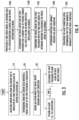
- FIG. 3 a flowchart shows details of a method of detecting a travel intent of the first passenger 210A.
- the system 101 is configured for receiving sensor data 240 from the sensor 230 that is indicative of the first passenger 210A calling from the lobby 125A or within the elevator car 103.
- the system 101 is configured for determining from the sensor data 240 a travel intent of the first passenger 210A.
- the system 101 is configured for taking an action when the travel intent triggers an alert condition. This could include issuing an alert, e.g., to a dispatcher (block 132), or assigning the first passenger to ride alone or with multiple people (block 134).
- FIG. 4 a flowchart shows additional details of determining a travel intent of the first passenger 210A (block 120).
- the system 101 is configured for processing, by the program 200, a time series model for the first passenger 210A as training data, to thereafter identify the first passenger 210A and the travel intent of the first passenger 210A.
- a time series model for the first passenger 210A is equivalent to a list of entries such in table 1.
- the intent may be categorized as an anomaly due to repeated short usages or calls of the elevator car 103.
- the second passenger 210B registered six usages, including three round trips each spanning five minutes in a gap of fifteen minutes.
- the training data (table 1) may be used to teach the system 101 to detect when a passenger 210 has acted in such a way as to be categorized as an anomaly, which may lead to an alert condition. This is because the behavior of the second passenger 210B may be indicative of questionable acts, including, e.g., following other passengers 210.
- the system may be trained to identify an expected or anticipated intent of a passenger and thereby identify an anomaly, i.e., an action that differs from the expected or anticipated intent.
- the traffic lists for multiple passengers can be combined over time, with time as a parameter, again using Bayesian Inference.
- Bayesian Inference Such a system facilitates statistical distribution determination of elevator usage for the entire building during a typical day as well as weekend days, holidays, etc. This information could be used to pre-assign cars to runs (even purposefully skipping floors), for efficient parking, dispatching cars, etc.
- the elevator optimization is achieved by techniques for real-time solution of an optimization problem.
- the traffic lists information can also be utilized for other elevator elated applications such as elevator daily load estimation to provide one accurate energy report for future energy saving, elevator system diagnostics based on abnormal traffic list information, modernization value propositions, and so on.
- the system is configured for determining a travel intent for the first passenger 210A for a call by feeding call data to the one or more AI models.
- the call data includes one or more of boarding time for the first passenger A, boarding floor for the first passenger 210A, destination floor requested by the first passenger 210A, an observed destination (offboarding) floor for the first passenger 210A, attire worn by the first passenger 210A, gear carried by the first passenger 210A, and a number of people traveling with the first passenger. If the call data is outside of an expected range for the first passenger 210A, then an anomaly is identified.
- the travel intent could be categorized as an anomaly. If they normally wear a suit and travel during business hours, and then randomly travel during late night hours wearing a dark outfit that is not business attire, the travel intent could be categorized as an anomaly. If they normally travel alone during business hours and are randomly traveling with another person during off hours, the travel intent could be categorized as an anomaly.
- LPWAN-IOT technologies include narrowband internet of things (NB-IOT) and Category M1 internet of things (Cat Ml-IOT).
- Wireless communications for the disclosed systems may include cellular, e.g. 2G/3G/4G (etc.).
- Other wireless platforms based on RFID technologies include Near-Field-Communication (NFC), which is a set of communication protocols for low-speed communications, e.g., to exchange date between electronic devices over a short distance.
- NFC Near-Field-Communication
- NFC standards are defined by the ISO/IEC (defined below), the NFC Forum and the GSMA (Global System for Mobile Communications) group. The above is not intended on limiting the scope of applicable wireless technologies.
- the onboard interface may have additional elements, which are omitted for simplicity, such as controllers, buffers (caches), drivers, repeaters, and receivers to enable electronic communications.
- the memory may execute programs, access data, or lookup charts, or a combination of each, in furtherance of its processing, all of which may be stored in advance or received during execution of its processes by other computing devices, e.g., via a cloud service or other network connection identified herein with other processors.
- Embodiments can also be in the form of computer program code, for example, whether stored in a storage medium, loaded into and/or executed by a computer, or transmitted over some transmission medium, such as over electrical wiring or cabling, through fiber optics, or via electromagnetic radiation, wherein, when the computer program code is loaded into and executed by a computer, the computer becomes a device for practicing the exemplary embodiments.
- the computer program code segments configure the microprocessor to create specific logic circuits.
Landscapes
- Engineering & Computer Science (AREA)
- General Engineering & Computer Science (AREA)
- Theoretical Computer Science (AREA)
- Physics & Mathematics (AREA)
- Data Mining & Analysis (AREA)
- Evolutionary Computation (AREA)
- Computational Linguistics (AREA)
- Computing Systems (AREA)
- General Physics & Mathematics (AREA)
- Mathematical Physics (AREA)
- Software Systems (AREA)
- Artificial Intelligence (AREA)
- Indicating And Signalling Devices For Elevators (AREA)
Applications Claiming Priority (1)
| Application Number | Priority Date | Filing Date | Title |
|---|---|---|---|
| US18/481,491 US20250115461A1 (en) | 2023-10-05 | 2023-10-05 | System and method for determining a travel intent of an elevator passenger and providing responsive alerts |
Publications (1)
| Publication Number | Publication Date |
|---|---|
| EP4534464A1 true EP4534464A1 (de) | 2025-04-09 |
Family
ID=92973315
Family Applications (1)
| Application Number | Title | Priority Date | Filing Date |
|---|---|---|---|
| EP24204127.5A Pending EP4534464A1 (de) | 2023-10-05 | 2024-10-02 | System und verfahren zur bestimmung einer reiseabsicht eines aufzugspassagierens und zur bereitstellung von reagierenden alarmen |
Country Status (3)
| Country | Link |
|---|---|
| US (1) | US20250115461A1 (de) |
| EP (1) | EP4534464A1 (de) |
| CN (1) | CN119774394A (de) |
Citations (6)
| Publication number | Priority date | Publication date | Assignee | Title |
|---|---|---|---|---|
| US4839631A (en) * | 1985-05-14 | 1989-06-13 | Mitsubishi Denki Kabushiki Kaisha | Monitor control apparatus |
| WO2006114956A1 (ja) * | 2005-04-20 | 2006-11-02 | Mitsubishi Denki Kabushiki Kaisha | エレベーター防犯運転装置 |
| CN101221621B (zh) * | 2007-01-12 | 2013-06-05 | 国际商业机器公司 | 警告监督用户受监视用户的行为的方法和系统 |
| EP3421401B1 (de) * | 2017-05-19 | 2021-04-21 | Otis Elevator Company | Aufzugssystem und verfahren zur absichtsableitung für ein aufzugssystem |
| US20220242693A1 (en) * | 2021-02-02 | 2022-08-04 | Ahmad Saleh | Smart access control system and device for elevators |
| US11472662B2 (en) * | 2020-07-15 | 2022-10-18 | Leandre Adifon | Systems and methods for operation of elevators and other devices |
-
2023
- 2023-10-05 US US18/481,491 patent/US20250115461A1/en active Pending
-
2024
- 2024-09-26 CN CN202411350272.4A patent/CN119774394A/zh active Pending
- 2024-10-02 EP EP24204127.5A patent/EP4534464A1/de active Pending
Patent Citations (6)
| Publication number | Priority date | Publication date | Assignee | Title |
|---|---|---|---|---|
| US4839631A (en) * | 1985-05-14 | 1989-06-13 | Mitsubishi Denki Kabushiki Kaisha | Monitor control apparatus |
| WO2006114956A1 (ja) * | 2005-04-20 | 2006-11-02 | Mitsubishi Denki Kabushiki Kaisha | エレベーター防犯運転装置 |
| CN101221621B (zh) * | 2007-01-12 | 2013-06-05 | 国际商业机器公司 | 警告监督用户受监视用户的行为的方法和系统 |
| EP3421401B1 (de) * | 2017-05-19 | 2021-04-21 | Otis Elevator Company | Aufzugssystem und verfahren zur absichtsableitung für ein aufzugssystem |
| US11472662B2 (en) * | 2020-07-15 | 2022-10-18 | Leandre Adifon | Systems and methods for operation of elevators and other devices |
| US20220242693A1 (en) * | 2021-02-02 | 2022-08-04 | Ahmad Saleh | Smart access control system and device for elevators |
Also Published As
| Publication number | Publication date |
|---|---|
| CN119774394A (zh) | 2025-04-08 |
| US20250115461A1 (en) | 2025-04-10 |
Similar Documents
| Publication | Publication Date | Title |
|---|---|---|
| US12589971B2 (en) | System and method for dynamically modifying a capacity limit of an elevator car | |
| EP4545467A2 (de) | Verfahren und system zur bereitstellung von kommunikationsdiensten für einen aufzugspassagier | |
| US20250115461A1 (en) | System and method for determining a travel intent of an elevator passenger and providing responsive alerts | |
| EP4382468B1 (de) | Aufzugssystem mit konfiguration zur durchführung einer selbstdiagnose und verfahren zum betrieb des aufzugssystems | |
| US20210284504A1 (en) | Specialized, personalized & enhanced elevator calling for robots & co-bots | |
| US12540053B2 (en) | Elevator system with cabin divider | |
| CN116238977B (zh) | 被配置用于对其外部表面执行自评估的机器人 | |
| EP4019449A1 (de) | System und verfahren zur behebung von antriebsfehlern in einem personenbeförderungssystem | |
| EP4734025A1 (de) | Verteiltes personentransportsystem mit konfiguration zur austeilung von lösungen für technische betriebsprobleme unter verwendung von natürlicher spracheingabe und angesammelten daten | |
| EP4686686A1 (de) | System und verfahren zur unterstützung eines in einer aufzugsbank erfassten fahrgastes | |
| US20250326606A1 (en) | System and method of operating an elevator system to select an elevator car of a bank of elevator cars from an elevator health and usage state and a travel time to respond to a service request | |
| EP4737373A1 (de) | Verteiltes personentransportsystem mit konfiguration zur bereitstellung von lösungen für technische betriebsprobleme unter verwendung von erweiterter realität und angesammelten daten | |
| US20260008651A1 (en) | System and method for updating code in passenger conveyance systems | |
| US20260042637A1 (en) | System and method for determining a health condition of modules of a passenger conveyor system | |
| EP4737371A2 (de) | Verfahren und system zur aktualisierung von parametern einer vorrichtungssteuerung mithilfe angesammelter daten in einem cloud-system | |
| US20240409364A1 (en) | Multi-stage detection trigger for human sensing | |
| US20240409367A1 (en) | Mode specific multi-stage detection trigger for human sensing | |
| EP4527775A1 (de) | System und verfahren zur bereitstellung von geführten dienstlösungen zur behebung von komponentenfehlern in systemen zum bewegen von personen | |
| CN117755924A (zh) | 用于检测人员在井道中的位置的系统和方法 |
Legal Events
| Date | Code | Title | Description |
|---|---|---|---|
| PUAI | Public reference made under article 153(3) epc to a published international application that has entered the european phase |
Free format text: ORIGINAL CODE: 0009012 |
|
| STAA | Information on the status of an ep patent application or granted ep patent |
Free format text: STATUS: THE APPLICATION HAS BEEN PUBLISHED |
|
| AK | Designated contracting states |
Kind code of ref document: A1 Designated state(s): AL AT BE BG CH CY CZ DE DK EE ES FI FR GB GR HR HU IE IS IT LI LT LU LV MC ME MK MT NL NO PL PT RO RS SE SI SK SM TR |
|
| STAA | Information on the status of an ep patent application or granted ep patent |
Free format text: STATUS: REQUEST FOR EXAMINATION WAS MADE |
|
| 17P | Request for examination filed |
Effective date: 20251001 |