EP4534645A1 - Levure, poudre de levure et leur utilisation dans la transformation d'aliments cuits à base de blé - Google Patents
Levure, poudre de levure et leur utilisation dans la transformation d'aliments cuits à base de blé Download PDFInfo
- Publication number
- EP4534645A1 EP4534645A1 EP23904775.6A EP23904775A EP4534645A1 EP 4534645 A1 EP4534645 A1 EP 4534645A1 EP 23904775 A EP23904775 A EP 23904775A EP 4534645 A1 EP4534645 A1 EP 4534645A1
- Authority
- EP
- European Patent Office
- Prior art keywords
- microzyme
- powder
- culture
- pasta
- parts
- Prior art date
- Legal status (The legal status is an assumption and is not a legal conclusion. Google has not performed a legal analysis and makes no representation as to the accuracy of the status listed.)
- Pending
Links
Images

Classifications
-
- A—HUMAN NECESSITIES
- A21—BAKING; EDIBLE DOUGHS
- A21D—TREATMENT OF FLOUR OR DOUGH FOR BAKING, e.g. BY ADDITION OF MATERIALS; BAKING; BAKERY PRODUCTS
- A21D8/00—Methods for preparing or baking dough
- A21D8/02—Methods for preparing dough; Treating dough prior to baking
- A21D8/04—Methods for preparing dough; Treating dough prior to baking treating dough with microorganisms or enzymes
-
- A—HUMAN NECESSITIES
- A21—BAKING; EDIBLE DOUGHS
- A21D—TREATMENT OF FLOUR OR DOUGH FOR BAKING, e.g. BY ADDITION OF MATERIALS; BAKING; BAKERY PRODUCTS
- A21D8/00—Methods for preparing or baking dough
- A21D8/02—Methods for preparing dough; Treating dough prior to baking
- A21D8/04—Methods for preparing dough; Treating dough prior to baking treating dough with microorganisms or enzymes
- A21D8/042—Methods for preparing dough; Treating dough prior to baking treating dough with microorganisms or enzymes with enzymes
-
- A—HUMAN NECESSITIES
- A21—BAKING; EDIBLE DOUGHS
- A21D—TREATMENT OF FLOUR OR DOUGH FOR BAKING, e.g. BY ADDITION OF MATERIALS; BAKING; BAKERY PRODUCTS
- A21D8/00—Methods for preparing or baking dough
- A21D8/02—Methods for preparing dough; Treating dough prior to baking
- A21D8/04—Methods for preparing dough; Treating dough prior to baking treating dough with microorganisms or enzymes
- A21D8/047—Methods for preparing dough; Treating dough prior to baking treating dough with microorganisms or enzymes with yeasts
-
- A—HUMAN NECESSITIES
- A23—FOODS OR FOODSTUFFS; TREATMENT THEREOF, NOT COVERED BY OTHER CLASSES
- A23L—FOODS, FOODSTUFFS OR NON-ALCOHOLIC BEVERAGES, NOT OTHERWISE PROVIDED FOR; PREPARATION OR TREATMENT THEREOF
- A23L7/00—Cereal-derived products; Malt products; Preparation or treatment thereof
- A23L7/10—Cereal-derived products
- A23L7/104—Fermentation of farinaceous cereal or cereal material; Addition of enzymes or microorganisms
-
- A—HUMAN NECESSITIES
- A23—FOODS OR FOODSTUFFS; TREATMENT THEREOF, NOT COVERED BY OTHER CLASSES
- A23L—FOODS, FOODSTUFFS OR NON-ALCOHOLIC BEVERAGES, NOT OTHERWISE PROVIDED FOR; PREPARATION OR TREATMENT THEREOF
- A23L7/00—Cereal-derived products; Malt products; Preparation or treatment thereof
- A23L7/10—Cereal-derived products
- A23L7/104—Fermentation of farinaceous cereal or cereal material; Addition of enzymes or microorganisms
- A23L7/107—Addition or treatment with enzymes not combined with fermentation with microorganisms
-
- A—HUMAN NECESSITIES
- A23—FOODS OR FOODSTUFFS; TREATMENT THEREOF, NOT COVERED BY OTHER CLASSES
- A23L—FOODS, FOODSTUFFS OR NON-ALCOHOLIC BEVERAGES, NOT OTHERWISE PROVIDED FOR; PREPARATION OR TREATMENT THEREOF
- A23L7/00—Cereal-derived products; Malt products; Preparation or treatment thereof
- A23L7/10—Cereal-derived products
- A23L7/109—Types of pasta, e.g. macaroni or noodles
-
- C—CHEMISTRY; METALLURGY
- C12—BIOCHEMISTRY; BEER; SPIRITS; WINE; VINEGAR; MICROBIOLOGY; ENZYMOLOGY; MUTATION OR GENETIC ENGINEERING
- C12N—MICROORGANISMS OR ENZYMES; COMPOSITIONS THEREOF; PROPAGATING, PRESERVING, OR MAINTAINING MICROORGANISMS; MUTATION OR GENETIC ENGINEERING; CULTURE MEDIA
- C12N1/00—Microorganisms; Compositions thereof; Processes of propagating, maintaining or preserving microorganisms or compositions thereof; Processes of preparing or isolating a composition containing a microorganism; Culture media therefor
- C12N1/04—Preserving or maintaining viable microorganisms
-
- C—CHEMISTRY; METALLURGY
- C12—BIOCHEMISTRY; BEER; SPIRITS; WINE; VINEGAR; MICROBIOLOGY; ENZYMOLOGY; MUTATION OR GENETIC ENGINEERING
- C12N—MICROORGANISMS OR ENZYMES; COMPOSITIONS THEREOF; PROPAGATING, PRESERVING, OR MAINTAINING MICROORGANISMS; MUTATION OR GENETIC ENGINEERING; CULTURE MEDIA
- C12N1/00—Microorganisms; Compositions thereof; Processes of propagating, maintaining or preserving microorganisms or compositions thereof; Processes of preparing or isolating a composition containing a microorganism; Culture media therefor
- C12N1/14—Fungi; Culture media therefor
- C12N1/16—Yeasts; Culture media therefor
-
- C—CHEMISTRY; METALLURGY
- C12—BIOCHEMISTRY; BEER; SPIRITS; WINE; VINEGAR; MICROBIOLOGY; ENZYMOLOGY; MUTATION OR GENETIC ENGINEERING
- C12N—MICROORGANISMS OR ENZYMES; COMPOSITIONS THEREOF; PROPAGATING, PRESERVING, OR MAINTAINING MICROORGANISMS; MUTATION OR GENETIC ENGINEERING; CULTURE MEDIA
- C12N1/00—Microorganisms; Compositions thereof; Processes of propagating, maintaining or preserving microorganisms or compositions thereof; Processes of preparing or isolating a composition containing a microorganism; Culture media therefor
- C12N1/14—Fungi; Culture media therefor
- C12N1/16—Yeasts; Culture media therefor
- C12N1/18—Baker's yeast; Brewer's yeast
- C12N1/185—Saccharomyces isolates
-
- C—CHEMISTRY; METALLURGY
- C12—BIOCHEMISTRY; BEER; SPIRITS; WINE; VINEGAR; MICROBIOLOGY; ENZYMOLOGY; MUTATION OR GENETIC ENGINEERING
- C12R—INDEXING SCHEME ASSOCIATED WITH SUBCLASSES C12C - C12Q, RELATING TO MICROORGANISMS
- C12R2001/00—Microorganisms ; Processes using microorganisms
- C12R2001/645—Fungi ; Processes using fungi
-
- C—CHEMISTRY; METALLURGY
- C12—BIOCHEMISTRY; BEER; SPIRITS; WINE; VINEGAR; MICROBIOLOGY; ENZYMOLOGY; MUTATION OR GENETIC ENGINEERING
- C12R—INDEXING SCHEME ASSOCIATED WITH SUBCLASSES C12C - C12Q, RELATING TO MICROORGANISMS
- C12R2001/00—Microorganisms ; Processes using microorganisms
- C12R2001/645—Fungi ; Processes using fungi
- C12R2001/85—Saccharomyces
Definitions
- the present invention belongs to the technical field of microorganisms, and particularly relates to a microzyme, a microzyme powder and an application thereof in pasta processing.
- a second technical solution of the present invention is realized as follows: a microzyme powder prepared by the microzyme is provided; the microzyme powder is obtained by mixing, freeze-drying and grinding a microzyme culture, skim milk powder and sorbitan monostearate; 60 g-80 g of the skim milk powder and 9 g-10 g of the sorbitan monostearate are added to each kilogram of the microzyme culture;
- the microzyme culture is cultured from the microzyme.
- a third technical solution of the present invention is realized as follows: an application of the microzyme powder in pasta processing is provided.
- malt extract medium per liter 130.0 g of malt extract powder and 0.1 g of chloramphenicol.
- sample homogenate 1 mL is absorbed respectively and added into two plates, and 20 mL of potato dextrose agar cooled to 46°C is measured and injected into plates. After cooling and solidification, the plates are incubated in a fungus incubator at 28°C for five days.
- the colony morphology is observed and single colonies are selected therefrom.
- the selected single colonies are continuously cultured on potato dextrose agar plates with stripes, and then the morphology of the single colonies is observed until different single strains are isolated.
- the single strains obtained in 4) are selected and inoculated into the malt extract medium of each test tube, and a breathable filtration membrane is added to each test tube for sealing.
- the single strains are subjected to shaking culture at 30 ⁇ 1°C and rotating speed of 160 r/min for 72 h. The turbidity rate and gas production of the strain growth are observed. The strains with fast turbidity rate and no gas production are selected.
- the anaerogenic strain screened in 5) is diluted to sample homogenate with 10 6 gradient by 10-fold increase.
- 1 mL of sample homogenate is absorbed into two sterile plates respectively, and 20 mL of potato dextrose agar cooled to 46°C is measured and injected into plates. After cooling and solidification, the plates are incubated in a fungus incubator at 28°C for five days. The colony morphology is observed, and medium and large single colonies with smooth surfaces and neat edges are selected.
- the above medium and large single colonies are inoculated into the malt extract medium, and subjected to shaking culture at 30 ⁇ 1°C and rotating speed of 160 r/min for 72 h to obtain a bacteria solution.
- the yeast strains that do not produce gas or alcohol and the yeast strains that produce gas and alcohol obtained in the above process are simultaneously inoculated into the malt extract medium, and the reproduction and metabolism are observed. It is found that the yeast strains that do not produce gas or alcohol make the malt extract medium more viscous and have a rose flavor.
- a small amount of malt extract medium suspension is added to the yeast strains that do not produce gas or alcohol, and the suspension is poured into the malt extract medium in the triangular flask, sealed with a breathable filtration membrane, and subjected to shaking culture at 28 ⁇ 1°C and a rotating speed of 120 r/min for 48 h.
- CDLB-YE05 Kazachstania servazzii is inoculated on a potato dextrose agar plate and cultured at 28°C for 5 days. The colony morphology is observed. As shown in Fig. 1 , the colony of CDLB-YE05 Kazachstania servazzii is milky white, round, smooth in surface, opaque, non-reflective and neat in edges.
- CDLB-YE05 Kazachstania servazzii has a genome, and the total length of a genome sequence is 13,468,544 bp.
- 5,415 genes are included, GC content accounts for 34.25%, gene length accounts for 66.81% of the total length of the genome, and 6,260 exons account for 64.51% of the total length of the genome.
- 845 introns account for 2.31% of the total length of the genome.
- 1,046 reads of various types of non-coding RNA (ncRNA) copies account for 0.8106% of the total length of the genome, and 2,034,046 bp of various types of repeated sequences account for 15.1022% of the total length of the genome.
- ncRNA non-coding RNA
- Single colonies of CDLB-YE05 Kazachstania servazzii are selected by an inoculating loop in a sterile environment and inoculated into 250 mL of sterile wort. After uniform oscillation, the single colonies are expanded at a homothermal condition of 28 ⁇ 1°C for 48 h, and wort is selected for microscopy. The generation ofcleistothecia and the distribution of the colonies are observed in the colony morphology. If the visual field is full of ascospheric yeast, the expansion is successful; otherwise, the culture is continued and microscopy is performed every 2 h until the expansion is successful.
- skim milk powder In the sterile environment, 17.5 g of skim milk powder is added into 250 mL of successfully expanded strain solution, mixed evenly and then freeze-dried. Freeze-dried powder is taken to detect the colony number of CDLB-YE05 Kazachstania servazzii greater than 10 7 CFU as a preservation basis.
- the freeze-dried powder of CDLB-YE05 Kazachstania servazzii is subpackaged into freeze-storage tubes with 0.1 g per tube, and then placed in vacuum packaging bags for vacuum sealing. After labeling, the freeze-dried powder is preserved at ultra low temperature of -80°C.
- CDLB-YE05 Kazachstania servazzii is preserved at Institute of Microbiology, Chinese Academy of Sciences on July 17, 2023 with a preservation number of CGMCC NO.27948 and a preservation address of Building 3, Courtyard 1, Beichen West Road, Chaoyang District, Beijing.
- the experimental sample is diluted into different gradients.
- the absorbance is measured at 490 nm.
- the concentrations of polysaccharide compounds in different experimental samples are calculated according to a glucose standard curve and a regression equation. Detection results are shown in Fig. 3 .
- CDLB-YE05 Kazachstania servazzii can produce more polysaccharide compounds when fermentation in the malt extract medium.
- microzyme powder prepared in embodiment 3 and 1 kg of flour are weighed; and 300 g of water, 1.5 g of edible salt and 1.5 g of edible alkali are added, kneaded and proofed at 20°C-26°C for 4 h and 27°C-30°C for 3 h, respectively. After processing the proofed dough into noodles, the tensile breaking force of cooked noodles is tested.
- Table 3 Selected Microzyme Species Serial No. Species Names Source 1 Microzyme powder Shenzhen Peptide Biotechnology Co., Ltd. 2 Active dry yeast (high sugar type) Angel Yeast Co., Ltd. 3 Active dry yeast (low sugar type) Angel Yeast Co., Ltd. 4 Saccharomyces ellipsoideus Angel Yeast Co., Ltd.
- microzyme powder prepared in embodiment 3 active dry yeast (high sugar type), active dry yeast (low sugar type) and Saccharomyces ellipsoideus are weighed respectively, inoculated into 10 mL of malt extract medium according to the inoculation amount of 0.1% (w/v), and subjected to aerobic fermentation at 30°C for 24 h.
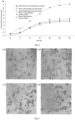
- FIG. 4 Microscopy is performed on four activated yeast strains, as shown in Fig. 4 .
- Fig. 4 (a) is the colony morphology of the microzyme powder, (b) is the colony morphology of active dry yeast (high sugar type), (c) is the colony morphology of active dry yeast (low sugar type), and (d) is the colony morphology of Saccharomyces ellipsoideus.
- the colony number in the activated different yeast strain solutions is uniformly adjusted, and specific steps are as follows: A spectrophotometer is zeroed by fresh wort to determine the OD600 value of different strain solutions, the fresh wort is used for gradual dilution, the OD600 value is adjusted to 0.5, and the corresponding strain solution concentration is about 10 7 CFU/mL.
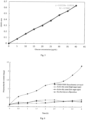
- Standard glucose 50 mg is weighed into a volumetric flask; an appropriate amount of distilled water is added to a scale of 500 mL; the solution is shaken well to prepare a standard glucose solution of 100 ⁇ g/mL; then the standard glucose solution, the distilled water, 5% phenol solution and concentrated sulfuric acid are added as shown in Table 6, shaken well, heated in a boiling water bath for 30 min, taken out, shaken well, cooled and placed at room temperature for 20 min. The absorbance is measured at 490 nm.
- the dialysate is discarded; the solution in the dialysis bag is transferred to a 100 mL volumetric flask; and water is added to a constant volume to obtain an experimental sample.
- the experimental sample prepared in 5.4 is taken and diluted into different gradients. The absorbance is measured at 490 nm. The concentrations of polysaccharide compounds in the experimental samples are calculated with reference to a glucose standard curve and a regression equation. Results are shown in Fig. 6 .
- the microzyme powder prepared in embodiment 3 is added, the content of polysaccharide produced by fermentation in the dough is gradually increased with the extension of fermentation time. Since the content of polysaccharide is directly proportional to the viscosity of the noodles, the tensile breaking force of the noodles is increased and the noodles are more tenacious.
- the doughs of different treatment groups after fermentation for 4 are rolled, compounded and slivered according to a unified standard.
- the cross-section size of the noodles is 3.5 mm*3.5 mm.
- the noodles are boiled for 150s and then cooled with cold water.
- the fixed length of both ends of the noodles is 10 cm.
- the tensile breaking force value of the noodles when pulled off is measured with a tensioner.
- Different treatment groups are measured for 35 times respectively, and the original data is recorded, as shown in Table 8.
- the average value of the remaining data after the highest and lowest values are removed from each group is calculated, as shown in Table 9.
- microzyme powder provided by the present invention produces a large number of polysaccharide compounds in the metabolic process. Since the content of polysaccharide compounds in the dough is directly proportional to the viscosity, addition of the above microzyme powder in pasta processing can improve the tenacity and taste of pasta.
Landscapes
- Life Sciences & Earth Sciences (AREA)
- Engineering & Computer Science (AREA)
- Health & Medical Sciences (AREA)
- Chemical & Material Sciences (AREA)
- Microbiology (AREA)
- Biotechnology (AREA)
- Mycology (AREA)
- Genetics & Genomics (AREA)
- Wood Science & Technology (AREA)
- Food Science & Technology (AREA)
- Bioinformatics & Cheminformatics (AREA)
- Organic Chemistry (AREA)
- Zoology (AREA)
- Biochemistry (AREA)
- Nutrition Science (AREA)
- Medicinal Chemistry (AREA)
- Tropical Medicine & Parasitology (AREA)
- General Engineering & Computer Science (AREA)
- General Health & Medical Sciences (AREA)
- Biomedical Technology (AREA)
- Polymers & Plastics (AREA)
- Virology (AREA)
- Botany (AREA)
- Micro-Organisms Or Cultivation Processes Thereof (AREA)
- Bakery Products And Manufacturing Methods Therefor (AREA)
- Noodles (AREA)
- Cereal-Derived Products (AREA)
Applications Claiming Priority (2)
| Application Number | Priority Date | Filing Date | Title |
|---|---|---|---|
| CN202311065243.9A CN117229930B (zh) | 2023-08-23 | 2023-08-23 | 一种酵母菌、酵母菌粉及其在面食加工中的应用 |
| PCT/CN2023/128416 WO2025039369A1 (fr) | 2023-08-23 | 2023-10-31 | Levure, poudre de levure et leur utilisation dans la transformation d'aliments cuits à base de blé |
Publications (2)
| Publication Number | Publication Date |
|---|---|
| EP4534645A1 true EP4534645A1 (fr) | 2025-04-09 |
| EP4534645A4 EP4534645A4 (fr) | 2026-04-29 |
Family
ID=94689999
Family Applications (1)
| Application Number | Title | Priority Date | Filing Date |
|---|---|---|---|
| EP23904775.6A Pending EP4534645A4 (fr) | 2023-08-23 | 2023-10-31 | Levure, poudre de levure et leur utilisation dans la transformation d'aliments cuits à base de blé |
Country Status (3)
| Country | Link |
|---|---|
| US (1) | US20250064067A1 (fr) |
| EP (1) | EP4534645A4 (fr) |
| JP (1) | JP7854220B2 (fr) |
Family Cites Families (4)
| Publication number | Priority date | Publication date | Assignee | Title |
|---|---|---|---|---|
| US3968258A (en) * | 1975-06-09 | 1976-07-06 | Standard Oil Company | Process for the production of high-protein pasta utilizing dried yeast and the resulting product |
| WO2020176985A1 (fr) | 2019-03-04 | 2020-09-10 | The Governors Of The University Of Alberta | Procédé de production de kéfir traditionnel |
| KR102177262B1 (ko) * | 2019-03-29 | 2020-11-10 | 단국대학교 천안캠퍼스 산학협력단 | 저온 내성을 갖는 카자흐스타니아 세르바찌 yog-07 균주 및 이의 용도 |
| CA3143674A1 (fr) * | 2021-12-22 | 2023-06-22 | Kaslo Sourdough Inc. | Cultures de levain de pates et methodes de production |
-
2023
- 2023-10-31 EP EP23904775.6A patent/EP4534645A4/fr active Pending
- 2023-10-31 JP JP2024542038A patent/JP7854220B2/ja active Active
-
2024
- 2024-07-17 US US18/775,163 patent/US20250064067A1/en active Pending
Also Published As
| Publication number | Publication date |
|---|---|
| US20250064067A1 (en) | 2025-02-27 |
| EP4534645A4 (fr) | 2026-04-29 |
| JP2025530048A (ja) | 2025-09-11 |
| JP7854220B2 (ja) | 2026-05-01 |
Similar Documents
| Publication | Publication Date | Title |
|---|---|---|
| CN108118002B (zh) | 一种分枝横梗霉及其应用 | |
| CN116463246B (zh) | 一种用于提高烟草浓缩液香气的克雷伯氏菌及其应用 | |
| JP7259050B2 (ja) | ナットウキナーゼの製造菌株およびその製造方法 | |
| CN113736713A (zh) | 食窦魏斯氏乳酸菌nc516·11及其胞外多糖和应用 | |
| CN114365809A (zh) | 一种富含皂苷的人参发酵饮料及其制备方法 | |
| CN106222094A (zh) | 富产琥珀酸的酱油酿造用菌株及其诱变选育方法和应用 | |
| CN117683694A (zh) | 枯草芽孢杆菌新菌株、筛选方法及应用 | |
| CN113801811A (zh) | 一株产乙偶姻贝莱斯芽孢杆菌及其在麸醋发酵中的应用 | |
| CN105829533A (zh) | 对不甜或微甜生面团有效的新的制面包酵母菌株 | |
| CN117229930B (zh) | 一种酵母菌、酵母菌粉及其在面食加工中的应用 | |
| CN109287784B (zh) | 一种青砖茶快速渥堆发酵的方法 | |
| EP4534645A1 (fr) | Levure, poudre de levure et leur utilisation dans la transformation d'aliments cuits à base de blé | |
| CN109055273B (zh) | 一种青砖茶渥堆发酵菌株组合物及应用 | |
| CN110923163A (zh) | 一株甲基营养型芽孢杆菌及其应用 | |
| CN115927022A (zh) | 一种高产酯类的耐盐酵母菌、菌剂及其应用 | |
| CN112410263B (zh) | 古代良芽孢杆菌新菌种及其应用 | |
| CN110591852B (zh) | 谢瓦散囊菌在白酒窖池窖泥微生物复壮中的应用及方法 | |
| CN117187109B (zh) | 一种尼泊尔葡萄球菌及其应用 | |
| CN116064280B (zh) | 一株暹罗芽孢杆菌及其应用 | |
| CN113444652B (zh) | 米曲霉菌株za185及其应用 | |
| CN112391309B (zh) | 北工商游动微菌新菌种及其应用 | |
| CN114736755A (zh) | 一种多菌种复合稠酒小曲的制备方法 | |
| JP2882830B2 (ja) | 変異酵母及びその利用 | |
| CN113151111A (zh) | 肉葡萄球菌ief1018及其应用 | |
| Wu et al. | Brettanomyces as a starter culture in rice-steamed sponge cake: A traditional fermented food in China |
Legal Events
| Date | Code | Title | Description |
|---|---|---|---|
| STAA | Information on the status of an ep patent application or granted ep patent |
Free format text: STATUS: UNKNOWN |
|
| STAA | Information on the status of an ep patent application or granted ep patent |
Free format text: STATUS: THE INTERNATIONAL PUBLICATION HAS BEEN MADE |
|
| PUAI | Public reference made under article 153(3) epc to a published international application that has entered the european phase |
Free format text: ORIGINAL CODE: 0009012 |
|
| STAA | Information on the status of an ep patent application or granted ep patent |
Free format text: STATUS: REQUEST FOR EXAMINATION WAS MADE |
|
| 17P | Request for examination filed |
Effective date: 20240625 |
|
| AK | Designated contracting states |
Kind code of ref document: A1 Designated state(s): AL AT BE BG CH CY CZ DE DK EE ES FI FR GB GR HR HU IE IS IT LI LT LU LV MC ME MK MT NL NO PL PT RO RS SE SI SK SM TR |
|
| REG | Reference to a national code |
Ref country code: DE Ref legal event code: R079 Free format text: PREVIOUS MAIN CLASS: C12N0001160000 Ipc: A23L0007104000 |
|
| A4 | Supplementary search report drawn up and despatched |
Effective date: 20260326 |
|
| RIC1 | Information provided on ipc code assigned before grant |
Ipc: A23L 7/104 20160101AFI20260320BHEP Ipc: C12N 1/16 20060101ALI20260320BHEP Ipc: A21D 8/04 20060101ALI20260320BHEP Ipc: C12N 1/04 20060101ALI20260320BHEP Ipc: C12R 1/645 20060101ALI20260320BHEP Ipc: A23L 7/109 20160101ALI20260320BHEP Ipc: C12N 1/185 20260101ALI20260320BHEP |