EP4534660A1 - Protéine cas12f modifiée avec une gamme de cibles élargie et ses utilisations - Google Patents
Protéine cas12f modifiée avec une gamme de cibles élargie et ses utilisations Download PDFInfo
- Publication number
- EP4534660A1 EP4534660A1 EP23811999.4A EP23811999A EP4534660A1 EP 4534660 A1 EP4534660 A1 EP 4534660A1 EP 23811999 A EP23811999 A EP 23811999A EP 4534660 A1 EP4534660 A1 EP 4534660A1
- Authority
- EP
- European Patent Office
- Prior art keywords
- sequence
- seq
- engineered
- nucleotide sequence
- protein
- Prior art date
- Legal status (The legal status is an assumption and is not a legal conclusion. Google has not performed a legal analysis and makes no representation as to the accuracy of the status listed.)
- Pending
Links
Images



























Classifications
-
- C—CHEMISTRY; METALLURGY
- C12—BIOCHEMISTRY; BEER; SPIRITS; WINE; VINEGAR; MICROBIOLOGY; ENZYMOLOGY; MUTATION OR GENETIC ENGINEERING
- C12N—MICROORGANISMS OR ENZYMES; COMPOSITIONS THEREOF; PROPAGATING, PRESERVING, OR MAINTAINING MICROORGANISMS; MUTATION OR GENETIC ENGINEERING; CULTURE MEDIA
- C12N9/00—Enzymes; Proenzymes; Compositions thereof; Processes for preparing, activating, inhibiting, separating or purifying enzymes
- C12N9/14—Hydrolases (3)
- C12N9/16—Hydrolases (3) acting on ester bonds (3.1)
- C12N9/22—Ribonucleases [RNase]; Deoxyribonucleases [DNase]
-
- C—CHEMISTRY; METALLURGY
- C12—BIOCHEMISTRY; BEER; SPIRITS; WINE; VINEGAR; MICROBIOLOGY; ENZYMOLOGY; MUTATION OR GENETIC ENGINEERING
- C12N—MICROORGANISMS OR ENZYMES; COMPOSITIONS THEREOF; PROPAGATING, PRESERVING, OR MAINTAINING MICROORGANISMS; MUTATION OR GENETIC ENGINEERING; CULTURE MEDIA
- C12N15/00—Mutation or genetic engineering; DNA or RNA concerning genetic engineering, vectors, e.g. plasmids, or their isolation, preparation or purification; Use of hosts therefor
- C12N15/09—Recombinant DNA-technology
- C12N15/10—Processes for the isolation, preparation or purification of DNA or RNA
- C12N15/102—Mutagenizing nucleic acids
-
- C—CHEMISTRY; METALLURGY
- C12—BIOCHEMISTRY; BEER; SPIRITS; WINE; VINEGAR; MICROBIOLOGY; ENZYMOLOGY; MUTATION OR GENETIC ENGINEERING
- C12N—MICROORGANISMS OR ENZYMES; COMPOSITIONS THEREOF; PROPAGATING, PRESERVING, OR MAINTAINING MICROORGANISMS; MUTATION OR GENETIC ENGINEERING; CULTURE MEDIA
- C12N15/00—Mutation or genetic engineering; DNA or RNA concerning genetic engineering, vectors, e.g. plasmids, or their isolation, preparation or purification; Use of hosts therefor
- C12N15/09—Recombinant DNA-technology
- C12N15/11—DNA or RNA fragments; Modified forms thereof; Non-coding nucleic acids having a biological activity
- C12N15/113—Non-coding nucleic acids modulating the expression of genes, e.g. antisense oligonucleotides; Antisense DNA or RNA; Triplex- forming oligonucleotides; Catalytic nucleic acids, e.g. ribozymes; Nucleic acids used in co-suppression or gene silencing
-
- C—CHEMISTRY; METALLURGY
- C12—BIOCHEMISTRY; BEER; SPIRITS; WINE; VINEGAR; MICROBIOLOGY; ENZYMOLOGY; MUTATION OR GENETIC ENGINEERING
- C12N—MICROORGANISMS OR ENZYMES; COMPOSITIONS THEREOF; PROPAGATING, PRESERVING, OR MAINTAINING MICROORGANISMS; MUTATION OR GENETIC ENGINEERING; CULTURE MEDIA
- C12N15/00—Mutation or genetic engineering; DNA or RNA concerning genetic engineering, vectors, e.g. plasmids, or their isolation, preparation or purification; Use of hosts therefor
- C12N15/09—Recombinant DNA-technology
- C12N15/63—Introduction of foreign genetic material using vectors; Vectors; Use of hosts therefor; Regulation of expression
- C12N15/79—Vectors or expression systems specially adapted for eukaryotic hosts
- C12N15/85—Vectors or expression systems specially adapted for eukaryotic hosts for animal cells
-
- C—CHEMISTRY; METALLURGY
- C12—BIOCHEMISTRY; BEER; SPIRITS; WINE; VINEGAR; MICROBIOLOGY; ENZYMOLOGY; MUTATION OR GENETIC ENGINEERING
- C12N—MICROORGANISMS OR ENZYMES; COMPOSITIONS THEREOF; PROPAGATING, PRESERVING, OR MAINTAINING MICROORGANISMS; MUTATION OR GENETIC ENGINEERING; CULTURE MEDIA
- C12N15/00—Mutation or genetic engineering; DNA or RNA concerning genetic engineering, vectors, e.g. plasmids, or their isolation, preparation or purification; Use of hosts therefor
- C12N15/09—Recombinant DNA-technology
- C12N15/63—Introduction of foreign genetic material using vectors; Vectors; Use of hosts therefor; Regulation of expression
- C12N15/79—Vectors or expression systems specially adapted for eukaryotic hosts
- C12N15/85—Vectors or expression systems specially adapted for eukaryotic hosts for animal cells
- C12N15/86—Viral vectors
-
- C—CHEMISTRY; METALLURGY
- C12—BIOCHEMISTRY; BEER; SPIRITS; WINE; VINEGAR; MICROBIOLOGY; ENZYMOLOGY; MUTATION OR GENETIC ENGINEERING
- C12N—MICROORGANISMS OR ENZYMES; COMPOSITIONS THEREOF; PROPAGATING, PRESERVING, OR MAINTAINING MICROORGANISMS; MUTATION OR GENETIC ENGINEERING; CULTURE MEDIA
- C12N9/00—Enzymes; Proenzymes; Compositions thereof; Processes for preparing, activating, inhibiting, separating or purifying enzymes
- C12N9/10—Transferases (2.)
- C12N9/12—Transferases (2.) transferring phosphorus containing groups, e.g. kinases (2.7)
-
- C—CHEMISTRY; METALLURGY
- C12—BIOCHEMISTRY; BEER; SPIRITS; WINE; VINEGAR; MICROBIOLOGY; ENZYMOLOGY; MUTATION OR GENETIC ENGINEERING
- C12N—MICROORGANISMS OR ENZYMES; COMPOSITIONS THEREOF; PROPAGATING, PRESERVING, OR MAINTAINING MICROORGANISMS; MUTATION OR GENETIC ENGINEERING; CULTURE MEDIA
- C12N2310/00—Structure or type of the nucleic acid
- C12N2310/10—Type of nucleic acid
- C12N2310/20—Type of nucleic acid involving clustered regularly interspaced short palindromic repeats [CRISPR]
Definitions
- the present disclosure relates to an engineered Cas12 protein (for example, Cas12f protein) with an expanded targetable range and a use thereof.
- Cas12f protein for example, Cas12f protein
- Cas12f also referred to as Cas14
- Cas12j Cas12j
- type V CRISPR nucleases of class 2 have been identified from archaea and large bacteriophages (see Harrington, L. B. et al. Programmed DNA destruction by miniature CRISPR-Cas14 enzymes. Science 362, 839-842, 2018 ).
- These small CRISPR-Cas effectors consist of about 400 to 700 amino acid residues and contain a RuvC nuclease domain.
- the Cas12f effector was originally reported to exhibit only single-stranded DNA cleavage activity or extremely low indel activity in eukaryotic cells (see Karvelis, T. et al.
- the object of the present disclosure is to solve the above-mentioned problems of the prior art.
- substitution(s) may comprise one or more amino acid substitutions selected from the group consisting of following (1) to (10):
- the engineered Cas protein may recognize a PAM sequence that a wild-type Cas12f protein either cannot recognize or poorly recognizes.
- the engineered Cas protein may be an engineered Un1Cas12f1 protein or an engineered CWCas12f protein.
- the engineered Cas protein may further comprise at least one substitution selected from the group consisting of I159W and S164Y.
- a fusion protein comprising (i) the above-described engineered Cas protein, (ii) a functional domain, and optionally (iii) a linker.
- the functional domain may have deaminase activity.
- the functional domain may comprise at least one expression regulatory domain.
- a vector system comprising at least one vector that comprises: (i) a first nucleic acid construct to which a nucleotide sequence encoding the above-described engineered Cas protein is operably linked; and (ii) a second nucleic acid construct to which a nucleotide sequence encoding a guide RNA is operably linked, the guide RNA comprising a guide sequence hybridizable with a target sequence adjacent to a PAM, wherein the nucleic acid constructs (i) and (ii) are located in the same vector or different vectors.
- the guide RNA may be an engineered guide RNA.
- the wild-type Cas12f1 guide RNA may comprise tracrRNA comprising the nucleotide sequence of SEQ ID NO: 11 and crRNA comprising the nucleotide sequence of SEQ ID NO: 12.
- the engineered scaffold region may comprise a sequence having at least 80% sequence identity to a sequence represented by Formula (I): in Formula (I),
- the deletion in the nucleotide sequence of X a , the deletion in the nucleotide sequences of X b1 and X b2 , and/or the deletion in the nucleotide sequences of X c1 and X c2 may comprise deletion of one or more pairs of complementary nucleotides.
- sequence 5'-X c1 -Lk-X c2 -3' in Formula (I) may be selected from the group consisting of SEQ ID NOs: 80 to 86 and 5'-Lk-3'.
- the scaffold region may comprise an engineered tracrRNA consisting of a nucleotide sequence selected from the group consisting of SEQ ID NOs: 87 to 132 and/or an engineered crRNA consisting of a nucleotide sequence selected from the group consisting of SEQ ID NOs: 133 to 148.
- the guide RNA may comprise a scaffold region sequence consisting of a nucleotide sequence selected from the group consisting of SEQ ID NOs: 13 and 149 to 186.
- the vector may be selected from the group consisting of a retroviral (retrovirus) vector, a lentiviral (lentivirus) vector, an adenoviral (adenovirus) vector, an adeno-associated viral (adeno-associated virus) vector, a vaccinia viral (vaccinia virus) vector, a poxviral (poxvirus) vector, a herpes simplex viral (herpes simplex virus) vector, and a phagemid vector.
- the bringing-into-contact may be performed in vitro.
- A, T, C, G, and U may be appropriately interpreted as a base, a nucleoside, or a nucleotide in DNA or RNA, depending on the context.
- A, T, C, G, and U refer to a base, they may be interpreted as adenine (A), guanine (G), cytosine (C), thymine (T), or uracil (U), respectively.
- A, T, C, G and U refer to a nucleoside, they may be interpreted as adenosine (A), thymidine (T), cytidine (C), guanosine (G), or uridine (U), respectively, and when they refer to a nucleotide in a sequence, they should be interpreted as meaning a nucleotide containing each of the nucleosides.
- nucleic acid refers to polymers of deoxyribonucleotides or ribonucleotides, which is double-stranded or single-stranded form. Unless otherwise specified, it encompasses known analogues of natural nucleotides that can function in a similar manner to naturally occurring nucleotides. The term encompasses nucleic acid-like structures having synthetic backbones, as well as amplicons. Both DNA and RNA are polynucleotides.
- identity refers to the overall relatedness between polymer molecules, for example, between nucleic acid molecules (for example, DNA molecules and/or RNA molecules) and/or between polypeptide molecules.
- polymer molecules may be considered “substantially identical” to one another if their sequences have at least 50%, 55%, 60%, 65%, 70%, 75%, 80%, 85%, 90%, 95%, or 99% identity. Calculating the percent identity between two nucleic acid or polypeptide sequences may be performed, for example, by aligning the two sequences for optimal comparison purposes (for example, gaps may be introduced into one or both of the first and second sequences for optimal alignment, and non-identical sequences may be disregarded for comparison purposes).
- fusion protein refers to a protein formed by joining two or more originally distinct proteins, or portions thereof.
- a linker or spacer will be present between the respective proteins.
- the linker may be a peptide linker comprising from 2 to 20 amino acids.
- the linker may be, for example, GGGS, GGGGS, or two, three, four or more repeats thereof.
- CRISPR/Cas system refers to a system capable of interact with a target gene or a target nucleic acid and/or altering (for example, cleaving, editing, repairing, and/or restoring) a target site, wherein the system comprises a Cas protein and/or components related to a nucleic acid-targeting molecule (for example, a guide RNA).
- target site refers to a nucleotide sequence that defines a portion of a nucleic acid to which a binding molecule will bind, if conditions sufficient for binding exist.
- the target site is a nucleotide sequence to which the Cas protein described herein binds and/or is altered by such a Cas protein.
- the target site is a nucleotide sequence to which the guide RNA described herein binds.
- the target site may be single-stranded or double-stranded.
- fewer than 50%, 40%, 30%, 20%, 15%, 10%, 9%, 8%, 7%, 6%, 5%, 4%, 3%, or 2% of the residues in the variant are substituted as compared to the parent.
- the parent or reference polypeptide is one found in nature.
- the present disclosure relates to an engineered Cas protein, specifically an engineered Cas12 protein, and more specifically an engineered Cas12f protein, which has been engineered to have at least partially altered PAM recognition specificity or to modify an editing window of a PAM-proximal region.
- the present inventors have surprisingly found that Cas12f can be mutated to have altered PAM recognition.
- the engineered Cas12f proteins that is, Cas12f protein variants
- the engineered Cas12f proteins as disclosed herein can recognize PAM sequences that are different from those recognized by the corresponding wild-type protein.
- Cas12f variants with an altered editing window for PAM-proximal regions are useful for inducing precise base substitutions, for example, in a form fused with another functional domain such as a base editing domain.
- an engineered Cas protein specifically an engineered Cas12 protein, and more specifically an engineered Cas12f protein, comprising at least one mutation.
- the engineered Cas protein as disclosed herein has a significantly expanded range of accessible target sites compared to the wild-type Cas12f protein.
- the Cas12f protein which belongs to class 2, type V, is one of the effector proteins named Cas14 in previous studies (see Harrington et al., Science, 362, 839-842, 2018 ), and is also referred to as Cas14a1 protein.
- a Cas12f protein may form a complex with a guide RNA in the form of a dimer of two Cas12f protein molecules, and that all or part of the domain in Cas12f protein recognizes a specific part in the scaffold region of Cas12f guide RNA to form the CRISPR/Cas12f1 complex (see Takeda et al., Structure of the miniature type V-F CRISPR-Cas effector enzyme, Molecular Cell 81, 1-13, 2021 and Xiao et al., Structural basis for the dimerization-dependent CRISPR-Cas12f nuclease, bioRxiv, 2020 ).
- the Cas12f protein may be derived from a Cas14 family (see Harrington et al., Science 362, 839-842, 2018 ; and US 2020/0172886 A1 , the entire contents of which are incorporated herein by reference).
- the Cas12f protein may be a Cas14a1 or Un1Cas12f1 protein derived from an uncultured archaeon (see Harrington et al., Science 362, 839-842 (2018 ); and US 2020/0172886 A1 , the entire contents of which are incorporated herein by reference).
- CWCas12f has excellent endonuclease activity of recognizing a target nucleic acid or a target gene and cleaving a double-stranded DNA of the target site while having a similar size to a Cas12f1 protein, which belongs to the group with the smallest molecular weight among nucleic acid degrading proteins, and have successfully constructed an engineered guide RNA that exhibits excellent gene editing activity when used together with the CWCas12f.
- the engineered guide RNA described below.
- the wild-type Cas12f protein may comprise or consist of the amino acid sequence of SEQ ID NO: 1 (see Table 2).
- the Cas12f1 protein may be any protein that may be classified as an equivalent protein based on its function, structure, and/or sequence similarity in the relevant technical field, even if it has a different name.
- a variant of the wild-type Cas12f protein may comprise at least one mutation for expanding the genomic targeting range as disclosed herein.
- the engineered Cas protein may comprise amino acid substitution(s) at one or more amino acid residues selected from the group consisting of amino acids at positions 159, 164, 170, 174, 184, 188, 191, 225, 230, and 272 with respect to SEQ ID NO: 1 or at amino acid residue(s) corresponding thereto, wherein the engineered Cas protein may comprise an amino acid sequence having at least 80%, at least 85%, at least 86%, at least 87%, at least 88%, at least 89%, at least 90%, at least 91%, at least 92%, at least 93%, at least 94%, at least 95%, at least 96%, at least 97%, or at least 98% sequence identity to the sequence represented by SEQ ID NO: 1.
- SEQ ID NO: 1 means a reference sequence for describing positions where amino acid substitution occurs.
- SEQ ID NO: 5 which is the amino acid sequence of Un1Cas12f1 (a sequence having the amino acid sequence of SEQ ID NO: 1 from which 28 amino acids at the N-terminus are deleted)
- the "positions corresponding thereto” will be positions 131, 136, 142, 146, 156, 160, 163, 197, 202, 243, and 244.
- the corresponding positions may also be easily determined through sequence alignment.
- substitution positions correspond to S170, Y174, A184, S188, R191, Q225, Y230, and Q272, respectively; however, it should be understood that the amino acids corresponding to these substitution positions may differ in cases where there are conservative substitutions of amino acids or mutations thereof within a range that does not impair the function of the Cas protein.
- the substitution(s) may comprise amino acid substitution(s) at one or more amino acid residues selected from the group consisting of amino acids at positions 170, 174, 184, 188, 191, 225, 230, 271, and 272 with respect to SEQ ID NO: 1 or at amino acid residue(s) corresponding thereto, wherein the engineered Cas protein shows altered protospacer-adjacent motif (PAM) recognition specificity.
- PAM protospacer-adjacent motif
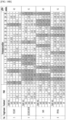
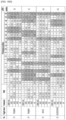
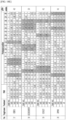
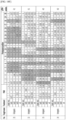
- the wild-type Cas12f1 protein shows preference for the PAM 5'-TTTR-3' (5'-TTTA-3' or 5'-TTTG-3'), whereas the variants comprising amino acid substitution(s) at one or more amino acid residues at the aforementioned positions recognize at least one PAM sequence selected from the group consisting of, for example, 5'-TVTN-3', 5'-TTVV-3', 5'-TGGG-3', and 5'-TTTN-3' (wherein N is A, T, G, or C, and V is A, G, or C) and exhibited excellent indel effects. More specifically, for the PAM sequences recognized by the variants, see Table 1.
- the substitution(s) may comprise one or more amino acid substitutions selected from the group consisting of 170C or 170T; 174H, 174A, 174E, 174K, 174N, 174R, or 174T; 184H, 184N, 184R, 184S, or 184T; 188G, 188H, 188K, 188N, 188Q, 188R, 188S, 188T, or 188V; 191G, 191H, 191K, 191Q, or 191W; 225F or 225T; 230A, 230H, 230I, 230S, or 230T; and 272C, 272K, or 272R.
- Exemplary Cas12f1 protein variants of the present disclosure exhibit the following PAM sequence preference.
- Table 1 Cas protein Type Amino acid substitution Altered PAM preference Un1Cas12f1 wild type - TTTA, TTTG CWCas12f wild type - TTTA, TTTG variant 8 S170C TTTT, TTTG, TTTA variant 9 S170T TATA, TTTA, TTTT, TTTG, TGTA, TCTA, TGGG, TTAG, TTCA, TCTG, TGTG, TGGG variant 11 Y174H TGTA, TTTG, TTTA variant 44 Y174A TGTA, TTTG, TTTA, CGAG variant 45 Y174E CGAG, TGTA, TTTG, GGCA variant 12 Y174K TGTA, TTGA, TTTG, TGGG variant 46 Y174N TGTA, TTTG, TTTA variant 47 Y174R TGTA, TT
- the substitution(s) may comprise amino acid substitution(s) at one or more amino acid residues selected from the group consisting of amino acids at positions 159 and 164 or at amino acid residue(s) corresponding thereto, wherein the engineered Cas protein has an altered editing window for PAM-proximal regions.
- the PAM-proximal region means a range that is at least 0 nucleotides away from the PAM sequence or 3 to 30 nucleotides, specifically 2 to 10 or 15 to 20 nucleotides away from the PAM sequence, but is not limited thereto.
- the term "editing window” as used herein means a range within a target sequence where the engineered Cas protein or fusion protein as disclosed herein can reach and cause alteration.
- the substitution(s) may comprise one or more amino acid substitutions selected from the group consisting of 159W and 164Y. Specifically, the substitution(s) may comprise one or more substitutions selected from the group consisting of I159W and S164Y.
- the engineered Cas protein may comprise one or more amino acid substitutions selected from the group consisting of 170C or 170T; 174H, 174A, 174E, 174K, 174N, 174R, or 174T; 184H, 184N, 184R, 184S, or 184T; 188G, 188H, 188K, 188N, 188Q, 188R, 188S, 188T, or 188V; 191G, 191H, 191K, 191Q, or 191W; 225F or 225T; 230A, 230H, 230I, 230S, or 230T; and 272K, 272C, or 272R, and may further comprise one or more amino acid substitutions selected from the group consisting of 159W and 164Y.
- the engineered Cas12f1 protein may comprise at least one (for example, one, two, or three) substitutions selected from the group consisting of S170C or S170T; Y174H, Y174A, Y174E, Y174K, Y174N, Y174R, or Y174T; A184H, A184N, A184R, A184S, or A184T; S188G, S188H, S188K, S188N, S188Q, S188R, S188S, S188T, or S188V; R191G, R191H, R191K, R191Q, or R191W; Q225F or Q225T; Y230A, Y230H, Y230I, Y230S, or Y230T; and Q272K, Q272C, or Q272R, and may further comprise one or more substitutions selected from the group consisting of I159W and S164Y.
- the engineered Cas protein may be a catalytically inactive variant (with DNA cleavage activity eliminated).
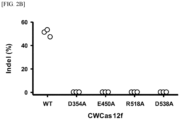
- the engineered Cas protein may be in a catalytically inactive dead form that further comprises amino acid substitution(s) at one or more amino acid residues selected from the group consisting of amino acids at positions 354, 450, 518, and 538 with respect to SEQ ID NO: 1 or at amino acid residue(s) corresponding thereto.
- the engineered Cas12f1 protein may further comprise at least one amino acid substitution selected from the group consisting of (a) 354A, 354Q, 354L, 354W, or 354V; (b) 450A, 450Q, 450L, 450W, or 450V; (c) 518A, 518Q, 518L, 518W, or 518V; and (d) 538A, 538Q, 538L, 538W, or 538V.
- the engineered Cas protein may be in a catalytically inactive dead form that further comprises at least one amino acid substitution selected from the group consisting of D354A, E450A, R518A, and D538A.
- the engineered Cas12f1 protein may further comprise modification such as deletion, insertion, substitution, or addition of at least one amino acid.
- the deletion, insertion, substitution or addition of at least one amino acid may be any mutation that affects functions such as catalytic activity, stability or the like of the Cas12f1 protein.
- the mutation may be any mutation that does not affect alteration of the PAM recognition specificity and/or the editing window for the PAM-proximal regions, provided that the deletion, insertion, substitution, or addition of at least one amino acid does not impair the function of the Cas12f1 protein in forming a complex with a guide RNA and interacting with a target gene sequence.
- the engineered Cas12f1 protein may further comprise a sequence in which at least one amino acid residue is deleted, substituted, inserted, and/or added at the C-terminus, the N-terminus, or internally within the sequence.
- the engineered Cas12f1 protein may further comprise at least one arbitrary amino acid added to the N-terminus and/or the C-terminus.
- the present inventors have confirmed that among the variants of the wild-type Cas12f1 protein with amino acids added to the N-terminus and/or C-terminus, there are variants that exhibit a function equivalent to the wild-type Cas12f1.
- Korean Patent Application Nos. 10-2021-0181875 and 10-2022-0128219 the disclosures of which are considered incorporated herein in their entirety.
- the engineered Cas protein may further comprise 1, 2, 3, 4, 5, 6, 7, 8, 9, 10, 11, 12, 13, 14, 15, 16, 17, 18, 19, 20, 21, 22, 23, 24, 25, 26, 27, 28, 29, or 30 amino acids at the N-terminus and/or C-terminus.
- the engineered Cas12f1 protein may comprise an amino acid sequence with 1 to 28 amino acids added to the N-terminus.
- the engineered Cas12f1 protein may comprise one or more amino acid substitutions for altering the PAM recognition specificity or the editing window for the PAM-proximal regions at corresponding positions in the CWCas12f-v1 protein (SEQ ID NO: 2), which further comprises 26 amino acids derived from the N-terminus of CasX at the N-terminus, the CWCas12f-v2 protein (SEQ ID NO: 3), which further comprises 28 random amino acids at the N-terminus, or the CWCas12f-v3 protein (SEQ ID NO: 4), which further comprises 26 random amino acids at the N-terminus.
- SEQ ID NO: 2 which further comprises 26 amino acids derived from the N-terminus of CasX at the N-terminus
- the CWCas12f-v2 protein SEQ ID NO: 3
- the CWCas12f-v3 protein SEQ ID NO: 4
- the specific amino acid sequences of the CWCas12f-v1 protein (SEQ ID NO: 2), the CWCas12f-v2 protein (SEQ ID NO: 3), and the CWCas12f-v3 protein (SEQ ID NO: 4) are as follows:
- the engineered Cas12f1 protein may additionally comprise 1 to 600 amino acids at the N-terminus or C-terminus.
- the added sequence of 1 to 600 amino acids may be the amino acid sequence of SEQ ID NO: 190 or SEQ ID NO: 191.
- an NLS or NES sequence may further be included between the added sequence and the Cas12f1 variant protein. For details regarding the NLS or NES, see the entire contents described below.
- the engineered Cas protein may further comprise deletion or substitution of at least one amino acid residue within a RuvC domain.
- the RuvC (or RuvC-like) domain also referred to as an endonuclease domain, comprises a catalytically active site that catalyzes nucleic acid cleavage and is therefore directly related to nucleic acid cleavage efficiency.
- the Cas12f1 protein may be engineered to exhibit equal or enhanced effects (for example, improved nucleic acid cleavage efficiency) compared to the wild-type Cas12f1 protein while retaining the same function (for example, nucleic acid cleavage function).
- the engineered Cas protein disclosed herein may be used in fusion with a functional domain having a different function or activity. Accordingly, according to another aspect of the present disclosure, there is provided a fusion protein comprising (i) the engineered Cas proteins disclosed herein and (ii) a functional domain.
- the functional domain may be, but is not limited to, a domain having nuclease activity, nickase activity, recombinase activity, deaminase activity, methyltransferase activity, methylase activity, acetylase activity, acetyltransferase activity, transcriptional activation activity, transcriptional inhibition activity, nucleic acid binding activity, or reverse transcriptase activity.
- the fusion protein when fused with a domain having deaminase activity, the fusion protein may function as a base editor.
- Adenosine deaminase for adenine base editing includes tRNA deaminase (TadA) derived from E. coli and/or variants thereof.
- the cytidine deaminase includes, but is not limited to, human AID (activation-induced cytidine deaminase), human APOBEC3G, mouse APOBEC1, APOBEC3A, APOBEC3B, or AID, and lamprey PmCDA1.
- the functional domain may comprise one or more nuclear localization signal (NLS) sequences that localize the engineered Cas12f1 protein into the nucleus.
- NLS nuclear localization signal
- one or more nuclear localization signal sequences may have a sufficient amount or activity to induce the Cas12f1 molecule to be targeted or transported into the nucleus of a eukaryotic cell (for example, a mammalian cell) in a detectable amount.
- differences in the strength of activity may result from the number of NLSs included in the Cas12f1 protein, the type of specific NLS(s) used, or a combination of these factors.
- the NLS fused to the engineered Cas12f1 protein of the present disclosure may be variously selected from about 1, 2, 3, 4, 5, 6, 7, 8, 9, or 10 or more NLSs at or near the N-terminus, about 1, 2, 3, 4, 5, 6, 7, 8, 9, or 10 or more NLSs at or near the C-terminus, or combinations thereof.
- the Cas12f1 protein may comprise 0 or at least one NLS sequence at the N-terminus and/or 0 or at least one NLS sequence at the C-terminus. When more than one NLS sequence is present, a single NLS may be present in more than one copy and each NLS sequence may be selected independently of the others such that it exists in combination with more than one other NLS present in more than one copy.
- the guide RNA disclosed herein may be an engineered guide RNA.
- the present inventors increased efficiency of the CRISPR/Cas12f1 system, which is a new CRISPR/Cas system, through a previous study and named it TaRGET (Tiny nuclease augmented RNA-based Genome Editing Technology) system.
- the CRISPR/Cas12f1 system is a novel CRISPR/Cas system that was first reported in a previous study [see Harrington et al., Science, 362, 839-842, 2018 ], and despite the advantage of having a remarkably small effector protein, it has been reported that there is no or very low double-strand DNA cleavage activity, which limits its application in gene editing technology.
- the engineered gRNA is an engineered gRNA comprising a sequence having the wild-type gRNA sequence in which at least one nucleotide has been substituted, deleted, inserted, or added, wherein the sequence excluding the guide sequence has at least 50%, 55%, 60%, 65%, 70%, 75%, 80%, 85%, 90%, 91%, 92%, 93%, 94%, 95%, 96%, 97%, 98%, 99%, or 100% sequence identity to the wild-type Cas12f1 gRNA.
- FIG. 20 illustrates modification sites MS1 to MS5 included in the engineered guide RNA according to an embodiment of the present disclosure on the wild-type guide RNA sequence.
- the engineered guide RNA comprises a U-rich tail sequence.
- the U-rich tail is represented by 5'-(U m V) n U o -3', wherein V is each independently A, C, or G, m and o are integers between 1 and 20, and n is an integer between 0 and 5.
- V is each independently A, C, or G
- m and o are integers between 1 and 20
- n is an integer between 0 and 5.
- X a may be absent or a (poly)nucleotide having a stem-loop conformation. In another embodiment, X a may consist of 0 to 20 (poly)nucleotides.
- the fourth stem-loop region of the scaffold sequence may be a region corresponding to or comprising the sequence 5'-UCGAGAAGUGCUUUCUUCGGAAAGUAACCCUCGA-3' in Formula (I).
- the tracrRNA-crRNA complementarity region (the fifth stem(-loop) region) of the scaffold sequence may be a region corresponding to X c1 and x c2 in Formula (I).
- the engineered gRNA which comprises a modification in which at least one of three or more, four or more, or five or more consecutive U residues is substituted with a different type of nucleotide in a region containing three or more, four or more, or five or more consecutive U residues, referred to as MS1.
- the three or more, four or more, or five or more consecutive U residues may be present in the tracrRNA-crRNA complementarity region of the tracrRNA, wherein a modification may be made by substituting at least one of the three or more, preferably four or more, or five or more U residues with A, G, or C such that no sequence with three or more, preferably four or more, or five or more consecutive U residues exists.
- the sequence within the tracrRNA-crRNA complementarity region of crRNA which corresponds to the sequence to be modified, is also modified together.
- this sequence may be replaced with 5'-NGNNN-3'.
- N is each independently A, C, G, or U.
- the engineered gRNA of Formula (I) may comprise a modification in which one or more of the U residues are substituted with A, G, or C, when three or more, four or more, or five or more consecutive uracil (U) residues are present in the X c1 sequence.
- the sequence 5'-UUUUU-3' is present in the X c1 sequence, the sequence may be replaced with 5'-NNNCN-3', wherein N is each independently A, C, G, or U.
- the x c2 sequence comprises a region in which at least a part of the sequence forms a complementary bond with the X c1 sequence (also referred to as a tracrRNA-crRNA complementarity region), wherein a corresponding sequence in the x c2 sequence, which forms at least one complementary bond with 3 or more, 4 or more, or 5 or more consecutive U residues present in the X c1 sequence, may also be modified.
- the sequence 5'-ACGAA-3' is present in the x c2 sequence of Formula (I)
- the sequence may be replaced with 5'-NGNNN-3', wherein N is each independently A, C, G, or U.
- sequence 5'-ACGAA-3' in the X c1 sequence of Formula (I) may be replaced by any one nucleotide sequence selected from the group consisting of the following sequences; however, the replacing sequence is not limited to the following sequences: 5'-AGGAA-3', 5'-AGCAA-3', 5'-AGAAA-3', 5'-AGCAU-3', 5'-AGCAG-3', 5'-AGCAC-3', 5'-AGCUA-3', 5'-AGCGA-3', 5'-AGCCA-3', 5'-UGCAA-3', 5'-UGCUA-3', 5'-UGCGA-3', 5'-UGCCA-3', 5'-GGCAA-3', 5'-GGCUA-3', 5'-GGCGA-3', 5'-GGCCA-3', 5'-CGCAA-3', 5'-CGCUA-3', 5'-CGCGA-3', and 5'-CGCCA
- the corresponding nucleotides in the x c2 sequence are modified so that they can form a complementary bond with the modified nucleotides.
- the sequence 5'-UUUUU-3' in the X c1 sequence is modified to 5'-GUGCU-3'
- the sequence 5'-ACGAA-3' in the x c2 sequence is modified to 5'-AGCAA-3'; however, complementary bonding is not necessarily required.
- the engineered guide RNA may be obtained by adding a new configuration to the gRNA found in nature, and may be such that one or more uridine residues are added to the 3'-end of the crRNA sequence, more specifically, the 3'-end of the spacer sequence included in the crRNA.
- the 3'-end of the crRNA sequence may be the 3'-end of the guide sequence (spacer).
- the one or more uridine residues added to the 3'-end are also referred to herein as a "U-rich tail.”
- the engineered gRNA comprising one or more uridines or a U-rich tail added to the 3'-end serves to increase nucleic acid cleavage or indel efficiency of the hypercompact CRISPR/Cas12f1 system for a target gene or target nucleic acid.
- U-rich tail may refer not only to an RNA sequence itself that is rich in uridine (U), but also a DNA sequence encoding the same, and this may be appropriately interpreted depending on the context.
- U uridine
- the present inventors have experimentally elucidated the structure and effects of the U-rich tail sequence in detail.
- the U-rich tail sequence will be described in more detail with specific embodiments.
- the U-rich tail sequence may be a U-rich tail represented by 5'-(U m V) n U o -3', wherein (i) n is 0, o is an integer between 1 and 6, or (ii) V is each independently A or G, m and o are each independently an integer between 3 and 6, and n is an integer between 1 and 3.
- the U-rich tail may consist of any one sequence selected from the group consisting of 5'-U-3', 5'-UU-3', 5'-UUU-3', 5'-UUUU-3', 5'-UUUUU-3', 5'-UUUUUU-3', 5'-UUUUUU-3', 5'-UUURUUU-3', 5'-UUUURU-3', 5'-UUUURU-3', 5'-UUUURUU-3', 5'-UUUURUU-3', 5'-UUUURUUU-3', 5'-UUUURUUU-3', 5'-UUUURUUU-3', 5'-UUUURUUU-3', 5'-UUUURUUU-3', 5'-UUUURUUU-3', 5'-UUUURUUU-3', 5'-UUUURUUUU-3', 5'-U
- the U-rich tail may be a sequence consisting of or comprising the sequence 5'-UUUUUUUUUU-3' (SEQ ID NO: 341), 5'-UUAUUUAUUU-3' (SEQ ID NO: 342), 5'-UUUCUAUUUU-3' (SEQ ID NO: 343), or 5'-UUAUGUUUUU-3' (SEQ ID NO: 344).
- the U-rich tail sequence may be a combination of the sequence represented by Ux and the sequence represented by 5'-(U m ) n -3'.
- the U-rich tail sequence may be represented by (U)n1-V1-(U)n2-V2-Ux.
- V1 and V2 are each one of adenine (A), cytidine (C), and guanine (G).
- n1 and n2 may each be an integer between 1 and 4.
- x may be an integer between 1 and 20.
- the U-rich tail sequence may have a length of 1 nt, 2 nts, 3 nts, 4 nts, 5 nts, 6 nts, 7 nts, 8 nts, 9 nts, 10 nts, 11 nts, 12 nts, 13 nts, 14 nts, 15 nts, 16 nts, 17 nts, 18 nts, 19 nts, or 20 nts.
- the U-rich tail sequence may have a length of 20 nts or longer.
- the U-rich tail when the engineered gRNA is expressed in a cell, the U-rich tail may be expressed as one or more sequences due to premature termination of transcription.
- a gRNA intended to contain a U-rich tail of the sequence 5'-UUUUAUUUUU-3' is transcribed in a cell, four or more or five or more T residues may act as a termination sequences, and thus gRNAs containing a U-rich tail such as 5'-UUUAUUU-3', 5'-UUUUAUUUUU-3', or 5'-UUUUAUUUUU-3' may be produced simultaneously. Therefore, in the present disclosure, a U-rich tail containing four or more U residues may be understood to also include a U-rich tail sequence having a shorter length than the intended length.
- the U-rich tail sequence may comprise additional nucleotides other than uridine, depending on the environment where the gene editing system of the present disclosure is actually used and expression environment, such as the internal environment of a eukaryotic cell or a prokaryotic cell.
- MS3 refers to a region (which may be referred to as the first stem-loop region) that comprises at least a part of the nucleotides forming a stem-loop structure within a complex of the gRNA with an effector protein.
- the MS3 may comprise a region that does not interact with the effector protein when the gRNA and effector protein form a complex.
- the modification at MS3 involves removal of at least a part of first stem-loop region near the 5'-end of tracrRNA.
- the engineered gRNA comprises a modification in which at least a part of first stem-loop region (for example, the sequence of SEQ ID NO: 14) is deleted.
- the engineered gRNA comprises a modification in which at least a part of first stem-loop region on tracrRNA is deleted, wherein at least a part of the first stem-loop region to be deleted may consist of 1 to 20 nucleotides.
- at least a part of the first stem-loop region may consist of 2 to 20, 3 to 20, 4 to 20, 5 to 20, 6 to 20, 7 to 20, 8 to 20, 9 to 20, 10 to 20, 11 to 20, 12 to 20, 13 to 20, 14 to 20, 15 to 20, 16 to 20, 17 to 20, 18 to 20, 19, or 20 nucleotides.
- X a may comprise the nucleotide sequence of SEQ ID NO: 14 or may comprise a nucleotide sequence having at least a part thereof, preferably a nucleotide sequence having the sequence of SEQ ID NO: 14 from which 1 to 20 nucleotides are deleted.
- the nucleotide deletion may involve random deletion of at least 1, 2, 3, 5, 6, 7, 8, 9, 10, 11, 12, 13, 14 15, 16, 17, 18, 19, or 20 nucleotides from the sequence of SEQ ID NO: 14.
- the nucleotide deletion may involve sequential deletion of at least 1, 2, 3, 5, 6, 7, 8, 9, 10, 11, 12, 13, 14, 15, 16, 17, 18, 19, or 20 nucleotides from the 5'-end of the sequence of SEQ ID NO: 14.
- X a of Formula (I) may comprise or consist of 5'-CUUCACUGAUAAAGUGGAGA-3' (SEQ ID NO: 14), 5'-UUCACUGAUAAAGUGGAGA-3' (SEQ ID NO: 15), 5'-UCACUGAUAAAGUGGAGA-3' (SEQ ID NO: 16), 5'-CACUGAUAAAGUGGAGA-3' (SEQ ID NO: 17), 5'-ACUGAUAAAGUGGAGA-3' (SEQ ID NO: 18), 5'-CUGAUAAAGUGGAGA-3' (SEQ ID NO: 19), 5'-UGAUAAAGUGGAGA-3' (SEQ ID NO: 20), 5'-GAUAAAGUGGAGA-3' (SEQ ID NO: 21), 5'-AUAA
- MS4 refers to a region spanning the 3'-end of tracrRNA and the 5'-end of crRNA, or, in a case of a single guide RNA form, a region where the sequence corresponding to tracrRNA and the sequence corresponding to crRNA form at least partial complementary bonding.
- MS4 may comprise at least a part of the sequence referred to as the tracrRNA-crRNA complementarity region (which may also be referred to as the fifth stem region).
- the tracrRNA-crRNA complementarity region may comprise both modification site 1 (MS1) and modification site 4 (MS4).
- the modification at MS4 comprises deletion of at least a part of the tracrRNA-crRNA complementarity region.
- the tracrRNA-crRNA complementarity region may comprise a part of tracrRNA and a part of crRNA.
- the tracrRNA-crRNA complementarity region may comprise nucleotides such that partial nucleotides contained in tracrRNA can form complementary bonds with partial nucleotides contained in crRNA within a complex of gRNA with the nucleic acid degrading protein, and may comprise nucleotides adjacent thereto.
- the tracrRNA-crRNA complementarity region of tracrRNA may comprise a region that does not interact with the nucleic acid degrading protein within a complex of gRNA with the nucleic acid degrading protein.
- the engineered gRNA comprises deletion of at least a part of the tracrRNA-crRNA complementarity region in tracrRNA, deletion of at least a part of the tracrRNA-crRNA complementarity region in crRNA, or deletion of at least a part of the tracrRNA-crRNA complementarity region in both the tracrRNA and the crRNA.
- the tracrRNA-crRNA complementarity region may comprise the nucleotide sequence of SEQ ID NO: 39 and/or the nucleotide sequence of SEQ ID NO: 58.
- the tracrRNA-crRNA complementarity region may further comprise a linker (for example, a polynucleotide) linking the 3'-end of the tracrRNA and the 5'-end of the crRNA.
- a linker for example, a polynucleotide
- the engineered gRNA comprises a modification in which a part of the tracrRNA-crRNA complementarity region is deleted, wherein the part of the complementary region to be deleted may consist of 1 to 54 nucleotides.
- x c2 may consist of 0 to 27, 0 to 26, 0 to 25, 0 to 24, 0 to 23, 0 to 22, 0 to 21, 0 to 20, 0 to 19, 0 to 18, 0 to 17, 0 to 16, 0 to 15, 0 to 14, 0 to 13, 0 to 12, 0 to 11, 0 to 10, 0 to 9, 0 to 8, 0 to 7, 0 to 6, 0 to 5, 0 to 4, 0 to 3, 0 to 2, 1, or 0 (poly)nucleotides.
- X c1 may comprise or consist of 5'-UUCAUUUUUCCUCUCCAAUUCUGCACAA-3' (SEQ ID NO: 39), 5'-UUCAUUUUUCCUCUCCAAUUCUGCACA-3' (SEQ ID NO: 40), 5'-UUCAUUUUUCCUCUCCAAUUCUGCAC-3' (SEQ ID NO: 41), 5'-UUCAUUUUUCCUCUCCAAUUCUGCA-3' (SEQ ID NO: 42), 5'-UUCAUUUUUCCUCUCCAAUUCUGC-3' (SEQ ID NO: 43), 5'-UUCAUUUUUCCUCUCCAAUUCUG-3' (SEQ ID NO: 44), 5'-UUCAUUUUUCCUCUCCAAUUCUG-3' (SEQ ID NO: 44), 5'-UUCAUUUUUCCUCUCCAAUUCU-3' (SEQ ID NO: 45), 5'-UUCAUUUUUCCUCUCCAAUUC-3' (
- x c2 may comprise the nucleotide sequence of SEQ ID NO: 222 or a nucleotide sequence having the sequence of SEQ ID NO: 222 from which 1 to 27 nucleotides are deleted.
- the nucleotide deletion may involve sequential removal of at least 1, 2, 3, 5, 6, 7, 8, 9, 10, 11, 12, 13, 14, 15, 16, 17, 18, 19, 20, 21, 22, 23, 24, 25, 26, or 27 nucleotides from the 5'-end of the sequence of SEQ ID NO: 222.
- the regions corresponding to X c1 and x c2 may each independently undergo the above-described modification.
- MS4 or the tracrRNA-crRNA complementarity region is a region where tracrRNA and crRNA form complementary bonds.
- the position and number of nucleotides to be deleted in each of X c1 and x c2 be identical with or similar to each other.
- deletion of the X c1 and x c2 nucleotide sequences may involve deletion of one or more pairs of complementary nucleotides.
- Lk may be a linker comprising or consisting of 5'-UUAG-3', 5'-UGAAAA-3', 5'-UUGAAAAA-3', 5'-UUCGAAAGAA-3' (SEQ ID NO: 76), 5'-UUCAGAAAUGAA-3' (SEQ ID NO: 77), 5'-UUCAUGAAAAUGAA-3' (SEQ ID NO: 78), or 5'-UUCAUUGAAAAAUGAA-3' (SEQ ID NO: 79).
- Lk linker
- sgRNA single guide RNA
- a case where X c1 and x c2 in the scaffold sequence of Formula (I) are linked by a linker may be indicated by 5'-X c1 -Lk-X c2 -3' as in Formula (I), and the 5'-X c1 -Lk-X c2 -3' may be any one nucleotide sequence selected from the group consisting of SEQ ID NOs: 80 to 86 and 5'-Lk-3' (a form in which both X c1 and X c2 are deleted), but is not limited thereto.
- MS5 corresponds to a region located toward the 3'-end of tracrRNA, which is referred to as the second stem-loop region.
- the second stem-loop region may comprise nucleotides that form a stem structure within a complex of the guide RNA (gRNA) with nucleic acid editing protein, and may comprise nucleotides adjacent thereto.
- the stem or stem-loop structure is distinct from the stem included in the above-described first stem-loop region.
- the second stem-loop region may comprise the nucleotide sequence of SEQ ID NO: 25 and/or the nucleotide sequence of SEQ ID NO: 29.
- MS5 or the second stem-loop region is a region comprising a (poly)nucleotide (comprising a loop of 5'-UUAG-3') that is adjacent to the polynucleotide indicated by X b1 and X b2 in Formula (I), in which due to the modification where at least the part of the second stem-loop region is deleted, X b1 and X b2 may each independently consist of 0 to 35 (poly)nucleotides.
- the engineered gRNA comprises a modification in which at least a part of the second stem-loop region is deleted.
- the engineered gRNA comprises deletion of at least a part of the second stem-loop region, wherein at least a part of the second stem-loop region to be deleted may consist of 1 to 27 nucleotides.
- the at least a part of the second stem region may consist of 2 to 27, 3 to 27, 4 to 27, 5 to 27, 6 to 27, 7 to 27, 8 to 27, 9 to 27, 10 to 27, 11 to 27, 12 to 27, 13 to 27, 14 to 27, 15 to 27, 16 to 27, 17 to 27, 18 to 27, 19 to 27, 20 to 27, 21 to 27, 22 to 27, 23 to 27, 24 to 27, 25 to 27, 26, or 27 nucleotides.
- X b1 in Formula (I) may consist of 0 to 13, 0 to 12, 0 to 11, 0 to 10, 0 to 9, 0 to 8, 0 to 7, 0 to 6, 0 to 5, 0 to 4, 0 to 3, 0 to 2, 1, or 0 (poly)nucleotides.
- X b2 may consist of 0 to 14, 0 to 13, 0 to 12, 0 to 11, 0 to 10, 0 to 9, 0 to 8, 0 to 7, 0 to 6, 0 to 5, 0 to 4, 0 to 3, 0 to 2, 1, or 0 (poly)nucleotides.
- X b1 may comprise the nucleotide sequence of SEQ ID NO: 25 or a nucleotide sequence having the sequence of SEQ ID NO: 25 from which 1 to 13 nucleotides are deleted.
- the nucleotide deletion may involve sequential removal of at least 1, 2, 3, 5, 6, 7, 8, 9, 10, 11, 12, or 13 nucleotides from the 5'-end of the sequence of SEQ ID NO: 25.
- X b1 may comprise or consist of 5'-CAAAAGCUGUCCC-3' (SEQ ID NO: 25), 5'-CAAAAGCUGUCC-3' (SEQ ID NO: 26), 5'-CAAAAGCUGUC-3' (SEQ ID NO: 27), 5'-CAAAAGCUGU-3' (SEQ ID NO: 28), 5'-CAAAAGCUG-3', 5'-CAAAAGCU-3', 5'-CAAAAGC-3', 5'-CAAAAG-3', 5'-CAAAA-3', 5'-CAAA-3', 5'-CAA-3', 5'-CAA-3', 5'-CA-3', or 5'-C-3', or X b1 may be absent.
- X b2 may comprise the nucleotide sequence of SEQ ID NO: 29 or a nucleotide sequence having the sequence of SEQ ID NO: 29 from which 1 to 14 nucleotides are deleted.
- the nucleotide deletion may involve sequential removal of at least 1, 2, 3, 5, 6, 7, 8, 9, 10, 11, 12, 13, or 14 nucleotides from the 5'-end of the sequence of SEQ ID NO: 29.
- X b2 may comprise or consist of 5'-GGGAUUAGAACUUG-3' (SEQ ID NO: 29), 5'-GGAUUAGAACUUG-3' (SEQ ID NO: 30), 5'-GAUUAGAACUUG-3' (SEQ ID NO: 31), 5'-AUUAGAACUUG-3' (SEQ ID NO: 32), 5'-UUAGAACUUG-3' (SEQ ID NO: 33), 5'-UAGAACUUG-3', 5'-AGAACUUG-3', 5'-GAACUUG-3', 5'-AACUUG-3', 5'-ACUUG-3', 5'-CUUG-3', 5'-UUG-3', 5'-UG-3', or 5'-G-3', or X b2 may be absent.
- the regions corresponding to X b1 and X b2 may be each independently modified.
- the position and number of nucleotides to be deleted in each of X b1 and X b2 be identical with or similar to each other.
- the deletion of the nucleotide sequences X b1 and X b2 may be deletion of one or more pairs of complementary nucleotides.
- a sequence of the loop portion connecting X b1 and X b2 in the scaffold sequence of Formula (I) is indicated by 5'-UUAG-3', and this may be replaced with another sequence such as 5'-NNNN-3' and 5'-NNN-3', if necessary.
- N is each independently A, C, G, or U.
- the 5'-NNNN-3' may be 5'-GAAA-3'
- the 5'-NNN-3' may be 5'-CGA-3'.
- the engineered guide RNA may comprise one or more modifications selected from the group consisting of (a1) deletion of at least a part of the first stem-loop region; (a2) deletion at least a part of the second stem-loop region; (b) deletion of at least a part of the tracrRNA-crRNA complementarity region; (c) replacement of one or more uracil (U) residues with A, G, or C in three or more, four or more, or five or more consecutive U residues when the consecutive U residues are present in the tracrRNA-crRNA complementarity region; and (d) addition of a U-rich tail to the 3'-end of the crRNA sequence.
- the U-rich tail sequence may be represented by 5'-(U m V) n U o -3', wherein V is each independently A, C, or G, m and o are integers between 1 to 20, and n is an integer between 0 to 5.
- the engineered guide RNA may comprise (d) addition of a U-rich tail to the 3'-end of the crRNA sequence and (c) replacement of one or more uracil (U) residues with A, G, or C in three or more, four or more, or five or more consecutive U residues when the consecutive U residues are present in the tracrRNA-crRNA complementarity region.
- U uracil
- an engineered tracrRNA comprising the nucleotide sequence of any one of SEQ ID NOs: 87 to 132.
- the guide RNA of the present disclosure may comprise a sequence of a scaffold region of a nucleotide sequence selected from the group consisting of SEQ ID NOs: 149 to 186.
- the scaffold region of the nucleotide sequence means the remaining region excluding the spacer region present at the 3'-end portion of crRNA (for example, the region indicated by 5'-NNNNNNNNNNNNNNNN-3' in the nucleotide sequence).
- the engineered sgRNA is an engineered gRNA having one or more of the five modification sites (MS1, MS2, MS3, MS4, and MS5) as shown in FIG. 20 , and the specific sequences thereof are shown in Table 6 below.
- Table 6 gRNA Sequence (5' to 3') SEQ ID NO Canonical sgRNA 13 MS1 149 MS1/MS2 150 MS1/MS2/MS 3(ge3.0) 151 MS2/MS3/MS 4(ge4.0) 152 MS2/MS3/MS 4/MS5(ge4.1) 153 MS1/MS3-1 154 MS1/MS3-2 155 MS1/MS3-3 156 MS1/MS4*-1 157 MS1/MS4*-2 158 MS1/MS4*-3 159 MS1/MS5-1 160 MS1/MS5-2 161 MS1/MS5-3 162 MS1/MS2/MS 4*-2 163 MS1/MS3-3/MS4*-2 164 MS1/MS2/MS 5-3 165 MS1/MS3-3/MS5-3 166 MS1/MS4*-2/MS5-3 167 MS1/MS2/MS 3-
- gRNA Sequence (5' to 3') SEQ ID NO Mature form gRNA 173 MS3-1 174 MS3-2 175 MS3-3 176 MS4-1 177 MS4-2 178 MS4-3 179 MS5-1 180 MS5-2 181 MS5-3 182 MS3-3/MS4-3 183 MS3-3/MS5-3 184 MS4-3/MS5-3 185 MS3-3/MS4-3/MS5-3 186
- the engineered tracrRNA of the present disclosure may optionally further comprise an additional sequence.
- the additional sequence may be located at the 3'-end of the engineered tracrRNA.
- the additional sequence may be located at the 5'-end of the engineered tracrRNA.
- the additional sequence may be located at the 5'-end of the first stem-loop region.
- the additional sequence may consist of 1 to 40 nucleotides.
- the additional sequence may be any nucleotide sequence or a randomly arranged nucleotide sequence.
- the additional sequence may be 5'-AUAAAGGUGA-3' (SEQ ID NO: 187).
- the chemical modification may be methylation, halogenation, acetylation, phosphorylation, phosphorothioate (PS) linkage, locked nucleic acid (LNA), 2'-O-methyl 3'phosphorothioate (MS), or 2'-O-methyl 3'thioPACE (MSP).
- LNA locked nucleic acid
- MS 2'-O-methyl 3'phosphorothioate
- MSP 2'-O-methyl 3'thioPACE
- indel efficiency for a target gene or target nucleic acid in a cell is significantly improved compared to a case of using the guide RNA found in nature, so that a large-scale deletion effect may be exhibited.
- the engineered Cas protein of the present disclosure has an advantage of having altered PAM sequence specificity, leading to an expanded targetable genomic range.
- the engineered gRNA may involve optimized length for high efficiency and resulting cost reduction in gRNA synthesis, creation of additional space or capacity in a case of being inserted into a viral vector, normal expression of tracrRNA, increased expression of operable gRNA, increased gRNA stability, increased stability of complex of gRNA with Cas protein, induction of formation of complex of gRNA with Cas protein at high efficiency, and increased cleavage efficiency of target nucleic acid or expanded targetable genomic range by hypercompact gene editing system comprising complex of gRNA with Cas protein.
- the engineered guide RNA according to the embodiment of the present disclosure may be a single guide RNA or dual guide RNA.
- the dual guide RNA means that the guide RNA is composed of two RNA molecules: tracrRNA and crRNA.
- the single guide RNA (sgRNA) means that the 3'-end of tracrRNA and the 5'-end of crRNA are connected via a linker.
- the engineered single guide RNA may further comprise a linker sequence, and the tracrRNA sequence and the crRNA sequence may be connected via the linker sequence.
- this may include a case where the 3'-end of the tracrRNA-crRNA complementarity sequence in the tracrRNA and the 5'-end of the tracrRNA-crRNA complementarity sequence in the crRNA, which are contained in the engineered scaffold sequence, may be connected via a linker.
- the tracrRNA-crRNA complementarity regions of the tracrRNA and the crRNA may be connected to each other, at the 3'-end of the tracrRNA and the 5'-end of the crRNA, by the linker 5'-GAAA-3'.
- linker see the description of Lk of Formula (I).
- a sequence of the single guide RNA is such that the tracrRNA sequence, the linker sequence, the crRNA sequence, and the U-rich tail sequence are sequentially linked in a 5' to 3' direction.
- a part of the tracrRNA sequence and at least a part of the CRISPR RNA repeat sequence included in the crRNA sequence have sequences complementary to each other.
- the engineered guide RNA according to the embodiment of the present disclosure may be a dual guide RNA in which tracrRNA and crRNA form separate RNA molecules.
- a part of the tracrRNA and a part of the crRNA may have sequences complementary to each other so that a double-stranded RNA is formed.
- a part containing the 3'-end of the tracrRNA and a part containing the CRISPR RNA repeat sequence of the crRNA may form a double strand.
- the engineered guide RNA may bind to Cas12f1 or a variant protein thereof to form a complex of the guide RNA with the protein. This complex recognizes a target sequence complementary to the guide sequence included in the crRNA sequence, which allows for editing of a target gene or target nucleic acid comprising the target sequence.
- the tracrRNA sequence may comprise a complementary sequence having 0 to 20 mismatches with the CRISPR RNA repeat sequence.
- the tracrRNA sequence may comprise a complementary sequence having 0 to 8 or 8 to 12 mismatches with the CRISPR RNA repeat sequence.
- nucleic acid encoding the engineered Cas protein of the present disclosure as described above or a nucleic acid encoding the guide RNA of the present disclosure as described above.
- the nucleic acid may comprise or consist of DNA.
- the nucleic acid may comprise or consist of RNA, such as an mRNA.
- the nucleic acid may comprise a codon-optimized sequence for a target cell (for example, a cell intended for genome editing).
- a vector system comprising at least one vector that comprises:(i) a first nucleic acid construct to which a nucleotide sequence encoding the engineered Cas protein of the present disclosure as described above is operably linked; and (ii) a second nucleic acid construct to which a nucleotide sequence encoding the guide RNA as disclosed herein is operably linked, the guide RNA comprising a guide sequence hybridizable with a target sequence adjacent to a PAM.
- the viral vector includes, but is not limited to, a SIN lentivirus vector, a retrovirus vector, a foamy virus vector, an adenovirus vector, an adeno-associated virus (AAV) vector, a hybrid vector and/or a plasmid transposon (for example, the Sleeping Beauty transposon system), or an integrase-based vector system.
- the CWCas12f (TnpB) protein (SEQ ID NO: 1) is a modified form of the Un1Cas12f1 (Cas12f1) protein (SEQ ID NO: 5), with 28 amino acid residues added to its 5' terminus, and it shares a perfectly identical nucleotide sequence with the Un1Cas12f1 (Cas12f1) protein in all regions except for the added amino acids.
- the CWCas12f was used together with the canonical gRNA or engineered gRNA (for example, ge3.0, 4.0, and 4.1), which was produced according to the method for preparation of gRNA in Example 1.6, to construct the TaRGET system, and indel efficiency thereof was checked.
- the CWCas12f did not exhibit indel formation activity when used with the canonical gRNA (left of FIG. 4A ). However, the CWCas12f exhibited significantly increased indel activity when used with the engineered (augment) gRNA (right of FIG. 4A ). Despite slight target-dependent differences in indel level between the Un1Cas12f1 and the CWCas12f, the two proteins showed almost identical overall cleavage patterns depending on the type of engineered gRNA used for three genes (NLRC4 (site 1), KRT1 (site 2), and Intergene (site 3)). This indicates orthogonal use of the engineered RNAs for the two Cas12f1 nucleases ( FIG. 4B ). Here, for the information on sites 1 to 3 and all sites as described below, see Table 9 in Example 1.13.
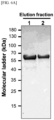
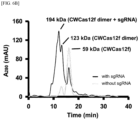
- the CWCas12f protein was incubated with the gRNA to produce a ribonucleoprotein complex.
- the ribonucleoprotein complex was analyzed by size exclusion chromatography using a Superdex 200 column.
- the sgRNA-bound CWCas12f was estimated to have a molecular weight of approximately 194 kDa, suggesting that the CWCas12f formed a homodimer in the presence of the engineered gRNA, similar to the Un1Cas12f1 ( FIGS. 6A and 6B ).
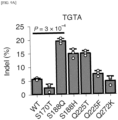
- S170T, S188Q, S188H, Q225T, Q225F, and Q272K variants exhibited high preference for the TGTA PAM.
- S188Q variant exhibited the highest indel frequency for the TGTA PAM compared to the other variants when tested in HEK293T cells with a modified PAM sequence according to Example 1.10 ( FIG. 9A ).
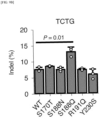
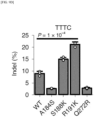
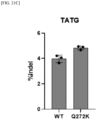
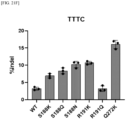
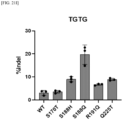
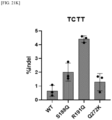
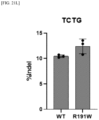
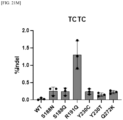
- S188Q, S188K, and R191K variants exhibited high indel frequency for the TCTG, TGTG, and TTTC PAMs, respectively ( FIGS. 9B to 9D ).
- S188K variant exhibited broader PAM specificity, wherein it exhibited preference for TTTT and TTTC as well as TTTA and TTTG, that is, TTTN ( FIG. 10 ).
- the PAM preference of each PAM variant identified in this example is shown in Table 10 below.
- dCWCas12f-based adenine base editor (ABE) fusion proteins were constructed in four types depending on the orientation in which deaminase was fused: TaRGET-ABE-N1 (SEQ ID NO: 201), TaRGET-ABE-N2 (SEQ ID NO: 202), TaRGET-ABE-C1 (SEQ ID NO: 203), and TaRGET-ABE-C2 (SEQ ID NO: 204).
- Tad-Tad* wild-type Tad-mutant Tad
- Tad*-Tad which constitutes ABE
- TaRGET-ABE-C2 (dCWCas12f-linker-Tad-linker-Tad*-NLS) was used to identify a base editing window due to its higher conversion rate than other ABEs.
- the base editing window represents positions at which base conversion can be induced by ABE, and the expansion of the window as described below means expansion of the positions at which base conversion occurs.
- the substitution profile of TaRGET-ABE-C2 was explored for five endogenous sites (sites a to e) in HEK293T cells, as shown in FIGS. 12A to 12C .
- the endogenous sites were selected from validated sites that show significant A to G conversion activity and also have multiple adenine nucleotides in the PAM-proximal region.
- the TaRGET-ABE system induced A to G conversions in a range of positions 2 to 6, although the conversion was most predominant at positions 3 and 4 (A3 and A4).
- the position refers to a location relative to the PAM-proximal sequence.
- the sequence profile was obtained by deep-sequencing analysis for these positions after transfection with the TaRGET-ABE-C2 vector.
- Tad-Tad** The optimized Tad dimer was denoted as Tad-Tad**, and this form of ABE was named TaRGET-ABE-C3.0 (SEQ ID NO: 206).
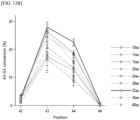
- dCWCas12f and the Tad dimer (Tad-Tad**) were linked to each other via linkers of various lengths, and these products were compared in terms of A3 to G3 conversion efficiency.
- the linker was determined to have a length of 32 amino acids ( FIG. 13B ). Based on the heat map results ( FIG. 13D ) illustrated in FIG.
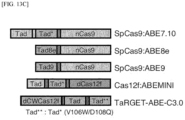
- the base editing window of TaRGET-ABE-C3.0 was formed in a relatively narrow range (positions 3 to 5), similar to the recently reported ABEMINI.
- the overall conversion efficiency of TaRGET-ABE-C3.0 was significantly higher than that of Cas12f-based ABEMINI, and was lower than that of SpCas9 nickase-based ABEs such as ABE7.10, ABE8e25, and ABE9.
- ABE8e a monomeric Tad in its engineered form was used, while for ABE9, a monomeric Tad in its additionally engineered form (V82S/Q154R) was used.
- Example 4.2 Multiplexed base editing activity of adenine base editor to which PAM variant has been applied
- levels of conversion activity from A3 to G3, A4 to G4, and A5 to G5 vary depending on the PAM variants.
- sites with A at positions 3, 4, and 5 were selected.
- Tests 1 to 3 indicate that the same experiment was repeated three times.
- the PAM variants may be used selectively (individually) for specific sequence contexts, or the variants exhibiting multiple PAM preference may be used for multiplexed base editing.
- base editing activity of variants having stacked PAM mutations was tested.
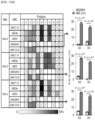
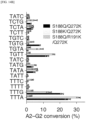
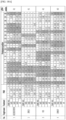
- the S188Q/Q272K variant (variant 41) and the S188K/Q272K variant (variant 42) exhibited broader PAM preference, including TTTA, TTTG, TTTC, TATG, TGTA, TGTG, TGTC, and TCTG, and the S188Q/R191K/Q272K variant (variant 43) also exhibited broad PAM preference ( FIG. 14B ).
- the base editing activity of the variants having stacked mutations was measured in HEK293T cells harboring the PAM-modified NLRC4 locus as illustrated in FIG. 3 .
- the multiplexed base editing was validated in wild-type HEK293T cells by transfection of the PAM variants of CWCas12f having stacked mutations together with multiple gRNAs.
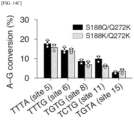
- the S188Q/Q272K and S188K/Q272K variants exhibited base editing potential at five different endogenous loci (sites 5, 6, 7, 11, and 15) at the same time ( FIG. 14C ).
- the PAM preference for these variants having stacked mutations are shown in Table 1 above. Taken together, the engineering of CWCas12f expanded occupancy of targetable base editing sites from 0.78% to 3.12%.
- Example 4.3 Expansion of targetable site through mutation in protospacer binding region of CWCas12f-gRNA ribonucleoprotein complex
- the editing occurrence rate is still limited because the predominant editing window was formed at positions 3 and 4.
- the editing window limited to positions 3 and 4 is sometimes advantageous for specific editing, expanding or shifting the window may be additional options to expand applicability of the TaRGET-ABE system. Therefore, structural modeling of the CWCas12f-gRNA ribonucleoprotein complex was performed to identify potential mutation sites of Ile159 and Ser164.
- the I159W variant (variant 5), S164Y variant (variant 6), or I159W/S164Y variant (variant 7) were constructed and applied to adenine base editing for several targets having A at different positions, respectively.
- TaRGET-ABE-C2.0 described in Example 4.1 was used as an adenine base editor fusion protein.
- Example 4.4 Expansion of targetable site through modification of deaminase module
- the dead variant dCWCas12f (D538A) was used for the I159W Tad variant (in addition to D538A, D354A, E450A, and R518A were also applicable). This approach was relevant to different architectures of the deaminase module. While constructing different combinations of Tad variants, it was accidentally discovered that the dCWCas12f-Tad-Tad8e (WQ) module exhibited a window expansion at position 2.
- the eTad (Tad8e) sequence was originally used as a monomeric deaminase for the ABE8e version.
- TaRGET-ABE-C3.1 Tad-Tad8e dimeric module
- FIGS. 18A to 18G The A to G conversion efficiency for the target genes is shown in FIGS. 18A to 18G .
- the conversion rate at each position was calculated from deep sequencing data using MAUND software.
- the position of Ain the protospacer sequence was highlighted by shading. The value is a sum of all possible conversion rates.
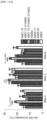
- "wt” represents a conversion rate of ABE-untreated control cells. According to the distribution, the most predominant base editing effects were observed at positions 2 to 5 even without application of the I159W mutation; however, it was found that for position 6, a remarkable window expansion occurred when the I159W mutation was applied ( FIG. 17A ), indicating that the window expanded to a range beyond position 6. Nevertheless, two or more targets were identified in which positions 17 and/or 18 were edited with relatively high efficiency ( FIG. 17B ).
- PAM-proximal editing may occur from gRNA-independent editing within the R-loop or from a non-canonical window.
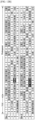
- a one to one comparison of all versions of TaRGET-ABE (ABEMINI, TaRGET-ABE-C2, TaRGET-ABE-C3.0, and TaRGET-ABE-C3.1) in terms of base editing window and efficiency is shown in FIG. 19 .
- High A to G conversion may be observed in TaRGET-ABE-C3.0 and TaRGET-ABE-C3.1.
- Cas12f1-based ABEMINI and TaRGET-ABE-C2 reveals that ABEMINI has significantly low base editing efficiency in the base editing window. This demonstrates that the CWCas12f is a desirable nuclease for hypercompact adenine base editors.
Landscapes
- Health & Medical Sciences (AREA)
- Life Sciences & Earth Sciences (AREA)
- Genetics & Genomics (AREA)
- Engineering & Computer Science (AREA)
- Chemical & Material Sciences (AREA)
- Bioinformatics & Cheminformatics (AREA)
- Organic Chemistry (AREA)
- Zoology (AREA)
- Wood Science & Technology (AREA)
- Biomedical Technology (AREA)
- General Engineering & Computer Science (AREA)
- Biotechnology (AREA)
- Molecular Biology (AREA)
- Biochemistry (AREA)
- Microbiology (AREA)
- General Health & Medical Sciences (AREA)
- Biophysics (AREA)
- Plant Pathology (AREA)
- Physics & Mathematics (AREA)
- Medicinal Chemistry (AREA)
- Crystallography & Structural Chemistry (AREA)
- Virology (AREA)
- Micro-Organisms Or Cultivation Processes Thereof (AREA)
Applications Claiming Priority (2)
| Application Number | Priority Date | Filing Date | Title |
|---|---|---|---|
| KR20220065600 | 2022-05-27 | ||
| PCT/KR2023/004971 WO2023229222A1 (fr) | 2022-05-27 | 2023-04-12 | Protéine cas12f modifiée avec une gamme de cibles élargie et ses utilisations |
Publications (1)
| Publication Number | Publication Date |
|---|---|
| EP4534660A1 true EP4534660A1 (fr) | 2025-04-09 |
Family
ID=88919470
Family Applications (1)
| Application Number | Title | Priority Date | Filing Date |
|---|---|---|---|
| EP23811999.4A Pending EP4534660A1 (fr) | 2022-05-27 | 2023-04-12 | Protéine cas12f modifiée avec une gamme de cibles élargie et ses utilisations |
Country Status (3)
| Country | Link |
|---|---|
| EP (1) | EP4534660A1 (fr) |
| KR (1) | KR20230166041A (fr) |
| WO (1) | WO2023229222A1 (fr) |
Cited By (1)
| Publication number | Priority date | Publication date | Assignee | Title |
|---|---|---|---|---|
| EP4368713A4 (fr) * | 2021-07-05 | 2025-10-08 | Genkore Inc | Cas12f1 à clivage inactif, protéine de fusion à base de cas12f1 à clivage inactif, système d'édition génique crispr les comprenant, procédé de préparation et utilisation de ceux-ci |
Families Citing this family (1)
| Publication number | Priority date | Publication date | Assignee | Title |
|---|---|---|---|---|
| WO2025230111A1 (fr) * | 2024-05-02 | 2025-11-06 | 고려대학교 산학협력단 | Variant de cas12f1 à activité d'édition génique accrue, et son utilisation |
Family Cites Families (6)
| Publication number | Priority date | Publication date | Assignee | Title |
|---|---|---|---|---|
| KR20210044152A (ko) | 2019-10-14 | 2021-04-22 | 삼성전자주식회사 | 다중 연결을 지원하는 이동통신 시스템에서 단말의 발열 관련 정보를 제공하는 방법 및 장치 |
| KR20210050093A (ko) | 2019-10-28 | 2021-05-07 | 한국광기술원 | 미세 led 및 그의 제조방법 |
| CN114846146B (zh) * | 2019-10-29 | 2024-04-12 | 基恩科雷有限责任公司 | 用于增加CRISPR/Cas12f1系统的效率的工程化引导RNA及其用途 |
| KR20210051552A (ko) | 2019-10-30 | 2021-05-10 | 황경준 | 지능형 대중교통 승하차 |
| KR102654899B1 (ko) | 2020-11-13 | 2024-04-03 | 주식회사 엘지에너지솔루션 | 배터리 활성화를 위한 직류 배전 기반의 충방전 시스템 |
| KR102553161B1 (ko) | 2021-03-12 | 2023-07-10 | (주)쿠첸 | 증기 처리 장치, 및 증기 처리 장치를 포함하는 조리 기기 |
-
2023
- 2023-04-12 EP EP23811999.4A patent/EP4534660A1/fr active Pending
- 2023-04-12 KR KR1020230048491A patent/KR20230166041A/ko active Pending
- 2023-04-12 WO PCT/KR2023/004971 patent/WO2023229222A1/fr not_active Ceased
Cited By (1)
| Publication number | Priority date | Publication date | Assignee | Title |
|---|---|---|---|---|
| EP4368713A4 (fr) * | 2021-07-05 | 2025-10-08 | Genkore Inc | Cas12f1 à clivage inactif, protéine de fusion à base de cas12f1 à clivage inactif, système d'édition génique crispr les comprenant, procédé de préparation et utilisation de ceux-ci |
Also Published As
| Publication number | Publication date |
|---|---|
| KR20230166041A (ko) | 2023-12-06 |
| WO2023229222A1 (fr) | 2023-11-30 |
Similar Documents
| Publication | Publication Date | Title |
|---|---|---|
| US12509680B2 (en) | Methods and compositions for prime editing nucleotide sequences | |
| US10633642B2 (en) | Engineered CRISPR-Cas9 nucleases | |
| US20210355465A1 (en) | Engineered CRISPR-Cas9 Nucleases | |
| CN114875012B (zh) | 工程化的CRISPR-Cas9核酸酶 | |
| CA3227004A1 (fr) | Editeurs primaires ameliores et leurs procedes d'utilisation | |
| EP4227412A1 (fr) | Arn guide modifié pour augmenter l'efficacité du système crispr/cas12f1 (cas14a1), et utilisation associée | |
| KR102690083B1 (ko) | CRISPR/Cas12f1 시스템 효율화를 위한 U-rich tail을 포함하는 엔지니어링 된 가이드 RNA 및 그 용도 | |
| US20240401018A1 (en) | Evolved double-stranded dna deaminase base editors and methods of use | |
| EP4534660A1 (fr) | Protéine cas12f modifiée avec une gamme de cibles élargie et ses utilisations | |
| AU2021357283B2 (en) | Engineered guide RNA comprising U-rich tail for increasing efficiency of CRISPR/Cas12f1 system, and use thereof | |
| US20230051661A1 (en) | Nucleobase Editors | |
| KR20250012711A (ko) | CRISPR/Cas12f1 시스템 효율화를 위한 엔지니어링 된 가이드 RNA 및 그 용도 | |
| US20250215457A1 (en) | Target system for homology-directed repair and gene editing method using same | |
| US20250222136A1 (en) | Gene editing system for treating usher syndrome | |
| KR102638799B1 (ko) | CRISPR/Cas12f1(Cas14a1) system 효율화를 위한 engineered guide RNA 및 이의 용도 | |
| KR102935503B1 (ko) | 신규 Cas12a 단백질, 신규 Cas12a 단백질의 변형체 및 이들의 진핵세포 유전체 편집 용도 | |
| KR20240034661A (ko) | 캄필로박터 제주니 유래 Cas9의 가이드 RNA 구조변화를 통한 유전자교정 향상 시스템 | |
| WO2025106766A1 (fr) | Constructions enzymatiques modifiées par fusion | |
| WO2025171041A1 (fr) | Protéines casphi2 (cas12j-2) modifiées | |
| KR20260012167A (ko) | 향상된 편집 성능을 갖는 엔지니어링된 Cas 폴리펩타이드 및 그 용도 | |
| CN117377761A (zh) | 用于位点特异性修饰的组合物和方法 | |
| CN116568806A (zh) | 用于增加crispr/cas12f1(cas14a1)系统的效率的经工程化的引导rna及其用途 | |
| EA049378B1 (ru) | Способы и композиции для редактирования нуклеотидных последовательностей |
Legal Events
| Date | Code | Title | Description |
|---|---|---|---|
| STAA | Information on the status of an ep patent application or granted ep patent |
Free format text: STATUS: THE INTERNATIONAL PUBLICATION HAS BEEN MADE |
|
| PUAI | Public reference made under article 153(3) epc to a published international application that has entered the european phase |
Free format text: ORIGINAL CODE: 0009012 |
|
| STAA | Information on the status of an ep patent application or granted ep patent |
Free format text: STATUS: REQUEST FOR EXAMINATION WAS MADE |
|
| 17P | Request for examination filed |
Effective date: 20250102 |
|
| AK | Designated contracting states |
Kind code of ref document: A1 Designated state(s): AL AT BE BG CH CY CZ DE DK EE ES FI FR GB GR HR HU IE IS IT LI LT LU LV MC ME MK MT NL NO PL PT RO RS SE SI SK SM TR |
|
| DAV | Request for validation of the european patent (deleted) | ||
| DAX | Request for extension of the european patent (deleted) |