EP4534667A1 - Modifizierter promotor, expressionsvektor, mikroorganismus, herstellungsverfahren für substanz, modifizierte cyanobakterien und herstellungsverfahren für modifizierten promotor - Google Patents
Modifizierter promotor, expressionsvektor, mikroorganismus, herstellungsverfahren für substanz, modifizierte cyanobakterien und herstellungsverfahren für modifizierten promotor Download PDFInfo
- Publication number
- EP4534667A1 EP4534667A1 EP23815756.4A EP23815756A EP4534667A1 EP 4534667 A1 EP4534667 A1 EP 4534667A1 EP 23815756 A EP23815756 A EP 23815756A EP 4534667 A1 EP4534667 A1 EP 4534667A1
- Authority
- EP
- European Patent Office
- Prior art keywords
- modified
- base sequence
- promoter
- region
- bases
- Prior art date
- Legal status (The legal status is an assumption and is not a legal conclusion. Google has not performed a legal analysis and makes no representation as to the accuracy of the status listed.)
- Pending
Links
Images





Classifications
-
- C—CHEMISTRY; METALLURGY
- C12—BIOCHEMISTRY; BEER; SPIRITS; WINE; VINEGAR; MICROBIOLOGY; ENZYMOLOGY; MUTATION OR GENETIC ENGINEERING
- C12N—MICROORGANISMS OR ENZYMES; COMPOSITIONS THEREOF; PROPAGATING, PRESERVING, OR MAINTAINING MICROORGANISMS; MUTATION OR GENETIC ENGINEERING; CULTURE MEDIA
- C12N15/00—Mutation or genetic engineering; DNA or RNA concerning genetic engineering, vectors, e.g. plasmids, or their isolation, preparation or purification; Use of hosts therefor
- C12N15/09—Recombinant DNA-technology
- C12N15/63—Introduction of foreign genetic material using vectors; Vectors; Use of hosts therefor; Regulation of expression
-
- C—CHEMISTRY; METALLURGY
- C07—ORGANIC CHEMISTRY
- C07K—PEPTIDES
- C07K14/00—Peptides having more than 20 amino acids; Gastrins; Somatostatins; Melanotropins; Derivatives thereof
- C07K14/195—Peptides having more than 20 amino acids; Gastrins; Somatostatins; Melanotropins; Derivatives thereof from bacteria
-
- C—CHEMISTRY; METALLURGY
- C12—BIOCHEMISTRY; BEER; SPIRITS; WINE; VINEGAR; MICROBIOLOGY; ENZYMOLOGY; MUTATION OR GENETIC ENGINEERING
- C12N—MICROORGANISMS OR ENZYMES; COMPOSITIONS THEREOF; PROPAGATING, PRESERVING, OR MAINTAINING MICROORGANISMS; MUTATION OR GENETIC ENGINEERING; CULTURE MEDIA
- C12N1/00—Microorganisms; Compositions thereof; Processes of propagating, maintaining or preserving microorganisms or compositions thereof; Processes of preparing or isolating a composition containing a microorganism; Culture media therefor
- C12N1/20—Bacteria; Culture media therefor
-
- C—CHEMISTRY; METALLURGY
- C12—BIOCHEMISTRY; BEER; SPIRITS; WINE; VINEGAR; MICROBIOLOGY; ENZYMOLOGY; MUTATION OR GENETIC ENGINEERING
- C12N—MICROORGANISMS OR ENZYMES; COMPOSITIONS THEREOF; PROPAGATING, PRESERVING, OR MAINTAINING MICROORGANISMS; MUTATION OR GENETIC ENGINEERING; CULTURE MEDIA
- C12N15/00—Mutation or genetic engineering; DNA or RNA concerning genetic engineering, vectors, e.g. plasmids, or their isolation, preparation or purification; Use of hosts therefor
- C12N15/09—Recombinant DNA-technology
- C12N15/11—DNA or RNA fragments; Modified forms thereof; Non-coding nucleic acids having a biological activity
-
- C—CHEMISTRY; METALLURGY
- C12—BIOCHEMISTRY; BEER; SPIRITS; WINE; VINEGAR; MICROBIOLOGY; ENZYMOLOGY; MUTATION OR GENETIC ENGINEERING
- C12N—MICROORGANISMS OR ENZYMES; COMPOSITIONS THEREOF; PROPAGATING, PRESERVING, OR MAINTAINING MICROORGANISMS; MUTATION OR GENETIC ENGINEERING; CULTURE MEDIA
- C12N15/00—Mutation or genetic engineering; DNA or RNA concerning genetic engineering, vectors, e.g. plasmids, or their isolation, preparation or purification; Use of hosts therefor
- C12N15/09—Recombinant DNA-technology
- C12N15/63—Introduction of foreign genetic material using vectors; Vectors; Use of hosts therefor; Regulation of expression
- C12N15/74—Vectors or expression systems specially adapted for prokaryotic hosts other than E. coli, e.g. Lactobacillus, Micromonospora
-
- C—CHEMISTRY; METALLURGY
- C12—BIOCHEMISTRY; BEER; SPIRITS; WINE; VINEGAR; MICROBIOLOGY; ENZYMOLOGY; MUTATION OR GENETIC ENGINEERING
- C12N—MICROORGANISMS OR ENZYMES; COMPOSITIONS THEREOF; PROPAGATING, PRESERVING, OR MAINTAINING MICROORGANISMS; MUTATION OR GENETIC ENGINEERING; CULTURE MEDIA
- C12N5/00—Undifferentiated human, animal or plant cells, e.g. cell lines; Tissues; Cultivation or maintenance thereof; Culture media therefor
- C12N5/10—Cells modified by introduction of foreign genetic material
-
- C—CHEMISTRY; METALLURGY
- C12—BIOCHEMISTRY; BEER; SPIRITS; WINE; VINEGAR; MICROBIOLOGY; ENZYMOLOGY; MUTATION OR GENETIC ENGINEERING
- C12P—FERMENTATION OR ENZYME-USING PROCESSES TO SYNTHESISE A DESIRED CHEMICAL COMPOUND OR COMPOSITION OR TO SEPARATE OPTICAL ISOMERS FROM A RACEMIC MIXTURE
- C12P1/00—Preparation of compounds or compositions, not provided for in groups C12P3/00 - C12P39/00, by using microorganisms or enzymes
- C12P1/04—Preparation of compounds or compositions, not provided for in groups C12P3/00 - C12P39/00, by using microorganisms or enzymes by using bacteria
Definitions
- the present disclosure relates to a modified promoter, an expression vector including the modified promoter, a microorganism including the expression vector, a method for producing a substance in which the microorganism is used, a modified cyanobacterium including the modified promoter introduced in the genome, and a method for preparing a modified promoter.
- Promoters capable of increasing the amount of expression of a gene coding a substance (e.g., a protein) that is to be produced by microorganisms have been developed in order to increase the productivity of substances using microorganisms.
- PTL 1 discloses a knowledge that modifying the base sequence of a promoter of the alkaline cellulase gene of bacillus subtilis enhanced the activity of the promoter and enables the production of a modified promoter capable of strong expression induction and a method for efficient secretion and production of alkaline cellulase with microorganisms to which the modified promoter has been applied.
- PTL 2 discloses a method in which the base sequence of a promoter of the R-specific enoyl-CoA hydratase gene of a bacterium belonging to the genus Aeromonas is modified in order to prepare a modified promoter capable of controlling the expression of the above gene and a polyhydroxyalkanoate copolymer with a regulated monomer composition ratio is efficiently produced using microorganisms to which the above modified promoter has been applied.
- the amount of expression of a gene coding the substance may decrease, even when a modified promoter having a high promoter activity is used. Therefore, it is necessary to control the activity of the promoter appropriately in accordance with the type of the substance that is to be produced by microorganisms. However, it is difficult to control the activity of the promoter.
- the present disclosure provides a modified promoter with which the amount of expression of a gene coding a substance can be controlled with flexibility, an expression vector, a microorganism, a method for producing a substance, a modified cyanobacterium, and a method for preparing a modified promoter.
- a modified promoter is a modified promoter including a base sequence (SEQ ID NO: 1) located upstream of a start codon of a slr1841 gene, the base sequence consisting of 348 bases, or a base sequence having 80% or more homology with the base sequence represented by SEQ ID NO: 1, the base sequence being modified by (i) replacement of one or more bases included in the base sequence with another base, (ii) deletion of one or more bases included in the base sequence, or (iii) insertion of one or more other bases into the base sequence.
- SEQ ID NO: 1 located upstream of a start codon of a slr1841 gene, the base sequence consisting of 348 bases, or a base sequence having 80% or more homology with the base sequence represented by SEQ ID NO: 1, the base sequence being modified by (i) replacement of one or more bases included in the base sequence with another base, (ii) deletion of one or more bases included in the base sequence, or (iii) insertion of one or more other bases into the base
- a useful substance e.g., a useful protein
- the gene recombinant microorganism it is necessary to not only introduce a gene coding the useful substance (i.e., the useful protein) into the genome of the microorganisms but also introduce an appropriate promoter to the upstream of the gene to induce the expression of the gene.
- a promoter The higher the activity of a promoter, the larger the amount of transcription of a gene located downstream thereof (specifically, a gene coding an intended useful protein). It is easy to imagine that this increases the efficiency of production of the intended useful protein.
- a strong promoter be suitable for the production of all the microorganisms (also referred to as "cells") or all the proteins. If the activity of the promoter is excessively high, the amount of the protein produced may exceed the capacity of the cell and, consequently, it may become difficult to fold the protein into a normal, three-dimensional structure. In such a case, the efficient production of a useful protein cannot be achieved. This may also impair the growth of the cell.
- a modified promoter is a modified promoter including a base sequence (SEQ ID NO: 1) located upstream of a start codon of a slr1841 gene, the base sequence consisting of 348 bases, or a base sequence having 80% or more homology with the base sequence represented by SEQ ID NO: 1, the base sequence being modified by at least one selected from the group consisting of (i) replacement of one or more bases included in the base sequence with another base, (ii) deletion of one or more bases included in the base sequence, and (iii) insertion of one or more bases into the base sequence.
- SEQ ID NO: 1 located upstream of a start codon of a slr1841 gene, the base sequence consisting of 348 bases, or a base sequence having 80% or more homology with the base sequence represented by SEQ ID NO: 1, the base sequence being modified by at least one selected from the group consisting of (i) replacement of one or more bases included in the base sequence with another base, (ii) deletion of one or more bases included in the base
- the homology between base sequences or amino acid sequences is calculated using the BLAST (basic local alignment search tool) algorithm. Specifically, the above homology is calculated by a pairwise analysis using the BLAST program available in the website (https://blast.ncbi.nlm.nih.gov/Blast.cgi) of NCBI (National Center for Biotechnology Information). Information regarding the base sequences of genes and information regarding the amino acid sequences of proteins coded by the genes are published on the NCBI website and the like and available anytime.
- BLAST basic local alignment search tool
- the slr1841 promoter region is a base sequence region (SEQ ID NO: 1) that is located upstream of the start codon of the slr1841 gene and consists of 348 bases.
- the slr1841 promoter region plays an important role in controlling the timing and amount of expression of the slr1841 gene.
- the transcription start site (TSS) of the slr1841 gene is located 54 bases upstream of the start codon.
- a region that extends from the transcription start site to the -35 region is referred to as "core region (i.e., core promoter)", which is specifically a base sequence region (SEQ ID NO: 2) that extends from 54 to 94 bases upstream of the start codon.
- the -35 region of the slr1841 promoter is a region of base sequence TTCTCC which extends from 89 to 94 bases upstream of the start codon.
- the - 10 region of the slr1841 promoter is a region of base sequence TACAAT which extends from 62 to 67 bases upstream of the start codon.
- the promoter is not limited and may be any promoter of a gene held by eubacteria the expression of which can be induced regularly and strongly.
- examples of the promoter include the base sequences of promoters that induce a series of proteins most expressed in cells, such as slr1841, slr0688, and slr1908, which are membrane proteins held by cyanobacterium Synechocystis sp. PCC 6803 and regions corresponding to the base sequences of the above promoters, which are held by cyanobacterium Synechococcus, Anabaena, and Nostoc.
- the modified promoter may be prepared in the following manner.
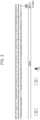
- Fig. 3 is a flowchart illustrating an example of a method for preparing a modified promoter.
- Step S1 the position at which the base sequence (SEQ ID NO: 1) of the slr1841 promoter or a base sequence having 80% or more homology with the base sequence (SEQ ID NO: 1) of the slr1841 promoter is to be modified and the contents of the modification are selected.
- the above modification position may be any position within the promoter region.
- the modification method is also not limited.
- the above modification position may be within the base sequence region represented by SEQ ID NO: 1 (i.e., the slr1841 promoter region), is preferably within the base sequence region (i.e., core region) represented by SEQ ID NO: 2, which corresponds to the main body of the promoter, and is more preferably within the base sequence TACAAT region corresponding to the -10 region or the base sequence TTCTCC region corresponding to the -35 region.
- the impacts on promoter activity can be increased.
- the base sequence (SEQ ID NO: 1) of the slr1841 promoter or a base sequence having 80% or more homology with the base sequence (SEQ ID NO: 1) of the slr1841 promoter is modified by (i) substitution, (ii) deletion, or (iii) insertion of one or more bases (Step S2).
- a modified promoter having a promoter region with a modified base sequence is prepared.
- the modification position may be within a base sequence region having 80% or more homology with any of the above base sequences.
- the above modification may be performed by (i) replacement of one or more (e.g., about one to three) bases included in the base sequence of the promoter with other bases, (ii) deletion of one or more (e.g., about one to three) bases included in the base sequence of the promoter, or (iii) insertion of one or more (e.g., about one to three) bases into the base sequence of the promoter.
- the modified promoter can be constructed by artificial gene synthesis.
- the means for construction is not limited.
- the modified promoter can be constructed by extracting a genome DNA from a cell (e.g., a cyanobacterium), amplifying the base sequence of an intended promoter region (e.g., slr1841 promoter region) in the genome DNA by PCR (polymerase chain reaction), introducing the resulting gene fragment into a plasmid, and subsequently performing modification.
- Site directed mutagenesis is a method useful for introducing a displacement to a specific site of a plasmid and enables the replacement, deletion, and insertion of genes. The introduction of the above mutations is commonly performed by inverse PCR.
- a site directed mutagenesis kit such as "PrimeSTAR(registered trademark) Mutagenesis Basal Kit” produced by Takara Bio Inc. or "KOD -Plus-Mutagenesis Kit” produced by Toyobo Co., Ltd., facilitates the above process.
- the activity of the modified promoter can be determined by introducing, in a cell, an expression vector that includes the modified promoter and a base sequence added downstream of the modified promoter, the base sequence coding a protein, and analyzing the amount of expression of the protein.
- the type of the cell into which the expression vector is to be introduced and the method by which the expression vector is introduced into the cell are not limited. It is easy and simple to introduce the expression vector into a commercial colibacillus cell by a heat shock method.
- the type of the protein the gene expression of which is induced by the modified promoter is not limited.
- the protein may be a protein having a relatively stable three-dimensional structure, such as green fluorescent protein (GFP).
- the method for analyzing the amount of expression of a protein is also not limited. If the protein is GFP, the amount of expression of GFP can be determined by measuring the intensity of fluorescence emitted by the cell or analyzing all the proteins extracted from the cell with a GFP tag antibody by an Western Blotting method.
- Examples of application of the modified promoter are efficient production of useful substances with microorganisms, promotion of secretion of intracellular products, improvement of drug resistance, and improvement of environment resistance. Note that examples of application of the modified promoter are not limited thereto.
- the microorganisms are described below.
- the method for producing a substance may be, but not limited to, a method including cultivating a microorganism to cause the microorganism to secrete an intended substance (useful substance or intracellular product) outside the cell and appropriately isolating the intended substance from the culture solution.
- an intended substance useful substance or intracellular product
- a membrane permeable to the intended substance may be used, and a substance that passes through the permeable membrane may be collected. Since the intended substance secreted in the culture solution can be collected while the microorganism is cultured, it becomes unnecessary to remove the microorganism from the culture solution. This makes it possible to produce the intended substance with further ease, efficiency, and simplicity.
- An expression vector according to an embodiment includes a modified promoter.
- the expression vector is a plasmid or virus designed for expression of genes in cells.
- the expression vector includes a gene fragment introduced in the plasmid, the gene fragment including a modified promoter and a base sequence coding a protein, the base sequence being located downstream of the modified promoter.
- Fig. 4 is a schematic diagram illustrating an example of the expression vector.
- the protein the expression of which is controlled by the modified promoter is GFP.
- the expression vector illustrated in Fig. 4 is constructed as a result of a gene coding GFP being inserted in the plasmid at a position downstream of the slr1841 promoter.
- the activity of the modified promoter can be determined by introducing the expression vector into colibacillus and measuring the fluorescence emitted by GFP expressed in the transformed cells.
- modified promoter This enables the modified promoter to flexibly control the amount of expression of a gene located downstream of the modified promoter.
- the modified promoter according to the embodiment is a modified promoter in which, in the base sequence represented by SEQ ID NO: 1, a region of a base sequence (SEQ ID NO: 2) extending from 54 to 94 bases upstream of the start codon, or a region corresponding to the region of the base sequence represented by SEQ ID NO: 2, is modified by at least one selected from the group consisting of (i) replacement of one or more bases included in the region with another base, (ii) deletion of one or more bases included in the region, and (iii) insertion of one or more bases into the region.
- the modified promoter according to the embodiment is a modified promoter in which, in the base sequence represented by SEQ ID NO: 1, a region of a base sequence TACAAT extending from 62 to 67 bases upstream of the start codon, or a region corresponding to the region of the base sequence TACAAT, is modified by at least one selected from the group consisting of (i) replacement of one or more bases included in the region with another base, (ii) deletion of one or more bases included in the region, and (iii) insertion of one or more bases into the region.
- the expression vector according to the embodiment includes any one of the above-described modified promoters.
- the above modified cyanobacterium includes a modified promoter which enables the amount of expression of the slr1841 gene to be flexibly controlled, the modified promoter being introduced in the genome, Slr1841 can be expressed in an intended amount.
- a modified promoter the activity of which has been reduced to a degree at which the life activity can be maintained is introduced into the genome of the modified cyanobacterium, deprivation of the outer membrane occurs while the life activity is maintained and, consequently, the likelihood of metabolic substances produced inside the cell leaking out of the cell is increased.
Landscapes
- Health & Medical Sciences (AREA)
- Life Sciences & Earth Sciences (AREA)
- Genetics & Genomics (AREA)
- Engineering & Computer Science (AREA)
- Chemical & Material Sciences (AREA)
- Organic Chemistry (AREA)
- Wood Science & Technology (AREA)
- Zoology (AREA)
- Biotechnology (AREA)
- Bioinformatics & Cheminformatics (AREA)
- Biomedical Technology (AREA)
- General Engineering & Computer Science (AREA)
- General Health & Medical Sciences (AREA)
- Biochemistry (AREA)
- Microbiology (AREA)
- Molecular Biology (AREA)
- Biophysics (AREA)
- Plant Pathology (AREA)
- Physics & Mathematics (AREA)
- Medicinal Chemistry (AREA)
- Tropical Medicine & Parasitology (AREA)
- Virology (AREA)
- Gastroenterology & Hepatology (AREA)
- Proteomics, Peptides & Aminoacids (AREA)
- Mycology (AREA)
- Chemical Kinetics & Catalysis (AREA)
- General Chemical & Material Sciences (AREA)
- Cell Biology (AREA)
- Micro-Organisms Or Cultivation Processes Thereof (AREA)
- Preparation Of Compounds By Using Micro-Organisms (AREA)
Applications Claiming Priority (2)
| Application Number | Priority Date | Filing Date | Title |
|---|---|---|---|
| JP2022088371 | 2022-05-31 | ||
| PCT/JP2023/018190 WO2023233996A1 (ja) | 2022-05-31 | 2023-05-16 | 改変プロモーター、発現ベクター、微生物、物質の生産方法、改変シアノバクテリア及び改変プロモーターの作製方法 |
Publications (2)
| Publication Number | Publication Date |
|---|---|
| EP4534667A1 true EP4534667A1 (de) | 2025-04-09 |
| EP4534667A4 EP4534667A4 (de) | 2025-12-24 |
Family
ID=89026577
Family Applications (1)
| Application Number | Title | Priority Date | Filing Date |
|---|---|---|---|
| EP23815756.4A Pending EP4534667A4 (de) | 2022-05-31 | 2023-05-16 | Modifizierter promotor, expressionsvektor, mikroorganismus, herstellungsverfahren für substanz, modifizierte cyanobakterien und herstellungsverfahren für modifizierten promotor |
Country Status (6)
| Country | Link |
|---|---|
| US (1) | US20250066801A1 (de) |
| EP (1) | EP4534667A4 (de) |
| JP (1) | JPWO2023233996A1 (de) |
| CN (1) | CN119278264A (de) |
| MX (1) | MX2024013351A (de) |
| WO (1) | WO2023233996A1 (de) |
Family Cites Families (6)
| Publication number | Priority date | Publication date | Assignee | Title |
|---|---|---|---|---|
| US6509185B1 (en) * | 2000-01-07 | 2003-01-21 | Genencor International, Inc. | Mutant aprE promotor |
| JP2002085076A (ja) * | 2000-09-13 | 2002-03-26 | Mitsubishi Heavy Ind Ltd | シネコシスチスpcc6714由来のプロモーター |
| CA2830864C (en) * | 2002-04-22 | 2017-03-21 | Genencor International, Inc. | Methods of creating modified promoters resulting in varying levels of gene expression |
| JP4648038B2 (ja) | 2004-03-05 | 2011-03-09 | 花王株式会社 | 改変プロモーター |
| EP3101129B1 (de) | 2014-01-31 | 2020-10-28 | Kaneka Corporation | Mikroorganismus mit angepasster expression von r-spezifischem enoyl-coa-hydratasegen und verfahren zur herstellung eines polyhydroxyalkanoat-copolymers damit |
| WO2021100640A1 (ja) * | 2019-11-21 | 2021-05-27 | パナソニックIpマネジメント株式会社 | 改変シアノバクテリア、改変シアノバクテリアの製造方法、及び、タンパク質の製造方法 |
-
2023
- 2023-05-16 JP JP2024524304A patent/JPWO2023233996A1/ja active Pending
- 2023-05-16 EP EP23815756.4A patent/EP4534667A4/de active Pending
- 2023-05-16 CN CN202380042225.0A patent/CN119278264A/zh active Pending
- 2023-05-16 WO PCT/JP2023/018190 patent/WO2023233996A1/ja not_active Ceased
-
2024
- 2024-10-29 MX MX2024013351A patent/MX2024013351A/es unknown
- 2024-11-15 US US18/948,615 patent/US20250066801A1/en active Pending
Also Published As
| Publication number | Publication date |
|---|---|
| WO2023233996A1 (ja) | 2023-12-07 |
| CN119278264A (zh) | 2025-01-07 |
| EP4534667A4 (de) | 2025-12-24 |
| JPWO2023233996A1 (de) | 2023-12-07 |
| US20250066801A1 (en) | 2025-02-27 |
| MX2024013351A (es) | 2024-12-06 |
Similar Documents
| Publication | Publication Date | Title |
|---|---|---|
| Korneli et al. | Getting the big beast to work—systems biotechnology of Bacillus megaterium for novel high-value proteins | |
| EP4063483A1 (de) | Modifizierte cyanobakterien, verfahren zur herstellung modifizierter cyanobakterien und verfahren zur herstellung von proteinen | |
| CN105112436A (zh) | 一种己二酸的全生物合成方法 | |
| CN108977890B (zh) | 一种启动子库以及利用其在细菌中构建不同强度表达系统的方法 | |
| CN109321618B (zh) | 一种通过糖多孢红霉菌sace_5717基因提高红霉素产量的方法 | |
| CN109679886B (zh) | 一种基于生物传感器的高通量筛选方法 | |
| Wang et al. | Gene knockdown by structure defined single-stem loop small non-coding RNAs with programmable regulatory activities | |
| JP7637903B2 (ja) | 改変シアノバクテリア、改変シアノバクテリアの製造方法、及び、タンパク質の製造方法 | |
| CN104630255A (zh) | 一种用于莱茵衣藻多基因共表达的载体及其构建方法 | |
| Mahanil et al. | Simple transformation of the filamentous thermophilic cyanobacterium Leptolyngbya sp. KC45 | |
| EP4534667A1 (de) | Modifizierter promotor, expressionsvektor, mikroorganismus, herstellungsverfahren für substanz, modifizierte cyanobakterien und herstellungsverfahren für modifizierten promotor | |
| Huo et al. | Identifying amino acid overproducers using rare-codon-rich markers | |
| CN118931901A (zh) | 基因的启动子及应用 | |
| US20130244904A1 (en) | Escherichia coli having a modified translational property | |
| JP2003245078A (ja) | 放射線抵抗性細菌/大腸菌シャトルベクター | |
| CN116286814B (zh) | 一种枯草芽孢杆菌高效人工终止子及其应用 | |
| CN116064521A (zh) | 解淀粉芽孢杆菌来源的pH诱导型启动子及其应用 | |
| CN116064522A (zh) | 解淀粉芽孢杆菌来源的温度诱导型启动子及其应用 | |
| CN111690649B (zh) | 一种新终止子及其应用 | |
| CN112831517B (zh) | 由番茄红素基因介导的改造的克隆载体及其应用 | |
| US20230058740A1 (en) | Robust Protein Expression Enabled by Dynamic Control over Host Proteases | |
| CN117264859B (zh) | 一种原核表达系统及其制备方法和应用 | |
| US20240084245A1 (en) | Modified cyanobacterium, modified cyanobacterium production method, and protein production method | |
| CN116162584B (zh) | 分裂基因在调控苏氨酸合成和细胞形态及生长中的应用 | |
| Wang et al. | Genetic engineering tools for the filamentous microalga Tribonema minus |
Legal Events
| Date | Code | Title | Description |
|---|---|---|---|
| STAA | Information on the status of an ep patent application or granted ep patent |
Free format text: STATUS: THE INTERNATIONAL PUBLICATION HAS BEEN MADE |
|
| PUAI | Public reference made under article 153(3) epc to a published international application that has entered the european phase |
Free format text: ORIGINAL CODE: 0009012 |
|
| STAA | Information on the status of an ep patent application or granted ep patent |
Free format text: STATUS: REQUEST FOR EXAMINATION WAS MADE |
|
| 17P | Request for examination filed |
Effective date: 20241118 |
|
| AK | Designated contracting states |
Kind code of ref document: A1 Designated state(s): AL AT BE BG CH CY CZ DE DK EE ES FI FR GB GR HR HU IE IS IT LI LT LU LV MC ME MK MT NL NO PL PT RO RS SE SI SK SM TR |
|
| DAV | Request for validation of the european patent (deleted) | ||
| DAX | Request for extension of the european patent (deleted) | ||
| A4 | Supplementary search report drawn up and despatched |
Effective date: 20251120 |
|
| RIC1 | Information provided on ipc code assigned before grant |
Ipc: C12N 15/11 20060101AFI20251114BHEP Ipc: C12N 1/15 20060101ALI20251114BHEP Ipc: C12N 1/19 20060101ALI20251114BHEP Ipc: C12N 1/21 20060101ALI20251114BHEP Ipc: C12N 5/10 20060101ALI20251114BHEP Ipc: C12N 15/63 20060101ALI20251114BHEP Ipc: C12P 1/04 20060101ALI20251114BHEP Ipc: C07K 14/195 20060101ALI20251114BHEP Ipc: C12N 1/20 20060101ALI20251114BHEP Ipc: C12N 15/70 20060101ALI20251114BHEP Ipc: C12N 15/74 20060101ALI20251114BHEP |