EP4534695A1 - Genetische marker zur diagnose oder prognose der vorhersage von degenerativer kiefergelenkosteoarthritis und verwendung davon - Google Patents
Genetische marker zur diagnose oder prognose der vorhersage von degenerativer kiefergelenkosteoarthritis und verwendung davon Download PDFInfo
- Publication number
- EP4534695A1 EP4534695A1 EP23816320.8A EP23816320A EP4534695A1 EP 4534695 A1 EP4534695 A1 EP 4534695A1 EP 23816320 A EP23816320 A EP 23816320A EP 4534695 A1 EP4534695 A1 EP 4534695A1
- Authority
- EP
- European Patent Office
- Prior art keywords
- temporomandibular joint
- mutation
- diagnosis
- degenerative
- present
- Prior art date
- Legal status (The legal status is an assumption and is not a legal conclusion. Google has not performed a legal analysis and makes no representation as to the accuracy of the status listed.)
- Pending
Links
Images





Classifications
-
- G—PHYSICS
- G16—INFORMATION AND COMMUNICATION TECHNOLOGY [ICT] SPECIALLY ADAPTED FOR SPECIFIC APPLICATION FIELDS
- G16B—BIOINFORMATICS, i.e. INFORMATION AND COMMUNICATION TECHNOLOGY [ICT] SPECIALLY ADAPTED FOR GENETIC OR PROTEIN-RELATED DATA PROCESSING IN COMPUTATIONAL MOLECULAR BIOLOGY
- G16B20/00—ICT specially adapted for functional genomics or proteomics, e.g. genotype-phenotype associations
- G16B20/20—Allele or variant detection, e.g. single nucleotide polymorphism [SNP] detection
-
- G—PHYSICS
- G16—INFORMATION AND COMMUNICATION TECHNOLOGY [ICT] SPECIALLY ADAPTED FOR SPECIFIC APPLICATION FIELDS
- G16H—HEALTHCARE INFORMATICS, i.e. INFORMATION AND COMMUNICATION TECHNOLOGY [ICT] SPECIALLY ADAPTED FOR THE HANDLING OR PROCESSING OF MEDICAL OR HEALTHCARE DATA
- G16H50/00—ICT specially adapted for medical diagnosis, medical simulation or medical data mining; ICT specially adapted for detecting, monitoring or modelling epidemics or pandemics
- G16H50/20—ICT specially adapted for medical diagnosis, medical simulation or medical data mining; ICT specially adapted for detecting, monitoring or modelling epidemics or pandemics for computer-aided diagnosis, e.g. based on medical expert systems
-
- C—CHEMISTRY; METALLURGY
- C12—BIOCHEMISTRY; BEER; SPIRITS; WINE; VINEGAR; MICROBIOLOGY; ENZYMOLOGY; MUTATION OR GENETIC ENGINEERING
- C12Q—MEASURING OR TESTING PROCESSES INVOLVING ENZYMES, NUCLEIC ACIDS OR MICROORGANISMS; COMPOSITIONS OR TEST PAPERS THEREFOR; PROCESSES OF PREPARING SUCH COMPOSITIONS; CONDITION-RESPONSIVE CONTROL IN MICROBIOLOGICAL OR ENZYMOLOGICAL PROCESSES
- C12Q1/00—Measuring or testing processes involving enzymes, nucleic acids or microorganisms; Compositions therefor; Processes of preparing such compositions
- C12Q1/68—Measuring or testing processes involving enzymes, nucleic acids or microorganisms; Compositions therefor; Processes of preparing such compositions involving nucleic acids
- C12Q1/6876—Nucleic acid products used in the analysis of nucleic acids, e.g. primers or probes
- C12Q1/6883—Nucleic acid products used in the analysis of nucleic acids, e.g. primers or probes for diseases caused by alterations of genetic material
-
- G—PHYSICS
- G06—COMPUTING OR CALCULATING; COUNTING
- G06N—COMPUTING ARRANGEMENTS BASED ON SPECIFIC COMPUTATIONAL MODELS
- G06N20/00—Machine learning
-
- G—PHYSICS
- G16—INFORMATION AND COMMUNICATION TECHNOLOGY [ICT] SPECIALLY ADAPTED FOR SPECIFIC APPLICATION FIELDS
- G16B—BIOINFORMATICS, i.e. INFORMATION AND COMMUNICATION TECHNOLOGY [ICT] SPECIALLY ADAPTED FOR GENETIC OR PROTEIN-RELATED DATA PROCESSING IN COMPUTATIONAL MOLECULAR BIOLOGY
- G16B40/00—ICT specially adapted for biostatistics; ICT specially adapted for bioinformatics-related machine learning or data mining, e.g. knowledge discovery or pattern finding
- G16B40/20—Supervised data analysis
-
- G—PHYSICS
- G16—INFORMATION AND COMMUNICATION TECHNOLOGY [ICT] SPECIALLY ADAPTED FOR SPECIFIC APPLICATION FIELDS
- G16H—HEALTHCARE INFORMATICS, i.e. INFORMATION AND COMMUNICATION TECHNOLOGY [ICT] SPECIALLY ADAPTED FOR THE HANDLING OR PROCESSING OF MEDICAL OR HEALTHCARE DATA
- G16H10/00—ICT specially adapted for the handling or processing of patient-related medical or healthcare data
- G16H10/60—ICT specially adapted for the handling or processing of patient-related medical or healthcare data for patient-specific data, e.g. for electronic patient records
-
- G—PHYSICS
- G16—INFORMATION AND COMMUNICATION TECHNOLOGY [ICT] SPECIALLY ADAPTED FOR SPECIFIC APPLICATION FIELDS
- G16H—HEALTHCARE INFORMATICS, i.e. INFORMATION AND COMMUNICATION TECHNOLOGY [ICT] SPECIALLY ADAPTED FOR THE HANDLING OR PROCESSING OF MEDICAL OR HEALTHCARE DATA
- G16H20/00—ICT specially adapted for therapies or health-improving plans, e.g. for handling prescriptions, for steering therapy or for monitoring patient compliance
-
- G—PHYSICS
- G16—INFORMATION AND COMMUNICATION TECHNOLOGY [ICT] SPECIALLY ADAPTED FOR SPECIFIC APPLICATION FIELDS
- G16H—HEALTHCARE INFORMATICS, i.e. INFORMATION AND COMMUNICATION TECHNOLOGY [ICT] SPECIALLY ADAPTED FOR THE HANDLING OR PROCESSING OF MEDICAL OR HEALTHCARE DATA
- G16H30/00—ICT specially adapted for the handling or processing of medical images
- G16H30/40—ICT specially adapted for the handling or processing of medical images for processing medical images, e.g. editing
-
- G—PHYSICS
- G16—INFORMATION AND COMMUNICATION TECHNOLOGY [ICT] SPECIALLY ADAPTED FOR SPECIFIC APPLICATION FIELDS
- G16H—HEALTHCARE INFORMATICS, i.e. INFORMATION AND COMMUNICATION TECHNOLOGY [ICT] SPECIALLY ADAPTED FOR THE HANDLING OR PROCESSING OF MEDICAL OR HEALTHCARE DATA
- G16H50/00—ICT specially adapted for medical diagnosis, medical simulation or medical data mining; ICT specially adapted for detecting, monitoring or modelling epidemics or pandemics
- G16H50/50—ICT specially adapted for medical diagnosis, medical simulation or medical data mining; ICT specially adapted for detecting, monitoring or modelling epidemics or pandemics for simulation or modelling of medical disorders
-
- G—PHYSICS
- G16—INFORMATION AND COMMUNICATION TECHNOLOGY [ICT] SPECIALLY ADAPTED FOR SPECIFIC APPLICATION FIELDS
- G16H—HEALTHCARE INFORMATICS, i.e. INFORMATION AND COMMUNICATION TECHNOLOGY [ICT] SPECIALLY ADAPTED FOR THE HANDLING OR PROCESSING OF MEDICAL OR HEALTHCARE DATA
- G16H50/00—ICT specially adapted for medical diagnosis, medical simulation or medical data mining; ICT specially adapted for detecting, monitoring or modelling epidemics or pandemics
- G16H50/70—ICT specially adapted for medical diagnosis, medical simulation or medical data mining; ICT specially adapted for detecting, monitoring or modelling epidemics or pandemics for mining of medical data, e.g. analysing previous cases of other patients
-
- C—CHEMISTRY; METALLURGY
- C12—BIOCHEMISTRY; BEER; SPIRITS; WINE; VINEGAR; MICROBIOLOGY; ENZYMOLOGY; MUTATION OR GENETIC ENGINEERING
- C12Q—MEASURING OR TESTING PROCESSES INVOLVING ENZYMES, NUCLEIC ACIDS OR MICROORGANISMS; COMPOSITIONS OR TEST PAPERS THEREFOR; PROCESSES OF PREPARING SUCH COMPOSITIONS; CONDITION-RESPONSIVE CONTROL IN MICROBIOLOGICAL OR ENZYMOLOGICAL PROCESSES
- C12Q2600/00—Oligonucleotides characterized by their use
- C12Q2600/156—Polymorphic or mutational markers
-
- G—PHYSICS
- G01—MEASURING; TESTING
- G01N—INVESTIGATING OR ANALYSING MATERIALS BY DETERMINING THEIR CHEMICAL OR PHYSICAL PROPERTIES
- G01N2800/00—Detection or diagnosis of diseases
- G01N2800/10—Musculoskeletal or connective tissue disorders
- G01N2800/105—Osteoarthritis, e.g. cartilage alteration, hypertrophy of bone
-
- G—PHYSICS
- G16—INFORMATION AND COMMUNICATION TECHNOLOGY [ICT] SPECIALLY ADAPTED FOR SPECIFIC APPLICATION FIELDS
- G16H—HEALTHCARE INFORMATICS, i.e. INFORMATION AND COMMUNICATION TECHNOLOGY [ICT] SPECIALLY ADAPTED FOR THE HANDLING OR PROCESSING OF MEDICAL OR HEALTHCARE DATA
- G16H10/00—ICT specially adapted for the handling or processing of patient-related medical or healthcare data
- G16H10/40—ICT specially adapted for the handling or processing of patient-related medical or healthcare data for data related to laboratory analysis, e.g. patient specimen analysis
Definitions
- detecting a mutation of the SMARCA2 gene may be, without being limited to,: detecting a SMARCA2 mutant gene comprising a mutation in one or more SNP sites selected from a group consisting of:
- detecting a mutation of the NOTCH1 gene may be, without being limited to,: detecting a NOTCH1 mutant gene comprising a mutation in one or more SNP sites selected from a group consisting of:
- the preparation for detecting a mutation of the gene; or a mutant protein encoded by a mutant gene produced by the mutation may comprise, without being limited to, a primer, a probe or an antibody.
- the present invention provides a kit for the diagnosis or prognosis prediction of degenerative temporomandibular joint osteoarthritis, comprising the composition for the diagnosis or prognosis prediction of degenerative temporomandibular joint osteoarthritis of the present invention.
- the present invention provides a method for providing information necessary for the diagnosis or prognosis prediction of degenerative temporomandibular joint osteoarthritis, the method comprising:
- the method for providing information necessary for the diagnosis or prognosis prediction of degenerative temporomandibular joint osteoarthritis of the present invention may be applied to Asians, but the present invention is not limited thereto.
- the present invention provides a method for the diagnosis or prognosis prediction of degenerative temporomandibular joint osteoarthritis using random forest performed by the device for the diagnosis or prognosis estimation of degenerative temporomandibular joint osteoarthritis, the method comprising:
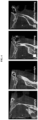
- the photographed temporomandibular joint images may be analyzed with a single shot detector (SSD) to produce four classifications below and confidence scores therefor, without being limited to,: an osteophyte type; a micro-condyle type; a post-flattening type; or an ant/sup flattening type.
- SSD single shot detector
- CT images and clinical information has excellent diagnostic and predictive abilities with an accuracy of 97%.
- the term "degenerative temporomandibular joint osteoarthritis” refers to intractable osteoarthritis that occurs in the temporomandibular joint (TMJ), commonly called the temporomandibular joint.
- TMJ temporomandibular joint
- the most common cause of this disease is excessive load on the joint tissue, which occurs when the articular surface is damaged by articular disc displacement and retrodiscitis.
- the disease is a type of non-inflammatory disease in which the joint surface and underlying bone tissue are destroyed, and often causes pain when bone changes actively occur.
- the terms “temporomandibular joint osteoarthritis", “TMJ osteoarthritis”, “TMJ OA”, etc. may be used interchangeably in this specification.
- TMJ osteoarthritis is classified into primary and secondary.
- the primary TMJ osteoarthritis is characterized by the absence of distinct local or systemic factors.
- the secondary TMJ osteoarthritis means that it is related to a previous traumatic event or disease.
- the type of the degenerative temporomandibular joint osteoarthritis is not specifically limited.
- polynucleotide or “nucleic acid” means deoxyribonucleotide (DNA) or ribonucleotide (RNA) in single- or double-stranded form.
- DNA is composed of four bases: adenine (A), guanine (G), cytosine (C), and thymine (T), while RNA has uracil (U) instead of thymine.
- A forms hydrogen bonds with T or U
- C forms hydrogen bonds with G.
- This relationship between bases is called “complementary.”
- gDNA genomic DNA
- gDNA means the total base sequences of genes of an individual, which means DNA containing almost complete genetic information.
- protein is used interchangeably with “polypeptide” or “peptide”, and, for example, refers to a polymer of amino acid residues, such as those commonly found in proteins in their natural state.
- each of the amino acids used in this specification means each of the following amino acids according to the standard abbreviation convention in the field of biochemistry:
- amino acid position amino acid position
- amino acid amino acid position
- SMARCA2 (SWI/SNF Related, Matrix Associated, Actin Dependent Regulator Of Chromatin, Subfamily A, Member 2) in the present invention is preferably derived from a human, and the sequence information of mRNA and protein of the human SMARCA2 gene is known in the GenBank (NCBI) database under accession numbers of NM_003070 and NP_003061, respectively.
- NOTCH1 (Notch Receptor 1) is preferably derived from a human, and the sequence information of mRNA and protein of the human NOTCH1 gene is known in the GenBank (NCBI) database under accession numbers of NM_017617 and NP_060087, respectively.
- detecting a mutation of the SMARCA2 gene may be detecting a SMARCA2 mutant gene comprising a mutation in one or more SNP sites selected from the following groups, which correspond to markers provided by the present invention:
- a preparation for detecting a mutation of the gene; or a mutant protein encoded by a mutant gene produced by the mutation may comprise a primer, a probe or an antibody, but the present invention is not limited thereto.
- the present invention provides a kit for the diagnosis or prognosis prediction of degenerative temporomandibular joint osteoarthritis, comprising the composition for the diagnosis or prognosis prediction of degenerative temporomandibular joint osteoarthritis of the present invention.
- the type of the kit is not particularly limited so long as it is a kit used for a genotype confirmation method (gene analysis method) or/and protein-type confirmation (protein analysis method) known in the art described below.
- the kit may be a microarray kit, a gene amplification kit, or an immunoassay kit, but the present invention is not limited thereto.
- the genotype confirmation of the step (b) may be performed by one method selected from the group consisting of sequencing, exome sequencing, next generation sequencing (NGS), pyrosequencing, microarray hybridization, allele-specific PCR, dynamic allele-specific hybridization, PCR extension analysis, PCR-SSCP method, Taqman technique and a combination of two or more thereof, but the present invention is not limited thereto.
- WES Whole-exome sequencing
- exome a technique that analyzes approximately 3 ⁇ 10 7 bp of base sequence that encodes all proteins, known as exome, in the genome.
- exome accounts for less than 2% of the human genome, mutations in this region can have much more serious consequences than mutations that occur in the remaining 98%.
- the purpose of WES is to find genetic mutations such as disease-causing mutations inherited in a Mendelian manner or single nucleotide polymorphisms (SNPs), which increase the risk of developing common and complex diseases, through a filtering process in big data containing all protein-coding regions.
- SNPs single nucleotide polymorphisms
- the present invention provides a method for providing information necessary for the diagnosis or prognosis prediction of degenerative temporomandibular joint osteoarthritis using random forest performed by a device for the diagnosis or prognosis estimation the prognosis of degenerative temporomandibular joint osteoarthritis, the method comprising:
- the image may be obtained through a lateral cephalogram, a computed tomography (CT), a transcranial radiograph, a panoramic radiograph, or a magnetic resonance imaging (MRI) scan, but the present invention is not limited thereto.
- CT computed tomography
- MRI magnetic resonance imaging
- the CT scan may be any type of CT, for example, cone beam computed tomography (CBCT) and conventional CT, but the present invention is not limited thereto.
- CBCT cone beam computed tomography
- conventional CT conventional CT
- the information on the temporomandibular joint condyle morphology may be obtained by a method comprising:
- the present invention provides a method for treating degenerative temporomandibular joint osteoarthritis, the method comprising:
- Example 1-1 genes useful for diagnosing degenerative temporomandibular joint osteoarthritis were primarily selected.
- the specific method was as follows: The base sequences obtained from the experimental group and control group samples through whole exome sequencing were aligned to the Genome Reference Consortium Human Build 37 [hg19], and then mutations (variants) were detected using gatk (version 3.4.0), a genome analysis toolkit from the Broad Institute, and saved in variant call format (VCF).
- VCF was annotated with variant annotation using Variant Effect Prediction (VEP, version 104.3) of the European Bioinformatics Institute (ENSEMBL) and saved in the mutation annotation format (MAF).
- VEP Variant Effect Prediction
- ENSEMBL European Bioinformatics Institute
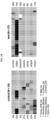
- Table 2 shows detailed information including the NOTCH1 gene mutation (SNP) location information and protein mutation information generated accordingly, which function as a specific marker for the diagnosis of degenerative temporomandibular joint osteoarthritis of the present invention.
- SNP NOTCH1 gene mutation
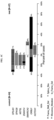
- FIG. 3 is a diagram simply illustrating the location of each of the SMARCA2 SNP missense mutation, inframe insertion, and Inframe deletion described in Table 3.
- SSD Single Shot Detector
- Temporomandibular joint disorder subclassification [K07.60] Temporomandibular joint internal disease [K07.61] Temporomandibular joint noise [K07.62] Recurrent dislocation and subluxation of temporomandibular joint [K07.63] Pain of temporomandibular joint, not elsewhere classified [K07.64] Stiffness of the temporomandibular joint, not elsewhere classified [K07.65] Degenerative joint disease of temporomandibular joint [K07.66] Disorder of masticatory muscles [K07.68] Other specified temporomandibular joint disorders [K07.69] Unspecified temporomandibular joint disorder v011 Overbite Degree of coverage of upper and lower front teeth v012 Overjet Anteroposterior distance between upper and lower front teeth v013 Muscle
- Example 2-1 The accuracy of the degenerative temporomandibular joint osteoarthritis diagnosis and prognosis prediction model (method) of the present invention constructed in Example 2-1 was verified through external validation. The process of dividing the training set and test set and predicting using the random forest was repeated 50 times while changing the number of seeds, and then the average of the predictive abilities was calculated to maximize external validation.
- Genetic mutation markers provided by the present invention are closely related to degenerative temporomandibular joint osteoarthritis, and the diagnosis or prognosis prediction of degenerative temporomandibular joint osteoarthritis is possible through a biological sample that can be obtained by a non-invasive method such as saliva, so the present invention is industrially applicable.
Landscapes
- Engineering & Computer Science (AREA)
- Health & Medical Sciences (AREA)
- Medical Informatics (AREA)
- Public Health (AREA)
- General Health & Medical Sciences (AREA)
- Life Sciences & Earth Sciences (AREA)
- Epidemiology (AREA)
- Data Mining & Analysis (AREA)
- Primary Health Care (AREA)
- Chemical & Material Sciences (AREA)
- Physics & Mathematics (AREA)
- Biomedical Technology (AREA)
- Pathology (AREA)
- Databases & Information Systems (AREA)
- Proteomics, Peptides & Aminoacids (AREA)
- Theoretical Computer Science (AREA)
- Bioinformatics & Cheminformatics (AREA)
- Organic Chemistry (AREA)
- Software Systems (AREA)
- Genetics & Genomics (AREA)
- Analytical Chemistry (AREA)
- Biophysics (AREA)
- Biotechnology (AREA)
- Wood Science & Technology (AREA)
- General Engineering & Computer Science (AREA)
- Zoology (AREA)
- Computer Vision & Pattern Recognition (AREA)
- Artificial Intelligence (AREA)
- Evolutionary Computation (AREA)
- Molecular Biology (AREA)
- Spectroscopy & Molecular Physics (AREA)
- Bioinformatics & Computational Biology (AREA)
- Evolutionary Biology (AREA)
- Computing Systems (AREA)
- Biochemistry (AREA)
- Microbiology (AREA)
- General Physics & Mathematics (AREA)
- Mathematical Physics (AREA)
- Nuclear Medicine, Radiotherapy & Molecular Imaging (AREA)
- Radiology & Medical Imaging (AREA)
Applications Claiming Priority (3)
| Application Number | Priority Date | Filing Date | Title |
|---|---|---|---|
| KR20220065803 | 2022-05-30 | ||
| KR1020220171887A KR102887290B1 (ko) | 2022-05-30 | 2022-12-09 | 퇴행성 턱관절염의 진단 또는 예후 예측용 유전자 마커 및 이의 용도 |
| PCT/KR2023/007321 WO2023234659A1 (ko) | 2022-05-30 | 2023-05-26 | 퇴행성 턱관절염의 진단 또는 예후 예측용 유전자 마커 및 이의 용도 |
Publications (2)
| Publication Number | Publication Date |
|---|---|
| EP4534695A1 true EP4534695A1 (de) | 2025-04-09 |
| EP4534695A4 EP4534695A4 (de) | 2025-10-22 |
Family
ID=89025311
Family Applications (1)
| Application Number | Title | Priority Date | Filing Date |
|---|---|---|---|
| EP23816320.8A Pending EP4534695A4 (de) | 2022-05-30 | 2023-05-26 | Genetische marker zur diagnose oder prognose der vorhersage von degenerativer kiefergelenkosteoarthritis und verwendung davon |
Country Status (3)
| Country | Link |
|---|---|
| US (1) | US20260024659A1 (de) |
| EP (1) | EP4534695A4 (de) |
| WO (1) | WO2023234659A1 (de) |
Families Citing this family (2)
| Publication number | Priority date | Publication date | Assignee | Title |
|---|---|---|---|---|
| CN118039164B (zh) * | 2024-04-11 | 2024-06-07 | 四川大学 | 基于头颅侧位片的颞下颌关节骨数据处理方法及处理终端 |
| CN119919397A (zh) * | 2025-03-31 | 2025-05-02 | 宁波口腔医院集团有限公司 | 基于矢状位关节盘mri图像颞下颌关节复位后评价方法 |
Family Cites Families (5)
| Publication number | Priority date | Publication date | Assignee | Title |
|---|---|---|---|---|
| CN107056930A (zh) * | 2011-11-16 | 2017-08-18 | 昂考梅德药品有限公司 | 编码突变的人notch受体的多核苷酸 |
| WO2013103094A1 (ja) * | 2012-01-04 | 2013-07-11 | 公立大学法人横浜市立大学 | コフィン-シリス症候群の検出方法 |
| WO2021055461A1 (en) | 2019-09-17 | 2021-03-25 | Fmc Technologies, Inc. | Power storage and salt water cleaning system |
| KR20210095483A (ko) * | 2020-01-23 | 2021-08-02 | 고려대학교 산학협력단 | Ct 영상을 이용한 인공지능 기반 측두하악관절염 진단 기술 |
| KR102384149B1 (ko) * | 2020-09-09 | 2022-04-08 | 아주대학교산학협력단 | 턱관절 골관절염 진단 또는 예후 예측용 바이오마커 조성물 |
-
2023
- 2023-05-26 US US18/869,981 patent/US20260024659A1/en active Pending
- 2023-05-26 WO PCT/KR2023/007321 patent/WO2023234659A1/ko not_active Ceased
- 2023-05-26 EP EP23816320.8A patent/EP4534695A4/de active Pending
Also Published As
| Publication number | Publication date |
|---|---|
| EP4534695A4 (de) | 2025-10-22 |
| US20260024659A1 (en) | 2026-01-22 |
| WO2023234659A1 (ko) | 2023-12-07 |
Similar Documents
| Publication | Publication Date | Title |
|---|---|---|
| CN109790583B (zh) | 对肺腺癌亚型分型的方法 | |
| Ingvarsson | Prevalence and inheritance of hip osteoarthritis in Iceland | |
| HUE030510T2 (hu) | Magzati kromoszómális aneuploidia diagnosztizálása genomszekvenálás alkalmazásával | |
| JP6272860B2 (ja) | 軟骨障害の予後バイオマーカー | |
| US20260024659A1 (en) | Genetic markers for diagnosis or prognosis prediction of degenerative temporomandibular joint osteoarthritis and use thereof | |
| CN104736723B (zh) | 用于预测对fgf‑18化合物的响应性的遗传标记 | |
| KR102887290B1 (ko) | 퇴행성 턱관절염의 진단 또는 예후 예측용 유전자 마커 및 이의 용도 | |
| KR101992786B1 (ko) | Cyp2e1 유전자의 메틸화 수준을 이용한 비만의 예측 또는 진단을 위한 정보제공방법 및 이를 위한 조성물 | |
| EP1910569A2 (de) | Genkarte der mit langlebigkeit assoziiertenmenschlichen gene | |
| KR20200130165A (ko) | Top3b 유전자 변이 기반 치매 진단방법 | |
| Meyer et al. | Targeted next generation sequencing approach in patients referred for Silver-Russell syndrome testing increases the mutation detection rate and provides decisive information for clinical management | |
| Shaw et al. | EXOME REPORT: Novel mutation in ATP6V1B2 segregating with autosomal dominant epilepsy, intellectual disability and mild gingival and nail abnormalities | |
| KR20200081380A (ko) | 유전적 조절 | |
| CN103571847B (zh) | Foxc1基因突变体及其应用 | |
| Lisch et al. | Lisch corneal dystrophy is genetically distinct from Meesmann corneal dystrophy and maps to Xp22. 3 | |
| Ikeda et al. | Identification of sequence polymorphisms in two sulfation-related genes, PAPSS2 and SLC26A2, and an association analysis with knee osteoarthritis | |
| JP5680407B2 (ja) | 新規x連鎖性筋疾患に関連するfhl1変異 | |
| CN110551728A (zh) | Foxc1基因突变体及其应用 | |
| CN112824537A (zh) | 一种通过rs524533来特异性检测少肌症的试剂盒 | |
| JP4706193B2 (ja) | マルファン症候群の分析のためのプローブの使用、スクリーニング方法およびキット | |
| CN113718027B (zh) | 新型fbn2基因突变标志物及其在cca辅助诊断中的应用 | |
| KR102533413B1 (ko) | 치근외흡수와 관련된 단일염기다형성 및 그의 용도 | |
| CN104774840B (zh) | 基因突变体及其应用 | |
| CN112824536A (zh) | 一种通过rs545970来特异性检测少肌症的试剂盒 | |
| CN107419024B (zh) | 犬髋关节发育不良相关snp标志物组 |
Legal Events
| Date | Code | Title | Description |
|---|---|---|---|
| STAA | Information on the status of an ep patent application or granted ep patent |
Free format text: STATUS: THE INTERNATIONAL PUBLICATION HAS BEEN MADE |
|
| PUAI | Public reference made under article 153(3) epc to a published international application that has entered the european phase |
Free format text: ORIGINAL CODE: 0009012 |
|
| STAA | Information on the status of an ep patent application or granted ep patent |
Free format text: STATUS: REQUEST FOR EXAMINATION WAS MADE |
|
| 17P | Request for examination filed |
Effective date: 20241211 |
|
| AK | Designated contracting states |
Kind code of ref document: A1 Designated state(s): AL AT BE BG CH CY CZ DE DK EE ES FI FR GB GR HR HU IE IS IT LI LT LU LV MC ME MK MT NL NO PL PT RO RS SE SI SK SM TR |
|
| DAV | Request for validation of the european patent (deleted) | ||
| DAX | Request for extension of the european patent (deleted) | ||
| A4 | Supplementary search report drawn up and despatched |
Effective date: 20250923 |
|
| RIC1 | Information provided on ipc code assigned before grant |
Ipc: C12Q 1/6883 20180101AFI20250917BHEP Ipc: G01N 33/68 20060101ALI20250917BHEP Ipc: G16B 40/20 20190101ALI20250917BHEP Ipc: G16B 40/00 20190101ALI20250917BHEP Ipc: G16B 20/20 20190101ALI20250917BHEP |