EP4535247A1 - Procédé et appareil de résolution de modèle mathématique, dispositif informatique et grappe de dispositifs informatiques - Google Patents
Procédé et appareil de résolution de modèle mathématique, dispositif informatique et grappe de dispositifs informatiques Download PDFInfo
- Publication number
- EP4535247A1 EP4535247A1 EP23834388.3A EP23834388A EP4535247A1 EP 4535247 A1 EP4535247 A1 EP 4535247A1 EP 23834388 A EP23834388 A EP 23834388A EP 4535247 A1 EP4535247 A1 EP 4535247A1
- Authority
- EP
- European Patent Office
- Prior art keywords
- feature
- model
- solving
- constraint
- problem description
- Prior art date
- Legal status (The legal status is an assumption and is not a legal conclusion. Google has not performed a legal analysis and makes no representation as to the accuracy of the status listed.)
- Pending
Links
Images

Classifications
-
- G—PHYSICS
- G06—COMPUTING OR CALCULATING; COUNTING
- G06F—ELECTRIC DIGITAL DATA PROCESSING
- G06F30/00—Computer-aided design [CAD]
- G06F30/20—Design optimisation, verification or simulation
- G06F30/27—Design optimisation, verification or simulation using machine learning, e.g. artificial intelligence, neural networks, support vector machines [SVM] or training a model
-
- G—PHYSICS
- G06—COMPUTING OR CALCULATING; COUNTING
- G06F—ELECTRIC DIGITAL DATA PROCESSING
- G06F17/00—Digital computing or data processing equipment or methods, specially adapted for specific functions
- G06F17/10—Complex mathematical operations
- G06F17/11—Complex mathematical operations for solving equations, e.g. nonlinear equations, general mathematical optimization problems
-
- G—PHYSICS
- G06—COMPUTING OR CALCULATING; COUNTING
- G06F—ELECTRIC DIGITAL DATA PROCESSING
- G06F17/00—Digital computing or data processing equipment or methods, specially adapted for specific functions
- G06F17/10—Complex mathematical operations
- G06F17/11—Complex mathematical operations for solving equations, e.g. nonlinear equations, general mathematical optimization problems
- G06F17/12—Simultaneous equations, e.g. systems of linear equations
-
- G—PHYSICS
- G06—COMPUTING OR CALCULATING; COUNTING
- G06N—COMPUTING ARRANGEMENTS BASED ON SPECIFIC COMPUTATIONAL MODELS
- G06N20/00—Machine learning
-
- G—PHYSICS
- G06—COMPUTING OR CALCULATING; COUNTING
- G06N—COMPUTING ARRANGEMENTS BASED ON SPECIFIC COMPUTATIONAL MODELS
- G06N3/00—Computing arrangements based on biological models
- G06N3/02—Neural networks
- G06N3/08—Learning methods
-
- G—PHYSICS
- G06—COMPUTING OR CALCULATING; COUNTING
- G06N—COMPUTING ARRANGEMENTS BASED ON SPECIFIC COMPUTATIONAL MODELS
- G06N5/00—Computing arrangements using knowledge-based models
- G06N5/01—Dynamic search techniques; Heuristics; Dynamic trees; Branch-and-bound
-
- G—PHYSICS
- G06—COMPUTING OR CALCULATING; COUNTING
- G06N—COMPUTING ARRANGEMENTS BASED ON SPECIFIC COMPUTATIONAL MODELS
- G06N5/00—Computing arrangements using knowledge-based models
- G06N5/02—Knowledge representation; Symbolic representation
-
- G—PHYSICS
- G06—COMPUTING OR CALCULATING; COUNTING
- G06N—COMPUTING ARRANGEMENTS BASED ON SPECIFIC COMPUTATIONAL MODELS
- G06N5/00—Computing arrangements using knowledge-based models
- G06N5/02—Knowledge representation; Symbolic representation
- G06N5/022—Knowledge engineering; Knowledge acquisition
-
- G—PHYSICS
- G06—COMPUTING OR CALCULATING; COUNTING
- G06N—COMPUTING ARRANGEMENTS BASED ON SPECIFIC COMPUTATIONAL MODELS
- G06N5/00—Computing arrangements using knowledge-based models
- G06N5/04—Inference or reasoning models
-
- G—PHYSICS
- G06—COMPUTING OR CALCULATING; COUNTING
- G06N—COMPUTING ARRANGEMENTS BASED ON SPECIFIC COMPUTATIONAL MODELS
- G06N7/00—Computing arrangements based on specific mathematical models
- G06N7/01—Probabilistic graphical models, e.g. probabilistic networks
Definitions
- This application relates to the field of artificial intelligence (artificial intelligence, AI) technologies, and in particular, to a mathematical model solving method and apparatus, a computing device, and a computing device cluster.
- artificial intelligence artificial intelligence
- Operational research mainly uses mathematical methods to study optimization approaches and solutions for various systems, to provide scientific decision basis for decision makers.
- Mathematical programming is an important branch of operational research, and a main research objective of the mathematical programming is to find an optimal solution that can minimize or maximize a function in a given area.
- the mathematical programming is widely applied, and the mathematical programming can be divided into a plurality of branches based on natures of problems and differences in processing methods, such as linear programming, integer programming, nonlinear programming, combination optimizing, multi-objective programming, random programming, dynamic programming, and parameter programming.
- Different mathematical programming methods may be applied to different scenarios.
- the linear programming may be applied to a network flow optimization problem
- mixed integer programming may be applied to a production scheduling problem, a supply chain problem, a production dispatching problem, a factory site selection problem, and the like.
- the mathematical modeling is to abstract a decision optimization problem in production and life as a mathematical programming problem.
- the mathematical programming problem generally includes three parts: a decision variable (decision variable), a constraint (constraint) and an objective function (objective function).
- the decision variable represents content that actually needs to be decided, for example, a quantity of commodities to be produced and manpower to be invested.
- the constraint represents a resource constraint encountered during decision making, for example, limited raw materials and funds.
- the objective function is an evaluation indicator of decision quality, for example, profit maximization and cost minimization.
- the problem solving is to select a specific solving approach to solve the mathematical programming problem, to obtain an optimal solution or a feasible solution of the problem, that is, a value of a decision variable that meets all constraints.
- This application provides a mathematical model solving method and apparatus, a computing device, a computing device cluster, a computer storage medium, and a computer product, to improve efficiency of mathematical modeling and problem solving, and improve generalization of mathematical modeling and problem solving.
- this application provides a mathematical model solving method, and the method may be applied to a computing device or a computing device cluster.
- the method may include: obtaining a problem description entered by a user, where the problem description includes a decision variable, a constraint, and an objective function; extracting a feature in the problem description by using a first artificial intelligence AI model, to obtain a first feature; processing the first feature to obtain target data, where the target data includes a target model obtained by optimizing the problem description based on the first feature and/or a solving approach generated based on the first feature; and calculating, based on the target data, a value of each decision variable that meets the constraint in the problem description, and outputting the value of each decision variable.
- the target data may be the target model.
- the calculating, based on the target data, a value of each decision variable that meets the constraint in the problem description may specifically include: inputting the target model into a preset solver (that is, a solver that is set previously), to obtain the value of each decision variable.
- the solver is software for solving a mathematical programming problem, and is widely used in fields such as cloud computing, finance, transportation, manufacturing, and energy.
- the target data may be the solving approach.
- the calculating, based on the target data, a value of each decision variable that meets a constraint in the problem description may specifically include: reading, for calculation according to the solving approach, an original model obtained by processing the problem description by using a modeling tool, to obtain the value of each decision variable.
- the target data may be the target model and the solving approach.
- the calculating, based on the target data, a value of each decision variable that meets the constraint in the problem description may specifically include: reading the target model for calculation according to the solving approach, to obtain the value of each decision variable.
- the processing the first feature to obtain target data may specifically include: optimizing a quantity and/or an expression form of at least one of the decision variable, the constraint, and the objective function in the problem description by using a second AI model and the first feature, to obtain the target model; and/or selecting N algorithms from an algorithm library by using a third AI model and the first feature, where N ⁇ 1, and orchestrating an execution sequence and/or a calling relationship of the N algorithms, to obtain the solving approach.
- the method may further include: updating at least one of the first AI model, the second AI model, and the third AI model based on problem descriptions entered by different users.
- an algorithm library, a model library, a feature library, or the like in a model may be updated based on duration for each solving, quality of a solution obtained through calculation, or the like. In this way, accuracy of extracting a feature of a problem description each time is improved, accuracy of model optimization is improved, or efficiency of a solving approach is improved.
- the first feature may include at least one of a semantic feature, a structure feature, and a data feature.
- the semantic feature represents at least one of a name of each decision variable, a name of each constraint, a name of the objective function, and a name of a problem expressed by the problem description.
- the structure feature represents at least one of a structure of the coefficient matrix associated with the constraint, a distribution rule of a non-zero element in the coefficient matrix, and a type of each constraint.
- the data feature represents at least one of a value of each element in the coefficient matrix and a value of a constant term corresponding to each constraint.
- the foregoing problem description may further include a solving preference of the user.
- the first feature may further include a user preference feature.
- the user preference feature may represent a requirement of the user for solving; and/or the foregoing problem description may further include background information of a problem that the user needs to solve.
- the first feature may further include a problem background feature.
- the problem background feature may represent a field or an industry to which the problem that the user needs to solve belongs.
- this application provides a mathematical model solving apparatus.
- the apparatus may be deployed in a computing device or a computing device cluster.
- the apparatus may include an obtaining module and a processing module.
- the obtaining module may be configured to obtain a problem description entered by a user, where the problem description includes a decision variable, a constraint, and an objective function.
- the processing module may be configured to extract a feature in the problem description by using a first artificial intelligence AI model, to obtain a first feature.
- the processing module may be further configured to process the first feature to obtain target data, where the target data includes a target model obtained by optimizing the problem description based on the first feature and/or a solving approach generated based on the first feature.
- the processing module may be further configured to: calculate, based on the target data, a value of each decision variable that meets the constraint in the problem description, and output the value of each decision variable.
- the target data is the solving approach.
- the processing module is specifically configured to: read, for calculation according to the solving approach, an original model obtained by processing the problem description by using a modeling tool, to obtain the value of each decision variable.
- the target data is the target model and the solving approach.
- the processing module is specifically configured to read the target model for calculation according to the solving approach, to obtain the value of each decision variable.
- the processing module when processing the first feature to obtain the target data, is specifically configured to optimize a quantity and/or an expression form of at least one of the decision variable, the constraint, and the objective function in the problem description by using a second AI model and the first feature, to obtain the target model; and/or select N algorithms from an algorithm library by using a third AI model and the first feature, where N ⁇ 1, and orchestrate an execution sequence and/or a calling relationship of the N algorithms, to obtain the solving approach.
- the processing module is further configured to update at least one of the first AI model, the second AI model, and the third AI model based on problem descriptions entered by different users.
- the first feature includes at least one of a semantic feature, a structure feature, or a data feature.
- the semantic feature represents at least one of a name of each decision variable, a name of each constraint, a name of the objective function, and a name of a problem expressed by the problem description.
- the structure feature represents at least one of a structure of a coefficient matrix associated with the constraint, a distribution rule of a non-zero element in the coefficient matrix, and a type of each constraint.
- the data feature represents at least one of a value of each element in the coefficient matrix and a value of a constant term corresponding to each constraint.
- the problem description further includes a solving preference of the user, the first feature includes a user preference feature, and the user preference feature represents a requirement of the user for solving; and/or, the problem description further includes background information of a problem that the user needs to solve, the first feature includes a problem background feature, and the problem background feature represents a field or an industry to which the problem that the user needs to solve belongs.
- the processing module is further configured to update the first AI model and/or the second AI model based on the problem descriptions entered by the different users.
- this application provides a computing device, including at least one memory and at least one processor.
- the memory may be configured to store a program.
- the processor is configured to execute the program stored in the memory.
- the processor is configured to perform the method described in any one of the first aspect or the possible implementations of the first aspect.
- this application provides a computing device cluster, including at least one computing device.
- Each computing device includes a processor and a memory, and the processor of the at least one computing device is configured to execute instructions stored in the memory of the at least one computing device, so that the computing device cluster performs the method described in any one of the first aspect or the possible implementations of the first aspect.
- this application provides a computer-readable storage medium.
- the computer-readable storage medium stores a computer program.
- the processor is enabled to perform the method described in any one of the first aspect or the possible implementations of the first aspect.
- this application provides a computer program product.
- the processor is enabled to perform the method described in any one of the first aspect or the possible implementations of the first aspect.
- a and/or B may represent the following three cases: Only A exists, both A and B exist, and only B exists.
- the character "/" in this specification indicates an "or" relationship between the associated objects. For example, A/B indicates A or B.
- first the terms “first”, “second”, and the like are intended to distinguish between different objects, but do not indicate a particular order of the objects.
- a first response message, a second response message, and the like are used to distinguish between different response messages, but do not indicate a particular order of the response messages.
- example or “for example” is used to represent giving an example, an illustration, or a description. Any embodiment or design scheme described as an “example” or “for example” in embodiments of this application should not be explained as being more preferred or having more advantages than another embodiment or design scheme. To be precise, use of the term “example”, “for example”, or the like is intended to present a related concept in a specific manner.
- a plurality of means two or more.
- a plurality of processing units are two or more processing units, and a plurality of elements are two or more elements.
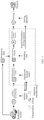
- FIG. 1 shows a process of mathematical modeling and problem solving.
- experts in an industry such as transportation, energy, and industrial manufacturing
- experts in operational research may cooperate to understand and abstract a problem to be optimized, and construct a corresponding mathematical optimization model.
- the mathematical optimization model and production data in the production system may be processed by using a modeling tool (mathematical programming modeling tools) to obtain an instance of a mathematical optimization problem.
- the operational research expert can manually formulate a solving approach.
- the instance of the mathematical optimization problem may be solved according to the solving approach, to obtain a needed decision. It can be seen that, both in a mathematical modeling step and a problem solving step, participation of industry experts and operational research experts is needed.
- a modeler In the mathematical modeling step, a modeler needs to be familiar with a service background and understand meaning and requirements of each decision factor; and the modeler further needs to have considerable mathematical optimization skills and can convert variables and constraints of different types of decisions into corresponding mathematical relationships, to form a complete mathematical programming problem.
- a "good” model is easy to solve or not easy to cause numerical precision problems.
- a "bad” model is not easy to solve or easy to cause numerical precision problems.
- a modeler needs to have long-term academic training to master a skill of building a "good” model.
- embodiments of this application provide a mathematical model solving method, so that after a user enters, through an interface, a command line, or the like, a problem description including a decision variable, a constraint, an objective function, and the like, a feature extraction may be performed on the problem description. Then, the problem description may be optimized and/or a solving approach may be generated based on an extracted feature by using an AI model. Finally, a value of each decision variable that meets the constraint in the problem description may be calculated by using an optimized model and/or a generated solving approach, to obtain the needed value of each decision variable. In this way, after the user provides the problem description, a corresponding decision can be obtained, thereby reducing dependence on user experience in a mathematical modeling step and a problem solving step, and improving efficiency and generalization of mathematical modeling and problem solving.
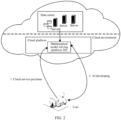
- FIG. 2 shows a diagram of a form of interaction between a user and a mathematical model solving platform according to an embodiment of this application.
- the mathematical model solving platform is mainly configured to provide functions such as mathematical modeling and problem solving.
- the form of interaction between the user and the mathematical model solving platform 200 mainly includes: The user logs in to a cloud platform through a client web page, and selects and purchases a cloud service of the mathematical model solving platform 200 on the cloud platform. After the purchase, the user may perform mathematical modeling and problem solving based on a function provided by the mathematical model solving platform 200.
- the user When performing mathematical modeling and problem solving on the mathematical model solving platform 200, the user performs mathematical modeling and problem solving based on a basic resource (which is mainly a computing resource, such as a CPU, a GPU, or an NPU) in a data center of a cloud service provider. Therefore, during purchase and use of the mathematical model solving platform 200, what is mainly paid for is the used resource.
- a basic resource which is mainly a computing resource, such as a CPU, a GPU, or an NPU
- the user enters, through an interface or a command line associated with the platform, a problem description including a decision variable, a constraint, an objective function, and the like.
- the mathematical model solving platform 200 may automatically perform mathematical modeling and problem solving, and after the problem solving is completed, output a value of each decision variable solved by the mathematical model solving platform 200 to the user, for example, display a value of each decision variable on the interface associated with the platform. In this way, the user can obtain a corresponding decision.
- the mathematical model solving platform 200 shown in FIG. 2 may be independently deployed on a server or a virtual machine in a data center in a cloud environment.
- the mathematical model solving platform 200 may be deployed on a plurality of servers in the data center in a distributed manner, or deployed on a plurality of virtual machines in the data center in a distributed manner.
- the mathematical model solving platform 200 provided in embodiments of this application may be alternatively deployed in different environments in a distributed manner.
- the mathematical model solving platform 200 provided in embodiments of this application may be logically divided into a plurality of parts, and each part has a different function.
- a part of the mathematical model solving platform 200 may be deployed in a computing device in an edge environment (which is also referred to as an edge computing device), and another part may be deployed in a device in a cloud environment.
- the edge environment is an environment that is relatively close to a terminal computing device of the user geographically.
- the edge environment includes an edge computing device, for example, an edge server or an edge small cell having a computing capability.
- the parts of the mathematical model solving platform 200 deployed in different environments or devices collaborate to provide functions such as mathematical modeling and problem solving for the user.
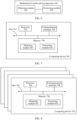
- FIG. 3 shows an architecture of a mathematical model solving platform.
- the mathematical model solving platform 200 may include an AI model 210 and an AI model 220.
- Both the AI model 210 and the AI model 220 may be a neural network model, a decision tree (decision tree) model, or the like.
- the AI model 210 and the AI model 220 may be separately arranged, or may be integrated together. This may be specifically determined according to an actual situation, and is not limited herein.
- the AI model 210 may include a feature extraction module 211 and a model optimization module 212.
- the feature extraction module 211 may be configured to perform feature extraction on a problem description entered by a user through an interface, a command line, or the like, to obtain a feature of the problem description.
- the feature of the problem description may be used to optimize the problem description entered by the user, and/or may be used to generate a solving approach needed for subsequent calculation.
- the objective function, the constraint, and the decision variable in the foregoing problem description may also be replaced with another objective function, another constraint, and another decision variable.
- the objective function, the constraint, and the decision variable may be set by the user according to a decision needed by the user, and this is not limited herein.
- the problem description may further include a coefficient of the decision variable, a value of a constant term corresponding to each constraint, and the like.
- the data may be referred to as but is not limited to service data.
- A may be understood as a coefficient matrix associated with the constraint in the problem description, and b may be understood as a vector formed by the value of the constant term corresponding to each constraint.
- the extracted feature of the problem description may include at least one of a semantic feature, a structure feature, and a data feature.
- the semantic feature represents at least one of a name of each decision variable (for example, a quantity of customers or a quantity of factories), a name of each constraint (for example, a manpower upper limit or minimum investment), and a name of the objective function (for example, profit maximization or shortest time) in the problem description entered by the user, and a name of a problem (for example, a transportation problem, a human resource management problem, or a path planning problem) expressed in the problem description.
- the structure feature represents at least one of a structure of the coefficient matrix associated with the constraint, a distribution rule of a non-zero element in the coefficient matrix, and a type of each constraint.
- the data feature represents at least one of a value of each element in the coefficient matrix and the value of the constant term corresponding to each constraint.
- the problem description entered by the user may further include a solving preference of the user.
- the extracted feature of the problem description may include a user preference feature, and the user preference feature mainly represents a requirement of the user for solving, for example, a requirement for an optimal solution or a requirement for a feasible solution.
- the problem description entered by the user may further include background information of a problem that the user needs to solve.
- the extracted feature of the problem description may include a problem background feature, and the problem background feature may represent a field or an industry to which the problem that the user needs to solve belongs.
- the model optimization module 212 is mainly configured to optimize, based on the feature of the problem description extracted by the feature extraction module 211, the problem description entered by the user, to obtain a standard model file (that is, a model file in a standard format).
- the standard model file may be read subsequently according to the solving approach, to calculate a decision.
- the standard model file may be understood as an optimized model.
- a format of the standard model file may be an MPS format, an LP format, an NL format, or the like.
- the model optimization module 212 may optimize, based on the feature extracted by the feature extraction module 211, a quantity and/or an expression form of at least one of the decision variable, the constraint, and the objective function in the problem description entered by the user, for example, identify and delete a redundant variable or constraint, add an additional auxiliary variable or constraint, modify types of the variable and constraint, decompose and regroup the coefficient matrix, or perform equivalent transformation on the coefficient matrix.
- the mathematical model solving platform 200 may first process, by using a modeling tool, the problem description entered by the user, for example, perform preliminary model decomposition and reconstruction, to obtain an initial model; and then optimize the initial model by using the model optimization module 212, to obtain the standard model file.
- the model optimization module 212 may select, from a preset model library based on the semantic feature, at least one model used to describe the problem expressed by the problem description entered by the user, and combine the selected model, to complete optimization of the problem description entered by the user.
- a same problem may have a plurality of different description manners, and an optimal one of these description manners facilitates subsequent solving.
- the semantic feature is used to perform selection, to select the optimal description manner.
- one problem may include a plurality of sub-problems, and a same sub-problem may also have a plurality of different description manners.
- an optimal description manner may be selected for each sub-problem, and finally, selected description manners may be combined, to complete optimization of the problem description entered by the user.
- the selected optimal description manner may be understood as a model. Optimizing, based on the semantic feature, the problem description entered by the user may be understood as replacing the problem expressed by the problem description or a part of the problem expressed by the problem description with an equivalent description manner.
- the model optimization module 212 may determine, based on the structure feature, a substructure of the coefficient matrix included in the problem description entered by the user. Then, a model adapted to each substructure is selected from the preset model library based on the determined substructure, and selected models are combined, to complete optimization of the problem description entered by the user. It should be understood that each substructure has a plurality of different description manners, and an optimal one of these description manners facilitates subsequent solving.
- the structure feature is used to perform selection, to select the optimal description manner for each substructure in the coefficient matrix.
- selected description manners may be combined, to complete optimization of the problem description entered by the user.
- the selected optimal description manner may be understood as a model.
- content included in an area 41 may be understood as a substructure
- content included in an area 42 may be understood as another substructure.
- Optimizing, based on the structure feature, the problem description entered by the user may be understood as replacing the problem expressed by the problem description or a part of the problem expressed by the problem description with an equivalent description manner.
- the model optimization module 212 may determine a ratio between different elements in the coefficient matrix based on the data feature. Then, a type of the coefficient matrix is determined based on the determined ratio. Finally, a model that matches the type of the coefficient matrix may be selected from the preset model library based on the type of the coefficient matrix, to complete optimization of the problem description entered by the user. It should be understood that each type of coefficient matrix has a plurality of different description manners, and an optimal one of these description manners facilitates subsequent solving.
- the data feature is used to perform selection, to select the optimal description manner for a type of a coefficient matrix, so as to complete optimization of the problem description entered by the user.
- the selected optimal description manner may be understood as a model. Optimizing, based on the data feature, the problem description entered by the user may be understood as replacing the problem expressed by the problem description or a part of the problem expressed by the problem description with an equivalent description manner.
- manners of optimizing, based on the semantic feature, the structure feature, and the data feature, the problem description entered by the user may be selected for use individually or in combination. This may be specifically determined according to an actual situation, and is not limited herein. During combination use, selected models are combined to complete optimization of the problem description entered by the user.
- the AI model 220 may include a solving approach generation module 221 and a problem solving module 222.
- the solving approach generation module 221 may be configured to: select N (N ⁇ 1) algorithms from an algorithm library based on the feature of the problem description extracted by the feature extraction module 211 in the AI model 210, and orchestrate an execution sequence and/or a calling relationship of the N algorithms, to generate a solving approach.
- a set of all algorithms that can be used to solve a current problem may be obtained from an existing algorithm database based on a problem feature extracted in a preceding step.
- the problem solving module 222 reads, mainly according to the solving approach generated by the solving approach generation module 221, the model obtained through optimization by the model optimization module 212 in the AI model 210, to perform solving calculation, and outputs a value of each decision variable obtained through calculation, that is, outputs a decision.
- some post-processing algorithms may be added for processing, to calculate a value of each decision variable needed by the user.
- the AI model 220 in the mathematical model solving platform 200 shown in FIG. 3 may alternatively be replaced with a solver.
- the optimized model output by the AI model 210 may be input to the solver, and the solver performs solving, to obtain a value of each decision variable.
- the solver is software for solving a mathematical programming problem, and is widely used in fields such as cloud computing, finance, transportation, manufacturing, and energy.
- the AI model 210 in the mathematical model solving platform 200 shown in FIG. 3 may alternatively not include the model optimization module 212.
- the mathematical model solving platform 200 may process, by using a modeling tool, the problem description entered by the user, to obtain an initial model.
- the problem solving module 222 may read, for calculation according to the solving approach generated by the solving approach generation module 221, the initial model obtained through processing by the modeling tool, to obtain a value of each decision variable.
- the modeling tool is a general term of software, a tool, or a system that assists in encoding and generates a mathematical optimization model.
- the modeling tool can identify and process objects such as a decision variable, a constraint, and an objective function, generate a coefficient matrix based on input data, and output a complete mathematical optimization problem in a standard format widely accepted in the industry.
- Common standard formats include .mps, .lp, and .nl.
- the AI model 220 may further record duration for this solving, quality of the obtained solution, and the like, and store a mapping relationship between the data and the algorithm used in the solving process. In this way, an algorithm library used by the AI model 220 can be updated, so that an algorithm adapted to another problem can be selected during subsequent solving of the another problem.
- the AI model 210 may further store a mapping relationship between data such as duration for this solving and quality of the obtained solution and the model used in the solving process.
- the model library, a feature library, and/or the like used by the AI model 210 can be updated, so that during subsequent solving of another problem, a model adapted to the another problem can be selected, or a feature with relatively high accuracy can be extracted.
- the feature extraction module 211 in the AI model 210 may be understood as a sub-model in the AI model 210.
- the model optimization module 212 in the AI model 210 may also be understood as a sub-model in the AI model 210.
- the solving approach generation module 221 in the AI model 220 may be understood as a sub-model in the AI model 220.
- the problem solving module 222 in the AI model 220 may also be understood as a sub-model in the AI model 220.
- FIG. 5 shows a procedure of the mathematical model solving method. It may be understood that the method may be performed by any apparatus, device, platform, or device cluster that has computing and processing capabilities. For example, the method may be applied to a computing device or a computing device cluster. As shown in FIG. 5 , the mathematical model solving method may include the following steps.
- S501 Obtain a problem description entered by a user, where the problem description includes a decision variable, a constraint, and an objective function.
- the user may enter the problem description through an interface, a command line, or the like. After the user completes entering of the problem description, the problem description can be obtained.
- the problem description includes the decision variable, the constraint, and the objective function.
- the problem description may be, but is not limited to, the problem description described in FIG. 3 .
- a feature in the problem description may be extracted by using the first AI model, to obtain the first feature.
- the first AI model may be a neural network model or a decision tree model.
- the first AI model may be but is not limited to the feature extraction module 211 in the AI model 210 described in FIG. 3 .
- the first feature may also be, but is not limited to, the feature extracted by the feature extraction module 211 described in FIG. 3 .
- S503 Process the first feature to obtain target data, where the target data includes a target model obtained by optimizing the problem description based on the first feature and/or a solving approach generated based on the first feature.
- the first feature may be processed to obtain the target data.
- the target data includes the target model obtained by optimizing the problem description based on the first feature and/or the solving approach generated based on the first feature.
- the first feature may be processed by using a second AI model, to obtain the target model.
- the second AI model may be but is not limited to the model optimization module 212 in the AI model 210 described in FIG. 3 .
- the second AI model may optimize the problem description based on the first feature, for example, optimize a quantity and/or an expression form of at least one of the decision variable, the constraint, and the objective function in the problem description, to obtain a standard model file, that is, to obtain the target model.
- a modeling tool may be first used to process the problem description, for example, perform preliminary model decomposition and reconstruction, to obtain an initial model, and then optimize the initial model by using the second AI model, to obtain the target model.
- the first feature may be processed by using a third AI model, to obtain the solving approach.
- the third AI model may be but is not limited to the solving approach generation module 221 in the AI model 220 described in FIG. 3 .
- the third AI model may generate the solving approach based on the first feature.
- the third AI model may select N algorithms from an algorithm library based on the first feature, where N ⁇ 1, and orchestrate an execution sequence and/or a calling relationship of the N algorithms, to obtain the solving approach.
- S504 Calculate, based on the target data, a value of each decision variable that meets the constraint in the problem description, and output the value of each decision variable.
- the value of each decision variable that meets the constraint in the problem description may be calculated based on the target data, and the value of each decision variable may be output.
- the target model when the target data is the target model, the target model may be input into a preset solver, to process the target model by using the preset solver, to obtain the value of each decision variable.
- the modeling tool when the target data is the solving approach, the modeling tool may be first used to process the problem description, to obtain an original model. Then, the original model is read for calculation according to the solving approach, to obtain the value of each decision variable.
- the target model when the target data is the target model and the solving approach, the target model may be read for calculation according to the solving approach, to obtain the value of each decision variable.
- At least one of the first AI model, the second AI model, and the third AI model may be further updated based on problem descriptions entered by different users.
- an algorithm library, a model library, a feature library, or the like in a model may be updated based on duration for each solving, quality of a solution obtained through calculation, or the like. In this way, accuracy of extracting a feature of a problem description each time is improved, accuracy of model optimization is improved, or efficiency of a solving approach is improved.
- an embodiment of this application further provides a mathematical model solving apparatus.
- FIG. 6 shows a structure of a mathematical model solving apparatus. It may be understood that the apparatus may be deployed in, but is not limited to, a computing device or a computing device cluster.
- the mathematical model solving apparatus 600 may include an obtaining module 601 and a processing module 602.
- the obtaining module 601 is configured to obtain a problem description entered by a user, where the problem description includes a decision variable, a constraint, and an objective function.
- the processing module 602 is configured to extract a feature in the problem description by using a first artificial intelligence AI model, to obtain a first feature.
- the processing module 602 is further configured to process the first feature to obtain target data, where the target data includes a target model obtained by optimizing the problem description based on the first feature and/or a solving approach generated based on the first feature.
- the processing module 602 is further configured to: calculate, based on the target data, a value of each decision variable that meets the constraint in the problem description, and output the value of each decision variable.
- the target data may be the target model.
- the processing module 602 is specifically configured to input the target model into a preset solver, to obtain the value of each decision variable.
- the target data may be the solving approach.
- the processing module 602 is specifically configured to: read, for calculation according to the solving approach, an original model obtained by processing the problem description by using a modeling tool, to obtain the value of each decision variable.
- the target data may be the target model and the solving approach.
- the processing module 602 is specifically configured to read the target model for calculation according to the solving approach, to obtain the value of each decision variable.
- the processing module 602 when processing the first feature to obtain the target data, is specifically configured to optimize a quantity and/or an expression form of at least one of the decision variable, the constraint, and the objective function in the problem description by using a second AI model and the first feature, to obtain the target model; and/or select N algorithms from an algorithm library by using a third AI model and the first feature, where N ⁇ 1, and orchestrate an execution sequence and/or a calling relationship of the N algorithms, to obtain the solving approach.
- the processing module 602 is further configured to update at least one of the first AI model, the second AI model, and the third AI model based on problem descriptions entered by different users.
- the first feature includes at least one of a semantic feature, a structure feature, and a data feature.
- the semantic feature represents at least one of a name of each decision variable, a name of each constraint, a name of the objective function, and a name of a problem expressed by the problem description.
- the structure feature represents at least one of a structure of the coefficient matrix associated with the constraint, a distribution rule of a non-zero element in the coefficient matrix, and a type of each constraint.
- the data feature represents at least one of a value of each element in the coefficient matrix and a value of a constant term corresponding to each constraint.
- the problem description further includes a solving preference of the user, the first feature includes a user preference feature, and the user preference feature represents a requirement of the user for solving; and/or, the problem description further includes background information of a problem that the user needs to solve, the first feature includes a problem background feature, and the problem background feature represents a field or an industry to which the problem that the user needs to solve belongs.
- both the obtaining module 601 and the processing module 602 may be implemented by software, or may be implemented by hardware.
- the following uses the obtaining module 601 as an example to describe an implementation of the obtaining module 601.
- the processing module 602 refer to the implementation of the obtaining module 601.
- the module is as an example of a software functional unit, and the obtaining module 601 may include code run on a computing instance.
- the computing instance may include at least one of a physical host (computing device), a virtual machine, and a container. Further, there may be one or more computing instances.
- the obtaining module 601 may include code run on a plurality of hosts/virtual machines/containers. It should be noted that the plurality of hosts/virtual machines/containers configured to run the code may be distributed in a same region (region), or may be distributed in different regions.
- the plurality of hosts/virtual machines/containers configured to run the code may be distributed in a same availability zone (availability zone, AZ), or may be distributed in different AZs.
- Each AZ includes one data center or a plurality of data centers that are geographically close to each other.
- one region may include a plurality of AZs.
- the plurality of hosts/virtual machines/containers configured to run the code may be distributed in a same virtual private cloud (virtual private cloud, VPC), or may be distributed in a plurality of VPCs.
- VPC virtual private cloud
- one VPC is set in one region.
- a communication gateway needs to be set in each VPC for communication between two VPCs in a same region or between VPCs in different regions. Interconnection between VPCs is implemented through the communication gateway.
- the plurality of computing devices included in the obtaining module 601 may be distributed in a same region, or may be distributed in different regions.
- the plurality of computing devices included in the obtaining module 601 may be distributed in a same AZ, or may be distributed in different AZs.
- the plurality of computing devices included in the obtaining module 601 may be distributed in a same VPC, or may be distributed in a plurality of VPCs.
- the plurality of computing devices may be any combination of computing devices such as a server, an ASIC, a PLD, a CPLD, an FPGA, and a GAL.
- the obtaining module 601 may be configured to perform any step in the method shown in FIG. 5
- the processing module 602 may also be configured to perform any step in the method shown in FIG. 5
- steps implemented by the obtaining module 601 and the processing module 602 may be specified according to a requirement.
- the obtaining module 601 and the processing module 602 separately implement a different step in the method shown in FIG. 5 , to implement all functions of the mathematical model solving apparatus.
- this application further provides a computing device.
- the computing device 700 includes a bus 702, a processor 704, a memory 706, and a communication interface 708.
- the processor 704, the memory 706, and the communication interface 708 communicate with each other through the bus 702.
- the computing device 700 may be a server or a terminal device. It should be understood that quantities of processors and memories of the computing device 700 are not limited in embodiments of this application.
- the bus 702 may be a peripheral component interconnect (peripheral component interconnect, PCI) bus, an extended industry standard architecture (extended industry standard architecture, EISA) bus, or the like.
- PCI peripheral component interconnect
- EISA extended industry standard architecture
- the bus may be classified into an address bus, a data bus, a control bus, and the like. For ease of representation, only one line is used for representation in FIG. 7 , but this does not mean that there is only one bus or only one type of bus.
- the bus 702 may include a path for information transmission between components (for example, the memory 706, the processor 704, and the communication interface 708) of the computing device 700.
- the processor 704 may include any one or more of processors such as a central processing unit (central processing unit, CPU), a graphics processing unit (graphics processing unit, GPU), a microprocessor (micro processor, MP), and a digital signal processor (digital signal processor, DSP).
- processors such as a central processing unit (central processing unit, CPU), a graphics processing unit (graphics processing unit, GPU), a microprocessor (micro processor, MP), and a digital signal processor (digital signal processor, DSP).
- the memory 706 may include a volatile memory (volatile memory), for example, a random access memory (random access memory, RAM).
- the processor 704 may further include a non-volatile memory (non-volatile memory), for example, a read-only memory (read-only memory, ROM), a flash memory, a hard disk drive (hard disk drive, HDD), or a solid state drive (solid state drive, SSD).
- the memory 706 stores executable program code, and the processor 704 executes the executable program code to separately implement functions of the mathematical model solving apparatus 600, so as to implement the method described in FIG. 5 .
- the memory 706 stores instructions used to perform the method described in FIG. 5 .
- the memory 706 stores executable code
- the processor 704 executes the executable code to separately implement functions of the mathematical model solving apparatus 600, so as to implement the method described in FIG. 5 .
- the memory 706 stores instructions used to perform the method described in FIG. 5 .
- the communication interface 708 uses a transceiver module, for example, but not limited to, a network interface card or a transceiver, to implement communication between the computing device 700 and another device or a communication network.
- a transceiver module for example, but not limited to, a network interface card or a transceiver, to implement communication between the computing device 700 and another device or a communication network.
- an embodiment of this application further provides a computing device cluster.
- the computing device cluster includes at least one computing device.
- the computing device may be a server, for example, a central server, an edge server, or a local server in a local data center.
- the computing device may alternatively be a terminal device, for example, a desktop computer, a notebook computer, or a smartphone.
- the computing device cluster includes at least one computing device 700.
- a memory 706 in one or more computing devices 700 in the computing device cluster may store same instructions used to perform the method described in FIG. 5 .
- the memory 706 in the one or more computing devices 700 in the computing device cluster may also separately store some instructions used to perform the method described in FIG. 5 .
- a combination of the one or more computing devices 700 may jointly execute the instructions used to perform the method described in FIG. 5 .
- memories 706 of different computing devices 700 in the computing device cluster may store different instructions to separately perform some functions of the mathematical model solving apparatus 600.
- instructions stored in the memories 706 in different computing devices 700 may implement functions of one or more modules in the mathematical model solving apparatus 600.
- the one or more computing devices in the computing device cluster may be connected through a network.
- the network may be a wide area network, a local area network, or the like.
- an embodiment of this application provides a computer-readable storage medium.
- the computer-readable storage medium stores a computer program.
- the processor is enabled to perform method in the foregoing embodiments.
- an embodiment of this application provides a computer program product.
- the computer program product runs on a processor
- the processor is enabled to perform the method in the foregoing embodiments.
- the processor in embodiments of this application may be a central processing unit (central processing unit, CPU), or may be another general-purpose processor, a digital signal processor (digital signal processor, DSP), an application-specific integrated circuit (application-specific integrated circuit, ASIC), a field programmable gate array (field programmable gate array, FPGA), another programmable logic device, a transistor logic device, a hardware component, or any combination thereof.
- the general-purpose processor may be a microprocessor or any regular processor or the like.
- the method steps in embodiments of this application may be implemented in a hardware manner, or may be implemented in a manner of executing software instructions by the processor.
- the software instructions may include corresponding software modules.
- the software modules may be stored in a random access memory (random access memory, RAM), a flash memory, a read-only memory (read-only memory, ROM), a programmable read-only memory (programmable ROM, PROM), an erasable programmable read-only memory (erasable PROM, EPROM), an electrically erasable programmable read-only memory (electrically EPROM, EEPROM), a register, a hard disk, a removable hard disk, a CD-ROM, or any other form of storage medium well-known in the art.
- a storage medium is coupled to a processor, so that the processor can read information from the storage medium and write information into the storage medium.
- the storage medium may be a component of the processor.
- the processor and the storage medium may be disposed in an ASIC.
- All or some of the foregoing embodiments may be implemented by using software, hardware, firmware, or any combination thereof.
- software is used to implement embodiments, all or a part of the embodiments may be implemented in a form of a computer program product.
- the computer program product includes one or more computer instructions.
- the computer may be a general-purpose computer, a dedicated computer, a computer network, or other programmable apparatuses.
- the computer instructions may be stored in a computer-readable storage medium, or may be transmitted through the computer-readable storage medium.
- the computer instructions may be transmitted from a website, computer, server, or data center to another website, computer, server, or data center in a wired (for example, a coaxial cable, an optical fiber, or a digital subscriber line (DSL)) or wireless (for example, infrared, radio, or microwave) manner.
- the computer-readable storage medium may be any usable medium accessible by the computer, or a data storage device, for example, a server or a data center, integrating one or more usable media.
- the usable medium may be a magnetic medium (for example, a floppy disk, a hard disk, or a magnetic tape), an optical medium (for example, a DVD), a semiconductor medium (for example, a solid state drive (solid state drive, SSD)), or the like.
Landscapes
- Engineering & Computer Science (AREA)
- Physics & Mathematics (AREA)
- Theoretical Computer Science (AREA)
- General Physics & Mathematics (AREA)
- Mathematical Physics (AREA)
- Data Mining & Analysis (AREA)
- Software Systems (AREA)
- General Engineering & Computer Science (AREA)
- Evolutionary Computation (AREA)
- Mathematical Optimization (AREA)
- Pure & Applied Mathematics (AREA)
- Mathematical Analysis (AREA)
- Computational Mathematics (AREA)
- Artificial Intelligence (AREA)
- Computing Systems (AREA)
- Computational Linguistics (AREA)
- Algebra (AREA)
- Databases & Information Systems (AREA)
- Operations Research (AREA)
- Medical Informatics (AREA)
- Computer Vision & Pattern Recognition (AREA)
- General Health & Medical Sciences (AREA)
- Biomedical Technology (AREA)
- Biophysics (AREA)
- Life Sciences & Earth Sciences (AREA)
- Molecular Biology (AREA)
- Health & Medical Sciences (AREA)
- Probability & Statistics with Applications (AREA)
- Computer Hardware Design (AREA)
- Geometry (AREA)
- Management, Administration, Business Operations System, And Electronic Commerce (AREA)
- Information Retrieval, Db Structures And Fs Structures Therefor (AREA)
Applications Claiming Priority (3)
| Application Number | Priority Date | Filing Date | Title |
|---|---|---|---|
| CN202210801101 | 2022-07-08 | ||
| CN202211405539.6A CN117422191A (zh) | 2022-07-08 | 2022-11-10 | 一种数学模型求解方法、装置、计算设备及计算设备集群 |
| PCT/CN2023/079613 WO2024007604A1 (fr) | 2022-07-08 | 2023-03-03 | Procédé et appareil de résolution de modèle mathématique, dispositif informatique et grappe de dispositifs informatiques |
Publications (2)
| Publication Number | Publication Date |
|---|---|
| EP4535247A1 true EP4535247A1 (fr) | 2025-04-09 |
| EP4535247A4 EP4535247A4 (fr) | 2025-10-01 |
Family
ID=89454317
Family Applications (1)
| Application Number | Title | Priority Date | Filing Date |
|---|---|---|---|
| EP23834388.3A Pending EP4535247A4 (fr) | 2022-07-08 | 2023-03-03 | Procédé et appareil de résolution de modèle mathématique, dispositif informatique et grappe de dispositifs informatiques |
Country Status (3)
| Country | Link |
|---|---|
| US (1) | US20250148043A1 (fr) |
| EP (1) | EP4535247A4 (fr) |
| WO (1) | WO2024007604A1 (fr) |
Families Citing this family (3)
| Publication number | Priority date | Publication date | Assignee | Title |
|---|---|---|---|---|
| US20230214692A1 (en) * | 2020-06-01 | 2023-07-06 | Nec Corporation | Information processing apparatus, information processing method, and computer-readable recording medium |
| CN118095993B (zh) * | 2024-04-23 | 2024-08-23 | 宁德时代新能源科技股份有限公司 | 运输方案的确定方法、装置、计算机设备和存储介质 |
| CN119358688A (zh) * | 2024-12-26 | 2025-01-24 | 厦门渊亭信息科技有限公司 | 基于运筹大模型对线性规划问题的求解方法、装置、设备及存储介质 |
Family Cites Families (6)
| Publication number | Priority date | Publication date | Assignee | Title |
|---|---|---|---|---|
| CN102270190B (zh) * | 2010-06-04 | 2013-07-17 | 同济大学 | 一种复杂决策问题的计算机建模与求解处理方法 |
| US9659253B1 (en) * | 2016-02-04 | 2017-05-23 | International Business Machines Corporation | Solving an optimization model using automatically generated formulations in a parallel and collaborative method |
| CN112818280B (zh) * | 2019-11-18 | 2023-07-21 | 华为技术有限公司 | 一种信息处理方法以及相关设备 |
| CN113887030A (zh) * | 2021-09-24 | 2022-01-04 | 南方科技大学 | 复杂问题自动建模与求解的通用方法及系统 |
| CN114579110B (zh) * | 2022-05-05 | 2022-08-19 | 支付宝(杭州)信息技术有限公司 | 优化模型的求解方法、电子设备、应用程序及存储介质 |
| CN114581220B (zh) * | 2022-05-05 | 2022-09-16 | 支付宝(杭州)信息技术有限公司 | 数据处理方法、设备及分布式计算系统 |
-
2023
- 2023-03-03 WO PCT/CN2023/079613 patent/WO2024007604A1/fr not_active Ceased
- 2023-03-03 EP EP23834388.3A patent/EP4535247A4/fr active Pending
-
2025
- 2025-01-08 US US19/013,155 patent/US20250148043A1/en active Pending
Also Published As
| Publication number | Publication date |
|---|---|
| US20250148043A1 (en) | 2025-05-08 |
| WO2024007604A1 (fr) | 2024-01-11 |
| EP4535247A4 (fr) | 2025-10-01 |
Similar Documents
| Publication | Publication Date | Title |
|---|---|---|
| EP4535247A1 (fr) | Procédé et appareil de résolution de modèle mathématique, dispositif informatique et grappe de dispositifs informatiques | |
| CN110119413B (zh) | 数据融合的方法和装置 | |
| CN106600356B (zh) | 多平台电子商务信息聚合方法及系统 | |
| García Rodríguez et al. | Public procurement announcements in spain: regulations, data analysis, and award price estimator using machine learning | |
| CN113674013B (zh) | 一种基于商户自定义规则的广告竞价调整方法及系统 | |
| Yang et al. | Intelligent transformation and sustainable innovation capability: Evidence from China | |
| CN110597796B (zh) | 基于全生命周期的大数据实时建模方法及系统 | |
| Rathnayaka et al. | Grey system based novel approach for stock market forecasting | |
| Zhang et al. | Learning to select supplier portfolios for service supply chain | |
| de Moraes et al. | Application of deterministic, stochastic, and hybrid methods for cloud provider selection | |
| CN116701662A (zh) | 基于知识图谱的供应链数据管理方法、装置、设备及介质 | |
| CN119227889A (zh) | 一种零售行业库存管理与需求预测系统 | |
| US11830081B2 (en) | Automated return evaluation with anomoly detection | |
| Levandivskyi et al. | Modeling of added value as a financial indicator of activity of agricultural enterprises in the regions of Ukraine. | |
| CN121118849A (zh) | 一种服务方案生成方法及系统 | |
| Kunadi | AI-Driven Data Enrichment and Golden Record Creation for Enterprise Customer Data Platforms | |
| CN114565255A (zh) | 一种企业集群协同的供应链管理方法及系统 | |
| CN110796381B (zh) | 风控模型的建模方法、装置、终端设备及介质 | |
| CN119358688A (zh) | 基于运筹大模型对线性规划问题的求解方法、装置、设备及存储介质 | |
| CN119831332A (zh) | 基于XGBoost算法的企业风险预警方法、装置、设备及存储介质 | |
| Uula et al. | Machine Learning in Islamic Finance | |
| Hung et al. | Applying group technology to the forging industry | |
| Alshubiri | The impact of the digital economy paradigm on investment sustainability in Oman | |
| CN117350828A (zh) | 一种投标评审方法、系统、计算机设备及存储介质 | |
| Huang et al. | Optimal multinational project adjustment and selection with random parameters |
Legal Events
| Date | Code | Title | Description |
|---|---|---|---|
| STAA | Information on the status of an ep patent application or granted ep patent |
Free format text: STATUS: THE INTERNATIONAL PUBLICATION HAS BEEN MADE |
|
| PUAI | Public reference made under article 153(3) epc to a published international application that has entered the european phase |
Free format text: ORIGINAL CODE: 0009012 |
|
| STAA | Information on the status of an ep patent application or granted ep patent |
Free format text: STATUS: REQUEST FOR EXAMINATION WAS MADE |
|
| 17P | Request for examination filed |
Effective date: 20250102 |
|
| AK | Designated contracting states |
Kind code of ref document: A1 Designated state(s): AL AT BE BG CH CY CZ DE DK EE ES FI FR GB GR HR HU IE IS IT LI LT LU LV MC ME MK MT NL NO PL PT RO RS SE SI SK SM TR |
|
| A4 | Supplementary search report drawn up and despatched |
Effective date: 20250902 |
|
| RIC1 | Information provided on ipc code assigned before grant |
Ipc: G06N 20/00 20190101AFI20250827BHEP Ipc: G06F 30/20 20200101ALI20250827BHEP Ipc: G06F 17/11 20060101ALI20250827BHEP Ipc: G06F 17/12 20060101ALI20250827BHEP Ipc: G06N 5/02 20230101ALI20250827BHEP Ipc: G06N 5/04 20230101ALI20250827BHEP Ipc: G06F 30/27 20200101ALI20250827BHEP |
|
| DAV | Request for validation of the european patent (deleted) | ||
| DAX | Request for extension of the european patent (deleted) |