EP4535333A2 - Systeme, vorrichtungsverfahren und flugplanung für luftfahrzeuge und effiziente kommunikation mit luftfahrzeugen - Google Patents
Systeme, vorrichtungsverfahren und flugplanung für luftfahrzeuge und effiziente kommunikation mit luftfahrzeugen Download PDFInfo
- Publication number
- EP4535333A2 EP4535333A2 EP24200231.9A EP24200231A EP4535333A2 EP 4535333 A2 EP4535333 A2 EP 4535333A2 EP 24200231 A EP24200231 A EP 24200231A EP 4535333 A2 EP4535333 A2 EP 4535333A2
- Authority
- EP
- European Patent Office
- Prior art keywords
- aircraft
- processor
- data
- based system
- ground
- Prior art date
- Legal status (The legal status is an assumption and is not a legal conclusion. Google has not performed a legal analysis and makes no representation as to the accuracy of the status listed.)
- Granted
Links
Images




Classifications
-
- G—PHYSICS
- G08—SIGNALLING
- G08G—TRAFFIC CONTROL SYSTEMS
- G08G5/00—Traffic control systems for aircraft
- G08G5/20—Arrangements for acquiring, generating, sharing or displaying traffic information
- G08G5/26—Transmission of traffic-related information between aircraft and ground stations
-
- G—PHYSICS
- G01—MEASURING; TESTING
- G01C—MEASURING DISTANCES, LEVELS OR BEARINGS; SURVEYING; NAVIGATION; GYROSCOPIC INSTRUMENTS; PHOTOGRAMMETRY OR VIDEOGRAMMETRY
- G01C21/00—Navigation; Navigational instruments not provided for in groups G01C1/00 - G01C19/00
- G01C21/20—Instruments for performing navigational calculations
-
- G—PHYSICS
- G08—SIGNALLING
- G08G—TRAFFIC CONTROL SYSTEMS
- G08G5/00—Traffic control systems for aircraft
- G08G5/30—Flight plan management
- G08G5/34—Flight plan management for flight plan modification
-
- G—PHYSICS
- G08—SIGNALLING
- G08G—TRAFFIC CONTROL SYSTEMS
- G08G5/00—Traffic control systems for aircraft
- G08G5/50—Navigation or guidance aids
- G08G5/53—Navigation or guidance aids for cruising
-
- G—PHYSICS
- G08—SIGNALLING
- G08G—TRAFFIC CONTROL SYSTEMS
- G08G5/00—Traffic control systems for aircraft
- G08G5/70—Arrangements for monitoring traffic-related situations or conditions
- G08G5/72—Arrangements for monitoring traffic-related situations or conditions for monitoring traffic
- G08G5/727—Arrangements for monitoring traffic-related situations or conditions for monitoring traffic from a ground station
-
- G—PHYSICS
- G08—SIGNALLING
- G08G—TRAFFIC CONTROL SYSTEMS
- G08G5/00—Traffic control systems for aircraft
- G08G5/70—Arrangements for monitoring traffic-related situations or conditions
- G08G5/76—Arrangements for monitoring traffic-related situations or conditions for monitoring atmospheric conditions
Definitions
- the present disclosure relates generally to systems, apparatus, methods and/or articles related to aircraft flight planning, reduction in fuel consumption, other optimizations, and to efficient communications with aircraft where, for example, communications resources are limited or expensive.
- Flight planning generates flight plans, and can generate flight plans that optimize flight trajectories, for example taking into account weather, restricted airspace, other aircraft, and other potential hazards.
- a flight plan comprises a sequence of waypoints, which are typically specified by latitude and longitude and have associated three to five letter names.
- the flight plan can include specifics of altitude, airspeed, and anticipated winds (e.g., velocity and direction). It may be desirable to change a flight plan in-flight to take into account variable conditions (e.g., variations in forecast winds, weather, air traffic, restricted airspace, turbulence).
- Revised or modified or adjusted flight plans can be generated to, for example, minimize fuel consumption, avoid turbulences, avoid convective weather systems, avoid other air traffic or aircraft, and/or avoid restricted airspace.
- TASAR Traffic Aware Strategic Aircrew Requests
- EFB Electronic Flight Bag
- the TASAR system includes a software application which runs via an on-board processor-based device (e.g., software application loaded on and operated via a tablet computer ( e.g., iPad ® )), a configuration component, a ground-based server computer system, and other ground-based services.
- an on-board processor-based device e.g., software application loaded on and operated via a tablet computer (e.g., iPad ® )
- a configuration component e.g., a ground-based server computer system, and other ground-based services.
- TASAR Traffic Aware Strategic Aircrew Requests
- TAP Traffic Aware Planner
- ICD Interface Control Document
- Flight path specification or optimization can be a function of various parameters including various characteristics of the aircraft.
- the structural configuration e.g., different shapes, sizes, structures, tail design, wing design, presence or absence of winglets, different engine configurations
- the structural configuration e.g., different shapes, sizes, structures, tail design, wing design, presence or absence of winglets, different engine configurations
- the structural configuration e.g., different shapes, sizes, structures, tail design, wing design, presence or absence of winglets, different engine configurations
- the performance characteristics of the aircraft can change substantially over time.
- Alternative flight plans can be generated to, for example, to one or more of: minimize fuel consumption, avoid turbulences, avoid convective weather systems, avoid turbulence, avoid other air traffic or aircraft, reduce overall flight time or transit time, lengthen a flight or transit time or a portion thereof where an aircraft has been instructed to not reach a given waypoint before a specified time based on imposed delays by air traffic control, maximize on time departures, maximize on time arrivals, minimize a total number of missed connections, minimize overall cost of operation for a carrier airline, and/or to improve other specified flight characteristics.
- Some of the performance characteristics or optimization rules e.g., weighting assigned to various variables or parameters
- communications e.g., uplinks from ground-based systems to aircraft; downlinks from aircraft to ground-based systems
- uplinks from ground-based systems to aircraft is often bandwidth limited, and can be complicated and, or can be costly (e.g., satellite communications links).
- instrumented data e.g., pitot static tube readings or airspeed
- the transponders transmit (i.e. , squawk) a limited set of information, either in response to an interrogation or periodically.
- the set of information transmitted by a transponder may be specified by a given authority (e.g., Federal Aircraft Administration (FAA)) and/or may be specified by a particular type of aircraft operation (e.g., commercial or private) and/or by a particular airspace in which the aircraft operates.
- FAA Federal Aircraft Administration
- information collected from transponders via a ground-based system is advantageously employed to generate or derive at least an estimate of airspeed (i.e., derived airspeed) of an aircraft at various times during one or more flights.
- airspeed i.e., derived airspeed
- Such can, for example, employ global navigation coordinates which may represent ground locations, and time-stamps to determine a ground speed of the aircraft.
- weather data for example a three-dimensional atmospheric wind model which represents wind speeds and wind directions (e.g., winds aloft), and which also represents barometric pressures and atmospheric temperatures, all at various geographic locations and at various altitudes at those geographic locations.
- a system In order to generate an optimized (e.g., optimized, but not necessarily optimal) flight plan or optimized alternative flight plan (e.g., adjusted or revised or modified flight plan), a system should account for the specific aircraft performance characteristics of the individual aircraft, not only the make and model of the particular aircraft, but also the specific configuration of the specific individual aircraft and even the effect of age or current length of service of the specific individual aircraft on aircraft performance.
- Fuel consumption is a significant factor in operating cost and environmental impact, particularly for aircraft that consume conventional combustible liquid fuels (e.g., aviation gas, jet fuel or refined kerosene). Consequently, it would be advantageous to verify that an aircraft model, fuel consumption model or fuel consumption parameter is correct, and, or to correct, adjust, or otherwise revise the aircraft model, fuel consumption model or fuel consumption parameter accordingly.
- conventional combustible liquid fuels e.g., aviation gas, jet fuel or refined kerosene
- Winds aloft data also has a significant impact of flight planning and on operational efficiency of aircraft.
- Most carrier airlines rely on forecasted winds aloft data, for example forecasted winds aloft data provide by the National Oceanic and Atmospheric Administration (NOAA) and made accessible via NOAA's ground-based systems and/or a more robust or detailed three-dimensional weather model.
- winds aloft data is adjusted (i.e., adjusted winds aloft data) based on variations or discrepancy identified in wind conditions actually experienced by aircraft in a defined vicinity, at a defined range of altitudes, and in a defined range of times.
- the variation or discrepancy can be determined from discrepancies in derived airspeeds experienced by various aircraft in the vicinity of one another in a defined time period, for instance where a pattern exists (e.g., derived airspeeds for one or more aircraft indicate that the winds aloft are incorrect by roughly the same amount, e.g., approximately the same magnitude and direction, for instance as represented by respective vectors).
- the variation or discrepancy can be determined from discrepancies in expected or predicted fuel consumption and actual or measured fuel consumption.
- variations or discrepancies can be determined from discrepancies between derived airspeeds and instrumented airspeeds when instrumented airspeed are available.
- Adjusted winds aloft data can advantageously be employed in subsequent determinations of derived airspeed and, or to generated alternative flight plan ( e.g., revised or modified or adjusted flight plans), improving operating efficiency of the aircraft.
- a subset of data of each of a respective type of data of a plurality of types of data can be identified to be uplinked to the particular aircraft, for example based at least in part on a flight plan.
- Types of data can, for example, include one or more of: convective weather data, air traffic, turbulence, restricted airspace data, winds aloft data or winds aloft data derived from a three-dimensional weather model, or adjusted winds aloft data.
- the identified subset of data can be based at least in part on a filed flight plan or a revised or updated or otherwise alternative flight plan (e.g., during the corresponding flight).
- the TAP processor-based system 102 is communicatively coupled to one or more ground-based information systems 105a, 105b, 105c, 105d (four shown) via one or more conventional communications channels 106 (e.g., local area networks, wide area networks, wired networks, wireless networks, Ethernet, Internet, extranets), which typically are high or relatively high bandwidth communications channels.
- conventional communications channels 106 e.g., local area networks, wide area networks, wired networks, wireless networks, Ethernet, Internet, extranets
- the TAP processor-based system 102 is communicatively coupled to one or more ground-based convective weather information systems 105b that provides convective weather or storm information (e.g., geographic locations, altitudes, severity) and/or turbulence information. Also, for example, the TAP processor-based system 102 is communicatively coupled to one or more ground-based 105c Special Use Airspace (SUA) information systems, for example a SUA information system provided and operated by the FAA.
- SUV Special Use Airspace
- the TAP processor-based system 102 is communicatively coupled to one or more ground-based aircraft tracking processor-based systems 108 via conventional communications channels 106 (e.g., local area networks, wide area networks, wired networks, wireless networks, Ethernet, Internet, extranets), which typically are high bandwidth communications channels.
- the ground-based aircraft tracking processor-based system(s) 108 tracks aircraft 110 while in flight or airborne 112, typically via transponder telemetry 114.
- the transponder telemetry 114 originates from aircraft transponders 116 carried by each aircraft 110 (only one shown in Figure 1 ).
- the cost index can be used to determine things like the targeted Mach number, which is provided to the autopilot system to control operation of the aircraft to match the actual airspeed to the targeted Mach number.
- the airline operation control processor-based system(s) 120 can also provide fuel weight information from position reports, Gate Out, Wheels Off, Wheels On, Gate In (OOOI) messages, flight data monitoring (fmd) messages, as well as filed flight plans that include vertical intent (filed step climbs).
- the winds aloft updater processor-based system(s) 124 can determine whether discrepancies exist in winds aloft information (e.g., forecasted winds aloft information, previously adjusted winds aloft information, three-dimensional weather model which includes forecasted winds aloft data) and generate adjusted winds aloft information based on real-time or almost real-time assessments (e.g., based on winds being experienced by one or more aircraft in a same general vicinity of one another and a same general altitude of one another and at a same general time as one another).
- winds aloft information e.g., forecasted winds aloft information, previously adjusted winds aloft information, three-dimensional weather model which includes forecasted winds aloft data
- adjusted winds aloft information based on real-time or almost real-time assessments (e.g., based on winds being experienced by one or more aircraft in a same general vicinity of one another and a same general altitude of one another and at a same general time as one another).
- One or more nontransitory storage media 125 can store winds aloft data and/or three-dimensional weather model which includes forecasted winds aloft data, for example adjusted winds aloft data generated by the winds aloft updater processor-based system(s) 124.
- the aircraft performance models or performance data 129 are specific to a specific individual aircraft, and represents one or more or all of: a make and model of aircraft, a specific structural configuration of the specific individual aircraft (e.g., different shapes, sizes, structures, tail design, wing design, presence or absence of winglets, different engine configurations) and even representing an effect of an age of the specific individual aircraft and, or a total number of cycles (e.g., takeoffs and landings, pressurizations) that the specific individual aircraft has experienced over is life.
- a make and model of aircraft e.g., different shapes, sizes, structures, tail design, wing design, presence or absence of winglets, different engine configurations
- a total number of cycles e.g., takeoffs and landings, pressurizations
- the aircraft performance updater processor-based system(s) 128 can determine whether discrepancies exist in between modeled performance and actual performance of a specific individual aircraft (e.g., discrepancies in modeled airspeed and actual airspeed; discrepancies in modeled fuel consumption and actual fuel consumption), and generate adjusted aircraft models or aircraft performance models that better reflect the actual experience of the specific individual aircraft. While the aircraft performance updater processor-based system(s) 128 is illustrated as a separate processor-based system from the TAP processor-based system 102, in some implementations the operation of the aircraft performance updater processor-based system(s) 128 can be implemented by the TAP processor-based system 102.
- a TAP processor-based system can be implemented in an airborne or aircraft-based system (e.g., as part of an electronic flight bag implemented on a processor-based system, for instance a tablet computer system), although such disadvantageously significantly increases the transfer of information or data between ground and aircraft, and in particular significantly disadvantageously increases an amount of information uplinked to the aircraft from the ground-based information systems.
- the aircraft 110 can have any of a large variety of instrumentation and communications systems. As illustrated, the aircraft 110 includes an avionics bus 130, a flight management system (FMS) 132 and flight data recorder 134. The aircraft 110 also includes a number of sensors, for example, one or more pressure sensors 136a, one or more pitot static tube airspeed sensors 136b, one or more fuel volume sensors 136c, one or more flight control sensors, one or more engine sensors (e.g., fuel flow sensor, turbine inlet temperature sensor, torque sensor or meter, and/or gyroscopic sensor to name a few).
- FMS flight management system
- the aircraft 110 also includes a number of sensors, for example, one or more pressure sensors 136a, one or more pitot static tube airspeed sensors 136b, one or more fuel volume sensors 136c, one or more flight control sensors, one or more engine sensors (e.g., fuel flow sensor, turbine inlet temperature sensor, torque sensor or meter, and/or gyroscopic sensor to name a few
- the aircraft 110 also includes a number of instruments for displaying information the flight crew 138 and/or to receive input from the flight crew 138, for example an altimeter 140a, an airspeed indicator 140b, a compass, a vertical speed indicator, engine performance indicators, a gyroscope pitch or bank indicator (artificial horizon), a gyroscopic direction and rate of turn indicator, a fuel volume indicator 140c, oil pressure indicator, to name just a few.
- instruments for displaying information the flight crew 138 and/or to receive input from the flight crew 138, for example an altimeter 140a, an airspeed indicator 140b, a compass, a vertical speed indicator, engine performance indicators, a gyroscope pitch or bank indicator (artificial horizon), a gyroscopic direction and rate of turn indicator, a fuel volume indicator 140c, oil pressure indicator, to name just a few.
- the aircraft 110 also includes a number of actuators (e.g., electric motors 142a, valves and hydraulic or pneumatic pistons 142b, solenoids 142c) which are typically mechanically coupled to control the operation and/or position of various flight control surfaces (e.g., ailerons, elevator, rudder, flaps, slats, spoilers, balance tabs, elevator tabs) as well as other components (e.g., throttle, landing gear, internal pressure and temperature).
- actuators e.g., electric motors 142a, valves and hydraulic or pneumatic pistons 142b, solenoids 142c
- various flight control surfaces e.g., ailerons, elevator, rudder, flaps, slats, spoilers, balance tabs, elevator tabs
- other components e.g., throttle, landing gear, internal pressure and temperature
- the flight crew 138 can employ an electronic flight bag (EFB) 144.
- the electronic flight bag 144 typically takes the form of a tablet computer (e.g ., iPad ® ), having a processor, memory (RAM, ROM, FLASH) and loaded with applications (processor-executable instructions) which allow the flight crew 138 to perform flight planning.
- the electronic flight bag 144 can be communicatively coupled to the avionics bus 130, for example via an aircraft interface 146 that interfaces between two legacy communications buses (e.g., ARINC 429 communications bus and ARINC 834 communications bus).
- legacy communications buses e.g., ARINC 429 communications bus and ARINC 834 communications bus.
- the electronic flight bag 144 can include a TAP user interface 148, allowing the provision (e.g., display, annunciation) to the flight crew 138 of information (e.g., flight plans, alternative flight plans) generated by the TAP processor-based system 102 and/or allowing the flight crew 138 to provide ( e.g., enter, select) information and/or commands to the TAP processor-based system 102.
- a TAP user interface 148 allowing the provision (e.g., display, annunciation) to the flight crew 138 of information (e.g., flight plans, alternative flight plans) generated by the TAP processor-based system 102 and/or allowing the flight crew 138 to provide ( e.g., enter, select) information and/or commands to the TAP processor-based system 102.
- Such can, for example, advantageously allow ground-based computation of a flight plan or an alternative fight plan (e.g., a change to the flight plan (e.g., revised, modified or adjusted flight plans)) using information from various ground-based resources or systems, with uplinking to the aircraft generally limited to a proposed or even approve and/or authorized flight plan (e.g., alternative flight plan (e.g., revised, modified or adjusted flight plans)), advantageously avoiding uplinking all of the information from the ground-based resources or systems to the aircraft that is used in the computation of a revised, modified or adjusted flight plan.
- a flight plan or an alternative fight plan e.g., a change to the flight plan (e.g., revised, modified or adjusted flight plans)
- uplinking to the aircraft generally limited to a proposed or even approve and/or authorized flight plan (e.g., alternative flight plan (e.g., revised, modified or adjusted flight plans))
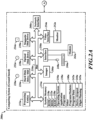
- FIG 2A shows a traffic aware planner (TAP) computing system 200a.
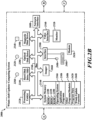
- Figures 2B shows a winds aloft updater computing system 200b.
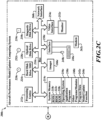
- Figure 2C shows an aircraft performance model updater computing system 200c.
- Figure 2D shows an electronic flight bag computing system 200d, according to one illustrated embodiment.
- the TAP computing system 200a can implement the TAP processor-based system 102 ( Figure 1 ).
- the winds aloft updater computing system 200b can implement the winds aloft updater processor-based systems 124 ( Figure 1 ).
- the aircraft performance model updater computing system 200c can implement the aircraft performance updater processor-based systems 128 ( Figure 1 ).
- the electronic flight bag computing system 200d can implement the electronic flight bag (EFB) 144 ( Figure 1 ).
- EFB electronic flight bag
- the TAP computing system 200a is suitable for implementing flight planning (e.g., generating flight route alternatives to routes of existing flight plans that may themselves be generated from other flight planning systems), for example during a flight, taking into account aircraft traffic, winds aloft data (e.g., forecasted winds aloft, adjusted winds aloft, three-dimensional weather model which includes forecasted winds aloft data), weather ( e.g., convective storms), turbulence, restricted airspace, imposed delays by air traffic control, a performance model or characteristics of a specific individual aircraft to generate optimized flight plans, which may be optimized (optimized though not necessarily optimal, e.g., minimize fuel consumption; minimize travel time, minimize missed connections, maximize on time departures, maximize on time arrivals, minimize overall cost of operation for a carrier airline) consistent with criteria employed by a respective carrier airline that operates the subject aircraft.
- flight planning e.g., generating flight route alternatives to routes of existing flight plans that may themselves be generated from other flight planning systems
- flight planning e.
- the TAP computing system 200a can operate in conjunction with the winds aloft updater computing system 200b, the aircraft performance model updater computing system 200c, and the electronic flight bag computing system 200d to implementing aspects flight planning described herein, for example generating alternative fight plans (e.g., revised, modified or adjusted flight plans) for an aircraft which may be optimized across one or more operational parameters.
- alternative fight plans e.g., revised, modified or adjusted flight plans
- TAP computing system 200a and the winds aloft updater computing system 200b are illustrated and described as separate computing systems, in some implementations a computing system can be employed that provides the operations of both the TAP computing system 200a and the winds aloft updater computing system 200b.
- TAP computing system 200a and the aircraft performance model updater computing system 200c are illustrated and described as separate computing systems, in some implementations a computing system can be employed that provides the operations of both the TAP computing system 200a and the aircraft performance model updater computing system 200c.
- the traffic aware planner (TAP) computing system 200a may include one or more processing units 212a, a system memory 214a and a system bus 216a that couples various system components including the system memory 214a to the processing units 212a.
- the processing unit(s) 212a may be any logic processing unit, such as one or more central processing units (CPUs), digital signal processors (DSPs), graphics processing units (GPUs), application-specific integrated circuits (ASICs), field programmable gate arrays (FPGAs), etc.
- the system bus 216a can employ any known bus structures or architectures, including a memory bus with memory controller, a peripheral bus, and a local bus.
- the system memory 214a includes read-only memory (“ROM”) 218a and random access memory (“RAM”) 220a.
- ROM read-only memory
- RAM random access memory
- a basic input/output system (“BIOS”) 222a which can form part of the ROM 218a, contains basic routines that help transfer information between elements within the TAP computing system 200a, such as during start-up.
- the TAP computing system 200a which can execute a TAP application, may also include a plurality of interfaces such as network interface 260a, interface 250a, supporting modem 262a or any other wireless/wired interfaces.
- the TAP computing system 200a may include a hard disk drive 224a for reading from and writing to a hard disk or SSD 226a, an optical disk drive 228a for reading from and writing to optical disk 232a, and/or a magnetic disk drive 230a for reading from and writing to removable magnetic disks 234a.
- the optical disk 232a can be a CD-ROM or DVD-ROM, while the removable magnetic disk 234a can be any magnetic storage media.
- the hard disk drive 224a, optical disk drive 228a and magnetic disk drive 230a may communicate with the processing unit 212a via the system bus 216a.
- the hard disk drive 224a, optical disk drive 228a and magnetic disk drive 230a may include interfaces or controllers (not shown) coupled between such drives and the system bus 216a, as is known by those skilled in the relevant art.
- the drives 224a, 228a and 230a, and their associated computer-readable storage media 226a, 232a, 234a, may provide nonvolatile and non-transitory storage of computer readable instructions, data structures, program modules and other data for the TAP computing system 200a.
- computer-readable storage media may include, but is not limited to, random access memory (RAM), read-only memory (ROM), electrically erasable programmable read-only memory (EEPROM), flash memory, compact disc ROM (CD-ROM), digital versatile disks (DVD) or other optical disk storage, magnetic storage devices, solid state memory or any other medium which can be used to store the desired information and which may be accessed by processing unit(s) 212a.
- RAM random access memory
- ROM read-only memory
- EEPROM electrically erasable programmable read-only memory
- flash memory compact disc ROM (CD-ROM), digital versatile disks (DVD) or other optical disk storage
- CD-ROM compact disc ROM
- DVD digital versatile disks
- magnetic storage devices solid state memory or any other medium which can be used to store the desired information and which may be accessed by processing unit(s) 212a.
- Program modules can be stored in the system memory 214a, such as an operating system 236a; one or more application programs 238a; other programs or modules 240a; program data 242a; airspeed derivation application 244a (i.e., estimated airspeed derived from global navigation information, and optionally pressure altitude, winds aloft, three-dimensional weather model which includes forecasted winds aloft data, etc.) and flight plan generation application 245a.
- Application programs 238a along with the program data 242a, airspeed derivation application 244a and flight plan generation application 245a, may include processor-executable instructions and data that cause the processor(s) 212a to execute the various algorithms described herein.
- the airspeed derivation application 244a can derive (e.g., calculate or otherwise determine or estimate) an at least approximate airspeed of an aircraft based on transponder telemetry (e.g., global navigation or geographic coordinates, and optionally geographic altitude) and based on winds aloft information (e.g., forecasted winds aloft information; adjusted winds aloft information, three-dimensional weather model which includes forecasted winds aloft data) for a given altitude or set of altitudes, and optionally based in air pressure at the given altitude or range of altitudes, temperature at the given altitude or range of altitudes and/or speed of sound at the given altitude or range of altitudes.
- transponder telemetry e.g., global navigation or geographic coordinates, and optionally geographic altitude
- winds aloft information e.g., forecasted winds aloft information; adjusted winds aloft information, three-dimensional weather model which includes forecasted winds aloft data
- the flight plan generation application 245a can generate alternative fight plans (e.g., changed, revised, modified or adjusted flight plans) for an aircraft based on the derived airspeed and based on other information (e.g., aircraft traffic, winds aloft data (e.g., forecasted winds aloft, adjusted winds aloft), weather (e.g., three-dimensional weather model which includes forecasted winds aloft data, convective storms), turbulence, restricted airspace, a performance model or characteristics of a specific individual aircraft), where the alternative fight plans (e.g., changed, revised, modified or adjusted flight plan) may be optimized across one or more operational parameters.
- Other program modules 240a may include instructions for handling security such as password or other access protection and communications encryption.
- the system memory 214a may also include communications programs, for example, a Web client or browser as part of the application programs 238a for permitting the TAP computing system 200a to access and exchange data with sources such as Web sites of the Internet, corporate intranets, extranets, or other networks and devices as described herein, as well as other server applications on server computing systems.
- communications programs for example, a Web client or browser as part of the application programs 238a for permitting the TAP computing system 200a to access and exchange data with sources such as Web sites of the Internet, corporate intranets, extranets, or other networks and devices as described herein, as well as other server applications on server computing systems.
- the operating system 236a can be stored on the hard disk or SSD 226a of the hard disk drive 224a, the optical disk 232a of the optical disk drive 228a and/or the removable magnetic disk 234a of the magnetic disk drive 230a, or other memory storage devices, such as solid state drives.
- the TAP computing system 200a itself can perform the winds aloft adjustment and/the or aircraft performance model adjustment, rather than using separate dedicated computing systems to perform such.
- An operator such as a user, can enter commands and information into the TAP computing system 200a through input devices such as a touch screen or keyboard 246a, an imager 266a, a pointing device such as a mouse 248a, and/or via a graphical user interface.
- Other input devices can include a touchpad, microphone, joystick, game pad, tablet, scanner, etc.
- These and other input devices are connected to one or more of the processing units 212a through an interface 250a such as a serial port interface that couples to the system bus 216a, although other interfaces such as a parallel port, a game port or a wireless interface or a universal serial bus ("USB") can be used.
- a monitor 252a or other display device is coupled to the system bus 216a via a video interface 254a, such as a video adapter.
- the TAP computing system 200a can include other output devices, such as speakers, printers, etc.
- the TAP computing system 200a can operate in a networked environment using logical connections to one or more remote computers and/or devices, for example: ground-based aircraft tracking processor-based system(s) 108 (e.g., ADS-B) Exchange), other ground-based information systems 105a-105d ( Figure 1 ), winds aloft updater computing system 200b ( Figure 2B ), aircraft performance model updater computing system 200c ( Figure 2C ), and electronic flight bag computing system 200d ( Figure 2D ).
- the TAP computing system 200a can operate in a networked environment using logical connections to one or more mobile devices, landline telephones and other service providers or information servers associated with the hash cracking operations as described above with reference to Figure 2A .
- Communications may be via a wired and/or wireless network architecture, for instance wired and wireless enterprise-wide computer networks, intranets, extranets, telecommunications networks, cellular networks, paging networks, and other mobile networks.
- the winds aloft updater computing system 200b may include one or more processing unit(s) 212b, a system memory 214b and a system bus 216b that couples various system components including the system memory 214b to the processing units 212b.
- the processing units 212b may be any logic processing unit, such as one or more central processing units (CPUs), digital signal processors (DSPs), graphics processing units (GPUs), application-specific integrated circuits (ASICs), field programmable gate arrays (FPGAs), etc.
- the system bus 216b can employ any known bus structures or architectures, including a memory bus with memory controller, a peripheral bus, and a local bus.
- the system memory 214b includes read-only memory (“ROM”) 218b and random access memory (“RAM”) 220b.
- ROM read-only memory
- RAM random access memory
- a basic input/output system (“BIOS”) 222b which can form part of the ROM 218b, contains basic routines that help transfer information between elements within the winds aloft updater computing system 200b, such as during start-up.
- the winds aloft updater computing system 200b may also include a plurality of interfaces such as network interface 260b, interface 250b, supporting modem 262b or any other wireless/wired interfaces.
- the winds aloft updater computing system 200b may include a hard disk drive 224b for reading from and writing to a hard disk or SSD 226b, an optical disk drive 228b for reading from and writing to optical disk 232b, and/or a magnetic disk drive 230b for reading from and writing to a removable magnetic disk 234b.
- the optical disk 232b can be a CD-ROM or DVD-ROM, while the removable magnetic disk 234b can be any magnetic storage media.
- the hard disk drive 224b, optical disk drive 228b and magnetic disk drive 230b may communicate with the processing unit 212b via the system bus 216b.
- winds aloft updater computing system 200b is illustrated employing a hard disk or SSD 226b, optical disk 232b and removable magnetic disk 234b, those skilled in the relevant art will appreciate that other types of computer-readable storage media that can store data accessible by a computer may be employed, such as flash memory, digital video disks (“DVD”), Bernoulli cartridges, RAMs, ROMs, smart cards, various solid state drives, etc.
- flash memory digital video disks
- DVD digital video disks
- RAMs random access memory
- ROMs read-only memory
- smart cards various solid state drives, etc.
- computer-readable storage media may include, but is not limited to, random access memory (RAM), read-only memory (ROM), electrically erasable programmable read-only memory (EEPROM), flash memory, compact disc ROM (CD-ROM), digital versatile disks (DVD) or other optical disk storage, magnetic storage devices, solid state memory or any other medium which can be used to store the desired information and which may be accessed by processing unit(s) 212b.
- RAM random access memory
- ROM read-only memory
- EEPROM electrically erasable programmable read-only memory
- flash memory compact disc ROM (CD-ROM), digital versatile disks (DVD) or other optical disk storage
- CD-ROM compact disc ROM
- DVD digital versatile disks
- magnetic storage devices solid state memory or any other medium which can be used to store the desired information and which may be accessed by processing unit(s) 212b.
- Program modules can be stored in the system memory 214b, such as an operating system 236b; one or more application programs 238b (e.g., Web server applications, database applications); other programs or modules 240b; program data 242b; and optionally hashing functions 244b.
- Application programs 238b along with the program data 242b, and winds aloft analysis and adjustment application 244c, may include processor-executable instructions and data that cause the processor(s) 212b to execute the various algorithms described herein.
- the application programs 238b can, for example, implement one or more servers (e.g., Web servers) operable to receive inquiries or requests from the TAP computing system 102 ( Figure 1 ), 200a ( Figure 2A ), retrieve winds aloft information (e.g., forecasted winds aloft information from server computing systems operated by National Oceanic and Atmospheric Administration (NOAA), three-dimensional weather model which includes forecasted winds aloft data, barometric pressure, atmospheric temperature for various geographic locations at various altitudes), analysis the winds aloft information relative to information that represents flight characteristic (e.g., derived airspeed or actual airspeed) as being experienced by a plurality of aircraft in a geographic vicinity of one another, in a vicinity an altitude of one another, and in a temporal vicinity of one another, and generated adjusted winds aloft data based an existence and magnitude and direction of any identified discrepancies.
- servers e.g., Web servers
- winds aloft information e.g., forecasted winds aloft information from server
- the application programs 238b can take other forms that allow inquiries to be made, winds aloft assessed, and adjusted winds aloft generated.
- Other program modules 240b may include instructions for handling security such as password or other access protection and communications encryption.
- the system memory 214b may also include communications programs, for example, a Web client or browser as part of the application programs 238b for permitting the winds aloft updater computing system 200b to access and exchange data with sources such as Web sites of the Internet, corporate intranets, extranets, or other networks and devices as described herein, as well as other server applications on other server computing systems.
- the operating system 236b, application programs 238b, other programs/modules 240b, program data 242b, and winds aloft analysis and adjustment application 244c can be stored on the hard disk or SSD 226b of the hard disk drive 224b, the optical disk 232b of the optical disk drive 228b and/or the removable magnetic disk 234b of the magnetic disk drive 230b, or other memory storage devices, such as solid state drives.
- the winds aloft updater computing system 200b can, at least in some implementations, operate without user interaction, Alternatively, an operator, such as a user, can optionally enter commands and information into the winds aloft updater computing system 200b through input devices such as a touch screen or keyboard 246b, an imager 266b, a pointing device such as a mouse 248b, and/or via a graphical user interface.
- input devices such as a touch screen or keyboard 246b, an imager 266b, a pointing device such as a mouse 248b, and/or via a graphical user interface.
- Other input devices can include a touchpad, microphone, joystick, game pad, tablet, scanner, etc.
- These and other input devices are connected to one or more of the processing units 212b through an interface 250b such as a serial port interface that couples to the system bus 216b, although other interfaces such as a parallel port, a game port or a wireless interface or a universal serial bus ("USB") can be used.
- a monitor 252b or other display device is coupled to the system bus 216b via a video interface 254b, such as a video adapter.
- the winds aloft updater computing system 200b can include other output devices, such as speakers, printers, etc.
- the winds aloft updater computing system 200b can operate in a networked environment using logical connections to one or more remote computers and/or devices associated with hash cracking operations.
- the winds aloft updater computing system 200b can operate in a networked environment using logical connections to one or more mobile devices, landline telephones and other service providers or information servers as described herein.
- Communications may be via a wired and/or wireless network architecture, for instance wired and wireless enterprise-wide computer networks, intranets, extranets, telecommunications networks, cellular networks, paging networks, and other mobile networks.
- the aircraft performance model updater computing system 200c may each include one or more processing units 212c, a system memory 214c and a system bus 216c that couples various system components including the system memory 214c to the processing units 212c.
- the processing unit(s) 212c may be any logic processing unit, such as one or more central processing units (CPUs), digital signal processors (DSPs), graphics processing units (GPUs), application-specific integrated circuits (ASICs), field programmable gate arrays (FPGAs), etc.
- the system bus 216c can employ any known bus structures or architectures, including a memory bus with memory controller, a peripheral bus, and a local bus.
- the system memory 214c includes read-only memory (“ROM”) 218c and random access memory (“RAM”) 220c.
- ROM read-only memory
- RAM random access memory
- a basic input/output system (“BIOS”) 222c which can form part of the ROM 218c, contains basic routines that help transfer information between elements within the aircraft performance model updater computing system 200c, such as during start-up.
- the aircraft performance model updater computing system 200c may also each include a plurality of interfaces such as network interface 260c, interface 250c, supporting modem 262c or any other wireless/wired interfaces, including radios.
- the aircraft performance model updater computing system 200c may include a hard disk drive 224c for reading from and writing to a hard disk or SSD 226c, an optical disk drive 228c for reading from and writing to optical disk 232c, and/or a magnetic disk drive 230c for reading from and writing to a removable magnetic disk 234c.
- the optical disk 232c can be a CD-ROM or DVD-ROM, while the removable magnetic disk 234c can be any removable magnetic storage media.
- the hard disk drive 224c, optical disk drive 228c and magnetic disk drive 230c may communicate with the processing unit(s) 212c via the system bus 216c.
- the hard disk drive 224c, optical disk drive 228c and magnetic disk drive 230c may include interfaces or controllers (not shown) coupled between such drives and the system bus 216c, as is known by those skilled in the relevant art.
- the drives 224c, 228c, and 230c, , and their associated computer-readable storage media 226c, 232c, 234c, may provide nonvolatile and non-transitory storage of computer readable instructions, data structures, program modules and other data for the aircraft performance model updater computing system 200c.
- FIG. 200c Although the depicted aircraft performance model updater computing system 200c are illustrated employing a hard disk or SSD 226c, optical disk 232c and removable magnetic disk 234c, those skilled in the relevant art will appreciate that other types of computer-readable storage media that can store data accessible by a computer may be employed, such as flash memory, digital video disks (“DVD”), Bernoulli cartridges, RAMs, ROMs, smart cards, various solid state drives, etc.
- DVD digital video disks
- RAMs random access memory
- ROMs read-only memory
- smart cards various solid state drives, etc.
- computer-readable storage media may include, but is not limited to, random access memory (RAM), read-only memory (ROM), electrically erasable programmable read-only memory (EEPROM), flash memory, compact disc ROM (CD-ROM), digital versatile disks (DVD) or other optical disk storage, magnetic storage devices, solid state memory or any other medium which can be used to store the desired information and which may be accessed by processing unit(s) 212c.
- RAM random access memory
- ROM read-only memory
- EEPROM electrically erasable programmable read-only memory
- flash memory compact disc ROM (CD-ROM), digital versatile disks (DVD) or other optical disk storage
- CD-ROM compact disc ROM
- DVD digital versatile disks
- magnetic storage devices solid state memory or any other medium which can be used to store the desired information and which may be accessed by processing unit(s) 212c.
- Program modules can be stored in the system memory 214c, such as an operating system 236c; one or more application programs 238c; other programs or modules 240c; program data 242c; and aircraft performance model analysis and adjustment application 244c.
- Application programs 238c along with the program data 242c, and aircraft performance model analysis and adjustment application 244c, may include processor-executable instructions and data that cause the processor(s) 212c to execute the various algorithms described herein.
- the application programs 238c and aircraft performance model analysis and adjustment application 244c can, for example, cause analysis of predicted or estimate aircraft performance relative to actual aircraft performance ( e.g., to identify and quantify any discrepancies), and generation of an adjusted aircraft performance model for a specific individual aircraft based on the analysis.
- Other program modules 240c may include instructions for handling security such as password or other access protection and communications encryption.
- the system memory 214c may also include communications programs, for example, a Web client or browser as part of the application programs 238c for permitting the aircraft performance model updater computing system 200c to access and exchange data with sources such as Web sites of the Internet, corporate intranets, extranets, or other networks and devices as described herein, as well as server applications on other server computing systems.
- the operating system 236c, application programs 238c, other programs/modules 240c, program data 242c, and aircraft performance model analysis and adjustment application 244c can be stored on the hard disk or SSD 226c of the hard disk drive 224c, the optical disk 232c of the optical disk drive 228c and/or the removable magnetic disk 234c of the magnetic disk drive 230c, or other memory storage devices, such as solid state drives or FLASH drives.
- An operator such as a user, optionally can enter commands and information into the aircraft performance model updater computing system 200c through input devices such as a touch screen or keyboard 246c, an imager 266c, a pointing device such as a mouse 248c, and/or via a graphical user interface.
- Other input devices can include a touchpad, microphone, joystick, game pad, tablet, scanner, etc.
- These and other input devices are connected to one or more of the processing unit(s) 212c through an interface 250c such as a serial port interface that couples to the system bus 216c, although other interfaces such as a parallel port, a game port or a wireless interface or a universal serial bus ("USB") can be used.
- a monitor 252c or other display device is coupled to the system bus 216c via a video interface 254c, such as a video adapter.
- the aircraft performance model updater computing system 200c can include other output devices, such as speakers, printers, etc.
- the electronic flight bag computing system 200d may include one or more processing units 212d, a system memory 214d and a system bus 216d that couples various system components including the system memory 214d to the processing unit(s) 212d.
- the processing unit(s) 212d may be any logic processing unit, such as one or more central processing units (CPUs), digital signal processors (DSPs), graphics processing units (GPUs), system-on-chips (SOCs), application-specific integrated circuits (ASICs), field programmable gate arrays (FPGAs), etc.
- the system bus 216d can employ any known bus structures or architectures, including a memory bus with memory controller, a peripheral bus, and a local bus.
- the electronic flight bag computing system 200d may also include a plurality of interfaces such as network interface 260d and, or, any other wireless/wired interfaces.
- the electronic flight bag computing system 200d may include a solid state drive (SSD) or FLASH memory 224d.
- the SSD or FLASH memory 224d may communicate with the processing unit 212c, 212d via the system bus 216c, 216d.
- the SSD or FLASH memory 224d may include interfaces or controllers (not shown) to couple such with the system bus 216d, as is known by those skilled in the relevant art.
- the SSD or FLASH memory 224d may provide nonvolatile and non-transitory storage of computer readable instructions, data structures, program modules and other data for the electronic flight bag computing system 200d.
- computer-readable storage media may include, but is not limited to, random access memory (RAM), read-only memory (ROM), electrically erasable programmable read-only memory (EEPROM), flash memory, compact disc ROM (CD-ROM), digital versatile disks (DVD) or other optical disk storage, magnetic storage devices, solid state memory or any other medium which can be used to store the desired information and which may be accessed by processing unit(s) 212d.
- RAM random access memory
- ROM read-only memory
- EEPROM electrically erasable programmable read-only memory
- flash memory compact disc ROM (CD-ROM), digital versatile disks (DVD) or other optical disk storage
- CD-ROM compact disc ROM
- DVD digital versatile disks
- magnetic storage devices solid state memory or any other medium which can be used to store the desired information and which may be accessed by processing unit(s) 212d.
- Program modules can be stored in the system memory 214d, such as an operating system 236d; one or more application programs 238d; other programs or modules 240d; program data 242d; and a TAP user interface (UI) application 244d (e.g., processor-executable instructions to present TAP generated information and to receive flight crew inputs).
- UI user interface
- Application programs 238d along with the program data 242d, and TAP user interface application 244d may include processor-executable instructions and data that cause the processor(s) 212d to execute various algorithms described herein and, or to interact with the TAP computing system 102 ( Figure 1 ), 200a ( Figure 2A ), for instance by rendering a graphical user interface with user selectable icons (e.g., menus, radio buttons, pull-down menus, alphanumeric or keyed entry fields, scroll bars, icons).
- user selectable icons e.g., menus, radio buttons, pull-down menus, alphanumeric or keyed entry fields, scroll bars, icons.
- the application programs 238d and the TAP user interface application 244d cause presentation of flight planning information (e.g., flight plans, alternative flight plans) generated by the TAP computing system 102 ( Figure 1 ), 200a ( Figure 2A ) and/or to receive input (e.g., selections, data, keyed input) from the flight crew to be provided to the TAP computing system 102 ( Figure 1 ), 200a ( Figure 2A ).
- Other program modules 240d may include instructions for handling security such as password or other access protection and communications encryption in addition to other flight management applications typically found on an electronic flight bag computing system.
- the system memory 214d may also include communications programs, for example, a Web client or browser as part of the application programs 238d for permitting the electronic flight bag computing system 200d to access and exchange data with sources such as Web sites of the Internet, corporate intranets, extranets, or other networks and devices as described herein, as well as server applications on other server computing systems, and the FMS 132 and other components via the avionics bus 130 ( Figure 1 ).
- communications programs for example, a Web client or browser as part of the application programs 238d for permitting the electronic flight bag computing system 200d to access and exchange data with sources such as Web sites of the Internet, corporate intranets, extranets, or other networks and devices as described herein, as well as server applications on other server computing systems, and the FMS 132 and other components via the avionics bus 130 ( Figure 1 ).
- the operating system 236d can be stored on other nontransitory processor-readable media (e.g., memory, computer storage).
- processor-readable media e.g., memory, computer storage.
- the flight crew 138 can enter commands and information into the electronic flight bag computing system 200d through input devices such as a touch screen display 246d. Other input devices can be employed. These and other input devices are typically connected to the processing unit(s) 212d through an interface, for example a video interface 254d.
- the electronic flight bag computing system 200d can include other output devices, such as speakers, haptic engine, etc.
- the electronic flight bag computing system 200d can operate in a networked environment using logical connections to one or more remote computers and/or devices associated with hash cracking operations.
- the electronic flight bag computing system 200d can operate in a networked environment using logical connections to one or more radios, and, or wired or optical buses.
- Communications may be via a wired and/or wireless network architecture, for instance wired and wireless enterprise-wide computer networks, wide area networks and, or local area networks. Typically, communications with ground-based systems is bandwidth limited.
- Figure 3 shows a method 300 of operation of a processor-based system to generate alternative fight plans (e.g., changed, revised or modified or adjusted flight plans) or to otherwise change, revise or modify or adjust flight plans based at least in part on a calculated or derived at least approximate airspeed of an aircraft, according to at least one illustrated implementation.
- the processor-based system can advantageously comprise a ground-based processor-based system, for instance a ground-based computer system or ground based computer sever system.
- the processor-based system can, for example, comprise an on-board processor-based system (e.g., tablet computer, iPad ® tablet computer) located on-board the particular aircraft, which may be communicatively coupled to the aircraft instrumentation or may be communicatively isolated from the aircraft instrumentation (e.g., isolated the pitot static tube airspeed measurements).
- the processor-based system can be one of: i) a ground-based processor-based system, ii) an aircraft-based processor-based system that is not communicatively coupled to a bus that carries instrumented data, or alternatively ii) an aircraft-based processor-based system that is communicatively coupled to a bus that carries instrumented data.
- the processor-based system repeatedly determines an at least approximate airspeed for a particular aircraft during a flight of the particular aircraft.
- the method 300 starts at 302, for example in response to a powering ON of the processor-based system or component thereof, on receipt of a call or other invocation, for instance by a calling or invoking routine, or on receipt of a request or a command, or on receipt of data.
- the processor-based system or a component thereof accesses a flight plan for a particular aircraft.
- the processor-based system or a component thereof can retrieve a flight plan for the particular aircraft from a ground-based flight plan processor-based system that stores and provides (serves) flight plans (e.g., previously filed flight plans for the particular aircraft and/or other aircraft).
- the processor-based system or a component thereof can retrieve a flight plan from the FAA or from various ADS-B tracking sites (e.g., Flight Aware ® ).
- a ground-based flight planning or optimization system can access flight plans stored on a ground-based flight plan filing processor-based system (e.g., server computer system) that is separate and distinct from the ground-based flight planning or optimization system, via conventional communications channels (e.g., wired, wireless, packetized, Internet) which unlike communications with aircraft are not particularly bandwidth limited.
- a ground-based flight plan filing processor-based system e.g., server computer system
- conventional communications channels e.g., wired, wireless, packetized, Internet
- the processor-based system or a component thereof accesses aircraft performance data for the particular aircraft.
- the processor-based system or a component thereof can access aircraft performance data or even an aircraft performance model, from a data store that stores such information.
- the processor-based system or component thereof can store such information locally or query a separate aircraft performance data storage system for such information.
- the aircraft performance data or the aircraft performance model is specific to a specific individual aircraft (e.g., a specific "tail number").
- Such can represent aircraft performance taking into account not only the make and model of aircraft, but also taking into account a current structural configuration (e.g., engine configuration, tail design, wing design, presence or absence of winglets) of the specific individual aircraft and even an age or total number of cycles (e.g., takeoffs and landings, pressurizations) to which the specific individual aircraft has been subjected.
- a ground-based flight planning or optimization system can access aircraft specific performance data or aircraft models stored on a ground-based aircraft performance data storage processor-based system (e.g., server computer system) that is separate and distinct from the ground-based flight planning or optimization system, via conventional communications channels (e.g., wired, wireless, packetized, Internet) which unlike communications with aircraft are not particularly bandwidth limited.
- the processor-based system or a component thereof accesses one or more sets of location and altitude information (e.g., geographic location and geographic altitude information) for the particular aircraft.
- the one or more sets of location and altitude information each specifies a respective location and an altitude for the particular aircraft at a respective time, and may preferably be time-stamped.
- the processor-based system or a component thereof can retrieve one or more sets of transponder telemetry for the particular aircraft from a ground-based aircraft tracking processor-based system.
- the sets of transponder telemetry can be collected and/or stored by the ground-based aircraft tracking processor-based system from transponder telemetry sent from transponders carried by the aircraft as is current practice in at least most regions in the world.
- the one or more sets of transponder telemetry can include, for each respective one of a plurality of instances of time, a respective time-stamped set of global navigation system positioning coordinates (e.g., GPS coordinates, GLONASS coordinates, GALILEO coordinates, BEIDOU coordinates, QZSS coordinates, IRNSS coordinates), a respective altitude value (e.g., respective geographic altitude value), and a unique aircraft identifier (e.g., tail number) supplied by a transponder (e.g., global navigation network transponder) on the particular aircraft.
- global navigation system positioning coordinates e.g., GPS coordinates, GLONASS coordinates, GALILEO coordinates, BEIDOU coordinates, QZSS coordinates, IRNSS coordinates
- a respective altitude value e.g., respective geographic altitude value
- a unique aircraft identifier e.g., tail number supplied by a transponder (e.g., global navigation network transponder) on the particular
- the aircraft receives global navigation signals from various satellites of a global navigation system network (e.g., GPS network, GLONASS network, GALILEO network, BEIDOU network, QZSS network, IRNSS network).
- Global navigation system positioning coordinates can be determined via a global navigation system radio or receiver on-board the particular aircraft, which may form part of, or otherwise be communicatively coupled with the transponder.
- the transmission of the information is typically referred to as squawking or a squawk.
- a ground-based flight planning or optimization system can access transponder telemetry stored on a ground-based aircraft tracking processor-based system (e.g., server computer system; Automatic Dependent Surveillance-Broadcast (ADS-B) ground service can be employed for aircraft with suitable equipment) that is separate and distinct from the ground-based flight planning or optimization system, via conventional communications channels (e.g., wired, wireless, packetized, Internet) which unlike communications with aircraft are not particularly bandwidth limited.
- ADS-B Automatic Dependent Surveillance-Broadcast
- the processor-based system or a component thereof accesses forecasted winds aloft data and optionally air temperature data and/or barometric pressure, for example stored by a ground-based weather information processor-based system (e.g., Aviation Digital Data Service (ADDS) operated by the Aviation Weather Center (AWC) by the National Oceanic and Atmospheric Administration (NOAA); or via a private company, e.g., Weather Services International (WSI), FlightWX by BCI, Inc.).
- AWC Aviation Weather Center
- NOAA National Oceanic and Atmospheric Administration
- WSI Weather Services International
- FlightWX by BCI, Inc.
- the forecasted winds aloft data, or three-dimensional weather model which includes forecasted winds aloft data represents forecasted and/or measured winds (e.g., speed, direction) at various altitudes for various geographic regions or area and for various times.
- the air or atmospheric temperature data represents forecasted and/or measured air or atmospheric temperatures at various altitudes for various geographic regions or area and for various times.
- the barometric pressure represents forecasted and/or measured barometric pressures at various altitudes for various geographic regions or area and for various times.
- the forecasted winds aloft data, air temperature and/or barometric pressure at various altitudes can advantageously be used in flight planning, and as described herein can also advantageously be used to derive an at least approximation of airspeed of an aircraft for a given portion of a flight plan or trajectory, based on geographic location and altitude.
- the forecasted air temperatures and/or barometric pressure at a given geographic location and a given altitude can be employed in determining airspeed in term of a Mach number.
- a ground-based flight planning or optimization system can access weather information (e.g., winds aloft, air temperature, barometric pressure) stored on a ground-based weather information processor-based system (e.g., server computer system) that is separate and distinct from the ground-based flight planning or optimization system, via conventional communications channels (e.g., wired, wireless, packetized, Internet) which unlike communications with aircraft are not particularly bandwidth limited.
- weather information e.g., winds aloft, air temperature, barometric pressure
- a ground-based weather information processor-based system e.g., server computer system
- conventional communications channels e.g., wired, wireless, packetized, Internet
- the processor-based system or a component thereof determines an at least approximate airspeed and a heading for the particular aircraft by the processor-based system based at least in part on the one or more sets of location and altitude information (e.g., geographic location and geographic altitude information from transponder telemetry) for the particular aircraft and based at least in part on the winds aloft data (e.g., forecasted winds aloft, adjusted winds aloft, or three-dimensional weather model which includes forecasted winds aloft data) for the at least approximate geographic location and the at least approximate altitude of the aircraft, and optionally based at least in part on air temperature and/or barometric pressure for the at least approximate geographic location and the at least approximate altitude of the aircraft.
- location and altitude information e.g., geographic location and geographic altitude information from transponder telemetry
- the winds aloft data e.g., forecasted winds aloft, adjusted winds aloft, or three-dimensional weather model which includes forecasted winds aloft data
- the processor-based system or a component thereof can, for example, employ global navigation coordinates (e.g., GPS coordinates) which may represent ground locations, and time-stamps to determine an at least approximate ground speed of the aircraft (e.g., geographic distance traveled as represented by GPS coordinates over time).
- the processor-based system or a component thereof can, for example, employ forecasted winds aloft data or even adjusted winds aloft data to determine an airspeed and a heading of the aircraft at various instance of times or at various locations or points along a flight path of the aircraft for one or more altitudes. Such can, for instance, be performed using vector addition. Such can even take into account performance characteristics of a specific individual aircraft to improve the approximation of the derived airspeed and Mach number.
- the processor-based system or a component thereof accesses convective weather data and/or turbulence data.
- the processor-based system or a component thereof can access convective weather data and/or turbulence data from a ground-based weather system or service.
- the processor-based system or a component thereof can access convective weather data and/or turbulence data from the Traffic Flow Management (FM) Convective Forecast (TCF) made available by the AWC of NOAA, or private company e.g., WSI or FlightWX.
- Convective weather data typically indicates areas or regions and altitudes of convective storms.
- a ground-based flight planning or optimization system can access convective weather information and/or turbulence data stored on a ground-based convective weather information processor-based system (e.g., server computer system) that is separate and distinct from the ground-based flight planning or optimization system, via conventional communications channels (e.g., wired, wireless, packetized, Internet) which unlike communications with aircraft are not particularly bandwidth limited.
- a ground-based convective weather information processor-based system e.g., server computer system
- conventional communications channels e.g., wired, wireless, packetized, Internet
- the processor-based system or a component thereof accesses restricted airspace data.
- the processor-based system or a component thereof can access Special Use Airspace (SUA) information provided by the FAA.
- SAA Special Use Airspace
- a ground-based flight planning or optimization system can access restricted airspace data stored on a ground-based restricted airspace information processor-based system (e.g., server computer system) that is separate and distinct from the ground-based flight planning or optimization system, via conventional communications channels (e.g., wired, wireless, packetized, Internet) which unlike communications with aircraft are not particularly bandwidth limited.
- a ground-based restricted airspace information processor-based system e.g., server computer system
- conventional communications channels e.g., wired, wireless, packetized, Internet
- the processor-based system or a component thereof determines an optimization for an alternative flight plan based at least in part on the determined or derived airspeed, aircraft performance data for the particular aircraft, the convective weather data, turbulence data and/or the restricted airspace data.
- Such can employ various techniques or elements of the TASAR system, although modified to employ both derived airspeed and the aircraft performance data or even an aircraft performance model for a specific individual aircraft.
- Various techniques from U.S. Application Serial No. 17/338,051 published as U.S. 2021/0383708 ;
- U.S. Application Serial No. 17/338,203 published as U.S. 2021/0383706 ; International (PCT) Application Serial No.
- PCT/US2021/035866 published as WO 2021/247980 ; International (PCT) Application Serial No. PCT/US2021/035882 , published as WO 2021/247985 ; U.S. Patent 8,977,482 ; and, or U.S. Patent 10,102,756 , can optionally be employed.
- the processor-based system or a component thereof generates an alternative flight plan (e.g., changes, revises or modifies the flight plan) based at least in part on the optimization, thereby accounting for: the determined or derived airspeed, derived pressure altitude, and aircraft performance data for the particular or specific individual aircraft, the convective weather data, turbulence data and/or the restricted airspace data.
- an alternative flight plan e.g., changes, revises or modifies the flight plan
- the processor-based system or a component thereof communicates the alternative fight plan (e.g., changed, revised or modified or adjusted flight plan) to an airline operational control ("dispatch") processor-based system for consideration, approval and/or action.
- a ground-based flight planning or optimization system submit the alternative fight plan (e.g., changed, revised or modified or adjusted flight plan) to a ground-based dispatch processor-based system (e.g., server computer system) that is separate and distinct from the ground-based flight planning or optimization system, via conventional communications channels (e.g., wired, wireless, packetized, Internet) which unlike communications with aircraft are not particularly bandwidth limited.
- an alternative fight plan e.g., changed, revised or modified or adjusted flight plan
- ATC En Route Air traffic control
- SWIM System Wide Information Management
- the processor-based system or a component thereof, or some other processor-based system causes the alternative fight plan (e.g., changed, revised or modified or adjusted flight plan) to be loaded to flight management computer of the particular aircraft to control the particular aircraft.
- the alternative fight plan e.g., changed, revised or modified or adjusted flight plan
- Such typically involves communications (i.e., up-linked) with the particular aircraft.
- communications with the aircraft has been limited, generally relying on transponder telemetry which is being communicated (i.e., downlinked) independent of flight planning by rule or regulation to fly in many regions or areas (i.e., rules or regulations require aircraft to be equipped with function transponder for air traffic control when operating in most airspaces).
- the processor-based system or a component thereof models a flight trajectory of the particular aircraft in three spatial dimensions and in a dimension of time.
- the processor-based system or a component thereof can generate a model of a filed flight path and/or an adjusted or modified flight path with representations of the trajectories of the aircraft as the aircraft follows the filed flight path and/or adjusted or modified flight path over time.
- the processor-based system or a component thereof can simulate the environment of an entire airspace, all derived from ground-based data, advantageously without having to downlink or uplink to the aircraft.
- Such can represent flight plans as linked line segments or as segments of curves (e.g., splines, b-splines) in a three-dimensional space that represents geographic or lateral space dimensions and altitude.
- the method 300 terminates at 330, until started, called or otherwise invoked again.
- the method 300 may operate continually and/or may operate as various threads on a multi-threaded processor.
- Figure 4 shows a method 400 of operation of a processor-based system to determine or derive an airspeed of an aircraft based on position data (e.g., GPS coordinates), according to at least one illustrated implementation.
- the method 400 can be executed as part of execution of the method 300 ( Figure 3 ), for example to determine an at least approximate airspeed for the particular aircraft to 312 ( Figure 3 ).
- a processor-based system or a component thereof determines an at least approximate ground speed for the particular aircraft from successive sets of location data (e.g., from stored transponder telemetry, for instance GPS coordinates). For example, processor-executable instructions cause at least one processor to determine an at least approximate ground speed for the particular aircraft from successive sets of location data, determining a ground speed based on a distance traveled between two successive sets of location data (e.g., GPS coordinates) and an amount of time it took to travel that distance (e.g., a difference between time-stamped times for respective sets of location data).
- location data e.g., from stored transponder telemetry, for instance GPS coordinates.
- processor-executable instructions cause at least one processor to determine an at least approximate ground speed for the particular aircraft from successive sets of location data, determining a ground speed based on a distance traveled between two successive sets of location data (e.g., GPS coordinates) and an amount of time it took to travel that distance (e.g., a difference between
- the processor-based system or a component thereof adjusts the determined at least approximate ground speed based on a heading and based at least in part on a set of the winds aloft data (e.g., forecasted winds aloft data; adjusted winds aloft data, or three-dimensional weather model which includes forecasted winds aloft data) for an at least approximation of an altitude of the particular aircraft at the respective times.
- the winds aloft data e.g., forecasted winds aloft data; adjusted winds aloft data, or three-dimensional weather model which includes forecasted winds aloft data
- Such can also take into account air temperature and/or barometric pressure for an at least approximation of an altitude of the particular aircraft at the respective times.
- processor-executable instructions cause at least one processor to adjust the determined at least approximate ground speed based on the heading and based at least in part on a set of the winds aloft data for an at least approximation of an altitude of the particular aircraft using vector addition to determine the heading and the airspeed based on a vector that represents the ground speed and a vector that represents the winds aloft data (e.g., forecasted winds aloft data; adjusted winds aloft data, or three-dimensional weather model which includes forecasted winds aloft data) for the altitude.
- winds aloft data e.g., forecasted winds aloft data; adjusted winds aloft data, or three-dimensional weather model which includes forecasted winds aloft data
- Figure 5 shows a method 500 of operation of a processor-based system to determine or derive an airspeed of an aircraft based on position data (e.g., GPS coordinates), according to at least one illustrated implementation.
- the method 500 can be executed as part of execution of the method 300 ( Figure 3 ), for example to determine an at least approximate airspeed for the particular aircraft to 312 ( Figure 3 ).
- a processor-based system or a component thereof determines an at least approximate ground speed for the particular aircraft from successive sets of location data (e.g., from stored transponder telemetry for instance GPS coordinates). For example, processor-executable instructions cause at least one processor to determine an at least approximate ground speed for the particular aircraft from successive sets of location data.
- the processor-based system or a component thereof can determine a distance traveled between two geographic locations, for instance represented by respective sets of (e.g., GPS coordinates), and based on an amount of time it took the aircraft to transit between two geographic locations represented by the geographic coordinates by respective time stamps associated with the sets of geographic coordinates geographic coordinates, and thereby determine at least approximately a ground speed of the aircraft during a particular portion of a flight path.
- a processor-based system or a component thereof adjusts the determined at least approximate ground speed based at least in part on a heading and based at least in part on a set of winds aloft data (e.g., forecasted winds aloft data; adjusted winds aloft data, or three-dimensional weather model which includes forecasted winds aloft data) for an at least approximation of an altitude of the particular aircraft at the respective time, and based on an at least approximation of a speed of sound at the at least approximation of the altitude of the particular aircraft, which can be determined based on air temperature and/or barometric pressure at the altitude.
- winds aloft data e.g., forecasted winds aloft data; adjusted winds aloft data, or three-dimensional weather model which includes forecasted winds aloft data
- processor-executable instructions cause at least one processor to adjust the determined at least approximate ground speed based on the heading and on a set of winds aloft data for an at least approximation of an altitude of the particular aircraft, and based on an at least approximation of a speed of sound at the at least approximation of the altitude of the particular aircraft.
- the processor-based system or a component thereof can, for example, perform vector addition using a vector representations for the ground speed, the heading and the forecasted winds aloft at the altitude to determine an at least approximation of the airspeed of the aircraft over a respective portion of a flight path.
- Figure 6 shows a method 600 of operation of a processor-based system to verify, correct or adjust winds aloft data (e.g., forecasted winds aloft data, or three-dimensional weather model which includes forecasted winds aloft data), according to at least one illustrated implementation.
- the method 600 can be executed as part of execution of the method 300 ( Figure 3 ), for example to determine an at least approximate airspeed for the particular aircraft to 312 ( Figure 3 ).
- a processor-based system or a component thereof determines an at least approximate ground speed for the particular aircraft from successive sets of location data (e.g., from stored transponder telemetry for instance GPS coordinates). For example, processor-executable instructions cause at least one processor to determine an at least approximate ground speed for the particular aircraft from successive sets of location data.
- the processor-based system or a component thereof can determine a distance traveled between two geographic locations, for instance represented by respective sets of (e.g., GPS coordinates), and can determine an amount of time it took the aircraft to transit between two geographic locations based on respective time stamps associated with the sets of geographic coordinates geographic coordinates, and thereby determine a ground speed of the aircraft during a particular portion of a flight path.
- a processor-based system or a component thereof adjusts the determined at least approximate ground speed based at least in part on a heading of the aircraft, based at least in part on an adjusted set of winds aloft data for an at least approximation of an altitude of the particular aircraft, and based on an at least approximation of a speed of sound at the at least approximation of the altitude of the particular aircraft.
- processor-based system or a component thereof can advantageously employ an adjusted set of winds aloft data, which has been adjusted from a set of forecasted winds aloft data or three-dimensional weather model which includes forecasted winds aloft data based on real-time or almost real-time or recent data collection from various aircraft in the vicinity of the geographical location and altitude in question.
- Generation of adjusted winds aloft data from forecasted winds aloft data or three-dimensional weather model which includes forecasted winds aloft data is discussed in more detail elsewhere herein, for example with respect to the discussion of a method 900 ( Figure 9 ) below.
- processor-executable instructions cause at least one processor to adjust the determined at least approximate ground speed based on the heading and on an adjusted set of winds aloft data for an at least approximation of an altitude of the particular aircraft, and based on an at least approximation of a speed of sound at the at least approximation of the altitude of the particular aircraft.
- the processor-based system or a component thereof can, for example, perform vector addition using a vector representations for the ground speed and the adjusted winds aloft data at the altitude to determine the heading and an at least approximation of the airspeed of the aircraft over a respective portion of a flight path.
- Figure 7 shows a method 700 of operation of a processor-based system to optimized operation of an aircraft which can be executed as part of generating an alternative flight plan (e.g., a changed, revised or modified or adjusted flight plan), according to at least one illustrated implementation.
- the method 700 can be executed as part of execution of the method 300 ( Figure 3 ), for example to determine an at least approximate airspeed for the particular aircraft to 312 ( Figure 3 ).
- a processor-based system or a component thereof determines an aircraft performance model for the particular aircraft based at least in part on a carrier airline which operates the particular aircraft. For example, processor-executable instructions cause at least one processor to determine an aircraft performance model for the particular aircraft based at least in part on the carrier airline which operates the particular aircraft, where various carrier airlines have different respective aircraft performance models with weighted parameters used to assess various operation costs of operating aircraft (e.g., fuel consumption, crew and operational costs, time in transit or transit time, distance in transit or transit distance, on time departure, on time arrival, number of missed connections).
- the aircraft performance modelcould be provided by the carrier airline, or the cost function could be derived by the at least one processor from collected and analyzed data.
- a processor-based system or a component thereof generates or determines a cost function based at least on the determined aircraft performance model, a determined air speed and a determined heading of the particular aircraft.
- processor-executable instructions can cause at least one processor to run generate or otherwise determine a cost function based at least on a cost index, which can include weight as a parameter to optimize one or more parameters and/or flight plans.
- Generating or determining the cost function can be based on a flight plan for the aircraft.
- Generating or determining the cost function can cause the at least one processor to at least one of: determine an airspeed as a function of weight, determine a fuel burn as a function of weight, determine a cost of operating aircraft, determine a fuel savings, or determine another cost.
- Figure 8 shows a method 800 of operation of a processor-based system to facilitate communications with an aircraft, according to at least one illustrated implementation.
- the method 800 can be executed as part of execution of the method 300 ( Figure 3 ), for example to determine an at least approximate airspeed for the particular aircraft to 312 ( Figure 3 ), or with any other method described herein.
- a processor-based system or a component thereof for each of a plurality of types of data, determines a subset of data of the respective type of data to uplink to the particular aircraft based on flight plan (e.g., filed flight plan, alternative fight plan (e.g., changed, revised or modified or adjusted flight plan).
- flight plan e.g., filed flight plan, alternative fight plan (e.g., changed, revised or modified or adjusted flight plan).
- processor-executable instructions cause at least one processor to, for each of a plurality of types of data, determine a subset of data of the respective type of data to uplink to the particular aircraft based on a filed flight plan.
- the at least one processor can determine to uplink a subset of one or more of: convective weather data, air traffic, turbulence data, restricted airspace data, winds aloft data, or adjusted winds aloft data or three-dimensional weather model which includes forecasted winds aloft data.
- the at least one processor can determine a subset of data of the respective type of data to uplink to the particular aircraft based on a filed flight plan or an alternative fight plan ( e.g., changed, revised or modified or adjusted flight plan).
- At least one processor can determine to uplink a subset of data that covers or corresponds to the flight path or portions thereof, for instance data that covers an area in front over or laterally along the flight path or portion thereof, thereby advantageously avoiding the cost associated with uplinking entire sets of data for a country or countries or other region or other regions in which the aircraft operates.
- data relevant to an area or region within a defined distance along the flight path of the particular aircraft may be uplinked to the aircraft while other data of the same type not uplinked to the aircraft.
- data relevant to an altitude or set of altitudes specified by the flight plan of the particular aircraft may be uplinked to the aircraft while other data of the same type not uplinked to the aircraft.
- Such can account for a current position of the aircraft, for example to select data to uplink for areas or regions and altitudes at or downstream of a current position along the flight plan, while data for regions and altitudes upstream of the current position along the flight plan at a given time is not uplinked.
- Figure 9 shows a method 900 of operation of a processor-based system to adjust at least one of: an aircraft performance model or fuel consumption model or fuel consumption parameter for a specific individual aircraft, according to at least one illustrated implementation.
- the method 900 can be executed as part of execution of the method 300 ( Figure 3 ), for example to determine a set of adjusted winds aloft data for use in determining an at least approximate airspeed for the particular aircraft to 312 ( Figure 3 ), 604 ( Figure 6 ).
- the method 900 starts at 902, for example in response to a powering ON of a system or component thereof, on a call or other invocation of a calling or invoking routine or on receipt of a request or a command, or on receipt of data.
- the processor-based system or a component thereof accesses forecasted winds aloft data, and optionally air temperature data and/or barometric pressure, for example stored by a ground-based weather information processor-based system (e.g ., Aviation Digital Data Service (ADDS) operated by the Aviation Weather Center (AWC) by the National Oceanic and Atmospheric Administration (NOAA); or via a private company (e.g., WSI, FlightWX).
- AWC Aviation Weather Center
- NOAA National Oceanic and Atmospheric Administration
- a private company e.g., WSI, FlightWX
- the forecasted winds aloft data or three-dimensional weather model which includes forecasted winds aloft data represents forecasted and/or measured winds (e.g., speed, direction) at various altitudes for various geographic regions or area and for various times.
- Winds aloft data, air temperature and/or barometric pressure at various altitudes can advantageously be used in flight planning, and as described herein ( e.g., used to derive an at least approximation of airspeed of an aircraft for a given portion of a flight plan or trajectory, based on geographic location and altitude; updating aircraft performance data or models, generating or determining updated cost functions).
- a ground-based flight planning or optimization system can access weather information (e.g., three-dimensional weather model, winds aloft, air temperature, barometric pressure, turbulence) stored on a ground-based weather information processor-based system (e.g., server computer system) that is separate and distinct from the ground-based flight planning or optimization system, via conventional communications channels (e.g., wired, wireless, packetized, Internet) which unlike communications with aircraft are not particularly bandwidth limited.
- weather information e.g., three-dimensional weather model, winds aloft, air temperature, barometric pressure, turbulence
- a ground-based weather information processor-based system e.g., server computer system
- conventional communications channels e.g., wired, wireless, packetized, Internet
- a processor-based system or a component thereof accesses successive geographic position and altitude data for each of a plurality of aircraft over a plurality of instances of time.
- processor-executable instructions cause at least one processor to access successive geographic position and altitude data for each of a plurality of aircraft over a plurality of instances of time.
- the successive geographic position and altitude data represent, at each successive instance of time, a respective geographic position and an at least approximation of altitude of the respective aircraft at the respective instance of time.
- the at least one processor can, for example retrieve transponder telemetry from a tracking ground-based processor-based system.
- the sets of transponder telemetry can be collected and/or stored by the ground-based aircraft tracking processor-based system from transponder telemetry sent from transponders carried by the aircraft as is current practice in at least most regions in the world.
- the one or more sets of transponder telemetry can include, for each respective one of a plurality of instances of time, a respective time-stamped set of global navigation system positioning coordinates (e.g., GPS coordinates, GLONASS coordinates, GALILEO coordinates, BEIDOU coordinates, QZSS coordinates, IRNSS coordinates), a respective altitude value (e.g., respective pressure altitude value), and a unique aircraft identifier (e.g., tail number) supplied by a transponder (e.g., global navigation network transponder) on the particular aircraft.
- global navigation system positioning coordinates e.g., GPS coordinates, GLONASS coordinates, GALILEO coordinates, BEIDOU coordinates, QZSS coordinates, IRNSS coordinates
- the aircraft receives global navigation signals from various satellites of a global navigation system network (e.g., GPS network, GLONASS network, GALILEO network, BEIDOU network, QZSS network, IRNSS network).
- Global navigation system positioning coordinates can be determined via a global navigation system radio or receiver on-board the particular aircraft, which may form part of, or otherwise be communicatively coupled with the transponder.
- a ground-based flight planning or optimization system can access transponder telemetry stored on a ground-based aircraft tracking processor-based system (e.g., server computer system) that is separate and distinct from the ground-based flight planning or optimization system, via conventional communications channels (e.g., wired, wireless, packetized, Internet) which unlike communications with aircraft are not particularly bandwidth limited.
- a ground-based aircraft tracking processor-based system e.g., server computer system
- conventional communications channels e.g., wired, wireless, packetized, Internet
- a processor-based system or a component thereof for each of the plurality of aircraft over each of the plurality of instances of time determine a respective derived approximate air speed for the respective aircraft based at least in part on a change in the geographic position of the respective aircraft, duration of time to achieve the change in geographic position, and based at least in part on a set of winds aloft data (e.g., forecasted winds aloft data; adjusted winds aloft data or three-dimensional weather model which includes forecasted winds aloft data) for the at least approximation of altitude of the respective aircraft for the respective instance of time.
- winds aloft data e.g., forecasted winds aloft data; adjusted winds aloft data or three-dimensional weather model which includes forecasted winds aloft data
- processor-executable instructions cause at least one processor to, for each of the plurality of aircraft over each of the plurality of instances of time, determine a respective derived approximate air speed for the respective aircraft based at least in part on a change in the geographic position of the respective aircraft, on an amount of time to achieve the change in the geographic position, and at least in part on a set of forecasted winds aloft data or three-dimensional weather model which includes forecasted winds aloft data for the at least approximation of altitude of the respective aircraft for the respective instance of time.
- the at least one processor can, for example, determine an at least approximate ground speed for the particular aircraft from successive sets of geographic position data and a transit time, and adjust the determined at least approximate ground speed based on a set of winds aloft data or three-dimensional weather model which includes forecasted winds aloft data for the at least approximation of altitude of the respective aircraft, and optionally based on an at least approximation of a speed of sound at the at least approximation of the altitude of the respective aircraft.
- a processor-based system or a component thereof identifies a discrepancy in the respective derived approximate air speed for one or more of aircraft of the plurality of aircraft for one or more instances of time.
- processor-executable instructions cause at least one processor to identify a discrepancy in the respective derived approximate air speed for one or more of aircraft of the plurality of aircraft for one or more instances of time.
- the at least one processor can compare the derived airspeed for the respective aircraft for the respective instance of time with an instrumented airspeed for the respective aircraft for the respective instance of time, where instrumented airspeed is available either in real time or almost real time, or is available after completion of one or more flights, for instance while the aircraft is in the ground ( e.g., from a flight recorder).
- a processor-based system or a component thereof for two or more of the of aircraft of the plurality of aircraft, for one or more periods of time that encompass the respective instances of time, for one or more defined areas that encompass the respective geographic positions of the respective aircraft, and for a defined set of altitudes that encompasses the respective at least approximation of altitude of the respective aircraft, identifies a pattern in respective ones of the identified discrepancy or discrepancies in the respective derived approximate air speed for one or more of aircraft of the plurality of aircraft.
- processor-executable instructions cause at least one processor to: for two or more of the of aircraft of the plurality of aircraft, for one or more periods of time that encompass the respective instances of time, for one or more defined areas that encompass the respective geographic positions of the respective aircraft, and for a defined set of altitudes that encompasses the respective at least approximation of altitude of the respective aircraft, identify a pattern in respective ones of the identified discrepancy in the respective derived approximate air speed for one or more of aircraft of the plurality of aircraft.
- the periods of time can be sufficiently small (e.g., 10 minutes, 30 minutes) such that changes in wind speed within the period of time should not be too significant.
- defined areas can be sufficiently small (e.g., 25 square miles, 50 square miles) such that changes in wind speed within the area should not be too significant.
- sets of altitudes can be sufficiently small (e.g., 200 feet, 400 feet) such that changes in wind speed within the set of altitudes should not be too significant.
- the at least one processor can, for each of at least two of the plurality of aircraft and for at least one pair of the successive instances of time, identify a discrepancy between the respective derived approximate air speed for at least one pair of successive instances of time, or identify a pattern of in the identified discrepancy between the respective derived approximate air speed for at least one pair of successive instances of time for at least two of the plurality of aircraft, where the pattern indicative of a consistent error in set of forecasted winds aloft data or three-dimensional weather model which includes forecasted winds aloft data at least for the respective altitude.
- the processor-based system or a component thereof can identify a pattern for example by deriving a parameter from the winds aloft and positional data (e.g., geographic position, geographic altitude), where the derived parameter corresponds to a parameter that is reported from a ground-based source (e.g., ADSB-Exchange).
- the processor-based system or a component thereof can the back-propagate a difference of the derived and reported parameters as an error or an offset for the winds aloft data. This error or offset could then be applied to winds aloft data for other aircraft in the vicinity of the aircraft for which the parameter was derived.
- the processor-based system or a component thereof can identify a pattern that employs a different parameter, for example a Mach number. Such could include deriving or otherwise computing an airspeed.
- the processor-based system or a component thereof can calculate the parameter directly from reported wind speed and direction values.
- a processor-based system or a component thereof generates an adjustment to the set of winds aloft data (e.g., forecasted winds aloft data, previously adjusted winds aloft data or three-dimensional weather model which includes forecasted winds aloft data), at least for the respective approximation of altitude and for the respective defined area, based on the identified pattern in respective ones of the identified discrepancy in the respective derived approximate air speed.
- processor-executable instructions cause at least one processor to generate an adjustment to the set of winds aloft data, at least for the respective approximation of altitude and for the respective defined area, based on the identified pattern in respective ones of the identified discrepancy in the respective derived approximate air speed.
- the at least one processor can determine that the forecasted winds aloft data or previously adjusted winds aloft data is inconsistent with what two, more, or all aircraft flying during a particular time range, in a particular geographic area and at a particular range of altitudes are experiencing.
- the at least one processor can identify a consistent inconsistency, for example that the respective derived airspeeds that were based on the forecasted winds aloft data or previously adjusted winds aloft data are all off by approximately 5 mph from 145 degrees. Since the headings of each of the aircraft may be different, the at least one processor accommodates for the different headings.
- a first aircraft is heading due East and an associated discrepancy indicates that the derived airspeed of the first aircraft is slow by 5 mph and a second aircraft is heading due West and an associated discrepancy indicates that the derived airspeed of the second aircraft is fast by 5 mph
- the is an exact match in the discrepancy indicating that the forecasted or previously adjusted winds aloft for that time, geographic area and altitude is consistently off by a 5 mph from West to East.
- Various different headings can be resolved by the at least one processor using vector addition. Such indicates that the forecasted winds aloft data or previously adjusted winds aloft data on which the derived airspeed were based is incorrect or off, and would benefit by being adjusted. Such also indicates the amount and direction (e.g., vector representation) of the adjustment.
- a processor-based system or a component thereof optionally generates an adjusted set of winds aloft data based on the identified pattern in respective ones of the identified discrepancy in the respective derived approximate air speed.
- processor-executable instructions cause at least one processor to optionally generate an adjusted set of winds aloft data based on the identified pattern in respective ones of the identified discrepancy in the respective derived approximate air speed.
- the at least one processor generates an adjusted set of winds aloft data that compensates for the identified or determined discrepancies.
- a processor-based system or a component thereof identifies a discrepancy in a derived or determined fuel consumption for a specific individual aircraft.
- processor-executable instructions cause at least one processor to identify a discrepancy in the derived or determined fuel consumption over a portion or all of one or more flights of the specific individual aircraft, for instance in comparison with an instrumented or measured fuel consumption over a portion or all of one or more flights of the specific individual aircraft.
- the instrumented fuel consumption can in some implementations be available in real time or almost real time, or is available after completion of one or more flights, for instance while the aircraft is in the ground (e.g., from a flight recorder).
- the instrumented fuel consumption can, for example, be captured or measured by one or more sensors (e.g., capacitive sensors that measure weight or volume of fuel in fuel tanks) positioned to sense or measure a volume of fuel in the fuel tanks.
- a processor-based system or a component thereof optionally determines a fuel flow correction factor that is specific to the specific individual aircraft.
- processor-executable instructions cause at least one processor to optionally determine a fuel flow correction factor that corrects an aircraft performance model and, or, a fuel consumption model (e.g., correction to a fuel consumption equation or fuel consumption parameter) that is specific to the specific individual aircraft, based on the identified discrepancy in the derived or determined fuel consumption for a specific individual aircraft.
- a processor-based system or a component thereof optionally adjusts at least one of: an aircraft performance model for the specific individual aircraft and, or a fuel consumption model for the specific individual aircraft based at least in part on the determined at least one value of error.
- processor-executable instructions cause at least one processor to optionally adjust at least one of: an aircraft performance model for the specific individual aircraft and, or a fuel consumption model for the specific individual aircraft based at least in part on the determined at least one value of error.
- the method 900 terminates at 924, until started, called or otherwise invoked again.
- the method 900 may operate continually and/or may operate as various threads on a multi-threaded processor.
- Figure 10 shows a method 1000 of operation of a processor-based system, according to at least one illustrated implementation.
- the method 1000 can be executed as part of execution of the method 900 ( Figure 9 ), for example to identify a discrepancy in derived fuel consumption 918 and adjust an aircraft performance model or fuel flow model 920 ( Figure 9 ).
- a processor-based system or a component thereof for each of a plurality of flights of a specific individual aircraft, derives at least one derived change in a weight of the specific individual aircraft via a fuel flow equation.
- Each of the derived changes in the weight of the specific individual aircraft represent a respective calculated change in a weight of the specific individual aircraft over a respective period of time of at least one period of time, for the respective flight of a plurality of flights of the specific individual aircraft.
- processor-executable instructions cause at least one processor to, for each of a plurality of flights of a specific individual aircraft, derive at least one derived change in a weight of the specific individual aircraft via a fuel flow equation.
- Fuel consumption is typically a primary factor in operating cost, and hence in optimizing flight plans or optimizing alternative flight plans (e.g ., changes, adjustments or modifications or revisions to flight plans).
- the at least one processor can, for each of the plurality of flights of the specific individual aircraft, derive a plurality of changes in the weight of the specific individual aircraft via the fuel flow equation, each of the derived changes in the weight of the specific individual aircraft representing a respective calculated change in the weight of the fuel carried by the specific individual aircraft over a respective period of time of a plurality of periods of time for the respective flight of the plurality of flights of the specific individual aircraft.
- a processor-based system or a component thereof for the specific individual aircraft determines at least one value of error that represents a difference between a number of instrumented changes in weight and a number of the derived changes in the weight of the specific individual aircraft.
- the instrumented changes in weight are based on instrumented fuel readings collected via one or more sensors on-board the specific individual aircraft and operable to sense or measure a volume of fuel in the fuel tanks of the aircraft.
- the instrumented changes in weight can be downloaded from the aircraft while the aircraft is on the ground, for example downloaded from the flight data recorder 134 ( Figure 1 ) via a wired connection of hardware interface or port (e.g., USB port).
- processor-executable instructions cause at least one processor to, for the specific individual aircraft, determine at least one value of error that represents a difference between a number of instrumented changes in weight and a number of the derived changes in the weight of the specific individual aircraft.
- the instrumented changes in weight of the specific individual aircraft can be represented as respective changes in the weight of only fuel over respective periods of time.
- the at least one processor can, for example, perform a least squares regression analysis on the derived changes in weight and the instrumented changes in weight to determine at least one value of error.
- Such can, for example, be implemented as a batch optimization process using a least squares analysis to quantify the error of the governing fuel flow equation.
- a least squares analysis to quantify the error of the governing fuel flow equation.
- Such could, for instance include: periodically recording the instrumented weight of an aircraft or volume of fuel held in the tanks of the aircraft while flying via a flight recorder.
- the at least one processor can set the squared error as (A - f(B 1, B2, ... Bn, D)) ⁇ 2, where f(B 1, B2, ... Bn, D) is a line, parabola, etc.
- the at least one processor can then sum the squared error for each pair (A, D) to be assessed, and take the derivatives of the sum with respect to B1, B2, ... Bn individually. Finally, the at least one processor can set each derivative equal to 0, and solve the system of equations for all B 1, B2, ... Bn.
- This simple least squares regression could be performed for each specific individual aircraft ( e.g ., each unique tail number) over relatively large data sets to get the best generalization for B1, B2, B3, ... Bn obtainable.
- the instrumented weights could be provided or collected in real-time, or alternatively the instrumented weights could be provided after specific flights, for instance while the aircraft is on the ground. Either way, the batch optimization as a whole could be performed over multiple flights of recorded data for a specific individual aircraft ( e.g ., each unique tail number).
- a processor-based system or a component thereof adjusts at least one of: an aircraft performance model for the specific individual aircraft or a fuel consumption model for the specific individual aircraft based at least in part on the determined at least one value of error. For example the processor-based system or a component thereof can adjust a fuel consumption equation or parameter to eliminate or reduce the identified error.
- Figure 11 shows a method 1100 of operation of a processor-based system to determine instrumented changes in weight of an aircraft based on sensor readings that represent a volume of fuel present on-board the aircraft, according at least one illustrated implementation.
- the method 1100 can, for example, be executed as part of execution of the method 1000 ( Figure 10 ).
- a processor-based system or a component thereof optionally accesses a set of sensor readings that represent a volume of fuel present on-board the specific individual aircraft for at least two instances of time during each of the plurality of flights.
- processor-executable instructions cause at least one processor to optionally when executed, the processor-executable instructions cause the at least one processor to: access a set of sensor readings, for example from a flight data recorder, where the sensor readings represent, for example, a volume of fuel present on-board the specific individual aircraft for at least two instances of time during each of the plurality of flights.
- a processor-based system or a component thereof optionally determines each of the number of instrumented changes in weight of the specific individual aircraft based on the sensor readings that represent the volume of fuel present on-board the specific individual aircraft for at least two instances of time during each of the plurality of flights.
- processor-executable instructions cause at least one processor to optionally determine each of the number of instrumented changes in weight of the specific individual aircraft based on the sensor readings that, for example, represent the volume of fuel present on-board the specific individual aircraft for at least two instances of time during each of the plurality of flights.
- Figure 12 shows a method 1200 of operation of a processor-based system to determine instrumented changes in weight of an aircraft based on sensor readings that represent a volume of fuel present on-board the aircraft, according at least one illustrated implementation.
- the method 1100 can, for example, be executed as part of execution of the method 1000 ( Figure 10 ).
- a processor-based system or a component thereof causes the at least one processor to derive at least one derived change in the weight of the specific individual aircraft based at least in part of a set of winds aloft data or three-dimensional weather model which includes forecasted winds aloft data.
- Winds significantly affect fuel consumption. For instance a tail wind will significantly reduce fuel consumption as compared to zero wind, while a head wind will significantly reduce fuel consumption as compared to zero wind.
- Cross winds also have an effect on fuel consumption.
- any change in weight of an aircraft is typically a result of fuel consumption.
- winds aloft data or three-dimensional weather model which includes forecasted winds aloft data can be used, at least in part, in deriving at least one derived change in the weight of the specific individual aircraft.
- processor-executable instructions cause at least one processor to cause the at least one processor to: derive at least one derived change in the weight of the specific individual aircraft based at least in part of a set of forecasted winds aloft data and, or adjusted winds aloft data.
- a processor-based system or a component thereof causes the at least one processor to derive at least one derived change in the weight of the specific individual aircraft based at least in part of a set of derived airspeeds.
- Airspeeds significantly affect fuel consumption.
- airspeed e.g ., derived airspeed, instrumented airspeed
- processor-executable instructions cause at least one processor to cause the at least one processor to: derive at least one derived change in the weight of the specific individual aircraft based at least in part of a set of derived airspeeds.
- At least some aspects of this application can be summarized as accurately deriving approximate flight characteristics (e.g ., airspeed heading, Mach speed) for a specific aircraft by a ground-based system using location and altitude information, which is advantageously performed with minimal or even no access to instrumented data from the instruments of the aircraft (e.g ., relying on GPS data or transponder data) and thereby advantageously minimizing or even avoiding downlinking instrumented data from the instruments of the aircraft using costly aircraft-to-ground (e.g ., radios) or aircraft-to-satellite-to-ground communications systems (e.g ., radios); determining ground speed based on same; determining airspeed and heading based on determined ground speed, heading, tail number specific aircraft performance data and winds aloft data).
- approximate flight characteristics e.g ., airspeed heading, Mach speed
- the location and altitude data advantageously represent actual physical locations and altitudes of an aircraft in flight, as opposed to representing an "intended flight plan" or a "simulated flight plan.”
- the location and altitude data may advantageously be derived from non-instrumented data (e.g ., global positioning data such as GPS or GNSS data, transponder data, winds aloft data) rather than being instrumented data sensed or collected by conventional aircraft instruments (e.g ., airspeed indication, altimeter, heading indicator, climb indicator) aboard the particular aircraft and downloaded from the aircraft to the ground-based system(s).
- non-instrumented data e.g ., global positioning data such as GPS or GNSS data, transponder data, winds aloft data
- conventional aircraft instruments e.g ., airspeed indication, altimeter, heading indicator, climb indicator
- a ground-based system can also determine an Inferred Cost Index (ICI) or Derived Cost Index based on the derived approximate flight characteristics.
- ICI Inferred Cost Index
- Derived Cost Index based on the derived approximate flight characteristics.
- the above described derived air data can be used to advantageously infer a flown cost index.
- a ground-based system can compute an inferred or derived cost index based on a derived Mach number, an altitude, a head wind and a gross weight of a particular aircraft. Such may be a highly valuable calculation to report back to a carrier airline as many carrier airlines do not have visibility into the real-time cost index and rather rely on pilots to respect filed values. In many cases, it has been observed that pilots stray from filed flight plans and hence higher-than-filed inferred or derived cost indices are incurred by the pilot operation, which means more fuel burned than the carrier airline anticipated in the filed flight plan.
- Figure 13 shows a method 1300 of operating a ground-based processor-based system to determine various values from which an inferred or derived cost index can be determined, according to at least one illustrated implementation.
- airspeeds are represented in knots
- angles are represented in radians
- temperatures represented in degrees Kelvin
- the method 1300 illustrates a derivation of Mach using the limited sources previously described (e.g ., derivation of Mach number and calibrated air speed as a function of three dimensional position and winds aloft where three dimensional position can be ascertained from GNSS or aircraft transponder data).
- determining an inferred or derived cost index can include building a table of known cost index values as a function of Mach, gross weight, altitude, head-wind and ISA temperature deviation from either manufacturer performance data or a large amount of observed operational data for a given aircraft type. Building this table is a pre-processing act and can be entirely observational. A cost index is then inferred or derived in real-time using the current Mach, gross weight, altitude, head-wind and ISA temperature deviation to interpolate along the axes of the cost index table.
- a processor-based system gathers three-dimensional position information, for example a GNSS aircraft state.
- GNSS aircraft state can, for example, include: Latitude (lat), Longitude (lon), and Altitude (alt).
- Such can also include Ground speed (gs) and True track heading (trk).
- a processor-based system gathers wind data at the present position of the aircraft.
- wind data can, for example, include: Northerly wind speed (ws_n), Easterly wind speed (ws_e), and Static air temperature (sat).
- signal bearing media include, but are not limited to, the following: recordable type media such as floppy disks, hard disk drives, CD ROMs, digital tape, and computer memory.
- PCT/US2021/035866 published as WO 2021/247980 ; International (PCT) Application Serial No. PCT/US2021/035882 , published as WO 2021/247985 ; and U.S. provisional patent application No. 63/538,919 filed September 18, 2023 , are incorporated herein by reference, in their entirety. Aspects of the implementations can be modified, if necessary, to employ systems, circuits and concepts of the various patents, applications and publications to provide yet further implementations.
Landscapes
- Engineering & Computer Science (AREA)
- Physics & Mathematics (AREA)
- General Physics & Mathematics (AREA)
- Radar, Positioning & Navigation (AREA)
- Remote Sensing (AREA)
- Aviation & Aerospace Engineering (AREA)
- Automation & Control Theory (AREA)
- Traffic Control Systems (AREA)
Priority Applications (1)
| Application Number | Priority Date | Filing Date | Title |
|---|---|---|---|
| EP25180498.5A EP4589570A3 (de) | 2023-09-18 | 2024-09-13 | Systeme, vorrichtungsverfahren und flugplanung für luftfahrzeuge und effiziente kommunikation mit luftfahrzeugen |
Applications Claiming Priority (2)
| Application Number | Priority Date | Filing Date | Title |
|---|---|---|---|
| US202363538919P | 2023-09-18 | 2023-09-18 | |
| US18/790,047 US12584749B2 (en) | 2023-09-18 | 2024-07-31 | Systems, apparatus and methods for aircraft flight planning and efficient communications with aircraft |
Related Child Applications (2)
| Application Number | Title | Priority Date | Filing Date |
|---|---|---|---|
| EP25180498.5A Division EP4589570A3 (de) | 2023-09-18 | 2024-09-13 | Systeme, vorrichtungsverfahren und flugplanung für luftfahrzeuge und effiziente kommunikation mit luftfahrzeugen |
| EP25180498.5A Division-Into EP4589570A3 (de) | 2023-09-18 | 2024-09-13 | Systeme, vorrichtungsverfahren und flugplanung für luftfahrzeuge und effiziente kommunikation mit luftfahrzeugen |
Publications (3)
| Publication Number | Publication Date |
|---|---|
| EP4535333A2 true EP4535333A2 (de) | 2025-04-09 |
| EP4535333A3 EP4535333A3 (de) | 2025-07-23 |
| EP4535333B1 EP4535333B1 (de) | 2026-04-29 |
Family
ID=92800198
Family Applications (2)
| Application Number | Title | Priority Date | Filing Date |
|---|---|---|---|
| EP24200231.9A Active EP4535333B1 (de) | 2023-09-18 | 2024-09-13 | Systeme, vorrichtungsverfahren und flugplanung für luftfahrzeuge und effiziente kommunikation mit luftfahrzeugen |
| EP25180498.5A Pending EP4589570A3 (de) | 2023-09-18 | 2024-09-13 | Systeme, vorrichtungsverfahren und flugplanung für luftfahrzeuge und effiziente kommunikation mit luftfahrzeugen |
Family Applications After (1)
| Application Number | Title | Priority Date | Filing Date |
|---|---|---|---|
| EP25180498.5A Pending EP4589570A3 (de) | 2023-09-18 | 2024-09-13 | Systeme, vorrichtungsverfahren und flugplanung für luftfahrzeuge und effiziente kommunikation mit luftfahrzeugen |
Country Status (2)
| Country | Link |
|---|---|
| US (1) | US12584749B2 (de) |
| EP (2) | EP4535333B1 (de) |
Families Citing this family (3)
| Publication number | Priority date | Publication date | Assignee | Title |
|---|---|---|---|---|
| US20250236413A1 (en) * | 2024-01-24 | 2025-07-24 | The Boeing Company | Systems and methods for increasing operational efficiency of aircraft |
| US20260038375A1 (en) * | 2024-08-05 | 2026-02-05 | The Boeing Company | System and method for determining a flight path for an aircraft |
| US20260105847A1 (en) * | 2024-10-16 | 2026-04-16 | Honeywell International Inc. | Flight plan transformation for data transmission |
Citations (5)
| Publication number | Priority date | Publication date | Assignee | Title |
|---|---|---|---|---|
| US8977482B2 (en) | 2011-09-28 | 2015-03-10 | The United States Of America As Represented By The Administrator Of The National Aeronautics And Space Administration | Method and apparatus for generating flight-optimizing trajectories |
| US10102756B2 (en) | 2014-10-01 | 2018-10-16 | The United States of Americ as represented by the Administrator of NASA | Method and apparatus for providing in-flight pilot interface for trajectory optimization |
| WO2021237985A1 (zh) | 2020-05-29 | 2021-12-02 | 天佑电器(苏州)有限公司 | 清洁吸尘设备的过滤器的方法及吸尘设备 |
| WO2021247980A1 (en) | 2020-06-05 | 2021-12-09 | Apijet Llc | System and method for community provided weather updates for aircraft |
| US20210383706A1 (en) | 2020-06-05 | 2021-12-09 | Apijet Llc | System and methods for improving aircraft flight planning |
Family Cites Families (29)
| Publication number | Priority date | Publication date | Assignee | Title |
|---|---|---|---|---|
| ATE532276T1 (de) | 2002-11-11 | 2011-11-15 | Aeromechanical Services Ltd | Flugzeugflugdaten-managementsystem und entsprechendes verfahren |
| US7099753B2 (en) | 2004-04-27 | 2006-08-29 | The Boeing Company | Automatic generation of telemetry flight software, accompanying specifications, and decode files |
| US7584032B2 (en) | 2004-06-17 | 2009-09-01 | Honeywell International Inc. | Method and system for dynamic collection of flight test data |
| US9511877B2 (en) | 2006-08-09 | 2016-12-06 | Angela Masson | Electronic kit bag |
| WO2008153597A1 (en) | 2006-12-06 | 2008-12-18 | Honeywell International, Inc. | Methods, apparatus and systems for enhanced synthetic vision and multi-sensor data fusion to improve operational capabilities of unmanned aerial vehicles |
| US8903571B2 (en) | 2008-08-18 | 2014-12-02 | Honeywell International Inc. | Systems and methods for generation of comprehensive airspace weather condition display from shared aircraft sensor data |
| US20110184592A1 (en) | 2010-01-26 | 2011-07-28 | Honeywell International Inc. | Alternate airspeed computation when air data computer (adc) fails |
| US8818696B2 (en) | 2011-03-23 | 2014-08-26 | Ge Aviation Systems Llc | Method and system for aerial vehicle trajectory management |
| US20140075506A1 (en) | 2012-09-13 | 2014-03-13 | iJet Technologies, Inc. | Extensible and Scalable Distributed Computing and Communication Remote Services Platform for Telemetry Collection Adaptive Data Driven Application Hosting, and Control Services |
| EP2932197A1 (de) | 2012-12-12 | 2015-10-21 | University Of North Dakota | Analyse von flugdaten mittels prädiktiver modelle |
| US9177479B2 (en) | 2013-03-13 | 2015-11-03 | General Electric Company | System and method for determining aircraft operational parameters and enhancing aircraft operation |
| FR3005356B1 (fr) * | 2013-05-03 | 2015-05-15 | Thales Sa | Procede et systeme de determination d'une vitesse par rapport a l'air d'un aeronef |
| US9037319B2 (en) | 2013-09-24 | 2015-05-19 | Honeywell International Inc. | System and method for processing and displaying wake turbulence |
| US9958573B2 (en) | 2014-08-11 | 2018-05-01 | The Boeing Company | 4D volumetric weather data processing and display |
| US11720585B1 (en) | 2014-10-20 | 2023-08-08 | Apijet Llc | Data management system |
| US9652517B2 (en) | 2014-10-20 | 2017-05-16 | iJet Technologies, Inc. | Data management system |
| US9881507B2 (en) | 2014-11-06 | 2018-01-30 | The Boeing Company | Turbulence detection and monitoring |
| US9126696B1 (en) | 2015-02-05 | 2015-09-08 | Yamasee Ltd. | Method and system for obtaining and presenting turbulence data via communication devices located on airplanes |
| US9870711B2 (en) * | 2015-06-08 | 2018-01-16 | The Boeing Company | System and method for determining an alternative flight route based on sector geometry |
| US20170345318A1 (en) | 2016-05-25 | 2017-11-30 | General Electric Company | Aircraft control system |
| US9852643B1 (en) | 2016-06-23 | 2017-12-26 | Ge Aviation Systems Llc | Trajectory amendment and arrival time slot provision system |
| US10074283B1 (en) | 2017-03-09 | 2018-09-11 | The Boeing Company | Resilient enhancement of trajectory-based operations in aviation |
| US10832581B2 (en) | 2017-03-31 | 2020-11-10 | General Electric Company | Flight management via model-based iterative optimization |
| US20190041233A1 (en) | 2017-08-01 | 2019-02-07 | Garmin International, Inc. | Optimized flight plan ensuring an available landing location within glide range |
| US10573186B2 (en) | 2017-12-12 | 2020-02-25 | Honeywell International Inc. | System and method for monitoring conformance of an aircraft to a reference 4-dimensional trajectory |
| US11042150B2 (en) | 2018-04-17 | 2021-06-22 | Massachusetts Institute Of Technology | Aircraft fuel efficiency tunnel display for pilots and dispatchers |
| US11215630B2 (en) | 2019-01-22 | 2022-01-04 | Here Global B.V. | Airflow modeling from aerial vehicle pose |
| US11158197B2 (en) | 2019-02-25 | 2021-10-26 | The Boeing Company | Systems and methods for tail-specific parameter computation |
| US11631334B2 (en) | 2019-07-05 | 2023-04-18 | General Electric Company | Flight optimization system and method for airline operations |
-
2024
- 2024-07-31 US US18/790,047 patent/US12584749B2/en active Active
- 2024-09-13 EP EP24200231.9A patent/EP4535333B1/de active Active
- 2024-09-13 EP EP25180498.5A patent/EP4589570A3/de active Pending
Patent Citations (7)
| Publication number | Priority date | Publication date | Assignee | Title |
|---|---|---|---|---|
| US8977482B2 (en) | 2011-09-28 | 2015-03-10 | The United States Of America As Represented By The Administrator Of The National Aeronautics And Space Administration | Method and apparatus for generating flight-optimizing trajectories |
| US10102756B2 (en) | 2014-10-01 | 2018-10-16 | The United States of Americ as represented by the Administrator of NASA | Method and apparatus for providing in-flight pilot interface for trajectory optimization |
| WO2021237985A1 (zh) | 2020-05-29 | 2021-12-02 | 天佑电器(苏州)有限公司 | 清洁吸尘设备的过滤器的方法及吸尘设备 |
| WO2021247980A1 (en) | 2020-06-05 | 2021-12-09 | Apijet Llc | System and method for community provided weather updates for aircraft |
| US20210383706A1 (en) | 2020-06-05 | 2021-12-09 | Apijet Llc | System and methods for improving aircraft flight planning |
| WO2021247985A1 (en) | 2020-06-05 | 2021-12-09 | Apijet Llc | System and methods for improving aircraft flight planning |
| US20210383708A1 (en) | 2020-06-05 | 2021-12-09 | Apijet Llc | System and method for community provided weather updates for aircraft |
Also Published As
| Publication number | Publication date |
|---|---|
| US20250093161A1 (en) | 2025-03-20 |
| EP4589570A3 (de) | 2025-10-08 |
| EP4589570A2 (de) | 2025-07-23 |
| US12584749B2 (en) | 2026-03-24 |
| EP4535333B1 (de) | 2026-04-29 |
| EP4535333A3 (de) | 2025-07-23 |
Similar Documents
| Publication | Publication Date | Title |
|---|---|---|
| EP4535333B1 (de) | Systeme, vorrichtungsverfahren und flugplanung für luftfahrzeuge und effiziente kommunikation mit luftfahrzeugen | |
| US11790794B2 (en) | System and method for community provided weather updates for aircraft | |
| US8798898B2 (en) | Methods and systems for inferring aircraft parameters | |
| CN102737524B (zh) | 用于飞行器轨迹管理的系统 | |
| EP2525337B1 (de) | Aufgerüstetes Flugmanagementsystem und Verfahren zur Bereitstellung davon | |
| US10154096B2 (en) | Method for integrating a new service into an avionics onboard system with open architecture of client-server type, in particular for an FIM manoeuvre service | |
| US20040078136A1 (en) | Tailored trajectory generation system and method | |
| Coppenbarger | En route climb trajectory prediction enhancement using airline flight-planning information | |
| US10147327B2 (en) | Method for integrating a constrained route(s) optimization application into an avionics onboard system with open architecture of client server type | |
| US20100332122A1 (en) | Advance automatic flight planning using receiver autonomous integrity monitoring (raim) outage prediction | |
| EP3109725B1 (de) | Verbessertes flugsteuerungssystem für autopilotsteuerung und verfahren zur bereitstellung davon | |
| Ren et al. | Air Traffic Management (ATM) operations: a review | |
| Ramasamy et al. | Novel flight management system for improved safety and sustainability in the CNS+ A context | |
| Williams et al. | Flight evaluation of Center-TRACON Automation System trajectory prediction process | |
| Casado Magaña | Trajectory prediction uncertainty modelling for Air Traffic Management | |
| Coppenbarger et al. | Real-time data link of aircraft parameters to the Center-TRACON Automation System (CTAS) | |
| WO2005079179A1 (en) | Tailored trajectory generation system and method | |
| US20060259216A1 (en) | System and method for calibrating on-board aviation equipment | |
| McNally et al. | A near-term concept for trajectory based operations with air/ground data link communication | |
| Brown | NASA ATD-1 Avionics Phase 2: Flight Test Plan | |
| Vaispacher et al. | Cost Optimized Avionics System–Navigation Solution for Small Aircraft Transportation Segment | |
| Peters et al. | Multi-modal digital avionics for commercial applications | |
| Coote et al. | Oceanic requirements and benefits modeling for automatic dependent surveillance (ADS) | |
| Wilson et al. | Development of Generic Ground Tracks of Performance Based Navigation Operations for Fleet-Level Airport Noise Analysis | |
| Pleter et al. | Analysis of a Transition from Baro Altitude to Global Navigation Satellite System Altitude |
Legal Events
| Date | Code | Title | Description |
|---|---|---|---|
| PUAI | Public reference made under article 153(3) epc to a published international application that has entered the european phase |
Free format text: ORIGINAL CODE: 0009012 |
|
| STAA | Information on the status of an ep patent application or granted ep patent |
Free format text: STATUS: THE APPLICATION HAS BEEN PUBLISHED |
|
| AK | Designated contracting states |
Kind code of ref document: A2 Designated state(s): AL AT BE BG CH CY CZ DE DK EE ES FI FR GB GR HR HU IE IS IT LI LT LU LV MC ME MK MT NL NO PL PT RO RS SE SI SK SM TR |
|
| PUAL | Search report despatched |
Free format text: ORIGINAL CODE: 0009013 |
|
| RIC1 | Information provided on ipc code assigned before grant |
Ipc: G08G 5/76 20250101ALI20250527BHEP Ipc: G08G 5/72 20250101ALI20250527BHEP Ipc: G08G 5/53 20250101ALI20250527BHEP Ipc: G08G 5/34 20250101ALI20250527BHEP Ipc: G08G 5/26 20250101AFI20250527BHEP |
|
| AK | Designated contracting states |
Kind code of ref document: A3 Designated state(s): AL AT BE BG CH CY CZ DE DK EE ES FI FR GB GR HR HU IE IS IT LI LT LU LV MC ME MK MT NL NO PL PT RO RS SE SI SK SM TR |
|
| RIC1 | Information provided on ipc code assigned before grant |
Ipc: G08G 5/26 20250101AFI20250613BHEP Ipc: G08G 5/34 20250101ALI20250613BHEP Ipc: G08G 5/53 20250101ALI20250613BHEP Ipc: G08G 5/72 20250101ALI20250613BHEP Ipc: G08G 5/76 20250101ALI20250613BHEP |
|
| STAA | Information on the status of an ep patent application or granted ep patent |
Free format text: STATUS: REQUEST FOR EXAMINATION WAS MADE |
|
| 17P | Request for examination filed |
Effective date: 20250814 |
|
| RIC1 | Information provided on ipc code assigned before grant |
Ipc: G08G 5/26 20250101AFI20251003BHEP Ipc: G08G 5/34 20250101ALI20251003BHEP Ipc: G08G 5/53 20250101ALI20251003BHEP Ipc: G08G 5/72 20250101ALI20251003BHEP Ipc: G08G 5/76 20250101ALI20251003BHEP Ipc: G01C 21/20 20060101ALI20251003BHEP |
|
| GRAP | Despatch of communication of intention to grant a patent |
Free format text: ORIGINAL CODE: EPIDOSNIGR1 |
|
| STAA | Information on the status of an ep patent application or granted ep patent |
Free format text: STATUS: GRANT OF PATENT IS INTENDED |
|
| INTG | Intention to grant announced |
Effective date: 20251124 |
|
| P01 | Opt-out of the competence of the unified patent court (upc) registered |
Free format text: CASE NUMBER: UPC_APP_0001704_4535333/2026 Effective date: 20260119 |
|
| GRAS | Grant fee paid |
Free format text: ORIGINAL CODE: EPIDOSNIGR3 |
|
| GRAA | (expected) grant |
Free format text: ORIGINAL CODE: 0009210 |
|
| STAA | Information on the status of an ep patent application or granted ep patent |
Free format text: STATUS: THE PATENT HAS BEEN GRANTED |
|
| AK | Designated contracting states |
Kind code of ref document: B1 Designated state(s): AL AT BE BG CH CY CZ DE DK EE ES FI FR GB GR HR HU IE IS IT LI LT LU LV MC ME MK MT NL NO PL PT RO RS SE SI SK SM TR |
|
| REG | Reference to a national code |
Ref country code: CH Ref legal event code: F10 Free format text: ST27 STATUS EVENT CODE: U-0-0-F10-F00 (AS PROVIDED BY THE NATIONAL OFFICE) Effective date: 20260429 |