EP4535701A1 - Procédé et appareil de transmission de signal - Google Patents
Procédé et appareil de transmission de signal Download PDFInfo
- Publication number
- EP4535701A1 EP4535701A1 EP23815186.4A EP23815186A EP4535701A1 EP 4535701 A1 EP4535701 A1 EP 4535701A1 EP 23815186 A EP23815186 A EP 23815186A EP 4535701 A1 EP4535701 A1 EP 4535701A1
- Authority
- EP
- European Patent Office
- Prior art keywords
- resource
- reference signal
- candidate
- signal transmission
- parameters
- Prior art date
- Legal status (The legal status is an assumption and is not a legal conclusion. Google has not performed a legal analysis and makes no representation as to the accuracy of the status listed.)
- Pending
Links
Images



Classifications
-
- H—ELECTRICITY
- H04—ELECTRIC COMMUNICATION TECHNIQUE
- H04W—WIRELESS COMMUNICATION NETWORKS
- H04W74/00—Wireless channel access
- H04W74/08—Non-scheduled access, e.g. ALOHA
- H04W74/0808—Non-scheduled access, e.g. ALOHA using carrier sensing, e.g. carrier sense multiple access [CSMA]
-
- H—ELECTRICITY
- H04—ELECTRIC COMMUNICATION TECHNIQUE
- H04W—WIRELESS COMMUNICATION NETWORKS
- H04W72/00—Local resource management
- H04W72/02—Selection of wireless resources by user or terminal
-
- H—ELECTRICITY
- H04—ELECTRIC COMMUNICATION TECHNIQUE
- H04L—TRANSMISSION OF DIGITAL INFORMATION, e.g. TELEGRAPHIC COMMUNICATION
- H04L5/00—Arrangements affording multiple use of the transmission path
-
- H—ELECTRICITY
- H04—ELECTRIC COMMUNICATION TECHNIQUE
- H04L—TRANSMISSION OF DIGITAL INFORMATION, e.g. TELEGRAPHIC COMMUNICATION
- H04L5/00—Arrangements affording multiple use of the transmission path
- H04L5/003—Arrangements for allocating sub-channels of the transmission path
- H04L5/0048—Allocation of pilot signals, i.e. of signals known to the receiver
-
- H—ELECTRICITY
- H04—ELECTRIC COMMUNICATION TECHNIQUE
- H04L—TRANSMISSION OF DIGITAL INFORMATION, e.g. TELEGRAPHIC COMMUNICATION
- H04L5/00—Arrangements affording multiple use of the transmission path
- H04L5/0091—Signalling for the administration of the divided path, e.g. signalling of configuration information
- H04L5/0094—Indication of how sub-channels of the path are allocated
-
- H—ELECTRICITY
- H04—ELECTRIC COMMUNICATION TECHNIQUE
- H04W—WIRELESS COMMUNICATION NETWORKS
- H04W72/00—Local resource management
- H04W72/20—Control channels or signalling for resource management
- H04W72/25—Control channels or signalling for resource management between terminals via a wireless link, e.g. sidelink
-
- H—ELECTRICITY
- H04—ELECTRIC COMMUNICATION TECHNIQUE
- H04W—WIRELESS COMMUNICATION NETWORKS
- H04W4/00—Services specially adapted for wireless communication networks; Facilities therefor
- H04W4/02—Services making use of location information
Definitions
- a terminal device For a downlink positioning, a terminal device completes positioning measurement and reporting by measuring a positioning reference signal (PRS) transmitted by a transmission reception point (TRP).
- PRS positioning reference signal
- TRP transmission reception point
- Each TRP is configured with a dedicated positioning resource, i.e., each TRP corresponds to one or more PRS resource sets.
- a network device configures a dedicated sounding reference signal (SRS) resource for the terminal device, and the terminal device transmits the SRS on a specific resource to achieve the uplink positioning.
- SRS sounding reference signal
- the 3 rd -generation partnership project (3GPP) is studying a sidelink-based positioning, i.e., the terminal device may measure a sidelink to receive or transmit the positioning reference signal, thereby achieving the SL positioning.
- 3GPP 3 rd -generation partnership project
- the terminal device may measure a sidelink to receive or transmit the positioning reference signal, thereby achieving the SL positioning.
- resources for the sidelink are relatively limited, and therefore, how to transmit the positioning reference signal on the sidelink is an urgent technical problem to be solved.
- the reference signal may be a positioning reference signal, thereby transmitting the positioning reference signal on the sidelink and improving resource utilization of the sidelink.
- the method further includes: performing resource sensing on the candidate resource set within a resource sensing window, after receiving the positioning request.
- Determining at least one unoccupied candidate resource in the candidate resource set within the resource sensing window includes: determining at least one unoccupied candidate resource in the candidate resource set according to a resource sensing result for the candidate resource set within the resource sensing window. It can be seen that resource sensing on the candidate resource is started within the resource sensing window after receiving the positioning request, and this may save power consumption.
- the reference-signal transmission resource information includes at least one of following parameters: a reference signal resource period, a starting frequency domain resource position of a reference signal, a starting time domain resource position of a reference signal, a number of symbols occupied by a reference signal, a resource element (RE) offset, a reference signal pattern, a reference signal subcarrier spacing, a cyclic prefix (CP) type, and a number of resource blocks (RBs) occupied by a reference signal.
- the parameters included in the reference-signal transmission resource information may be used to determine the candidate resource set for transmitting the reference signal.
- the reference-signal transmission resource information is preconfigured.
- the present disclosure provides a signal transmission method.
- the method may incudes: determining a candidate resource set available for transmitting the reference signal according to reference-signal transmission resource information; and receiving the reference signal on all or a part of candidate resources in the candidate resource set. It can be seen that the probability of missing the reference signal may be reduced by attempting to receive a reference signal on all or a part of the candidate resources included in the candidate resource set.
- the method further includes: transmitting a positioning request, where the positioning request is used to request a sidelink (SL) positioning. It can be seen the SL positioning may be triggered by transmitting the positioning request.
- SL sidelink
- the reference-signal transmission resource information is preconfigured.
- the present disclosure provides a communication apparatus.
- the communication apparatus includes a communication unit and a processing unit.
- the processing unit is configured to determine a candidate resource set available for transmitting the reference signal according to reference-signal transmission resource information.
- the communication unit is configured to receive the reference signal on all or a part of candidate resources included in the candidate resource set.
- the present disclosure provides a communication apparatus.
- the communication apparatus includes a processor, a memory, and a computer program or instruction stored in the memory, where the processor is configured to execute the computer program or instruction to implement the method in the first aspect and any possible implementation thereof; or implement the method in the second aspect and any possible implementation thereof.
- the present disclosure provides a chip.
- the chip is configured to determine a candidate resource set for transmitting the reference signal according to reference-signal transmission resource information; determine at least one unoccupied candidate resource in the candidate resource set within a resource sensing window; and transmit the reference signal on N candidate resources in the at least one candidate resource within the resource selection window, where N is a positive integer greater than or equal to 1.
- the chip is configured to determine a candidate resource set available for transmitting the reference signal according to reference-signal transmission resource information; and receive the reference signal on all or a part of candidate resources included in the candidate resource set.
- the present disclosure provides a computer-readable storage medium, having a computer-readable instruction stored thereon, where the computer-readable instruction, when executed by a computer, causes the communication apparatus to implement the method in the first aspect and any possible implementation thereof; or implement the method in the second aspect and any possible implementation thereof.
- the words such as “first” and “second” are used to distinguish same or similar items having substantially the same functions and effects. Those skilled in the art may understand that the words such as “first” and “second” do not limit the quantity and execution order, and the words such as “first” and “second” do not necessarily limit a difference.
- the expression “and/or” describes an association relationship of associated objects, and indicates that three relationships may exist. For example, A and/or B may refer to that: A exists alone, A and B exist at the same time, and B exists alone. The symbol “/" generally indicates that the associated preceding and subsequent objects are in an "or” relationship.
- the present disclosure may be applied to a 5 th generation (5G) system, also referred to as a new radio (NR) system; or may be applied to a 6 th generation (6G) system, or a 7 th generation (7G) system, or another future communication system; or may also be used in a device to device (D2D) system, a machine to machine (M2M) system, a vehicle to everything (V2X), and the like.
- 5G 5 th generation
- NR new radio
- 6G 6 th generation
- 7G 7 th generation
- D2D device to device
- M2M machine to machine
- V2X vehicle to everything
- a terminal devices are: a mobile phone, a tablet computer, a laptop, a personal digital assistant (PDA), a mobile internet devices (MID), a wearable device, a virtual reality (VR) device, an augmented reality (AR) device, a wireless terminal in industrial control, a wireless terminal in self-driving, a wireless terminal in a remote medical surgery, a wireless terminal in a smart grid, a wireless terminal in transportation safety, a wireless terminal in a smart cities, a wireless terminal in a smart home, etc.
- PDA personal digital assistant
- MID mobile internet devices
- VR virtual reality
- AR augmented reality
- the network device may include a centralized unit (CU) node, a distributed unit (DU) node, or a RAN device including the CU node and the DU node.
- CU centralized unit
- DU distributed unit
- RAN device including the CU node and the DU node.
- the centralized unit node and the distributed unit node may also have other names, which are not limited in the present disclosure.
- a communication interface between the terminal device 101 and the terminal device 102 may be referred to as a PC5 port or a sidelink (SL) port, that is, a communication interface between terminal devices may be referred to as a PC5 port or an SL port.
- a communication link between the terminal device 101 and the terminal device 102 may be referred to a sidelink (SL), and the sidelink may also be described as an edge link, a through link, a direct link, a direct connection link, a secondary link or a PC5 link.
- a communication interface between the network device 103 and a terminal device may be referred to as a Uu port, and a communication link between the network device 103 and the terminal device may be referred to as a Uu link.
- the Uu link may also be described as a Uu port link or a primary link.
- the terminal device 101 is within the coverage of the network device 103, while the terminal device 102 is outside the coverage of the network device 103, and therefore, the terminal device 101 and the terminal device 102 may directly communicate with each other, and the terminal device 101 may communicate with the network device 103.
- the terminal device 102 is within the coverage of the network device 103, while the terminal device 101 is outside the coverage of the network device 103, and therefore, the terminal device 101 and the terminal device 102 may directly communicate with each other, and the terminal device 102 may communicate with the network device 103.
- the terminal device 101 and the terminal device 102 are both outside the coverage of the network device 103, and the terminal device 101 and the terminal device 102 may directly communicate with each other.
- mode 1 There may be two modes for SL resource allocation, which are respectively mode 1 and mode 2.
- resource allocation is scheduled by a base station, that is, the base station allocates an SL resource to the terminal device.
- mode 2 the terminal device independently selects an SL resource, for example, the terminal device selects an SL resource from a resource pool.
- the sensing-based resource selection mode relates to a resource pool.
- the resource pool refers to some preconfigured time-frequency resources. For example, a preconfigured time domain resource is subframe 1, and a frequency domain resource is 20M bandwidth.
- FIG. 2 illustrates a schematic diagram of a resource pool.
- a granularity of the time domain is a slot
- a granularity of the frequency domain is a subchannel.
- One subchannel may include m RBs, and the specific value of m may be configured by a higher layer, for example, 6 or 12 RBs may be configured by a higher layer.
- the terminal device determines that n subchannels are required for transmission ( n is a positive integer greater than or equal to 1) according to a size of a data packet, and then the transmission resource is n consecutive subchannels in a certain slot in the resource pool. For example, in FIG.
- a physical side link control channel (PSCCH) and a physical side link shared channel (PSSCH) will be transmitted on each transmission resource at the same time. That is, each transmission includes a PSCCH and a PSSCH.
- the light gray part represents the PSCCH
- the dark gray part represents the PSSCH.
- the reference signal is used to describe a reference signal transmitted between terminal devices for SL positioning.
- the reference signal may also be described as a positioning reference signal, an SL reference signal or an SL positioning reference signal.
- the name of the reference signal is not limited in the present disclosure, and it is not excluded to use other names to describe the reference signal transmitted between terminal devices for SL positioning.
- the reference signal may be in the form of SL-PRS, SLPRS, SPRS, or SLSRS. With the evolution of the standard, the reference signal may be in other forms. In the following, for example, the reference signal is in the form of SPRS.
- An SL positioning refers to a positioning performed based on an SPRS transmitted through an SL port or SL.
- terminal device 2 transmits an SPRS to terminal device 1, and terminal device 1 may determine position information of the terminal device 1 and/or terminal device 2 by measuring the SPRS transmitted by terminal device 2.
- the SL positioning may also be described as an SL port positioning, an edge link positioning, a secondary link positioning, or a direct link positioning.
- a candidate resource set may include one or more candidate resources, and the one or more candidate resources are configured for reference signal transmission.
- the candidate resource set is one or more candidate resources configured for SPRS transmission.
- a candidate resource may be, for example, a time-frequency resource.
- a resource sensing may be performed to determine which candidate resource or resources in a candidate resource set can be used to transmit a reference signal, and which candidate resource or resources cannot be used to transmit a reference signal. For example, the resource sensing is performed on the candidate resource set within a resource sensing window to determine a candidate resource(s) that can be used to transmit a reference signal in the candidate resource set, and/or determine a candidate resource(s) that cannot be used to transmit a reference signal in the candidate resource set.
- a resource sensing result of the candidate resource set may be obtained by performing resource sensing on the candidate resource set.
- the resource sensing result of the candidate resource set may include a candidate resource(s) that can be used to transmit a reference signal in the candidate resource set, and/or a candidate resource(s) that cannot be used to transmit a reference signal in the candidate resource set.
- a candidate resource that can be used to transmit a reference signal in the candidate resource set is referred to as an unoccupied candidate resource in the candidate resource set
- a candidate resource that cannot be used to transmit a reference signal in the candidate resource set is referred to as an occupied candidate resource in the candidate resource set. It should be noted that these two terms are used as examples, and do not constitute a limitation to the present disclosure.
- the unoccupied candidate resource in the candidate resource set is simply referred to as an unoccupied candidate resource
- the occupied candidate resource in the candidate resource set is simply referred to as an occupied candidate resource.
- a candidate resource being occupied means that the candidate resource is occupied by other terminal devices, and thus the candidate resource cannot be used by the terminal device to transmit a reference signal.
- a candidate resource being occupied by other terminal devices may be understood as the candidate resource being used by other terminal devices to transmit a positioning reference signal, and/or the candidate resource being reserved by other terminal devices to transmit a positioning reference signal.
- the terminal device 1 determines the candidate resource 1 and the candidate resource 2 in the resource pool 1 as candidate resources for transmitting a positioning reference signal.
- the candidate resource 1 is not used by the terminal device 2 to transmit a positioning reference signal, but the candidate resource 1 is reserved and occupied by the terminal device 3.
- the candidate resource 1 is an occupied candidate resource.
- the candidate resource 2 is used by terminal device 2 to transmit a positioning reference signal.
- the candidate resource 2 is an occupied candidate resource.
- the signal transmission method may be implemented by a terminal device, or by an apparatus matched with the terminal device, such as a chip, a chip module or a processor.
- the signal transmission method is implemented by a terminal device.
- FIG. 3 is a schematic diagram of a flow of a signal transmission method provided in the embodiments of the present disclosure.
- the method may include, but is not limited, to the following steps.
- the reference-signal transmission resource information is used to describe a resource configured for reference signal transmission, such as a time-frequency resource.
- the reference-signal transmission resource information may also be described as resource configuration information of the reference signal, transmission configuration information of the reference signal, or transmission resource configuration information of the reference signal.
- the reference-signal transmission resource information is not used to transmit data, for example, is not used to transmit a PSSCH.
- a reference signal resource period may also be described a resource period of a reference signal or a transmission period of a reference signal.
- a reference signal may be transmitted periodically.
- the reference signal resource period is 10 ms.
- the number of symbols occupied by a reference signal is used to describe how many symbols the reference signal occupies in the time domain.
- the number of symbols occupied by a reference signal may be used to describe the number of symbols continuously occupied by the reference signal.
- a cyclic prefix (CP) type includes a normal cyclic prefix and an extended cyclic prefix.
- the terminal device determines at least one unoccupied candidate resource in the candidate resource set within a resource sensing window.
- the terminal device determines at least one unoccupied candidate resource in the candidate resource set according to a resource sensing result of the candidate resource set within the resource sensing window.
- a candidate resource being not occupied means that the candidate resource is not occupied by other terminal devices.
- a candidate resource being not occupied by other terminal devices may be understood as the candidate resource being not used by other terminal devices to transmit a positioning reference signal, and/or the candidate resource being not reserved by other terminal devices to transmit a positioning reference signal.
- the terminal device 1 determines candidate resource 1 and candidate resource 2 in resource pool 1 as candidate resources for transmitting a positioning reference signal according to the reference-signal transmission resource information.
- the resource sensing window is earlier than the resource selection window.
- the size of the resource sensing window and the size of the resource selection window may be separately preconfigured or preset, or the sizes of the resource sensing window and the resource selection window corresponding to the SL data transmission may be used.
- the terminal device may also receive a positioning request.
- the positioning request is used to request an SL positioning, and may also be understood as being used to trigger a resource selection.
- the positioning request may be transmitted by other terminal devices, for example, terminal device 1 receives a positioning request from the terminal device 2.
- the terminal device may receive the positioning request prior to step S302 or prior to step S303, which is not limited in the present disclosure.
- the time domain resource of the positioning request may be, for example, a slot or symbol occupied by the positioning request.
- the time domain resource of the positioning request is a slot occupied by the positioning request, for example, a slot index corresponding to the positioning request is n.
- the resource sensing window being located before the time domain resource of the positioning request may also be understood as a slot of the resource sensing window being located before a slot occupied by the positioning request, or a slot index corresponding to the resource sensing window being smaller than a slot index corresponding to the positioning request, for example, a maximum slot index corresponding to the resource sensing window being smaller than or equal to the slot index corresponding to the positioning request.
- FIG. 4 illustrates an example diagram of determining an unoccupied candidate resource.
- the candidate resource set includes the candidate resource 1 (a first line of resources in FIG. 4 ) and the candidate resource 2 (a second line of resources in FIG. 4 ), the slot index corresponding to the positioning request is n, the terminal device determines the unoccupied candidate resource 1 in the candidate resource set according to the resource sensing result for the candidate resource set in the resource sensing window located before the slot index n (for example, the candidate resource 1 is not occupied, while the candidate resource 2 is occupied), and then the terminal device selects the candidate resource 1 to transmit a reference signal in the resource selection window located after the slot index n .
- the occupied candidate resource 2 is not used to transmit a reference signal. If all candidate resources in the candidate resource set are occupied, the terminal device may not transmit a reference signal.
- the relationships among the resource sensing window, the slot index n , and the resource selection window in the time domain may be preconfigured or preset.
- Mechanism 2 After receiving a positioning request, the terminal device starts or triggers a resource sensing on the candidate resource set, i.e., performs resource sensing on the candidate resource set within the resource sensing window.
- the terminal device determines a resource sensing result for the candidate resource set within the resource sensing window according to the resource sensing result, determines at least one unoccupied candidate resource in the candidate resource set according to the resource sensing result, and transmits a reference signal on N candidate resources in at least one candidate resource within the resource selection window. This helps save power consumption of the terminal devices.
- the terminal device starts the resource selection window on a slot with a slot index of n+P (or n+P+k, where k is, for example, a slot interval between a preconfigured resource sensing window and resource selection window), where the size of the resource selection window is, for example, preconfigured Q slots, and the terminal device use the candidate resource 1 to transmit a reference signal within the resource selection window.
- the occupied candidate resource 2 is not used to transmit a reference signal. If all candidate resources in the candidate resource set are occupied, the terminal device may not transmit a reference signal.
- the parameters in the reference-signal transmission resource information are configured for a BWP, for example, for an SL BWP.
- all parameters in the reference-signal transmission resource information are configured for BWP1, and therefore, all parameters are applicable to the entire BWP1, that is, the parameters corresponding to reference signal transmission on the BWP1 are the same.
- the slot in which the terminal device transmits a reference signal and the slot in which the terminal device transmits SCI are the same slot or different slots, that is, the reference signal and the SCI may be located in the same slot or different slots. If the reference signal and the SCI are located in the same slot, this helps the terminal device receiving the reference signal to quickly decode the SCI. If the reference signal and the SCI are located in different slots, this helps to improve the reliability of transmission.
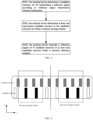
- FIG. 7 is a schematic flow diagram of another signal transmission method provided in the embodiments of the present disclosure.
- the method may include, but is not limited, to the following steps.
- step S701 For implementation of step S701, reference may be made to step S301, which will not be repeated here.
- the terminal device may also transmit a positioning request.
- the positioning request is used to request an SL positioning. This may also be understood as that the positioning request is used to trigger a device that receives the positioning request to perform a resource selection.
- the positioning request may be transmitted to other terminal devices, for example, the terminal device 2 transmits a positioning request to the terminal device 1.
- the terminal device may transmit the positioning request prior to step S702.
- the terminal device after transmitting the positioning request, postpones or delays for a first duration and then attempts to receive the reference signal on all or a part of the candidate resources included in the candidate resource set. This helps save power consumption. It may be understood that a time-domain resource start receiving position of the reference signal is spaced apart from a time-domain resource end receiving position of the positioning request by a first duration.
- the first duration is preconfigured.
- the unit of the first duration may be a symbol, for example, the first duration may be X symbols; or the unit of the first duration may be a slot, for example, the first duration may be X slots; or the unit of the first duration may be millisecond (ms) or microsecond (us).
- the value of X may be 0, or may also be a positive integer greater than or equal to 1.
- the length of the first duration is the same as the size of the preconfigured resource sensing window.
- the terminal device receives the SCI and determines a terminal device identifier (ID) according to the SCI.
- the terminal device ID is used to identify a transmitting device of the reference signal, i.e., the terminal device that transmits the reference signal.
- the terminal device ID is determined according to the SCI, for example, the terminal device ID is determined by decoding the SCI.
- Decoding the SCI includes decoding a first order SCI and/or a second order SCI.
- the terminal device may determine which terminal device the reference signal comes from by decoding the SCI.
- the terminal device ID may include, but is not limited to, a radio network temporary identity (RNTI), an international mobile subscriber identification number (IMSI), an international mobile equipment identity (IMEI), etc.
- RNTI radio network temporary identity
- IMSI international mobile subscriber identification number
- IMEI international mobile equipment identity
- the probability of missing the reference signal may be reduced.
- step S801 and step S802 are not limited in the present disclosure.
- the terminal device that transmits a reference signal is referred to as the first terminal device
- the terminal device that receives a reference signal is referred to as the second terminal device.
- the first terminal device may also be described as a transmitting device, a transmitting end, a transmitting terminal, a first device or a first terminal.
- the second terminal device may also be described as a receiving device, a receiving end, a receiving terminal, a second device or a second terminal.
- FIG. 9 is a schematic structure diagram of a communication apparatus provided in the embodiments of the present disclosure.
- the communication apparatus 90 may be a terminal device, or an apparatus matched with the terminal device. As illustrated in FIG. 9 , the communication apparatus 90 includes a processing unit 901 and a communication unit 902.
- the processing unit 901 is configured to determine a candidate resource set for transmitting the reference signal according to reference-signal transmission resource information, and determine at least one unoccupied candidate resource in the candidate resource set within a resource sensing window.
- the communication unit 902 is configured to transmit the reference signal on N candidate resources in the at least one candidate resource within the resource selection window, where N is a positive integer greater than or equal to 1.
- the communication unit 902 is further configured to receive a positioning request, where the positioning request is configured to request a sidelink (SL) positioning.
- a positioning request is configured to request a sidelink (SL) positioning.
- the processing unit 901 is specifically configured to determine at least one unoccupied candidate resource in the candidate resource set within the resource sensing window according to a resource sensing result for the candidate resource set within the resource sensing window.
- the parameters in the reference-signal transmission resource information are configured for a carrier channel; or the parameters in the reference-signal transmission resource information are configured for a bandwidth part (BWP); or the parameters in the reference-signal transmission resource information are configured for a resource pool; or some of the parameters in the reference-signal transmission resource information are configured for the carrier channel, some of the parameters are configured for the BWP, and/or some of the parameters are configured for the resource pool.
- BWP bandwidth part
- the processing unit 901 is configured to determine a candidate resource set available for transmitting the reference signal according to reference-signal transmission resource information.
- the communication unit 902 is configured to receive the reference signal on all or a part of candidate resources included in the candidate resource set.
- the reference-signal transmission resource information includes at least one of following parameters: a reference signal resource period, a starting frequency domain resource position of a reference signal, a starting time domain resource position of a reference signal, a number of symbols occupied by a reference signal, an RE offset, a reference signal pattern, a reference signal subcarrier spacing, a number of RBs occupied by a reference signal, and a CP type.
- the parameters in the reference-signal transmission resource information are configured for a carrier channel; or the parameters in the reference-signal transmission resource information are configured for a BWP; or the parameters in the reference-signal transmission resource information are configured for a resource pool; or some of the parameters in the reference-signal transmission resource information are configured for the carrier channel, some of the parameters are configured for the BWP, and/or some of the parameters are configured for the resource pool.
- the coupling in the embodiments of the present disclosure is an indirect coupling or communication connection between apparatuses, units or modules, may be in an electrical form, a mechanical form or in other forms, and is used for information interaction between apparatuses, units or modules.
- the specific connection media among the transceiver 1001, the processor 1002, and the memory 1003 are not limited in the embodiments of the present disclosure.
- the memory 1003 may include a read-only memory and a random access memory, and provides instructions and data to the processor 1002. A part of the memory 1003 may also include a non-volatile random access memory.
- the processor 1002 may be a central processing unit (CPU), or the processor 1002 may be another general-purpose processor, a digital signal processor (DSP), an application specific integrated circuit (ASIC), a field-programmable gate array (FPGA), or another programmable logic device, a discrete gate or a transistor logic device, or a discrete hardware assembly.
- the general-purpose processor may be a microprocessor.
- the processor 1002 may be any conventional processor.
- the memory 1003 is configured to store program instructions; the processor 1002 is configured to invoke the program instructions stored in the memory 1003 to execute the steps performed by the terminal device in the corresponding embodiments of FIG. 3 or FIG. 7 .
- a computer program (including a program code) operable to execute the steps involved in the above method may be run on a general computing apparatus such as a computer including processing units and storage units, for example, a CPU, a random access memory (RAM), and a read-only memory (ROM), and so that the method provided in the embodiments of the present disclosure may be implemented.
- the computer program may be recorded on, for example, a computer-readable recording medium, and loaded into the above computing apparatus through the computer-readable recording medium to be executed therein.
- the embodiments of the present disclosure further provide a chip.
- the chip includes a processor, and the processor may execute the relevant steps of the terminal device in the foregoing method embodiments.
- the chip is configured to determine a candidate resource set for transmitting the reference signal according to reference-signal transmission resource information, determine at least one unoccupied candidate resource in the candidate resource set within a resource sensing window, and transmit the reference signal on N candidate resources in the at least one candidate resource within the resource selection window, wherein N is a positive integer greater than or equal to 1.
- the communication interface is used for an internal communication of the chip module, or a communication of the chip module with an external device.
- the chip is configured to implement the functions of the terminal device in the embodiments of the present disclosure.
- the functions described in the embodiments of the present disclosure may be implemented in whole or in part by software, hardware, firmware, or any combination thereof.
- the software may be in whole or in part embodied in form of a computer program product.
- the computer program product includes one or more computer instructions.
- the computer may be a general purpose computer, a special purpose computer, a computer network, or another programmable apparatus.
- the computer instruction may be stored in a computer-readable storage medium or transferred from one computer-readable storage medium to another computer-readable storage medium.
- the available medium may be a magnetic medium (e.g., a floppy disk, a hard disk, and a magnetic tape), an optical medium (e.g., a digital video disc (DVD)), or a semiconductor medium (e.g., a solid state disk (SSD)).
- a magnetic medium e.g., a floppy disk, a hard disk, and a magnetic tape
- an optical medium e.g., a digital video disc (DVD)
- DVD digital video disc
- SSD solid state disk
- modules/units included in various apparatuses and products applied to or integrated in a chip module may be all embodied in form of hardware such as circuits, different modules/units may be located in the same assembly of the chip module (such as a chip and a circuit module) or in different assemblies, or at least some of the modules/units may be embodied in form of software programs running on a processor integrated in the chip module, and the remaining modules/units (if any) may be embodied in form of hardware such as circuits.
Landscapes
- Engineering & Computer Science (AREA)
- Signal Processing (AREA)
- Computer Networks & Wireless Communication (AREA)
- Mobile Radio Communication Systems (AREA)
Applications Claiming Priority (2)
| Application Number | Priority Date | Filing Date | Title |
|---|---|---|---|
| CN202210603113.5A CN117200949A (zh) | 2022-05-30 | 2022-05-30 | 信号传输方法及装置 |
| PCT/CN2023/097013 WO2023232007A1 (fr) | 2022-05-30 | 2023-05-30 | Procédé et appareil de transmission de signal |
Publications (2)
| Publication Number | Publication Date |
|---|---|
| EP4535701A1 true EP4535701A1 (fr) | 2025-04-09 |
| EP4535701A4 EP4535701A4 (fr) | 2025-11-05 |
Family
ID=89000243
Family Applications (1)
| Application Number | Title | Priority Date | Filing Date |
|---|---|---|---|
| EP23815186.4A Pending EP4535701A4 (fr) | 2022-05-30 | 2023-05-30 | Procédé et appareil de transmission de signal |
Country Status (4)
| Country | Link |
|---|---|
| US (1) | US20250330954A1 (fr) |
| EP (1) | EP4535701A4 (fr) |
| CN (1) | CN117200949A (fr) |
| WO (1) | WO2023232007A1 (fr) |
Families Citing this family (2)
| Publication number | Priority date | Publication date | Assignee | Title |
|---|---|---|---|---|
| CN117955620A (zh) * | 2023-12-14 | 2024-04-30 | 中兴通讯股份有限公司 | 资源指示方法、装置及存储介质 |
| CN120417041A (zh) * | 2024-01-30 | 2025-08-01 | 华为技术有限公司 | 一种通信方法及通信装置 |
Family Cites Families (9)
| Publication number | Priority date | Publication date | Assignee | Title |
|---|---|---|---|---|
| WO2019036578A1 (fr) * | 2017-08-17 | 2019-02-21 | Intel Corporation | Sélection de ressources pour une communication de liaison latérale sur la base d'informations de géolocalisation |
| EP3711401B1 (fr) * | 2017-11-16 | 2024-02-28 | Lenovo (Beijing) Limited | Procédé et appareil de sélection de ressource de transmission |
| CN110351848B (zh) * | 2018-04-04 | 2021-12-03 | 华为技术有限公司 | 一种时域资源分配方法及装置 |
| EP3821658A1 (fr) * | 2018-08-09 | 2021-05-19 | Convida Wireless, Llc | Gestion de ressources pour ev2x 5g |
| CN111436131A (zh) * | 2019-01-11 | 2020-07-21 | 华为技术有限公司 | 侧行参考信号的传输方法和通信装置 |
| US11924676B2 (en) * | 2019-08-16 | 2024-03-05 | Intel Corporation | V2X QoS and congestion control for new radio (NR) systems |
| CN114071405B (zh) * | 2020-08-06 | 2024-12-06 | 华为技术有限公司 | 资源感知方法及通信装置 |
| EP4295621A1 (fr) * | 2021-03-02 | 2023-12-27 | Huawei Technologies Co., Ltd. | Procédé et appareil de positionnement de dispositif utilisateur sur la base d'une liaison latérale |
| EP4518528A4 (fr) * | 2022-04-24 | 2026-04-29 | Lg Electronics Inc | Procédé et appareil de sélection de ressource pour une transmission de prs sl |
-
2022
- 2022-05-30 CN CN202210603113.5A patent/CN117200949A/zh active Pending
-
2023
- 2023-05-30 US US18/870,622 patent/US20250330954A1/en active Pending
- 2023-05-30 EP EP23815186.4A patent/EP4535701A4/fr active Pending
- 2023-05-30 WO PCT/CN2023/097013 patent/WO2023232007A1/fr not_active Ceased
Also Published As
| Publication number | Publication date |
|---|---|
| US20250330954A1 (en) | 2025-10-23 |
| CN117200949A (zh) | 2023-12-08 |
| EP4535701A4 (fr) | 2025-11-05 |
| WO2023232007A1 (fr) | 2023-12-07 |
Similar Documents
| Publication | Publication Date | Title |
|---|---|---|
| EP3952355A1 (fr) | Procédé et dispositif de communication | |
| WO2019029676A1 (fr) | Transmission de msg1 multiples nr-prach | |
| US10292149B2 (en) | Physical downlink control channel transmission method and apparatus | |
| JP2022528516A (ja) | チャネル占有時間の共有方法及び機器 | |
| WO2017025000A1 (fr) | Procédé et appareil de transmission de préambule | |
| US12550104B2 (en) | Positioning measurement method and apparatus, device and readable storage medium | |
| US20140153517A1 (en) | Method of and apparatus for physical random access in communication network | |
| US20200037277A1 (en) | Downlink synchronization signal sending method and receiving method and device | |
| EP4535701A1 (fr) | Procédé et appareil de transmission de signal | |
| WO2023020542A1 (fr) | Procédé et appareil d'accès aléatoire | |
| US11832302B2 (en) | Device and method for sharing band in wireless communication system | |
| US20250227680A1 (en) | Data sending method, data receiving method, communication nodes, and storage medium | |
| CN112640556A (zh) | 蜂窝网络中的冲突避免 | |
| US12363725B2 (en) | Method for PDCCH detection, method for PDCCH transmission, and devices | |
| KR102690795B1 (ko) | 업링크 신호를 송신하기 위한 방법 및 장치와, 업링크 신호를 수신하기 위한 방법 및 장치 | |
| JP2022519089A (ja) | 信号送信方法、及び装置 | |
| JP7199551B2 (ja) | リソース予約方法および関連デバイス | |
| CN111918404B (zh) | 一种分配资源的方法、基站及终端 | |
| CN114651496B (zh) | 一种通信方法及装置 | |
| CN112602363B (zh) | 动态分配寻呼和/或rach资源的方法及相关设备 | |
| US12113744B2 (en) | Information indication method and related devices | |
| CN114070501B (zh) | 非周期探测参考信号的发送方法及设备 | |
| CN120266506A (zh) | 用于设备到设备通信的方法和系统 | |
| CN110890953A (zh) | 使用免授权频段的通信方法和通信装置 | |
| US20260075598A1 (en) | Resource pool configuration method, apparatus, and system |
Legal Events
| Date | Code | Title | Description |
|---|---|---|---|
| STAA | Information on the status of an ep patent application or granted ep patent |
Free format text: STATUS: THE INTERNATIONAL PUBLICATION HAS BEEN MADE |
|
| PUAI | Public reference made under article 153(3) epc to a published international application that has entered the european phase |
Free format text: ORIGINAL CODE: 0009012 |
|
| STAA | Information on the status of an ep patent application or granted ep patent |
Free format text: STATUS: REQUEST FOR EXAMINATION WAS MADE |
|
| 17P | Request for examination filed |
Effective date: 20241216 |
|
| AK | Designated contracting states |
Kind code of ref document: A1 Designated state(s): AL AT BE BG CH CY CZ DE DK EE ES FI FR GB GR HR HU IE IS IT LI LT LU LV MC ME MK MT NL NO PL PT RO RS SE SI SK SM TR |
|
| DAV | Request for validation of the european patent (deleted) | ||
| DAX | Request for extension of the european patent (deleted) | ||
| A4 | Supplementary search report drawn up and despatched |
Effective date: 20251007 |
|
| RIC1 | Information provided on ipc code assigned before grant |
Ipc: H04L 5/00 20060101AFI20250930BHEP Ipc: H04W 4/40 20180101ALI20250930BHEP Ipc: H04W 72/02 20090101ALI20250930BHEP Ipc: H04W 4/02 20180101ALI20250930BHEP Ipc: H04W 74/0808 20240101ALI20250930BHEP |