EP4535711A2 - Coreset-gruppierung - Google Patents
Coreset-gruppierung Download PDFInfo
- Publication number
- EP4535711A2 EP4535711A2 EP24219451.2A EP24219451A EP4535711A2 EP 4535711 A2 EP4535711 A2 EP 4535711A2 EP 24219451 A EP24219451 A EP 24219451A EP 4535711 A2 EP4535711 A2 EP 4535711A2
- Authority
- EP
- European Patent Office
- Prior art keywords
- coresets
- coreset
- group
- search space
- frequency bands
- Prior art date
- Legal status (The legal status is an assumption and is not a legal conclusion. Google has not performed a legal analysis and makes no representation as to the accuracy of the status listed.)
- Pending
Links
Images









Classifications
-
- H—ELECTRICITY
- H04—ELECTRIC COMMUNICATION TECHNIQUE
- H04L—TRANSMISSION OF DIGITAL INFORMATION, e.g. TELEGRAPHIC COMMUNICATION
- H04L5/00—Arrangements affording multiple use of the transmission path
- H04L5/003—Arrangements for allocating sub-channels of the transmission path
- H04L5/0053—Allocation of signalling, i.e. of overhead other than pilot signals
-
- H—ELECTRICITY
- H04—ELECTRIC COMMUNICATION TECHNIQUE
- H04L—TRANSMISSION OF DIGITAL INFORMATION, e.g. TELEGRAPHIC COMMUNICATION
- H04L5/00—Arrangements affording multiple use of the transmission path
- H04L5/0091—Signalling for the administration of the divided path, e.g. signalling of configuration information
-
- H—ELECTRICITY
- H04—ELECTRIC COMMUNICATION TECHNIQUE
- H04L—TRANSMISSION OF DIGITAL INFORMATION, e.g. TELEGRAPHIC COMMUNICATION
- H04L5/00—Arrangements affording multiple use of the transmission path
- H04L5/0091—Signalling for the administration of the divided path, e.g. signalling of configuration information
- H04L5/0094—Indication of how sub-channels of the path are allocated
-
- H—ELECTRICITY
- H04—ELECTRIC COMMUNICATION TECHNIQUE
- H04W—WIRELESS COMMUNICATION NETWORKS
- H04W72/00—Local resource management
- H04W72/04—Wireless resource allocation
- H04W72/044—Wireless resource allocation based on the type of the allocated resource
- H04W72/0453—Resources in frequency domain, e.g. a carrier in FDMA
-
- H—ELECTRICITY
- H04—ELECTRIC COMMUNICATION TECHNIQUE
- H04W—WIRELESS COMMUNICATION NETWORKS
- H04W72/00—Local resource management
- H04W72/20—Control channels or signalling for resource management
- H04W72/23—Control channels or signalling for resource management in the downlink direction of a wireless link, i.e. towards a terminal
- H04W72/231—Control channels or signalling for resource management in the downlink direction of a wireless link, i.e. towards a terminal the control data signalling from the layers above the physical layer, e.g. RRC or MAC-CE signalling
-
- H—ELECTRICITY
- H04—ELECTRIC COMMUNICATION TECHNIQUE
- H04W—WIRELESS COMMUNICATION NETWORKS
- H04W72/00—Local resource management
- H04W72/20—Control channels or signalling for resource management
- H04W72/23—Control channels or signalling for resource management in the downlink direction of a wireless link, i.e. towards a terminal
- H04W72/232—Control channels or signalling for resource management in the downlink direction of a wireless link, i.e. towards a terminal the control data signalling from the physical layer, e.g. DCI signalling
Definitions
- the physical channels may further include the physical random access channel (PRACH or RACH) used by UEs for accessing the network once a UE synchronized and obtained the MIB and SIB.
- the physical signals may comprise reference signals or symbols (RS), synchronization signals and the like.
- the resource grid may comprise a frame or radio frame having a certain duration in the time domain and having a given bandwidth in the frequency domain.
- the frame may have a certain number of subframes of a predefined length, e.g. 1ms. Each subframe may include one or more slots of 12 or 14 OFDM symbols depending on the cyclic prefix (CP) length.
- a frame may also consist of a smaller number of OFDM symbols, e.g. when utilizing shortened transmission time intervals (sTTI) or a mini-slot/non-slot-based frame structure comprising just a few OFDM symbols.
- sTTI shortened transmission time intervals
- mini-slot/non-slot-based frame structure comprising just
- a frequency band includes a start frequency, an end frequency and all intermediate frequencies between the start and end frequencies.
- the start, end and intermediate frequencies may define a certain bandwidth, e.g., 20MHz.
- a frequency band may also be referred to as a carrier, a bandwidth part, BWP, a subband, and the like.
- the communication may be referred to as a multi-band operation or as a wideband operation or as a carrier aggregation operation.
- the frequency bands may have different bandwidths or the same bandwidth, like 20MHz.
- a UE may transmit/receive radio signals to/from another network entity on frequencies being within two or more of the 20MHz bands so that the frequency range for the radio communication may be a multiple of 20MHz.
- the two or more frequency bands may be continuous/adjacent frequency bands or some or all for the frequency bands may be separated in the frequency domain.
- the transmitter like the gNB or the UE, performs Listen-Before-Talk, LBT, separately on each subband.
- LBT Listen-Before-Talk
- the devices for example, the gNB in the downlink, DL, or the UE in the uplink, UL, are allowed to transmit on those subbands which are determined to be free or unoccupied, i.e., to transmit on the won subband(s). No transmission is allowed on the occupied, busy or non-won subbands.
- control information for users may be provided in a so-called control resource set, CORESET.
- the CORESET is a collection of time/frequency resources dedicated to the transmission of the control information, e.g. the PDCCH which carries the downlink control information, DCI, or scheduling information for respective UEs being within a certain cell or coverage area of a base station, gNB, or being served by the gNB.
- a CORESET may include a common search space, CSS, that is common across all the UEs in the cell and/or a UE specific search space, USS, that is specific to a particular UE in the cell.
- the gNB may assign different aggregation levels, ALs, per DCI per UE so as to maintain a certain reliability of decoding the PDCCH.
- ALs aggregation levels
- the UEs having a higher AL may require a larger allocation of the time/frequency resources within the CORESET.
- the UE may consider the DCI meant for itself and it may continue to decode the subsequent PDCCH channels.
- the UE needs to perform the decoding at least in such subbands that carry the control information or that include CORESETs.
- one or more or all of the frequency bands may include one or more CORESETs that are provided at certain time/frequency resources within the frequency bands.
- the base station or gNB may decide not to transmit a CORESET in one or more of the frequency bands, e.g., because no control information is available for a transmission or a more stringent transmission has to be transmitted. For example, a high priority packet for a URLLC device may arrive and the gNB may decide to prioritize the high priority packet over the CORESET transmission. This leads to an increased blind decoding effort of the UE.
- the UE may first scan for the presence of a CORESET, e.g. using a DMRS correlation, or monitor an indication from the gNB, e.g.
- the UE scheduling or control information may span across all or some of the subbands so that the UE may perform a blind decoding on each of the subbands independently.
- the UE may first scan all the subbands using a reference signal decorrelation, like a DMRS decorrelation, so as to check the result of the LBT procedure and then perform blind decoding of the PDCCH across those subbands where the LBT is successful.
- a reference signal decorrelation like a DMRS decorrelation
- Information regarding the result of a LBT procedure i.e., information which subbands are available for reception, may be transmitted in the group-common, GC, PDCCH as part of the CCEs of a CORESET. Since the LBT procedure may be applied several times during a gNB COT, the UE performs the blind decoding of the CG-PDCCH at the corresponding number of times within the COT also resulting in an increase of power consumption and, in turn, a reduction in energy efficiency.
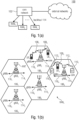
- Embodiments of the present invention may be implemented in a wireless communication system as depicted in Fig. 1 including base stations and users, like mobile terminals or loT devices.
- Fig. 2 is a schematic representation of a wireless communication system including a transmitter 300, like a base station, and one or more receivers 302 1 to 302 n , like user devices, UEs.
- the transmitter 300 and the receivers 302 may communicate via one or more wireless communication links or channels 304a, 304b, 304c, like a radio link.
- the transmitter 300 may include one or more antennas ANT T or an antenna array having a plurality of antenna elements, a signal processor 300a and a transceiver 300b, coupled with each other.
- the UE is to use one frequency band for the communication, and a CORESET group/search space group includes some or all CORESETs/search spaces in the one frequency band that are provided within a certain time window, or the UE is to use a plurality of frequency bands for the communication, and a CORESET group/search space group includes some or all CORESETs/search spaces in one or more or all of the plurality of frequency bands that are provided within a certain time window.
- the certain time window comprises one or more slots or a plurality of consecutive symbols.
- the UE is to group the search spaces further based on one or more of the following parameters in a search space information element (SearchSpace):
- SearchSpace search space information element
- the UE is to be configured with a CORESET group information element, the CORESET group information element indicating CORESET configurations to be considered for the grouping.
- the UE is to be configured, e.g., using RRC signaling, with one or more CORESET information elements (ControlResourceSet), wherein a CORESET information element includes the group ID (groupIndex) so as to indicate which CORESET configurations to consider for the grouping.
- ControlResourceSet one or more CORESET information elements
- groupIndex group ID
- the UE is to be configured with a search space group information element, the search space group information element indicating search spaces and associated CORESETs being part of the same search space group.
- the UE is to coordinate decoding the control information for the UE from the search spaces using the grouping, wherein the decoding may include blind decoding.
- the UE is to concatenate or combine the CORESETs or the search spaces of a group, whereby a virtual CORESET or a virtual search space is defined.
- the default CORESET configuration is indicated:
- the UE is to replicate a default CORESET configuration for further frequency domain monitoring locations in one or more subbands that are different from the subband associated with the default CORESET configuration.
- the UE in case the UE successfully finds control information, e.g., DCI(s), in a current CORESET having a certain aggregation level, AL, the UE is not to expect control information for itself, e.g., DCI(s), in a CORESET with another AL, or in case the UE successfully finds control information, e.g., DCI(s), in a current search space having a certain aggregation level, AL, the UE is not to expect control information for itself, e.g., DCI(s), in a search space with another AL.
- control information e.g., DCI(s)
- the UE in case the UE successfully finds control information, e.g., DCI(s), in a current CORESET having a certain aggregation level, AL, the UE is not to expect control information for itself, e.g., DCI(s), in a search space with another AL.
- the UE is to continue looking only for the certain AL in the current and in the other CORESETs/search spaces of the same CORESET group/search space group at least for the successfully decoded DCI format.
- control information e.g., DCI(s)
- the UE in case the UE successfully finds control information, e.g., DCI(s), in a current CORESET, the UE is not to expect control information for itself, e.g., DCI(s), in another CORESETs.
- the UE responsive to successfully detecting a PDCCH in a certain subband, e.g., in one of the frequency domain monitoring locations, i.e. a CORESET of a CORESET group, for a time window, e.g. a COT duration or an uninterrupted DL burst, the UE is to continue to blind decode only within the frequency domain monitoring location, i.e. a CORSET of a CORESET group, at which the PDCCH is found for the search space associated with the found PDCCH or a pre-configured subset or all search spaces which are associated with the CORESET group.
- the CORESETs or search spaces of a certain group are prioritized or ranked, and wherein the UE is to blind decode the CORESETs or search spaces of the certain group according to the prioritization or ranking thereof.
- the UE is to receive from the BS an indication of the prioritization or ranking of the CORESETs or the search spaces of the certain group, e.g., upon receiving the CORESET or search space configurations.
- control information of some or all of the CORSETs indicate in which of the CORSETs out of the CORESET group control information for the UE is present.
- the present invention provides (see for example claim 28) a user device, UE, for a wireless communication system, wherein the UE is to be served by a base station and is to use a plurality of frequency bands for a communication with one or more entities, e.g., other UE(s) or other gNB(s), in the wireless communication system, wherein some, e.g., two or more, or all of the plurality of frequency bands include one or more CORESETs carrying control information, e.g., DCI(s), for the UE, wherein the UE is to decode the control information, e.g., DCI(s), from one or more of the CORSETs, and wherein in one or more neighboring frequency bands one or more of the CORESETs are located within a pre-defined continuous frequency range extending in both neighboring frequency bands.
- a user device UE
- the UE for a wireless communication system, wherein the UE is to be served by a base station and is to use a pluralit
- the present invention provides (see for example claim 34) a user device, UE, for a wireless communication system, wherein the UE is to be served by a base station and is to use one or more frequency bands for a communication with one or more entities, e.g., other UE(s) or other gNB(s), in the wireless communication system, wherein one or more or all of the frequency bands include one or more CORESETs carrying control information, e.g. DCI(s), for the UE, and wherein one or more backup CORESETs are provided in one or more of the frequency bands.
- one or more or all of the plurality of frequency bands are unlicensed subbands on which a communication is allowed for a certain transmission time (COT) responsive to a successful Listen-Before-Talk, LBT, and following a failed gNB LBT for a certain unlicensed subband, the UE is to employ within the certain transmission time (COT) one or more backup CORESETs in one or more of the unlicensed subbands where the LBT was successful, e.g., in one or more unlicensed subbands other than a default unlicensed subband.
- COT transmission time
- the UE is to perform blind decoding for control information, e.g., DCI(s), according to a CORESET or search space prioritization and/or based on an indication which CORESETs are indicated to be transmitted or to include information for the UE.
- control information e.g., DCI(s)
- the UE is to equally or unequally distribute the number of the blind decoding attempts across the CORESETs and/or search spaces.
- the total number of blind decodes per search space group stays the same.
- the subset of CORESETs to monitor is chosen based on detecting actually transmitted CORESETs out of a CORESET group.
- the UE is to determine the CORESETs to be monitored as a subset of a CORESET group based on a formula indicated by the gNB which incorporates the number of actually transmitted CORESETs.
- the present invention provides (see for example claim 51) a base station, BS, for a wireless communication system, wherein the BS is to serve one or more UEs and is to use a plurality of frequency bands for a communication with the one or more UEs, wherein some, e.g., two or more, or all of the plurality of frequency bands include one or more CORESETs carrying control information, e.g., DCI(s), for the one or more UEs, and wherein the BS is to transmit CORESETs of one or more neighboring frequency bands within a pre-defined continuous frequency range extending both in both neighboring frequency bands.
- BS for a wireless communication system
- the BS is to serve one or more UEs and is to use a plurality of frequency bands for a communication with the one or more UEs, wherein some, e.g., two or more, or all of the plurality of frequency bands include one or more CORESETs carrying control information, e.g., DCI(s), for
- the present invention provides (see for example claim 52) a base station, BS, for a wireless communication system, wherein the BS is to serve one or more UEs and is to use one or more frequency bands for a communication with the one or more UEs in the wireless communication system, wherein one or more or all of the frequency bands include one or more CORESETs carrying control information, e.g., DCI(s), for the UE, and wherein the BS is to configure the one or more UEs with one or more backup CORESETs in the one or more frequency bands.
- BS for a wireless communication system
- the BS is to serve one or more UEs and is to use one or more frequency bands for a communication with the one or more UEs in the wireless communication system, wherein one or more or all of the frequency bands include one or more CORESETs carrying control information, e.g., DCI(s), for the UE, and wherein the BS is to configure the one or more UEs with one or more backup CORESETs
- the present invention provides (see for example claim 53)a base station, BS, for a wireless communication system, wherein the BS is to serve one or more UEs and is to use a plurality of frequency bands for a communication with the one or more UEs in the wireless communication system, wherein one or more or all of the plurality of frequency bands include one or more CORESETs carrying control information, e.g., DCI(s), for the UE, and wherein some or all of the plurality of frequency bands are unlicensed frequency bands on which a communication is allowed for a certain transmission time (COT) responsive to a successful Listen-Before-Talk, LBT, and wherein, responsive to an unsuccessful or failed LBT on one or more of the unlicensed frequency bands, the BS is to distribute the control information for the one or more UEs among the one or more frequency bands available for the communication, e.g., among one or more frequency bands which passed the LBT.
- COT transmission time
- the one or more UEs served by the BS are configured with a UE ID and the BS is to indicate out of the actually transmitted CORESETs an index of a CORESET to be monitored by the one or more served UEs, the BS is to calculate (UE ID) % (Number of actually transmitted CORESETs), wherein % indicates the modulo operation.
- the BS is to redistribute the control information, e.g., DCI(s), according to a CORESET or search space prioritization and/or based on an indication which CORESETs are to be transmitted or to include information for a specific UE.
- control information e.g., DCI(s)
- the UE comprises one or more of a mobile terminal, or stationary terminal, or cellular IoT-UE, or vehicular UE, or vehicular group leader (GL) UE, an IoT or narrowband IoT, NB-loT, device, or a WiFi non Access Point STAtion, non-AP STA, e.g.
- 802.11ax or 802.11be or a ground based vehicle, or an aerial vehicle, or a drone, or a moving base station, or road side unit, or a building, or any other item or device provided with network connectivity enabling the item/device to communicate using the wireless communication network, e.g., a sensor or actuator, and/or the BS comprises one or more of a macro cell base station, or a small cell base station, or a central unit of a base station, or a distributed unit of a base station, or a road side unit, or a UE, or a group leader (GL), or a relay, or a remote radio head, or an AMF, or an SMF, or a core network entity, or mobile edge computing entity, or a network slice as in the NR or 5G core context, or a WiFi AP STA, e.g. 802.11 ax or 802.11be, or any transmission/reception point, TRP, enabling an item or a device to communicate using the wireless communication network
- the present invention provides (see for example claim 59) a method for operating a wireless communication system, wherein a UE is served by a base station and uses one or more frequency bands for a communication with one or more entities, e.g., other UE(s) or other gNB(s), in the wireless communication system, wherein the one or more or all of the frequency bands include one or more CORESETs carrying control information, e.g., DCI(s), for the UE, and wherein the method comprises indicating in the control information of some or all of the CORSETs in which of the CORSETs control information for the UE is present.
- a UE is served by a base station and uses one or more frequency bands for a communication with one or more entities, e.g., other UE(s) or other gNB(s), in the wireless communication system, wherein the one or more or all of the frequency bands include one or more CORESETs carrying control information, e.g., DCI(s), for the UE,
- the present invention provides (see for example claim 60) a method for operating a wireless communication system, wherein the UE is served by a base station and uses a plurality of frequency bands for a communication with one or more entities, e.g., other UE(s) or other gNB(s), in the wireless communication system, wherein some, e.g., two or more, or all of the plurality of frequency bands include one or more CORESETs carrying control information, e.g., DCI(s), for the UE, wherein the UE decodes the control information, e.g., DCI(s), from one or more of the CORSETs, and wherein the method comprises locating in one or more neighboring frequency bands one or more of the CORESETs within a pre-defined continuous frequency range extending in both neighboring frequency bands.
- the method comprises locating in one or more neighboring frequency bands one or more of the CORESETs within a pre-defined continuous frequency range extending in both neighboring frequency bands.
- the present invention provides a computer program product comprising instructions which, when the program is executed by a computer, causes the computer to carry out one or more methods in accordance with the present invention.
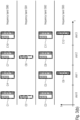
- Fig. 3(a) schematically illustrates a single-band transmission between a base station and a UE, or, in accordance with other embodiments, between two UEs, including respective control information for the receiving UE.
- the communication over the frequency band SB comprises a plurality of time windows or slots.
- Fig. 3(a) illustrates four slots of the communication, namely slot 0, slot 1, slot 2 and slot 3.
- each of the slots includes control information, for example DCls, for one or more UEs that are served, for example, by a base station.
- the control information is provided in respective control resource sets, CORESETs.
- CORESETs In the embodiment of Fig. 3(a) , in slot 0, three CORESETs C1 to C12 are transmitted.
- each of the slots includes control information, for example DCls, for one or more UEs that are served, for example, by a base station.
- the control information is provided in respective control resource sets, CORESETs.
- each of the CORESETs includes the control information for one or more UEs, for example the UEs being within a cell of a base station, i.e., for UEs being served by a base station.
- the different UEs may be one or more UEs with which a transmitting UE performs a communication over a sidelink.
- the invention is not limited to the specific configuration of control information transmission as indicated in Fig. 3(b) , rather a different number of CORESETs may be transmitted in the respective slots.
- the frequency bands are also referred to as subbands.
- Each of the CORESETs includes one or more search spaces, SS, in which the actual control information is transmitted.
- some of the CORESETs have two search spaces, SS0, SS1 (see CORESETs C1, C3 to C5, C7, C9 to C11), while others have only a single search space SS0 or SS1 (see CORESETs C2, C3, C6, C8 and C12).
- more than two search spaces may be provided within a CORESET.
- a UE receiving a communication from a transmitter like a base station or another UE, including the plurality of bands as indicated in Fig. 3 performs blind decoding in the respective CORESETs so as to find search spaces carrying control information for this specific UE.
- the search spaces are the possible locations for the control information for the UE, and each of the possible locations is also referred to as a PDCCH candidate.
- CORESETs or search spaces that share a common time window for example, CORESETs or search spaces that share the same slot or a certain duration within a slot or that share a number of consecutive symbols within a slot or the like are considered to form a group.
- the number of consecutive symbols may include a plurality of immediately consecutive symbols or consecutive symbols separated, e.g., by one or more reference symbols.
- the grouping may be signaled to the UE explicitly, for example, by the transmitter, like the gNB or another UE transmitting information towards the UE. More specifically, the search groups may have assigned a certain group index or group identification, and the UE may be configured by the transmitter, for example using an RRC signaling as indicated below, with the respective group IDs indicating those search spaces in the respective CORESETs which belong to a common group. Below, an example of an RRC message with the CORESET group configuration in the SearchSpace config is shown
- the following RRC configuration element may be employed, which, other than the previously described one, only includes the group ID.
- the above RRC message may be an existing Release 15 search space configuration (TS 38.311) further including a group index.
- the grouping may be done implicitly by the UE using information from the configurations of the search spaces. For example, the UE may recognize from the received configuration information those search spaces which have an overlapping or the same time window. For example, search spaces that span, at least partially, the same number of OFDM symbols in a certain slot are considered by the UE to belong to a common group in a certain slot as indicated in Fig. 4 .
- Fig. 5 illustrates schematically the inventive approach of a CORESET grouping.
- Fig. 5(a) illustrates a communication including a single frequency band SB using respective slots 0 to 5 for a transmission from a transmitter, like gNB or a UE, to a receiving UE.
- a transmitter like gNB or a UE
- the receiving UE determines from the received configuration information those CORESETs that share the certain time window and associates some or all of the CORESETs determined with a common group.
- inventive approach is not limited to grouping all CORESETs or all search space within a certain slot and fulfilling the requirement of being within a certain predetermined time window into a common group. Rather, CORESETs or search spaces, which fulfill the requirement for grouping may be further grouped into further groups dependent on additional parameters. For example, search spaces being within a certain time window may further be grouped dependent on their monitoring periodicity, symbols to be monitored within a slot and the like. Also, CORESETs may be grouped dependent on further parameters like CORESET instances lying in the same time window, like a slot, or the monitoring periodicities and offsets of their search space configurations or the subband the CORESETs are assigned to. Fig.
- Fig. 8 illustrates an embodiment combining CORESET grouping and search space grouping.
- the CORESETs C1 to C4 in slot 0 form a CORESET group I
- the search spaces SS0 of the CORESETs C1 to C4 in the CORESET group I form a first search space group I
- the search spaces SS1 in CORESETs C5 to C8 in slot 1 form a second search space group II.
- the embodiment of Fig. 8 is equally applicable for a single-band operation or for a multi-band operation in the licensed spectrum.
- the grouping is based on a location of the respective CORESETs or search spaces within a certain time window. Two or more of the CORESETs or search spaces may be grouped into common groups in case they fall into a common time window.
- the grouping may be based on the just mentioned similar configurations in the search space or CORESET RRC configurations, respectively. Further, the grouping may be useful not for all communications but only for certain types of communications that need to fulfill certain requirements.
- the CORESET or search space grouping allows to reduce the blind decoding effort of the UE significantly without sacrificing latency and reliability.
- the CORESET configuration for CORESETs C1 and C2 in slot 0 or the respective search space configurations associated with CORESETs C1 and C2 are not provided with a grouping indication so that the UE does not consider these CORESETs or the respective associated search spaces thereof as candidates for forming a group.
- the CORESETs C3 to C5 in slot 1 are assumed to have a CORESET configuration or a search space configuration including the grouping indication so that, in case the grouping indication is set to on or true, the UE, either implicitly or explicitly, may group the CORESETs C3 to C5 into a group or the respective search spaces SS0, SS1 into the different search space groups.
- the grouping of for the respective CORESETs may allow the UE to coordinate the decoding of the control information for the UE from the configured CORESETs.
- the UE may create a virtual search space by combining or concatenating search spaces of the CORESETs of a CORESET group.
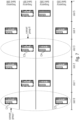
- Fig. 10 schematically illustrates an embodiment in which the UE creates a virtual search space, also referred to as a group search space.
- Fig. 10 illustrates the signaling of control information locations for a specific UE assuming an NR-U transmission using three subbands SB0 to SB3.
- the subbands include the CORESETs C1 to C4 which form a CORESET group.
- the CORESETs include the respective search spaces SS0 to SS4 that are illustrated by the differently shaded rectangular portions of the CORESETs C1 to C4.
- a group search space is defined including the search space SS0' formed by concatenating search spaces SS0 from CORESETs C1 to C4, the search space SS1' formed by concatenating search spaces SS1 from CORESETs C1 to C4, the search space SS2' formed by concatenating search spaces SS2 from CORESETs C1 to C4, the search space SS3' formed by concatenating search spaces SS3 from CORESETs C1 to C4, and the search space SS4' formed by concatenating search spaces SS4 from CORESETs C1 to C4. Furthermore, the CORESETs of a CORESET group lying in the same time window like
- the UE may stick, i.e., continue to blind decode only within a frequency domain monitoring location, i.e. a CORESET confined within a subband, responsive to successfully detecting a PDCCH for a search space associated with the successfully found PDCCH or a predefined or pre-configured subset or all of the search spaces associated with a CORESET group or a search space group, e.g., in one of the frequency locations for a certain time window, e.g. a COT duration or an uninterrupted DL burst.
- a frequency domain monitoring location i.e. a CORESET confined within a subband
- further blind decoding may be restricted to a certain configuration, like a specific aggregation level, in the search spaces or CORESETs of a search space group or a CORESET group.
- Fig. 11 illustrates an embodiment in which Fig. 11(a) shows a configuration of the CORESETs as explained above with reference to Fig. 10 .
- Fig. 11 assumes a wideband operation, either in the licensed spectrum, in the unlicensed spectrum or in the licensed/unlicensed spectrum.
- each of the search spaces SS0 to SS4 in the CORESETS C1 to C4 of a group may be associated with a number of PDCCH candidates for respective aggregation levels, AL.
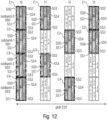
- Fig. 12 illustrates an embodiment in accordance with which the CORESET or search space configuration may be consistent across a gNB COT, and the one or more CORESETs carrying the control information for the UEs are transmitted once or several times during the COT, as is illustrated in Fig. 12 at the respective instances t0, t1, t2 and t3 that are within the illustrated gNB COT.
- the UE successfully decodes its PDCCH in SS1 of subband SB1 at time t0 its PDCCH is received at the same location or search space SS1 at times t1, t2 and t3.
- the UE in view of the group information it has for the respective CORESETs, may derive the scheduling information or control information from SS4 in C1 in the subband SB0 and from SS4 in subband SB2 for which the LBT procedure has been successful.
- an explicit relationship between CORESETs of a group may be provided.
- the transmitter may include into the respective CORESETs, for example starting from an initial or a default CORESET, further information indicating the other CORESETs transmitted in the other frequency bands and/or at a later time which include search spaces carrying control information for the receiving UE.
- the location of the corresponding control information in another CORESET of a group may be included, for example in the form of DCI information, so that the UE does not expect its control information in other CORESETs.
- the UE may skip those search spaces within the group which do not include information for it, e.g., control information or PDCCH candidates.
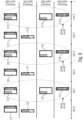
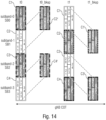
- Fig. 13 schematically illustrates the signaling of control information locations for a specific UE.
- the search spaces that are illustrated by the differently shaded rectangular portions of the CORESETs C1 to C4 may include, in addition to the PDCCH candidates for the receiving UE, also additional information, for example in the DCI, pointing to search spaces in other CORESETs of the CORESET group that are located in other subbands.
- the UE may be configured with a set of CORESETs out of which a group, also referred to as a subset, falls into the same time window, e.g. the same slot. Normally, the UE blind decodes on all of the CORSETs in this subset in this slot.
- the control information in accordance with this embodiment which may be present in some or all of the CORSETs, indicates in which of the CORSETs out of the set or out of the subset or in which of the subbands, there exists valid control information for that specific UE (the receiving UE) in this slot. So the UE may skip not indicated CORSETs although it is configured with them.
- Fig. 13 at time t0 the explicit indication of additional PDCCH information in other subbands is indicated. It is assumed that among the CORESETs C1 to C4 forming the CORESET group only search spaces SS1 and SS2 in CORESETs C1 and C2 hold information for the receiving UE so that either one or both of the CORESETs C1, C2 may include respective DCI information pointing towards the locations where additional PDCCH candidates for the receiving UE may be found, in the example of Fig. 13 , the search spaces SS1 and SS2. Naturally, other search spaces in the same or different CORESETs may also be signaled.
- the information provided, for example, in the DCI may point to the exact time-frequency resources in the subbands as indicated in Fig. 13 for the receiving UE to decode the other PDCCH(s).
- the pointing may only be to the CORESET holding additional information.
- the UE may assume that the control information decoded at the time-frequency resources in the first CORESET may be found at the corresponding time-frequency resources in the CORESET to which the UE is directed for further PDCCH candidates. This reduces the number of bits to be transmitted for signaling the locations where the additional PDCCH information for the receiving UE may be found.
- a bitmap of the subbands or the CORESETs may be provided. For example, in case of five subbands, five bits may be added to a DCI and the least significant bit may point to the lowest subband, and the most significant bit may point to the highest subband or vice versa.
- the present invention is not limited to the explicit relationship between CORESETs of a group, rather, the signaling of an explicit relationship between CORESETs may also be applied when no CORESET/search space grouping is employed.
- the UE that is served by the gNB uses a plurality of subbands for a communication with one or more entities, like other UE(s) or other gNB(s), in the wireless communication system.
- one or more or all of the plurality of subbands include one or more CORESETs carrying control information, e.g., DCI(s), for the UE, and some or all of the CORSETs indicate in which of the CORSETs control information for the respective UE is present.
- control information e.g., DCI(s)
- the UE may restrict decoding of CORESETs to those actually being transmitted and carrying control information for the receiving UE.
- the UE may also be configured, for example via RRC configuration or reconfiguration, to monitor only a subset of the frequency bands for the PDCCH channel.
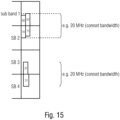
- the UE may be configured to monitor only a continuous frequency range at least for the duration of the CORESETs.
- a timer may be provided that starts at the end of the CORESETs. After the timer passed the UE may receive UL grants or DL assignments which are located within the whole of the one or more neighboring frequency bands.
- the advantage of restricting the decoding of CORESETs is that the search space of the UE is narrowed down because search spaces in the CORESETs are avoided for which the transmitter, like the gNB, did not provide any control information for the receiving UE.
- the UE may be set up or configured with two CORESETs C1, C3, i.e., the UE performs a blind decoding on CORESETs C1, C3.
- the UE performs a blind decoding on only one of these CORESETs C1, C3 as the location of the second PDCCH, in case the first PDCCH decoding was successful, is implicitly known.
- Assigning, e.g., though an RRC message, CORESETs to monitor allows for obtaining a desired distribution of CORESETs for one or more different UEs across the given frequency bands by the gNB thereby achieving, for example, load balancing.
- the assignment of each CORESET with a CORESET ID enables the UEs, i.e., those receiving UEs served by the transmitter, to be set up such that they only monitor a particular set of CORESET IDs.
- a simple relationship between the CORESET ID and the number of active frequency bands, N_ASB may help in redistributing the UEs across the successful frequency bands.
- backup CORESETs are provided within the gNB COT in the subbands where the LBT result is successful for the subbands that failed the LBT.
- the indication of the backup locations is either preconfigured in an RRC message with an activation/deactivation based on a physical signaling or transmission, like in the DCI, or is dynamically allocated and communicated in the DCls. This allows the gNB to schedule more UEs over the LBT successful subbands and helps reducing latency.
- the wireless communication system may include a terrestrial network, or a non-terrestrial network, or networks or segments of networks using as a receiver an airborne vehicle or a spaceborne vehicle, or a combination thereof.
- AP Access Point
- a first aspect relates to a user device, UE, for a wireless communication system, wherein the UE is to be served by a base station and is to use one or more frequency bands for a communication with one or more entities, e.g., other UE(s) or other gNB(s) in the wireless communication system, wherein one or more or all of the frequency bands include one or more CORESETs, each CORESET including one or more search spaces carrying control information, e.g., DCI(s), for the UE, wherein the UE is to group some or all of the CORESETs into respective CORESET groups, or some or all of the search spaces into respective search space groups, wherein a CORESET group includes some or all CORESETs within a certain time window, and wherein a search space group includes some or all search spaces within the certain time window, and wherein the grouping is responsive to one or more group IDs the UE is configured with, each group ID pointing to or indicating a CORESET group or a search space group
- the UE is to use one frequency band for the communication, and a CORESET group/search space group includes some or all CORESETs/search spaces in the one frequency band that are provided within a certain time window, or the UE is to use a plurality of frequency bands for the communication, and a CORESET group/search space group includes some or all CORESETs/search spaces in one or more or all of the plurality of frequency bands that are provided within a certain time window.
- the certain time window comprises one or more slots or a plurality of consecutive symbols.
- the UE is to be configured, e.g., using RRC signaling, with one or more CORESET information elements (ControlResourceSet), wherein a CORESET information element includes the group ID (groupIndex) so as to indicate which CORESET configurations to consider for the grouping.
- ControlResourceSet one or more CORESET information elements
- groupIndex group ID
- the UE is to be configured, e.g., using RRC signaling, with one or more CORESET information elements (ControlResourceSet) and one or more search space information elements (SearchSpace), wherein a search space information element includes a search space group indication element (searchSpaceGroup) including the group ID (groupIndex).
- ControlResourceSet CORESET information elements
- SearchSpaceGroup search space group indication element
- groupIndex groupIndex
- the UE is to coordinate decoding the control information for the UE from the search spaces using the grouping, wherein the decoding may include blind decoding.
- the UE is to receive a default CORESET configuration for a group, and to configure the remaining CORESETs of the group according to the default CORESET configuration.
- the UE in case the UE successfully finds control information, e.g., DCI(s), in a current CORESET having a certain aggregation level, AL, the UE is not to expect control information for itself, e.g., DCI(s), in a CORESET with another AL, or in case the UE successfully finds control information, e.g., DCI(s), in a current search space having a certain aggregation level, AL, the UE is not to expect control information for itself, e.g., DCI(s), in a search space with another AL.
- control information e.g., DCI(s)
- the UE in case the UE successfully finds control information, e.g., DCI(s), in a current CORESET having a certain aggregation level, AL, the UE is not to expect control information for itself, e.g., DCI(s), in a search space with another AL.
- the UE is to continue looking only for the certain AL in the current and in the other CORESETs/search spaces of the same CORESET group/search space group at least for the successfully decoded DCI format.
- the UE when the UE successfully decoded one PDCCH in a CORESET the UE is to stop or deactivate the blind decoding in other CORESETs of the CORESET group.
- the UE responsive to successfully detecting a PDCCH in a certain subband, e.g., in one of the frequency domain monitoring locations, i.e. a CORESET of a CORESET group, for a time window, e.g. a COT duration or an uninterrupted DL burst, the UE is to continue to blind decode only within the frequency domain monitoring location, i.e. a CORSET of a CORESET group, at which the PDCCH is found for the search space associated with the found PDCCH or a pre-configured subset or all search spaces which are associated with the CORESET group.
- the CORESETs or search spaces of a certain group are prioritized or ranked, and the UE is to blind decode the CORESETs or search spaces of the certain group according to the prioritization or ranking thereof.
- the UE responsive to decoding control information, e.g., DCI(s), from a CORESET or from a search space of a group, the UE is to apply a timing before which the UE is not to accept a DL assignment or an UL grant, the timing selected dependent on the priority or rank of the CORESET or search space, wherein the timing may decrease with an increase in priority or rank.
- decoding control information e.g., DCI(s)
- the UE is to apply a timing before which the UE is not to accept a DL assignment or an UL grant, the timing selected dependent on the priority or rank of the CORESET or search space, wherein the timing may decrease with an increase in priority or rank.
- control information of some or all of the CORSETs indicate in which of the CORSETs out of the CORESET group control information for the UE is present.
- a twenty-sixth aspect relates to a user device, UE, for a wireless communication system, wherein the UE is to be served by a base station and is to use one or more frequency bands for a communication with one or more entities, e.g., other UE(s) or other gNB(s), in the wireless communication system, wherein one or more or all of the frequency bands include one or more CORESETs carrying control information, e.g., DCI(s), for the UE, wherein the control information of some or all of the CORSETs indicate in which of the CORSETs control information for the UE is present.
- the control information of some or all of the CORSETs indicate in which of the CORSETs control information for the UE is present.
- a CORSET includes a DCI pointing to or indicating the CORSETs including control information for the UE.
- a twenty-eighth aspect relates to a user device, UE, for a wireless communication system, wherein the UE is to be served by a base station and is to use a plurality of frequency bands for a communication with one or more entities, e.g., other UE(s) or other gNB(s), in the wireless communication system, wherein some, e.g., two or more, or all of the plurality of frequency bands include one or more CORESETs carrying control information, e.g., DCI(s), for the UE, wherein the UE is to decode the control information, e.g., DCI(s), from one or more of the CORSETs, and wherein in one or more neighboring frequency bands one or more of the CORESETs are located within a pre-defined continuous frequency range extending in both neighboring frequency bands.
- control information e.g., DCI(s)
- the UE is configured to monitor only the continuous frequency range at least for the duration of the CORESETs.
- the UE comprises a timer, the timer to start at the end of the CORESETs, and the UE is to receive UL grants or DL assignments located within the whole of the one or more neighboring frequency bands after the timer expired.
- one or more or all of the frequency bands are unlicensed subbands, and following a successful Listen-Before-Talk, LBT, for one or more unlicensed subbands, a communication is allowed during a certain transmission time, (COT) in an available unlicensed subband; following a failed Listen-Before-Talk, LBT, for one or more unlicensed subbands, a communication is not allowed in a non-available unlicensed subband, and the UE is to not perform a communication on the non-available unlicensed subbands.
- COT transmission time
- the one or more CORESETs carrying control information for the UE are transmitted once or several times during the certain transmission time (COT).
- one or more or all of the plurality of frequency bands are unlicensed subbands on which a communication is allowed for a certain transmission time (COT) responsive to a successful Listen-Before-Talk, LBT, and following a failed gNB LBT for a certain unlicensed subband, the UE is to employ within the certain transmission time (COT) one or more backup CORESETs in one or more of the unlicensed subbands where the LBT was successful, e.g., in one or more unlicensed subbands other than a default unlicensed subband.
- COT transmission time
- the total number of blind decodes per search space group stays the same.
- a fifty-sixth aspect relates to a wireless communication system, comprising: one or more UEs of any one of aspects 1 to 47, and one or more BSs of any one of aspects 48 to 55.
- the UE comprises one or more of a mobile terminal, or stationary terminal, or cellular IoT-UE, or vehicular UE, or vehicular group leader (GL) UE, an IoT or narrowband loT, NB-IoT, device, or a WiFi non Access Point STAtion, non-AP STA, e.g.
- a sixty-third aspect relates to a computer program product comprising instructions which, when the program is executed by a computer, causes the computer to carry out one or more methods in accordance with one of aspects 58 to 62.
- aspects of the described concept have been described in the context of an apparatus, it is clear that these aspects also represent a description of the corresponding method, where a block or a device corresponds to a method step or a feature of a method step. Analogously, aspects described in the context of a method step also represent a description of a corresponding block or item or feature of a corresponding apparatus.
- computer program medium and “computer readable medium” are used to generally refer to tangible storage media such as removable storage units or a hard disk installed in a hard disk drive.
- These computer program products are means for providing software to the computer system 500.
- the computer programs also referred to as computer control logic, are stored in main memory 506 and/or secondary memory 508. Computer programs may also be received via the communications interface 510.
- the computer program when executed, enables the computer system 500 to implement the present invention.
- the computer program when executed, enables processor 502 to implement the processes of the present invention, such as any of the methods described herein. Accordingly, such a computer program may represent a controller of the computer system 500.
- the software may be stored in a computer program product and loaded into computer system 500 using a removable storage drive, an interface, like communications interface 510.
- Some embodiments according to the invention comprise a data carrier having electronically readable control signals, which are capable of cooperating with a programmable computer system, such that one of the methods described herein is performed.
- embodiments of the present invention may be implemented as a computer program product with a program code, the program code being operative for performing one of the methods when the computer program product runs on a computer.
- the program code may for example be stored on a machine readable carrier.
- inventions comprise the computer program for performing one of the methods described herein, stored on a machine readable carrier.
- an embodiment of the inventive method is, therefore, a computer program having a program code for performing one of the methods described herein, when the computer program runs on a computer.
- a programmable logic device for example a field programmable gate array
- a field programmable gate array may cooperate with a microprocessor in order to perform one of the methods described herein.
- the methods are preferably performed by any hardware apparatus.
Landscapes
- Engineering & Computer Science (AREA)
- Signal Processing (AREA)
- Computer Networks & Wireless Communication (AREA)
- Mobile Radio Communication Systems (AREA)
Applications Claiming Priority (4)
| Application Number | Priority Date | Filing Date | Title |
|---|---|---|---|
| EP19187864 | 2019-07-23 | ||
| EP19207928 | 2019-11-08 | ||
| EP20736357.3A EP4005131B1 (de) | 2019-07-23 | 2020-07-08 | Coreset-gruppierung |
| PCT/EP2020/069305 WO2021013554A1 (en) | 2019-07-23 | 2020-07-08 | Coreset grouping |
Related Parent Applications (1)
| Application Number | Title | Priority Date | Filing Date |
|---|---|---|---|
| EP20736357.3A Division EP4005131B1 (de) | 2019-07-23 | 2020-07-08 | Coreset-gruppierung |
Publications (2)
| Publication Number | Publication Date |
|---|---|
| EP4535711A2 true EP4535711A2 (de) | 2025-04-09 |
| EP4535711A3 EP4535711A3 (de) | 2025-06-11 |
Family
ID=71452249
Family Applications (2)
| Application Number | Title | Priority Date | Filing Date |
|---|---|---|---|
| EP24219451.2A Pending EP4535711A3 (de) | 2019-07-23 | 2020-07-08 | Coreset-gruppierung |
| EP20736357.3A Active EP4005131B1 (de) | 2019-07-23 | 2020-07-08 | Coreset-gruppierung |
Family Applications After (1)
| Application Number | Title | Priority Date | Filing Date |
|---|---|---|---|
| EP20736357.3A Active EP4005131B1 (de) | 2019-07-23 | 2020-07-08 | Coreset-gruppierung |
Country Status (6)
| Country | Link |
|---|---|
| US (2) | US12126562B2 (de) |
| EP (2) | EP4535711A3 (de) |
| JP (1) | JP7383789B2 (de) |
| KR (1) | KR20220033056A (de) |
| CN (1) | CN114450908B (de) |
| WO (1) | WO2021013554A1 (de) |
Families Citing this family (6)
| Publication number | Priority date | Publication date | Assignee | Title |
|---|---|---|---|---|
| WO2021013811A1 (en) * | 2019-07-25 | 2021-01-28 | Fraunhofer-Gesellschaft zur Förderung der angewandten Forschung e.V. | Configured grants within a transmitter cot |
| WO2021072759A1 (zh) * | 2019-10-18 | 2021-04-22 | 华为技术有限公司 | 一种通信方法及装置 |
| US20230189082A1 (en) * | 2020-06-24 | 2023-06-15 | Qualcomm Incorporated | Non-orthogonal and orthogonal reservation signals |
| US12501431B2 (en) * | 2020-11-18 | 2025-12-16 | Nvidia Corporation | Control data bandwidth allocation for fifth generation (5G) new radio communications |
| US11943159B2 (en) * | 2022-04-14 | 2024-03-26 | Qualcomm Incorporated | Reference signal mapping |
| WO2026059365A1 (ko) * | 2024-09-13 | 2026-03-19 | 엘지전자 주식회사 | Pdcch의 송수신을 위한 제어 자원의 설정 방법 및 그 장치 |
Family Cites Families (21)
| Publication number | Priority date | Publication date | Assignee | Title |
|---|---|---|---|---|
| JP4304535B2 (ja) * | 2004-11-17 | 2009-07-29 | 日本電気株式会社 | 情報処理装置及びこのプログラムと、モジュラー型システムの運用管理システムと、コンポーネント選択方法 |
| HRP20182182T1 (hr) * | 2009-06-25 | 2019-03-08 | Koninklijke Philips N.V. | Metoda za komunikaciju u mobilnoj mreži |
| US10079658B2 (en) * | 2011-11-04 | 2018-09-18 | Qualcomm Incorporated | Search space design for e-PDCCH in wireless communication networks |
| WO2016004560A1 (zh) * | 2014-06-20 | 2016-01-14 | 华为技术有限公司 | 一种数据传输方法及设备 |
| US10631280B2 (en) * | 2016-11-03 | 2020-04-21 | Telefonaktiebolaget Lm Ericsson (Publ) | Variable subband configuration of search space |
| US11523376B2 (en) * | 2017-01-05 | 2022-12-06 | Huawei Technologies Co., Ltd. | Method for downlink control channel design |
| US10631178B2 (en) * | 2017-02-06 | 2020-04-21 | Qualcomm Incorporated | Control resource set group design for improved communications devices, systems, and networks |
| US10567058B2 (en) * | 2017-02-08 | 2020-02-18 | Samsung Electronics Co., Ltd. | Method and apparatus for beam management |
| CN108633052B (zh) * | 2017-03-24 | 2023-09-26 | 中兴通讯股份有限公司 | 一种资源配置方法、装置和设备 |
| US10912111B2 (en) * | 2017-05-04 | 2021-02-02 | Samsung Electronics Co., Ltd. | Method and apparatus for transmitting remaining minimum system information in multibeam-based system |
| CN109121159B (zh) * | 2017-06-22 | 2021-04-23 | 维沃移动通信有限公司 | 盲检能力上报方法、盲检配置、盲检方法、终端及基站 |
| CN109392140B (zh) * | 2017-08-11 | 2020-07-28 | 维沃移动通信有限公司 | 一种用于监听pdcch的方法、终端及网络设备 |
| CN109391971B (zh) * | 2017-08-11 | 2020-08-18 | 维沃移动通信有限公司 | 一种pdcch的搜索空间的配置、监听方法及设备 |
| JP7092187B2 (ja) * | 2017-09-08 | 2022-06-28 | 富士通株式会社 | リソース構成方法、決定方法及びその装置、並びに通信システム |
| US10973013B2 (en) * | 2017-11-15 | 2021-04-06 | Sharp Kabushiki Kaisha | User equipments, base stations and methods |
| CN112189353B (zh) * | 2018-04-06 | 2024-08-09 | 诺基亚技术有限公司 | 用于对新无线电可用的未许可频带的宽带pdcch |
| CN111148260B (zh) * | 2018-11-02 | 2022-05-13 | 华为技术有限公司 | 发送和接收数据的方法以及通信装置 |
| CN111614434B (zh) * | 2019-02-25 | 2021-08-31 | 华为技术有限公司 | 搜索空间的盲检方法及通信装置 |
| US11997678B2 (en) * | 2019-04-04 | 2024-05-28 | Lg Electronics Inc. | Method for transmitting and receiving data in wireless communication system, and apparatus therefor |
| US11395283B2 (en) * | 2019-06-06 | 2022-07-19 | Samsung Electronics Co., Ltd. | Determination of search space sets for physical downlink control channel (PDCCH) monitoring |
| US10939428B2 (en) * | 2019-07-19 | 2021-03-02 | Qualcomm Incorporated | Techniques for limiting blind decoding for multi-DCI based multi-transmit-receive points |
-
2020
- 2020-07-08 WO PCT/EP2020/069305 patent/WO2021013554A1/en not_active Ceased
- 2020-07-08 EP EP24219451.2A patent/EP4535711A3/de active Pending
- 2020-07-08 CN CN202080066648.2A patent/CN114450908B/zh active Active
- 2020-07-08 JP JP2022504255A patent/JP7383789B2/ja active Active
- 2020-07-08 EP EP20736357.3A patent/EP4005131B1/de active Active
- 2020-07-08 KR KR1020227005723A patent/KR20220033056A/ko active Pending
-
2022
- 2022-01-20 US US17/580,449 patent/US12126562B2/en active Active
-
2024
- 2024-09-20 US US18/891,870 patent/US20250158779A1/en active Pending
Also Published As
| Publication number | Publication date |
|---|---|
| JP7383789B2 (ja) | 2023-11-20 |
| US20220263630A1 (en) | 2022-08-18 |
| US20250158779A1 (en) | 2025-05-15 |
| US12126562B2 (en) | 2024-10-22 |
| EP4535711A3 (de) | 2025-06-11 |
| CN114450908A (zh) | 2022-05-06 |
| EP4005131B1 (de) | 2024-12-18 |
| JP2022541619A (ja) | 2022-09-26 |
| CN114450908B (zh) | 2024-07-30 |
| KR20220033056A (ko) | 2022-03-15 |
| EP4005131A1 (de) | 2022-06-01 |
| WO2021013554A1 (en) | 2021-01-28 |
Similar Documents
| Publication | Publication Date | Title |
|---|---|---|
| US12041581B2 (en) | Radio sidelink frame structure | |
| US12414141B2 (en) | NR V2X resource pool design | |
| US12101806B2 (en) | NR-U wideband enhancements | |
| US20250168823A1 (en) | Nr v2x resource pool definitions within a band width part | |
| US20220224457A1 (en) | Nr v2x retransmission procedures | |
| EP4535711A2 (de) | Coreset-gruppierung | |
| US20220150968A1 (en) | Configured grants within a transmitter cot | |
| EP3198977B1 (de) | Verfahren und vorrichtung zur cts-planung in einem kommunikationsnetzwerk | |
| US20240205948A1 (en) | Sidelink, sl, interlacing configurations | |
| US20250331006A1 (en) | Sidelink slot structure | |
| US20250234336A1 (en) | Wireless communication system having a specific sidelink frame structure | |
| WO2021028525A1 (en) | Apparatuses and methods for wireless communications |
Legal Events
| Date | Code | Title | Description |
|---|---|---|---|
| PUAI | Public reference made under article 153(3) epc to a published international application that has entered the european phase |
Free format text: ORIGINAL CODE: 0009012 |
|
| STAA | Information on the status of an ep patent application or granted ep patent |
Free format text: STATUS: THE APPLICATION HAS BEEN PUBLISHED |
|
| AC | Divisional application: reference to earlier application |
Ref document number: 4005131 Country of ref document: EP Kind code of ref document: P |
|
| AK | Designated contracting states |
Kind code of ref document: A2 Designated state(s): AL AT BE BG CH CY CZ DE DK EE ES FI FR GB GR HR HU IE IS IT LI LT LU LV MC MK MT NL NO PL PT RO RS SE SI SK SM TR |
|
| PUAL | Search report despatched |
Free format text: ORIGINAL CODE: 0009013 |
|
| AK | Designated contracting states |
Kind code of ref document: A3 Designated state(s): AL AT BE BG CH CY CZ DE DK EE ES FI FR GB GR HR HU IE IS IT LI LT LU LV MC MK MT NL NO PL PT RO RS SE SI SK SM TR |
|
| RIC1 | Information provided on ipc code assigned before grant |
Ipc: H04L 5/00 20060101AFI20250502BHEP |
|
| STAA | Information on the status of an ep patent application or granted ep patent |
Free format text: STATUS: REQUEST FOR EXAMINATION WAS MADE |
|
| 17P | Request for examination filed |
Effective date: 20251209 |