EP4535733A1 - Verfahren zur bestimmung von kanalstatusinformationen, elektronische vorrichtung und speichermedium - Google Patents
Verfahren zur bestimmung von kanalstatusinformationen, elektronische vorrichtung und speichermedium Download PDFInfo
- Publication number
- EP4535733A1 EP4535733A1 EP23842002.0A EP23842002A EP4535733A1 EP 4535733 A1 EP4535733 A1 EP 4535733A1 EP 23842002 A EP23842002 A EP 23842002A EP 4535733 A1 EP4535733 A1 EP 4535733A1
- Authority
- EP
- European Patent Office
- Prior art keywords
- pieces
- channel
- information
- channel information
- state information
- Prior art date
- Legal status (The legal status is an assumption and is not a legal conclusion. Google has not performed a legal analysis and makes no representation as to the accuracy of the status listed.)
- Pending
Links
Images


Classifications
-
- H—ELECTRICITY
- H04—ELECTRIC COMMUNICATION TECHNIQUE
- H04B—TRANSMISSION
- H04B7/00—Radio transmission systems, i.e. using radiation field
- H04B7/02—Diversity systems; Multi-antenna system, i.e. transmission or reception using multiple antennas
- H04B7/04—Diversity systems; Multi-antenna system, i.e. transmission or reception using multiple antennas using two or more spaced independent antennas
- H04B7/06—Diversity systems; Multi-antenna system, i.e. transmission or reception using multiple antennas using two or more spaced independent antennas at the transmitting station
- H04B7/0613—Diversity systems; Multi-antenna system, i.e. transmission or reception using multiple antennas using two or more spaced independent antennas at the transmitting station using simultaneous transmission
- H04B7/0615—Diversity systems; Multi-antenna system, i.e. transmission or reception using multiple antennas using two or more spaced independent antennas at the transmitting station using simultaneous transmission of weighted versions of same signal
- H04B7/0619—Diversity systems; Multi-antenna system, i.e. transmission or reception using multiple antennas using two or more spaced independent antennas at the transmitting station using simultaneous transmission of weighted versions of same signal using feedback from receiving side
- H04B7/0621—Feedback content
- H04B7/0626—Channel coefficients, e.g. channel state information [CSI]
-
- H—ELECTRICITY
- H04—ELECTRIC COMMUNICATION TECHNIQUE
- H04B—TRANSMISSION
- H04B17/00—Monitoring; Testing
- H04B17/30—Monitoring; Testing of propagation channels
- H04B17/373—Predicting channel quality or other radio frequency [RF] parameters
-
- H—ELECTRICITY
- H04—ELECTRIC COMMUNICATION TECHNIQUE
- H04B—TRANSMISSION
- H04B7/00—Radio transmission systems, i.e. using radiation field
- H04B7/02—Diversity systems; Multi-antenna system, i.e. transmission or reception using multiple antennas
- H04B7/04—Diversity systems; Multi-antenna system, i.e. transmission or reception using multiple antennas using two or more spaced independent antennas
- H04B7/0413—MIMO systems
- H04B7/0456—Selection of precoding matrices or codebooks, e.g. using matrices antenna weighting
-
- H—ELECTRICITY
- H04—ELECTRIC COMMUNICATION TECHNIQUE
- H04L—TRANSMISSION OF DIGITAL INFORMATION, e.g. TELEGRAPHIC COMMUNICATION
- H04L25/00—Baseband systems
- H04L25/02—Details ; arrangements for supplying electrical power along data transmission lines
- H04L25/0202—Channel estimation
- H04L25/024—Channel estimation channel estimation algorithms
- H04L25/0254—Channel estimation channel estimation algorithms using neural network algorithms
-
- H—ELECTRICITY
- H04—ELECTRIC COMMUNICATION TECHNIQUE
- H04L—TRANSMISSION OF DIGITAL INFORMATION, e.g. TELEGRAPHIC COMMUNICATION
- H04L5/00—Arrangements affording multiple use of the transmission path
- H04L5/003—Arrangements for allocating sub-channels of the transmission path
- H04L5/0053—Allocation of signalling, i.e. of overhead other than pilot signals
-
- H—ELECTRICITY
- H04—ELECTRIC COMMUNICATION TECHNIQUE
- H04L—TRANSMISSION OF DIGITAL INFORMATION, e.g. TELEGRAPHIC COMMUNICATION
- H04L5/00—Arrangements affording multiple use of the transmission path
- H04L5/003—Arrangements for allocating sub-channels of the transmission path
- H04L5/0053—Allocation of signalling, i.e. of overhead other than pilot signals
- H04L5/0057—Physical resource allocation for CQI
-
- H—ELECTRICITY
- H04—ELECTRIC COMMUNICATION TECHNIQUE
- H04W—WIRELESS COMMUNICATION NETWORKS
- H04W72/00—Local resource management
- H04W72/04—Wireless resource allocation
- H04W72/044—Wireless resource allocation based on the type of the allocated resource
- H04W72/0446—Resources in time domain, e.g. slots or frames
-
- H—ELECTRICITY
- H04—ELECTRIC COMMUNICATION TECHNIQUE
- H04W—WIRELESS COMMUNICATION NETWORKS
- H04W72/00—Local resource management
- H04W72/04—Wireless resource allocation
- H04W72/044—Wireless resource allocation based on the type of the allocated resource
- H04W72/0453—Resources in frequency domain, e.g. a carrier in FDMA
-
- H—ELECTRICITY
- H04—ELECTRIC COMMUNICATION TECHNIQUE
- H04W—WIRELESS COMMUNICATION NETWORKS
- H04W72/00—Local resource management
- H04W72/20—Control channels or signalling for resource management
- H04W72/21—Control channels or signalling for resource management in the uplink direction of a wireless link, i.e. towards the network
-
- H—ELECTRICITY
- H04—ELECTRIC COMMUNICATION TECHNIQUE
- H04W—WIRELESS COMMUNICATION NETWORKS
- H04W72/00—Local resource management
- H04W72/50—Allocation or scheduling criteria for wireless resources
- H04W72/56—Allocation or scheduling criteria for wireless resources based on priority criteria
- H04W72/566—Allocation or scheduling criteria for wireless resources based on priority criteria of the information or information source or recipient
Definitions
- the present application relates to the field of wireless communications, particularly a method for determining channel state information, an electronic device, and a storage medium.
- AI artificial intelligence
- CSI channel state information
- AI can extract features from historical channel information, enabling the prediction of future channel information based on these extracted features. For example, in CSI feedback, at a reference slot n, channel information for M slots later than the reference slot n is predicted based on channel information for N slots earlier than the reference slot n.
- channel information for future M slots from channel information for N slots by using non-AI methods.
- the M pieces of channel information are then processed into channel state information.
- how to process the M pieces of channel information into channel state information and feed back the channel state information still requires further research.
- This embodiment of the present application provides a method for determining channel state information, an electronic device, and a storage medium to enable the determination of predicted channel state information for channel information, thereby improving the channel transmission quality and enhancing the user experience.
- An embodiment of the present application provides a method for determining channel state information.
- the method includes acquiring M pieces of channel information according to N pieces of channel information; determining channel state information corresponding to the M pieces of channel information; and feeding back the channel state information corresponding to the M pieces of channel information.
- N is an integer greater than 1
- M is an integer greater than or equal to 1.
- An embodiment of the present application provides a method for determining channel state information.
- the method includes acquiring channel state information; and determining M pieces of channel information corresponding to the channel state information or determining channel state information corresponding to M pieces of channel information.
- the M pieces of channel information are acquired according to N pieces of channel information, N is an integer greater than 1, and M is an integer greater than or equal to 1.
- An embodiment of the present application provides an electronic device.
- the electronic device includes one or more processors and a memory.
- the memory is configured to store one or more programs which, when executed by the one or more processors, cause the one or more processors to perform the method of any embodiment of the present application.
- An embodiment of the present application provides a computer-readable storage medium storing a computer program which, when executed by a processor, causes the processor to perform the method of any embodiment of the present application.
- module In the subsequent description, words for representing elements, such as “module”, “component” and “unit” are merely used for facilitating the description of the present application and have no particular meanings in themselves. Therefore, “module”, “component” and “unit” may be used in a mixed manner.
- the network architecture of a mobile communication network may include network devices (for example, base stations) and receiving devices (for example, terminals).
- network devices for example, base stations
- receiving devices for example, terminals.
- the first communication node (which may also be referred to as the first communication node device) may be a base-station-side device
- the second communication node (which may also be referred to as the second communication node device) may be a terminal-side device.
- the base station may be a base station or evolved Node B (eNB or eNodeB) in long-term evolution (LTE) or long-term evolution advanced (LTE-A), a base station device in a 5G network, or a base station in a future communication system.
- the base station may be a network device such as a macro base station, a micro base station, a home base station, a remote radio head, a Reconfigurable Intelligent Surface (RIS), a router, a Wireless Fidelity (Wi-Fi) device, or a primary cell and a secondary cell.
- RIS Reconfigurable Intelligent Surface
- WiFi Wireless Fidelity
- the terminal is a device with wireless transceiving capabilities that can be deployed on land, including indoor or outdoor, handheld, wearable, or vehicle-mounted.
- the terminal may also be deployed on water (such as on a ship).
- the terminal may even be deployed in the air (such as on an airplane, balloon, or satellite).
- the terminal may be a mobile phone, a tablet, a computer with wireless transceiving capabilities, a virtual reality (VR) terminal, an augmented reality (AR) terminal, a wireless terminal in industrial control, a wireless terminal in self-driving vehicles, a wireless terminal in remote medical care, a wireless terminal in a smart grid, a wireless terminal in transportation safety, a wireless terminal in a smart city, or a wireless terminal in a smart home.
- VR virtual reality
- AR augmented reality
- Embodiments of the present application do not limit the application scenarios.
- the terminal may sometimes also be referred to as a user, user equipment (UE), access terminal, UE unit, UE station, mobile station, mobile terminal, remote station, remote terminal, mobile device, UE terminal, wireless communication device, UE proxy, or UE apparatus.
- UE user equipment
- higher-layer signaling includes, but is not limited to, Radio Resource Control (RRC) and Media Access Control Control Element (MAC CE); and physical-layer signaling may also be transmitted between the base station and the terminal.
- RRC Radio Resource Control
- MAC CE Media Access Control Control Element
- physical-layer signaling is transmitted on a physical downlink control channel (PDCCH) or a physical uplink control channel (PUCCH).
- PDCH physical downlink control channel
- PUCCH physical uplink control channel
- the term "indicator” for various parameters may also be referred to as “index” or “identifier (ID)", and these concepts are fully equivalent.
- the wireless system resource includes, but is not limited to, any of the following: a reference signal resource, a reference signal resource group, reference signal resource configuration, a channel state information (CSI) report, a CSI report set, a terminal, a base station, a panel, a neural network, a subneural network, or a neural network layer.
- CSI channel state information
- the base station may indicate the identifier of one resource or the identifier of one resource set to the terminal through various higher-layer signaling or physical-layer signaling.
- AI artificial intelligence
- ML machine learning
- reinforcement learning reinforcement learning
- transfer learning deep reinforcement learning
- meta-learning meta-learning
- AI is implemented through an artificial intelligence network (or also referred to as a neural network), which includes multiple layers, with each layer consisting of at least one node.
- the neural network includes an input layer, an output layer, and at least one hidden layer.
- each layer of the neural network may incorporate, but is not limited to, at least one of the following: a fully connected layer, a dense layer, a convolutional layer, a transposed convolutional layer, a residual connection, an activation function, a normalization layer, or a pooling layer.
- each layer of the neural network may include a subneural network, such as a ResNet block, DenseNet block, or recurrent neural network (RNN) block.
- the AI network includes the neural network model and/or the neural network parameters corresponding to the neural network model.
- the neural network model may be referred to as the network model.
- the neural network parameters may be referred to as network parameters.
- transmission includes sending or receiving, for example, sending data or signals or receiving data or signals.
- Reference signals include, but are not limited to, channel state information-reference signals (CSI-RS) (including zero power CSI-RS (ZP CSI-RS) and non-zero power CSI-RS (NZP CSI-RS)), channel state information-interference measurement (CSI-IM), sounding reference signals (SRS), synchronization signals block (SSB), physical broadcast channel (PBCH), and SSB/PBCH.
- CSI-RS can be used for channel or interference measurement.
- CSI-RS can also be used for tracking, referred to as tracking reference signal (CSI-RS for Tracking, TRS).
- CSI-IM is generally used for interference measurement.
- SRS is used for channel estimation.
- the time-frequency resources for transmitting reference signals include resource element (RE) sets, referred to as reference signal resources, such as CSI-RS resources, SRS resources, CSI-IM resources, and SSB resources.
- RE resource element
- SSB includes a synchronization signal block and/or a physical broadcast channel.
- resources for transmitting reference signals can be referred to as reference signal resources.
- multiple reference signal resources may be divided into several sets (such as CSI-RS resource set, CSI-IM resource set, SRS resource set).
- a reference signal resource set includes at least one reference signal resource.
- Multiple reference signal resource sets may all be derived from the same reference signal resource configuration (such as CSI-RS resource setting, SRS resource setting, or CSI-RS resource setting, where CSI-RS resource setting may include CSI-IM resource setting and is collectively referred to as CSI-RS resource setting) for configuration of parameter information.
- the base station configures measurement resource information.
- the measurement resource information is used for acquisition of channel state information.
- the measurement resource information includes CN channel measurement resource (CMR) information and CM interference measurement resource (IMR) information.
- CMR channel measurement resource
- IMR CM interference measurement resource
- CN and CM are each a positive integer.
- the base station configures the measurement resource information in a report configuration or reporting setting.
- the base station or terminal needs to obtain channel state information.
- the channel state information may include at least one of the following: channel state information-reference signal resource indicator (CSI-RS resource indicator, CRI), synchronization signals block resource indicator (Synchronization Signals Block Resource Indicator, SSBRI), reference signal received power (RSRP), differential RSRP, channel quality indicator (CQI), precoding matrix indicator (PMI), layer indicator (LI), rank indicator (RI), level 1 signal to interference plus noise ratio (L1-SINR), or differential L1-SINR.
- the precoding matrix indicator is a type of precoding information, specifically the case where precoding information is performed based on a codebook, for example, including the first-type precoding information.
- the precoding information also includes a non-codebook-based method, for example, the second-type precoding information.
- CSI that includes only the first-type precoding information is referred to as first-type CSI
- second-type CSI is referred to as second-type CSI.
- the terminal and the base station use the first-type precoding information to transmit channel state information that matches the channel.
- the codebook includes L codewords. The main idea is that the base station and terminal prestore L codewords according to a specified formula, table, or dictionary.
- a codeword is a vector.
- a codeword is a matrix with r columns, each column being a vector. Preferably, columns of the matrix are orthogonal to each other.
- the vectors that constitute the codewords are 0-1 vectors, where the entire vector has only one value of 1, with all other values being zero.
- the vectors that constitute the codewords are discrete Fourier transform (DFT) vectors.
- the vectors constituting codewords are obtained by taking the tensor product (Kronecker product) of two or more DFT vectors.
- the vectors constituting codewords are obtained by multiplying two or more DFT vectors with different phase rotations.
- the vectors constituting codewords are obtained by combining both the tensor product (Kronecker product) and phase rotations of two or more DFT vectors.
- the base station or terminal finds the codeword that best matches the channel by searching among L codewords, using the most suitable codeword to transmit data or signals.
- a codeword that matches the channel includes, but is not limited to, at least one of the following: the codeword closest to the channel, the codeword with the highest correlation with the channel, the codeword closest to the optimal right singular vector or matrix of the channel, the codeword with the highest correlation with the optimal right singular vector or matrix of the channel, or the codeword that maximizes the signal-to-noise ratio computed for the channel.
- L is an integer greater than 1, generally greater than the number of transmitting antennas.
- the terminal and base station transmit channel state information that matches the channel by using the second-type precoding information.
- the second-type precoding information is based on AI-generated channel state information.
- the terminal and base station obtain channel state information by using an autoencoder, which includes an encoder and a decoder, where the encoder is located at the terminal and the decoder is at the base station.
- the terminal compresses the obtained channel H by using the encoder to get compressed channel state information H1, and then quantizes and feeds back the compressed channel state information H1 to the base station.
- the base station receives the quantized H1, dequantizes H1, and inputs H1 into the decoder.
- the decoder decompresses H1 to recover H1.
- H contains K0 elements
- the terminal selects K elements from H to serve as H1, quantizes H1 for feedback
- the base station receives the K quantized elements, dequantizes the K quantized elements, and inputs the dequantized K elements into the AI module.
- the AI module outputs K0 elements to recover H1 to obtain the precoding matrix for H1.
- K and K0 are integers greater than 1, with K ⁇ K0.
- the compressed H1 or the K elements selected from H are considered as second-type channel state information.
- the quantized H1 is also referred to as second-type channel state information.
- the second-type precoding information may also be a precoding matrix that is generated by other non-AI methods and that differs from the first-type precoding information.
- the second-type precoding information may be a precoding matrix distinct from the first-type precoding information.
- the terminal and base station need to define a CSI report (CSI report or CSI report config).
- the CSI report defines at least one of the following parameters: the time and frequency resources used for CSI feedback, the report quantity included in CSI, the time-domain category for CSI feedback (reportConfigType), channel measurement resources, interference measurement resources, or the size of the measurement bandwidth.
- the CSI report can be transmitted over uplink transmission resources.
- the uplink transmission resources are resources used for transmitting uplink signaling or data, including, but not limited to, the physical uplink shared channel (PUSCH) and the physical uplink control channel (PUCCH).
- CSI reports also include time-domain characteristics, including periodic CSI reports (P-CSI), aperiodic CSI reports (A-CSI), and semi-persistent CSI reports (SP-CSI).
- P-CSI involves a relatively small number of bits and is transmitted on PUCCH
- A-CSI involves a larger number of bits and is usually transmitted on PUSCH.
- SP-CSI can be transmitted on PUSCH or PUCCH.
- P-CSI transmitted on PUCCH is configured by higher-layer signaling (radio resource control (RRC)), and SP-CSI transmitted on PUCCH is also configured or activated by higher-layer signaling (RRC and/or MAC CE).
- RRC radio resource control
- SP-CSI or A-CSI transmitted on PUSCH is triggered by physical layer signaling (downlink control information (DCI)) that is usually transmitted on the physical downlink control channel (PDCCH).
- DCI downlink control information
- feeding back can also be replaced with "sending" or “transmitting”, all of which refer to transmitting signaling, data, or channel state information from one communication node to another communication node.
- the terminal needs to feed back multiple CSI reports.
- the transmission resources corresponding to at least L of these CSI reports are in conflict.
- at least one of the L conflicting CSI reports includes the second-type precoding information.
- L is a positive integer.
- the priority values (PVs) of the L conflicting CSI reports are calculated according to a priority calculation formula. The reports are sorted in ascending order based on their priority values. At least one CSI report with a lower priority is selected for transmission on the uplink transmission resources.
- the antenna may be a physical antenna. In some examples, the antenna may be a logical antenna. In some examples, the concepts of port and antenna can be interchangeable. In some examples, the antenna is a transmitting antenna. In some examples, the antenna is a receiving antenna. In some examples, the antenna includes a pair of transmitting and receiving antennas. In some examples, the antenna may be a uniform linear array. In some examples, the antenna is a uniform planar array (for example, including Ng rows and Mg columns, where Ng and Mg are positive integers). In some examples, the antenna is a uniform circular array. In some examples, the antenna may be a nonuniform linear array. In some examples, the antenna is a nonuniform planar array.
- the antenna is a nonuniform circular array. In some examples, the antenna is a directional antenna. In some examples, the antenna is an omnidirectional antenna. In some examples, the antenna is a dual-polarized antenna. In some examples, the antenna is a single-polarized antenna.
- the channel information is information obtained based on a reference signal (such as CSI-RS) to describe the channel environment between communication nodes, such as a time-domain channel matrix or a frequency-domain channel matrix.
- the channel information is a complex matrix related to the number of transmitting antennas Nt, the number of receiving antennas Nr, and resource elements (RE). For example, at least one Nr*Nt channel matrix is present on a physical resource block (PRB).
- the base station transmits, over N slots, the reference signal for channel measurement.
- the N slots are the slots earlier than the reference slot.
- the reference slot includes one of the following: an agreed-upon slot between the base station and the terminal; a current slot; a slot indicated by the base station; a slot obtained by adding a fixed offset to a slot indicated by the base station; or a slot obtained by adding a fixed offset to the slot in which the terminal receives indication signaling of the base station.
- the current slot is used for the operation of obtaining M channel information from the N channel information.
- M pieces of channel information are obtained based on N pieces of channel information.
- the N pieces of channel information are sequentially encoded and then input into the first AI module, which outputs M pieces of channel information.
- encoding the channel information includes, but is not limited to, one of the following: normalizing the elements of the channel matrix (for example, normalizing the range of an element to the interval [0, 1] or [-0.5, 0.5]), converting the elements of the channel matrix into real numbers (for example, splitting a complex number into its real and imaginary parts), sampling the channel matrix, grouping the channel matrix, or performing joint operations on multiple channel matrices.
- the N pieces of channel information are the channel information earlier than the reference slot
- the M pieces of channel information are the channel information later than the reference slot.
- N is an integer greater than 1
- M is an integer greater than or equal to 1.
- the channel state information (CSI) corresponding to the M pieces of channel information is determined.
- the M pieces of channel information are encoded and then input into a second AI module, and the second AI module outputs a single piece of CSI.
- the M pieces of channel information are encoded and then input into the second AI module separately, and the second AI module outputs M pieces of CSI.
- the M pieces of channel information are divided into K groups, each group of channel information is encoded and then separately input into the second AI module, and the second AI module outputs K pieces of CSI.
- the M pieces of channel information are divided into K groups, the ith piece of channel information is encoded and then input into the second AI module, and the second AI module outputs i pieces of CSI.
- i 1, ..., and K
- M is an integer greater than or equal to 1
- K is an integer greater than or equal to 1
- K ⁇ M is an integer greater than or equal to 1
- the channel state information (CSI) corresponding to the M pieces of channel information is fed back.
- the CSI is transmitted using uplink transmission resources.
- the CSI corresponding to the M pieces of channel information is carried on at least one aperiodic PUSCH for transmission.
- the CSI corresponding to the M pieces of channel information is carried on at least one semi-persistent PUSCH for transmission.
- the CSI corresponding to the M pieces of channel information is carried on at least one periodic PUCCH for transmission.
- feeding back one piece of channel state information means transmitting the CSI by carrying it on an uplink transmission resource.
- feeding back at least one piece of channel state information through a CSI report means that the at least one piece of channel state information is carried on the uplink transmission resource indicated by the CSI report and transmitted to another communication node through the uplink transmission resource.
- FIG. 2 is a flowchart of a method for determining channel state information according to an embodiment of the present application.
- This embodiment of the present application may be applicable for determining channel state information.
- the channel information corresponding to the channel state information is predicted and generated based on historical channel information or channel information earlier than the reference slot.
- the method may be performed by the apparatus for determining channel state information according to any embodiment of the present application.
- the apparatus may be implemented by software and/or hardware.
- the apparatus is generally integrated in a terminal. Referring to FIG. 2 , the method of this embodiment of the present application includes 110, 120, and 130.
- M pieces of channel information are acquired according to N pieces of channel information.
- the M pieces of channel information may be acquired according to the N pieces of channel information.
- the acquisition may be as follows: predicting the N pieces of channel information to determine the M pieces of channel information by using an artificial intelligence method.
- the M pieces of channel information may also be acquired from the N pieces of channel information by using a non-AI method.
- the N pieces of channel information may be sequentially encoded and input into a first AI module, and then the first AI module outputs M pieces of channel information.
- channel state information corresponding to the M pieces of channel information is determined.
- the channel state information (CSI) corresponding to the M pieces of channel information may be determined by using AI.
- the M pieces of channel information are encoded and then input into the second AI module, and the second AI module outputs a single piece of CSI.
- the M pieces of channel information are encoded and then input into the second AI module separately, and the second AI module outputs M pieces of CSI.
- the M pieces of channel information are divided into K groups, each group of channel information is encoded and then separately input into the second AI module, and the second AI module outputs K pieces of CSI.
- the M pieces of channel information are divided into K groups, the ith piece of channel information is encoded and then input into the second AI module, and the second AI module outputs i pieces of CSI.
- i 1, ..., and K
- M is an integer greater than or equal to 1
- K is an integer greater than or equal to 1
- K ⁇ M is an integer greater than or equal to 1
- the channel state information corresponding to the M pieces of channel information is fed back, where N is an integer greater than 1, and M is an integer greater than or equal to 1.
- the channel state information corresponding to the M channel information is fed back.
- the N pieces of channel information are channel information earlier than a reference slot, and the M pieces of channel information are channel information later than the reference slot.
- one or more pieces of channel information later than the reference slot may be determined according to one or more pieces of channel information earlier than the reference slot.
- FIG. 3 is a flowchart of a method for determining channel state information according to an embodiment of the present application. This embodiment of the present application is based on the previous embodiments of the present application. Referring to FIG. 3 , the method of this embodiment of the present application includes 210, 220, and 230.
- M pieces of channel information are acquired according to N pieces of channel information.
- the M pieces of channel information are processed into K pieces of channel state information, where M is a positive integer, and K is a positive integer less than or equal to M.
- the M pieces of channel information may be processed into K pieces of state information.
- This processing may include mapping the channel information into a precoding matrix, that is, converting the channel information into first-type or second-type precoding information, or describing the channel information by using first-type or second-type precoding information.
- K is a positive integer less than or equal to M.
- the channel state information for the K pieces of channel information is fed back on transmission resources corresponding to a channel state information report.
- the generated channel state information corresponding to the K pieces of channel information may be fed back in a channel state information report.
- the channel state information report indicates uplink transmission resources, and the channel state information corresponding to the K pieces of channel information is transmitted over these uplink transmission resources.
- the first indication information may be one of the following: physical-layer signaling, a field in physical-layer signaling, higher-layer signaling, a field in higher-layer signaling, or a field carried in a CSI report.
- the first indication information indicates the type of the channel state information.
- the channel state information report includes the first indication information.
- the first indication information is fed back.
- the first indication information is configured to indicate the channel state information type.
- the first indication information may be configured to indicate the type of the channel state information (CSI) corresponding to a CSI group.
- the type of the CSI includes first-type precoding information and second-type precoding information.
- the type of the CSI can be used to indicate the type of the CSI corresponding to the CSI group.
- the first indication information can indicate the type of the CSI corresponding to the CSI group.
- the terminal and/or base station uses the first-type precoding information to describe channel information in the channel information group, for example, determine the channel information within the channel information group as the first-type precoding information.
- the terminal and/or base station uses the second-type precoding information to describe channel information in the channel information group, for example, determine the channel information in the channel information group as the second-type precoding information.
- the first value may be 0 and the second value may be 1; or the first value may be 0 and the second value may be a non-zero value; or the first value may be FALSE and the second value may be TRUE.
- the first and second values here may also be other real values as long as they can be used to differentiate between two cases.
- the terminal feeds back the first indication information.
- the first indication information has the first value.
- the terminal determines the channel information in the channel information group as the first-type precoding information and feeds back the first-type precoding information.
- the base station receives the first indication information and the first-type precoding information. In an example embodiment, the terminal feeds back the first indication information.
- the first indication information includes at least one bit.
- the first indication information for describing the channel state information has the second value.
- the terminal determines the channel information in the channel information group as the second-type precoding information and feeds back the second-type precoding information.
- the base station receives the first indication information for describing the channel state information and receives the second-type precoding information.
- feeding back the channel state information for the K pieces of channel information includes transmitting the channel state information for the K pieces of channel information on transmission resources corresponding to K channel state information reports.
- the channel state information for the K pieces of channel information may be transmitted on transmission resources corresponding to K channel state information reports.
- the channel state information for the K pieces of channel information may be transmitted in the first or multiple slots on transmission resources corresponding to the K channel state information reports.
- the K channel state information reports have the same report identifier information.
- the K channel state information reports for feedback of the K pieces of channel information may have the same report identifier information, for example, the same report number (ReportID).
- the K channel state information reports have different report identifier information.
- the K channel state information reports for feedback of the K pieces of channel information may have different report identifier information, for example, may have different report numbers (ReportIDs).
- the K channel state information reports are in one slot.
- the K channel state information reports are in K0 slots.
- K0 is an integer less than or equal to K and greater than 1.
- FIG. 4 is a flowchart of a method for determining channel state information according to an embodiment of the present application. Referring to FIG. 4 , this embodiment of the present application is based on the previous embodiments of the present application.
- the method for determining channel state information according to this embodiment of the present application includes 310, 320, 330, and 340.
- M pieces of channel information are acquired according to N pieces of channel information.
- the M pieces of channel information are classified into K channel information groups according to the respective slots corresponding to the M pieces of channel information.
- the M pieces of channel information may be classified into K channel information groups according to the respective slots corresponding to the M pieces of channel information.
- each channel information group includes one or more pieces of channel information.
- the K channel information groups are processed into K pieces of second-type precoding information.
- K and M are each an integer greater than or equal to 1, and K is less than or equal to M.
- the K channel information groups may be processed into K pieces of second-type precoding information.
- the ith group may be processed into the ith piece of channel state information. This processing may be performed based on AI.
- i is an integer of 1, ..., K.
- channel state information corresponding to the M pieces of channel information is fed back.
- the ith channel information group among the K channel information groups includes X i pieces of channel information.
- each channel information group includes at least one piece of channel information.
- the first channel information group includes X1 pieces of channel information, and the second channel information group includes X2 pieces of channel information, where X1 and X2 are each a positive integer;
- the first channel information group includes X1 pieces of channel information, the second channel information group includes X2 pieces of channel information, and the third channel information group includes X3 pieces of channel information, where X1, X2, and X3 are each a positive integer;
- the first channel information group includes X1 pieces of channel information
- the second channel information group includes X2 pieces of channel information
- the third channel information group includes X3 pieces of channel information
- the fourth channel information group includes X4 pieces of channel information, where X1, X2, X3, and X4 are each a positive integer.
- the channel information group includes channel information in at least one of the following manners: The first channel information group includes 1 piece of channel information, and the second channel information group includes 2 pieces of channel information; the first channel information group includes 2 pieces of channel information, and the second channel information group includes 1 piece of channel information; the first channel information group includes 2 pieces of channel information, and the second channel information group includes 2 pieces of channel information; the first channel information group includes 1 piece of channel information, and the second channel information group includes 3 pieces of channel information; the first channel information group includes 3 pieces of channel information, and the second channel information group includes 1 piece of channel information; the first channel information group includes 2 pieces of channel information, and the second channel information group includes 3 pieces of channel information; the first channel information group includes 3 pieces of channel information, and the second channel information group includes 2 pieces of channel information; the first channel information group includes 3 pieces of channel information, and the second channel information group includes 2 pieces of channel information; the first channel information group includes 3 pieces of channel information, and the second channel information group includes 3 pieces of channel information; the first channel information group includes 1 piece of channel information,
- the channel information group includes only one piece of channel information and the first indication information has a first value
- the one piece of channel information is processed into first-type precoding information
- the channel information group includes at least two pieces of channel information and the first indication information has a first value
- the at least two pieces of channel information are processed into at least one piece of first-type precoding information.
- the one piece of channel information included in the channel information group may be processed into the first-type precoding information.
- This processing may be based on a DFT-related codebook method, such as TypeII or eTypeII, to describe the channel information.
- the channel information group includes at least two pieces of channel information and the first indication information has a first value
- at least one piece of channel information included in the channel information group may be processed into the first-type precoding information.
- This processing of each piece of channel information may be based on a DFT-related codebook method, such as TypeII or eTypeII, to describe the channel information.
- the first indication information is configured to describe or indicate the type of the channel state information.
- FIG. 5 is a flowchart of a method for determining channel state information according to an embodiment of the present application. Referring to FIG. 5 , this embodiment of the present application is based on the previous embodiments of the present application.
- the method for determining channel state information according to this embodiment of the present application includes 410, 420, and 430.
- M pieces of channel information are acquired according to N pieces of channel information.
- the M pieces of channel information are encoded in the order of slots corresponding to the M pieces of channel information, and the encoded M pieces of channel information are processed into one piece of channel state information.
- the M pieces of channel information may be encoded in the order of their respective slots, with channel information in larger slots being encoded earlier.
- the M pieces of channel information may be encoded into a single piece of channel state information.
- channel state information corresponding to the M pieces of channel information is fed back.
- FIG. 6 is a flowchart of a method for determining channel state information according to an embodiment of the present application. Referring to FIG. 6 , this embodiment of the present application is based on the previous embodiments of the present application.
- the method for determining channel state information according to this embodiment of the present application includes 510, 520, and 530.
- the M pieces of channel information are processed into M pieces of channel state information.
- a piece of channel information corresponds to a piece of channel state information.
- the M pieces of channel information may be processed into M pieces of channel state information.
- each piece of channel information may be processed into a single piece of channel state information.
- channel state information corresponding to the M pieces of channel information is fed back.
- FIG. 7 is a flowchart of a method for determining channel state information according to an embodiment of the present application. Referring to FIG. 7 , this embodiment of the present application is based on the previous embodiments of the present application.
- the method for determining channel state information according to this embodiment of the present application includes 610, 620, 630, and 640.
- M pieces of channel information are acquired according to N pieces of channel information.
- the M pieces of channel information are processed into K pieces of channel state information.
- the K pieces of channel state information are mapped in the order of priority values of the K pieces of channel state information to uplink transmission resources corresponding to a channel state information report.
- the K pieces of channel state information may be mapped in the order of priority values of the K pieces of channel state information to the uplink transmission resources.
- the uplink transmission resources may correspond to one channel state information report.
- channel state information corresponding to the M pieces of channel information is fed back.
- the priority values of the K pieces of channel state information are determined according to slots corresponding to the K pieces of channel state information, or the priority values of the K pieces of channel state information are determined according to indexes corresponding to the K pieces of channel state information.
- the priority values of the K pieces of channel state information are determined according to slots corresponding to the K pieces of channel state information; and among the K pieces of channel state information, the larger the corresponding slot, the greater the corresponding priority value.
- the priority values of the K pieces of channel state information are determined according to indexes corresponding to the K pieces of channel state information; and the larger the index, the smaller the corresponding priority value.
- the priority value corresponding to the index of the ith piece of channel state information is less than the priority value corresponding to the index of the jth piece of channel state information.
- j ⁇ i, and i, j 1, ..., K.
- mapping the K pieces of channel state information in the order of priority values of the K pieces of channel state information to the uplink transmission resources corresponding to the channel state information report includes one of the following: dividing the uplink transmission resources into K time-domain resource groups and mapping the kth piece of channel state information among the K pieces of channel state information to the kth time-domain resource group among the K time-domain resource groups; dividing the uplink transmission resources into K frequency-domain resource groups and mapping a kth piece of channel state information among the K pieces of channel state information to a kth frequency-domain resource group among the K frequency-domain resource groups; or dividing the uplink transmission resources into K time-frequency-domain resource groups and mapping a kth piece of channel state information among the K pieces of channel state information to a kth time-frequency-domain resource group among the K time-frequency-domain resource groups.
- the uplink transmission resources may include at least one of time-domain resources, frequency-domain resources, or time-frequency-domain resources.
- the uplink transmission resources may be divided into K groups.
- the K pieces of channel state information may be mapped to one group of uplink transmission resources separately. If the uplink transmission resources include time-domain resources, the K pieces of channel state information can be mapped to one of the K time-domain resource groups divided from the time-domain resources; and each time-domain resource group can include L1 time-domain symbol resources (for example, resource elements on different subcarriers on L1 consecutive or nonconsecutive symbols).
- the K pieces of channel state information can be mapped to one of the K frequency-domain resource groups divided from the frequency-domain resources; and each frequency-domain resource group can include L2 subcarrier resources, for example, one or more physical resource blocks (PRBs) or one or more subbands.
- the uplink transmission resources include time-frequency-domain resources
- the K pieces of channel state information can be mapped to one of the K time-frequency-domain resource groups divided from the time-frequency-domain resources; and each time-frequency-domain resource group can include L1 time-domain symbol resources and L2 subcarrier resources.
- K, L1, and L2 are positive integers.
- the method for determining channel state information also includes at least one of the following: the smaller a slot corresponding to the channel information, the smaller a slot corresponding to a transmission resource for channel state information corresponding to the channel information; the smaller a slot corresponding to the channel information, the smaller a slot corresponding to a transmission resource for the channel information; the smaller a slot corresponding to the channel information, the smaller a slot corresponding to a channel state information report corresponding to the channel information; the smaller a slot corresponding to the channel state information, the smaller a slot corresponding to a channel state information report corresponding to the channel state information; or the smaller a slot corresponding to the channel information, the smaller a slot corresponding to a transmission resource for the channel information.
- a first determination time of the channel state information corresponding to the M pieces of channel information is earlier than a second determination time of channel state information corresponding to the N pieces of channel information.
- FIG. 8 is a flowchart of a method for determining channel state information according to an embodiment of the present application.
- This embodiment of the present application may be applicable for determining channel state information.
- the channel information corresponding to the channel state information is determined based on historical channel information or channel information earlier than the reference slot.
- the method may be performed by the apparatus for determining channel state information according to any embodiment of the present application.
- the apparatus may be implemented by software and/or hardware.
- the apparatus is generally integrated in a base station. Referring to FIG. 8 , the method of this embodiment of the present application includes 710 and 720.
- channel state information is acquired.
- the channel state information may be acquired by receiving one or more CSI reports, where the channel state information is acquired from processing M pieces of channel information.
- M pieces of channel information corresponding to the channel state information or channel state information corresponding to M pieces of channel information are determined, where the M pieces of channel information are determined by N pieces of channel information, N is an integer greater than 1, and M is an integer greater than or equal to 1.
- M pieces of channel information or M pieces of channel state information may be determined according to the received channel state information.
- the M pieces of channel information may be determined by N pieces of channel information.
- the channel state information is fed back based on K pieces of second-type precoding information, and the corresponding channel information may be determined based on the ith piece of second-type precoding information.
- the channel state information is fed back based on first-type precoding information; and the M pieces of channel state information may be determined based on the channel state information.
- the ith piece of channel state information may be determined based on the ith piece of first-type precoding information.
- i is a positive integer less than or equal to M.
- the N pieces of channel information are channel information earlier than a reference slot, and the M pieces of channel information are channel information later than the reference slot.
- K pieces of channel state information there are K pieces of channel state information and, the K pieces of channel state information are acquired from processing of M pieces of channel information.
- M is a positive integer
- K is a positive integer less than or equal to M.
- processing the M pieces of channel information into the K pieces of channel state information includes classifying the M pieces of channel information into K channel information groups according to the respective slots corresponding to the M pieces of channel information; and processing the K channel information groups into K pieces of second-type precoding information, wherein K and M are each an integer greater than or equal to 1, and K is less than or equal to M.
- processing the M pieces of channel information into the K pieces of channel state information includes encoding the M pieces of channel information in the order of slots corresponding to the M pieces of channel information and processing the encoded M pieces of channel information into one piece of channel state information.
- processing the M pieces of channel information into the K pieces of channel state information includes processing the M pieces of channel information into M pieces of channel state information, wherein a piece of channel information corresponds to a piece of channel state information.
- processing the M pieces of channel information into the K pieces of channel state information includes mapping the K pieces of channel state information in the order of priority values of the K pieces of channel state information to uplink transmission resources corresponding to a channel state information report.
- the first channel information group includes 1 piece of channel information, and the second channel information group includes 2 pieces of channel information; the first channel information group includes 2 pieces of channel information, and the second channel information group includes 1 piece of channel information; the first channel information group includes 2 pieces of channel information, and the second channel information group includes 2 pieces of channel information; the first channel information group includes 1 piece of channel information, and the second channel information group includes 3 pieces of channel information; the first channel information group includes 3 pieces of channel information, and the second channel information group includes 1 piece of channel information; the first channel information group includes 2 pieces of channel information, and the second channel information group includes 3 pieces of channel information; the first channel information group includes 3 pieces of channel information, and the second channel information group includes 2 pieces of channel information; the first channel information group includes 3 pieces of channel information, and the second channel information group includes 3 pieces of channel information; the first channel information group includes 1 piece of channel information, and the second channel information group includes 4 pieces of channel information; the first channel information group includes 4 pieces of channel information, and the second channel information group includes 1 piece of channel information;
- the channel information group includes only one piece of channel information and the first indication information has a first value
- the one piece of channel information is processed into first-type precoding information
- the channel information group includes at least two pieces of channel information and the first indication information has a first value
- the at least two pieces of channel information are processed into at least one piece of first-type precoding information.
- acquiring the channel state information includes acquiring the channel state information of the K pieces of channel information transmitted in transmission resources corresponding to a channel state information report, and acquiring channel state information feedback from the .
- receiving first indication information is also included.
- the first indication information is configured to indicate the type of the channel state information.
- the channel state information for the K pieces of channel information transmitted on transmission resources corresponding to K channel state information reports is acquired.
- the channel state information report includes first indication information.
- the first indication information is configured to indicate the channel state information type of the channel state information corresponding to the channel information group.
- acquiring the channel state information includes acquiring the fed-back channel state information from K channel state information reports.
- the K channel state information reports have the same report identifier information.
- the K channel state information reports have different report identifier information.
- the K channel state information reports are in one slot.
- the K channel state information reports are in K slots.
- the smaller the slot corresponding to the channel information the smaller the slot corresponding to the transmission resource for the channel state information corresponding to the channel information.
- the smaller the slot corresponding to the channel information the smaller the slot corresponding to the transmission resource for the channel information.
- the smaller the slot corresponding to the channel information the smaller the slot corresponding to the channel state information report corresponding to the channel information.
- the smaller the slot corresponding to the channel state information the smaller the slot corresponding to the channel state information report corresponding to the channel state information.
- the smaller the slot corresponding to the channel state information the smaller the slot corresponding to the transmission resource for the channel state information.
- a first determination time of the channel state information corresponding to the M pieces of channel information is earlier than a second determination time of channel state information corresponding to the N pieces of channel information.
- the pieces of channel information are jointly processed into a single piece of CSI and fed back in one channel state information report. Determining the channel state information corresponding to the M pieces of channel information refers to jointly processing the M pieces of channel information into a single piece of channel state information (CSI).
- CSI channel state information
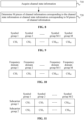
- the M pieces of channel information H 1 , H 2 , ..., H M are the channel information for slots n 1 , ..., n M , respectively, they are a channel matrix related to the number of transmitting and receiving antennas and the bandwidth, where n 1 , ..., n M are positive integers sorted in ascending order, then the M pieces of channel information are encoded in the order of slots corresponding to the M pieces of channel information, mapped to one piece of CSI, and fed back in one channel state information report.
- the priority value of the ith piece of CSI is smaller than that of the jth CSI j , where 1 ⁇ i ⁇ j ⁇ M.
- the pieces of CSI are encoded in ascending order of priority value, starting with the first piece of CSI, followed by the second piece of CSI, and so on, until the uplink transmission resources indicated by the CSI report no longer satisfy the encoding requirements.
- the channel information can be processed into K pieces of CSI, that is, some CSI corresponds to a single piece of channel information while some CSI corresponds to at least two pieces of channel information and is fed back in a single channel state information report. Determining the channel state information corresponding to the M pieces of channel information means mapping the M pieces of channel information to K pieces of CSI.
- the priority value of the ith piece of CSI is smaller than that of the jth CSI j , where 1 ⁇ i ⁇ j ⁇ M.
- the pieces of CSI are encoded in ascending order of priority value, starting with the first piece of CSI, followed by the second piece of CSI, and so on, until the transmission resources indicated by the CSI report no longer satisfy the encoding requirements.
- CSI 1 , CSI 2 , ..., and CSI k are encoded sequentially in the time domain.
- CSI 1 , CSI 2 , ..., and CSI k are encoded sequentially in the frequency domain.
- CSI 1 , CSI 2 , ..., and CSI k are encoded sequentially in the frequency domain and then the time domain, and the K pieces of encoded CSI are transmitted in a single CSI report.
- the ith channel information group among the K channel information groups includes X i pieces of channel information.
- X i is a positive integer
- i 1, ..., K.
- the first channel information group includes X1 pieces of channel information
- the second channel information group includes X2 pieces of channel information, where X1 and X2 are each a positive integer
- the first channel information group includes X1 pieces of channel information
- the second channel information group includes X2 pieces of channel information
- the third channel information group includes X3 pieces of channel information, where X1, X2, and X3 are each a positive integer
- the first channel information group includes X1 pieces of channel information
- the second channel information group includes X2 pieces of channel information
- the third channel information group includes X3 pieces of channel information
- the fourth channel information group includes X4 pieces of channel information, where X1, X2, X3, and X4 are each
- the K groups of channel information are divided into two or more channel information groups, and in terms of the number of pieces of channel information included in each channel information group, one of the following applies:
- the first channel information group includes 1 piece of channel information, and the second channel information group includes 2 pieces of channel information;
- the first channel information group includes 2 pieces of channel information, and the second channel information group includes 2 pieces of channel information;
- the first channel information group includes 2 pieces of channel information, and the second channel information group includes 2 pieces of channel information;
- the first channel information group includes 1 piece of channel information, and the second channel information group includes 3 pieces of channel information;
- the first channel information group includes 3 pieces of channel information, and the second channel information group includes 1 piece of channel information;
- the first channel information group includes 3 pieces of channel information, and the second channel information group includes 2 pieces of channel information;
- the first channel information group includes 3 pieces of channel information, and the second channel information group includes 2 pieces of
- the channel state information for each channel information group is determined, for example, the first CSI is processed individually, or one piece of CSI is compressed individually.
- the terminal and/or the base station uses the first-type precoding information to describe the channel information in the channel information group, for example, the channel information in the channel information group is determined as the first-type precoding information; and when the first indication information has the second value, the terminal and/or the base station uses the second-type precoding information to describe the channel information in the channel information group, for example, the channel information in the channel information group is determined as the second-type precoding information.
- the first value is 0, and the second value is 1; or the first value is 0, and the second value is a non-zero value; or the first value is FALSE, and the second value is TRUE.
- the first value and the second value can also have other real values as long as they can distinguish between two cases.
- the channel information be described using a DFT-related codebook method, such as TypeII or eTypeII. If the first indication information has the first value, at least two pieces of channel information in the channel information group can be processed into the first-type precoding information, and each piece of channel information can be described using a DFT-related codebook method, such as TypeII or eTypeII.
- the first indication information is configured to indicate the type of the channel state information.
- M pieces of channel information are acquired, and M channel state information reports are used for feedback.
- Determining the channel state information corresponding to the M pieces of channel information means mapping the M pieces of channel information to M pieces of CSI.
- the M reports have the same reportID, and the M reports are in a single slot.
- the M pieces of CSI are fed back in the order of the indexes corresponding to the frequency domain groups.
- the ith frequency domain group is used for carrying the CSI corresponding to the ith CSI report.
- the M reports have the same reportID, and the M reports are in M slots.
- the M pieces of CSI are fed back in the order of the indexes of the slots.
- the ith slot is used for carrying the CSI corresponding to the ith CSI report.
- the M reports have different reportIDs, and the M reports are in M slots.
- the M pieces of CSI are fed back in the order of the indexes of the slots according to the sizes of the reportIDs.
- the ith slot is used for carrying the CSI corresponding to the CSI report having the ith largest report ID.
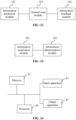
- FIG. 12 is a diagram illustrating the structure of an apparatus for determining channel state information according to an embodiment of the present application.
- the apparatus for determining channel state information can perform the method for determining channel state information according to any embodiment of the present application and has corresponding function modules and beneficial effects of the performed method.
- the apparatus may be implemented by software and/or hardware.
- the apparatus is generally integrated in a terminal.
- the apparatus includes an information prediction module 101, a channel state module 102, and an information feedback module 103.
- the information prediction module 101 is configured to acquire M pieces of channel information according to N pieces of channel information.
- the channel state module 102 is configured to determine channel state information corresponding to the M pieces of channel information.
- the information feedback module 103 is configured to feed back the channel state information corresponding to the M pieces of channel information.
- N is an integer greater than 1
- M is an integer greater than or equal to 1.
- the N pieces of channel information in the apparatus are channel information earlier than a reference slot, and the M pieces of channel information are channel information later than the reference slot.
- the channel state module 102 of the apparatus includes a processing unit configured to process the M pieces of channel information into K pieces of channel state information.
- M is a positive integer
- K is a positive integer less than or equal to M.
- the processing unit is configured to classify the M pieces of channel information into K channel information groups according to the respective slots corresponding to the M pieces of channel information; and process the K channel information groups into K pieces of second-type precoding information.
- K and M are each an integer greater than or equal to 1, and K is less than or equal to M.
- the processing unit is configured to encode the M pieces of channel information in the order of slots corresponding to the M pieces of channel information and process the encoded M pieces of channel information into one piece of channel state information.
- the processing unit is configured to process the M pieces of channel information into M pieces of channel state information.
- a piece of channel information corresponds to a piece of channel state information.
- the processing unit is configured to map the K pieces of channel state information in the order of priority values of the K pieces of channel state information to uplink transmission resources corresponding to a channel state information report.
- the priority values of the K pieces of channel state information are determined according to slots corresponding to the K pieces of channel state information, or the priority values of the K pieces of channel state information are determined according to indexes corresponding to the K pieces of channel state information.
- mapping the K pieces of channel state information in the order of priority values of the K pieces of channel state information to the uplink transmission resources corresponding to the channel state information report includes one of the following:
- the ith channel information group among the K channel information groups includes X i pieces of channel information.
- each channel information group includes at least one piece of channel information.
- the first channel information group includes X1 pieces of channel information, and the second channel information group includes X2 pieces of channel information, where X1 and X2 are each a positive integer;
- the first channel information group includes X1 pieces of channel information, the second channel information group includes X2 pieces of channel information, and the third channel information group includes X3 pieces of channel information, where X1, X2, and X3 are each a positive integer;
- the first channel information group includes X1 pieces of channel information
- the second channel information group includes X2 pieces of channel information
- the third channel information group includes X3 pieces of channel information
- the fourth channel information group includes X4 pieces of channel information, where X1, X2, X3, and X4 are each a positive integer.
- the first channel information group includes 1 piece of channel information, and the second channel information group includes 2 pieces of channel information; the first channel information group includes 2 pieces of channel information, and the second channel information group includes 1 piece of channel information; the first channel information group includes 2 pieces of channel information, and the second channel information group includes 2 pieces of channel information; the first channel information group includes 1 piece of channel information, and the second channel information group includes 3 pieces of channel information; the first channel information group includes 3 pieces of channel information, and the second channel information group includes 1 piece of channel information; the first channel information group includes 2 pieces of channel information, and the second channel information group includes 3 pieces of channel information; the first channel information group includes 3 pieces of channel information, and the second channel information group includes 2 pieces of channel information; the first channel information group includes 3 pieces of channel information, and the second channel information group includes 2 pieces of channel information; the first channel information group includes 3 pieces of channel information, and the second channel information group includes 3 pieces of channel information; the first channel information group includes 1 piece of channel information, and the second channel information group includes 4 pieces of channel information; the first channel information
- the apparatus also includes a module configured to feedback first indication information.
- the first indication information is configured to indicate the type of the channel state information.
- the information feedback module 103 is configured to transmit the channel state information for the K pieces of channel information on transmission resources corresponding to a channel state information report.
- the channel state information report in the apparatus includes first indication information.
- the first indication information is configured to indicate the channel state information type of the channel state information corresponding to the channel information group.
- the information feedback module 103 is configured to transmit the channel state information for the K pieces of channel information on transmission resources corresponding to K channel state information reports.
- the K channel state information reports have the same report identifier information.
- the K channel state information reports have different report identifier information.
- the K channel state information reports are in one slot.
- the K channel state information reports are in K slots.
- the smaller the slot corresponding to the channel information the smaller the slot corresponding to the transmission resource for the channel state information corresponding to the channel information.
- the smaller the slot corresponding to the channel information the smaller the slot corresponding to the transmission resource for the channel information.
- the smaller the slot corresponding to the channel information the smaller the slot corresponding to the channel state information report corresponding to the channel information.
- the smaller the slot corresponding to the channel state information the smaller the slot corresponding to the channel state information report corresponding to the channel state information.
- the smaller the slot corresponding to the channel state information the smaller the slot corresponding to the transmission resource for the channel state information.
- a first determination time of the channel state information corresponding to the M pieces of channel information is earlier than a second determination time of channel state information corresponding to the N pieces of channel information.
- FIG. 13 is a diagram illustrating the structure of an apparatus for determining channel state information according to an embodiment of the present application.
- the apparatus for determining channel state information can perform the method for determining channel state information according to any embodiment of the present application and has corresponding function modules and beneficial effects of the performed method.
- the apparatus may be implemented by software and/or hardware.
- the apparatus is generally integrated in a base station.
- the apparatus includes an information acquisition module 201 and an information determination module 202.
- the information acquisition module 201 is configured to acquire channel state information.
- the information determination module 202 is configured to determine M pieces of channel information corresponding to the channel state information or determine channel state information corresponding to M pieces of channel information.
- the M pieces of channel information are determined by N pieces of channel information, N is an integer greater than 1, and M is an integer greater than or equal to 1.
- the N pieces of channel information are channel information earlier than a reference slot, and the M pieces of channel information are channel information later than the reference slot.
- K pieces of channel state information there are K pieces of channel state information and, the K pieces of channel state information are acquired from processing of M pieces of channel information.
- M is a positive integer
- K is a positive integer less than or equal to M.
- processing the M pieces of channel information into the K pieces of channel state information includes classifying the M pieces of channel information into K channel information groups according to the respective slots corresponding to the M pieces of channel information; and processing the K channel information groups into K pieces of second-type precoding information.
- K and M are each an integer greater than or equal to 1, and K is less than or equal to M.
- processing the M pieces of channel information into the K pieces of channel state information includes encoding the M pieces of channel information in the order of slots corresponding to the M pieces of channel information and processing the encoded M pieces of channel information into one piece of channel state information.
- processing the M pieces of channel information into the K pieces of channel state information includes processing the M pieces of channel information into M pieces of channel state information.
- a piece of channel information among the M pieces of channel information corresponds to a piece of channel state information among the K pieces of channel state information.
- processing the M pieces of channel information into the K pieces of channel state information includes mapping the K pieces of channel state information in the order of priority values of the K pieces of channel state information to uplink transmission resources corresponding to a channel state information report.
- the priority values of the K pieces of channel state information are determined according to slots corresponding to the K pieces of channel state information, or the priority values of the K pieces of channel state information are determined according to indexes corresponding to the K pieces of channel state information.
- mapping the K pieces of channel state information in the order of priority values of the K pieces of channel state information to the uplink transmission resources corresponding to the channel state information report includes one of the following: dividing the uplink transmission resources into K time-domain resource groups and mapping the kth piece of channel state information among the K pieces of channel state information to the kth time-domain resource group among the K time-domain resource groups; dividing the uplink transmission resources into K frequency-domain resource groups and mapping the kth piece of channel state information among the K pieces of channel state information to the kth frequency-domain resource group among the K frequency-domain resource groups; or dividing the uplink transmission resources into K time-frequency-domain resource groups and mapping the kth piece of channel state information among the K pieces of channel state information to the kth time-frequency-domain resource group among the K time-frequency-domain resource groups.
- the ith channel information group among the K channel information groups includes X i pieces of channel information.
- each channel information group includes at least one piece of channel information.
- the first channel information group includes X1 pieces of channel information, and the second channel information group includes X2 pieces of channel information, where X1 and X2 are each a positive integer;
- the first channel information group includes X1 pieces of channel information, the second channel information group includes X2 pieces of channel information, and the third channel information group includes X3 pieces of channel information, where X1, X2, and X3 are each a positive integer;
- the first channel information group includes X1 pieces of channel information
- the second channel information group includes X2 pieces of channel information
- the third channel information group includes X3 pieces of channel information
- the fourth channel information group includes X4 pieces of channel information, where X1, X2, X3, and X4 are each a positive integer.
- the first channel information group includes 1 piece of channel information, and the second channel information group includes 2 pieces of channel information; the first channel information group includes 2 pieces of channel information, and the second channel information group includes 1 piece of channel information; the first channel information group includes 2 pieces of channel information, and the second channel information group includes 2 pieces of channel information; the first channel information group includes 1 piece of channel information, and the second channel information group includes 3 pieces of channel information; the first channel information group includes 3 pieces of channel information, and the second channel information group includes 1 piece of channel information; the first channel information group includes 2 pieces of channel information, and the second channel information group includes 3 pieces of channel information; the first channel information group includes 3 pieces of channel information, and the second channel information group includes 2 pieces of channel information; the first channel information group includes 3 pieces of channel information, and the second channel information group includes 3 pieces of channel information; the first channel information group includes 1 piece of channel information, and the second channel information group includes 4 pieces of channel information; the first channel information group includes 4 pieces of channel information, and the second channel information group includes 1 piece of channel information;
- the channel information group includes only one piece of channel information and the first indication information has a first value
- the one piece of channel information is processed into first-type precoding information
- the channel information group includes at least two pieces of channel information and the first indication information has a first value
- the at least two pieces of channel information are processed into at least one piece of first-type precoding information.
- the apparatus further includes a module configured to receive first indication information.
- the first indication information is configured to indicate the type of the channel state information.
- the information acquisition module 201 is configured to acquire the channel state information by acquiring the channel state information for the K pieces of channel information on transmission resources corresponding to a channel state information report.
- the channel state information report includes first indication information.
- the first indication information is configured to indicate the type of the channel state information.
- the information acquisition module 201 is configured to acquire the channel state information by acquiring the channel state information for the K pieces of channel information on transmission resources corresponding to K channel state information reports.
- the K channel state information reports have the same report identifier information.
- the K channel state information reports have different report identifier information.
- the K channel state information reports are in one slot.
- the K channel state information reports are in K slots.
- the smaller the slot corresponding to the channel information the smaller the slot corresponding to the transmission resource for the channel state information corresponding to the channel information.
- the smaller the slot corresponding to the channel information the smaller the slot corresponding to the transmission resource for the channel information.
- the smaller the slot corresponding to the channel information the smaller the slot corresponding to the channel state information report corresponding to the channel information.
- the smaller the slot corresponding to the channel state information the smaller the slot corresponding to the channel state information report corresponding to the channel state information.
- the smaller the slot corresponding to the channel state information the smaller the slot corresponding to the transmission resource for the channel state information.
- a first determination time of the channel state information corresponding to the M pieces of channel information is earlier than a second determination time of channel state information corresponding to the N pieces of channel information.
- FIG. 14 is a structural diagram of an electronic device according to an embodiment of the present application.
- the electronic device includes a processor 40, a memory 41, an input apparatus 42, and an output apparatus 43.
- One or more processors 40 may be included in the electronic device.
- FIG. 14 uses one processor 40 as an example.
- the processor 40, the memory 41, the input apparatus 42, and the output apparatus 43 in the electronic device may be connected via a bus or in other manners.
- FIG. 14 uses connection via a bus as an example.
- the memory 41 may be configured to store software programs, computer-executable programs, and modules, for example, modules (the information prediction module 101, the channel state module 102, and the information feedback module 103; or the information acquisition module 201 and the information determination module 202) corresponding to the apparatus for determining channel state information according to any embodiment of the present application.
- the processor 40 executes software programs, instructions, and modules stored in the memory 41 to perform function applications and data processing of the electronic device, that is, to perform the preceding method.
- the memory 41 may mainly include a program storage region and a data storage region, where the program storage region may store an operating system and an application program required by at least one function, and the data storage region may store data created according to use of the electronic device. Additionally, the memory 41 may include a high-speed random-access memory or a nonvolatile memory such as at least one disk memory, a flash memory or another nonvolatile solid-state memory. In some examples, the memory 41 may further include memories that are remotely disposed relative to the processor 40. These remote memories may be connected to the electronic device via a network. Examples of the preceding network include, but are not limited to, the Internet, an intranet, a local area network, a mobile communication network, and a combination thereof.
- the input apparatus 42 may be configured to receive inputted digital or character information and generate key signal input related to user settings and function control of the electronic device.
- the output apparatus 43 may include a display device such as a display screen.
- An embodiment of the present application provides a storage medium including computer-executable instructions. When executed by a computer processor, the computer-executable instructions are configured to cause the computer processor to perform a method for determining channel state information.
- the method includes acquiring M pieces of channel information according to N pieces of channel information; determining channel state information corresponding to the M pieces of channel information; and feeding back the channel state information corresponding to the M pieces of channel information.
- N is an integer greater than 1
- M is an integer greater than or equal to 1.
- the method includes acquiring channel state information; and determining M pieces of channel information corresponding to the channel state information or determining channel state information corresponding to M pieces of channel information.
- the M pieces of channel information are determined according to N pieces of channel information, N is an integer greater than 1, and M is an integer greater than or equal to 1.
- the computer software product may be stored in a computer-readable storage medium such as a floppy disk, a read-only memory (ROM), a random-access memory (RAM), a flash memory, a hard disk or an optical disc of a computer and includes several instructions for causing a computer device (which may be a personal computer, a server, or a network device) to perform the method in the embodiments of the present application.
- a computer-readable storage medium such as a floppy disk, a read-only memory (ROM), a random-access memory (RAM), a flash memory, a hard disk or an optical disc of a computer and includes several instructions for causing a computer device (which may be a personal computer, a server, or a network device) to perform the method in the embodiments of the present application.
- the division of the preceding function modules/units may not correspond to the division of physical components.
- one physical component may have multiple functions, or one function or operation may be performed jointly by several physical components.
- Some or all physical components may be implemented as software executed by a processor such as a central processing unit, a digital signal processor or a microprocessor, may be implemented as hardware, or may be implemented as integrated circuits such as application-specific integrated circuits.
- a processor such as a central processing unit, a digital signal processor or a microprocessor
- Such software may be distributed on computer-readable media.
- the computer-readable media may include computer storage media (or non-transitory media) and communication media (or transitory media).
- the term computer storage media includes volatile and nonvolatile media as well as removable and non-removable media implemented in any method or technology for storing information (such as computer-readable instructions, data structures, program modules or other data).
- the computer storage media include, but are not limited to, a RAM, a ROM, an electrically erasable programmable read-only memory (EEPROM), a flash memory, or other memory technologies, a compact disc read-only memory (CD-ROM), a digital versatile disc (DVD) or other optical disc memories, magnetic cassettes, magnetic tapes, magnetic disk memories or other magnetic storage apparatuses, or any other medium used for storing the desired information and accessible by a computer.
- the communication media generally include computer-readable instructions, data structures, program modules or other data in carriers or in modulated data signals transported in other transport mechanisms and may include any information delivery medium.
Landscapes
- Engineering & Computer Science (AREA)
- Signal Processing (AREA)
- Computer Networks & Wireless Communication (AREA)
- Quality & Reliability (AREA)
- Physics & Mathematics (AREA)
- Electromagnetism (AREA)
- Artificial Intelligence (AREA)
- Evolutionary Computation (AREA)
- Power Engineering (AREA)
- Mobile Radio Communication Systems (AREA)
Applications Claiming Priority (2)
| Application Number | Priority Date | Filing Date | Title |
|---|---|---|---|
| CN202210843620.6A CN117479316A (zh) | 2022-07-18 | 2022-07-18 | 一种信道状态信息的确定方法、电子设备和存储介质 |
| PCT/CN2023/101856 WO2024016936A1 (zh) | 2022-07-18 | 2023-06-21 | 信道状态信息的确定方法、电子设备和存储介质 |
Publications (1)
| Publication Number | Publication Date |
|---|---|
| EP4535733A1 true EP4535733A1 (de) | 2025-04-09 |
Family
ID=89617000
Family Applications (1)
| Application Number | Title | Priority Date | Filing Date |
|---|---|---|---|
| EP23842002.0A Pending EP4535733A1 (de) | 2022-07-18 | 2023-06-21 | Verfahren zur bestimmung von kanalstatusinformationen, elektronische vorrichtung und speichermedium |
Country Status (6)
| Country | Link |
|---|---|
| US (1) | US20260019123A1 (de) |
| EP (1) | EP4535733A1 (de) |
| JP (1) | JP7834233B2 (de) |
| KR (1) | KR20250024996A (de) |
| CN (1) | CN117479316A (de) |
| WO (1) | WO2024016936A1 (de) |
Family Cites Families (7)
| Publication number | Priority date | Publication date | Assignee | Title |
|---|---|---|---|---|
| US8649456B2 (en) * | 2009-03-12 | 2014-02-11 | Futurewei Technologies, Inc. | System and method for channel information feedback in a wireless communications system |
| WO2012130313A1 (en) * | 2011-03-31 | 2012-10-04 | Telefonaktiebolaget L M Ericsson (Publ) | Method and network node for determining channel state information in an upcoming time slot |
| CA2967281C (en) * | 2014-12-08 | 2023-01-31 | Lg Electronics Inc. | Method for transmitting uplink control information and device therefor |
| CN110830213B (zh) * | 2018-08-10 | 2021-02-23 | 华为技术有限公司 | 上行控制信道资源确定方法和装置 |
| WO2020220278A1 (zh) * | 2019-04-30 | 2020-11-05 | 华为技术有限公司 | 一种信道估计模型训练方法及设备 |
| CN113098804B (zh) * | 2021-03-29 | 2022-08-23 | 东南大学 | 一种基于深度学习与熵编码的信道状态信息反馈方法 |
| CN114422059B (zh) * | 2022-01-24 | 2023-01-24 | 清华大学 | 信道预测方法、装置、电子设备及存储介质 |
-
2022
- 2022-07-18 CN CN202210843620.6A patent/CN117479316A/zh active Pending
-
2023
- 2023-06-21 WO PCT/CN2023/101856 patent/WO2024016936A1/zh not_active Ceased
- 2023-06-21 JP JP2025502635A patent/JP7834233B2/ja active Active
- 2023-06-21 US US18/994,340 patent/US20260019123A1/en active Pending
- 2023-06-21 EP EP23842002.0A patent/EP4535733A1/de active Pending
- 2023-06-21 KR KR1020257001583A patent/KR20250024996A/ko active Pending
Also Published As
| Publication number | Publication date |
|---|---|
| WO2024016936A1 (zh) | 2024-01-25 |
| JP7834233B2 (ja) | 2026-03-23 |
| US20260019123A1 (en) | 2026-01-15 |
| JP2025523932A (ja) | 2025-07-25 |
| KR20250024996A (ko) | 2025-02-20 |
| CN117479316A (zh) | 2024-01-30 |
Similar Documents
| Publication | Publication Date | Title |
|---|---|---|
| US12537567B2 (en) | Method and apparatus to enable CSI reporting based on non-uniform space-frequency compression | |
| US11277187B2 (en) | Method and apparatus for CSI parameter configuration in wireless communication systems | |
| US12244384B2 (en) | Method and apparatus for compression-based CSI reporting | |
| KR20240128689A (ko) | 무선 통신 시스템에서 시변 채널의 도플러 정보를 보고하는 방법 및 장치 | |
| KR20240022460A (ko) | Csi 보고를 위한 방법 및 장치 | |
| US20250183962A1 (en) | Information transmission method and device, and storage medium | |
| EP4529069A1 (de) | Verfahren und vorrichtung zur verarbeitung von kanalstatusinformationen, kommunikationsknoten und speichermedium | |
| EP4550684A1 (de) | Übertragungsverfahren, kommunikationsknoten und speichermedium | |
| CN117955540A (zh) | 信道状态信息的发送、接收方法、通信装置及存储介质 | |
| EP4564699A1 (de) | Informationssendeverfahren, informationsempfangsverfahren, kommunikationsvorrichtung und speichermedium | |
| EP4611298A1 (de) | Verfahren und vorrichtung zum senden von anzeigeinformationen, verfahren und vorrichtung zum empfangen von anzeigeinformationen und speichermedium | |
| EP4535733A1 (de) | Verfahren zur bestimmung von kanalstatusinformationen, elektronische vorrichtung und speichermedium | |
| US20250247136A1 (en) | Channel state information feedback method and receiving method, communication node, and storage medium | |
| US20250266882A1 (en) | Channel state information processing method, communication node and storage medium | |
| EP4546855A1 (de) | Verfahren und vorrichtung zur messparameterrückkopplung, endgerät und speichermedium | |
| CN117640007B (en) | Channel state information feedback method, receiving method, device and communication node | |
| KR20110112054A (ko) | 이동통신 시스템에서 코드북을 이용한 피엠아이 제한을 위한 장치 및 방법 |
Legal Events
| Date | Code | Title | Description |
|---|---|---|---|
| STAA | Information on the status of an ep patent application or granted ep patent |
Free format text: STATUS: THE INTERNATIONAL PUBLICATION HAS BEEN MADE |
|
| PUAI | Public reference made under article 153(3) epc to a published international application that has entered the european phase |
Free format text: ORIGINAL CODE: 0009012 |
|
| STAA | Information on the status of an ep patent application or granted ep patent |
Free format text: STATUS: REQUEST FOR EXAMINATION WAS MADE |
|
| 17P | Request for examination filed |
Effective date: 20250106 |
|
| AK | Designated contracting states |
Kind code of ref document: A1 Designated state(s): AL AT BE BG CH CY CZ DE DK EE ES FI FR GB GR HR HU IE IS IT LI LT LU LV MC ME MK MT NL NO PL PT RO RS SE SI SK SM TR |
|
| DAV | Request for validation of the european patent (deleted) | ||
| DAX | Request for extension of the european patent (deleted) |