EP4535845A1 - Procédé et appareil de sélection de mécanisme d'authentification pour un dispositif personnel de l'internet des objets, ue, fonction de réseau et support de stockage - Google Patents
Procédé et appareil de sélection de mécanisme d'authentification pour un dispositif personnel de l'internet des objets, ue, fonction de réseau et support de stockage Download PDFInfo
- Publication number
- EP4535845A1 EP4535845A1 EP22943248.9A EP22943248A EP4535845A1 EP 4535845 A1 EP4535845 A1 EP 4535845A1 EP 22943248 A EP22943248 A EP 22943248A EP 4535845 A1 EP4535845 A1 EP 4535845A1
- Authority
- EP
- European Patent Office
- Prior art keywords
- pin element
- authentication
- identifier
- gateway
- network function
- Prior art date
- Legal status (The legal status is an assumption and is not a legal conclusion. Google has not performed a legal analysis and makes no representation as to the accuracy of the status listed.)
- Pending
Links
Images


Classifications
-
- H—ELECTRICITY
- H04—ELECTRIC COMMUNICATION TECHNIQUE
- H04W—WIRELESS COMMUNICATION NETWORKS
- H04W12/00—Security arrangements; Authentication; Protecting privacy or anonymity
- H04W12/06—Authentication
-
- H—ELECTRICITY
- H04—ELECTRIC COMMUNICATION TECHNIQUE
- H04L—TRANSMISSION OF DIGITAL INFORMATION, e.g. TELEGRAPHIC COMMUNICATION
- H04L63/00—Network architectures or network communication protocols for network security
- H04L63/20—Network architectures or network communication protocols for network security for managing network security; network security policies in general
- H04L63/205—Network architectures or network communication protocols for network security for managing network security; network security policies in general involving negotiation or determination of the one or more network security mechanisms to be used, e.g. by negotiation between the client and the server or between peers or by selection according to the capabilities of the entities involved
-
- H—ELECTRICITY
- H04—ELECTRIC COMMUNICATION TECHNIQUE
- H04L—TRANSMISSION OF DIGITAL INFORMATION, e.g. TELEGRAPHIC COMMUNICATION
- H04L67/00—Network arrangements or protocols for supporting network services or applications
- H04L67/01—Protocols
- H04L67/12—Protocols specially adapted for proprietary or special-purpose networking environments, e.g. medical networks, sensor networks, networks in vehicles or remote metering networks
-
- H—ELECTRICITY
- H04—ELECTRIC COMMUNICATION TECHNIQUE
- H04W—WIRELESS COMMUNICATION NETWORKS
- H04W12/00—Security arrangements; Authentication; Protecting privacy or anonymity
- H04W12/08—Access security
-
- H—ELECTRICITY
- H04—ELECTRIC COMMUNICATION TECHNIQUE
- H04W—WIRELESS COMMUNICATION NETWORKS
- H04W12/00—Security arrangements; Authentication; Protecting privacy or anonymity
- H04W12/60—Context-dependent security
- H04W12/69—Identity-dependent
-
- H—ELECTRICITY
- H04—ELECTRIC COMMUNICATION TECHNIQUE
- H04W—WIRELESS COMMUNICATION NETWORKS
- H04W12/00—Security arrangements; Authentication; Protecting privacy or anonymity
- H04W12/60—Context-dependent security
- H04W12/69—Identity-dependent
- H04W12/72—Subscriber identity
-
- H—ELECTRICITY
- H04—ELECTRIC COMMUNICATION TECHNIQUE
- H04W—WIRELESS COMMUNICATION NETWORKS
- H04W4/00—Services specially adapted for wireless communication networks; Facilities therefor
- H04W4/70—Services for machine-to-machine communication [M2M] or machine type communication [MTC]
-
- H—ELECTRICITY
- H04—ELECTRIC COMMUNICATION TECHNIQUE
- H04W—WIRELESS COMMUNICATION NETWORKS
- H04W8/00—Network data management
- H04W8/18—Processing of user or subscriber data, e.g. subscribed services, user preferences or user profiles; Transfer of user or subscriber data
- H04W8/20—Transfer of user or subscriber data
- H04W8/205—Transfer to or from user equipment or user record carrier
-
- H—ELECTRICITY
- H04—ELECTRIC COMMUNICATION TECHNIQUE
- H04W—WIRELESS COMMUNICATION NETWORKS
- H04W84/00—Network topologies
- H04W84/18—Self-organising networks, e.g. ad-hoc networks or sensor networks
Definitions
- the method further includes: sending a first message to a first network function and indicating a PIN element authentication process to the first network function; where the first message carries at least one of the following information: the PIN element authentication indicator, the name of the authentication method supported by the PIN element, a subscription concealed identifier SUCI or a 5G global unique temporary identifier 5G-GUTI of a PIN element gateway (PIN element with gateway capability), and the PIN element identifier.
- sending the first message to the first network function includes: encapsulating the first message into a non-access stratum NAS message and sending the NAS message to the first network function.
- the UE is enabled as a PIN element gateway.
- a method for selecting an authentication mechanism for a personal Internet of Things device applied to a second network function, the method including: authorizing an authentication request for a PIN element gateway and selecting an authentication method for PIN element authentication.
- the authentication request carries at least one of the following information: a PIN element authentication indicator, a PIN element identifier, identification information of the PIN element gateway, a name of an authentication method supported by a PIN element, and a serving network identifier (e.g., a name of a serving network (SN)).
- a PIN element authentication indicator e.g., a PIN element identifier
- identification information of the PIN element gateway e.g., a name of an authentication method supported by a PIN element
- a serving network identifier e.g., a name of a serving network (SN)
- the PIN element identifier is protected information or unprotected information, where a protection method of the PIN element identifier includes at least one of the following: encryption, or anonymization; authorizing the authentication request for the PIN element gateway includes: in a case that the PIN element identifier is protected information, authorizing the authentication request for the PIN element gateway after deprotecting the PIN element identifier.
- authorizing the authentication request for the PIN element gateway includes: determining that the PIN element gateway is a legitimate gateway and is a gateway of the PIN element according to the PIN element identifier, the subscription information of the PIN element gateway and a subscription concealed identifier SUCI and/or a subscription permanent identifier SUPI of the PIN element gateway.
- authorizing the authentication request for the PIN element gateway includes: if the identification information of the PIN element gateway is the SUCI, converting the SUCI into the SUPI, and then authorizing the authentication request for the PIN element gateway.
- the method further includes: selecting the authentication method supported by the PIN element for the PIN element.
- selecting the authentication method supported by the PIN element for the PIN element includes: selecting the authentication method for the PIN element based on the PIN element identifier and the name of the authentication method supported by the PIN element, where the PIN element identifier and the name of the authentication method supported by the PIN element are sent by the PIN element.
- the method further includes: the second network function is capable of identifying the PIN element authentication indicator.
- a method for selecting an authentication mechanism for a personal Internet of Things device, applied to a first network function including:
- the method further includes:
- the method further includes: the first network function is capable of identifying the PIN element authentication indicator.
- a method for selecting an authentication mechanism for a personal Internet of Things device, applied to a third network function including:
- the method further includes:
- a method for selecting an authentication mechanism for a personal Internet of Things device, applied to a fourth network function including:
- the method further includes:
- a device for selecting an authentication mechanism for a personal Internet of Things device including:
- the device further includes:
- the device further includes:
- a user equipment including a processor, a transceiver, a memory, and an executable program stored on the memory and capable of being run by the processor, wherein the processor executes the steps of the method for selecting an authentication mechanism for a personal Internet of Things device according to the first aspect when the processor runs the executable program.
- a network function including a processor, a transceiver, a memory, and an executable program stored on the memory and capable of being run by the processor, wherein the processor executes the steps of the method for selecting an authentication mechanism for a personal Internet of Things device according to the second aspect when the processor runs the executable program.
- a network function including a processor, a transceiver, a memory, and an executable program stored on the memory and capable of being run by the processor, wherein the processor executes the steps of the method for selecting an authentication mechanism for a personal Internet of Things device according to the third aspect when the processor runs the executable program.
- a network function including a processor, a transceiver, a memory, and an executable program stored on the memory and capable of being run by the processor, wherein the processor executes the steps of the method for selecting an authentication mechanism for a personal Internet of Things device according to the fourth aspect when the processor runs the executable program.
- a network function including a processor, a transceiver, a memory, and an executable program stored on the memory and capable of being run by the processor, wherein the processor executes the steps of the method for selecting an authentication mechanism for a personal Internet of Things device according to the fifth aspect when the processor runs the executable program.
- sixteenth storage medium having an executable program stored thereon, wherein when the executable program is executed by a processor, the steps of the method for selecting an authentication mechanism for a personal Internet of Things device are implemented.
- the network needs to authenticate the PIN element, establish a secure non-3GPP link between the PIN element and the PEGC, negotiate the corresponding identity authentication method and initiate authentication.
- the embodiments of the present disclosure implement the identity authentication of the PIN element by the 5G core network, improving the communication security of the PIN.
- first, second, third, etc. may be used in the embodiments of the present disclosure to describe various information, such information should not be limited to these terms. These terms are only used to distinguish the same type of information from each other.
- first information may also be referred to as the second information, and similarly, the second information may also be referred to as the first information.
- word "if” as used herein can be interpreted as “upon" or "when" or "in response to determining”.
- FIG. 1 shows a schematic diagram of a structure of a wireless communication system provided by an embodiment of the present disclosure.
- the wireless communication system is a communication system based on cellular mobile communication technology, and the wireless communication system may include a number of terminals 11 and a number of base stations 12.
- the terminal 11 can be a device that provides voice and/or data connectivity to a user.
- the terminal 11 can communicate with one or more core networks via a radio access network (RAN).
- RAN radio access network
- the terminal 11 can be an Internet of Things terminal, such as a sensor device, a mobile phone (or a "cellular" phone), and a computer with an Internet of Things terminal.
- it may be a fixed, portable, pocket-sized, handheld, computer-built-in or vehicle-mounted device, such as station (STA), subscriber unit, subscriber station, mobile station, mobile, remote station, access point, remote terminal, access terminal, user terminal, user agent, user device, or user equipment (UE).
- STA station
- the terminal 11 may also be a device of an unmanned aerial vehicle.
- the terminal 11 may also be a device of an unmanned aerial vehicle.
- the terminal 11 may also be a vehicle-mounted device, for example, a trip computer with a wireless communication function, or a wireless communication device connected externally to the trip computer.
- the terminal 11 may also be a roadside device, for example, a street lamp, a signal lamp or other roadside device with a wireless communication function.
- the base station 12 may be a network-side device in a wireless communication system.
- the wireless communication system may be a 4th generation mobile communication technology (4G) system, also known as a long-term evolution (LTE) system, or, the wireless communication system may be a 5G system, also known as a new radio (NR) system or a 5G NR system.
- 4G 4th generation mobile communication technology
- 5G also known as a new radio (NR) system or a 5G NR system.
- NR new radio
- the wireless communication system may be any generation system.
- the access network in the 5G system may be called a new generation radio access network (NG-RAN).
- NG-RAN new generation radio access network
- the wireless communication system may be an MTC system.
- an end-to-end (E2E) connection can also be established between the terminals 11, for example, in a scenario of V2V (vehicle to vehicle) communication in vehicle to everything (V2X), vehicle to infrastructure (V2I) communication and vehicle to pedestrian (V2P) communication, etc.
- V2V vehicle to vehicle
- V2X vehicle to everything
- V2I vehicle to infrastructure
- V2P vehicle to pedestrian
- the wireless communication system may further include a network management device 13.
- FIG. 2 is a flow chart of a method for selecting an authentication mechanism for a personal Internet of Things device according to an embodiment.
- the method for selecting an authentication mechanism for a personal Internet of Things device in the embodiment of the present disclosure is applied to a UE, and the method for selecting an authentication mechanism for a personal Internet of Things device includes the following processing steps: Step 201, receiving at least one of the following information sent by a personal IoT network PIN element: a name of an authentication method supported by the PIN element, a PIN element identifier, and a PIN element authentication indicator.
- the UE as a PEGC can negotiate with the PIN element on how to establish a secure non-3GPP link, and negotiate the corresponding PIN element identity authentication method, etc.
- Step 202 sending a first message to a first network function and indicating a PIN element authentication process to the first network function.
- the first message is sent to the first network function.
- the second message can be a trigger message, and the second message can carry information such as the name of the authentication method supported by the PIN element and the PIN element identifier.
- the first message carries at least one of the following information: the PIN element authentication indicator, the name of the authentication method supported by the PIN element, the subscription concealed identifier SUCI of the PIN element gateway or the 5G global unique temporary identifier 5G-GUTI, and the PIN element identifier.
- the first message can be encapsulated as a Non-Access-Stratum (NAS) message and then sent to the first network function.
- NAS Non-Access-Stratum
- the first network function may include an access and mobility management function AMF.
- AMF access and mobility management function
- FIG. 3 is a flow chart of a method for selecting an authentication mechanism for a personal Internet of Things device according to an embodiment.
- the method for selecting an authentication mechanism for a personal Internet of Things device in the embodiment of the present disclosure is applied to a second network function, and the second network function may include a unified data management function (UDM) or an address resolution protocol function (ARPF).
- UDM unified data management function
- ARPF address resolution protocol function
- Those skilled in the art should understand that when other network function of the core network is configured with the corresponding function of the second network function of the embodiment of the present disclosure, it can also be enabled as the second network function.
- the method for selecting an authentication mechanism for a personal Internet of Things device includes the following processing steps:
- Step 301 authorizing the authentication request for the PIN element gateway.
- authorizing the authentication request for the PIN element gateway includes that the second network function needs to judge whether the PEGC is a legitimate gateway and whether it is a gateway of the PIN element (PINE) according to the SUCI or SUPI of the PIN element gateway (PIN element with gateway capability), the PIN element identifier, and the subscription information of the corresponding PIN element gateway.
- the second network function also needs to select a corresponding authentication method for PINE. If the identification information of the PIN element gateway is SUCI, the SUCI is converted into SUPI, and then the authentication request of the PIN element gateway is authorized.
- the authentication request carries at least one of the following information:
- the serving network identifier includes but is not limited to the serving network name, etc.
- the third message carries at least one of the following information: the PIN element authentication indicator, the name of authentication method supported by PIN element, the subscription concealed identifier SUCI of PIN element gateway, 5G global unique temporary identifier 5G-GUTI, and PIN element identifier.
- FIG. 5 is a flow chart of a method for selecting an authentication mechanism for a personal Internet of Things device according to an embodiment.
- the method for selecting an authentication mechanism for a personal Internet of Things device in the embodiment of the present disclosure is applied to a third network function.
- the third network function may include a security anchor function (SEAF).
- SEAF security anchor function
- Those skilled in the art should understand that when other network function of the core network implements the function of SEAF, it can also be enabled as the third network function. Alternatively, when other network function of the core network is configured with the corresponding function of the third network function of the embodiment of the present disclosure, it can also be enabled as the third network function.
- the method for selecting an authentication mechanism for a personal IoT device includes the following processing steps: Step 501, receiving a fifth message sent by the first network function.
- the fifth message carries at least one of the following information:
- the PIN element authentication indicator the PIN element identifier, the identification information of the PIN element gateway, the name of the authentication method supported by the PIN element, and the serving network identifier.
- the first network function may include an access and mobility management function AMF.
- AMF access and mobility management function
- the fifth message is a message that supports the communication protocol between AMF and SEAF, and can realize information transmission between AMF and SEAF.
- Step 502 sending a sixth message to a fourth network function.
- the sixth message carries at least one of the following information: the PIN element authentication indicator, the PIN element identifier, the identification information of PIN element gateway, the name of authentication method supported by PIN element, and serving network identifier.
- the fourth network function may include AUSF.
- AUSF AUSF
- the fourth network function may include AUSF.
- other network function of the core network implements the function of AUSF, it can also be enabled as the fourth network function.
- other network function of the core network is configured with the corresponding function of the fourth network function of the embodiment of the present disclosure, it can also be enabled as the fourth network function.
- the sixth message is a message that supports the communication protocol between the authentication service function (AUSF) and SEAF, and can realize information transmission between AUSF and SEAF.
- AUSF authentication service function
- the third network function can identify the PIN element authentication indicator.
- the third network function may include a security anchor function (SEAF).
- SEAF security anchor function
- FIG. 6 is a flow chart of a method for selecting an authentication mechanism for a personal Internet of Things device according to an embodiment.
- the method for selecting an authentication mechanism for a personal Internet of Things device in the embodiment of the present disclosure is applied to the fourth network function.
- the fourth network function may include AUSF. It should be understood by those skilled in the art that when other network function of the core network implements the function of AUSF, it can also be enabled as the fourth network function. Alternatively, when other network function of the core network is configured with the corresponding function of the fourth network function of the embodiment of the present disclosure, it can also be enabled as the fourth network function.
- the method for selecting an authentication mechanism for a personal Internet of Things device includes the following processing steps: Step 601, receiving a seventh message sent by the third network function.
- the seventh message carries at least one of the following information: the PIN element authentication indicator, the PIN element identifier, the identification information of the PIN element gateway, the name of the authentication method supported by the PIN element, and serving network identifier.
- the third network function may include a security anchor function (SEAF).
- SEAF security anchor function
- the seventh message is a message that supports the communication protocol between AUSF and SEAF, and can realize information transmission between AUSF and SEAF.
- Step 602 sending an eighth message to the second network function.
- the eighth message carries at least one of the following information: the PIN element authentication indicator, the PIN element identifier, the identification information of the PIN element gateway, the name of the authentication method supported by the PIN element, and the serving network identifier.
- the seventh message is a message that supports the communication protocol between AUSF and UDM/ARPF, and can realize information transmission between AUSF and UDM/ARPF.
- some types of Internet of Things devices can be placed around the human body, such as in wearable devices such as cameras, headphones, watches, headphones, health monitors, etc., or they can be scattered at home, such as in smart lights, cameras, thermostats, door sensors, voice assistants, speakers, refrigerators, washing machines, lawn mowers, robots, etc., or in the offices of small businesses such as printers, meters, and sensors.
- Some Internet of Things devices have very specific requirements in terms of size, such as when they are set in earplugs, and some Internet of Things devices have very specific requirements in terms of weight, such as when they are set in wearable devices such as glasses.
- some IoT devices have very specific requirements in many aspects such as size, weight and power consumption. With the rapid increase in the number of IoT devices, users need to use these IoT devices to create corresponding networks to achieve management and access to IoT devices.
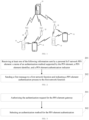
- Step 3 when the AMF wishes to initiate identity authentication, the AMF calls the Nausf_UEAuthentication service by sending a Nausf_UEAuthentication_Authenticate Request message to the AUSF.
- the Nausf_UEAuthentication_Authenticate Request message may contain information such as the PIN element authentication indicator, the PIN element identifier, the name of the authentication method supported by the PIN element, the SUPI or SUCI of the PEGC, and the serving network identifier.
- Step 4 after receiving the Nausf_UEAuthentication_Authenticate Request message, the AUSF checks whether the requesting AMF in the serving network is authorized to use the serving network name in the Nausf_UEAuthentication_Authenticate request by comparing the serving network name with the expected serving network name. The AUSF will temporarily store the received serving network name. If the serving network is not authorized to use the serving network name, the AUSF can respond to the AMF with "Serving network Not Authorized" in the Nausf_UEAuthentication_Authenticate response message. If the serving network is authorized to use the serving network name, the AUSF sends a Nudm_UEAuthentication_Get Request message to the UDM.
- the embodiment of the present disclosure realizes the identity authentication of the PIN element by the 5G core network, and improves the communication security of the PIN.
- FIG. 8 is a schematic diagram of the composition structure of a device for selecting an authentication mechanism for a personal Internet of Things device according to an embodiment.
- the device for selecting an authentication mechanism for a personal Internet of Things device according to an embodiment of the present disclosure can be applied to a UE, and the device includes: a receiving unit 80, configured to receive at least one of the following information sent by a personal Internet of Things PIN element: the name of the authentication method supported by the PIN element, the PIN element identifier, and the PIN element authentication indicator.
- the device further includes:
- the UE of the embodiment of the present disclosure can be enabled as a PEGC.
- the receiving unit 80, the sending unit, etc. can be implemented by one or more central processing units (CPUs), graphics processing units (GPUs), baseband processors (BPs), application-specific integrated circuits (ASICs), digital signal processors (DSPs), programmable logic devices (PLDs), complex programmable logic devices (CPLDs), field programmable gate arrays (FPGAs), general-purpose processors, controllers, microcontrollers (MCUs), microprocessors, or other electronic components, and can also be implemented in combination with one or more radio frequency (RF) antennas to perform the steps of the method for selecting an authentication mechanism for a personal IoT device in the aforementioned embodiment.
- CPUs central processing units
- GPUs graphics processing units
- BPs baseband processors
- ASICs application-specific integrated circuits
- DSPs digital signal processors
- PLDs programmable logic devices
- CPLDs complex programmable logic devices
- FPGAs field programmable gate arrays
- general-purpose processors controllers
- FIG. 9 is a schematic diagram of the composition structure of a device for selecting an authentication mechanism for a personal Internet of Things device according to an embodiment.
- the device for selecting an authentication mechanism for a personal Internet of Things device in the embodiment of the present disclosure can be applied to a second network function such as UDM/ARPF, and the device includes: an authorization unit 90, configured to authorize the authentication request of the PIN element gateway; where the PIN element gateway allows to perform an authentication process for the PIN element based on the identification information of the PIN element gateway and the PIN element identifier.
- the authentication request carries at least one of the following information: a PIN element authentication indicator, a PIN element identifier, identification information of the PIN element gateway, a name of the authentication method supported by the PIN element, and a serving network identifier.
- the device further includes: a selection unit (not shown in FIG. 9 ), configured to select an authentication method supported by the PIN element for the PIN element.
- the selection unit is further configured to: select an authentication method for the PIN element based on the PIN element identifier sent by the PIN element and the name of the authentication method supported by the PIN element.
- the second network function is capable of identifying the PIN element authentication indicator.
- the authorization unit 90, the selection unit, etc. can be implemented by one or more central processing units (CPUs), graphics processing units (GPUs), baseband processors (BPs), application-specific integrated circuits (ASICs), digital signal processors (DSPs), programmable logic devices (PLDs), complex programmable logic devices (CPLDs), field programmable gate arrays (FPGAs), general-purpose processors, controllers, microcontrollers (MCUs), microprocessors, or other electronic components, and can also be implemented in combination with one or more radio frequency (RF) antennas to perform the steps of the method for selecting an authentication mechanism for a personal IoT device in the aforementioned embodiment.
- CPUs central processing units
- GPUs graphics processing units
- BPs baseband processors
- ASICs application-specific integrated circuits
- DSPs digital signal processors
- PLDs programmable logic devices
- CPLDs complex programmable logic devices
- FPGAs field programmable gate arrays
- general-purpose processors controllers
- FIG. 10 is a schematic diagram of the composition structure of a device for selecting an authentication mechanism for a personal IoT device according to an embodiment.
- the device for selecting an authentication mechanism for a personal IoT device in the embodiment of the present disclosure can be applied to the first network function such as AMF, and the device includes:
- the device further includes:
- the first network function is capable of identifying the PIN element authentication indicator.
- the receiving unit 100, the sending unit, etc. can be implemented by one or more central processing units (CPU), graphics processing units (GPU), baseband processors (BP), application-specific integrated circuits (ASIC), digital signal processors (DSP), programmable logic devices (PLD), complex programmable logic devices (CPLD), field-programmable gate arrays (FPGA), general-purpose processors, controllers, microcontrollers (MCU), microprocessors, or other electronic components, and can also be implemented in combination with one or more radio frequency (RF) antennas to perform the steps of the method for selecting an authentication mechanism for a personal IoT device in the aforementioned embodiment.
- CPU central processing units
- GPU graphics processing units
- BP baseband processors
- ASIC application-specific integrated circuits
- DSP digital signal processors
- PLD programmable logic devices
- CPLD complex programmable logic devices
- FPGA field-programmable gate arrays
- general-purpose processors controllers, microcontrollers (MCU), microprocessors, or other electronic
- FIG. 11 is a schematic diagram of the composition structure of a device for selecting an authentication mechanism for a personal Internet of Things device according to an embodiment.
- the device for selecting an authentication mechanism for a personal Internet of Things device according to the embodiment of the present disclosure can be applied to a third network function such as SEAF, and the device includes:
- the device further includes:
- the third network function can identify the PIN element authentication indicator.
- the device further includes:
- the fourth network function can identify the PIN element authentication indicator.
- the receiving unit 120, the sending unit, etc. can be implemented by one or more central processing units (CPUs), graphics processing units (GPUs), baseband processors (BPs), application-specific integrated circuits (ASICs), digital signal processors (DSPs), programmable logic devices (PLDs), complex programmable logic devices (CPLDs), field-programmable gate arrays (FPGAs), general-purpose processors, controllers, microcontrollers (MCUs), microprocessors, or other electronic components, and can also be implemented in combination with one or more radio frequency (RF) antennas to perform the steps of the method for selecting an authentication mechanism for a personal IoT device in the aforementioned embodiment.
- CPUs central processing units
- GPUs graphics processing units
- BPs baseband processors
- ASICs application-specific integrated circuits
- DSPs digital signal processors
- PLDs programmable logic devices
- CPLDs complex programmable logic devices
- FPGAs field-programmable gate arrays
- general-purpose processors controllers
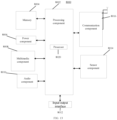
- FIG. 13 is a block diagram of a user equipment 8000 shown according to an embodiment.
- the user equipment 8000 may be a mobile phone, a computer, a digital broadcast terminal, a messaging device, a game console, a tablet device, a medical device, a fitness device, a personal digital assistant, etc.
- the user equipment 8000 may include one or more of the following components: a processing component 8002, a memory 8004, a power component 8006, a multimedia component 8008, an audio component 8010, an input/output (I/O) interface 8012, a sensor element 8014, and a communication component 8016.
- the processing component 8002 generally controls the overall operation of the user device 8000, such as operations associated with display, phone calls, data communications, camera operations, and recording operations.
- the processing component 8002 may include one or more processors 8020 to execute instructions to complete all or part of the steps of the above-mentioned method for selecting an authentication mechanism for a personal IoT device.
- the processing component 8002 may include one or more modules to facilitate the interaction between the processing component 8002 and other components.
- the processing component 8002 may include a multimedia module to facilitate interaction between the multimedia component 8008 and the processing component 8002.
- the memory 8004 is configured to store various types of data to support operations on the device 8000. Examples of such data include instructions for any application or method operating on the user equipment 8000, contact data, phone book data, messages, pictures, videos, etc.
- the memory 8004 may be implemented by any type of volatile or non-volatile storage device or a combination thereof, such as static random access memory (SRAM), electrically erasable programmable read-only memory (EEPROM), erasable programmable read-only memory (EPROM), programmable read-only memory (PROM), read-only memory (ROM), magnetic memory, flash memory, magnetic disk, or optical disk.
- SRAM static random access memory
- EEPROM electrically erasable programmable read-only memory
- EPROM erasable programmable read-only memory
- PROM programmable read-only memory
- ROM read-only memory
- magnetic memory flash memory
- flash memory magnetic disk, or optical disk.
- the power component 8006 provides power to various components of the user equipment 8000.
- the power component 8006 may include a power management system, one or more power supplies, and other components associated with generating, managing, and distributing power to the user equipment 8000.
- the multimedia component 8008 includes a screen that provides an output interface between the user equipment 8000 and the user.
- the screen may include a liquid crystal display (LCD) and a touch panel (TP). If the screen includes a touch panel, the screen may be implemented as a touch screen to receive input signals from the user.
- the touch panel includes one or more touch sensors to sense touch, slide, and gestures on the touch panel. The touch sensor may not only sense the boundary of the touch or slide action, but also detect the duration and pressure associated with the touch or slide operation.
- the multimedia component 8008 includes a front camera and/or a rear camera. When the device 8000 is in an operating mode, such as a shooting mode or a video mode, the front camera and/or the rear camera may receive external multimedia data. Each front camera and rear camera may be a fixed optical lens system or have focal length and optical zoom capabilities.
- the audio component 8010 is configured to output and/or input audio signals.
- the audio component 8010 includes a microphone (MIC), which is configured to receive external audio signals when the user equipment 8000 is in an operating mode, such as a call mode, a recording mode, and a voice recognition mode.
- the received audio signal can be further stored in the memory 8004 or sent via the communication component 8016.
- the audio component 8010 further includes a speaker for outputting audio signals.
- the I/O interface 8012 provides an interface between the processing component 8002 and the peripheral interface module.
- the peripheral interface module can be a keyboard, a click wheel, a button, etc. These buttons may include but are not limited to: a home button, a volume button, a start button, and a lock button.
- the sensor component 8014 includes one or more sensors for providing various aspects of status assessment for the user equipment 8000.
- the sensor component 8014 can detect the open/closed state of the UE equipment 8000, the relative positioning of the components, such as the display and keypad of the user equipment 8000.
- the sensor component 8014 can also detect the position change of the user equipment 8000 or a component in the user equipment 8000, the presence or absence of contact between the user and the user equipment 8000, the orientation or acceleration/deceleration of the user equipment 8000 and the temperature change of the user equipment 8000.
- the sensor component 8014 may include a proximity sensor configured to detect the presence of nearby objects without any physical contact.
- the sensor component 8014 may also include a light sensor, such as a CMOS or CCD image sensor, for use in imaging applications.
- the sensor component 8014 may also include an acceleration sensor, a gyroscope sensor, a magnetic sensor, a pressure sensor, or a temperature sensor.
- the communication component 8016 is configured to facilitate wired or wireless communication between the user equipment 8000 and other devices.
- the user equipment 8000 can access a wireless network based on a communication standard, such as Wi-Fi, 2G or 3G, or a combination thereof.
- the communication component 8016 receives a broadcast signal or broadcast-related information from an external broadcast management system via a broadcast channel.
- the communication component 8016 further includes a near field communication (NFC) module to facilitate short-range communication.
- the NFC module can be implemented based on radio frequency identification (RFID) technology, infrared data association (IrDA) technology, ultra-wideband (UWB) technology, Bluetooth (BT) technology and other technologies.
- RFID radio frequency identification
- IrDA infrared data association
- UWB ultra-wideband
- Bluetooth Bluetooth
- the user equipment 8000 can be implemented by one or more application-specific integrated circuits (ASICs), digital signal processors (DSPs), digital signal processing devices (DSPDs), programmable logic devices (PLDs), field programmable gate arrays (FPGAs), controllers, microcontrollers, microprocessors or other electronic components to perform the steps of the above-mentioned method for selecting an authentication mechanism for a personal IoT device.
- ASICs application-specific integrated circuits
- DSPs digital signal processors
- DSPDs digital signal processing devices
- PLDs programmable logic devices
- FPGAs field programmable gate arrays
- controllers microcontrollers, microprocessors or other electronic components to perform the steps of the above-mentioned method for selecting an authentication mechanism for a personal IoT device.
- a non-temporary computer-readable storage medium including instructions is also provided, such as a memory 8004 including instructions, and the above instructions can be executed by the processor 8020 of the user equipment 8000 to complete the steps of the method for selecting an authentication mechanism for a personal Internet of Things device.
- the non-temporary computer-readable storage medium can be a ROM, a random access memory (RAM), a CD-ROM, a tape, a floppy disk, and an optical data storage device, etc.
- the embodiment of the present disclosure also records a first network function, including a processor, a transceiver, a memory, and an executable program stored on the memory and capable of being run by the processor, and the processor executes the steps of the method for selecting an authentication mechanism for a personal Internet of Things device in the above embodiment when running the executable program.
- the embodiment of the present disclosure also records a second network function, including a processor, a transceiver, a memory, and an executable program stored on the memory and capable of being run by the processor, and the processor executes the steps of the method for selecting an authentication mechanism for a personal Internet of Things device in the above embodiment when running the executable program.
- a second network function including a processor, a transceiver, a memory, and an executable program stored on the memory and capable of being run by the processor, and the processor executes the steps of the method for selecting an authentication mechanism for a personal Internet of Things device in the above embodiment when running the executable program.
- the embodiment of the present disclosure also records a third network function, including a processor, a transceiver, a memory, and an executable program stored on the memory and capable of being run by the processor, and the processor executes the steps of the method for selecting an authentication mechanism for a personal Internet of Things device in the aforementioned embodiment when running the executable program.
- the embodiment of the present disclosure also records a fourth network function, including a processor, a transceiver, a memory, and an executable program stored on the memory and capable of being run by the processor, and the processor executes the steps of the method for selecting an authentication mechanism for a personal Internet of Things device in the aforementioned embodiment when running the executable program.
- the embodiment of the present disclosure also records a user equipment, including a processor, a transceiver, a memory, and an executable program stored on the memory and capable of being run by the processor, and the processor executes the steps of the method for selecting an authentication mechanism for a personal Internet of Things device in the aforementioned embodiment when running the executable program.
- the embodiment of the present disclosure also records a storage medium on which an executable program is stored, and the executable program is executed by the processor to execute the steps of the method for selecting an authentication mechanism for a personal Internet of Things device in the aforementioned embodiment.
Landscapes
- Engineering & Computer Science (AREA)
- Computer Security & Cryptography (AREA)
- Computer Networks & Wireless Communication (AREA)
- Signal Processing (AREA)
- Databases & Information Systems (AREA)
- Computing Systems (AREA)
- Health & Medical Sciences (AREA)
- General Health & Medical Sciences (AREA)
- Medical Informatics (AREA)
- Computer Hardware Design (AREA)
- General Engineering & Computer Science (AREA)
- Telephonic Communication Services (AREA)
Applications Claiming Priority (1)
| Application Number | Priority Date | Filing Date | Title |
|---|---|---|---|
| PCT/CN2022/095773 WO2023226051A1 (fr) | 2022-05-27 | 2022-05-27 | Procédé et appareil de sélection de mécanisme d'authentification pour un dispositif personnel de l'internet des objets, ue, fonction de réseau et support de stockage |
Publications (2)
| Publication Number | Publication Date |
|---|---|
| EP4535845A1 true EP4535845A1 (fr) | 2025-04-09 |
| EP4535845A4 EP4535845A4 (fr) | 2025-11-05 |
Family
ID=88918187
Family Applications (1)
| Application Number | Title | Priority Date | Filing Date |
|---|---|---|---|
| EP22943248.9A Pending EP4535845A4 (fr) | 2022-05-27 | 2022-05-27 | Procédé et appareil de sélection de mécanisme d'authentification pour un dispositif personnel de l'internet des objets, ue, fonction de réseau et support de stockage |
Country Status (4)
| Country | Link |
|---|---|
| US (1) | US20250374045A1 (fr) |
| EP (1) | EP4535845A4 (fr) |
| CN (1) | CN117480796A (fr) |
| WO (1) | WO2023226051A1 (fr) |
Families Citing this family (1)
| Publication number | Priority date | Publication date | Assignee | Title |
|---|---|---|---|---|
| WO2025156428A1 (fr) * | 2024-04-03 | 2025-07-31 | Zte Corporation | Procédé, dispositif et système de protection d'identité d'ue dans des réseaux de communication |
Family Cites Families (5)
| Publication number | Priority date | Publication date | Assignee | Title |
|---|---|---|---|---|
| US20110188416A1 (en) * | 2010-02-02 | 2011-08-04 | Stefano Faccin | System and method for packetized emergency messages |
| CN101854739A (zh) * | 2010-06-04 | 2010-10-06 | 武汉大吉软件技术有限公司 | 个人物联网系统 |
| CN110891270B (zh) * | 2018-09-10 | 2021-08-27 | 大唐移动通信设备有限公司 | 一种鉴权算法的选择方法和装置 |
| CN119996997A (zh) * | 2019-10-04 | 2025-05-13 | 三星电子株式会社 | 激活5g用户的方法和装置 |
| US20210368341A1 (en) * | 2020-08-10 | 2021-11-25 | Ching-Yu LIAO | Secure access for 5g iot devices and services |
-
2022
- 2022-05-27 WO PCT/CN2022/095773 patent/WO2023226051A1/fr not_active Ceased
- 2022-05-27 CN CN202280001894.9A patent/CN117480796A/zh active Pending
- 2022-05-27 EP EP22943248.9A patent/EP4535845A4/fr active Pending
- 2022-05-27 US US18/869,894 patent/US20250374045A1/en active Pending
Also Published As
| Publication number | Publication date |
|---|---|
| CN117480796A (zh) | 2024-01-30 |
| WO2023226051A1 (fr) | 2023-11-30 |
| EP4535845A4 (fr) | 2025-11-05 |
| US20250374045A1 (en) | 2025-12-04 |
Similar Documents
| Publication | Publication Date | Title |
|---|---|---|
| CN112262600B (zh) | 扩展非连续接收参数确定方法、通信设备和存储介质 | |
| JP2023520478A (ja) | 構成情報伝送方法および装置、通信機器および記憶媒体 | |
| WO2021159492A1 (fr) | Procédé et appareil de commande d'accès, dispositif de communication et support de stockage | |
| WO2023184561A1 (fr) | Procédés et appareils de communication par relais, dispositif de communication et support de stockage | |
| CN111448841B (zh) | 通信处理方法及装置 | |
| JP7712485B2 (ja) | ページングパラメータ決定方法、装置、通信デバイス及び記憶媒体 | |
| WO2024164337A1 (fr) | Procédé et appareil d'autorisation de service de localisation, et dispositif de communication et support de stockage | |
| CN117643029A (zh) | 信息处理方法及装置、通信设备及存储介质 | |
| CN116349267B (zh) | 密钥分发方法、装置、通信设备及存储介质 | |
| WO2021120208A1 (fr) | Procédé et appareil de radiomessagerie, dispositif de communication et support de stockage | |
| US20250374045A1 (en) | Method and apparatus for selecting authentication mechanism for personal internet-of-things device, ue, network function, and storage medium | |
| CN116724531A (zh) | 信息传输方法及装置、通信设备及存储介质 | |
| WO2022027484A1 (fr) | Procédé et appareil d'accès aléatoire, et dispositif de communication et support d'enregistrement | |
| US20250343695A1 (en) | Personal iot network (pin) primitive credential configuration method and apparatus, communication device, and storage medium | |
| US20250274916A1 (en) | Resource configuration method and apparatus, and communication device and storage medium | |
| CN117597957A (zh) | 信息处理方法及装置、通信设备及存储介质 | |
| JP2024528244A (ja) | ページングモニタパラメータの決定方法及び装置、通信デバイス及び記憶媒体 | |
| CN116368835B (zh) | 信息传输方法、装置、通信设备和存储介质 | |
| WO2022110057A1 (fr) | Procédé et appareil de communication sans fil, ainsi que dispositif de communication et support de stockage | |
| CN116406509B (zh) | 信息处理方法以及装置、通信设备及存储介质 | |
| US20260082437A1 (en) | Information processing method and apparatus, and communication device and storage medium | |
| CN113316879B (zh) | 无线充电处理方法、装置、通信设备及存储介质 | |
| CN116368834B (zh) | 信息处理方法及装置、通信设备及存储介质 | |
| EP4614872A1 (fr) | Procédés et appareils d'authentification, dispositif de communication et support d'enregistrement | |
| CN114342359B (zh) | 接入控制的方法、装置、通信设备及存储介质 |
Legal Events
| Date | Code | Title | Description |
|---|---|---|---|
| STAA | Information on the status of an ep patent application or granted ep patent |
Free format text: STATUS: THE INTERNATIONAL PUBLICATION HAS BEEN MADE |
|
| PUAI | Public reference made under article 153(3) epc to a published international application that has entered the european phase |
Free format text: ORIGINAL CODE: 0009012 |
|
| STAA | Information on the status of an ep patent application or granted ep patent |
Free format text: STATUS: REQUEST FOR EXAMINATION WAS MADE |
|
| 17P | Request for examination filed |
Effective date: 20241220 |
|
| AK | Designated contracting states |
Kind code of ref document: A1 Designated state(s): AL AT BE BG CH CY CZ DE DK EE ES FI FR GB GR HR HU IE IS IT LI LT LU LV MC MK MT NL NO PL PT RO RS SE SI SK SM TR |
|
| DAV | Request for validation of the european patent (deleted) | ||
| DAX | Request for extension of the european patent (deleted) | ||
| A4 | Supplementary search report drawn up and despatched |
Effective date: 20251007 |
|
| RIC1 | Information provided on ipc code assigned before grant |
Ipc: H04W 12/06 20210101AFI20250930BHEP Ipc: H04W 12/69 20210101ALI20250930BHEP Ipc: H04W 4/70 20180101ALI20250930BHEP Ipc: H04L 67/12 20220101ALI20250930BHEP Ipc: H04W 8/20 20090101ALI20250930BHEP Ipc: H04L 9/40 20220101ALI20250930BHEP |