EP4535852A1 - Dispositif électronique pour effectuer une commande de surchauffe dans un état surchauffé et son procédé de fonctionnement - Google Patents
Dispositif électronique pour effectuer une commande de surchauffe dans un état surchauffé et son procédé de fonctionnement Download PDFInfo
- Publication number
- EP4535852A1 EP4535852A1 EP24765935.2A EP24765935A EP4535852A1 EP 4535852 A1 EP4535852 A1 EP 4535852A1 EP 24765935 A EP24765935 A EP 24765935A EP 4535852 A1 EP4535852 A1 EP 4535852A1
- Authority
- EP
- European Patent Office
- Prior art keywords
- electronic device
- base station
- overheating
- processor
- message
- Prior art date
- Legal status (The legal status is an assumption and is not a legal conclusion. Google has not performed a legal analysis and makes no representation as to the accuracy of the status listed.)
- Pending
Links
Images





Classifications
-
- G—PHYSICS
- G06—COMPUTING OR CALCULATING; COUNTING
- G06F—ELECTRIC DIGITAL DATA PROCESSING
- G06F1/00—Details not covered by groups G06F3/00 - G06F13/00 and G06F21/00
- G06F1/16—Constructional details or arrangements
- G06F1/20—Cooling means
- G06F1/203—Cooling means for portable computers, e.g. for laptops
-
- G—PHYSICS
- G06—COMPUTING OR CALCULATING; COUNTING
- G06F—ELECTRIC DIGITAL DATA PROCESSING
- G06F1/00—Details not covered by groups G06F3/00 - G06F13/00 and G06F21/00
- G06F1/16—Constructional details or arrangements
- G06F1/20—Cooling means
- G06F1/206—Cooling means comprising thermal management
-
- G—PHYSICS
- G06—COMPUTING OR CALCULATING; COUNTING
- G06F—ELECTRIC DIGITAL DATA PROCESSING
- G06F1/00—Details not covered by groups G06F3/00 - G06F13/00 and G06F21/00
- G06F1/26—Power supply means, e.g. regulation thereof
- G06F1/32—Means for saving power
- G06F1/3203—Power management, i.e. event-based initiation of a power-saving mode
- G06F1/3234—Power saving characterised by the action undertaken
- G06F1/325—Power saving in peripheral device
- G06F1/3278—Power saving in modem or I/O interface
-
- H—ELECTRICITY
- H04—ELECTRIC COMMUNICATION TECHNIQUE
- H04W—WIRELESS COMMUNICATION NETWORKS
- H04W24/00—Supervisory, monitoring or testing arrangements
- H04W24/10—Scheduling measurement reports ; Arrangements for measurement reports
-
- H—ELECTRICITY
- H04—ELECTRIC COMMUNICATION TECHNIQUE
- H04W—WIRELESS COMMUNICATION NETWORKS
- H04W76/00—Connection management
- H04W76/10—Connection setup
- H04W76/15—Setup of multiple wireless link connections
-
- H—ELECTRICITY
- H04—ELECTRIC COMMUNICATION TECHNIQUE
- H04W—WIRELESS COMMUNICATION NETWORKS
- H04W76/00—Connection management
- H04W76/10—Connection setup
- H04W76/15—Setup of multiple wireless link connections
- H04W76/16—Involving different core network technologies, e.g. a packet-switched [PS] bearer in combination with a circuit-switched [CS] bearer
-
- H—ELECTRICITY
- H04—ELECTRIC COMMUNICATION TECHNIQUE
- H04W—WIRELESS COMMUNICATION NETWORKS
- H04W76/00—Connection management
- H04W76/10—Connection setup
- H04W76/19—Connection re-establishment
-
- H—ELECTRICITY
- H04—ELECTRIC COMMUNICATION TECHNIQUE
- H04W—WIRELESS COMMUNICATION NETWORKS
- H04W76/00—Connection management
- H04W76/30—Connection release
- H04W76/34—Selective release of ongoing connections
-
- H—ELECTRICITY
- H04—ELECTRIC COMMUNICATION TECHNIQUE
- H04W—WIRELESS COMMUNICATION NETWORKS
- H04W8/00—Network data management
- H04W8/22—Processing or transfer of terminal data, e.g. status or physical capabilities
- H04W8/24—Transfer of terminal data
Definitions
- the disclosure relates to an electronic device for performing an overheating control in an overheated state and a method of operating the electronic device.
- an electronic device is operable to perform a self-overheating control operation along with a transmission of a UAI message, even when a response to the UAI message is not received from a network.
- a self-overheating control operation along with a transmission of a UAI message, even when a response to the UAI message is not received from a network.
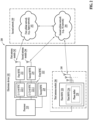
- FIG. 1 is a block diagram illustrating an electronic device 101 in a network environment 100 according to an embodiment.
- the electronic device 101 in the network environment 100 is operable to communicate with an electronic device 102 via a first network 198 (e.g., a short-range wireless communication network), or communicate with at least one of an electronic device 104 or a server 108 via a second network 199 (e.g., a long-range wireless communication network).
- the electronic device 101 is operable to communicate with the electronic device 104 via the server 108.
- the electronic device 101 includes a processor 120, a memory 130, an input module 150, a sound output module 155, a display module 160, an audio module 170, a sensor module 176, an interface 177, a connecting terminal 178, a haptic module 179, a camera module 180, a power management module 188, a battery 189, a communication module 190, a subscriber identification module (SIM) 196, or an antenna module 197.
- at least one of the components may be omitted from the electronic device 101, or one or more other components may be added in the electronic device 101.
- some of the components e.g., the sensor module 176, the camera module 180, or the antenna module 197) may be integrated as a single component (e.g., the display module 160).
- the processor 120 is operable to execute, for example, software (e.g., a program 140) to control at least one other component (e.g., a hardware or software component) of the electronic device 101 connected to the processor 120 and may perform various data processing or computation.
- the processor 120 is operable to store a command or data received from another component (e.g., the sensor module 176 or the communication module 190) in a volatile memory 132, process the command or the data stored in the volatile memory 132, and store resulting data in a non-volatile memory 134.
- the assistance processor 123 is operable to control at least some of functions or states related to at least one (e.g., the display module 160, the sensor module 176, or the communication module 190) of the components of the electronic device 101, instead of the main processor 121 while the main processor 121 is in an inactive (e.g., sleep) state or along with the main processor 121 while the main processor 121 is in an active state (e.g., executing an application).
- the assistance processor 123 e.g., an ISP or a CP
- the assistance processor 123 may include a hardware structure specified for artificial intelligence model processing.
- An artificial intelligence model may be generated through machine learning. Such learning may be performed, for example, by the electronic device 101 in which an artificial intelligence model is executed, or via a separate server (e.g., the server 108). Learning algorithms may include, but are not limited to, e.g., supervised learning, unsupervised learning, semi-supervised learning, or reinforcement learning.
- the artificial intelligence model may include a plurality of artificial neural network layers.
- the memory 130 is operable to store various pieces of data used by at least one component (e.g., the processor 120 or the sensor module 176) of the electronic device 101.
- the various pieces of data may include, for example, software (e.g., the program 140) and input data or output data for a command related thereto.
- the memory 130 may include the volatile memory 132 or the non-volatile memory 134.
- the input module 150 is operable to receive a command or data to be used by another component (e.g., the processor 120) of the electronic device 101, from the outside (e.g., a user) of the electronic device 101.
- the input module 150 may include, for example, a microphone, a mouse, a keyboard, a key (e.g., a button), or a digital pen (e.g., a stylus pen).
- the audio module 170 is operable to convert a sound into an electrical signal or vice versa. According to an embodiment, the audio module 170 may obtain the sound via the input module 150 or output the sound via the sound output module 155 or an external electronic device (e.g., the electronic device 102 such as a speaker or headphones) directly or wirelessly connected to the electronic device 101.
- an external electronic device e.g., the electronic device 102 such as a speaker or headphones
- the sensor module 176 is operable to detect an operational state (e.g., power or temperature) of the electronic device 101 or an environmental state (e.g., a state of a user) external to the electronic device 101, and generate an electrical signal or data value corresponding to the detected state.
- the sensor module 176 may include, for example, a gesture sensor, a gyro sensor, an atmospheric pressure sensor, a magnetic sensor, an acceleration sensor, a grip sensor, a proximity sensor, a color sensor, an infrared (IR) sensor, a biometric sensor, a temperature sensor, a humidity sensor, or an illuminance sensor.
- the interface 177 is operable to support one or more specified protocols to be used for the electronic device 101 to be coupled with the external electronic device (e.g., the electronic device 102) directly (e.g., by wire) or wirelessly.
- the interface 177 may include, for example, a high-definition multimedia interface (HDMI), a universal serial bus (USB) interface, a secure digital (SD) card interface, or an audio interface.
- HDMI high-definition multimedia interface
- USB universal serial bus
- SD secure digital
- the power management module 188 is operable to manage power supplied to the electronic device 101.
- the power management module 188 may be implemented as, for example, at least a part of a power management integrated circuit (PMIC).
- PMIC power management integrated circuit
- the communication module 190 is operable to support establishing a direct (e.g., wired) communication channel or a wireless communication channel between the electronic device 101 and the external electronic device (e.g., the electronic device 102, the electronic device 104, or the server 108) and performing communication via the established communication channel.
- the communication module 190 may include one or more CPs that are operable independently of the processor 120 (e.g., an AP) and that support a direct (e.g., wired) communication or a wireless communication.
- the communication module 190 may include a wireless communication module 192 (e.g., a cellular communication module, a short-range wireless communication module, or a global navigation satellite system (GNSS) communication module) or a wired communication module 194 (e.g., a local area network (LAN) communication module, or a power line communication (PLC) module).
- a wireless communication module 192 e.g., a cellular communication module, a short-range wireless communication module, or a global navigation satellite system (GNSS) communication module
- GNSS global navigation satellite system
- wired communication module 194 e.g., a local area network (LAN) communication module, or a power line communication (PLC) module.
- LAN local area network
- PLC power line communication
- the wireless communication module 192 may support a 5G network after a fourth generation (4G) network, and a next-generation communication technology, e.g., a new radio (NR) access technology.
- the NR access technology may support enhanced mobile broadband (eMBB), massive machine type communications (mMTC), or ultra-reliable and low-latency communications (URLLC).
- eMBB enhanced mobile broadband
- mMTC massive machine type communications
- URLLC ultra-reliable and low-latency communications
- the wireless communication module 192 may support a high-frequency band (e.g., a mmWave band) to achieve, e.g., a high data transmission rate.
- a high-frequency band e.g., a mmWave band
- the wireless communication module 192 may support a peak data rate (e.g., 20 Gbps or more) for implementing eMBB, loss coverage (e.g., 164 dB or less) for implementing mMTC, or U-plane latency (e.g., 0.5 ms or less for each of downlink (DL) and uplink (UL), or a round trip of 1 ms or less) for implementing URLLC.
- a peak data rate e.g., 20 Gbps or more
- loss coverage e.g., 164 dB or less
- U-plane latency e.g., 0.5 ms or less for each of downlink (DL) and uplink (UL), or a round trip of 1 ms or less
- At least some of the above-described components may be coupled mutually and communicate signals (e.g., commands or data) therebetween via an inter-peripheral communication scheme (e.g., a bus, general purpose input and output (GPIO), serial peripheral interface (SPI), or mobile industry processor interface (MIPI)).
- an inter-peripheral communication scheme e.g., a bus, general purpose input and output (GPIO), serial peripheral interface (SPI), or mobile industry processor interface (MIPI)
- commands or data may be transmitted or received between the electronic device 101 and the external electronic device 104 via the server 108 coupled with the second network 199.
- Each of the external electronic devices 102 and 104 may be a device of the same type as or a different type from the electronic device 101.
- all or some of operations to be executed at the electronic device 101 may be executed at one or more of external electronic devices (e.g., the external devices 102 and 104, and the server 108).
- a or B may include any one of the items listed together in the corresponding one of the phrases, or all possible combinations thereof.
- Terms such as “1st” and “2nd,” or “first” and “second” may be used to simply distinguish a corresponding component from other components, and do not limit the components in other aspects (e.g., importance or order).
- a component e.g., a first component
- the component may be coupled with the other component directly (e.g., by wire), wirelessly, or via a third component.
- module may include a unit implemented in hardware, software, or firmware, and may interchangeably be used with other terms, for example, “logic,” “logic block,” “part,” or “circuitry.”
- a module may be a single integral component, or a minimum unit or part thereof, adapted to perform one or more functions.
- the module may be implemented in a form of an application-specific integrated circuit (ASIC).
- ASIC application-specific integrated circuit
- Various embodiments as set forth herein may be implemented as software (e.g., the program 140) including one or more instructions that are stored in a storage medium (e.g., an internal memory 136 or an external memory 138) that is readable by a machine (e.g., the electronic device 101)
- a processor e.g., the processor 120 of the machine (e.g., the electronic device 101) may invoke at least one of the one or more instructions stored in the storage medium, and execute it. This allows the machine to be operated to perform at least one function according to the at least one instruction invoked.
- the one or more instructions may include code generated by a compiler or code executable by an interpreter.
- a method may be included and provided in a computer program product.
- the computer program product may be traded as a product between a seller and a buyer.
- the computer program product may be distributed in the form of a machine-readable storage medium (e.g., compact disc read-only memory (CD-ROM)), or be distributed (e.g., downloaded or uploaded) online via an application store (e.g., PlayStoreTM), or between two user devices (e.g., smartphones) directly. If distributed online, at least portion of the computer program product may be temporarily generated or at least temporarily stored in the machine-readable storage medium, such as memory of the manufacturer's server, a server of the application store, or a relay server.
- CD-ROM compact disc read-only memory
- an application store e.g., PlayStoreTM
- the computer program product may be temporarily generated or at least temporarily stored in the machine-readable storage medium, such as memory of the manufacturer's server, a server of the application store, or a relay server.
- FIG. 2 is a block diagram of an electronic device 101 in a network environment 200 including a plurality of cellular networks according to an embodiment.
- the second network 199 may include a first cellular network 292 (e.g., a legacy network) and a second cellular network 294 (e.g., a 5G network).
- the electronic device 101 may further include at least one of the components described with reference to FIG. 1 , and the second network 199 may further include at least one another network.
- the second RFIC 224 may be omitted or may be included as a portion of the third RFIC 226.
- the electronic device 101 includes the second RFIC 224 separately from the third RFIC 226 or as at least a portion of the third RFIC 226.
- the second RFIC 224 is operable to convert the baseband signal generated by the processor 210 into an RF signal (hereinafter, referred to as an "intermediate frequency (IF) signal") of an IF band (e.g., about 9 GHz to about 11 GHz) and is operable to transmit the IF signal to the third RFIC 226.
- the third RFIC 226 is operable to convert the IF signal into a 5G Above6 RF signal.
- the third RFIC 226 and the antenna 248 may be disposed on the same substrate to form the third antenna module 246.
- the processor 120 may be disposed on a first substrate (e.g., a main PCB).
- the third RFIC 226 may be disposed on a partial area (e.g., a bottom surface) of a second substrate (e.g., a sub PCB) separate from the first substrate, and the antenna 248 may be disposed on another partial area (e.g., a top surface) of the second substrate (e.g., the sub PCB), to form the third antenna module 246.
- the third RFIC 226 and the antenna 248 may be disposed on the same substrate, and accordingly, it is possible to reduce a length of a transmission line between the third RFIC 226 and the antenna 248. That is, for example, a loss (e.g., attenuation) of a signal of a high frequency band (e.g., about 6 GHz to about 60 GHz) used in 5G network communication due to a transmission line may be reduced.
- the electronic device 101 may enhance the quality or speed of communication with the second cellular network 294 (e.g., a 5G network).
- the antenna 248 is formed as an antenna array including a plurality of antenna elements that may be used for beamforming.
- the third RFIC 226 may include, for example, a plurality of phase shifters 238 corresponding to the plurality of antenna elements as a portion of the third RFFE 236.
- each of the plurality of phase shifters 238 is operable to convert a phase of a 5G Above6 RF signal to be transmitted to the outside (e.g., a base station of a 5G network) of the electronic device 101 through a corresponding antenna element.
- the second cellular network 294 may be operated independently of the first cellular network 292 (e.g., standalone (SA)) or in connection to the first cellular network 292 (e.g., non-standalone (NSA)).
- a 5G network may include only an access network (e.g., a 5G radio access network (RAN) or a next generation RAN (NG RAN)) and may not include a core network (e.g., a next generation core (NGC)).
- the electronic device 101 may access an external network (e.g., the Internet) under a control of a core network (e.g., an evolved packet core (EPC)) of a legacy network.
- EPC evolved packet core
- the electronic device 101 may transmit user equipment (UE) capability information to a base station 300 (e.g., an LTE base station and/or a 5G base station).
- UE capability information may include, for example, a parameter indicating whether the electronic device 101 supports overheating assistance information.
- the electronic device 101 may notify the base station 300 of whether the electronic device 101 supports overheating assistance, using the UE capability information.
- the base station 300 may transmit a radio resource control (RRC) connection reconfiguration message to the electronic device 101.
- RRC radio resource control
- the base station 300 may determine one or more RRC parameters based on the UE capability information received from the electronic device 101 and may generate an RRC connection reconfiguration message including the one or more determined RRC parameters.
- An RRC parameter may include, for example, an RRC parameter (hereinafter, referred to as an "overheating-related RRC parameter") that sets (or configures) the electronic device 101 to notify the base station 300 of overheating (e.g., an internal overheating) detected by the electronic device 101.
- the base station 300 may transmit the RRC connection reconfiguration message including the one or more determined RRC parameters (e.g., overheating-related RRC parameters) to the electronic device 101.
- the 5G base station is operable to transmit an RRC connection reconfiguration message including an overheating-related RRC parameter (e.g., an overheatingAssistanceConfig parameter of 3GPP TS) to the electronic device 101.
- an overheating-related RRC parameter e.g., an overheatingAssistanceConfig parameter of 3GPP TS
- the electronic device 101 is operable to receive an RRC connection reconfiguration message from the 5G base station.
- an overheatingAssistanceConfig parameter in the RRC connection reconfiguration message received from the 5G base station is set to "setup," the electronic device 100 is operable to recognize that the electronic device 101 is configured to provide overheating assistance information to the 5G base station.
- the electronic device 101 is operable to transmit UAI including overheating assistance information to the 5G base station.
- Event matching release of LTE CC reduction (or drop) Event matching "reduction in the number of RX antennas (e.g., reduction in the number of antennas from 4RX to 2RX) and transmission power limitation" 2.
- Event matching LTE FB Event #4 - Event matching SA disable Event #5 Event matching LTE CC reduction (or drop) -
- a self-overheating control operation (e.g., the first operation and the second operation described above) that may achieve the same purpose (e.g., a deactivation (or removal) of a secondary cell, and a reduction in the number of RX antennas) as that of an operation that may be expected from the network through the transmission of the UAI message, may be performed together with the transmission of the UAI message.
- the same purpose e.g., a deactivation (or removal) of a secondary cell, and a reduction in the number of RX antennas
- the electronic device 101 when detecting event #2 and/or event #5 shown in Table 1 above in the NR NSA environment, the electronic device 101 is operable to perform a self-overheating control operation (e.g., the first operation) along with the transmission of the UAI message.
- a self-overheating control operation e.g., the first operation
- the electronic device 101 is operable to wait to receive a response message (e.g., an RRC connection reconfiguration message) to the UAI message for a predetermined period of time (e.g., a period of time in which a first timer that will be described below is operated) from the base station 300.
- the electronic device 101 is operable to configure or generate a UAI message when detecting an overheating event.
- the base station 300 is operable to perform a predetermined operation based on the UAI message. Examples of operations (e.g., configuration of a UAI message) of a base station and the electronic device 101 according to overheating events in the NR NSA environment are shown in Table 2 below.
- an overheating event e.g., event #3 shown in Table 2 above
- FIG. 4 is a block diagram illustrating an example of a configuration of an electronic device according to an embodiment.
- the electronic device 401 may include an antenna module 410 (e.g., the antenna module 197 of FIG. 1 ), an RF communication circuit 420, a processor 403 (e.g., the processor 120 of FIG. 1 ), and a plurality of temperature sensors (e.g., one or more first temperature sensors 450, and one or more second temperature sensors 460).
- an antenna module 410 e.g., the antenna module 197 of FIG. 1
- an RF communication circuit 420 e.g., the antenna module 197 of FIG. 1
- a processor 403 e.g., the processor 120 of FIG. 1
- a plurality of temperature sensors e.g., one or more first temperature sensors 450, and one or more second temperature sensors 460.
- the RF communication circuit 420 of FIG. 4 may include, for example, the first RFIC 222 and the second RFFE 234 of FIG. 2 .
- the RF communication circuit 420 of FIG. 4 may include, for example, the (1-2)-th RFIC 222-2 and the second RFFE 234 of FIG. 2 .
- the antenna module 410 of FIG. 4 may include, for example, at least a portion of the first antenna module 242, the second antenna module 244, or the third antenna module 246 of FIG. 2 .
- the one or more first temperature sensors 450 are operable to obtain a sensing value (or a temperature value) by sensing (or measuring) a temperature of a component (e.g., at least one of the antenna module 410, the RF communication circuit 420, or the first processor 430) in the electronic device 401.
- the one or more first temperature sensors 450 are operable to (periodically/non-periodically) transmit the obtained sensing value (or temperature value) to the first processor 430.
- the processor 403 (e.g., the second processor 440) is operable to detect an overheating event of the electronic device 401.
- the second processor 440 is operable to estimate (or calculate) a temperature (hereinafter, referred to as a "CP temperature") of the second processor 440 using the sensing value (or temperature value) received from the one or more second temperature sensors 460 and is operable to detect an overheating event based on the estimated CP temperature.
- CP temperature a temperature
- the processor 403 e.g., the first processor 430 or the second processor 440
- a first overheating event e.g., event #2 in the NR NSA environment shown in Table 1 above
- a temperature of the electronic device 401 e.g., any one or any combination of the estimated surface temperature and the estimated CP temperature
- the processor 403 is operable to detect a first overheating event (e.g., event #2 in the NR NSA environment shown in Table 1 above) in the NR NSA environment occurring when a temperature of the electronic device 401 (e.g., any one or any combination of the estimated surface temperature and the estimated CP temperature) is higher than the temperature that triggers event #2 shown in Table 1 above and lower than the temperature that triggers event #3 shown in Table 1 above.
- a first overheating event e.g., event #2 in the NR NSA environment shown in Table 1 above
- a temperature of the electronic device 401 e.g., any one or any combination of the estimated surface temperature and the estimated
- the processor 403 e.g., the first processor 430 or the second processor 440
- the processor 403 is operable to detect a second overheating event (e.g., event #5 in the NR NSA environment shown in Table 1 above) in the NR NSA environment occurring when the temperature of the electronic device 401 (e.g., any one or any combination of the estimated surface temperature and the estimated CP temperature) is higher than the temperature that triggers event #5 shown in Table 1 above.
- a second overheating event e.g., event #5 in the NR NSA environment shown in Table 1 above
- the processor 403 (e.g., the first processor 430 or the second processor 440) is operable to detect a third overheating event (e.g., event #3 in the NR NSA environment shown in Table 1 above) in the NR NSA environment occurring when the temperature of the electronic device 401 (e.g., any one or any combination of the estimated surface temperature and the estimated CP temperature) is higher than the temperature that triggers event #3 shown in Table 1 above and lower than the temperature that triggers event #5 shown in Table 1 above.
- a third overheating event e.g., event #3 in the NR NSA environment shown in Table 1 above
- the temperature of the electronic device 401 e.g., any one or any combination of the estimated surface temperature and the estimated CP temperature
- the processor 403 (e.g., the first processor 430 or the second processor 440) is operable to detect a second overheating event (e.g., event #3 in the NR SA environment shown in Table 1 above) in the NR SA environment occurring when the temperature of the electronic device 401 (e.g., any one or any combination of the estimated surface temperature and the estimated CP temperature) is higher than the temperature that triggers event #3 shown in Table 1 above and lower than the temperature that triggers event #4 shown in Table 1 above.
- a second overheating event e.g., event #3 in the NR SA environment shown in Table 1 above
- the temperature of the electronic device 401 e.g., any one or any combination of the estimated surface temperature and the estimated CP temperature
- the second processor 440 when the first overheating event in the NR SA environment is detected, the second processor 440 is operable to determine a CQI of at least one cell (e.g., an NR secondary cell) as "0" and transmit the CQI determined as "0" to a base station (e.g., a 5G base station).
- a base station e.g., a 5G base station
- the second processor 440 is operable to transmit a UAI message together with a report indicating that the CQI of the at least one cell is "0" to the base station (e.g., the 5G base station).
- the electronic device 401 may determine a self-overheating control operation according to an event table (e.g., Table 1 shown above). For example, when the first overheating event in the NR NSA environment is detected, the electronic device 401 (e.g., the first processor 430 and/or the second processor 440) may determine a self-overheating control operation (e.g., an operation of reporting a base station 500 that a CQI of at least one NR secondary cell is "0") to allow NR CC drop to be induced, according to the event table (e.g., Table 1 shown above).
- an event table e.g., Table 1 shown above.
- the electronic device 401 e.g., the processor 403 or the second processor 440
- the electronic device 401 may perform a self-overheating control operation.
- the electronic device 401 may determine a CQI of at least one LTE secondary cell as "0" and may transmit a UAI message together with a report indicating that the CQI of the at least one LTE secondary cell is "0" to the base station 500.
- the electronic device 401 may induce the base station 500 to deactivate (or remove) the NR secondary cell with the CQI of "0" through a self-overheating control operation, even when failing to receive a response message (e.g., an RRC connection reconfiguration message including a base station configuration for controlling overheating) to the UAI message from the base station 500, thereby achieving the same purpose as that of the UAI message.
- a response message e.g., an RRC connection reconfiguration message including a base station configuration for controlling overheating
- the electronic device 401 may identify that the temperature of the electronic device 401 is lower than a temperature that triggers the first overheating event in the NR NSA environment. For example, the electronic device 401 may detect event #1 in the NR NSA environment shown in Table 1 above. In this example, the electronic device 401 may perform a self-overheating control release operation (e.g., an operation of not transmitting a report indicating that a CQI of at least one NR secondary cell is "0"). The electronic device 401 may not perform a self-overheating control operation according to the first overheating event in the NR NSA environment.
- a self-overheating control release operation e.g., an operation of not transmitting a report indicating that a CQI of at least one NR secondary cell is "0"
- the electronic device 401 e.g., the second processor 440
- a self-overheating control operation may be performed, which will be described below.
- the electronic device 401 e.g., the processor 403 or the second processor 440
- the electronic device 401 may not perform a self-overheating control operation and may perform an overheating control operation based on the response message.
- the electronic device 401 may transmit a UAI message that sets a preferred overheating control operation (e.g., an SCG release) for the third overheating event to the base station 600 (e.g., an LTE base station).
- a preferred overheating control operation e.g., an SCG release
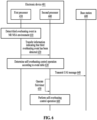
- the electronic device 401 may receive a response message to the UAI message from the base station 500 while the first timer is operating. In this case, the electronic device 401 (e.g., the processor 403 or the second processor 440) may perform an overheating control operation based on the received response message.
- the electronic device 401 may determine a CQI of at least one NR secondary cell as "0" and may transmit a UAI message together with a report indicating that the CQI of the at least one NR secondary cell is "0" to the base station 700.
- FIG. 9 is a flowchart illustrating an example of an operation of a first timer of an electronic device according to an embodiment.
- the electronic device 401 may operate a second timer (e.g., a T345 timer of 3GPP TS) associated with an overheating indication prohibition in operation 930 and may operate the first timer in operation 940.
- the first timer may have a time value corresponding to the detected overheating event.
- the time value of the first timer may vary depending on, for example, the type of overheating events.
- time values respectively corresponding to the first overheating event to the third overheating event in the NR NSA environment may be a first time value, a second time value, and a third time value, respectively.
- the time values respectively corresponding to the first overheating event and the second overheating event in the NR SA environment may be a fourth time value and a fifth time value, respectively.
- the executed instructions may cause the electronic device 401 to perform the operations of the electronic device 401 described with reference to FIG. 9 .
- FIGS. 1 to 8 may apply to the embodiments of FIG. 9 .
- FIG. 10 is a flowchart illustrating another example of an operation of a first timer of an electronic device according to an embodiment.
- the electronic device 401 may determine a time value of the first timer. For example, in operation 1010-1, the electronic device 401 may determine whether a time value of a second timer is less than a default time value of the first timer. When it is determined that the time value of the second timer is greater than or equal to the default time value of the first timer (No in operation 1010-1), the electronic device 401 may maintain the default time value of the first timer in operation 1010-3. The time value of the first timer may be equal to the default time value of the first timer.
- the electronic device 401 may change the time value of the first timer from the default time value to the time value of the second timer in operation 1010-2.
- the time value of the first timer may be equal to the time value of the second timer.
- FIGS. 1 to 9 may apply to the embodiments of FIG. 10 .
- FIG. 11 is a flowchart illustrating another example of an operation of a first timer of an electronic device according to an embodiment.
- the electronic device 401 may detect an overheating event (e.g., a first overheating event in an NR NSA environment, a second overheating event in the NR NSA environment, a third overheating event in the NR NSA environment, a first overheating event in an NA SA environment, or a second overheating event in the NR SA environment).
- an overheating event e.g., a first overheating event in an NR NSA environment, a second overheating event in the NR NSA environment, a third overheating event in the NR NSA environment, a first overheating event in an NA SA environment, or a second overheating event in the NR SA environment.
- the electronic device 401 may drive a second timer in operation 1130.
- the electronic device 401 may operate the first timer in operation 1140.
- the first timer may have, for example, a time value corresponding to a detected overheating event as described above with reference to FIG. 9 , or a time value (e.g., the default time value or the time value of the second timer) determined through a comparison between the time value of the second timer and the default time value of the first timer as described above with reference to 10.
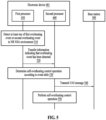
- the electronic device 401 When failing to receive a response message (e.g., a message including a base station configuration for controlling overheating) to the UAI message from the base station 1100 (or a network) while the first timer is operating, the electronic device 401 is operable to perform a self-overheating control operation (e.g., a first operation, a second operation, or a third operation) according to the overheating event detected in operation 1110, in operation 1150.
- a self-overheating control operation e.g., a first operation, a second operation, or a third operation
- the executed instructions may cause the electronic device 401 to perform the operations of the electronic device 401 described with reference to FIG. 11 .
- FIGS. 1 to 10 may apply to the embodiments of FIG. 11 .
- the electronic device may initiate an operation of causing a first predefined operation to be performed without waiting for a response from the base station in a case in which at least one control operation corresponding to the preference of the electronic device for controlling overheating includes the first predefined operation.
- the operation of causing the first predefined operation to be performed may include, for example, an operation of the electronic device to determine a CQl of at least one secondary cell as "0" and transmit the CQI determined as "0" to the base station.
- the operation of causing the second predefined operation to be performed may include, for example, an operation of the electronic device to transmit an SCG failure message to the base station.
- the electronic device is operable to determine whether the time value of the second timer is less than a default time value of the first timer. When it is determined that the time value of the second timer is greater than or equal to the default time value of the first timer, the electronic device is operable to maintain the default time value of the first timer. When it is determined that the time value of the second timer is less than the default time value, the electronic device is operable to change the time value of the first timer from the default time value to the time value of the second timer.
- the electronic device may operate the first timer and the second timer. When failing to receive a response to the first message from the base station while the first timer is operating, the electronic device may initiate an operation (e.g., perform a transmission of an SGG failure message) of causing the second predefined operation to be performed.
- the electronic device when transmitting the first message, may operate the second timer. When the second timer expires, the electronic device may operate the first timer. When failing to receive a response to the first message from the base station while the first timer is operating, the electronic device may initiate an operation (e.g., perform a transmission of an SGG failure message) of causing the second predefined operation to be performed.
- an operation e.g., perform a transmission of an SGG failure message
- the operation of causing the first predefined operation to be performed may include an operation of determining a CQI of at least one secondary cell as "0" and transmitting the CQI determined as "0" to the base station.
- the first predefined operation may include an operation associated with deactivation of at least one secondary cell
- the second predefined operation may include an operation associated with an SCG release
- the initiating of the operation of causing the first predefined operation to be performed may include, when a first overheating event occurs in an NR NSA environment, determining a CQI of at least one NR secondary cell as "0" and transmitting the CQI determined as "0" together with the first message to the base station.
- the instructions when executed by the processor, may cause the electronic device to: determine whether a time value of a second timer associated with an overheating indication prohibition is less than a default time value of a first timer; when it is determined that the time value of the second timer is greater than or equal to the default time value, maintain the default time value of the first timer; when it is determined that the time value of the second timer is less than the default time value, change a time value of the first timer from the default time value to the time value of the second timer; when the first message is transmitted, operate the first timer and the second timer; and initiate the operation of causing the second predefined operation to be performed in response to a failure to receive the response to the first message from the base station while the first timer is operating.
- the instructions when executed by the processor, may cause the electronic device to, in a case in which at least one control operation corresponding to the preference of the electronic device includes a first predefined operation, perform an overheating control operation of causing the first predefined operation to be performed without waiting for a response from the base station.
- the instructions when executed by the processor, may cause the electronic device to, in a case in which at least one control operation corresponding to the preference of the electronic device includes a second predefined operation, perform an overheating control operation of causing the second predefined operation to be performed when a time period has elapsed after the transmitting of the first message.
Landscapes
- Engineering & Computer Science (AREA)
- Theoretical Computer Science (AREA)
- Physics & Mathematics (AREA)
- General Engineering & Computer Science (AREA)
- General Physics & Mathematics (AREA)
- Human Computer Interaction (AREA)
- Computer Hardware Design (AREA)
- Mobile Radio Communication Systems (AREA)
Applications Claiming Priority (4)
| Application Number | Priority Date | Filing Date | Title |
|---|---|---|---|
| KR20230111317 | 2023-08-24 | ||
| KR20230141194 | 2023-10-20 | ||
| KR1020230164562A KR20250030370A (ko) | 2023-08-24 | 2023-11-23 | 과열 상태에서 과열 제어를 수행하는 전자 장치 및 이의 동작 방법 |
| PCT/KR2024/007548 WO2025041983A1 (fr) | 2023-08-24 | 2024-06-03 | Dispositif électronique pour effectuer une commande de surchauffe dans un état surchauffé et son procédé de fonctionnement |
Publications (2)
| Publication Number | Publication Date |
|---|---|
| EP4535852A1 true EP4535852A1 (fr) | 2025-04-09 |
| EP4535852A4 EP4535852A4 (fr) | 2025-07-09 |
Family
ID=92816758
Family Applications (1)
| Application Number | Title | Priority Date | Filing Date |
|---|---|---|---|
| EP24765935.2A Pending EP4535852A4 (fr) | 2023-08-24 | 2024-06-03 | Dispositif électronique pour effectuer une commande de surchauffe dans un état surchauffé et son procédé de fonctionnement |
Country Status (2)
| Country | Link |
|---|---|
| EP (1) | EP4535852A4 (fr) |
| WO (1) | WO2025041983A1 (fr) |
Family Cites Families (7)
| Publication number | Priority date | Publication date | Assignee | Title |
|---|---|---|---|---|
| US11234119B2 (en) * | 2017-01-10 | 2022-01-25 | Futurewei Technologies, Inc. | System and method for updating user equipment capability |
| KR102544376B1 (ko) * | 2017-01-13 | 2023-06-15 | 후아웨이 테크놀러지 컴퍼니 리미티드 | 무선 자원 구성 조정 방법, 장치, 및 시스템 |
| US11528597B2 (en) * | 2018-09-25 | 2022-12-13 | Mediatek Singapore Pte Ltd. | Carrier and frequency specific capability restrictions |
| WO2020091461A1 (fr) * | 2018-11-02 | 2020-05-07 | Samsung Electronics Co., Ltd. | Procédé et appareil de gestion de surchauffe de dispositif électronique |
| US10925007B2 (en) * | 2018-11-02 | 2021-02-16 | Apple Inc. | Dynamic power reduction requests for wireless communications |
| WO2022000281A1 (fr) * | 2020-06-30 | 2022-01-06 | Qualcomm Incorporated | Stratégie adaptative pour atténuation thermique améliorée et signalisation d'assistance en cas de surchauffe |
| KR20220149364A (ko) * | 2021-04-30 | 2022-11-08 | 삼성전자주식회사 | 과온도 상태에 대응하는 동작을 수행하는 전자 장치 및 그 동작 방법 |
-
2024
- 2024-06-03 WO PCT/KR2024/007548 patent/WO2025041983A1/fr active Pending
- 2024-06-03 EP EP24765935.2A patent/EP4535852A4/fr active Pending
Also Published As
| Publication number | Publication date |
|---|---|
| EP4535852A4 (fr) | 2025-07-09 |
| WO2025041983A1 (fr) | 2025-02-27 |
Similar Documents
| Publication | Publication Date | Title |
|---|---|---|
| US12058616B2 (en) | Electronic device for controlling communication circuit supporting C-DRX and method for the same | |
| US20230199887A1 (en) | Electronic device for supporting dual sim and cellular communication converting method of electronic device | |
| US11304178B2 (en) | Electronic device for receiving paging message and operation method thereof | |
| US12542045B2 (en) | Electronic device and loss reporting method therefor | |
| US20230388078A1 (en) | Electronic device for reducing interference from reference signal, and operation method thereof | |
| US12568520B2 (en) | Electronic device comprising plurality of subscriber identification modules and operation method of same | |
| US12363519B2 (en) | Apparatus and method for establishing a connection | |
| US20240276402A1 (en) | Electronic device comprising multi-sim | |
| EP4503715A1 (fr) | Dispositif électronique à des fins de mesure de canal et son procédé de fonctionnement | |
| US12550212B2 (en) | Electronic device comprising multiple subscriber identity modules and operation method thereof | |
| EP4535852A1 (fr) | Dispositif électronique pour effectuer une commande de surchauffe dans un état surchauffé et son procédé de fonctionnement | |
| US12376070B2 (en) | Electronic device for controlling communication circuit based on reception interval between SS/PBCH block and data and method for the same | |
| EP4319463A1 (fr) | Dispositif électronique pour réaliser une synchronisation multimédia de liaison et procédé de fonctionnement de dispositif électronique | |
| US20250193515A1 (en) | Electronic device for adjusting, on basis of frequency, strength of data signal to be transmitted through conductive pattern, and method performed by electronic device | |
| US20250261084A1 (en) | Electronic device using big data-based neighbor cell information, and operating method thereof | |
| EP4369755A1 (fr) | Dispositif électronique comprenant une pluralité de modules d'identité d'abonné et procédé de fonctionnement dudit dispositif | |
| US12074634B2 (en) | Electronic device for cell coverage enhancement and operation method thereof | |
| US20240348313A1 (en) | Electronic device for beam searching, and operation method for electronic device | |
| EP4401492A1 (fr) | Dispositif électronique demandant une attribution de ressources de liaison montante, réseau d'attribution de ressources de liaison montante et procédé de fonctionnement du réseau | |
| US12621728B2 (en) | Base station for detecting abnormality of cell coverage and operating method thereof | |
| EP4447533A1 (fr) | Station de base permettant de détecter une anomalie dans une couverture cellulaire et son procédé de fonctionnement | |
| US20250097855A1 (en) | Electronic device and transmission antenna selection method therefor | |
| US20240381211A1 (en) | Electronic device and method for performing handover, and computer-readable storage medium | |
| US20250393074A1 (en) | Electronic device for transmitting data through plurality of links, and electronic device operating method | |
| EP4716101A1 (fr) | Dispositif électronique pour changer une antenne de transmission et son procédé de fonctionnement |
Legal Events
| Date | Code | Title | Description |
|---|---|---|---|
| STAA | Information on the status of an ep patent application or granted ep patent |
Free format text: STATUS: UNKNOWN |
|
| STAA | Information on the status of an ep patent application or granted ep patent |
Free format text: STATUS: THE INTERNATIONAL PUBLICATION HAS BEEN MADE |
|
| PUAI | Public reference made under article 153(3) epc to a published international application that has entered the european phase |
Free format text: ORIGINAL CODE: 0009012 |
|
| STAA | Information on the status of an ep patent application or granted ep patent |
Free format text: STATUS: REQUEST FOR EXAMINATION WAS MADE |
|
| 17P | Request for examination filed |
Effective date: 20240913 |
|
| AK | Designated contracting states |
Kind code of ref document: A1 Designated state(s): AL AT BE BG CH CY CZ DE DK EE ES FI FR GB GR HR HU IE IS IT LI LT LU LV MC ME MK MT NL NO PL PT RO RS SE SI SK SM TR |
|
| A4 | Supplementary search report drawn up and despatched |
Effective date: 20250606 |
|
| RIC1 | Information provided on ipc code assigned before grant |
Ipc: H04W 24/10 20090101ALI20250602BHEP Ipc: H04W 76/18 20180101ALI20250602BHEP Ipc: H04W 8/24 20090101ALI20250602BHEP Ipc: H04W 76/16 20180101ALI20250602BHEP Ipc: H04B 17/309 20150101ALI20250602BHEP Ipc: H04W 72/21 20230101ALI20250602BHEP Ipc: H04W 24/08 20090101ALI20250602BHEP Ipc: H04W 76/32 20180101ALI20250602BHEP Ipc: G06F 1/20 20060101ALI20250602BHEP Ipc: H04W 24/04 20090101AFI20250602BHEP |