EP4538259A1 - Procédés de préparation de deucravacitinib - Google Patents
Procédés de préparation de deucravacitinib Download PDFInfo
- Publication number
- EP4538259A1 EP4538259A1 EP23383031.4A EP23383031A EP4538259A1 EP 4538259 A1 EP4538259 A1 EP 4538259A1 EP 23383031 A EP23383031 A EP 23383031A EP 4538259 A1 EP4538259 A1 EP 4538259A1
- Authority
- EP
- European Patent Office
- Prior art keywords
- formula
- compound
- salt
- reacting
- give
- Prior art date
- Legal status (The legal status is an assumption and is not a legal conclusion. Google has not performed a legal analysis and makes no representation as to the accuracy of the status listed.)
- Withdrawn
Links
Images


Classifications
-
- C—CHEMISTRY; METALLURGY
- C07—ORGANIC CHEMISTRY
- C07D—HETEROCYCLIC COMPOUNDS
- C07D403/00—Heterocyclic compounds containing two or more hetero rings, having nitrogen atoms as the only ring hetero atoms, not provided for by group C07D401/00
- C07D403/02—Heterocyclic compounds containing two or more hetero rings, having nitrogen atoms as the only ring hetero atoms, not provided for by group C07D401/00 containing two hetero rings
- C07D403/12—Heterocyclic compounds containing two or more hetero rings, having nitrogen atoms as the only ring hetero atoms, not provided for by group C07D401/00 containing two hetero rings linked by a chain containing hetero atoms as chain links
-
- C—CHEMISTRY; METALLURGY
- C07—ORGANIC CHEMISTRY
- C07D—HETEROCYCLIC COMPOUNDS
- C07D249/00—Heterocyclic compounds containing five-membered rings having three nitrogen atoms as the only ring hetero atoms
- C07D249/02—Heterocyclic compounds containing five-membered rings having three nitrogen atoms as the only ring hetero atoms not condensed with other rings
- C07D249/08—1,2,4-Triazoles; Hydrogenated 1,2,4-triazoles
Definitions
- the invention relates to processes for the preparation of deucravacitinib and of intermediates useful in the synthesis of this molecule.
- Deucravacitinib is a Tyk2 inhibitor which was approved in United States in 2022 and in Europe in 2023 for the treatment of moderate to severe plaque psoriasis in adults who are candidates for systemic therapy.
- Deucravacitinib's chemical name is 6-(cyclopropane-carboxamido)-4-((2-methoxy-3-(1-methyl-1H-1,2,4-triazol-3-yl)phenyl)amino)-N-(trideuteromethyl)pyridazine-3-carboxamide and it was first disclosed in WO2014/0074661 .
- Psoriasis is a chronic, non-communicable, painful, immunologically-mediated, disfiguring and disabling inflammatory skin disease with great negative impact on patients' quality of life (QoL). It is characterized by marked inflammation and thickening of the epidermis that result in thick, scaly plaques involving the skin. Psoriasis may be classified according to morphologic and clinical presentation: plaque psoriasis, guttate psoriasis, erythrodermic psoriasis, generalized pustular and localized pustular psoriasis, and inverse or intertriginous psoriasis.
- Plaque psoriasis is the most common form of the disease. Areas of the body that are frequently involved include the scalp, elbows, knees, buttocks, and genitalia. The extent of skin involved varies among affected individuals and is a primary determinant of severity.
- Nail psoriasis presents a spectrum of challenges to patients: pain associated with nail bed hyperkeratosis, functional deficits and cosmetic disfigurement.
- This process has some drawbacks; it requires the hydrolysis of the ester group (ethyl ester) with LiOH and subsequent acidification of the generated lithium carboxylate, which implies an additional step in the process. Moreover, introducing the deuterated amine at an early stage is not cost-effective.
- WO2018/0183649 refers to a process wherein introduction of the methyl- d 3 -amine moiety is carried out in presence of activating and coupling agents:
- WO2023/102085 discloses a process for the preparation of deucravacitinib comprising reacting the ethyl ester intermediate (XIII) with deuterated methylamine to give intermediate (XVII), and subsequently reacting the latter with cyclopropane carboxamide to afford the final product:
- Example 31 of the PCT application illustrates the preparation of intermediate (XVII) in the presence of lithium bis(trimethylsilyl)amide (LiHMDS) and using tetrahydrofuran as a solvent.
- Compound (XVII) is said to be recovered in 75% yield.
- the yield of this reaction was indeed much lower, around 34%. This low yield is a major disadvantage when the process is to be applied on an industrial scale taking into account that intermediate (XVII) is a very advanced intermediate in the deucravacitinib route of synthesis, and therefore a more valuable one compared to other intermediates used at early stages of the synthesis.
- the inventors have developed a new and safer process for the preparation of deucravacitinib which involves fewer synthetic steps than the processes cited above. Besides, the developed process avoids the use of activating and coupling agents, which give rise to by-products that are difficult to remove. The process proceeds with good isolated yields and high chemical purities. These features make the process of the invention especially suitable to be industrially implemented.
- the inventors have found that when the methyl ester intermediate (IX) (instead of the ethyl ester intermediate) was reacted with deuterated methylamine under very specific conditions, the yield and purity of the obtained amide intermediate were notably improved in comparison to what is disclosed in WO2023/102085 .
- the reaction of the methyl ester intermediate (IX) with deuterated methylamine under very mild conditions i.e., in the presence of cesium carbonate and using dimethylformamide (DMF) as a solvent, gave the amide intermediate in very good yield (84%) and purity (>99% a/a) at pilot scale (270 g).
- LiHMDS is a highly sensitive reagent to oxygen and humidity and requires working in anhydrous conditions and strict inert atmosphere.
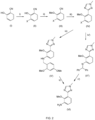
- a first aspect of the invention relates to a process for the preparation of deucravacitinib of formula (XI) or a pharmaceutically acceptable salt thereof, which comprises:
- a second aspect of the invention relates to a process for the preparation of a compound of formula (V'), or a salt thereof, which comprises: iv) reacting the compound of formula (IV), or a salt thereof, with 2,4-dimethoxybenzylamine, or a salt thereof, in presence of metallic catalyst.
- a third aspect of the invention relates to a process for the preparation of a compound of formula (V"), or a salt thereof, which comprises: iv') reacting the compound of formula (IV), or a salt thereof, with benzophenone imine, in presence of metallic catalyst.
- the present invention also relates to new intermediates of formula (V'), and formula (V"), which can be efficiently used in the process for the preparation of deucravacitinib.
- a third aspect of the invention relates to a compound of formula (V'), and a fourth aspect of the invention relates to a compound of formula (V").
- room temperature means a temperature from 20 to 25 °C.
- halogen or halide means fluoro, chloro, bromo or iodo.
- trideuteromethylamine methyl- d 3 -amine
- deuterated methylamine are used herein interchangeably and refer to the compound CD 3 NH 2 .
- deuterated methylamine or a salt thereof such as e.g., the hydrochloride may be used.
- (C 1 -C 4 )alkyl refers to a linear or branched saturated hydrocarbon group having from 1 to 4 carbon atoms. By way of example, mention may be made of methyl, ethyl, propyl, isopropyl, butyl, isobutyl, sec-butyl, or tert-butyl groups.
- (C 1 -C 4 )haloalkyl refers to a (C 1 -C 4 )alkyl group as previously defined in which one or more hydrogen atoms are replaced by same or different halogen atoms.
- (C 6 -C 12 )aryl refers to an aromatic carbocyclic mono- or bicyclic ring system comprising from 6 to 12 carbon ring atoms.
- aryl moieties include phenyl and naphthyl.
- (C 4 -C 12 )heteroaryl refers to a heteroaromatic carbocyclic mono- or bicyclic ring system comprising from 4 to 12 carbon ring atoms, wherein one or more of the ring members, particularly 1, 2, 3, or 4 ring members, are selected from NH, N, O, and S, where chemically possible.
- the remaining ring members of the heteroaromatic ring are independently selected from C, CH, O, N, NH, and S.
- (C 1 -C 4 )alkyl(C 6 -C 12 )aryl refers to a (C 1 -C 4 )alkyl group as defined herein which is attached to the parent moiety and which is further substituted with a (C 6 -C 12 )aryl group as defined herein.
- Non-limiting examples of (C 1 -C 4 )alkyl(C 6 -C 12 )aryl moieties include benzyl and methylnaphthyl.
- (C 1 -C 4 )alkyl(C 4 -C 12 )heteroaryl refers to a (C 1 -C 4 )alkyl group as defined herein which is attached to the parent moiety and which is further substituted with a (C 4 -C 12 )hereroaryl group as defined herein.
- Lewis acid refers to a compound or ionic species which can accept an electron pair from a donor compound.
- MgCl 2 MgSO 4 , MgBr 2 , etc.
- -OTf refers to triflate or trifluoromethanesulfonate, which means -OSO 2 CF 3 , which is the anion of trifluoromethanesulfonic acid.
- -OTs refers to tosylate, which means the anion -OSO 2 C 7 H 7 , which is the anion of p-toluenesulfonic acid.
- -OMs refers to mesylate which means the anion -OSO 2 CH 3 , which is the anion of methanesulfonic acid.
- halogenating agent refers to a substance that can transfer one halogen atom to the compound with which they are reacting.
- the term "telescoped process” as used herein refers to a sequential one-pot synthesis whereby the reagents are added to the reactor one at a time and without work-up.
- the first aspect of the invention relates to a process for the preparation of deucravacitinib.
- Deucravacitinb of formula (XI) may be converted into a pharmaceutically acceptable salt thereof.
- pharmaceutically acceptable salts encompasses any salt formed from pharmaceutically acceptable non-toxic acids including inorganic or organic acids such as for example acetic, trifluoroacetic, benzenesulfonic, benzoic, camphorsulfonic, citric, ethansulfonic, oxalic, fumaric, gluconic, glutamic, hydrobromic, hydrochloric, orthophosphoric, lactic, maleic, malic, mandelic, methanesulfonic, phosphoric, succinic, sulfuric, tartaric, p-toluenesulfonic, glutamic, aspartic acid, and the like.
- the salts except that if used for therapeutic purposes, they must be pharmaceutically acceptable.
- deucravacitinib salts may be used to purify deucravacitinib.
- deucravacitinb can be prepared by methods known in the art. For instance, they can be prepared by reacting deucravacitinb with a stoichiometric amount of the appropriate pharmaceutically acceptable acid in water, in an organic solvent or in a mixture of them.
- the compounds of formula (XI) and their salts may differ in some physical properties, but they are equivalent for the purposes of the present invention.
- Deucravacitinib and/or salts may be in crystalline form either as free solvation compound or as solvate ( e.g ., hydrate). All these forms are within the scope of the present invention. Methods of solvation are generally known within the art. In general, the solvated forms with pharmaceutically acceptable solvents such as water, ethanol and the like are equivalent to the unsolvated form for the purposes of the invention.
- the obtained deucravacitinib may be crystallized from a suitable solvent selected from the group consisting of acetonitrile (ACN), methyl ethyl ketone (MEK), methanol (MeOH), toluene, ethyl acetate (EtOAc), dichloromethane (DCM), ethanol (EtOH), tetrahydrofuran (THF), 2-methyltetrahydrofuran, isopropanol, dimethyl sulfoxide (DMSO), N-methyl-2-pyrrolidone, water and mixtures thereof, more particularly ethanol/water.
- ACN acetonitrile
- MEK methyl ethyl ketone
- MeOH methanol
- MeOH toluene
- EtOAc ethyl acetate
- DCM dichloromethane
- EtOH ethanol
- THF tetrahydrofuran
- 2-methyltetrahydrofuran isopropan
- Such a crystallization procedure provides a well-defined polymorphic form of deucravacitinib in a reproducible manner, which is consistent with deucravacitinib crystalline Form A which is further defined in the patent application WO2018/0183656 .
- the first aspect of the invention relates to a process for the preparation of deucravacitinib of formula (XI) or a pharmaceutically acceptable salt thereof, which comprises:
- Step a) comprises the reaction of methyl- d 3 -amine with a compound of formula (IX).
- methyl- d 3 -amine, or a salt thereof is used in an amount from 1 to 15 molar equivalents, particularly from 1 to 5 molar equivalents, more particularly from 1 to 3 equivalents, and even more particularly about 2.5 molar equivalents, relative to the compound of formula (IX).
- the amount of the base (cesium carbonate) used in step a) may be generally from 1 to 5 molar equivalents, more particularly from 1 to 3 equivalents, and even more particularly about 2.4 molar equivalents, relative to compound of formula (IX)..
- step a) methyl- d 3 -amine and cesium carbonate are used each in an amount from 1 to 5 molar equivalents, relative to the compound of formula (IX).
- Step a) can be carried out at a suitable temperature, e.g., at room temperature, and with a reaction time generally from 2 to 24 h.
- LG is selected from the group consisting of a halogen, -OTf, -OTs and -OMs.
- LG is a halogen, more particularly LG is chloro, i.e., the compound of formula (IX) is a compound of formula (IXa):
- LG is a halogen, more particularly LG is chloro, i.e., the compound of formula (IX) is a compound of formula (Xa):
- Step b) comprises the reaction of cyclopropanecarboxamide with a compound of formula (X).
- cyclopropanecarboxamide, or a salt thereof is used in an amount from 1 to 3 molar equivalents, particularly about 1.5 molar equivalents, relative to the compound of formula (X).
- Step b) can be carried out in a suitable solvent such as organic solvent which is not particularly limited, and at a suitable temperature, e.g., at room temperature, and with a reaction time generally from 3 to 18 h.
- a suitable solvent such as organic solvent which is not particularly limited, and at a suitable temperature, e.g., at room temperature, and with a reaction time generally from 3 to 18 h.
- step b) is carried out in an organic solvent selected from the group consisting of N,N- dimethylformamide, 1,4-dioxane, tert -butanol, dichloromethane, dichloroethane, toluene, acetonitrile, tetrahydrofuran, 2-methyltetrahydrofuran, ethyl acetate, and combinations thereof, more particularly, the solvent is 1,4-dioxane.
- Step b) may be performed in the presence of a base which is not particularly limited.
- the amount of the base may be generally from 1 to 3 molar equivalents, particularly about 2.5 molar equivalents, relative to compound of formula (X).
- the base used in step b) is selected from the group consisting of sodium carbonate, sodium hydrogen carbonate, potassium carbonate, potassium hydrogen carbonate, potassium phosphate, cesium carbonate, 1,8-diazabicyclo[5.4.0]undec-7-ene (DBU), and combinations thereof, more particularly, the base is potassium phosphate.
- Step b) may be performed in the presence of a palladium catalyst in an amount generally from 0.005 to 0.020 molar equivalents, particularly about 0.075 molar equivalents, relative to compound of formula (X), and a phosphane ligand in an amount generally from 0.010 to 0.050 molar equivalents, particularly about 0.15 molar equivalents, relative to compound of formula (X).
- step b) is carried out in the presence of a catalyst and a phosphane ligand
- the catalyst is selected from the group consisting of tris(dibenzylideneacetone)dipalladium(0) (Pd 2 (dba) 3 ), Pd(OAc) 2 , Pd(PPh 3 ) 2 Cl 2 , Pd(PPh 3 ) 4 , Pd(dba) 2 and Pd(dppf)Cl 2
- the phosphane ligand selected from the group consisting of 1,1'-ferrocenediyl-bis(diphenylphosphine) (dppf), ( ⁇ )-2,2'-bis(diphenylphosphino)-1,1'-binaphthalene (BINAP), (2R)-1-[(1R)-1-[bis(1,1-dimethylethyl)phosphino]
- the process comprises:
- Step vii) comprises the reaction of a compound of formula (VIII) with a compound of formula (VI) or a salt thereof.
- the compound of a formula (VIII), or a salt thereof is used in an amount from 1 to 3 molar equivalents, more particularly about 1.3 molar equivalents, relative to the compound of formula (VI).
- Step vii) can be carried out in a suitable solvent such as organic solvent which is not particularly limited, and at a suitable temperature, e.g., by working at temperature from 25 to 35 °C, and with a reaction time generally from 3 to 18 h.
- a suitable solvent such as organic solvent which is not particularly limited, and at a suitable temperature, e.g., by working at temperature from 25 to 35 °C, and with a reaction time generally from 3 to 18 h.
- step vii) is carried out in an organic solvent selected from the group consisting of N,N -dimethylformamide, tert -butanol, 1,4-dioxane, dichloromethane, dichloroethane, toluene, acetonitrile, tetrahydrofuran, 2-methyltetrahydrofuran, ethyl acetate, and combinations thereof, more particularly, the solvent is tert -butanol.
- Step vii) may be performed in the presence of a base which is not particularly limited.
- the amount of the base may be generally from 1 to 5 molar equivalents, particularly about 1.5 molar equivalents, relative to compound of formula (VI).
- the base used in step vii) is selected from the group consisting of triethylamine, N,N -diisopropylethylamine (DIPEA), pyridine, N-methylmorpholine (NMM), N- methylimidazole (NMI), and combinations thereof, even more particularly the base is N,N- diisopropylethylamine (DIPEA).
- Step vii) may be carried out in the presence of one or two Lewis acids which are not particularly limited.
- the amount of each Lewis acid may be generally from 1 to 3 molar equivalents, particularly about 1.1 or 2.0 molar equivalents, relative to compound of formula (VI).
- the Lewis acids of step vii) are selected from the group consisting of AgOTf, AgNO 3 , Ag 2 SO 4 , AgOAc, MgCOs, MgCl 2 , MgSO 4 , and MgBr 2 , and more particularly are AgOTf and MgSO 4 .
- the process comprises: vi) converting a compound of formula (VII), or a salt thereof, into compound of formula (VIII), or a salt thereof as defined herein.
- each LG is independently an halogen, more particularly both LG are the same, and even more particularly each LG is chloro, i.e., the compound of formula (VIII) is a compound of formula (Villa):
- Step vi) can be carried out in the presence of a suitable halogenating agent (when LG is halogen), a sulfonylating agent (when LG is a sulfonate) or an acylating agent (when LG is an ester).
- a suitable halogenating agent when LG is halogen
- a sulfonylating agent when LG is a sulfonate
- an acylating agent when LG is an ester.
- the halogenating agents, sulfonylating agents, and acylating agents that can be used are not particularly limited.
- the halogenating agent is selected from the group consisting of phosphorus(V) oxychloride, thionyl chloride, phosphorus pentachloride, N -chlorosuccinimide, and trichloroisocyanuric acid, more particularly phosphorus(V) oxychloride, even more particularly the halogenating agent is used in an amount from 2 to 5 molar equivalents, more particularly about 2.6 molar equivalents, relative to the compound of formula (VII).
- the sulfonylating agent is a sulfonyl halide of the formula R 1 SO 2 X, wherein R 1 is as defined herein and X is halogen, particularly chloro, even more particularly the sulfonylating agent is used in an amount from 2 to 5 molar equivalents, more particularly about 2.6 molar equivalents, relative to the compound of formula (VII).
- the sulfonylating agent is a sulfonic acid anhydride of the formula R 1 SO 2 -O-SO 2 R 1 , wherein R 1 is as defined herein, even more particularly the sulfonylating agent is used in an amount from 2 to 5 molar equivalents, more particularly about 2.6 molar equivalents, relative to the compound of formula (VII).
- the acylating agent is an acyl halide of the formula R 1 COX, wherein R 1 is as defined herein and X is halogen, particularly chloro, even more particularly the acylating agent is used in an amount from 2 to 5 molar equivalents, more particularly about 2.6 molar equivalents, relative to the compound of formula (VII).
- the acylating agent is an acid anhydride of the formula R 1 CO-O-COR 1 , wherein R 1 is as defined herein, even more particularly the acylating agent is used in an amount from 2 to 5 molar equivalents, more particularly about 2.6 molar equivalents, relative to the compound of formula (VII).
- Step vi) may be performed in the presence of a base which is not particularly limited.
- the amount of the base may be generally from 1 to 3 molar equivalents, particularly about 1.8 molar equivalents, relative to compound of formula (VII).
- the base used in step vii) is selected from the group consisting of triethylamine, N,N -diisopropylethylamine (DIPEA), pyridine, N-methylmorpholine (NMM), N- methylimidazole (NMI), and combinations thereof, even more particularly the base is triethylamine.
- Step vi) can be carried out in a suitable solvent such as organic solvent which is not particularly limited, and at a suitable temperature, e.g., by heating at a temperature from 60 to 65 °C, and with a reaction time generally from 2 to 18 h.
- a suitable solvent such as organic solvent which is not particularly limited, and at a suitable temperature, e.g., by heating at a temperature from 60 to 65 °C, and with a reaction time generally from 2 to 18 h.
- step vi) is carried out in an organic solvent selected from the group consisting of N,N -dimethylformamide, tert -butanol, 1,4-dioxane, dichloromethane, dichloroethane, toluene, acetonitrile, tetrahydrofuran, 2-methyltetrahydrofuran, ethyl acetate, and combinations thereof, more particularly, the solvent is acetonitrile.
- the invention relates to a process for the preparation
- Step v) can be carried out in the presence of a suitable acid which is not particularly limited.
- the acid is selected from the group consisting of trifluoroacetic acid, trifluoromethanesulfonic acid, methanesulfonic acid, p- toluenesulfonic acid, hydrochloric acid, and hydrobromic acid, more particularly trifluoroacetic acid, even more particularly the acid is used in an amount from 1 to 5 molar equivalents, more particularly about 2.5 molar equivalents, relative to the compound of formula (V').
- Step v') can be carried out in the presence of a suitable acid which is not particularly limited.
- the acid is selected from the group consisting of trifluoroacetic acid, trifluoromethanesulfonic acid, methanesulfonic acid, p- toluenesulfonic acid, hydrochloric acid, and hydrobromic acid, more particularly hydrochloric acid, even more particularly the acid is used in an amount from 1 to 3 molar equivalents, more particularly about 1.8 molar equivalents, relative to the compound of formula (V').
- Steps v) and v') can be carried out in a suitable solvent such as organic solvent which is not particularly limited, and at a suitable temperature, e.g., at room temperature, and with a reaction time generally from 1 to 6 h.
- a suitable solvent such as organic solvent which is not particularly limited, and at a suitable temperature, e.g., at room temperature, and with a reaction time generally from 1 to 6 h.
- step v') is carried out in an organic solvent selected from the group consisting of N,N- dimethylformamide, tert -butanol, 1,4-dioxane, dichloromethane, dichloroethane, toluene, acetonitrile, tetrahydrofuran, 2-methyltetrahydrofuran, ethyl acetate, and combinations thereof, more particularly, the solvent is tetrahydrofuran.
- the process comprises: wherein previously to step v) the process comprises:
- Step iv) and iv') are carried out in the presence of a metallic catalyst, such a palladium catalyst, in an amount generally from 0.01 to 0.10 molar equivalents, particularly about 0.05 molar equivalents, relative to compound of formula (IV), and a phosphane ligand in an amount generally from 0.02 to 0.20 molar equivalents, particularly about 0.10 molar equivalents, relative to compound of formula (IV).
- a metallic catalyst such as palladium catalyst
- step b) is carried out in the presence of a catalyst and a phosphane ligand
- the catalyst is selected from the group consisting of tris(dibenzylideneacetone)dipalladium(0) (Pd 2 (dba) 3 ), Pd(OAc) 2 , Pd(PPh 3 ) 2 Cl 2 , Pd(PPh 3 ) 4 , Pd(dba) 2 , and Pd(dppf)Cl 2
- the phosphane ligand selected from the group consisting of ( ⁇ )-2,2'-bis(diphenylphosphino)-1,1'-binaphthalene (BINAP), of 1,1'-ferrocenediyl-bis(diphenylphosphine) (dppf), (2 R )-1-[(1 R )-1-[bis(1,1-dimethylethyl)
- Steps iv) and iv') can be carried out in a suitable solvent such as organic solvent which is not particularly limited, and at a suitable temperature, e.g., by heating at a temperature from 80 to 120 °C, and with a reaction time generally from 1 to 6 h.
- a suitable solvent such as organic solvent which is not particularly limited
- step a) is carried out in an organic solvent selected from the group consisting of N,N -dimethylformamide, tert -butanol, 1,4-dioxane, dichloromethane, dichloroethane, toluene, acetonitrile, tetrahydrofuran, 2-methyltetrahydrofuran, ethyl acetate, and combinations thereof, more particularly, the solvent is toluene.
- an organic solvent selected from the group consisting of N,N -dimethylformamide, tert -butanol, 1,4-dioxane, dichloromethane, dichloroethane, toluene, acetonitrile, tetrahydrofuran, 2-methyltetrahydrofuran, ethyl acetate, and combinations thereof, more particularly, the solvent is toluene.
- Steps iv) and iv') may be performed in the presence of a base which is not particularly limited.
- the base is selected from the group consisting of sodium tert-butoxide, potassium tert-butoxide, sodium isopropoxide, cesium carbonate, and potassium carbonate, more particularly sodium tert -butoxide, and even more particularly the base is used in an amount from 1 to 5 molar equivalents, particularly about 4 molar equivalents, relative to compound of formula (III).
- Step iv) is carried out in the presence of 2,4-dimethoxybenzylamine or a salt thereof.
- the nucleophile (amine) is used in an amount from 1 to 3 molar equivalents, more particularly about 1.5 molar equivalents, relative to the compound of formula (IV).
- Step iv') is carried out in the presence of benzophenone imine or a salt thereof.
- the nucleophile (imine) is used in an amount from 1 to 3 molar equivalents, more particularly about 1.5 molar equivalents, relative to the compound of formula (V').
- X is bromo
- step iv) the process comprises: iii) reacting the compound of formula (III), or a salt thereof, wherein X is halogen, with N -formyl- N -methylhydrazine, or a salt thereof, to give a compound of formula (IV), or a salt thereof.
- Step iii) is carried out in the presence of N -formyl- N -methylhydrazine or a salt thereof.
- the hydrazinde derivative is used in an amount from 1 to 3 molar equivalents, more particularly about 1.8 molar equivalents, relative to the compound of formula (III).
- Step iii) may be performed in the presence of a base which is not particularly limited.
- the base is selected from the group consisting of potassium tert -butoxide, sodium tert-butoxide, sodium isopropoxide, cesium carbonate, and potassium carbonate, more particularly potassium tert -butoxide, and even more particularly the base is used in an amount from 1 to 5 molar equivalents, particularly about 2.4 molar equivalents, relative to compound of formula (III).
- Step iii) can be carried out in a suitable solvent such as organic solvent which is not particularly limited, and at a suitable temperature, e.g., by cooling at a temperature from 0 to 10 °C, and with a reaction time generally from 1 to 4 h.
- a suitable solvent such as organic solvent which is not particularly limited
- step iii) is carried out in an organic solvent selected from the group consisting of N,N -dimethylformamide, tert -butanol, 1,4-dioxane, dichloromethane, dichloroethane, toluene, acetonitrile, tetrahydrofuran, 2-methyltetrahydrofuran, ethyl acetate, and combinations thereof, more particularly, the solvent is tetrahydrofuran.
- an organic solvent selected from the group consisting of N,N -dimethylformamide, tert -butanol, 1,4-dioxane, dichloromethane, dichloroethane, toluene, acetonitrile, tetrahydrofuran, 2-methyltetrahydrofuran, ethyl acetate, and combinations thereof, more particularly, the solvent is tetrahydrofuran.
- step iii) the process comprises: ii) converting a compound of formula (II), or a salt thereof, wherein X is halogen; into the compound of formula (III), or a salt thereof.
- Step ii) may be carried out in the presence of an alkylating agent which is not particularly limited.
- the alkylating agent is selected from the group consisting of iodomethane, bromomethane, chloromethane, and dimethyl sulfate, more particularly iodomethane, and even more particularly the alkylating agent is used in an amount from 1 to 3 molar equivalents, more particularly about 1.5 molar equivalents, relative to the compound of formula (II).
- Step ii) may be performed in the presence of a base which is not particularly limited.
- the amount of the base may be generally from 1 to 5 molar equivalents, particularly about 2 molar equivalents, relative to compound of formula (II).
- the base used in step ii) is selected from the group consisting of sodium carbonate, sodium hydrogen carbonate, potassium carbonate, potassium hydrogen carbonate, potassium phosphate, cesium carbonate, and combinations thereof, more particularly, the base is potassium carbonate.
- the base is selected from the group consisting of potassium carbonate, cesium carbonate, potassium tert -butoxide, sodium tert -butoxide, sodium isopropoxide, more particularly potassium carbonate, and even more particularly the base is used in an amount from 1 to 5 molar equivalents, particularly about 2.0 molar equivalents, relative to compound of formula (II).
- Step ii) can be carried out in a suitable solvent such as organic solvent which is not particularly limited, and at a suitable temperature, e.g., at room temperature, and with a reaction time generally from 2 to 6 h.
- a suitable solvent such as organic solvent which is not particularly limited, and at a suitable temperature, e.g., at room temperature, and with a reaction time generally from 2 to 6 h.
- step ii) is carried out in an organic solvent selected from the group consisting of N,N- dimethylformamide, tert-butanol, 1,4-dioxane, dichloromethane, dichloroethane, toluene, acetonitrile, tetrahydrofuran, 2-methyltetrahydrofuran, ethyl acetate, and combinations thereof, more particularly, the solvent is N , N -dimethylformamide.
- step ii) in the process of the first aspect, previously to step ii) the process comprises:
- Step i) may be carried out in the presence of a halogenating agent.
- the halogenating agent is selected from the group consisting of N- bromosuccinimide (NBS), bromine, N -bromophthalimide, N-iodosuccinimide, N- chlorosuccinimide (NCS), N -chlorophthalimide (NCP), trifluoromethanesulfonyl chloride, and 1,3-dichloro-5,5-dimethylhydantoin, more particularly the halogenating agent is bromine, even more particularly the halogenating agent used in an amount from 1 to 2 molar equivalents, more particularly about 1.1 molar equivalents, relative to the compound of formula (I).
- Step i) may be performed in the presence of a base which is not particularly limited.
- the amount of the base may be generally from 1 to 5 molar equivalents, particularly about 3 molar equivalents, relative to compound of formula (I).
- the base used in step i) is selected from the group consisting of tert -butylamine, triethylamine, N , N -diisopropylethylamine, pyridine, N -methylmorpholine, and combinations thereof, even more particularly the base is tert -butylamine.
- Step i) can be carried out in a suitable solvent such as organic solvent which is not particularly limited, and at a suitable temperature, e.g., at room temperature, and with a reaction time generally from 10 to 24 h.
- a suitable solvent such as organic solvent which is not particularly limited, and at a suitable temperature, e.g., at room temperature, and with a reaction time generally from 10 to 24 h.
- step i) is carried out in an organic solvent selected from the group consisting of N,N- dimethylformamide, tert -butanol, 1,4-dioxane, dichloromethane, dichloroethane, toluene, acetonitrile, tetrahydrofuran, 2-methyltetrahydrofuran, ethyl acetate, and combinations thereof, more particularly, the solvent is a mixture of toluene and dichloromethane.
- the invention relates to a process for the preparation of deucravacitinib of formula (XI) or a pharmaceutically acceptable salt thereof, which comprises:
- a second aspect of the invention relates to a process for the preparation of a compound of formula (V'), or a salt thereof as defined herein, which comprises: iv) reacting the compound of formula (IV), or a salt thereof as defined herein, with 2,4-dimethoxybenzylamine or a salt thereof, in presence of metallic catalyst.
- step iv) the process comprises: iii) reacting the compound of formula (III), or a salt thereof as defined herein, with N- formyl- N -methylhydrazine, or a salt thereof, to give a compound of formula (IV), or a salt thereof as defined herein.
- step iii) the process comprises: ii) converting a compound of formula (II), or a salt thereof as defined herein; into the compound of formula (III), or a salt thereof as defined herein.
- step iii) the process comprises:
- the process of the second aspect comprises:
- the third aspect of the invention relates to a process for the preparation of a compound of formula (V"), or a salt thereof as defined herein, which comprises: iv') reacting the compound of formula (IV), or a salt thereof, with benzophenone imine, in presence of metallic catalyst.
- step iv) the process comprises: iii) reacting the compound of formula (III), or a salt thereof as defined herein, with N- formyl- N -methylhydrazine, or a salt thereof, to give a compound of formula (IV), or a salt thereof as defined herein.
- step iii) the process comprises: ii) converting a compound of formula (II), or a salt thereof as defined herein; into the compound of formula (III), or a salt thereof as defined herein.
- step iii) the process comprises:
- the process of the third aspect comprises:
- NMR spectra were acquired on a Bruker AVANCE NEO NanoBay instrument operating at 400 MHz for 1 H NMR, using the residual solvent signal as the internal standard and with recording at 300 K in all cases. Chemical shifts ( ⁇ ) are expressed in ppm and coupling constants (J) in Hertz. The following abbreviations are used: bs, broad singlet; s, singlet; bd, broad doublet; dd, double of doublets; m, multiplet.
- Mass spectra were obtained by LC-MS using the electrospray ionization mode (ESI) under positive or negative polarity.
- the reaction mixture was warmed to 25 °C and further stirred overnight. After that, the mixture was diluted with brine (500 mL). The layers were separated, and the aqueous layer was further extracted with ethyl acetate (500 mL). The combined organic layers were treated with 10% aq. NaOH solution (2 x 500 mL), and the phases were separated. The combined aqueous layers (containing product as a sodium salt) were acidified with 6 N HCl (450 mL) up to pH 1-2 and further extracted using DCM (2 x 500 mL).
- dimethyl-1,3-acetonedicarboxylate (86.98 g, 499.50 mmol; HPLC purity: >99% a/a; HPLC RT: 8.9 min) was charged to a three-necked 2 L RBF at 25 °C.
- Acetonitrile 600 mL was loaded at 25 °C, followed by addition of N , N -diisopropylethylamine (3.6 mL, 20.81 mmol).
- the resulting mixture was heated to 60-65 °C and further stirred at this temperature under nitrogen atmosphere for 7 h. Afterwards, the reaction mixture was slowly cooled down to 0-5 °C, stirred for 1 h, and then, quenched with water (0.3 L) followed by pH 7 buffer solution (1.2 L) [pH 7 buffer solution: K 2 HPO 4 (462 g, 2.65 mol) was dissolved in water (3.6 L) and adjusted to pH 7 using 1.0 N HCI], maintaining the internal temperature below 5 °C. The product was subsequently extracted with methyl tert- butyl ether (MTBE, 2.1 L).
- MTBE methyl tert- butyl ether
- the separated organic layer at 0-5 °C was washed twice with pH 7 buffer solution (2 x 1.2 L) and then, twice with water (2 x 0.75 L).
- the combined aqueous layers were further extracted with MTBE (0.45 L).
- the finally combined organic layers were first concentrated under reduced pressure at 40-45 °C as the jacket temperature (final volume approx. 0.15-0.30 L).
- the resulting solution was subjected to a second vacuum distillation at 50-55 °C as the jacket temperature (final volume approx. 0.15-0.30 L).
- N , N -Dimethylformamide (3.5 L) and methyl 6-chloro-4-((2-methoxy-3-(1-methyl-1 H -1,2,4-triazol-3-yl)phenyl)amino)pyridazine-3-carboxylate (IXa; 270.0 g, 0.72 mol) were charged under nitrogen atmosphere into a 20 L multi-necked RBF at 25-30 °C.
- Trideuteromethylamine hydrochloride (127.0 g, 1.80 mol) was added at 25-30 °C over the previously prepared stirred solution under nitrogen atmosphere.
- 1,4-Dioxane (0.75 L) and 6-chloro-4-((2-methoxy-3-(1-methyl-1 H -1,2,4-triazol-3-yl)phenyl)amino)- N -(trideuteromethyl)pyridazine-3-carboxamide (Xa; 50.00 g, 132.69 mmol) were charged under argon atmosphere into a 3 L glass-jacketed reactor at 25-30 °C.
- the resulting solution was heated to 45-50 °C and stirred under such conditions for 20 min, followed by degassing with argon for 30 min and then, cooling down to 30-35 °C.
- the reaction mixture was heated to 95-100 °C (reflux) and further stirred at this temperature for 24 h. Afterwards, the mixture was cooled down to 25-30 °C and diluted with 1:5 EtOH/DCM (1.5 L). After stirring for 10 min at 25-30 °C, the mixture was filtered through a thin pad of Celite and the filter cake was washed gently with 1:5 EtOH/DCM (3 x 0.50 L). The filtrate was first concentrated under reduced pressure (final volume approx. 0.10 L), followed by solvent swap twice with EtOAc (2 x 0.25 L) and subsequent distillations (each final volume approx. 0.10 L).
- the thus obtained slurry was further diluted with EtOAc (0.50 L), followed by treatment with aqueous HCI solution (0.75 L, 530.76 mmol) [HCI solution: 52 mL HCl in 698 mL of water]. After stirring at 25-30 °C for 30 min, the first aqueous layer was separated while the organic layer was further diluted with aqueous HCI solution (0.38 L, 265.38 mmol) [HCI solution: 26 mL HCI in 349 mL of water]. After stirring at 25-30 °C for 20 min, the second aqueous layer was separated.
- Tetrahydrofuran (5.0 mL) and ethyl 6-chloro-4-((2-methoxy-3-(1-methyl-1 H -1,2,4-triazol-3-yl)phenyl)amino)pyridazine-3-carboxylate (0.5 g, 1.29 mmol) were charged under nitrogen atmosphere into a RBF at 25-30 °C.
- Trideuteromethylamine hydrochloride (109 mg, 1.54 mmol) was added at 25-30 °C over the previously prepared stirred suspension under nitrogen atmosphere.
- HPLC analysis of the separated aqueous layer confirmed the presence of free carboxylic acid derivative formed through undesired ester hydrolysis as a major reaction side product (HPLC RT: 8.3 min; 40% content found in the crude mixture), which was also the main impurity present in the amidation product (8% content in the isolated solid).
Landscapes
- Chemical & Material Sciences (AREA)
- Organic Chemistry (AREA)
- Organic Low-Molecular-Weight Compounds And Preparation Thereof (AREA)
Priority Applications (2)
| Application Number | Priority Date | Filing Date | Title |
|---|---|---|---|
| EP23383031.4A EP4538259A1 (fr) | 2023-10-09 | 2023-10-09 | Procédés de préparation de deucravacitinib |
| PCT/EP2024/078210 WO2025078335A1 (fr) | 2023-10-09 | 2024-10-08 | Procédés de préparation de deucravacitinib |
Applications Claiming Priority (1)
| Application Number | Priority Date | Filing Date | Title |
|---|---|---|---|
| EP23383031.4A EP4538259A1 (fr) | 2023-10-09 | 2023-10-09 | Procédés de préparation de deucravacitinib |
Publications (1)
| Publication Number | Publication Date |
|---|---|
| EP4538259A1 true EP4538259A1 (fr) | 2025-04-16 |
Family
ID=88315534
Family Applications (1)
| Application Number | Title | Priority Date | Filing Date |
|---|---|---|---|
| EP23383031.4A Withdrawn EP4538259A1 (fr) | 2023-10-09 | 2023-10-09 | Procédés de préparation de deucravacitinib |
Country Status (2)
| Country | Link |
|---|---|
| EP (1) | EP4538259A1 (fr) |
| WO (1) | WO2025078335A1 (fr) |
Citations (4)
| Publication number | Priority date | Publication date | Assignee | Title |
|---|---|---|---|---|
| WO2014074661A1 (fr) | 2012-11-08 | 2014-05-15 | Bristol-Myers Squibb Company | Composés hétérocycliques substitués par amide, utiles comme modulateurs d'il-12, il-23 et/ou de réponses à l'ifnα |
| WO2018183649A1 (fr) | 2017-03-30 | 2018-10-04 | Bristol-Myers Squibb Company | Procédé de préparation de 6-(cyclopropaneamido)-4-((2-méthoxy-3-(1-méthyl-1h-1,2,4-triazol-3-yl) phényl)amino)-n-(méthyl-d3)pyridazine-3-carboxamide |
| CN114989103A (zh) * | 2022-06-09 | 2022-09-02 | 杭州科巢生物科技有限公司 | 一种2-甲氧基-3-(1-甲基-1h-1,2,4-三唑-3-基)苯胺的制备方法 |
| WO2023102085A1 (fr) | 2021-12-01 | 2023-06-08 | Teva Czech Industries S.R.O. | Formes à l'état solide de deucravacitinib et de deucravacitinib hcl, et procédé de préparation de deucravacitinib et d'intermédiaires |
-
2023
- 2023-10-09 EP EP23383031.4A patent/EP4538259A1/fr not_active Withdrawn
-
2024
- 2024-10-08 WO PCT/EP2024/078210 patent/WO2025078335A1/fr active Pending
Patent Citations (5)
| Publication number | Priority date | Publication date | Assignee | Title |
|---|---|---|---|---|
| WO2014074661A1 (fr) | 2012-11-08 | 2014-05-15 | Bristol-Myers Squibb Company | Composés hétérocycliques substitués par amide, utiles comme modulateurs d'il-12, il-23 et/ou de réponses à l'ifnα |
| WO2018183649A1 (fr) | 2017-03-30 | 2018-10-04 | Bristol-Myers Squibb Company | Procédé de préparation de 6-(cyclopropaneamido)-4-((2-méthoxy-3-(1-méthyl-1h-1,2,4-triazol-3-yl) phényl)amino)-n-(méthyl-d3)pyridazine-3-carboxamide |
| WO2018183656A1 (fr) | 2017-03-30 | 2018-10-04 | Bristol-Myers Squibb Company | Forme cristalline du 6-(cyclopropanecarboxamido)-4-((2-méthoxy-3-(1-méthyl-1h-1,2,4-triazol-3-yl)phényl)amino)-n-(méthyl-d3)pyridazine-3-carboxamide |
| WO2023102085A1 (fr) | 2021-12-01 | 2023-06-08 | Teva Czech Industries S.R.O. | Formes à l'état solide de deucravacitinib et de deucravacitinib hcl, et procédé de préparation de deucravacitinib et d'intermédiaires |
| CN114989103A (zh) * | 2022-06-09 | 2022-09-02 | 杭州科巢生物科技有限公司 | 一种2-甲氧基-3-(1-甲基-1h-1,2,4-三唑-3-基)苯胺的制备方法 |
Non-Patent Citations (1)
| Title |
|---|
| STEPHEN T. WROBLESKI ET AL: "Highly Selective Inhibition of Tyrosine Kinase 2 (TYK2) for the Treatment of Autoimmune Diseases: Discovery of the Allosteric Inhibitor BMS-986165", JOURNAL OF MEDICINAL CHEMISTRY, vol. 62, no. 20, 18 July 2019 (2019-07-18), US, pages 1 - 23, XP055629848, ISSN: 0022-2623, DOI: 10.1021/acs.jmedchem.9b00444 * |
Also Published As
| Publication number | Publication date |
|---|---|
| WO2025078335A1 (fr) | 2025-04-17 |
Similar Documents
| Publication | Publication Date | Title |
|---|---|---|
| EP2609099A2 (fr) | Sitagliptine, sels et polymorphes de celle-ci | |
| JP6275881B2 (ja) | デュオカルマイシンのプロドラッグを製造するための改良された方法 | |
| CN108718527A (zh) | 用于制备4-苯基-5-烷氧羰基-2-噻唑-2-基-1,4-二氢嘧啶-6-基]甲基]-3-氧代-5,6,8,8a-四氢-1H-咪唑并[1,5-a]吡嗪-2-基]-甲酸的方法 | |
| TW201625634A (zh) | 科帕利普(copanlisib)及其二鹽酸鹽之合成 | |
| JP5265562B2 (ja) | イマチニブおよびその中間体の調製方法 | |
| KR20150041650A (ko) | (s)-3-(4-((4-(모르폴리노메틸)벤질)옥시)-1-옥소이소인돌린-2-일)피페리딘-2,6-디온 및 이의 약학적으로 허용가능한 형태의 제조를 위한 공정 | |
| TWI771342B (zh) | 吡咯并六員雜芳環類衍生物的製備方法及中間體 | |
| JP7744955B2 (ja) | 可溶性グアニル酸シクラーゼ刺激剤を調製するための新規のプロセスおよび中間体 | |
| US20250034142A1 (en) | Method of manufacturing a solid form of a bet bromodomain inhibitor | |
| WO2016016766A2 (fr) | Procédé de préparation d'isavuconazonium ou de son sel | |
| JP2022551254A5 (fr) | ||
| WO2022214645A1 (fr) | Procédés et intermédiaires pour la préparation de rélugolix | |
| FI120259B (fi) | Menetelmä epoksidin valmistamiseksi | |
| CN107810185A (zh) | 作为溴结构域抑制剂的二环杂环衍生物 | |
| WO2025078335A1 (fr) | Procédés de préparation de deucravacitinib | |
| JP2023504581A (ja) | オキセタン-2-イルメタンアミンの調製のためのプロセスおよび中間体 | |
| EP1339719B1 (fr) | Derives de benzimidazole, leur preparation et leur application en therapeutique | |
| US20090264648A1 (en) | Synthesis of pyrazoles | |
| JP2004500314A (ja) | 3(2h)−ピリダジノン−4−置換アミノ−5−クロロ−誘導体の製法 | |
| EA043992B1 (ru) | Способ изготовления твердой формы ингибитора бромодомена bet | |
| JP2023112012A (ja) | デュアルヒスタミンh1及びヒスタミンh4受容体リガンドとしての新規ベンゾイミダゾール誘導体 | |
| KR100393744B1 (ko) | 1,2,3,9-테트라하이드로-9-메틸-3-[(2-메틸-1h-이미다졸-1-일)메틸]-4h-카바졸-4-온의 제조방법 | |
| CN122003413A (zh) | Jak抑制剂的结晶多晶型物形式a和其制备方法 | |
| KR20240144099A (ko) | 치환된 피라졸로피리미딘의 제조 방법 | |
| KR20190131983A (ko) | 다이아미노피리미딘 유도체 또는 이의 산부가염의 신규의 제조방법 |
Legal Events
| Date | Code | Title | Description |
|---|---|---|---|
| PUAI | Public reference made under article 153(3) epc to a published international application that has entered the european phase |
Free format text: ORIGINAL CODE: 0009012 |
|
| STAA | Information on the status of an ep patent application or granted ep patent |
Free format text: STATUS: THE APPLICATION HAS BEEN PUBLISHED |
|
| AK | Designated contracting states |
Kind code of ref document: A1 Designated state(s): AL AT BE BG CH CY CZ DE DK EE ES FI FR GB GR HR HU IE IS IT LI LT LU LV MC ME MK MT NL NO PL PT RO RS SE SI SK SM TR |
|
| STAA | Information on the status of an ep patent application or granted ep patent |
Free format text: STATUS: THE APPLICATION IS DEEMED TO BE WITHDRAWN |
|
| 18D | Application deemed to be withdrawn |
Effective date: 20251017 |