EP4538262A1 - Co-cristaux de vorasidenib - Google Patents
Co-cristaux de vorasidenib Download PDFInfo
- Publication number
- EP4538262A1 EP4538262A1 EP23203278.9A EP23203278A EP4538262A1 EP 4538262 A1 EP4538262 A1 EP 4538262A1 EP 23203278 A EP23203278 A EP 23203278A EP 4538262 A1 EP4538262 A1 EP 4538262A1
- Authority
- EP
- European Patent Office
- Prior art keywords
- cocrystal
- vorasidenib
- radiation
- temperature
- acid
- Prior art date
- Legal status (The legal status is an assumption and is not a legal conclusion. Google has not performed a legal analysis and makes no representation as to the accuracy of the status listed.)
- Pending
Links
Images






Classifications
-
- C—CHEMISTRY; METALLURGY
- C07—ORGANIC CHEMISTRY
- C07D—HETEROCYCLIC COMPOUNDS
- C07D401/00—Heterocyclic compounds containing two or more hetero rings, having nitrogen atoms as the only ring hetero atoms, at least one ring being a six-membered ring with only one nitrogen atom
- C07D401/02—Heterocyclic compounds containing two or more hetero rings, having nitrogen atoms as the only ring hetero atoms, at least one ring being a six-membered ring with only one nitrogen atom containing two hetero rings
- C07D401/04—Heterocyclic compounds containing two or more hetero rings, having nitrogen atoms as the only ring hetero atoms, at least one ring being a six-membered ring with only one nitrogen atom containing two hetero rings directly linked by a ring-member-to-ring-member bond
-
- A—HUMAN NECESSITIES
- A61—MEDICAL OR VETERINARY SCIENCE; HYGIENE
- A61P—SPECIFIC THERAPEUTIC ACTIVITY OF CHEMICAL COMPOUNDS OR MEDICINAL PREPARATIONS
- A61P35/00—Antineoplastic agents
-
- C—CHEMISTRY; METALLURGY
- C07—ORGANIC CHEMISTRY
- C07C—ACYCLIC OR CARBOCYCLIC COMPOUNDS
- C07C57/00—Unsaturated compounds having carboxyl groups bound to acyclic carbon atoms
- C07C57/02—Unsaturated compounds having carboxyl groups bound to acyclic carbon atoms with only carbon-to-carbon double bonds as unsaturation
- C07C57/13—Dicarboxylic acids
- C07C57/15—Fumaric acid
-
- C—CHEMISTRY; METALLURGY
- C07—ORGANIC CHEMISTRY
- C07C—ACYCLIC OR CARBOCYCLIC COMPOUNDS
- C07C59/00—Compounds having carboxyl groups bound to acyclic carbon atoms and containing any of the groups OH, O—metal, —CHO, keto, ether, groups, groups, or groups
- C07C59/235—Saturated compounds containing more than one carboxyl group
- C07C59/245—Saturated compounds containing more than one carboxyl group containing hydroxy or O-metal groups
- C07C59/255—Tartaric acid
-
- C—CHEMISTRY; METALLURGY
- C07—ORGANIC CHEMISTRY
- C07B—GENERAL METHODS OF ORGANIC CHEMISTRY; APPARATUS THEREFOR
- C07B2200/00—Indexing scheme relating to specific properties of organic compounds
- C07B2200/13—Crystalline forms, e.g. polymorphs
Definitions
- the present invention relates to a co-crystal of vorasidenib and a dicarboxylic acid, in particular to a cocrystal of vorasidenib and a saturated dicarboxylic acid, preferably a saturated C2-C6 dicarboxylic acid, more preferably a saturated C2-C4 dicarboxylic acid, even more preferably tartaric acid (e.g., D-tartaric acid and/or L-tartaric acid), glutaric acid and malonic acid, and methods for its preparation.
- a saturated C2-C6 dicarboxylic acid preferably a saturated C2-C4 dicarboxylic acid
- tartaric acid e.g., D-tartaric acid and/or L-tartaric acid
- glutaric acid and malonic acid e.g., D-tartaric acid and/or L-tartaric acid
- the first aspect of the invention relates to a cocrystal of vorasidenib and an unsaturated dicarboxylic acid having E-configuration at the double bond, preferably an (E)-unsaturated C2-C6 dicarboxylic acid, more preferably an (E)-unsaturated C2-C4 dicarboxylic acid, even more preferably fumaric acid, and methods for its preparation.
- the present invention relates to a crystalline hydrate form of vorasidenib comprising less than 2.8 moles of water per mole of vorasidenib, preferably comprising from 0.5 to 2.5 moles of water per mole of vorasidenib, more preferably comprising from 1.0 to 2.2 moles of water per mole of vorasidenib, even more preferably comprising from 1.5 to 2.1 moles of water per mole of vorasidenib, most preferably to a dihydrate form of vorasidenib, and methods for its preparation.
- IDH1 isocitrate dehydrogenase 1 (NADP+), cytosolic catalyzes the oxidative decarboxylation of isocitrate to ⁇ -ketoglutarate. It has been discovered that mutations of IDH1 present in certain cancer cells result in a new ability of the enzyme to catalyze the NADPH-dependent reduction of ⁇ -ketoglutarate to ( R )-2-hydroxyglutarate (2HG). The production of 2HG is believed to contribute to the formation and progression of cancer ( Dang, L et al., Nature 2009, 462:739-44 ).
- IDH2 isocitrate dehydrogenase 2 (NADP+), mitochondrial catalyzes the oxidative decarboxylation of isocitrate to ⁇ -ketoglutarate ( ⁇ -KG). It has been discovered that mutations of IDH2 present in certain cancer cells result in a new ability of the enzyme to catalyze the NADPH-dependent reduction of ⁇ -ketoglutarate to ( R )-2-hydroxyglutarate (2HG). 2HG is not formed by wild-type IDH2. The production of 2HG is believed to contribute to the formation and progression of cancer ( Dang, L et al, Nature 2009, 462:739-44 ).
- U.S. Publication No. 2015/0018328 A1 discloses a compound described by the chemical name 6-(6-chloropyridin-2-yl)- N 2 , N 4 -bis(( R )-1,1,1-trifluoropropan-2-yl)-1,3,5-triazine-2,4-diamine (INN: vorasidenib),and its chemical formula (I):
- Vorasidenib (I) is described as a dual inhibitor of mutant IDH1 and IDH2 proteins in biochemical and cellular assays, meaning that it prevents the formation and accumulation of the oncometabolite 2HG, that occurs when genetically altered versions of two enzymes, IDH1 and IDH2, are present in a tumor. 2HG is thought to be responsible for the formation and maintenance of IDH-mutant gliomas.
- an active pharmaceutical ingredient often possess different physical and chemical properties such as but not limited to dissolution rate, solubility, chemical stability, physical stability, hygroscopicity, melting point, morphology, flowability, bulk density and compressibility.
- API active pharmaceutical ingredient
- solid-state forms of an API such as polymorphs, pseudopolymorphs (hydrates and solvates) and salts
- pharmaceutical cocrystals open up further opportunities for customizing the physicochemical properties of APIs with a process or clinical need. For example, these physicochemical properties can be tailored to enhance drug product bioavailability, stability and/or processability of APIs during drug product manufacture.
- Cocrystals are structurally readily distinguishable from salts because unlike salts, their components are in a neutral state and interact nonionically. Cocrystals are structurally more similar to solvates and hydrates, in that both contain more than one component in the crystal lattice and the interaction between these components is nonionic. From a physico-chemical perspective, cocrystals can be viewed as a special case of solvates and hydrates, wherein the second component, the cocrystal former (coformer), is nonvolatile (see also " Regulatory Classification of Pharmaceutical Cocrystals", Guidance for Industry, FDA, Revision 1, August 2016 ).
- WO2019090059A1 discloses (1) different solid forms of vorasidenib (Free Form Type A, Free Form Type B, Free Form Type C, Free Form Type D), (2) co-crystals with citric acid (Type A) and with maleic acid (Type A) and (3) methods for their preparation.
- the invention solves one or more of the above defined objectives by providing (1) a cocrystal of vorasidenib and a dicarboxylic acid, and/or (2) a crystalline hydrate form of vorasidenib comprising less than 2.8 moles of water per mole of vorasidenib.
- the cocrystal and/or solid-state form of the present invention is characterized by one or more advantageous physicochemical properties, e.g., improved dissolution rate, solubility, chemical stability, physical stability, stability under humidity stress, melting point, morphology, flowability, bulk density and/or compressibility.
- the present invention relates to a cocrystal of vorasidenib and a dicarboxylic acid.
- the fist aspect of the invention relates to cocrystal of vorasidenib and a saturated dicarboxylic acid, preferably a saturated C2-C6 dicarboxylic acid, more preferably a saturated C2-C4 dicarboxylic acid, even more preferably tartaric acid (e.g., D-tartaric acid and/or L-tartaric acid), glutaric acid and malonic acid.
- a saturated dicarboxylic acid preferably a saturated C2-C6 dicarboxylic acid, more preferably a saturated C2-C4 dicarboxylic acid, even more preferably tartaric acid (e.g., D-tartaric acid and/or L-tartaric acid), glutaric acid and malonic acid.
- the fist aspect of the invention relates to cocrystal of vorasidenib and an unsaturated dicarboxylic acid having E-configuration at the double bond, preferably an (E)-unsaturated C2-C6 dicarboxylic acid, more preferably an (E)-unsaturated C2-C4 dicarboxylic acid, even more preferably fumaric acid.
- the present invention relates to a crystalline hydrate form of vorasidenib comprising less than 2.8 molecules of water per molecule of vorasidenib, preferably comprising from 0.5 to 2.5 moles of water per mole of vorasidenib, more preferably comprising from 1.0 to 2.2 moles of water per mole of vorasidenib, even more preferably comprising from 1.5 to 2.1 moles of water per mole of vorasidenib, most preferably to a dihydrate form of vorasidenib.
- the present invention relates to a method for preparing (1) said cocrystal of vorasidenib and a dicarboxylic acid, and/or (2) said crystalline hydrate of vorasidenib.
- the present invention relates to (a) a pharmaceutical composition comprising at least one of the cocrystals and/or solid-state forms of the invention, preferably in an effective and/or predetermined amount, and at least one pharmaceutically acceptable excipient, and (b) a method of treating cancer, comprising administering said cocrystal, solid-state form and/or pharmaceutical composition of the invention, to a patient.
- vorasidenib refers to 6-(6-chloropyridin-2-yl)- N 2 , N 4 -bis(( R )-1,1,1-trifluoropropan-2-yl)-1,3,5-triazine-2,4-diamine and characterized by formula (I).
- solid-state form refers to any crystalline and/or amorphous phase of a compound. Crystalline phases include anhydrous, hydrate, solvate, or non-solvated forms of a given compound, as well as all the polymorphs of any one of them.
- crystal refers to a crystalline material composed of two or more different molecules, typically active pharmaceutical ingredient (API) and at least one co-crystal former ("coformer”) in the same crystal lattice wherein said molecules interact non-ionically, and wherein the at least one coformer is not a solvent and is typically non-volatile.
- API active pharmaceutical ingredient
- coformer co-crystal former
- a cocrystal/solid-state form may be referred to herein as "substantially free” of any other solid-state form and/or co-crystal.
- a cocrystal and/or a solid-state form of vorasidenib described herein as substantially free of any other cocrystal and/or solid-state form should be understood as containing at least about 80% (w/w), preferably at least about 90% (w/w), more preferably at least about 95% (w/w), even more preferably at least about 98% (w/w), most preferably at least about 99% (w/w), (e.g., at least about 99.5% (w/w), or about 99.9% (w/w)) of the cocrystal and/or solid-state form of vorasidenib, with respect to the total amount of the cocrystals and/or solid state forms present, as measured, for example, by PXRD.
- the cocrystal and/or solid-state form of vorasidenib may contain from about 1% to about 20% (w/w), preferably from about 2% to about 15% (w/w), more preferably from about 5% to about 10% (w/w) of other cocrystals and/or solid-state forms of vorasidenib, e.g., Free Form Type A, Free Form Type B, Free Form Type C, Free Form Type D or Citric Acid Cocrystal Type A.
- a cocrystal, or a solid-state form may be referred to herein as being characterized by graphical data "as depicted in” or “as substantially depicted in” a Figure, and should be understood to include any cocrystal and/or solid-state form of vorasidenib that is characterized by the depicted graphical data and, possibly, some experimental variations, as generally understood by a person skilled in the art, and deriving from, e.g., instrumentation used, humidity, season, pressure, temperature, degree of crystallinity, preferred orientation phenomena, and/or sample preparation.
- a powder X-ray diffraction pattern refers to a group of specified peak positions
- a margin of error ⁇ 0.2 degrees 2-theta (preferably ⁇ 0.1 degrees 2-theta, more preferably ⁇ 0.05 degrees 2-theta) shall be understood to apply to each peak position within the group.
- vorasidenib cocrystal and a dicarboxylic acid or “cocrystal of vorasidenib and a dicarboxylic acid” or “vorasidenib dicarboxylic acid cocrystal”, as used interchangeably herein, refer to a crystalline compound comprising vorasidenib, as active pharmaceutical ingredient (API), and a dicarboxylic acid, as coformer, wherein the interaction between vorasidenib and the dicarboxylic acid is of nonionic and noncovalent nature.
- API active pharmaceutical ingredient
- non-solvated or anhydrous indicates that no organic solvent or water is cooperated in or accommodated by the crystal structure.
- Non-solvated or anhydrous forms may still contain residual organic solvents and/or water, which are not part of the crystal structure but may be adsorbed on the surface or absorbed in disordered regions of the crystal.
- a non-solvated or anhydrous form does not contain more than 1.0% (w/w), preferably not more than 0.5 % (w/w) of organic solvents or water, based on the weight of the cocrystal and/or solid-state form of vorasidenib.
- the organic solvent content can be determined by thermogravimetric analysis (TGA), e.g., by determining the mass loss in the range of from 25 to 280°C at a heating rate of 10 K/min or by 1H-NMR.
- TGA thermogravimetric analysis
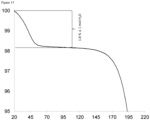
- the water content can be determined by Karl-Fischer Coulometry and/or by thermogravimetric analysis (TGA), e.g., by determining the mass loss in the range of from 25 to 280 °C at a heating rate of 10 K/min.
- solvated indicates that organic solvent is cooperated in or accommodated by the crystal structure.
- the form is usually referred to as a "hydrate”.
- non-hygroscopic refers to a compound showing a mass change of less than 2% (based on the weight of the cocrystal and/or solid-state form of vorasidenib) when subjected to a relative humidity (RH) from 0 to 95% at 25.0 ( ⁇ 0.1) °C.
- reflection with regard to powder X-ray diffraction as used herein, means peaks in an X-ray diffractogram, which are caused at certain diffraction angles (Bragg angles) by constructive interference from X-rays scattered by parallel planes of atoms in solid material, which are distributed in an ordered and repetitive pattern in a long-range positional order.
- a solid material is classified as crystalline material, whereas amorphous material is defined as solid material, which lacks long-range order and only displays short-range order, thus resulting in broad scattering.
- long-range order normally extends over approximately 100 to 1000 atoms, whereas short-range order is over a few atoms only.
- the term "essentially the same" with reference to powder X-ray diffraction means that variabilities in reflection positions and relative intensities of the reflections are to be taken into account.
- a typical precision of the 2-theta (2 ⁇ ) values is in the range of ⁇ 0.2° 2 ⁇ , preferably in the range of ⁇ 0.1° 2 ⁇ , more preferably in the range of ⁇ 0.05° 2 ⁇ .
- a reflection that appears at 15.3° 2 ⁇ can appear from 15.1° to 15.5° 2 ⁇ , preferably from 15.2° to 15.4° 2 ⁇ , more preferably from 15.25° to 15.35° 2 ⁇ , on most X-ray diffractometers under standard conditions.
- relative reflection intensities will show inter-apparatus variability as well as variability due to degree of crystallinity, preferred orientation phenomena, sample preparation and other factors known to those skilled in the art.
- the PXRD measurements are taken using Cu-Kalpha 1,2 radiation (wavelength 1.5419 ⁇ ) at ambient temperature.
- the SXRD measurements are taken using Mo radiation (wavelength 0.71073 ⁇ ) at -80 °C.
- DSC analysis is carried out at a heating rate of 10 °C/min, preferably with a nitrogen flow of 20 mL/minute (sample purge).
- TGA analysis is carried out at a heating rate of 10 °C/min, preferably with a nitrogen flow of 40 mL/minute (balance purge).
- v/v may be used to indicate the number of volumes of a solvent with respect to the volume of a liquid mixture. For example, adding solvent X (1.5 v/v) to a 100 mL reaction mixture would indicate that 150 mL of solvent X was added.
- a process, or a step may be referred to herein as being carried out “overnight”. This refers to a time interval that spans the time during the night, when that process, or step, may not be actively observed. As used herein, “overnight” normally refers to a time interval from about 8 to about 20 hours, or from about 10 to about 18 hours, in some cases from about 12 to about 16 hours.
- room temperature indicates that the applied temperature is not critical and that the exact value may not have been actively monitored. Usually, “room temperature” is understood to mean a temperature from about 15 to about 35 °C.
- the cocrystal and/or solid-state form of vorasidenib of the present invention may be characterized by analytical methods well known in the field of the pharmaceutical industry for characterizing crystalline solids. Such methods comprise, but are not limited to, powder and single X-ray diffraction (PXRD), TGA and/or DSC.
- PXRD powder and single X-ray diffraction
- TGA thermal gravimetric analysis
- DSC digital micropray diffraction
- the cocrystal and solid-state forms of the present invention may be characterized by any one of the following embodiments or a combination thereof.
- unit cell refers to the smallest group of particles (e.g., molecules) in a crystalline solid that makes up the repeating pattern of the crystalline solid.
- unit cell refers to the smallest group of the two or more neutral chemical species that makes up the repeating pattern of the cocrystal.
- the present disclosure relates to (1) a cocrystal of vorasidenib and a dicarboxylic acid, (2) a crystalline hydrate form of vorasidenib, (3) drug substances and pharmaceutical compositions comprising (1) and/or (2), (4) methods for preparing (1) and (2) and/or (3), and (5) use of (1), (2) and/or (3) in therapy.
- the present invention provides a cocrystal comprising vorasidenib, as the active pharmaceutical ingredient, and a dicarboxylic acid, preferably a C2-C6 dicarboxylic acid, more preferably a C2-C4 dicarboxylic acid, as the co-former.
- the first aspect of the invention provides a cocrystal comprising vorasidenib, as the active pharmaceutical ingredient, and a saturated dicarboxylic acid, preferably a saturated C2-C6 dicarboxylic acid, more preferably a saturated C2-C4 dicarboxylic acid, even more preferably tartaric acid (e.g., D-tartaric acid and/or L-tartaric acid), glutaric acid or malonic acid, as the co-former.
- a saturated dicarboxylic acid preferably a saturated C2-C6 dicarboxylic acid, more preferably a saturated C2-C4 dicarboxylic acid, even more preferably tartaric acid (e.g., D-tartaric acid and/or L-tartaric acid), glutaric acid or malonic acid, as the co-former.
- a saturated dicarboxylic acid preferably a saturated C2-C6 dicarboxylic acid, more preferably a saturated C2-C4 dicarboxylic acid, even more
- the first aspect of the invention relates to a cocrystal of vorasidenib and L-tartaric acid of formula (II). wherein n is from 0.2 to 0.8, preferably from 0.3 to 0.7, more preferably from 0.4 to 0.6, most preferably 0.5.
- the cocrystal of vorasidenib with L-tartaric acid is characterized by a PXRD comprising any one of the following list of reflections:
- Form 3 is further characterized by at least one of the following features:
- the vorasidenib L-tartaric acid cocrystal of the present invention particularly Form 3:
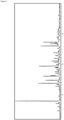
- the first aspect of the invention relates to a cocrystal of vorasidenib and L-tartaric acid, hereinafter Form 1, characterized by a PXRD essentially as shown in figure 1 , when measured at RT with Cu-Kalpha 1,2 radiation having a wavelength of 0.15419 nm.
- the first aspect of the invention relates to a cocrystal of vorasidenib and L-tartaric acid, hereinafter Form 2, characterized by a PXRD essentially as shown in figure 2 , when measured at RT with Cu-Kalpha 1,2 radiation having a wavelength of 0.15419 nm.
- the first aspect of the invention relates to a cocrystal of vorasidenib and L-tartaric acid, hereinafter Form 4, characterized by a PXRD essentially as shown in figure 8 , when measured at RT with Cu-Kalpha 1,2 radiation having a wavelength of 0.15419 nm.
- the first aspect of the invention relates to a cocrystal of vorasidenib and L-tartaric acid, hereinafter Form 5, characterized by a PXRD essentially as shown in figure 9 , when measured at RT with Cu-Kalpha 1,2 radiation having a wavelength of 0.15419 nm.
- the first aspect of the invention relates to a cocrystal of vorasidenib and L-tartaric acid, hereinafter Form 6, characterized by a PXRD essentially as shown in figure 10 , when measured at RT with Cu-Kalpha 1,2 radiation having a wavelength of 0.15419 nm.
- the first aspect of the invention relates to a cocrystal of vorasidenib and tartaric acid (namely D/L-tartaric acid), preferably a cocrystal of vorasidenib and tartaric acid which is a hydrate and/or an ethanol solvate, more preferably a cocrystal of vorasidenib and tartaric acid which is a monohydrate and/or a mono-ethanol solvate.
- said cocrystal of vorasidenib and tartaric acid is characterized by a PXRD essentially as shown in figure 16 , when measured at RT with Cu-Kalpha 1,2 radiation having a wavelength of 0.15419 nm.
- the first aspect of the invention relates to a cocrystal of vorasidenib and malonic acid. More preferably said cocrystal of vorasidenib and tartaric acid is characterized by a PXRD essentially as shown in figure 11 , when measured at RT with Cu-Kalpha 1,2 radiation having a wavelength of 0.15419 nm.
- the first aspect of the invention relates to a cocrystal of vorasidenib and glutaric acid. More preferably said cocrystal of vorasidenib and tartaric acid is characterized by a PXRD essentially as shown in figure 12 , when measured at RT with Cu-Kalpha 1,2 radiation having a wavelength of 0.15419 nm.
- the first aspect of the invention relates to cocrystal comprising vorasidenib, as the active pharmaceutical ingredient, and an unsaturated dicarboxylic acid having E-configuration at the double bond, preferably an (E)-unsaturated C2-C6 dicarboxylic acid, more preferably an (E)-unsaturated C2-C4 dicarboxylic acid, even more preferably fumaric acid, as the co-former.
- an unsaturated dicarboxylic acid having E-configuration at the double bond preferably an (E)-unsaturated C2-C6 dicarboxylic acid, more preferably an (E)-unsaturated C2-C4 dicarboxylic acid, even more preferably fumaric acid, as the co-former.
- the first aspect of the invention relates to a cocrystal of vorasidenib and fumaric acid, preferably a cocrystal of vorasidenib and fumaric acid which is a hydrate.
- said hydrate cocrystal of vorasidenib and fumaric is characterized by formula (III), wherein x and y, independently of each other, are from 0.2 to 0.8, preferably from 0.3 to 0.7, more preferably from 0.4 to 0.6, most preferably 0.5.
- the cocrystal of vorasidenib and fumaric acid is characterized by a PXRD comprising any one of the following reflections:
- vorasidenib fumaric acid cocrystal preferably the cocrystal (III) is further characterized by at least one of the following features:
- Fumaric acid cocrystal of vorasidenib preferably cocrystal (III) is characterized by a set of favorable physicochemical properties, including high crystallinity, low hygroscopicity, and favorable bioavailability.
- the first aspect of the invention relates to a crystalline hydrate form of vorasidenib comprising less than 2.8 molecules of water per molecule of vorasidenib, preferably comprising from 0.5 to 2.5 moles of water per mole of vorasidenib, more preferably comprising from 1.0 to 2.2 moles of water per mole of vorasidenib, even more preferably comprising from 1.5 to 2.1 moles of water per mole of vorasidenib, most preferably to a dihydrate form of vorasidenib.
- the first aspect of the invention relates to a cocrystal (as defined in any of the embodiments described above) and / or crystalline hydrate of vorasidenib (as defined above), which is essentially free of any other cocrystals and/or solid-state forms of vorasidenib.
- the present invention relates to a process for the preparation of a cocrystal of vorasidenib and a dicarboxylic acid, as defined hereinabove, said process comprising:
- the cocrystals obtained in step (iii), isolated in (iv) or dried in (v) may be dissolved, in step (vi), in at least one protic polar solvent.
- Non-limiting examples of suitable polar protic solvents include water, methanol, ethanol, 1-butanol, and combinations thereof.
- the polar protic solvent used in step (vi) comprises 1-butanol.
- the volume of the at least solvent used in step (vi) can vary in a very wide range; preferably, it is from 0.01 mL to 10 mL, more preferably from 0.5 to 4 mL, per gram of vorasidenib.
- step (vii) "precipitating” comprises evaporating a portion of the solvent from the solution obtained in step (vi) so as to cause precipitation of vorasidenib L-tartaric acid cocrystal, preferably vorasidenib L-tartaric acid cocrystal Form 6.
- evaporating solvent from the solution may cause precipitation of the co-crystal and/or solid-state form of the invention by increasing its concentration in the solution (to its saturation point).
- Evaporation may be performed at a temperature from about 20 to about 80 °C, preferably from about 20 to about 40 °C, most preferably evaporation is performed at RT. Evaporation may be performed at ambient pressure and/or under reduced pressure. Preferably, evaporation is performed under ambient conditions.
- the vorasidenib L-tartaric acid cocrystal of step (vii) may optionally be separated from the mother liquor, washed and dried according to procedures equivalent to those described above in respect of step (iii), (iv) or (v).
- the present invention relates to a process for the preparation of a crystalline hydrate form of vorasidenib comprising less than 2.8 molecules of water per molecules of vorasidenib, said process comprising:
- step (viii) involves dispersing the cocrystal of step (iii), (iv), (v) or (vii), preferably the cocrystal obtained in step (iii), (iv) or (v), in water or a solvent mixture comprising water at a temperature from 10 to 50 °C, more preferably from 10 to 30 °C.
- the volume of water or the solvent mixture comprising water used in step (viii) can range in very wide range; preferably, it is from 0.01 mL to 20 mL, more preferably from 5 mL to 15 mL, per gram of vorasidenib cocrystal.
- the dispersion prepared in step (viii) may be stirred for a period from about 10 minutes to about 60 minutes, preferably from about 15 minutes to about 30 minutes, more preferably from about 20 minutes to about 25 minutes.
- the hydrate form of vorasidenib may be separated from the mother liquor, washed and dried according to procedures equivalent to those described above in respect of step (iii), (iv) or (v).
- Seed crystals may be added to promote crystallization during step (ii), (vii) or (ix). Seeding may be employed to control growth of the cocrystal and /or solid-state form of the invention or to control their particle size distribution.
- the present invention relates to the use of the cocrystal and/or solid-state form, as defined in any one of the aspects and embodiments described above, for the preparation of a pharmaceutical composition.
- the present invention relates to a pharmaceutical composition
- a pharmaceutical composition comprising the cocrystal and/or solid-state form, as defined in any one of the aspects and embodiments described above, preferably in an effective amount, and at least one pharmaceutically acceptable excipient.
- the pharmaceutical composition of the present invention is an oral solid dosage form, more preferably a tablet, even more preferably a film-coated tablet, i.e., a tablet comprising at least one core and a coating.
- the present invention relates to the use of a vorasidenib cocrystal and/or solid-state form, as defined hereinabove, and/or the compositions comprising it as a medicament.
- the present invention relates to the cocrystal and/or solid-state form of vorasidenib, as defined in any one of the aspects and embodiments described above, for use in the treatment of an IDH1/IDH2-associated disease, preferably any disease, disorder or condition that can be prevented, ameliorated, or cured by modulating IDH activity.
- an IDH1/IDH2-associated disease preferably any disease, disorder or condition that can be prevented, ameliorated, or cured by modulating IDH activity.
- the present invention relates to use of the cocrystal and/or solid-state form (as defined in any of the embodiments described hereinabove), for the manufacture of a medicament for the treatment of an IDH1/IDH2-associated disease, preferably a disease, disorder or condition that can be prevented, ameliorated, or cured by modulating IDH activity.
- an IDH1/IDH2-associated disease preferably a disease, disorder or condition that can be prevented, ameliorated, or cured by modulating IDH activity.
- a preferred embodiment of this aspect of the invention relates to the use of the cocrystal and/or solid-state form (as defined hereinabove), for the manufacture of a medicament for the treatment of cancer, preferably of malignant glioma and/or myoblastoma.
- Powder X-ray diffraction patterns were performed with a X'Pert PRO diffractometer (PANalytical, Almelo, The Netherlands) equipped with a ⁇ / ⁇ coupled goniometer in transmission geometry, programmable XYZ stage with well plate holder, Cu-K ⁇ 1,2 radiation source (wavelength 0.15419 nm) with a focussing mirror, a 0.5° divergence slit, a 0.02° soller slit collimator and a 0.5° anti-scattering slit on the incident beam side, a 2 mm anti-scattering slit, a 0.02° Soller slit collimator, a Ni-filter and a solid-state PIXcel1D detector on the diffracted beam side.
- PXRD Powder X-ray diffraction patterns
- DSC Differential scanning calorimetry
- the moisture sorption isotherms were recorded with a SPS-11 moisture sorption analyzer (MD Messtechnik, Ulm, Germany). The measurement cycle was started at 70 or 60 % relative humidity (RH), decreased in 5 % steps down to 0 % RH, increased up to 95% RH in 5% steps, decreased in 5% steps down to 0 % RH. The equilibrium condition for each step was set to a mass constancy of ⁇ 0.002 % over 40 min.
- the UV spectra were obtained with a Shimadzu UV-1800 double beam photometer with a wavelength range from 190 nm to 1100 nm and a spectral bandwidth of 1 nm.
- the solubility concentration was calculated based on the absorbance at 282 nm. All measurements have been performed in a 1 cm quartz glass cuvette.
- stock solutions with a defined sample weight of solid forms in phosphate buffer (pH 6.8, 0.01 mol/L + 0.003% Tween80) and 10% methanol were prepared. Different concentrations were prepared by diluting the stock solutions. The absorbance of the stock solutions and the dilutions was measured at 282 nm wavelength and the standard curves were generated by plotting the concentration against the absorbance.
- a representative diffractogram of the Form 3 is depicted in Figure 3 , while the corresponding peaks list from 2 to 30° 2-Theta is provided in Table 1.
- Table 1 Reflection (peak) positions of the Form 3 in the range of from 2 to 30° 2-Theta.
- a grinding jar was charged with 25.0 mg of vorasidenib Free Form A (prepared according to the procedure described in US 2015/0018328 A1 or WO 2019/090059 A1 ) and 4.5 mg of L-tartaric acid.
- 0.1 mL of acetonitrile/diisopropyl ether (1:3 v/v) were added to the jar.
- the resulting mixture was ground in a Retsch mill at 15 Hz for 60 minutes.
- the obtained product was analyzed by XRPD, obtaining the diffractogram substantially as depicted in Figure 3 .
- the phosphate buffer solution pH 6.8, 0.01 mol/L + 0.003% Tween 80 containing 10% of methanol (v/v) was equilibrated in a water bath at a temperature of 25 °C.
- the following amounts of vorasidenib solid forms were added to 65 mL of the equilibrated buffer solutions as follows: 6.2 mg of vorasidenib Free Form Type C (Trihydrate), 6.9 mg of vorasidenib malonic acid cocrystal, 6.6 mg of vorasidenib L-tartaric cocrystal Form 3, and 6.9 mg of vorasidenib citric acid cocrystal Type A.
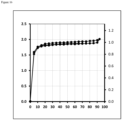
- Vorasidenib malonic acid cocrystal transforms to a vorasidenib dihydrate within ten minutes. Samples were withdrawn at different time points and filtered through 0.45 ⁇ m membrane filters. The absorbance was measured with UV-Vis spectroscopy at 282 nm. The measurements were performed in triplicates. The calculated concentrations of the solid forms are shown in Figure 7 .
- the solubility data is listed in Table 3.
- the different solid-state forms of vorasidenib reach a saturation concentration after 30 to 40 minutes.
- Vorasidenib citric acid cocrystal Type A transforms to the vorasidenib dihydrate within one minute.
- Vorasidenib L-tartaric acid cocrystal Form 3 shows higher solubility than vorasidenib citric acid cocrystal Type A due to its higher stability and slower hydrate transformation.
- Table 3 Solubility data of vorasidenib solid-state forms.
- a saturated solution of glutaric acid in acetonitrile:diisopropyl ether was prepared by stirring 128 mg of glutaric acid in 2 mL of acetonitrile:diisopropyl ether (1:3 v/v) for one hour and subsequently filtered.
- 100.0 mg of vorasidenib Free Form A prepared according to the procedure described in US 2015/0018328 A1 or WO 2019/090059 A1
- 31.9 mg of glutaric acid were suspended in 0.1 mL of the saturated glutaric acid solution and kept under stirring for 3 days at room temperature.
- the obtained product was analyzed by PXRD, obtaining the diffractogram substantially as depicted in Figure 12 .
- the single crystal structure was determined as a co-crystal of vorasidenib:glutaric acid in a stoichiometric ratio of 1:1
- Vorasidenib form A prepared according to the procedure described in US 2015/0018328 A1 or WO 2019/090059 A1
- 84.0 mg of fumaric acid were suspended in 2.3 mL of methanol and stirred for 12 hours at room temperature.
- the obtained solid was filtered under reduced pressure with a Büchner funnel and dried at room temperature for 6 hours.
- the obtained product was analyzed by PXRD, obtaining the diffractogram substantially as depicted in Figure 13 .
- the single crystal structure was determined as a co-crystal of vorasidenib:fumaric acid:water in a stoichiometric ratio of 2:1:1.
- the slurry was stirred for another 9 days and filtered under reduced pressure using a Büchner filter and dried at ambient conditions.
- the obtained product was analyzed by PXRD, obtaining the diffractogram substantially as depicted in Figure 18 .
- the single crystal structure was determined as a co-crystal of vorasidenib: D/L-tartaric acid:water:ethanol in a stoichiometric ratio of 2:1:1:1.
Landscapes
- Chemical & Material Sciences (AREA)
- Organic Chemistry (AREA)
- Health & Medical Sciences (AREA)
- Chemical Kinetics & Catalysis (AREA)
- General Chemical & Material Sciences (AREA)
- Medicinal Chemistry (AREA)
- Nuclear Medicine, Radiotherapy & Molecular Imaging (AREA)
- Pharmacology & Pharmacy (AREA)
- Life Sciences & Earth Sciences (AREA)
- Animal Behavior & Ethology (AREA)
- General Health & Medical Sciences (AREA)
- Public Health (AREA)
- Veterinary Medicine (AREA)
- Pharmaceuticals Containing Other Organic And Inorganic Compounds (AREA)
Priority Applications (2)
| Application Number | Priority Date | Filing Date | Title |
|---|---|---|---|
| EP23203278.9A EP4538262A1 (fr) | 2023-10-12 | 2023-10-12 | Co-cristaux de vorasidenib |
| PCT/EP2024/078644 WO2025078570A1 (fr) | 2023-10-12 | 2024-10-11 | Co-cristaux de vorasidenib |
Applications Claiming Priority (1)
| Application Number | Priority Date | Filing Date | Title |
|---|---|---|---|
| EP23203278.9A EP4538262A1 (fr) | 2023-10-12 | 2023-10-12 | Co-cristaux de vorasidenib |
Publications (1)
| Publication Number | Publication Date |
|---|---|
| EP4538262A1 true EP4538262A1 (fr) | 2025-04-16 |
Family
ID=88412091
Family Applications (1)
| Application Number | Title | Priority Date | Filing Date |
|---|---|---|---|
| EP23203278.9A Pending EP4538262A1 (fr) | 2023-10-12 | 2023-10-12 | Co-cristaux de vorasidenib |
Country Status (2)
| Country | Link |
|---|---|
| EP (1) | EP4538262A1 (fr) |
| WO (1) | WO2025078570A1 (fr) |
Citations (2)
| Publication number | Priority date | Publication date | Assignee | Title |
|---|---|---|---|---|
| US20150018328A1 (en) | 2013-07-11 | 2015-01-15 | Agios Pharmaceuticals, Inc | Therapeutically active compounds and their methods of use |
| WO2019090059A1 (fr) | 2017-11-02 | 2019-05-09 | Agios Pharmaceuticals, Inc. | Cocristaux, compositions pharmaceutiques de ceux-ci, et méthodes de traitement les impliquant |
-
2023
- 2023-10-12 EP EP23203278.9A patent/EP4538262A1/fr active Pending
-
2024
- 2024-10-11 WO PCT/EP2024/078644 patent/WO2025078570A1/fr active Pending
Patent Citations (2)
| Publication number | Priority date | Publication date | Assignee | Title |
|---|---|---|---|---|
| US20150018328A1 (en) | 2013-07-11 | 2015-01-15 | Agios Pharmaceuticals, Inc | Therapeutically active compounds and their methods of use |
| WO2019090059A1 (fr) | 2017-11-02 | 2019-05-09 | Agios Pharmaceuticals, Inc. | Cocristaux, compositions pharmaceutiques de ceux-ci, et méthodes de traitement les impliquant |
Non-Patent Citations (2)
| Title |
|---|
| "Guidance for Industry, FDA, Revision", 1 August 2016, article "Regulatory Classification of Pharmaceutical Cocrystals" |
| DANG, L ET AL., NATURE, vol. 462, 2009, pages 739 - 44 |
Also Published As
| Publication number | Publication date |
|---|---|
| WO2025078570A1 (fr) | 2025-04-17 |
Similar Documents
| Publication | Publication Date | Title |
|---|---|---|
| US11603363B2 (en) | Crystalline form of LNP023 | |
| US9982007B2 (en) | Cocrystals of progesterone | |
| US10323056B2 (en) | Crystalline hydrates of 1-(β-D-glucopyranosyl)-4-methyl-3-[5-(4-fluorophenyl)-2-thienylmethyl]benzene | |
| CN102471344B (zh) | 7-[(3r)-3-氨基-1-氧代-4-(2,4,5-三氟苯基)丁基]-5,6,7,8-四氢-3-(三氟甲基)-1,2,4-三唑并[4,3-a]吡嗪的结晶化合物 | |
| EP1735291A2 (fr) | Phosphate de rosiglitazone et formes polymorphes | |
| EP3728261B1 (fr) | Co-cristal d'inhibiteur de janus kinase disponible par voie orale | |
| WO2022189599A1 (fr) | Formes cristallines de mavacamten pour le traitement de la cmh | |
| WO2022269008A1 (fr) | Forme cristalline de sotorasib | |
| Sarcevica et al. | Spontaneous cocrystal hydrate formation in the solid state: crystal structure aspects and kinetics | |
| WO2021243192A1 (fr) | Formes solide de pralsetinib | |
| WO2020115213A1 (fr) | Solvate d'un inhibiteur sélectif de jak1 | |
| EP4538262A1 (fr) | Co-cristaux de vorasidenib | |
| US20240425463A1 (en) | Process for manufacturing a diphenylphrazine derivative | |
| KR20210100148A (ko) | Mcl-1 억제제의 신규 결정질 형태, 이들의 제조 방법 및 이들을 포함하는 약학적 조성물 | |
| JP2024505670A (ja) | 窒素含有縮合複素環化合物の塩、結晶形およびその製造方法、医薬組成物および使用 | |
| WO2021259732A1 (fr) | Composés à composants multiples comprenant du zanubrutinib et un dérivé d'acide benzoïque | |
| EP4177257A1 (fr) | Succinate de composé octahydrothiénoquinoline et cristaux de celui-ci | |
| WO2022117448A1 (fr) | Formes cristallines de pralsetinib | |
| CN117003702B (zh) | 氟胞嘧啶-乳清酸盐及其制备方法和应用 | |
| JP2017530107A (ja) | ナトリウム・グルコース共輸送体2阻害薬のl−プロリン化合物、およびl−プロリン化合物の一水和物および結晶 | |
| CN117003701B (zh) | 氟胞嘧啶-异乳清酸盐及其制备方法和应用 | |
| EP3357909A1 (fr) | 4-[3-(méthylsulfonyl)phényl]-1-propyl-pipéridine cristalline | |
| EP2502920A1 (fr) | Procédé de cristallisation pour Febuxostat form A | |
| RU2818684C1 (ru) | Кристаллическая форма lnp023 | |
| WO2025031935A1 (fr) | Formes cristallines de tapinarof |
Legal Events
| Date | Code | Title | Description |
|---|---|---|---|
| PUAI | Public reference made under article 153(3) epc to a published international application that has entered the european phase |
Free format text: ORIGINAL CODE: 0009012 |
|
| STAA | Information on the status of an ep patent application or granted ep patent |
Free format text: STATUS: THE APPLICATION HAS BEEN PUBLISHED |
|
| AK | Designated contracting states |
Kind code of ref document: A1 Designated state(s): AL AT BE BG CH CY CZ DE DK EE ES FI FR GB GR HR HU IE IS IT LI LT LU LV MC ME MK MT NL NO PL PT RO RS SE SI SK SM TR |