EP4538382A1 - Production de carotenoides - Google Patents
Production de carotenoides Download PDFInfo
- Publication number
- EP4538382A1 EP4538382A1 EP23202738.3A EP23202738A EP4538382A1 EP 4538382 A1 EP4538382 A1 EP 4538382A1 EP 23202738 A EP23202738 A EP 23202738A EP 4538382 A1 EP4538382 A1 EP 4538382A1
- Authority
- EP
- European Patent Office
- Prior art keywords
- range
- glucose
- growth medium
- present
- concentration
- Prior art date
- Legal status (The legal status is an assumption and is not a legal conclusion. Google has not performed a legal analysis and makes no representation as to the accuracy of the status listed.)
- Withdrawn
Links
Images

Classifications
-
- C—CHEMISTRY; METALLURGY
- C12—BIOCHEMISTRY; BEER; SPIRITS; WINE; VINEGAR; MICROBIOLOGY; ENZYMOLOGY; MUTATION OR GENETIC ENGINEERING
- C12P—FERMENTATION OR ENZYME-USING PROCESSES TO SYNTHESISE A DESIRED CHEMICAL COMPOUND OR COMPOSITION OR TO SEPARATE OPTICAL ISOMERS FROM A RACEMIC MIXTURE
- C12P23/00—Preparation of compounds containing a cyclohexene ring having an unsaturated side chain containing at least ten carbon atoms bound by conjugated double bonds, e.g. carotenes
-
- C—CHEMISTRY; METALLURGY
- C12—BIOCHEMISTRY; BEER; SPIRITS; WINE; VINEGAR; MICROBIOLOGY; ENZYMOLOGY; MUTATION OR GENETIC ENGINEERING
- C12N—MICROORGANISMS OR ENZYMES; COMPOSITIONS THEREOF; PROPAGATING, PRESERVING, OR MAINTAINING MICROORGANISMS; MUTATION OR GENETIC ENGINEERING; CULTURE MEDIA
- C12N1/00—Microorganisms; Compositions thereof; Processes of propagating, maintaining or preserving microorganisms or compositions thereof; Processes of preparing or isolating a composition containing a microorganism; Culture media therefor
- C12N1/20—Bacteria; Culture media therefor
-
- C—CHEMISTRY; METALLURGY
- C12—BIOCHEMISTRY; BEER; SPIRITS; WINE; VINEGAR; MICROBIOLOGY; ENZYMOLOGY; MUTATION OR GENETIC ENGINEERING
- C12N—MICROORGANISMS OR ENZYMES; COMPOSITIONS THEREOF; PROPAGATING, PRESERVING, OR MAINTAINING MICROORGANISMS; MUTATION OR GENETIC ENGINEERING; CULTURE MEDIA
- C12N9/00—Enzymes; Proenzymes; Compositions thereof; Processes for preparing, activating, inhibiting, separating or purifying enzymes
- C12N9/0004—Oxidoreductases (1.)
- C12N9/0071—Oxidoreductases (1.) acting on paired donors with incorporation of molecular oxygen (1.14)
- C12N9/0077—Oxidoreductases (1.) acting on paired donors with incorporation of molecular oxygen (1.14) with a reduced iron-sulfur protein as one donor (1.14.15)
-
- C—CHEMISTRY; METALLURGY
- C12—BIOCHEMISTRY; BEER; SPIRITS; WINE; VINEGAR; MICROBIOLOGY; ENZYMOLOGY; MUTATION OR GENETIC ENGINEERING
- C12N—MICROORGANISMS OR ENZYMES; COMPOSITIONS THEREOF; PROPAGATING, PRESERVING, OR MAINTAINING MICROORGANISMS; MUTATION OR GENETIC ENGINEERING; CULTURE MEDIA
- C12N9/00—Enzymes; Proenzymes; Compositions thereof; Processes for preparing, activating, inhibiting, separating or purifying enzymes
- C12N9/0004—Oxidoreductases (1.)
- C12N9/0071—Oxidoreductases (1.) acting on paired donors with incorporation of molecular oxygen (1.14)
- C12N9/0083—Miscellaneous (1.14.99)
-
- C—CHEMISTRY; METALLURGY
- C12—BIOCHEMISTRY; BEER; SPIRITS; WINE; VINEGAR; MICROBIOLOGY; ENZYMOLOGY; MUTATION OR GENETIC ENGINEERING
- C12N—MICROORGANISMS OR ENZYMES; COMPOSITIONS THEREOF; PROPAGATING, PRESERVING, OR MAINTAINING MICROORGANISMS; MUTATION OR GENETIC ENGINEERING; CULTURE MEDIA
- C12N9/00—Enzymes; Proenzymes; Compositions thereof; Processes for preparing, activating, inhibiting, separating or purifying enzymes
- C12N9/90—Isomerases (5.)
-
- C—CHEMISTRY; METALLURGY
- C12—BIOCHEMISTRY; BEER; SPIRITS; WINE; VINEGAR; MICROBIOLOGY; ENZYMOLOGY; MUTATION OR GENETIC ENGINEERING
- C12P—FERMENTATION OR ENZYME-USING PROCESSES TO SYNTHESISE A DESIRED CHEMICAL COMPOUND OR COMPOSITION OR TO SEPARATE OPTICAL ISOMERS FROM A RACEMIC MIXTURE
- C12P5/00—Preparation of hydrocarbons or halogenated hydrocarbons
- C12P5/007—Preparation of hydrocarbons or halogenated hydrocarbons containing one or more isoprene units, i.e. terpenes
-
- C—CHEMISTRY; METALLURGY
- C12—BIOCHEMISTRY; BEER; SPIRITS; WINE; VINEGAR; MICROBIOLOGY; ENZYMOLOGY; MUTATION OR GENETIC ENGINEERING
- C12Y—ENZYMES
- C12Y114/00—Oxidoreductases acting on paired donors, with incorporation or reduction of molecular oxygen (1.14)
- C12Y114/99—Miscellaneous (1.14.99)
-
- C—CHEMISTRY; METALLURGY
- C12—BIOCHEMISTRY; BEER; SPIRITS; WINE; VINEGAR; MICROBIOLOGY; ENZYMOLOGY; MUTATION OR GENETIC ENGINEERING
- C12Y—ENZYMES
- C12Y505/00—Intramolecular lyases (5.5)
- C12Y505/01—Intramolecular lyases (5.5.1)
- C12Y505/01019—Lycopene beta-cyclase (5.5.1.19)
Definitions
- the present invention relates to a method for producing one or more species of carotenoids via one or more producer organism(s).
- the present invention also relates to a growth medium comprising ammonium sulfate, urea, phosphate, glucose, and potassium acetate, for production of one or more species of carotenoids via a producer organism.
- the present invention also relates to a kit comprising growth medium and one or more producer organism(s).
- the present invention also relates to o the use of an expression construct and a cell in a method according to the present invention.
- Carotenoids are yellow, orange, and red organic pigments that are produced by plants and algae, as well as some bacteria and fungi. For example, carotenoids provide the characteristic color to carrots, pumpkins, parsnips, corn, tomatoes, salmon, lobster, and shrimp. All carotenoids are derivatives of terpenes. Currently, there are more than 1,100 identified carotenoids, which can be subdivided into two groups: (i) xanthophylls (which contain oxygen) and (ii) carotenes (which are hydrocarbons and do not contain oxygen).
- astaxanthin is a keto-carotenoid, which is a metabolite of zeaxanthin and canthaxanthin, containing both hydroxyl and ketone functional groups.
- Astaxanthin is a hydrophobic pigment with red coloring properties, resulting from the extended chain of conjugated double bonds at the center of the compound.
- astaxanthin is for example produced by the yeast Xanthophyllomyces dendrorhous (also known as Phaffia rhodozyma ) and the fresh water microalgae Haematococcus pluvialis under stress conditions, such as nutrient deficiency, increased salinity, or excess sunlight.
- yeast Xanthophyllomyces dendrorhous also known as Phaffia rhodozyma
- the fresh water microalgae Haematococcus pluvialis under stress conditions, such as nutrient deficiency, increased salinity, or excess sunlight.
- animals feeding on the algae such as different species of fish like salmon, red trout, and red sea bream, or different crustaceans reflect the typical red-orange astaxanthin pigmentation. Said animals are incapable of synthesizing astaxanthin themselves. Therefore, in aquaculture, astaxanthin has to be added to the feed to gain intense flesh coloring.
- astaxanthin is used as a dietary supplement for humans as well as in the cosmetics industry, for example in anti-aging products.
- Astaxanthin exists in three different configurational isomers: two enantiomers (3'S 3S and 3'R 3R) and in meso form (3'S 3R). Among these different configurations, the 3'S 3S form is superior in regards to its antioxidant properties. Whereas natural astaxanthin is typically found in the (preferred) 3'S 3S form, chemically synthesized astaxanthin usually contains a mixture of the three different forms 3'S 3S, 3'R 3R, and 3'S 3R. Consequently, there is a growing demand for natural astaxanthin. However, extraction of natural astaxanthin is subject to seasonal variation and cannot easily be scaled to meet growing demand among customers for natural products from renewable and green sources.
- C. glutamicum is a Gram-positive, rod-shaped bacterium, which has been safely used for more than 50 years for the industrial production of amino acids, such as glutamate and lysine at the million ton scale. Mutants of C . glutamicum have also been identified that produce various other amino acids. Thus, C. glutamicum is an established production host in the food and feed industries that grows to high cell densities with high growth rates. Moreover, the physiology of C. glutamicum is very well understood with an elaborated genetic tool box being readily available. C. glutamicum naturally produces the carotenoid decaprenoxanthin. Both astaxanthin and decaprenoxanthin derive from the common precursor molecule lycopene. Hence, metabolic engineering efforts were invested in order to use C. glutamicum for the production of other carotenoids, such as astaxanthin.
- WO 2018/197608 A1 discloses a method for producing astaxanthin and lysine in recombinant Gram-positive bacteria comprising a nucleic acid sequence encoding for a CrtZ-protein from Fulvimarina pelagi and comprises a nucleic acid sequence encoding for a CrtW enzyme.
- nucleic acid or amino acid sequences Whenever the present disclosure relates to the percentage of identity of nucleic acid or amino acid sequences to each other these values define those values as obtained by using the EMBOSS Water Pairwise Sequence Alignments (nucleotide) program or the EMBOSS Water Pairwise Sequence Alignments (protein) program for amino acid sequences. Alignments or sequence comparisons as used herein refer to an alignment over the whole length of two sequences compared to each other. Those tools provided by the European Molecular Biology Laboratory (EMBL) European Bioinformatics Institute (EBI) for local sequence alignments use a modified Smith-Waterman algorithm (see Smith, T.F. & Waterman, M.S.
- EMBOSS Water Pairwise Sequence Alignments amino acid sequences.
- sequence identity and “sequence similarity” may be used as synonyms, i.e. interchangeably.
- sequence similarity may refer to the sequence identity.
- the present invention relates to a method for producing one or more species of carotenoids via one or more producer organism(s) comprising the steps of
- carotenoids refers to yellow, orange, and red organic pigments that are produced by photosynthetic organisms, such as plants or algae, as well as several bacteria, archaea, and/or fungi.
- Carotenoids are typically unsaturated with conjugated double-bonds to a high degree and thus absorb wavelengths ranging from 400 to 550 nanometers (violet to green light).
- Carotenoids mainly function as accessory pigments to chlorophyll in the light-harvesting part of photosynthesis.
- Most carotenoids are isoprenoids.
- Carotenoids may comprise modifications, which can be selected from the non-limiting group consisting of cyclization, varying degrees of saturation or unsaturation, and the presence of one or more functional group(s).
- carotenoids are hydrocarbons, i.e. only contain hydrogen and carbon. However, carotenoids may also contain oxygen. Oxygen containing carotenoids are known as xanthophylls, wherein the group of xanthophylls includes lutein, zeaxanthin, ⁇ -cryptoxanthin, 3'-hydroxyechinenone, cantahrxanthin, adonixanthin, adonirubin, decaprenoxanthin and astaxanthin. Carotenoids are lipophilic due to the presence of long aliphatic chains.
- producer organism refers to any organism, which is capable of synthesizing one or more species of carotenoids.
- Producer organisms can be prokaryotic or eukaryotic organisms.
- Producer organisms can be prokaryotic organisms, such as bacteria and/or archaea.
- Producer organisms can be eukaryotic organisms, such as fungi, algae and/or plants.
- Producer organisms can naturally harbor all or part of the necessary enzymes required for the synthesis of one or more species of carotenoids.
- Producer organisms can alternatively harbor all or part of the necessary enzymes required for the synthesis of one or more species of carotenoids as result of genetic manipulation, such as metabolic engineering.
- growth medium may refer to a liquid, solid, or semi-solid designed to support the growth of a population of microorganisms, especially bacteria, archaea, and fungi, or eukaryotic cells via the process of cell proliferation.
- growth medium as used herein may refer to media used for cell culture, which use specific cell types derived from plants or animals, as well as to those used for microbiological culture, which are used for growing microorganisms such as bacteria, archaea, or fungi.
- growth medium as used herein may refer to different types of media, which can be selected from the non-limiting group consisting of culture media, minimal media, selective media, and differential media.
- growth medium as used herein may also refer to enriched media.
- growth medium as used herein may referto both undefined media (also known as complex media) and defined media.
- undefined media comprise a source of amino acids and nitrogen, wherein the source of amino acids consists of a variety of different compounds.
- defined media all contained chemicals are known and can specifically be defined as no yeast, animal or plant extract or tissue has been added during the preparation process.
- culture medium preferably refers to growth media, which contain all elements that most microorganisms, especially most bacteria, archaea, and fungi, need for growth and which are not selective.
- minimal medium refers to defined media having just enough ingredients to support growth of a given microorganism, especially bacteria, archaea, or fungi, or of a given eukaryotic cell.
- the number of ingredients as well as the amount of each respective ingredient added to a minimal medium varies depending on which microorganism or which eukaryotic cell is being grown or cultivated.
- Mineral media may or may not contain one or more source(s) of amino acid(s) depending on which microorganism or which eukaryotic cell is being grown or cultivated.
- Mineral media comprise one or more component(s) selected from the group consisting of one or more carbon source(s), one or more salt(s), and water.
- the term “mineral medium” as used herein also encompasses supplementary mineral media, which comprise at least one additional component allowing for the cultivation of auxotrophic microorganisms, especially specific lines of auxotrophic recombinants.
- selective medium refers to growth media only allowing for growth of selected microorganisms, especially selected bacteria, archaea, or fungi, or selected eukaryotic cells.
- Selective media preferably comprise one or more substance(s) suitable for allowing selection of the one or more microorganism(s) and/or one or more eukaryotic cell(s) based on one or more properties, such as for example reporter gene(s), preferably one or more selectable marker(s).
- the one or more substance(s) suitable for allowing selection of the one or more microorganism(s) and/or one or more eukaryotic cell(s) can for example be selected from the non-limiting group consisting of antibiotic agents, antiviral agents, and small organic molecules, such as sugars.
- differentiated medium refers to growth media, which allow distinguishing one or more type(s) of microorganism(s) from one or more other type(s) of microorganism(s) and/or one or more type(s) of eukaryotic cell(s) from one or more other type(s) of eukaryotic cell(s) growing in the presence of one or more specific nutrient(s) and/or one or more specific indicator(s).
- Such indicators are added to the medium to visibly indicate the defining characteristics of a microorganism and/or eukaryotic cell.
- Such indicators can be selected from the non-limiting group consisting of neutral red, phenol red, eosin y, or methylene blue.
- Differential media allow for the detection of specific microorganisms and/or specific eukaryotic cells, particularly of recombinant strains of microorganisms.
- the terms “differential medium” and “indicator medium” as used herein can be used interchangeably.
- growth as used herein preferably refers to cell proliferation, wherein the term “cell proliferation” refers to cell growth in terms of size as well as to the division (e.g. binary fission or budding) of cells into daughter cells.
- the term “growth” as used herein particularly refers to cell division through binary fission and/or budding.
- growth as used herein particularly refers to the entire process of cell proliferation including meiosis and mitosis as well as to the entire process of cell proliferation including amitosis, particularly in the context of fungi and protista.
- microorganism as used herein preferably refers to organisms of microscopic scale, wherein microscopic scale is the scale of objects and events smaller than those that can easily be seen by the naked eye.
- microorganism as used herein preferably refers to organisms with a diameter of 10 ⁇ m or less, wherein the diameter is determined at the widest position in case a given microorganism is of non-circular shape.
- microorganism as used herein preferably refers to prokaryotic organisms, such as bacteria and archaea.
- microorganism as used herein preferably also refers to eukaryotic organisms of microscopic scale, particularly fungi, plants, algae, and protista.
- the one or more species of carotenoids produced are one or more xanthophylls.
- the, one, two, three or more or all species of carotenoids produced are xanthophylls selected from the group consisting of lutein, zeaxanthin, ⁇ -cryptoxanthin, 3'-hydroxyechinenone, cantahrxanthin, adonixanthin, adonirubin, decaprenoxanthin and astaxanthin.
- the or one species of carotenoids produced is lutein.
- the or one species of carotenoids produced is zeaxanthin.
- the or one species of carotenoids produced is ⁇ -cryptoxanthin.
- the or one species of carotenoids produced is 3'-hydroxyechinenone.
- the or one species of carotenoids produced is cantahrxanthin.
- the or one species of carotenoids produced is adonixanthin.
- the or one species of carotenoids produced is adonirubin.
- the or one species of carotenoids produced is decaprenoxanthin.
- the or one species of carotenoids produced is astaxanthin.
- the one or more species of carotenoids produced is astaxanthin in combination with one or more xanthophylls selected from the group consisting of lutein, zeaxanthin, ⁇ -cryptoxanthin, 3'-hydroxyechinenone, cantahrxanthin, adonixanthin, adonirubin, and decaprenoxanthin.
- ammonium sulfate as used herein preferably refers to an inorganic salt with the CAS Number 7783-20-2 .
- ammonium sulfate as used herein preferably refers to an inorganic salt with the chemical formula (NH 4 ) 2 SO 4 .
- ammonium sulfate as used herein preferably refers to ammonium sulfate, ammonium sulfate (2:1), diammonium sulfate, sulfuric acid diammonium salt, mascagnite, actamaster, or dolamin.
- ammonium sulfate as used herein and the terms “ammonium sulfate (2:1)”, “diammonium sulfate”, “sulfuric acid diammonium salt”, “mascagnite”, “actamaster”, and “dolamin” can be used interchangeably.
- the term “ammonium sulfate” as used herein preferably refers to an inorganic salt with a structure and composition according to formula (I).
- sulfate as used herein preferably refers to a polyatomic anion with the CAS Number 14808-79-8 .
- sulfate as used herein preferably refers to a polyatomic anion with an empirical formula according to formula (II), wherein the sulfate anion consists of a central sulfur atom surrounded by four equivalent oxygen atoms in a tetrahedral arrangement. SO 4 2 ⁇
- sulfate as used herein preferably refers to sulfate, tetraoxosulfate(VI), and/or tetraoxidosulfate(VI). Accordingly, the term “sulfate” as used herein and the terms “tetraoxosulfate(VI)", and “tetraoxidosulfate(Vl)” can be used interchangeably.
- urea as used herein preferably refers to a chemical compound with the CAS Number 57-13-6 .
- urea refers to a chemical compound with a structure according to formula (III) .
- urea as used herein preferably refers to carbamide, carbonyldiamide, carbonyldiamine, diaminomethanal, and/or diaminomethanone. Accordingly, the term “urea” as used herein and the terms “carbamide”, “carbonyldiamide”, “carbonyldiamine”, “diaminomethanal”, and “diaminomethanone” can be used interchangeably.
- phosphate as used herein preferably refers to an anion with the CAS Number 14265-44-2 derived from phosphoric acid.
- phosphate as used herein preferably refers to an anion with the empirical formula according to formula (IV), wherein a central phosphorus atom surrounded by four oxygen atoms in a tetrahedral arrangement. [ PO 4 ] 3- (IV)
- phosphate as used herein preferably refers to orthophosphate, tetraoxophosphate(V), and/or tetraoxidophosphate(V). Accordingly, the term “phosphate” as used herein and the terms “orthophosphate”, “tetraoxophosphate(V)", and “tetraoxidophosphate(V)” can be used interchangeably.
- glucose as used herein preferably refers to a monosaccharide, i.e. a hexose, with the molecular formula C 6 H 12 O 6 and a CAS Number of 50-99-7 .
- the term “glucose” as used herein preferably refers to the D-isomer, D-glucose, also known as dextrose as well as to the L-isomer, L-glucose.
- glucose as used herein preferably refers to D-gluco-hexose, (2R,3S,4R,5R)-2,3,4,5,6-pentahydroxyhexanal, (3R,4S,5S,6R)-6-(hydroxymethyl)oxane-2,3,4,5-tetrol, dextrose, corn sugar, and grape sugar.
- glucose and the terms "D-gluco-hexose", “(2R,3S,4R,5R)-2,3,4,5,6-pentahydroxyhexanal", “(3R,4S,5S,6R)-6-(hydroxymethyl)oxane-2,3,4,5-tetrol", "dextrose", “corn sugar”, and “grape sugar” can be used interchangeably.
- acetate as used herein preferably refers to the conjugate base or ion (specifically, the negatively charged ion called an anion), which is part of salt formed by the combination of acetic acid with a base and typically found in aqueous solution and written with the chemical formula according to formula (V).
- concentration ratio preferably refers to the ratio of volume-based concentrations of two compounds, which are present in the same composition.
- the concentration ratio can be based on the mass (or weight) of a given compound in a given volume of a composition. Alternatively, the concentration ratio can be based on the number of molecules of a given compound in a given volume of a composition.
- concentration ratio For determining the concentration ratio, the volume-based concentration of a first compound is divided by the volume-based concentration of a second compound, wherein for both compounds the same unit of measurement denoting the volume-based concentration of said compound is used. Typical units of measurement denoting volume-based concentrations are known to persons skilled in the art.
- the respective composition contains twice as much mass (or weight) of compound A as compared to compound B in a given volume of the composition in case the volume-based concentrations of compounds A and B are given in mass (or weight) per volume.
- the concentration ratio of compound A to compound B would be 2.
- the concentration ratio of compound A to compound B is determined to be 2
- the respective composition contains twice as many parts (e.g. molecules) of compound A as compared to compound B in a given volume of the composition in case the volume-based concentrations of compounds A and B are given in parts (e.g.
- concentration ratio refers to the mass ratio and these terms may be used interchangeably.
- concentration ratio refers to the molar ratio and these terms may be used interchangeably.
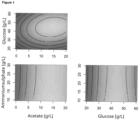
- the concentration ratio of glucose to potassium acetate in the growth medium provided in step (i) is in the range of from 3.1 to 4, preferably in the range of from 3.2 to 4, preferably in the range of from 3.3 to 4, preferably in the range of from 3.4 to 4, preferably in the range of from 3.5 to 4, preferably in the range of from 3.6 to 4, preferably in the range of from 3.7 to 4, preferably in the range of from 3.8 to 4, particularly preferably in the range of from 3.9 to 4.
- the concentration ratio of glucose to potassium acetate in the growth medium provided in step (i) is in the range of from 3.1 to 4, preferably in the range of from 3.2 to 4, preferably in the range of from 3.3 to 4, preferably in the range of from 3.4 to 4, preferably in the range of from 3.5 to 4, preferably in the range of from 3.6 to 4, preferably in the range of from 3.7 to 4, preferably in the range of from 3.8 to 4, particularly preferably in the range of from 3.9 to 4, wherein the concentration ratio of glucose to potassium acetate is calculated based on mass (or weight) per volume of glucose and potassium acetate.
- the concentration ratio of glucose to potassium acetate in the growth medium provided in step (i) is in the range of from 3.1 to 3.9, preferably in the range of from 3.2 to 3.8, preferably in the range of from 3.3 to 3.7, preferably in the range of from 3.4 to 3.6, particularly preferably in the range of from 3.5 to 3.6.
- the concentration ratio of glucose to potassium acetate in the growth medium provided in step (i) is in the range of from 3.1 to 3.9, preferably in the range of from 3.2 to 3.8, preferably in the range of from 3.3 to 3.7, preferably in the range of from 3.4 to 3.6, particularly preferably in the range of from 3.5 to 3.6, wherein the concentration ratio of glucose to potassium acetate is calculated based on mass (or weight) per volume of glucose and potassium acetate.
- the concentration ratio of glucose to potassium acetate in the growth medium provided in step (i) is 3.94, wherein the concentration ratio of glucose to potassium acetate is calculated based on mass (or weight) per volume of glucose and potassium acetate.
- the concentration ratio of glucose to potassium acetate in the growth medium provided in step (i) is 3.52, wherein the concentration ratio of glucose to potassium acetate is calculated based on mass (or weight) per volume of glucose and potassium acetate.
- the concentration of glucose in the growth medium provided in step (i) is 42.6 g/L.
- the concentration of glucose in the growth medium provided in step (i) is 50 g/L.
- the concentration of potassium acetate in the growth medium provided in step (i) is in the range of from 8 g/L to 15 g/L, preferably of from 9 g/L to 14 g/L, preferably of from 10 g/L to 13 g/L, preferably of from 11 g/L to 13 g/L, preferably of from 12 g/L to 13 g/L, particularly preferably of from 12.1 g/L to 12.7 g/L.
- the concentration of potassium acetate in the growth medium provided in step (i) is 12.1 g/L.
- the concentration of potassium acetate in the growth medium provided in step (i) is 12.7 g/L.
- the concentration ratio of glucose to ammonium sulfate in the growth medium provided in step (i) is in the range of from 1 to 6, preferably in the range of from 1.5 to 5.5, preferably in the range of from 2 to 5.5, preferably in the range of from 2.2 to 5.5, preferably in the range of from 2.5 to 5.5, preferably in the range of from 3 to 5.5, preferably in the range of from 3.5 to 5.5, preferably in the range of from 4 to 5.5, particularly preferably in the range of from 5.2 to 5.3.
- the concentration ratio of glucose to ammonium sulfate in the growth medium provided in step (i) is in the range of from 1 to 6, preferably in the range of from 1.5 to 5.5, preferably in the range of from 2 to 5.5, preferably in the range of from 2.2 to 5.5, preferably in the range of from 2.5 to 5.5, preferably in the range of from 3 to 5.5, preferably in the range of from 3.5 to 5.5, preferably in the range of from 4 to 5.5, particularly preferably in the range of from 5.2 to 5.3, wherein the concentration ratio of glucose to ammonium sulfate is calculated based on mass (or weight) per volume of glucose and ammonium sulfate.
- the concentration ratio of glucose to ammonium sulfate in the growth medium provided in step (i) is in the range of from 2 to 6, preferably in the range of from 2 to 5.5, preferably in the range of from 2 to 5, preferably in the range of from 2 to 4.5, preferably in the range of from 2 to 4, preferably in the range of from 3 to 3.5, preferably in the range of from 2 to 3, preferably in the range of from 2 to 2.5, particularly preferably in the range of from 2.2 to 2.3.
- the concentration ratio of glucose to ammonium sulfate in the growth medium provided in step (i) is in the range of from 2 to 6, preferably in the range of from 2 to 5.5, preferably in the range of from 2 to 5, preferably in the range of from 2 to 4.5, preferably in the range of from 2 to 4, preferably in the range of from 3 to 3.5, preferably in the range of from 2 to 3, preferably in the range of from 2 to 2.5, particularly preferably in the range of from 2.2 to 2.3, wherein the concentration ratio of glucose to ammonium sulfate is calculated based on mass (or weight) per volume of glucose and ammonium sulfate.
- the concentration ratio of glucose to ammonium sulfate in the growth medium provided in step (i) is 2.21, wherein the concentration ratio of glucose to ammonium sulfate is calculated based on mass (or weight) per volume of glucose and ammonium sulfate.
- the concentration ratio of glucose to ammonium sulfate in the growth medium provided in step (i) is 5.21, wherein the concentration ratio of glucose to ammonium sulfate is calculated based on mass (or weight) per volume of glucose and ammonium sulfate.
- the concentration of ammonium sulfate in the growth medium provided in step (i) is in the range of from 7 g/L to 21 g/L, preferably of from 7.5 g/L to 20.5 g/L, preferably of from 8 g/L to 20 g/L, preferably of from 9 g/L to 19 g/L, preferably of from 9.5 g/L to 19.5 g/L, particularly preferably of from 9.6 g/L to 19.3 g/L.
- the concentration of ammonium sulfate in the growth medium provided in step (i) is 9.6 g/L.
- the concentration of ammonium sulfate in the growth medium provided in step (i) is 19.3 g/L.
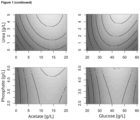
- the concentration ratio of glucose to urea in the growth medium provided in step (i) is in the range of from 5 to 13, preferably in the range of from 6 to 12.5, preferably in the range of from 6.5 to 12.2, preferably in the range of from 6.5 to 12, preferably in the range of from 6.5 to 10, preferably in the range of from 6.5 to 9, preferably in the range of from 6.5 to 8, preferably in the range of from 6.5 to 7.5, preferably in the range of from 6.5 to 7, particularly preferably in the range of from 6.7 to 6.8.
- the concentration ratio of glucose to urea in the growth medium provided in step (i) is in the range of from 5 to 13, preferably in the range of from 6 to 12.5, preferably in the range of from 6.5 to 12.2, preferably in the range of from 6.5 to 12, preferably in the range of from 6.5 to 10, preferably in the range of from 6.5 to 9, preferably in the range of from 6.5 to 8, preferably in the range of from 6.5 to 7.5, preferably in the range of from 6.5 to 7, particularly preferably in the range of from 6.7 to 6.8, wherein the concentration ratio of glucose to urea is calculated based on mass (or weight) per volume of glucose and urea.
- the concentration ratio of glucose to urea in the growth medium provided in step (i) is in the range of from 5 to 13, preferably in the range of from 6 to 12.5, preferably in the range of from 6.5 to 12.2, preferably in the range of from 7 to 12.2, preferably in the range of from 7.5 to 12.2, preferably in the range of from 8 to 12.2, preferably in the range of from 8.5 to 12.2, preferably in the range of from 9 to 12.2, preferably in the range of from 9.5 to 12.2, preferably in the range of from 10 to 12.2, preferably in the range of from 10.5 to 12.2, preferably in the range of from 11 to 12.2, preferably in the range of from 11.5 to 12.2 particularly preferably in the range of from 12.1 to 12.2.
- the concentration ratio of glucose to urea in the growth medium provided in step (i) is in the range of from 5 to 13, preferably in the range of from 6 to 12.5, preferably in the range of from 6.5 to 12.2, preferably in the range of from 7 to 12.2, preferably in the range of from 7.5 to 12.2, preferably in the range of from 8 to 12.2, preferably in the range of from 8.5 to 12.2, preferably in the range of from 9 to 12.2, preferably in the range of from 9.5 to 12.2, preferably in the range of from 10 to 12.2, preferably in the range of from 10.5 to 12.2, preferably in the range of from 11 to 12.2, preferably in the range of from 11.5 to 12.2 particularly preferably in the range of from 12.1 to 12.2, wherein the concentration ratio of glucose to urea is calculated based on mass (or weight) per volume of glucose and urea.
- the concentration ratio of glucose to urea in the growth medium provided in step (i) is 6.67, wherein the concentration ratio of glucose to urea is calculated based on mass (or weight) per volume of glucose and urea.
- the concentration ratio of glucose to urea in the growth medium provided in step (i) is 12.17, wherein the concentration ratio of glucose to urea is calculated based on mass (or weight) per volume of glucose and urea.
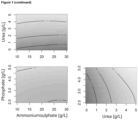
- the concentration of urea in the growth medium provided in step (i) is in the range of from 2.5 g/L to 8.5 g/L, preferably of from 3 g/L to 8 g/L, preferably of from 3.3 g/L to 7.7 g/L, preferably of from 3.4 g/L to 7.6 g/L, preferably of from 3.5 g/L to 7.5 g/L, particularly preferably of from 3.5 g/L to 7.4 g/L.
- the concentration of urea in the growth medium provided in step (i) is 3.5 g/L.
- the concentration of urea in the growth medium provided in step (i) is 7.4 g/L.
- the concentration ratio of glucose to phosphate in the growth medium provided in step (i) is in the range of from 10 to 28, preferably in the range of from 11 to 27, preferably in the range of from 11 to 25, preferably in the range of from 11 to 20, preferably in the range of from 11 to 18, preferably in the range of from 11 to 16, preferably in the range of from 11 to 14, preferably in the range of from 11 to 13, preferably in the range of from 11 to 12, particularly preferably in the range of from 11.2 to 11.3.
- the concentration ratio of glucose to phosphate in the growth medium provided in step (i) is in the range of from 10 to 28, preferably in the range of from 11 to 27, preferably in the range of from 11 to 25, preferably in the range of from 11 to 20, preferably in the range of from 11 to 18, preferably in the range of from 11 to 16, preferably in the range of from 11 to 14, preferably in the range of from 11 to 13, preferably in the range of from 11 to 12, particularly preferably in the range of from 11.2 to 11.3, wherein the concentration ratio of glucose to phosphate is calculated based on mass (or weight) per volume of glucose and phosphate.
- the concentration ratio of glucose to phosphate in the growth medium provided in step (i) is in the range of from 10 to 28, preferably in the range of from 11 to 27, preferably in the range of from 13 to 26.5, preferably in the range of from 15 to 26.5, preferably in the range of from 17 to 26.5, preferably in the range of from 19 to 26.5, preferably in the range of from 21 to 26.5, preferably in the range of from 23 to 26.5, preferably in the range of from 25 to 26.5, particularly preferably in the range of from 26.3 to 26.4.
- the concentration ratio of glucose to phosphate in the growth medium provided in step (i) is in the range of from 10 to 28, preferably in the range of from 11 to 27, preferably in the range of from 13 to 26.5, preferably in the range of from 15 to 26.5, preferably in the range of from 17 to 26.5, preferably in the range of from 19 to 26.5, preferably in the range of from 21 to 26.5, preferably in the range of from 23 to 26.5, preferably in the range of from 25 to 26.5, particularly preferably in the range of from 26.3 to 26.4, wherein the concentration ratio of glucose to phosphate is calculated based on mass (or weight) per volume of glucose and phosphate.
- the concentration ratio of glucose to phosphate in the growth medium provided in step (i) is 11.21, wherein the concentration ratio of glucose to urea is calculated based on mass (or weight) per volume of glucose and phosphate.
- the concentration ratio of glucose to phosphate in the growth medium provided in step (i) is 26.32, wherein the concentration ratio of glucose to urea is calculated based on mass (or weight) per volume of glucose and phosphate.
- the concentration of phosphate in the growth medium provided in step (i) is in the range of from 1.5 g/L to 4.5 g/L, preferably of from 1.7 g/L to 4 g/L, preferably of from 1.8 g/L to 3.9 g/L, preferably of from 1.9 g/L to 3.9 g/L, particularly preferably of from 1.9 g/L to 3.8 g/L.
- the concentration of phosphate in the growth medium provided in step (i) is 1.9 g/L.
- the concentration of phosphate in the growth medium provided in step (i) is 3.8 g/L.
- the concentration ratio of potassium acetate to glucose in the growth medium provided in step (i) is in the range of from 0.2 to 0.4, preferably in the range of from 0.2 to 0.3, preferably in the range of from 0.25 to 0.3, particularly preferably in the range of from 0.25 to 0.28.
- the concentration ratio of potassium acetate to glucose in the growth medium provided in step (i) is in the range of from 0.2 to 0.4, preferably in the range of from 0.2 to 0.3, preferably in the range of from 0.25 to 0.3, particularly preferably in the range of from 0.25 to 0.28, wherein the concentration ratio of potassium acetate to glucose is calculated based on mass (or weight) per volume of potassium acetate and glucose.
- the concentration ratio of potassium acetate to glucose in the growth medium provided in step (i) is 0.25, wherein the concentration ratio of potassium acetate to glucose is calculated based on mass (or weight) per volume of potassium acetate and glucose.
- the concentration ratio of potassium acetate to glucose in the growth medium provided in step (i) is 0.28, wherein the concentration ratio of potassium acetate to glucose is calculated based on mass (or weight) per volume of potassium acetate and glucose.
- the concentration ratio of potassium acetate to ammonium sulfate in the growth medium provided in step (i) is in the range of from 0.5 to 1.5, preferably in the range of from 0.6 to 1.4, preferably in the range of from 0.6 to 1.35, particularly preferably in the range of from 0.63 to 1.32.
- the concentration ratio of potassium acetate to ammonium sulfate in the growth medium provided in step (i) is in the range of from 0.5 to 1.5, preferably in the range of from 0.6 to 1.4, preferably in the range of from 0.6 to 1.35, particularly preferably in the range of from 0.63 to 1.32, wherein the concentration ratio of potassium acetate to glucose is calculated based on mass (or weight) per volume of potassium acetate and ammonium sulfate.
- the concentration ratio of potassium acetate to ammonium sulfate in the growth medium provided in step (i) is 0.63, wherein the concentration ratio of potassium acetate to ammonium sulfate is calculated based on mass (or weight) per volume of potassium acetate and glucose.
- the concentration ratio of potassium acetate to ammonium sulfate in the growth medium provided in step (i) is 1.32, wherein the concentration ratio of potassium acetate to ammonium sulfate is calculated based on mass (or weight) per volume of potassium acetate and glucose.
- the concentration ratio of potassium acetate to urea in the growth medium provided in step (i) is in the range of from 1.5 to 4, preferably in the range of from 1.6 to 3.5, preferably in the range of from 1.7 to 3.5, particularly preferably in the range of from 1.72 to 3.46.
- the concentration ratio of potassium acetate to urea in the growth medium provided in step (i) is in the range of from 1.5 to 4, preferably in the range of from 1.6 to 3.5, preferably in the range of from 1.7 to 3.5, particularly preferably in the range of from 1.72 to 3.46, wherein the concentration ratio of potassium acetate to glucose is calculated based on mass (or weight) per volume of potassium acetate and urea.
- the concentration ratio of potassium acetate to urea in the growth medium provided in step (i) is 1.72, wherein the concentration ratio of potassium acetate to ammonium sulfate is calculated based on mass (or weight) per volume of potassium acetate and urea.
- the concentration ratio of potassium acetate to urea in the growth medium provided in step (i) is 3.46, wherein the concentration ratio of potassium acetate to ammonium sulfate is calculated based on mass (or weight) per volume of potassium acetate and urea.
- the concentration ratio of potassium acetate to phosphate in the growth medium provided in step (i) is in the range of from 3 to 8, preferably in the range of from 3.1 to 7, preferably in the range of from 3.15 to 6.7, particularly preferably in the range of from 3.18 to 6.68.
- the concentration ratio of potassium acetate to phosphate in the growth medium provided in step (i) is in the range of from 3 to 8, preferably in the range of from 3.1 to 7, preferably in the range of from 3.15 to 6.7, particularly preferably in the range of from 3.18 to 6.68, wherein the concentration ratio of potassium acetate to glucose is calculated based on mass (or weight) per volume of potassium acetate and phosphate.
- the concentration ratio of potassium acetate to phosphate in the growth medium provided in step (i) is 3.18, wherein the concentration ratio of potassium acetate to ammonium sulfate is calculated based on mass (or weight) per volume of potassium acetate and urea.
- the concentration ratio of potassium acetate to phosphate in the growth medium provided in step (i) is 6.68, wherein the concentration ratio of potassium acetate to ammonium sulfate is calculated based on mass (or weight) per volume of potassium acetate and phosphate.
- the concentration ratio of ammonium sulfate to potassium acetate in the growth medium provided in step (i) is in the range of from 0.5 to 1.8, preferably in the range of from 0.6 to 1.7, preferably in the range of from 0.7 to 1.6, particularly preferably in the range of from 0.76 to 1.6.
- the concentration ratio of ammonium sulfate to potassium acetate in the growth medium provided in step (i) is in the range of from 0.5 to 1.8, preferably in the range of from 0.6 to 1.7, preferably in the range of from 0.7 to 1.6, particularly preferably in the range of from 0.76 to 1.6, wherein the concentration ratio of potassium acetate to glucose is calculated based on mass (or weight) per volume of ammonium sulfate and potassium acetate.
- the concentration ratio of ammonium sulfate to potassium acetate in the growth medium provided in step (i) is 0.76, wherein the concentration ratio of potassium acetate to ammonium sulfate is calculated based on mass (or weight) per volume of potassium acetate and urea.
- the concentration ratio of ammonium sulfate to potassium acetate in the growth medium provided in step (i) is 1.6, wherein the concentration ratio of potassium acetate to ammonium sulfate is calculated based on mass (or weight) per volume of ammonium sulfate and potassium acetate.
- the concentration ratio of ammonium sulfate to glucose in the growth medium provided in step (i) is in the range of from 0.15 to 0.55, preferably in the range of from 0.17 to 0.5, preferably in the range of from 0.18 to 0.46, particularly preferably in the range of from 0.19 to 0.45.
- the concentration ratio of ammonium sulfate to glucose in the growth medium provided in step (i) is in the range of from 0.15 to 0.55, preferably in the range of from 0.17 to 0.5, preferably in the range of from 0.18 to 0.46, particularly preferably in the range of from 0.19 to 0.45, wherein the concentration ratio of potassium acetate to glucose is calculated based on mass (or weight) per volume of ammonium sulfate and glucose.
- the concentration ratio of ammonium sulfate to glucose in the growth medium provided in step (i) is 0.19, wherein the concentration ratio of potassium acetate to ammonium sulfate is calculated based on mass (or weight) per volume of potassium acetate and urea.
- the concentration ratio of ammonium sulfate to glucose in the growth medium provided in step (i) is 0.45, wherein the concentration ratio of potassium acetate to ammonium sulfate is calculated based on mass (or weight) per volume of ammonium sulfate and glucose.
- the concentration ratio of ammonium sulfate to urea in the growth medium provided in step (i) is in the range of from 1.1 to 6.5, preferably in the range of from 1.2 to 6, preferably in the range of from 1.3 to 5.6, particularly preferably in the range of from 1.3 to 5.51.
- the concentration ratio of ammonium sulfate to urea in the growth medium provided in step (i) is in the range of from 1.1 to 6.5, preferably in the range of from 1.2 to 6, preferably in the range of from 1.3 to 5.6, particularly preferably in the range of from 1.3 to 5.51, wherein the concentration ratio of potassium acetate to glucose is calculated based on mass (or weight) per volume of ammonium sulfate and urea.
- the concentration ratio of ammonium sulfate to urea in the growth medium provided in step (i) is 1.3, wherein the concentration ratio of potassium acetate to ammonium sulfate is calculated based on mass (or weight) per volume of potassium acetate and urea.
- the concentration ratio of ammonium sulfate to urea in the growth medium provided in step (i) is 5.51, wherein the concentration ratio of potassium acetate to ammonium sulfate is calculated based on mass (or weight) per volume of ammonium sulfate and urea.
- the concentration ratio of ammonium sulfate to phosphate in the growth medium provided in step (i) is in the range of from 5 to 5.1, particularly preferably in the range of from 5.05 to 5.08.
- the concentration ratio of ammonium sulfate to phosphate in the growth medium provided in step (i) is in the range of from 5 to 5.1, particularly preferably in the range of from 5.05 to 5.08, wherein the concentration ratio of potassium acetate to glucose is calculated based on mass (or weight) per volume of ammonium sulfate and phosphate.
- the concentration ratio of ammonium sulfate to phosphate in the growth medium provided in step (i) is 5.05, wherein the concentration ratio of potassium acetate to ammonium sulfate is calculated based on mass (or weight) per volume of potassium acetate and urea.
- the concentration ratio of ammonium sulfate to phosphate in the growth medium provided in step (i) is 5.08, wherein the concentration ratio of potassium acetate to ammonium sulfate is calculated based on mass (or weight) per volume of ammonium sulfate and phosphate.
- the concentration ratio of urea to potassium acetate in the growth medium provided in step (i) is in the range of from 0.25 to 0.65, preferably in the range of from 0.27 to 0.6, preferably in the range of from 0.28 to 0.59, particularly preferably in the range of from 0.29 to 0.58.
- the concentration ratio of urea to potassium acetate in the growth medium provided in step (i) is in the range of from 0.25 to 0.65, preferably in the range of from 0.27 to 0.6, preferably in the range of from 0.28 to 0.59, particularly preferably in the range of from 0.29 to 0.58, wherein the concentration ratio of potassium acetate to glucose is calculated based on mass (or weight) per volume of urea and potassium acetate.
- the concentration ratio of urea to glucose in the growth medium provided in step (i) is in the range of from 0.05 to 0.2, preferably in the range of from 0.06 to 0.18, preferably in the range of from 0.07 to 0.16, particularly preferably in the range of from 0.08 to 0.15.
- the concentration ratio of urea to glucose in the growth medium provided in step (i) is 0.08, wherein the concentration ratio of potassium acetate to ammonium sulfate is calculated based on mass (or weight) per volume of potassium acetate and urea.
- the concentration ratio of urea to glucose in the growth medium provided in step (i) is 0.15, wherein the concentration ratio of urea to ammonium sulfate is calculated based on mass (or weight) per volume of urea and glucose.
- the concentration ratio of urea to ammonium sulfate in the growth medium provided in step (i) is in the range of from 0.15 to 0.9, preferably in the range of from 0.16 to 0.85, preferably in the range of from 0.17 to 0.8, particularly preferably in the range of from 0.18 to 0.77.
- the concentration ratio of urea to ammonium sulfate in the growth medium provided in step (i) is in the range of from 0.15 to 0.9, preferably in the range of from 0.16 to 0.85, preferably in the range of from 0.17 to 0.8, particularly preferably in the range of from 0.18 to 0.77, wherein the concentration ratio of urea to ammonium sulfate is calculated based on mass (or weight) per volume of urea and ammonium sulfate.
- the concentration ratio of urea to ammonium sulfate in the growth medium provided in step (i) is 0.18, wherein the concentration ratio of urea to ammonium sulfate is calculated based on mass (or weight) per volume of urea and ammonium sulfate.
- the concentration ratio of urea to glucose in the growth medium provided in step (i) is 0.77, wherein the concentration ratio of potassium acetate to ammonium sulfate is calculated based on mass (or weight) per volume of urea and ammonium sulfate.
- the concentration ratio of urea to phosphate in the growth medium provided in step (i) is in the range of from 0.8 to 4.5, preferably in the range of from 0.85 to 4, preferably in the range of from 0.9 to 4, particularly preferably in the range of from 0.92 to 3.89.
- the concentration ratio of urea to phosphate in the growth medium provided in step (i) is in the range of from 0.8 to 4.5, preferably in the range of from 0.85 to 4, preferably in the range of from 0.9 to 4, particularly preferably in the range of from 0.92 to 3.89, wherein the concentration ratio of urea to phosphate is calculated based on mass (or weight) per volume of urea and phosphate.
- the concentration ratio of urea to phosphate in the growth medium provided in step (i) is 0.92, wherein the concentration ratio of urea to phosphate is calculated based on mass (or weight) per volume of urea and phosphate.
- the concentration ratio of urea to phosphate in the growth medium provided in step (i) is 3.89, wherein the concentration ratio of urea to phosphate is calculated based on mass (or weight) per volume of urea and phosphate.
- the concentration ratio of phosphate to potassium acetate in the growth medium provided in step (i) is in the range of from 0.1 to 0.4, preferably in the range of from 0.12 to 0.35, preferably in the range of from 0.13 to 0.32, particularly preferably in the range of from 0.15 to 0.31.
- the concentration ratio of phosphate to potassium acetate in the growth medium provided in step (i) is in the range of from 0.1 to 0.4, preferably in the range of from 0.12 to 0.35, preferably in the range of from 0.13 to 0.32, particularly preferably in the range of from 0.15 to 0.31, wherein the concentration ratio of phosphate to potassium acetate is calculated based on mass (or weight) per volume of phosphate and potassium acetate.
- the concentration ratio of phosphate to potassium acetate in the growth medium provided in step (i) is 0.15, wherein the concentration ratio of phosphate to potassium acetate is calculated based on mass (or weight) per volume of phosphate and potassium acetate.
- the concentration ratio of phosphate to potassium acetate in the growth medium provided in step (i) is 0.31, wherein the concentration ratio of phosphate to potassium acetate is calculated based on mass (or weight) per volume of phosphate and potassium acetate.
- the concentration ratio of phosphate to glucose in the growth medium provided in step (i) is in the range of from 0.02 to 0.11, preferably in the range of from 0.03 to 0.1, particularly preferably in the range of from 0.04 to 0.09.
- the concentration ratio of phosphate to glucose in the growth medium provided in step (i) is in the range of from 0.02 to 0.11, preferably in the range of from 0.03 to 0.1, particularly preferably in the range of from 0.04 to 0.09, wherein the concentration ratio of phosphate to glucose is calculated based on mass (or weight) per volume of phosphate and glucose.
- the concentration ratio of phosphate to glucose in the growth medium provided in step (i) is 0.04, wherein the concentration ratio of phosphate to glucose is calculated based on mass (or weight) per volume of phosphate and glucose.
- the concentration ratio of phosphate to glucose in the growth medium provided in step (i) is 0.09, wherein the concentration ratio of phosphate to glucose is calculated based on mass (or weight) per volume of phosphate and glucose.
- the concentration ratio of phosphate to ammonium sulfate in the growth medium provided in step (i) is in the range of from 0.1 to 0.3, preferably in the range of from 0.15 to 0.25, particularly preferably 0.2.
- the concentration ratio of phosphate to ammonium sulfate in the growth medium provided in step (i) is in the range of from 0.1 to 0.3, preferably in the range of from 0.15 to 0.25, particularly preferably 0.2, wherein the concentration ratio of phosphate to ammonium sulfate is calculated based on mass (or weight) per volume of phosphate and ammonium sulfate.
- the concentration ratio of phosphate to ammonium sulfate in the growth medium provided in step (i) is 0.2.
- the concentration ratio of phosphate to urea in the growth medium provided in step (i) is in the range of from 0.2 to 1.2, preferably in the range of from 0.24 to 1.1, particularly preferably in the range of from 0.26 to 1.09.
- the concentration ratio of phosphate to urea in the growth medium provided in step (i) is in the range of from 0.2 to 1.2, preferably in the range of from 0.24 to 1.1, particularly preferably in the range of from 0.26 to 1.09, wherein the concentration ratio of phosphate to urea is calculated based on mass (or weight) per volume of phosphate and urea.
- the concentration ratio of phosphate to urea in the growth medium provided in step (i) is 0.26, wherein the concentration ratio of phosphate to glucose is calculated based on mass (or weight) per volume of phosphate and glucose.
- the concentration ratio of phosphate to urea in the growth medium provided in step (i) is 1.09, wherein the concentration ratio of phosphate to urea is calculated based on mass (or weight) per volume of phosphate and urea.
- the concentration ratio of glucose to potassium acetate in the growth medium provided in step (i) is 3.94, wherein the concentration of glucose in the growth medium provided in step (i) is 50 g/L and the concentration of potassium acetate in the growth medium provided in step (i) is 12.7 g/L, and/or
- the concentration ratio of glucose to potassium acetate in the growth medium provided in step (i) is 3.52, wherein the concentration of glucose in the growth medium provided in step (i) is 42.6 g/L and the concentration of potassium acetate in the growth medium provided in step (i) is 12.1 g/L, and/or
- selecting at least one, preferably at least two, preferably at least three, particularly preferably all four of the concentration ratios of glucose to potassium acetate, glucose to ammonium sulfate, glucose to urea, and glucose to phosphate allows for producing one or more species of carotenoids, particularly astaxanthin either alone or in combination with one or more other species of carotenoids, in a particularly cost-efficient, time-efficient, resource-efficient, and sustainable manner.
- selecting the concentrations of at least one, preferably at least two, preferably at least three, preferably at least four, particularly preferably all five, of the compounds selected from the group consisting of glucose, potassium acetate, ammonium sulfate, urea, and phosphate according to present invention as described herein also lead to an increase in biomass formation of the one or more producer organism(s) used for the production of one or more species of carotenoids.
- selecting the concentrations of at least one, preferably at least two, preferably at least three, preferably at least four, particularly preferably all five of the compounds selected from the group consisting of glucose, potassium acetate, ammonium sulfate, urea, and phosphate according to present invention as described herein also lead to an increase in the biomass formation rate, i.e. growth rate, of the one or more producer organism(s) used for the production of one or more species of carotenoids.
- selecting the concentrations of at least one, preferably at least two, preferably at least three, preferably at least four, particularly preferably all five of the compounds selected from the group consisting of glucose, potassium acetate, ammonium sulfate, urea, and phosphate according to present invention as described herein allows for producing one or more species of carotenoids, particularly astaxanthin either alone or in combination with one or more other species of carotenoids, in a particularly cost-efficient, time-efficient, resource-efficient, and sustainable manner.
- the cultivation conditions allowing production of one or more species of carotenoids may be selected from the group consisting of oxic conditions, anoxic conditions, microoxic conditions, wherein one or more different electron acceptor(s) may be provided, which may preferably be independently selected from the non-limiting group consisting of oxygen, sulfate, nitrate, fumarate, iron(III), manganese(IV), partially oxidized metabolic intermediates for one or more different fermentation processes.
- cultivating one or more producer organism(s) may be performed in bioreactors, preferably automated bioreactors, as a batch cultivation and/or as a continuous cultivation.
- cultivating one or more producer organism(s) may be performed as a batch cultivation in Erlenmeyer flasks and/or other cultivation vessels, preferably wherein the Erlenmeyer flasks and/or other cultivation vessels are incubated on a rotary shaker or stationarily.
- cultivating one or more producer organism(s) may be performed as a batch cultivation on solid growth medium, preferably solid plate cultures, preferably agar plates.
- cultivating one or more producer organism(s) may include monitoring cell growth via one or more methods selected from the non-limiting group consisting of measuring optical density of the culture, measuring the amount(s) of one or more suitable metabolites produced by the one or more producer organism(s), measuring the amount(s) of one or more carbon source(s) metabolized (i.e. oxidized) by the one or more producer organism(s), measuring the enzyme activity of one or more enzyme(s) produced and/or secreted by the one or more producer organism(s), measuring the amount(s) of one or more suitable pigments produced and/or excreted by the one or more producer organism(s).
- extracting the one or more species of carotenoids may be achieved by means of centrifugation, preferably in combination with disrupting the cells of the one or more producer organism(s) and/or selectively dissolving a fraction of the cell suspension comprising the one or more species of carotenoids, preferably only one or more species of carotenoids, and/or purifying the one or more species of carotenoids by means of chromatography, preferably high performance liquid chromatography (HPLC), preferably reversed phase HPLC (rpHPLC).
- HPLC high performance liquid chromatography
- rpHPLC reversed phase HPLC
- the method comprises the additional step of quantifying the one or more species of carotenoids.
- quantifying the one or more species of carotenoids may be performed via high performance liquid chromatography (HPLC), preferably reversed phase HPLC (rpHPLC), preferably reversed phase HPLC (rpHPLC) employing a C18 separation column.
- HPLC high performance liquid chromatography
- rpHPLC reversed phase HPLC
- rpHPLC reversed phase HPLC
- cultivating said one or more producer organism(s) is carried out at a temperature in the range of from 5°C to 50°C, preferably of from 10°C to 45°C, preferably of from 15°C to 40°C, preferably of from 18°C to 35°C, preferably of form 20°C to 32 °C, preferably of from 22°C to 32°C, preferably at 30°C.
- the growth medium provided in step (i) has a pH in the range of from 2 to 10, preferably of from 4 to 9, preferably of form 5 to 8.5, preferably of from 6 to 9, preferably of from 7 to 8.
- the, one, two, three or more or all species of carotenoids is/are selected from the group consisting of astaxanthin, lycopene, ⁇ -carotene, echinenone, canthaxanthin, cryptoxanthin, hydroxyechinenone, zeaxanthin, adonirubin, and decaprenoxanthin, preferably astaxanthin, decaprenoxanthin, ⁇ -carotene, and canthaxanthin, particularly preferably astaxanthin.
- the, one, two, three or more or all species of carotenoids is/are selected from the group consisting of astaxanthin, lycopene, ⁇ -carotene, echinenone, canthaxanthin, cryptoxanthin, hydroxyechinenone, zeaxanthin, adonirubin, and decaprenoxanthin, lutein, ⁇ -cryptoxanthin, 3'-hydroxyechinenone, adonixanthin, preferably astaxanthin, decaprenoxanthin, ⁇ -carotene, and canthaxanthin, particularly preferably astaxanthin.
- the one or more species of carotenoids is/are selected from the group consisting of astaxanthin, lycopene, ⁇ -carotene, echinenone, canthaxanthin, cryptoxanthin, hydroxyechinenone, zeaxanthin, adonirubin, and decaprenoxanthin, lutein, ⁇ -cryptoxanthin, 3'-hydroxyechinenone, adonixanthin, preferably astaxanthin, decaprenoxanthin, ⁇ -carotene, and canthaxanthin, particularly preferably astaxanthin, and
- the one or more species of carotenoids is/are selected from the group consisting of astaxanthin, lycopene, ⁇ -carotene, echinenone, canthaxanthin, cryptoxanthin, hydroxyechinenone, zeaxanthin, adonirubin, and decaprenoxanthin, lutein, ⁇ -cryptoxanthin, 3'-hydroxyechinenone, adonixanthin, preferably astaxanthin, decaprenoxanthin, ⁇ -carotene, and canthaxanthin, particularly preferably astaxanthin, and
- the titer of astaxanthin produced either alone or in combination with one or more other species of carotenoids could be particularly drastically increased when using glucose at a concentration of 50 g/L, potassium acetate at a concentration of 12.7 g/L, ammonium sulfate at a concentration of 9.6 g/L, urea at a concentration of 7.4 g/L, and phosphate at a concentration of 1.8 g/L.
- the titer of astaxanthin produced either alone or in combination with one or more other species of carotenoids could be particularly drastically increased when using glucose at a concentration of 42.6 g/L, potassium acetate at a concentration of 19.3 g/L, ammonium sulfate at a concentration of 3.5 g/L, urea at a concentration of 3.5 g/L, and phosphate at a concentration of 3.8 g/L.
- the, one, two or three or more or all producer organism(s) added in step (ii) is/are one or more microbial producer organism(s), preferably one or more bacterial producer organism(s), preferably selected from the phylum Actinomycetota, preferably selected from the class Actinomycetia, preferably selected from the order Mycobacteriales, preferably selected from the family Corynebacteriaceae, preferably selected from the genus Corynebacterium, particularly preferably the species Corynebacterium glutamicum.
- the one or more producer organism(s) added in step (ii) comprise(s), preferably is/are, one or more species and/or genera of yeast, preferably selected from the group consisting of Phaffia rhodozyma, Xanthophyllomyces dendrorhous, one or more species of the genus Rhodosporidium, one or more species of the genus Rhodotorula, one or more species of the genus Sporobolomyces, and one or more species of the genus Sporidiobolus.
- yeast preferably selected from the group consisting of Phaffia rhodozyma, Xanthophyllomyces dendrorhous, one or more species of the genus Rhodosporidium, one or more species of the genus Rhodotorula, one or more species of the genus Sporobolomyces, and one or more species of the genus Sporidiobolus.
- yeast particularly Phaffia rhodozyma and/or Xanthophyllomyces dendrorhous
- the one or more producer organism(s) added in step (ii) comprise(s), preferably is/are, one or more bacterial producer organism(s), preferably selected from the group consisting of Escherichia coli, and Corynebacterium glutamicum.
- bacterial producer organism(s) has the advantage that the overall production time and overall production costs can be markedly reduced as compared to other producer organism(s). Moreover, bacterial producer organism(s) allow for high scale-up capacity, easy propagation, and high product yield as compared to other producer organisms.
- the one or more producer organism(s) added in step (ii) comprise(s), preferably is/are, one or more species of algae, preferably of the division Chlorophyta, preferably of the class Chlorophyceae, preferably of the order Chlamydomonadales, preferably of the family Haematococcaceae, preferably of the genus Haematococcus, particularly preferably Haematococcus pluvialis.
- the 3'S 3S enantiomer is the predominating, or even the only, enantiomeric form of all carotenoids produced, particularly of astaxanthin.
- the enantionmeric purity (enantiopurity) of the produced carotenoids can be determined by methods known to the skilled person, such as gas chromatography and/or nuclear magnetic resonance (NMR) spectroscopy.
- the term "predominating enantiomeric form” describes that at least 30 %, preferably at least 40 %, preferably at least 50 %, preferably at least 60 %, preferably at least 70 %, preferably at least 75 %, preferably at least 80 %, preferably at least 85 %, preferably at least 90 %, preferably at least 95 % of the carotenoid molecules, preferably astaxanthin molecules, are in said enantiomeric form.
- Corynebacterium glutamicum as a producer organism leads to an advantageously high biomass formation and biomass formation rate, i.e. growth rate, of the producer organism.
- the bacterial species Corynebacterium glutamicum as a producer organism, particularly while also selecting at least one, preferably at least two, preferably at least three, particularly preferably all four of the concentration ratios of glucose to potassium acetate, glucose to ammonium sulfate, glucose to urea, and glucose to phosphate according to the present invention as described herein while also selecting the concentrations of at least one, preferably at least two, preferably at least three, preferably at least four, particularly preferably all five of the compounds selected from the group consisting of glucose, potassium acetate, ammonium sulfate, urea, and phosphate according to present invention as described herein, allows for producing one or more species of carotenoids, particularly astaxanthin either alone or in combination with one or more other species of carotenoids, in a particularly cost-efficient, time-efficient, resource-efficient, and sustainable manner.
- the, one, two or three or more or all producer organism(s) added in step (ii) comprise(s) an exogeneously expressed lycopene cyclase enzyme CrtY and/or an exogeneously expressed ⁇ -carotene ketolase enzyme CrtW and/or an exogenously expressed ⁇ -carotene hydroxylase enzyme CrtZ,
- the, one, two or three or more or all producer organism(s) added in step (ii) comprise(s) an exogenously expressed lycopene cyclase gene crtY and/or an exogenously expressed ⁇ -carotene ketolase gene crtW and/or an exogenously expressed ⁇ -carotene hydroxylase gene crtZ,
- expression refers to the process of utilizing the information of a gene for the synthesis of a functional gene product.
- Functional gene products can for example be proteins, such as enzymes, or non-coding RNAs, such as transfer-RNAs (tRNA) and small nuclear RNA (snRNA).
- tRNA transfer-RNAs
- snRNA small nuclear RNA
- expression of a protein (such as an enzyme) from a gene at least comprises the steps of transcription and translation and optionally comprises the steps of RNA splicing (where applicable) and post-translational modification.
- extrageneous expression of one or more genes selected from the group consisting of lycopene cyclase crtY, ⁇ -carotene ketolase crtW, and ⁇ -carotene hydroxylase crtZ as well as extrageneous expression of one or more enzymes selected from the group consisting of lycopene cyclase CrtY, ⁇ -carotene ketolase CrtW, and ⁇ -carotene hydroxylase CrtZ allows for a fine-tuned optimization of the ratio of enzyme quantities (e.g.
- this fine-tuned optimization of the ratio of enzyme quantities can be achieved via variation of translation initiation rates (TIR) based on different ribosomal binding sites, spacing lengths, and translation start codons.
- TIR translation initiation rates
- adjacent refers to two or more genes, wherein the stop codon of one gene and the start codon of another gene are separated by no more than 20 bp.
- the transcription initiation rates of each of these exogenously expressed enzymes could be optimized and thus the titer of astaxanthin produced either alone or in combination with one or more other species of carotenoids could be increased.
- the one or more substances suitable for allowing selection of the one or more producer organism(s) my one or more species of carotenoids produced by said one or more producer organism(s), wherein said one or more species of carotenoids allow for specifically selecting organisms based on their pigmentation.
- magnesium sulfate as used herein preferably encompasses anhydrous magnesium sulfate (MgSO 4 ; CAS Number 7487-88-9 ), magnesium sulfate monohydrate (MgSO 4 ⁇ H 2 O; CAS Number 14168-73-1 ), magnesium sulfate dihydrate (MgSO 4 ⁇ 2 H 2 O), magnesium sulfate trihydrate (MgSO 4 ⁇ 3 H 2 O), magnesium sulfate tetrahydrate (MgSO 4 ⁇ 4 H 2 O; CAS Number 24378-31-2 ), magnesium sulfate pentahydrate (MgSO 4 ⁇ 5 H 2 O; CAS Number 15553-21-6 ), magnesium sulfate hexahydrate (MgSO 4 ⁇ 6 H 2 O; CAS Number 13778-97-7 ), magnesium sulfate heptahydrate (MgSO 4 ⁇ 7 H 2 O; CAS Number 10034-99-8 ).
- magnesium sulfate as used here
- calcium chloride as used herein preferably refers to an inorganic compound, a salt with the chemical formula CaCl 2 as well as to a hydrate form of CaCl 2 with the chemical formula CaCl 2 ⁇ n H 2 O, wherein n can be any value selected from 1 (for monohydrate), 2 (for dihydrate), , 4 (for tetrahydrate), and 6 (for hexahydrate).
- the term "calcium chloride” as used herein preferably encompasses anhydrous calcium chloride (CaCl 2 ; CAS Number 10043-52-4 ), calcium chloride monohydrate (CaCl 2 ⁇ H 2 O; CAS Number 22691-02-7 ), calcium chloride dihydrate (CaCl 2 ⁇ 2 H 2 O; CAS Number 10035-04-8 ), calcium chloride tetrahydrate (CaCl 2 ⁇ 4 H 2 O; CAS Number 25094-02-4 ), calcium chloride hexahydrate (CaCl 2 ⁇ 6 H 2 O; CAS Number 7774-34-7 ).
- the term “calcium chloride” as used herein preferably encompasses the terms “neutral calcium chloride”, “calcium(II) chloride”, “calcium dichloride (1 :2)", and "E509".
- biotin as used herein preferably refers to a heterocyclic compound, with a sulfur-containing tetrahydrothiophene ring fused to a ureido group with the CAS Number 58-85-5 , which is also known as vitamin B 7 or vitamin H.
- protocatechuic acid as used herein preferably refers to a dihydroxybenzoic acid, a type of phenolic acid with the chemical formula C 7 H 6 O 4 and the CAS Number 99-50-3 .
- protocatechuic acid as used herein preferably encompasses 3,4-Dihydroxybenzoic acid, PCA, and Protocatechuate.
- iron sulfate as used herein preferably refers to a range of salts with the formula FeSO 4 ⁇ n H 2 O, wherein n can be any value selected from 0 (for anhydrous), 1 (for monohydrate), 2 (for dihydrate), 3 (for trihydrate), 4 (for tetrahydrate), 5 (for pentahydrate), 6 (for hexahydrate), and 7 (for heptahydrate).
- iron sulfate as used herein preferably refers to anhydrous iron sulfate (FeSO 4 ; CAS Number 7720-78-7 ), iron sulfate monohydrate (FeSO 4 ⁇ H 2 O; CAS Number 17375-41-6 ), iron sulfate dihydrate (FeSO 4 ⁇ 2 H 2 O; CAS Number 10028-21-4 ), iron sulfate trihydrate (FeSO 4 ⁇ 3 H 2 O), iron sulfate tetrahydrate (FeSO 4 ⁇ 4 H 2 O), iron sulfate pentahydrate (FeSO 4 ⁇ 5 H 2 O), iron sulfate hexahydrate (FeSO 4 ⁇ 6 H 2 O), and iron sulfate heptahydrate (FeSO 4 ⁇ 7 H 2 O; CAS Number 7782-63-0 ).
- iron sulfate as used herein preferably encompasses Iron(II) sulfate, Iron(II) sulfate, ferrous sulfate, green vitriol, iron vitriol, ferrous vitriol, copperas, melanterite, szomolnokite.
- the "term manganese” sulfate as used herein preferably refers to the inorganic compound with the formula MnSO 4 ⁇ n H 2 O wherein n can be any value selected from 0 (for anhydrous), 1 (for monohydrate), 2 (for dihydrate), 3 (for trihydrate), and 4 (for tetrahydrate).
- manganesese sulfate as used herein preferably refers to anhydrous manganese sulfate (MnSO 4 ; CAS Number 7785-87-7 ), manganese sulfate monohydrate (MnSO 4 ⁇ H 2 O; CAS Number 10034-96-5 ), manganese sulfate dihydrate (MnSO 4 ⁇ 2 H 2 O); manganese sulfate trihydrate (MnSO 4 ⁇ 3 H 2 O), and manganese sulfate tetrahydrate (MnSO 4 ⁇ 4 H 2 O; CAS Number 10101-68-5 ).
- the term “manganese sulfate” as used herein preferably encompasses Manganese(II) sulfate.
- zinc sulfate as used herein preferably refers to a family of inorganic compounds with the formula ZnSO 4 (H 2 O) n , wherein n can be any value selected from 1 (for monohydrate), 2 (for dihydrate), 3 (for trihydrate), 4 (for tetrahydrate), 5 (for pentahydrate), 6 (for hexahydrate), and 7 (for heptahydrate).
- zinc sulfate refers to anhydrous zinc sulfate (ZnSO 4 ; CAS Number 7733-02-0 ), zinc sulfate monohydrate (ZnSO 4 (H 2 O); CAS Number 7446-19-7 ), zinc sulfate dihydrate (ZnSO 4 (H 2 O) 2 ), zinc sulfate trihydrate (ZnSO 4 (H 2 O) 3 ), zinc sulfate tetrahydrate (ZnSO 4 (H 2 O) 4 ), zinc sulfate pentahydrate (ZnSO 4 (H 2 O) 5 ), zinc sulfate hexahydrate (ZnSO 4 (H 2 O) 6 ; CAS Number 13986-24-8 ), zinc sulfate heptahydrate (ZnSO 4 (H 2 O) 7 ; CAS Number 7446-20-0 ).
- the term "zinc sulfate” as used herein preferably encompasses white vitriol and go
- copper sulfate as used herein preferably refers to an inorganic compound with the chemical formula CuSO 4 and its hydrate forms with the formula CuSO 4 ⁇ n H 2 O, wherein n can be any value selected from 1 (for monohydrate), 2 (for dihydrate), 3 (for trihydrate), 4 (for tetrahydrate), 5 (for pentahydrate), 6 (for hexahydrate), and 7 (for heptahydrate).
- copper sulfate as used herein preferably refers to anhydrous copper sulfate (CuSO 4 ; CAS Number 7758-98-7 ), copper sulfate monohydrate (CuSO 4 ⁇ H 2 O), copper sulfate dihydrate (CuSO 4 ⁇ 2 H 2 O), copper sulfate trihydrate (CuSO 4 ⁇ 3 H 2 O; CAS Number 16448-28-5 ), copper sulfate tetrahydrate (CuSO 4 ⁇ 4 H 2 O), copper sulfate pentahydrate (CuSO 4 ⁇ 5 H 2 O; CAS Number 7758-98-7 ), copper sulfate hexahydrate (CuSO 4 ⁇ 6 H 2 O), and copper sulfate heptahydrate (CuSO 4 ⁇ 7 H 2 O; CAS Number 19086-18-1 ).
- copper sulfate as used herein preferably encompasses copper(II) sulfate, cupric sulfate, blue vitriol (pentahydrate), bluestone (pentahydrate), bonattite (trihydrate mineral), boothite (heptahydrate mineral), chalcanthite (pentahydrate mineral), chalcocyanite (mineral), and Copper Sulfate pentahydrate.
- nickel chloride as used herein preferably refers to a chemical compound with the formula NiCl 2 as well as to any hydrate form of said compound with the formula NiCl 2 ⁇ n H 2 O, wherein n can be any value selected from 1 (for monohydrate), 2 (for dihydrate), 3 (for trihydrate), 4 (for tetrahydrate), 5 (for pentahydrate), and 6 (for hexahydrate). n can be any value selected from 1 (for monohydrate), 2 (for dihydrate), 3 (for trihydrate), 4 (for tetrahydrate), 5 (for pentahydrate), 6 (for hexahydrate).
- nickel chloride as used herein preferably refers to anhydrous nickel chloride (NiCl 2 ; CAS Number 7718-54-9 ) nickel chloride monohydrate (NiCl 2 ⁇ H 2 O), nickel chloride dihydrate (NiCl 2 ⁇ 2 H 2 O), nickel chloride trihydrate (NiCl 2 ⁇ 3 H 2 O), nickel chloride tetrahydrate (NiCl 2 ⁇ 4 H 2 O), nickel chloride pentahydrate (NiCl 2 ⁇ 5 H 2 O), nickel chloride hexahydrate (NiCl 2 ⁇ 6 H 2 O; CAS Number 7791-20-0 ).
- nickel chloride as used herein preferably encompasses nickel(II) chloride, nickelous chloride, nickel(II) salt of hydrochloric acid.
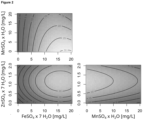
- the growth medium provided in step (i) additionally comprises iron sulfate heptahydrate (FeSO 4 ⁇ 7 H 2 O; CAS Number 7782-63-0 ), manganese sulfate monohydrate (MnSO 4 ⁇ H 2 O; CAS Number 10034-96-5 ), zinc sulfate heptahydrate (ZnSO 4 (H 2 O) 7 ; CAS Number 7446-20-0 ), copper sulfate (CuSO 4 ; CAS Number 7758-98-7 ), and nickel chloride hexahydrate (NiCl 2 ⁇ 6 H 2 O; CAS Number 7791-20-0 ).
- iron sulfate heptahydrate FeSO 4 ⁇ 7 H 2 O; CAS Number 7782-63-0
- MnSO 4 ⁇ H 2 O manganese sulfate monohydrate
- ZnSO 4 (H 2 O) 7 zinc sulfate heptahydrate
- CuSO 4 ; CAS Number 7758-98-7 copper
- the growth medium provided in step (i) additionally comprises iron sulfate heptahydrate (FeSO 4 ⁇ 7 H 2 O; CAS Number 7782-63-0 ), manganese sulfate monohydrate (MnSO 4 ⁇ H 2 O; CAS Number 10034-96-5 ), zinc sulfate heptahydrate (ZnSO 4 (H 2 O) 7 ; CAS Number 7446-20-0 ), copper sulfate (CuSO 4 ; CAS Number 7758-98-7 ), nickel chloride hexahydrate (NiCl 2 ⁇ 6 H 2 O; CAS Number 7791-20-0 ), biotin ( CAS Number 58-85-5 ), protocatechuic acid (C 7 H 6 O 4 ; CAS Number 99-50-3 ), magnesium sulfate heptahydrate (MgSO 4 ⁇ 7 H 2 O; CAS Number 10034-99-8 ), and calcium chloride dihydrate (CaCl 2 O;
- the growth medium provided in step (i) additionally comprises iron sulfate heptahydrate (FeSO 4 ⁇ 7 H 2 O; CAS Number 7782-63-0 ), manganese sulfate monohydrate (MnSO 4 ⁇ H 2 O; CAS Number 10034-96-5 ), zinc sulfate heptahydrate (ZnSO 4 (H 2 O) 7 ; CAS Number 7446-20-0 ), copper sulfate (CuSO 4 ; CAS Number 7758-98-7 ), nickel chloride hexahydrate (NiCl 2 ⁇ 6 H 2 O; CAS Number 7791-20-0 ), biotin ( CAS Number 58-85-5 ), protocatechuic acid (C 7 H 6 O 4 ; CAS Number 99-50-3 ), magnesium sulfate heptahydrate (MgSO 4 ⁇ 7 H 2 O; CAS Number 10034-99-8 ), and calcium chloride dihydrate (CaCl 2 O;
- the growth medium provided in step (i) additionally comprises iron sulfate heptahydrate (FeSO 4 ⁇ 7 H 2 O; CAS Number 7782-63-0 ) at a concentration in the range of from 11.5 to 28.5 mg/L, preferably of from 15.0 to 23.0 mg/L, preferably of from 19 to 20 mg/L, particularly preferably of 20 mg/L.
- FeSO 4 ⁇ 7 H 2 O CAS Number 7782-63-0
- the growth medium provided in step (i) additionally comprises iron sulfate heptahydrate (FeSO 4 ⁇ 7 H 2 O; CAS Number 7782-63-0 ) at a concentration in the range of from 11.5 to 28.5 mg/L, preferably of from 15.0 to 23.0 mg/L, preferably of from 19 to 20 mg/L, particularly preferably of 20 mg/L and the one or more producer organism(s) added in step (ii) is Corynebacterium glutamicum..
- iron sulfate heptahydrate FeSO 4 ⁇ 7 H 2 O; CAS Number 7782-63-0
- the growth medium provided in step (i) additionally comprises manganese sulfate monohydrate (MnSO 4 ⁇ H 2 O; CAS Number 10034-96-5 ) at a concentration in the range of from 0.5 mg/L to 10.0 mg/L, preferably of from 0.6 mg/L to 9.5 mg/L, preferably of from 0.7 mg/L to 9.3 mg/L, preferably of from 0.8 mg/L to 9.2 mg/L, preferably of from 0.84 mg/L to 9.2 mg/L, particularly preferably of 5 mg/L.
- MnSO 4 ⁇ H 2 O manganese sulfate monohydrate
- the growth medium provided in step (i) additionally comprises manganese sulfate monohydrate (MnSO 4 ⁇ H 2 O; CAS Number 10034-96-5 ) at a concentration in the range of from 0.5 mg/L to 10.0 mg/L, preferably of from 0.6 mg/L to 9.5 mg/L, preferably of from 0.7 mg/L to 9.3 mg/L, preferably of from 0.8 mg/L to 9.2 mg/L, preferably of from 0.84 mg/L to 9.2 mg/L, particularly preferably of 5 mg/L and the one or more producer organism(s) added in step (ii) is Corynebacterium glutamicum.
- MnSO 4 ⁇ H 2 O CAS Number 10034-96-5
- step (i) when adjusting the concentration of manganese sulfate in the growth medium provided in step (i) according to the present invention as described herein in combination with using Corynebacterium glutamicum as the one or more producer organism(s) the titer of astaxanthin produced either alone or in combination with one or more other species of carotenoids could be increased.
- the growth medium provided in step (i) additionally comprises zinc sulfate heptahydrate (ZnSO 4 (H 2 O) 7 ; CAS Number 7446-20-0 ) at a concentration in the range of from 1.0 to 1.4 mg/L, preferably of from 1.1 to 1.3 mg/L, particularly preferably of from 1.1 to 1.2 mg/L.
- the growth medium provided in step (i) additionally comprises zinc sulfate heptahydrate (ZnSO 4 (H 2 O) 7 ; CAS Number 7446-20-0 ) at a concentration in the range of from 1.0 to 1.4 mg/L, preferably of from 1.1 to 1.3 mg/L, particularly preferably of from 1.1 to 1.2 mg/L and the one or more producer organism(s) added in step (ii) is Corynebacterium glutamicum.
- ZnSO 4 (H 2 O) 7 CAS Number 7446-20-0
- step (i) when adjusting the concentration of zinc sulfate in the growth medium provided in step (i) according to the present invention as described herein in combination with using Corynebacterium glutamicum as the one or more producer organism(s) the overall titer of carotenoids produced could be increased.
- step (i) when adjusting the concentration of zinc sulfate in the growth medium provided in step (i) according to the present invention as described herein in combination with using Corynebacterium glutamicum as the one or more producer organism(s) the titer of astaxanthin produced either alone or in combination with one or more other species of carotenoids could be increased.
- the growth medium provided in step (i) additionally comprises copper sulfate (CuSO 4 ; CAS Number 7758-98-7 ) at a concentration in the range of from 0.0015 to 0.2 mg/L, preferably of from 0.05 to 0.15 mg/L, particularly preferably of from 0.09 to 0.1 mg/L.
- CuSO 4 copper sulfate
- the growth medium provided in step (i) additionally comprises copper sulfate (CuSO 4 ; CAS Number 7758-98-7 ) at a concentration in the range of from 0.0015 to 0.2 mg/L, preferably of from 0.05 to 0.15 mg/L, particularly preferably of from 0.09 to 0.1 mg/L and the one or more producer organism(s) added in step (ii) is Corynebacterium glutamicum.
- CuSO 4 copper sulfate
- the growth medium provided in step (i) additionally comprises nickel chloride hexahydrate (NiCl 2 ⁇ 6 H 2 O; CAS Number 7791-20-0 ) at a concentration in the range of from 0.12 to 0.16 mg/L, preferably of from 0.13 to 0.15 mg/L, particularly preferably of from 0.14 to 0.15 mg/L and the one or more producer organism(s) added in step (ii) is Corynebacterium glutamicum.
- NiCl 2 ⁇ 6 H 2 O CAS Number 7791-20-0
- step (i) when adjusting the concentration of nickel chloride in the growth medium provided in step (i) according to the present invention as described herein in combination with using Corynebacterium glutamicum as the one or more producer organism(s) the titer of astaxanthin produced either alone or in combination with one or more other species of carotenoids could be increased.
- the growth medium provided in step (i) additionally comprises iron sulfate heptahydrate (FeSO 4 ⁇ 7 H 2 O; CAS Number 7782-63-0 ) at a concentration in the range of from 11.5 to 28.5 mg/L, preferably of from 15.0 to 23.0 mg/L, particularly preferably of from 19 to 20 mg/L, and manganese sulfate monohydrate (MnSO 4 ⁇ H 2 O; CAS Number 10034-96-5 ) at a concentration in the range of from 0.5 mg/L to 10.0 mg/L, preferably of from 0.6 mg/L to 9.7 mg/L, preferably of from 0.7 mg/L to 9.5 mg/L, preferably of from 0.8 mg/L to 9.3 mg/L, preferably of from 0.84 mg/L to 9.2 mg/L, preferably of from 1.0 mg/L to 8.0 mg/L, preferably of from 2.0 mg/L to 7.0 mg/L, particularly preferably of 5 mg/
- the growth medium provided in step (i) additionally comprises iron sulfate heptahydrate (FeSO 4 ⁇ 7 H 2 O; CAS Number 7782-63-0 ) at a concentration in the range of from 11.5 to 28.5 mg/L, preferably of from 15.0 to 23.0 mg/L, particularly preferably of from 19 to 20 mg/L, and manganese sulfate monohydrate (MnSO 4 ⁇ H 2 O; CAS Number 10034-96-5 ) at a concentration in the range of from 0.5 mg/L to 10.0 mg/L, preferably of from 0.6 mg/L to 9.5 mg/L, preferably of from 0.7 mg/L to 9.3 mg/L, preferably of from 0.8 mg/L to 9.2 mg/L, preferably of from 0.84 mg/L to 9.2 mg/L, particularly preferably of 5 mg/L, and zinc sulfate heptahydrate (ZnSO 4 (H 2 O) 7 ; CAS Number 7
- step (i) when adjusting the concentration of iron sulfate, manganese sulfate, zinc sulfate, copper sulfate, and nickel chloride in the growth medium provided in step (i) according to the present invention as described herein in combination with using Corynebacterium glutamicum as the one or more producer organism(s) the titer of astaxanthin produced either alone or in combination with one or more other species of carotenoids could be increased to a range of from 30 to 36 mg/L.
- step (i) when adjusting the concentration of iron sulfate, manganese sulfate, zinc sulfate, copper sulfate, and nickel chloride in the growth medium provided in step (i) according to the present invention as described herein in combination with using Corynebacterium glutamicum as the one or more producer organism(s) the overall titer of carotenoids produced could be increased to a range of from 50 to 85 mg/L.
- the growth medium provided in step (i) comprises zinc at a concentration in the range of from 0.1 to 0.4 mg/L, preferably of from 0.15 to 0.35 mg/L, preferably of from 0.2 to 0.3 mg/L, preferably of from 0.25 to 0.28 mg/L particularly preferably of from 0.26 to 0.27 mg/L, and nickel at a concentration in the range of from 0.02 to 0.05 mg/L, preferably of from 0.025 to 0.04 mg/L, preferably of from 0.03 to 0.038 mg/L particularly preferably of from 0.035 to 0.036 mg/L, and iron at a concentration in the range of from 3.0 to 5.0 mg/L, preferably of from 3.5 to 4.5 mg/L, particularly preferably of from 4.0 to 4.1 mg/L, and manganese at a concentration in the range of from 1.4 to 2.0 mg/L, preferably of from 1.5 to 1.8 mg/L, particularly preferably of from 1.6 to 1.7 mg/L, and copper at a
- the growth medium provided in step (i) comprises zinc at a concentration in the range of from 0.1 to 0.4 mg/L, preferably of from 0.15 to 0.35 mg/L, preferably of from 0.2 to 0.3 mg/L, preferably of from 0.25 to 0.28 mg/L particularly preferably of from 0.26 to 0.27 mg/L, and nickel at a concentration in the range of from 0.02 to 0.05 mg/L, preferably of from 0.025 to 0.04 mg/L, preferably of from 0.03 to 0.038 mg/L particularly preferably of from 0.035 to 0.036 mg/L, and iron at a concentration in the range of from 3.0 to 5.0 mg/L, preferably of from 3.5 to 4.5 mg/L, particularly preferably of from 4.0 to 4.1 mg/L, and manganese at a concentration in the range of from 1.4 to 2.0 mg/L, preferably of from 1.5 to 1.8 mg/L, particularly preferably of from 1.6 to 1.7 mg/L, and copper at a
- the growth medium provided in step (i) comprises zinc at a concentration in the range of from 0.1 to 0.4 mg/L, preferably of from 0.15 to 0.35 mg/L, preferably of from 0.2 to 0.3 mg/L, preferably of from 0.25 to 0.28 mg/L particularly preferably of from 0.26 to 0.27 mg/L, preferably at a concentration of 0.268 mg/L.
- the growth medium provided in step (i) comprises nickel at a concentration in the range of from 0.02 to 0.05 mg/L, preferably of from 0.025 to 0.04 mg/L, preferably of from 0.03 to 0.038 mg/L particularly preferably of from 0.035 to 0.036 mg/L, preferably at a concentration of 0.0356 mg/L.
- the growth medium provided in step (i) comprises iron at a concentration in the range of from 3.0 to 5.0 mg/L, preferably of from 3.5 to 4.5 mg/L, particularly preferably of from 4.0 to 4.1 mg/L, preferably at a concentration of 4.018 mg/L.
- the growth medium provided in step (i) comprises manganese at a concentration in the range of from 1.4 to 2.0 mg/L, preferably of from 1.5 to 1.8 mg/L, particularly preferably of from 1.6 to 1.7 mg/L, preferably at a concentration of 1.625 mg/L.
- the growth medium provided in step (i) comprises copper at a concentration in the range of from 0.0015 to 0.1 mg/L, preferably of from 0.02 to 0.05 mg/L, preferably of from 0.03 to 0.045 mg/L, particularly preferably of from 0.39 to 0.04 mg/L, preferably at a concentration of 0.0398 mg/L.
- the method of the present invention allows for producing (i) a high overall titer of different species of carotenoids, particularly of astaxanthin while the method of the present invention also allows for producing a high overall titer of different species of carotenoids, wherein astaxanthin makes up more than 50%, even more than 60%, of the overall produced species of carotenoids.
- the or, respectively, one of the one or more producer organism(s) is a strain of Corynebacterium glutamicum or a naturally occurring or artificially generated mutant thereof, preferably wherein said strain of Corynebacterium glutamicum comprises at least one 16S rRNA molecule, which is encoded by a DNA sequence according to SEQ ID No: 16 or a DNA sequence having at least 85%, preferably at least 86%, preferably at least 87%, preferably at least 88%, preferably at least 89%, preferably at least 90%, preferably at least 91%, preferably at least 92%, preferably at least 93%, preferably at least 94%, preferably at least 95%, preferably at least 96%, preferably at least 97%, preferably at least 98%, preferably at least 99% sequence identity to the DNA sequence according to SEQ ID No: 16.
- the or, respectively, one of the one or more producer organism(s) is a strain of Corynebacterium glutamicum or a naturally occurring or artificially generated mutant thereof, preferably wherein said strain of Corynebacterium glutamicum comprises at least one 16S rRNA molecule, which has an RNA sequence according to SEQ ID No: 17 or an RNA sequence having at least 85%, preferably at least 86%, preferably at least 87%, preferably at least 88%, preferably at least 89%, preferably at least 90%, preferably at least 91%, preferably at least 92%, preferably at least 93%, preferably at least 94%, preferably at least 95%, preferably at least 96%, preferably at least 97%, preferably at least 98%, preferably at least 99% sequence identity to the RNA sequence according to SEQ ID No: 17.
- a strain of Corynebacterium glutamicum or a naturally occurring or artificially generated mutant thereof as the one of the one or more producer organism(s) in a method according to the present invention, which comprises at least one 16S rRNA molecule, which is encoded by a DNA sequence according to SEQ ID No: 16 or a DNA sequence having at least 85%, preferably at least 86%, preferably at least 87%, preferably at least 88%, preferably at least 89%, preferably at least 90%, preferably at least 91%, preferably at least 92%, preferably at least 93%, preferably at least 94%, preferably at least 95%, preferably at least 96%, preferably at least 97%, preferably at least 98%, preferably at least 99% sequence identity to the DNA sequence according to SEQ ID No: 16 and/or at least one 16S rRNA molecule, which has an RNA sequence according to SEQ ID No: 17 or an RNA sequence having at least 85%, preferably at least 86%, preferably at least 87%
- a strain of Corynebacterium glutamicum or a naturally occurring or artificially generated mutant thereof as the one of the one or more producer organism(s) in a method according to the present invention, which comprises at least one 16S rRNA molecule, which is encoded by a DNA sequence according to SEQ ID No: 16 or a DNA sequence having at least 85%, preferably at least 86%, preferably at least 87%, preferably at least 88%, preferably at least 89%, preferably at least 90%, preferably at least 91%, preferably at least 92%, preferably at least 93%, preferably at least 94%, preferably at least 95%, preferably at least 96%, preferably at least 97%, preferably at least 98%, preferably at least 99% sequence identity to the DNA sequence according to SEQ ID No: 16 and/or at least one 16S rRNA molecule, which has an RNA sequence according to SEQ ID No: 17 or an RNA sequence having at least 85%, preferably at least 86%, preferably at least 8
- the growth medium provided in step (i) additionally comprises one or more solidifying agent(s), preferably selected from the group consisting of agar, agarose, alginate, and carrageenan, preferably agar.
- one or more solidifying agent(s) preferably selected from the group consisting of agar, agarose, alginate, and carrageenan, preferably agar.
- the present invention relates to a growth medium comprising ammonium sulfate, urea, phosphate, glucose, and potassium acetate, for production of one or more species of carotenoids via a producer organism,
- the genes coding for exogenously expressed lycopene cyclase enzyme CrtY, ⁇ -carotene ketolase enzyme CrtW, and ⁇ -carotene hydroxylase enzyme CrtZ are encoded adjacently in a combinatorial gene assembly as part of an expression construct or vector, wherein the genes coding for exogenously expressed lycopene cyclase enzyme CrtY, ⁇ -carotene ketolase enzyme CrtW, and ⁇ -carotene hydroxylase enzyme CrtZ each comprise a start codon, which is either ATG or GTG, preferably ATG.
- the present invention relates to the use of a cell in a method according to the present invention, wherein the cell comprises an expression construct or a vector as described herein, preferably wherein said cell is a Corynebacterium glutamicum cell and comprises at least one 16S rRNA molecule, which is encoded by a DNA sequence according to SEQ ID No: 16 or a DNA sequence having at least 85%, preferably at least 86%, preferably at least 87%, preferably at least 88%, preferably at least 89%, preferably at least 90%, preferably at least 91%, preferably at least 92%, preferably at least 93%, preferably at least 94%, preferably at least 95%, preferably at least 96%, preferably at least 97%, preferably at least 98%, preferably at least 99% sequence identity to the DNA sequence according to SEQ ID No: 16.
- Example 1 Producer organism and cultivation conditions
- composition of medium A is given in table 1.
- Table 1 Composition of medium A.
- the FlowerPlates used contain 48 wells, which were filled with 980 ⁇ l of medium each.
- the pre-culture was centrifuged for 10 minutes at 4000 ⁇ g and resuspended in the medium A base, consisting only of urea, ammonium sulfate, di-potassium hydrogen phosphate and potassium di-hydrogen phosphate so that the final optical density at 600 nm was 50. 20 ⁇ l of this suspension were then used to inoculate each well of the FlowerPlate.
- the experimental design consisted of 24 different media compositions, performed in technical replicates. The concentration ranges for all compounds are shown in Table 2. These 48 experiments were done on one a single FlowerPlate, while center points and face-centered star points were done on a second plate, together with three repeated points of the first plate to allow comparison between the two and determination of block effects. The plates were then cultivated for 100 h at 30 °C and 1100 rpm. Optical densities were measured automatically every 15 minutes, as well as once at the end in the aforementioned photometer. At that time, also 0.5 mL of each well were subjected to carotenoid extraction and HPLC analysis.
Landscapes
- Chemical & Material Sciences (AREA)
- Life Sciences & Earth Sciences (AREA)
- Organic Chemistry (AREA)
- Health & Medical Sciences (AREA)
- Engineering & Computer Science (AREA)
- Zoology (AREA)
- Wood Science & Technology (AREA)
- Genetics & Genomics (AREA)
- Bioinformatics & Cheminformatics (AREA)
- Biotechnology (AREA)
- General Engineering & Computer Science (AREA)
- Microbiology (AREA)
- Biochemistry (AREA)
- General Health & Medical Sciences (AREA)
- Biomedical Technology (AREA)
- Medicinal Chemistry (AREA)
- Molecular Biology (AREA)
- Chemical Kinetics & Catalysis (AREA)
- General Chemical & Material Sciences (AREA)
- Virology (AREA)
- Tropical Medicine & Parasitology (AREA)
- Preparation Of Compounds By Using Micro-Organisms (AREA)
Priority Applications (1)
| Application Number | Priority Date | Filing Date | Title |
|---|---|---|---|
| EP23202738.3A EP4538382A1 (fr) | 2023-10-10 | 2023-10-10 | Production de carotenoides |
Applications Claiming Priority (1)
| Application Number | Priority Date | Filing Date | Title |
|---|---|---|---|
| EP23202738.3A EP4538382A1 (fr) | 2023-10-10 | 2023-10-10 | Production de carotenoides |
Publications (1)
| Publication Number | Publication Date |
|---|---|
| EP4538382A1 true EP4538382A1 (fr) | 2025-04-16 |
Family
ID=88417368
Family Applications (1)
| Application Number | Title | Priority Date | Filing Date |
|---|---|---|---|
| EP23202738.3A Withdrawn EP4538382A1 (fr) | 2023-10-10 | 2023-10-10 | Production de carotenoides |
Country Status (1)
| Country | Link |
|---|---|
| EP (1) | EP4538382A1 (fr) |
Citations (4)
| Publication number | Priority date | Publication date | Assignee | Title |
|---|---|---|---|---|
| US20090221027A1 (en) | 2005-07-18 | 2009-09-03 | Basf Ag | Use of a bacillus meti gene to improve methionine production in microorganisms |
| US20140335576A1 (en) * | 2011-10-07 | 2014-11-13 | Danisco Us Inc. | Methods for increasing microbial production of isoprene, isoprenoids, and isoprenoid precursor molecules using glucose and acetate co-metabolism |
| WO2018197608A1 (fr) | 2017-04-27 | 2018-11-01 | Universität Bielefeld | Biosynthèse de caroténoïdes et d'acides aminés au moyen de corynébactérium glutamicum |
| US20190161780A1 (en) * | 2016-08-10 | 2019-05-30 | Ajinomoto Co., Inc. | Production Method for L-Amino Acid |
-
2023
- 2023-10-10 EP EP23202738.3A patent/EP4538382A1/fr not_active Withdrawn
Patent Citations (5)
| Publication number | Priority date | Publication date | Assignee | Title |
|---|---|---|---|---|
| US20090221027A1 (en) | 2005-07-18 | 2009-09-03 | Basf Ag | Use of a bacillus meti gene to improve methionine production in microorganisms |
| US20140335576A1 (en) * | 2011-10-07 | 2014-11-13 | Danisco Us Inc. | Methods for increasing microbial production of isoprene, isoprenoids, and isoprenoid precursor molecules using glucose and acetate co-metabolism |
| US20190161780A1 (en) * | 2016-08-10 | 2019-05-30 | Ajinomoto Co., Inc. | Production Method for L-Amino Acid |
| WO2018197608A1 (fr) | 2017-04-27 | 2018-11-01 | Universität Bielefeld | Biosynthèse de caroténoïdes et d'acides aminés au moyen de corynébactérium glutamicum |
| US20200181660A1 (en) * | 2017-04-27 | 2020-06-11 | Universität Bielefeld | Carotenoid and amino acid biosynthesis using recombinant corynebacterium glutamicum |
Non-Patent Citations (5)
| Title |
|---|
| CAS, no. 19086-18-1 |
| HENKE NADJA A. ET AL: "Improved Astaxanthin Production with Corynebacterium glutamicum by Application of a Membrane Fusion Protein", MARINE DRUGS, vol. 17, 621, 1 November 2019 (2019-11-01), Basel, CH, pages 1 - 12, XP093144874, ISSN: 1660-3397, DOI: 10.3390/md17110621 * |
| HENKE, N. A.WENDISCH, V. F.: "Improved Astaxanthin Production with Corynebacterium Glutamicum by Application of a Membrane Fusion Protein", MAR. DRUGS, vol. 17, 2019 |
| LENTH, R. V.: "Response-Surface Methods in R, Using RSM", J. STAT. SOFTW., vol. 32, 2009, pages 1 - 17 |
| SMITH, T.F.WATERMAN, M.S.: "identification of common molecular subsequences", JOURNAL OF MOLECULAR BIOLOGY, vol. 147, no. 1, 1981, pages 195 - 197, XP024015032, DOI: 10.1016/0022-2836(81)90087-5 |
Similar Documents
| Publication | Publication Date | Title |
|---|---|---|
| Chini Zittelli et al. | Valuable pigments from microalgae: phycobiliproteins, primary carotenoids, and fucoxanthin | |
| Ausich | Commercial opportunities for carotenoid production by biotechnology | |
| Shi et al. | Production of biomass and lutein by Chlorella protothecoides at various glucose concentrations in heterotrophic cultures | |
| Liu et al. | A novel carotenoids-producing marine bacterium from noble scallop Chlamys nobilis and antioxidant activities of its carotenoid compositions | |
| Sutthiwong et al. | Bacteria belonging to the extremely versatile genus Arthrobacter as novel source of natural pigments with extended hue range | |
| KR101392159B1 (ko) | 미생물로부터 레티노이드를 생산하는 방법 | |
| EP1676925B1 (fr) | Procede de production de zéaxanthine et beta-cryptoxanthine | |
| Khatoon et al. | Growth and carotenoid production of Dunaliella salina (Dunal) Teodoresco, 1905 cultured at different salinities | |
| DE69526842T2 (de) | Ketogruppe-einführendes enzym, dafür kodierende dna und verfahren zur herstellung von ketocarotenoid | |
| Thumkasem et al. | Rhodotorula paludigena CM33 cultivation process development for high β-carotene single cell protein production | |
| Meyer et al. | Response surface-based media optimization for astaxanthin production in Corynebacterium glutamicum | |
| Dufossé | Back to nature, microbial production of pigments and colorants for food use | |
| US20050124032A1 (en) | Method of production of astaxanthin by fermenting selected strains of <I>xanthophyllomyces dendrorhous | |
| EP4538382A1 (fr) | Production de carotenoides | |
| Taratynova et al. | A Two‐Step Process for Converting Methane to Canthaxanthin Using Methylococcus capsulatus (Bath) Biomass and Engineered Yarrowia lipolytica | |
| RU2760288C1 (ru) | Штамм methylococcus capsulatus mc19 - продуцент белковой массы | |
| JP5091531B2 (ja) | アスタキサンチン産生細菌、細菌培養物およびアスタキサンチンの製造方法 | |
| NZ563130A (en) | Biological production of zeaxanthin and carotenoid biosynthesis control | |
| JP2008259449A (ja) | アスタキサンチン産生細菌、細菌培養物、アスタキサンチン含有組成物およびアスタキサンチンの製造方法 | |
| Fujii et al. | Potential of Monoraphidium sp. GK12 for energy‐saving astaxanthin production | |
| JP6291631B2 (ja) | コバルト含有培地によるカロテノイド産生細菌によるカロテノイドの発酵製造方法 | |
| JP7633682B2 (ja) | 微生物培養方法 | |
| US20250243527A1 (en) | Use of a modified b-carotene ketolase (bkt) or a corresponding nucleic acid for improving resistance to oxidative stress and/or photoinhibition of host organisms, improving biomass productivity of host organisms and/or prevailing over other competing organisms upon cultivation in high light conditions | |
| Benabouche et al. | Comparative growth and carotenoid production in the green microalga Dunaliella salina from marine and continental ecosystems: harnessing environmental diversity for sustainable industrial applications | |
| Tiwari et al. | OPTIMIZATION STUDY OF BIOMASS AND ASTAXANTHIN PRODUCTION BY HYPERDUCING MUTANTS OF HAEMATOCOCCUS PLUVIALIS UNDER LABORATORY CONDITION |
Legal Events
| Date | Code | Title | Description |
|---|---|---|---|
| PUAI | Public reference made under article 153(3) epc to a published international application that has entered the european phase |
Free format text: ORIGINAL CODE: 0009012 |
|
| STAA | Information on the status of an ep patent application or granted ep patent |
Free format text: STATUS: THE APPLICATION HAS BEEN PUBLISHED |
|
| AK | Designated contracting states |
Kind code of ref document: A1 Designated state(s): AL AT BE BG CH CY CZ DE DK EE ES FI FR GB GR HR HU IE IS IT LI LT LU LV MC ME MK MT NL NO PL PT RO RS SE SI SK SM TR |
|
| STAA | Information on the status of an ep patent application or granted ep patent |
Free format text: STATUS: THE APPLICATION IS DEEMED TO BE WITHDRAWN |
|
| 18D | Application deemed to be withdrawn |
Effective date: 20251017 |