EP4538418A1 - Tôle d'acier plaquée pour formage à la presse à chaud ayant une excellente qualité de placage, tôle d'acier et leurs procédés de fabrication respectifs - Google Patents
Tôle d'acier plaquée pour formage à la presse à chaud ayant une excellente qualité de placage, tôle d'acier et leurs procédés de fabrication respectifs Download PDFInfo
- Publication number
- EP4538418A1 EP4538418A1 EP23820144.6A EP23820144A EP4538418A1 EP 4538418 A1 EP4538418 A1 EP 4538418A1 EP 23820144 A EP23820144 A EP 23820144A EP 4538418 A1 EP4538418 A1 EP 4538418A1
- Authority
- EP
- European Patent Office
- Prior art keywords
- steel sheet
- plating
- concentration
- less
- plating layer
- Prior art date
- Legal status (The legal status is an assumption and is not a legal conclusion. Google has not performed a legal analysis and makes no representation as to the accuracy of the status listed.)
- Pending
Links
Images
Classifications
-
- C—CHEMISTRY; METALLURGY
- C22—METALLURGY; FERROUS OR NON-FERROUS ALLOYS; TREATMENT OF ALLOYS OR NON-FERROUS METALS
- C22C—ALLOYS
- C22C38/00—Ferrous alloys, e.g. steel alloys
- C22C38/04—Ferrous alloys, e.g. steel alloys containing manganese
-
- C—CHEMISTRY; METALLURGY
- C22—METALLURGY; FERROUS OR NON-FERROUS ALLOYS; TREATMENT OF ALLOYS OR NON-FERROUS METALS
- C22C—ALLOYS
- C22C38/00—Ferrous alloys, e.g. steel alloys
- C22C38/02—Ferrous alloys, e.g. steel alloys containing silicon
-
- C—CHEMISTRY; METALLURGY
- C22—METALLURGY; FERROUS OR NON-FERROUS ALLOYS; TREATMENT OF ALLOYS OR NON-FERROUS METALS
- C22C—ALLOYS
- C22C38/00—Ferrous alloys, e.g. steel alloys
- C22C38/06—Ferrous alloys, e.g. steel alloys containing aluminium
-
- C—CHEMISTRY; METALLURGY
- C22—METALLURGY; FERROUS OR NON-FERROUS ALLOYS; TREATMENT OF ALLOYS OR NON-FERROUS METALS
- C22C—ALLOYS
- C22C38/00—Ferrous alloys, e.g. steel alloys
- C22C38/18—Ferrous alloys, e.g. steel alloys containing chromium
-
- C—CHEMISTRY; METALLURGY
- C22—METALLURGY; FERROUS OR NON-FERROUS ALLOYS; TREATMENT OF ALLOYS OR NON-FERROUS METALS
- C22C—ALLOYS
- C22C38/00—Ferrous alloys, e.g. steel alloys
- C22C38/18—Ferrous alloys, e.g. steel alloys containing chromium
- C22C38/32—Ferrous alloys, e.g. steel alloys containing chromium with boron
-
- C—CHEMISTRY; METALLURGY
- C22—METALLURGY; FERROUS OR NON-FERROUS ALLOYS; TREATMENT OF ALLOYS OR NON-FERROUS METALS
- C22C—ALLOYS
- C22C38/00—Ferrous alloys, e.g. steel alloys
- C22C38/18—Ferrous alloys, e.g. steel alloys containing chromium
- C22C38/34—Ferrous alloys, e.g. steel alloys containing chromium with more than 1.5% by weight of silicon
-
- C—CHEMISTRY; METALLURGY
- C22—METALLURGY; FERROUS OR NON-FERROUS ALLOYS; TREATMENT OF ALLOYS OR NON-FERROUS METALS
- C22C—ALLOYS
- C22C38/00—Ferrous alloys, e.g. steel alloys
- C22C38/18—Ferrous alloys, e.g. steel alloys containing chromium
- C22C38/38—Ferrous alloys, e.g. steel alloys containing chromium with more than 1.5% by weight of manganese
-
- C—CHEMISTRY; METALLURGY
- C23—COATING METALLIC MATERIAL; COATING MATERIAL WITH METALLIC MATERIAL; CHEMICAL SURFACE TREATMENT; DIFFUSION TREATMENT OF METALLIC MATERIAL; COATING BY VACUUM EVAPORATION, BY SPUTTERING, BY ION IMPLANTATION OR BY CHEMICAL VAPOUR DEPOSITION, IN GENERAL; INHIBITING CORROSION OF METALLIC MATERIAL OR INCRUSTATION IN GENERAL
- C23C—COATING METALLIC MATERIAL; COATING MATERIAL WITH METALLIC MATERIAL; SURFACE TREATMENT OF METALLIC MATERIAL BY DIFFUSION INTO THE SURFACE, BY CHEMICAL CONVERSION OR SUBSTITUTION; COATING BY VACUUM EVAPORATION, BY SPUTTERING, BY ION IMPLANTATION OR BY CHEMICAL VAPOUR DEPOSITION, IN GENERAL
- C23C2/00—Hot-dipping or immersion processes for applying the coating material in the molten state without affecting the shape; Apparatus therefor
- C23C2/02—Pretreatment of the material to be coated, e.g. for coating on selected surface areas
-
- C—CHEMISTRY; METALLURGY
- C23—COATING METALLIC MATERIAL; COATING MATERIAL WITH METALLIC MATERIAL; CHEMICAL SURFACE TREATMENT; DIFFUSION TREATMENT OF METALLIC MATERIAL; COATING BY VACUUM EVAPORATION, BY SPUTTERING, BY ION IMPLANTATION OR BY CHEMICAL VAPOUR DEPOSITION, IN GENERAL; INHIBITING CORROSION OF METALLIC MATERIAL OR INCRUSTATION IN GENERAL
- C23C—COATING METALLIC MATERIAL; COATING MATERIAL WITH METALLIC MATERIAL; SURFACE TREATMENT OF METALLIC MATERIAL BY DIFFUSION INTO THE SURFACE, BY CHEMICAL CONVERSION OR SUBSTITUTION; COATING BY VACUUM EVAPORATION, BY SPUTTERING, BY ION IMPLANTATION OR BY CHEMICAL VAPOUR DEPOSITION, IN GENERAL
- C23C2/00—Hot-dipping or immersion processes for applying the coating material in the molten state without affecting the shape; Apparatus therefor
- C23C2/02—Pretreatment of the material to be coated, e.g. for coating on selected surface areas
- C23C2/022—Pretreatment of the material to be coated, e.g. for coating on selected surface areas by heating
- C23C2/0222—Pretreatment of the material to be coated, e.g. for coating on selected surface areas by heating in a reactive atmosphere, e.g. oxidising or reducing atmosphere
-
- C—CHEMISTRY; METALLURGY
- C23—COATING METALLIC MATERIAL; COATING MATERIAL WITH METALLIC MATERIAL; CHEMICAL SURFACE TREATMENT; DIFFUSION TREATMENT OF METALLIC MATERIAL; COATING BY VACUUM EVAPORATION, BY SPUTTERING, BY ION IMPLANTATION OR BY CHEMICAL VAPOUR DEPOSITION, IN GENERAL; INHIBITING CORROSION OF METALLIC MATERIAL OR INCRUSTATION IN GENERAL
- C23C—COATING METALLIC MATERIAL; COATING MATERIAL WITH METALLIC MATERIAL; SURFACE TREATMENT OF METALLIC MATERIAL BY DIFFUSION INTO THE SURFACE, BY CHEMICAL CONVERSION OR SUBSTITUTION; COATING BY VACUUM EVAPORATION, BY SPUTTERING, BY ION IMPLANTATION OR BY CHEMICAL VAPOUR DEPOSITION, IN GENERAL
- C23C2/00—Hot-dipping or immersion processes for applying the coating material in the molten state without affecting the shape; Apparatus therefor
- C23C2/02—Pretreatment of the material to be coated, e.g. for coating on selected surface areas
- C23C2/022—Pretreatment of the material to be coated, e.g. for coating on selected surface areas by heating
- C23C2/0224—Two or more thermal pretreatments
-
- C—CHEMISTRY; METALLURGY
- C23—COATING METALLIC MATERIAL; COATING MATERIAL WITH METALLIC MATERIAL; CHEMICAL SURFACE TREATMENT; DIFFUSION TREATMENT OF METALLIC MATERIAL; COATING BY VACUUM EVAPORATION, BY SPUTTERING, BY ION IMPLANTATION OR BY CHEMICAL VAPOUR DEPOSITION, IN GENERAL; INHIBITING CORROSION OF METALLIC MATERIAL OR INCRUSTATION IN GENERAL
- C23C—COATING METALLIC MATERIAL; COATING MATERIAL WITH METALLIC MATERIAL; SURFACE TREATMENT OF METALLIC MATERIAL BY DIFFUSION INTO THE SURFACE, BY CHEMICAL CONVERSION OR SUBSTITUTION; COATING BY VACUUM EVAPORATION, BY SPUTTERING, BY ION IMPLANTATION OR BY CHEMICAL VAPOUR DEPOSITION, IN GENERAL
- C23C2/00—Hot-dipping or immersion processes for applying the coating material in the molten state without affecting the shape; Apparatus therefor
- C23C2/04—Hot-dipping or immersion processes for applying the coating material in the molten state without affecting the shape; Apparatus therefor characterised by the coating material
- C23C2/06—Zinc or cadmium or alloys based thereon
-
- C—CHEMISTRY; METALLURGY
- C23—COATING METALLIC MATERIAL; COATING MATERIAL WITH METALLIC MATERIAL; CHEMICAL SURFACE TREATMENT; DIFFUSION TREATMENT OF METALLIC MATERIAL; COATING BY VACUUM EVAPORATION, BY SPUTTERING, BY ION IMPLANTATION OR BY CHEMICAL VAPOUR DEPOSITION, IN GENERAL; INHIBITING CORROSION OF METALLIC MATERIAL OR INCRUSTATION IN GENERAL
- C23C—COATING METALLIC MATERIAL; COATING MATERIAL WITH METALLIC MATERIAL; SURFACE TREATMENT OF METALLIC MATERIAL BY DIFFUSION INTO THE SURFACE, BY CHEMICAL CONVERSION OR SUBSTITUTION; COATING BY VACUUM EVAPORATION, BY SPUTTERING, BY ION IMPLANTATION OR BY CHEMICAL VAPOUR DEPOSITION, IN GENERAL
- C23C2/00—Hot-dipping or immersion processes for applying the coating material in the molten state without affecting the shape; Apparatus therefor
- C23C2/26—After-treatment
- C23C2/28—Thermal after-treatment, e.g. treatment in oil bath
-
- C—CHEMISTRY; METALLURGY
- C23—COATING METALLIC MATERIAL; COATING MATERIAL WITH METALLIC MATERIAL; CHEMICAL SURFACE TREATMENT; DIFFUSION TREATMENT OF METALLIC MATERIAL; COATING BY VACUUM EVAPORATION, BY SPUTTERING, BY ION IMPLANTATION OR BY CHEMICAL VAPOUR DEPOSITION, IN GENERAL; INHIBITING CORROSION OF METALLIC MATERIAL OR INCRUSTATION IN GENERAL
- C23C—COATING METALLIC MATERIAL; COATING MATERIAL WITH METALLIC MATERIAL; SURFACE TREATMENT OF METALLIC MATERIAL BY DIFFUSION INTO THE SURFACE, BY CHEMICAL CONVERSION OR SUBSTITUTION; COATING BY VACUUM EVAPORATION, BY SPUTTERING, BY ION IMPLANTATION OR BY CHEMICAL VAPOUR DEPOSITION, IN GENERAL
- C23C2/00—Hot-dipping or immersion processes for applying the coating material in the molten state without affecting the shape; Apparatus therefor
- C23C2/34—Hot-dipping or immersion processes for applying the coating material in the molten state without affecting the shape; Apparatus therefor characterised by the shape of the material to be treated
- C23C2/36—Elongated material
- C23C2/40—Plates; Strips
-
- C—CHEMISTRY; METALLURGY
- C23—COATING METALLIC MATERIAL; COATING MATERIAL WITH METALLIC MATERIAL; CHEMICAL SURFACE TREATMENT; DIFFUSION TREATMENT OF METALLIC MATERIAL; COATING BY VACUUM EVAPORATION, BY SPUTTERING, BY ION IMPLANTATION OR BY CHEMICAL VAPOUR DEPOSITION, IN GENERAL; INHIBITING CORROSION OF METALLIC MATERIAL OR INCRUSTATION IN GENERAL
- C23C—COATING METALLIC MATERIAL; COATING MATERIAL WITH METALLIC MATERIAL; SURFACE TREATMENT OF METALLIC MATERIAL BY DIFFUSION INTO THE SURFACE, BY CHEMICAL CONVERSION OR SUBSTITUTION; COATING BY VACUUM EVAPORATION, BY SPUTTERING, BY ION IMPLANTATION OR BY CHEMICAL VAPOUR DEPOSITION, IN GENERAL
- C23C28/00—Coating for obtaining at least two superposed coatings either by methods not provided for in a single one of groups C23C2/00 - C23C26/00 or by combinations of methods provided for in subclasses C23C and C25C or C25D
-
- C—CHEMISTRY; METALLURGY
- C23—COATING METALLIC MATERIAL; COATING MATERIAL WITH METALLIC MATERIAL; CHEMICAL SURFACE TREATMENT; DIFFUSION TREATMENT OF METALLIC MATERIAL; COATING BY VACUUM EVAPORATION, BY SPUTTERING, BY ION IMPLANTATION OR BY CHEMICAL VAPOUR DEPOSITION, IN GENERAL; INHIBITING CORROSION OF METALLIC MATERIAL OR INCRUSTATION IN GENERAL
- C23C—COATING METALLIC MATERIAL; COATING MATERIAL WITH METALLIC MATERIAL; SURFACE TREATMENT OF METALLIC MATERIAL BY DIFFUSION INTO THE SURFACE, BY CHEMICAL CONVERSION OR SUBSTITUTION; COATING BY VACUUM EVAPORATION, BY SPUTTERING, BY ION IMPLANTATION OR BY CHEMICAL VAPOUR DEPOSITION, IN GENERAL
- C23C28/00—Coating for obtaining at least two superposed coatings either by methods not provided for in a single one of groups C23C2/00 - C23C26/00 or by combinations of methods provided for in subclasses C23C and C25C or C25D
- C23C28/02—Coating for obtaining at least two superposed coatings either by methods not provided for in a single one of groups C23C2/00 - C23C26/00 or by combinations of methods provided for in subclasses C23C and C25C or C25D only coatings only including layers of metallic material
-
- C—CHEMISTRY; METALLURGY
- C23—COATING METALLIC MATERIAL; COATING MATERIAL WITH METALLIC MATERIAL; CHEMICAL SURFACE TREATMENT; DIFFUSION TREATMENT OF METALLIC MATERIAL; COATING BY VACUUM EVAPORATION, BY SPUTTERING, BY ION IMPLANTATION OR BY CHEMICAL VAPOUR DEPOSITION, IN GENERAL; INHIBITING CORROSION OF METALLIC MATERIAL OR INCRUSTATION IN GENERAL
- C23C—COATING METALLIC MATERIAL; COATING MATERIAL WITH METALLIC MATERIAL; SURFACE TREATMENT OF METALLIC MATERIAL BY DIFFUSION INTO THE SURFACE, BY CHEMICAL CONVERSION OR SUBSTITUTION; COATING BY VACUUM EVAPORATION, BY SPUTTERING, BY ION IMPLANTATION OR BY CHEMICAL VAPOUR DEPOSITION, IN GENERAL
- C23C28/00—Coating for obtaining at least two superposed coatings either by methods not provided for in a single one of groups C23C2/00 - C23C26/00 or by combinations of methods provided for in subclasses C23C and C25C or C25D
- C23C28/02—Coating for obtaining at least two superposed coatings either by methods not provided for in a single one of groups C23C2/00 - C23C26/00 or by combinations of methods provided for in subclasses C23C and C25C or C25D only coatings only including layers of metallic material
- C23C28/023—Coating for obtaining at least two superposed coatings either by methods not provided for in a single one of groups C23C2/00 - C23C26/00 or by combinations of methods provided for in subclasses C23C and C25C or C25D only coatings only including layers of metallic material only coatings of metal elements only
- C23C28/025—Coating for obtaining at least two superposed coatings either by methods not provided for in a single one of groups C23C2/00 - C23C26/00 or by combinations of methods provided for in subclasses C23C and C25C or C25D only coatings only including layers of metallic material only coatings of metal elements only with at least one zinc-based layer
-
- C—CHEMISTRY; METALLURGY
- C23—COATING METALLIC MATERIAL; COATING MATERIAL WITH METALLIC MATERIAL; CHEMICAL SURFACE TREATMENT; DIFFUSION TREATMENT OF METALLIC MATERIAL; COATING BY VACUUM EVAPORATION, BY SPUTTERING, BY ION IMPLANTATION OR BY CHEMICAL VAPOUR DEPOSITION, IN GENERAL; INHIBITING CORROSION OF METALLIC MATERIAL OR INCRUSTATION IN GENERAL
- C23C—COATING METALLIC MATERIAL; COATING MATERIAL WITH METALLIC MATERIAL; SURFACE TREATMENT OF METALLIC MATERIAL BY DIFFUSION INTO THE SURFACE, BY CHEMICAL CONVERSION OR SUBSTITUTION; COATING BY VACUUM EVAPORATION, BY SPUTTERING, BY ION IMPLANTATION OR BY CHEMICAL VAPOUR DEPOSITION, IN GENERAL
- C23C28/00—Coating for obtaining at least two superposed coatings either by methods not provided for in a single one of groups C23C2/00 - C23C26/00 or by combinations of methods provided for in subclasses C23C and C25C or C25D
- C23C28/30—Coatings combining at least one metallic layer and at least one inorganic non-metallic layer
- C23C28/32—Coatings combining at least one metallic layer and at least one inorganic non-metallic layer including at least one pure metallic layer
- C23C28/322—Coatings combining at least one metallic layer and at least one inorganic non-metallic layer including at least one pure metallic layer only coatings of metal elements only
- C23C28/3225—Coatings combining at least one metallic layer and at least one inorganic non-metallic layer including at least one pure metallic layer only coatings of metal elements only with at least one zinc-based layer
-
- C—CHEMISTRY; METALLURGY
- C23—COATING METALLIC MATERIAL; COATING MATERIAL WITH METALLIC MATERIAL; CHEMICAL SURFACE TREATMENT; DIFFUSION TREATMENT OF METALLIC MATERIAL; COATING BY VACUUM EVAPORATION, BY SPUTTERING, BY ION IMPLANTATION OR BY CHEMICAL VAPOUR DEPOSITION, IN GENERAL; INHIBITING CORROSION OF METALLIC MATERIAL OR INCRUSTATION IN GENERAL
- C23C—COATING METALLIC MATERIAL; COATING MATERIAL WITH METALLIC MATERIAL; SURFACE TREATMENT OF METALLIC MATERIAL BY DIFFUSION INTO THE SURFACE, BY CHEMICAL CONVERSION OR SUBSTITUTION; COATING BY VACUUM EVAPORATION, BY SPUTTERING, BY ION IMPLANTATION OR BY CHEMICAL VAPOUR DEPOSITION, IN GENERAL
- C23C28/00—Coating for obtaining at least two superposed coatings either by methods not provided for in a single one of groups C23C2/00 - C23C26/00 or by combinations of methods provided for in subclasses C23C and C25C or C25D
- C23C28/30—Coatings combining at least one metallic layer and at least one inorganic non-metallic layer
- C23C28/34—Coatings combining at least one metallic layer and at least one inorganic non-metallic layer including at least one inorganic non-metallic material layer, e.g. metal carbide, nitride, boride, silicide layer and their mixtures, enamels, phosphates and sulphates
- C23C28/345—Coatings combining at least one metallic layer and at least one inorganic non-metallic layer including at least one inorganic non-metallic material layer, e.g. metal carbide, nitride, boride, silicide layer and their mixtures, enamels, phosphates and sulphates with at least one oxide layer
-
- C—CHEMISTRY; METALLURGY
- C25—ELECTROLYTIC OR ELECTROPHORETIC PROCESSES; APPARATUS THEREFOR
- C25D—PROCESSES FOR THE ELECTROLYTIC OR ELECTROPHORETIC PRODUCTION OF COATINGS; ELECTROFORMING; APPARATUS THEREFOR
- C25D3/00—Electroplating: Baths therefor
- C25D3/02—Electroplating: Baths therefor from solutions
- C25D3/20—Electroplating: Baths therefor from solutions of iron
-
- C—CHEMISTRY; METALLURGY
- C25—ELECTROLYTIC OR ELECTROPHORETIC PROCESSES; APPARATUS THEREFOR
- C25D—PROCESSES FOR THE ELECTROLYTIC OR ELECTROPHORETIC PRODUCTION OF COATINGS; ELECTROFORMING; APPARATUS THEREFOR
- C25D5/00—Electroplating characterised by the process; Pretreatment or after-treatment of workpieces
- C25D5/48—After-treatment of electroplated surfaces
- C25D5/50—After-treatment of electroplated surfaces by heat-treatment
-
- C—CHEMISTRY; METALLURGY
- C25—ELECTROLYTIC OR ELECTROPHORETIC PROCESSES; APPARATUS THEREFOR
- C25D—PROCESSES FOR THE ELECTROLYTIC OR ELECTROPHORETIC PRODUCTION OF COATINGS; ELECTROFORMING; APPARATUS THEREFOR
- C25D7/00—Electroplating characterised by the article coated
- C25D7/06—Wires; Strips; Foils
-
- C—CHEMISTRY; METALLURGY
- C25—ELECTROLYTIC OR ELECTROPHORETIC PROCESSES; APPARATUS THEREFOR
- C25D—PROCESSES FOR THE ELECTROLYTIC OR ELECTROPHORETIC PRODUCTION OF COATINGS; ELECTROFORMING; APPARATUS THEREFOR
- C25D7/00—Electroplating characterised by the article coated
- C25D7/06—Wires; Strips; Foils
- C25D7/0614—Strips or foils
-
- C—CHEMISTRY; METALLURGY
- C25—ELECTROLYTIC OR ELECTROPHORETIC PROCESSES; APPARATUS THEREFOR
- C25D—PROCESSES FOR THE ELECTROLYTIC OR ELECTROPHORETIC PRODUCTION OF COATINGS; ELECTROFORMING; APPARATUS THEREFOR
- C25D9/00—Electrolytic coating other than with metals
- C25D9/04—Electrolytic coating other than with metals with inorganic materials
-
- C—CHEMISTRY; METALLURGY
- C25—ELECTROLYTIC OR ELECTROPHORETIC PROCESSES; APPARATUS THEREFOR
- C25D—PROCESSES FOR THE ELECTROLYTIC OR ELECTROPHORETIC PRODUCTION OF COATINGS; ELECTROFORMING; APPARATUS THEREFOR
- C25D9/00—Electrolytic coating other than with metals
- C25D9/04—Electrolytic coating other than with metals with inorganic materials
- C25D9/06—Electrolytic coating other than with metals with inorganic materials by anodic processes
-
- B—PERFORMING OPERATIONS; TRANSPORTING
- B32—LAYERED PRODUCTS
- B32B—LAYERED PRODUCTS, i.e. PRODUCTS BUILT-UP OF STRATA OF FLAT OR NON-FLAT, e.g. CELLULAR OR HONEYCOMB, FORM
- B32B15/00—Layered products comprising a layer of metal
- B32B15/01—Layered products comprising a layer of metal all layers being exclusively metallic
- B32B15/012—Layered products comprising a layer of metal all layers being exclusively metallic one layer being formed of an iron alloy or steel, another layer being formed of aluminium or an aluminium alloy
-
- B—PERFORMING OPERATIONS; TRANSPORTING
- B32—LAYERED PRODUCTS
- B32B—LAYERED PRODUCTS, i.e. PRODUCTS BUILT-UP OF STRATA OF FLAT OR NON-FLAT, e.g. CELLULAR OR HONEYCOMB, FORM
- B32B15/00—Layered products comprising a layer of metal
- B32B15/01—Layered products comprising a layer of metal all layers being exclusively metallic
- B32B15/013—Layered products comprising a layer of metal all layers being exclusively metallic one layer being formed of an iron alloy or steel, another layer being formed of a metal other than iron or aluminium
Definitions
- the present disclosure relates to a plated steel sheet for hot press forming having excellent plating quality, a steel sheet for plating, and a method for manufacturing the same.
- the surface of the annealed steel sheet with the reduced reactivity interferes with wettability of a hot-dip plating bath, causing non-plating in which a plating metal is not attached locally or entirely to the surface of the plated steel sheet.
- these oxides significantly deteriorate the plating quality of plated steel sheets, such as peeling of a plating layer due to the insufficient formation of an alloying inhibition layer (Fe 2 Al 5 ) required to secure adhesion of the plating layer during a hot-dip plating process.
- Patent Document 1 discloses a technology providing a hot-dip galvanized steel sheet or a galvannealed steel sheet having excellent plating quality, by controlling an air-fuel ratio of air and fuel to 0.80 to 0.95, during the annealing process, oxidizing the steel sheet in a direct flame furnace in an oxidizing atmosphere to form an iron oxide including Si, Mn or Al alone or complex oxides to a certain depth inside the steel sheet, and then reducing and annealing the iron oxide in a reducing atmosphere and then performing hot-dip galvanizing.
- Si is concentrated directly below the iron oxide during the reduction process, thereby forming a band-shaped Si oxide, so that peeling occurs in a surface layer portion including a plating layer, that is, peeling occurs at an interface between the reduced iron and a base steel sheet therebelow, causing a problem in that it is difficult to secure adhesion of the plating layer.
- linear non-plating may occur due to surface oxides formed unevenly on the surface, or when a galvannealed steel sheet (a GA steel sheet) is manufactured through an alloying heat treatment after plating, a problem such as linear defects due to uneven alloying may occur on the surface of the galvannealed steel sheet.
- An aspect of the present disclosure is to provide a hot-dip plated steel sheet having excellent plating quality and a method for manufacturing the same, in which non-plating does not occur and the problem of peeling of a plating layer is solved.
- Another aspect of the present disclosure is to provide a hot-dip galvanized steel sheet that can be manufactured to form a hot-dip alloy-plated steel sheet having excellent surface quality without linear defects occurring, even when an alloying heat treatment is performed after plating, and a method for manufacturing the same.
- Another aspect of the present disclosure is to provide a steel sheet for plating that can manufacture a hot-dip plated steel sheet having excellent plating quality, and a method for manufacturing the same.
- An object of the present disclosure is not limited to the above description.
- the object of the present disclosure will be understood from the entirety of the contents of the present specification, and a person skilled in the art to which the present disclosure pertains will understand an additional object of the present disclosure without difficulty.
- a steel sheet for hot press forming including by weight%: 0.1 to 4% of Mn, 0.001 to 2% of Si, 0.02 to 0.6% of C, 0.001 to 1% of Al, 0.05% or less of P, 0.02% or less of S, 1% or less of Cr, 0.01% or less of B, with a balance of Fe and inevitable impurities, wherein each of a GDS profile of a Mn element and a GDS profile of a Si element, observed in a depth direction from the surface, sequentially includes a maximum point and a minimum point, a difference between a value obtained by dividing a concentration of Mn at the maximum point in the GDS profile of the Mn element by a concentration of Mn of a base material, and a value obtained by dividing a concentration of Mn at the minimum point in the GDS profile of the Mn element by the concentration of Mn of the base material (a difference of converted concentration of Mn) may
- a point at a depth of 5 ⁇ m is considered to be a point at which the minimum point appears.
- a hot-dip plated steel sheet for hot press forming may include the steel sheet for plating described above and a hot-dip plated layer formed on the steel sheet for plating.
- a method for manufacturing a steel sheet for hot press forming may include: preparing a base steel sheet including, by weight%: 0.1 to 4% of Mn, 0.001 to 2% of Si, 0.02 to 0.6% of C, 0.001 to 1% of Al, 0.05% or less of P, 0.02% or less of S, 1% or less of Cr, 0.01% or less of B, with a balance of Fe and inevitable impurities; performing electroplating on the base steel sheet to form an Fe plating layer including 5 to 50 wt% of oxygen; and annealing the base steel sheet on which the Fe plating layer is formed by maintaining at a temperature within a range of 600 to 950°C for 5 to 120 seconds in an annealing furnace with 1 to 70%H 2 -remaining N 2 gas atmosphere, controlled at a dew point temperature of - 15 to +30°C.
- a method for manufacturing a hot-dip plated steel sheet for hot press forming may include: preparing a base steel sheet including, by weight%: 0.1 to 4% of Mn, 0.001 to 2% of Si, 0.02 to 0.6 % of C, 0.001 to 1% of Al, 0.05% or less of P, 0.02% or less of S, 1% or less of Cr, 0.01% or less of B, with a balance of Fe and inevitable impurities; performing electroplating on the base steel sheet to form an Fe plating layer including 5 to 50 wt% of oxygen; obtaining a steel sheet for plating by annealing the base steel on which the Fe plating layer is formed by maintaining at a temperature within a range of 600 to 950°C for 5 to 120 seconds in an annealing furnace with 1 to 70% H 2 -remaining N 2 gas atmosphere, controlled at a dew point temperature of -15 to +30°C; and dipping the steel sheet for plating in a hot-dip plat
- a hot-dip plated steel sheet in which a phenomenon in which non-plating occurs during hot-dip plating is significantly improved and plating adhesion is improved by forming a pre-plating layer and controlling concentration profiles of Mn and Si elements therein, may be provided.
- an Fe electroplating amount is a plating amount measured as a total amount of Fe included in a plating layer per unit area, and oxygen and inevitable impurities in the plating layer were not included in the plating amount.
- an oxidation-reduction method may be used, the method in which an oxide layer is oxidized during a temperature increase and then reduced again by maintaining the oxide layer in a reducing atmosphere, or a method in which an iron oxide is coated on a surface of a base steel sheet and then heat treated, may be used.
- the present inventors have attempted to manufacture a hot-dip plated steel sheet having an attractive surface and no plating peeling problem by controlling the presence of Mn and Si, which are oxidizing elements, on the surface of the steel sheet for plating as follows.
- a steel sheet according to an embodiment of the present disclosure may have the following characteristics in terms of the GDS concentration profile of Mn and Si.
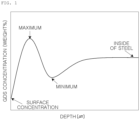
- a steel sheet for plating of the present disclosure will be described in detail with reference to the GDS profile of FIG. 1 .
- FIG. 1 is a graph schematically illustrating a typical GDS profile of Mn elements that may appear from a surface portion after a galvanized layer is removed from a hot-dip plated steel sheet including the steel sheet of the present disclosure.
- a vertical axis represents a concentration of alloying elements such as Mn, Si, and the like
- a horizontal axis represents a depth.
- the steel sheet for plating of the present disclosure may have a form in which maximum points and minimum points appear sequentially when the concentration profile of the Mn or Si element moves from a surface (an interface with the plating layer when hot-dip plated) toward the inside.
- the surface layer portion corresponds to an Fe plating layer with a low concentration of alloying elements since the alloying elements are not greatly diffused from a base steel sheet
- the maximum point corresponds to a region in which internal oxides of the alloying elements formed near an interface between the Fe plating layer and the base steel sheet are concentrated
- the minimum point appearing on a side of the base steel sheet in the Fe plating layer corresponds to a region in which alloying elements diffuse to the Fe plating layer not including the alloying elements and are diluted, or a region in which alloying elements diffuse to the maximum point at which internal oxidation occurs and are depleted.
- the maximum point may be formed at a depth of 0.05 to 1.0 ⁇ m from a surface of the steel sheet. If the maximum point appears in a region deeper than the region described above, it may not be determined to be a maximum point due to the effect of the present disclosure.
- the minimum point can be formed at a location within 5 ⁇ m of depth of the surface of the steel sheet. As described above, if the minimum point is not formed at a point within 5 ⁇ m of depth, the 5 ⁇ m of depth may be determined to be a point at which the minimum point is formed. Since the concentration at the location within 5 ⁇ m of depth is substantially the same as the concentration of a base material, it can be considered to be a point at which the concentration no longer decreases.
- Si is an element with a stronger oxidizing property than Mn, and since internal oxidation is easily caused even in a base steel sheet having a low oxygen concentration, oxidation may occur in a wider region than Mn. Therefore, even if the difference between the converted concentrations at the maximum and minimum points of Si is smaller than that of Mn, it cannot be said that the degree of internal oxidation is low.
- a hot-dip plated steel sheet having good plating adhesion and in which non-plating does not occur during hot-dip plating may be obtained.
- the difference between the converted concentrations at the maximum point and the minimum point of Mn is less than 80%, or if the difference between the converted concentrations at the maximum point and the minimum point of Si is less than 50%, there may be a problem in which point or linear non-plating occurs or plating peeling occurs. That is, by controlling the difference of converted concentration as described above, it is possible to prevent the formation of oxides of Mn and Si on the surface, so that a hot-dip plated steel sheet having an attractive surface and good plating adhesion may be manufactured, and even if a subsequent alloying heat treatment process is performed, it is possible to suppress the occurrence of defects such as linear defects on the surface.
- the difference of converted concentration values may be set to be 400% or less for Mn, and the difference of converted concentration values may be set to be 250% or less for Si.
- the difference of converted concentration of Mn may be 90% or more and 100% or more, and the difference of converted concentration of Si may be 60% or more or 70% or more.
- a hot-dip plated steel sheet is cut to a size of 30 to 50 mm in length, washed first in a NaOH solution at room temperature, and then dipped in a 20 to 40 vol% hydrochloric acid solution to remove a plating layer.
- the GDS concentration profile measures concentrations of all elements contained in the steel sheet at intervals of 1 to 5 nm in a thickness direction of the steel sheet. Irregular noise may be included in the measured GDS profile, an average concentration profile was obtained by applying a Gaussian filter with a cutoff value of 100 nm to the measured concentration profile to obtain the maximum and minimum points of the Mn and Si concentrations, and the concentration values and depths at the maximum and minimum points of the concentrations were respectively obtained from the noise-removed profile.
- the maximum and minimum points mentioned in the present disclosure were calculated as maximum and minimum points only when the difference between the maximum point and the minimum point in the depth direction was 10 nm or more.
- the steel sheet for plating targeted in the present disclosure may include a base steel sheet and an Fe plating layer formed on the base steel sheet.
- the composition of the base steel sheet is not particularly limited.
- the steel sheet is a steel sheet having a composition which easily forms oxides on the surface, containing 0.1 to 4 wt% of Mn and 0.001 to 2 wt% of Si
- plating properties may be advantageously improved by the present disclosure.
- An upper limit of a concentration of Mn of the base steel sheet is not particularly limited, but considering the composition commonly used, the upper limit may be limited to 4 wt%.
- a lower limit of the concentration of Mn is not particularly limited, if a composition contains less than 0.1 wt% of Mn, the surface quality of a hot-dip plated steel sheet is attractive, even if a Fe plating layer is not formed, so there is no need to perform Fe electroplating thereon.
- An upper limit of a Si concentration is not particularly limited, but considering the composition commonly used, the upper limit may be limited to 2.0 wt% or less, and if the Si concentration is less than 0.001 wt%, the quality of hot-dip plating is good, even if the method of the present disclosure is not performed, so there is no need to perform the method of the present disclosure.
- Mn and Si are elements affecting the plating property, the concentrations of Mn and Si may be limited as described above, but in the present disclosure, the remaining elements of the base steel sheet are not particularly limited.
- the base steel sheet may include, by weight%: 0.1 to 4% of Mn, 0.001 to 2% of S, 0.02 to 0.6% of C, 0.001 to 1% of Al, 0.05% or less of P, 0.02% or less of S, 1% or less of Cr, 0.01% or less of B, with a balance of Fe and inevitable impurities.
- P, S are impurities, which are advantageous when not added, and Cr and B are optional elements and do not need to be added, so lower limits thereof are not set.
- the base steel sheet may further include elements such as Ti, Mo, and Nb in a total amount of 1.2% or less.
- the base steel sheet is not particularly limited, but in an embodiment of the present disclosure, a cold-rolled steel sheet or a hot-rolled steel sheet may be used as the base steel sheet.
- a hot-dip plated steel sheet including the steel sheet for plating may be provided, and the hot-dip plated steel sheet may include a steel sheet for plating and a hot-dip plated layer formed on a surface of the steel sheet for plating.
- any commercially available hot-dip plated steel sheet can be used, and there are no specific restrictions on the type thereof.
- the steel sheet for plating may be manufactured by a process including: preparing a base steel sheet; performing electroplating on the base steel sheet to form an Fe plating layer including 5 to 50 wt% of oxygen; and annealing the base steel sheet on which the Fe plating layer is formed.
- the inventors of the present disclosure have found that oxygen contained in the Fe plating layer can effectively suppress the diffusion to the surface by internally oxidizing alloying elements such as Mn and Si in the base steel sheet without forming surface oxides of alloying elements such as Mn and Si on the surface of the Fe plating layer from water vapor, through many experiments. Since oxygen introduced into the steel due to the high dew point in the annealing furnace causes additional internal oxidation of the alloying elements, almost no surface oxides of the alloying elements are formed on the steel surface, which dramatically improves the surface quality and plating adhesion of the hot-dip plated steel sheet. When a hot-dip alloy-plated steel sheet, an alloying reaction may be promoted to obtain a uniform hot-dip alloy-plated steel sheet without surface defects.
- the Fe plating amount may be 1.0 to 2.0 g/m 2 .
- the Fe plating amount of 0.5 to 3.0 g/m 2 of the present disclosure may correspond to a thickness of 0.05 to 0.4 ⁇ m after annealing.
- the Fe plating layer having the above-described high oxygen concentration may have maximum and minimum points in the GDS concentration profile of Mn and Si elements formed inside the steel sheet for plating by controlling the temperature, dew point temperature, and atmosphere in a subsequent annealing process, and is configured so that the converted concentration at the maximum point and the converted concentration at the minimum point may satisfy the numerical range limited in an embodiment of the present disclosure.
- the concentration of oxygen in the Fe plating layer may be 5 to 50 wt%, and in another embodiment, the concentration of oxygen in the Fe plating layer may be 10 to 40 wt%. In order to obtain a surface oxide suppression effect, the amount of oxygen in the Fe plating layer should be sufficient.
- an annealing temperature may be 600°C to 950°C based on a temperature of the steel sheet in a soaking section. If the annealing temperature is too low, since a structure of the cold-rolled steel sheet is not properly be recovered or not recrystallized, it is difficult to secure mechanical properties such as strength, elongation, and the like, of the steel sheet, and if the annealing temperature is higher than 950°C, alloying elements in the steel may rapidly diffuse to the surface, resulting in poor quality of hot-dip plating, and the operation is performed unnecessarily at high temperatures, which may be uneconomical.
- a dew point temperature inside the annealing furnace may be in the range of -15°C to +30°C. if the dew point temperature is lower than -15°C, an amount of oxygen flowing into the steel decreases, so that only surface oxidation increases and internal oxidation does not occur, so a large amount of oxides exist on the surface, thereby deteriorating the quality of hot-dip plating. In addition, if the dew point temperature is higher than +30°C, the effect of suppressing surface oxidation by increasing internal oxidation and suppressing the diffusion of alloying elements is further increased, but an amount of water vapor supplied increases rapidly, so a humidifying equipment capacity should be unnecessarily increased.
- the dew point temperature may be managed in the above-described range of 600 to 950°C, and may be managed under more relaxed conditions in a lower temperature range. In another embodiment of the present disclosure, the dew point temperature may be limited to -10 to +20°C.
- a concentration of hydrogen in the atmosphere gas during annealing may be set to be 1% or more by volume%. If the concentration of hydrogen is less than 1%, a trace amount of oxygen, inevitably included in H 2 and N 2 gases cannot be effectively oxidized and removed, which increases the oxygen partial pressure and can cause surface oxidation of the base steel sheet. Meanwhile, if the concentration of hydrogen exceeds 70%, there may be a risk of explosion in the event of gas leakage and the cost of high-hydrogen work increases, so the hydrogen concentration may be set to be 70% or less. Except for the impurity gases which are inevitably included other than the hydrogen (H 2 ), it can be substantially nitrogen (N 2 ).
- a holding time after reaching a target temperature during annealing may be limited to 5 to 120 seconds.
- the holding time is required to be maintained at the target temperature during annealing for 5 seconds or longer.
- the holding time during annealing at high temperatures becomes excessively long, the diffusion of alloying interfering elements through the Fe plating layer increases, which increases the amount of surface oxides generated, and as a result, the quality of hot-dip plating deteriorates, so the holding time may be limited to 120 seconds or less.
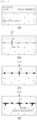
- FIG. 2 schematically illustrates a phenomenon which occurs inside a steel sheet as a temperature of the steel sheet increases according to the conditions of the present disclosure.
- FIG. 2 (a) illustrates a schematic cross-sectional diagram of a base steel sheet on which an Fe plating layer containing a large amount of oxygen is formed.
- the base steel sheet includes alloying elements such as Mn, Si, and the like, and the Fe plating layer includes 5 to 50 wt% of oxygen and impurities which are inevitably incorporated during electroplating, and the remainder is comprised of Fe.
- FIG. 2 (b) illustrates a state in which a cold-rolled steel sheet, plated with Fe, is heated to about 300 to 500°C in a nitrogen atmosphere containing 1 to 70% H 2 .
- a surface of the Fe plating layer containing a large amount of oxygen is gradually reduced and the oxygen is removed, but Mn, Si, and the like, diffused from a base steel sheet combine with the oxygen in the Fe plating layer at an interface between the Fe plating layer and the base steel sheet to form internal oxides, so diffusion thereof to the surface is suppressed.
- Mn and Si diffused from inside the base steel sheet accumulate, causing the internal oxide at the interface to grow gradually.
- the amount of oxygen inside the Fe plating layer plays an important role, and if a large amount of fine internal oxides are generated at the interface between the Fe plating layer and the base steel sheet and inside the base steel sheet at a low temperature stage, the internal oxides act as oxide nuclei that allow the alloying elements inside the base steel sheet to be continuously oxidized internally. In order for the oxide nuclei to be formed, the concentrations of oxygen and alloying elements should be high at the same time. If the Fe plating layer contains a sufficient amount of oxygen, a large amount of oxide nuclei are formed near the interface between the Fe plating layer with a high oxygen concentration and the base steel sheet with a high alloying element concentration.
- FIG. 2 (c) illustrates a schematic cross-section of the base steel sheet when the temperature is increased to 500 to 700°C in the same reducing atmosphere.
- a dew point inside an annealing furnace is controlled to -15°C to +30°C.
- the Fe plating layer is sufficiently reduced and a concentration of oxygen decreases, so a rate at which oxygen is released is slowed down, while a rate at which water vapor within the annealing furnace dissociates and diffuses into the steel increases significantly.
- the dew point increases from a region within a range of 500°C to 700°C, which is lower than the temperature at which the Fe plating layer is completely reduced, it can effectively suppress the diffusion of Mn and Si inside the steel through the Fe plating layer to the surface.
- the control conditions by temperature have been explained, but the most critical operation in the annealing process is an operation of maintaining the temperature of the steel sheet at a temperature within a range of 600 to 950°C. Only controlling the dew point to the atmosphere in this temperature range can effectively control the distribution of oxides inside the steel sheet for plating. Even if such dew point control is performed in all processes prior to the holding operation, which is not particularly problematic.
- the above-described process is merely an example of an embodiment of the present disclosure, and that the reaction mechanism of the present disclosure is not always interpreted to be bound by the above-described description.
- a hot-dip plated layer may be formed by hot-dip plating the steel sheet for plating obtained by the above-described process.
- the hot-dip plating method in the present disclosure is not particularly limited.
- the type of plating of the present disclosure is not particularly limited as long as it is a plating method used for a steel sheet for hot press forming, and some non-limiting examples thereof may include hot-dip galvanizing, hot-dip aluminum plating, or the like. It should be noted that it is not necessary to use pure zinc or aluminum in hot-dip galvanizing or hot-dip aluminum plating and alloy plating including magnesium, aluminum, zine, or alloying elements included in other plating layers may also be sufficiently used.
- an Fe plating layer can be formed on a surface of a base steel sheet through an electroplating method, and an oxygen concentration of the formed Fe plating layer may be controlled by appropriately controlling the conditions of the electroplating solution and the plating conditions.
- the electroplating solution includes ferrous ions and ferric ions.
- the electroplating solution includes only ferrous ions.
- the electroplating solution may further include the ferric ions.
- the concentration of the ferric ions is preferably 5 to 60 wt%, and is more preferably 5 to 40 wt% of the total sum of ferrous and ferric ions.
- the concentration is less than 5%, a rate at which ferric iron is reduced to ferrous iron at a cathode is less than a rate at which ferrous iron is oxidized to ferric iron at an anode, so the concentration of ferric iron rises rapidly, and pH drops rapidly and plating efficiency continues to deteriorate.
- the concentration of ferric ions exceeds 60%, a reaction amount in which ferric iron is reduced to ferrous iron at the cathode is greatly increased, compared to a reaction amount in which ferrous iron is reduced and precipitated as metallic steel, so the plating efficiency decreases significantly and the plating quality deteriorates.
- the concentration of ferric ions among the iron ions is 5 to 60 wt%.
- the concentration of iron ions is preferably 1 to 80 g per 1 L of the electroplating solution, and is more preferably 10 to 50 g per 1 L.
- concentration of iron ions is less than 1g/L, there is a problem that the plating efficiency and plating quality deteriorate rapidly.
- concentration of iron ions exceeds 80g/L, solubility may be exceeded and precipitation may occur, and loss of a raw material due to loss of the solution in the continuous plating process increases, which may be uneconomical.
- the electroplating solution of the present disclosure includes a complexing agent, and in order to maintain high plating efficiency without generating sludge while containing a large amount of ferric iron, it is preferable to use an amino acid or an amino acid polymer as a complexing agent.
- amino acid refers to an organic molecule in which a carboxyl group (-COOH) and an amine group (-NH 2 ) are combined
- amino acid polymer refers to an organic molecule formed by polymerizing two or more amino acids, and an amino acid polymer has properties of complexing agents, similar to that of an amino acid. Therefore, in the following description, an amino acid and an amino acid polymer are collectively referred to as an amino acid.
- an amino acid When an amino acid is dissolved in neutral water, since amine combines with hydrogen ions to acquire a positive charge, and a carboxyl group dissociates the hydrogen ion to acquire a negative charge, the amino acid molecule maintains a neutral charge. Meanwhile, when the solution becomes acidic, since the carboxyl group recombines with the hydrogen ions, making the charge neutral, and amine has a positive charge, the amino acid molecule forms a cation. In other words, an amino acid forms a neutral charge or cation in a slightly acidic aqueous solution.
- the amino acid When an amino acid is added to an acidic electrolyte containing iron ions, the amino acid is complexed with ferrous and ferric ions, and the iron ions complexed with the amino acid maintain a cationic state even in the complexed state. Therefore, it exhibits electrically opposite properties to the common complexing agent having a plurality of carboxyl groups, having a negative charge in a weakly acidic aqueous solution.
- an amino acid forms fewer bonds with iron ions and has a weaker bonding force, but the bonding force with ferric ions which generates sludge is sufficiently strong, so precipitation due to ferric ions may be prevented.
- the complexing agent is preferably added in an amount so that a molar concentration ratio between the iron ion and the complexing agent is 1:0.05 to 2.0, and more preferably 1:0.5 to 1.0.
- a molar concentration ratio is less than 0.05, the ferric ions excessively contained, cannot be suppressed from combining with hydroxide ions or oxygen to form sludge, and even when ferric ions are not included, the plating efficiency is greatly reduced, and furthermore, burning is induced, resulting in poor plating quality.
- the complexing agent is preferably at least one selected from amino acids or amino acid polymers.
- the complexing agent may be at least one selected from alanine, glycine, serine, threonine, arginine, glutamine, glutamic acid, and glycylglycine.
- an Fe plating layer having high plating efficiency and high oxygen concentration may be obtained.
- the electroplating efficiency decreases, which is not suitable for a continuous plating process. If the pH of the Fe electroplating solution exceeds 5.0, the plating efficiency increases, but sludge in which iron hydroxide precipitates is generated during continuous electroplating, causing problems such as pipe clogging and contamination of rolls and equipment.
- the current density is less than 3A/dm 2 , a plating overvoltage of the cathode decreases and the Fe electroplating efficiency decreases, so it is not suitable for a continuous plating process. If the current density exceeds 120A/dm 2 , burning occurs on the plating surface, causing the electroplating layer to become uneven and the Fe plating layer to easily fall off.
- the Fe plating layer As described above, in the present disclosure, 5 to 50 wt% of oxygen is preferably contained in the Fe plating layer.
- the causes in which oxygen is incorporated into the Fe plating layer are as follows. In the process in which iron is precipitated on the surface of the steel sheet to which a cathode is applied, and at the same time, as hydrogen ions are reduced to hydrogen gas, the pH increases. Therefore, both ferrous and ferric ions are temporarily combined with OH - ions and can be incorporated together when the Fe plating layer is formed.
- a plating amount of the Fe plating layer is 0.5 to 3.0 g/m 2 based on the iron concentration.
- An upper limit of the Fe plating amount is not particularly limited, but if the Fe plating amount exceeds 3.0 g/m 2 in a continuous plating process, a plurality of plating cells are required or a production rate thereof is reduced, which may be uneconomical.
- an Fe electroplating amount is large, the Fe electroplating solution is rapidly transformed in a continuous process, causing the pH to drop and the plating efficiency to decrease significantly, making the management of solution difficult.
- the Fe electroplating amount is less than 0.5g/m 2 , since oxygen contained in the Fe plating layer is quickly reduced and removed, Mn and Si diffuse from the base steel sheet so that the formation of surface oxides may not be effectively suppressed, so that there is a problem in that the quality of hot-dip plating deteriorates.
- the Fe plating amount is an iron concentration contained in the plating layer, and when the Fe plating layer is completely reduced during annealing, it has a thickness of about 0.05 to 0.4 ⁇ m.
Landscapes
- Chemical & Material Sciences (AREA)
- Organic Chemistry (AREA)
- Engineering & Computer Science (AREA)
- Materials Engineering (AREA)
- Metallurgy (AREA)
- Chemical Kinetics & Catalysis (AREA)
- Mechanical Engineering (AREA)
- Electrochemistry (AREA)
- Inorganic Chemistry (AREA)
- Physics & Mathematics (AREA)
- Thermal Sciences (AREA)
- Oil, Petroleum & Natural Gas (AREA)
- Coating With Molten Metal (AREA)
- Heat Treatment Of Sheet Steel (AREA)
- Heat Treatment Of Articles (AREA)
- Electroplating And Plating Baths Therefor (AREA)
Applications Claiming Priority (2)
| Application Number | Priority Date | Filing Date | Title |
|---|---|---|---|
| KR1020220071020A KR20230171083A (ko) | 2022-06-10 | 2022-06-10 | 도금품질이 우수한 열간 프레스 성형용 도금강판, 강판 및 이들의 제조방법 |
| PCT/KR2023/007972 WO2023239209A1 (fr) | 2022-06-10 | 2023-06-09 | Tôle d'acier plaquée pour formage à la presse à chaud ayant une excellente qualité de placage, tôle d'acier et leurs procédés de fabrication respectifs |
Publications (2)
| Publication Number | Publication Date |
|---|---|
| EP4538418A1 true EP4538418A1 (fr) | 2025-04-16 |
| EP4538418A4 EP4538418A4 (fr) | 2025-10-15 |
Family
ID=89118707
Family Applications (1)
| Application Number | Title | Priority Date | Filing Date |
|---|---|---|---|
| EP23820144.6A Pending EP4538418A4 (fr) | 2022-06-10 | 2023-06-09 | Tôle d'acier plaquée pour formage à la presse à chaud ayant une excellente qualité de placage, tôle d'acier et leurs procédés de fabrication respectifs |
Country Status (6)
| Country | Link |
|---|---|
| US (1) | US20250346978A1 (fr) |
| EP (1) | EP4538418A4 (fr) |
| JP (1) | JP2025521248A (fr) |
| KR (1) | KR20230171083A (fr) |
| CN (1) | CN119256119A (fr) |
| WO (1) | WO2023239209A1 (fr) |
Family Cites Families (16)
| Publication number | Priority date | Publication date | Assignee | Title |
|---|---|---|---|---|
| JP2705390B2 (ja) * | 1991-09-10 | 1998-01-28 | 住友金属工業株式会社 | Si含有鋼板の溶融亜鉛めっき方法 |
| JP3835083B2 (ja) * | 1999-02-25 | 2006-10-18 | Jfeスチール株式会社 | 冷延鋼板および溶融めっき鋼板ならびにそれらの製造方法 |
| US7687152B2 (en) | 2003-04-10 | 2010-03-30 | Nippon Steel Corporation | High strength molten zinc plated steel sheet and process of production of same |
| KR100883245B1 (ko) * | 2004-10-07 | 2009-02-10 | 제이에프이 스틸 가부시키가이샤 | 용융아연도금강판 및 그 제조방법 |
| EP2009127A1 (fr) | 2007-06-29 | 2008-12-31 | ArcelorMittal France | Procédé pour la fabrication d'une feuille d'acier galvanisé ou recuit après galvanisation par régulation DFF |
| CA2850045C (fr) * | 2011-09-30 | 2016-04-12 | Nippon Steel & Sumitomo Metal Corporation | Feuille d'acier galvanisee et son procede de fabrication |
| KR20130076589A (ko) * | 2011-12-28 | 2013-07-08 | 주식회사 포스코 | 도금표면 품질 및 도금밀착성이 우수한 고강도 용융아연도금강판 및 그 제조방법 |
| KR101382910B1 (ko) * | 2011-12-28 | 2014-04-09 | 주식회사 포스코 | 도금표면 품질 및 도금밀착성이 우수한 용융아연도금강판 및 그 제조방법 |
| KR20150061407A (ko) * | 2013-11-27 | 2015-06-04 | 주식회사 포스코 | 백색도 및 외관 균일성이 우수한 전기아연도금강판 및 이의 제조방법 |
| DE102019108459B4 (de) * | 2019-04-01 | 2021-02-18 | Salzgitter Flachstahl Gmbh | Verfahren zur Herstellung eines Stahlbandes mit verbesserter Haftung metallischer Schmelztauchüberzüge |
| KR102255820B1 (ko) * | 2019-06-13 | 2021-05-25 | 주식회사 포스코 | 철 전기도금용액 및 이를 이용하여 제조된 전기도금 강판 |
| MX2022010295A (es) * | 2020-02-21 | 2022-09-19 | Jfe Steel Corp | Metodo para producir una chapa de acero galvanizado por inmersion en caliente de alta resistencia. |
| JP7235165B2 (ja) * | 2020-03-26 | 2023-03-08 | Jfeスチール株式会社 | Fe系皮膜付き素材冷延鋼板、Fe系皮膜付き素材冷延鋼板の製造方法、Fe系皮膜付き冷延鋼板の製造方法、溶融亜鉛めっき鋼板の製造方法、および合金化溶融亜鉛めっき鋼板の製造方法 |
| KR102461161B1 (ko) * | 2020-12-13 | 2022-11-02 | 주식회사 포스코 | 도금품질이 우수한 고강도 용융아연도금강판, 도금용 강판 및 이들의 제조방법 |
| KR102493977B1 (ko) * | 2020-12-13 | 2023-01-31 | 주식회사 포스코 | 도금품질이 우수한 고강도 용융아연도금강판, 도금용 강판 및 이들의 제조방법 |
| KR20230171082A (ko) * | 2022-06-10 | 2023-12-20 | 주식회사 포스코 | 도금품질이 우수한 열간 프레스 성형용 도금강판, 강판 및 이들의 제조방법 |
-
2022
- 2022-06-10 KR KR1020220071020A patent/KR20230171083A/ko active Pending
-
2023
- 2023-06-09 EP EP23820144.6A patent/EP4538418A4/fr active Pending
- 2023-06-09 CN CN202380045743.8A patent/CN119256119A/zh active Pending
- 2023-06-09 JP JP2024572662A patent/JP2025521248A/ja active Pending
- 2023-06-09 US US18/873,319 patent/US20250346978A1/en active Pending
- 2023-06-09 WO PCT/KR2023/007972 patent/WO2023239209A1/fr not_active Ceased
Also Published As
| Publication number | Publication date |
|---|---|
| JP2025521248A (ja) | 2025-07-08 |
| US20250346978A1 (en) | 2025-11-13 |
| KR20230171083A (ko) | 2023-12-20 |
| CN119256119A (zh) | 2025-01-03 |
| EP4538418A4 (fr) | 2025-10-15 |
| WO2023239209A1 (fr) | 2023-12-14 |
Similar Documents
| Publication | Publication Date | Title |
|---|---|---|
| JP6025867B2 (ja) | メッキ表面品質及びメッキ密着性に優れた高強度溶融亜鉛メッキ鋼板及びその製造方法 | |
| KR102493977B1 (ko) | 도금품질이 우수한 고강도 용융아연도금강판, 도금용 강판 및 이들의 제조방법 | |
| US20240003032A1 (en) | High-strength hot-dip galvanized steel sheet with excellent plating quality, steel sheet for plating, and manufacturing methods therefor | |
| KR20210069757A (ko) | 표면품질과 점 용접성이 우수한 아연도금강판 및 그 제조방법 | |
| EP4538416A1 (fr) | Tôle d'acier plaquée pour formage à la presse à chaud, ayant une excellente qualité de placage, tôle d'acier et procédé de fabrication associé | |
| EP4538418A1 (fr) | Tôle d'acier plaquée pour formage à la presse à chaud ayant une excellente qualité de placage, tôle d'acier et leurs procédés de fabrication respectifs | |
| EP4538420A1 (fr) | Tôle d'acier ayant une bonne qualité de placage et son procédé de fabrication | |
| EP4538417A1 (fr) | Tôle d'acier galvanisée par immersion à chaud et à résistance élevée présentant une excellente qualité de placage, tôle d'acier de placage et ses procédés de fabrication | |
| EP4538419A1 (fr) | Tôle d'acier ayant une excellente qualité de placage et procédé pour la fabrication de celle-ci | |
| EP4538415A1 (fr) | Tôle d'acier galvanisée par immersion à chaud à haute résistance ayant une excellente qualité de placage, tôle d'acier de placage, et procédés de fabrication associés | |
| EP4541949A1 (fr) | Tôle d'acier et son procédé de fabrication | |
| EP4265807A1 (fr) | Tôle d'acier galvanisée avec une excellente qualité de surface et une excellente aptitude au soudage points par résistance électrique et son procédé de fabrication | |
| KR20230174175A (ko) | 강판 및 그 제조방법 |
Legal Events
| Date | Code | Title | Description |
|---|---|---|---|
| STAA | Information on the status of an ep patent application or granted ep patent |
Free format text: STATUS: THE INTERNATIONAL PUBLICATION HAS BEEN MADE |
|
| PUAI | Public reference made under article 153(3) epc to a published international application that has entered the european phase |
Free format text: ORIGINAL CODE: 0009012 |
|
| STAA | Information on the status of an ep patent application or granted ep patent |
Free format text: STATUS: REQUEST FOR EXAMINATION WAS MADE |
|
| 17P | Request for examination filed |
Effective date: 20250108 |
|
| AK | Designated contracting states |
Kind code of ref document: A1 Designated state(s): AL AT BE BG CH CY CZ DE DK EE ES FI FR GB GR HR HU IE IS IT LI LT LU LV MC ME MK MT NL NO PL PT RO RS SE SI SK SM TR |
|
| DAV | Request for validation of the european patent (deleted) | ||
| DAX | Request for extension of the european patent (deleted) | ||
| A4 | Supplementary search report drawn up and despatched |
Effective date: 20250917 |
|
| RIC1 | Information provided on ipc code assigned before grant |
Ipc: C23C 28/00 20060101AFI20250911BHEP Ipc: C23C 28/02 20060101ALI20250911BHEP Ipc: C23C 2/02 20060101ALI20250911BHEP Ipc: C23C 2/28 20060101ALI20250911BHEP Ipc: C25D 5/50 20060101ALI20250911BHEP Ipc: C25D 9/04 20060101ALI20250911BHEP Ipc: C25D 9/06 20060101ALI20250911BHEP Ipc: C25D 3/20 20060101ALI20250911BHEP Ipc: C25D 7/06 20060101ALI20250911BHEP Ipc: C23C 2/06 20060101ALI20250911BHEP Ipc: C23C 2/40 20060101ALI20250911BHEP Ipc: C22C 38/02 20060101ALI20250911BHEP Ipc: C22C 38/04 20060101ALI20250911BHEP Ipc: C22C 38/06 20060101ALI20250911BHEP Ipc: C22C 38/32 20060101ALI20250911BHEP Ipc: C22C 38/34 20060101ALI20250911BHEP Ipc: C22C 38/38 20060101ALI20250911BHEP |