EP4539517A1 - Kommunikationsverfahren und -vorrichtung - Google Patents
Kommunikationsverfahren und -vorrichtung Download PDFInfo
- Publication number
- EP4539517A1 EP4539517A1 EP23826080.6A EP23826080A EP4539517A1 EP 4539517 A1 EP4539517 A1 EP 4539517A1 EP 23826080 A EP23826080 A EP 23826080A EP 4539517 A1 EP4539517 A1 EP 4539517A1
- Authority
- EP
- European Patent Office
- Prior art keywords
- information
- tag
- network element
- communication apparatus
- identifier
- Prior art date
- Legal status (The legal status is an assumption and is not a legal conclusion. Google has not performed a legal analysis and makes no representation as to the accuracy of the status listed.)
- Pending
Links
Images





Classifications
-
- H—ELECTRICITY
- H04—ELECTRIC COMMUNICATION TECHNIQUE
- H04W—WIRELESS COMMUNICATION NETWORKS
- H04W4/00—Services specially adapted for wireless communication networks; Facilities therefor
- H04W4/80—Services using short range communication, e.g. near-field communication [NFC], radio-frequency identification [RFID] or low energy communication
-
- H—ELECTRICITY
- H04—ELECTRIC COMMUNICATION TECHNIQUE
- H04W—WIRELESS COMMUNICATION NETWORKS
- H04W76/00—Connection management
- H04W76/10—Connection setup
- H04W76/11—Allocation or use of connection identifiers
-
- H—ELECTRICITY
- H04—ELECTRIC COMMUNICATION TECHNIQUE
- H04W—WIRELESS COMMUNICATION NETWORKS
- H04W4/00—Services specially adapted for wireless communication networks; Facilities therefor
- H04W4/70—Services for machine-to-machine communication [M2M] or machine type communication [MTC]
-
- H—ELECTRICITY
- H04—ELECTRIC COMMUNICATION TECHNIQUE
- H04W—WIRELESS COMMUNICATION NETWORKS
- H04W76/00—Connection management
- H04W76/10—Connection setup
-
- H—ELECTRICITY
- H04—ELECTRIC COMMUNICATION TECHNIQUE
- H04W—WIRELESS COMMUNICATION NETWORKS
- H04W76/00—Connection management
- H04W76/10—Connection setup
- H04W76/12—Setup of transport tunnels
Definitions
- a communication method and apparatus are provided, to effectively and accurately transmit information about a tag.
- an embodiment of this application provides a first communication method.
- the method may be performed by a first communication apparatus.
- the first communication apparatus may be a reader (or a controller or a chip corresponding to the reader), or may be a terminal device (or a controller or a chip corresponding to the terminal device) that establishes a communication connection to the reader.
- the terminal device may be, but is not limited to, a computer, a mobile phone, a tablet computer, or another device that can establish a communication connection to the reader. This is not limited.
- the method specifically includes the following steps: The first communication apparatus receives a first request, where the first request indicates the first communication apparatus to obtain information about a first tag.
- the first communication apparatus may receive the first request from the application server.
- the first communication apparatus sends the information about the first tag to the application server by using the first communication session.
- a specific transmission path used by the first communication apparatus to send the information about the first tag to the application server is not specifically limited in this application.
- that the first communication apparatus establishes the first communication session may include but is not limited to the following manners.
- the first communication apparatus may directly establish the first communication session with the target server. That the first communication apparatus sends the information about the first tag by using the first communication session includes: The first communication apparatus sends the information about the first tag to the target server by using the first communication session.
- the first communication apparatus can effectively and accurately send the information about the first tag to the target server by using the first communication session between the first communication apparatus and the target server.
- the first communication apparatus may establish the first communication session with the first user plane function network element. That the first communication apparatus sends the information about the first tag by using the first communication session includes: The first communication apparatus sends the information about the first tag to the first user plane function network element by using the first communication session.
- an embodiment of this application provides a first communication method.
- the method may be performed by a first user plane function network element, or may be performed by a chip corresponding to the first user plane function network element. This is not limited herein.
- the method specifically includes the following steps:
- the first user plane function network element receives information about a first tag and first information, where the first information is used to determine a target server of the first tag.
- the first user plane function network element determines the target server of the first tag based on the first information.
- the first user plane function network element sends the information about the first tag to the target server.
- the first user plane function network element receives the information about the first tag and the first information. Because the first information is used to determine the target server of the first tag, the first user plane function network element may determine the target server of the first tag based on the first information, and further can effectively and accurately send the information about the first tag to the target server.
- that the first user plane function network element receives first information includes: The first user plane function network element receives an N4 session request message, where the N4 session request message includes the first information, the first information indicates a first tag filter, and the first tag filter is used to match a corresponding server based on an identifier of a tag.
- that the first user plane function network element determines the target server of the first tag based on the first information includes: The first user plane function network element determines the first tag filter based on the first information. The first user plane function network element matches the target server of the first tag based on an identifier of the first tag and by using the first tag filter.
- That the first user plane function network element receives first information includes: The first user plane function network element receives an N4 session request message, where the N4 session request message includes the first information, and the first information indicates address information of the first communication apparatus and/or third port number information for the first communication apparatus to send the information about the first tag.
- the correspondence between the address information and/or the port number information of the first communication apparatus and the identifier of the server included in the first mapping information may be a preconfigured and known relationship.
- the first user plane function network element receives the information about the first tag from the first communication apparatus.
- the first user plane function network element receives the N4 session request message, and the included first information indicates the address information of the first communication apparatus and/or the third port number information for the first communication apparatus to send the information about the first tag
- the first user plane function network element can accurately determine the target server of the first tag based on the address information of the first communication apparatus and/or the third port number information for the first communication apparatus to send the information about the first tag and the first mapping information.
- that the first user plane function network element receives first information includes: The first user plane function network element receives an N4 session request message, where the N4 session request message includes the first information, and the first information indicates fourth port number information for the first user plane function network element to receive the information about the first tag. That the first user plane function network element determines the target server of the first tag based on the first information includes: The first user plane function network element determines, based on the first information, the fourth port number information for the first user plane function network element to receive the information about the first tag. The first user plane function network element determines the target server of the first tag based on the fourth port number information and second mapping information, where the second mapping information includes a correspondence between port number information of the first user plane function network element and an identifier of a server.
- the first user plane function network element when the first user plane function network element receives the N4 session request message, and the included first information indicates the fourth port number information for the first user plane function network element to receive the information about the first tag, the first user plane function network element can accurately determine the target server of the first tag based on the fourth port number information and the second mapping information.
- that the first user plane function network element receives first information includes: The first user plane function network element receives an N4 session request message, where the N4 session request message includes the first information, and the first information indicates address information of the target server and/or fifth port number information for receiving the information about the first tag on the target server, where the address information and/or the fifth port number information of the target server are/is determined based on second indication information, the second indication information indicates home enterprise information of the first tag, and the second indication information is carried in a second session request message sent by a first communication apparatus.
- That the first user plane function network element determines the target server of the first tag based on the first information includes: The first user plane function network element determines the address information and/or the fifth port number information of the target server based on the first information. The first user plane function network element determines the target server based on the address information and/or the fifth port number information of the target server.
- the method before the first network element obtains the second message from the second network element, the method further includes: The first network element sends a first message to a second network element, where the first message includes a first operation instruction, a second tag filter, and the first identifier, the first operation instruction indicates the second network element to obtain an identifier of the first tag from an identifier of at least one tag based on the first identifier, and the second tag filter is used to determine information about a corresponding tag based on identifiers of different tags.
- the second network element receives the first message from a first network element. That the second network element sends a second message includes: The second network element sends the second message to the first network element.
- the second network element directly receives the first message from the first network element, and after determining the first tag based on the first message, sends, to the first network element, the second message including the information about the first tag.
- this application further provides a communication system.
- the system includes a first network element (for example, a network exposure function network element) configured to perform the method provided in the third aspect, and a second network element (a first communication apparatus, for example, a terminal device having a reader function, or an access and mobility function management network element) configured to perform the method provided in the fourth aspect.
- a first network element for example, a network exposure function network element
- a second network element a first communication apparatus, for example, a terminal device having a reader function, or an access and mobility function management network element
- an embodiment of this application further provides a computer storage medium.
- the storage medium stores a software program.
- the software program is read and executed by one or more processors, the method provided in any one of the first aspect or the possible implementations can be implemented, or the method provided in any one of the second aspect or the possible implementations can be implemented; or when the software program is read and executed by one or more processors, the method provided in any one of the third aspect or the possible implementations can be implemented, or the method provided in any one of the fourth aspect or the possible implementations can be implemented.
- the chip system further includes a memory.
- the memory is configured to store program instructions and data that are necessary for execution by the apparatus.
- the chip system may include a chip, or may include the chip and another discrete device.
- the internet of things technology may include a passive or semi-passive internet of things (passive internet of things, P-IoT) technology.
- a node in a network may obtain energy from an environment, to support perception, transmission, distributed computing, and the like of data in the network.
- a passive tag or a semi-passive tag, a reader (Reader), and a server may be usually included.
- the reader (Reader) may read/write a tag (or a radio frequency card) in a wireless radio frequency manner, to identify the tag (or the radio frequency card), and exchange information and data with the tag (or the radio frequency card).
- a tag namely, the semi-passive tag
- the reader receives information carried in the signal and decodes the information, and further sends decoded information to a central information system for corresponding data processing.
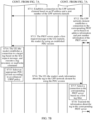
- FIG. 1 is a diagram of reading/writing a passive or semi-passive internet of things tag. The following steps may be specifically included.
- S102 The reader performs inventory on a tag (for example, a P-IoT tag), to obtain an identifier of the tag.
- a tag for example, a P-IoT tag
- each tag has a corresponding identifier, including but not limited to an electronic product code (electronic product code, EPC) and a tag identifier (tag identifier, TID).
- EPC electronic product code
- tag identifier tag identifier
- the reader After receiving the random number from the tag, the reader sends the ACK command to the tag.
- the command includes the random number (RN16) that is just received.
- the P-IoT tag performs next step S206.
- the P-IoT tag After sending the EPC code of the P-IoT tag to the reader, the P-IoT tag enters a short sleep state.
- a reader manages a tag, and the tag directly establishes a user plane connection to an enterprise server via the reader, so that information (or an instruction) about the tag may be transmitted through the user plane connection established via the reader.
- a UPF network element manages a tag, the tag establishes a user plane connection to the UPF network element via a reader, and the UPF network element establishes a user plane connection to an enterprise server, so that information (or an instruction) about the tag read/wrote by the reader may be transmitted through the user plane connections.
- the first communication apparatus determines the corresponding first communication session for the information about the first tag, so that it can be ensured that the first communication apparatus can effectively and accurately transmit the information about the first tag by using the first communication session.
- FIG. 4 is a diagram of a network architecture to which a communication method is applicable according to an embodiment of this application.
- the network architecture may include an access network and a core network.
- a terminal device accesses a data network (data network, DN) via the access network and the core network.
- DN data network
- the AMF network element is mainly responsible for mobility management in the mobile network, such as user location update, registration of a user with a network, and user handover.
- the UPF network element is mainly responsible for forwarding and receiving user data, and may receive user data from the data network, and transmit the user data to the UE via the access network device; or may receive user data from the UE via the access network device, and forward the user data to the data network.
- the UDM network element includes functions such as performing of subscription data management, and user access authorization.
- the UDR network element includes functions such as storage and retrieval of subscription data, policy data, application data, and other types of data.
- the AUSF network element is responsible for performing authentication on the UE and verifying validity of the UE.
- the NWDAF network element provides functions such as network data collection and analysis based on technologies such as big data and artificial intelligence.
- a plurality of services may be deployed on the DN, and a service such as data and/or voice may be provided by the DN for the UE.
- the DN is a private network of an intelligent factory
- a sensor mounted in a workshop of the intelligent factory may be the UE
- a control server of the sensor is deployed in the DN
- the control server may provide a service for the sensor.
- the sensor may communicate with the control server, to obtain instructions of the control server, transmit collected sensor data to the control server based on the instructions, and the like.
- the DN is an internal office network of a company
- a mobile phone or a computer of an employee in the company may be the UE, and the mobile phone or the computer of the employee can access information, a data resource, or the like on the internal office network of the company.
- Nausf, Nnef, Nnrf, Namf, Npcf, Nsmf, Nudm, Nudr, Naf, and Nnwdaf are respectively service-based interfaces provided by the AUSF, the NEF, the NRF, the AMF, the PCF, the SMF, the UDM, the UDR, the AF, and the NWDAF, and are used to invoke corresponding service-based operations.
- N1, N2, N3, N4, and N6 are interface sequence numbers. Meanings of these interface sequence numbers are as follows:
- N1 is an interface between the AMF and the UE, and may be used to transfer non-access stratum (non-access stratum, NAS) signaling (for example, including a QoS rule from the AMF) to the UE.
- non-access stratum non-access stratum, NAS
- N3 is an interface between the access network device and the UPF, and may be mainly used to transfer uplink and downlink user plane data between the access network device and the UPF.
- N4 is an interface between the SMF and the UPF, and may be used to transfer information between a control plane and a user plane, including delivery of a forwarding rule, a QoS rule, a traffic statistics rule, and the like from the control plane to the user plane, and reporting of user plane information.
- N6 an interface between the UPF and the DN, and is used to transmit uplink and downlink user data flows between the UPF and the DN.
- ordinal numbers such as “first” and “second” mentioned below are used to distinguish between a plurality of objects for ease of description, but are not used to limit a sequence, a time sequence, a priority, or an importance degree of the plurality of objects.
- Specific forms of the first communication apparatus and the related network element in this embodiment are not limited in this application.
- FIG. 5A is a flowchart of a communication method according to an embodiment of this application. The method may specifically include the following steps.
- the first communication apparatus before the first communication apparatus receives the first request, a process of performing tag inventory is further included; or after receiving the first request and before determining a first communication session (or after step S501A and before step S502A), the first communication apparatus further performs a process of performing tag inventory. That is, the first request message further includes instruction information needed by the first communication apparatus to perform tag inventory, where the instruction information may include, but is not limited to, one or more of a tag inventory range, a tag type, a tag home enterprise, and a tag home carrier.
- the instruction information may include, but is not limited to, one or more of a tag inventory range, a tag type, a tag home enterprise, and a tag home carrier.
- that the first communication apparatus determines the first communication session based on the identifier of the first tag includes: The first communication apparatus determines the first communication session from at least one communication session based on the identifier of the first tag and first routing policy information, where the first routing policy information includes a correspondence between the identifier of the first tag and an identifier of the first communication session.
- the first routing policy information in this application may be an improved user equipment route selection policy (URSP policy), that is, identifier information of the tag is added to an existing URSP policy (routing policy), so that the corresponding communication session for transmitting the information about the tag may be further selected based on the identifier of the tag.
- URSP policy user equipment route selection policy
- That the first communication apparatus establishes the first communication session may include but is not limited to the following manners.
- a first user plane function network element side may receive different target address information and/or different port number information from a session management function network element.
- Each piece of target address information and/or each piece of port number information are/is determined based on home enterprise information of a corresponding tag (or indication information indicating the home enterprise information of the corresponding tag), and each piece of target address information and/or each piece of port number information indicate/indicates a corresponding server.
- the first communication apparatus may determine, according to the enhanced URSP policy, the second target address information and/or the second port number information that correspond/corresponds to the first tag, to determine the first communication session.
- the UE 1 may establish a connection to the UPF 1 network element (that is, establishes a first communication session) based on the address information and/or the corresponding port number information of the UPF 1 network element, and the UE 1 may establish a connection to the UPF 2 network element based on the address information and/or the corresponding port number information of the UPF 2 network element.
- Case 3 There are a plurality of user plane function network elements configured to transmit the information about the tag, which at least include: one user plane function network element corresponding to home enterprise information of one tag, and one user plane function network element corresponding to home enterprise information of a plurality of tags.
- the first user plane function network element determines the target server of the first tag based on the first information includes: The first user plane function network element determines the first tag filter based on the first information. The first user plane function network element matches the target server of the first tag based on an identifier of the first tag and by using the first tag filter.
- the first information may indicate the address information of the first communication apparatus and/or the third port number information for the first communication apparatus to send the information about the first tag, or the first information may be the address information of the first communication apparatus and/or the third port number information for the first communication apparatus to send the information about the first tag. This is not specifically limited in this application.
- the first user plane function network element determines the target server of the first tag based on the first information includes: The first user plane function network element determines the address information and/or the third port number information of the first communication apparatus based on the first information. The first user plane function network element determines the target server of the first tag based on the address information and the third port number information of the first communication apparatus, and first mapping information, where the first mapping information includes a correspondence between address information and/or port number information of the first communication apparatus and an identifier of a server.
- the first user plane function network element determines the target server of the first tag based on the first information includes: The first user plane function network element determines, based on the first information, the fourth port number information for the first user plane function network element to receive the information about the first tag. The first user plane function network element determines the target server of the first tag based on the fourth port number information and second mapping information, where the second mapping information includes a correspondence between port number information of the first user plane function network element and an identifier of a server.
- the first information may indicate the address information of the target server and/or the fifth port number information for receiving the information about the first tag on the target server, or the first information may be the address information of the target server and/or the fifth port number information for receiving the information about the first tag on the target server.
- S508A The first user plane function network element sends the information about the first tag to the target server.
- the "address information” may be understood as information used to determine an address
- the "port number information” may be understood as information used to determine a port number.
- the "address information” may be briefly referred to as the "address”, and the two may have a same meaning.
- the “port number information” may also be briefly referred to as the "port number”, and the two may also have a same meaning.
- the first communication apparatus may establish the communication session with the corresponding server based on the home enterprise information of the tag, so that after receiving the information about the first tag, the first communication apparatus may accurately determine, based on the first routing policy information including the identifier of the tag, the first communication session for transmitting the information about the first tag, and further the first communication apparatus can effectively and accurately transmit the information about the first tag to the target server by using the first communication session.
- the first communication apparatus may further determine the first communication session of the first tag based on the first routing policy information.
- the first communication session is a communication session between the first communication apparatus and the corresponding user plane function network element. Therefore, the first communication apparatus may send the information about the first tag to the corresponding user plane function network element by using the first communication session, and then the user plane function network element effectively and accurately sends the information about the first tag to the target server.
- FIG. 5B is a flowchart of another communication method according to an embodiment of this application. The method may specifically include the following steps.
- the first network element is a network exposure function network element (NEF network element), and the second network element is a mobility management function network element (AMF network element). That is, the NEF network element sends a first message to the AMF network element, and the AMF network element directly receives the first message from the NEF network element.
- NEF network element network exposure function network element
- AMF network element mobility management function network element
- S503B The second network element sends a second message to the first network element, where the second message includes the information about the first tag and the first identifier.
- the first network element determines the target server of the first tag based on the first identifier.
- the second network element in this implementation may be the first communication apparatus (for example, the UE) having the reader function, or may be the mobility management function network element (namely, the AMF network element).
- the second network element first receives the first message from the first network element (namely, the network exposure function network element) by using the mobility management function network element, and the second network element may then determine the first tag based on the first operation instruction and the second tag filter in the first message, and further send, to the first network element via the mobility management function network element, the second message including the information about the first tag and the first identifier. Finally, the first network element sends the information about the first tag to the target server.
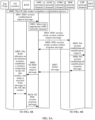
- Embodiment 1 an example in which terminal device UE is used as a reader is used. Based on the first transmission path shown in FIG. 3A , the UE (the reader) manages a tag, and the UE (the reader) establishes a user plane session and transmits information about the tag. Refer to FIG. 6A and FIG. 6B . A specific procedure is as follows.
- S601 The UE (namely, the reader) sends a PDU session establishment request message to an AMF network element.
- the PDU session establishment request message may include first indication information, and the first indication information indicates home enterprise information of an accessed tag of the UE.
- the home enterprise information of the accessed tag of the UE may be but is not limited to a DNN and/or NSSAI; or the first indication information is a DNN and/or NSSAI.
- the DNN and/or the NSSAI indicate/indicates network information that is of a target enterprise and that the UE requests to establish.
- the PDU session create session context request message further carries parameters such as an SUPI (namely, an identifier of the UE), the DNN requested by the UE, and a PDU session ID.
- the RAN receives the N2 PDU session request message, where the N2 PDU session request message carries a NAS message, and the NAS message carries the address and the port number information of the PIOT server.
- the NAS message may be a PDU session establishment response message.
- the NAS message is also from the N1 SM message.
- the RAN establishes an air interface resource with the UE (the reader), and sends a NAS message to the UE.
- S608 The RAN sends an N2 PDU session response message to the AMF network element.
- the UE (the reader) establishes a corresponding PDU 1 session through the foregoing steps S601 to S608 for a home enterprise 1 of a tag 1; the UE (the reader) establishes a corresponding PDU 2 session through the foregoing steps S601 to S608 for a home enterprise 2 of a tag 2; and the UE (the reader) establishes a corresponding PDU 3 session through the foregoing steps S601 to S608 for a home enterprise 3 of a tag 3.
- the UE obtains address information and corresponding port number information of a PIOT 1 server by establishing a PDU 1 session, and the reader UE establishes a connection to the PIOT 1 server based on the address information and the corresponding port number information of the PIOT 1 server.
- the UE obtains address information and corresponding port number information of a PIOT 2 server by establishing a PDU 2 session, and the UE (the reader) establishes a connection to the PIOT 2 server based on the address information and the corresponding port number information of the PIOT 2 server.
- the information about the tag includes but is not limited to an identifier of the tag, such as an electronic product code EPC and a tag identifier TID.
- the UE may determine the description about the passive IoT in Table 1 based on information about the tag (the ID of the tag and the ID of the home enterprise of the tag), and may further determine the address and the port number of the PIOT server and the corresponding PDU session that correspond to the description of the passive IoT.
- Table 1 is merely used as an example, and the enhanced URSP policy may further include but is not limited to the description content in Table 1.
- the UE determines an address and a port number of a corresponding server and the PDU 3 session based on an ID of the tag 3 and an ID of the home enterprise of the tag 3 (or obtains an address and a port number of a server and the PDU 3 session through the foregoing session establishment process).
- S613 The UE (the reader) sends the information about the tag to the corresponding PIOT server by using the PDU session.
- the information about the tag may be data of the tag, or the information about the tag may include only the identifier of the tag.
- the UE (the reader) sends, based on the address information and the port number of the PIOT server, the information about the tag to the corresponding PIOT server by using the corresponding PDU session and through the corresponding port number.
- the UE (the reader) sends, based on the address information and a port number 2 of the PIOT 2 server, data of the tag 2 to the corresponding PIOT 2 server by using the corresponding PDU 2 session and through the corresponding port number 2.
- the AMF network element receives the PDU session establishment request information (equivalent to the first session request message in this application), where the PDU session establishment request message carries a data network name DNN and/or NSSAI of a home enterprise of the accessed tag.
- step S701 refers to step S601. Details are not described herein again.
- step S702 refers to step S602. Details are not described herein again.
- S703 The AMF network element sends a PDU session create session context request message to the SMF network element.
- the UPF network element receives the N4 session establishment/modification request (equivalent to the N4 session request message in this application).
- the N4 session establishment/modification request carries an IP address (equivalent to the third target address information in this application), corresponding port number information (equivalent to the third target address information in this application) of the UE, an IP address (including a fully qualified domain name) (equivalent to the second target address information in this application) and corresponding port number information (equivalent to the second port number information in this application) of a PIOT server, and a first tag filter.
- the AMF network element receives the N1N2 message, where the N1N2 message carries the IP address and the port number information of the UPF network element.
- the N1N2 message may be an AMF network element communication N1N2 message transfer message.
- the IP address and the port number information of the UPF network element are encapsulated in the N1 SM message, and the information is sent to the UE (the reader).
- the AMF network element sends an N2 PDU session request message to a RAN.
- the RAN allocates an air interface resource, establishes a wireless connection to the UE (the reader), and sends the foregoing received NAS message to the UE (the reader).
- the UE receives the NAS message (equivalent to the foregoing second response message in this application), where the NAS message carries the IP address (equivalent to the foregoing second target address information in this application) and the port number information (equivalent to the foregoing second port number information in this application) of the UPF network element.
- S711 The UE (the reader) establishes a connection to the UPF network element based on the IP address and the port number of the UPF network element.
- the UPF network element may receive the IP address and the corresponding port number information of the PIOT server, so that the UPF network element may establish the connection to the PIOT server based on the IP address and the corresponding port number information of the PIOT server.
- the UPF network element may establish the connection between the UPF network element and the PIOT server, refer to a process of establishing the connection between the UE (the reader) and the PIOT server in step S609. Details are not described herein again.
- the UPF network element may sequentially obtain IP addresses and corresponding port number information of corresponding PIOT servers with reference to the foregoing steps S701 to S705 for home enterprises of different accessed tags of the UE (namely, the reader), and establish connections to the corresponding PIOT servers. Finally, the UPF network element creates the connections to the different PIOT servers for the home enterprises of the different tags, for subsequent use.
- the UE receives the first request message (equivalent to the foregoing first request in this application).
- the first request message includes the tag inventory or read/write command.
- the first request message may further include a range of a target tag and a filtering rule.
- Step S713 may be mutually referenced with step S610.
- the accessed tag includes a tag 1, a tag 2, and a tag 3, and the UE (the reader) reads information about the tag 1, information about the tag 2, and information about the tag 3.
- the UPF network element transmits the information about the tag to the corresponding PIOT server.
- the information about the tag may be data of the tag, or the information about the tag may include only the identifier of the tag.
- the UPF network element transmits the data of the tag 1 to the PIOT 1 server through the connection to the PIOT 1 server.
- the UPF network element transmits the data of the tag 2 to the PIOT 2 server through the connection to the PIOT 2 server.
- the UPF network element transmits the data of the tag 3 to the PIOT 3 server through the connection to the PIOT 3 server.
- Embodiment 3 an example in which terminal device UE is used as a reader is used.
- a UPF network element manages a tag, and a user plane session is established via the UPF network element and information about the tag is transmitted.
- a plurality of UPF network elements may be included.
- each communication session may correspond to a different UPF network element, and each communication session finally corresponds to a target PIOT server of a different enterprise.
- a correspondence between different communication sessions and different target PIOT servers is stored in the UPF network element, and the UPF network element performs tag routing management.
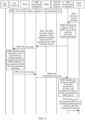
- FIG. 8A and FIG. 8B A specific procedure is as follows.
- the UE may alternatively send the PDU session establishment request message to a RAN device (for example, a base station), the RAN device (for example, the base station) forwards the PDU session establishment request message to the AMF network element, and the AMF network element receives the PDU session establishment request message from the RAN device (for example, the base station).
- a RAN device for example, a base station
- the RAN device for example, the base station
- the AMF network element receives the PDU session establishment request message from the RAN device (for example, the base station).
- the AMF network element may further assist in selecting the SMF network element based on the first indication information in the PDU session establishment request message (equivalent to the first session request message in this application).
- S803 The AMF network element sends a PDU session create session context request message to the SMF network element.
- the SMF network element receives the PDU session create session context request message.
- the PDU session create session context request message carries the DNN and/or the NSSAI of the home enterprise of the accessed tag.
- the DNN and/or the NSSAI indicate/indicates the network information of a target enterprise that the UE requests to establish.
- step S804 refer to the foregoing steps S604 and S704.
- the SMF network element determines an IP address (including a fully qualified domain name) and corresponding port number information of an appropriate PIOT server based on a received DNN of a home enterprise of a tag 1. If the SMF network element determines the IP address (including the fully qualified domain name) and the corresponding port number information of the PIOT 1 server, the SMF network element sends an N4 session establishment/modification request to a corresponding UPF (1) network element, where the N4 session establishment/modification request carries the IP address (including the fully qualified domain name) and the corresponding port number information of the PIOT 1 server.
- S807 The SMF network element sends an N1N2 message to the AMF network element.
- the SMF network element sends an N1N2 message to the AMF network element based on the received DNN and/or NSSAI of the home enterprise of the tag 1, where the N1N2 message carries an IP address and port number 1 information of the UPF (1) network element.
- the SMF network element sends an N1N2 message to the AMF network element based on the received DNN and/or NSSAI of the home enterprise of the tag 2, where the N1N2 message carries an IP address and port number 2 information of the UPF (2) network element.
- the SMF network element sends an N1N2 message to the AMF network element based on the received DNN and/or NSSAI of the home enterprise of the tag 3, where the N1N2 message carries an IP address and port number 3 information of the UPF (3) network element.
- the SMF network element sends an N1N2 message to the AMF network element based on the received DNN and/or NSSAI of the home enterprise of the tag 1, where the N1N2 message carries an IP address and port number 1 information of the UPF (1) network element.
- the AMF network element sends an N2 PDU session request message to the RAN.
- the RAN receives the N2 PDU session request message, where the N2 PDU session request message carries a NAS message, the NAS message is the foregoing N1 SM message, and the NAS message carries the IP address and the port number information of the UPF network element that are received by the AMF network element.
- the RAN allocates an air interface resource, establishes a wireless connection to the UE (the reader), and sends the foregoing received NAS message to the UE (the reader).
- S810 The RAN sends an N2 PDU session response message to the AMF network element.
- the UE sends the N2 PDU session response message to the AMF network element.
- S811 The UE (the reader) establishes a connection to the corresponding UPF network element based on the IP address and the port number of the UPF network element.
- the different UPF network elements may obtain the address information and the port number information of the corresponding PIOT servers for the home enterprises of the corresponding accessed tags, and establish connections to the corresponding PIOT servers based on the obtained address information and port number information of the corresponding PIOT servers.
- the UPF (1) network element establishes the connection to the PIOT 1 server based on the IP address of the UPF (1) network element, the port number 1 of the UPF (1) network element, and the IP address and the corresponding port number 1 of the PIOT 1 server.
- the UPF (2) network element establishes the connection to the PIOT 2 server based on the IP address of the UPF (2) network element, the port number 2 of the UPF (2) network element, and the IP address and the corresponding port number 2 of the PIOT 2 server.
- the UPF (1) network element establishes the connection to the PIOT 1 server based on the IP address of the UPF (1) network element, the port number 1 of the UPF (1) network element, and the IP address information and the corresponding port number 1 of the PIOT 1 server.
- the UPF (1) network element establishes the connection to the PIOT 2 server based on the IP address of the UPF (1) network element, the port number 2 of the UPF (1) network element, and the IP address and the corresponding port number 2 of the PIOT 2 server.
- the UPF (1) network element further establishes the connection to the PIOT 3 server based on the IP address of the UPF (1) network element, the port number 3 of the UPF (1) network element, and the IP address information and the corresponding port number 3 of the PIOT 3 server.
- step S812 Connections between a plurality of UPF network elements and a plurality of PIOT servers may be correspondingly established, or connections between one UPF network element and a plurality of PIOT servers may be correspondingly established.
- an association relationship (or a correspondence) between a connection between the UE (the reader) and one UPF network element and the connections between the UPF network element and the plurality of PIOT servers may be established.
- a connection between the UE (the reader) and the UPF network element corresponds to a connection between the UPF network element and one of the plurality of PIOT servers.
- a connection between UE and a UPF (1) corresponds to a connection between the UPF (1) and a PIOT (x) server, where x is a variable positive integer.
- step S814 the UE (the reader) may read information about the accessed tag.
- the information about the tag includes but is not limited to an identifier of the tag, such as an electronic product code EPC and a tag identifier TID.
- the accessed tag includes a tag 1, a tag 2, and a tag 3, and the UE (the reader) reads information about the tag 1, information about the tag 2, and information about the tag 3.
- Step S814 may be mutually referenced with the foregoing step S611 and step S714.
- the UE determines a corresponding appropriate PDU session for each accessed tag based on obtained information about the accessed tag and with reference to the enhanced URSP policy (the routing policy) shown in Table 1.
- IP descriptors of the foregoing URSP policy are an IP address and a port number of the UPF and a protocol ID.
- the UE determines a PDU 1 session based on the information about the accessed tag 1 and with reference to the enhanced URSP policy shown in Table 1.
- the UE determines a PDU 2 session based on information about the accessed tag 2 and with reference to the enhanced URSP policy shown in Table 1
- the UE determines a PDU 3 session based on information about the accessed tag 3 and with reference to the enhanced URSP policy shown in Table 1.
- the UPF network element receives the information about the tag.
- the UE sends the information about the tag 1 to the UPF (1) network element by using the PDU 1 session; the UE (the reader) sends the information about the tag 2 to the UPF (2) network element by using the PDU 2 session; and the UE (the reader) sends the information about the tag 3 to the UPF (3) network element by using the PDU 3 session.
- the UPF network element determines a target enterprise server of the tag based on the information about the tag obtained from the different IP addresses and/or port numbers, and selects a connection between the UPF network element and the PIOT server.
- the UPF network element may determine the connection between the UPF network element and the PIOT server based on the association relationship established in step S812.
- the UPF (3) network element selects the connection between the UPF network element (3) and the PIOT 3 server based on the association relationship in step S817.
- a case of a plurality of UPF network elements is included: If selecting the connection between the UPF network element (1) and the PIOT 1 server through step S817, in step S818, the UPF (1) network element transmits the information about the tag 1 to the PIOT 1 server through the connection between the UPF network element (1) and the PIOT 1 server. If selecting the connection between the UPF network element (2) and the PIOT 2 server through step S817, in step S818, the UPF (2) network element transmits the information about the tag 2 to the PIOT 2 server through the connection between the UPF network element (2) and the PIOT 2 server.
- step S8108 the UPF (3) network element transmits the information about the tag 3 to the PIOT 3 server through the connection between the UPF network element (3) and the PIOT 3 server.
- step S8108 the UPF (1) network element transmits the information about the tag 3 to the PIOT 3 server through the connection between the UPF network element (1) and the PIOT 3 server.
- S900 The UE (the reader) completes a registration procedure.
- the NEF network element receives the inventory request message, where the inventory request message carries information such as a tag operation command, a second tag filter (such as an inventory area, an inventory type, and an inventory rule), and a reporting trigger event (such as an inventory periodicity, a new tag access event, and tag leaving).
- a tag operation command such as an inventory command
- a second tag filter such as an inventory area, an inventory type, and an inventory rule
- a reporting trigger event such as an inventory periodicity, a new tag access event, and tag leaving.
- the NEF network element records an address of the PIOT server that sends the inventory request message.
- the NEF network element generates an operation identifier and sends first signaling to the AMF network element.
- the operation identifier (relative to the first identifier in this application) may be used by the NEF network element to uniquely determine the first signaling.
- the NEF network element may further determine, by determining the first signaling, the inventory request message that triggers the first signaling, to determine recorded address information of the PIOT server.
- the AMF network element receives the first signaling, where the first signaling carries the operation identifier and the information included in the foregoing inventory request message, namely, the information such as the tag operation command, the second tag filter (the inventory area), and the reporting trigger event. Because the first signaling is triggered by the foregoing inventory request message, the foregoing operation identifier may further identify the first message.
- the AMF network element sends a first message to the UE (the reader).
- the first message may be a NAS message.
- the UE receives the first message.
- the first message includes the first signaling. Therefore, the first message also includes the information such as the operation identifier (an identifier of the first message), the tag operation command, the second tag filter (the inventory area), and the reporting trigger event.
- S905 The UE (the reader) identifies and determines a first tag based on the second tag filter.
- the first tag may be a group of tags that meet a tag filter rule, or may be a tag identified by a specified tag. This is not limited in this embodiment of this application.
- the second tag filter may be configured to match the corresponding ID for the accessed tag, and the second tag filter may be further configured to determine the corresponding operation identifier based on the tag ID.
- the second tag filter may include a correspondence between the tag ID and the operation identifier. That is, one tag ID corresponds to one operation identifier, or a plurality of tag IDs correspond to one operation identifier.
- one operation identifier may be used to determine a unique target server, but one target server may correspond to a plurality of operation identifiers. That is, a same target server may generate different operation identifiers on the NEF network element in a plurality of tag inventory requests.
- S906 The UE (the reader) performs a tag operation based on the tag operation command.
- the AMF network element receives the second message, where the second message carries information about the accessed tag and the corresponding operation identifier.
- the uplink NAS transport message carries data (or information) about the tag (1), and the operation identifier (1) corresponding to the tag (1).
- the AMF network element sends a data transmission message to the NEF network element.
- the data transmission message may alternatively be a second message.
- the NEF network element has recorded the first message in advance, and has generated the unique operation identifier for the first message, that is, has recorded a correspondence between the operation identifier and the first message.
- the NEF network element may further determine the address information of the PIOT server based on the first message and the inventory request message that triggers the first message. Therefore, when receiving, via the AMF network element, the operation identifier fed back by the UE (the reader), the NEF network element may determine the address of the corresponding PIOT server.
- Embodiment 4 a connection between the tag and the PIOT server (namely, the application server of the enterprise) is established based on a control plane, and the reader performs tag identification and management.
- the solutions in Embodiment 4 are that the information about the tag is transmitted through the control plane, and therefore a session establishment procedure is not needed, so that a signaling procedure can be reduced, and a latency needed for transmitting the information about the tag can also be reduced.
- Embodiment 5 an example in which terminal device UE is used as a reader is used.
- the UE the reader mainly manages a tag, and transmits the tag through a control plane channel. That is, a PIOT server sends an instruction to an AMF network element via an NEF network element.
- the UE the reader may send information (information) about all accessed tags to the AMF network element (equivalent to the second network element in this application), and the AMF network element replaces the UE (the reader) to perform tag management and identification.
- FIG. 10 A specific procedure of transmitting information about a tag is as follows.
- S1000 The UE (the reader) completes a registration procedure.
- the PIOT server sends an inventory request message to an NEF network element.
- the NEF network element receives the inventory request message, where the inventory request message carries information such as a tag operation command, a second tag filter (such as an inventory area, an inventory type, and an inventory rule), and a reporting trigger event (such as an inventory periodicity, a new tag access event, and tag leaving).
- a tag operation command such as an inventory command
- a second tag filter such as an inventory area, an inventory type, and an inventory rule
- a reporting trigger event such as an inventory periodicity, a new tag access event, and tag leaving.
- Step S1001 may be mutually referenced with step S901.
- the NEF network element records an address of the PIOT server that sends the inventory request message.
- the NEF network element may separately record, for each received inventory request message, an address of a PIOT server (namely, an application server of an enterprise) from which the inventory request message is sent.
- a PIOT server namely, an application server of an enterprise
- the NEF network element generates an operation identifier and sends a first message to the AMF network element.
- the AMF network element receives the first message, where the first message carries the operation identifier and the information included in the foregoing inventory request message, namely, the information such as the tag operation command, the second tag filter (the inventory area), and the reporting trigger event. Because the first message is triggered by the foregoing inventory request message, the foregoing operation identifier may further identify the first message.
- the UE (the reader) receives the third message, where the third message carries the information such as the tag operation command and the reporting trigger event in the first message.
- the fourth message may be an uplink NAS message.
- the UE (the reader) performs the tag operation on all the tags within the signal range based on the tag operation command, includes an operation result (namely, information about the collected tags) in the fourth message (for example, the uplink NAS message), and sends the fourth message to the AMF network element.
- an operation result namely, information about the collected tags
- the fourth message for example, the uplink NAS message
- the AMF network element identifies and determines a first tag based on the corresponding second tag filter.
- the AMF network element may further include a corresponding operation identifier in information about the first tag.
- the NEF network element receives the second message, where the second message carries information about the accessed tag and the corresponding operation identifier.
- the NEF network element identifies the operation identifier in the second message, and determines the address of the corresponding PIOT server.
- the NEF network element sends the information about the tag to the corresponding PIOT server based on the address of the PIOT server.
- a connection between the UE (the reader) and the PIOT server (namely, the application server of the enterprise) is established based on a control plane, that is, the information about the tag is transmitted through the control plane. Therefore, a session establishment procedure is not needed, so that a signaling procedure can be reduced, and a latency needed for transmitting the information about the tag can also be reduced.
- the UE (the reader) may send, to the AMF network element, the information about the tag collected based on the operation command, and the AMF network element replaces the UE (the reader) to perform tag management and identification, to reduce a capability requirement of the reader (that is, the reader does not need to store and process the information related to the second tag filter).
- the processing unit 1102 when determining the first communication session based on the identifier of the first tag, is specifically configured to determine the first communication session from at least one communication session based on the identifier of the first tag and first routing policy information, where the first routing policy information includes a correspondence between the identifier of the first tag and an identifier of the first communication session.
- the processing unit 1102 before the receiving unit 1101 receives the first request, is further configured to: establish at least one communication session, where the at least one communication session includes the first communication session; and establish at least one piece of routing policy information, where each piece of routing policy information includes a correspondence between a corresponding tag and an identifier of a communication session.
- the processing unit 1102 when establishing the first communication session, is specifically configured to: send a first session request message via the sending unit 1103, where the first session request message includes first indication information, and the first indication information indicates home enterprise information of the first tag; receive a first response message via the receiving unit 1101, where the first response message is used to respond to the first session request message, the first response message includes first target address information and/or first port number information, and the first target address information and/or the first port number information are/is determined based on the first indication information; and establish the first communication session based on the first target address information and/or the first port number information, where the first target address information and/or the first port number information are/is used to determine a target server, and the target server is a server of a home enterprise.
- the sending unit 1103 when sending the information about the first tag by using the first communication session, is specifically configured to send the information about the first tag to the target server by using the first communication session.
- the processing unit 1102 when establishing the first communication session, is specifically configured to: send a second session request message via the sending unit 1103, where the second session request message includes second indication information, and the second indication information indicates home enterprise information of the first tag; receive a second response message via the receiving unit 1101, where the second response message is used to respond to the second session request message, the second response message includes second target address information and/or second port number information, and the second target address information and/or the second port number information are/is determined based on the second indication information; and establish the first communication session based on the second target address information and/or the second port number information, where the second target address information and/or the second port number information are/is used to determine a first user plane function network element, and the first user plane function network element is a user plane network element that provides a service for a home enterprise.
- the communication apparatus may include a one-to-one corresponding module or unit for performing the methods/operations/steps/actions described in the first user plane function network element in the first method embodiment.
- the module or the unit may be a hardware circuit, or may be software, or may be implemented by a combination of a hardware circuit and software.
- the apparatus may also have a structure shown in FIG. 11 .
- the communication apparatus 1100 may include a receiving unit 1101, a processing unit 1102, and a sending unit 1103.
- the receiving unit 1101 is configured to receive information about a first tag and first information, where the first information is used to determine a target server of the first tag.
- the processing unit 1102 is configured to determine the target server of the first tag based on the first information.
- the sending unit 1103 is configured to send the information about the first tag to the target server.
- the communication apparatus 1100 may further include a storage unit (not shown in FIG. 11 ).
- the storage unit may be configured to store a computer program, instructions, information, and/or the like for performing the methods/operations/steps/actions described in the first user plane function network element.
- the receiving unit 1101 when receiving the first information, is specifically configured to receive an N4 session request message, where the N4 session request message includes the first information, the first information indicates a first tag filter, and the first tag filter is used to match a corresponding server based on an identifier of a tag.
- the processing unit 1102 may be specifically configured to: determine the first tag filter based on the first information; and match the target server of the first tag based on an identifier of the first tag and by using the first tag filter.
- the receiving unit 1101 when receiving the information about the first tag, may be specifically configured to receive the information about the first tag from the first communication apparatus.
- the receiving unit 1101 is specifically configured to receive an N4 session request message, where the N4 session request message includes the first information, and the first information indicates address information of the first communication apparatus and/or third port number information for the first communication apparatus to send the information about the first tag.
- the receiving unit 1101 when receiving the first information, may be specifically configured to receive an N4 session request message, where the N4 session request message includes the first information, and the first information indicates fourth port number information for the first user plane function network element to receive the information about the first tag.
- the receiving unit 1101 when receiving the first information, may be specifically configured to receive an N4 session request message, where the N4 session request message includes the first information, and the first information indicates address information of the target server and/or fifth port number information for receiving the information about the first tag on the target server, where the address information and/or the fifth port number information of the target server are/is determined based on second indication information, the second indication information indicates home enterprise information of the first tag, and the second indication information is carried in a second session request message sent by a first communication apparatus.
- the communication apparatus 1100 may further include a storage unit (not shown in FIG. 11 ).
- the storage unit may be configured to store a computer program, instructions, information, and/or the like for performing the methods/operations/steps/actions described in the first network element.
- the sending unit 1103 is further configured to send a first message to a second network element, where the first message includes a first operation instruction, a second tag filter, and the first identifier, the first operation instruction indicates the second network element to obtain an identifier of at least one tag, and the second tag filter is used to determine information about a corresponding tag based on identifiers of different tags.
- an embodiment of this application further provides a communication device.
- the communication device uses steps performed by the first communication apparatus in the methods provided in the embodiments corresponding to in FIG. 5A , and FIG. 6A and FIG. 6B to FIG. 8A and FIG. 8B , and may be a device the same as the communication apparatus 1100 shown in FIG. 11 .
- the communication device 1200 includes a transceiver 1201, a processor 1202, and a memory 1203.
- the transceiver 1201, the processor 1202, and the memory 1203 are connected through a communication bus 1204, to implement data exchange.
- the memory stores an executable software module or a data structure
- the processor may perform a corresponding operation by invoking operation instructions (where the operation instructions may be stored in an operating system) stored in the memory.
- this application further provides a chip.
- the chip may include a processor and an interface circuit, to complete the method in the foregoing method embodiments and any possible implementation of the method embodiments.
- "Coupling" means that two components are joined directly or indirectly to each other, and the combination may be fixed or movable. Such combination may allow flowing liquid, electrical, electrical or other type of signal to communicate between the two components.
- module division is an example, is merely logical function division, and may be other division during actual implementation.
- functional modules in embodiments of this application may be integrated into one processor, or each of the modules may exist alone physically, or two or more modules may be integrated into one module.
- the integrated module may be implemented in a form of hardware, or may be implemented in a form of a software functional module.
- Examples of the computer-readable medium may include but are not limited to: a RAM, a ROM, an electrically erasable programmable read-only memory (electrically erasable programmable read-only memory, EEPROM), a compact disc read-only memory (compact disc read-Only memory, CD-ROM) or another optical disc storage, a disk storage medium or another disk storage device, or any other medium that can be configured to carry or store expected program code in an instruction or data structure form and can be accessed by the computer.
- any connection may be appropriately defined as a computer-readable medium.
Landscapes
- Engineering & Computer Science (AREA)
- Computer Networks & Wireless Communication (AREA)
- Signal Processing (AREA)
- Computer And Data Communications (AREA)
- Mobile Radio Communication Systems (AREA)
- Communication Control (AREA)
Applications Claiming Priority (2)
| Application Number | Priority Date | Filing Date | Title |
|---|---|---|---|
| CN202210714032.2A CN117319972A (zh) | 2022-06-22 | 2022-06-22 | 一种通信方法和装置 |
| PCT/CN2023/096809 WO2023246431A1 (zh) | 2022-06-22 | 2023-05-29 | 一种通信方法和装置 |
Publications (2)
| Publication Number | Publication Date |
|---|---|
| EP4539517A1 true EP4539517A1 (de) | 2025-04-16 |
| EP4539517A4 EP4539517A4 (de) | 2025-09-24 |
Family
ID=89272511
Family Applications (1)
| Application Number | Title | Priority Date | Filing Date |
|---|---|---|---|
| EP23826080.6A Pending EP4539517A4 (de) | 2022-06-22 | 2023-05-29 | Kommunikationsverfahren und -vorrichtung |
Country Status (5)
| Country | Link |
|---|---|
| US (1) | US20250119961A1 (de) |
| EP (1) | EP4539517A4 (de) |
| CN (1) | CN117319972A (de) |
| TW (1) | TW202408259A (de) |
| WO (1) | WO2023246431A1 (de) |
Cited By (1)
| Publication number | Priority date | Publication date | Assignee | Title |
|---|---|---|---|---|
| WO2025150015A1 (en) * | 2024-02-14 | 2025-07-17 | Lenovo (Singapore) Pte. Ltd. | Apparatus and method for ambient internet of things communication in a wireless communication system |
Families Citing this family (6)
| Publication number | Priority date | Publication date | Assignee | Title |
|---|---|---|---|---|
| EP4529244B1 (de) * | 2023-09-21 | 2025-11-26 | Nokia Technologies Oy | Optimierte ue-fähigkeit |
| GB2635747A (en) * | 2023-11-24 | 2025-05-28 | Nokia Technologies Oy | Apparatus, method and computer program |
| CN120786308A (zh) * | 2024-04-02 | 2025-10-14 | 华为技术有限公司 | 通信方法、装置、芯片、芯片模组、存储介质及程序产品 |
| CN120786729A (zh) * | 2024-04-03 | 2025-10-14 | 维沃移动通信有限公司 | 通信处理方法、装置、设备及可读存储介质 |
| WO2025231830A1 (en) * | 2024-05-10 | 2025-11-13 | Qualcomm Incorporated | Techniques for signaling visibility at a reader in an internet-of-things (iot) communication system |
| WO2025167140A1 (en) * | 2024-09-29 | 2025-08-14 | Lenovo (Beijing) Limited | Access stratum id of device |
Family Cites Families (6)
| Publication number | Priority date | Publication date | Assignee | Title |
|---|---|---|---|---|
| CN102318436B (zh) * | 2010-09-29 | 2014-07-30 | 华为技术有限公司 | 数据的传输方法、装置及系统 |
| CN109996346B (zh) * | 2017-12-29 | 2021-07-16 | 华为技术有限公司 | 会话建立方法、设备及系统 |
| CN110677345B (zh) * | 2018-07-02 | 2021-12-17 | 华为技术有限公司 | 一种用户报文传输方法及通信设备 |
| CN111901242B (zh) * | 2019-05-06 | 2022-04-22 | 华为技术有限公司 | 一种路由规则的管理方法及通信装置 |
| EP4154507B1 (de) * | 2020-05-22 | 2025-04-02 | Vivo Mobile Communication Co., Ltd. | Kommunikationsverfahren, mobile vorrichtung und netzwerkeinheit |
| WO2022110184A1 (zh) * | 2020-11-30 | 2022-06-02 | 华为技术有限公司 | 一种通信方法、装置及系统 |
-
2022
- 2022-06-22 CN CN202210714032.2A patent/CN117319972A/zh active Pending
-
2023
- 2023-05-29 EP EP23826080.6A patent/EP4539517A4/de active Pending
- 2023-05-29 WO PCT/CN2023/096809 patent/WO2023246431A1/zh not_active Ceased
- 2023-06-17 TW TW112122783A patent/TW202408259A/zh unknown
-
2024
- 2024-12-19 US US18/987,947 patent/US20250119961A1/en active Pending
Cited By (1)
| Publication number | Priority date | Publication date | Assignee | Title |
|---|---|---|---|---|
| WO2025150015A1 (en) * | 2024-02-14 | 2025-07-17 | Lenovo (Singapore) Pte. Ltd. | Apparatus and method for ambient internet of things communication in a wireless communication system |
Also Published As
| Publication number | Publication date |
|---|---|
| WO2023246431A1 (zh) | 2023-12-28 |
| US20250119961A1 (en) | 2025-04-10 |
| TW202408259A (zh) | 2024-02-16 |
| CN117319972A (zh) | 2023-12-29 |
| EP4539517A4 (de) | 2025-09-24 |
Similar Documents
| Publication | Publication Date | Title |
|---|---|---|
| EP4539517A1 (de) | Kommunikationsverfahren und -vorrichtung | |
| US11770444B2 (en) | Edge computing for internet of things security with blockchain authentication | |
| EP3175602B1 (de) | Server zur vorrichtungsstandortregistrierung in einem internet der dinge (iot) | |
| US20250227603A1 (en) | Communication method and communication apparatus | |
| CN117793733A (zh) | 一种通信方法及装置 | |
| US11206531B2 (en) | Method and device for connecting capability exposure function and network functions | |
| EP4618596A1 (de) | Kommunikationsverfahren und -vorrichtung | |
| KR20230107742A (ko) | 네트워크 기능 등록 방법, 발견 방법, 장치, 장비 및 매체 | |
| JP2025532156A (ja) | 通信方法及び装置 | |
| US20250176058A1 (en) | Communication method and apparatus | |
| CN116074805A (zh) | 一种寻呼方法及装置 | |
| CN113613248B (zh) | 认证事件处理方法及装置、系统 | |
| EP3934174B1 (de) | Verfahren, einrichtung und system zur verwaltung und steuerung von endgeräten | |
| WO2024222300A1 (zh) | 通信的方法和装置 | |
| EP4066518B1 (de) | Verfahren und vorrichtung zur gruppenverwaltung zur gruppenereignisüberwachung | |
| JP7428265B2 (ja) | 通信端末及びその方法 | |
| US20240396979A1 (en) | Communication method, communication apparatus, and communication system | |
| WO2024217183A1 (zh) | 一种通信方法及装置 | |
| CN120935557A (zh) | 通信方法及相关装置 | |
| WO2025167692A1 (zh) | 确定终端设备的方法及其相关装置 | |
| WO2025031121A1 (zh) | 一种通信方法及装置 | |
| CN117835394A (zh) | 一种通信方法及装置 | |
| WO2025107742A1 (zh) | 转发信息的方法及装置 | |
| CN120201038A (zh) | 一种通信方法及装置 | |
| WO2024217251A1 (zh) | 通信方法和通信装置 |
Legal Events
| Date | Code | Title | Description |
|---|---|---|---|
| STAA | Information on the status of an ep patent application or granted ep patent |
Free format text: STATUS: THE INTERNATIONAL PUBLICATION HAS BEEN MADE |
|
| PUAI | Public reference made under article 153(3) epc to a published international application that has entered the european phase |
Free format text: ORIGINAL CODE: 0009012 |
|
| STAA | Information on the status of an ep patent application or granted ep patent |
Free format text: STATUS: REQUEST FOR EXAMINATION WAS MADE |
|
| 17P | Request for examination filed |
Effective date: 20250107 |
|
| AK | Designated contracting states |
Kind code of ref document: A1 Designated state(s): AL AT BE BG CH CY CZ DE DK EE ES FI FR GB GR HR HU IE IS IT LI LT LU LV MC ME MK MT NL NO PL PT RO RS SE SI SK SM TR |
|
| A4 | Supplementary search report drawn up and despatched |
Effective date: 20250825 |
|
| RIC1 | Information provided on ipc code assigned before grant |
Ipc: H04W 4/80 20180101AFI20250819BHEP Ipc: H04W 4/70 20180101ALI20250819BHEP Ipc: H04W 76/10 20180101ALI20250819BHEP Ipc: H04W 76/11 20180101ALI20250819BHEP Ipc: H04W 76/12 20180101ALI20250819BHEP |
|
| DAV | Request for validation of the european patent (deleted) | ||
| DAX | Request for extension of the european patent (deleted) |