EP4541421A2 - Nalméfène pour la réduction de la consommation d'alcool dans des populations cibles spécifiques - Google Patents
Nalméfène pour la réduction de la consommation d'alcool dans des populations cibles spécifiques Download PDFInfo
- Publication number
- EP4541421A2 EP4541421A2 EP24221142.3A EP24221142A EP4541421A2 EP 4541421 A2 EP4541421 A2 EP 4541421A2 EP 24221142 A EP24221142 A EP 24221142A EP 4541421 A2 EP4541421 A2 EP 4541421A2
- Authority
- EP
- European Patent Office
- Prior art keywords
- nalmefene
- patient
- alcohol
- day
- longer
- Prior art date
- Legal status (The legal status is an assumption and is not a legal conclusion. Google has not performed a legal analysis and makes no representation as to the accuracy of the status listed.)
- Pending
Links
Images






Classifications
-
- A—HUMAN NECESSITIES
- A61—MEDICAL OR VETERINARY SCIENCE; HYGIENE
- A61K—PREPARATIONS FOR MEDICAL, DENTAL OR TOILETRY PURPOSES
- A61K31/00—Medicinal preparations containing organic active ingredients
- A61K31/33—Heterocyclic compounds
- A61K31/395—Heterocyclic compounds having nitrogen as a ring hetero atom, e.g. guanethidine or rifamycins
- A61K31/435—Heterocyclic compounds having nitrogen as a ring hetero atom, e.g. guanethidine or rifamycins having six-membered rings with one nitrogen as the only ring hetero atom
- A61K31/47—Quinolines; Isoquinolines
- A61K31/485—Morphinan derivatives, e.g. morphine, codeine
-
- A—HUMAN NECESSITIES
- A61—MEDICAL OR VETERINARY SCIENCE; HYGIENE
- A61K—PREPARATIONS FOR MEDICAL, DENTAL OR TOILETRY PURPOSES
- A61K9/00—Medicinal preparations characterised by special physical form
- A61K9/0012—Galenical forms characterised by the site of application
- A61K9/0053—Mouth and digestive tract, i.e. intraoral and peroral administration
-
- A—HUMAN NECESSITIES
- A61—MEDICAL OR VETERINARY SCIENCE; HYGIENE
- A61K—PREPARATIONS FOR MEDICAL, DENTAL OR TOILETRY PURPOSES
- A61K9/00—Medicinal preparations characterised by special physical form
- A61K9/20—Pills, tablets, discs, rods
-
- A—HUMAN NECESSITIES
- A61—MEDICAL OR VETERINARY SCIENCE; HYGIENE
- A61K—PREPARATIONS FOR MEDICAL, DENTAL OR TOILETRY PURPOSES
- A61K9/00—Medicinal preparations characterised by special physical form
- A61K9/48—Preparations in capsules, e.g. of gelatin, of chocolate
-
- A—HUMAN NECESSITIES
- A61—MEDICAL OR VETERINARY SCIENCE; HYGIENE
- A61P—SPECIFIC THERAPEUTIC ACTIVITY OF CHEMICAL COMPOUNDS OR MEDICINAL PREPARATIONS
- A61P25/00—Drugs for disorders of the nervous system
-
- A—HUMAN NECESSITIES
- A61—MEDICAL OR VETERINARY SCIENCE; HYGIENE
- A61P—SPECIFIC THERAPEUTIC ACTIVITY OF CHEMICAL COMPOUNDS OR MEDICINAL PREPARATIONS
- A61P25/00—Drugs for disorders of the nervous system
- A61P25/30—Drugs for disorders of the nervous system for treating abuse or dependence
- A61P25/32—Alcohol-abuse
-
- A—HUMAN NECESSITIES
- A61—MEDICAL OR VETERINARY SCIENCE; HYGIENE
- A61P—SPECIFIC THERAPEUTIC ACTIVITY OF CHEMICAL COMPOUNDS OR MEDICINAL PREPARATIONS
- A61P43/00—Drugs for specific purposes, not provided for in groups A61P1/00-A61P41/00
Definitions
- the present invention relates to nalmefene for use in the reduction of alcohol consumption in a patient with alcohol dependence who has a high drinking risk level.
- the present invention also relates to nalmefene for use in the reduction of alcohol consumption in a patient with alcohol dependence who maintains a high DRL after an observation period following initial assessment.
- Nalmefene [17-(cyclopropyimethyl)-4,5-alpha-epoxy-6-methylenemorphinan-3,14-diol] has the following general formula: and can be prepared using methods that are well known in the art e.g. starting by manufacturing of naltrexone from noroxymorphone as described in WO 2012/059103 and subsequently manufacturing nalmefene from naltrexone e.g. by the Wittig reaction as described in WO 2010/136039 . The entire contents of each of WO 2012/059103 and WO 2010/136039 are incorporated herein by reference.
- Nalmefene is a known opioid system modulator, with a distinct ⁇ , ⁇ , and ⁇ receptor profile, which can inhibit pharmacological effects of both administered opioid agonists and endogenous agonists derived from the opioid system.
- the clinical usefulness of nalmefene comes from its ability to promptly and selectively reverse the effects of these opioid agonists.
- Nalmefene has primarily been developed for use in the management of alcohol dependence.
- a double-blind, placebo-controlled study has shown good effect of 20 to 80 mg daily oral dosing of nalmefene ( Mason et al., Arch. Gen. Psychiatry, (1999), Vol. 56: 719-724 ); while another study reported no evidence of superiority of nalmefene over placebo in a study evaluating 5, 20 and 40 mg daily doses of nalmefene ( Anton et al., J. Clin. Psychopharmacol. (2004), Vol. 24(4): 421-428 ).
- Risk levels according to Table 1 can be assessed e.g. by calculating mean daily alcohol consumption in g/day over a month such as over 4 weeks. There is a need for a new treatment for use in reduction of alcohol consumption. Reduction of alcohol consumption is likely to provide benefits associated with decreased risk of health-related harm and decreased number of adverse social consequences.
- the present invention relates to a nalmefene for use in the reduction of alcohol consumption in a patient with alcohol dependence, wherein said use comprises. the following steps;
- nalmefene is intended to include any forms of the compound, such as the free base and pharmaceutically acceptable salts.
- the free base and pharmaceutically acceptable salts include anhydrous forms and solvated forms such as hydrates.
- the anhydrous forms and the solvates include amorphous and crystalline forms.
- nalmefene is in the form of the hydrochloride.
- nalmefene is in the form of the hydrochloride dihydrate.
- HDD heavy drinking day
- nalmefene should be taken, preferably 1-2 hours prior to the anticipated time of drinking. If the patient has started drinking alcohol without taking nalmefene, the patient should take one dose as soon as possible after that.
- DRL pestking risk level
- Table 1 WHO Drinking Risk Levels (DRLs) of Alcohol Consumption DRL Total Alcohol Consumption (g/day) Men Women Very high risk >100 >60 High risk >60 to 100 >40 to 60 Medium risk >40 to 60 >20 to 40 Low risk 1 to 40 1 to 20
- Drinking Risk Levels according to Table 1 can be assessed e.g. by calculating mean daily alcohol consumption in g/day over a period such as 1 week or longer, such as 2 weeks or longer, such as 3 weeks or longer, such as 4 weeks or longer, such as 1 month or longer such as 2 months or longer, such as 3 months or longer, such as 4 months or longer, such as 5 months or longer, such as 6 months or longer, such as about 1 year.
- Assessment of DRL can be performed by specialists and/or physicians such as general practitioners and/or other health care providers based on patients estimates of their alcohol consumption.
- DRL was measured by assessment of mean daily alcohol consumption in g/day over a 4 week period up to the initial visit. After a 1-2 week observation period the drinking risk level was re-assessed by assessment of mean daily alcohol consumption in g/day over said 1-2 week observation period.
- high risk or “at least high risk” is intended to include the two groups defined as “high risk” and “very high risk” according to WHOsdrinking risk levels listed in Table 1, i.e. patients having drinking risk level corresponding to a total alcohol consumption of >60 g/day of pure alcohol for men and >40 g/day for women.
- the present invention does not distinguish between patients with high and very high drinking risk levels, and when the terms "high drinking risk level” or “high DRL” are used in a claim or in an embodiment of the invention it is intended to include both the group defined as “high risk” and the group defined as "very high risk” according to WHOs drinking risk levels listed in Table 1.
- ER head reducer abbreviated ER indicates a patient included in the three Lundbeck phase III studies (12014A, 12023A and 12013A) who had considerably reduced the alcohol consumption in the period between screening and randomisation. More specifically, patients defined as ERs have reduced their alcohol consumption from high or medium DRL to a level below medium drinking risk level i.e. said patients had an alcohol consumption of 0-40 g/day for men and 0-20 g/day for women estimated as the mean daily alcohol consumption in a 1-2 week period between screening and randomization.
- an "observation period in accordance with clinical practice” is an observation following initial assessment of the DRL. Said period is preferably 1-2 weeks most preferably about 2 weeks.
- the term "adult” indicates a person who is at least 16 years old such as at least 18 years old.
- the term "adolescent” indicates a person who is 12-18. years old such as 12-16 years old.
- the terms "motivational support” and “counseling focused on enhanced treatment adherence and reduced alcohol consumption” indicate psychological motivation-enhancing interventions and can be used interchangeably with the terms “psychosocial support” or “psychosocial intervention focused on treatment adherence and reducing alcohol consumption”.
- Said motivational support can be administered by a specialist and/or a physician such as a general practitioner and/or other health care providers.
- One example of such interventions is the BRENDA model, which is a time-limited, patient-centered clinical motivational intervention that complements the use of medication with focus on changing behavior and increasing medication adherence.
- the BRENDA model has been described by Starosta et al., J. Psychiatr. Pract. (2006), Vol.
- the term "initial motivational support” indicates such motîvation-enhancing interventions provided to the patient prior to treatment with nalmefene.
- the term “ongoing motivational support” indicates such motivation-enhancing interventions provided to the patient concurrent to treatment with nalmefene e.g. on a recurrent basis.
- “Pharmaceutical composition” refers to a dose such as an oral dose form, such as a solid oral dose form, typically tablets or capsules. In a preferred embodiment, said dose form is suitable for as-needed dosing. Said pharmaceutical composition typically comprises a therapeutically effective amount of nalmefene and one or more pharmaceutically acceptable carrier. “Pharmaceutical compositions of the present invention” refers to all pharmaceutical compositions covered by the claims and description.
- a "unit dosage form” refers to a formulation unit of a pharmaceutical composition e.g. one tablet or capsule.
- terapéuticaally effective amount of a compound means the amount/dose of a compound or pharmaceutical composition that is sufficient to produce an effective response (i.e., a biological or medical response of a tissue, system, animal or human sought by a researcher, veterinarian, medical doctor or other clinician) upon administration to a patient.
- the "therapeutically effective amount” will vary depending on, inter alia, the disease and its severity, and on the age, weight, physical condition and responsiveness of the patient to be treated.
- the “therapeutically effective amount” may vary if the compound of the invention is combined with one or more compounds: In such a case the amount of a given compound might be lower, such as a sub-effective amount.
- a "therapeutically effective amount" of nalmefene is 18 mg.
- treatment refers to the management and care of a patient for the purpose of combating a condition, such as a disease or a disorder.
- the term is intended to include the full spectrum of treatments for a given condition from which the patient is suffering, such as administration of the active compound to alleviate the symptoms or complications, to delay the progression of the disease, disorder or condition, to alleviate or relieve the symptoms and complications, and/or to cure or eliminate the disease, disorder or condition as well as to prevent the condition, wherein prevention is to be understood as the management and care of a patient for the purpose of combating the disease, condition, or disorder and includes the administration of the active compounds to prevent the onset of the symptoms or complications.
- alcohol dependence is a commonly known term for a skilled person. In the revised 4th edition of the Diagnostic and Statistical Manual of Mental Disorders (DSM-IV-TR) (Diagnostic and Statistical Manual of Mental Disorders, 4th edition text revision, American Psychiatric Publishing, 2000 ). As used herein, the term “alcohol dependence” is defined as the presence of three or more of the seven areas of life impairment related to alcohol in the same 12-month period.
- TLFB Timeline Follow-back
- TLFB TLFB that was completed at the next visit was extended to cover the days that should have been recorded at the missing visit.
- Patients could use their personal calendars to help them recalling their drinking or they could use a calendar provided by the site for their personal use. Calendars were only to be used as a memory aid to support the patients' input to TLFB.
- the patients were asked to report their alcohol intake by standard units according to the national definition of a standard unit. The standard national units were defined in standard drink conversion cards distributed to the patients.
- Hepatic impairment can be assessed by the Child-Pugh scoring system, as defined in Child and Turcotte JG. Surgery and portal hypertension. In: The liver and portal hypertension. Edited by CG Child. Philadelphia: Saunders 1964:50-64 , the entire contents of which are incorporated herein by reference. Patients can be classified according to this system with e.g. "moderate or severe hepatic impairment".
- Renal impairment can be assessed by measuring estimated global filtration rate (eGFR) as described in Stevens et al., N. Engl, J. Med. (2006) 354:2473-2483 , the entire contents of which are incorporated herein by reference .
- Patients with “severe renal impairment” are classified by an eGFR ⁇ 30 ml/min per. 1.73 m 2 .
- the patients' clinical status, social situation, and alcohol consumption pattern were evaluated.
- the drinking risk level was re-assessed by calculating mean daily alcohol consumption in g/day over the 1- to 2-week observation period, and treatment with nalmefene was initiated together with counseling with focus on motivating the patients to adhere to the treatment and to change their drinking behavior.
- HDDs monthly number of heavy drinking days
- TAC mean daily total alcohol consumption
- the present invention relates to nalmefene for use in the reduction of alcohol consumption in a patient with alcohol dependence who has a high drinking risk level i.e.
- the present invention relates to nalmefene for use in the reduction of alcohol consumption in a patient with alcohol dependence who has at a least high drinking risk level according to WHO criteria, such as a high or very high drinking risk level according to WHO criteria.
- the present invention relates to nalmefene for use in the reduction of alcohol consumption in a patient with alcohol dependence who maintains the level of alcohol consumption after an observation period in accordance with clinical practice, such as an observation period of 1-2 weeks.
- the invention relates to nalmefene for use in the reduction of alcohol consumption in a patient with alcohol dependence who maintains at least medium DRL after an observation period in accordance with clinical practice, such as an observation period of 1-2 weeks.
- the present invention relates to nalmefene for use in the reduction of alcohol consumption in a patient with alcohol dependence who have a high drinking risk level, i.e. alcohol consumption >60 g/day of pure alcohol for men and >40 g/day for women, and who continue to have a high drinking risk level after an observation period in accordance with clinical practice.
- patients according to the invention have a diagnosis of alcohol dependence according to the DSM-IV-TR criteria. In one embodiment, patients according to the invention have a diagnosis of alcohol use disorder according to the DSM-V criteria.
- the present invention relates to a method for conducting a clinical study for assessment of the efficacy of a treatment on the reduction of alcohol consumption, wherein the method comprises the following steps;
- said patients selected for screening according to step a) have a primary diagnosis of DSM-IV alcohol dependence or DSM-V alcohol use disorder.
- said patients excluded in step c) have reduced their alcohol consumption to a drinking risk level from high or medium DRL to below medium DRL or from high DRL to below high DRL.
- nalmefene or a pharmaceutically acceptable salt thereof may be administered in any suitable way, e.g. orally or parenterally, and it may be presented in any suitable form for such administration, e.g. in the form of tablets, capsules, powders, syrups or solutions or dispersions for injection.
- nalmefene is administered in the form of a solid pharmaceutical entity, suitably as a tablet or a capsule or in the form of a suspension, solution or dispersion for injection.
- nalmefene may be administered with a pharmaceutically acceptable carrier, such as an adjuvant and/or diluent.
- Tablets may thus be prepared by mixing the active ingredients with an ordinary carrier, such as an adjuvant and/or diluent, and subsequently compressing the mixture in a tabletting machine.
- an adjuvant and/or diluents include: corn starch, lactose, talcum, magnesium stearate, gelatine, lactose, gums, and the like. Any other adjuvant or additive such as colorings, aroma, and preservatives may also be used provided that they are compatible with the active ingredients.
- the pharmaceutical compositions of the invention thus typically comprise a therapeutically effective amount of nalmefene and one or more pharmaceutically acceptable carrier.
- a suitable oral formulation of nalmefene is described in WO 2012/059103 .
- Nalmefene may be administered as an oral dose form, such as a solid oral dose form, typically tablets or capsules, or as a liquid oral dose form. Nalmefene may be administered in an immediate release dosage form or a controlled or sustained release dosage form. Nalmefene may be coriveniently administered orally in unit dosage forms, such as tablets or capsules, containing the active ingredient in an amount from about 1 to about 100 mg, such as from 5 to 50 mg.
- the pharmaceutical composition comprises from 10 mg to 20 mg, such as about 10 mg, about 11 mg, about 12 mg, about 13 mg, about 14 mg, about 15 mg, about 16 mg, about 17 mg, about 18 mg, about 19 mg or about 20 mg of nalmefene, In a preferred embodiment, the pharmaceutical composition comprises about 18 mg of nalmefene, In one embodiment, the unit dosage form comprises nalmefene in a therapeutically effective amount.
- nalmefene is taken as-needed, that is, on each day a patient perceives a risk of drinking alcohol, one dose of nalmefene should be taken, preferably 1-2 hours prior to anticipated time of drinking. In one embodiment, if the patient has started drinking alcohol without taking nalmefene, the patient should take one dose of nalmefene as soon aspossible after that.
- nalmefene is in the form of the hydrochloride dihydrate.
- Nalmefene according to the present invention is intended to be used for dosing in humans which are adults or adolescents.
- nalmefene is intended to be used for dosing in humans 12 years or older, such as 14 years or older, such as 16 years or older, such as 18 years or older.
- the first embodiment is denoted E1
- the second embodiment is denoted E2 and so forth.
- nalmefene The efficacy of nalmefene on the reduction of alcohol consumption in patients with alcohol dependence (DSM-IV) was evaluated in two efficacy studies (Study 12014A and Study 12023A), Both studies were randomised, double blind, two-parallel group, placebo controlled, and after 6 months of treatment, patients receiving nalmefene were re-randomised to receive either placebo or nalmefene in a 1 month run out period. The efficacy of nalmefene was also evaluated in a randomised, double blind, two parallel group, placebo controlled 1 year safety study (Study 12013A). The studies included 1941 patients, 1144 of whom were treated with nalmefene 18 mg in an as-needed dosing regimen.
- a 2-week screening period a 24-week double-blind treatment period
- a 4-week double-blind placebo-controlled run-out in each of the treatment arms
- a 4-week safety follow-up One to two weeks after the Screening Visit the patients were randomised 1:1 to 24 weeks of as-needed, double-blind treatment (Mainalmefene (18 mg) or placebo.
- MTP Main Treatment Period
- ROP double-blind Run-out Period
- TFB Timeline Follow-back
- the patients' clinical status, social situation, and alcohol consumption pattern were evaluated (based on patient reporting).
- the drinking risk level was re-assessed (i.e. the mean daily alcohol consumption over the 1-2 week assessment period was calculated), and treatment with nalmefene was initiated together with counseling with focus on motivating the patients to adhere to the treatment and to change their drinking behavior.
- a motivational and adherence enhancing intervention according to the BRENDA model, was administered to all the patients to support the patients in changing their behavior and to enhance adherence to treatment.
- the patients' alcohol intake was estimated based on national definitions of standard units (subsequently converted into grams of alcohol).
- a standard drink conversion card was distributed to each patient at the Screening Visit.
- Each patient was also provided with a calendar that he/she could use to support his/her input to the TLFB, or he/she could use a personal calendar, if preferred.
- baseline was defined as the month (that is, 4 weeks /28 consecutive days) preceding the Screening Visit.
- the investigationalmedicinal product (IMP) was taken as-needed.
- Each patient was instructed to take a maximum of one tablet on each day the patient perceived a risk of drinking alcohol, preferably 1 to 2 hours prior to the anticipated time of drinking. If the patient had started drinking alcohol without taking nalmfene, the patient was to take one tablet as soon as possible.
- the dates when nalmefene was taken/not taken were recorded using the TLFB method.
- the chosen comparator was placebo
- Table 5 summarizes the number of patients in the efficacy analysis for each patient group.
- a HDD was defined as a day with a consumption ⁇ 60 g alcohol for men and ⁇ 40 g for women. Data obtained at month 6 are listed in Table 6 below.
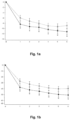
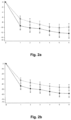
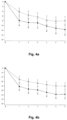
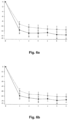
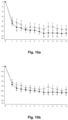
- the change in HDD and TAC over time in patients treated with nalmefene or placebo is furthermore reflected in Figures 1-12 . Table 6 . Results (Mixed model repeated measures (MMRM) analysis) at Month 6.
- Study Endpoint Population Mean difference to placebo in the change from baseline to month 6 p-value 12014A HDD Total population -2.3 days/month 0.002 High DRL at baseline -2.6 days/month 0.006 Total excl.
- Table 6 indicates that in all three studies the difference between nalmefene and placebo measured in HDDs and TAC was more pronounced in the group of patients with High DRL at baseline than in the total study population.
- Table 6 also indicates that in all three studies the difference between nalmefene and placebo measured in HDDs and TAC was more pronounced in the group of patients excluding ERs than in the total study population.
- table 6 clearly indicates that in all three studies the difference between nalmefene and placebo measured in HDDs and TAC was more pronounced in the group of patients with High DRL at baseline and randomization than in the total study population.
Landscapes
- Health & Medical Sciences (AREA)
- Animal Behavior & Ethology (AREA)
- Chemical & Material Sciences (AREA)
- Veterinary Medicine (AREA)
- Medicinal Chemistry (AREA)
- Public Health (AREA)
- General Health & Medical Sciences (AREA)
- Pharmacology & Pharmacy (AREA)
- Life Sciences & Earth Sciences (AREA)
- Epidemiology (AREA)
- Emergency Medicine (AREA)
- Nuclear Medicine, Radiotherapy & Molecular Imaging (AREA)
- Bioinformatics & Cheminformatics (AREA)
- Engineering & Computer Science (AREA)
- General Chemical & Material Sciences (AREA)
- Organic Chemistry (AREA)
- Chemical Kinetics & Catalysis (AREA)
- Nutrition Science (AREA)
- Physiology (AREA)
- Addiction (AREA)
- Biomedical Technology (AREA)
- Neurology (AREA)
- Neurosurgery (AREA)
- Psychiatry (AREA)
- Pharmaceuticals Containing Other Organic And Inorganic Compounds (AREA)
- Medicines That Contain Protein Lipid Enzymes And Other Medicines (AREA)
- Organic Low-Molecular-Weight Compounds And Preparation Thereof (AREA)
- Medicinal Preparation (AREA)
- Steroid Compounds (AREA)
Applications Claiming Priority (9)
| Application Number | Priority Date | Filing Date | Title |
|---|---|---|---|
| US201261664804P | 2012-06-27 | 2012-06-27 | |
| US201261721539P | 2012-11-02 | 2012-11-02 | |
| US201261736740P | 2012-12-13 | 2012-12-13 | |
| US201361788810P | 2013-03-15 | 2013-03-15 | |
| PCT/EP2013/063461 WO2014001427A1 (fr) | 2012-06-27 | 2013-06-27 | Utilisation de nalméfène pour réduire la consommation d'alcool dans des populations cibles spécifiques |
| EP16187426.8A EP3138564B1 (fr) | 2012-06-27 | 2013-06-27 | Nalméfène pour la réduction de la consommation d'alcool dans des populations cibles spécifiques |
| EP13732471.1A EP2866808B1 (fr) | 2012-06-27 | 2013-06-27 | Utilisation de nalméfène pour réduire la consommation d'alcool dans des populations cibles spécifiques |
| EP17206034.5A EP3345604B1 (fr) | 2012-06-27 | 2013-06-27 | Nalméfène pour la réduction de la consommation d'alcool dans des populations cibles spécifiques |
| EP23163177.1A EP4223296B1 (fr) | 2012-06-27 | 2013-06-27 | Nalméfène pour la réduction de la consommation d'alcool dans des populations cibles spécifiques |
Related Parent Applications (5)
| Application Number | Title | Priority Date | Filing Date |
|---|---|---|---|
| EP23163177.1A Division-Into EP4223296B1 (fr) | 2012-06-27 | 2013-06-27 | Nalméfène pour la réduction de la consommation d'alcool dans des populations cibles spécifiques |
| EP23163177.1A Division EP4223296B1 (fr) | 2012-06-27 | 2013-06-27 | Nalméfène pour la réduction de la consommation d'alcool dans des populations cibles spécifiques |
| EP16187426.8A Division EP3138564B1 (fr) | 2012-06-27 | 2013-06-27 | Nalméfène pour la réduction de la consommation d'alcool dans des populations cibles spécifiques |
| EP17206034.5A Division EP3345604B1 (fr) | 2012-06-27 | 2013-06-27 | Nalméfène pour la réduction de la consommation d'alcool dans des populations cibles spécifiques |
| EP13732471.1A Division EP2866808B1 (fr) | 2012-06-27 | 2013-06-27 | Utilisation de nalméfène pour réduire la consommation d'alcool dans des populations cibles spécifiques |
Publications (2)
| Publication Number | Publication Date |
|---|---|
| EP4541421A2 true EP4541421A2 (fr) | 2025-04-23 |
| EP4541421A3 EP4541421A3 (fr) | 2025-06-18 |
Family
ID=48703496
Family Applications (5)
| Application Number | Title | Priority Date | Filing Date |
|---|---|---|---|
| EP17206034.5A Active EP3345604B1 (fr) | 2012-06-27 | 2013-06-27 | Nalméfène pour la réduction de la consommation d'alcool dans des populations cibles spécifiques |
| EP16187426.8A Revoked EP3138564B1 (fr) | 2012-06-27 | 2013-06-27 | Nalméfène pour la réduction de la consommation d'alcool dans des populations cibles spécifiques |
| EP23163177.1A Active EP4223296B1 (fr) | 2012-06-27 | 2013-06-27 | Nalméfène pour la réduction de la consommation d'alcool dans des populations cibles spécifiques |
| EP13732471.1A Revoked EP2866808B1 (fr) | 2012-06-27 | 2013-06-27 | Utilisation de nalméfène pour réduire la consommation d'alcool dans des populations cibles spécifiques |
| EP24221142.3A Pending EP4541421A3 (fr) | 2012-06-27 | 2013-06-27 | Nalméfène pour la réduction de la consommation d'alcool dans des populations cibles spécifiques |
Family Applications Before (4)
| Application Number | Title | Priority Date | Filing Date |
|---|---|---|---|
| EP17206034.5A Active EP3345604B1 (fr) | 2012-06-27 | 2013-06-27 | Nalméfène pour la réduction de la consommation d'alcool dans des populations cibles spécifiques |
| EP16187426.8A Revoked EP3138564B1 (fr) | 2012-06-27 | 2013-06-27 | Nalméfène pour la réduction de la consommation d'alcool dans des populations cibles spécifiques |
| EP23163177.1A Active EP4223296B1 (fr) | 2012-06-27 | 2013-06-27 | Nalméfène pour la réduction de la consommation d'alcool dans des populations cibles spécifiques |
| EP13732471.1A Revoked EP2866808B1 (fr) | 2012-06-27 | 2013-06-27 | Utilisation de nalméfène pour réduire la consommation d'alcool dans des populations cibles spécifiques |
Country Status (35)
| Country | Link |
|---|---|
| US (4) | US20140005217A1 (fr) |
| EP (5) | EP3345604B1 (fr) |
| JP (3) | JP6258933B2 (fr) |
| KR (1) | KR20150023396A (fr) |
| CN (1) | CN104411313A (fr) |
| AU (1) | AU2013283281B2 (fr) |
| BR (1) | BR112014032555A2 (fr) |
| CA (1) | CA2874703C (fr) |
| CL (1) | CL2014003484A1 (fr) |
| CO (1) | CO7160087A2 (fr) |
| CY (3) | CY1118579T1 (fr) |
| DK (3) | DK3138564T3 (fr) |
| EA (1) | EA029908B1 (fr) |
| ES (4) | ES2663532T3 (fr) |
| FI (1) | FI3345604T3 (fr) |
| HK (1) | HK1255683A1 (fr) |
| HR (4) | HRP20161717T1 (fr) |
| HU (4) | HUE031110T2 (fr) |
| IL (1) | IL236035B (fr) |
| LT (3) | LT3345604T (fr) |
| ME (2) | ME03030B (fr) |
| MX (1) | MX371373B (fr) |
| MY (1) | MY166914A (fr) |
| NZ (1) | NZ702191A (fr) |
| PH (1) | PH12014502798A1 (fr) |
| PL (4) | PL4223296T3 (fr) |
| PT (3) | PT3345604T (fr) |
| RS (2) | RS57046B1 (fr) |
| RU (1) | RU2665373C2 (fr) |
| SG (1) | SG11201408704WA (fr) |
| SI (3) | SI3138564T1 (fr) |
| SM (3) | SMT201800164T1 (fr) |
| UA (1) | UA114199C2 (fr) |
| WO (1) | WO2014001427A1 (fr) |
| ZA (1) | ZA201409525B (fr) |
Families Citing this family (5)
| Publication number | Priority date | Publication date | Assignee | Title |
|---|---|---|---|---|
| US20140005217A1 (en) | 2012-06-27 | 2014-01-02 | H. Lundbeck A/S | Nalmefene for reduction of alcohol consumption in specific target populations |
| WO2014170353A1 (fr) * | 2013-04-17 | 2014-10-23 | H. Lundbeck A/S | Nalméfène pour le traitement de patients atteints de trouble du sommeil |
| EP3134090B1 (fr) | 2014-04-22 | 2019-06-05 | Otsuka Pharmaceutical Co., Ltd. | Combinaison de brexpiprazole et de nalmefene et son utilisation pour traiter des troubles liés à des substances |
| US20170071590A1 (en) * | 2015-09-10 | 2017-03-16 | Suture Armor Llc | Suture anchor |
| KR102699603B1 (ko) | 2018-04-20 | 2024-08-29 | 삼성전자주식회사 | 반도체 메모리 소자 |
Citations (2)
| Publication number | Priority date | Publication date | Assignee | Title |
|---|---|---|---|---|
| WO2010136039A1 (fr) | 2009-05-25 | 2010-12-02 | H. Lundbeck A/S | Préparation de chlorhydrate de nalmefene à partir de naltrexone |
| WO2012059103A1 (fr) | 2010-11-05 | 2012-05-10 | H. Lundbeck A/S | Procédé pour la fabrication de naltrexone |
Family Cites Families (7)
| Publication number | Priority date | Publication date | Assignee | Title |
|---|---|---|---|---|
| US3814768A (en) | 1971-11-26 | 1974-06-04 | Lewenstein E | 6-methylene-6-desoxy dihydro morphine and codeine derivatives and pharmaceutically acceptable salts |
| US4535157A (en) | 1983-11-01 | 1985-08-13 | Key Pharmaceuticals, Inc. | Process for making 6-desoxy-6-methylenenaloxone and 6-desoxy-6-methylenenaltrexone |
| US5086058A (en) * | 1990-06-04 | 1992-02-04 | Alko Ltd. | Method for treating alcoholism with nalmefene |
| PL368612A1 (en) * | 2001-08-14 | 2005-04-04 | Biotie Therapies Corporation | Method of treating alcoholism or alcohol abuse |
| UA102128C2 (en) | 2008-12-05 | 2013-06-10 | Х. Луннбек А/С | Nalmefene hydrochloride dihydrate |
| JP5738470B2 (ja) | 2011-03-31 | 2015-06-24 | イムネクス ファーマ イラチュ サナイ ヴェ ティジャレット ア.シェ.Imuneks Farma Ilac Sanayi Ve Ticaret A.S. | オピオイド拮抗体組成物、および強皮症の治療のためのその使用 |
| US20140005217A1 (en) | 2012-06-27 | 2014-01-02 | H. Lundbeck A/S | Nalmefene for reduction of alcohol consumption in specific target populations |
-
2013
- 2013-06-26 US US13/928,332 patent/US20140005217A1/en not_active Abandoned
- 2013-06-26 US US13/928,317 patent/US20140005216A1/en not_active Abandoned
- 2013-06-27 EP EP17206034.5A patent/EP3345604B1/fr active Active
- 2013-06-27 FI FIEP17206034.5T patent/FI3345604T3/fi active
- 2013-06-27 RU RU2014151156A patent/RU2665373C2/ru active
- 2013-06-27 HU HUE13732471A patent/HUE031110T2/en unknown
- 2013-06-27 NZ NZ702191A patent/NZ702191A/en not_active IP Right Cessation
- 2013-06-27 HR HRP20161717TT patent/HRP20161717T1/hr unknown
- 2013-06-27 DK DK16187426.8T patent/DK3138564T3/en active
- 2013-06-27 HU HUE17206034A patent/HUE063313T2/hu unknown
- 2013-06-27 CN CN201380034056.2A patent/CN104411313A/zh active Pending
- 2013-06-27 PL PL23163177.1T patent/PL4223296T3/pl unknown
- 2013-06-27 RS RS20180359A patent/RS57046B1/sr unknown
- 2013-06-27 WO PCT/EP2013/063461 patent/WO2014001427A1/fr not_active Ceased
- 2013-06-27 BR BR112014032555A patent/BR112014032555A2/pt not_active Application Discontinuation
- 2013-06-27 PT PT172060345T patent/PT3345604T/pt unknown
- 2013-06-27 SG SG11201408704WA patent/SG11201408704WA/en unknown
- 2013-06-27 DK DK17206034.5T patent/DK3345604T3/da active
- 2013-06-27 SI SI201330973T patent/SI3138564T1/en unknown
- 2013-06-27 SI SI201330449A patent/SI2866808T1/sl unknown
- 2013-06-27 ME MEP-2018-68A patent/ME03030B/fr unknown
- 2013-06-27 EP EP16187426.8A patent/EP3138564B1/fr not_active Revoked
- 2013-06-27 JP JP2015519085A patent/JP6258933B2/ja active Active
- 2013-06-27 HR HRP20250329TT patent/HRP20250329T1/hr unknown
- 2013-06-27 CA CA2874703A patent/CA2874703C/fr active Active
- 2013-06-27 PT PT137324711T patent/PT2866808T/pt unknown
- 2013-06-27 PL PL16187426T patent/PL3138564T3/pl unknown
- 2013-06-27 LT LTEP17206034.5T patent/LT3345604T/lt unknown
- 2013-06-27 EA EA201492152A patent/EA029908B1/ru not_active IP Right Cessation
- 2013-06-27 HU HUE23163177A patent/HUE070621T2/hu unknown
- 2013-06-27 ES ES16187426.8T patent/ES2663532T3/es active Active
- 2013-06-27 EP EP23163177.1A patent/EP4223296B1/fr active Active
- 2013-06-27 SM SM20180164T patent/SMT201800164T1/it unknown
- 2013-06-27 HU HUE16187426A patent/HUE036272T2/hu unknown
- 2013-06-27 DK DK13732471.1T patent/DK2866808T3/en active
- 2013-06-27 MX MX2014015488A patent/MX371373B/es active IP Right Grant
- 2013-06-27 EP EP13732471.1A patent/EP2866808B1/fr not_active Revoked
- 2013-06-27 SM SM20160471T patent/SMT201600471T1/it unknown
- 2013-06-27 ES ES13732471.1T patent/ES2609122T3/es active Active
- 2013-06-27 KR KR1020147035322A patent/KR20150023396A/ko not_active Abandoned
- 2013-06-27 UA UAA201500199A patent/UA114199C2/uk unknown
- 2013-06-27 AU AU2013283281A patent/AU2013283281B2/en not_active Ceased
- 2013-06-27 HR HRP20230762TT patent/HRP20230762T8/hr unknown
- 2013-06-27 LT LTEP13732471.1T patent/LT2866808T/lt unknown
- 2013-06-27 RS RS20161173A patent/RS55456B1/sr unknown
- 2013-06-27 ME MEP-2016-286A patent/ME02587B/fr unknown
- 2013-06-27 ES ES17206034T patent/ES2950492T3/es active Active
- 2013-06-27 SI SI201332054T patent/SI3345604T1/sl unknown
- 2013-06-27 MY MYPI2014003570A patent/MY166914A/en unknown
- 2013-06-27 EP EP24221142.3A patent/EP4541421A3/fr active Pending
- 2013-06-27 PT PT161874268T patent/PT3138564T/pt unknown
- 2013-06-27 LT LTEP16187426.8T patent/LT3138564T/lt unknown
- 2013-06-27 ES ES23163177T patent/ES3014068T3/es active Active
- 2013-06-27 PL PL13732471T patent/PL2866808T3/pl unknown
- 2013-06-27 PL PL17206034.5T patent/PL3345604T3/pl unknown
-
2014
- 2014-12-02 IL IL236035A patent/IL236035B/en active IP Right Grant
- 2014-12-15 PH PH12014502798A patent/PH12014502798A1/en unknown
- 2014-12-22 CO CO14280546A patent/CO7160087A2/es not_active Application Discontinuation
- 2014-12-22 CL CL2014003484A patent/CL2014003484A1/es unknown
- 2014-12-23 ZA ZA2014/09525A patent/ZA201409525B/en unknown
-
2016
- 2016-04-07 US US15/093,097 patent/US9642849B2/en active Active
- 2016-12-27 SM SM201600471T patent/SMT201600471B/it unknown
-
2017
- 2017-01-03 CY CY20171100004T patent/CY1118579T1/el unknown
- 2017-03-22 US US15/466,024 patent/US10034874B2/en active Active
- 2017-09-22 JP JP2017182608A patent/JP2018039810A/ja not_active Withdrawn
-
2018
- 2018-02-28 HR HRP20180363TT patent/HRP20180363T1/hr unknown
- 2018-03-27 CY CY20181100346T patent/CY1120097T1/el unknown
- 2018-11-20 HK HK18114830.5A patent/HK1255683A1/en unknown
-
2019
- 2019-04-25 JP JP2019083718A patent/JP6857684B2/ja active Active
-
2023
- 2023-07-25 CY CY20231100359T patent/CY1126140T1/el unknown
Patent Citations (2)
| Publication number | Priority date | Publication date | Assignee | Title |
|---|---|---|---|---|
| WO2010136039A1 (fr) | 2009-05-25 | 2010-12-02 | H. Lundbeck A/S | Préparation de chlorhydrate de nalmefene à partir de naltrexone |
| WO2012059103A1 (fr) | 2010-11-05 | 2012-05-10 | H. Lundbeck A/S | Procédé pour la fabrication de naltrexone |
Non-Patent Citations (8)
| Title |
|---|
| "International Guide for Monitoring Alcohol Consumption and Related Harm", 2000, AMERICAN PSYCHIATRIC PUBLISHING |
| "Remington: The Science and Practice of Pharmacy", 2005, LIPPINCOTT WILLIAMS & WILKINS |
| ANTON ET AL., J. CLIN. PSYCHOPHARMACOL., vol. 24, no. 4, 2004, pages 421 - 428 |
| CHILDTURCOTTE JG: "The liver and portal hypertension", 1964, SAUNDERS, article "Surgery and portal hypertension", pages: 50 - 64 |
| KARHU-VAARA ET AL., ALCOHOL. CLIN. EXP. RES., vol. 31, no. 7, 2007, pages 1179 - 1181 |
| MASON, ARCH. GEN. PSYCHIATRY, vol. 56, 1999, pages 719 - 724 |
| STAROSTA ET AL., J. PSYCHIATR. PRACT., vol. 12, no. 2, 2006, pages 80 - 89 |
| STEVENS ET AL., N. ENGL, J. MED, vol. 354, 2006, pages 2473 - 2483 |
Also Published As
Similar Documents
| Publication | Publication Date | Title |
|---|---|---|
| JP6857684B2 (ja) | 特定の標的集団におけるアルコール消費を低減するためのナルメフェン | |
| TW202508596A (zh) | 使用腫瘤壞死因子α之小分子抑制劑治療乾癬 | |
| JPWO2002078744A1 (ja) | 精神神経疾患治療薬 | |
| RU2552290C1 (ru) | Соединения опиоидных антагонистов и их применение при лечении склеродермии | |
| HK1229720A1 (en) | Nalmefene for reduction of alcohol consumption in specific target populations | |
| HK1229720B (en) | Nalmefene for reduction of alcohol consumption in specific target populations | |
| HK1208185B (en) | Nalmefene for reduction of alcohol consumption in specific target populations | |
| US20160058753A1 (en) | Nalmefene for Treatment of Patients with Mood Disorder | |
| WO2014170353A1 (fr) | Nalméfène pour le traitement de patients atteints de trouble du sommeil | |
| HK1219669A1 (en) | Dosage form containing oxycodone and naloxone | |
| HK1111604B (en) | Dosage form containing oxycodone and naloxone |
Legal Events
| Date | Code | Title | Description |
|---|---|---|---|
| PUAI | Public reference made under article 153(3) epc to a published international application that has entered the european phase |
Free format text: ORIGINAL CODE: 0009012 |
|
| STAA | Information on the status of an ep patent application or granted ep patent |
Free format text: STATUS: REQUEST FOR EXAMINATION WAS MADE |
|
| 17P | Request for examination filed |
Effective date: 20241219 |
|
| AC | Divisional application: reference to earlier application |
Ref document number: 2866808 Country of ref document: EP Kind code of ref document: P Ref document number: 3138564 Country of ref document: EP Kind code of ref document: P Ref document number: 3345604 Country of ref document: EP Kind code of ref document: P Ref document number: 4223296 Country of ref document: EP Kind code of ref document: P |
|
| AK | Designated contracting states |
Kind code of ref document: A2 Designated state(s): AL AT BE BG CH CY CZ DE DK EE ES FI FR GB GR HR HU IE IS IT LI LT LU LV MC MK MT NL NO PL PT RO RS SE SI SK SM TR |
|
| REG | Reference to a national code |
Ref country code: DE Ref legal event code: R079 Free format text: PREVIOUS MAIN CLASS: A61P0025320000 Ipc: A61K0031485000 |
|
| PUAL | Search report despatched |
Free format text: ORIGINAL CODE: 0009013 |
|
| AK | Designated contracting states |
Kind code of ref document: A3 Designated state(s): AL AT BE BG CH CY CZ DE DK EE ES FI FR GB GR HR HU IE IS IT LI LT LU LV MC MK MT NL NO PL PT RO RS SE SI SK SM TR |
|
| RIC1 | Information provided on ipc code assigned before grant |
Ipc: A61P 25/32 20060101ALI20250514BHEP Ipc: A61K 31/485 20060101AFI20250514BHEP |