EP4541786A2 - Procédé amélioré de préparation d'apalutamide - Google Patents
Procédé amélioré de préparation d'apalutamide Download PDFInfo
- Publication number
- EP4541786A2 EP4541786A2 EP25154332.8A EP25154332A EP4541786A2 EP 4541786 A2 EP4541786 A2 EP 4541786A2 EP 25154332 A EP25154332 A EP 25154332A EP 4541786 A2 EP4541786 A2 EP 4541786A2
- Authority
- EP
- European Patent Office
- Prior art keywords
- mixture
- apalutamide
- compound
- temperature
- solid form
- Prior art date
- Legal status (The legal status is an assumption and is not a legal conclusion. Google has not performed a legal analysis and makes no representation as to the accuracy of the status listed.)
- Pending
Links
Images








Classifications
-
- C—CHEMISTRY; METALLURGY
- C07—ORGANIC CHEMISTRY
- C07D—HETEROCYCLIC COMPOUNDS
- C07D401/00—Heterocyclic compounds containing two or more hetero rings, having nitrogen atoms as the only ring hetero atoms, at least one ring being a six-membered ring with only one nitrogen atom
- C07D401/02—Heterocyclic compounds containing two or more hetero rings, having nitrogen atoms as the only ring hetero atoms, at least one ring being a six-membered ring with only one nitrogen atom containing two hetero rings
- C07D401/04—Heterocyclic compounds containing two or more hetero rings, having nitrogen atoms as the only ring hetero atoms, at least one ring being a six-membered ring with only one nitrogen atom containing two hetero rings directly linked by a ring-member-to-ring-member bond
-
- C—CHEMISTRY; METALLURGY
- C07—ORGANIC CHEMISTRY
- C07C—ACYCLIC OR CARBOCYCLIC COMPOUNDS
- C07C227/00—Preparation of compounds containing amino and carboxyl groups bound to the same carbon skeleton
- C07C227/14—Preparation of compounds containing amino and carboxyl groups bound to the same carbon skeleton from compounds containing already amino and carboxyl groups or derivatives thereof
- C07C227/18—Preparation of compounds containing amino and carboxyl groups bound to the same carbon skeleton from compounds containing already amino and carboxyl groups or derivatives thereof by reactions involving amino or carboxyl groups, e.g. hydrolysis of esters or amides, by formation of halides, salts or esters
-
- C—CHEMISTRY; METALLURGY
- C07—ORGANIC CHEMISTRY
- C07C—ACYCLIC OR CARBOCYCLIC COMPOUNDS
- C07C229/00—Compounds containing amino and carboxyl groups bound to the same carbon skeleton
- C07C229/46—Compounds containing amino and carboxyl groups bound to the same carbon skeleton having amino or carboxyl groups bound to carbon atoms of rings other than six-membered aromatic rings of the same carbon skeleton
- C07C229/48—Compounds containing amino and carboxyl groups bound to the same carbon skeleton having amino or carboxyl groups bound to carbon atoms of rings other than six-membered aromatic rings of the same carbon skeleton with amino groups and carboxyl groups bound to carbon atoms of the same non-condensed ring
-
- C—CHEMISTRY; METALLURGY
- C07—ORGANIC CHEMISTRY
- C07B—GENERAL METHODS OF ORGANIC CHEMISTRY; APPARATUS THEREFOR
- C07B2200/00—Indexing scheme relating to specific properties of organic compounds
- C07B2200/13—Crystalline forms, e.g. polymorphs
-
- C—CHEMISTRY; METALLURGY
- C07—ORGANIC CHEMISTRY
- C07C—ACYCLIC OR CARBOCYCLIC COMPOUNDS
- C07C2601/00—Systems containing only non-condensed rings
- C07C2601/04—Systems containing only non-condensed rings with a four-membered ring
Definitions
- the presented invention relates to an improved process for preparation of compound of formula (1). i.e. Apalutamide or a salt thereof:
- the presented invention also relates to solid forms of intermediates used in the process for preparing Compound (1).
- the presented invention further relates to solid forms of Apalutamide, solvates of Apalutamide and to processes for preparation thereof.
- Apalutamide, compound of formula (1), chemically 4-[7-[6-Cyano-5-(trifluoromethyl)pyridin-3-yl]-8-oxo-6-thioxo-5,7-diazaspiro[3.4]oct-5-yl]-2-fluoro-N-methylbenzamide is an androgen receptor antagonist, that is useful for treatment of non-metastatic castration-resistant prostate cancer.
- Apalutamide was first disclosed in WO2007126765A2 by The University of California .
- the application also describes a process for preparation of Apalutamide.
- the disadvantages of disclosed process are use of toxic reagents (sodium cyanide) and use of microwave heating that is unsuitable for larger scale production.
- Several other processes for preparation of Apalutamide are disclosed in the prior art.
- the processes described in WO2016100652 and WO2016100645, both by Aragon Pharmaceuticals are relatively long and use toxic reagents (phosgene, sodium cyanide).
- Solid forms of Apalutamide are disclosed for example in WO2013184681A1 by Aragon Pharmaceuticals or WO2018112001A1 by Watson Laboratories or WO2019135254A1 by Mylan or WO2019242439A1 (Crystal Pharmaceutical ).
- the presented invention relates to a process for preparation of Compound (1), i.e. Apalutamide, or a salt thereof; comprising:
- the presented invention further relates to a process for isolation of a solid form of Compound (1) or solvates thereof.
- the presented invention also relates to solid forms of intermediates used in the process for preparing Compound (1).
- the presented invention further relates to a solid form of Apalutamide 1-methoxy-2-propanol solvate, Form 5, characterized by XRPD pattern having 2 ⁇ values 4.7°, 7.1° and 13.9° 2 ⁇ ( ⁇ 0.2 degrees 2 ⁇ ).
- the presented invention also relates to a solid form of Apalutamide, Form 3, characterized by:
- the presented invention also relates to a solid form of Apalutamide methyl isobutyl ketone solvate, Form 6, characterized by XRPD pattern having 2 ⁇ values 3.8°, 6.9°, 8.8°, 16.2° and 20.8° 2 ⁇ ( ⁇ 0.2 degrees 2 ⁇ ).
- the presented invention relates to a process for preparation of Apalutamide, i.e. Compound (1) or a salt thereof; comprising:
- R 1 and R 2 are preferably selected from C 1 -C 6 alkyl or substituted C 1 -C 6 alkyl, more preferably are both CH 3 .
- the non-nucleophilic base i.e. sterically hindered organic base that is a poor nucleophile used in step a.
- the base is lithium bis(trimethylsilyl)amide or sodium bis(trimethylsilyl)amide or potassium bis(trimethylsilyl)amide or sodium hydride or potassium hydride or lithium diisopropylamide or lithium diethylamide or lithium dicyclohexylamide or lithium 2,2,6,6-tetramethylpiperidine or Hauser bases ((R) 2 NMgX, R can be selected from for example isopropyl or cyclohexyl or 2,2,6,6-tetramethylpiperidinyl, X means a halogenide) or turbo-Hauser bases ((R) 2 NMgX-LiCl, R can be selected from for example isopropyl or cyclohexyl or 2,2,6,6-tetramethylpiperidinyl, X means a halogenide), preferably the base is lithium bis(trimethylsilyl)amide or sodium bis(trimethylsilyl)amide or potassium bis(trimethylsilyl)amide.
- the molar ration between the Compound (3) and the Compound (2) can be between 1:1.1 and 1:2, preferably it is between 1:1.1 and 1:1.3, more preferably it is between 1:1.02 and 1: 1.04.
- the molar ratio between the non-nucleophilic base and the Compound (2) can be between 1:0.8 and 1:2, preferably it is between 1:0.9 and 1: 1.5.
- the reaction step a. can be performed in a suitable solvent.
- the solvent can be selected from dimethylformamide (DMF) or tetrahydrofuran or 2-methyltetrahydrofurane or a mixture thereof, preferably it is tetrahydrofuran.
- the reaction step a. can be performed under a protective atmosphere, for example using argon or nitrogen atmosphere.
- Compound (2) is mixed with used solvent or solvent mixture.
- the mixture can be then cooled, for example to a temperature between -10°C and 15°C, preferably to a temperature between -10°C and 12°C.
- the non-nucleophilic base is the added to the mixture.
- the non-nucleophilic base can be added in form of a solution in a suitable solvent, for example the solvent used in the reaction such as tetrahydrofuran, or it can be added as solid.
- the non-nucleophilic base can be added in parts, for example in 2 or 3 or 4 or 5 or 6 parts. In case the non-nucleophilic base is used in form of a solution it can be added drop-wise.
- the temperature of the mixture while base addition can be preferably maintained between 0°C and 15°C, preferably between 0°C and 5°C. After base addition, the mixture can be stirred for between 5 and 60 minutes at a temperature between -10°C and 15°C, preferably between -10°C and 0°C.
- a solution of Compound (3) is then added.
- Compound (3) can be dissolved for example in the solvent used in the reaction, for example in tetrahydrofuran.
- the solution of Compound (3) can be added in several parts, for example in 2 or 3 or 4 or 5 or 6 parts, preferably it is added drop-wise.
- the temperature of the mixture while addition of Compound (3) can be preferably maintained between -10°C and 15°C, preferably between - 10°C and 0°C C and the mixture can be optionally stirred at this temperature for between 5 and 120 minutes, preferably for between 5 and 30 minutes.
- the reaction progress can be monitored by a suitable analytical technique, e.g. by HPLC or GC.
- an organic solvent non-miscible with water for example an ether such as diethyl ether or methyl tert-butyl ether is added.
- the addition of the non-miscible solvent improves the processing of the mixture in subsequent steps.
- the volume ratio between the solvent used in step a. and the water non-miscible organic solvent can be between 1.5:1 and 2.5:1, preferably it is between 1.6:1 and 2:1.
- a water solution of an acid for example hydrochloric acid, is added.
- the molar ration between the acid and the Compound (2) can be between 1:2 and 1:5.
- the temperature of the mixture while acid addition is maintained at a temperature below 20°C. The phases are separated.
- the washing step of the organic phase with the water solution of an acid can be repeated, for example 2 or 3 times.
- the organic phases can be then treated with active carbon for between 20 and 120 minutes.
- the weight ratio between the Compound (2) and the active carbon can be between 15:1 and 25:1.
- the mixture is filtered.
- a water miscible solvent for example an alcohol, such as ethanol or 1-propanol or 2-propanol or 2-butanol or isobutanol or 1-butanol, preferably 2-propanol, is added.
- the volume ratio between added solvent and the solvent used in step a. can be between 1:1 and 1:1.3.
- the mixture is concentrated at an elevated temperature to approximately 1/2 of the original volume and the mixture is cooled to a temperature between 20°C and 25°C to obtain a suspension.
- the suspension is stirred at a temperature between 20°C and 25°C for between 30 minutes and 180 minutes.
- the mixture is filtrated and obtained solid Compound (4) can be dried.
- the Compound (4) can be also isolated by following process. After the reaction is finished, the reaction mixture is cooled to a temperature between -10°C and -5°C. To the mixture an acid, for example HCl, is added. Concentration of the acid can be between 0.04 g/ml and 0.15 g/ml. The molar ratio between the acid and the Compound (2) can be between 1.8:1 and 3:1, preferably it is between 2:1 and 2.5:1. The mixture is heated to a temperature between 25°C and 35°C and the phases are separated. The organic phase was washed with 20% aqueous solution of NaCl (volume ratio between NaCl solution and the organic phase is approximatelly 3:1) and the layers were separated.
- an acid for example HCl
- Concentration of the acid can be between 0.04 g/ml and 0.15 g/ml.
- the molar ratio between the acid and the Compound (2) can be between 1.8:1 and 3:1, preferably it is between 2:1 and 2.5:1.
- the mixture is heated to a
- the organic layer is concentrated to 1/2 of the original volume and the solvent was switched to methanol using sequential addition and distillation of methanol. Then the mixture is concentrated to 1/2 of the original volume.
- isopropanol is added.
- the weight ratio between added isopropanol and methanol used for solvent switch can be between 1:2 and 1:3, preferably it is between 1:2.5 and 1:2.8.
- the mixture is heated to reflux and stirred at this temperature for between 15 and 45 minutes.
- the mixture is cooled to a temperature between -10°C and 0°C and stirred at this temperature for between 20 and 60 minutes to obtain a suspension.
- the suspension is filtered off and the filtration cake can be optionally washed with a suitable solvent for example with aqueous methanol and dried to provide compound (4).
- the Compound (4) can be further purified by crystallization from a solvent selected from 1-propanol or 2-propanol or 2-butanol or isobutanol or 1-butanol, preferably 2-propanol.
- the Compound (4) is mixed with the solvent.
- the concentration of Compound (4) in the solvent can be between 0.06 g/ml and 0.2 g/ml, preferably it is between 0.08 g/ml and 0.15 g/ml.
- the mixture can be heated, preferably to a reflux temperature of used solvent to dissolve the Compound (4).
- the mixture can be then cooled to a temperature between 50°C and 80°C and stirred at this temperature for between 1 and 10 hours.
- the mixture is then cooled to a temperature between 20°C and 25°C and stirred at this temperature for between 2 and 15 hours.
- the obtained solid Compound (4) is then filtered off and optionally dried.
- the obtained solid form can be characterized by XRPD pattern having 2 ⁇ values 4.8°, 7.1° and 15.9° 2 ⁇ ( ⁇ 0.2 degrees 2 ⁇ ).
- the solid form can be also characterized by XRPD pattern having 2 ⁇ values 4.8°, 7.1°, 10.9°, 14.4° and 15.9° 2 ⁇ ( ⁇ 0.2 degrees 2 ⁇ ).
- the solid form can be further characterized by XRPD pattern described in following Table: Angle 2-Theta ° Intensity % Angle 2-Theta ° Intensity % Angle 2-Theta ° Intensity % Angle 2-Theta ° Intensity % 4.8 100.0 16.5 18.6 23.4 9.3 28.9 5.0 7.1 86.8 16.7 41.8 24.0 9.8 29.1 4.1 9.6 11.7 18.5 33.3 24.4 42.6 29.5 8.2 10.5 5.2 18.7 11.5 24.7 32.9 29.8 4.0 10.9 27.3 19.3 5.1 25.1 9.1 30.3 6.8 11.5 12.0 19.6 4.9 25.7 9.6 30.7 8.3 13.0 6.9 19.8 54.0 26.1 24.7 31.1 3.3 13.4 3.3 20.4 20.2 26.2 34.6 31.7 4.0 13.8 28.8 21.1 14.4 26.5 14.6 32.2 12.8 14.4 52.5 21.4 10.1 27.3 3.6 32.5 10.7 15.3 4.9 21.6 34.3 27.9 24.1 33.0
- the solid form can be also characterized by XRPD pattern depicted in Figure 1 .
- the Compound (4) can be transformed into Compound (1), i.e. Apalutamide, for example by a process comprising reacting the Compound (4) with methylamine or a salt thereof.
- the reaction can be performed in a suitable solvent for example tetrahydrofuran (THF) or 2-methyl tetrahydrofuran (2-Me THF).
- Methylamine or the salt thereof can be used in a form of water solution, for example 10% or 20% or 30% or 40% or 50% solution.
- the concentration of Compound (4) in the solvent can be between 0.3 g/ml and 1 g/ml, preferably it is between 0.3 g/ml and 0.5 g/ml.
- the molar ratio between Compound (4) and methylamine or a salt thereof can be between 1:20 and 1:30, preferably it is between 1:23 and 1:27.
- Compound (4) is mixed with the solvent and the mixture is added to methylamine or a solution thereof at a temperature between -10°C and 10°C slowly, i.e. in the course of 5 or 10 or 20 or 30 or 40 or 50 or 60 minutes or drop-wise. The mixture is stirred at the same temperature for between 2 and 5 hours.
- the reaction progress can be monitored by a suitable analytical technique, e.g. by HPLC or GC.
- a solution of an acid in an alcohol is added, for example 6M HCl in isopropanol or a solution of acetic acid in water can be used.
- concentration of the acetic acid in water can be between 1 g/ml and 2 g/ml, preferably it is between 1.1 g/ml and 1.5 g/ml.
- the molar ration between the acid, preferably HCl or acetic acid, and compound of formula (4) can be between 20:1 and 30:1, preferably it is between 23:1 and 27:1.
- HCl is used during the addition a suspension is formed. The suspension can be stirred for between 10 and 60 minutes and filtered. The obtained solid can be optionally dried to provide Compound (1).
- acetic acid In the case when acetic acid is used the acid is added slowly, for example in the course of between 15 and 40 minutes. The temperature of the mixture is maintained between 0°C and 20°C during the addition. After the acid is added the mixture is heated to a temperature between 25°C and 30°C. The phases are separated and to the organic phase an aqueous solution of a carbonate, for example sodium or potassium carbonate is added. The phases are separated and to the organic phase an aqueous solution of a carbonate, for example sodium or potassium carbonate is added. The phases are separated. To the organic phase an aqueous solution of acetic acid was added. The concentration of acetic acid can be between 1 and 3 % (wt/wt).
- the weight ratio between added acetic acid and Compound (4) can be between 1.9:1 and 2.5:1, preferably it is between 1.9:1 and 2.2:1.
- the mixture is heated to a temperature between 55°C and 65°C and 2-propanol is added.
- the weight ratio between 2-propanol and added acetic acid can be between 1:2 and 1:3, preferably it is between 1:2.2 and 1:2.8.
- the phases are separated. To the organic phase 2-propanol is added. Weight ratio between added
- 2-propanol and 2-propanol added in the previous step can be between 6.5:1 and 7:5:1.
- the mixture was heated to reflux and stirred at this temperature for between 10 and 45 minutes.
- the mixture was cooled to a temperature between -10°C and 0°C during between 2 and 4 hours.
- the mixture was stirred at this temperature for between 20 and 60 minutes, solid mass was filtered off and optionally washed with cold 2-propanol and dried to obtain a solid form of Apalutamide, Compound (1), preferably in solid Form 7.
- the Compound (2) can be prepared by a process comprising reacting Compound (5) with an acid and alcohol R 2 OH, R 2 can be selected from alkyl or substituted alkyl or aryl or substituted aryl or C(O)R 3 or C(O)OR 3 , R 3 can be selected from C 1 -C 6 alkyl or substituted C 1 -C 6 alkyl or aryl or substituted aryl:
- R 1 is selected from C 1 -C 6 alkyl or substituted C 1 -C 6 alkyl or aryl or substituted aryl, preferably it is CH 3 .
- the acid can be selected from for example sulfuric acid or toluene sulfonic acid.
- the alcohol can be selected from methanol or ethanol or propanol or 2-propanol or butanol, preferably it is methanol.
- Compound (5) is mixed with the alcohol.
- the concentration of Compound (5) in the alcohol can be between 0.1 g/ml and 0.3 g/ml, preferably it is between 0.12 g/ml and 0.25 g/ml.
- To the mixture the acid is slowly added, for example in 2 or 3 or 4 or 5 or 6 parts, preferably it is added drop-wise.
- the mixture is then heated to a temperature between 50°C and the reflux temperature of used solvent and stirred at this temperature for between 2 and 10 hours, preferably between 3 and 6 hours.
- the reaction progress can be monitored by a suitable analytical technique, e.g. by HPLC or GC.
- the mixture is cooled to a temperature between 15°C and 30°C, preferably between 20°C and 35°C, more preferably between 30°C and 35°C.
- a water solution of a base is slowly added, preferably in the course between 10 and 120 minutes.
- base a hydroxide such as sodium hydroxide or potassium hydroxide or a carbonate such as sodium carbonate or potassium carbonate or a hydrogen carbonate such as sodium hydrogen carbonate or potassium hydrogen carbonate is used as a base the molar ratio between acid and the base can be between 0.5:1 and 1:1, preferably it is 1:1.
- the concentration of the base in water can be between 0.4 g/ml and 0.8 g/ml and the molar ratio between acid and the base can be between 1:3 and 1:5, preferably it is between 1:3 and 1:4.
- the mixture can be optionally cooled to a temperature between -10°C and 0°C.
- the mixture is stirred for between 30 minutes and 180 minutes. Obtained suspension is filtered off and obtained Compound (2) can be dried.
- Compound (2) corresponds to the following formula: and the obtained solid form can be characterized by XRPD pattern having 2 ⁇ values 10.2°, 14.5° and 17.4° 2 ⁇ ( ⁇ 0.2 degrees 2 ⁇ ).
- the solid form can be also characterized by XRPD pattern having 2 ⁇ values 10.2°, 14.5°, 15.2°, 17.4° and 19.0° 2 ⁇ ( ⁇ 0.2 degrees 2 ⁇ ).
- the solid form can be further characterized by XRPD pattern described in following Table: Angle 2-Theta ° Intensity % Angle 2-Theta ° Intensity % Angle 2-Theta ° Intensity % Angle 2-Theta ° Intensity % 10.2 100.0 19.3 3.8 25.5 30.5 30.9 17.8 12.3 21.9 19.6 17.8 25.9 3.2 31.4 3.0 13.6 13.5 20.4 7.5 26.1 5.8 31.7 6.2 14.5 69.3 20.8 18.3 26.7 8.3 32.0 4.3 15.2 25.2 21.3 21.2 27.3 51.3 32.3 4.4 15.5 15.6 22.0 69.0 28.0 8.1 32.8 2.0 16.7 3.9 22.5 8.1 28.4 1.9 33.1 2.6 17.4 58.1 23.0 3.8 28.9 3.2 33.5 2.5 17.6 24.7 23.2 10.5 29.1 4.4 33.7 2.5 18.1 15.0 23.8 13.2 30.2 5.4 34.4 1.9 19.0 50.2 24.7 26.7 30.5 2.4 34.8 2.4 2
- the solid form can be also characterized by XRPD pattern depicted in Figure 3 .
- the Compound (5) can be prepared reacting Compound (6) and Compound (7) or a salt thereof under a protective gas wherein the protective gas is optionally streamed above the reaction mixture:
- R 1 is selected from C 1 -C 6 alkyl or substituted C 1 -C 6 alkyl or aryl or substituted aryl, preferably it is CH 3 .
- the reaction can be done in a suitable solvent such as dimethylsulfoxide (DMSO) or dimethylformamide (DMF) or dimethylacetamide (DMAC), preferably dimethylsulfoxide or dimethylformamide is used.
- a suitable solvent such as dimethylsulfoxide (DMSO) or dimethylformamide (DMF) or dimethylacetamide (DMAC), preferably dimethylsulfoxide or dimethylformamide is used.
- Compound (7) can be used in a form of a salt for example HCl salt.
- the molar ration between Compound (6) and Compound (7) can be between 1:1.3 and 1:2, preferably it is between 1:1.4 and 1:1.6.
- the concentration of Compound (6) in the solvent can be between 0.1 g/ml and 0.4 g/ml, preferably it is between 0.25 g/ml and 0.35 g/ml.
- the concentration of Compound (7) in the solvent can be between 0.1 g/ml and 0.35 g/ml, preferably it is between 0.25 g/ml and 0.31 g/ml.
- the reaction is done in a presence of a base such as a hydroxide such as sodium hydroxide or potassium hydroxide or a carbonate such as sodium carbonate or potassium carbonate or a hydrogen carbonate such as sodium hydrogen carbonate or potassium hydrogen carbonate can be used.
- a base such as a hydroxide such as sodium hydroxide or potassium hydroxide or a carbonate such as sodium carbonate or potassium carbonate or a hydrogen carbonate such as sodium hydrogen carbonate or potassium hydrogen carbonate can be used.
- a base such as a hydroxide such as sodium hydroxide or potassium hydroxide or a carbonate such as sodium carbonate or potassium carbonate or a hydrogen carbonate such as sodium hydrogen carbonate or potassium hydrogen carbonate can be used.
- a catalyst such as CuCl or CuBr or Cu acetate preferably
- the molar ratio between used base and the Compound (6) can be between 2:1 and 5:1, preferably it is between 2.5:1 and 3.5:1.
- the molar ratio between the catalyst and the Compound (6) can be between 0.15:1 and 0.4:1, preferably it is between 0.2:1 and 0.3:1.
- the reaction is performed under a protective gas, for example using nitrogen or argon.
- a protective gas for example using nitrogen or argon.
- the rate can be between 1 and 100 l/minute (liter/minute), preferably it is between 10 and 100 l/minute, more preferably it is between 30 and 60 l/minute.
- Compounds (6) and (7) are mixed with the base and the catalyst in the solvent. The resulting mixture is stirred under the flow of the protective gas at a temperature between 80°C and the reflux temperature of used solvent for between 2 and 6 hours.
- the reaction progress can be monitored by a suitable analytical technique, e.g. by HPLC or GC. After the reaction is finished the mixture is cooled to a temperature between -20°C and 10°C. To the mixture water or an aqueous solution of an acid is added.
- the acid can be selected for example from HCl or phosphoric acid or formic acid, preferably HCl is used.
- concentration of the acid in water can be between 0.1 g/ml and 0.5 g/ml, preferably it is between 0.15 g/ml and 0.25 g/ml.
- the volume ratio between water and the solvent used in the reaction can be between 1.8:1 and 3:1.
- the volume ratio between aqueous solution of the acid and the solvent used in the reaction can be between 1.5:1 and 3:1, preferably it is between 1:1.5 and 1:2.
- the aqueous acid or water is added slowly, for example in the course of 5 or 10 or 20 or 30 or 40 minutes. The temperature of the mixture during the addition is maintained below 22°C.
- the temperature of the mixture is set to between 10°C and 25°C and pH of the mixture is set to 2.4 - 2.6 using for example hydrochloric acid (HCl).
- HCl hydrochloric acid
- the mixture is stirred for between 20 and 60 minutes to obtain a suspension.
- the obtained suspension is filtered off and the filtrated solid is washed with a water solution of an acid (for example with 0.01 M HCl solution) and optionally dried.
- Obtained solid can be purified for example by a process comprising dissolving the solid in a mixture of an acetate and an alcohol and washing obtained mixture with a water solution of an acid.
- concentration of the solid in the mixture can be between 0.05 g/ml and 0.3 g/ml, preferably it is between 0.09 g/ml and 0.15 g/ml.
- the acetate can be selected for example from methyl acetate or ethyl acetate or propyl acetate or butyl acetate or a mixture thereof.
- the alcohol can be selected for example from methanol or ethanol or propanol or 2-propanol or isopropanol or butanol or tert-butanol or a mixture thereof.
- the volume ration between the acetate and the alcohol can be between 8:1 and 12:1.
- the volume ration between the mixture of the acetate and the alcohol and the water solution of an acid can be between 1:1 and 2:1, preferably it is between 1.3:1 and 1.7:1.
- the phases are separated.
- the organic phase can be distilled off to obtain solid Compound (5) or Compound (5) can be isolated can be by using following procedure.
- the obtained organic phase is mixed with the solvent, preferably toluene.
- the volume ration between the solvent and acetate/alcohol mixture can be between 1:1 and 1:1.5.
- Obtained mixture can be optionally heated to a temperature between 50°C and 80°C to obtain a solution. In a case two phases system is formed, the phases are separated.
- the organic phase is concentrated to 35-45% of the original volume.
- the mixture is cooled to a temperature between 20°C and 25°C and stirred at this temperature for between 3 and 15 hours to obtain a suspension.
- the solid Compound (5) is filtered off and optionally dried.
- Compound (5) corresponds to the following formula: and the obtained solid form can be characterized by XRPD pattern having 2 ⁇ values 5.2°, 10.4° and 17.3° 2 ⁇ ( ⁇ 0.2 degrees 2 ⁇ ).
- the solid form can be also characterized by XRPD pattern having 2 ⁇ values 5.2°, 10.4°, 17.1°, 17.3° and 21.5° 2 ⁇ ( ⁇ 0.2 degrees 2 ⁇ ).
- the solid form can be also characterized by XRPD pattern depicted in Figure 2 .
- the presented invention also relates to solid form of Apalutamide 2-propanol solvate, Form 7, characterized by XRPD pattern having 2 ⁇ values 4.6°, 7.1°, 13.8° and 16.0° 2 ⁇ ( ⁇ 0.2 degrees 2 ⁇ ).
- the Form 7 can be further characterized by XRPD pattern having 2 ⁇ values 4.6°, 7.1°, 10.7°, 13.8°, 16.0°, 18.5° and 20.1° 2 ⁇ ( ⁇ 0.2 degrees 2 ⁇ ).
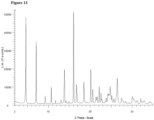
- the Form 7 can be further characterized by XRPD 2 ⁇ values ( ⁇ 0.2 degrees 2 ⁇ ) stated in following table: Angle (2 ⁇ ) Intensity (%) Angle (2 ⁇ ) Intensity (%) Angle (2 ⁇ ) Intensity (%) 4.6 94.1 20.1 38.1 26.5 28.9 7.1 67.7 20.6 16.8 27.5 7.4 9.2 9.9 21.4 8.7 27.9 4.2 10.7 19.2 21.7 8.8 28.5 4.0 11.7 4.9 22.2 19.8 29.3 2.4 13.0 5.3 22.6 12.8 30.1 8.9 13.8 38.2 22.8 6.4 30.6 5.3 14.2 4.7 23.6 4.1 31.2 4.8 14.9 3.5 23.8 7.3 32.1 6.6 16.0 100.0 24.2 12.3 32.8 4.5 16.8 22.0 24.8 19.6 34.1 3.3 18.5 24.7 25.2 10.5 34.4 3.5 19.2 3.2 25.7 6.8
- the Form 7 can be prepared by a process comprising:
- the Form 7 can be also prepared by a process comprising:
- the concentration of Apalutamide in 2-propanol can be between 0.04 g/ml and 0.06 g/ml.
- Apalutamide is mixed with 2-propanol, preferably at a temperature between 15°C and 25°C. The mixture is stirred for between 10 and 20 hours. The solid mass is filtered off and optionally dried, for example on air for between 2 and 10 hours, to provide Apalutamide 2-propanol solvate, Form 7.
- Concentration of Compound (1) in the mixture 2-propanol and methanol can be between 0.06 g/ml and 0.1 g/ml, preferably it is between 0.075 g/ml and 0.085 g/ml.
- Compound (1) can be dissolved at an elevated temperature, preferably at reflux temperature of the solvent mixture. After dissolving the mixture is optionally cooled, preferably to a temperature between -10°C and 45°C, more preferably between -10°C and 25°C. In a most preferred embodiment of the invention, the mixture is cooled to a temperature between -10°C and 0°C. The mixture is cooled preferably in the course of between 1 and 5 hours. The mixture is then stirred at this temperature for between 20 and 45 minutes. The solid mass is filtered off and optionally washed with cold 2-propanol and dried to obtain Compound (1) in solid Form 7.
- the presented invention further relates to a solid form of Apalutamide 1-methoxy-2-propanol solvate, Form 5, characterized by XRPD pattern having 2 ⁇ values 4.7°, 7.1° and 13.9° 2 ⁇ ( ⁇ 0.2 degrees 2 ⁇ ).
- the Form 5 can be further characterized by XRPD pattern having 2 ⁇ values 4.7°, 7.1°, 9.3°, 10.7°, 13.9° and 16.0° 2 ⁇ ( ⁇ 0.2 degrees 2 ⁇ ).
- the Form 5 can be further characterized by XRPD 2 ⁇ values ( ⁇ 0.2 degrees 2 ⁇ ) stated in following table: Angle (2 ⁇ ) Intensity (%) Angle (2 ⁇ ) Intensity (%) Angle (2 ⁇ ) Intensity (%) 4.7 90.7 20.4 7.0 27.5 3.9 7.1 26.9 21.2 8.8 27.9 4.5 9.3 22.6 21.8 11.1 28.3 8.1 10.7 19.5 22.5 11.6 29.7 4.0 13.9 100.0 22.8 6.0 29.9 6.5 14.9 7.8 23.2 3.9 30.1 4.5 16.0 21.5 23.8 9.7 30.7 5.3 16.6 10.3 24.2 12.0 31.9 3.6 18.4 21.5 24.4 14.9 32.5 4.5 18.5 21.7 24.8 10.1 34.2 4.7 19.2 4.0 26.1 14.6 34.7 3.4 19.9 15.3 26.8 5.0
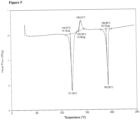
- the Form 5 can be also characterized by XRPD pattern depicted in Figure 7 or DSC pattern depicted in Figure 8 or TGA pattern depicted in Figure 9 or NMR pattern depicted in Figure 16 .
- the solid Form 5 can be prepared by a process comprising:
- the concentration of Apalutamide in 1-methoxy-2-propanol can be between 0.08 g/ml and 0.15 g/ml.
- the mixture is stirred at a temperature between 20° and 30 °C for between 2 and 6 hours.
- the solid mass is filtered off and optionally dried to provide Apalutamide 1-methoxy-2-propanol solvate, Form 5.
- the presented invention also relates to a solid form of Apalutamide, Form 3, characterized by:
- the Form 3 can be also characterized by:
- the Form 3 can be further characterized by XRPD 2 ⁇ values ( ⁇ 0.2 degrees 2 ⁇ ) stated in following table: Angle (2 ⁇ ) Intensity (%) Angle (2 ⁇ ) Intensity (%) Angle (2 ⁇ ) Intensity (%) 4.7 100.0 16.7 19.7 24.7 10.6 7.1 34.1 17.1 14.3 25.0 11.4 9.4 4.8 18.3 20.6 26.1 12.6 10.8 7.9 20.2 16.8 26.8 8.2 11.6 3.8 20.5 6.8 27.9 6.0 13.3 13.6 21.4 14.5 30.1 7.2 13.8 17.4 21.9 7.3 30.4 6.7 14.2 26.3 22.5 10.0 31.4 4.2 15.1 6.5 23.4 5.5 32.8 4.9 16.2 19.0 24.3 8.8
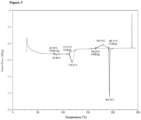
- the Form 3 can be also characterized by XRPD pattern depicted in Figure 4 or DSC pattern depicted in Figure 5 or TGA pattern depicted in Figure 6 .
- the Form 3 can be prepared by a process comprising:
- the concentration of Apalutamide in water can be between 0.08 g/ml and 0.15 g/ml.
- the mixture is stirred at a temperature between 15°C and 30°C for between 1 and 5 hours.
- the solid mass is filtered off and optionally dries to provide the solid Form 3.
- the solid Form 3 can be also obtained by exposing Apalutamide crystalline Form 7 or Form 5 to a temperature between 40°C and 60°C and humidity between 75% of relative humidity and 90% of relative humidity for between 30 and 40 days.
- Form 3 was tested at high humidity (75% RH/40 °C) for 6 months or at 90% RH/55 °C) for 1 month. There was no change in XRPD pattern after the test. Form 3 is therefore very stable at this conditions. When prior art Form A (disclosed in WO2013184681A1 ) was tested at the same conditions, the crystalline structure changed during the test.
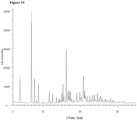
- the presented invention also relates to a solid form of Apalutamide methyl isobutyl ketone solvate, Form 6, characterized by XRPD pattern having 2 ⁇ values 3.8°, 6.9°, 8.8°, 16.2° and 20.8° 2 ⁇ ( ⁇ 0.2 degrees 2 ⁇ ).
- the Form 6 can be further characterized by XRPD pattern having 2 ⁇ values 3.8°, 6.9°, 7.7°, 8.8°, 15.4°, 16.2° and 20.8° 2 ⁇ ( ⁇ 0.2 degrees 2 ⁇ ).
- the Form 6 can be further characterized by XRPD 2 ⁇ values ( ⁇ 0.2 degrees 2 ⁇ ) stated in following table: Angle (2 ⁇ ) Intensity (%) Angle (2 ⁇ ) Intensity (%) Angle (2 ⁇ ) Intensity (%) 3.8 32.2 16.7 14.1 23.3 10.3 6.9 100.0 16.8 8.1 23.8 11.3 7.7 28.2 17.1 15.6 24.1 6.3 8.3 5.7 17.4 14.0 24.6 12.8 8.8 24.3 17.7 6.7 25.0 7.4 10.1 3.8 18.2 5.8 25.4 9.2 11.6 9.0 19.1 13.3 25.5 9.0 11.7 14.7 19.7 5.2 25.9 6.3 12.3 3.0 19.9 14.0 26.2 4.4 12.6 12.4 20.2 7.5 26.7 6.6 13.6 8.8 20.3 8.8 26.9 5.3 14.2 5.7 20.8 31.7 27.7 5.2 14.4 6.9 21.1 15.5 28.2 7.1 14.8 5.2 21.3 10.1 28.7 4.8 15.1 13.1 21.9 9.3 29.2 4.5 15.4 22.8 22.3 4.9
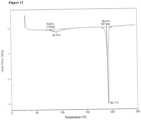
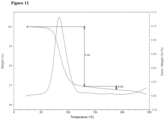
- the Form 6 can be also characterized by XRPD pattern depicted in Figure 10 or DSC pattern depicted in Figure 11 or TGA pattern depicted in Figure 12 .
- the Form 6 can be prepared by a process comprising:
- the concentration of Apalutamide in methyl isobutyl ketone can be between 0.14 mg/g and 0.18 mg/g.
- the mixture is heated to a temperature between 55°C and 70°C and stirred at this temperature for between 120 minutes.
- the mixture is then cooled to a temperature between 20°C and 30°C and stirred at this temperature for between 5 and 12 hours.
- the solid mass is filtered off and optionally dried to provide the solid Form 6.
- XRPD of obtained solid corresponds to XRPD pattern depicted in Figure 2 .
- XRPD pattern of obtained solid corresponds to XRPD pattern depicted in Figure 3 .
- the formed solid was collected by filtration, subsequently washed with 10 ml of water, suction dried on air and then dried in vacuum drier (80 °C, 100 torr, N2 strip, 16 hours). 2.62 g of Apalutamide (86% of theoretical yield) was obtained, 98.15 % purity (HPLC, IN, 275 nm).
- XRPD pattern of obtained solid corresponds to XRPD pattern depicted in Figure 4 .
- DSC pattern of obtained solid corresponds to DSC pattern depicted in Figure 5 .
- TGA pattern of obtained solid corresponds to TGA pattern depicted in Figure 6 .
- APM Form 7 was exposed to 40°C and 75% of relative humidity (or 55°C/90% RH) for 1 month to provide solid Form 3 of Apalutamide.
- XRPD pattern of obtained solid corresponds to XRPD pattern depicted in Figure 4 .
- DSC pattern of obtained solid corresponds to DSC pattern depicted in Figure 5 .
- TGA pattern of obtained solid corresponds to TGA pattern depicted in Figure 6 .
- XRPD pattern of obtained solid corresponds to XRPD pattern depicted in Figure 7 .
- DSC pattern of obtained solid corresponds to DSC pattern depicted in Figure 8.
- TGA pattern of obtained solid corresponds to TGA pattern depicted in Figure 9 .
- XRPD pattern of obtained solid corresponds to XRPD pattern depicted in Figure 10 .
- DSC pattern of obtained solid corresponds to DSC pattern depicted in Figure 11 .
- TGA pattern of obtained solid corresponds to TGA pattern depicted in Figure 12 .
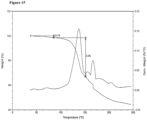
- Apalutamide was mixed with 6 ml of 2-propanol (2-PrOH). The mixture was heated to 70°C and stirred at this temperature for 0.5 h. The mixture was left cooled to ambient temperature (20-25°C) and stirred at this temperature for 12 hours. The suspension was filtered, the filter cake was washed with 2 ml of 2-PrOH and was dried 3 h on air to provide 0.34 g of solid Form 7 of Apalutamide 2-propanol solvate.
- XRPD pattern of obtained solid corresponds to XRPD pattern depicted in Figure 13 .
- DSC pattern of obtained solid corresponds to DSC pattern depicted in Figure 14 .
- TGA pattern of obtained solid corresponds to TGA pattern depicted in Figure 15 .
- XRPD pattern of obtained solid corresponds to XRPD pattern depicted in Figure 13 .
- DSC pattern of obtained solid corresponds to DSC pattern depicted in Figure 14 .
- TGA pattern of obtained solid corresponds to TGA pattern depicted in Figure 15 .
- Example 11 Preparation of compound of formula (5) (R 1 : CH 3 ), 1-((3-fluoro-4-(methoxycarbonyl)phenyl)amino)cyclobutane-1-carboxylic acid:
- DMSO dimethylsulfoxide
- XRPD pattern of obtained solid corresponds to XRPD pattern depicted in Figure 18 .
- Example 13 Preparation of compound of formula (4) (R1: CH3), methyl 4-(7-(6-cyano-5- (trifluoromethyl)pyridin-3-yl)-8-oxo-6-thioxo-5,7-diazaspiro[3.4]octan-5-yl)-2-fluorobenzoate
- the organic extract was the concentrated under vacuum to approximate volume 15 1, and then switched to methanol using sequential addition and distillation of 31.7 kg of methanol and finally concentrating the mixture to approximate volume 35 1.
- 11.8 kg of isopropanol was added and the mixture was heated under reflux for 20 minutes, then cooled to -5 °C, stirred for 30 minutes and filtered.
- the filtration cake was washed with 2x13kg of 60 % aqueous methanol and dried at 45 °C for 6 hours to give 7 kg of the title product, purity 99.6% (HPLC IN).
Landscapes
- Chemical & Material Sciences (AREA)
- Organic Chemistry (AREA)
- Chemical Kinetics & Catalysis (AREA)
- Organic Low-Molecular-Weight Compounds And Preparation Thereof (AREA)
- Pharmaceuticals Containing Other Organic And Inorganic Compounds (AREA)
- Acyclic And Carbocyclic Compounds In Medicinal Compositions (AREA)
Applications Claiming Priority (5)
| Application Number | Priority Date | Filing Date | Title |
|---|---|---|---|
| EP20194708 | 2020-09-04 | ||
| EP21162371 | 2021-03-12 | ||
| EP21178778 | 2021-06-10 | ||
| PCT/EP2021/074415 WO2022049265A1 (fr) | 2020-09-04 | 2021-09-03 | Procédé amélioré pour la préparation d'apalutamide |
| EP21773345.0A EP4208451A1 (fr) | 2020-09-04 | 2021-09-03 | Procédé amélioré pour la préparation d'apalutamide |
Related Parent Applications (1)
| Application Number | Title | Priority Date | Filing Date |
|---|---|---|---|
| EP21773345.0A Division EP4208451A1 (fr) | 2020-09-04 | 2021-09-03 | Procédé amélioré pour la préparation d'apalutamide |
Publications (2)
| Publication Number | Publication Date |
|---|---|
| EP4541786A2 true EP4541786A2 (fr) | 2025-04-23 |
| EP4541786A3 EP4541786A3 (fr) | 2025-08-06 |
Family
ID=77838841
Family Applications (2)
| Application Number | Title | Priority Date | Filing Date |
|---|---|---|---|
| EP25154332.8A Pending EP4541786A3 (fr) | 2020-09-04 | 2021-09-03 | Procédé amélioré de préparation d'apalutamide |
| EP21773345.0A Pending EP4208451A1 (fr) | 2020-09-04 | 2021-09-03 | Procédé amélioré pour la préparation d'apalutamide |
Family Applications After (1)
| Application Number | Title | Priority Date | Filing Date |
|---|---|---|---|
| EP21773345.0A Pending EP4208451A1 (fr) | 2020-09-04 | 2021-09-03 | Procédé amélioré pour la préparation d'apalutamide |
Country Status (4)
| Country | Link |
|---|---|
| US (1) | US12606539B2 (fr) |
| EP (2) | EP4541786A3 (fr) |
| CN (1) | CN116034101B (fr) |
| WO (1) | WO2022049265A1 (fr) |
Families Citing this family (1)
| Publication number | Priority date | Publication date | Assignee | Title |
|---|---|---|---|---|
| CN119301108A (zh) * | 2022-04-08 | 2025-01-10 | Bdr生命科学私人有限公司 | 制备阿帕鲁胺的新方法和中间体 |
Citations (11)
| Publication number | Priority date | Publication date | Assignee | Title |
|---|---|---|---|---|
| WO2007126765A2 (fr) | 2006-03-27 | 2007-11-08 | The Regents Of The University Of California | Modulateur de récepteur androgène pour le traitement du cancer de la prostate et de maladies associées au récepteur androgène |
| WO2008119015A2 (fr) | 2007-03-27 | 2008-10-02 | Sloan-Kettering Institute For Cancer Research | Synthèse de dérivés de la thiohydantoïne |
| WO2013184681A1 (fr) | 2012-06-07 | 2013-12-12 | Aragon Pharmaceuticals, Inc. | Formes cristallines d'un modulateur du récepteur des androgènes |
| WO2016100645A1 (fr) | 2014-12-19 | 2016-06-23 | Aragon Pharmaceuticals, Inc. | Procédés pour la préparation d'un composé diaryl-thiohydantoïne |
| WO2016100652A2 (fr) | 2014-12-19 | 2016-06-23 | Aragon Pharmaceuticals, Inc. | Procédé pour la préparation d'un composé diarylthiohydantoïne |
| WO2018112001A1 (fr) | 2016-12-13 | 2018-06-21 | Watson Laboratories Inc. | Formes à l'état solide de l'apalutamide |
| WO2018136001A1 (fr) | 2017-01-18 | 2018-07-26 | Scinopharm Taiwan, Ltd. | Procédé de préparation d'apalutamide |
| WO2019135254A1 (fr) | 2018-01-02 | 2019-07-11 | Mylan Laboratories Limited | Polymorphes d'apalutamide et leur préparation |
| WO2019229625A1 (fr) | 2018-05-30 | 2019-12-05 | Olon S.P.A. | Procédé pour la préparation d'apalutamide |
| WO2019242439A1 (fr) | 2018-06-20 | 2019-12-26 | 苏州科睿思制药有限公司 | Formes cristallines de l'arn-509, procédé de préparation correspondant et utilisation associée |
| US20200024250A1 (en) | 2018-03-28 | 2020-01-23 | Cadila Healthcare Limited | Process for preparation of apalutamide |
Family Cites Families (5)
| Publication number | Priority date | Publication date | Assignee | Title |
|---|---|---|---|---|
| CN108136939B (zh) * | 2015-08-03 | 2021-02-05 | 延锋安道拓座椅机械部件有限公司 | 用于可纵向调节的座椅的轨道的止动件 |
| CN109988077A (zh) * | 2017-12-29 | 2019-07-09 | 上海法默生物科技有限公司 | 一种阿帕鲁胺的合成方法及中间体 |
| CN108383749B (zh) * | 2018-01-30 | 2021-03-09 | 杭州科巢生物科技有限公司 | 阿帕鲁胺的合成方法及其中间体 |
| WO2020049598A2 (fr) * | 2018-09-08 | 2020-03-12 | Cipla Limited | Polymorphes d'apalutamide |
| CN110818631B (zh) * | 2019-11-08 | 2021-09-10 | 奥锐特药业股份有限公司 | 一种吡啶硫脲衍生物及其制备方法和应用 |
-
2021
- 2021-09-03 EP EP25154332.8A patent/EP4541786A3/fr active Pending
- 2021-09-03 WO PCT/EP2021/074415 patent/WO2022049265A1/fr not_active Ceased
- 2021-09-03 US US18/043,777 patent/US12606539B2/en active Active
- 2021-09-03 CN CN202180054429.7A patent/CN116034101B/zh active Active
- 2021-09-03 EP EP21773345.0A patent/EP4208451A1/fr active Pending
Patent Citations (11)
| Publication number | Priority date | Publication date | Assignee | Title |
|---|---|---|---|---|
| WO2007126765A2 (fr) | 2006-03-27 | 2007-11-08 | The Regents Of The University Of California | Modulateur de récepteur androgène pour le traitement du cancer de la prostate et de maladies associées au récepteur androgène |
| WO2008119015A2 (fr) | 2007-03-27 | 2008-10-02 | Sloan-Kettering Institute For Cancer Research | Synthèse de dérivés de la thiohydantoïne |
| WO2013184681A1 (fr) | 2012-06-07 | 2013-12-12 | Aragon Pharmaceuticals, Inc. | Formes cristallines d'un modulateur du récepteur des androgènes |
| WO2016100645A1 (fr) | 2014-12-19 | 2016-06-23 | Aragon Pharmaceuticals, Inc. | Procédés pour la préparation d'un composé diaryl-thiohydantoïne |
| WO2016100652A2 (fr) | 2014-12-19 | 2016-06-23 | Aragon Pharmaceuticals, Inc. | Procédé pour la préparation d'un composé diarylthiohydantoïne |
| WO2018112001A1 (fr) | 2016-12-13 | 2018-06-21 | Watson Laboratories Inc. | Formes à l'état solide de l'apalutamide |
| WO2018136001A1 (fr) | 2017-01-18 | 2018-07-26 | Scinopharm Taiwan, Ltd. | Procédé de préparation d'apalutamide |
| WO2019135254A1 (fr) | 2018-01-02 | 2019-07-11 | Mylan Laboratories Limited | Polymorphes d'apalutamide et leur préparation |
| US20200024250A1 (en) | 2018-03-28 | 2020-01-23 | Cadila Healthcare Limited | Process for preparation of apalutamide |
| WO2019229625A1 (fr) | 2018-05-30 | 2019-12-05 | Olon S.P.A. | Procédé pour la préparation d'apalutamide |
| WO2019242439A1 (fr) | 2018-06-20 | 2019-12-26 | 苏州科睿思制药有限公司 | Formes cristallines de l'arn-509, procédé de préparation correspondant et utilisation associée |
Also Published As
| Publication number | Publication date |
|---|---|
| CN116034101A (zh) | 2023-04-28 |
| EP4208451A1 (fr) | 2023-07-12 |
| US12606539B2 (en) | 2026-04-21 |
| US20230312507A1 (en) | 2023-10-05 |
| EP4541786A3 (fr) | 2025-08-06 |
| WO2022049265A1 (fr) | 2022-03-10 |
| CN116034101B (zh) | 2026-04-03 |
Similar Documents
| Publication | Publication Date | Title |
|---|---|---|
| EP2266991B1 (fr) | Processus de production de dérivé de thiazole | |
| CN112047888B (zh) | 一种合成恩杂鲁胺的方法 | |
| EP4159722A1 (fr) | Procédé de préparation d'agoniste du récepteur glp-1 | |
| EP4671243A1 (fr) | Finerénone, son procédé de préparation et intermédiaire de finerenone | |
| EP4541786A2 (fr) | Procédé amélioré de préparation d'apalutamide | |
| EP3042893B1 (fr) | Nouveau composé arylalkylamine cristallin et son procédé de production | |
| TWI541235B (zh) | 製備喹唑啉衍生物之方法 | |
| EP4063351A1 (fr) | Procédé de préparation de composés dérivés de quinoline | |
| EP2307354B1 (fr) | Procédé de préparation d un dérivé de benzoylbenzène acétamide | |
| CN108239040B (zh) | 硝酸2-(4-甲基噻唑-5-基)乙酯盐酸盐的制备方法 | |
| TWI769532B (zh) | 製造5-(4-((2s,5s)-5-(4-氯芐基)-2-甲基嗎啉基)哌啶-1-基)-1h-1,2,4-三唑-3-胺的方法 | |
| JPWO2002018403A1 (ja) | エリスロマイシン誘導体の製造方法 | |
| RU2620379C2 (ru) | СПОСОБ ПОЛУЧЕНИЯ ПРОИЗВОДНЫХ 2-ФЕНИЛ[1,2,4]ТРИАЗОЛО[1,5-а]ПИРИДИНА | |
| KR20180123851A (ko) | 신규 결정형 레날리도마이드 및 이의 제조방법 | |
| CN101128437A (zh) | 不含罗苏伐他汀烷基醚的罗苏伐他汀及其盐以及制备它们的方法 | |
| CN113045491B (zh) | 一种仑伐替尼及中间体的制备方法 | |
| US8093384B2 (en) | Processes for the preparation of alfuzosin | |
| CN113620869B (zh) | 一种贝曲西班的制备方法 | |
| CN113896730B (zh) | 一种枸橼酸托法替布及其中间体的制备方法 | |
| EP2212307B1 (fr) | Procédé de synthèse haute pureté pour la préparation de produits intermédiaires d'ester d'acide dodécahydro-naphto-furanyl-carbamique | |
| WO2023140809A1 (fr) | Nouveau polymorphe de vismodégib et procédé de préparation | |
| WO2004050604A2 (fr) | Procede permettant la preparation de terbinafine au moyen d'un catalyseur platine | |
| WO2022271109A1 (fr) | Nouveau polymorphe de vismodégib et son procédé de préparation | |
| KR20260021743A (ko) | 옥소피리딘 화합물의 신규 제조방법, 핵심 중간체 및 그 용도 | |
| EP2829540A1 (fr) | Synthèse d'aminopyridines substituées |
Legal Events
| Date | Code | Title | Description |
|---|---|---|---|
| PUAI | Public reference made under article 153(3) epc to a published international application that has entered the european phase |
Free format text: ORIGINAL CODE: 0009012 |
|
| STAA | Information on the status of an ep patent application or granted ep patent |
Free format text: STATUS: THE APPLICATION HAS BEEN PUBLISHED |
|
| AC | Divisional application: reference to earlier application |
Ref document number: 4208451 Country of ref document: EP Kind code of ref document: P |
|
| AK | Designated contracting states |
Kind code of ref document: A2 Designated state(s): AL AT BE BG CH CY CZ DE DK EE ES FI FR GB GR HR HU IE IS IT LI LT LU LV MC MK MT NL NO PL PT RO RS SE SI SK SM TR |
|
| REG | Reference to a national code |
Ref country code: DE Ref legal event code: R079 Free format text: PREVIOUS MAIN CLASS: C07C0229480000 Ipc: C07D0401040000 |
|
| PUAL | Search report despatched |
Free format text: ORIGINAL CODE: 0009013 |
|
| AK | Designated contracting states |
Kind code of ref document: A3 Designated state(s): AL AT BE BG CH CY CZ DE DK EE ES FI FR GB GR HR HU IE IS IT LI LT LU LV MC MK MT NL NO PL PT RO RS SE SI SK SM TR |
|
| RIC1 | Information provided on ipc code assigned before grant |
Ipc: C07D 401/04 20060101AFI20250701BHEP Ipc: C07C 229/48 20060101ALI20250701BHEP |
|
| STAA | Information on the status of an ep patent application or granted ep patent |
Free format text: STATUS: REQUEST FOR EXAMINATION WAS MADE |
|
| 17P | Request for examination filed |
Effective date: 20260206 |