EP4542014A1 - Procédé et appareil de prédiction de température pour système de refroidissement de moteur, dispositif, support, et véhicule - Google Patents
Procédé et appareil de prédiction de température pour système de refroidissement de moteur, dispositif, support, et véhicule Download PDFInfo
- Publication number
- EP4542014A1 EP4542014A1 EP23823248.2A EP23823248A EP4542014A1 EP 4542014 A1 EP4542014 A1 EP 4542014A1 EP 23823248 A EP23823248 A EP 23823248A EP 4542014 A1 EP4542014 A1 EP 4542014A1
- Authority
- EP
- European Patent Office
- Prior art keywords
- temperature
- cylinder wall
- engine
- moment
- cooling water
- Prior art date
- Legal status (The legal status is an assumption and is not a legal conclusion. Google has not performed a legal analysis and makes no representation as to the accuracy of the status listed.)
- Pending
Links
Images

Classifications
-
- F—MECHANICAL ENGINEERING; LIGHTING; HEATING; WEAPONS; BLASTING
- F02—COMBUSTION ENGINES; HOT-GAS OR COMBUSTION-PRODUCT ENGINE PLANTS
- F02D—CONTROLLING COMBUSTION ENGINES
- F02D35/00—Controlling engines, dependent on conditions exterior or interior to engines, not otherwise provided for
- F02D35/02—Controlling engines, dependent on conditions exterior or interior to engines, not otherwise provided for on interior conditions
- F02D35/025—Controlling engines, dependent on conditions exterior or interior to engines, not otherwise provided for on interior conditions by determining temperatures inside the cylinder, e.g. combustion temperatures
- F02D35/026—Controlling engines, dependent on conditions exterior or interior to engines, not otherwise provided for on interior conditions by determining temperatures inside the cylinder, e.g. combustion temperatures using an estimation
-
- F—MECHANICAL ENGINEERING; LIGHTING; HEATING; WEAPONS; BLASTING
- F01—MACHINES OR ENGINES IN GENERAL; ENGINE PLANTS IN GENERAL; STEAM ENGINES
- F01P—COOLING OF MACHINES OR ENGINES IN GENERAL; COOLING OF INTERNAL-COMBUSTION ENGINES
- F01P11/00—Component parts, details, or accessories not provided for in, or of interest apart from, groups F01P1/00 - F01P9/00
- F01P11/14—Indicating devices; Other safety devices
- F01P11/16—Indicating devices; Other safety devices concerning coolant temperature
-
- F—MECHANICAL ENGINEERING; LIGHTING; HEATING; WEAPONS; BLASTING
- F01—MACHINES OR ENGINES IN GENERAL; ENGINE PLANTS IN GENERAL; STEAM ENGINES
- F01P—COOLING OF MACHINES OR ENGINES IN GENERAL; COOLING OF INTERNAL-COMBUSTION ENGINES
- F01P3/00—Liquid cooling
- F01P3/02—Arrangements for cooling cylinders or cylinder heads
-
- F—MECHANICAL ENGINEERING; LIGHTING; HEATING; WEAPONS; BLASTING
- F01—MACHINES OR ENGINES IN GENERAL; ENGINE PLANTS IN GENERAL; STEAM ENGINES
- F01P—COOLING OF MACHINES OR ENGINES IN GENERAL; COOLING OF INTERNAL-COMBUSTION ENGINES
- F01P7/00—Controlling of coolant flow
- F01P7/14—Controlling of coolant flow the coolant being liquid
- F01P7/16—Controlling of coolant flow the coolant being liquid by thermostatic control
-
- F—MECHANICAL ENGINEERING; LIGHTING; HEATING; WEAPONS; BLASTING
- F01—MACHINES OR ENGINES IN GENERAL; ENGINE PLANTS IN GENERAL; STEAM ENGINES
- F01P—COOLING OF MACHINES OR ENGINES IN GENERAL; COOLING OF INTERNAL-COMBUSTION ENGINES
- F01P3/00—Liquid cooling
- F01P3/02—Arrangements for cooling cylinders or cylinder heads
- F01P2003/021—Cooling cylinders
-
- F—MECHANICAL ENGINEERING; LIGHTING; HEATING; WEAPONS; BLASTING
- F01—MACHINES OR ENGINES IN GENERAL; ENGINE PLANTS IN GENERAL; STEAM ENGINES
- F01P—COOLING OF MACHINES OR ENGINES IN GENERAL; COOLING OF INTERNAL-COMBUSTION ENGINES
- F01P2023/00—Signal processing; Details thereof
- F01P2023/08—Microprocessor; Microcomputer
-
- F—MECHANICAL ENGINEERING; LIGHTING; HEATING; WEAPONS; BLASTING
- F01—MACHINES OR ENGINES IN GENERAL; ENGINE PLANTS IN GENERAL; STEAM ENGINES
- F01P—COOLING OF MACHINES OR ENGINES IN GENERAL; COOLING OF INTERNAL-COMBUSTION ENGINES
- F01P2025/00—Measuring
- F01P2025/08—Temperature
- F01P2025/30—Engine incoming fluid temperature
-
- F—MECHANICAL ENGINEERING; LIGHTING; HEATING; WEAPONS; BLASTING
- F01—MACHINES OR ENGINES IN GENERAL; ENGINE PLANTS IN GENERAL; STEAM ENGINES
- F01P—COOLING OF MACHINES OR ENGINES IN GENERAL; COOLING OF INTERNAL-COMBUSTION ENGINES
- F01P2025/00—Measuring
- F01P2025/08—Temperature
- F01P2025/31—Cylinder temperature
-
- F—MECHANICAL ENGINEERING; LIGHTING; HEATING; WEAPONS; BLASTING
- F02—COMBUSTION ENGINES; HOT-GAS OR COMBUSTION-PRODUCT ENGINE PLANTS
- F02D—CONTROLLING COMBUSTION ENGINES
- F02D41/00—Electrical control of supply of combustible mixture or its constituents
- F02D41/02—Circuit arrangements for generating control signals
- F02D41/14—Introducing closed-loop corrections
- F02D41/1401—Introducing closed-loop corrections characterised by the control or regulation method
- F02D2041/1412—Introducing closed-loop corrections characterised by the control or regulation method using a predictive controller
-
- F—MECHANICAL ENGINEERING; LIGHTING; HEATING; WEAPONS; BLASTING
- F02—COMBUSTION ENGINES; HOT-GAS OR COMBUSTION-PRODUCT ENGINE PLANTS
- F02D—CONTROLLING COMBUSTION ENGINES
- F02D41/00—Electrical control of supply of combustible mixture or its constituents
- F02D41/02—Circuit arrangements for generating control signals
- F02D41/14—Introducing closed-loop corrections
- F02D41/1401—Introducing closed-loop corrections characterised by the control or regulation method
- F02D2041/1433—Introducing closed-loop corrections characterised by the control or regulation method using a model or simulation of the system
-
- F—MECHANICAL ENGINEERING; LIGHTING; HEATING; WEAPONS; BLASTING
- F02—COMBUSTION ENGINES; HOT-GAS OR COMBUSTION-PRODUCT ENGINE PLANTS
- F02D—CONTROLLING COMBUSTION ENGINES
- F02D2200/00—Input parameters for engine control
- F02D2200/02—Input parameters for engine control the parameters being related to the engine
- F02D2200/021—Engine temperature
- F02D2200/022—Estimation of engine temperature
Definitions
- the disclosure relate to the technical field of vehicle thermal management, in particular to a method and an apparatus for predicting a temperature of an engine cooling system, a device, a medium, and a vehicle.
- An automotive thermal management system needs to automatically adjust a cooling intensity according to driving conditions and environmental conditions, to ensure the corresponding components work within an optimal temperature range, specifically to ensure the engine works within a corresponding optimal temperature range.
- a temperature prediction model may be constructed to calculate a temperature of an engine at different moments, but the existing model has a slow calculation speed and a low accuracy.
- the purpose of the embodiments of the present disclosure is to provide a method and an apparatus for predicting a temperature of an engine cooling system, a device, a medium, and a vehicle, so as to achieve an effect of quickly and accurately predicting the temperature of the engine cooling system.
- a method for predicting a temperature of an engine cooling system includes: obtaining a first temperature of the engine cooling system at an initial moment, operating parameters of an engine and a target moment, in which the engine cooling system includes at least cooling water, an inner cylinder wall and an outer cylinder wall; determining a number of unit time steps required from the initial moment to the target moment according to a preset unit time step; and obtaining a target temperature of the engine cooling system at the target moment by performing a set number of iterative calculations according to the first temperature and the operating parameters of the engine, in which the set number is equal to the number of unit time steps.
- an apparatus for predicting a temperature of an engine cooling system includes: an obtaining module, configured to obtain a first temperature of the engine cooling system at an initial moment, operating parameters of an engine and a target moment, in which the engine cooling system includes at least cooling water, an inner cylinder wall and an outer cylinder wall; a first determining module, configured to determine a number of unit time steps required from the initial moment to the target moment according to a preset unit time step; and a second determining module, configured to obtain a target temperature of the engine cooling system at the target moment by performing a set number of iterative calculations according to the first temperature and the operating parameters of the engine, in which the set number is equal to the number of unit time steps.
- an embodiment of the present disclosure provides a device for predicting a temperature of an engine cooling system.
- the device includes a processor, a memory, and programs or instructions stored in the memory and executable on the processor.
- the programs or instructions are executed by the processor, the steps of the method for predicting a temperature of an engine cooling system are implemented as described in any embodiment of the present disclosure.
- an embodiment of the present disclosure provides a computer-readable storage medium, on which programs or instructions is stored.
- programs or instructions are executed by a processor, the steps of the method for predicting a temperature of an engine cooling system are implemented as described in any embodiment of the present disclosure.
- an embodiment of the present disclosure provides a vehicle.
- the vehicle includes at least one of: the apparatus for predicting a temperature of an engine cooling system as described in the first aspect; the device for predicting a temperature of an engine cooling system as described in the second aspect; and the computer readable storage medium as described in the third aspect.
- an embodiment of the present disclosure provides a computer program product, including computer programs which, when executed by a processor, implement the method for predicting a temperature of an engine cooling system as described in any embodiment of the present disclosure.
- the number of unit time steps required from the initial moment to the target moment is obtained, and the set number of iterative calculations are performed according to the first temperature of the engine cooling system at the initial moment and the operating parameter of the engine to obtain the target temperature of the engine cooling system at the target moment.
- the target temperature of the engine cooling system at the target moment there is no need to refer to immeasurable parameters caused during the use of the engine, such as a cylinder wall roughness of the engine.
- the target temperature of the engine cooling system at the target moment calculated in this method is more accurate.
- the calculation only needs to rely on the first temperature of the engine cooling system at the initial moment and the operating parameters of the engine, without relying on too many other parameters, thereby saving a calculation time and improving a calculation efficiency of the target temperature of the engine cooling system at the target moment.
- a temperature prediction model may be constructed. Specifically, there may be two types of models: a physical model and a fitting model, for calculating a temperature of the engine at different moments. However, the existing physical model and fitting model have the following defects.
- the existing physical model is calculated based on a time step and a space step.
- an inner cylinder wall of an engine to be calculated may be divided into several sections from an inner side of the inner cylinder wall to an outer side of the inner cylinder wall, and a temperature of each section from the inner side of the inner cylinder wall to the outer side of the inner cylinder wall is calculated in order, until a temperature of the outer side of the inner cylinder wall is calculated.
- a user only wants to know the temperature of the outer side of the inner cylinder wall, but does not need to know a temperature of a middle part from the inner side to the outer side of the inner cylinder wall.
- the above physical model needs to calculate temperatures of many middle sections, resulting in a slow calculation speed.
- the physical model requires many characteristic parameters of the engine cooling system, such as a roughness and a diameter of the cylinder wall.
- factors such as water stains may cause the cylinder wall roughness to change.
- the cylinder wall roughness of a different engine may be different. Therefore, in the calculation process, it is necessary to obtain cylinder wall roughness values of engines to be predicted one by one, which affects the calculation efficiency, also causes the physical model to reflect only common characteristics of the engines and cannot simulate personality of an engine.
- the calculation is generally based on a cylinder wall roughness in an engine manual. However, after the engine is used, its actual cylinder wall roughness may be inconsistent with the cylinder wall roughness in the manual, which may cause the calculated temperature to be inaccurate.
- the fitting model For the fitting model, a large amount of experimental data is required for training and simulation, which is time-consuming and labor-intensive.
- the engine system has a high degree of nonlinearity, and it is difficult to achieve a high level of model accuracy.
- the fitting model may only simulate operating conditions within a boundary of the training data, with a poor prediction ability and a poor model robustness, and cannot reflect the physical process. Therefore, it is difficult to correct errors in certain operating conditions.
- the fitting model is suitable for steady-state or static models, and has a poor dynamic performance.
- an embodiment of the present disclosure provides an method for predicting a temperature of an engine cooling system.
- the number of unit time steps required from the initial moment to the target moment is obtained, and the set number of iterative calculations are performed according to the first temperature of the engine cooling system at the initial moment and the operating parameters of the engine to obtain the target temperature of the engine cooling system at the target moment.
- the target temperature of the engine cooling system at the target moment there is no need to refer to immeasurable parameters caused during the use of the engine, such as a cylinder wall roughness of the engine.
- the target temperature of the engine cooling system at the target moment calculated in this method is more accurate.
- the calculation only needs to rely on the first temperature of the engine cooling system at the initial moment and the operating parameters of the engine, without relying on too many other parameters, thereby saving a calculation time and improving a calculation efficiency of the target temperature of the engine cooling system at the target moment.
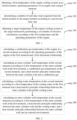
- FIG. 1 is a flowchart of a method for predicting a temperature of an engine cooling system according to an embodiment of the present disclosure.
- the execution subject of the method for predicting a temperature of an engine cooling system may be a server. It should be noted that the above-mentioned execution subject does not constitute a limitation on the present disclosure.
- the method for predicting a temperature of an engine cooling system may include the following steps 110 to 130.
- a first temperature of the engine cooling system at an initial moment, operating parameters of an engine, and a target moment are obtained.
- the cooling system may at least include cooling water, an inner cylinder wall and an outer cylinder wall.
- a number of unit time steps required from the initial moment to the target moment is determined according to a preset unit time step.
- a set number of iterative calculations are performed according to the first temperature and the operating parameters of the engine to obtain a target temperature of the engine cooling system at the target moment.
- the set number may be equal to the number of unit time steps.
- a first functional relationship may be obtained by fitting a double-layer flat plate model corresponding to the engine.
- the first functional relationship may be a functional relationship between a combustion gas temperature and the operating parameters of the engine.
- a set number of iterative calculations are performed according to the first temperature of the engine cooling system at the initial moment and the operating parameters of the engine, to obtain the target temperature of the engine cooling system at the target moment.
- the target temperature of the engine cooling system at the target moment there is no need to refer to immeasurable parameters caused during the use of the engine such as the cylinder wall roughness of the engine.
- the target temperature of the engine cooling system at the target moment calculated in this method is more accurate.
- the calculation only needs to rely on the first temperature of the engine cooling system at the initial moment and the operating parameters of the engine, without relying on too many other parameters, thereby saving the calculation time and improving the calculation efficiency of the target temperature of the engine cooling system at the target moment.
- the step 110 is introduced to obtain a first temperature of the engine cooling system at the initial moment, operating parameters of the engine and a target moment.
- the cooling system may at least include cooling water, an inner cylinder wall and an outer cylinder wall.
- the initial moment may be a moment at which a temperature of the engine cooling system starts to be predicted.
- the first temperature may be a temperature of the engine cooling system at the initial moment.
- the operating parameters may be operating state parameters of the engine, specifically a speed and a torque of the engine.
- the target moment may be a moment at which the temperature of the engine cooling system is to be predicted.
- temperatures of the engine cooling system within 1 hour in future will be predicated starting from 8:00 a.m. on April 18, 2022, 8:00 a.m. on April 18, 2022 is the initial moment, and 1 hour later (i.e. 9:00 a.m. on April 18, 2022) is the target moment.
- the first temperature of the engine cooling system at the initial moment and the operating parameters of the engine may be obtained by sensors on the engine or may be obtained through real-time testing, and the specific obtaining way is not limited herein.
- a number of unit time steps required from the initial moment to the target moment is determined according to a preset unit time step.
- the preset unit time step may be a pre-set unit time step.
- the unit time step can be 5 minutes or 10 minutes.
- the specific setting can be based on user needs and is not limited here.
- the initial moment is 8:00 am on April 18, 2022
- the target moment is 9:00 am on April 18, 2022, that is, a total of 60 minutes from the initial moment to the target moment.
- the preset unit time step is 5 minutes
- a set number of iterative calculations are performed according to the first temperature and the operating parameters of the engine to obtain a target temperature of the engine cooling system at the target moment.
- the set number of iterations may be a preset number of iterations. Specifically, the set number may be equal to the number of unit time steps required from the initial moment to the target moment determined in the above step 120 .
- the target temperature may be a temperature of the engine cooling system at the target moment obtained by performing iterative calculations for a set number of times according to the first temperature and the operating parameters of the engine.
- each iterative calculation step may include the steps 210 to 240.
- a combustion gas temperature of the engine at a second moment is calculated according to the operating parameters of the engine at the first moment and a first functional relationship.
- the first functional relationship may be obtained by fitting a double-layer flat plate model corresponding to the engine.
- the first functional relationship may be a functional relationship between a combustion gas temperature and the operating parameters of the engine.
- the first moment may be an initial moment, or a moment between the initial moment and the target moment.
- An initial value of the first moment may be the initial moment.
- the second moment may be a moment corresponding to a next unit time step of the first moment.
- the first moment and the second moment may be separated by a unit time step.
- the initial moment is 8:00 am on April 18, 2022
- the target moment is 9:00 am on April 18, 2022. If the preset unit time step is 5 minutes and the first moment is 8:30 am on April 18, 2022, the second moment can be 8:35 am on April 18, 2022.
- a heat transfer model of the engine may be simplified. Specifically, the heat transfer model of the engine may be simplified to a heat transfer model with double-layer plates (as shown in FIG. 3 ).
- combustion gas (not shown) is inside the engine 300
- cooling water (not shown) is between the inner cylinder wall 310 and the outer cylinder wall 320.
- combustion gas is inside the engine 300
- cooling water (not shown) is between the inner cylinder wall 310 and the outer cylinder wall 320.
- the inner cylinder wall is heated, and the inner cylinder wall heats the cooling water.
- the cooling water gains the energy and its temperature rises, causing that the outer cylinder wall 320 is heated.
- spontaneous heat transfer occurs between the outer cylinder wall and the external environment.
- a cylinder head is integrated with the inner cylinder wall, there is no heat conduction between the cylinder head and the outer cylinder wall, and the cylinder wall may be heated uniformly without considering an internal temperature difference.
- T gas a ⁇ n 2 ⁇ b ⁇ T 2 ⁇ c ⁇ n ⁇ T + d ⁇ n + f ⁇ T + h
- T gas is a virtual combustion temperature
- n is an engine speed
- T is an engine torque
- a, b, c, d, f and h are all constants, which are determined according to a model of the engine.
- the engine has reached a stable high temperature in steady-state conditions, so an intake temperature at the beginning of combustion is higher than an intake temperature of the cold start.
- a inlet water temperature is used to represent different cold start stages to correct this phenomenon.
- T w,in is an intake temperature at a cold start
- T w,in,measure is an intake temperature at the beginning of combustion.
- temperatures in the correction formula are all Kelvin temperatures.
- the above mentioned method for predicting a temperature of an engine cooling system may further include:
- the historical operating parameters may be operating parameters of the engine before the temperature of the engine cooling system is predicted at the current moment.
- the first corresponding relationship may be a relationship for the heat transfer coefficient between the operating parameters of the engine and the combustion gas.
- the second corresponding relationship may be a relationship for the heat transfer coefficient between the mass flow rate of cooling water and the cylinder wall of the engine.
- the historical operating parameters of the engine, and the heat transfer coefficient between the historical operating parameters and the combustion gas may be fitted to obtain the first corresponding relationship for the heat transfer coefficient between the operating parameters of the engine and the combustion gas as shown in formula (3).
- ⁇ 1 ⁇ 1 ⁇ n 2 ⁇ b 1 ⁇ T 2 ⁇ c 1 ⁇ n ⁇ T + d 1 ⁇ n + f 1 ⁇ T + h 1
- ⁇ 1 is a heat transfer coefficient between the operating parameters of the engine and the combustion gas; n is an engine speed, T is an engine torque; a 1, b 1, c 1, d 1, f 1 and h 1 are all constants, which are determined according to a model of the engine.
- the mass flow rate of cooling water, and the heat transfer coefficient between the mass flow rate of cooling water and the cylinder wall of the engine may be fitted to obtain the second corresponding relationship for the heat transfer coefficient between the mass flow rate of cooling water and the cylinder wall of the engine as shown in formula (4).
- ⁇ 2 a 2 ⁇ m ⁇ 2 + b 2 ⁇ m ⁇ + c 2
- ⁇ 2 is a heat transfer coefficient between the mass flow rate of cooling water and the cylinder wall of the engine; ⁇ is a mass flow rate of engine cooling water, and a 2, b 2 and c 2 are all constants, which are determined according to a model of the engine.
- the first corresponding relationship and the second corresponding relationship may be fitted according to the double-layer flat plate model corresponding to the engine and the energy conservation formula for steady-state heat transfer between the cooling water and the combustion gas in the engine, to obtain the functional relationship between the combustion gas temperature and the operating parameters of the engine.
- the heat transfer coefficient for the engine cooling system is calculated, the functional relationship between the combustion gas temperature and the operating parameters of the engine may be calculated based on the heat transfer coefficient without the need for other redundant calculations, thereby improving the calculation efficiency of the functional relationship between the combustion gas temperature and the operating parameters of the engine, and thus improving the efficiency of predicting the temperature of the engine cooling system.
- the heat transfer coefficient between the engine cooling system only the operating parameters of the engine and the mass flow rate of the cooling water are used, without the need for other less accurate parameters such as the cylinder wall roughness, thereby improving the accuracy of predicting the temperature of the engine cooling system.
- obtaining the functional relationship between the combustion gas temperature and the operating parameters of the engine by fitting the first corresponding relationship and the second corresponding relationship according to the double-layer flat plate model corresponding to the engine and the energy conservation formula for steady-state heat transfer between the cooling water and the combustion gas in the engine may specifically include:
- the third relationship may be a corresponding relationship between the combustion gas, an inlet temperature of the cooling water and an outlet temperature of the cooling water.
- the temperature of the outer cylinder wall of the engine and the cooling water temperature are very close, so it may be determined/deemed that a heat transfer between the cooling water and the outer cylinder wall is small and has little effect on the temperature change of the cooling water.
- a heat transfer between cooling water and inner cylinder wall is mainly considered.
- the first corresponding relationship and the second corresponding relationship are fitted in a steady-state heat transfer formula with heat transfer in series, according to the heat transfer area between the inner cylinder wall and the combustion gas, the heat transfer area between the inner cylinder wall and cooling water, and the heat conduction area of inner cylinder wall, and the heat conduction thermal resistance relationship within the engine may be obtained as shown in the following formula (5).
- Q T gas ⁇ T w / 1 1 ⁇ 1 ⁇ A 1 + 1 ⁇ 1 ⁇ A 2 + 1 ⁇ 2 ⁇ A 3
- T gas is a combustion gas temperature
- T w is a cooling water temperature
- A1 is a heat transfer area between the combustion gas and the inner cylinder wall
- A2 is a heat conduction area of the inner cylinder wall
- A3 is a heat transfer area between the inner cylinder wall and the cooling water
- ⁇ 1 is a thermal conductivity of the inner cylinder wall (which is a constant value and related to the material of the inner cylinder wall)
- ⁇ 1 is a heat transfer coefficient between the operating parameters of the engine and the combustion gas
- ⁇ 2 is a heat transfer coefficient between the mass flow rate of cooling water and the cylinder wall of the engine.
- Q ⁇ ⁇ A ⁇ T gas ⁇ T w
- ⁇ 1 / 1 ⁇ 1 + 1 ⁇ 1 + 1 ⁇ 2 ;
- T gas is a combustion gas temperature;
- T w is a cooling water temperature.
- C p is a constant-pressure specific heat capacity of the cooling water
- ⁇ is a mass flow rate of the engine cooling water
- dT w is a difference between the inlet temperature and the outlet temperature of the cooling water.
- L c is a characteristic length of a heat transfer component (inner cylinder wall, cooling water, combustion gas and outer cylinder wall), indicating a heat transfer area per unit length
- x is a length of the heat transfer component
- ⁇ 1 / 1 ⁇ 1 + 1 ⁇ 1 + 1 ⁇ 2
- T gas is the combustion gas temperature
- T w is a cooling water temperature.
- T gas is a combustion gas temperature
- T w,out is a cooling water outlet temperature
- T w,in is a cooling water inlet temperature
- m is the mass of water
- ⁇ 1 / 1 ⁇ 1 + 1 ⁇ 1 + 1 ⁇ 2
- C p is a constant-pressure specific heat capacity of the cooling water.
- T gas T w , out ⁇ N ⁇ T w , in / 1 ⁇ N
- T gas is a combustion gas temperature
- T w,out is a cooling water outlet temperature
- T w,in is a cooling water inlet temperature
- the steady-state experimental data may be obtained to calculate T gas corresponding to each operating condition, so that the corresponding relationship between the engine speed, the engine torque and the combustion gas temperature is obtained.
- the first and second corresponding relationships are fitted according to the first heat transfer area between the inner cylinder wall and the combustion gas, the second heat transfer area between the inner cylinder wall and the cooling water, and the heat conduction area of the inner cylinder wall, to obtain the heat conduction thermal resistance relationship within the engine; the third relationship for the combustion gas is then obtained according to the heat conduction thermal resistance relationship, and the energy conservation formula for steady-state heat transfer between the cooling water and the combustion gas within the engine, a quadratic function fitting is performed on the third relationship and the operating parameters of the engine, so that the functional relationship between the combustion gas temperature and the operating parameters of the engine can be obtained.
- an inner cylinder wall temperature at the second moment is calculated according to a first temperature of the inner cylinder wall at the first moment, a combustion gas temperature at the second moment, and a heat transfer principle relationship between the inner cylinder wall and the combustion gas.
- the inner cylinder wall temperature at the second moment can be obtained according to the first temperature of the inner cylinder wall at the first moment and the combustion gas temperature at the second moment, and the heat transfer principle relationship between the inner cylinder wall and the combustion gas.
- the heat transfer principle relationship between the inner cylinder wall and the combustion gas is shown in the above formula (6), where T gas can be the combustion gas temperature at the second moment, and T w is the inner cylinder wall temperature obtained at the first moment, so that a heat transfer amount Q between the inner cylinder wall and the combustion gas may be calculated.
- the inner cylinder wall temperature at the second moment can be calculated according to the heat transfer amount Q between the inner cylinder wall and the combustion gas, and the inner cylinder wall temperature at the first moment.
- formula (7) is an energy conservation formula for steady-state heat transfer of the cooling water, which aims at solving the inner cylinder wall temperature. Therefore, the energy conservation formula for steady-state heat transfer of the cooling water in formula (7) may be changed to the energy conservation formula for steady-state heat transfer of the inner cylinder wall.
- ⁇ in formula (7) can be replaced by the mass of the inner cylinder wall
- C p can be replaced by a specific heat capacity of the inner cylinder wall
- dT w can be replaced by dT B .
- dT B represents the difference between the first temperature of the inner cylinder wall at the first moment and the temperature of the inner cylinder wall at the second moment.
- the inner cylinder wall temperature at the second moment can be obtained according to the variation of formula (7).
- a cooling water temperature at the second moment is calculated according to a first temperature of the cooling water at the first moment and a heat transfer principle relationship between the inner cylinder wall and the cooling water.
- the step 230 may specifically include:
- the first heat transfer amount may be a heat transfer amount between the cooling water and the inner cylinder wall.
- the first outlet water temperature may be a temperature of the cooling water after heat transfer through the inner cylinder wall.
- the first relationship may be a relationship between the first temperature of the cooling water, the first outlet water temperature of the cooling water after heat transfer through the inner cylinder wall, and the inner cylinder wall temperature.
- the second heat transfer amount may be a heat transfer amount between the cooling water and the outer cylinder wall.
- the second outlet water temperature may be a temperature of the cooling water after heat is transferred/exchanged to the outer cylinder wall.
- the second relationship may be a relationship between the first outlet water temperature, the second outlet water temperature of the cooling water after heat transfer through the outer cylinder wall, and the first temperature of the outer cylinder wall at the first moment.
- the first heat transfer amount between the cooling water (having a small volume of cooling water flow) and the inner cylinder wall may be calculated according to the first temperature of the cooling water at the first moment and the temperature of the inner cylinder wall at the second moment, which is in formula (11):
- ⁇ is a heat transfer coefficient between the cooling water and the inner cylinder wall (i.e., ⁇ 2 in formula (4));
- L c is a characteristic length of the inner cylinder wall, indicating a heat transfer area per unit length;
- x is a length of the inner cylinder wall;
- T B is an inner cylinder wall temperature at the second moment; and
- T w is a first temperature of the cooling water at the first moment.
- Formula (11) and formula (12) are combined, and integration is performed on the length from the inlet to the outlet of the inner cylinder wall to obtain the first relationship between the first temperature of the cooling water, the first outlet temperature of the cooling water after heat transfer through the inner cylinder wall, and the inner cylinder wall temperature as shown in formula (13):
- T B ⁇ T w , out T B ⁇ T w , in e ⁇ ⁇ ⁇ A m ⁇ C p
- T B is an inner cylinder wall temperature at the second moment; T w,in is a first temperature of the cooling water at the first moment; T w,out is a first outlet water temperature of the cooling water after heat transfer through the inner cylinder wall; ⁇ is a heat transfer coefficient between the cooling water and the inner cylinder wall (i.e., ⁇ 2 in formula (4)); A is a heat conduction area of the inner cylinder wall; m is the mass of the cooling water; and C p is a constant-pressure specific heat capacity of the cooling water.
- ⁇ is a heat transfer coefficient between the cooling water and the outer cylinder wall (i.e., ⁇ 2 in formula (4));
- A is a heat conduction area of the outer cylinder wall;
- T WB is a first temperature of the outer cylinder wall at the first moment; and
- T w is the first outlet water temperature of the cooling water after heat transfer through the inner cylinder wall.
- the second heat transfer amount between the cooling water and the outer cylinder wall can be calculated by the above formula (14).
- T W,x is a temperature within each length between the cooling water and the outer cylinder wall
- T B is a temperature of the inner cylinder wall at the second moment
- ⁇ is a heat transfer coefficient between the cooling water and the outer cylinder wall (i.e., ⁇ 2 in formula (4))
- A is a heat conduction area of the outer cylinder wall
- L c is a characteristic length of the outer cylinder wall, indicating the corresponding heat transfer area per unit length
- x is a length of the inner cylinder wall
- C p is a constant-pressure specific heat capacity of the cooling water
- T w,in is a first outlet water temperature of the cooling water after heat transfer through the inner cylinder wall.
- ⁇ is a heat transfer coefficient between the cooling water and the outer cylinder wall (i.e., ⁇ 2 in formula (4));
- A is a heat conduction area of the outer cylinder wall;
- T B is a temperature of the inner cylinder wall at the second moment;
- T WB is a first temperature of the outer cylinder wall at the first moment;
- ⁇ is a mass flow rate of the cooling water;
- C p is a constant-pressure specific heat capacity of the cooling water;
- T w,in is a first outlet water temperature of the cooling water after heat transfer through the inner cylinder wall; and
- m is the mass of the outer cylinder wall.
- the second outlet water temperature after heat transfer between the cooling water and the outer cylinder wall can be obtained, that is, the cooling water temperature at the second moment.
- the final cooling water temperature can be obtained accurately.
- an outer cylinder wall temperature at the second moment is calculated according to a first temperature of the outer cylinder wall at the first moment, a heat transfer principle relationship between the outer cylinder wall and cooling water, and a heat transfer principle relationship between the outer cylinder wall and the external environment.
- the above step 240 may specifically include:
- the second temperature may be a temperature of the outer cylinder wall after the cooling water transfers heat to the outer cylinder wall.
- the heat transfer amount transferred from the cooling water to the outer cylinder wall can be calculated through the heat transfer principle relationship between the outer cylinder wall and the cooling water in formula (14).
- Q is a heat transfer amount transferred from the cooling water to the outer cylinder wall
- m is the mass of the outer cylinder wall
- C p is a specific heat capacity of the outer cylinder wall
- dT WB is a difference between the first temperature of the outer cylinder wall at the first moment and the second temperature of the outer cylinder wall after the cooling water transfers heat to the outer cylinder wall.
- the second temperature of the outer cylinder wall after the cooling water transfers heat to the outer cylinder wall can be calculated by the above formula (17).
- the outer cylinder wall temperature after the outer cylinder wall transfers heat with the external environment can be calculated according to the heat transfer amount between the outer cylinder wall and the external environment and formula (19).
- Q m ⁇ C p ⁇ dT WB
- Q is a heat transfer transferred between the outer cylinder wall and the external environment
- m is the mass of the outer cylinder wall
- C p is a specific heat capacity of the outer cylinder wall
- dT WB is a difference between the second temperature of the outer cylinder wall after the cooling water transfers heat to the outer cylinder wall, and the temperature of the outer cylinder wall after the outer cylinder wall transfers heat to the external environment.
- the temperature of the outer cylinder wall after heat transfer transferred between the outer cylinder wall and the external environment can be calculated by the above formula (19).
- the second temperature of the outer cylinder wall after the cooling water transfers heat to the outer cylinder wall is calculated according to the first temperature of the outer cylinder wall at the first moment, the cooling water temperature at the second moment, and the heat transfer principle relationship between the outer cylinder wall and the cooling water; then the outer cylinder wall temperature after the outer cylinder wall transfers heat with the external environment can be accurately calculated according to the second temperature, and the heat transfer principle relationship between the outer cylinder wall and the external environment.
- the cooling system temperature at the second moment can be calculated according to the first temperature of the cooling system at the first moment, then the cooling system temperature at the second moment is used as the first temperature of the cooling system at the first moment, and a cooling system temperature at a next moment spacing a unit time step from the second moment is calculated. As such, this process is iterated continuously until the cooling system temperature (i.e., the target temperature) at the target moment is calculated.
- the method for predicting a temperature of an engine cooling system may be executed by an apparatus for predicting the temperature of the engine cooling system, or a control module in the apparatus for executing the method for predicting the temperature of the engine cooling system.
- the present disclosure also provides an apparatus for predicting a temperature of an engine cooling system.
- the apparatus for predicting the temperature of the engine cooling system according to the embodiment of the present disclosure is described in detail below in conjunction with FIG. 4 .
- FIG. 4 is a structural diagram of an apparatus for predicting temperature of an engine cooling system according to an exemplary embodiment.
- the apparatus 400 for predicting temperature of an engine cooling system may include:
- the obtaining module is configured to obtain the first temperature of the engine cooling system at the initial moment, the operating parameters of the engine, and the target moment, then the first determining module is configured to determine the number of unit time steps required from the initial moment to the target moment, then the second determining module is configured to obtain the target temperature of the engine cooling system at the target moment by performing the set number of iterative calculations according to the first temperature and the operating parameters of the engine.
- the target temperature of the engine cooling system at the target moment there is no need to refer to immeasurable parameters caused during the use of the engine, such as a cylinder wall roughness of the engine.
- the target temperature of the engine cooling system at the target moment calculated in this method is more accurate.
- the calculation only needs to rely on the first temperature of the engine cooling system at the initial moment and the operating parameters of the engine, without relying on too many other parameters, thereby saving a calculation time and improving a calculation efficiency of the target temperature of the engine cooling system at the target moment.
- the second determining module 430 implements each of the iterative calculations including:
- the second determining module in order to accurately calculate the cooling water temperature at the second moment, may be specifically configured to:
- the second determining module in order to accurately calculate the outer cylinder wall temperature at the second moment, may be specifically configured to:
- the above mentioned apparatus for predicting the temperature of the engine cooling system may also include:
- the fifth determining module may be specifically configured to:
- T gas is a virtual combustion temperature
- n is an engine speed
- T is an engine torque
- a , b , c , d , e and f are all constants determined according to a model of the engine.
- the apparatus for predicting a temperature of an engine cooling system according to the embodiment of the present disclosure can be used to execute the method for predicting a temperature of an engine cooling system according to the above-mentioned method embodiments.
- the implementation principle and technical effect in the apparatus embodiments are similar with those in the method embodiments, which will not be repeated here for the sake of brief introduction.
- an embodiment of the present disclosure also provides an electronic device.
- FIG. 5 is a structure diagram of an electronic device according to an embodiment of the present disclosure. As shown in FIG. 5 , the electronic device may include a processor 501 and a memory 502 storing computer programs or instructions.
- the processor 501 may include a central processing unit (CPU), or an application specific integrated circuit (ASIC), or may be configured to implement one or more integrated circuits of the embodiments of the present invention.
- CPU central processing unit
- ASIC application specific integrated circuit
- the memory 502 may include a memory with high capacity for data or instructions.
- the memory 502 may include a hard disk drive (HDD), a floppy disk drive, flash memory, an optical disk, a magneto-optical disk, a magnetic tape, or a universal serial bus (USB) drive, or a combination of two or more of the above.
- the memory 502 may include removable or non-removable (or fixed) media, where appropriate. If appropriate, the memory 502 may be located inside or outside the integrated gateway redundancy device. In a particular embodiment, the memory 502 is non-volatile solid-state memory.
- the processor 501 reads and executes the computer program instructions stored in the memory 502, to implement any one of the method for predicting a temperature of an engine cooling systems in the above embodiments.
- the electronic device may further include a communication interface 503 and a bus 510.
- the processor 501, the memory 502, and the communication interface 503 are connected via the bus 510 and communicate with each other.
- the communication interface 503 is mainly used to implement the communication between the modules, devices, units and/or devices in the embodiment of the present invention.
- the bus 510 includes hardware, software, or both, and couples components of the electronic device to each other.
- the bus may include an accelerated graphics port (AGP) or other graphics bus, an enhanced industry standard architecture (EISA) bus, a front side bus (FSB), a hypertransport (HT) interconnect, an industry standard architecture (ISA) bus, an infiniband interconnect, a low pin count (LPC) bus, a memory bus, a micro channel architecture (MCA) bus, a peripheral component interconnect (PCI) bus, a PCI-express (PCI-X) bus, a serial advanced technology attachment (SATA) bus, a video electronics standards association local (VLB) bus, or other suitable busses, or a combination of two or more of the above.
- the bus 510 may include one or more buses, where appropriate. Although embodiments of the present invention describe and illustrate a particular bus, the present invention contemplates any suitable bus or interconnect.
- the electronic device may execute the method for predicting a temperature of an engine cooling system in the embodiment of the present invention, thereby realizing the method for predicting a temperature of an engine cooling system described in FIG. 1 .
- the embodiment of the present invention may provide a readable storage medium to implement it.
- the readable storage medium stores program instructions.
- any one of the method for predicting a temperature of an engine cooling systems in the above embodiments is implemented.
- the embodiment of the present invention may provide a vehicle for implementation.
- the vehicle includes the apparatus for predicting a temperature of an engine cooling system, the device for predicting a temperature of an engine cooling system and a computer-readable storage medium in the above-mentioned embodiments.
- the functional blocks shown in the above structural diagram may be implemented in hardware, software, firmware or a combination thereof.
- it may be, for example, an electronic circuit, an application specific integrated circuit (ASIC), an appropriate firmware, a plug-in, a function card, and the like.
- ASIC application specific integrated circuit
- elements of the present invention are programs or code segments used to perform the required tasks.
- the program or code segments may be stored in a machine-readable medium or transmitted over a transmission medium or a communication link via a data signal carried in a carrier wave.
- "Machine-readable media” may include any media that may store or transmit information.
- machine-readable media examples include electronic circuits, semiconductor memory devices, an ROM, a flash memory, an erasable ROM (EROM), floppy disks, CD-ROMs, optical disks, hard disks, fiber optic media, radio frequency (RF) links, and the like.
- the code segments may be downloaded via a computer network such as the Internet, an intranet, or the like.
- the exemplary embodiments mentioned in the present invention describe some methods or systems based on a series of steps or devices.
- the present invention is not limited to the sequence of the above steps, that is, the steps may be executed in the sequence mentioned in the embodiments, or may be different from the sequence in the embodiments, or several steps may be executed simultaneously.
- Such a processor may be, but is not limited to, a general-purpose processor, a dedicated processor, a special application processor, or a field programmable logic circuit. It may also be understood that each box in the block diagram and/or flowchart, and a combination of boxes in the block diagram and/or flowchart, may also be implemented by dedicated hardware that performs the specified function or action, or may be implemented by a combination of dedicated hardware and computer instructions.
- An embodiment of the present disclosure provides a computer program product, including a computer program, which when executed by a processor, implements the method for predicting a temperature of an engine cooling system as described above.
Landscapes
- Engineering & Computer Science (AREA)
- Chemical & Material Sciences (AREA)
- Combustion & Propulsion (AREA)
- Mechanical Engineering (AREA)
- General Engineering & Computer Science (AREA)
- Combined Controls Of Internal Combustion Engines (AREA)
Applications Claiming Priority (2)
| Application Number | Priority Date | Filing Date | Title |
|---|---|---|---|
| CN202210684827.3A CN117287288A (zh) | 2022-06-17 | 2022-06-17 | 发动机冷却系统温度预测方法、装置、设备、介质和车辆 |
| PCT/CN2023/100621 WO2023241682A1 (fr) | 2022-06-17 | 2023-06-16 | Procédé et appareil de prédiction de température pour système de refroidissement de moteur, dispositif, support, et véhicule |
Publications (2)
| Publication Number | Publication Date |
|---|---|
| EP4542014A1 true EP4542014A1 (fr) | 2025-04-23 |
| EP4542014A4 EP4542014A4 (fr) | 2025-10-08 |
Family
ID=89192342
Family Applications (1)
| Application Number | Title | Priority Date | Filing Date |
|---|---|---|---|
| EP23823248.2A Pending EP4542014A4 (fr) | 2022-06-17 | 2023-06-16 | Procédé et appareil de prédiction de température pour système de refroidissement de moteur, dispositif, support, et véhicule |
Country Status (4)
| Country | Link |
|---|---|
| US (1) | US20260022654A1 (fr) |
| EP (1) | EP4542014A4 (fr) |
| CN (1) | CN117287288A (fr) |
| WO (1) | WO2023241682A1 (fr) |
Families Citing this family (2)
| Publication number | Priority date | Publication date | Assignee | Title |
|---|---|---|---|---|
| CN117307310A (zh) * | 2022-06-20 | 2023-12-29 | 北京罗克维尔斯科技有限公司 | 发动机冷却系统温度预测方法、装置、设备、介质和车辆 |
| CN117688698B (zh) * | 2024-02-04 | 2024-06-07 | 西安流固动力科技有限公司 | 涡轮叶片冷却结构多学科设计方法及装置 |
Family Cites Families (14)
| Publication number | Priority date | Publication date | Assignee | Title |
|---|---|---|---|---|
| JPS5717810A (en) * | 1980-07-07 | 1982-01-29 | Nippon Denso Co Ltd | Alarm method and device for vehicle |
| JP4433970B2 (ja) * | 2004-09-30 | 2010-03-17 | マツダ株式会社 | エンジン冷却用電動ファンの制御装置 |
| DE102007006341B4 (de) * | 2007-02-08 | 2018-05-03 | Bayerische Motoren Werke Aktiengesellschaft | Verfahren zur Steuerung einer Brennkraftmaschine in Kraftfahrzeugen |
| US8762116B2 (en) * | 2011-04-20 | 2014-06-24 | GM Global Technology Operations LLC | Vehicle motor temperature determination |
| FR2989113B1 (fr) * | 2012-04-04 | 2014-04-25 | Peugeot Citroen Automobiles Sa | Estimation d'une temperature virtuelle dans un moteur |
| DE102016211402B4 (de) * | 2015-07-02 | 2022-06-30 | Gm Global Technology Operations, Llc | Verfahren zur schätzung einer zylinderwandtemperatur und zur regelung des kühlmittelflusses durch einen motor, basierend auf der geschätzten zylinderwandtemperatur |
| DE102016203433B4 (de) * | 2016-03-02 | 2017-12-07 | Continental Automotive Gmbh | Verfahren und Vorrichtung zum Ermitteln eines Einspritzmodus zum Einspritzen eines Kraftstoffs in einen Brennraum eines Zylinders einer Brennkraftmaschine |
| CN106438013B (zh) * | 2016-08-10 | 2018-10-30 | 惠州市德赛西威汽车电子股份有限公司 | 一种汽车水温检测方法及其装置 |
| JP6772783B2 (ja) * | 2016-11-25 | 2020-10-21 | いすゞ自動車株式会社 | 内燃機関用部品の温度推定システム及び内燃機関用部品の温度推定方法 |
| JP6261840B1 (ja) * | 2017-05-26 | 2018-01-17 | 三菱電機株式会社 | 内燃機関の温度予測装置および温度予測方法 |
| CN107869383B (zh) * | 2017-11-03 | 2020-10-02 | 吉林大学 | 汽车发动机热管理系统建模及控制方法 |
| FR3084402A1 (fr) * | 2018-07-30 | 2020-01-31 | Psa Automobiles Sa | Procede de prediction d’une temperature estimee de fluide de refroidissement d’un moteur lors d’un prochain trajet |
| JP7356407B2 (ja) * | 2020-08-11 | 2023-10-04 | 日立Astemo株式会社 | 内燃機関制御装置 |
| CN113135117B (zh) * | 2021-03-29 | 2023-02-10 | 广州小鹏汽车科技有限公司 | 冷却系统检测方法、装置、车辆及存储介质 |
-
2022
- 2022-06-17 CN CN202210684827.3A patent/CN117287288A/zh active Pending
-
2023
- 2023-06-16 WO PCT/CN2023/100621 patent/WO2023241682A1/fr not_active Ceased
- 2023-06-16 EP EP23823248.2A patent/EP4542014A4/fr active Pending
- 2023-06-16 US US18/875,799 patent/US20260022654A1/en active Pending
Also Published As
| Publication number | Publication date |
|---|---|
| CN117287288A (zh) | 2023-12-26 |
| WO2023241682A1 (fr) | 2023-12-21 |
| US20260022654A1 (en) | 2026-01-22 |
| EP4542014A4 (fr) | 2025-10-08 |
Similar Documents
| Publication | Publication Date | Title |
|---|---|---|
| EP4542014A1 (fr) | Procédé et appareil de prédiction de température pour système de refroidissement de moteur, dispositif, support, et véhicule | |
| CN102043877B (zh) | 用于预测淬火期间的传热系数的系统和方法 | |
| CN107492698B (zh) | 一种电池水冷系统中的水温模拟算法及电池水冷系统 | |
| CN111125858A (zh) | 一种整车冷却系统的仿真计算方法及系统 | |
| CN111125909A (zh) | 一种一维汽车热管理模型的自动化标定方法 | |
| CN110110367B (zh) | 一种电化学储能机柜热仿真方法及系统 | |
| US20250384177A1 (en) | Thermal management system modeling method and apparatus, and device, medium and vehicle | |
| CN113579223B (zh) | 一种基于体系热平衡技术的模具温度控制方法 | |
| US20180018413A1 (en) | Method for fast transient thermal analysis to simulate a vehicle drive cycle | |
| CN113011056B (zh) | 一种合金半固态流变成形的分析及流变成形数值模拟方法 | |
| CN116774052A (zh) | 动力电池温度预测方法、装置、车辆及存储介质 | |
| EP4546200A1 (fr) | Procédé, appareil et dispositif de construction de modèle de flux local, support et véhicule | |
| CN103853927A (zh) | 基于聚类全局优化算法预测材料力学行为的方法 | |
| EP3135887A1 (fr) | Dispositif et procédé de calcul de forme d'onde de taux de génération de chaleur de moteur à combustion interne | |
| CN106255816A (zh) | 内燃机的热产生率波形计算装置及热产生率波形计算方法 | |
| CN110738011A (zh) | 一种发动机内结构件的温度评估方法及系统 | |
| WO2023246647A1 (fr) | Procédé, appareil et dispositif de prédiction de température de système de refroidissement de moteur, et support et véhicule | |
| CN104950261A (zh) | 电池的硬件在环仿真测试方法及系统 | |
| CN113238150B (zh) | 基于状态估计算法的电池实时发热功率获取方法 | |
| CN120803079B (zh) | 冷却液流量匹配方法、系统及其应用 | |
| CN119714581B (zh) | 换热介质的温度确定方法、装置、电子设备、存储介质及车辆 | |
| CN120874397B (zh) | 基于耦合微裂纹闭合效应损伤模型的结构分析方法及装置 | |
| CN115962949B (zh) | 一种固体发动机内、外加热试验方法及飞行器 | |
| Kolekar et al. | Tire Warmup Relation to Rolling Resistance: Understanding how rolling resistance affects and is affected by tire temperature in realistic driving scenario | |
| CN119714595B (zh) | 水温估算方法、装置、电子设备、存储介质及车辆 |
Legal Events
| Date | Code | Title | Description |
|---|---|---|---|
| STAA | Information on the status of an ep patent application or granted ep patent |
Free format text: STATUS: THE INTERNATIONAL PUBLICATION HAS BEEN MADE |
|
| PUAI | Public reference made under article 153(3) epc to a published international application that has entered the european phase |
Free format text: ORIGINAL CODE: 0009012 |
|
| STAA | Information on the status of an ep patent application or granted ep patent |
Free format text: STATUS: REQUEST FOR EXAMINATION WAS MADE |
|
| 17P | Request for examination filed |
Effective date: 20241227 |
|
| AK | Designated contracting states |
Kind code of ref document: A1 Designated state(s): AL AT BE BG CH CY CZ DE DK EE ES FI FR GB GR HR HU IE IS IT LI LT LU LV MC ME MK MT NL NO PL PT RO RS SE SI SK SM TR |
|
| DAV | Request for validation of the european patent (deleted) | ||
| DAX | Request for extension of the european patent (deleted) | ||
| A4 | Supplementary search report drawn up and despatched |
Effective date: 20250908 |
|
| RIC1 | Information provided on ipc code assigned before grant |
Ipc: F01P 11/16 20060101AFI20250902BHEP Ipc: F02D 45/00 20060101ALI20250902BHEP Ipc: G06F 30/20 20200101ALI20250902BHEP Ipc: F02D 35/02 20060101ALI20250902BHEP Ipc: F02D 41/14 20060101ALI20250902BHEP |