EP4545092A1 - Rechnerisch entworfene bindemittel für immunzelltherapien - Google Patents
Rechnerisch entworfene bindemittel für immunzelltherapien Download PDFInfo
- Publication number
- EP4545092A1 EP4545092A1 EP23206487.3A EP23206487A EP4545092A1 EP 4545092 A1 EP4545092 A1 EP 4545092A1 EP 23206487 A EP23206487 A EP 23206487A EP 4545092 A1 EP4545092 A1 EP 4545092A1
- Authority
- EP
- European Patent Office
- Prior art keywords
- binding domain
- protein binding
- engineered protein
- cell
- cancer
- Prior art date
- Legal status (The legal status is an assumption and is not a legal conclusion. Google has not performed a legal analysis and makes no representation as to the accuracy of the status listed.)
- Ceased
Links
Images







Classifications
-
- A—HUMAN NECESSITIES
- A61—MEDICAL OR VETERINARY SCIENCE; HYGIENE
- A61K—PREPARATIONS FOR MEDICAL, DENTAL OR TOILETRY PURPOSES
- A61K40/00—Cellular immunotherapy
- A61K40/10—Cellular immunotherapy characterised by the cell type used
- A61K40/11—T-cells, e.g. tumour infiltrating lymphocytes [TIL] or regulatory T [Treg] cells; Lymphokine-activated killer [LAK] cells
-
- A—HUMAN NECESSITIES
- A61—MEDICAL OR VETERINARY SCIENCE; HYGIENE
- A61K—PREPARATIONS FOR MEDICAL, DENTAL OR TOILETRY PURPOSES
- A61K40/00—Cellular immunotherapy
- A61K40/30—Cellular immunotherapy characterised by the recombinant expression of specific molecules in the cells of the immune system
- A61K40/31—Chimeric antigen receptors [CAR]
-
- A—HUMAN NECESSITIES
- A61—MEDICAL OR VETERINARY SCIENCE; HYGIENE
- A61K—PREPARATIONS FOR MEDICAL, DENTAL OR TOILETRY PURPOSES
- A61K40/00—Cellular immunotherapy
- A61K40/40—Cellular immunotherapy characterised by antigens that are targeted or presented by cells of the immune system
- A61K40/41—Vertebrate antigens
- A61K40/42—Cancer antigens
- A61K40/4202—Receptors, cell surface antigens or cell surface determinants
- A61K40/4203—Receptors for growth factors
- A61K40/4204—Epidermal growth factor receptors [EGFR]
-
- A—HUMAN NECESSITIES
- A61—MEDICAL OR VETERINARY SCIENCE; HYGIENE
- A61K—PREPARATIONS FOR MEDICAL, DENTAL OR TOILETRY PURPOSES
- A61K40/00—Cellular immunotherapy
- A61K40/40—Cellular immunotherapy characterised by antigens that are targeted or presented by cells of the immune system
- A61K40/41—Vertebrate antigens
- A61K40/42—Cancer antigens
- A61K40/4202—Receptors, cell surface antigens or cell surface determinants
- A61K40/4214—Receptors for cytokines
- A61K40/4215—Receptors for tumor necrosis factors [TNF], e.g. lymphotoxin receptor [LTR], CD30
-
- C—CHEMISTRY; METALLURGY
- C07—ORGANIC CHEMISTRY
- C07K—PEPTIDES
- C07K16/00—Immunoglobulins [IG], e.g. monoclonal or polyclonal antibodies
-
- A—HUMAN NECESSITIES
- A61—MEDICAL OR VETERINARY SCIENCE; HYGIENE
- A61K—PREPARATIONS FOR MEDICAL, DENTAL OR TOILETRY PURPOSES
- A61K2239/00—Indexing codes associated with cellular immunotherapy of group A61K40/00
- A61K2239/10—Indexing codes associated with cellular immunotherapy of group A61K40/00 characterized by the structure of the chimeric antigen receptor [CAR]
- A61K2239/11—Antigen recognition domain
- A61K2239/15—Non-antibody based
-
- A—HUMAN NECESSITIES
- A61—MEDICAL OR VETERINARY SCIENCE; HYGIENE
- A61K—PREPARATIONS FOR MEDICAL, DENTAL OR TOILETRY PURPOSES
- A61K2239/00—Indexing codes associated with cellular immunotherapy of group A61K40/00
- A61K2239/10—Indexing codes associated with cellular immunotherapy of group A61K40/00 characterized by the structure of the chimeric antigen receptor [CAR]
- A61K2239/17—Hinge-spacer domain
-
- A—HUMAN NECESSITIES
- A61—MEDICAL OR VETERINARY SCIENCE; HYGIENE
- A61K—PREPARATIONS FOR MEDICAL, DENTAL OR TOILETRY PURPOSES
- A61K2239/00—Indexing codes associated with cellular immunotherapy of group A61K40/00
- A61K2239/46—Indexing codes associated with cellular immunotherapy of group A61K40/00 characterised by the cancer treated
- A61K2239/48—Blood cells, e.g. leukemia or lymphoma
Definitions
- the invention is based on an immunomodulatory molecule, comprising an engineered protein binding domain, a linker and/or a hinge-region, and a domain for the activation and/or stimulation of an immune effector cell.
- the invention also pertains to an isolated nucleic acid comprising a sequence encoding for an immunomodulatory molecule according to this invention.
- a method of obtaining a chimeric antigen receptor (CAR) expressing immune effector cell product such as a CAR-T cell product, and/or a HLA-independent T cell receptor (HIT) expressing immune effector cell product, such as a HIT-T cell product, and/or a bispecific molecule expressing immune effector cell product, such as a bispecific T cell engager (BiTE) expressing immune effector cell product, comprising an immunomodulatory molecule, and/or a bispecific molecule, such as a BiTE, comprising an engineered protein binding domain.
- CAR chimeric antigen receptor
- HIT HLA-independent T cell receptor
- BiTE bispecific T cell engager
- the invention also pertains to a product thereby obtainable, and to a pharmaceutical composition comprising the immunomodulatory molecule, the isolated nucleic acid, or the product obtainable by a method according to the present invention. Also provided is an immunomodulatory molecule, an isolated nucleic acid, a product, or a pharmaceutical composition according to this invention, for use in a method of diagnosis, prevention and/or treatment of a disease, or for preventing an organ transplant rejection, in a patient in need thereof.
- CAR-T cells and BiTEs can be used for the treatment of different kinds of diseases, such as cancer.
- CARs and BiTEs provide a way to direct a T cell effector response, e.g., cytotoxicity, to target cells expressing a selected target antigen, often a tumor antigen or tissue-specific antigen.
- CARs are an adaptation of the T cell receptor, where the antigen binding domain is replaced with the antigen binding domain of an antibody that specifically binds the derived target antigen.
- BiTEs are polypeptides that each include tandemly linked single-chain variable fragments (scFv).
- the scFvs are connected by a linker.
- One scFv of the BiTE binds to the T cell receptor (e.g., to the CD 3 epsilon subunit), and the other binds to a target antigen.
- Engagement of the target antigen on the surface of a target cell by a CAR expressed on a T cell ('CAR-T cell') or by a BiTE promotes effector function, e.g., the killing of the target cell.
- CAR-T cells have outstanding clinical success in treating B cell leukemias and lymphomas. All six currently approved CAR-T cell products employ antigen-binding domains derived from therapeutic antibodies (monoclonal antibodies, heavy-chain-only antibodies). However, traditional hybridoma-based monoclonal antibody production against a target of interest is very tedious and expensive. Moreover, such traditional monoclonal antibody production techniques are further limited since proteins that are highly conserved across species can be challenging targets, and small peptides often need to be conjugated to carrier proteins. The process of CAR-T development is currently also slow and expensive.
- scFv-derived CARs typically have a very high affinity, yet it is currently unclear how this impacts the long-term performance of the corresponding CAR-T.
- other binding domains have successfully been employed for CAR design, such as either naturally occurring receptor-ligand pairs (e.g. BCMA/TACI - APRIL, CD 70 - CD 27 , IL 13 Ra 2 - zetakine) or antibody mimetics, like DARPins or affibody molecules.
- DARPins and affibody molecules have both been designed based on naturally occurring proteins (ankyrin proteins and Protein A from Staphylococcus aureus, respectively). In both cases, antibody mimetics with desired binding properties for a specific target are identified by phage display or ribosome display technology from a vast library of candidates.
- US 6217866 B1 discloses a non-computational method to generate monoclonal antibodies that target EGFR, and therapeutic uses thereof.
- Cao, L. et al. discloses a computational method to design protein-binding proteins from a target structure.
- the inventors sought to test the feasibility of employing computational and generative target-to-binder models for rapid and straightforward design of de novo protein binders, using the target protein sequence and structure as the primary input, and incorporating these de novo protein binders into CARs, HITs, and/or BiTEs.
- an object of the invention to provide a fast, simple and cheap way to generate immunomodulatory molecules comprising an engineered protein binding domain, and to provide engineered CAR-T cells, HITs, and/or BiTEs with customizable properties. It is a further object to provide immunomodulatory molecules comprising an engineered protein binding domain having a reduced immunogenicity compared to conventionally used immunomodulatory molecules. Yet another object is to provide immunomodulatory molecules comprising an engineered protein binding domain that are less likely to induce patient immune responses compared to scFvs derived from antibodies raised in animals or bacterial cell systems (such as by phage display).
- the invention pertains to an immunomodulatory molecule, comprising an engineered protein binding domain, a linker and/or a hinge-region, and a domain for the activation and/or stimulation of an immune effector cell.
- the invention pertains to an engineered protein binding domain, wherein said engineered protein binding domain is removed from an immunomodulatory molecule according to the first aspect of this invention, and wherein said engineered protein binding domain is used outside of the immunomodulatory molecule, optionally wherein said engineered protein binding domain is fused to an Fc-part or a CH 3 domain of an antibody, and/or and wherein said engineered protein binding domain is used as a binder drug conjugate.
- the invention pertains to an isolated nucleic acid comprising a sequence encoding for an immunomodulatory molecule according to the first aspect of this invention, or encoding for an engineered protein binding domain according to the second aspect of this invention, or an expression construct for expressing the immunomodulatory molecule according to the first aspect of this invention in a (host) cell, preferably further comprising a promoter and/or a terminator sequence.
- the invention pertains to a method of obtaining a chimeric antigen receptor (CAR) expressing immune effector cell product, such as a CAR-T cell product, and/or a HLA-independent T cell receptor (HIT) expressing immune effector cell product, such as a HIT-T cell product, and/or a bispecific molecule expressing immune effector cell product, such as a bispecific T cell engager (BiTE) expressing immune effector cell product, comprising an immunomodulatory molecule, and/or a bispecific molecule, such as a bispecific T cell engager (BiTE), comprising an engineered protein binding domain.
- CAR chimeric antigen receptor
- HIT HLA-independent T cell receptor
- the invention pertains to a product obtainable by a method according to the fourth aspect of this invention.
- the invention pertains to an immunomodulatory molecule according to the first aspect of this invention, an engineered protein binding domain according to the second aspect of this invention, the isolated nucleic acid according to the third aspect of this invention, or the product according to the fifth aspect of the present invention, wherein the immunomodulatory molecule is a CAR.
- the invention pertains to a pharmaceutical composition
- a pharmaceutical composition comprising the immunomodulatory molecule according to the first aspect of this invention, an engineered protein binding domain according to the second aspect of this invention, the isolated nucleic acid according to the third aspect of this invention, the product according to the fifth aspect of the present invention, or the immunomodulatory molecule, the isolated nucleic acid, or the product according to the sixth aspect of the present invention.
- the invention pertains to the immunomodulatory molecule according to the first aspect of this invention, the engineered protein binding domain according to the second aspect of this invention, the isolated nucleic acid according to the third aspect of this invention, the product according to the fifth aspect of this invention, the immunomodulatory molecule, the isolated nucleic acid, or the product according to the sixth aspect of the present invention, or the pharmaceutical composition according to the seventh aspect of this invention, for use in a method of diagnosis, prevention and/or treatment of a disease, or for preventing an organ transplant rejection, in a patient in need thereof.
- the invention pertains to a method of treatment of a patient using a host cell comprising a coding sequence encoding the immunomodulatory molecule according to the first aspect of this invention, or comprising a coding sequence encoding the engineered protein binding domain according to the second aspect of this invention, or the isolated nucleic acid according to the third aspect of this invention.
- the present invention pertains to a T cell, such as a CAR-T cell, comprising a coding sequence encoding an immunomodulatory molecule according to the first aspect of this invention, or a product obtainable by a method according to the fourth aspect of this invention.
- the present invention pertains to a kit.
- the term “comprising” is to be construed as encompassing both “including” and “consisting of”, both meanings being specifically intended, and hence individually disclosed embodiments in accordance with the present invention.
- “and/or” is to be taken as specific disclosure of each of the two specified features or components with or without the other.
- a and/or B is to be taken as specific disclosure of each of (i) A, (ii) B and (iii) A and B, just as if each is set out individually herein.
- the terms “about” and “approximately” denote an interval of accuracy that the person skilled in the art will understand to still ensure the technical effect of the feature in question.
- the term typically indicates deviation from the indicated numerical value by ⁇ 20%, ⁇ 15%, ⁇ 10%, and for example ⁇ 5%.
- the specific such deviation for a numerical value for a given technical effect will depend on the nature of the technical effect.
- a natural or biological technical effect may generally have a larger such deviation than one for a man-made or engineering technical effect.
- the specific such deviation for a numerical value for a given technical effect will depend on the nature of the technical effect.
- a natural or biological technical effect may generally have a larger such deviation than one for a man-made or engineering technical effect.
- immunomodulatory molecule refers to a molecule that is capable of modulating the activity of an immune system upon binding of the immunomodulatory molecule to a target molecule.
- immunomodulatory molecule refers to a molecule that is capable of enhancing or diminishing the activity of an immune system upon binding of the immunomodulatory molecule to a target molecule.
- An immunomodulatory molecule may also be referred to as "modulator of immune effector cells” or “activator of immune effector cells”.
- An immunomodulatory molecule may also be referred to as "immune stimulating molecule” or a "protein binding molecule”.
- the immunomodulatory molecule is a chimeric antigen receptor (CAR).
- the immunomodulatory molecule according to the present invention can also be referred to as "compCAR" (referring to computationally designed binder/ computationally designed CAR).
- the immunomodulatory molecule according to the present invention is a bispecific molecule, such as a bispecific T cell engager (BiTE).
- the immunomodulatory molecule according to the present invention is a HLA-independent T cell receptor (HIT).
- engineered protein binding domain shall refer to a protein binding domain that has been newly designed, i.e. a de novo designed protein binding domain.
- the engineered protein binding domains according to this invention shall include protein binding domains generated with computational methods, e.g., using artificial intelligence (AI).
- AI artificial intelligence
- engineered protein binding domain can also be referred to as “computationally designed protein binding domain", “computationally designed binder” and as "AI-designed protein binding domain”.
- the terms “engineered protein binding domain”, “computationally designed protein binding domain”, “computationally designed binder”, and “AI-designed protein binding domain” can be used interchangeably.
- protein binding domain can also be referred to as "antigen binding domain”, “antigen binding moiety”, and as “target binding domain”. Accordingly, the term “engineered protein binding domain”, as used herein, shall also refer to an "engineered antigen binding domain”, an “engineered antigen binding moiety”, and an “engineered target binding domain”. The term “engineered protein binding domain”, as used herein, shall further refer to a "computationally designed antigen binding domain”, a “computationally designed antigen binding moiety", and a “computationally designed target binding domain”.
- DARPin is an acronym for "designed ankyrin repeat proteins”.
- the term “DARPin” shall refer to a small, single domain protein of around 14 kDa, which is capable of binding antigens.
- DARPins are genetically engineered antibody mimetic proteins typically exhibiting highly specific and high-affinity target protein binding.
- DARPins are derived from natural ankyrin repeat proteins that consist of at least three repeat motifs or modules.
- ribosome/phage display techniques refers to an in vitro screening technique for identifying ligands for proteins and other macromolecules.
- phage display technique also known as “phage display”
- a gene encoding a protein of interest is inserted into a gene encoding a phage coat protein. This causes a phage to "display” the protein on its outside. Proteins displayed by the phages can then be screened against other proteins and macromolecules, to detect interactions between the displayed protein and those other molecules.
- ribosome display refers to a cell-free system for the in vitro selection of proteins and peptides from large libraries.
- affibody shall refer to small engineered proteins that imitate monoclonal antibodies and are able to bind antigens.
- Affibodies also called affibody molecules, consist of three alpha helices with 58 amino acids and have a molar mass of about 6 kDa.
- binding shall refer to a specific binding to a target region and/or a target antigen.
- binding and “specifically binding” can be used interchangeably according to the present invention.
- the term "antigen”, as used herein, shall refer to a peptide or a protein which may be recognized by the immune system, preferably by the adaptive immune system.
- An antigen is usually capable of triggering an antigen-specific immune response, e.g. by formation of antibodies and/or antigen-specific T cells as part of an adaptive immune response.
- An antigen usually comprises at least one epitope, which may be presented by MHC to T cells.
- fragments, variants and derivatives of peptides and proteins comprising at least one epitope shall be understood as antigens.
- binding kinetic shall refer to a measurement of how fast a compound binds to its target and how fast it dissociates from the target.
- binding kinetic shall refer to an on-rate and an off-rate.
- the person of skill is well aware of ways for measuring a binding , such as by surface plasmon resonance sensograms of the binding between the binding domain linked to single-chain constant fragments (binding-domain-Fcs) and the target antigen.
- binding affinity and "binding avidity”, as used herein, describe the binding strength between an immunomodulatory molecule and antigen.
- binding affinity shall refer to the strength of a single bond or interaction, i.e. to the strength of the interaction between the antigen's epitope and the paratope of the immunomodulatory molecule at a singular binding site.
- a binding affinity can be described as the total of all forces that result in increased binding strength (Kon) minus all of the forces that result in decreased binding strength (Koff).
- binding affinity between an immunomodulatory molecule according to this invention and the corresponding antigen such as by surface plasmon resonance sensograms of the binding between the binding domain linked to single-chain constant fragments (binding-domain-Fcs) and the target antigen.
- binding avidity shall refer to the accumulated strength of multiple affinities of individual non-covalent binding interactions, such as between an immunomodulatory molecule according to this invention and the corresponding antigen. Avidity differs from affinity, which describes the strength of a single interaction. However, the term “avidity” usually does not correspond to the mere sum of its constituent affinities but as the combined effect of all affinities participating in the biomolecular interaction, because individual binding events increase the likelihood of occurrence of other interactions (i.e., increase the local concentration of each binding partner in proximity to the binding site).
- the person of skill is well aware of ways for measuring the binding avidity between an immunomodulatory molecule according to this invention and the corresponding antigen, such as by measurement of the immune synapse binding avidity between a cell expressing the immunomodulatory molecule on its surface and a cell expressing the targeted antigen on its surface via acoustic force microfluidic microscopy (e.g. z-Movi assay).
- cytotoxicity shall refer to the quality of a compound or an immunomodulatory molecule of being toxic to cells, i.e. of how toxic a compound or an immunomodulatory molecule is to cells.
- a cytotoxic compound can cause cell damage or death, either through necrosis or apoptosis.
- the person of skill is well aware of ways for measuring cytotoxicity, such as by measuring ATP content, using protease markers, or using vital dyes such as formazan dyes.
- chimeric antigen receptor refers to a receptor protein that combines both antigen-binding and immune cell activating function. CARs are engineered to give immune effector cells the new ability to target a specific antigen. CARs are also known as chimeric T cell receptors, artificial T cell receptors or chimeric immunoreceptors. CARs comprise a binding domain, such as an engineered binding domain, a transmembrane domain, a hinge-region, an intracellular domain for the activation and/or stimulation of an immune effector cell, such as a T cell. In the context of this disclosure, the binding domain is an engineered binding domain.
- the hinge-region is located between the binding domain and the transmembrane domain.
- CARs may further comprise a linker, wherein the linker connects the hinge-region and the transmembrane domain.
- a CAR activates and/or stimulates an immune effector cell via its intracellular domain for the activation and/or stimulation of an immune effector cell.
- the intracellular domain for the activation and/or stimulation of an immune effector cell comprises a signaling domain.
- the intracellular domain for the activation and/or stimulation of an immune effector cell comprises a signaling domain and one or more co-stimulatory domains.
- bispecific molecule refers to a molecule that has at least two different binding specificities.
- the at least two different binding specificities are conferred by at least two protein binding domains, and the at least two protein binding domains are connected via a hinge-region or a linker.
- one of the at least two protein binding domains is a domain for the activation and/or stimulation of an immune effector cell by specifically binding to an immune effector cell and thereby activating and/or stimulating the immune effector cell.
- the bispecific molecule is a bispecific T cell engager (BiTE) or has a structure that is comparable to the structure of a BiTE.
- bispecific does not exclude molecules that have more than two specificities. Accordingly, the term “bispecific” also includes an/ or refers to molecules that have three or more specificities, for example three, four, five, six, seven or more binding specificities.
- bispecific molecules are produced in cell culture using eukaryotic cells such as HEK293 cells, HEK293T cells, CHO cells, HT-1080 cells, or PER.C6 cells. After production in cell culture, the bispecific molecules can then be purified and applied to a patient in need. In another embodiment, bispecific molecules can be produced by autologous cells, for example in immune effector cells, such as T cells.
- autologous cells for production of bispecific molecules may have the advantages of better reaching the tumor (e.g. T cells can actively migrate to the tumor, while applied purified only passively spread in blood and tissues). Further endogenous cells can continuously produce the bispecific molecules, thereby ameliorating difficulties in case of short half-life of the molecules. Also, the autologous production of the bispecific molecules enables combination therapies (e.g. CAR-T cells that also produce bispecific molecules, such as BiTEs).
- T-cell-engaging antibody As used herein, the terms "T-cell-engaging antibody”, “T-cell-engaging antibodies”, “T-cell engager”, “bispecific T cell engager” and “BiTE” can be used interchangeably. Accordingly, in any part of this application, the term “bispecific T cell engager” and/or “BiTE” can be exchanged by the term “T-cell-engaging antibody” and/or "T-cell engager”. According to this invention, BiTEs can have two scFvs as binding domains (“classical BiTEs"). Additionally, there are also so-called “nanobody BiTEs” with binding domains derived from heavy chain only antibodies.
- hinge-region shall refer to a (small) structural protein domain that is connected to the engineered protein binding domain.
- the hinge-region when the immunomodulatory molecule is a CAR, the hinge-region is located between the engineered protein binding domain and the transmembrane domain.
- the hinge-region when the immunomodulatory molecule is a CAR, the hinge-region is either directly connected to the transmembrane domain, or a linker.
- the hinge-region may have one or more rigid and/or flexible segments.
- a hinge-region may enhance the flexibility of the construct at the site of the hinge-region.
- the hinge-region may further help to reduce spatial constraints between the engineered protein binding domain and the rest of a fusion protein/construct.
- the hinge-region is present in combination with a linker. In another embodiment, the hinge-region is present without a linker. In some embodiments, the hinge-region is a hinge-region derived from CD8 and/or CD28, such as a hinge-region comprising an amino acid sequence having a sequence identity of at least 70%, preferably at least 80%, more preferably at least 90%, and most preferably at least 95% sequence identity, to an amino acid sequence selected from any one of SEQ ID NOs: 46 to 49.
- the linker is rich in glycine for flexibility. In one embodiment, the linker is rich serine or threonine for solubility.
- linker shall refer to a structural protein domain that has one or more rigid and/or flexible segments.
- the linker when the immunomodulatory molecule is a CAR, the linker is located between the hinge-region and the transmembrane domain.
- the linker when the immunomodulatory molecule is a bispecific molecule, the linker is located between the at least two binding domains.
- the linker is present in combination with a hinge-region. In other embodiments, the linker is present without a hinge-region.
- single-chain variable fragment or “antibody-derived single-chain variable fragment (scFv)" shall refer to a fusion protein of the variable regions of the heavy chains (VH) and the light chains (VL) of immunoglobulins, connected with a short linker of about 10 to 25 amino acids in length.
- the linker is usually rich in glycine for flexibility, as well as serine or threonine for solubility, and can either connect the N-terminus of the VH with the C-terminus of the VL, or vice versa.
- single-chain variable fragment shall refer to a fragment that retains the specificity of the original immunoglobulin, despite removal of the constant regions and the introduction of the linker.
- an antigen-binding domain is typically expressed as a single peptide.
- scFvs can be created directly from subcloned heavy and light chains derived from a hybridoma.
- identity in the context of two or more polypeptide sequences, refer to two or more sequences or subsequences that are the same or have a specified percentage of amino acid residues that are the same (i.e., 60% identity, preferably 65%, 70%, 75%, 80%, 85%, 90%, 91%, 92%, 93%, 94%, 95%, 96%, 97%, 98%, 99%, or higher identity over a specified region, when compared and aligned for maximum correspondence over a comparison window or designated region) as measured using a BLAST or BLAST 2.0 sequence comparison algorithms with default parameters, or by manual alignment and visual inspection (see, e.g., NCBI web site http://www.ncbi.nlm.nih.gov/BLAST/ or the like).
- sequences are then said to be “substantially identical.”
- the definition also includes sequences that have deletions and/or additions, as well as those that have substitutions.
- the preferred algorithms can account for gaps and the like.
- identity exists over a region that is, for example, at least about 4,5, 6, 7, or 8, amino acids in length.
- polypeptide peptide
- protein protein
- amino acid polymers in which one or more amino acid residue is an artificial chemical mimetic of a corresponding naturally occurring amino acid, as well as to naturally occurring amino acid polymers and non-naturally occurring amino acid polymers.
- amino acid refers to naturally occurring and synthetic amino acids, as well as amino acid analogues and amino acid mimetics that function in a manner similar to the naturally occurring amino acids.
- Naturally occurring amino acids are those encoded by the genetic code, as well as those amino acids that are later modified, e.g., hydroxyproline, ⁇ -carboxyglutamate, and O-phosphoserine.
- Amino acids may be referred to herein by either their commonly known three letter symbols or by the one-letter symbols recommended by the IUPAC-IUB Biochemical Nomenclature Commission.
- amino acid sequences one of skill will recognize that individual substitutions, deletions or additions to a nucleic acid, peptide, polypeptide, or protein sequence which alters, adds or deletes a single amino acid or a small percentage of amino acids in the encoded sequence is a "conservatively modified variant” or “derivative", where the alteration results in the substitution of an amino acid, e.g., with a chemically similar amino acid. Conservative substitution tables providing functionally similar amino acids are well known in the art.
- isolated refers to material that is substantially or essentially free or purified from components that normally accompany it in its native state.
- the nucleic acid according to the invention may be modified subsequent to isolation from its natural or laboratory-produced environment, or it may be used in isolated form in vitro, or as components of devices, compositions, etc.
- obtaining can be used interchangeably.
- a “method of obtaining a protein binding molecule” can also be referred to as a “method of producing a protein binding molecule”, or a “method of generating a protein binding molecule”.
- a HLA-independent T cell receptor (HIT) expressing immune effector cell product such as a HIT-T cell product
- HIT HLA-independent T cell receptor
- a HIT-T cell product as described in [4] (Mansilla-Soto, J. et al. 2022).
- a patient refers to the recipient of a treatment.
- a patient is the recipient of an immunomodulatory molecule according to the first aspect of this invention, an engineered protein binding domain according to the second aspect of this invention, an isolated nucleic acid according to the third aspect of this invention, a product according to the fifth aspect of this invention, an immunomodulatory molecule, isolated nucleic acid, or product according to the sixth aspect of the present invention, or a pharmaceutical composition according to the seventh aspect of this invention.
- the patient is a mammal, such as a human, canine, murine, feline, bovine, ovine, swine or caprine.
- the patient is a human, such as a human suffering from a disease.
- pharmaceutically acceptable excipient(s) and/or carrier(s) is meant to include a solid or liquid filler, stabilizer, diluent or encapsulating substance that can be safely used in administration routes when applied to an animal, e.g. a mammal, including humans.
- terapéutica treatment refers to any type of therapy referred to herein, including the treatment to prevent an organ transplant rejection. Further included is the treatment of any kind of disease, such as a disease selected from cancer, autoimmune diseases, infectious diseases, cardiovascular diseases, cerebrovascular diseases, neurodegenerative diseases, dermatological diseases, genetic diseases, aging-related diseases, nephrological diseases, endocrinological diseases, fibrotic diseases, metabolic diseases, obesity-related diseases, gynecological diseases, ophthalmic diseases, otorhinolaryngologic diseases, allergies, and an immune deficiency.
- a disease selected from cancer, autoimmune diseases, infectious diseases, cardiovascular diseases, cerebrovascular diseases, neurodegenerative diseases, dermatological diseases, genetic diseases, aging-related diseases, nephrological diseases, endocrinological diseases, fibrotic diseases, metabolic diseases, obesity-related diseases, gynecological diseases, ophthalmic diseases, otorhinolaryngologic diseases, allergies, and an immune deficiency.
- the invention pertains to an immunomodulatory molecule, comprising an engineered protein binding domain, a linker and/or a hinge-region, and a domain for the activation and/or stimulation of an immune effector cell;
- immunomodulatory molecules can be designed and generated in an extremely fast and easy way, e.g. within minutes.
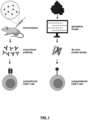
- the de novo binders i.e. immunomodulatory molecules comprising an engineered protein binding domain according to the present invention, can be generated within minutes with computational methods, e.g., using artificial intelligence (AI), and can then be tested in a cell therapy context.
- AI artificial intelligence
- immunomodulatory molecules comprising an engineered protein binding domain according to the present invention, are generated in a fast and cheap way. It is a further advantage of the computationally designed binders (immunomodulatory molecules comprising an engineered protein binding domain according to the present invention) that they have a substantially smaller size compared to CARs, HITs, or BiTEs that use an scFv. This makes the immunomodulatory molecules comprising an engineered protein binding domain according to the present invention better suited for ex vivo manufacturing of immune therapies and in vivo delivery into immune cells (e.g., via mRNA).
- the immunomodulatory molecules comprising an engineered protein binding domain according to the present invention are less likely to induce patient immune responses than scFvs derived from antibodies raised in animals or bacterial cell systems (i.e. by phage display). Such antibodies raised in animals or bacterial cell systems are often subjected to a humanization procedure to reduce the immunogenicity of these antibodies, which is lengthy and costly.
- the immunomodulatory molecules comprising an engineered protein binding domain according to the present invention do not require such a humanization procedure, which further reduces the time and costs of the method of generating such immunomodulatory molecules.
- the immunomodulatory molecules comprising an engineered protein binding domain according to the present invention have a reduced immunogenicity compared to conventionally used immunomodulatory molecules.
- the immunomodulatory molecules comprising an engineered protein binding domain according to the present invention will help to make immune therapies derived therefrom persist longer in a patient administered immunomodulatory molecules according to the present invention.
- the therapeutic function of the administered immunomodulatory molecules will be employed for a longer period of time after administration.
- protein binding domains having a length of 59-100 amino acids, preferably of 60-90 amino acids, even more preferably of 60-80 amino acids, even more preferably of 60-70 amino acids, and most preferably of 60-65 amino acids can be delivered and expressed in a very fast way.
- the de novo binders (immunomodulatory molecules comprising an engineered protein binding domain) according to the present invention are characterized by an enhanced delivery and expression.
- the engineered protein binding domain does not comprise an ankyrin repeat motif.
- the domain for the activation and/or stimulation of an immune effector cell is an intracellular domain for the activation and/or stimulation of the immune effector cell.
- the domain for the activation and/or stimulation of an immune effector cell is a domain binding to an immune effector cell and thereby activating and/or stimulating the immune effector cell.
- the domain for the activation and/or stimulation of an immune effector cell is a domain specifically binding to an immune effector cell and thereby activating and/or stimulating the immune effector cell.
- the immune effector cell is selected from a group comprising T cells, natural killer (NK) cells, natural killer T (NKT) cells, lymphocytes, myeloid cells, such as eosinophils, mast cells, basophils, granulocytes, macrophages, and any of the abovementioned cells derived from human induced pluripotent stem cells (hiPSCs); wherein, preferably, the immune effector cell is a T cell, an NK cell, or a macrophage; wherein, more preferably, the immune effector cell is a T cell.
- NK natural killer
- NKT natural killer T
- lymphocytes myeloid cells, such as eosinophils, mast cells, basophils, granulocytes, macrophages, and any of the abovementioned cells derived from human induced pluripotent stem cells (hiPSCs)
- hiPSCs human induced pluripotent stem cells
- the engineered protein binding domain binds to an antigen selected from a group comprising tumor-associated antigens, tumor-specific antigens, antigens associated with a disease, antigens associated with toxin removal, and antigens associated with organ transplant rejection; wherein, preferably, the engineered protein binding domain binds to a tumor-associated antigen;
- the immunomodulatory molecule is a chimeric antigen receptor (CAR), a HLA-independent T cell receptor (HIT), or a bispecific molecule, such as a bispecific T cell engager (BiTE); wherein, optionally the immunomodulatory molecule contains modifications in the CAR, the HIT, or the bispecific molecule to modulate the potency of an activation and/or stimulation of an immune effector cell, such as to reduce T cell exhaustion.
- CAR chimeric antigen receptor
- HIT HLA-independent T cell receptor
- BiTE bispecific T cell engager
- the term "modulate the potency of an activation and/or stimulation of an immune effector cell” refers to reducing T cell exhaustion.
- a binding kinetic of a binding of the engineered protein binding domain to a target of the engineered protein binding domain is different from a binding kinetic of a binding of an antibody-derived single-chain variable fragment (scFv) binding domain to the same target; wherein, preferably, the binding kinetic of the engineered protein binding domain is slower or faster than the binding kinetic of the scFv binding domain; wherein, more preferably, the binding kinetic of the engineered protein binding domain is slower than the binding kinetic of the scFv binding domain.
- scFv antibody-derived single-chain variable fragment
- a binding avidity and/or affinity of a binding of the engineered protein binding domain to a target of the engineered protein binding domain is different from a binding avidity and/or affinity of a binding of an scFv binding domain to the same target; wherein, preferably, the binding avidity and/or affinity of the engineered protein binding domain is lower or higher than the binding avidity and/or affinity of the scFv binding domain; wherein, more preferably, the binding avidity and/or affinity of the engineered protein binding domain is lower than the binding avidity and/or affinity of the scFv binding domain.
- a cytotoxicity of the immunomodulatory molecule is lower than a cytotoxicity of an immunomodulatory molecule containing one or more scFv binding domains directed at the same target as the engineered protein binding domain of the immunomodulatory molecule.
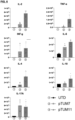
- a cytokine production of the immunomodulatory molecule is comparable and/or higher than a cytokine production of an immunomodulatory molecule containing one or more scFv binding domains directed at the same target as the engineered protein binding domain of the immunomodulatory molecule.
- Another embodiment relates to the immunomodulatory molecule according to the first aspect of this invention, wherein the immunomodulatory molecule is a CAR, and the CAR comprises:
- the immunomodulatory molecule is a CAR
- the hinge-region has a length of 10 to 200 amino acids, preferably of 20 to 100 amino acids; wherein, optionally, the hinge-region comprises an amino acid sequence having a sequence identity of at least 70%, preferably at least 80%, more preferably at least 90%, and most preferably at least 95% sequence identity, to an amino acid sequence selected from SEQ ID NOs: 46 to 49, or, in each case independently, optionally with no more than ten, nine, eight, seven, six, five, four, preferably no more than three, two or one, amino acid substitution(s), insertion(s) or deletion(s) compared to these sequences.
- the immunomodulatory molecule is a CAR
- the linker has a length of 0 to 100 amino acids; preferably 0 to 33 amino acids; wherein, optionally, the linker has one or more rigid and/or flexible segments; wherein, optionally, the linker comprises an amino acid sequence having a sequence identity of at least 70%, preferably at least 80%, more preferably at least 90%, and most preferably at least 95% sequence identity, to an amino acid sequence selected from SEQ ID NOs: 41 and 42, or to an amino acid sequence encoded by the nucleotide sequence selected from SEQ ID NOs: 43 and 44, or, in each case independently, optionally with no more than ten, nine, eight, seven, six, five, four, preferably no more than three, two or one, amino acid substitution(s), insertion(s) or deletion(s) compared to these sequences.
- the immunomodulatory molecule is a CAR
- the linker has a length of 0 to 100 amino acids; preferably 0 to 33 amino acids; wherein, optionally, the linker has one or more rigid and/or flexible segments; wherein, optionally, the linker comprises an amino acid sequence having a sequence identity of at least 70%, preferably at least 80%, more preferably at least 90%, and most preferably at least 95% sequence identity, to an amino acid sequence of SEQ ID NO: 91, or to an amino acid sequence encoded by the nucleotide sequence of SEQ ID NO: 92, or, in each case independently, optionally with no more than ten, nine, eight, seven, six, five, four, preferably no more than three, two or one, amino acid substitution(s), insertion(s) or deletion(s) compared to these sequences.
- the engineered protein binding domain may comprise or comprises at least two engineered protein binders, such as two, or three, or four, or five, or six, or seven, or eight, or nine, or ten, or any number of engineered protein binders, because the linker comprising an amino acid sequence having a sequence identity of at least 70%, preferably at least 80%, more preferably at least 90%, and most preferably at least 95% sequence identity, to an amino acid sequence of SEQ ID NO: 91, or to an amino acid sequence encoded by the nucleotide sequence of SEQ ID NO: 92, or, in each case independently, optionally with no more than ten, nine, eight, seven, six, five, four, preferably no more than three, two or one, amino acid substitution(s), insertion(s) or deletion(s) compared to these sequences, can combine the at least two engineered protein binders, such as the two, or three, or four, or five, or six, or seven, or eight, or nine, or ten, or any number of engine
- a linker comprising an amino acid sequence having a sequence identity of at least 70%, preferably at least 80%, more preferably at least 90%, and most preferably at least 95% sequence identity, to an amino acid sequence of SEQ ID NO: 91 (which can be encoded by a nucleotide sequence according to SEQ ID NO: 92), is sometimes referred to as Whitlow linker.
- the engineered protein binding domain comprises at least two engineered protein binders, such as two, or three, or four, or five, or six, or seven, or eight, or nine, or ten, or any number of engineered protein binders, such as two, or three, or four, or five, or six, or seven, or eight, or nine, or ten, or any number of engineered protein binding domains that bind to EGFR and/or engineered protein binding domains that bind to BCMA, optionally wherein the engineered protein binding domain that binds to EGFR comprises an amino acid sequence having a sequence identity of at least 70%, more preferably at least 80%, even more preferably at least 90%, and most preferably at least 95% sequence identity, to an amino acid sequence selected from any one of SEQ ID NOs: 1 to 22, or to an amino acid sequence encoded by the nucleotide sequence selected from any one of SEQ ID NOs: 50 to 71, or, in each case independently, optionally with no more than ten, nine, eight, seven
- the engineered protein binding domain comprises at least two engineered protein binders, such as two, or three, or four, or five, or six, or seven, or eight, or nine, or ten, or any number of engineered protein binders, such as two, or three, or four, or five, or six, or seven, or eight, or nine, or ten, or any number of engineered protein binding domains that bind to EGFR and/or engineered protein binding domains that bind to BCMA
- the linker comprises an amino acid sequence having a sequence identity of at least 70%, preferably at least 80%, more preferably at least 90%, and most preferably at least 95% sequence identity, to an amino acid sequence selected from SEQ ID NOs: 41, 42, and 91, or to an amino acid sequence encoded by the nucleotide sequence selected from SEQ ID NOs: 43, 44, and 92 or, in each case independently, optionally with no more than ten, nine, eight, seven, six, five, four, preferably no more than three, two
- the engineered protein binding domain comprises at least two engineered protein binders, such as two, or three, or four, or five, or six, or seven, or eight, or nine, or ten, or any number of engineered protein binders, such as two, or three, or four, or five, or six, or seven, or eight, or nine, or ten, or any number of engineered protein binding domains that bind to EGFR and/or engineered protein binding domains that bind to BCMA
- the linker comprises an amino acid sequence having a sequence identity of at least 70%, preferably at least 80%, more preferably at least 90%, and most preferably at least 95% sequence identity, to the amino acid sequence of SEQ ID NO: 91, or to an amino acid sequence encoded by the nucleotide sequence of SEQ ID NO: 92 or, in each case independently, optionally with no more than ten, nine, eight, seven, six, five, four, preferably no more than three, two or one, amino acid substitution(s), insertion(s)
- CAR-T properties and functions can be modulated using linkers having different properties, such as rigid vs. flexible linkers.
- CAR-T properties and functions can be specifically tailored by using linkers having one or more rigid and/or flexible segments.
- the linker is rich in glycine for flexibility. In one embodiment relating to the immunomodulatory molecule according to the first aspect of this invention, which can be combined with every embodiment and/or aspect of this invention, the linker is rich serine or threonine for solubility.
- the immunomodulatory molecule is a CAR, and wherein the transmembrane domain (TM) is selected from a group comprising the TMs of CD8, CD28, an alpha, beta or zeta chain of a T cell receptor, CD3 epsilon, CD45, CD4, CD5, CD9, CD16, CD22, CD33, CD37, CD64, CD80, CD86, CD134, CD137, CD154, KIRDS2, OX40, CD2, CD27, LFA-1 (CD11a, CD18), ICOS (CD278), 4-1BB (CD137), GITR, CD40, BAFFR, HVEM (LIGHTR), SLAMF7, NKp80 (KLRFI), CD160, CD19, IL2R beta, IL2R gamma, IL7R, ITGA1 (CD49a, VLA1), ITGA4 (IA4, CD49D), ITGA6
- TM transmembrane domain
- the immunomodulatory molecule is a CAR
- the intracellular domain that activates and/or stimulates the immune effector cell upon binding of the engineered protein binding domain to a target region comprises a signaling domain selected from a group comprising the signaling domains of CD3 zeta, TCR zeta, FcR gamma, FcR beta, CD3 gamma, CD3 theta, CD3 delta, CD3 epsilon, CD22, CD79a, CD79b, and CD66d; preferably the signaling domains of CD3 zeta; and wherein, optionally, the intracellular domain that activates and/or stimulates the immune effector cell upon binding of the engineered protein binding domain to a target region further comprises one or more co-stimulatory domains; wherein, preferably, the one or more co-stimulatory domains is/are selected from a group comprising the co-stimulatory domains of 4-1BB (CD137), CD28, CARD11, CD2, CD
- One embodiment relates to the immunomodulatory molecule according to the first aspect of this invention, wherein the immunomodulatory molecule is a HIT receptor.
- a HIT receptor is generated in situ by knocking an engineered protein binding domain into the TCR-alpha constant (TRAC) and/or the (TRBC) gene locus.
- a HIT receptor is generated in situ by knocking an engineered protein binding domain into the TRAC and/or TRBC gene locus, thereby generating an engineered protein binding domain that is fused to the endogenous T cell receptor constant beta (TCR C ⁇ ) domain, and/or is fused to the endogenous T cell receptor constant alpha (TRC Ca) domain.
- One embodiment relates to the immunomodulatory molecule according to the first aspect of this invention, wherein the immunomodulatory molecule is a HIT receptor, and the HIT receptor comprises:
- the immunomodulatory molecule is a HIT
- the hinge-region has a length of 10 to 200 amino acids, preferably of 20 to 100 amino acids; wherein, optionally, the hinge-region comprises an amino acid sequence having a sequence identity of at least 70%, preferably at least 80%, more preferably at least 90%, and most preferably at least 95% sequence identity, to an amino acid sequence selected from SEQ ID NOs: 46 to 49, or, in each case independently, optionally with no more than ten, nine, eight, seven, six, five, four, preferably no more than three, two or one, amino acid substitution(s), insertion(s) or deletion(s) compared to these sequences.
- HITs can be modulated using linkers having different properties, such as rigid vs. flexible linkers.
- properties and functions of HITs can be specifically tailored by using linkers having one or more rigid and/or flexible segments.
- the immunomodulatory molecule is a HIT
- the linker has a length of 0 to 100 amino acids; preferably 0 to 33 amino acids; wherein, optionally, the linker has one or more rigid and/or flexible segments; wherein, optionally, the linker comprises an amino acid sequence having a sequence identity of at least 70%, preferably at least 80%, more preferably at least 90%, and most preferably at least 95% sequence identity, to an amino acid sequence selected from SEQ ID NOs: 41, 42, and 91, or to an amino acid sequence encoded by the nucleotide sequence selected from SEQ ID NOs: 43, 44, and 92 or, in each case independently, optionally with no more than ten, nine, eight, seven, six, five, four, preferably no more than three, two or one, amino acid substitution(s), insertion(s) or deletion(s) compared to these sequences.
- the immunomodulatory molecule is a bispecific molecule, such as a bispecific T cell engager (BiTE), and wherein the bispecific molecule comprises at least two binding domains,
- BiTE bispecific T cell engager
- bispecific molecules such as bispecific T cell engagers (BiTEs) can be modulated using linkers having different properties, such as rigid vs. flexible linkers.
- properties and functions of bispecific molecules, such as bispecific T cell engagers (BiTEs) can be specifically tailored by using linkers having one or more rigid and/or flexible segments.
- the immunomodulatory molecule comprises an engineered protein binding domain targeting and/or binding to EGFR and/or BCMA, optionally wherein the engineered protein binding domain comprises an amino acid sequence according to SEQ ID NO: 1 or 2.
- the immunomodulatory molecule comprises an engineered protein binding domain targeting and/or binding to EGFR and/or BCMA, optionally wherein the engineered protein binding domain comprises an amino acid sequence according to any one of SEQ ID NOs: 3 to 40.
- the immunomodulatory molecule does not comprise an amino acid sequence according to SEQ ID NO: 1 or 2, and/or does not comprise an engineered protein binding domain having an amino acid sequence according to SEQ ID NO: 1 or 2.
- the engineered protein binding domain is lighter, smaller, and/or shorter than an antibody-derived single-chain variable fragment (scFv) binding domain.
- a second aspect of the present invention which can be combined with any aspect and/or embodiment of the present invention, relates to an engineered protein binding domain, wherein said engineered protein binding domain is removed from an immunomodulatory molecule according to the first aspect of this invention, and wherein said engineered protein binding domain is used outside of the immunomodulatory molecule, optionally wherein said engineered protein binding domain is fused to an Fc-part or a CH3 domain of an antibody, and/or wherein said engineered protein binding domain is used as a binder drug conjugate.
- a third aspect of the present invention which can be combined with any aspect and/or embodiment of the present invention, relates to an isolated nucleic acid comprising a sequence encoding for an immunomodulatory molecule according to the fist aspect of this invention, or encoding for an immunomodulatory molecule according to the second aspect of this invention, or an expression construct for expressing the immunomodulatory molecule according to the first aspect of this invention in a (host) cell, preferably further comprising a promoter and/or a terminator sequence.
- an expression vector containing a nucleotide sequence of a CAR can be transfected in an immune effector cell, such as a T cell, resulting in a CAR expressing immune effector cell product, such as a CAR-T cell product.
- de novo binders immunomodulatory molecules comprising an engineered protein binding domain
- the engineered protein binding domain is an engineered protein binding domain that binds to the target protein.
- the engineered protein binding domain is an engineered protein binding domain that binds to the target region in the target protein.
- the step i) of identifying a target region in a target protein is a computational design that is based on the structure of the target protein and/or is based on a rational choice of potential hotspot residues within the target protein.
- the target region is a flat, plain, and/or hydrophobic target region. In one embodiment relating to the fourth aspect of this invention, the target region comprises at least one beta sheet. In one embodiment relating to the fourth aspect of this invention, the target region is an accessible target region and/or is not buried in a cell membrane. In one embodiment, the term "accessible" refers to a target region that is not buried in a cell membrane and/or is located on the outside of a cell. In one embodiment relating to the fourth aspect of this invention, the target region does not comprise a salt bridge.
- the step ii) of running a computer program comprising instructions for implementing a method of identifying an engineered protein binding domain to the target region in the target protein, is a diffusion-based identification method, wherein the diffusion-based identification method is implemented by RoseTTAFoldDiffusion (RF diffusion), which generates at least one engineered protein binding domain candidate.
- RF diffusion RoseTTAFoldDiffusion
- the step ii) of running a computer program comprising instructions for implementing a method of identifying an engineered protein binding domain to the target region in the target protein, is a diffusion-based identification method implemented by RoseTTAFoldDiffusion (RF diffusion), which generates at least one engineered protein binding domain candidate in a first step.
- RF diffusion RoseTTAFoldDiffusion
- the sequence of the at least one engineered protein binding domain candidate is designed with Protein MPNN, and said sequence is validated with Alphafold2 in a third step.
- ProteinMPNN is a deep learning-based protein sequence design method that can design new proteins with high accuracy. ProteinMPNN is trained on a protein databank comprising thousands of high-resolution structures.
- Alphafold2 is an artificial intelligence algorithm that predicts the three-dimensional structure of proteins. Alphafold2 can predict the three-dimensional structure of a protein from its amino acid sequence with high accuracy. Importantly, Alphafold2 shows a high correlation when compared with experimentally determined structures, which is extremely important in the medical and pharmaceutical fields.
- the protein sequence designed by, e.g. ProteinMPNN is not a repetitive, such as a highly repetitive, amino acid sequence.
- the pre-screening of the at least one engineered protein binding domain candidate in step iii) of the method refers to a virtual pre-screening.
- step v) of the method i.e. the step of selecting at least one engineered protein binding domain
- an engineered protein binding domain candidate with good alignment or binding to the target protein is classified as an engineered protein binding domain if it has an RMSD-value of lower than 20, of lower than 15, of lower than 10, of lower than 5, or of around 1.
- an engineered protein binding domain candidate with good alignment or binding to the target protein is classified as an engineered protein binding domain in step v) of the method if it has an RMSD-value of lower than 10.
- the method further comprises the step of: x) functionally testing the CAR expressing immune effector cell product, such as the CAR-T cell product, the HIT expressing immune effector cell product, such as the HIT-T cell product, the bispecific molecule expressing immune effector cell product, such as the BiTE expressing immune effector cell product, comprising the immunomodulatory molecule, and/or the bispecific molecule, such as the BiTE, comprising the engineered protein binding domain.
- the CAR expressing immune effector cell product such as the CAR-T cell product
- the HIT expressing immune effector cell product such as the HIT-T cell product
- the bispecific molecule expressing immune effector cell product such as the BiTE expressing immune effector cell product, comprising the immunomodulatory molecule
- the bispecific molecule such as the BiTE
- the functionally testing in step x) of the method comprises measuring and/or analyzing a T cell signaling molecule, such as a luminescence-based readout of a nuclear factor of activated T cells (NFAT) activation and/or a cytokine or lytic protein produced by a T cell and/or the proliferation of a T cell in response to the targeted antigen and/or the death of cancer cells.
- a T cell signaling molecule such as a luminescence-based readout of a nuclear factor of activated T cells (NFAT) activation and/or a cytokine or lytic protein produced by a T cell and/or the proliferation of a T cell in response to the targeted antigen and/or the death of cancer cells.
- the functionally testing in step x) of the method comprises a screening in cells, such as a JURKAT NFAT reporter cell line.
- a screening in cells such as a JURKAT NFAT reporter cell line.
- lenti virus production is performed in a 24-well plate, followed by transduction of lenti viruses in JURKAT NFAT reporter cell lines. After a brief expansion for 3 to 5 days, the transduction efficiency is normalized for the next step based on a fluorescent signal, such as an mCherry signal. Normalized Jurkats with target cells are incubated over night and a luminescence-based readout of NFAT activation is analyzed with the help of a plate reader.
- the method according to the fourth aspect of this invention does not require an animal and/or a bacterial cell system.
- an example CAR construct is encoded by the nucleotide sequence according to SEQ ID NO: 90:
- the CD8 leader sequence is underlined once with a straight line (nucleotides 1 to 63 of SEQ ID NO: 90)
- the engineered protein binder EGFR_n is underlined with a curly line (nucleotides 64 to 249 of SEQ ID NO: 90)
- the CD8 hinge-region and transmembrane domain sequence is not underlined (nucleotides 250 to 456 of SEQ ID NO: 90)
- the 4-1BB ICD sequence is underlined twice with straight lines (nucleotides 457 to 582 of SEQ ID NO: 90)
- the CD3 zeta sequence is underlined with a dashed line (nucleotides 583 to 918 of SEQ ID NO: 90).
- the example CAR construct is herein sometimes also referred to as "pTUMo011", or "pTUMo011 - CD8Leader/EGFRn_MiniProtBinder/CD8hingeTM/41BB/CD3z”.
- a seventh aspect of the present invention which can be combined with any aspect and/or embodiment of the present invention, pertains to a pharmaceutical composition
- a pharmaceutical composition comprising the immunomodulatory molecule according to the first aspect of this invention, an engineered protein binding domain according to the second aspect of this invention, the isolated nucleic acid according to the third aspect of this invention, the product according to the fifth aspect of the present invention, or the immunomodulatory molecule, the isolated nucleic acid, or the product according to the sixth aspect of the present invention, wherein, optionally, said pharmaceutical composition comprises one or more pharmaceutically acceptable excipient(s) and/or carrier(s); wherein, further optionally, said pharmaceutical composition comprises one or more further agent(s) or drug(s), such as chemotherapeutic drugs, radioisotopes, antibody-drug conjugates, immune checkpoint inhibitors, bispecific molecules, such as BiTEs, BiTE-secreting cells, HITs, and/or CAR-T cells.
- an engineered protein binding domain of an immunomodulatory molecule according to the first aspect of this invention is removed from the immunomodulatory molecule and is used outside of the immunomodulatory molecule, optionally wherein said engineered protein binding domain is fused to an Fc-part or a CH3 domain of an antibody, and/or wherein said engineered protein binding domain is used as a binder drug conjugate.
- a binder drug conjugate is an antibody drug conjugate (ADC).
- ADC antibody drug conjugate
- an engineered protein binding domain of an immunomodulatory molecule according to the first aspect of this invention is removed from the immunomodulatory molecule and is used outside of the immunomodulatory molecule as or in a pharmaceutical composition, optionally wherein said engineered protein binding domain is fused to an Fc-part or a CH3 domain of an antibody, and/or wherein said engineered protein binding domain is used as a binder drug conjugate, optionally, wherein said pharmaceutical composition, said engineered protein binding domain fused to an Fc-part or a CH3 domain of an antibody, or said binder drug conjugate comprises one or more pharmaceutically acceptable excipient(s) and/or carrier(s); wherein, further optionally, said pharmaceutical composition, said engineered protein binding domain fused to an Fc-part or a CH3 domain of an antibody, or said binder drug conjugate comprises one or more further agent(s) or drug(s), such as chemotherapeutic drugs, radioisotopes, antibody-drug conjugates, immune checkpoint inhibitors, bispecific molecules, such as
- an immune checkpoint protein is preferentially selected from but not restricted to any one of PD-1, cd47, cd31, PD-L1, PD-L2, BTLA, HVEM, lag3, tigit, prv, cd155, cd112, galectin-9, tim3, tim4, gitr, gitrl, tigit, Vista, cd276, cd39, cd73, CTLA4, IL10, IL35, ido, vip, IL27, and IL37.
- an immune checkpoint inhibitor is an antagonistic antibody or an antagonistic antibody fragment against an immune checkpoint protein or encoding an immune checkpoint inhibitor, such as an antibody selected from Atezolizumab, Avelumab, Cemiplimab, Dostarlimab, Durvalumab, Nivolumab, Pembrolizumab, Ipilimumab, and Relatlimab.
- Atezolizumab (Tecentriq ® ) is a checkpoint inhibitor that targets the PD-1/PD-L1 pathway, and is approved for subsets of patients with bladder cancer, breast cancer, liver cancer, lung cancer, and melanoma.
- Avelumab (Bavencio ® ) is a checkpoint inhibitor that targets the PD-1/PD-L1 pathway, and is approved for subsets of patients with bladder cancer, kidney cancer, and Merkel cell carcinoma, a type of skin cancer.
- Cemiplimab (Libtayo ® ) is a checkpoint inhibitor that targets the PD-1/PD-L1 pathway, and is approved for subsets of patients with cutaneous squamous cell carcinoma, basal cell carcinoma, and lung cancer.
- Dostarlimab (Jemperli) is a checkpoint inhibitor that targets the PD-1 pathway, and is approved for subsets of patients with uterine (endometrial) cancer.
- Durvalumab (Imfinzi TM ) is a checkpoint inhibitor that targets the PD-1/PD-L1 pathway, and is approved for subsets of patients with bladder cancer and lung cancer.
- Pembrolizumab (Keytruda ® ) is a checkpoint inhibitor that targets the PD-1/PD-L1 pathway, and is approved for subsets of patients with bladder cancer, breast cancer, cervical cancer, colorectal cancer, cutaneous squamous cell carcinoma, esophageal cancer, head and neck cancer, kidney cancer, liver cancer, lung cancer, lymphoma, melanoma, Merkel cell carcinoma, and stomach cancer. It is also approved to treat subsets of patients with cancers of any type that present with certain genetic mutations (MSI-H, dMMR, or TMB-H).
- Ipilimumab (Yervoy ® ) is a checkpoint inhibitor that targets the CTLA-4 pathway, and is approved for subsets of patients with melanoma, mesothelioma, liver cancer, and lung cancer.
- Relatlimab is a checkpoint inhibitor that targets the LAG-3 pathway, and is approved in combination with nivolumab (together known as Opdualag TM ) for subsets of patients with melanoma.
- An eighth aspect of the present invention which can be combined with any aspect and/or embodiment of the present invention, pertains to the immunomodulatory molecule according to the first aspect of this invention, the engineered protein binding domain according to the second aspect of this invention, the isolated nucleic acid according to the third aspect of this invention, the product according to the fifth aspect of this invention, the immunomodulatory molecule, the isolated nucleic acid, or the product according to the sixth aspect of the present invention, or the pharmaceutical composition according to the seventh aspect of this invention, for use in a method of diagnosis, prevention and/or treatment of a disease, or for preventing an organ transplant rejection, in a patient in need thereof; wherein, preferably, said patient is a mammal; wherein, more preferably, said patient is a human.
- the present invention is particularly advantageous for personalized therapies, e.g., in the context of cancer neoantigens.
- One embodiment pertains to the immunomodulatory molecule, the engineered protein binding domain, the isolated nucleic acid, the product, or the pharmaceutical composition for use according to the eighth aspect of this invention, wherein the disease is selected from cancer, autoimmune diseases, infectious diseases, cardiovascular diseases, cerebrovascular diseases, neurodegenerative diseases, dermatological diseases, genetic diseases, aging-related diseases, nephrological diseases, endocrinological diseases, fibrotic diseases, metabolic diseases, obesity-related diseases, gynecological diseases, ophthalmic diseases, otorhinolaryngologic diseases, allergies, and an immune deficiency.
- the disease is selected from cancer, autoimmune diseases, infectious diseases, cardiovascular diseases, cerebrovascular diseases, neurodegenerative diseases, dermatological diseases, genetic diseases, aging-related diseases, nephrological diseases, endocrinological diseases, fibrotic diseases, metabolic diseases, obesity-related diseases, gynecological diseases, ophthalmic diseases, otorhinolaryngologic diseases, allergies, and an immune deficiency.
- the disease is cancer
- the cancer is selected from one or more of brain tumor, esophageal cancer, mouth cancer, tongue cancer, thyroid cancer, lung cancer, stomach cancer, pancreatic cancer, liver cancer, bile duct cancer, kidney cancer, colon cancer, rectal cancer, prostate cancer, bladder cancer, cervical cancer, epithelial cell cancers, skin cancer, leukemia, lymphoma, myeloma, plasma cell leukemia, plasma cell dyscrasia, myeloid malignancies, lymphoid malignancies, breast cancer, ovarian cancer, neuroendocrine carcinoma, endometrial cancer, vaginal cancers, blood-related cancers, uterine cancer, testicular cancer, glioma, bone sarcoma, cervix cancer, synovial sarcoma, and neuroendocrine carcinoma, for
- One embodiment pertains to the immunomodulatory molecule, the engineered protein binding domain, the isolated nucleic acid, the product, or the pharmaceutical composition for use according to the eighth aspect of this invention, wherein the immunomodulatory molecule is delivered to target cells in vitro, ex vivo, and/or in vivo, optionally wherein the delivery of the immunomodulatory molecule generates a cell therapy and/or is used as a cell therapy, wherein:
- the immunomodulatory molecule is delivered via LNP/mRNA, which results in the generation of transient CAR-Ts and thereby transient expression of the immunomodulatory molecule.
- the immunomodulatory molecule, the engineered protein binding domain, the isolated nucleic acid, the product, or the pharmaceutical composition is administered to the subject, such as the patient, by intravenous, intramuscular, subcutaneous, intradermal, intra-peritoneal, and/or intra-pleural injection.
- the immunomodulatory molecule, the engineered protein binding domain, the isolated nucleic acid, the product, or the pharmaceutical composition for use according to the eighth aspect of this invention is administered to a patient by a nucleic acid, such as an mRNA molecule.
- a tenth aspect of the present invention pertains to a T cell, such as a CAR-T cell, comprising a coding sequence encoding an immunomodulatory molecule according to the first aspect of this invention, an engineered protein binding domain according to the second aspect of this invention, or a product obtainable by a method according to the fourth aspect of this invention.
- This aspect of the present invention also relates to a T cell, such as a CAR-T cell, comprising an isolated nucleic acid according to the third aspect of this invention.
- a CAR-T cell further secretes a bispecific molecule, such as a BiTE.
- An eleventh aspect of the present invention pertains to a kit comprising a vector containing an expression cassette encoding an immunomodulatory molecule according to the first aspect of this invention, an engineered protein binding domain according to the second aspect of this invention, or a product obtainable by a method according to the fourth aspect of this invention, for transfection of a host cell, optionally, wherein the vector is used to integrate the expression cassette into the genome of the host cell.
- the kit further comprises instructions and/or an instruction manual for its use.
- the examples show:
- de novo-generated protein binders i.e., immunomodulatory molecules comprising an engineered protein binding domain according to the present invention
- the inventors first sought to design CARs that employ a previously described binder that has been experimentally validated.
- the inventors chose the mini-protein binders Cao and colleagues described that bind to the C- and N-terminal domains of the epithelial growth factor receptor (EGFR) [1] .
- EGFR epithelial growth factor receptor
- These de novo binders are 63 and 62 amino acids long and have been experimentally optimized.
- the inventors designed second-generation CARs, employing a 4-1BB co-stimulatory domain and a CD3zeta signaling domain.
- a computational protein binder EGFR_n was 3.5-fold lighter and had a coding sequence that is 3.8-fold shorter compared to the cetuximab-derived scFv (7.64 kDa versus 25.8 kDa and 186 bp versus 723 bp, respectively).
- the inventors then set out to characterize CAR-T cells incorporating such computational protein binders compared to a canonical CAR design that employs a scFv-binding domain derived from a monoclonal antibody.
- the inventors characterized the binding and functional properties of the engineered CARs when transduced into primary human T cells (compCAR-T and cetuxCAR-T).
- CompCAR-T primary human T cells
- cetuxCAR-T primary human T cells
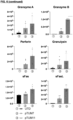
- CompCAR-T lyse human pancreatic, lung, and ovarian cancer cell lines that endogenously express EGFR at levels in a similar way as cetuxCAR-T.
- the inventors generated cell line counterparts in which the EGFR gene was knocked out.
- the lack of EGFR expression was confirmed by surface staining and subsequent flow cytometry analysis.
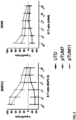
- lysis of the cell lines lacking EGFR expression was substantially reduced for compCAR-T and cetuxCAR-T.
- compCAR-T the residual cytotoxicity activity was even from untransduced control T cells (UTD), consistent with antigen-specific cytotoxicity ( Figure 7 ).
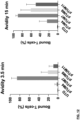
- the inventors proceeded to test the binding strength of the CARs generated according to the present invention to EGFR-expressing target cells.
- Each CAR was transduced into Jurkat T cells at a multiplicity of infection of 0.5 to eliminate differences in CAR expression levels.
- CAR-expressing Jurkat cells were sorted to have matching mean fluorescence intensities.
- the binding avidity of the immune synapse that compCAR-T cells and cetuxCAR-T cells formed with EGFR-expressing target cells was measured by acoustic force microscopy.
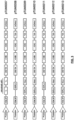
- Table 1 Designed RFdiffEGFR_c binders Short name ( Fig.
- Example 3 RFdiffusion-based CAR binder design and production of CAR-T cells
- the inventors designed new protein binders using the AI-based RFdiffusion tool.
- the inventors performed design campaigns for proteins that bind domain I of EGFR (RFdiffEGFR_n), domain III of EGFR (RFdiffEGFR_c), and the extracellular domain of the B-cell maturation antigen (BCMA).
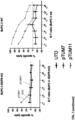
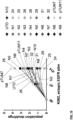
- Functional screening of the RFdiffEGFR_c- and RFdiffEGFR_n-based CAR-T showed varying cytotoxic activity and long-term proliferation against EGFR-expressing targets ( Figure 8 9 , and 10 ).
- Functional screening of the RFdiff BCMA binder based CAR-T showed varying cytotoxic activity ( Figure 11 ).
- computationally generated binders according to the present invention do not automatically work in CAR-T cells. Even validation of computationally generated binders according to the present invention in short term toxicity assays, Z-movie avidity, and long-term proliferation assays showed highly various results regarding binder efficiencies from both computational (Example 1) and/or AI-generated (RFdiffusion, Example 3) origin. In sum, activity in any of these assays did not predict activity in another assay, indicating that the validation of binders is a highly complex process. Accordingly, it is non-obvious whether a computationally generated binder works in CAR-T cells or not, and many different non-obvious experimental tests are necessary for determining whether a computationally generated binder works in CAR-T cells or not.
Landscapes
- Health & Medical Sciences (AREA)
- Life Sciences & Earth Sciences (AREA)
- General Health & Medical Sciences (AREA)
- Epidemiology (AREA)
- Animal Behavior & Ethology (AREA)
- Public Health (AREA)
- Veterinary Medicine (AREA)
- Chemical & Material Sciences (AREA)
- Organic Chemistry (AREA)
- Immunology (AREA)
- Biochemistry (AREA)
- Biophysics (AREA)
- Genetics & Genomics (AREA)
- Medicinal Chemistry (AREA)
- Molecular Biology (AREA)
- Proteomics, Peptides & Aminoacids (AREA)
- Medicines That Contain Protein Lipid Enzymes And Other Medicines (AREA)
- Micro-Organisms Or Cultivation Processes Thereof (AREA)
- Peptides Or Proteins (AREA)
Priority Applications (2)
| Application Number | Priority Date | Filing Date | Title |
|---|---|---|---|
| EP23206487.3A EP4545092A1 (de) | 2023-10-27 | 2023-10-27 | Rechnerisch entworfene bindemittel für immunzelltherapien |
| PCT/EP2024/080480 WO2025088214A1 (en) | 2023-10-27 | 2024-10-28 | Computationally designed binders for immune cell therapies |
Applications Claiming Priority (1)
| Application Number | Priority Date | Filing Date | Title |
|---|---|---|---|
| EP23206487.3A EP4545092A1 (de) | 2023-10-27 | 2023-10-27 | Rechnerisch entworfene bindemittel für immunzelltherapien |
Publications (1)
| Publication Number | Publication Date |
|---|---|
| EP4545092A1 true EP4545092A1 (de) | 2025-04-30 |
Family
ID=88598870
Family Applications (1)
| Application Number | Title | Priority Date | Filing Date |
|---|---|---|---|
| EP23206487.3A Ceased EP4545092A1 (de) | 2023-10-27 | 2023-10-27 | Rechnerisch entworfene bindemittel für immunzelltherapien |
Country Status (2)
| Country | Link |
|---|---|
| EP (1) | EP4545092A1 (de) |
| WO (1) | WO2025088214A1 (de) |
Citations (2)
| Publication number | Priority date | Publication date | Assignee | Title |
|---|---|---|---|---|
| US6217866B1 (en) | 1988-09-15 | 2001-04-17 | Rhone-Poulenc Rorer International (Holdings), Inc. | Monoclonal antibodies specific to human epidermal growth factor receptor and therapeutic methods employing same |
| WO2023086983A1 (en) * | 2021-11-15 | 2023-05-19 | Arcellx, Inc. | D-domain containing polypeptides and uses thereof |
-
2023
- 2023-10-27 EP EP23206487.3A patent/EP4545092A1/de not_active Ceased
-
2024
- 2024-10-28 WO PCT/EP2024/080480 patent/WO2025088214A1/en active Pending
Patent Citations (2)
| Publication number | Priority date | Publication date | Assignee | Title |
|---|---|---|---|---|
| US6217866B1 (en) | 1988-09-15 | 2001-04-17 | Rhone-Poulenc Rorer International (Holdings), Inc. | Monoclonal antibodies specific to human epidermal growth factor receptor and therapeutic methods employing same |
| WO2023086983A1 (en) * | 2021-11-15 | 2023-05-19 | Arcellx, Inc. | D-domain containing polypeptides and uses thereof |
Non-Patent Citations (9)
| Title |
|---|
| BENNETT, N ET AL.: "Improving de novo Protein Binder Design with Deep Learning", NATURE COMMUNICATIONS, vol. 14, 2023, Retrieved from the Internet <URL:https://www.nature.com/articles/s41467-023-38328-5> |
| BRANELLA GIANNA M. ET AL: "Natural Receptor- and Ligand-Based Chimeric Antigen Receptors: Strategies Using Natural Ligands and Receptors for Targeted Cell Killing", CELLS, vol. 11, no. 1, 22 December 2021 (2021-12-22), pages 21, XP093115059, ISSN: 2073-4409, DOI: 10.3390/cells11010021 * |
| CAO LONGXING ET AL: "Design of protein-binding proteins from the target structure alone", NATURE, vol. 605, no. 7910, 19 May 2022 (2022-05-19), pages 551 - 560, XP093149269, ISSN: 0028-0836, Retrieved from the Internet <URL:https://www.nature.com/articles/s41586-022-04654-9.pdf> DOI: 10.1038/s41586-022-04654-9 * |
| CAO, L ET AL.: "Design of protein-binding proteins from the target structure alone", NATURE, vol. 605, 2022, pages 551 - 560, Retrieved from the Internet <URL:https://doi.org:10.1038/s41586-022-04654-9> |
| FRIGAULT MATTHEW J. ET AL: "Phase 1 study of CART-ddBCMA for the treatment of subjects with relapsed and refractory multiple myeloma", BLOOD ADVANCES, 25 April 2022 (2022-04-25), United States, pages 768 - 777, XP093149626, Retrieved from the Internet <URL:https://ashpublications.org/bloodadvances/article/7/5/768/485062/Phase-1-study-of-CART-ddBCMA-for-the-treatment-of> [retrieved on 20240409], DOI: 10.1182/bloodadvances.2022007210 * |
| HAIYING QIN ET AL: "Chimeric Antigen Receptors Incorporating D Domains Targeting CD123 Direct Potent Mono- and Bi-specific Antitumor Activity of T Cells", MOLECULAR THERAPY, vol. 27, no. 7, 16 April 2019 (2019-04-16), US, pages 1262 - 1274, XP055748787, ISSN: 1525-0016, DOI: 10.1016/j.ymthe.2019.04.010 * |
| MANSILLA-SOTO, J ET AL.: "HLA-independent T cell receptors for targeting tumors with low antigen density", NAT MED, vol. 28, no. 2, February 2022 (2022-02-01), pages 345 - 352, XP037700039, Retrieved from the Internet <URL:https://doi.org/10.1038/s41591-021-01621-1> DOI: 10.1038/s41591-021-01621-1 |
| WATSON, J ET AL.: "De novo design of protein structure and function with Rfdiffusion", NATURE, vol. 620, no. 7976, 2023, pages 1089 - 1100, Retrieved from the Internet <URL:https://doi.org/10.1038/s41586-023-06415-8> |
| ZAJC CHARLOTTE U. ET AL: "Driving CARs with alternative navigation tools - the potential of engineered binding scaffolds", THE FEBS JOURNAL, vol. 288, no. 7, 31 August 2020 (2020-08-31), GB, pages 2103 - 2118, XP093149434, ISSN: 1742-464X, Retrieved from the Internet <URL:https://onlinelibrary.wiley.com/doi/full-xml/10.1111/febs.15523> DOI: 10.1111/febs.15523 * |
Also Published As
| Publication number | Publication date |
|---|---|
| WO2025088214A1 (en) | 2025-05-01 |
Similar Documents
| Publication | Publication Date | Title |
|---|---|---|
| JP7824894B2 (ja) | Cd70指向性がん免疫療法のための遺伝子修飾されたナチュラルキラー細胞 | |
| US12187801B2 (en) | Chimeric antigen receptors against AXL or ROR2 and methods of use thereof | |
| AU2015221933B2 (en) | APRIL variants | |
| ES2918626T3 (es) | Receptor antigénico quimérico. | |
| US20230074800A1 (en) | Car-t cell therapies with enhanced efficacy | |
| US20190263928A1 (en) | Adaptive chimeric antigen receptor t-cell design | |
| US20250034229A1 (en) | Methods of treating egfrviii expressing glioblastomas | |
| AU2025279705A1 (en) | Combination therapy using a chimeric antigen receptor | |
| JP7723420B2 (ja) | B細胞標的化並列CAR(pCAR)治療的薬剤 | |
| CN111748580B (zh) | 一种检测免疫检查点抗体活性的方法 | |
| CN113646328A (zh) | 一种免疫细胞因子及其制备与用途 | |
| KR102822623B1 (ko) | T-세포 악성 종양의 면역요법을 위한 cd2 표면 발현 및 키메라 항원 수용체의 발현에 대한 차단 | |
| JP7707304B2 (ja) | 腫瘍標的化のためのキメラ抗原受容体 | |
| CN118206658A (zh) | 基于全人源及鼠源单链抗体的靶向bcma的嵌合抗原受体及其用途 | |
| EP4630446A1 (de) | Manipulierte schalter für immunzellaktivität und verfahren zur verwendung davon | |
| TW202504914A (zh) | 嵌合抗原受體及其用途 | |
| WO2022093694A1 (en) | Polypeptides targeting hpv peptide-mhc complexes and methods of use thereof | |
| WO2021173674A1 (en) | Polypeptides targeting mage-a3 peptide-mhc complexes and methods of use thereof | |
| JP2023513458A (ja) | Her2に対するキメラ抗原受容体およびその使用方法 | |
| WO2024081824A2 (en) | Synthetic intermediates for universal chimeric antigen receptor immune cell therapies | |
| CN120225555A (zh) | 抗体及其应用 | |
| WO2025088214A1 (en) | Computationally designed binders for immune cell therapies | |
| US20240180969A1 (en) | Polypeptides targeting hla-a*11 and methods of use thereof | |
| CN113801228B (zh) | 靶向cd38的单链抗体、全人源嵌合抗原受体、制备方法和应用 | |
| WO2026067758A1 (en) | Engineered cells and uses thereof |
Legal Events
| Date | Code | Title | Description |
|---|---|---|---|
| PUAI | Public reference made under article 153(3) epc to a published international application that has entered the european phase |
Free format text: ORIGINAL CODE: 0009012 |
|
| STAA | Information on the status of an ep patent application or granted ep patent |
Free format text: STATUS: THE APPLICATION HAS BEEN PUBLISHED |
|
| AK | Designated contracting states |
Kind code of ref document: A1 Designated state(s): AL AT BE BG CH CY CZ DE DK EE ES FI FR GB GR HR HU IE IS IT LI LT LU LV MC ME MK MT NL NO PL PT RO RS SE SI SK SM TR |
|
| STAA | Information on the status of an ep patent application or granted ep patent |
Free format text: STATUS: THE APPLICATION HAS BEEN REFUSED |
|
| 18R | Application refused |
Effective date: 20250507 |