EP4545204A2 - Système de liant inorganique - Google Patents
Système de liant inorganique Download PDFInfo
- Publication number
- EP4545204A2 EP4545204A2 EP25163975.3A EP25163975A EP4545204A2 EP 4545204 A2 EP4545204 A2 EP 4545204A2 EP 25163975 A EP25163975 A EP 25163975A EP 4545204 A2 EP4545204 A2 EP 4545204A2
- Authority
- EP
- European Patent Office
- Prior art keywords
- composition according
- core
- lustrous carbon
- composition
- casting
- Prior art date
- Legal status (The legal status is an assumption and is not a legal conclusion. Google has not performed a legal analysis and makes no representation as to the accuracy of the status listed.)
- Pending
Links
Images



Classifications
-
- B—PERFORMING OPERATIONS; TRANSPORTING
- B22—CASTING; POWDER METALLURGY
- B22C—FOUNDRY MOULDING
- B22C1/00—Compositions of refractory mould or core materials; Grain structures thereof; Chemical or physical features in the formation or manufacture of moulds
- B22C1/16—Compositions of refractory mould or core materials; Grain structures thereof; Chemical or physical features in the formation or manufacture of moulds characterised by the use of binding agents; Mixtures of binding agents
- B22C1/18—Compositions of refractory mould or core materials; Grain structures thereof; Chemical or physical features in the formation or manufacture of moulds characterised by the use of binding agents; Mixtures of binding agents of inorganic agents
- B22C1/186—Compositions of refractory mould or core materials; Grain structures thereof; Chemical or physical features in the formation or manufacture of moulds characterised by the use of binding agents; Mixtures of binding agents of inorganic agents contaming ammonium or metal silicates, silica sols
- B22C1/188—Alkali metal silicates
-
- B—PERFORMING OPERATIONS; TRANSPORTING
- B22—CASTING; POWDER METALLURGY
- B22C—FOUNDRY MOULDING
- B22C1/00—Compositions of refractory mould or core materials; Grain structures thereof; Chemical or physical features in the formation or manufacture of moulds
- B22C1/02—Compositions of refractory mould or core materials; Grain structures thereof; Chemical or physical features in the formation or manufacture of moulds characterised by additives for special purposes, e.g. indicators, breakdown additives
-
- B—PERFORMING OPERATIONS; TRANSPORTING
- B22—CASTING; POWDER METALLURGY
- B22C—FOUNDRY MOULDING
- B22C1/00—Compositions of refractory mould or core materials; Grain structures thereof; Chemical or physical features in the formation or manufacture of moulds
- B22C1/16—Compositions of refractory mould or core materials; Grain structures thereof; Chemical or physical features in the formation or manufacture of moulds characterised by the use of binding agents; Mixtures of binding agents
- B22C1/18—Compositions of refractory mould or core materials; Grain structures thereof; Chemical or physical features in the formation or manufacture of moulds characterised by the use of binding agents; Mixtures of binding agents of inorganic agents
- B22C1/181—Cements, oxides or clays
-
- B—PERFORMING OPERATIONS; TRANSPORTING
- B22—CASTING; POWDER METALLURGY
- B22C—FOUNDRY MOULDING
- B22C9/00—Moulds or cores; Moulding processes
- B22C9/10—Cores; Manufacture or installation of cores
-
- B—PERFORMING OPERATIONS; TRANSPORTING
- B22—CASTING; POWDER METALLURGY
- B22D—CASTING OF METALS; CASTING OF OTHER SUBSTANCES BY THE SAME PROCESSES OR DEVICES
- B22D19/00—Casting in, on, or around objects which form part of the product
Definitions
- the present invention relates to a composition for use as a core in a casting or moulding process, a core comprising the composition, casting moulds comprising a core, and a method for producing an article using a core.
- molten metal (or metal alloy) is poured into a pre-formed mould cavity which defines the external shape of the casting, with the molten metal filling the mould cavity under the force of gravity.
- the shape of hollow sections or internal cavities in the casting may be defined by a disposable core.
- the cores may be bound with organic resins, binders in powder form, clay minerals or water glass, the latter often referred to as liquid inorganic binder.
- organic resins binders in powder form, clay minerals or water glass
- binding of sand cores and moulds with organic binders for example with organic resins in general is not the preferred method since the decomposition products of organic binders are often toxic and the compositions release toxic fumes upon curing or during casting which introduce risks for the foundry workers and have other negative environmental impacts, and can be expensive to mitigate.
- a further problem with many existing core binder systems is the quality of the finished surface of the cast component.
- the long casting times and harsh conditions involved frequently leads to surface on the casting such as sand adhesion, as well as the breaking of, and metal ingress into, the cores themselves.
- US patent no. 4,316,744 discloses high ratios of silicate foundry sand binders comprising an aqueous solution of sodium, potassium or lithium silicate and containing amorphous silica.
- the core and mould compositions as disclosed in US 4,316,744 are cold setting and are set with carbon dioxide or a suitable acid releasing curing agent.
- the disadvantage of such moulding compositions and particularly the method of setting binder systems with carbon dioxide is that purging of the moulded composition with carbon dioxide results in a strength which is always lower than in case of the use of the technology comprising hot curing with a heated metal core box and heated air to purge the sand cores. It is thus an object of the present invention to provide a foundry moulding composition which is particularly suitable for moulding of high strength cores in a so-called heated core box in which the moulded material simply can be cured by purging with heated air.
- US2015/306658 describes mould mixtures containing at least one aluminium oxide and a water glass based binder.
- US7770629 describes moulding mixtures for producing casting moulds for metalworking, wherein the moulding mixtures comprise a binder based on water glass.
- CN111889616 describes a curing agent for casting, which comprises inter alia a metal alkali.
- a composition for making a core for use in a metal casting process may comprise a particulate refractory material.
- the composition may comprise an inorganic binder.
- the inorganic binder may comprise at least one alkali metal silicate.
- the composition may comprise a pozzolanic additive.
- the composition may comprise a lustrous carbon former.
- the term 'lustrous carbon former' refers to foundry additives which form lustrous carbon under the effect of casting conditions.
- the additives typically comprise organic compounds which volatilise under the conditions at the mould-metal interface thereby forming lustrous carbon.
- the inventors have found that cores made from the composition of the first aspect have sufficient strength to withstand the forces experienced during the casting process, have excellent de-coring properties and avoid or minimise the number of surface defects of the metal casting.
- the composition of the first aspect can be used without requiring a coating applied to the core prior to use in a moulding or casting process.
- the lustrous carbon former may be a strong lustrous carbon former.
- the composition may be for making a core for use in a ferrous metal casting process.
- the composition may be for making a core in a high temperature non-ferrous metal casting process, such as copper casting and alloys thereof.
- high temperature means above approximately 1000°C.
- the strong lustrous carbon former may comprise one or more of: asphalt; hydrocarbon resin; polystyrene; and gilsonite.
- the strong lustrous carbon former may have a lustrous carbon content of at least 15%.
- the strong lustrous carbon former may have a lustrous carbon content of at least 16%, 17%, 18%, 19%, 20%, 22%, 24%, 25%, 26%, 28%, or 30%.
- the strong lustrous carbon former may comprise 0.1 to 1.5wt% relative to the weight of the particulate refractory material.
- the strong lustrous carbon former may comprise 0.2 to 1.4 wt%, 0.3 to 1.3 wt%, 0.4 to 1.2 wt%, 0.5 to 1.1 wt%, 0.6 to 1.0 wt%, 0.7 to 0.9 wt%, 0.8 wt%, or a range formed from combinations thereof.
- the lustrous carbon former comprises between 10 to 80 wt% of a carbon-containing resin such as gilsonite (based on total weight of lustrous carbon former).
- a carbon-containing resin such as gilsonite (based on total weight of lustrous carbon former).
- This resin between 0.05 to 0.5 wt.%, 0.1 to 0.4 wt.%, 0.2 to 0.4wt% based on the weight of the particulate refractory material has been found to achieve high-quality casting surfaces.
- the presence of this lustrous carbon former in the composition significantly enhances the de-coring properties after the casting process.
- the sand cores could be used uncoated for casting in GJS and GJV (iron casting). A defect-free casting surface was achieved.
- the present inventors have also found that for copper and copper alloy castings the presence of gilsonite has been found advantageous, resulting in cores with excellent cold strength and excellent de-coring properties, especially in the absence of a coating on the cores prior to casting.
- the lustrous carbon former may be a weak lustrous carbon former.
- the composition may be for making a core for use in a non-ferrous metal casting process.
- the composition may be for making a core in a low temperature non-ferrous metal casting process.
- low temperature means below 1000°C, or optionally, below 900°C or below 800°C.
- the weak lustrous carbon former may comprise one or more of: graded coal, coal dust, and seacoal.
- the weak lustrous carbon former may have a lustrous carbon content of less than 15%.
- the weak lustrous carbon former may have a lustrous carbon content of less than 14%, less than 13%, less than 12%, less than 11%, less than 10%, less than 9%, or less than 8%.
- the weak lustrous carbon former may comprise 0.1 to 1.5wt% relative to the weight of the particulate refractory material.
- the weak lustrous carbon former may comprise 0.2 to 1.4 wt%, 0.3 to 1.3 wt%, 0.4 to 1.2 wt%, 0.5 to 1.1 wt%, 0.6 to 1.0 wt%, 0.7 to 0.9 wt%, 0.8 wt%, or a range formed from combinations thereof.
- a composition particularly suited for aluminium casting may comprise from 5 to 40 wt.% of graded coal, and preferably from 5 to 30 wt.%, or 5 to 20 wt.%.
- Said graded coal may have a median particle size D50 of between 20 ⁇ m 500 ⁇ m, 40 ⁇ m and 200 ⁇ m, or 50 ⁇ m and 100 ⁇ m.
- the type of graded coal which is particularly suitable for the composition according to the invention is characterised by 30 % up to 45% of volatiles, 20% up to 30% moisture, and 8 to 12% lustrous carbon.
- the inventors of the current invention surprisingly found that the presence of a lustrous carbon former, particularly of coal dust and/or naturally carbon-containing resin in a small amount allows the production of cores which guarantee a smooth and sand free casting surface, particularly when casting non-ferrous materials e.g. aluminium.
- a lustrous carbon former particularly of coal dust and/or naturally carbon-containing resin
- the inventors found out that the use of the small amount of graded coal with a low concentration of lustrous carbon will give very smooth and sand free casting surface particularly for aluminium castings.
- a composition where the lustrous carbon former is selected from a group comprising one or more of graded coal, activated carbon, carbon black and naturally occurring carbon-containing resin such as gilsonite will give particular good results for producing cores.
- the composition may comprise a blend of a strong and a weak lustrous carbon former.
- the blend of strong and weak lustrous carbon former may be in any ratio e.g. 10:90, 20:80, 30:70, 40:60, 50:50, 60:40, 70:30, 80:20, 90:10, or any point therebetween.
- the blend may be configured to obtain a desired lustrous carbon content in the overall composition.
- the particulate refractory material may comprise a natural refractory material, a synthetic refractory material or a combination thereof.
- the particulate refractory material may comprise sand.
- the sand may be selected from a group comprising quartz sand, zirconium silicate sand, chromite sand, bauxite sand, olivine sand or beads of ceramics.
- the sand may be any type of sand suitable for use in refractory applications, such as quartz sand.
- the particulate refractory material may comprise any one or more conventional refractory materials, such as oxides, carbides, nitrides etc of silicon, aluminium, magnesium, calcium and zirconium and other elements. Suitable refractory materials include but are not limited to quartz, olivine, chromite, zircon, and alumina.
- the particulate refractory material comprises spherical particles and/or cenospheres, such as fly ash.
- the particulate refractory material comprises a mixture of sand and spherical particles and/or cenospheres, such as a mixture of sand and fly ash.
- the particulate refractory material may comprise fresh particulate refractory material as well as reclaimed material.
- the particulate refractory material has a D50 particle diameter of at least 20 ⁇ m, at least 50 ⁇ m, at least 100 ⁇ m, at least 250 ⁇ m, or at least 500 ⁇ m. In some embodiments, the particulate refractory material has a D50 particle diameter of no more than 2 mm, no more than 1mm or no more than 500 ⁇ m. In some embodiments, the particulate refractory material has a D50 particle diameter of from 20 ⁇ m to 2 mm, from 50 ⁇ m to 2 mm or from 50 ⁇ m to 1 mm.
- the D50 value means that 50% of the particles have a size below and up to a certain diameter when analysed by sieving which is for the sand preferably done with a sieving apparatus according to DIN EN 933.
- the inorganic binder may comprise one or more of sodium silicate, potassium silicate, lithium silicate or a combination thereof.
- the inorganic binder may comprise 0.5wt% to 5 wt% relative to the weight of the particulate refractory material.
- the inorganic binder may comprise 1 to 4.5 wt%, 1.5 to 4 wt%, 2 to 3.5 wt%, or 3 wt% relative to the weight of the particulate refractory material, or a range formed from combinations thereof.
- the at least one alkali metal silicate comprises sodium silicate. In some embodiments, the at least one alkali metal silicate comprises potassium silicate. In one series of embodiments, the at least one alkali metal silicate comprises sodium silicate and potassium silicate.
- the alkali metal silicate may be in aqueous solution.
- the aqueous solution may have a solids content of between 30 and 50 wt%.
- the solids content may from 32 to 48 wt%, from 34 to 46 wt%, from 35 to 45 wt%, from 36 to 44 wt% or from 38 to 42%.
- the solids content may be approximately 40wt%.
- the inorganic binder may be a heat-setting binder.
- the inorganic binder may be cured at temperatures from 50 to 250°C e.g. in a heated metal core box.
- a commercially available binder comprises a mixture of a lithium and sodium silicate with a weight ratio 2.1 and a solid content between 40% and 45%, viscosity mPa.s (20°C) 256 and a density between 1.45 and 1.55 g/cm 3 (20°C).
- Another commercially available water glass is for example a pure sodium silicate with the following specification: solid content between 41% and 47%, a weight ratio between 2.2 and 2.4, and a density between 1.45 and 1.55 g/cm 3 (20°C).
- the pozzolanic additive may comprise 0.1wt% to 2wt% relative to the weight of the particulate refractory material.
- the pozzolanic additive may comprise 0.2 to 1.9 wt%, 0.3 to 1.8 wt%, 0.4 to 1.7 wt%, 0.5 to 1.6 wt%, 0.6 to 1.5 wt%, 0.7 to 1.4 wt%, 0.8 to 1.3 wt%, 0.9 to 1.2 wt%, 1.0 to 1.1 wt% relative to the weight of the particulate refractory material, or a range formed from combinations thereof.
- the pozzolanic additive may comprise silica fume and/or fused silica and/or pyrogenic silica and/or micro-silica.
- Silica fume is a very fine amorphous silica also referred to as condensed silica fume, micro-silica, or silica dust.
- the pozzolanic additive comprises 20-90 wt% of silica fume.
- the bulk density of commercially available silica fume as used herein may range between not densified of about 120 kg/m 3 to densified or compacted up to about 800 kg/m 3 , and with a specific gravity of 2.1 to 2.4 and a surface area (BET) from 5 to 30 m 2 /g.
- the silica fume may have a D90 particle size from 0.1 ⁇ m up to 1 ⁇ m.
- the D90 value means that 90% of the particles have a size below and up to a certain particle size.
- the silica fume has a typical average particle size preferably of 0.10 to 1.0 ⁇ m, more preferable between 0.10 and 0.5 ⁇ m, and most preferable between 0.10 and 0.30 ⁇ m, however particle size analysis often shows the presence of a large number of agglomerated particles having average sizes between 10 and 100 ⁇ m. Some agglomerates are difficult to break due to strong bonds being produced during silicon smelting, hence the results of conventional size measurements are often significantly different from the true particle size distribution. Modern laser particle size analysers with built-in ultrasound, used with special dispersants have been used to accurately measure the particle sizes quoted above.
- a suitable fused silica comprised by the additive of the composition according to the invention could be preferably a fused silica with an average particle size between 10 and 90 ⁇ m, more preferably between 20 and 70 ⁇ m, and even more preferred between 30 and 50 ⁇ m.
- the composition may comprise small amounts of pyrogenic silica, preferably with a D50 particle size from 0.1 - 20 ⁇ m, more preferably between 0.1 and 15 ⁇ m, most preferably between 0.15 and 12 ⁇ m.
- the composition further comprises a pozzolanic filler selected from a group of one or more aluminium silicate, sintered mullite, silicon dioxide, organo-modified silicon dioxide and fly ash.
- a pozzolanic filler selected from a group of one or more aluminium silicate, sintered mullite, silicon dioxide, organo-modified silicon dioxide and fly ash.
- All the aforementioned substances are highly reactive pozzolans.
- aluminium silicate beads with a preferred average particle size between 10 - 120 ⁇ m, more preferably between 20 and 100 ⁇ m, and most preferably between 25 and 80 ⁇ m is particularly suitable.
- Another commercially available product is a sintered ceramic solid which comprises up to 75% of mullite.
- Mullite is a silicate mineral.
- Yet another filler is a substance available as an organo-modified silicon dioxide; the surface of which has been modified with an epoxy silane.
- the inorganic binder may comprise a surface-active agent, preferably an anionic surfactant.
- the surfactant is sodium ethyl hexyl sulphate.
- other types of surfactants e.g. cationic, non-ionic, or amphoteric surfactants may be comprised in the inorganic binder as used herein.
- the surface-active agent reduces the surface tension of the liquid binder and thus improves flowability of the composition. Flowability of the composition is an important aspect which contributes to the shaping accuracy of moulds and/or cores. While generally the composition is well suitable for preparing foundry moulds and cores the composition is particularly suited to produce foundry cores.
- a surfactant is for example an an-ionic surfactant with a fraction of this type in the liquid phase preferable between 0.05 and 2.0 wt.%, more preferably between 0.10 and 1.0 wt.%, most preferable between 0.20 and 0.6 wt.%.
- the composition comprises from 0 to 0.5 wt.% of clays/clay minerals based on the weight of the sand, more preferably between 0 and 0.4 wt.%, most preferably between 0 and 0.3 wt.%. That is to say, the composition might only comprise impurities of clay and is otherwise free of any clay minerals.
- the composition may comprise a water repellent e.g. a silicon organic water repellent.
- the water repellent may improve the resistance of the composition against humidity and improve the mechanical strength of the cores produced from composition.
- a core for use in a moulding or metal casting process comprising the composition of the first aspect of the invention.
- a process for producing a metal article by metal casting may comprise mixing a composition as described previously to form a mixture.
- the process may comprise moulding and hardening the mixture to produce a core in the shape of an internal cavity of the article.
- the process may comprise assembling the core with a mould for metal casting, such that the mould and the core together define a casting cavity.
- the process may comprise supplying molten metal into the mould cavity until the mould cavity is filled.
- the process may comprise cooling and solidifying the molten metal to form the article.
- the process may comprise mixing a composition as described previously and which comprises a strong lustrous carbon former.
- the process may comprise supplying molten metal at a temperature of at least 1000°C into the mould cavity until the mould cavity is filled.
- the metal may be supplied at a temperature of at least 1050°C, 1100°C, 1150°C, 1200°C, 1250°C, 1300°C, 1350°C, 1400°C, 1450°C, or 1500°C.
- the process may be for producing a ferrous metal article by ferrous metal casting.
- the process may be for producing articles from iron, including grey iron, compacted graphite iron, ductile iron, from steel and from alloys thereof.
- the process may be for producing a non-ferrous metal article by non-ferrous metal casting.
- the process may be for producing articles from copper and copper alloys, including brasses and bronzes.
- the process may comprise a mixing a composition as described previously and which comprises a weak lustrous carbon former.
- the process may be for producing a non-ferrous metal article by non-ferrous metal casting.
- the process may comprise supplying metal at a temperature of less than 1200°C.
- the process may be for producing articles from copper and copper alloys, including brasses and bronzes.
- the process may comprise supplying metal at a temperature of less than 800°C.
- the process may be for producing a non-ferrous metal article, such as from aluminium, zinc, tin, or other non-ferrous metals and alloys thereof.
- the step of moulding and hardening the mixture may include drying the mixture.
- the step of moulding and hardening the mixture may include compacting the mixture into a core mould.
- the step of moulding and hardening the mixture may be performed using a core-shooting apparatus.
- the step of moulding and hardening the mixture to produce a core includes producing the core by an additive manufacturing or 3D printing process.
- the method may comprise introducing the composition into a mould and heat curing the composition at a temperature from 50°C up to 250°C preferably for a time from 30 seconds up to 5 minutes. Heat curing may be conducted by purging the foundry mould composition with hot air.
- the heated core box technology is particularly advantageous for preparing foundry cores with the composition.
- core strength values can be easily adapted. Bending strength values between 200 and 1500 N/cm 2 obtainable with the heated core box technology.
- This heated core box process normally involves producing cores from sand, synthetic minerals and powder additives and a liquid binder in a core shooting machine and hardening the cores in a heated metal core box. This process enables the production of cores of high or very high complexity since flowability of the composition and thus shaping accuracy are very high. This allows the production of cores with a relatively high edge sharpness.
- the cores are easily releasable from the mould and have a high dimensional accuracy, fine surfaces, defined edges, and the cores decompose easily after the casting process.
- the process may involve producing cores from the composition in a core shooting machine and hardening the cores in a heated metal core box by purging with hot air.
- the process may further comprise removing the article containing the core from the mould.
- the method may comprise removing the core from the internal cavity e.g. by shaking, flushing out with water, sand or shot blasting etc.
- a series of cores were produced from quartz sand type H33 mixed with the binders and additives in Table 1 below. Mixing was performed with Hobart mixer for 1 minute and then repeated for a second minute.
- a Brookfield Powder Flow Tester was used to test the flowability characteristics of the compositions and measure flow function of the compositions.
- a sample of each of the compositions was loaded into a cell in the Brookfield PFT and a vertical force was then applied to the powder to compact it (the Major Principal Consolidating Stress).
- a rotational force is applied to the compacted powder while the same Major Principal Consolidation Stress is maintained in order to determine the force required to initiate flow of the powder (the Unconfined Failure Strength).
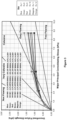
- the process is repeated at a range of consolidation stresses and the flow function constructed by plotting the unconfined failure strength against the consolidation stress as shown in Fig. 1 and thus determine the internal resistance to flow of the composition.
- greater flowability is desirable to reduce problems with powder handling and transport, and to avoid moulding defects. No obvious difference was observed between Ex. 1 to 4 and 6, with only Ex. 5 showing significantly lower flowability due to the inclusion of carbon black within the composition.
- Transverse bars were manufactured with the Laempe laboratory machine type L1 being developed for manufacturing test-cores in heated and non-heated tooling, using gas hardening processes like CO 2 , cold box and hot box.
- the sand mixture is automatically injected in the core box, which is clamped between the side presses, and can be heated at various temperatures.
- the release of high pressured air blows the sand from the sand storage bunker into the core box at high speed.
- the total elapsed shooting time was set at 1 s and with a shooting pressure of 4 bar (400kPa). All specimens were purged with heated air for 120s at 120°C. Core box temperature was set at 140°C.
- LCFs lustrous carbon formers
- the high temperatures are believed to require a higher lustrous carbon content in the overall composition in order to achieve the desired improvements in surface quality and in reducing casting defects.
- a strong LCF this improvement is achieved without significantly affecting the flowability of the composition or the strength of the cores formed therefrom.
- a higher content of weak LCF may provide an equivalent lustrous carbon content and thus in theory provide a similar improvement in casting quality, the reduction in flowability and core strength lead to reductions in casting quality which negate any theoretical improvements.
- the overall lustrous carbon content in the composition can be carefully selected by using a blend of LCFs, including optionally a blend of strong and weak LCFs, in order to achieve the optimal casting conditions without affecting workability or core strength.
- a series of cores for use with a permanent die for aluminium casting were prepared according to Table 4 below.
- the cores were tested in a casting trial using aluminium with a pouring temperature of approximately 730°C. After solidification in the permanent die, the castings were stored for 30 minutes in a pre-heated furnace at 500°C. After solidification, core Ex. 17 (without a lustrous carbon former: graded coal) showed more sand adhesion.
- graded coal-145 lead to a higher surface quality compared to graded coal-190.
- lustrous carbon formers such as Gilsonite are too strong to be effective for use in non-ferrous and/or lower temperature castings.
- Thermogravimetric analysis was carried out for four lustrous carbon formers: Gilsonite, Graded Coal-190, Superfine Graded Coal-240, and Coal Sand. The analysis was carried out from 20-1000°C at a rate of 10°C/min, with the exception of Gilsonite, which was tested at a rate of 5°C/min. As is shown in Figure 6 , although all four lustrous carbon formers began to lose mass from approximately 400°C, the Gilsonite sample lost mass far more rapidly than the other three lustrous carbon formers.
- Table 5 shows a list of lustrous carbon formers and typical lustrous carbon content contained therein.
- Table 5 Lustrous carbon former Lustrous carbon content Polystyrene 56% Hydrocarbon resin 38-48% Gilsonite 35% Asphalt 26-32% Coal dust 8-14% Graded coal 8-12% Seacoal 10%
- the inventors believe that the rate at which the lustrous carbon formers are able to volatilise under the casting conditions significantly affects the activity of the lustrous carbon former (LCF) to reduce surface defects in the casting.
- LCF lustrous carbon former
- weak lustrous carbon formers have surprisingly been found to be more effective.
- strong lustrous carbon formers has been found to be surprisingly effective.
- strong and weak reflect both the LCFs volatility and the overall content of lustrous carbon within the additive.
- alternative carbon sources such as graphite, were found to be far less effective than LCFs. The most effective LCF for any particular casting process is a balance between strength of the LCF effect, pouring temperature of the casting and the requirement to minimise strength loss of the core through LCF addition rates.
- sand, liquid binder and additives as specified in Table 6a below were mixed with a commercially available batch mixer (Hobart) with a batch size of 20 litre, whereby the additive and liquid binder were added in parallel with a mixing time of 2x 1 min.
- the mixtures were introduced into core shooters as set out in Table 6b below and cores were produced under the conditions therein.
Landscapes
- Engineering & Computer Science (AREA)
- Mechanical Engineering (AREA)
- Chemical & Material Sciences (AREA)
- Materials Engineering (AREA)
- Mold Materials And Core Materials (AREA)
- Molds, Cores, And Manufacturing Methods Thereof (AREA)
Applications Claiming Priority (3)
| Application Number | Priority Date | Filing Date | Title |
|---|---|---|---|
| EP21184981 | 2021-07-12 | ||
| EP22750699.5A EP4370263B1 (fr) | 2021-07-12 | 2022-07-12 | Composition pour la fabrication d'un noyau et procédé de fabrication d'un article en métal ferreux |
| PCT/EP2022/069506 WO2023285482A1 (fr) | 2021-07-12 | 2022-07-12 | Système de liants inorganiques |
Related Parent Applications (2)
| Application Number | Title | Priority Date | Filing Date |
|---|---|---|---|
| EP22750699.5A Division EP4370263B1 (fr) | 2021-07-12 | 2022-07-12 | Composition pour la fabrication d'un noyau et procédé de fabrication d'un article en métal ferreux |
| EP22750699.5A Division-Into EP4370263B1 (fr) | 2021-07-12 | 2022-07-12 | Composition pour la fabrication d'un noyau et procédé de fabrication d'un article en métal ferreux |
Publications (2)
| Publication Number | Publication Date |
|---|---|
| EP4545204A2 true EP4545204A2 (fr) | 2025-04-30 |
| EP4545204A3 EP4545204A3 (fr) | 2025-05-14 |
Family
ID=77126523
Family Applications (2)
| Application Number | Title | Priority Date | Filing Date |
|---|---|---|---|
| EP22750699.5A Active EP4370263B1 (fr) | 2021-07-12 | 2022-07-12 | Composition pour la fabrication d'un noyau et procédé de fabrication d'un article en métal ferreux |
| EP25163975.3A Pending EP4545204A3 (fr) | 2021-07-12 | 2022-07-12 | Système de liant inorganique |
Family Applications Before (1)
| Application Number | Title | Priority Date | Filing Date |
|---|---|---|---|
| EP22750699.5A Active EP4370263B1 (fr) | 2021-07-12 | 2022-07-12 | Composition pour la fabrication d'un noyau et procédé de fabrication d'un article en métal ferreux |
Country Status (11)
| Country | Link |
|---|---|
| US (1) | US12134122B2 (fr) |
| EP (2) | EP4370263B1 (fr) |
| JP (1) | JP2024525688A (fr) |
| KR (1) | KR20240034784A (fr) |
| CN (1) | CN117642240A (fr) |
| AU (1) | AU2022310919A1 (fr) |
| CA (1) | CA3224939A1 (fr) |
| CL (1) | CL2024000074A1 (fr) |
| MX (1) | MX2024000686A (fr) |
| WO (1) | WO2023285482A1 (fr) |
| ZA (1) | ZA202400416B (fr) |
Citations (4)
| Publication number | Priority date | Publication date | Assignee | Title |
|---|---|---|---|---|
| US4316744A (en) | 1973-07-17 | 1982-02-23 | E. I. Du Pont De Nemours And Company | High ratio silicate foundry sand binders |
| US7770629B2 (en) | 2004-09-02 | 2010-08-10 | As Lungen Gmbh | Moulding mixture for producing casting moulds for metalworking |
| US20150306658A1 (en) | 2012-12-22 | 2015-10-29 | Ask Chemicals Gmbh | Molding material mixtures containing metal oxides of aluminum and zirconium in particulate form |
| CN111889616A (zh) | 2020-07-29 | 2020-11-06 | 宁夏共享化工有限公司 | 铸造用固化剂及其应用 |
Family Cites Families (3)
| Publication number | Priority date | Publication date | Assignee | Title |
|---|---|---|---|---|
| US4505750A (en) | 1983-11-25 | 1985-03-19 | Venture Chemicals, Inc. | Foundry mold and core sands |
| DE202007019192U1 (de) | 2006-10-19 | 2011-02-03 | Ashland-Südchemie-Kernfest GmbH | Kohlenhydrathaltige Formstoffmischung |
| EP2359957A1 (fr) | 2010-01-26 | 2011-08-24 | Foseco International Limited | Procédé et composition pour la préparation de moules et de cýurs de fonderie |
-
2022
- 2022-07-12 JP JP2024501524A patent/JP2024525688A/ja active Pending
- 2022-07-12 EP EP22750699.5A patent/EP4370263B1/fr active Active
- 2022-07-12 WO PCT/EP2022/069506 patent/WO2023285482A1/fr not_active Ceased
- 2022-07-12 EP EP25163975.3A patent/EP4545204A3/fr active Pending
- 2022-07-12 CA CA3224939A patent/CA3224939A1/fr active Pending
- 2022-07-12 KR KR1020247004136A patent/KR20240034784A/ko active Pending
- 2022-07-12 US US18/577,215 patent/US12134122B2/en active Active
- 2022-07-12 MX MX2024000686A patent/MX2024000686A/es unknown
- 2022-07-12 AU AU2022310919A patent/AU2022310919A1/en active Pending
- 2022-07-12 CN CN202280049229.7A patent/CN117642240A/zh active Pending
-
2024
- 2024-01-09 CL CL2024000074A patent/CL2024000074A1/es unknown
- 2024-01-11 ZA ZA2024/00416A patent/ZA202400416B/en unknown
Patent Citations (4)
| Publication number | Priority date | Publication date | Assignee | Title |
|---|---|---|---|---|
| US4316744A (en) | 1973-07-17 | 1982-02-23 | E. I. Du Pont De Nemours And Company | High ratio silicate foundry sand binders |
| US7770629B2 (en) | 2004-09-02 | 2010-08-10 | As Lungen Gmbh | Moulding mixture for producing casting moulds for metalworking |
| US20150306658A1 (en) | 2012-12-22 | 2015-10-29 | Ask Chemicals Gmbh | Molding material mixtures containing metal oxides of aluminum and zirconium in particulate form |
| CN111889616A (zh) | 2020-07-29 | 2020-11-06 | 宁夏共享化工有限公司 | 铸造用固化剂及其应用 |
Also Published As
| Publication number | Publication date |
|---|---|
| WO2023285482A1 (fr) | 2023-01-19 |
| CN117642240A (zh) | 2024-03-01 |
| KR20240034784A (ko) | 2024-03-14 |
| EP4370263A1 (fr) | 2024-05-22 |
| MX2024000686A (es) | 2024-02-07 |
| US20240253107A1 (en) | 2024-08-01 |
| AU2022310919A1 (en) | 2024-02-01 |
| CA3224939A1 (fr) | 2023-01-19 |
| JP2024525688A (ja) | 2024-07-12 |
| ZA202400416B (en) | 2025-04-30 |
| US12134122B2 (en) | 2024-11-05 |
| EP4370263B1 (fr) | 2026-03-11 |
| CL2024000074A1 (es) | 2024-10-25 |
| EP4545204A3 (fr) | 2025-05-14 |
Similar Documents
| Publication | Publication Date | Title |
|---|---|---|
| RU2699133C2 (ru) | Смеси литийсодержащего формовочного материала на основе неорганического связующего для получения форм и стержней для литья металла | |
| JP5401325B2 (ja) | 鋳物砂の熱的再生 | |
| US10092946B2 (en) | Mold material mixtures on the basis of inorganic binders, and method for producing molds and cores for metal casting | |
| CN110869145B (zh) | 用于制造铸模、型芯和由其再生的模制基本料的方法 | |
| MX2007002585A (es) | Mezcla de materia de molde para producir moldes de fundicion destinados para la transformacion de metales. | |
| JPH0734970B2 (ja) | 水分散可能な型その型の製造方法及びその型を使用する鋳造方法 | |
| CA2621005C (fr) | Melanges de materiau moulable contenant du verre au borosilicate | |
| Sinha et al. | Influence of mold material on the mold stability for foundry use | |
| AU2009209473B2 (en) | Compositions containing certain metallocenes and their uses | |
| EP2723517B1 (fr) | Procédé pour l'amélioration d'une qualité de moulage | |
| EP4370263B1 (fr) | Composition pour la fabrication d'un noyau et procédé de fabrication d'un article en métal ferreux | |
| CN113825575A (zh) | 包括微粒状合成非晶二氧化硅作为用于模制材料混合物的添加剂的粒子材料的应用、相应的方法、混合物和试剂盒 | |
| US9764377B2 (en) | Method for the production of core sand and/or molding sand for casting purposes | |
| CN1160368A (zh) | 用经过破碎和分级的矿石,最好是磁铁矿石来制造铸模和型芯的用途 | |
| EP4536424A1 (fr) | Système de liant inorganique soluble dans l'eau | |
| CN120018916A (zh) | 铸模造型方法和铸模材料 | |
| EA050133B1 (ru) | Неорганическая водорастворимая система связующего | |
| HU192537B (en) | Additive and method for controlling the emptying strength remaining after casting at water-glass bound mouldings and/or cores |
Legal Events
| Date | Code | Title | Description |
|---|---|---|---|
| PUAI | Public reference made under article 153(3) epc to a published international application that has entered the european phase |
Free format text: ORIGINAL CODE: 0009012 |
|
| STAA | Information on the status of an ep patent application or granted ep patent |
Free format text: STATUS: THE APPLICATION HAS BEEN PUBLISHED |
|
| REG | Reference to a national code |
Ref country code: DE Ref legal event code: R079 Free format text: PREVIOUS MAIN CLASS: B22C0001180000 Ipc: B22C0001020000 Ref country code: DE Ref legal event code: R079 Ref document number: 602022036997 Country of ref document: DE Free format text: PREVIOUS MAIN CLASS: B22C0001180000 Ipc: B22C0001020000 |
|
| PUAL | Search report despatched |
Free format text: ORIGINAL CODE: 0009013 |
|
| AC | Divisional application: reference to earlier application |
Ref document number: 4370263 Country of ref document: EP Kind code of ref document: P |
|
| AK | Designated contracting states |
Kind code of ref document: A2 Designated state(s): AL AT BE BG CH CY CZ DE DK EE ES FI FR GB GR HR HU IE IS IT LI LT LU LV MC MK MT NL NO PL PT RO RS SE SI SK SM TR |
|
| AK | Designated contracting states |
Kind code of ref document: A3 Designated state(s): AL AT BE BG CH CY CZ DE DK EE ES FI FR GB GR HR HU IE IS IT LI LT LU LV MC MK MT NL NO PL PT RO RS SE SI SK SM TR |
|
| RIC1 | Information provided on ipc code assigned before grant |
Ipc: B22C 1/18 20060101ALI20250407BHEP Ipc: B22C 1/02 20060101AFI20250407BHEP |
|
| STAA | Information on the status of an ep patent application or granted ep patent |
Free format text: STATUS: REQUEST FOR EXAMINATION WAS MADE |
|
| STAA | Information on the status of an ep patent application or granted ep patent |
Free format text: STATUS: EXAMINATION IS IN PROGRESS |
|
| 17P | Request for examination filed |
Effective date: 20251114 |
|
| GRAP | Despatch of communication of intention to grant a patent |
Free format text: ORIGINAL CODE: EPIDOSNIGR1 |
|
| STAA | Information on the status of an ep patent application or granted ep patent |
Free format text: STATUS: GRANT OF PATENT IS INTENDED |
|
| 17Q | First examination report despatched |
Effective date: 20251209 |
|
| INTG | Intention to grant announced |
Effective date: 20260105 |
|
| TPAC | Observations filed by third parties |
Free format text: ORIGINAL CODE: EPIDOSNTIPA |
|
| GRAS | Grant fee paid |
Free format text: ORIGINAL CODE: EPIDOSNIGR3 |
|
| GRAA | (expected) grant |
Free format text: ORIGINAL CODE: 0009210 |
|
| STAA | Information on the status of an ep patent application or granted ep patent |
Free format text: STATUS: THE PATENT HAS BEEN GRANTED |