EP4545526A1 - Benzothiazolverbindung und verwendung davon - Google Patents
Benzothiazolverbindung und verwendung davon Download PDFInfo
- Publication number
- EP4545526A1 EP4545526A1 EP23826569.8A EP23826569A EP4545526A1 EP 4545526 A1 EP4545526 A1 EP 4545526A1 EP 23826569 A EP23826569 A EP 23826569A EP 4545526 A1 EP4545526 A1 EP 4545526A1
- Authority
- EP
- European Patent Office
- Prior art keywords
- group
- substituted
- chain alkyl
- cycloalkyl
- heteroaryl
- Prior art date
- Legal status (The legal status is an assumption and is not a legal conclusion. Google has not performed a legal analysis and makes no representation as to the accuracy of the status listed.)
- Pending
Links
Images




Classifications
-
- A—HUMAN NECESSITIES
- A61—MEDICAL OR VETERINARY SCIENCE; HYGIENE
- A61K—PREPARATIONS FOR MEDICAL, DENTAL OR TOILETRY PURPOSES
- A61K31/00—Medicinal preparations containing organic active ingredients
- A61K31/33—Heterocyclic compounds
- A61K31/395—Heterocyclic compounds having nitrogen as a ring hetero atom, e.g. guanethidine or rifamycins
- A61K31/435—Heterocyclic compounds having nitrogen as a ring hetero atom, e.g. guanethidine or rifamycins having six-membered rings with one nitrogen as the only ring hetero atom
- A61K31/47—Quinolines; Isoquinolines
- A61K31/472—Non-condensed isoquinolines, e.g. papaverine
- A61K31/4725—Non-condensed isoquinolines, e.g. papaverine containing further heterocyclic rings
-
- A—HUMAN NECESSITIES
- A61—MEDICAL OR VETERINARY SCIENCE; HYGIENE
- A61K—PREPARATIONS FOR MEDICAL, DENTAL OR TOILETRY PURPOSES
- A61K31/00—Medicinal preparations containing organic active ingredients
- A61K31/33—Heterocyclic compounds
- A61K31/395—Heterocyclic compounds having nitrogen as a ring hetero atom, e.g. guanethidine or rifamycins
- A61K31/495—Heterocyclic compounds having nitrogen as a ring hetero atom, e.g. guanethidine or rifamycins having six-membered rings with two or more nitrogen atoms as the only ring heteroatoms, e.g. piperazine or tetrazines
- A61K31/496—Non-condensed piperazines containing further heterocyclic rings, e.g. rifampin, thiothixene or sparfloxacin
-
- A—HUMAN NECESSITIES
- A61—MEDICAL OR VETERINARY SCIENCE; HYGIENE
- A61K—PREPARATIONS FOR MEDICAL, DENTAL OR TOILETRY PURPOSES
- A61K31/00—Medicinal preparations containing organic active ingredients
- A61K31/66—Phosphorus compounds
- A61K31/675—Phosphorus compounds having nitrogen as a ring hetero atom, e.g. pyridoxal phosphate
-
- A—HUMAN NECESSITIES
- A61—MEDICAL OR VETERINARY SCIENCE; HYGIENE
- A61P—SPECIFIC THERAPEUTIC ACTIVITY OF CHEMICAL COMPOUNDS OR MEDICINAL PREPARATIONS
- A61P19/00—Drugs for skeletal disorders
- A61P19/02—Drugs for skeletal disorders for joint disorders, e.g. arthritis, arthrosis
-
- A—HUMAN NECESSITIES
- A61—MEDICAL OR VETERINARY SCIENCE; HYGIENE
- A61P—SPECIFIC THERAPEUTIC ACTIVITY OF CHEMICAL COMPOUNDS OR MEDICINAL PREPARATIONS
- A61P35/00—Antineoplastic agents
-
- C—CHEMISTRY; METALLURGY
- C07—ORGANIC CHEMISTRY
- C07D—HETEROCYCLIC COMPOUNDS
- C07D417/00—Heterocyclic compounds containing two or more hetero rings, at least one ring having nitrogen and sulfur atoms as the only ring hetero atoms, not provided for by group C07D415/00
- C07D417/14—Heterocyclic compounds containing two or more hetero rings, at least one ring having nitrogen and sulfur atoms as the only ring hetero atoms, not provided for by group C07D415/00 containing three or more hetero rings
-
- C—CHEMISTRY; METALLURGY
- C07—ORGANIC CHEMISTRY
- C07D—HETEROCYCLIC COMPOUNDS
- C07D471/00—Heterocyclic compounds containing nitrogen atoms as the only ring hetero atoms in the condensed system, at least one ring being a six-membered ring with one nitrogen atom, not provided for by groups C07D451/00 - C07D463/00
- C07D471/02—Heterocyclic compounds containing nitrogen atoms as the only ring hetero atoms in the condensed system, at least one ring being a six-membered ring with one nitrogen atom, not provided for by groups C07D451/00 - C07D463/00 in which the condensed system contains two hetero rings
- C07D471/04—Ortho-condensed systems
-
- C—CHEMISTRY; METALLURGY
- C07—ORGANIC CHEMISTRY
- C07D—HETEROCYCLIC COMPOUNDS
- C07D471/00—Heterocyclic compounds containing nitrogen atoms as the only ring hetero atoms in the condensed system, at least one ring being a six-membered ring with one nitrogen atom, not provided for by groups C07D451/00 - C07D463/00
- C07D471/02—Heterocyclic compounds containing nitrogen atoms as the only ring hetero atoms in the condensed system, at least one ring being a six-membered ring with one nitrogen atom, not provided for by groups C07D451/00 - C07D463/00 in which the condensed system contains two hetero rings
- C07D471/10—Spiro-condensed systems
-
- C—CHEMISTRY; METALLURGY
- C07—ORGANIC CHEMISTRY
- C07D—HETEROCYCLIC COMPOUNDS
- C07D487/00—Heterocyclic compounds containing nitrogen atoms as the only ring hetero atoms in the condensed system, not provided for by groups C07D451/00 - C07D477/00
- C07D487/02—Heterocyclic compounds containing nitrogen atoms as the only ring hetero atoms in the condensed system, not provided for by groups C07D451/00 - C07D477/00 in which the condensed system contains two hetero rings
- C07D487/10—Spiro-condensed systems
-
- C—CHEMISTRY; METALLURGY
- C07—ORGANIC CHEMISTRY
- C07D—HETEROCYCLIC COMPOUNDS
- C07D491/00—Heterocyclic compounds containing in the condensed ring system both one or more rings having oxygen atoms as the only ring hetero atoms and one or more rings having nitrogen atoms as the only ring hetero atoms, not provided for by groups C07D451/00 - C07D459/00, C07D463/00, C07D477/00 or C07D489/00
- C07D491/02—Heterocyclic compounds containing in the condensed ring system both one or more rings having oxygen atoms as the only ring hetero atoms and one or more rings having nitrogen atoms as the only ring hetero atoms, not provided for by groups C07D451/00 - C07D459/00, C07D463/00, C07D477/00 or C07D489/00 in which the condensed system contains two hetero rings
- C07D491/10—Spiro-condensed systems
- C07D491/107—Spiro-condensed systems with only one oxygen atom as ring hetero atom in the oxygen-containing ring
-
- C—CHEMISTRY; METALLURGY
- C07—ORGANIC CHEMISTRY
- C07F—ACYCLIC, CARBOCYCLIC OR HETEROCYCLIC COMPOUNDS CONTAINING ELEMENTS OTHER THAN CARBON, HYDROGEN, HALOGEN, OXYGEN, NITROGEN, SULFUR, SELENIUM OR TELLURIUM
- C07F9/00—Compounds containing elements of Groups 5 or 15 of the Periodic Table
- C07F9/02—Phosphorus compounds
- C07F9/547—Heterocyclic compounds, e.g. containing phosphorus as a ring hetero atom
- C07F9/6558—Heterocyclic compounds, e.g. containing phosphorus as a ring hetero atom containing at least two different or differently substituted hetero rings neither condensed among themselves nor condensed with a common carbocyclic ring or ring system
- C07F9/65583—Heterocyclic compounds, e.g. containing phosphorus as a ring hetero atom containing at least two different or differently substituted hetero rings neither condensed among themselves nor condensed with a common carbocyclic ring or ring system each of the hetero rings containing nitrogen as ring hetero atom
-
- C—CHEMISTRY; METALLURGY
- C07—ORGANIC CHEMISTRY
- C07F—ACYCLIC, CARBOCYCLIC OR HETEROCYCLIC COMPOUNDS CONTAINING ELEMENTS OTHER THAN CARBON, HYDROGEN, HALOGEN, OXYGEN, NITROGEN, SULFUR, SELENIUM OR TELLURIUM
- C07F9/00—Compounds containing elements of Groups 5 or 15 of the Periodic Table
- C07F9/02—Phosphorus compounds
- C07F9/547—Heterocyclic compounds, e.g. containing phosphorus as a ring hetero atom
- C07F9/6564—Heterocyclic compounds, e.g. containing phosphorus as a ring hetero atom having phosphorus atoms, with or without nitrogen, oxygen, sulfur, selenium or tellurium atoms, as ring hetero atoms
- C07F9/6581—Heterocyclic compounds, e.g. containing phosphorus as a ring hetero atom having phosphorus atoms, with or without nitrogen, oxygen, sulfur, selenium or tellurium atoms, as ring hetero atoms having phosphorus and nitrogen atoms with or without oxygen or sulfur atoms, as ring hetero atoms
- C07F9/6584—Heterocyclic compounds, e.g. containing phosphorus as a ring hetero atom having phosphorus atoms, with or without nitrogen, oxygen, sulfur, selenium or tellurium atoms, as ring hetero atoms having phosphorus and nitrogen atoms with or without oxygen or sulfur atoms, as ring hetero atoms having one phosphorus atom as ring hetero atom
- C07F9/65842—Cyclic amide derivatives of acids of phosphorus, in which one nitrogen atom belongs to the ring
- C07F9/65844—Cyclic amide derivatives of acids of phosphorus, in which one nitrogen atom belongs to the ring the phosphorus atom being part of a five-membered ring which may be condensed with another ring system
Definitions
- the present invention relates to the field of medicine, and in particularly to a benzothiazole compound capable of targeted killing senescent cells, and its use in preventing or treating aging-related diseases.
- the senescence of certain proliferating cells or stem cells can lead to a decline in an individual's regeneration ability, affecting the body's recovery ability and normal functions; More importantly, senescent cells secrete a large amount of inflammatory factors, known as Senescence-Associated Secretory Phenotype (SASP), which create a chronic inflammatory microenvironment, accelerate the body's aging, and promote the occurrence of age-related diseases .
- SASP Senescence-Associated Secretory Phenotype
- Researches have shown that targeted elimination of senescent cells through genetic methods or small molecules can reduce chronic inflammation, enhance tissue repair abilities, improve symptoms of age-related diseases such as osteoarthritis and idiopathic pulmonary fibrosis, and alleviate the decline in physiological functions of aging organisms. Therefore, the selective elimination of senescent cells is a promising approach for treating age-related diseases and improving the physiological functions of elderly individuals.
- senolytics small molecule compounds, known as "senolytics”, have been identified that can selectively eliminate senescent cells. Due to the heterogeneity of senescent cells, these senolytics can achieve selective killing of senescent cells to some extent, However, there remains significant potential for improvement in reducing toxicity and improving specificity of cell elimination.
- the early senolytics primarily targeted key components in the Senescent Cell anti-Apoptotic Pathways (SCAP), that is, by inhibiting the anti-apoptotic signals of senescent cells and thereby inducing their death.
- SCAP Senescent Cell anti-Apoptotic Pathways
- the expression of the anti-apoptotic protein BCL2/BCL-XL is significantly increased in senescent cells, which counteracts the activity of pro-apoptotic proteins such as Bax, making senescent cells resistant to apoptosis.
- ABT263 navitoclax
- A-1331852 ( CAS1430844-80-6 ) is a small molecule inhibitor that specifically targets Bcl-xL. Beyond its remarkable killing efficacy against Bcl-xL-dependent cancer cells, A-1331852 also exhibits high activity in eliminating senescent cells. However, on one hand, due to its extremely strong inhibitory effect on Bcl-xL, A-1331852 causes the killing of platelets at low concentrations and exhibits significant platelet toxicity under in vivo conditions, restricting the clinical application of this molecule. On the other hand, there is room for improvement in the physicochemical properties of A-1331852 molecule, such as its low solubility in water and oral bioavailability of only about 11% in rats. Based on these shortcomings, A-1331852 is only used as a research tool compound as an excellent Bcl-xL-specific inhibitor.
- the present invention provides a class of novel benzothiazole compounds. These compounds can significantly reduce platelet toxicity, selectively kill senescent cells and tumor cells within a broader safety window, and minimize the side effects associated with killing normal cells, thereby offering enhanced selectivity and safety. Furthermore, the compounds of the present invention may also exhibit excellent physicochemical properties, especially significantly improved water solubility.
- the present application provides a benzothiazole compound having a structure represented by formula I: wherein,
- a pharmaceutically acceptable salt, a solvate, a hydrate, a polymorph, a co-crystal, a tautomer, a stereoisomer, an isotope labeled compound (preferably deuterated compound), or a prodrug of the benzothiazole compound represented by formula I are also within the scope of the present application. Accordingly, the present application also provides a pharmaceutically acceptable salt, a solvate, a hydrate, a polymorph, a co-crystal, a tautomer, a stereoisomer, an isotope labeled compound (preferably deuterated compound), or a prodrug of the benzothiazole compound represented by formula I.
- the compound is represented by formula II: in formula II, the definitions to R 1 and R 2 are the same as those in formula I.
- R 1 and R 2 together with the N atom to which they are connected, form a C2-C20 heteroalicyclic group, such as a C2-C10 heteroalicyclic group.
- the ring of the C2-C20 heteroalicyclic group optionally contains 1 or 2 additional heteroatoms selected from the group consisting of N and O.
- the C2-C20 heteroalicyclic group is optionally substituted with one or more substituents selected from the group consisting of halogen atom, cyano, nitro, C6-C10 aryl, C1-C10 heteroaryl, C1-C6 chain alkoxy, C6-C10 aryloxy, C2-C10 heteroalicyclic group, amino, hydroxyl, mercapto, carbonyl, carboxyl, acyl, and -NR 4 R 5 , wherein R 4 and R 5 are independently selected from the group consisting of hydrogen, C6-C10 aryl, C1-C10 heteroaryl, C1-C8 chain alkyl, C3-C8 cycloalkyl, C2-C8 chain alkenyl, and C2-C8 alkynyl, and the aryl and heteroaryl are optionally substituted with halogen atom, hydroxyl, mercapto, amino, nitro, cyano, carboxyl, acyl, C1
- the C2-C20 heteroalicyclic group is optionally substituted with a substituent selected from the group consisting of halogen atom, hydroxyl, mercapto, amino, nitro, cyano, C1-C10 alkoxy, C1-C10 alkyl, C3-C8 cycloalkyl, C2-C8 chain alkenyl, C2-C8 alkynyl, and R 4 and R 5 are independently selected from the group consisting of hydrogen and C1-C6 alkyl.
- a substituent selected from the group consisting of halogen atom, hydroxyl, mercapto, amino, nitro, cyano, C1-C10 alkoxy, C1-C10 alkyl, C3-C8 cycloalkyl, C2-C8 chain alkenyl, C2-C8 alkynyl, and R 4 and R 5 are independently selected from the group consisting of hydrogen and C1-C6 alkyl.
- the C2-C8 heteroalicyclic group is optionally substituted with a substituent selected from the group consisting of halogen, -NH 2 , -OH, -NO 2 , carbonyl, -CH 2 OH, carboxyl, methyl, ethyl, propyl, isopropyl, methoxy, ethoxy, propoxy, and isopropoxy.
- a substituent selected from the group consisting of halogen, -NH 2 , -OH, -NO 2 , carbonyl, -CH 2 OH, carboxyl, methyl, ethyl, propyl, isopropyl, methoxy, ethoxy, propoxy, and isopropoxy.
- R 1 and R 2 are independently selected from the group consisting of C1-C6 chain alkyl, C3-C6 cycloalkyl, C2-C6 chain alkenyl, C2-C6 alkynyl, C6-C10 aryl, C1-C10 heteroaryl, and C2-C10 heteroalicyclic group, wherein CH 2 in the C1-C6 chain alkyl, C3-C6 cycloalkyl, C2-C6 chain alkenyl, and C2-C6 alkynyl can be replaced with one or more groups selected from the group consisting of -O-, -S -, -SO 2 -, -C(O)-, and -NR 3 -, and the C1-C6 chain alkyl, C3-C6 cycloalkyl, C2-C6 chain alkenyl, C2-C6 alkynyl, C6-C10 aryl, C1-C10 heteroaryl, and C2-C10 heteroalicyclic group
- the benzothiazole compound is represented by formula III: in formula III, R 2 is C1-C10 chain alkyl, C3-C8 cycloalkyl, C2-C8 chain alkenyl, C2-C8 alkynyl, C6-C20 aryl, C1-C20 heteroaryl, and C2-C20 heteroalicyclic group, wherein CH 2 in C1-C10 chain alkyl, C3-C8 cycloalkyl, C2-C8 chain alkenyl, and C2-C8 alkynyl can be replaced with one or more groups selected from the group consisting of -O-, -S-, -SO 2 -, -C(O)-, and -NR 3 -, and the C1-C10 chain alkyl, C3-C8 cycloalkyl, C2-C8 chain alkenyl, C2-C8 alkynyl, C6-C20 aryl, C1-C20 heteroaryl, and C
- the heteroalicyclic group or heteroalicyclic ring is selected from the group consisting of: substituted or unsubstituted piperidinyl, substituted or unsubstituted piperazinyl, substituted or unsubstituted morpholinyl, substituted or unsubstituted piperazin-2-one group, substituted or unsubstituted pyrrolidinyl, and substituted or unsubstituted imidazolinyl.
- R 1 and/or R 2 are selected from the group consisting of methyl, ethyl, propyl, isopropyl, methoxy, ethoxy, propoxy, isopropoxy, ethenyl, 6-membered aryl, 5-membered heteroaryl, 6-membered heteroaryl, 5-membered heterocyclyl, 6-membered heterocyclyl, 5-membered carbocyclyl, and 6-membered carbocyclyl, and each heteroaryl and each heterocyclyl contain 1 or 2 heteroatoms selected from the group consisting of N and O; and each group is independently optionally substituted with -F, -Cl, -Br, -I, -NH 2 , -OH, -NO 2 , carbonyl, -CH 2 -OH, carboxyl, methyl, ethyl, propyl, isopropyl, methoxy, ethoxy, propoxy, and isopropoxy.
- R 1 and R 2 together with the N atom to which they are connected, form a C2-C20 heteroalicyclic group.
- the C2-C20 heteroalicyclic group is selected from C4-C20 heteroalicyclic group.
- the C4-C20 heteroalicyclic group is selected from the group consisting of: substituted or unsubstituted morpholinyl, substituted or unsubstituted piperidinyl, and substituted or unsubstituted piperazinyl.
- the C4-C20 heteroalicyclic group is selected from the group consisting of the following groups: ,
- the compound has the structure represented by formula I-1, formula I-2, formula I-3, formula I-4, or formula I-5,
- R' each independently represents no substituent, single substituent, or multiple substituents, and each substituent is independently selected from the group consisting of deuterium, hydroxyl, halogen, NH 2 , carboxyl, C1-C6 chain alkyl, halogen-substituted C1-C6 chain alkyl, hydroxyl-substituted C1-C6 chain alkyl, C3-C6 cycloalkyl, halogen-substituted C3-C6 cycloalkyl, hydroxyl-substituted C3-C6 cycloalkyl, phenyl, and benzyl.
- R a , R b , R c , and R d are each independently selected from the group consisting of hydrogen and C1-C6 alkyl.
- R e , R f , and R g are each independently selected from the group consisting of hydrogen and C1-C6 alkyl.
- R h , R i , R j , R k , R l , and R m are each independently selected from the group consisting of hydrogen and C1-C6 alkyl.
- R p , R q , and R z are each independently selected from the group consisting of hydrogen and C1-C6 alkyl.
- R a , R b , R c , R d , R e , R f , R g , R h , R i , R j , R k , R l , R m , R p , R q , and R z are all hydrogen.
- L is methylene
- R z is methyl
- R is
- L 1 is absent.
- R 6 is H, halogen, hydroxyl, NH 2 , carboxyl, C1-C3 chain alkyl, halogen-substituted C1-C3 chain alkyl, or hydroxyl-substituted C1-C3 chain alkyl.
- R 6 is
- benzothiazole compounds represented by formula I are selected from the group consisting of the following compounds:
- the present application provides a pharmaceutical composition, comprising the compound or a pharmaceutically acceptable salt, solvate, hydrate, polymorph, co-crystal, tautomer, stereoisomer, isotope labeled compound, or prodrug thereof in the first aspect, and a pharmaceutically acceptable excipient.
- the present application provides a method for preventing or treating age-related disease, comprising administering to a subject in need a therapeutically effective amount of the compound or a pharmaceutically acceptable salt, solvate, hydrate, polymorph, co-crystal, tautomer, stereoisomer or prodrug thereof in the first aspect or the pharmaceutical composition in the second aspect.
- the disease is selected from diseases related to the accumulation of senescent cells, and the disease is preferably one or more selected from the group consisting of idiopathic pulmonary fibrosis, pulmonary fibrosis, hepatic fibrosis, renal fibrosis, inflammation and tissue fibrosis and atrophy of upper respiratory tract and lungs caused by viruses, cystic fibrosis, myelofibrosis, myocardial fibrosis, cutaneous fibrosis, interstitial lung disease, fibrotic pancreatitis, retinopathy of prematurity, macular degeneration, diabetic macular edema, diabetic retinopathy, age-related macular degeneration, wet age-related macular degeneration, dry age-related macular degeneration, glaucoma, sickle cell retinopathy, ischemic arteritis neuropathy, keratitis sicca, Fuch's corneal dystrophy, presbyopia, cataract, degenerative vitreous disorder, including vitreo
- the present application provides use of the compound or a pharmaceutically acceptable salt, solvate, hydrate, polymorph, co-crystal, tautomer, stereoisomer, isotope labeled compound, or prodrug thereof in the first aspect or the pharmaceutical composition in the second aspect in the preparation of a medicament for preventing or treating a disease related to aging.
- the disease is selected from diseases related to the accumulation of senescent cells, and the disease is preferably one or more selected from the group consisting of idiopathic pulmonary fibrosis, pulmonary fibrosis, hepatic fibrosis, renal fibrosis, inflammation and tissue fibrosis and atrophy of upper respiratory tract and lungs caused by viruses, cystic fibrosis, myelofibrosis, myocardial fibrosis, cutaneous fibrosis, interstitial lung disease, fibrotic pancreatitis, retinopathy of prematurity, macular degeneration, diabetic macular edema, diabetic retinopathy, age-related macular degeneration, wet age-related macular degeneration, dry age-related macular degeneration, glaucoma, sickle cell retinopathy, ischemic arteritis neuropathy, keratitis sicca, Fuch's corneal dystrophy, presbyopia, cataract, degenerative vitreous disorder, including vitreo
- novel benzothiazole compounds provided by the present application have improved physicochemical properties and safety, low platelet toxicity and better solubility compared with A-1331852.
- alkyl refers to an aliphatic hydrocarbon group, which may be branched or linear alky. Depending on the structure, the alkyl can be monovalent group or bivalent group (i.e., alkylene). In the present invention, the alkyl is preferably an alkyl having 1 to 8 carbon atoms, more preferably a "lower alkyl” having 1 to 6 carbon atoms, and even more preferably an alkyl having 1 to 4 carbon atoms. Typical alkyl includes, but is not limited to, methyl, ethyl, propyl, butyl, pentyl, hexyl, and the like.
- alkyl as used herein includes all possible configurations and conformations of the alkyl.
- the "propyl” mentioned herein includes n-propyl and isopropyl
- the "butyl” includes n-butyl, isobutyl, and tert-butyl
- the "pentyl” includes n-pentyl, isopentyl, neopentyl, tert-pentyl, and pentyl-3-yl, and the like.
- alkoxy refers to -O-alkyl, wherein the alkyl is as defined herein. Typical alkoxy includes, but is not limited to, methoxy, ethoxy, propoxy, butoxy, pentyloxy, hexyloxy, and the like.
- cycloalkyl refers to monocyclic or polycyclic group containing only carbon and hydrogen. Cycloalkyl includes a group having 3 to 12 ring atoms. Depending on the structure, a cycloalkyl can be monovalent group or bivalent group (e.g., cycloalkylene). In the present invention, the cycloalkyl is preferably a cycloalkyl having 3 to 8 carbon atoms, and more preferably a "lower cycloalkyl" having 3 to 6 carbon atoms.
- cycloalkyl examples include, but are not limited to, cyclopropyl, cyclobutyl, cyclopentyl, cyclohexyl, cycloheptyl, cyclooctyl, cyclopentenyl, cyclohexenyl, cycloheptenyl, and adamantyl.
- aryl refers to an aromatic ring in which each of the atoms making up the ring is a carbon atom.
- Aromatic ring can be composed of five, six, seven, eight, nine, or more than nine atoms.
- Aryl may be optionally substituted. Examples of aryl include, but are not limited to, phenyl, naphthyl, phenanthryl, anthracenyl, fluorenyl, and indenyl.
- an aryl may be monovalent group or bivalent group (i.e., arylene).
- heteroaryl refers to an aromatic group containing one or more ring heteroatoms selected from the group consisting of nitrogen, oxygen, and sulfur.
- the N-containing “heteroaryl” moiety refers to an aromatic group in which at least one skeleton atom in the ring is a nitrogen atom.
- a heteroaryl can be monovalent group or bivalent group (i.e., heteroarylene).
- heteroaryl examples include, but are not limited to, pyridyl, imidazolyl, pyrimidinyl, pyrazolyl, triazolyl, pyrazinyl, tetrazolyl, furyl, thienyl, isoxazolyl, thiazolyl, oxazolyl, isothiazolyl, pyrrolyl, quinolyl, isoquinolyl, indolyl, benzimidazolyl, benzofuranyl, indazolyl, indolizinyl, phthalazinyl, pyridazinyl, isoindolyl, pteridinyl, purinyl, oxadiazolyl, thiadiazolyl, furazanyl, benzofuranyl, benzothienyl, benzothiazolyl, benzoxazolyl, quinazolinyl, naphthyridinyl, furopyridyl,
- alicyclic group or "cycloalkyl” used herein refers to a non-aromatic ring formed by three or more carbon atoms, wherein the bond between two adjacent carbon atoms in the ring can be single bonds, double bonds, or triple bonds.
- the number of rings can be one or more.
- Non-limiting examples include cyclopropyl, cyclobutyl, cyclopentyl, cyclohexyl, cycloheptyl, cyclohexenyl, cyclopentenyl, cyclohexadienyl, and the like.
- heterocycloalkyl or “heteroalicyclic group” or “heteroalicycle” used herein refers to a non-aromatic ring in which one or more atoms constituting the ring are heteroatoms selected from the group consisting of nitrogen, oxygen, and sulfur. Heterocycloalkyl may be composed of three, four, five, six, seven, eight, nine or more than nine atoms. Heterocycloalkyl may be optionally substituted.
- heteroalicyclic group examples include, but are not limited to, lactam, lactone, cyclicimine, cyclicthioimine, cyclic carbamate, tetrahydrothiopyran, 4H-pyran, tetrahydropyran, piperidine, 1,3-dioxin, 1,3-dioxane, 1,4-dioxin, 1,4-dioxane, piperazine, 1,3-oxathiane, 1,4-oxathiine, 1,4-oxathiane, tetrahydro-1,4-thiazine, 2H-1,2-oxazine, maleimide, succinimide, barbituric acid, thiobarbituric acid, dioxopiperazine, hydantoin, dihydrouracil, morpholine, trioxane, hexahydro-1,3,5-triazine, tetrahydrothiophene, tetrahydrofuran
- halo or halogen used herein refers to fluorine, chlorine, bromine, and iodine.
- salts formed by the compound in the present invention are also within the scope of the present invention.
- the compound in the present invention is understood as including its salts.
- the term "salt” used herein refers to an acidic or basic salt formed from inorganic or organic acid and base.
- the compound of the present invention contains a basic fragment, it includes but is not limited to pyridine or imidazole, and when it contains an acidic fragment, it includes but is not limited to carboxylic acid, and the zwitterion (“inner salt”) that may be formed is included in the scope of the term "salt”.
- Pharmaceutically acceptable (i.e., nontoxic and physiologically acceptable) salts are preferred, although other salts are also useful, for example, in isolation or purification steps during preparation.
- the compounds of the present invention may form salts, for example, obtained from the reaction of the compound I with a certain amount of, for example, an equivalent amount of acid or base, salting out in a medium, or freeze-drying in an aqueous solution.
- the basic fragments contained in the compound of the present invention include but are not limited to amines, pyridine or imidazole ring, which may form salt with organic or inorganic acid.
- Typical acids that can form salts include acetates (e.g., acetic acid or trihaloacetic acids, e.g.
- adipate alginate, ascorbate, aspartate, benzoate, benzenesulfonate, hydrosulfate, borate, butyrate, citrate, camphorate, camphorsulfonate, cyclopentanepropionate, diglycolate, dodecyl sulfate, ethanesulfonate, fumarate, gluceptate, glycerophosphate, hemisulfate, heptylate, hexanoate, hydrochloride, hydrobromide, hydroiodide, hydroxy-ethanesulfonate (e.g., 2-hydroxy-ethanesulfonate), lactate, malate, methanesulfonate, naphthalenesulfonate (e.g., 2-naphthalenesulfonate), niacinate, nitrate, oxalate, pectinate, pers
- the acidic fragments contained in the compound of the present invention include but are not limited to carboxylic acid, which may form salt with various organic or inorganic bases.
- Typical salts formed with base include ammonium salt, alkali metal salt such as sodium, lithium, and potassium salts, alkaline earth metal salt such as calcium and magnesium salt, and salts formed with organic base (such as organic amine), such as benzathine, dicyclohexylamine, hypamine (salt with N,N-bis(dehydroabietyl)ethylenediamine), N-methyl-D-glucamine, N-methyl-D- glucamide, tert-butylamine, and salts formed with amino acids such as arginine and lysine, and the like.
- Basic nitrogen-containing group can be combined with halide quaternary ammonium salts, such as small molecule alkyl halide (e.g. chloride, bromide and iodide of methyl, ethyl, propyl and butyl), dialkyl sulfate (e.g. dimethyl sulfate, diethyl sulfate, dibutyl ester and dipentyl ester), long-chain halide (e.g. chloride, bromides and iodide of decyl, dodecyl, tetradecyl and tetradecyl), aralkyl halide (e.g. benzyl and phenyl bromides), and the like.
- small molecule alkyl halide e.g. chloride, bromide and iodide of methyl, ethyl, propyl and butyl
- dialkyl sulfate e.g.
- Prodrug and solvate of the compounds of the present invention are also within the scope of the invention.
- the term "prodrug” used herein refers to a compound that can be converted to produce the compound, salt, or solvate of the present invention undergoing chemical transformation by metabolic or chemical processes when treating related diseases.
- “Solvate” refers to a solvent addition form containing a stoichiometric or non-stoichiometric amount of solvent. Some compounds tend to trap a fixed molar ratio of solvent molecules in the crystalline solid state, thereby forming a solvate. If the solvent is water, the solvate formed is a hydrate; if the solvent is alcohol, the solvate formed is an alcoholate. A hydrate is formed by the combination of one or more water molecules with a molecule of substance, in which the water retains its molecular state H 2 O.
- Non-limiting examples of solvate include ethanol solvate, acetone solvate, and the like.
- the compound, salt or solvate of the present invention may exist in tautomeric forms (e.g. amide and imine ether). All such tautomers are parts of the present invention.
- All stereoisomers of the compounds are contemplated by the present invention.
- the independent stereoisomers of the compounds of the present invention may not be coexist with other isomers (e.g. as a pure or substantially pure optical isomer with a special activity), or they may also be mixtures, such as racemates, or mixtures with all other stereoisomers or portions thereof.
- the chiral center of the present invention has S or R configuration, as defined by the recommendation of the International Union of Pure and Applied Chemistry (IUPAC) in 1974.
- the racemic form can be resolved by physical methods, such as stepwise crystallization, separation of crystals by derivatization into diastereomers, or separation by chiral column chromatography.
- Individual optical isomer can be obtained from the racemate by suitable methods, including but not limited to conventional methods, such as forming salt with an optically active acid, followed by recrystallisation.
- the compounds in the present invention which are obtained by preparation, separation, and purification in sequence, have a weight content equal to or greater than 90% or more, for example, equal to or greater than 95%, equal to or greater than 99% ("highly pure” compound), as listed in the description.
- highly pure compound of the present invention herein is also included as a part of the invention.
- groups and substituents may be selected to provide stable fragments and compounds.
- Certain compounds of the present invention may exist in specific geometric or stereoisomeric forms.
- the present invention encompasses all compounds, including their cis and trans isomers, R and S enantiomers, diastereomers, (D) isomers, (L) isomers, racemic mixtures and other mixtures.
- asymmetric carbon atoms can represent a substituent, such as alkyl. All isomers, as well as mixtures thereof, are included in the present invention.
- the ratio of isomers in a mixture of isomers having the same molecular formula can be varied.
- a mixture with only two isomers can have the following combinations: 50:50, 60:40, 70:30, 80:20, 90:10, 95:5, 96:4, 97:3, 98:2, 99:1, or 100:0. All ratios of isomers are within the scope of the present invention. Similar ratios, as well as ratios for more complex mixtures of isomers that are readily understood by those skilled in the art, are also within the scope of the present invention.
- the present invention also includes isotope labeled compounds that are equivalent to the original compounds disclosed herein. However, in practice, it often occurs that one or more atoms are replaced with atoms with a different atomic weight or mass number.
- isotopes that may be listed as compounds of the present invention include hydrogen, carbon, nitrogen, oxygen, phosphorus, sulfur, fluorine, and chlorine isotopes, such as 2 H, 3 H, 13 C, 11 C, 14 C, 15 N, 18 O, 17 O, 31 P, 32 P, 35 S, 18 F, and 36 Cl respectively.
- the compound, or enantiomer, diastereomer, isomer, or pharmaceutically acceptable salt or solvate thereof in the present invention, containing the isotope or other isotopic atom of the compound specified above, are included within the scope of the present invention.
- heavier isotope substitutions such as deuterium, i.e.
- Isotope labeled compounds can be prepared using general methods by replacing non-isotopic reagents with readily available isotope labeled reagents, using the protocols disclosed in the examples.
- a specific enantiomer of the compound of the invention can be prepared by asymmetric synthesis, or derivatized with a chiral auxiliary, and the resulting diastereomeric mixture is separated and then the chiral auxiliary is removed to give the pure enantiomer.
- a diastereomeric salt may be formed with a corresponding suitable optically active acid or base, and then separated by conventional means such as separation crystallization or chromatography and the like, to obtain a pure enantiomer.
- the compounds of the present invention may be substituted with any number of substituents or functional groups to expand their scope.
- the general formula of the formulation of the present invention including the substituents refers to that the hydrogen radical is replaced by a specified structural substituent.
- the substituents may be the same or different at each position.
- substituted used herein includes all permitted substitutions of organic compounds. Broadly, permitted substitutions include acyclic, cyclic, branched and unbranched, carbocyclic and heterocyclic, arylcyclic and non-arylcyclic organic compounds.
- heteroatoms such as nitrogen may be supplemented with hydrogen substituents or any of permitted organic compounds described above to replenish its valence.
- the present invention is not intended to be limited in any way to the permitted substitution of organic compounds.
- the present invention considers that combinations of substituents and variable groups are excellent in the treatment of diseases in the form of stable compounds.
- stable used herein refers to a compound that is stable, and maintains the structural integrity of the compound for a sufficiently long period of detection time, preferably being effective for a sufficiently long period of time, and is used herein for the above purposes.
- Phosphorus oxychloride (POCl 3 ) 70 mg, 0.42 mmol was diluted with pyridine (2 mL) and cooled to -15 °C.
- RX002 200 mg, 0.26 mmol was dissolved in pyridine (1 mL) to prepare a solution, then the solution was added slowly to the above reaction solution dropwise and stirred to react at -15 °C for 2 hours.
- Trimethylsilyl bromide (77 mg, 0.50 mmol) was added dropwise to a solution of Compound C (90 mg, 0.10 mmol) in dichloromethane (2 mL) and the mixture was stirred at room temperature for 24 h.
- the following test protocol was used for the solubility tests of the compounds of the present invention: 1).
- the compounds to be tested were precisely weighed respectively, and formulated to a corresponding concentration (1mg/mL or 10 mg/mL) by adding a corresponding volume of pure water vortically shook for 1 minute every 3 minutes for 15 minutes to observe the dissolution, and then the dissolution was observed again after standing for 1 hour. 2).
- 0.2 mL of 1 mg/mL compound or sodium salt thereof was took, diluted to 0.1 mg/mL respectively by adding 1.8 mL water, vortically shook for 5 minutes to observe the dissolution, and then the dissolution was observed again after standing for 1 hour. 3).
- the solubility of sodium salts of compounds RX301, RX302, and RX303 in water is greater than 10 mg/ml, which is significantly better than that of sodium salts of A-1331852 (the solubility of sodium salt of A-1331852 is less than 0.1 mg/ml).
- the water solubility of the compounds of the present invention is significantly improved compared with A-1331852 and the sodium salt of A-1331852. Therefore, the compounds of the present invention can be a useful drug with excellent druggability.
- C57 mice were chosen to detect the effect of the target compounds on platelets.
- mice 7 to 8 weeks old C56BL/6J mice were randomly divided into vehicle group and compound group.
- the test compound 0.5 mg/kg or blank vehicle was administrated via single intraperitoneal injection.
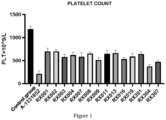
- Blood was collected from the retroorbital venous plexus of the mice at 6 hours, and placed in a blood routine tube containing anticoagulant EDTA-K2. After shaking gently, the blood physiological indicators were measured using a hematology analyzer, with the platelet count as the target parameter for this platelet toxicity test.
- A-1331852 has severe platelet toxicity, while RX001-RX004, RX007-009, RX011, RX013, RX016, RX019, RX301, RX304, and RX307 show significantly improved platelet toxicity compared with A-1331852.
- human non-small cell lung cancer cell line A549 cells
- human embryonic lung fibroblast cell line IMR90 cells
- human retinal pigment epithelial cells RPE cells
- mouse chondrocytes mouse skin fibroblasts
- mouse skin fibroblasts were selected.
- the above cells were induced by etoposide (10 ⁇ M) to obtain their senescent cells.
- the effect of the target compounds on the viability of normal and senescent cells above was examined, thus assessing the specific killing effect of the compounds on senescent cells above.
- the compounds can specifically kill senescent cells at a concentration of 1 ⁇ M, while having no obvious killing on normal cells.
- Table 4 Summarized the activity of killing cells (IC 50 ) of the test compounds against senescent cells.
- Table 4 Compound ID Structure IC 50 ( ⁇ M, Senescent cell) A-1331852 B RX001 B RX002 A RX004 B RX005 D RX007 B RX008 B RX009 A RX010 B RX011 A RX012 B RX013 A RX014 C RX015 C RX016 B RX019 A RX020 D RX021 C RX022 D RX301 A RX302 A RX304 A RX307 A Note: A represents less than 0.2 ⁇ M; B represents 0.2 to 1.0 ⁇ M; C represents 1 to 10 ⁇ M; and D represents greater than 10 ⁇ M.
- Test Example 4 Efficacy in Animal Model of Hyperoxia-Induced Retinopathy
- the efficacy of the prodrugs RX001-RX006 as well as RX301 were investigated in a mouse model of oxygen-induced retinopathy (OIR) which to some extent indicates an in vivo model of retinopathy of prematurity (ROP), diabetic retinopathy, and wet age-related macular degeneration.
- OIR oxygen-induced retinopathy
- Figure 3 shows that the intravitreal (IVT) administration of RX001-RX006 and RX301 resulted in statistically significant improvements in avascular zone and angiogenesis.
- the efficacy of the compounds of the present disclosure was studied in a mouse model of diabetic retinopathy by multiple administrations of streptozotocin (STZ).
- C57BL/6J mice at 6 to 7 weeks were weighed and their baseline blood glucose was measured (Sino).
- STZ Sigma-Alderich
- Age-matched controls were injected with buffer only. Blood glucose was measured again one week after the last STZ injection.
- test compound 200 ⁇ M, a suspension formulated in 0.015% polysorbate 80, 0.2% sodium phosphate, 0.75% sodium chloride, pH 7.2
- test compound 200 ⁇ M, a suspension formulated in 0.015% polysorbate 80, 0.2% sodium phosphate, 0.75% sodium chloride, pH 7.2
- Figure 4 shows the intravitreal (IVT) administration of RX001, RX002, RX003 and RX301 resulted in improved vascular permeability in both the retinal and choroidal vascular leakage at this dose level.
- mice Male mice were administered 0.5% probacaine hydrochloride (Alcon) for local anesthesia, and 1% tropicamide to dilate the pupils of the mice.
- Laser cauterization was performed using a laser photocoagulator (Novus Varia, LUMENIS) with a slit lamp delivery system. And artificially torn adherent glass coverslips were used as contact lenses. Bleeding spots caused by lasers were not included in the statistics. In each experimental group, six mice were analyzed with four impacts per eye to overcome inherent variability.
- FIG. 5 shows that the intravitreal (IVT) administration of RX001, RX002, RX003 and RX301 resulted in statistically significant improvements in fluorescence intensity indicators.
- anesthetized 6-week-old SD rats were fixed on a foam board with medical tape.
- the skin on the surface of the trachea was cut with surgical scissors to fully expose the trachea, and a 100-microlitre micro-syringe containing a certain volume of bleomycin (BLM 5 mg/kg) solution drawn based on the body weight of the rat was inserted into the trachea through the oral cavity to administer by slow bolus injection.
- BLM 5 mg/kg bleomycin
- the skin on the surface of the trachea was sutured with surgical sutures and about 0.5 to 1.0 mL of penicillin solution was dripped onto the epidermis to prevent infection of the surgical wound.
- the compound solution of the present disclosure was administered via intraperitoneal (IP) injection (5 mg/kg) according to the weight of the rat for 3 consecutive weeks.
- Rats were euthanized by carbon dioxide on Day 28, the lung tissues were removed, the left alveolar lavage fluid was collected for white blood cell (WBC) counting, the right lung tissue portion was used for hydroxyproline (HYP) assay, and the remaining lung tissues were stained for pathology by H&E staining and Masson staining.
- WBC white blood cell
- H&E hydroxyproline
- Figure 6 shows that the administration of RX001, RX002, RX003 and RX301 via intraperitoneal (IP) injection resulted in statistically significant improvements in WBC, HYP and pathology scores in the IPF model.
- IP intraperitoneal
- the osteoarthritis animal model was constructed by the following steps.
- the mice were anesthetized with isoflurane, and fixed.
- the hair on the right hind limb of the mice was shaved and the skin was disinfected with alcohol, and the skin of the joints was cut.
- Under an optical microscope the inside of the right knee joint was incised longitudinally with a blade, without cutting the patellar ligament.
- the patellar ligament was pulled to one side with constant hemostasis by compression with sterile cotton swabs such that the joint cavity was fully exposed. Saline was added dropwise in time to avoid the drying up of the joint cavity.
- the excess muscle tissue was gently separated with a blunt forceps to expose the meniscus ligament.
- the anterior cruciate ligament was found in the depth of the joint cavity and cut with a micro scissor. Then the wound was disinfected with penicillin solution, the muscle was sutured with sterile needle and thread, and the skin tissue was finally sutured. The efficacy of the drug was determined by intra-articular injection administration. At the endpoint of the test, continued pain threshold of the plantar was detected, and the bone joints were stained with safranin fast green.
- Figure 7 shows that the administration of RX001, RX002, RX003 and RX301 via intra-articular injection resulted in statistically significant improvements in plantar mechanical pain threshold and pathology scores of safranin fast green staining in an osteoarthritis (OA) model.
- OA osteoarthritis
- APP ⁇ PS1 purchased from Cyagen Biosciences
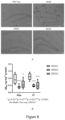
- the compound of the present disclosure was administered by intraperitoneal injection for 11 consecutive weeks, twice a week. Alterations in amyloid in the cerebral cortex of the mice were observed.
- Figure 8 shows that the administration of RX001, RX002, RX003 and RX301 via intraperitoneal injection resulted in statistically significant improvements in A ⁇ 42 pathogenic protein indicators in an AD mouse model.
- mice C57BL/6N mice, male, 7 to 8 weeks old, 24 to 28 g of body weight, were used.
- the mouse model of hepatic fibrosis was induced by intraperitoneal injection of CCl 4 solution at a dosage of 1 mL/kg, with a dosing frequency of 2 times/week, and a modelling cycle of 6 weeks. Dosing via intraperitoneal injection was started starting from the third week of modelling twice a week. At the end of the test, serum was collected, and liver tissue was taken for Masson staining index assay.
- Figure 9 shows that the administration of RX001 and RX301 via intraperitoneal (IP) injection resulted in statistically significant improvements in serum aspartate aminotransferase (AST) and alanine aminotransferase (ALT) levels and pathology scores in a liver fibrosis model.
- AST serum aspartate aminotransferase
- ALT alanine aminotransferase
- mice 22 months old mice were used.
- the drug was administered by skin application twice a week for 6 consecutive weeks. Improvement in the epidermal thickness of the skin was observed in aged mice.
- Figure 10 shows that the administration of RX001, RX002, RX003 and RX301 by applying resulted in statistically significant improvements in epidermal thickness scores of the skins in a naturally aging mouse model.
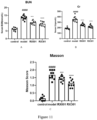
- the efficacy of the compound of the present disclosure was tested on renal fibrosis in an animal model of renal fibrosis. Briefly, C57BL/6J mice, male, 7 to 8 weeks old, were used. The mice were anaesthetized, made to lie supine on a foam board, and disinfected with iodophor, and a longitudinal incision was made in the skin in the middle of the lower abdomen to locate the white line of the abdominal muscle, where the abdominal muscle, fascia and peritoneal layer were dissected. After exposing the surgical field, the kidneys were exposed by pushing the stomach and mesentery of the mice to the right side with a gauze soaked with saline.
- the model of renal fibrosis was constructed by locating the transparent ureter from the renal pelvis along the renal artery, separating the left ureter, ligating the upper 1/3 of the left ureter, suturing the incision layer by layer, and finally disinfecting with iodophor. Dosing via intraperitoneal injection started from the 2nd week of modelling. At the end of the experiment, the mouse serum was collected, and kidney tissues were taken for Masson staining index assay.
- Figure 11 shows that the administration of RX001 and RX301 via intraperitoneal (IP) injection resulted in statistically significant improvements in serum creatinine (Cr) and urea nitrogen (BUN) levels and pathology in a renal fibrosis model.
- IP intraperitoneal
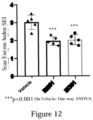
- the efficacy of the compounds of the present disclosure was tested on hypertrophic scars in a rabbit ear hypertrophic scar animal model. Briefly, 15 New Zealand white rabbits, male, 3 months old, were used. The New Zealand rabbits were anaesthetized with sodium pentobarbital and six circular full-thickness wounds with a diameter of 10 mm were made on the ventral surface of each ear by removing the epidermis, dermis and perichondrium to expose the cartilage. The rabbits were randomly divided into control, RX001 experimental and RX301 experimental groups.
- the compound 150 ⁇ M, 100 ⁇ L, dissolved in DMSO solution
- negative control DMSO 100 ⁇ L was injected into the center of each lesion from the wound edge once a week for a total of 4 injections. Improvement of scar formation by the drugs was assessed by SEI (Scar Excess Index).
- Figure 12 shows that the administration of RX001 and RX301 resulted in a statistically significant improvement in scar excess index in rabbit ear hypertrophic scar model.
Landscapes
- Chemical & Material Sciences (AREA)
- Organic Chemistry (AREA)
- Health & Medical Sciences (AREA)
- Life Sciences & Earth Sciences (AREA)
- General Health & Medical Sciences (AREA)
- Medicinal Chemistry (AREA)
- Pharmacology & Pharmacy (AREA)
- Animal Behavior & Ethology (AREA)
- Public Health (AREA)
- Veterinary Medicine (AREA)
- Biochemistry (AREA)
- Molecular Biology (AREA)
- Chemical Kinetics & Catalysis (AREA)
- General Chemical & Material Sciences (AREA)
- Nuclear Medicine, Radiotherapy & Molecular Imaging (AREA)
- Epidemiology (AREA)
- Immunology (AREA)
- Orthopedic Medicine & Surgery (AREA)
- Rheumatology (AREA)
- Engineering & Computer Science (AREA)
- Bioinformatics & Cheminformatics (AREA)
- Physical Education & Sports Medicine (AREA)
- Pharmaceuticals Containing Other Organic And Inorganic Compounds (AREA)
Applications Claiming Priority (2)
| Application Number | Priority Date | Filing Date | Title |
|---|---|---|---|
| CN202210727253 | 2022-06-24 | ||
| PCT/CN2023/101959 WO2023246924A1 (zh) | 2022-06-24 | 2023-06-21 | 苯并噻唑化合物及其应用 |
Publications (1)
| Publication Number | Publication Date |
|---|---|
| EP4545526A1 true EP4545526A1 (de) | 2025-04-30 |
Family
ID=89379200
Family Applications (1)
| Application Number | Title | Priority Date | Filing Date |
|---|---|---|---|
| EP23826569.8A Pending EP4545526A1 (de) | 2022-06-24 | 2023-06-21 | Benzothiazolverbindung und verwendung davon |
Country Status (5)
| Country | Link |
|---|---|
| EP (1) | EP4545526A1 (de) |
| JP (1) | JP2025522588A (de) |
| KR (1) | KR20250029121A (de) |
| CN (1) | CN119546603A (de) |
| WO (1) | WO2023246924A1 (de) |
Family Cites Families (4)
| Publication number | Priority date | Publication date | Assignee | Title |
|---|---|---|---|---|
| US8889675B2 (en) * | 2011-10-14 | 2014-11-18 | Abbvie Inc. | Apoptosis-inducing agents for the treatment of cancer and immune and autoimmune diseases |
| US8940737B2 (en) * | 2011-10-14 | 2015-01-27 | Abbvie Inc. | Apoptosis-inducing agents for the treatment of cancer and immune and autoimmune diseases |
| EP4090658A4 (de) * | 2020-01-15 | 2024-03-13 | University Of Florida Research Foundation, Incorporated | Therapeutika und behandlungsverfahren |
| WO2023044046A1 (en) * | 2021-09-17 | 2023-03-23 | Kymera Therapeutics, Inc. | Bcl-xl degraders and uses thereof |
-
2023
- 2023-06-21 EP EP23826569.8A patent/EP4545526A1/de active Pending
- 2023-06-21 JP JP2024576374A patent/JP2025522588A/ja active Pending
- 2023-06-21 CN CN202380049622.0A patent/CN119546603A/zh active Pending
- 2023-06-21 KR KR1020257000414A patent/KR20250029121A/ko active Pending
- 2023-06-21 WO PCT/CN2023/101959 patent/WO2023246924A1/zh not_active Ceased
Also Published As
| Publication number | Publication date |
|---|---|
| KR20250029121A (ko) | 2025-03-04 |
| CN119546603A (zh) | 2025-02-28 |
| JP2025522588A (ja) | 2025-07-15 |
| WO2023246924A1 (zh) | 2023-12-28 |
Similar Documents
| Publication | Publication Date | Title |
|---|---|---|
| JP6936498B2 (ja) | 抗アポトーシス性Bcl−2ファミリータンパク質の分解を誘導する化合物及びその使用 | |
| JP4494013B2 (ja) | 窒素置換サリドマイド誘導体の合成及び抗腫瘍活性 | |
| JP4316794B2 (ja) | イソキノリン誘導体及び医薬 | |
| DE69620165T2 (de) | Piperazinone als inhibitoren von blutplattchenaggregation | |
| NZ296210A (en) | Amidinonaphthyl derivatives to inhibit activated blood coagulation factor x | |
| JP6742343B2 (ja) | 2環性複素環化合物 | |
| JP2015520130A (ja) | ホルミルペプチド受容体2調節物質としての(2−ウレイドアセトアミド)アルキル誘導体 | |
| CA2268621A1 (en) | 2-pipirazinone-1-acetic acid derivative, production and use thereof | |
| JP2013508385A (ja) | 治療上有用な、受容体修飾薬としてのクマリン化合物 | |
| JP7089062B2 (ja) | 老化細胞によって引き起こされるかまたは媒介される状態の臨床管理における使用のためおよびがんを治療するための、Bclファミリーアンタゴニストであるホスホリジン | |
| PT2151439E (pt) | Derivado de anel aromático azotado com seis átomos no ciclo e agente farmacêutico que compreende o mesmo | |
| EP3988544A1 (de) | Isochinolinonderivate als rock-proteinkinaseinhibitoren und ihre verwendung | |
| WO2020249120A1 (zh) | 氨基硫醇类化合物作为脑神经或心脏保护剂的用途 | |
| EP4545527A1 (de) | Esterverbindungen und ihre verwendung | |
| WO2023246924A1 (zh) | 苯并噻唑化合物及其应用 | |
| CN118684672A (zh) | 一种抗凝逆转剂及其制备方法和应用 | |
| EA051130B1 (ru) | Эфирные соединения и их применение | |
| CN117164566B (zh) | 一种氧代哒嗪类化合物及其制备方法和用途 | |
| CN117164564B (zh) | 氧代哒嗪类化合物及其制备方法和用途 | |
| CN117164563B (zh) | 氧代嘧啶类化合物及其制备方法和用途 | |
| WO2020094008A1 (zh) | 2-氧代-1,2-二氢喹啉类衍生物、其制备方法及其在医药上的应用 | |
| JP6078153B2 (ja) | チアンジンアミド誘導体、並びにその医薬組成物及び使用 | |
| CN117586232A (zh) | 一种依达拉奉前药衍生物及其应用 | |
| WO2023077977A1 (zh) | 秋水仙碱衍生物的制备方法及其用途 | |
| CN116178435A (zh) | 一种1,-腈基取代核苷衍生物及其用途 |
Legal Events
| Date | Code | Title | Description |
|---|---|---|---|
| STAA | Information on the status of an ep patent application or granted ep patent |
Free format text: STATUS: THE INTERNATIONAL PUBLICATION HAS BEEN MADE |
|
| PUAI | Public reference made under article 153(3) epc to a published international application that has entered the european phase |
Free format text: ORIGINAL CODE: 0009012 |
|
| STAA | Information on the status of an ep patent application or granted ep patent |
Free format text: STATUS: REQUEST FOR EXAMINATION WAS MADE |
|
| 17P | Request for examination filed |
Effective date: 20241230 |
|
| AK | Designated contracting states |
Kind code of ref document: A1 Designated state(s): AL AT BE BG CH CY CZ DE DK EE ES FI FR GB GR HR HU IE IS IT LI LT LU LV MC ME MK MT NL NO PL PT RO RS SE SI SK SM TR |
|
| DAV | Request for validation of the european patent (deleted) | ||
| DAX | Request for extension of the european patent (deleted) |